Skip to content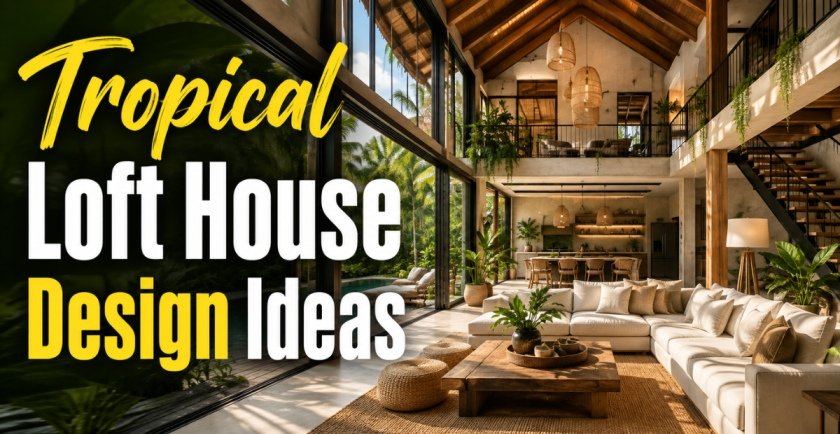
A tropical loft house feels different from a standard open-plan home. The ceiling is taller, the upper level stays visually connected to the room below, and greenery becomes part of the architecture rather than an afterthought. Add warm timber, natural stone, woven textures, wide glass openings, and breezy indoor-outdoor spaces, and the result can feel like a private resort without becoming overly formal.
These tropical loft house design ideas cover everything from double-height living rooms and mezzanine bedrooms to compact tiny homes, rooftop gardens, plunge pools, reading nooks, and tropical bathrooms. Some ideas lean modern and minimal, while others bring in Balinese, coastal, bohemian, Caribbean, or industrial influences.
You do not need to copy one style from top to bottom. In fact, the most believable tropical loft homes usually mix a few strong architectural choices with practical materials that suit the climate and the way the house will actually be used. Start with features that affect space, daylight, ventilation, and movement first. Furniture and decoration can follow later.
1. Double-Height Tropical Living Room
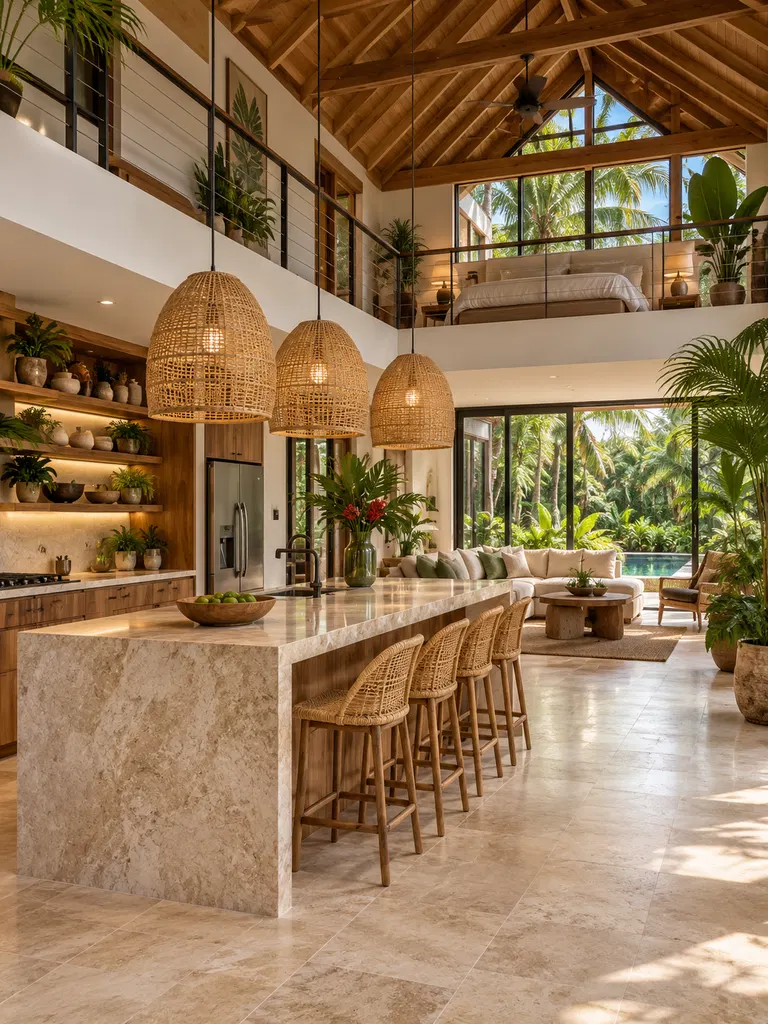
A double-height living room gives a tropical loft its strongest sense of openness. Let the ceiling rise above the main seating area and keep the upper floor visually connected so the room feels tall rather than boxed in. Warm timber rafters, pale stone flooring, linen upholstery, rattan chairs, and one or two large palms soften the scale. Floor-to-ceiling windows work especially well because the garden becomes part of the room instead of sitting beyond a solid wall. Keep furniture low enough that the architecture remains visible from the entry.
2. Open Mezzanine Bedroom Loft
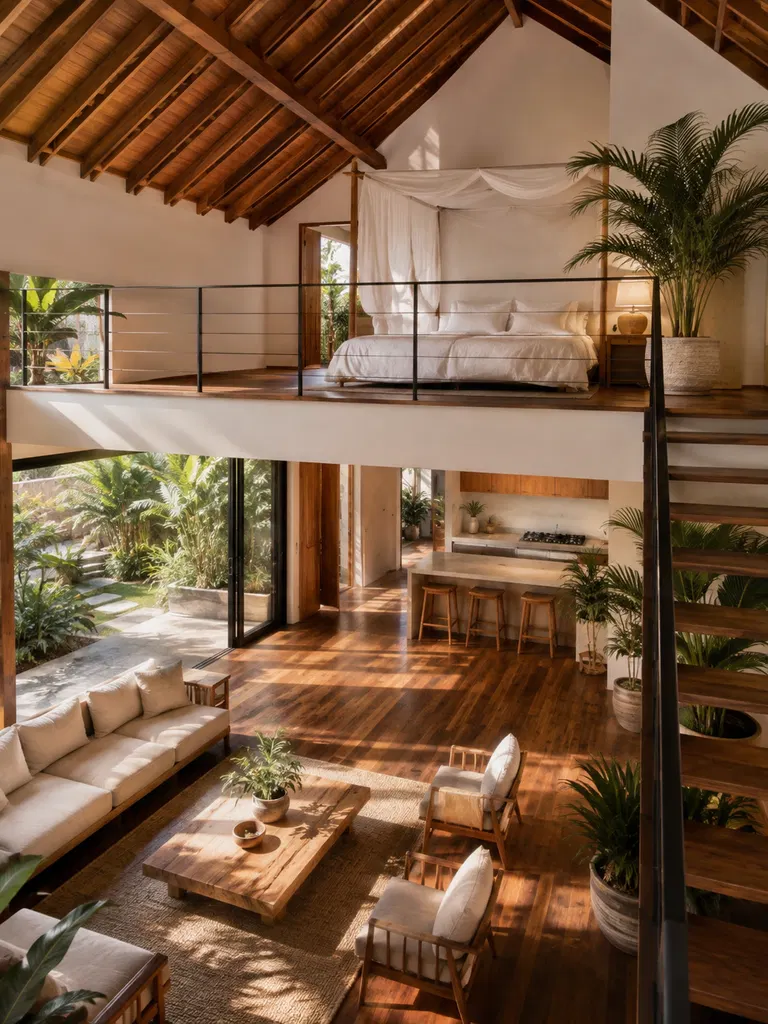
An open mezzanine bedroom is a smart way to use vertical space while preserving the loft character below. A slim railing keeps sight lines open, while white, cream, or sand-colored bedding prevents the upper level from feeling heavy. Position the bed where it can borrow daylight from the double-height windows. For a little privacy, use lightweight curtains, timber screens, or a short partial wall instead of closing the mezzanine completely. A small bedside lamp and one large plant can be enough to make the loft feel finished.
3. Exposed Timber Roof Structure
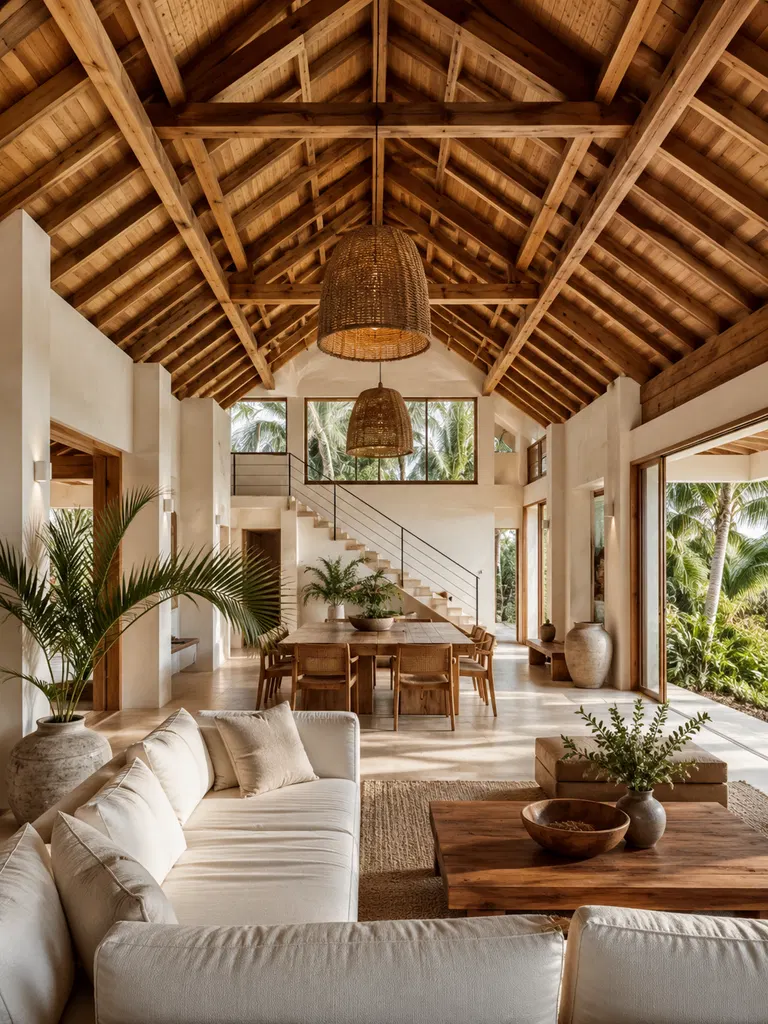
Exposed rafters immediately give a tropical home more warmth and architectural personality. Instead of hiding the roof structure behind a flat ceiling, let timber beams follow the pitch of the roof. They pair naturally with plaster walls, stone floors, cane furniture, and woven lighting. A medium wood tone feels relaxed, while darker beams create stronger resort-style contrast. Keep electrical fittings and decorative pieces simple so the roof remains the main feature. If the structure is new, plan lighting positions before the timber ceiling is completed.
4. Glass Gable Wall
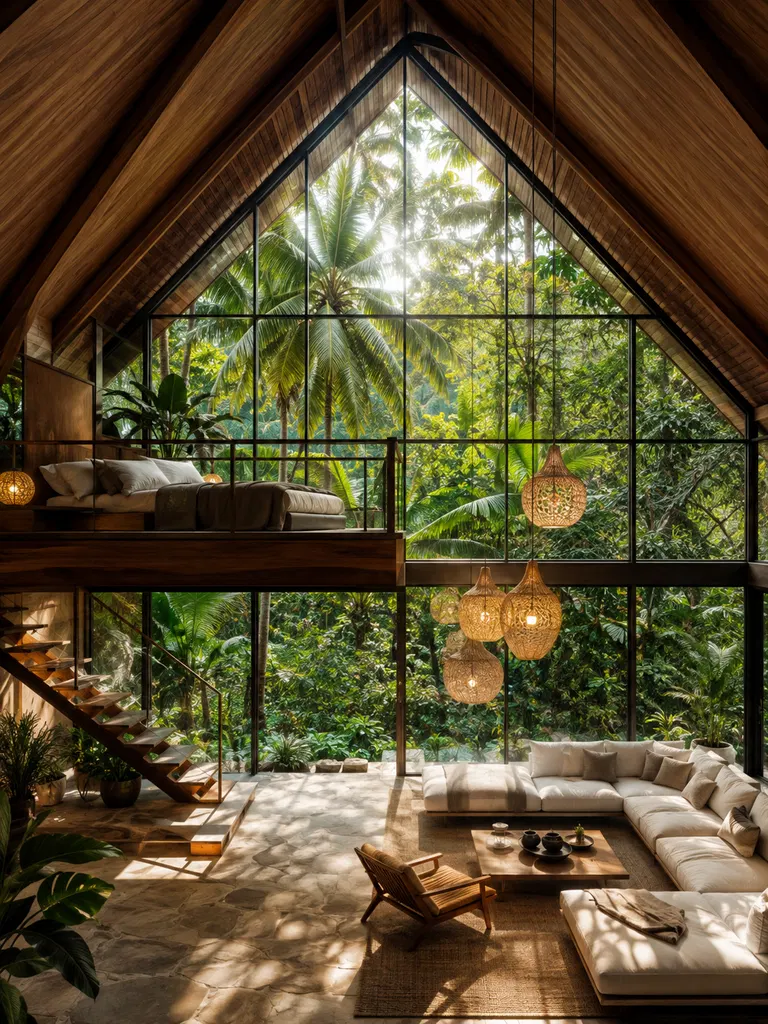
A glass gable wall can turn an ordinary loft into a dramatic tropical retreat. Extend the glazing toward the roof peak so the full height of the interior is visible and daylight reaches both floors. This design works best when there is something worth framing outside, such as palms, jungle foliage, a courtyard, or a private garden. Use slim window frames and restrained furniture nearby so the triangular wall stays visually dominant. Deep eaves or exterior shading can help manage direct sun while keeping the view open.
5. Sliding Glass Walls to the Garden
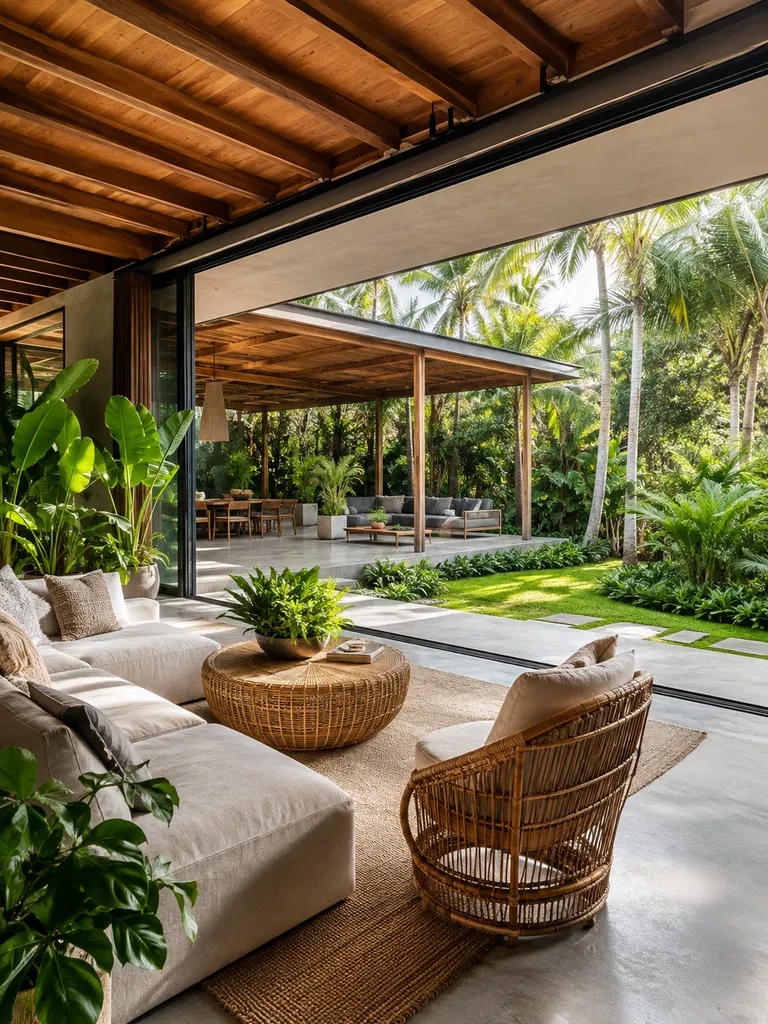
Large sliding glass walls make indoor-outdoor living feel natural and easy. When opened, the living room can flow directly onto a shaded terrace, garden, or pool deck. Carry similar flooring colors from inside to outside to strengthen the connection, then use generous roof overhangs to protect the opening from sun and rain. In warm climates, this arrangement can make a house feel much larger without increasing the enclosed floor area. Choose tracks that sit as flush as possible with the floor for a cleaner transition.
6. Indoor Tropical Courtyard
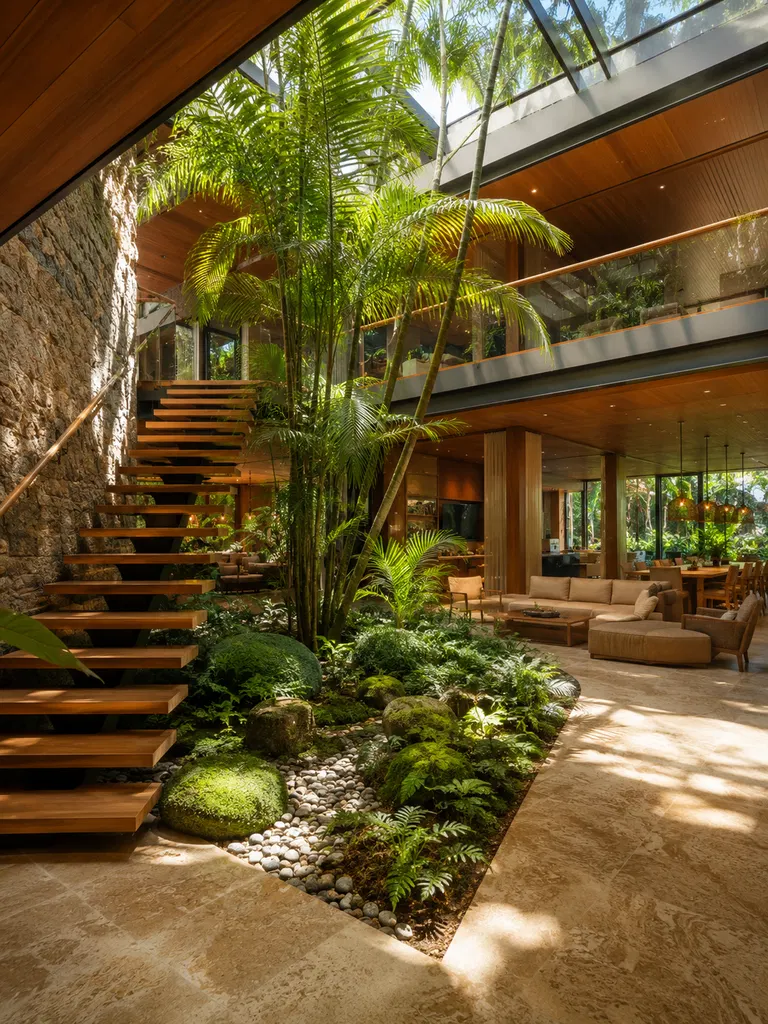
An indoor courtyard brings greenery right into the center of a loft house. Fill it with palms, ferns, stones, and layered foliage, then place a skylight or open roof section above so the plants receive enough natural light. A courtyard beside the staircase is especially attractive because the view changes as you move between floors. Keep the surrounding finishes quiet—stone, timber, and warm plaster work beautifully—so the planting remains the star. Drainage, irrigation, and maintenance access should be considered from the beginning.
7. Floating Wooden Loft Staircase
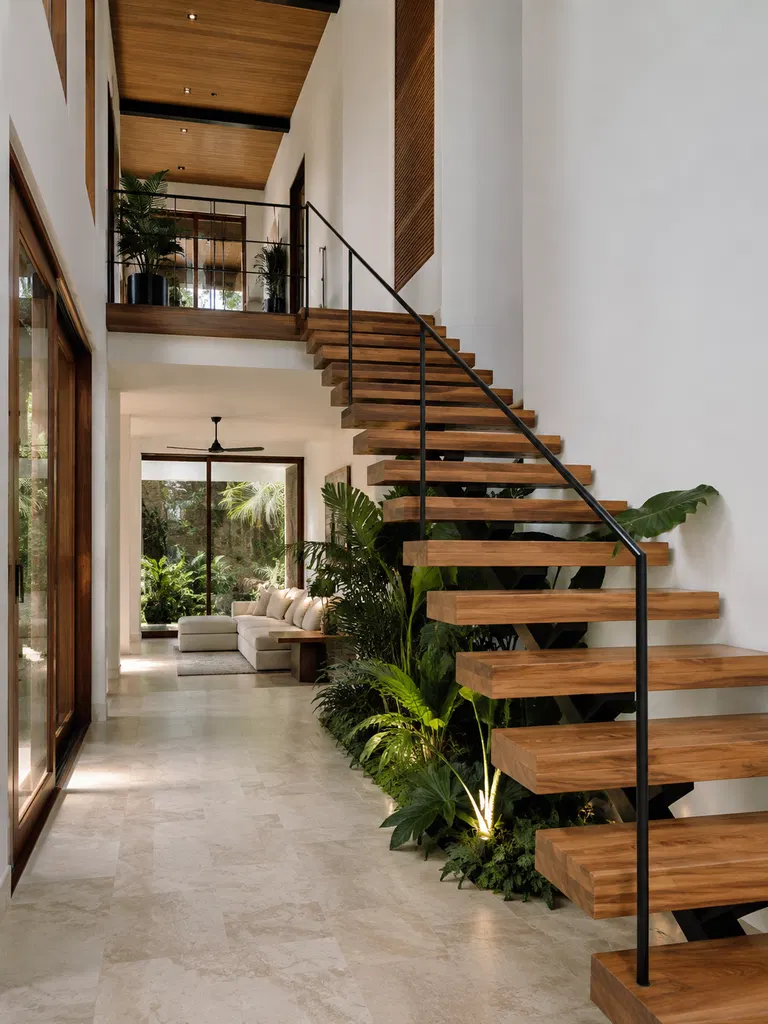
A floating wooden staircase suits the light, airy feel of tropical loft architecture. Thick timber treads with a slim metal or glass railing allow light to pass around the stairs instead of turning them into a bulky wall. The area beneath can hold plants, decorative stones, a narrow bench, or built-in storage. Good stair lighting is worth planning early, especially if the steps are open. Small concealed lights along the wall or under selected treads can make the staircase look striking after sunset.
8. Oversized Tropical Ceiling Fans
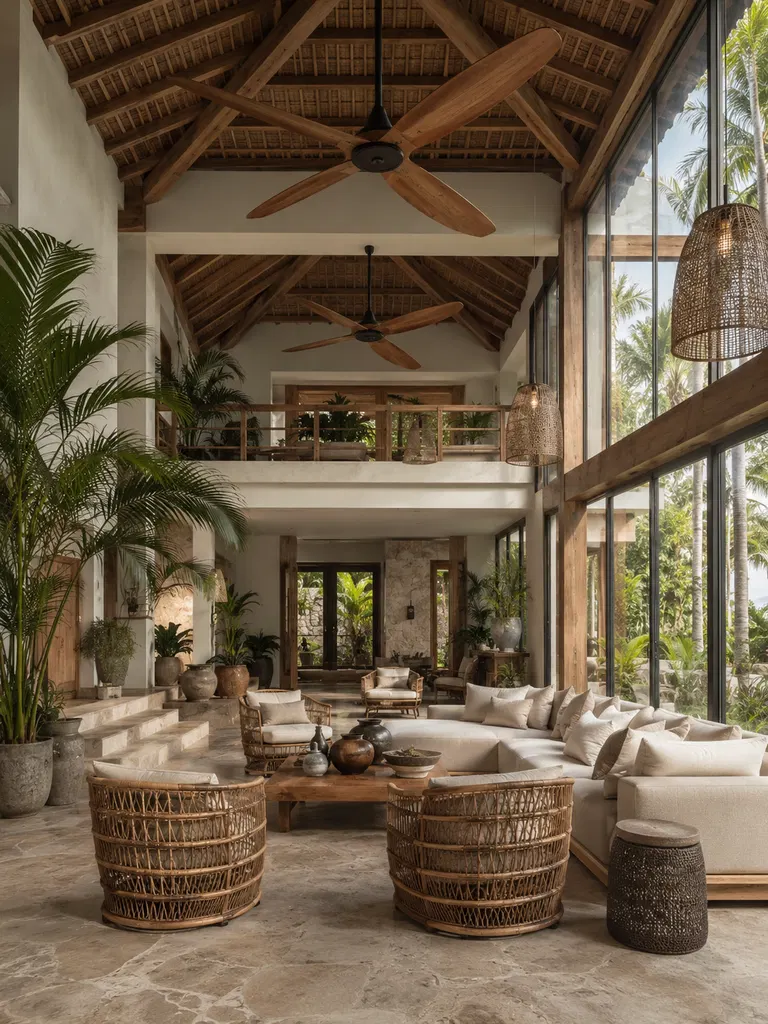
Oversized ceiling fans are both decorative and practical in tall tropical interiors. A large wood-blade fan visually fills the volume of a pitched ceiling while helping move warm air through the room. In a long double-height living space, two fans can look more balanced than one. Choose a simple design that works with the roof beams rather than competing with them. Keep pendant lights far enough away from the blades and use warm finishes that connect the fan visually with timber ceilings, rattan furniture, or wood window frames.
9. Warm White Limewashed Walls
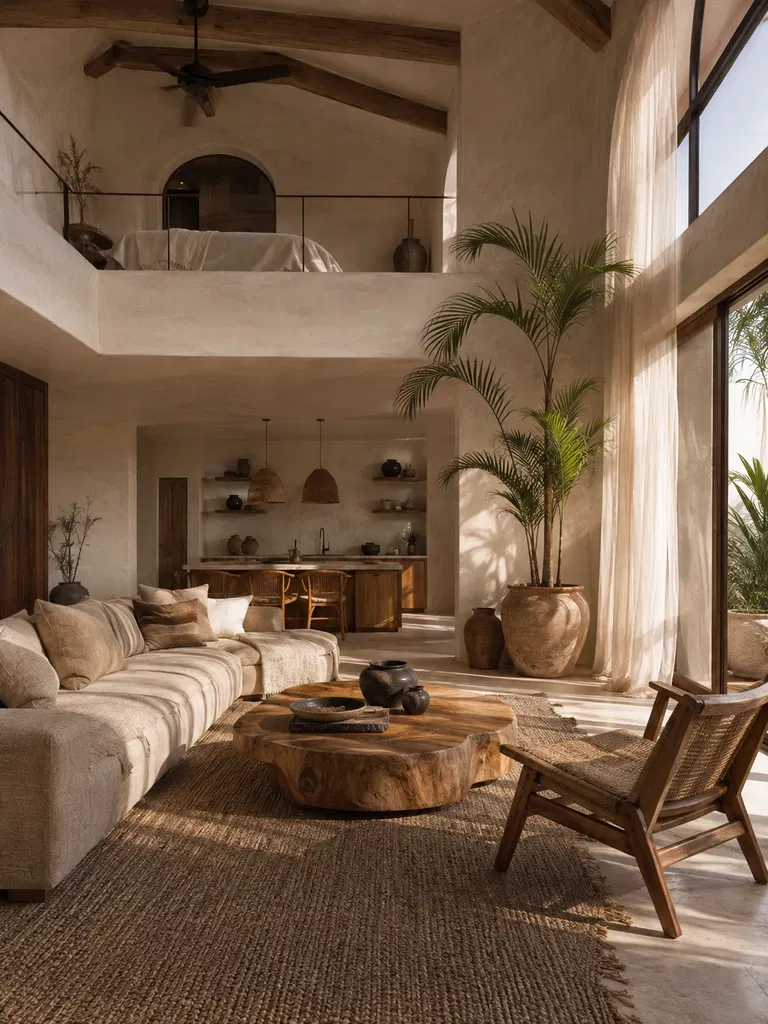
Warm white limewashed walls create a softer background than bright flat paint. The subtle movement in the finish works naturally with timber, clay, stone, woven rugs, and leafy plants. This palette is particularly useful when the architecture already has plenty of detail because it keeps the room calm. Add interest through linen, cane, raw wood, and handmade pottery rather than many different colors. Sunlight across a slightly textured wall also produces gentle shadows that make a neutral tropical room feel warmer throughout the day.
10. Teak and Bamboo Interior Details
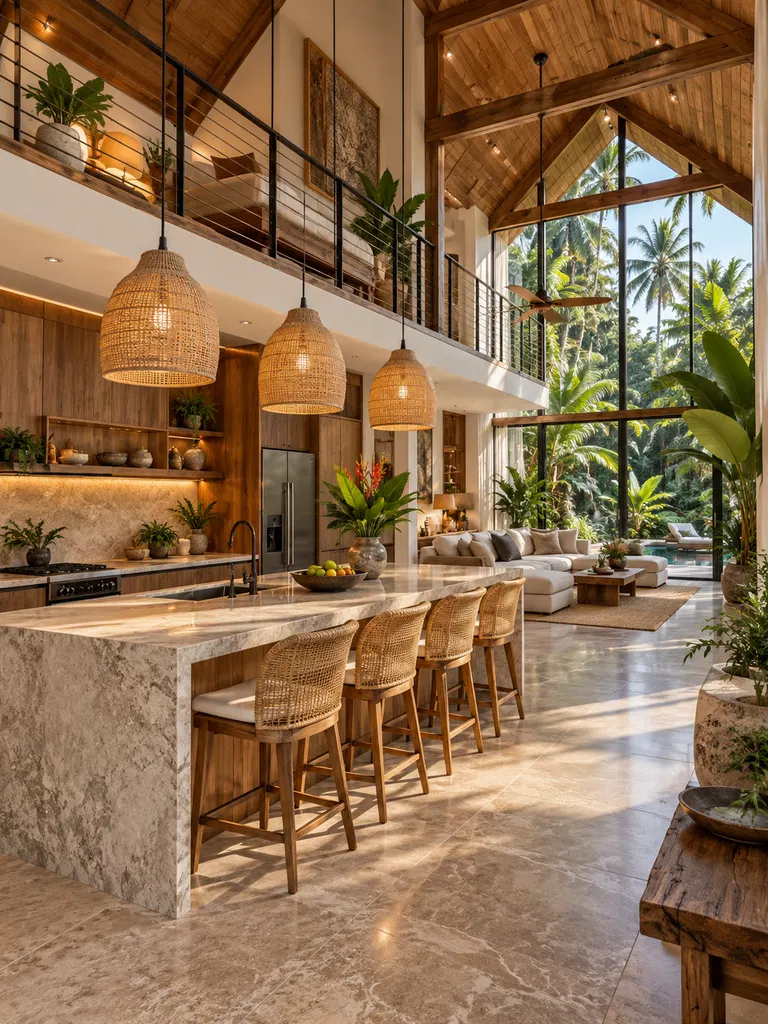
Teak, bamboo, cane, and woven fibers bring tropical character into a loft without making it look overly themed. Use teak for substantial furniture or cabinetry, bamboo for screens or ceiling details, and cane for chairs, doors, or accent panels. The most polished rooms mix these materials with plain plaster and stone so there is enough visual breathing room. A few carefully selected natural finishes usually look richer than covering every surface in wood. Repeat similar tones across the room to make the mix feel intentional.
11. Kitchen Beneath the Mezzanine
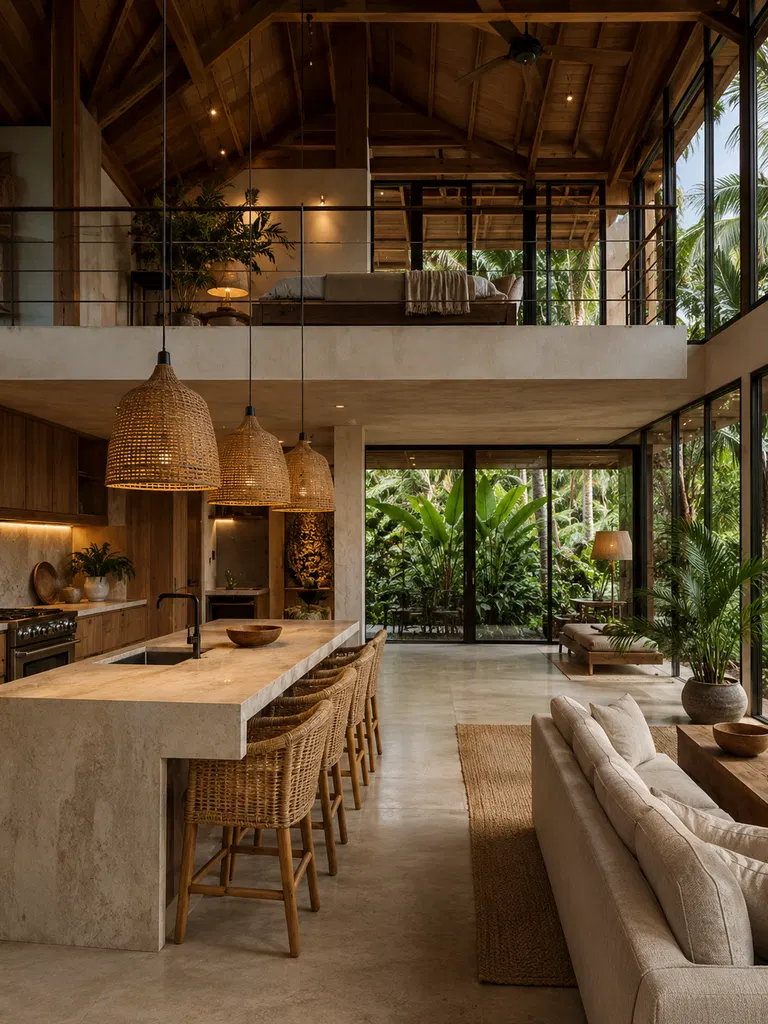
The space beneath a mezzanine is often ideal for the kitchen because the lower ceiling creates a comfortable working zone while the living room keeps its full height. Use warm wood cabinetry, pale stone counters, and an island that faces the open room. Woven stools or pendants can add texture without taking up much space. The loft above can hold a bedroom, office, or quiet lounge. Good task lighting under cabinets helps the kitchen stay practical even when the upper floor reduces the amount of direct daylight.
12. Oversized Woven Pendant Lights
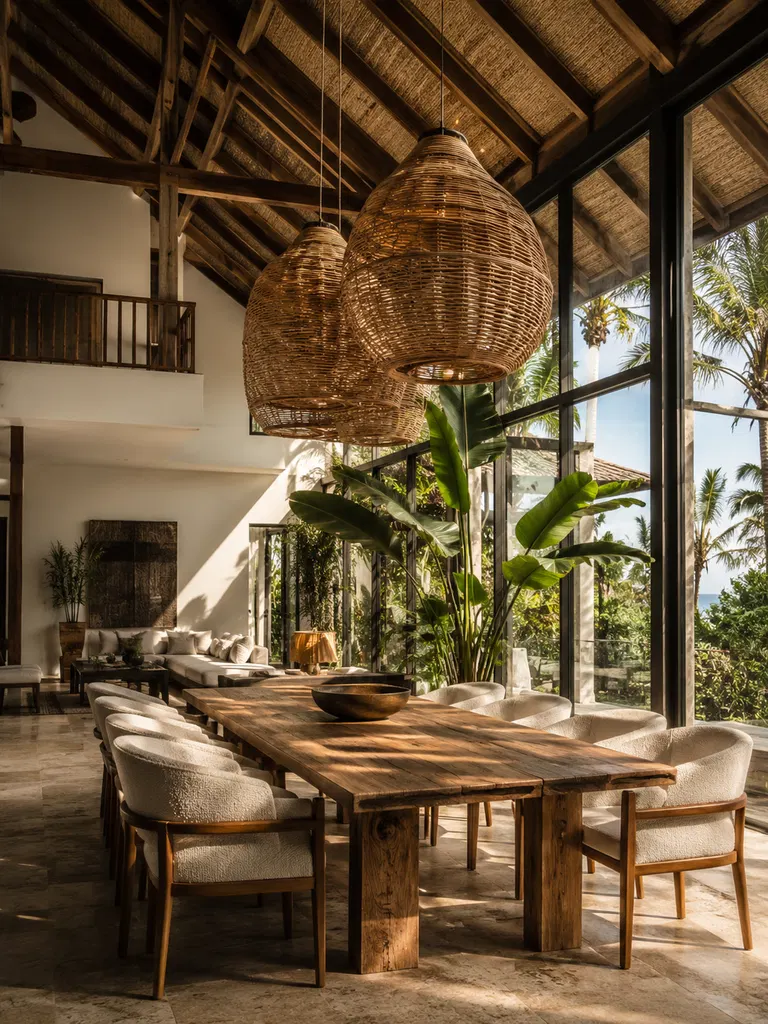
In a tall loft, tiny pendants can disappear. Oversized woven lights solve that problem while adding softness to the architecture. Hang a group above a dining table or kitchen island, varying the height slightly when the ceiling is especially high. Rattan, cane, and basket-style shades cast beautiful patterns after dark. Keep the bulbs warm and the surrounding decor restrained so the lights feel intentional rather than busy. Three large pendants often create a stronger visual rhythm than a row of many small fixtures.
13. Decorative Breeze Block Walls
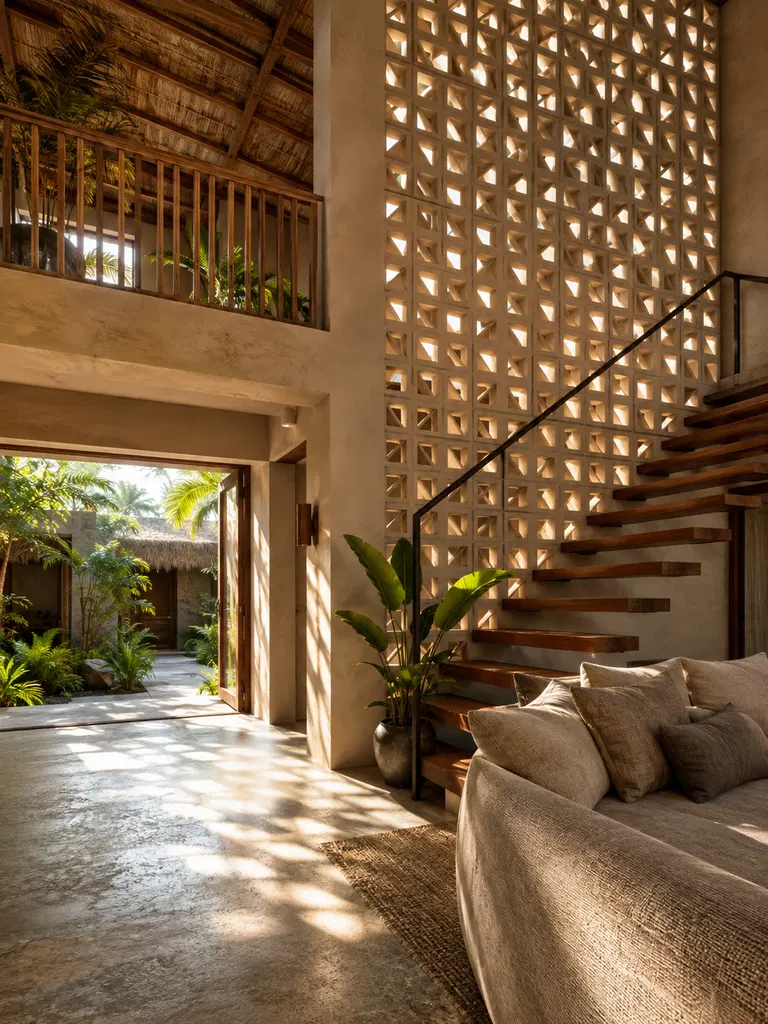
Breeze blocks are useful when you want privacy, shade, and airflow at the same time. A patterned wall beside a staircase, entry, terrace, or courtyard can filter harsh sunlight and create changing shadows throughout the day. Modern geometric blocks work especially well with timber and smooth plaster. Because the pattern is already decorative, avoid placing too many competing objects in front of it. A planted area or one simple bench is usually enough to finish the space without hiding the design of the wall.
14. Louvered Tropical Windows
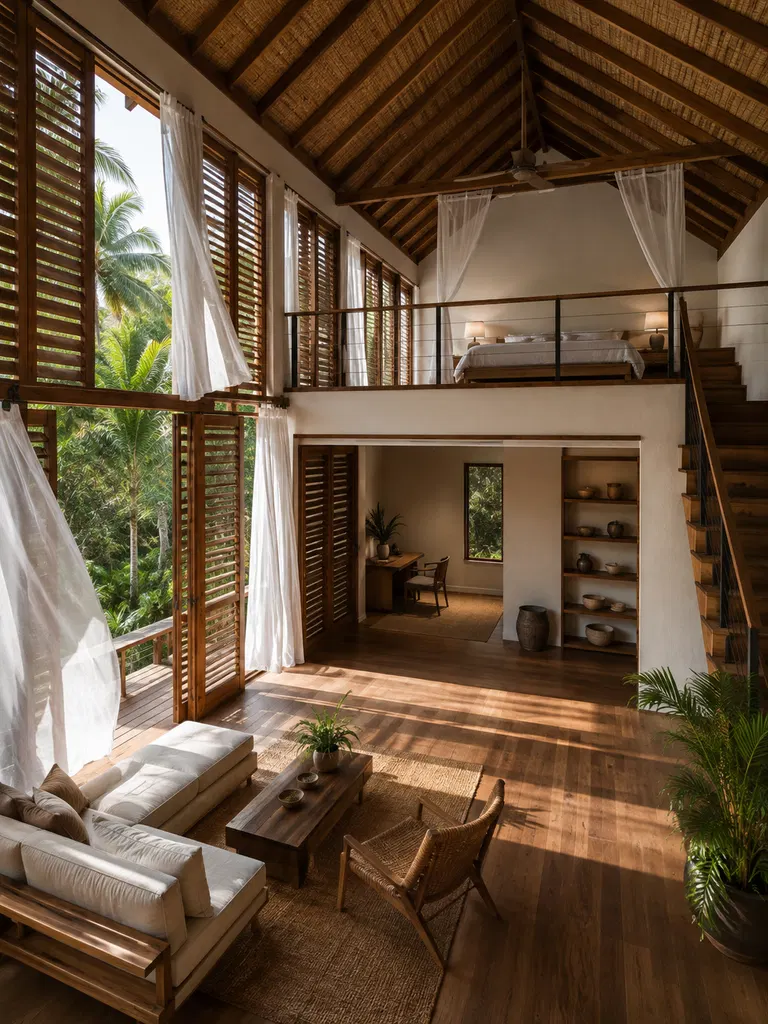
Louvered windows are a classic tropical feature for good reason: they encourage airflow while giving a home a relaxed architectural look. Tall timber louvers beside fixed glass panels can bring ventilation into a double-height room without sacrificing garden views. They also work beautifully in loft bedrooms, where cross-breezes can make the upper level more comfortable. Pair them with lightweight curtains for a softer finish. If the house receives strong weather, use durable hardware and finishes that can handle frequent opening, humidity, and rain exposure.
15. Skylight Above the Loft
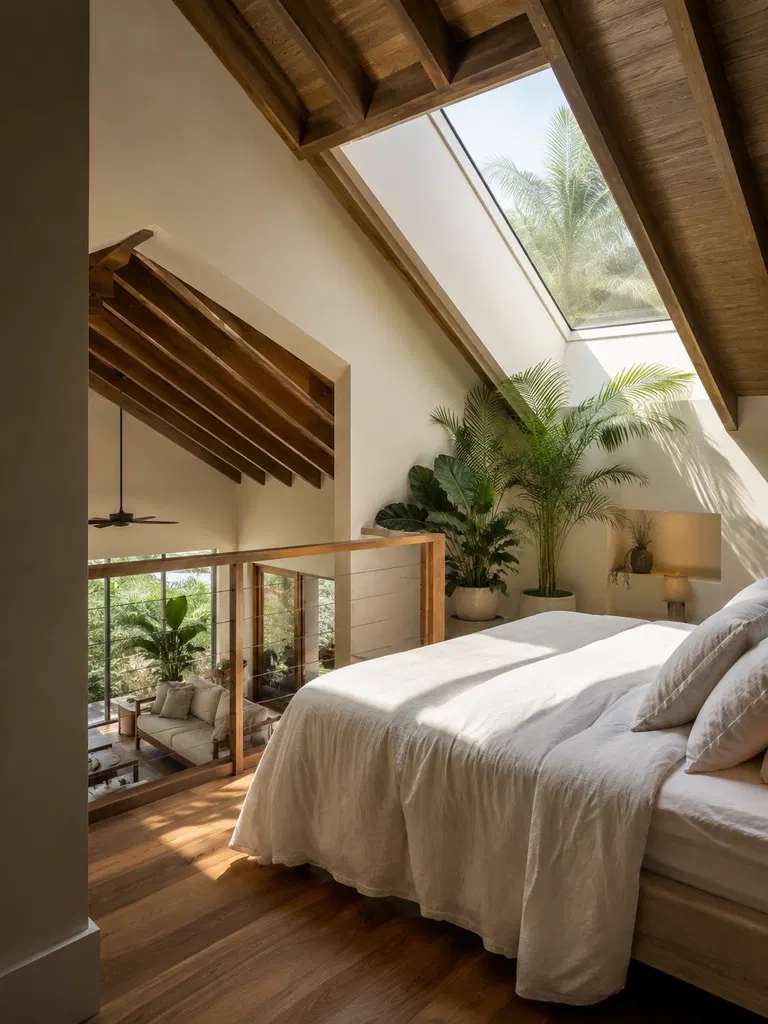
A skylight can brighten the upper floor of a loft without adding another large wall opening. Place it over a hallway, stair landing, reading area, or beside the bed so daylight reaches the space naturally. In hot climates, orientation, shading, and the glazing specification matter because the upper floor can heat up quickly. A well-positioned skylight can make a compact mezzanine feel much more open. It also creates changing patterns of light across timber floors and plaster walls as the sun moves during the day.
16. Floor-to-Ceiling Indoor Green Wall
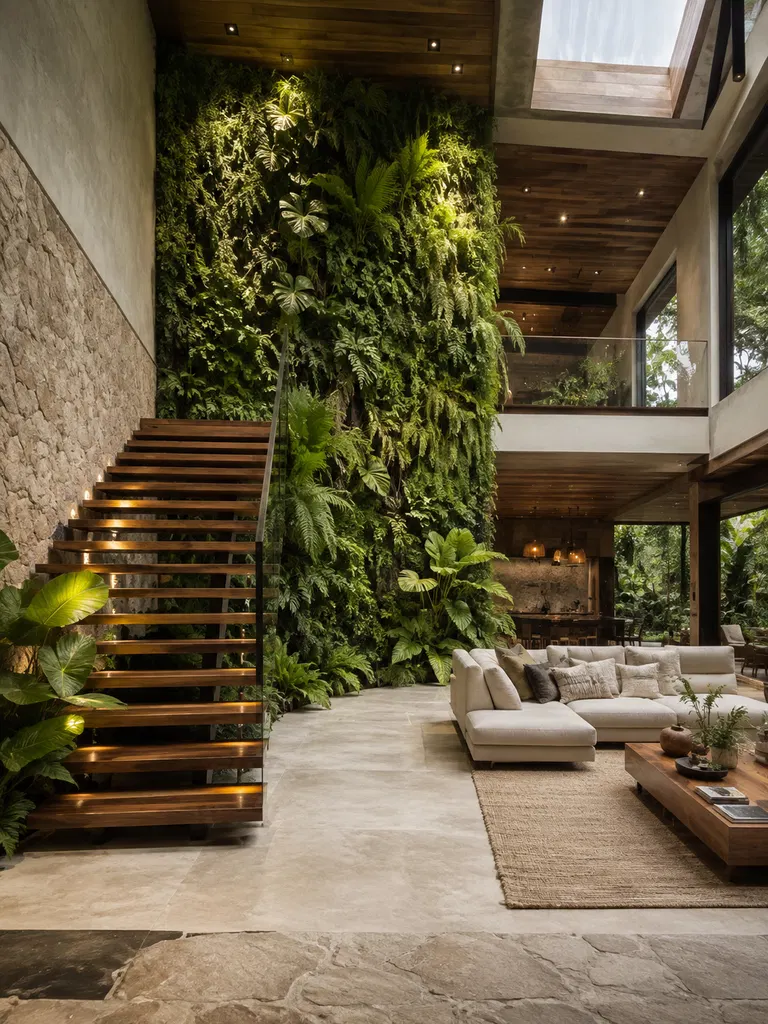
A living green wall can connect the ground floor and mezzanine visually. Instead of scattering many small plants around the room, create one vertical area of dense foliage using ferns and tropical species suited to the available indoor light. Add irrigation and good maintenance access from the start. Against stone or warm plaster, the greenery becomes an architectural feature rather than simple decoration. Use discreet lighting above or below the wall at night to show off the texture without making the space feel like a commercial lobby.
17. Hanging Hammock Lounge
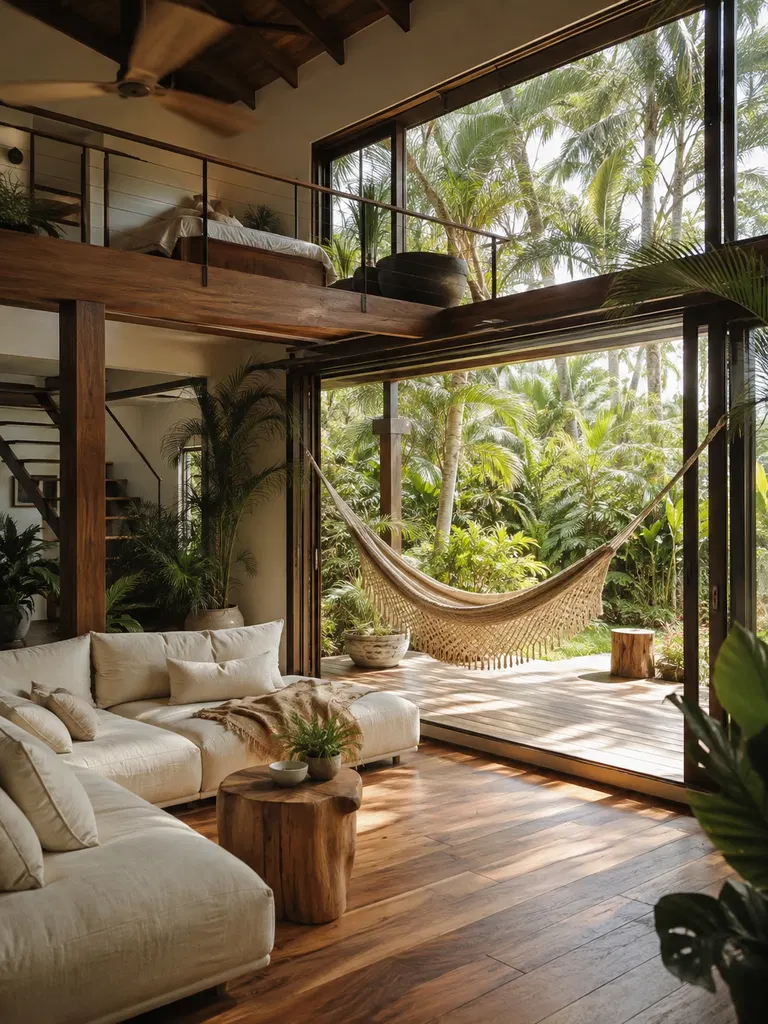
A hammock instantly gives a tropical loft a slower, vacation-like mood. Hang it beside wide garden doors, near a terrace, or in a corner where it does not interrupt the main circulation path. A woven or neutral fabric hammock blends easily with timber floors and natural furniture. Add a small side table and a plant nearby, then leave enough empty space around it so the area still feels relaxed. Make sure the fixing points are structurally suitable, especially when the hammock is attached to timber posts or walls.
18. Woven Loft Railing
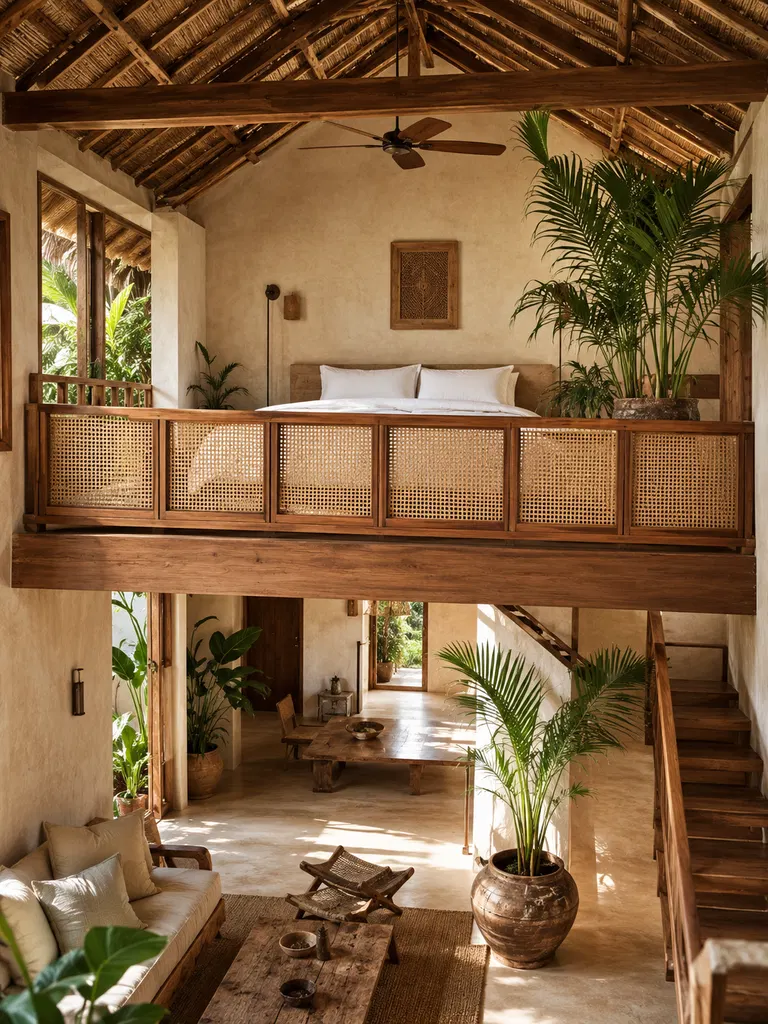
The mezzanine railing does not have to be purely functional. A timber frame with cane panels, woven inserts, or carefully detailed vertical slats can become part of the room’s tropical character. Keep the design visually light so the upper floor remains connected to the living area. Natural materials also help soften metal and stone elsewhere in the house. Safety comes first, so the final railing height, spacing, and strength should meet local requirements even when the design is intended to look delicate and handcrafted.
19. Tropical Bathroom Beneath the Loft
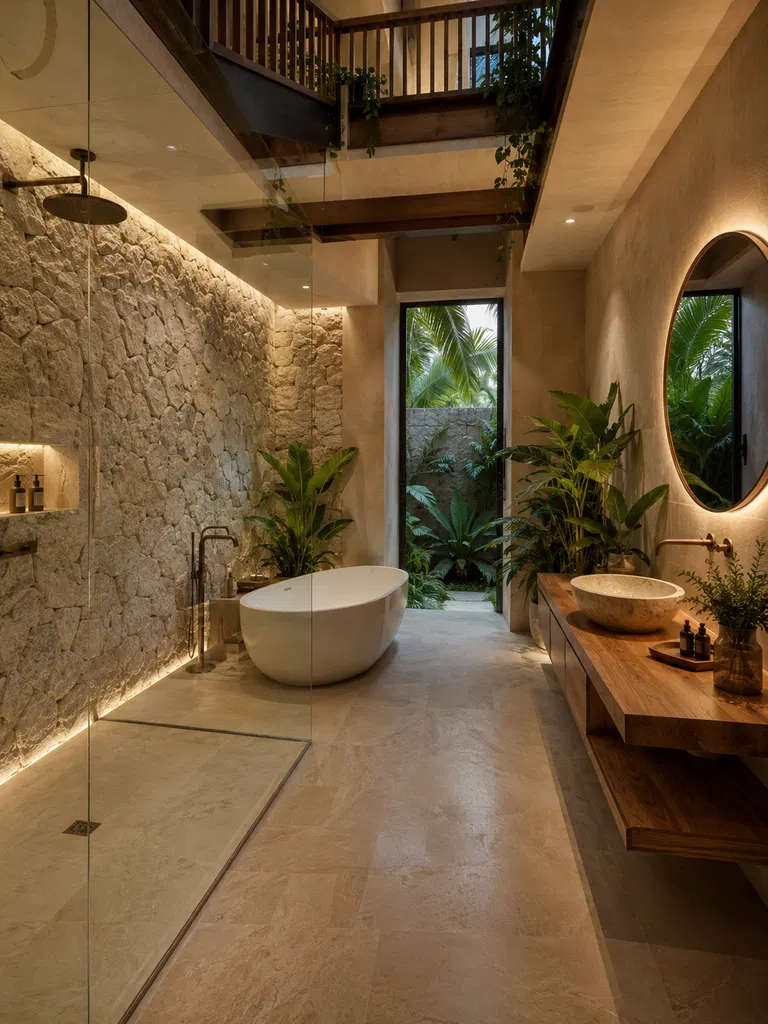
A bathroom tucked beneath the loft can feel surprisingly luxurious when it uses strong natural materials. Pair a stone wall with a floating timber vanity, frameless shower glass, warm lighting, and large leafy plants. A narrow window facing a private planted courtyard adds daylight without giving up privacy. Keeping the palette restrained helps the compact room feel calmer and more spacious. Choose moisture-resistant timber finishes and leave enough ventilation around plants and cabinetry so the room remains practical in a humid climate.
20. Private Outdoor Shower
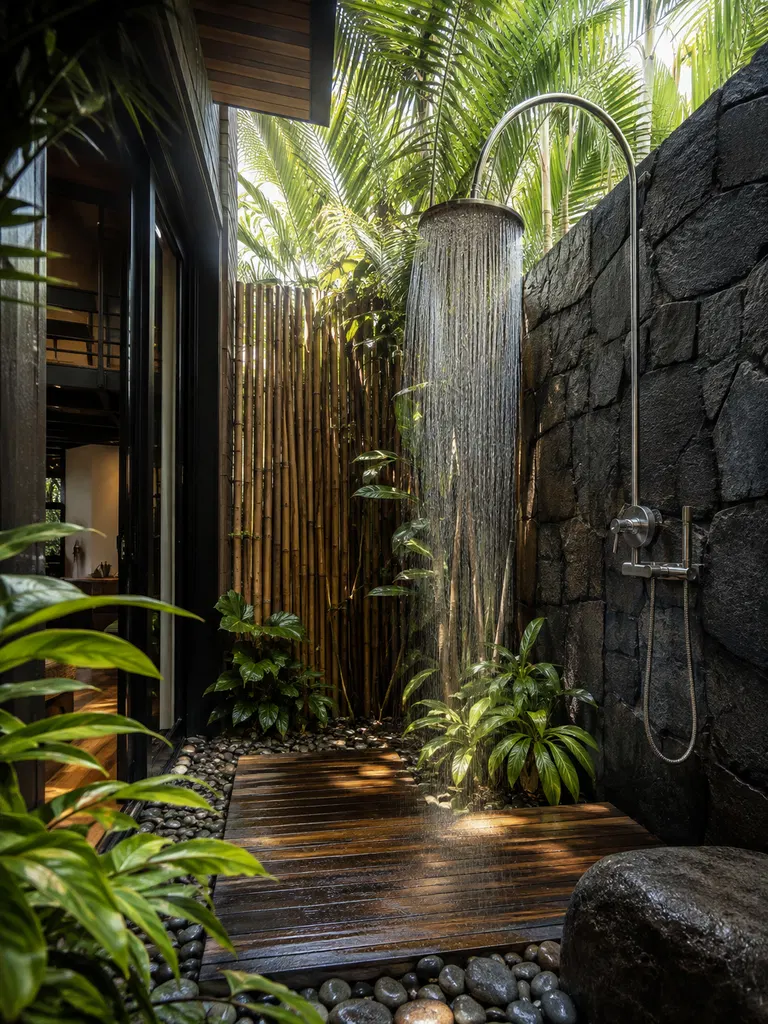
An outdoor shower is one of the easiest ways to add resort atmosphere to a tropical home. Place it beside the main bathroom, pool, or bedroom terrace and surround it with stone walls, timber screens, bamboo, and dense planting. Use a rainfall showerhead and simple drainage so the experience feels natural rather than over-designed. Privacy can come from layered landscaping and screens instead of a completely enclosed box. Smooth river stones or textured non-slip flooring add another tactile element underfoot.
21. Canopy Bed in the Loft
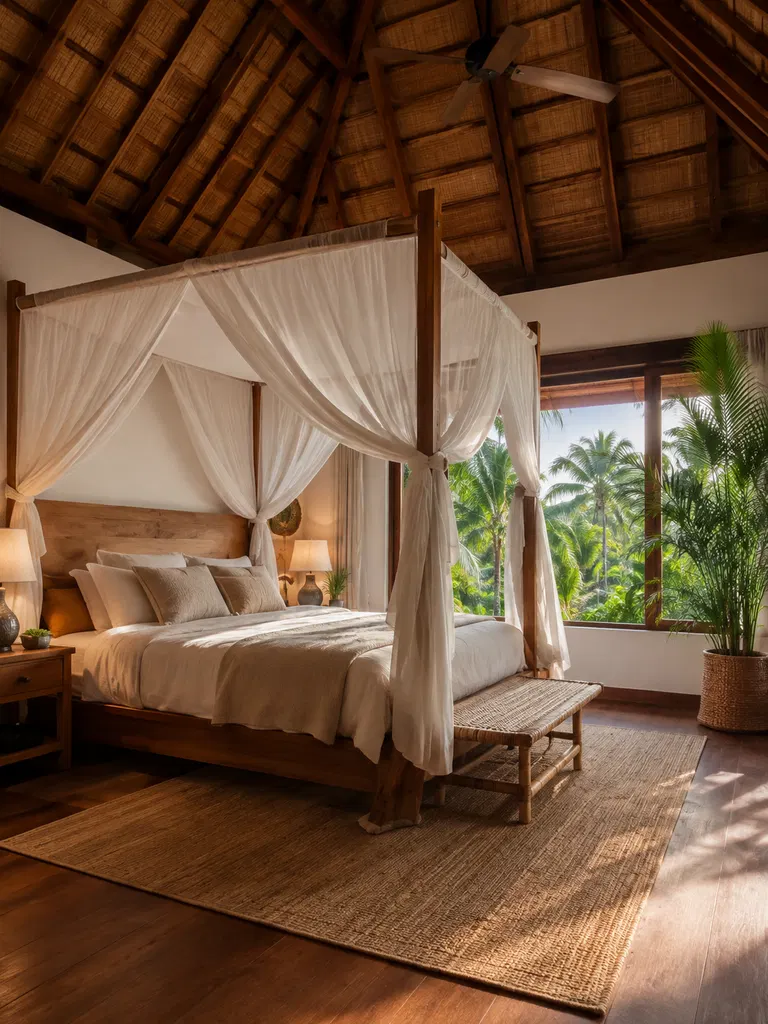
A canopy bed works beautifully under a tall loft roof because its vertical frame balances the height of the room. Choose a straightforward timber structure with light white or cream fabric rather than an ornate design. Linen bedding, a woven bench, natural rugs, and one large plant are enough to create a calm retreat. If the loft overlooks the living room, keep the bedding palette simple so it does not visually overwhelm the space below. A garden-facing window makes the bedroom feel even more connected to the tropical setting.
22. Compact Tropical Tiny Loft
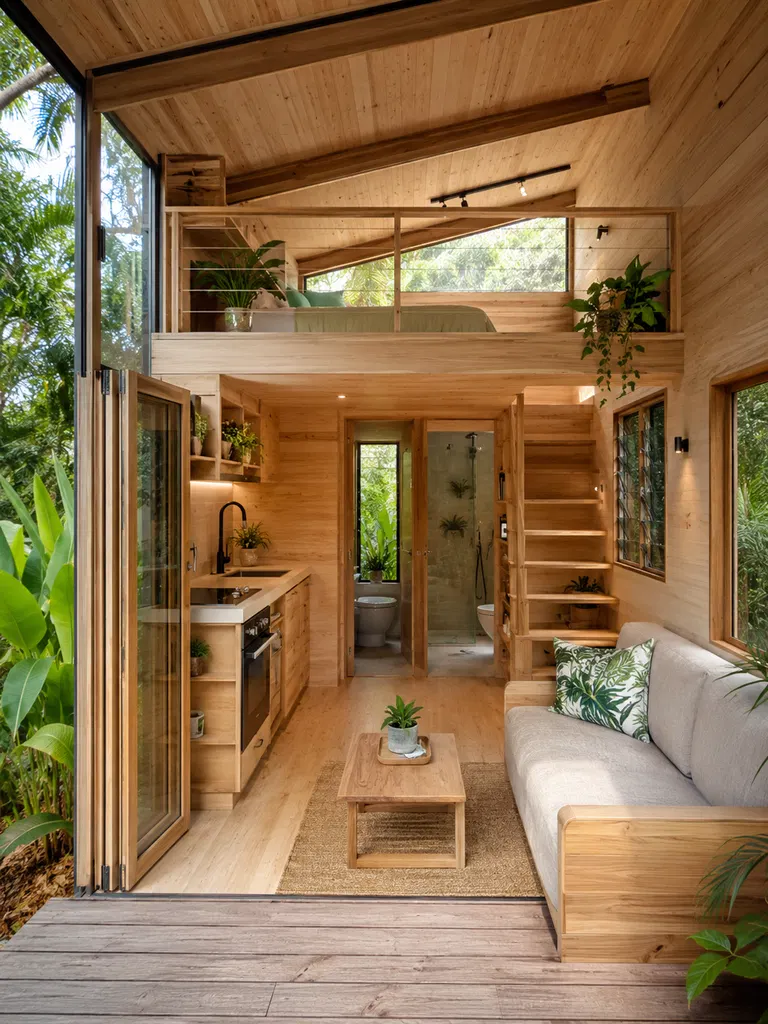
Small houses can still capture the full tropical loft look. Place the sleeping area above the kitchen or bathroom, keep the main living room open to the roof, and build storage into every usable gap. Light timber finishes make compact rooms feel larger, while folding glass doors can extend the living space onto a small deck. In a tiny home, every piece of furniture should earn its place. Built-in benches, narrow islands, wall shelves, and stair storage can remove the need for bulky freestanding furniture.
23. Coastal Tropical Loft House
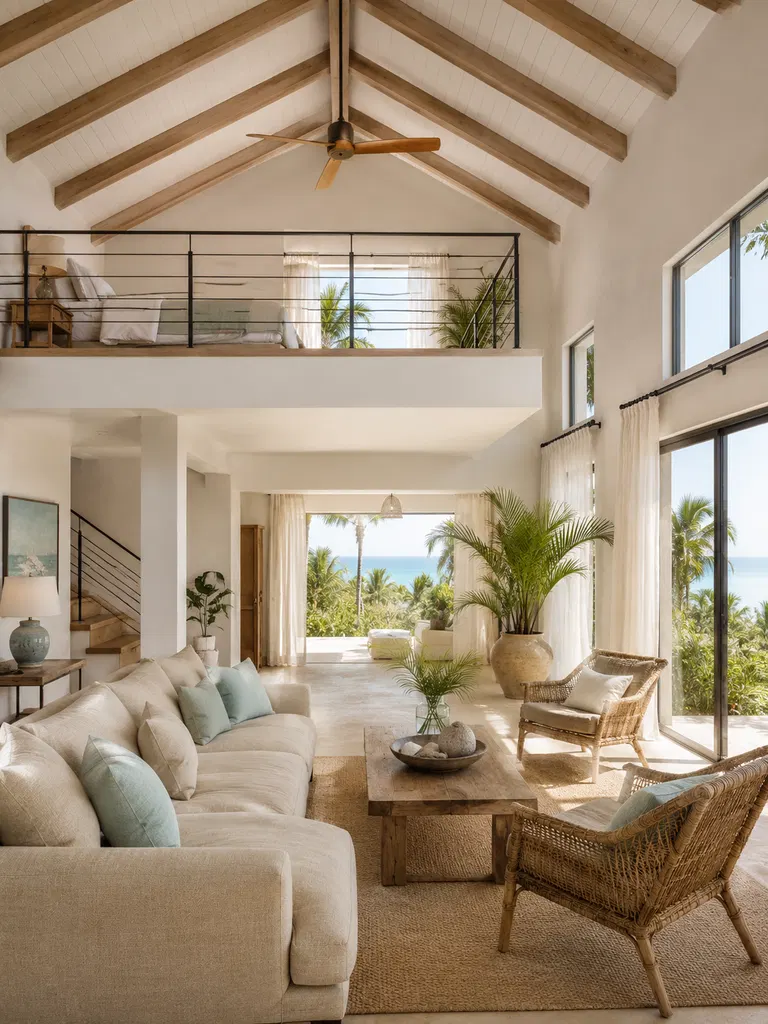
For a coastal tropical loft, start with pale wood, warm white walls, sandy fabrics, and a few soft blue-green accents. Let the ocean or garden view provide most of the color. Rattan chairs, linen curtains, and breezy ceiling fans reinforce the relaxed mood without turning the room into a nautical theme. The result should feel light, sun-washed, and easy rather than heavily decorated. Weathered timber, handmade ceramics, and natural fiber rugs can add character while keeping the palette calm.
24. Bohemian Tropical Loft
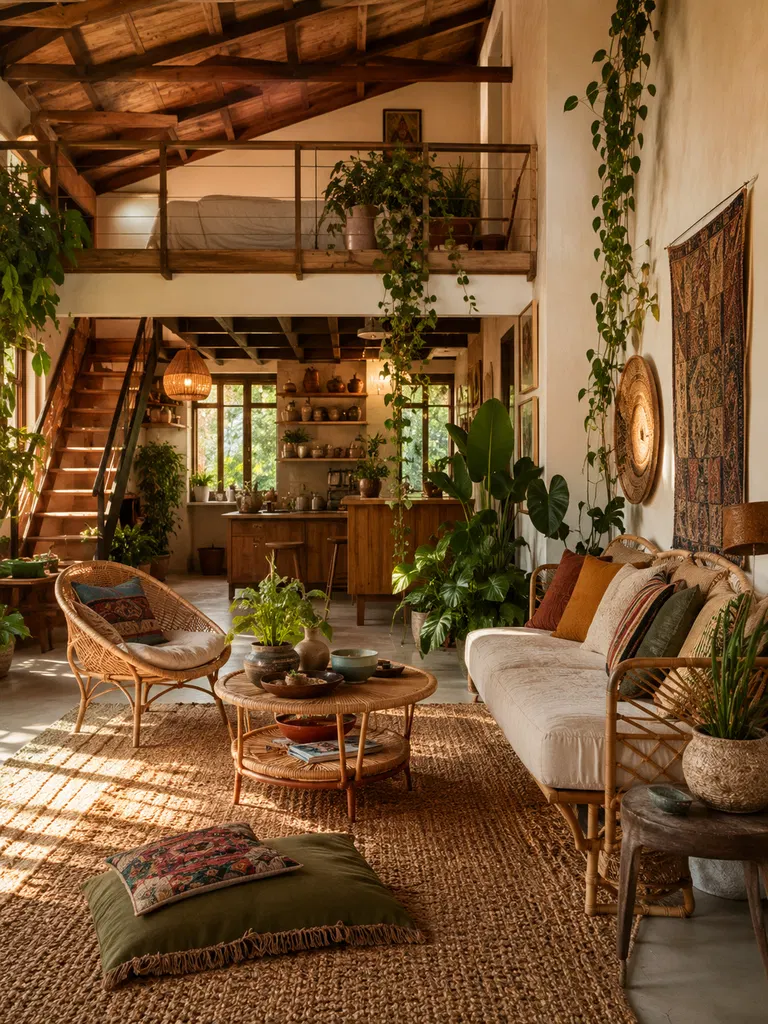
A bohemian tropical loft can handle more pattern and collected detail than a minimalist space. Layer vintage-style rugs, woven chairs, handmade pottery, textured cushions, hanging vines, and timber furniture. The key is giving the eye a few quiet areas, such as plain plaster walls or simple bedding, so the room still feels comfortable. Warm evening light makes this style especially inviting. Choose colors that repeat in several places instead of introducing a completely different shade with every accessory.
25. Minimalist Tropical Loft
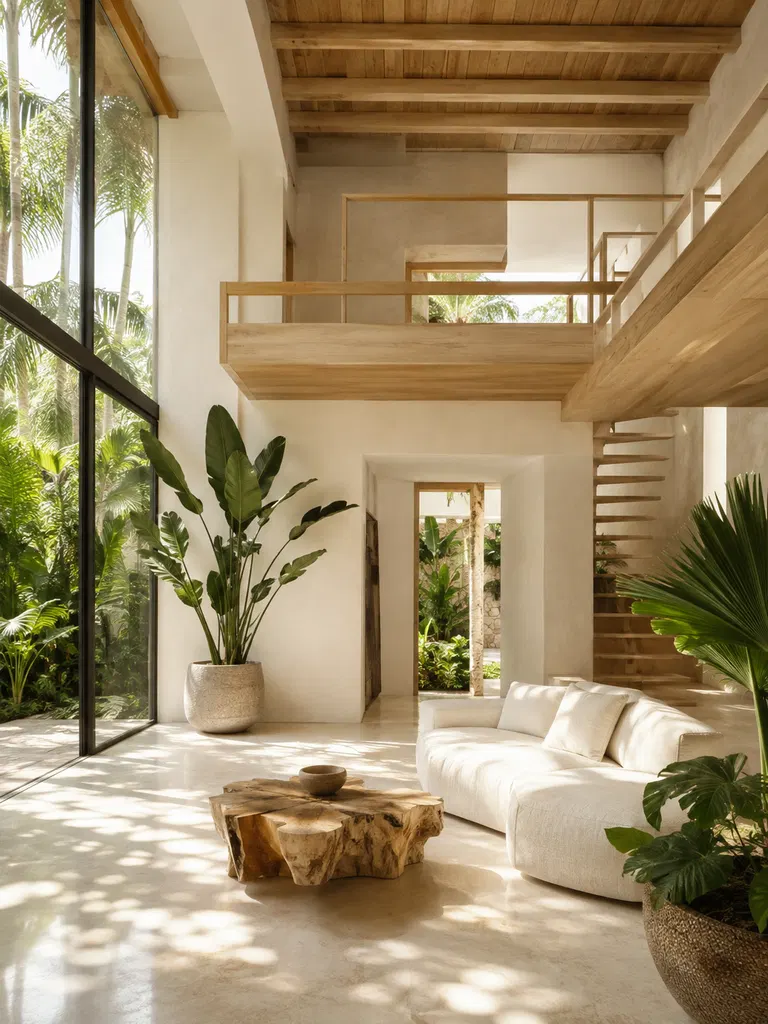
Minimal tropical design is about editing, not removing warmth. Use a limited palette of cream, pale timber, stone, black accents, and green plants. Choose furniture with clean lines and leave more open floor area than you normally would. Large windows and a few sculptural plants can provide all the tropical personality the room needs. This approach is particularly effective in smaller loft homes where visual clutter quickly becomes noticeable. One bold coffee table or oversized plant can replace a collection of small decorative objects.
26. Luxury Resort-Style Tropical Loft
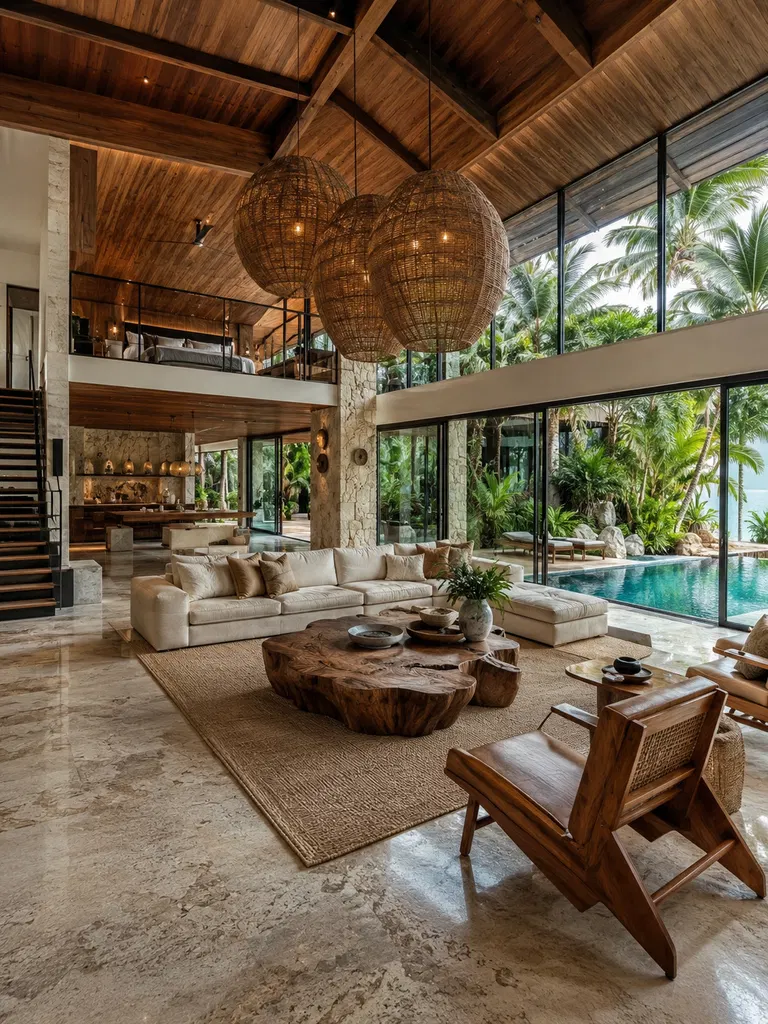
A resort-style loft feels luxurious when the materials are substantial and the layout is generous. Think large stone floors, broad timber doors, a dramatic pitched ceiling, sculptural furniture, and direct views toward a pool or dense garden. Keep accessories controlled and invest in good lighting instead. The room should feel rich because of proportion, materials, and atmosphere rather than because it is crowded with decorative pieces. Deep seating, high-quality linen, and one or two oversized woven lights can finish the look.
27. Industrial Tropical Loft
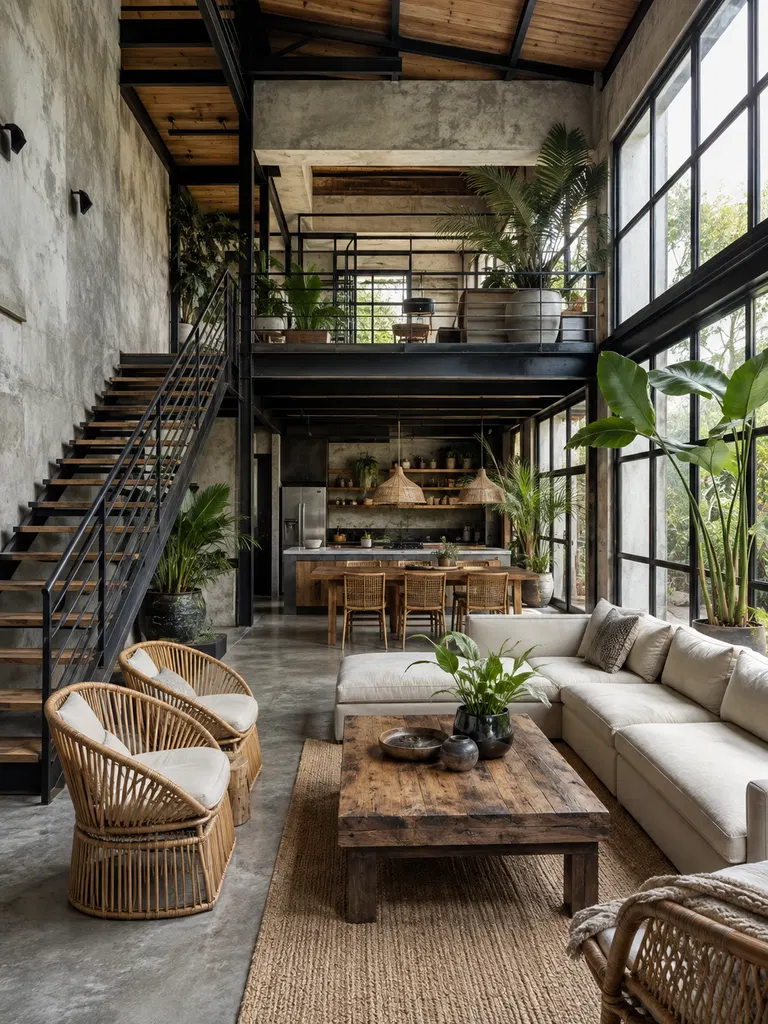
Industrial loft architecture can work surprisingly well in a tropical setting. Combine concrete walls, black steel stairs, and large factory-style windows with warm timber, rattan seating, natural rugs, and abundant foliage. Plants soften the hard surfaces, while wood prevents the space from feeling cold. This combination is a good fit for anyone who likes modern architecture but still wants a relaxed, nature-connected home. Use warm lighting at night so concrete and steel feel welcoming instead of stark.
28. Balinese-Inspired Tropical Loft
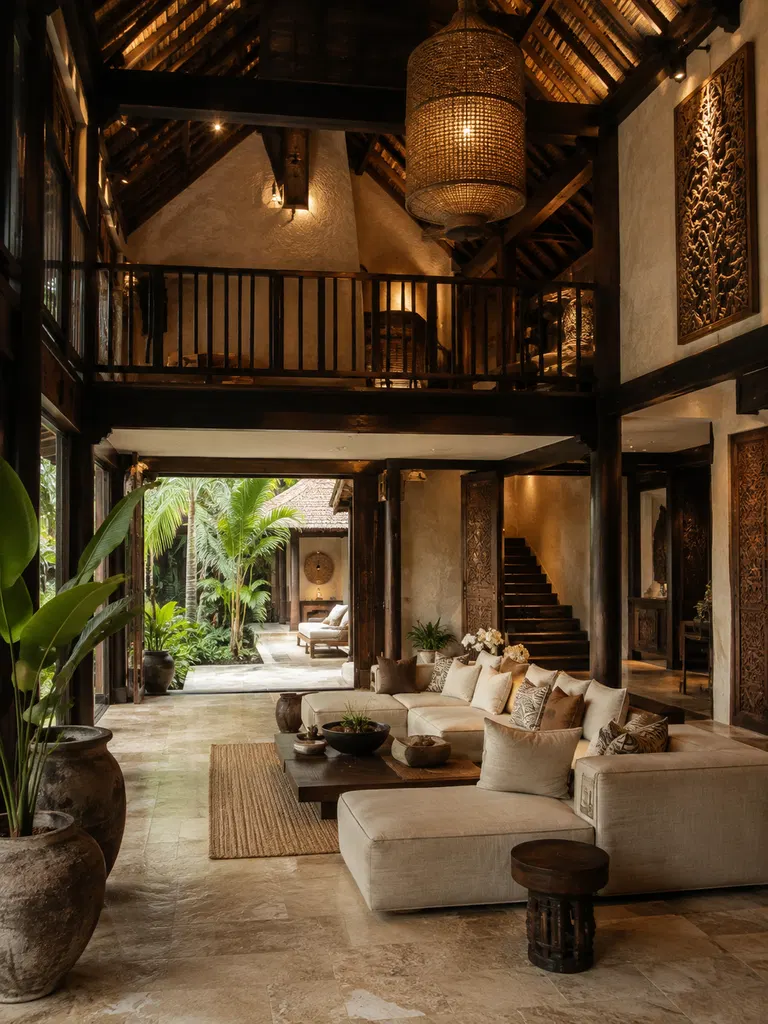
Balinese-inspired lofts are strongest when they borrow the mood rather than copying every decorative detail. Use dark timber beams, carved wood panels in selected areas, textured plaster, stone floors, low furniture, and views into a planted courtyard. Warm woven lighting adds depth after sunset. Keep modern elements simple so the handcrafted details can stand out without making the room feel heavy. Large openings toward greenery and water are often more important to the overall feeling than adding many small ornaments.
29. Caribbean-Inspired Loft Interior
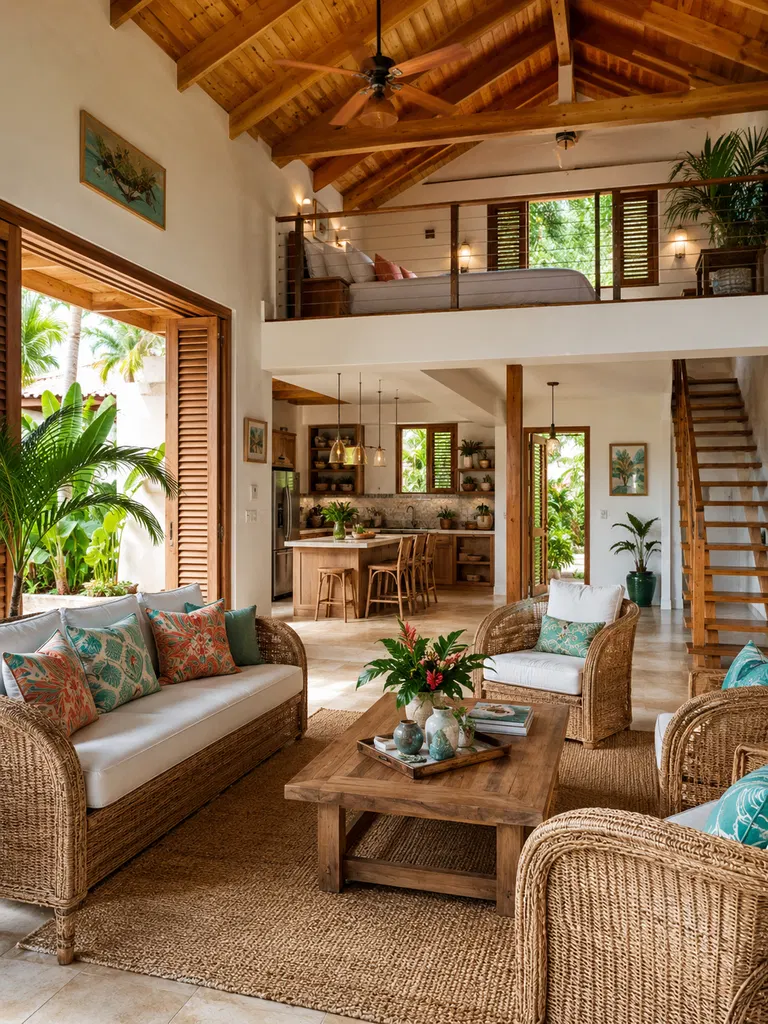
A Caribbean-inspired interior can bring more color into a tropical loft. Start with white or cream walls and warm timber, then add restrained turquoise, coral, or leafy green through cushions, art, or small furniture pieces. Shutter-style openings and woven chairs reinforce the breezy character. The palette should feel cheerful and fresh, with most large surfaces remaining neutral. Bright accents work best when they are repeated in two or three places rather than scattered randomly throughout the room.
30. Hawaiian Modern Loft House
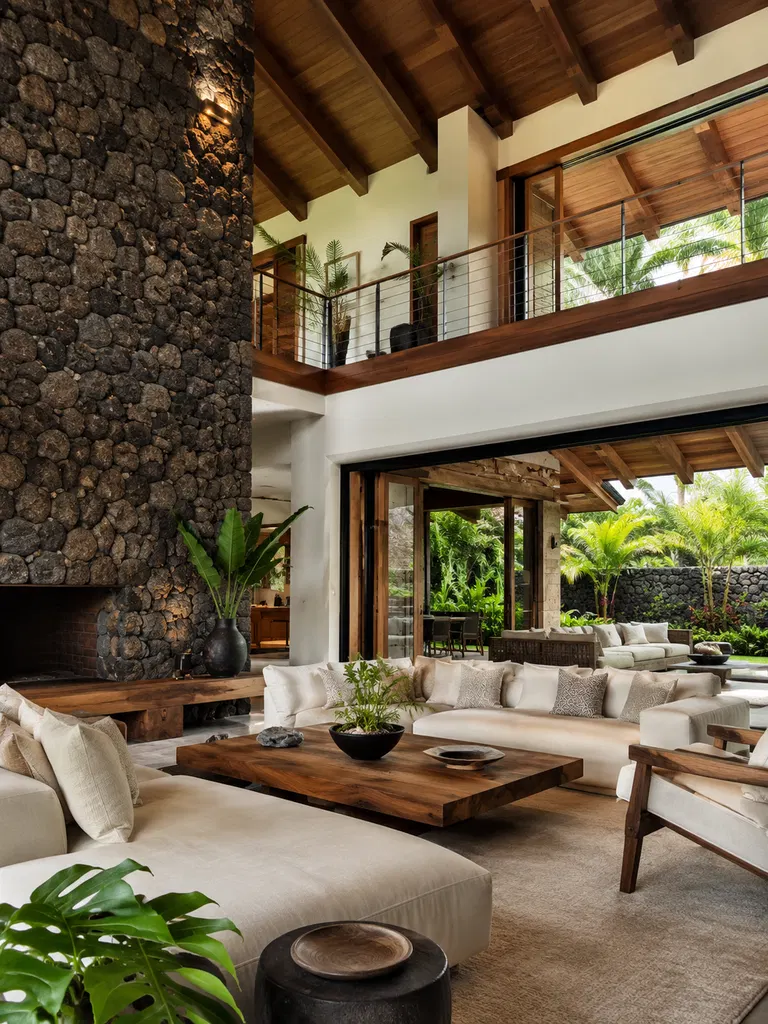
A Hawaiian-modern loft works well with strong natural materials and broad connections to the landscape. Volcanic-looking stone, exposed timber ceilings, deep overhangs, and large glass openings create a grounded architectural base. Inside, use contemporary neutral furniture so the stone and greenery stay prominent. The contrast between dark rock, warm wood, and lush planting gives this style its distinctive character. A covered terrace can extend the living area while protecting the interior from strong tropical sun and sudden rain.
31. Large Tropical Kitchen Island
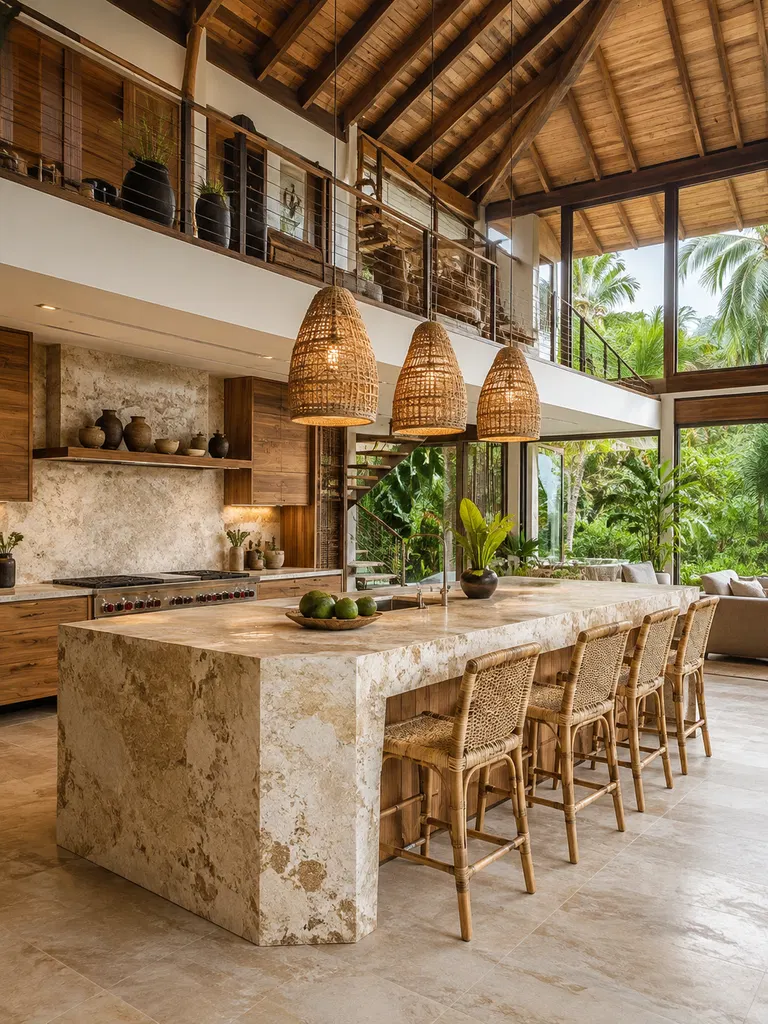
A large kitchen island can become the social center of an open tropical loft. Use a generous stone or timber surface with seating along one side so the island works for cooking, dining, and casual conversation. Woven stools and oversized pendants bring warmth to the large scale. Position the island where it still has a clear relationship with the living room and garden views. Deep drawers, concealed bins, and integrated appliances can keep the visible side of the kitchen looking calm and uncluttered.
32. Storage Built Into the Loft Stairs
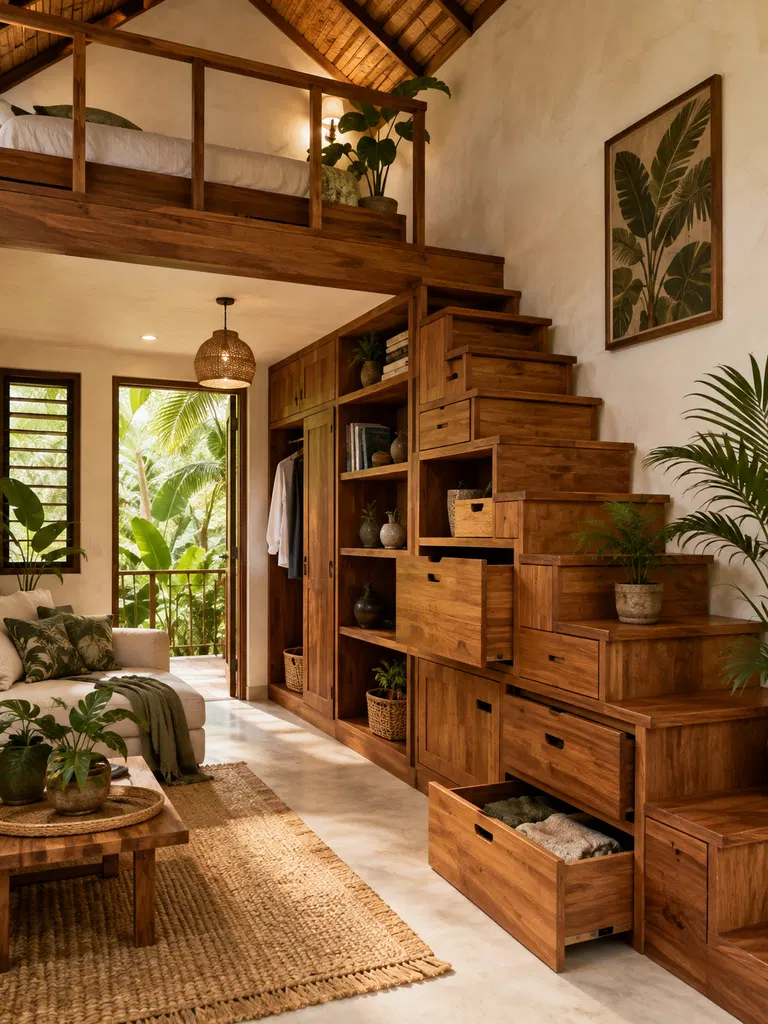
Loft stairs can hide a surprising amount of storage. Build drawers into the lower sections, cabinets beneath the run, and shelves along the side for books, baskets, or display pieces. Matching the storage to the stair timber makes the whole feature feel architectural rather than added later. In smaller houses, this arrangement can replace a separate wardrobe, media cabinet, or linen cupboard. Use a consistent pattern of handles or finger pulls so the many doors and drawers do not make the staircase look visually busy.
33. Tropical Reading Nook
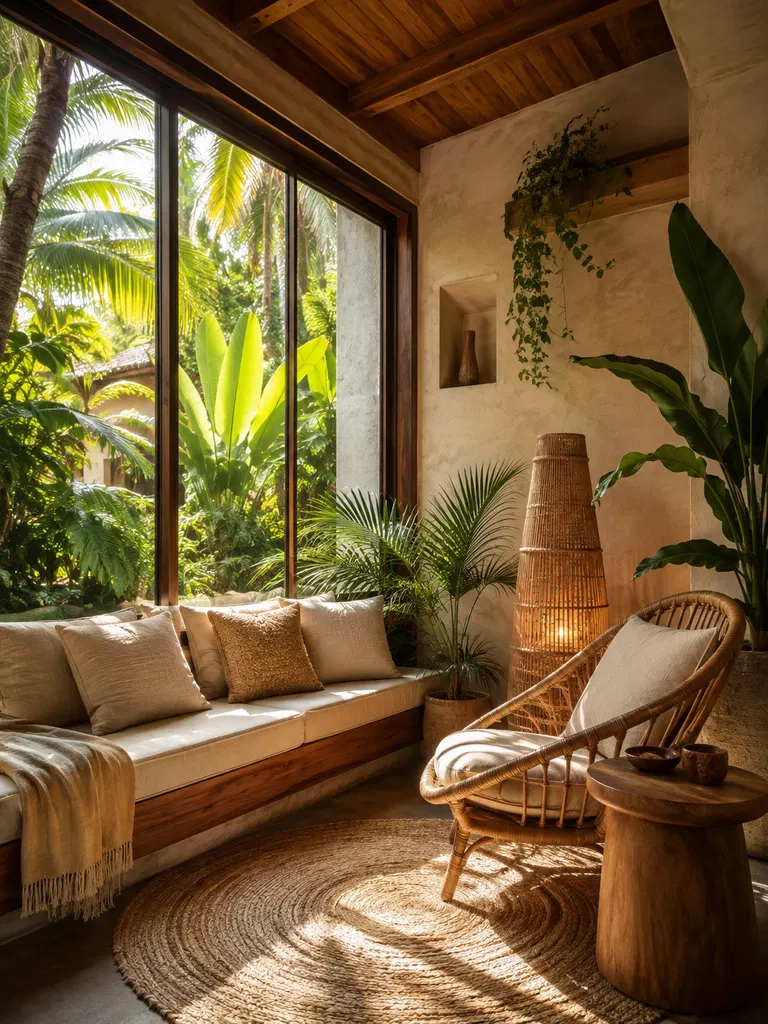
A reading nook is a perfect use for an awkward corner beside a tall window. Build a timber bench with deep linen cushions, add a rattan chair or compact side table, and frame the view with a few large plants. Good daylight matters more than lots of decoration. In the afternoon, warm filtered sun and a woven lamp can turn the nook into one of the most comfortable places in the house. Add hidden storage beneath the bench if the loft needs extra space for books, blankets, or seasonal items.
34. Loft Home Office
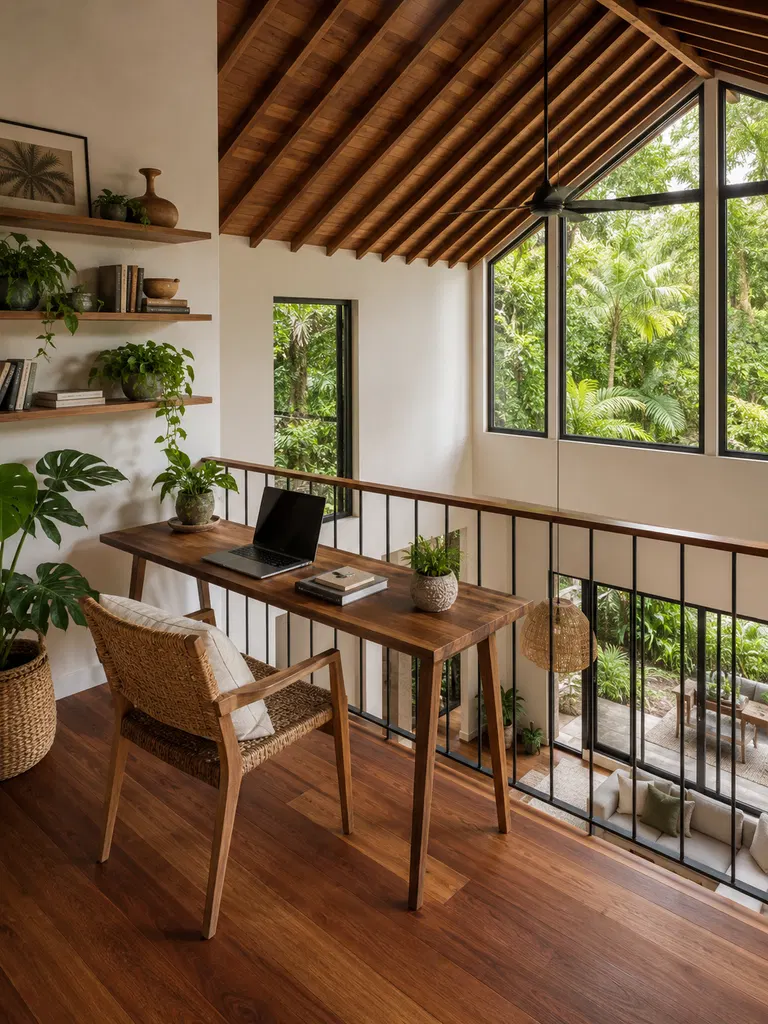
A mezzanine office keeps work separate from the main living area without isolating it completely. A slim timber desk, comfortable woven chair, small shelving system, and a few plants are usually enough. Position the desk near a window or railing so the workspace benefits from the full height and daylight of the loft. Keep cables and storage controlled so the open office still looks calm from below. A small rug can define the work zone without adding another wall.
35. Loft Library Wall
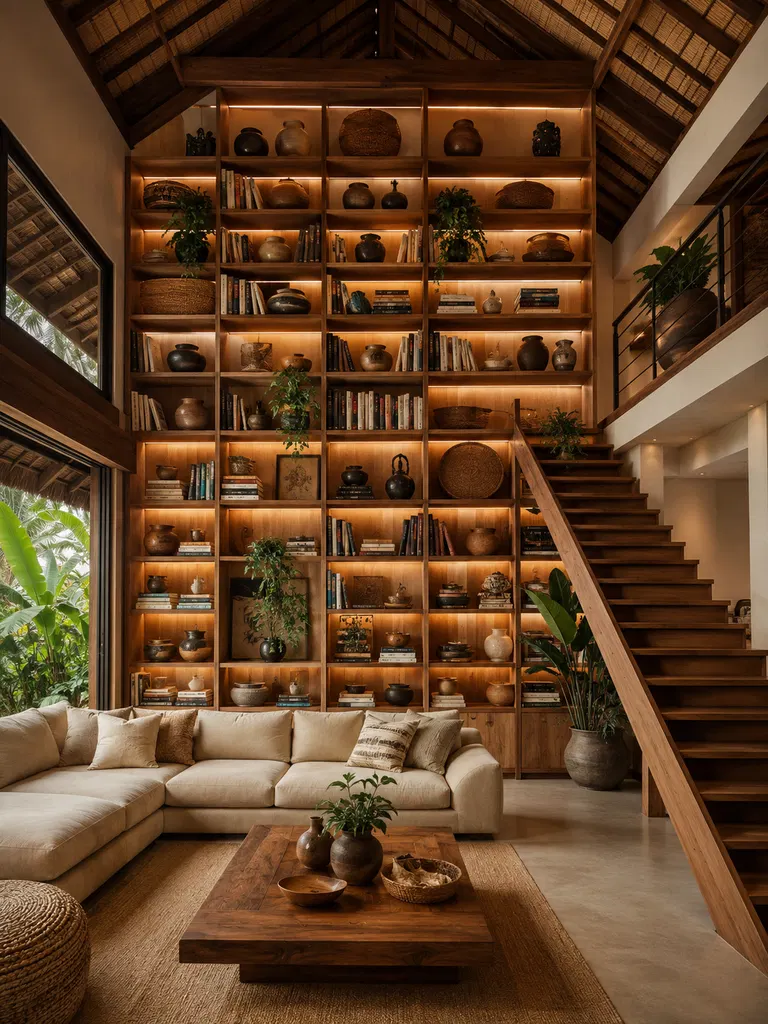
A tall library wall makes excellent use of the vertical space in a loft house. Extend shelving toward the roof or mezzanine and mix books with pottery, baskets, and plants so the wall feels warm rather than formal. Integrated lighting helps the shelves glow at night. A staircase running beside the library can make the feature feel like part of the architecture rather than a separate cabinet. Leave some shelves partly empty so the wall has rhythm and does not become visually overwhelming.
36. Rooftop Tropical Garden
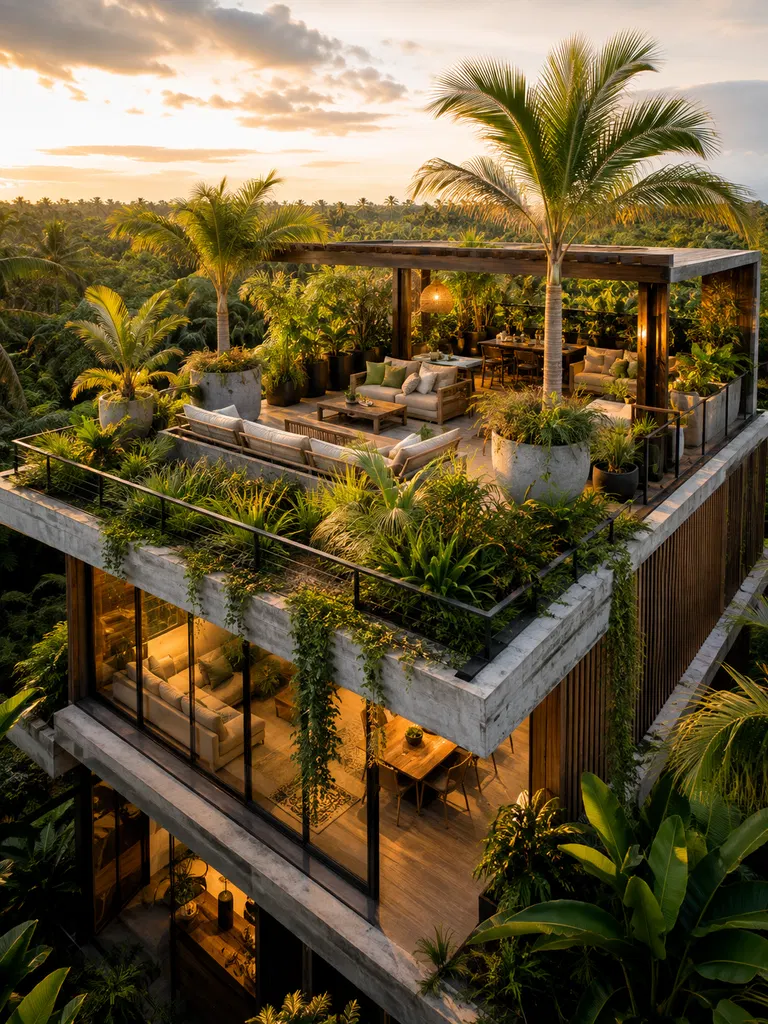
A rooftop garden adds another outdoor room without increasing the footprint of the house. Use deep planters for palms and grasses, a shaded seating area, comfortable outdoor furniture, and durable flooring that can handle sun and rain. At sunset, the roof can become a quiet lounge above the surrounding greenery. Proper waterproofing, drainage, wind exposure, and planter weight should be planned before decorative planting begins. A pergola or light canopy can provide welcome shade during the hottest part of the day.
37. Wraparound Tropical Deck
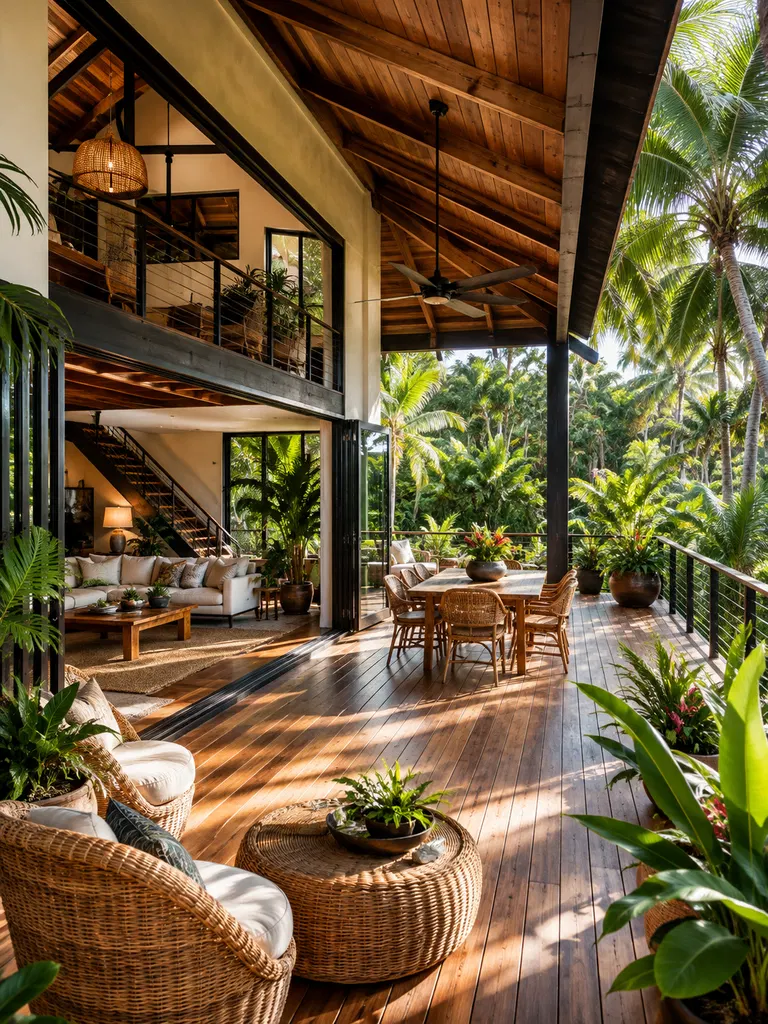
A wraparound deck can expand everyday living far beyond the walls of a tropical loft. Connect it to the living room with wide sliding doors and create separate zones for dining, lounging, and plants. A covered section provides shade while an open edge can catch more sun. Repeating the same wood tone inside and outside helps the two areas feel connected. Use outdoor furniture with enough visual weight to suit the scale of the deck rather than scattering many small chairs and tables around the perimeter.
38. Loft House with a Plunge Pool
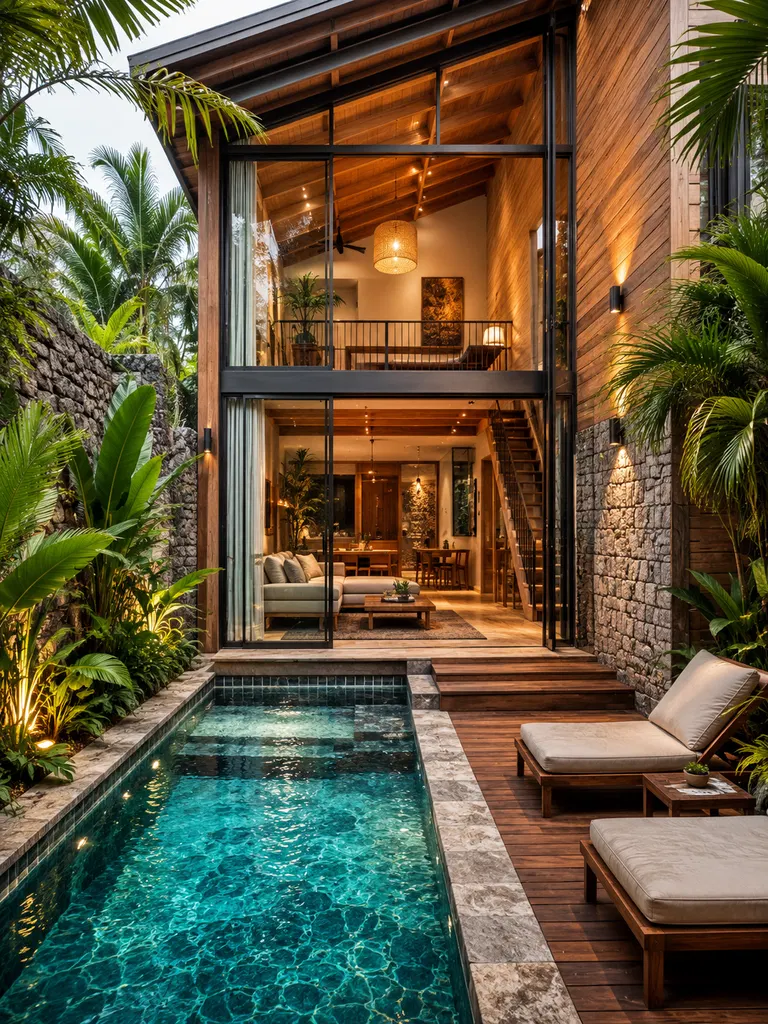
A plunge pool is a smart choice when the property is too compact for a large swimming pool. Place it directly outside the living room so the water becomes part of the view. Stone edging, timber decking, and dense planting can make a small pool feel private and resort-like. At night, subtle underwater and garden lighting adds atmosphere without overpowering the architecture. A narrow rectangular pool often fits especially well beside a compact loft house or within a small courtyard.
39. Sunken Tropical Living Area
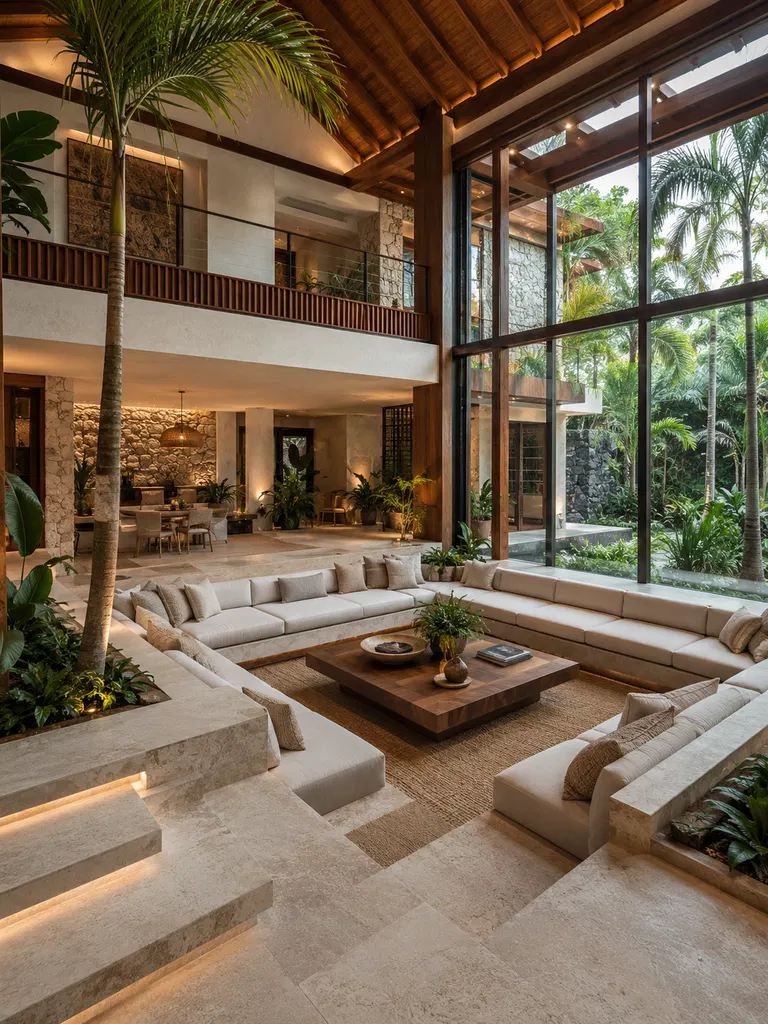
A sunken lounge gives an open floor plan definition without building walls. Lower the seating area by one or two steps and wrap it with a generous sectional around a low timber table. This creates an intimate conversation zone while the double-height room still feels connected. Integrated step lighting is both practical and attractive after dark. Keep the change in level obvious and allow comfortable circulation around the edge so the feature remains safe for everyday use.
40. Natural Stone Flooring
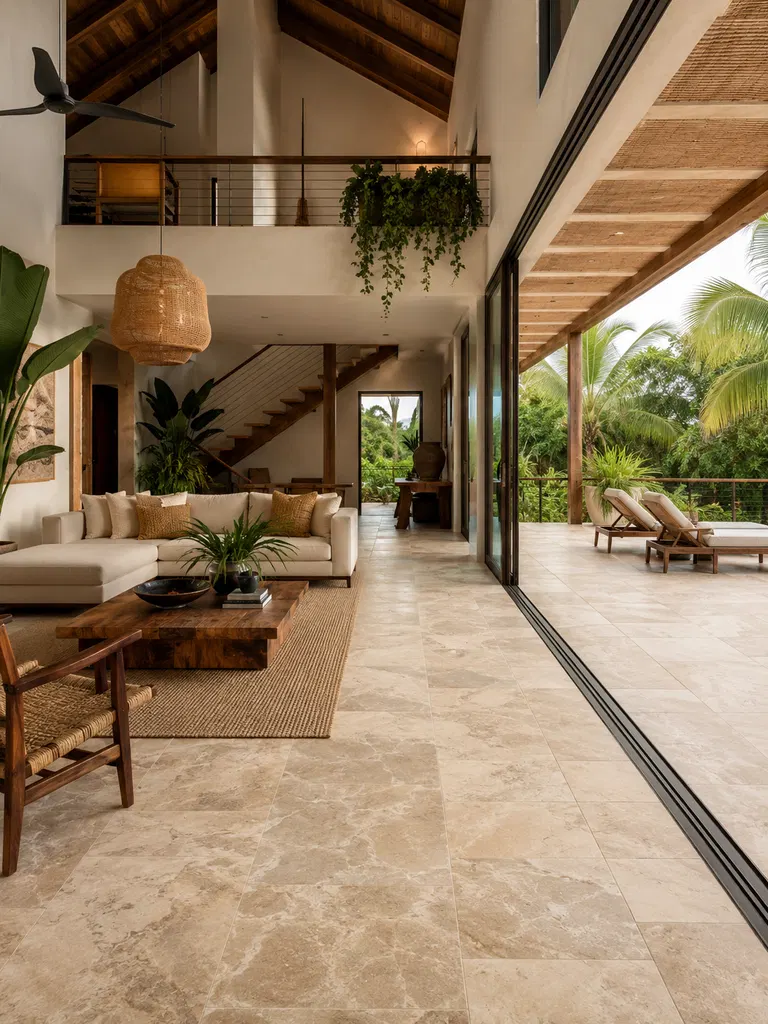
Natural stone flooring provides a calm, durable base for a tropical loft. Large-format limestone-style tiles, textured stone, or similarly warm surfaces work well with timber furniture and woven rugs. If practical, continue the same flooring tone onto a terrace to make the indoor-outdoor transition feel more connected. Because stone can be visually strong, keep nearby furniture shapes simple and comfortable. Natural variation in the surface can help hide everyday wear while adding depth to a neutral interior.
41. Soft Arched Openings
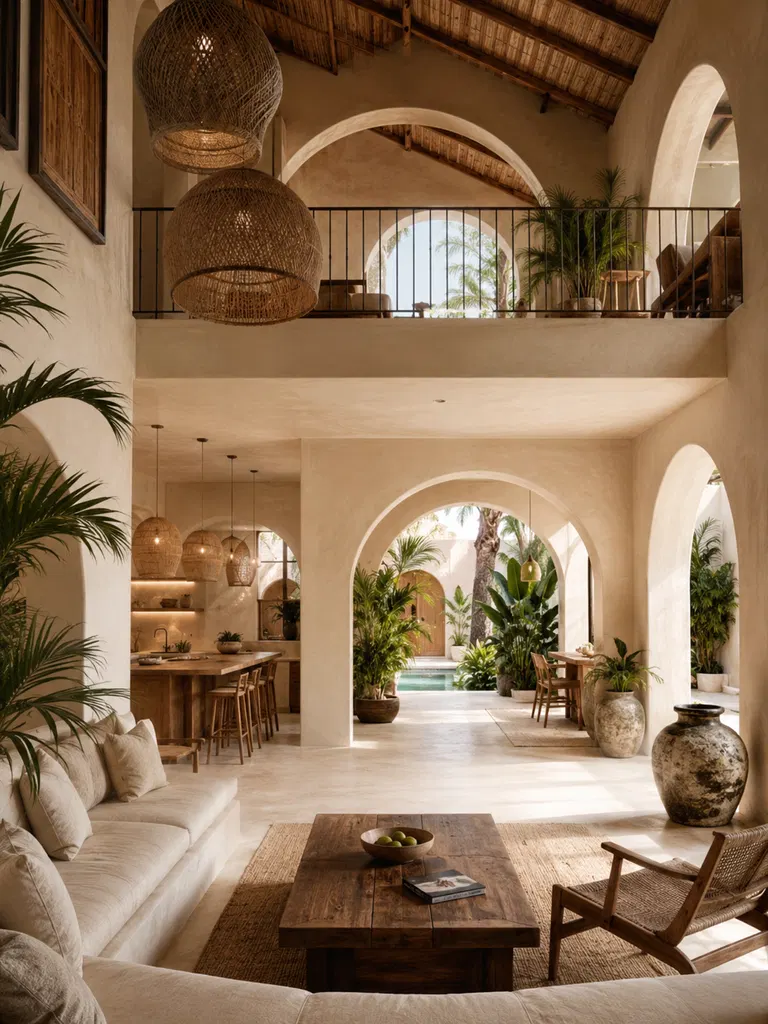
Soft arches can make a modern tropical loft feel warmer and more relaxed. Use broad openings between the living room, kitchen, courtyard, or hallway rather than adding small decorative arches everywhere. Warm plaster emphasizes the curves, while timber furniture and woven lights keep the look grounded. The combination can feel Mediterranean, tropical, and contemporary at the same time. Repeating the arch shape in only a few important openings creates a stronger result than using it on every doorway.
42. Screened Tropical Breezeway
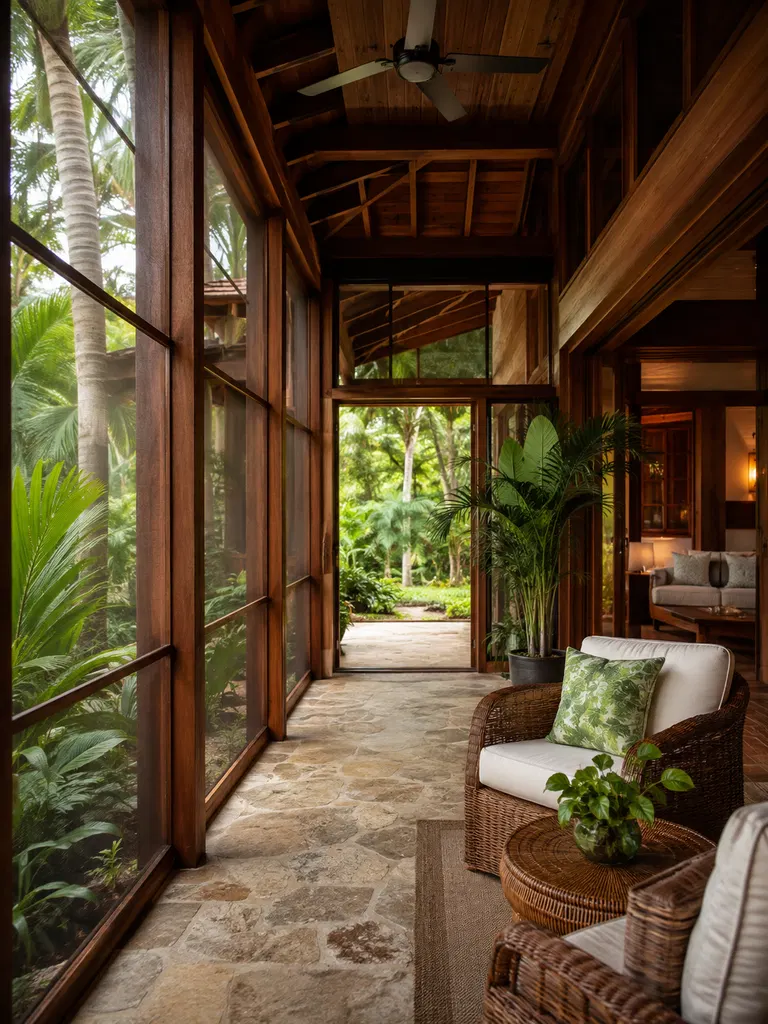
A screened breezeway creates a comfortable middle ground between indoor and outdoor living. Use fine insect screens, timber framing, stone or wood flooring, ceiling fans, and easy lounge seating. The space can connect two wings of the house or simply act as a shaded garden room. Because air can move through freely, it often becomes one of the most useful areas in a warm climate. Add a small table, reading chair, or daybed so the breezeway becomes a destination rather than only a passage.
43. Rain Garden Beside the Loft
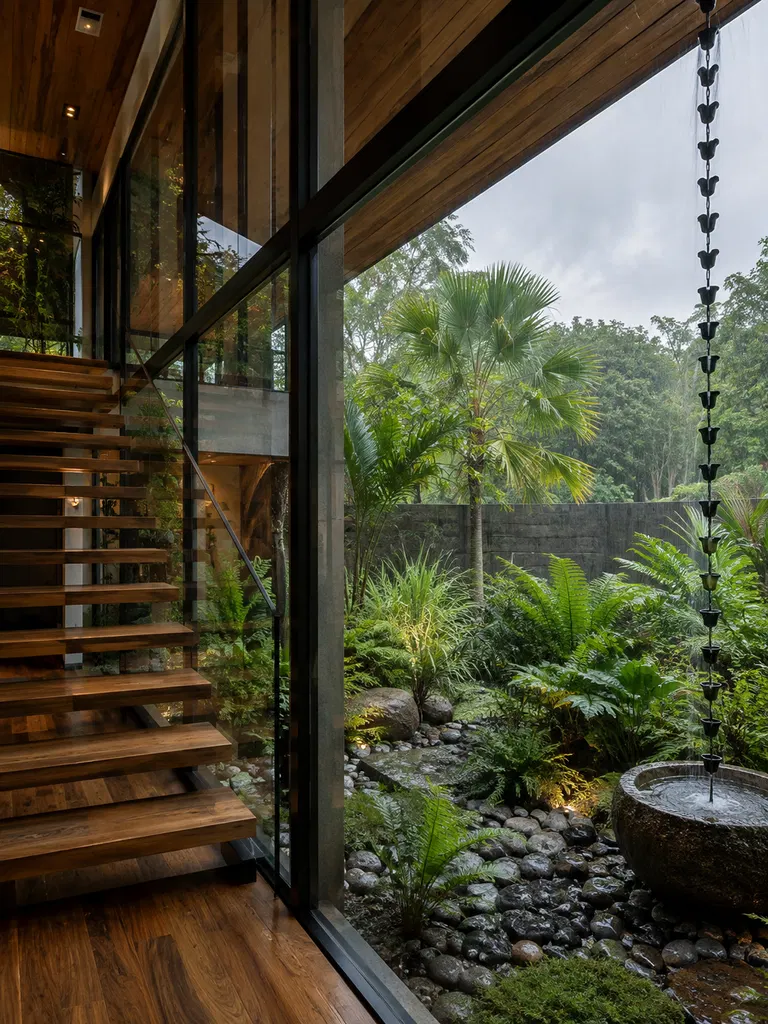
A rain garden beside tall glass can turn wet weather into part of the home’s atmosphere. Combine river stones, ferns, grasses, palms, and a rain chain that feeds a basin or planted area. Place the garden beside a staircase, entry, or lounge where it can be seen easily. During storms, the movement of water adds another layer of texture without requiring any decoration inside. Use plants that tolerate changing moisture levels and make sure water drains away from the building structure.
44. Warm Tropical Night Lighting
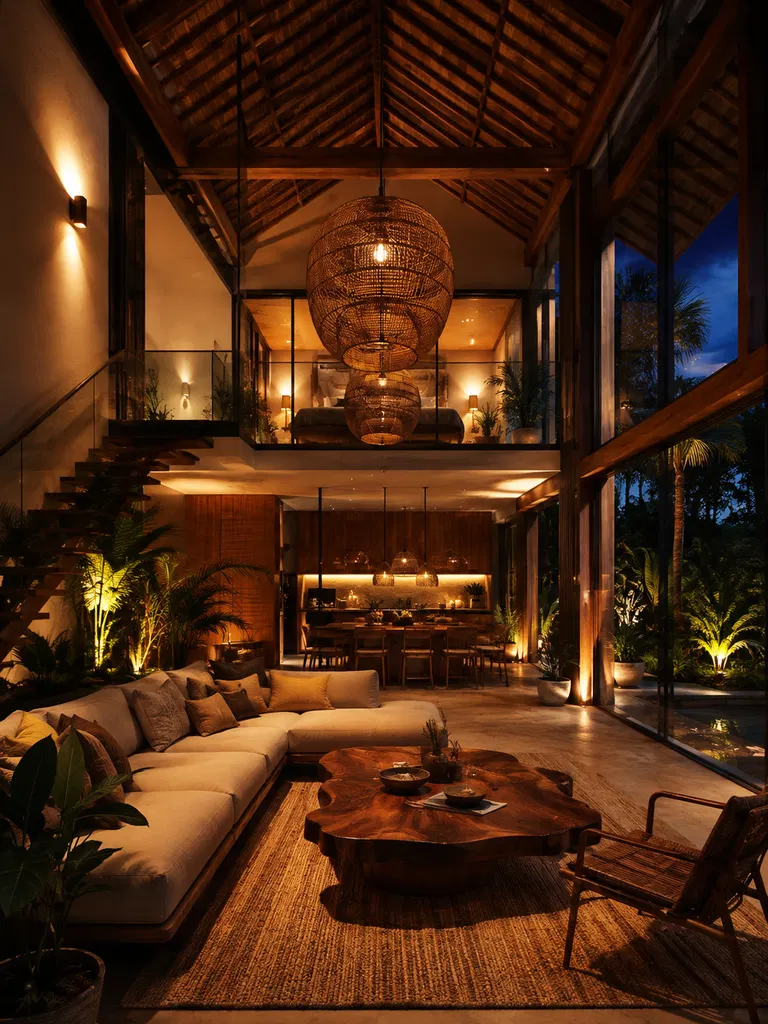
Tropical lofts become especially beautiful after sunset when the lighting is layered. Use warm pendants, wall sconces, concealed lights along timber details, small lamps near seating, and subtle illumination in the garden. Avoid relying on one bright ceiling fixture. The goal is to create pockets of light that reveal the texture of wood, stone, plants, and woven materials. Dimmers are useful because they allow the same open room to feel bright for practical tasks and much softer later in the evening.
45. Small Tropical Loft House with a Dramatic Facade
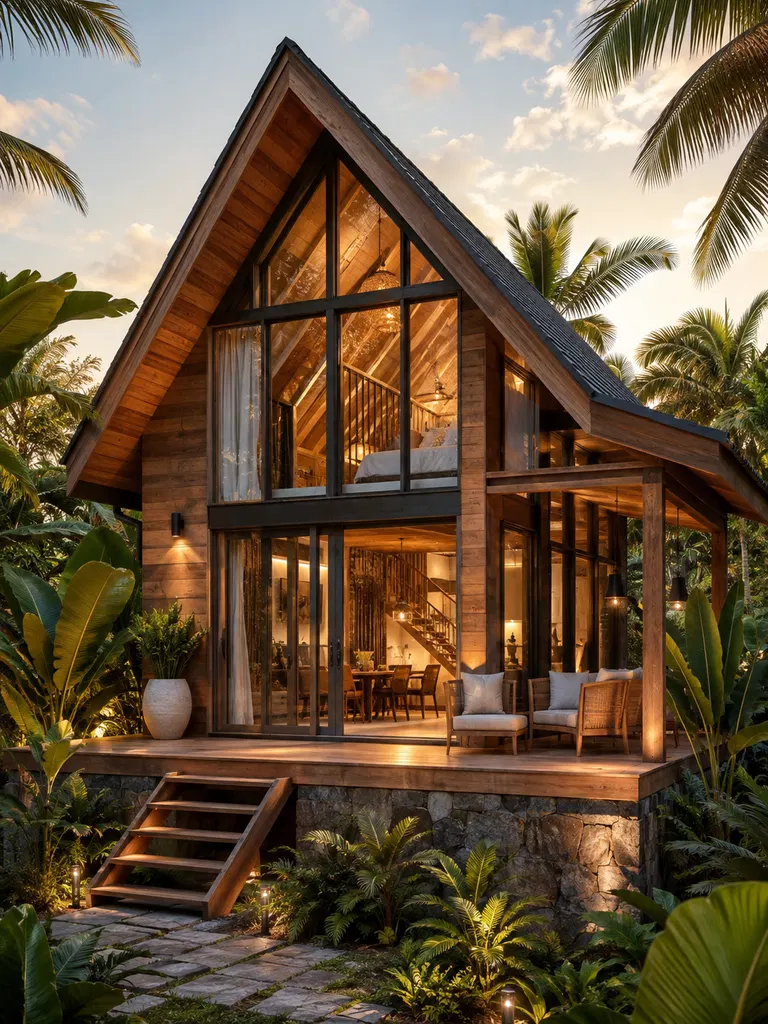
A small tropical loft house can still have a striking exterior. A steep pitched roof, tall central window, timber cladding, stone details, and dense planting can give a compact footprint real presence. Let the large glass opening reveal the mezzanine inside, then add a simple deck or covered porch at ground level. Strong proportions and a few natural materials often make a better facade than too many decorative features. Warm interior lighting at dusk can make the tall glass front look especially inviting from the garden.
Final Thoughts
The most appealing tropical loft house design ideas share a few things in common: generous natural light, strong vertical space, warm materials, greenery, and an easy relationship with the outdoors. A house does not need every feature on this list to feel tropical. One well-designed mezzanine, a broad set of garden doors, exposed timber, a few large plants, and a calm natural palette can already change the mood dramatically.
For a compact property, focus on multifunctional stairs, open mezzanines, built-in storage, and outdoor extensions such as decks or small plunge pools. In a larger home, courtyards, double-height glass, rooftop gardens, and dramatic living spaces can create a stronger resort-like experience.
Choose the ideas that fit your climate, budget, and floor plan, then keep the materials consistent from room to room. That restraint is what allows a tropical loft to feel relaxed, polished, and genuinely comfortable rather than simply decorated around a theme.