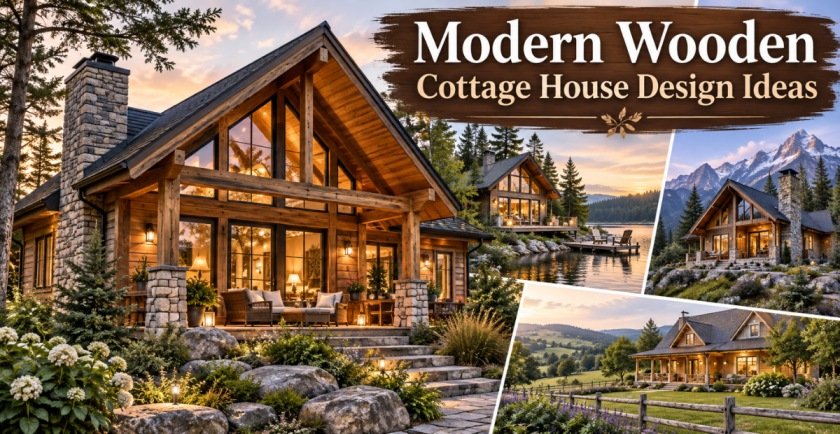
Wooden cottages have a timeless quality that makes them feel equally at home in a quiet forest, beside a lake, on a mountain slope, or in the middle of open countryside. What has changed in recent years is the way designers combine traditional rustic materials with cleaner, more contemporary architecture. Instead of heavy log cabins and overly decorative country homes, today’s cottages often feature simple rooflines, oversized windows, natural timber siding, stone accents, black metal details, and beautifully planned outdoor areas.
The best wooden cottage house design ideas balance warmth and character with a fresh, modern appearance. A cottage can still feel rustic without looking old-fashioned, especially when natural wood is paired with architectural glass, streamlined roofing, minimal railings, and thoughtful landscaping.
Whether you are planning a compact weekend retreat, a cozy woodland house, a lakeside escape, or a larger countryside property, the exterior design sets the entire mood. The following 45 ideas focus exclusively on outside architecture, materials, porches, decks, roof styles, entrances, landscaping, and exterior finishes to help you create a wooden cottage that feels distinctive, inviting, and beautifully connected to its surroundings.
What Defines a Modern Rustic Wooden Cottage Exterior?
A modern rustic wooden cottage usually begins with natural materials. Timber remains the most important element, but the way it is used can completely change the character of the house. Light cedar gives a Scandinavian feeling, dark-stained boards create a dramatic forest retreat, and weathered wood produces a softer countryside appearance.
Modern cottages also tend to use larger windows than traditional designs. Floor-to-ceiling glazing, wide picture windows, and glass doors bring light into the home while making the exterior feel more open. Simple gabled roofs, standing-seam metal roofing, stone chimneys, deep porches, and elevated decks add structure and character.
Another important feature is restraint. Instead of using many decorative elements, modern cottage exteriors usually rely on a limited selection of materials and colors. Wood, stone, glass, and metal are often enough. Natural landscaping then helps the house feel settled into its environment rather than appearing disconnected from the land around it.
1. Black-Stained Timber Cottage With Full Glass Front
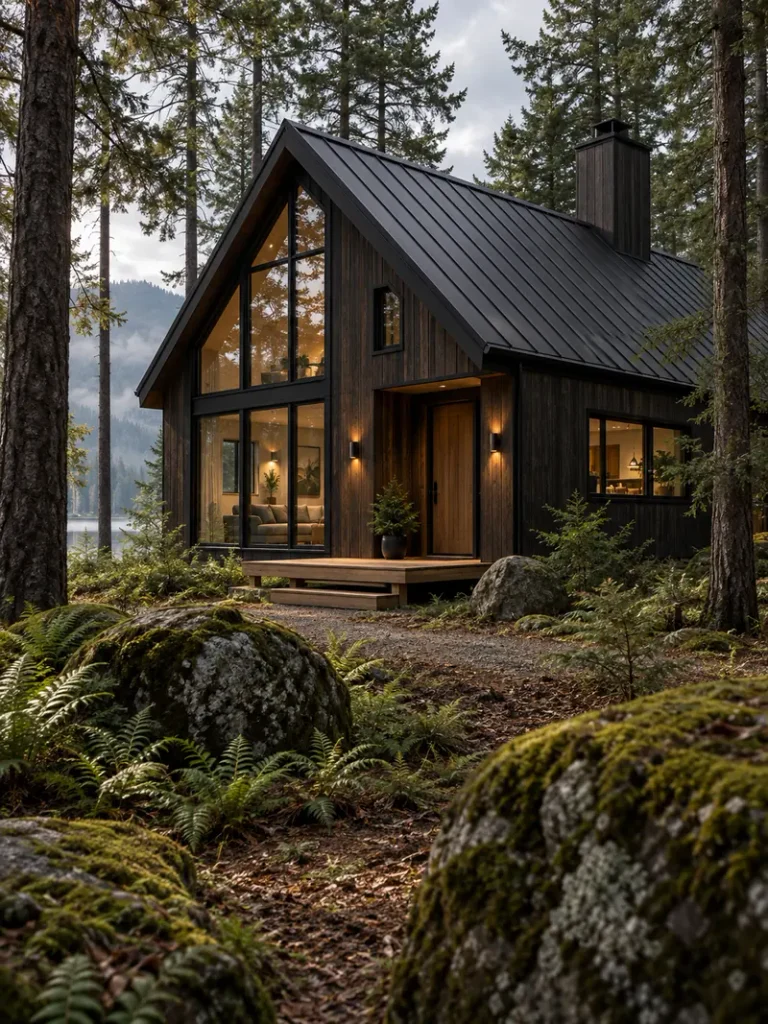
A black-stained wooden cottage can look incredibly striking when surrounded by trees. Use vertical timber boards across most of the exterior, then introduce a full-height glass section at the front. The dark cladding helps the cottage visually recede into the landscape during the day, while warm interior lighting creates a glowing lantern effect in the evening.
2. Scandinavian Pale-Wood Cottage With Steep Gable Roof
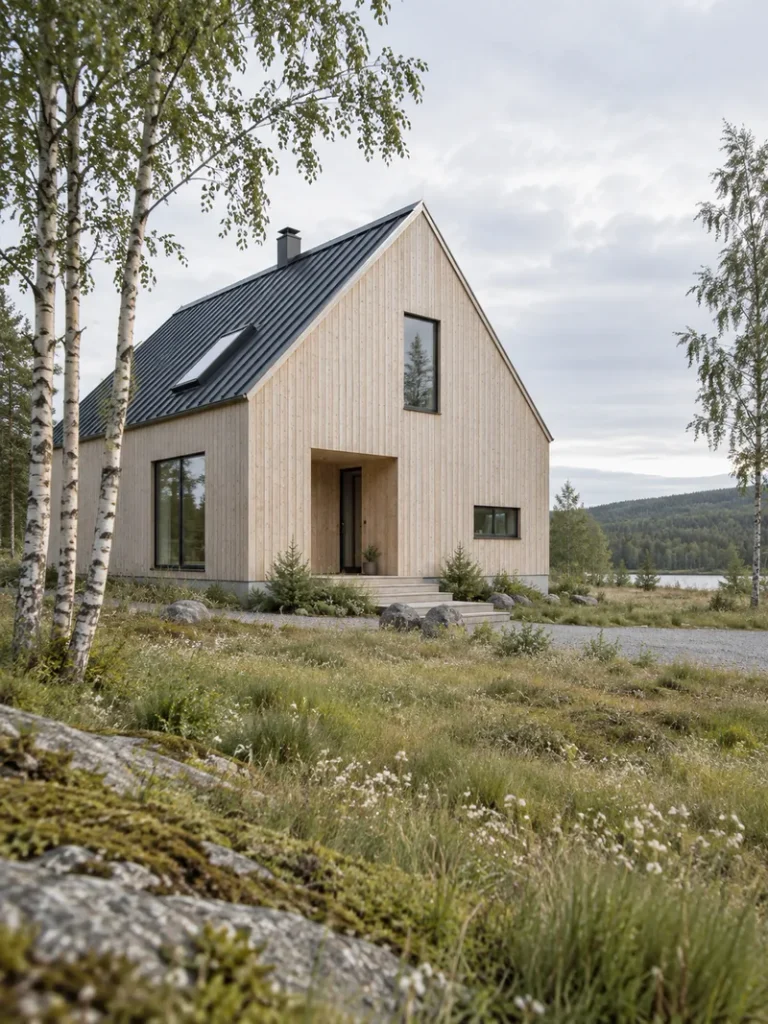
For a lighter appearance, choose pale pine, spruce, or cedar siding combined with a sharply pitched gabled roof. Keep the trim minimal and use slim dark window frames for contrast. This design works especially well in open woodland or snowy regions, where the clean timber exterior creates a calm Scandinavian-inspired look.
3. Modern A-Frame Wooden Cottage With Extended Deck
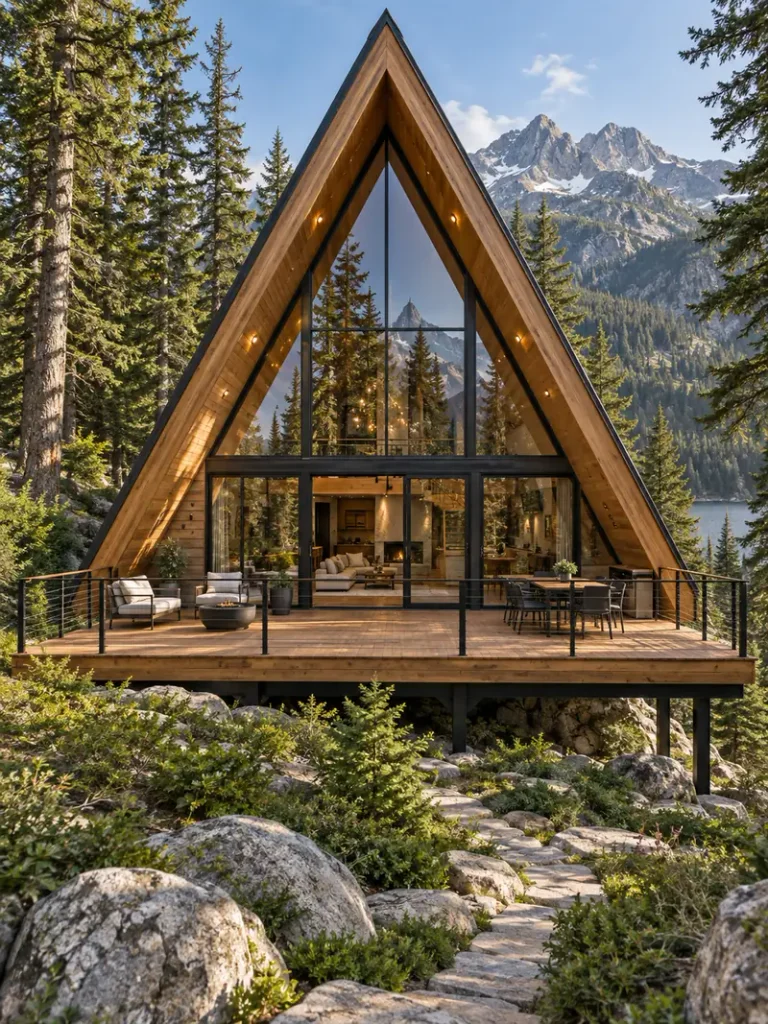
An A-frame cottage instantly creates a memorable silhouette. Update the traditional design by using smooth timber siding, large triangular glazing, and a wide deck extending from the front. Keep railings simple so they do not compete with the dramatic roof shape. The result feels both nostalgic and architectural.
4. Cedar Cottage With Massive Natural Stone Chimney
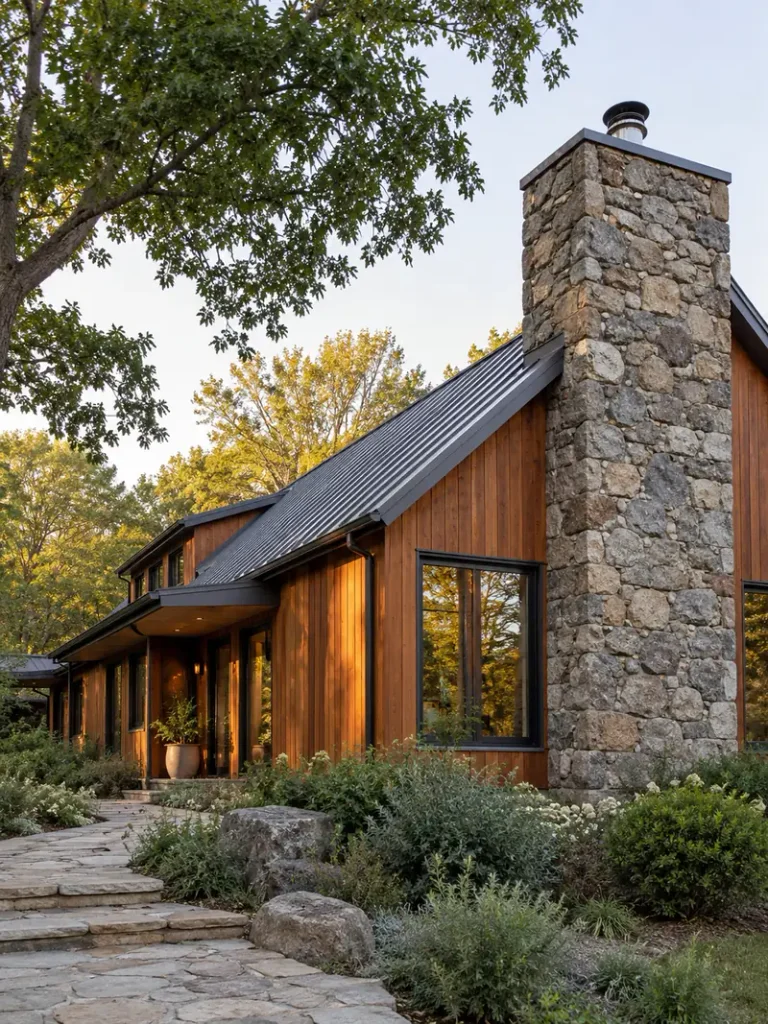
Combine warm cedar boards with one oversized stone chimney rising prominently above the roof. The chimney acts as a rustic focal point while the remaining exterior can stay relatively minimal. Choose irregular local stone rather than highly polished masonry to keep the overall design connected to its natural surroundings.
5. Rustic Wooden Cottage With Wraparound Veranda
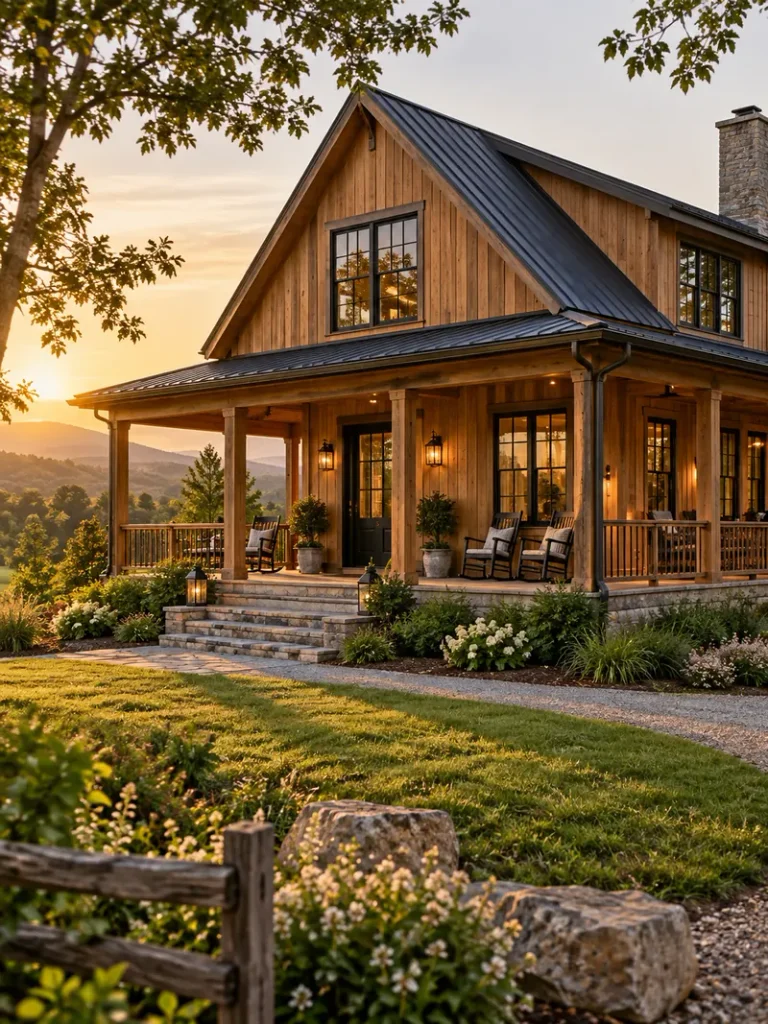
A wraparound veranda gives a cottage an instantly welcoming country feel. Use substantial wooden posts, simple railings, and generous roof overhangs. Rather than filling the porch with decorative details, keep the structure clean and let the natural wood grain provide character. This works particularly well on cottages surrounded by gardens or fields.
6. Lakeside Timber Cottage With Cantilevered Deck
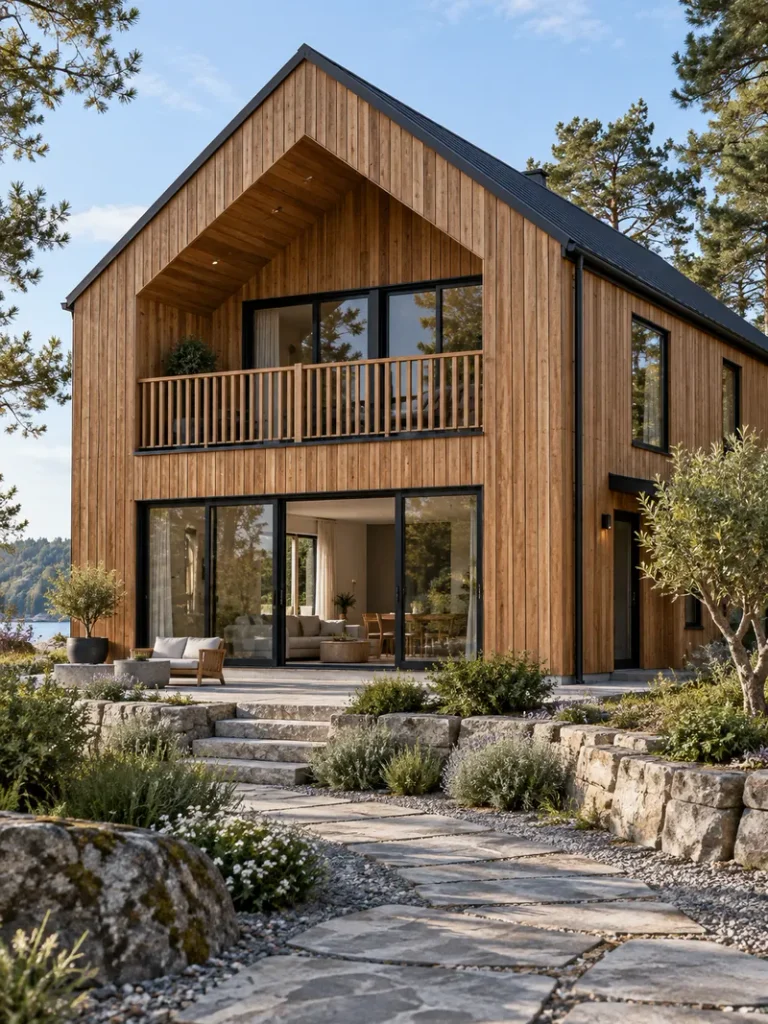
A cottage near water can benefit from a deck that appears to project toward the lake. Use horizontal timber siding and large windows facing the view, then extend a wide platform outward with minimal supports. Glass or slim metal railings can preserve sightlines while giving the cottage a more contemporary appearance.
7. Dark Wood Forest Cottage With Black Metal Roof
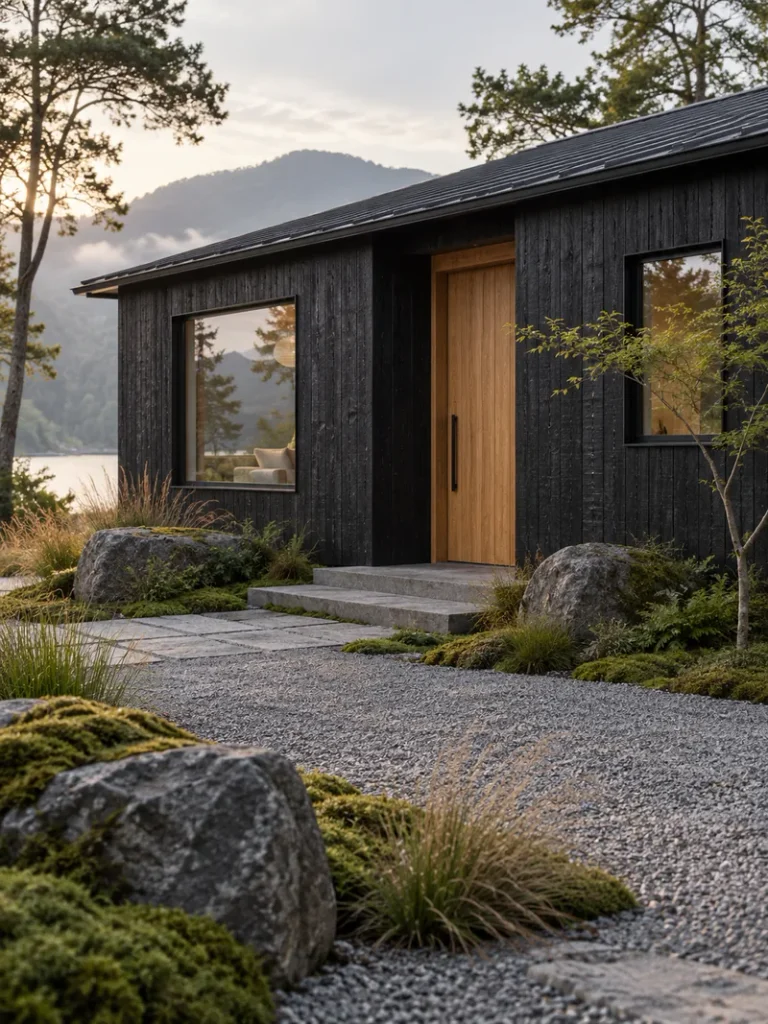
Pair deep brown or charcoal timber cladding with a matte-black standing-seam metal roof. The dark palette feels dramatic but still natural, especially in dense woodland. Add warm exterior lights near the entrance and pathway to soften the architecture and create contrast against the darker materials.
8. Cedar-Shingle Cottage With Modern Window Frames
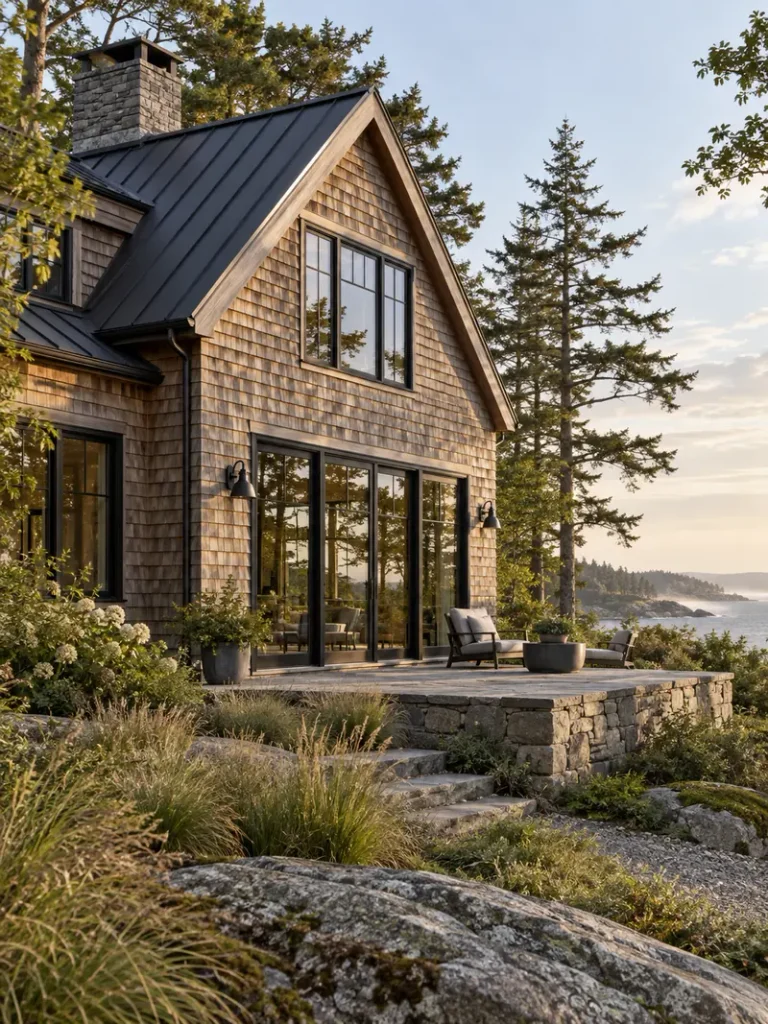
Cedar shingles offer texture that standard boards cannot provide. Use them across the main walls, then modernize the look with large black-framed windows and a simple metal roof. Over time, cedar can weather beautifully, making this style especially suited to coastal, forest, or countryside settings.
9. Wooden Cottage With Deep Forest-Green Roof
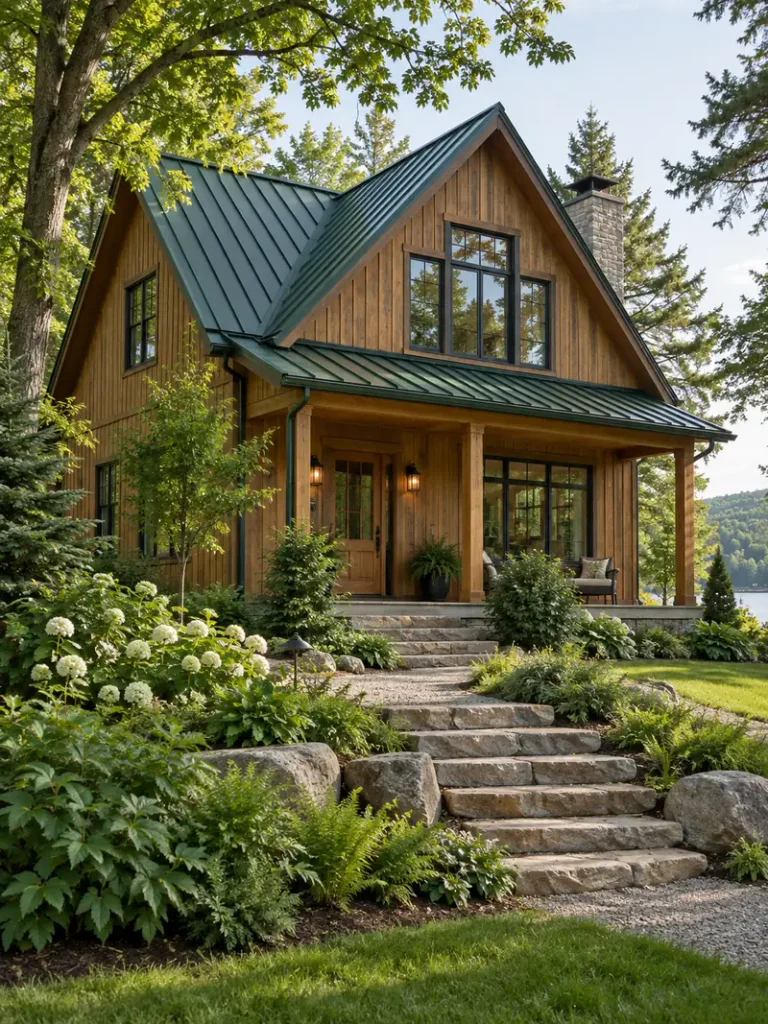
A muted green roof pairs beautifully with natural timber walls because it echoes the colors of surrounding vegetation. Choose a standing-seam metal roof in a deep olive or forest shade, then keep the siding warm and relatively simple. Stone paths and native planting can make the cottage feel even more integrated with the landscape.
10. Modern Barn-Shaped Timber Cottage Exterior
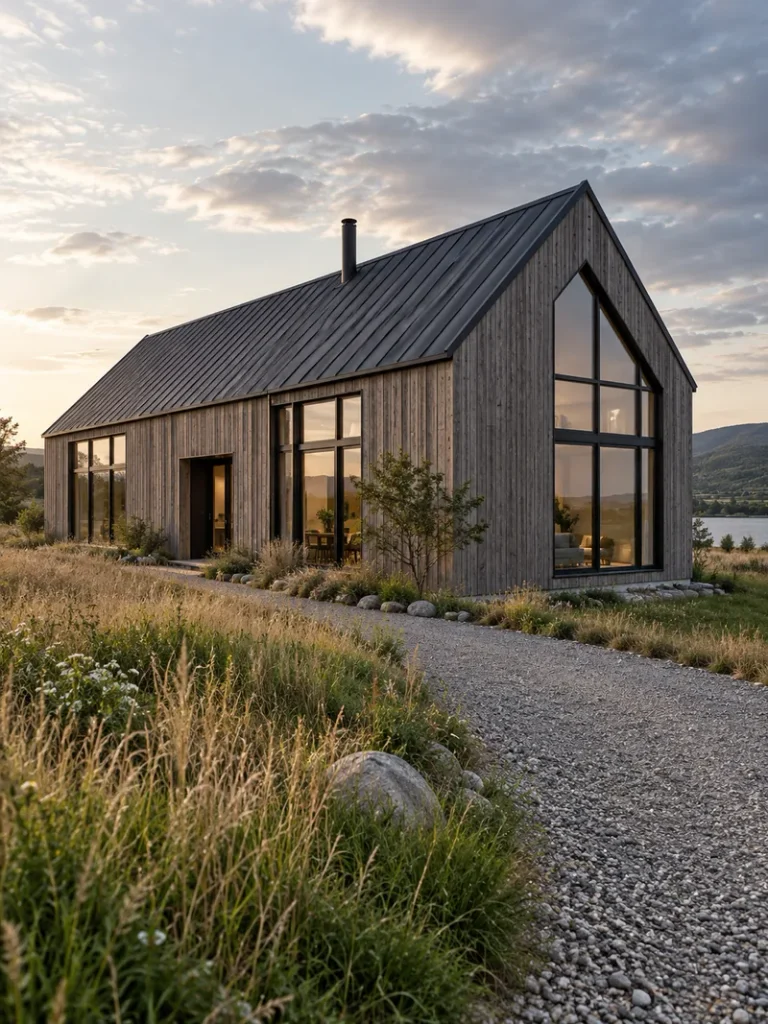
Borrow the tall profile of a traditional barn but remove unnecessary ornamentation. Use vertical timber cladding, a clean pitched roof, and large windows arranged in simple geometric patterns. Black metal details around doors and roof edges can sharpen the design while maintaining the rustic character of the wooden facade.
11. Low-Slung Wooden Cottage With Wide Covered Porch
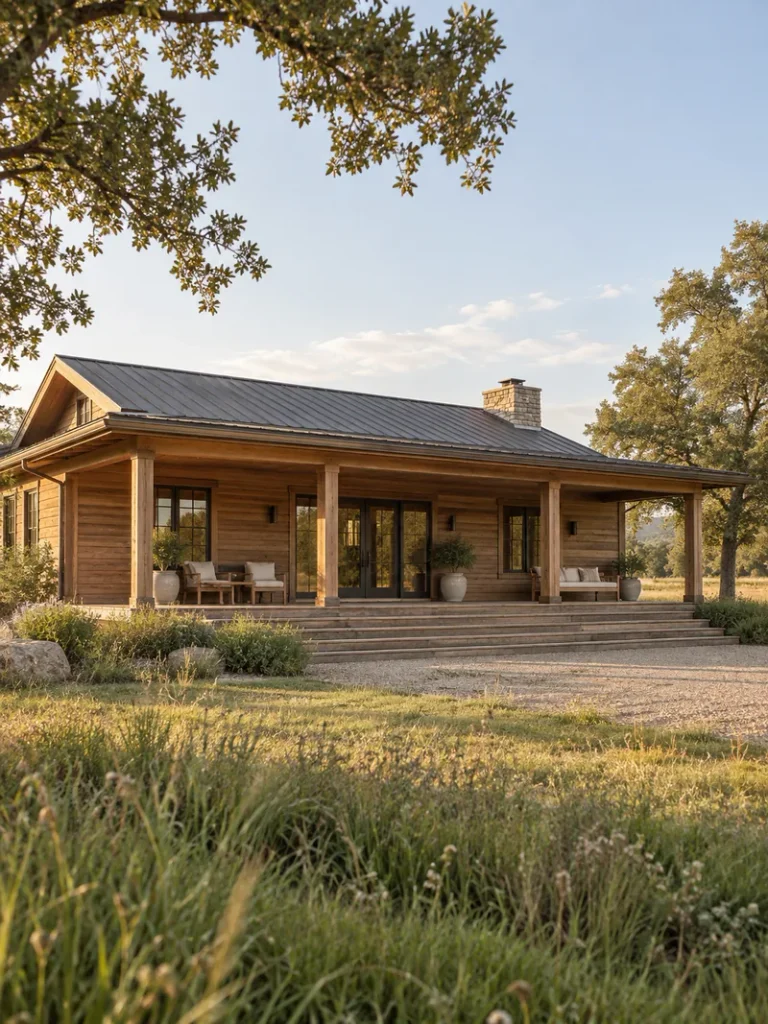
Instead of a tall cottage, consider a low horizontal structure with a broad covered porch running across the front. Deep roof overhangs make the building feel grounded while also creating practical shade. Horizontal wood siding reinforces the long proportions and works especially well on open rural sites.
12. Two-Story Timber Cottage With Recessed Balcony
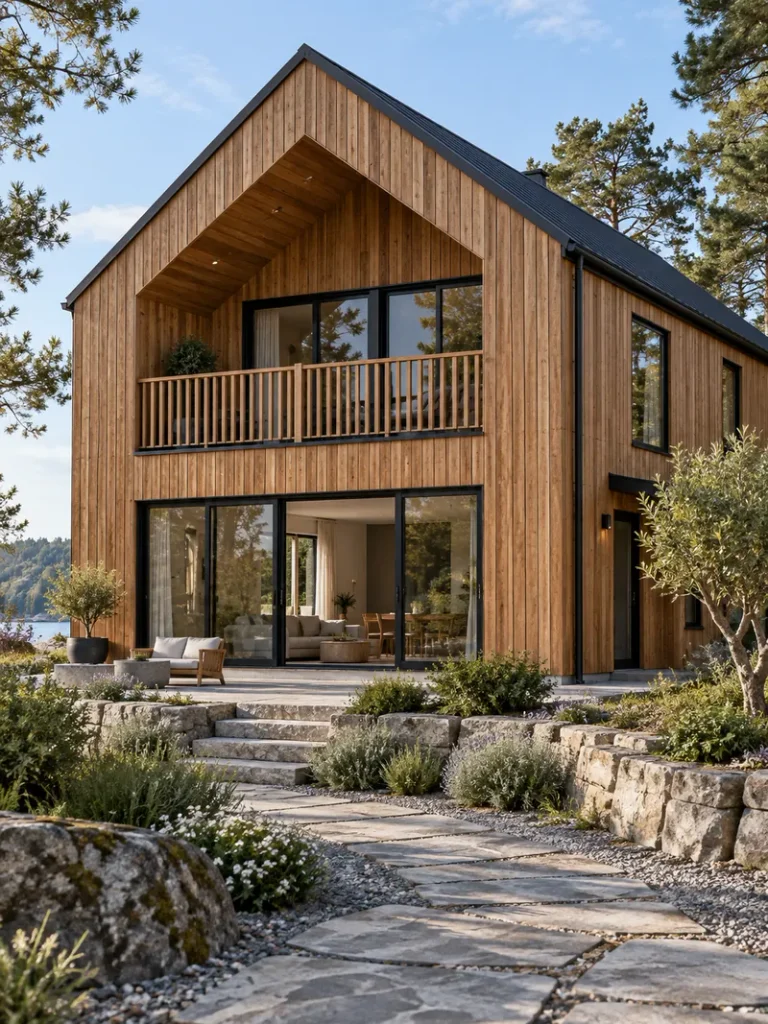
A recessed balcony can add depth without making the cottage feel overly large. Set the upper balcony back into the facade beneath the roofline and frame it with natural timber. Keep the railing simple and use large windows below to balance the upper level visually.
13. Charred-Wood Cottage Inspired by Japanese Architecture
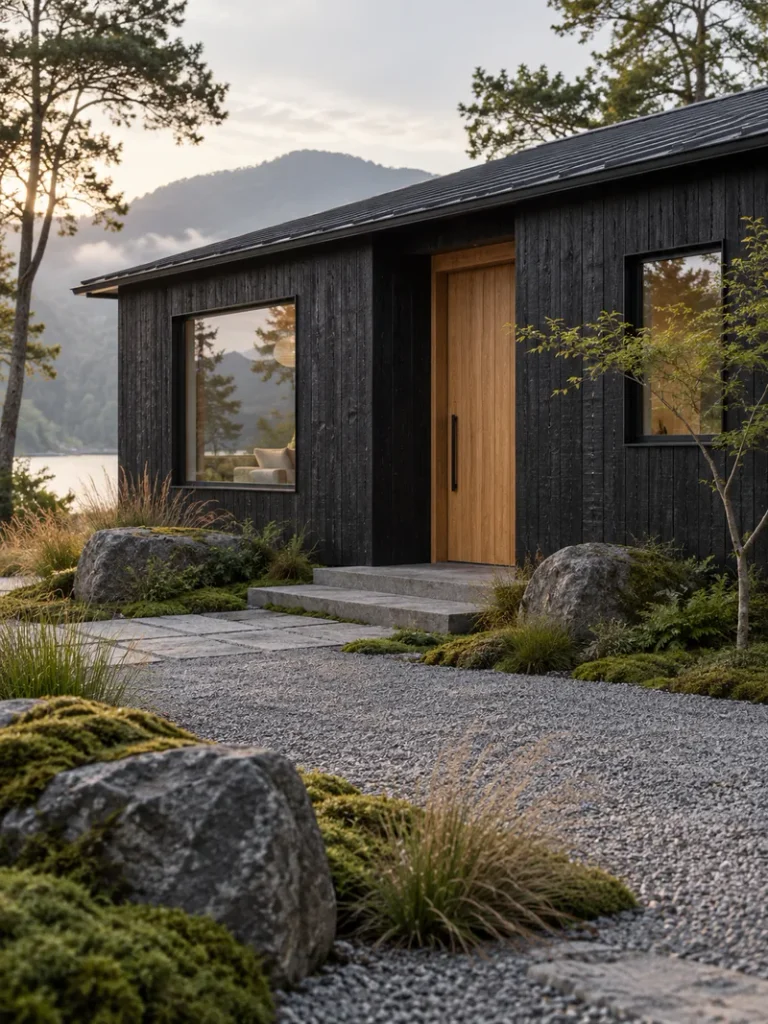
Charred timber cladding creates one of the most distinctive modern cottage exteriors. The deep black surface provides texture and durability while producing a minimalist aesthetic. Pair it with natural stone steps, simple rectangular windows, and a light timber entrance door to soften the dramatic finish.
14. Mountain Cottage With Timber Upper Floor and Stone Base
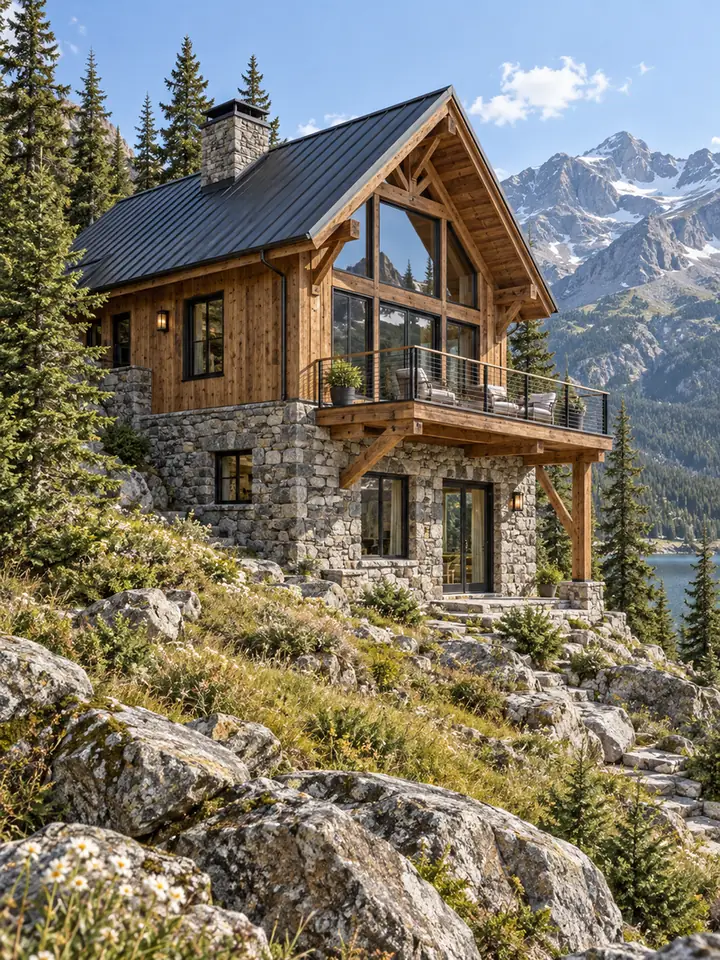
A stone lower level gives a mountain cottage a sense of permanence, while timber above keeps the design warm. Use larger stones at the base and lighter wood siding on the upper floor. A sloped metal roof completes the look and works well in areas with rain or snow.
15. Tiny Wooden Cottage With Oversized Front Porch
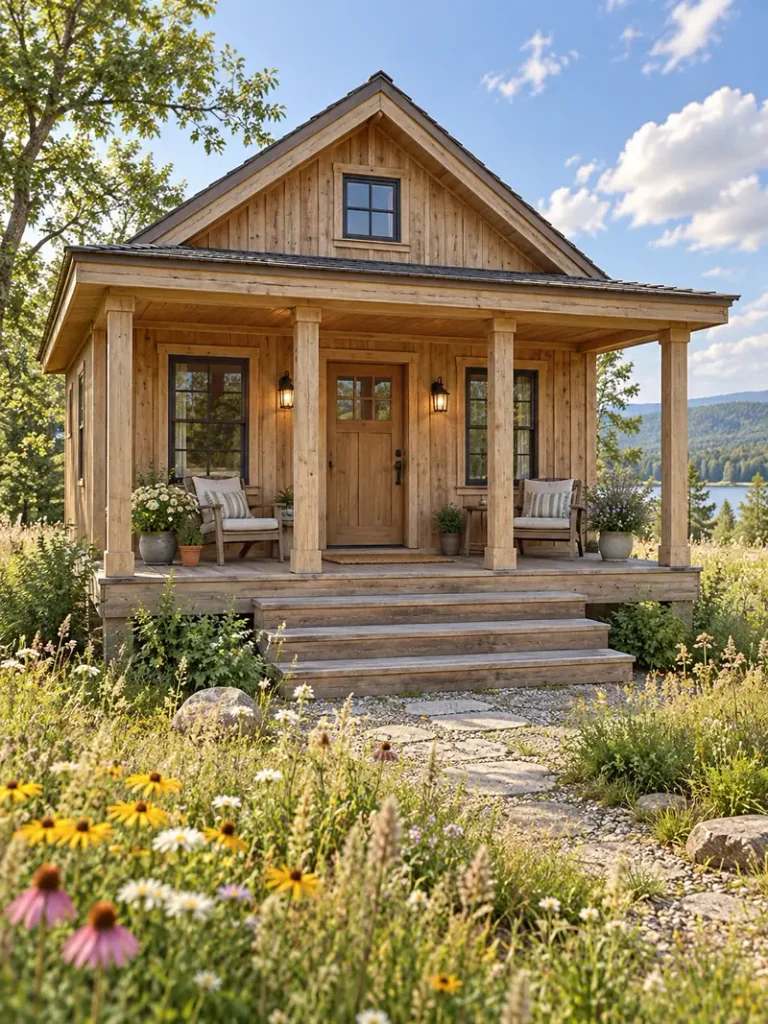
A very small cottage can feel much more generous when the porch is nearly as wide as the building itself. Use simple timber columns, a sheltered seating zone, and wide steps. The porch becomes an extension of the architecture and gives the small structure a stronger presence.
16. Timber Cottage With Full-Width Sliding Glass Exterior
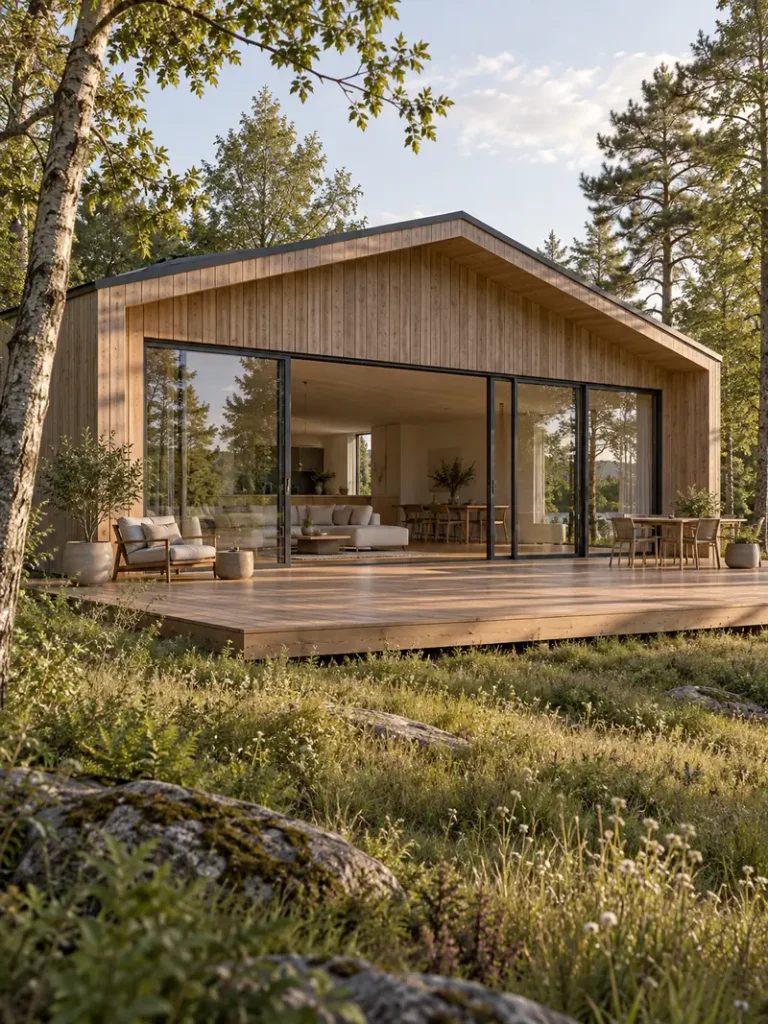
Create a modern retreat by dedicating one side of the cottage to wide sliding glass doors. Surround the glass with natural timber cladding and extend the flooring outward into a deck. This simple composition makes the building feel open and strongly connected to its outdoor surroundings.
17. Rustic Log-and-Timber Cottage With Modern Roofline
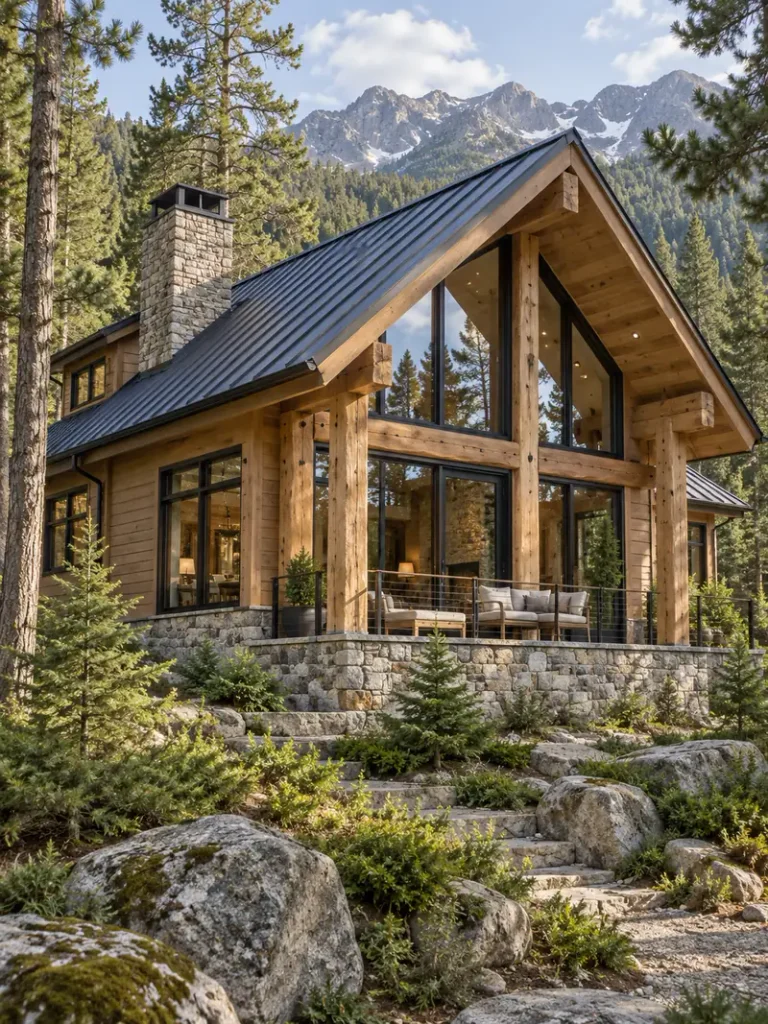
If you like the appearance of traditional logs, use them selectively rather than covering the entire building. Combine substantial timber beams with smoother wood siding and a clean metal roof. The contrast retains the rustic feeling while preventing the exterior from looking overly heavy.
18. Symmetrical Gabled Cottage With Glass-Filled Front
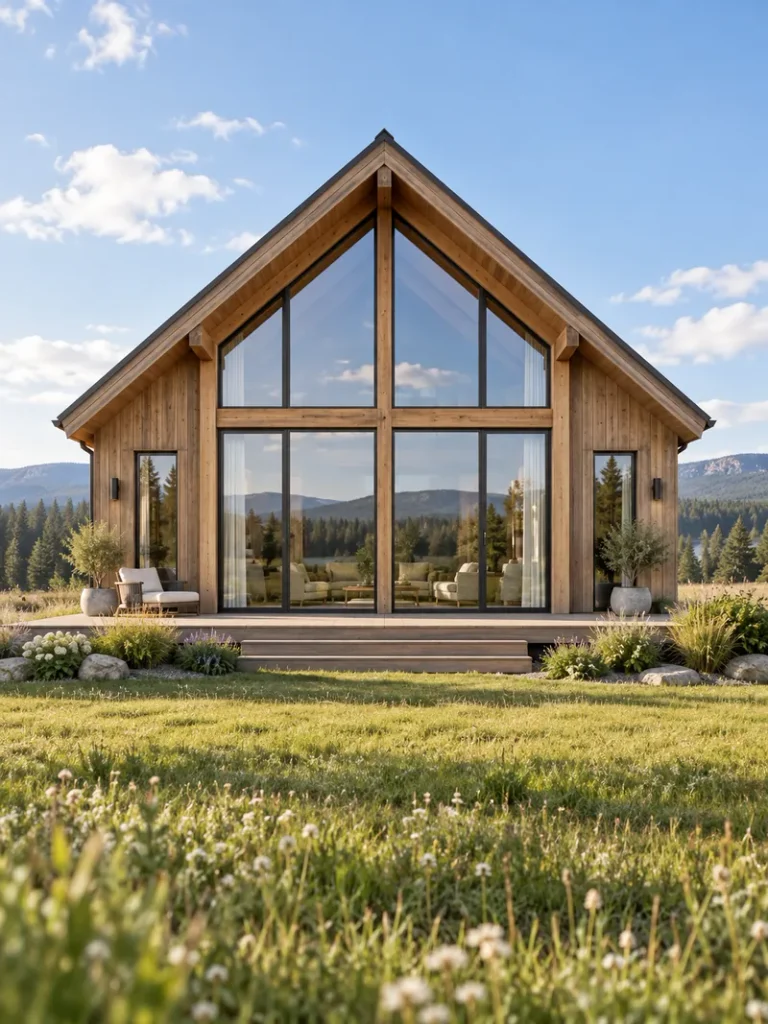
A simple symmetrical gable can become dramatic when much of the front is filled with glass. Frame the glazing with thick timber borders and keep the remaining siding consistent. This style looks particularly attractive when viewed from a garden, lake, or open field.
19. White Cottage With Natural Wood Exterior Accents
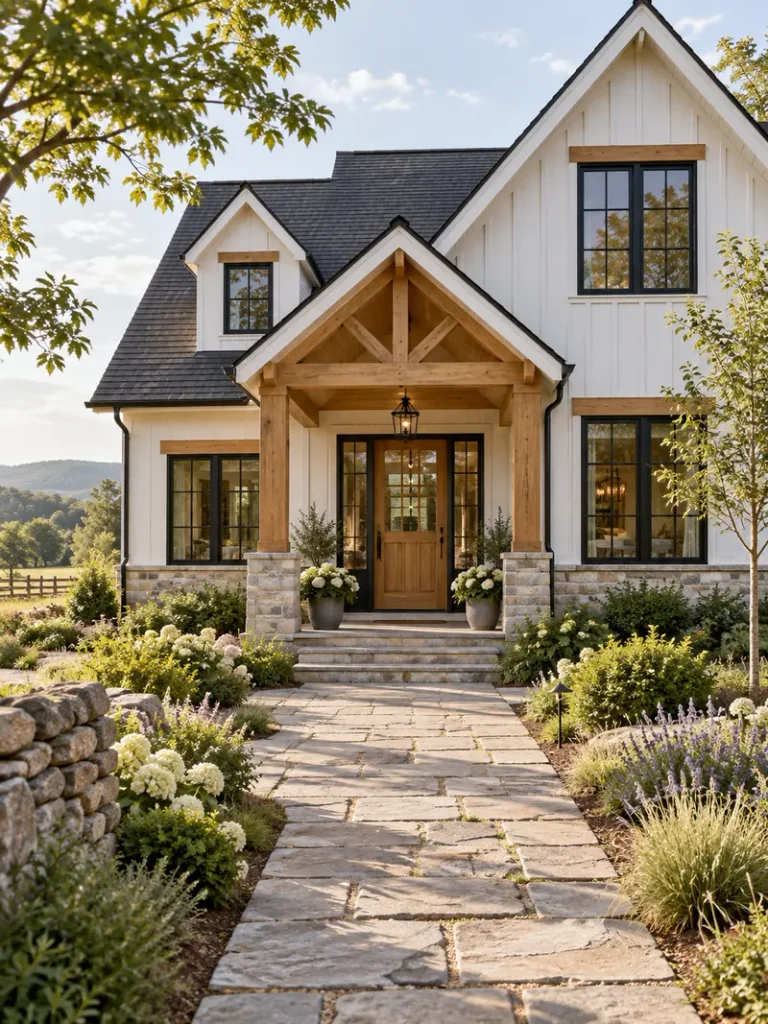
Not every wooden cottage needs to be completely timber-clad. Use soft white siding across the main walls and introduce natural wood around the entrance, porch ceiling, window surrounds, or gable. The contrast gives the home a bright, modern farmhouse feeling while still preserving rustic warmth.
20. Wooden Cottage With Exterior Stone Fireplace
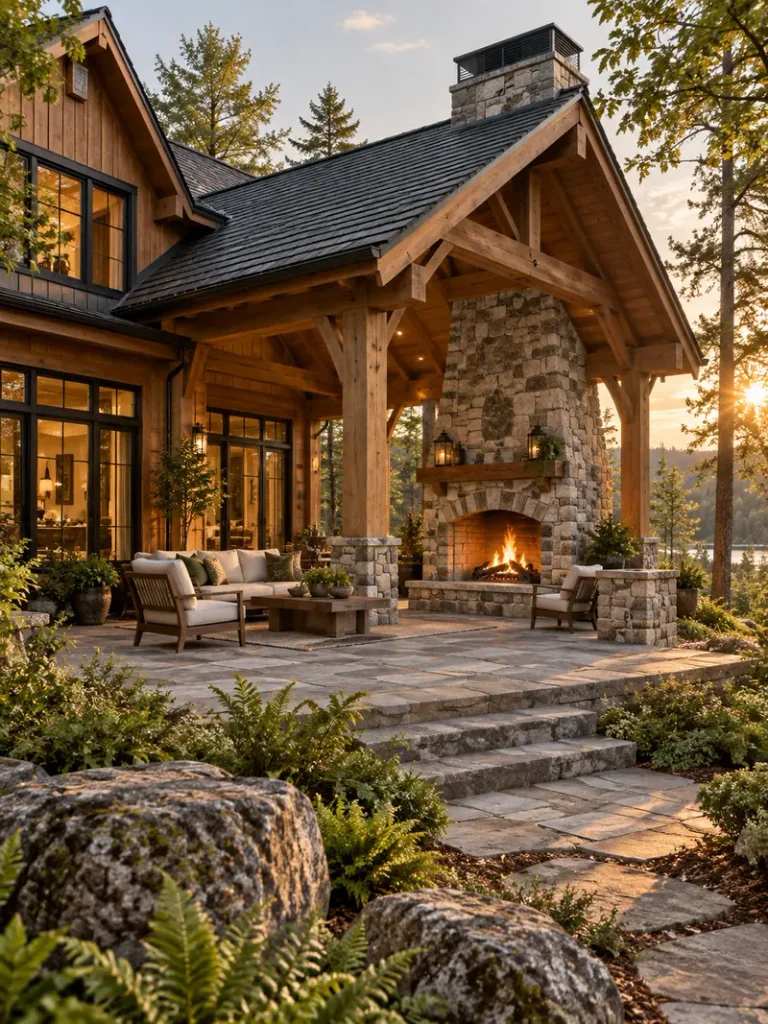
An outdoor fireplace can become part of the exterior architecture rather than simply an added feature. Build a tall stone chimney along a patio or covered terrace, then surround it with timber siding and heavy wooden beams. The result creates a strong focal point for outdoor living.
21. Woodland Cottage Surrounded by Ferns and Moss
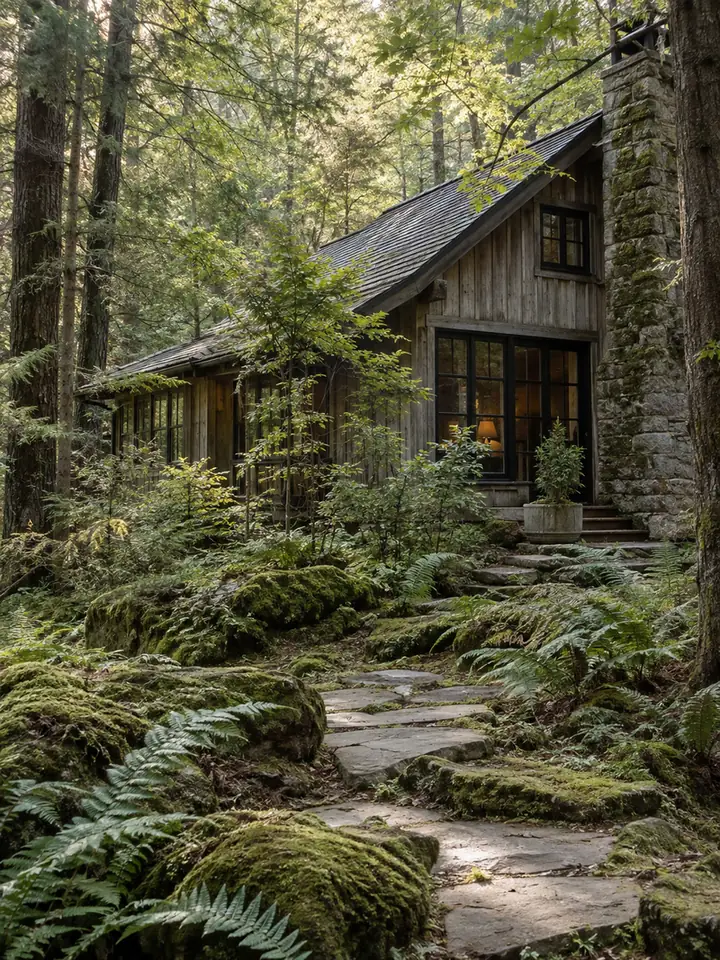
A cottage can look especially charming when the landscaping is intentionally informal. Use weathered timber, stone stepping paths, ferns, moss, and shade-loving plants around the foundation. Avoid overly manicured lawns. This approach helps the structure feel as though it has always belonged in the woodland.
22. Timber Cottage With Pergola-Covered Front Terrace
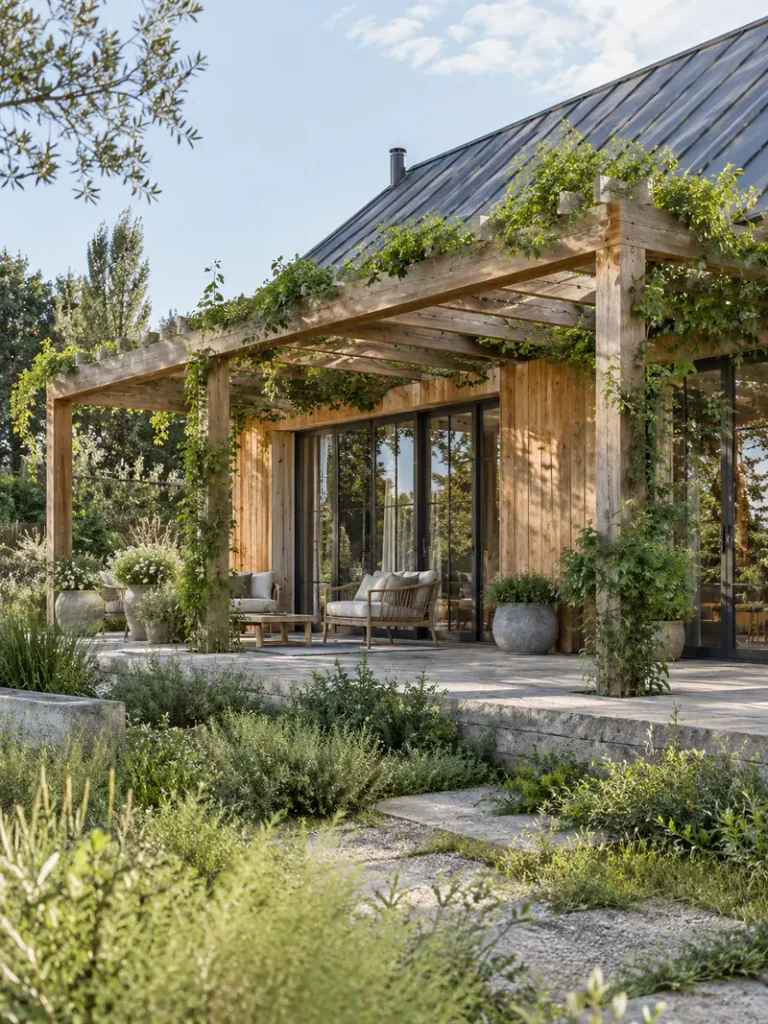
Add a timber pergola to the front or side of the cottage to extend the architecture into the garden. Use simple beams and allow climbing plants to soften the structure over time. The pergola provides partial shade without hiding the cottage facade.
23. Vertical-Clad Wooden Cottage With Narrow Black Windows
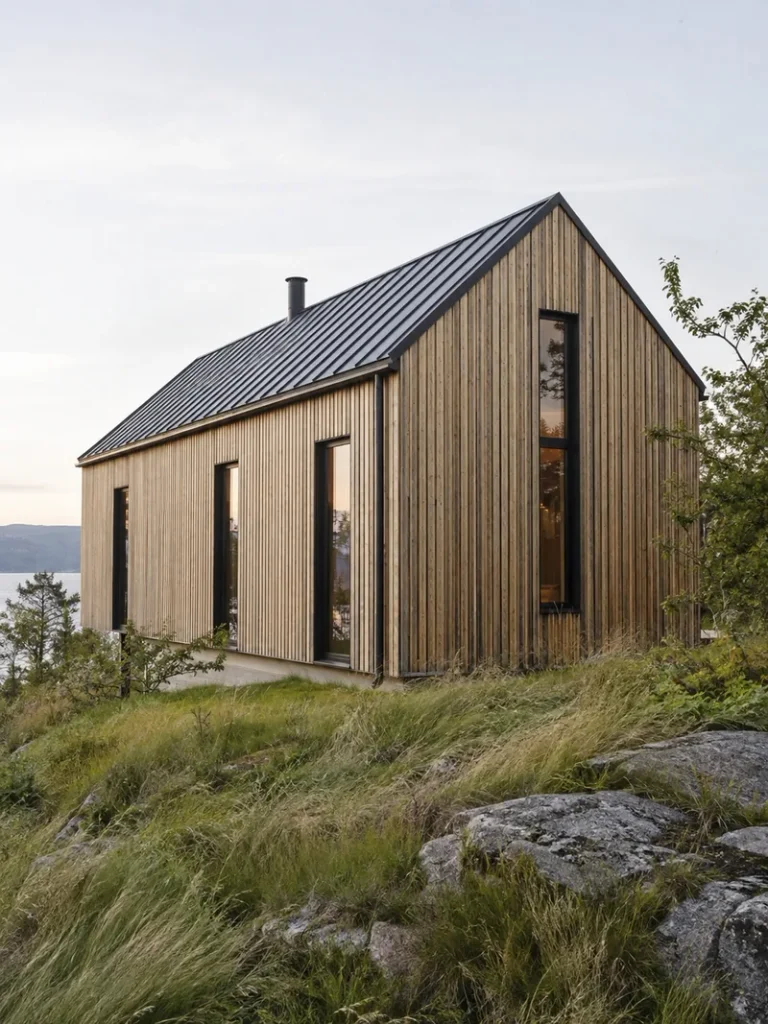
Vertical siding can make a cottage feel taller and more contemporary. Choose evenly spaced timber boards and pair them with narrow black-framed windows. This approach works particularly well on compact buildings because the strong vertical lines visually increase height without adding extra decorative elements.
24. Reclaimed-Wood Cottage With Weathered Rustic Finish
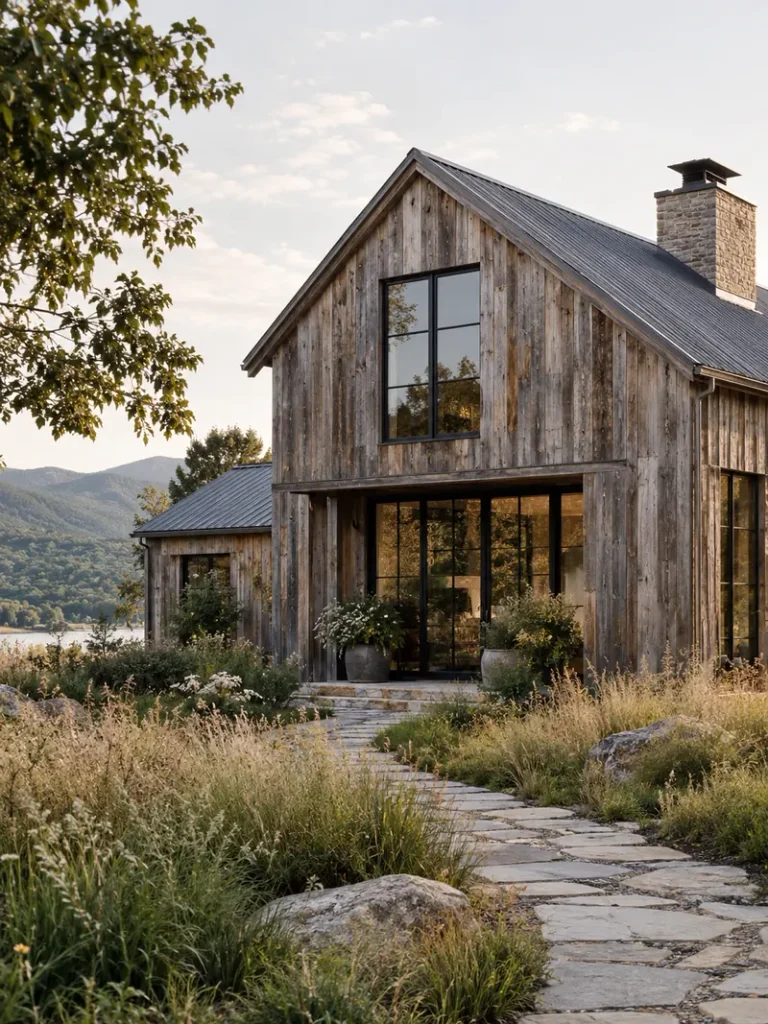
Reclaimed timber can give a new cottage the character of an older countryside building. Mix boards with slightly different tones and textures, but keep the overall architecture simple. Modern windows and a clean roofline prevent the weathered wood from making the cottage appear dated.
25. Wooden Cottage With Giant Picture Window Facade
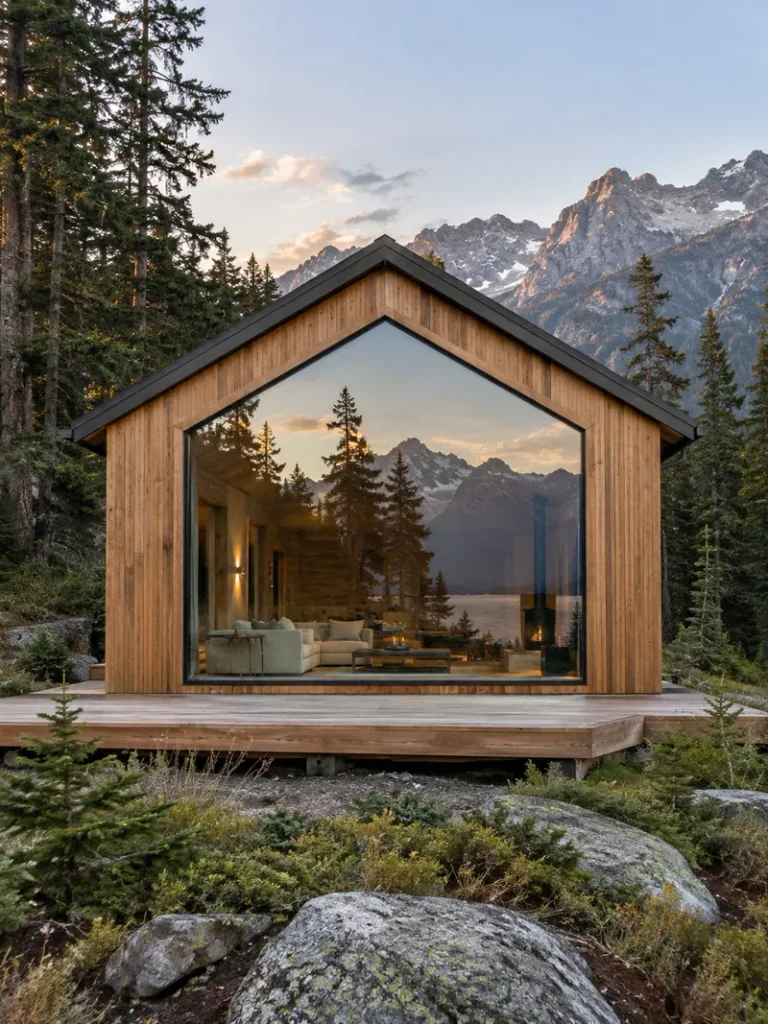
Instead of using many small windows, create one enormous picture window as the primary exterior feature. Surround it with uninterrupted timber siding to increase its visual impact. This idea works especially well when the house faces mountains, woodland, a lake, or another attractive natural view.
26. Timber Cottage With Matte-Black Metal Exterior Details
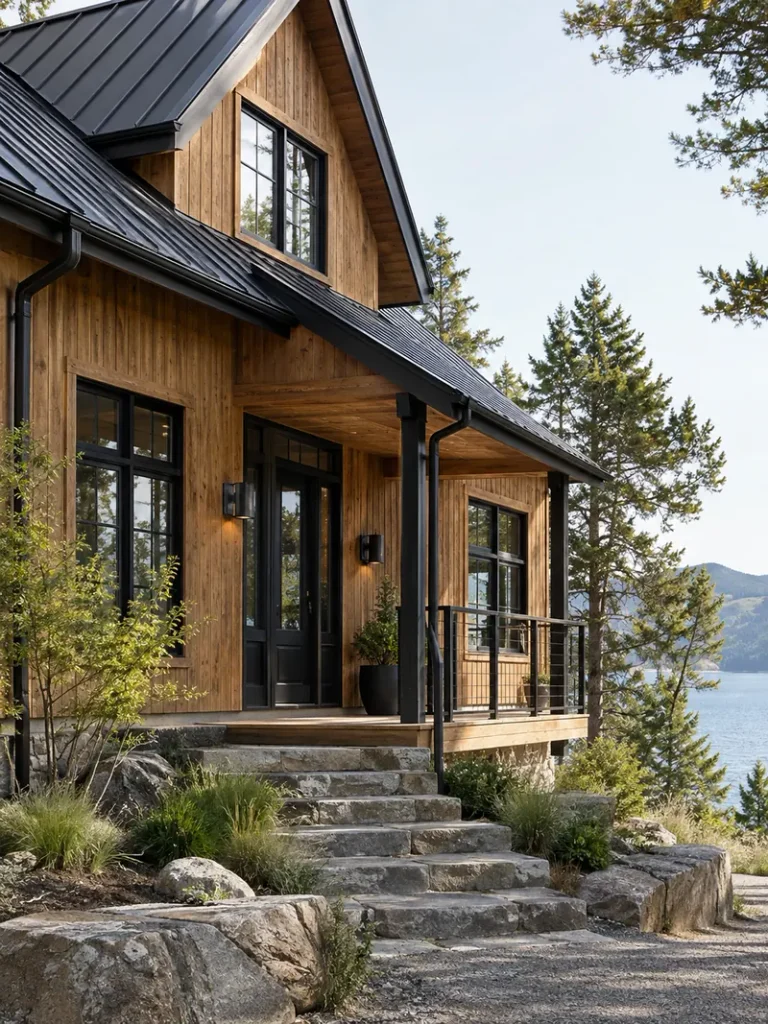
Natural wood and matte black metal are one of the strongest combinations for modern rustic architecture. Use black for the roof, gutters, window frames, railings, and exterior light fixtures. The repeated dark accents give the cottage a consistent appearance without overpowering the warmth of the timber.
27. Raised Forest Cottage With Elevated Front Deck
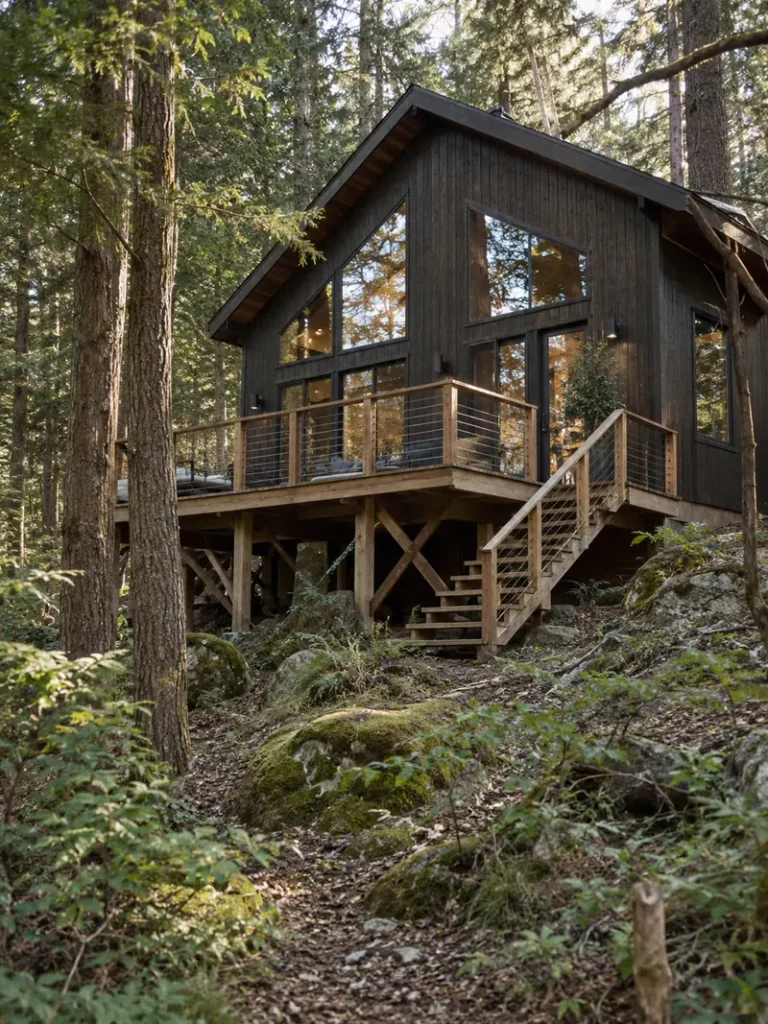
On a sloped or uneven site, raise the cottage slightly above the ground and build a deck along the front. Timber posts can support the structure while stone or dark-painted foundations help it visually blend into the site. Steps leading through the trees create a beautiful approach.
28. Wooden Cottage With Curved Stone Entry Path
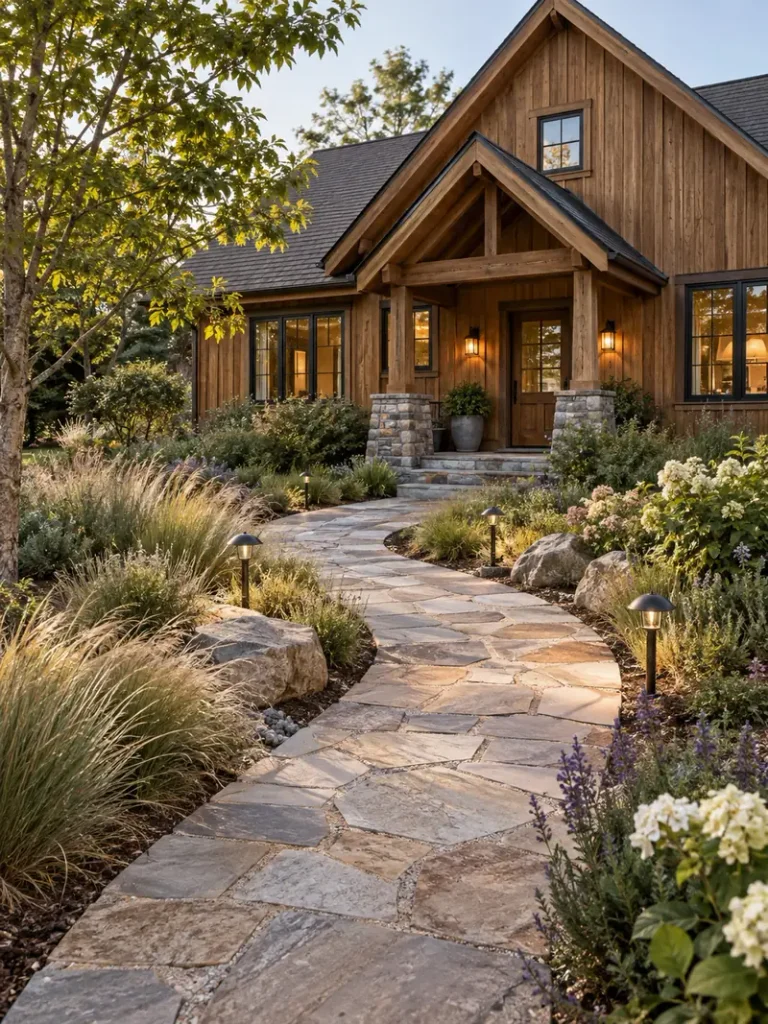
Architecture does not need to stop at the walls. A gently curving stone pathway can make a wooden cottage entrance feel more inviting. Use irregular natural stone, soft planting, and simple exterior lighting. The path creates a slower, more picturesque arrival than a straight concrete walkway.
29. Split-Level Timber Cottage Built Into a Hillside
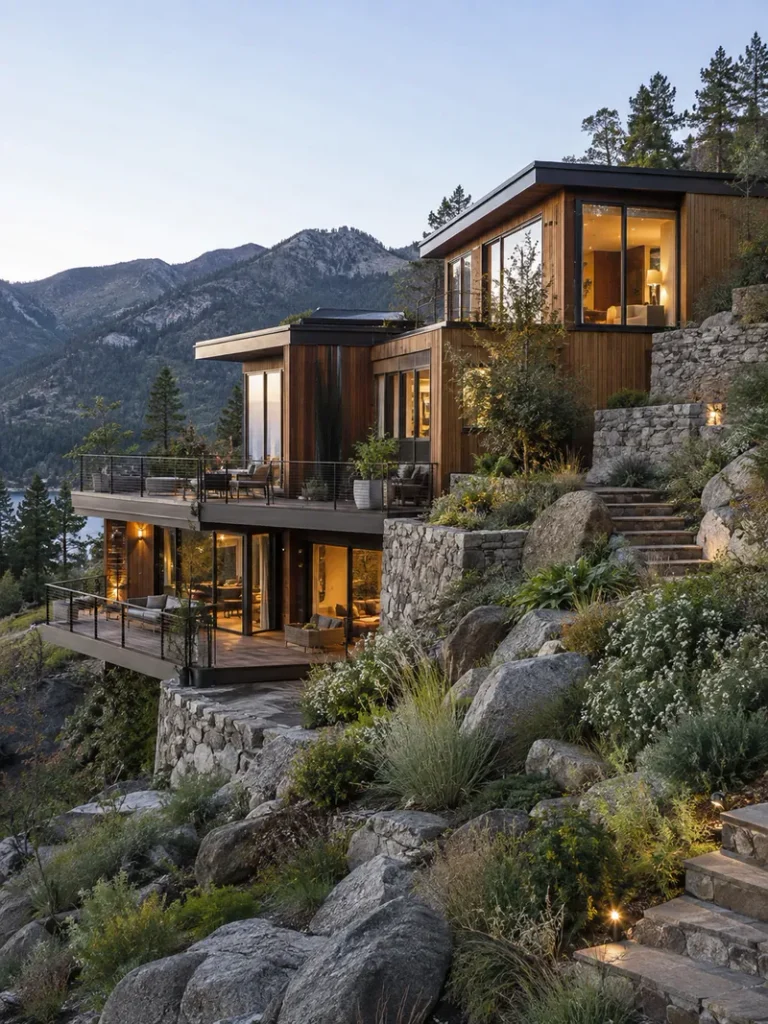
A sloping property offers an opportunity for a more unusual cottage design. Step the building down the hill so each section follows the terrain. Use timber cladding across the upper portions and stone retaining walls below. Different deck levels can connect the building to the landscape.
30. Wooden Cottage With Outdoor Dining Deck
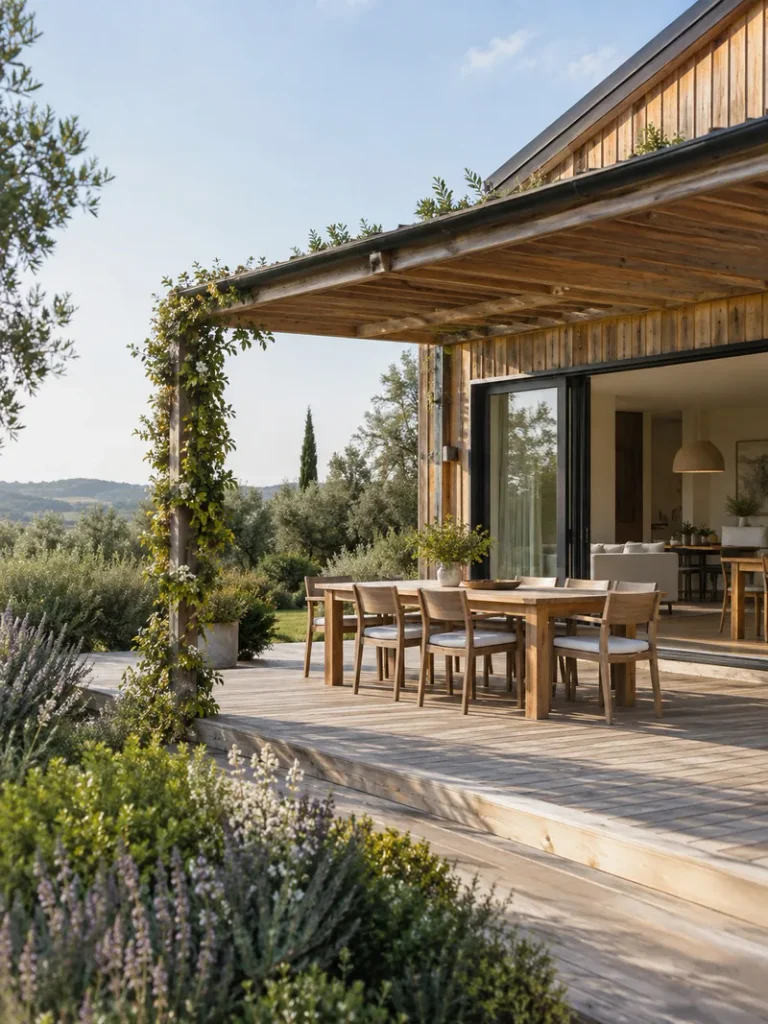
A dedicated outdoor dining deck makes the cottage exterior feel more functional. Position the platform directly outside the main living area and shelter part of it beneath an extended roof or pergola. Use timber flooring and simple built-in benches to keep the outdoor area visually consistent with the house.
31. Glass-Enclosed Porch Attached to a Timber Cottage
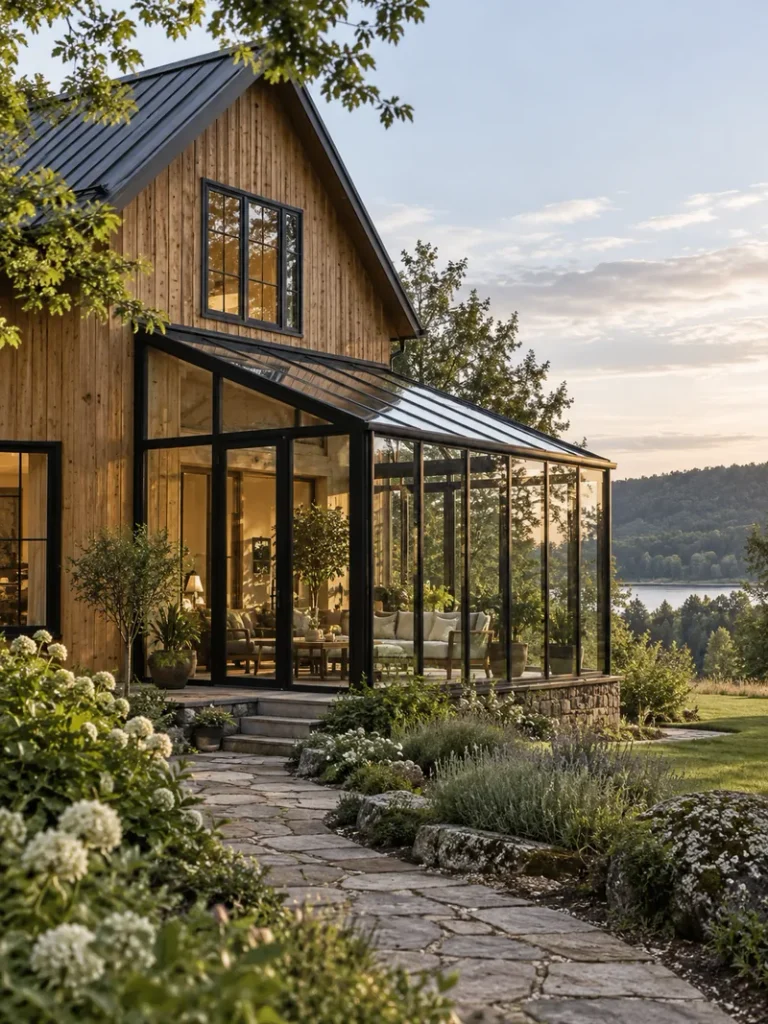
Add a glass-enclosed porch or conservatory-like structure to one side of the cottage. Use slim frames and a timber base so the addition feels modern without competing with the main building. From the exterior, the transparent structure adds depth and architectural interest.
32. Modern Farmhouse-Style Wooden Cottage Exterior
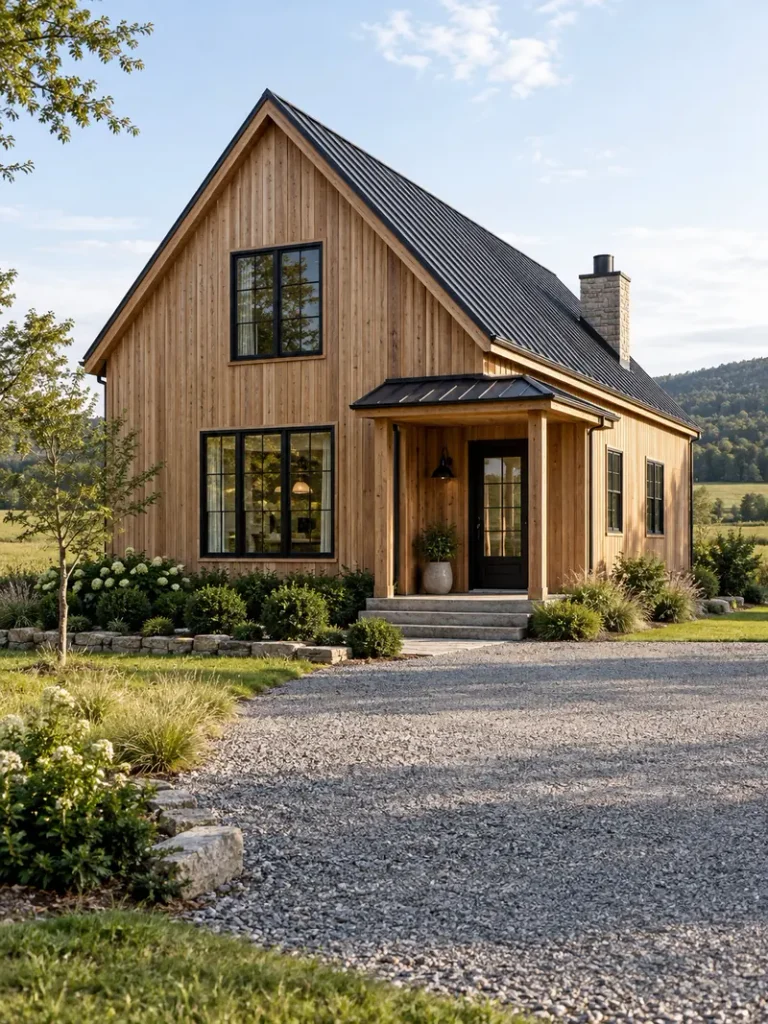
Combine the simplicity of farmhouse architecture with warmer cottage materials. Use a straightforward gabled form, vertical wood siding, black-framed windows, and a small covered entrance. Avoid excessive trim or decorative shutters so the design stays contemporary rather than overly traditional.
33. Cottage With Extra-Deep Roof Overhangs
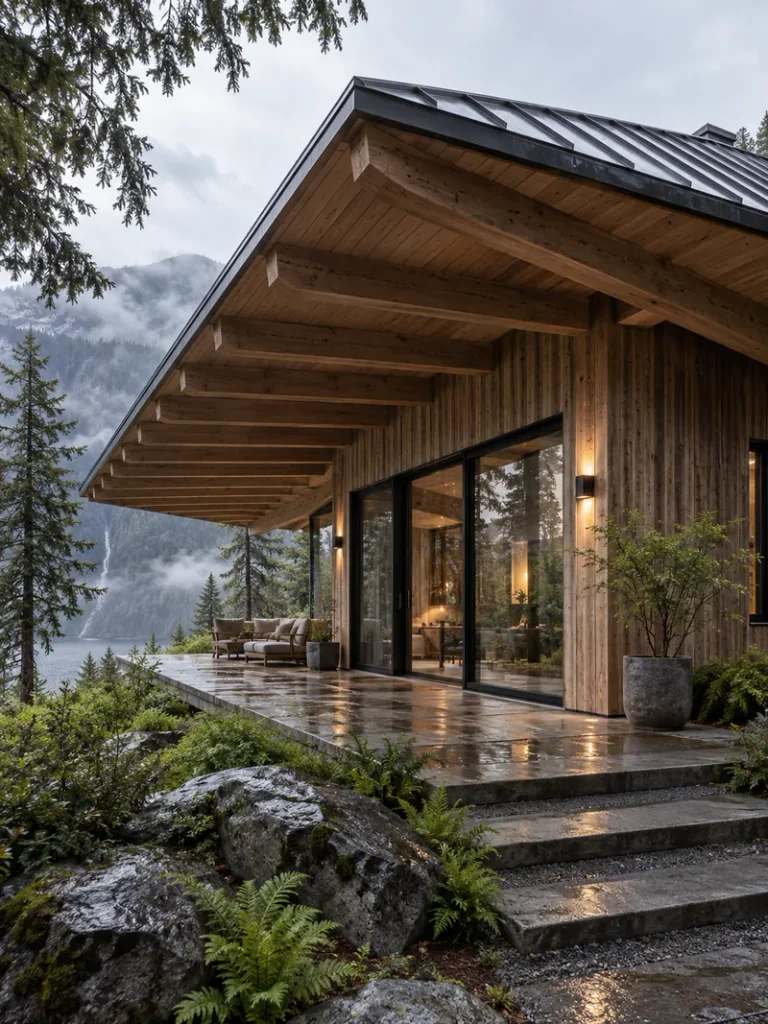
Deep overhangs can dramatically change the character of a wooden cottage. Extend the roof well beyond the walls to create sheltered walkways or terraces. Exposed timber rafters underneath add rustic detail while the strong horizontal roofline gives the building a modern architectural presence.
34. Wooden Cottage With Large Natural Stone Terrace
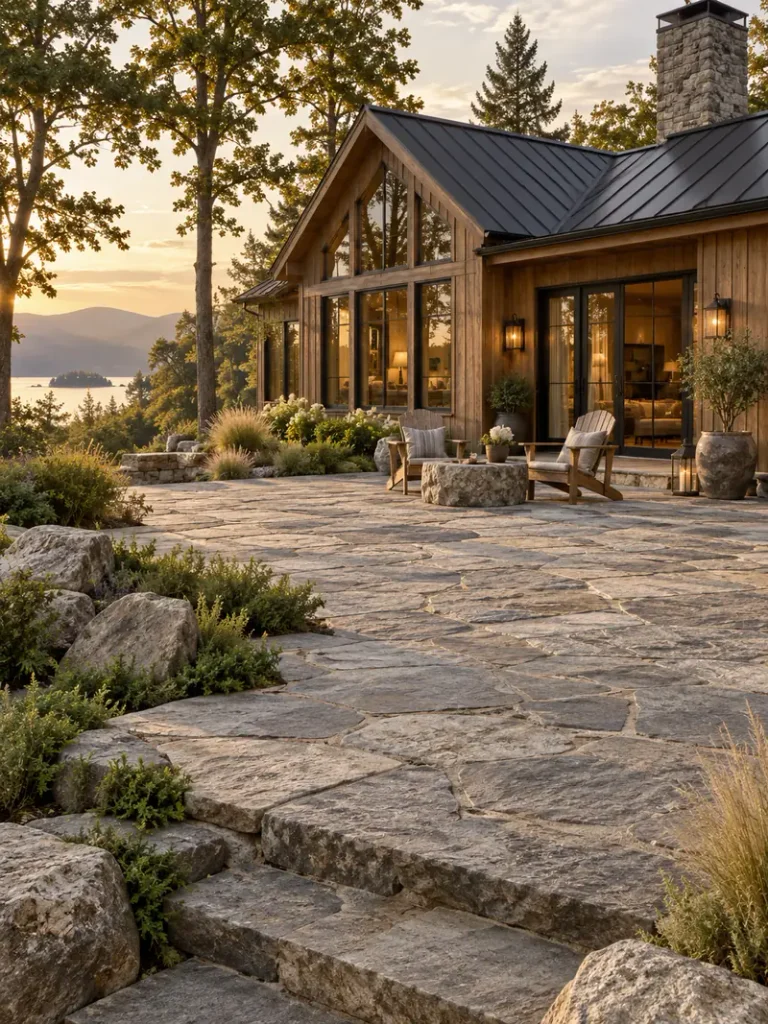
Instead of surrounding the cottage with timber decking, use a broad natural-stone terrace. The heavier material creates contrast with the wood walls and makes the house feel more permanent. Choose stone with irregular texture and subtle color variation for a softer rustic effect.
35. Minimalist Timber Cottage in an Open Meadow
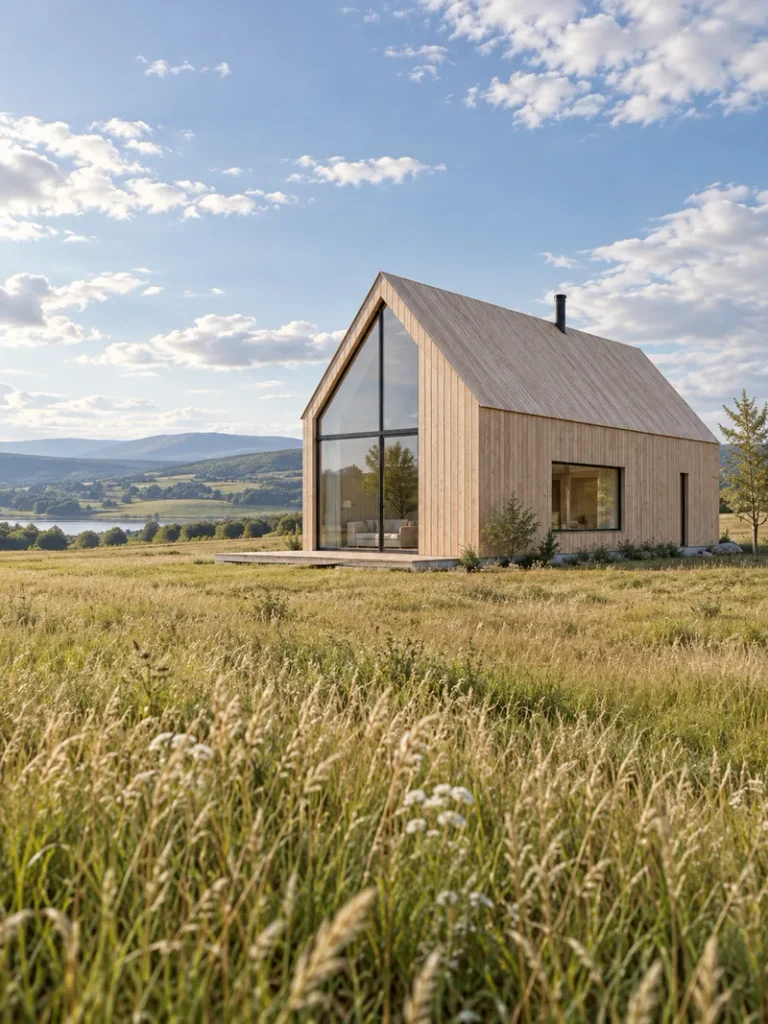
A cottage in an open landscape can be especially effective when the architecture remains simple. Use one clean gabled structure, natural vertical timber siding, and carefully positioned windows. Keep landscaping minimal so the building stands quietly against the surrounding grasses and sky.
36. Cottage With Rustic Double French Entrance Doors
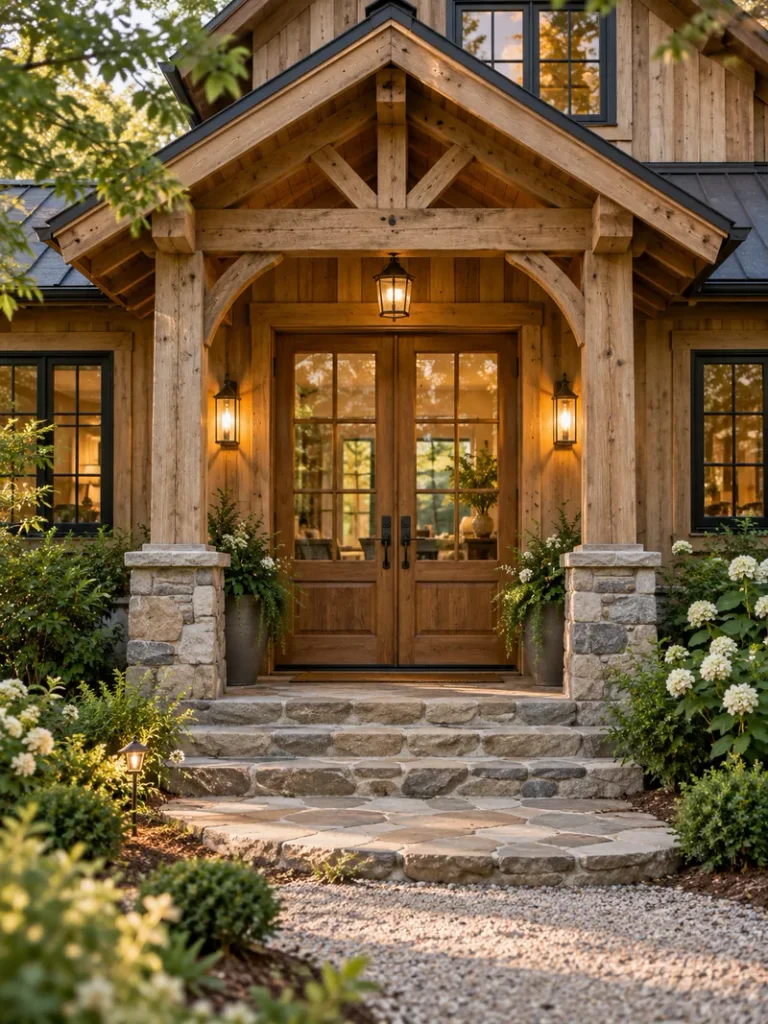
Make the main entrance a strong focal point with double wooden doors incorporating glass panels. Frame them with substantial timber posts or stone walls. A small covered porch and warm wall lights can make the entrance feel welcoming without adding unnecessary decoration.
37. Tall Wooden Cottage With Loft-Style Exterior Profile
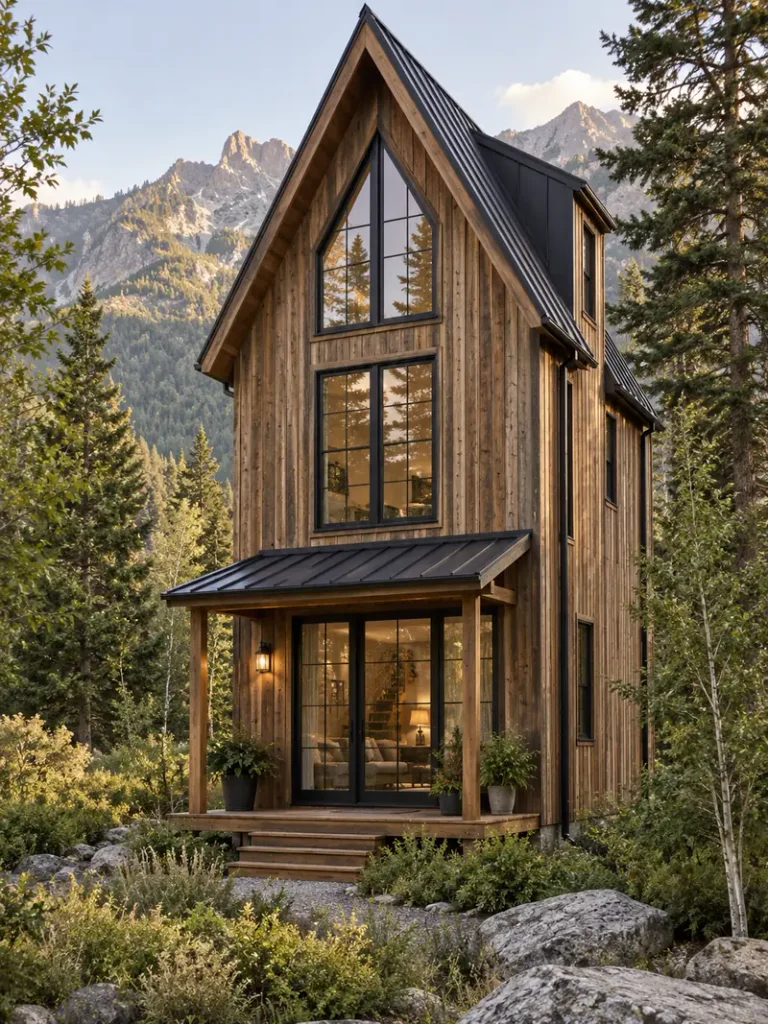
A taller cottage can still feel cozy when the proportions are carefully balanced. Use a steep roof, vertical wood cladding, and upper-level windows positioned beneath the gable. A lower porch or deck helps ground the structure and prevents the facade from appearing too narrow.
38. Modern Timber Cottage With Glass Corner Wall
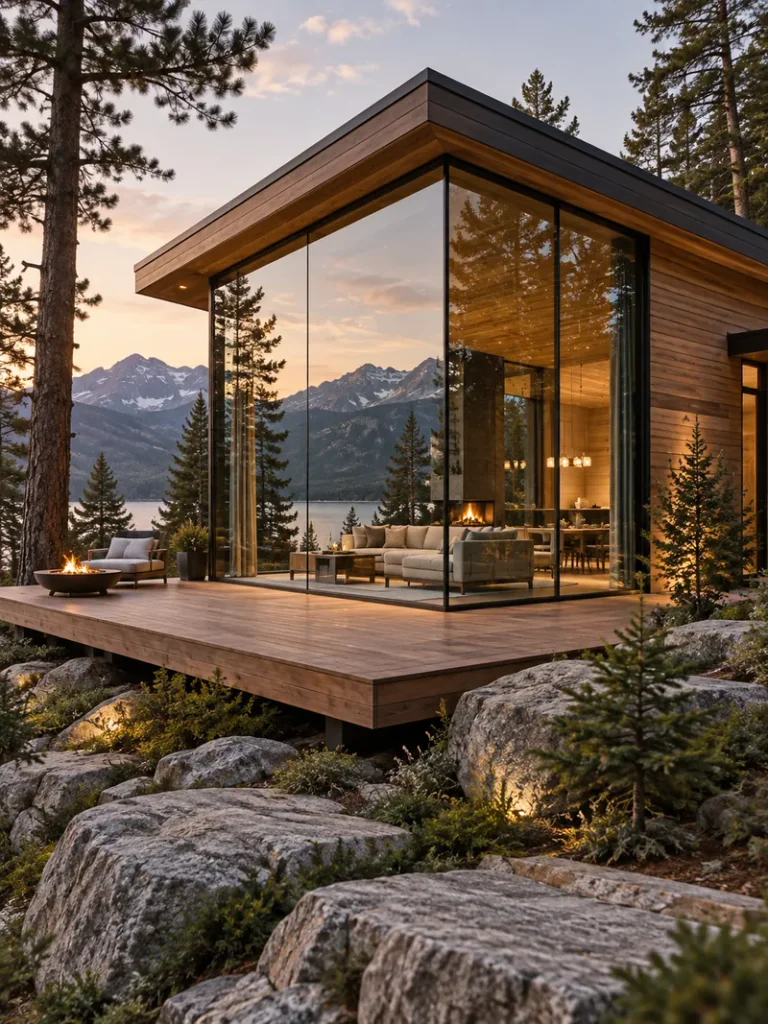
Corner glazing gives a wooden cottage a sophisticated architectural edge. Replace one solid corner with floor-to-ceiling glass so the roof appears to float above it. Keep the remaining exterior simple and use dark framing to emphasize the crisp junction between glass and timber.
39. Honey-Toned Wood Cottage With Cream Trim
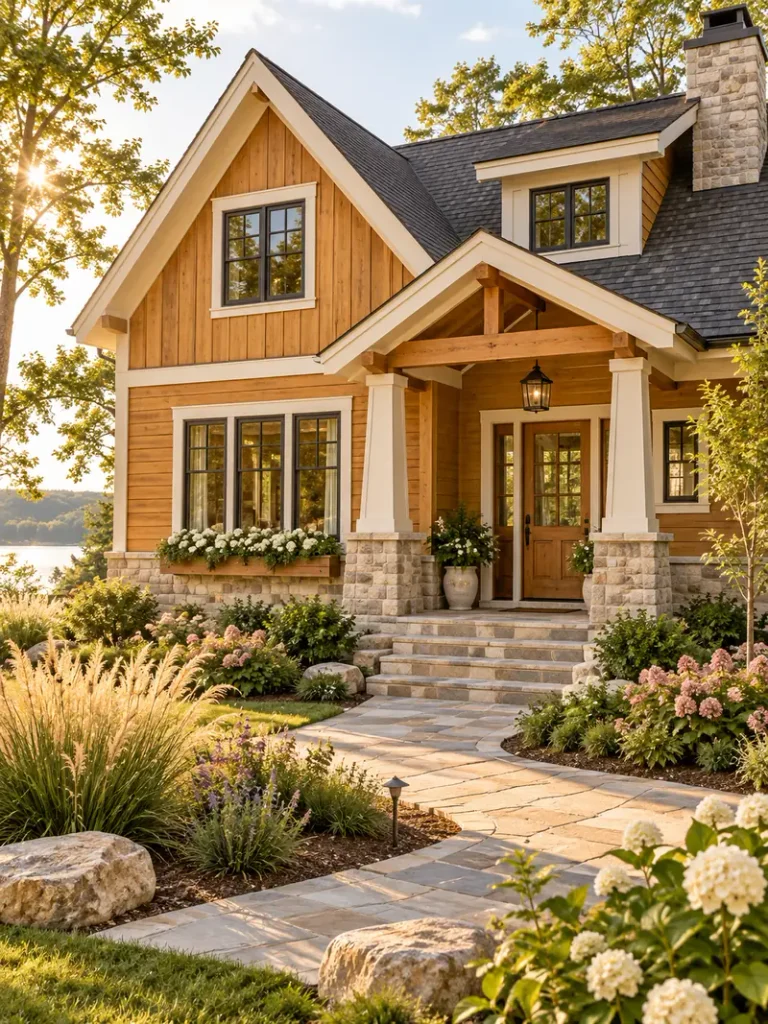
Warm honey-colored timber creates a softer alternative to dark modern cottages. Pair it with cream window frames, pale stone, and a muted roof color. This palette is particularly attractive in sunny countryside settings where the wood can glow naturally in afternoon light.
40. L-Shaped Wooden Cottage With Private Courtyard
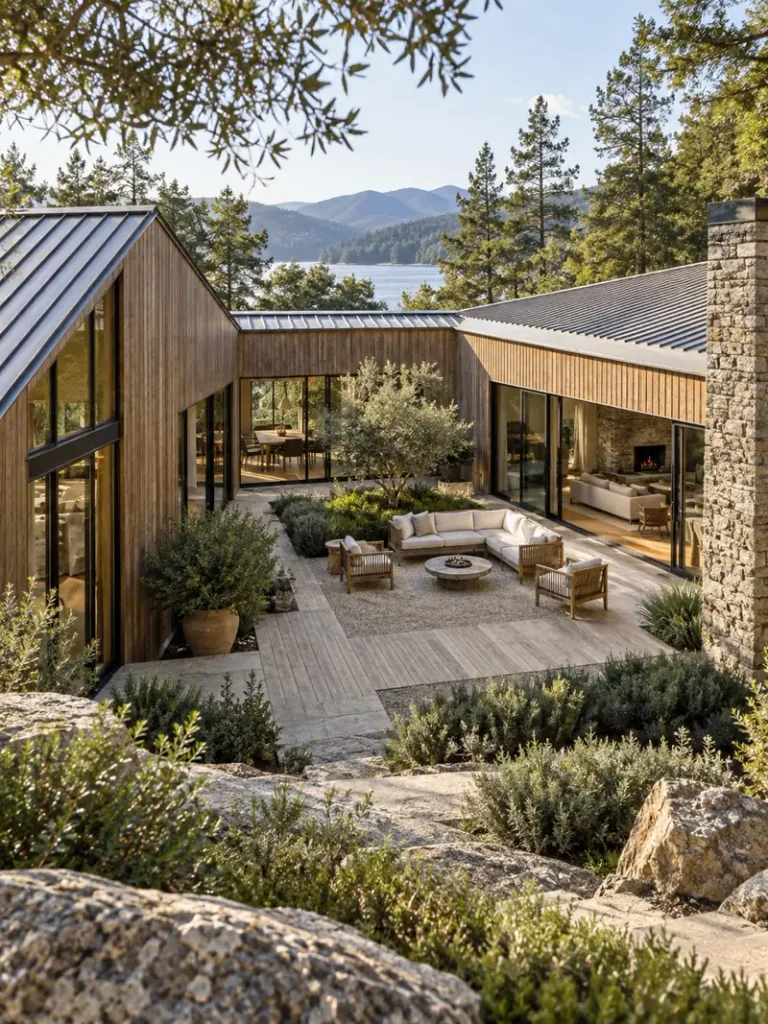
An L-shaped plan creates a naturally sheltered outdoor area between two wings of the house. Use timber cladding on both sections and place a deck or stone courtyard inside the angle. The layout provides privacy while making the exterior feel more complex and architectural.
41. Countryside Wooden Cottage With Timber Gate Entrance
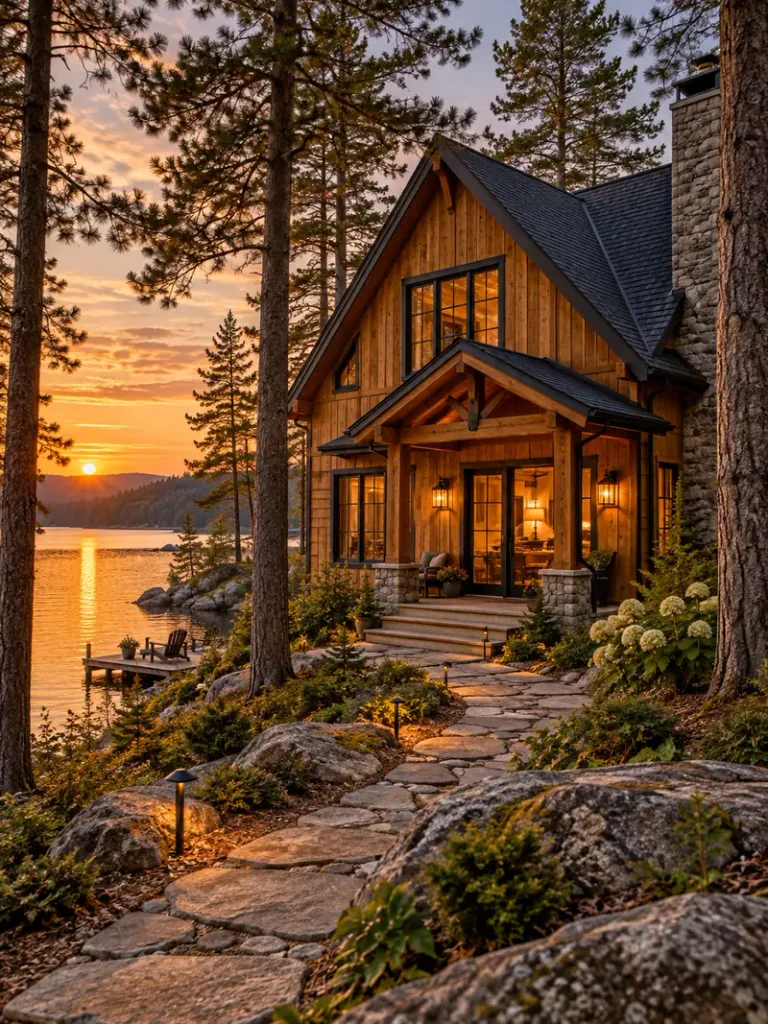
A rustic cottage can begin making an impression before visitors even reach the house. Use a simple wooden gate, gravel driveway, low stone walls, and native hedging. Repeating the same timber tone from the cottage on the entrance gate ties the entire property together.
42. Raised Wooden Cottage on Stone Piers
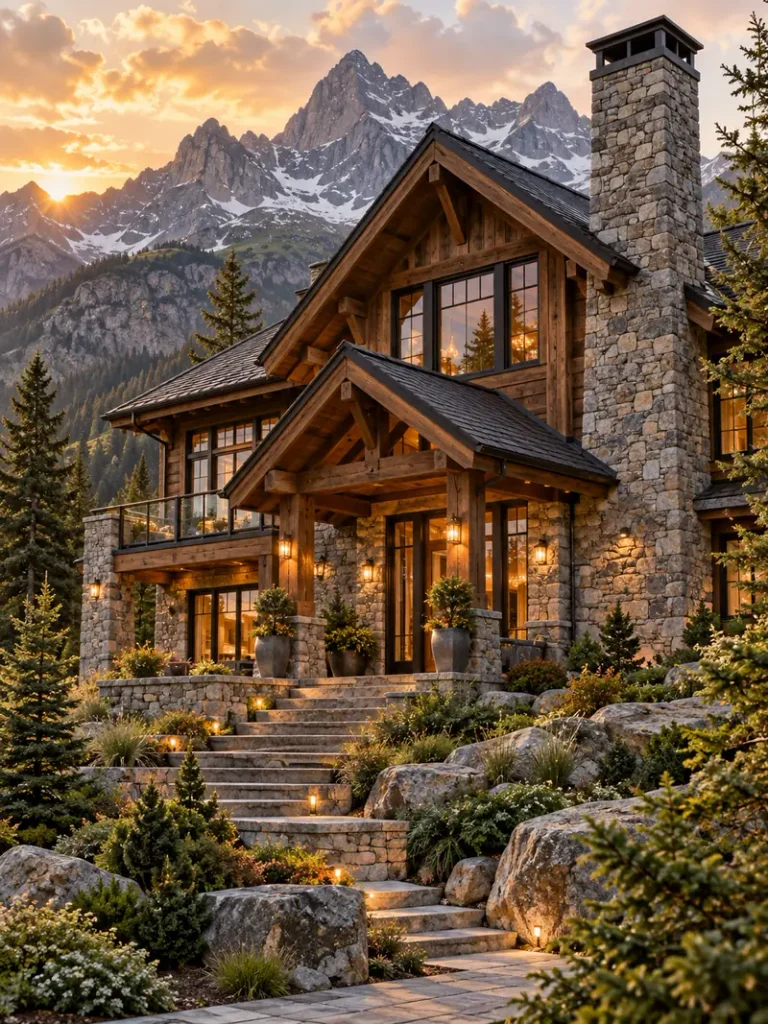
Instead of a continuous foundation, support a compact cottage on visible stone piers. This can create a lighter appearance while adding traditional craftsmanship. Use timber steps and a simple veranda to connect the raised structure to the ground without hiding the foundation.
43. Luxury Timber Cottage With Outdoor Hot-Tub Deck
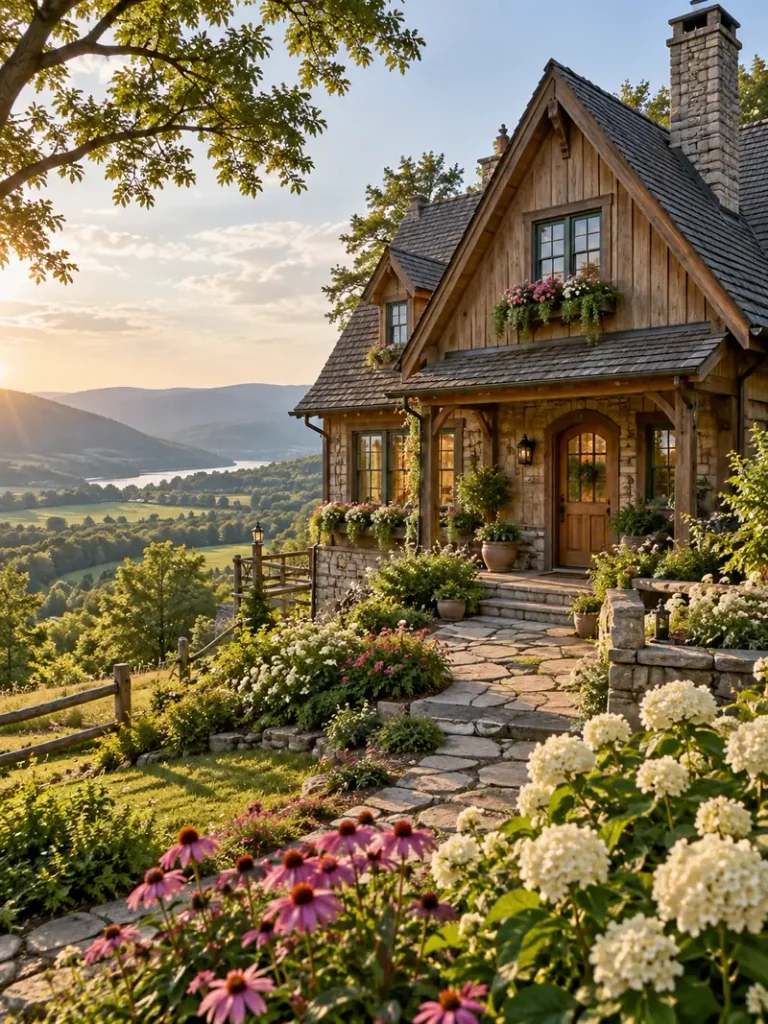
For a more luxurious retreat, dedicate one section of the exterior deck to a hot tub. Surround it with timber privacy screens, low landscaping, and subtle lighting. Keep the screens visually connected to the cottage by using the same wood species or stain as the exterior walls.
44. Wooden Cottage With Sunken Fire-Pit Terrace
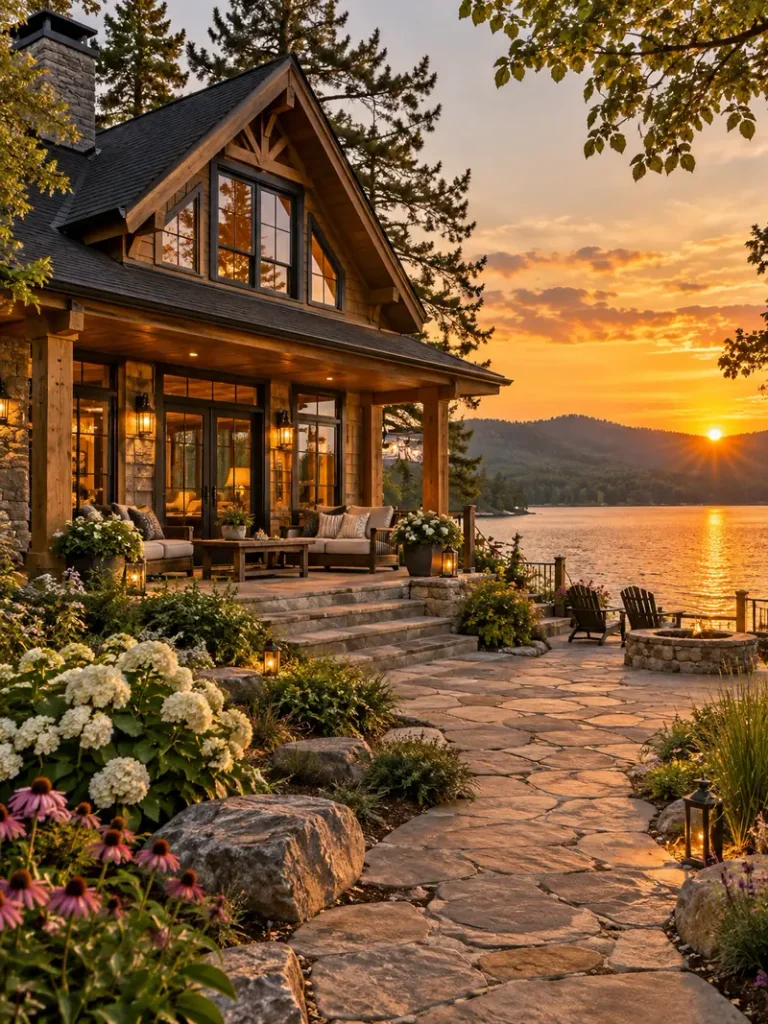
A sunken fire-pit area can turn the landscape into part of the cottage architecture. Position it just beyond the main deck and use stone or timber retaining walls around built-in seating. From the house, the lowered terrace creates visual depth without blocking outward views.
45. Panoramic Glass-and-Timber Cottage Facing the Forest
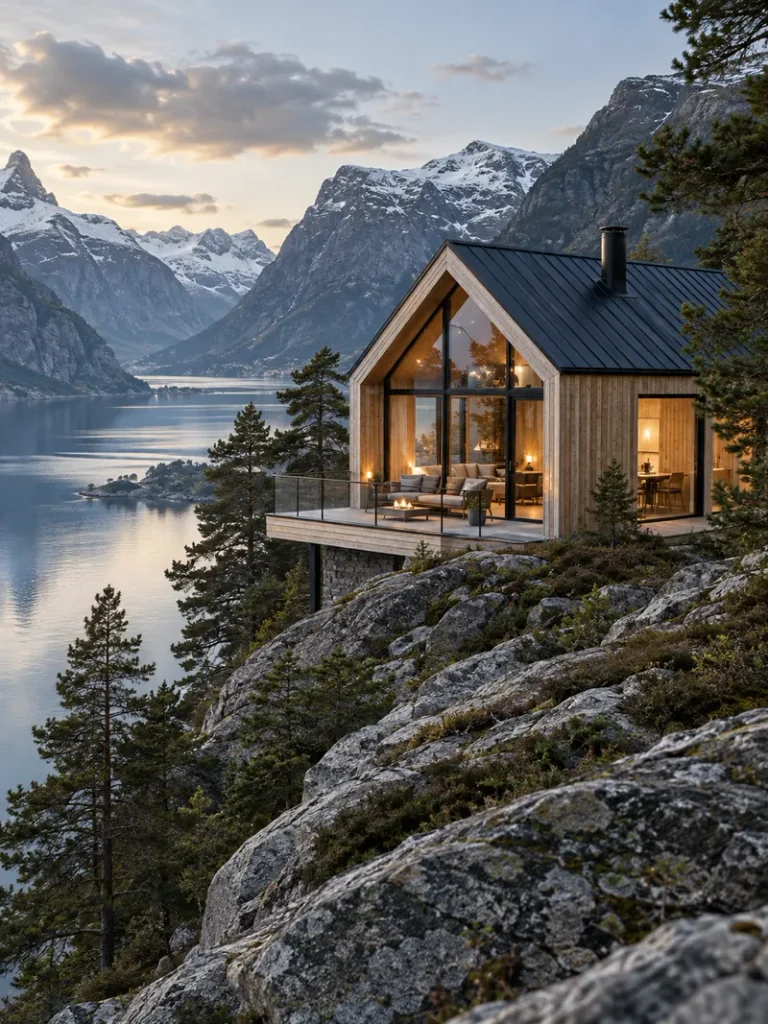
For a dramatic final idea, combine large sections of glazing with broad expanses of natural timber. Let the main facade face directly toward the forest and extend the roof outward to create a protected terrace. Minimal railings and simple landscaping allow the landscape itself to become the main decorative feature.
Best Exterior Materials for a Modern Wooden Cottage
Choosing the right materials is just as important as choosing the overall shape of the cottage. Cedar is one of the most popular exterior woods because of its warm color, attractive grain, and natural resistance to moisture. Larch is another excellent option, especially when you want timber that can weather gradually to a silver-gray finish.
Pine and fir can also be used, particularly when properly treated or stained. Reclaimed timber is ideal when you want more variation, texture, and age in the exterior.
Stone works beautifully beside wood because it adds visual weight and texture. It can be used around foundations, chimneys, entrance walls, terraces, or retaining walls.
For roofing, standing-seam metal is especially effective on modern cottages. Black, charcoal, deep green, and muted gray finishes all work well with timber siding. Large glass panels and dark metal window frames can then introduce contemporary contrast without taking away from the rustic character.
Exterior Color Combinations That Work Beautifully With Wood
A limited exterior palette usually produces the strongest result. Natural cedar paired with matte black is one of the easiest combinations to use because the dark details immediately make the timber feel more modern.
Honey-toned wood looks softer when combined with cream or warm white trim, while dark brown timber pairs beautifully with gray stone. Pale timber can be matched with charcoal roofing and black windows for a Scandinavian-inspired appearance.
If you want more color, forest green and muted sage work particularly well because they naturally relate to trees, grasses, and surrounding plants. Weathered gray timber also works with stone and dark metal for a quieter rustic palette.
For something more dramatic, combine black-stained wood with sections of untreated natural timber around entrances or decks. The contrast between the two finishes highlights architectural details without introducing additional colors.
Exterior Details That Make a Wooden Cottage Look More Modern
Small exterior decisions can completely change how contemporary a wooden cottage feels. Start with the windows. Larger openings and slimmer frames instantly make traditional timber architecture feel fresher.
Vertical siding is another useful technique because it creates clean lines and gives even a small cottage a stronger architectural character. Hidden gutters, simple roof edges, and minimal fascia boards also help reduce visual clutter.
Replace decorative porch railings with straightforward timber slats, slim metal bars, or glass panels. Choose exterior lights with simple shapes rather than ornate lanterns.
Decking should also feel connected to the house. Wide steps, built-in seating, and continuous timber surfaces make outdoor areas feel more intentional.
Finally, avoid adding too many decorative elements at once. A modern cottage usually looks more sophisticated when one or two strong architectural features are allowed to stand out.
How to Add Rustic Charm Without Making the Cottage Look Old-Fashioned
Rustic design works best when texture is balanced with simplicity. Natural stone, exposed timber, weathered boards, and chunky beams can all create character, but they should be paired with cleaner modern features.
For example, a rough stone chimney can sit beside large black-framed windows. Heavy timber posts can support a simple metal roof. Reclaimed siding can be combined with minimal glass doors.
Landscaping also plays an important role. Native grasses, wildflowers, ferns, gravel, and natural stone paths create rustic softness without making the cottage itself overly decorative.
Try to avoid combining every traditional cottage feature in one design. Decorative shutters, ornate railings, carved trim, multiple wood stains, and complicated rooflines can quickly make an exterior feel busy.
Instead, select a few rustic materials and allow their natural texture to provide the character.
Frequently Asked Questions About Wooden Cottage Exterior Design
What type of wood looks best on a modern cottage exterior?
Cedar, larch, pine, fir, and reclaimed timber can all work beautifully. Cedar offers warm tones, while larch is particularly attractive when allowed to weather naturally. The best choice depends on climate, maintenance requirements, budget, and the appearance you want.
Is vertical or horizontal wood siding better for a cottage?
Both can work, but they create different effects. Vertical siding generally feels more contemporary and can make a cottage appear taller. Horizontal boards create a broader, more traditional look and are especially effective on low, wide cottage designs.
What roof style works best with a wooden cottage?
Simple gabled roofs are among the most versatile options. Steep A-frame roofs work well in mountain or snowy settings, while low-pitched roofs can create a more modern look. Metal roofing pairs particularly well with natural timber.
What colors pair well with natural timber?
Black, charcoal, cream, warm white, forest green, muted sage, stone gray, and deep brown all work beautifully with wooden exteriors. Darker colors usually create a more contemporary feel, while cream and muted green produce a softer countryside appearance.
Can wood and stone be combined on the same cottage exterior?
Yes. Wood and stone are one of the most effective combinations for rustic-modern cottages. Stone can be used around foundations, chimneys, entrances, terraces, or lower walls, while timber keeps the overall exterior warm and welcoming.
How can a small wooden cottage exterior look more luxurious?
Focus on proportion and material quality rather than adding decoration. Large windows, consistent timber cladding, a well-designed deck, simple lighting, attractive stonework, and carefully planned landscaping can make even a compact cottage feel refined.
Conclusion
Modern wooden cottages prove that rustic architecture does not have to feel old-fashioned. By combining natural timber with glass, stone, metal roofing, simple rooflines, thoughtful decks, and understated landscaping, it is possible to create a home that feels warm, contemporary, and deeply connected to nature.
These wooden cottage house design ideas show how many different exterior styles can be achieved using similar natural materials. A dark forest retreat can feel completely different from a pale Scandinavian cottage, a lakeside timber house, or a countryside design with a wide veranda.
The key is to choose a clear architectural direction and keep the materials consistent. Whether you prefer weathered wood, cedar siding, stone chimneys, dramatic windows, or minimalist black details, a carefully designed cottage exterior can create character long before anyone steps through the front door.
