Skip to content
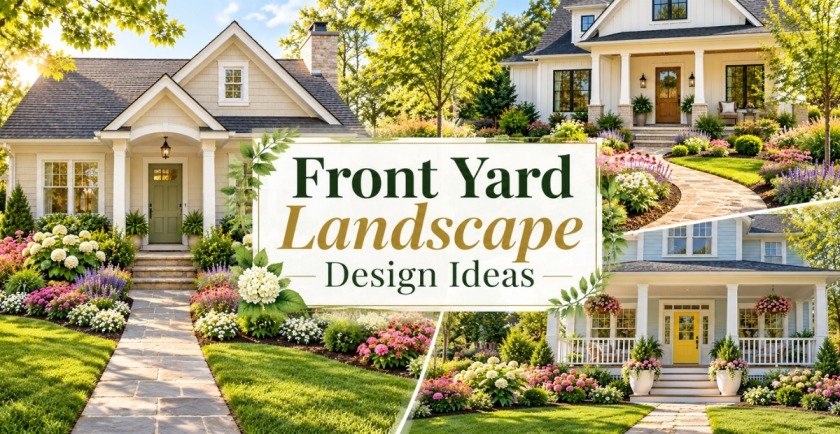
A beautiful front yard can completely change how your home looks and feels. The right combination of colorful flowers, neatly arranged shrubs, attractive walkways, and thoughtfully placed trees can turn an ordinary entrance into something truly welcoming.
And you don’t need a huge yard or an expensive landscaping project to achieve it.
Some of the most attractive front yards use simple design principles, such as layering plants, repeating colors, creating gentle curves, and choosing landscaping materials that complement the house.
Whether you prefer romantic cottage gardens, modern minimalist landscapes, or traditional American homes surrounded by flowering shrubs, there’s a design that can work for your property.
These 23 front yard landscape design ideas feature beautiful finished landscapes alongside helpful layout explanations. You’ll discover not only what makes each landscape attractive but also how to arrange the pathways, flower beds, trees, and shrubs to create a similar look.
Let’s explore some inspiring designs that can make your home look beautiful from the street.
1. Layered Foundation Flower Beds
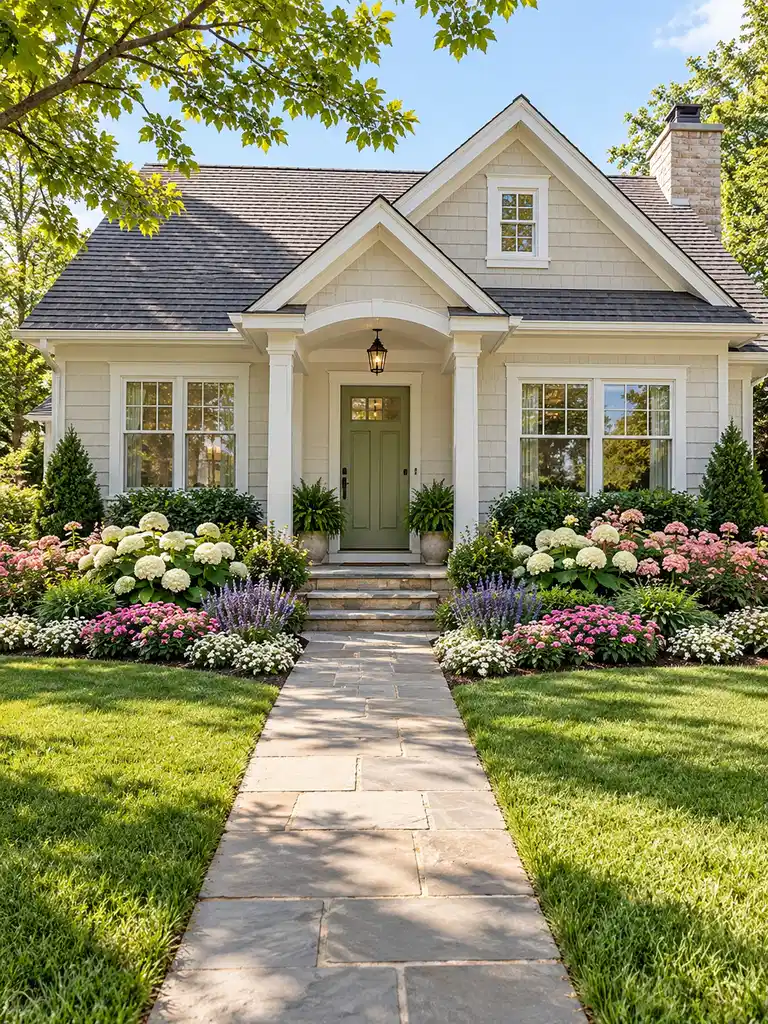
Layered foundation planting gives a home a lush, finished appearance by arranging different plants in front of the exterior walls.
Instead of using a single row of identical shrubs, this design combines evergreen plants, flowering bushes, and low-growing perennials at varying heights.
White hydrangeas, compact evergreens, purple salvia, and soft pink flowers create a lovely combination of color and texture. The plants frame the entrance while allowing the architectural features of the house to remain visible.
This approach works especially well with cottages, farmhouses, and traditional suburban homes.
Layout Design: Arrange Plants in Three Layers
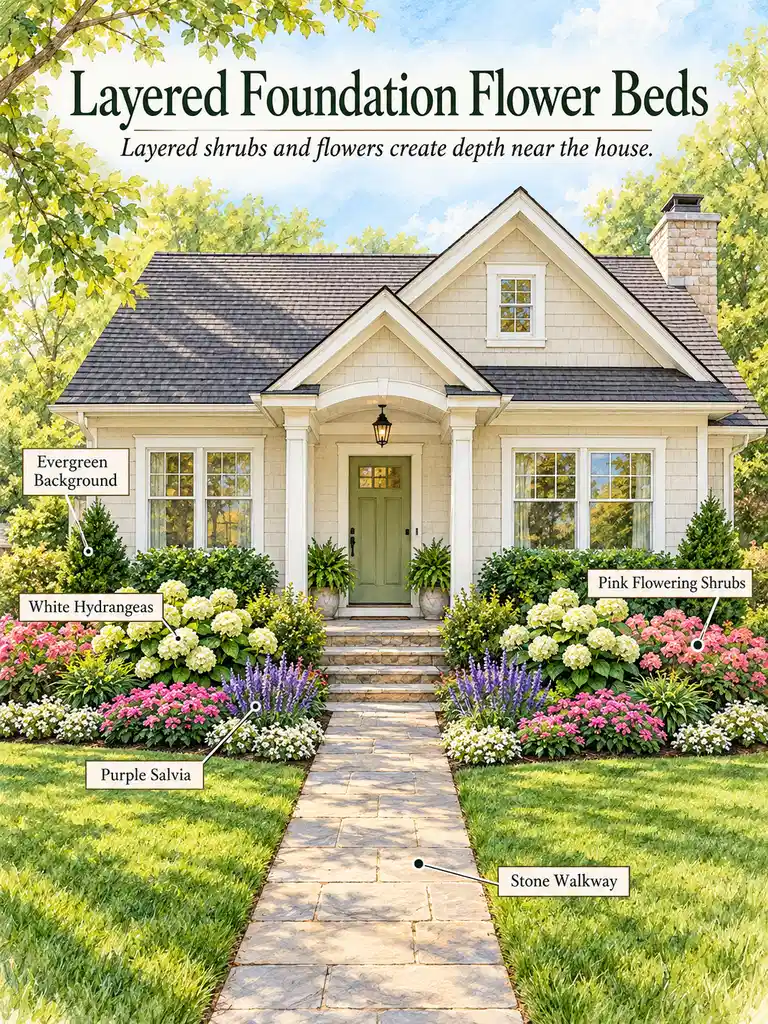
Begin with a planting bed approximately 5–8 feet deep, where space allows, along the front of the house.
Position taller evergreen shrubs toward the back, leaving appropriate clearance from the foundation and windows. Arrange medium-height flowering shrubs in front, followed by compact perennials and groundcovers along the outer edge.
Group similar plants together and repeat flower colors across both sides of the entrance.
Use a gently curved bed border to soften the straight lines of the house. Allow enough room for each plant to reach its mature size without overcrowding.
2. Curved Stone Walkway With Flower Borders
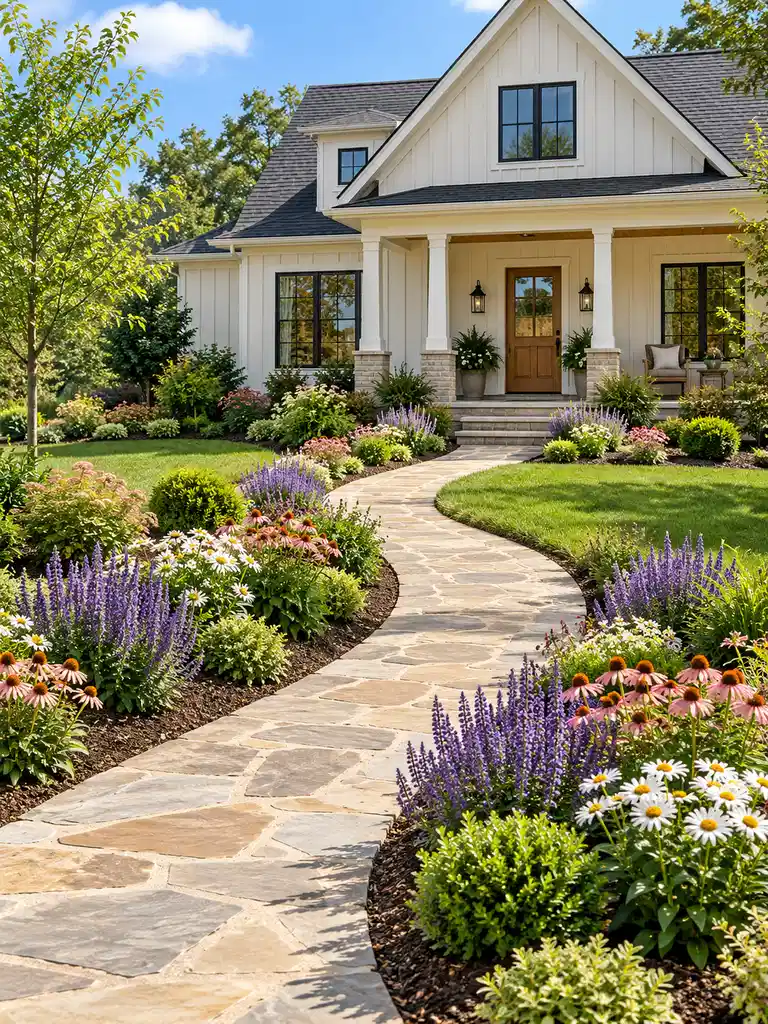
A curved stone walkway surrounded by colorful flowers creates a welcoming entrance that feels natural and inviting.
The flowing pathway draws attention toward the front door while softening the straight architectural lines of the house.
Natural flagstone, warm-colored pavers, and flowering garden borders look particularly charming together. Purple blooms, white daisies, pink perennials, and rounded shrubs add layers of color along the path.
This landscaping style beautifully complements cottages, farmhouses, and traditional American homes.
Layout Design: Create a Flowing Garden Path
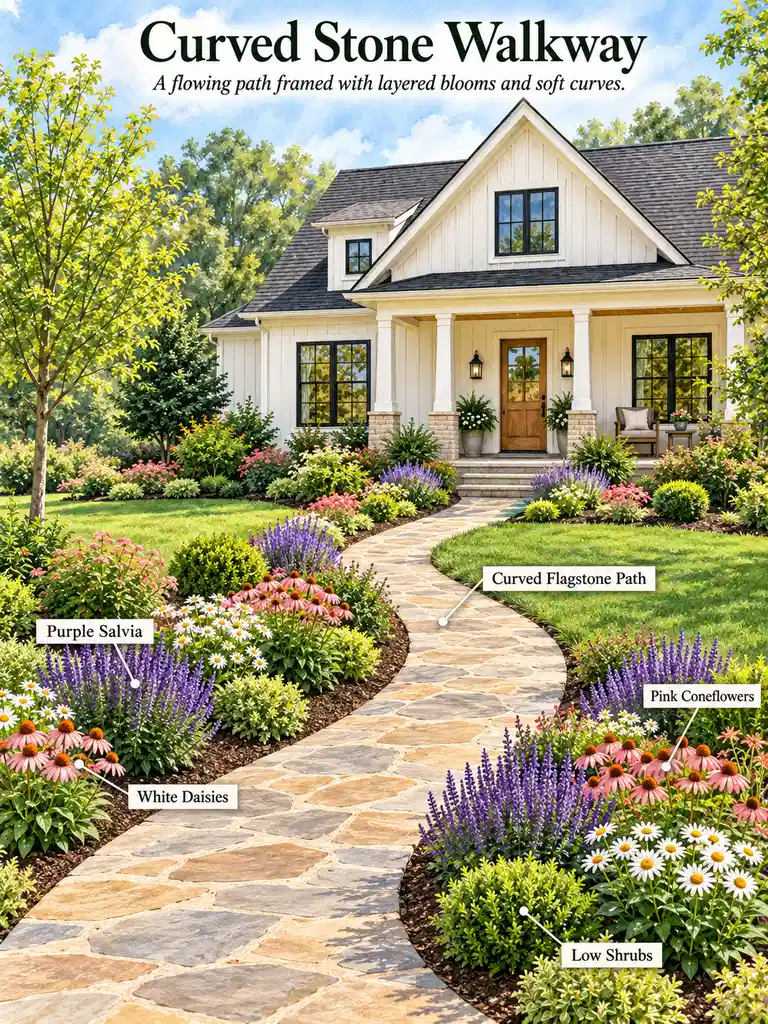
Start the pathway near the sidewalk or driveway and guide it toward the entrance using one or two gentle curves.
Aim for a comfortable walking width of approximately 4 feet where possible. Install stable, slip-resistant paving stones over a properly prepared base.
Create planting beds along the outer curves, keeping taller shrubs farther from the walkway and shorter flowers near its edges.
Repeat similar plants along different sections of the path to create continuity.
Keep flowers from spreading into the walking area, and ensure the entrance remains easy to see.
3. Symmetrical Evergreen Entry Design
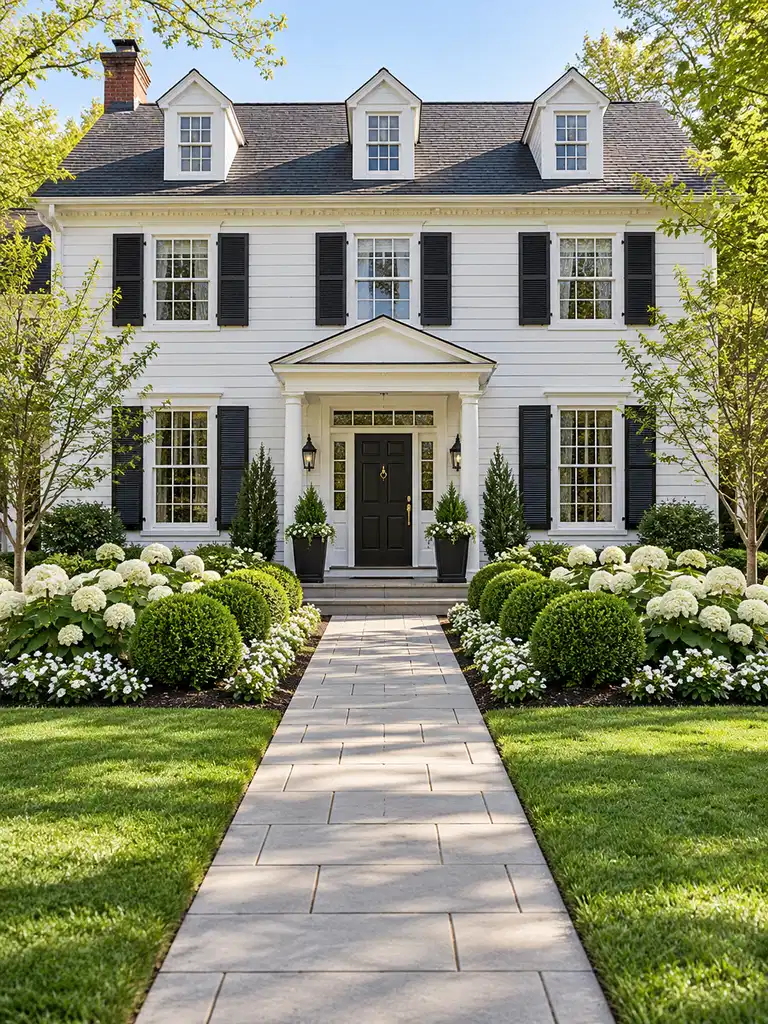
A symmetrical landscape creates a sense of order, balance, and timeless elegance.
This design is particularly attractive for Colonial-style homes, traditional two-story houses, and classic white farmhouses with centered entrances.
Matching evergreen shrubs, balanced flower beds, and decorative planters on either side of the front steps create a beautiful formal appearance.
White hydrangeas, rounded shrubs, and neatly maintained greenery make the entrance look sophisticated without requiring elaborate decorations.
Layout Design: Balance Both Sides of the Entrance
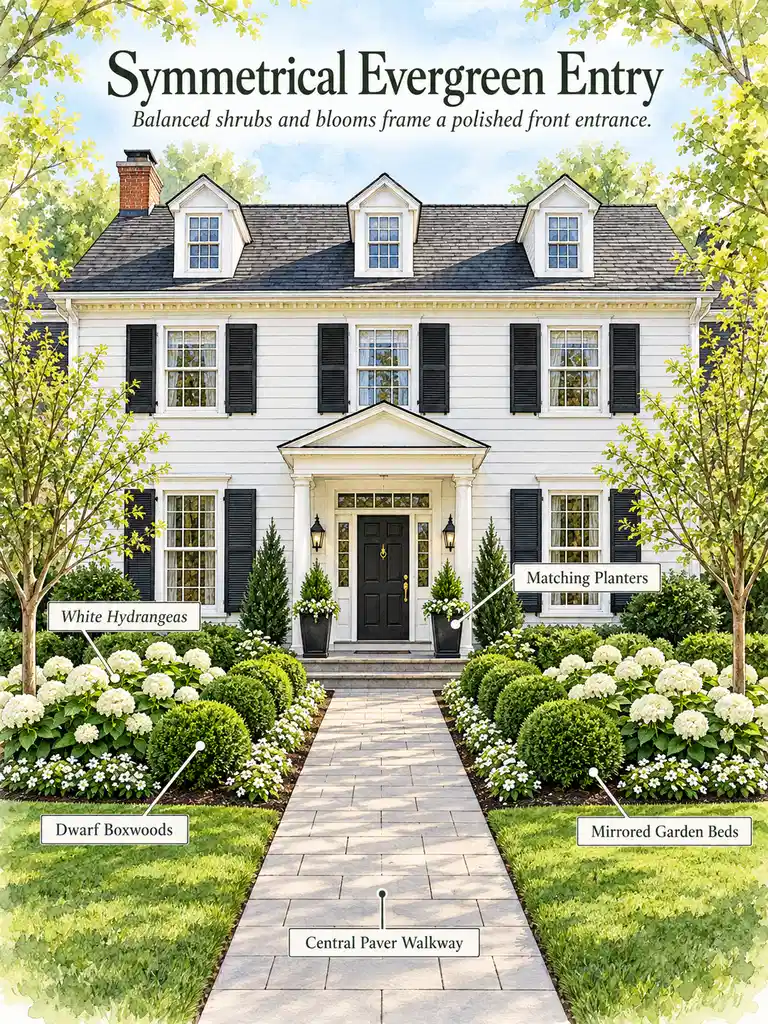
Begin with a straight walkway aligned with the center of the front door.
Create matching planting beds on both sides, using the same shrub varieties and similar spacing.
Position two large decorative planters beside the entrance. Place compact evergreen shrubs at corresponding points along each side of the walkway.
Use lower flowering plants toward the front of the beds and taller foundation plants closer to the house.
Keep the layout visually balanced, but make practical adjustments for sunlight, utility access, or uneven growing conditions.
4. Modern Gravel and Ornamental Grass Landscaping
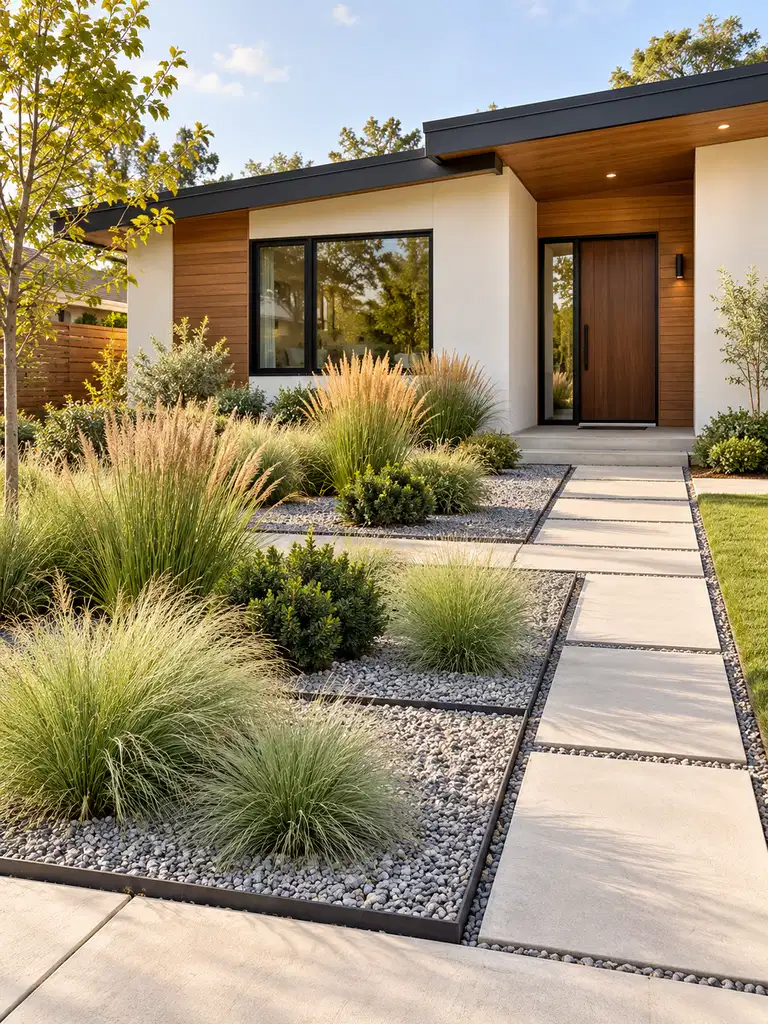
Modern front yard landscaping often looks impressive because of its simplicity.
Instead of filling the yard with colorful flowers, this design highlights clean lines, decorative gravel, architectural plants, and ornamental grasses.
Soft green grasses contrast beautifully with gray stones, dark edging, and contemporary paving.
The result is an uncluttered landscape that suits modern houses, minimalist homes, and updated ranch-style properties.
Layout Design: Combine Gravel With Structured Planting
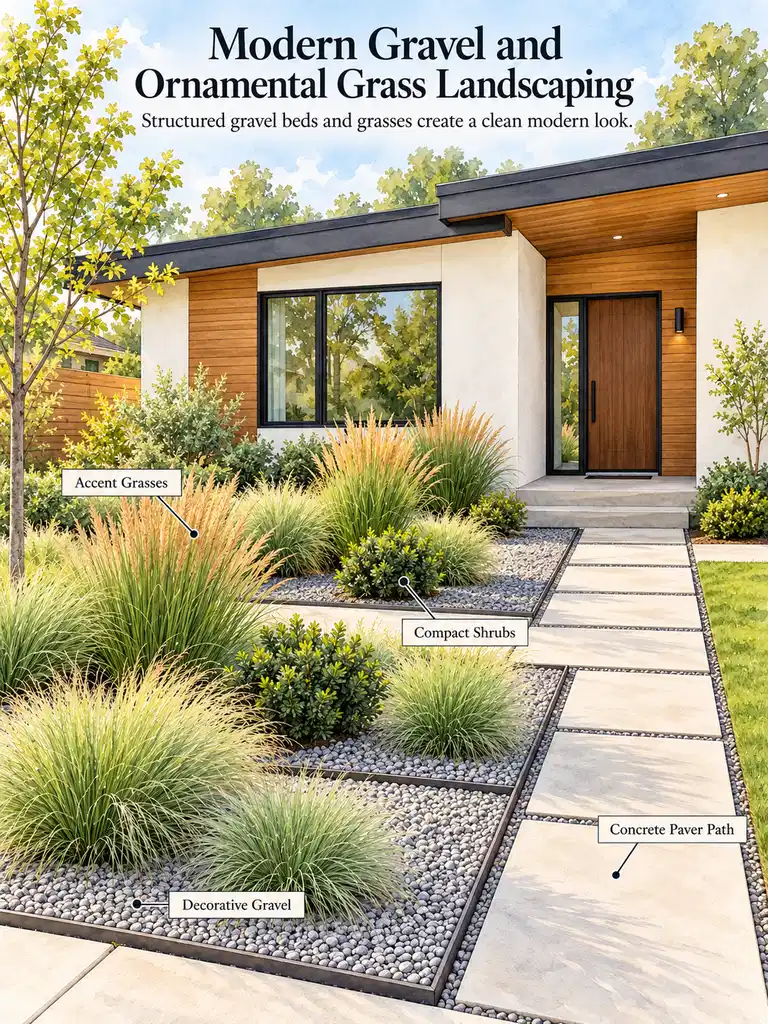
Divide the front yard into clearly defined planting sections using metal, stone, or concrete edging.
Install decorative gravel in selected areas and group suitable ornamental grasses at different heights.
Position larger grasses or architectural shrubs toward the house, with smaller plants near the walkway.
Leave visible spaces between planting groups to preserve the minimalist appearance.
Use rectangular stepping stones or a straight paved path to reinforce the design’s geometric character.
Choose noninvasive plants appropriate for your growing region, and plan for occasional gravel maintenance.
5. Flowering Tree as a Front Yard Focal Point
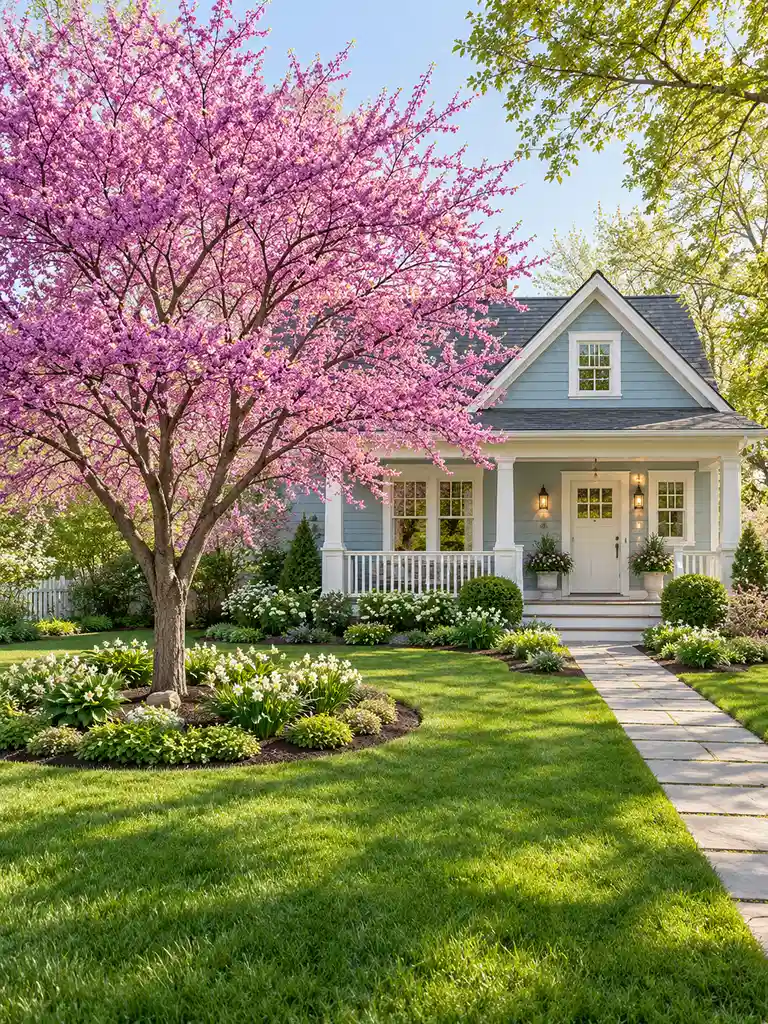
A beautifully flowering ornamental tree can become the centerpiece of an entire front yard.
During spring, its colorful blossoms create an eye-catching display that adds personality and seasonal beauty to the landscape.
A pink-flowering redbud, suitable flowering dogwood, or serviceberry can look especially charming beside a cottage-style home.
Surrounding the tree with compact shrubs and low-growing flowers helps connect it visually with the rest of the garden.
Layout Design: Position a Small Ornamental Tree
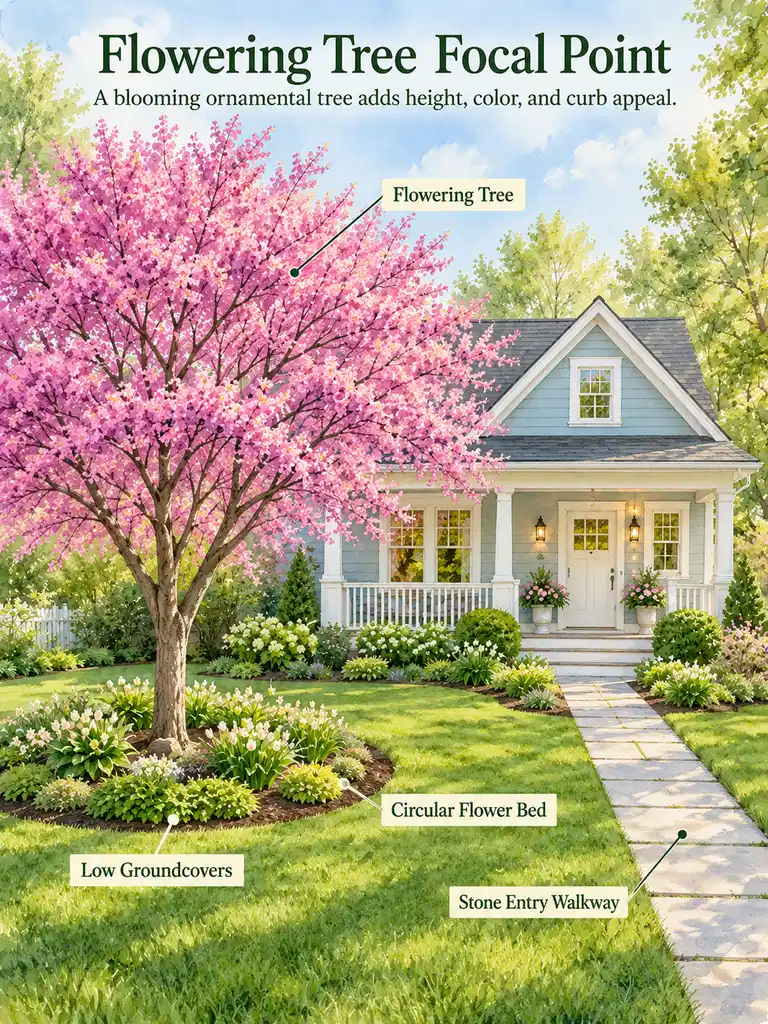
Choose a location slightly to one side of the front lawn so the tree doesn’t block the front door.
Check its mature canopy size and maintain sufficient clearance from the house, overhead utilities, and walkway.
Create a circular or gently curved mulched planting bed around the trunk.
Add small, compatible perennials toward the outer edge of the bed, avoiding unnecessary disturbance to developing roots.
Keep the surrounding lawn relatively simple so the flowering tree remains the primary focal point.
6. Cottage-Style Wildflower Garden
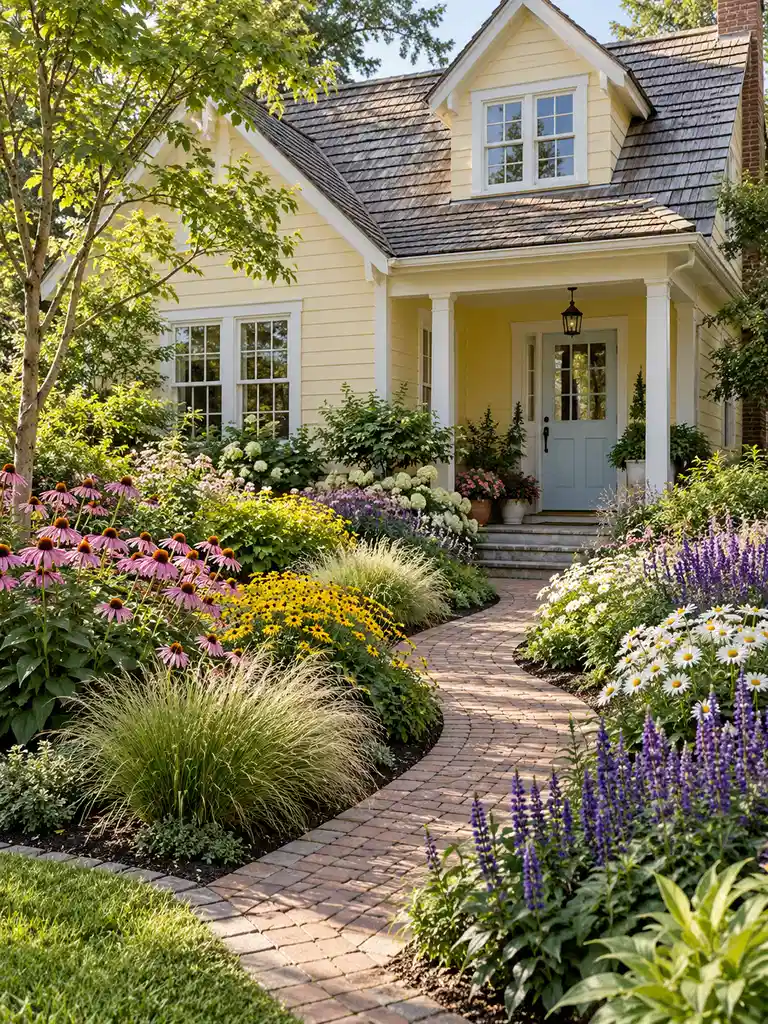
A cottage-style flower garden brings a relaxed, romantic atmosphere to the front of a home.
Colorful flowers appear in generous, flowing groups rather than perfectly straight rows. Soft pinks, creamy whites, purples, and cheerful yellows create an inviting combination.
Coneflowers, salvias, coreopsis, and suitable daisies work beautifully in this style.
The garden feels abundant and natural while still benefiting from thoughtful plant selection and defined borders.
Layout Design: Build a Flowing Cottage Garden
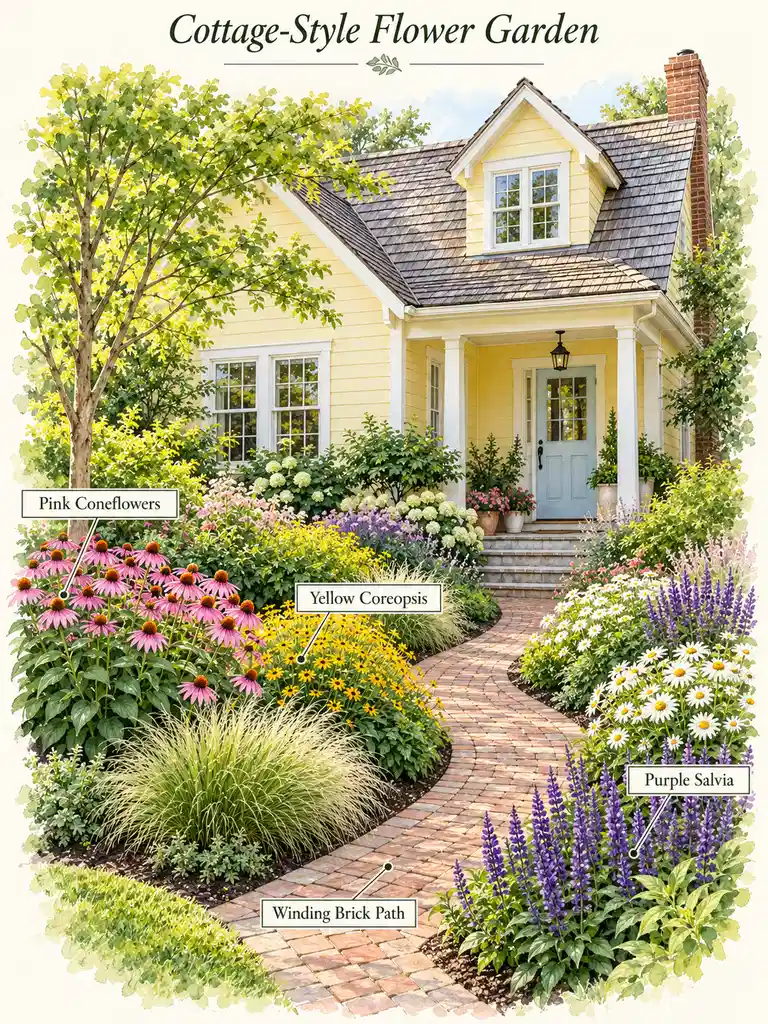
Create wide planting beds with gently curved edges along the front of the house or walkway.
Position taller flowering perennials toward the back and medium-height varieties through the center.
Fill the front with lower-growing flowers that soften the bed edges.
Repeat several flower varieties throughout the design to create a coordinated appearance.
Select plants with different flowering periods for a longer display.
Leave sufficient spacing for airflow and mature growth, even if you prefer a full, informal garden appearance.
7. Low-Maintenance Rock and Mulch Landscaping
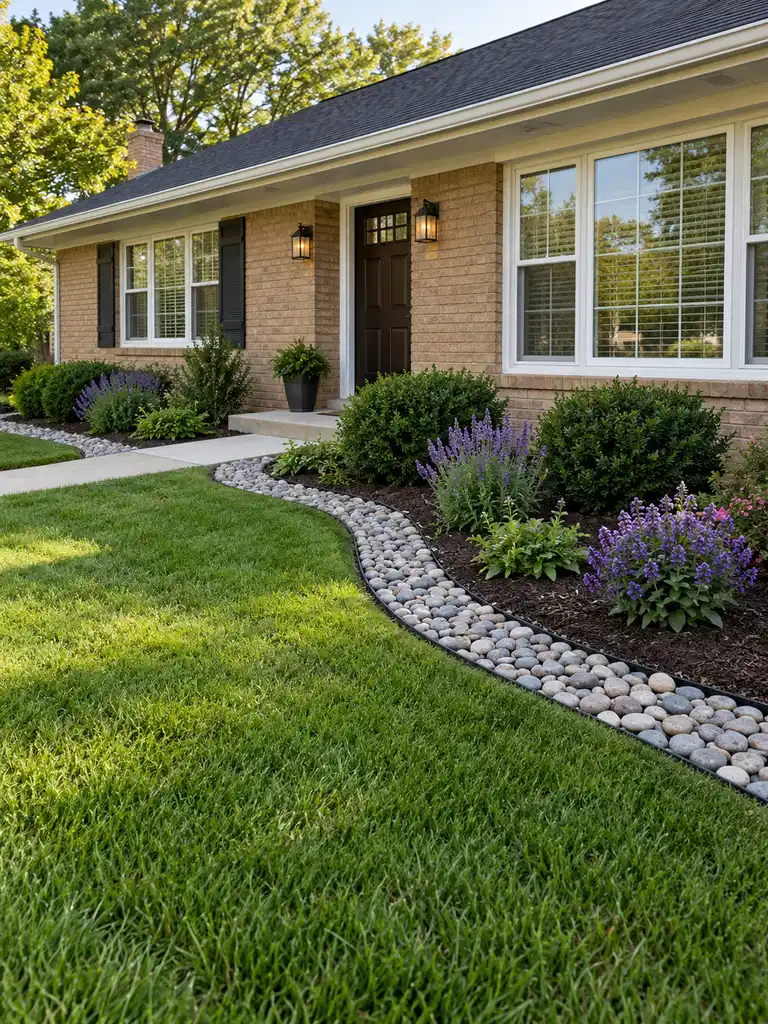
Combining decorative rocks and mulch creates a beautiful contrast between natural textures.
Smooth river stones, rich brown mulch, compact shrubs, and hardy perennial plants work together to create an organized landscape.
This style is especially useful for homeowners who want attractive garden beds without maintaining extensive seasonal flower arrangements.
The combination looks great around ranch homes, small suburban houses, and properties with simple architecture.
Layout Design: Separate Rock and Mulch Zones
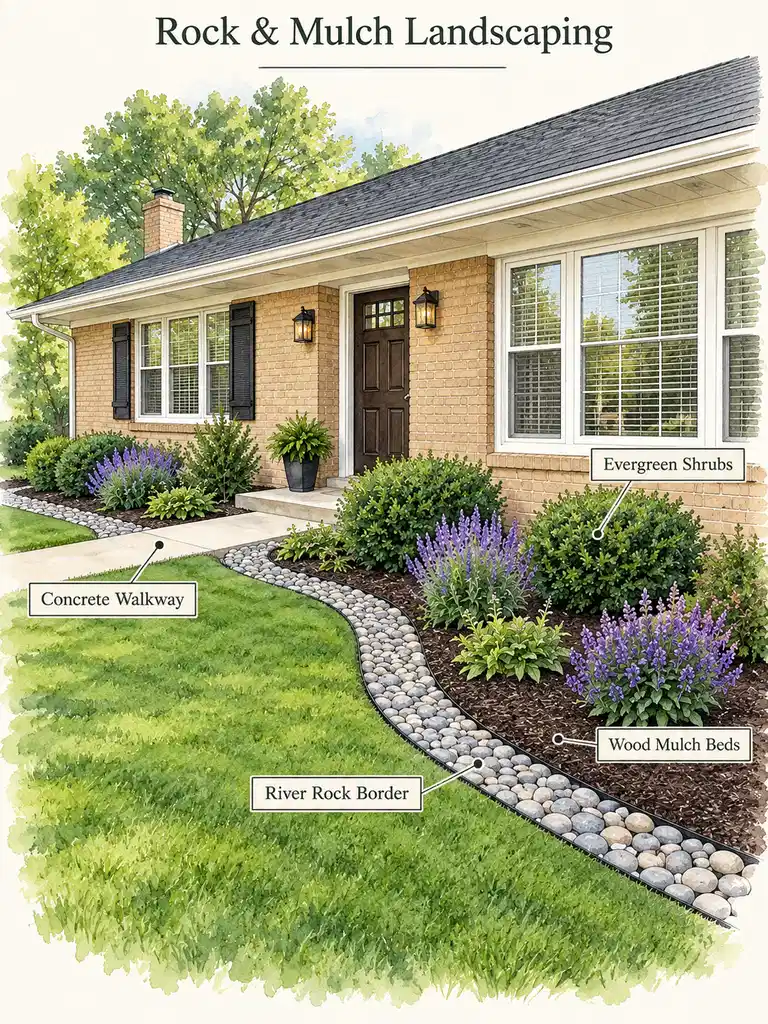
Create broad planting beds along the foundation or beside the walkway.
Use mulch around shrubs and flowering plants, while reserving decorative stone for selected accent areas.
Define the transition between materials with durable landscape edging.
Arrange larger shrubs toward the back and smaller plants closer to the lawn.
Keep mulch away from plant stems and tree trunks, and plan the stone areas to avoid directing runoff toward the foundation.
Choose plants with similar water requirements to simplify ongoing care.
8. White Hydrangea Front Yard Borders
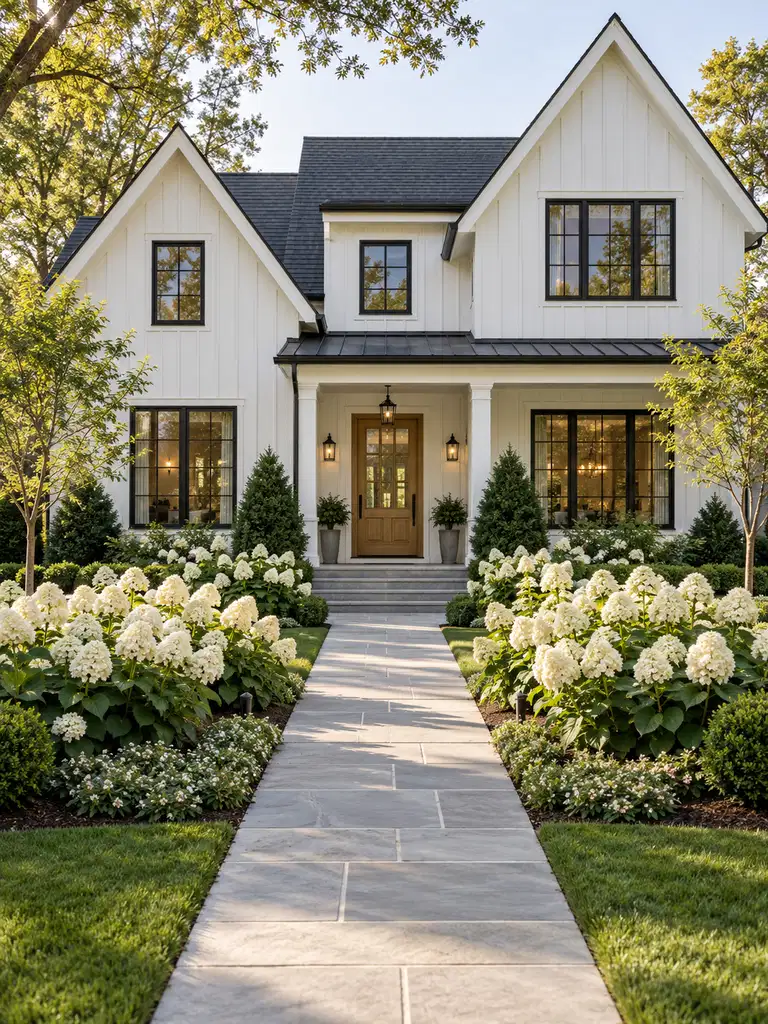
White hydrangeas bring a soft, elegant appearance to front yard landscaping.
Their large flower clusters stand out against dark-green foliage, creating an impressive display without requiring numerous flower colors.
Masses of white hydrangeas beside a walkway or porch can make even a simple farmhouse look beautifully landscaped.
Pairing them with evergreen shrubs creates structure and contrast throughout the growing season.
Layout Design: Create Lush Hydrangea Borders
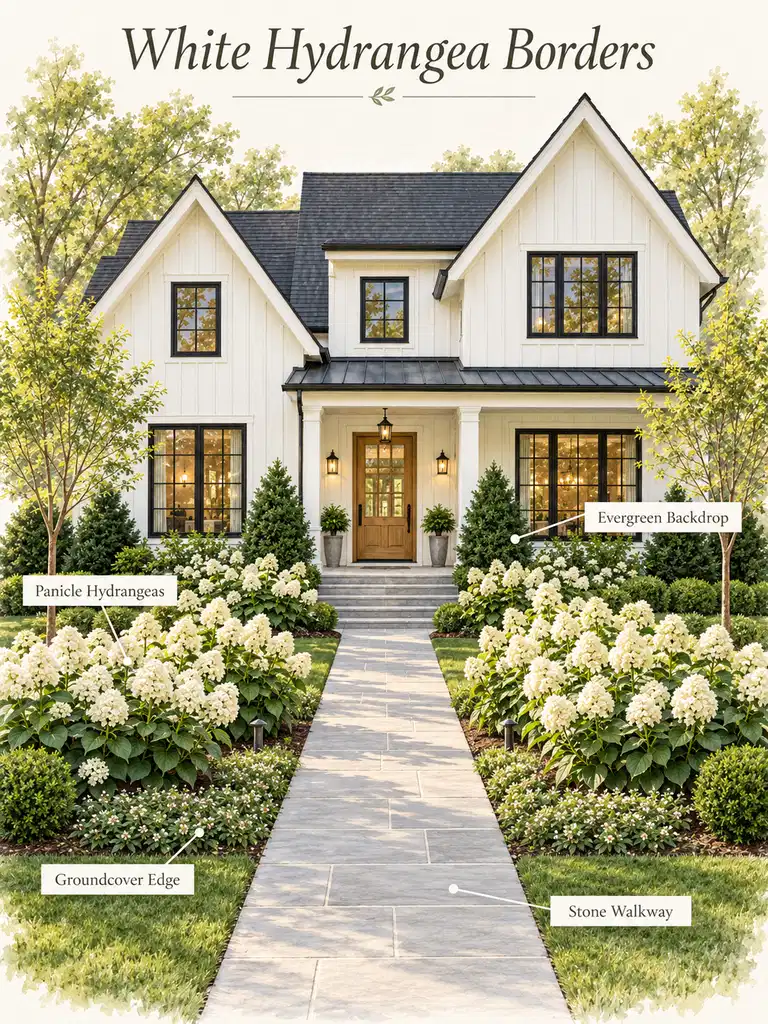
Prepare planting beds along the front foundation or on either side of the entrance pathway.
Arrange hydrangeas in repeated groups rather than scattering single plants.
Place taller evergreen shrubs behind them, where mature sizes allow, and use compact groundcovers along the front.
Check each hydrangea variety’s sunlight, moisture, and spacing requirements before planting.
Maintain sufficient distance between shrubs so their mature flower clusters have room to develop.
Use simple edging to keep the borders looking neat.
9. Japanese-Inspired Minimalist Front Garden
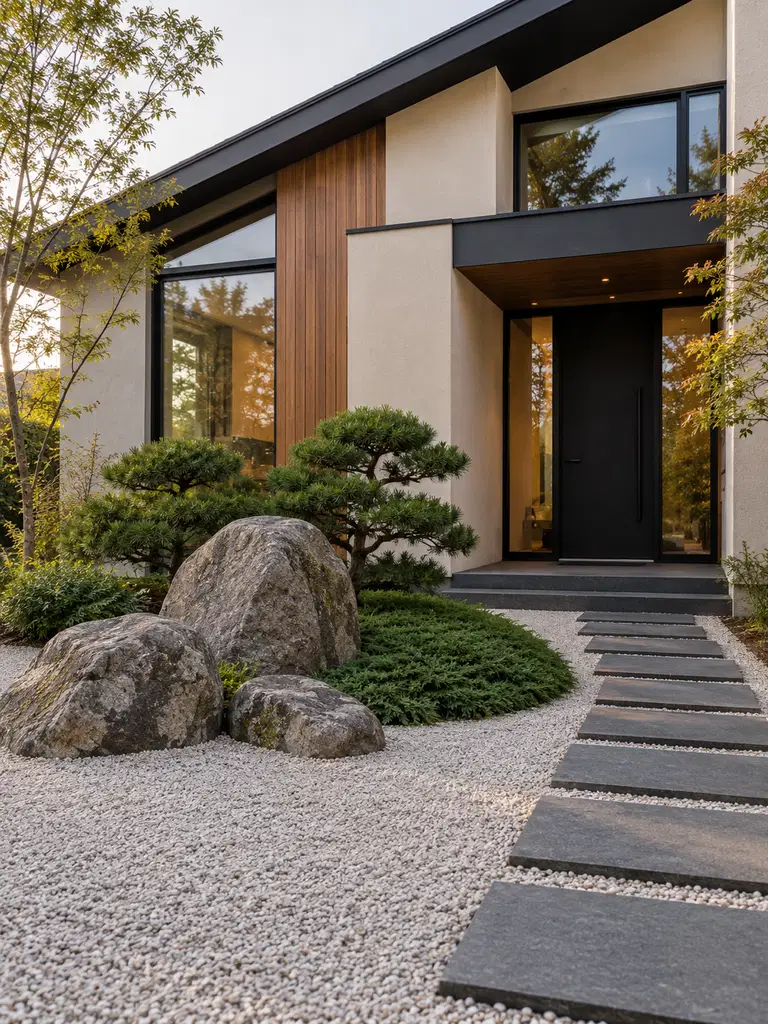
A Japanese-inspired front garden emphasizes calm, simplicity, and natural beauty.
Instead of covering every surface with colorful flowers, this landscaping style relies on carefully selected stones, gravel, evergreen plants, and open space.
A few sculptural shrubs and well-positioned boulders can create an impressive landscape without elaborate decorations.
The design complements contemporary homes and properties with simple architectural lines.
Layout Design: Balance Stones, Plants, and Open Space
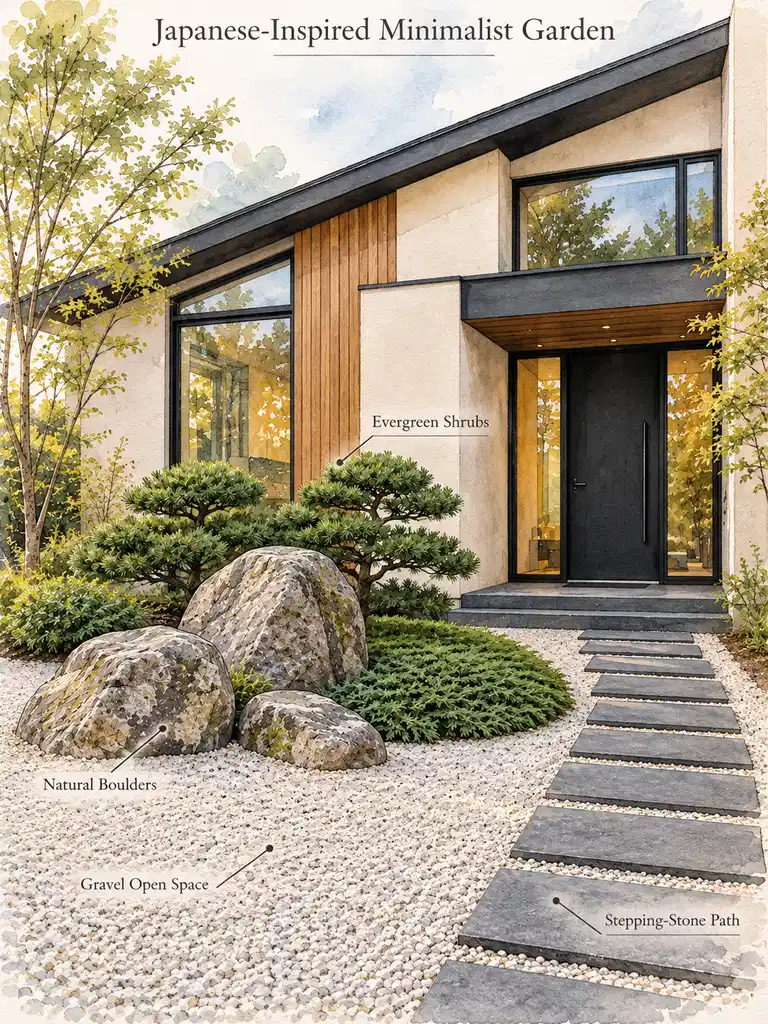
Begin by choosing a simple pathway connecting the sidewalk to the entrance.
Create an open gravel section beside the path and arrange two or three natural boulders in an asymmetrical grouping.
Position compact evergreen shrubs around the stones, leaving visible space between plants.
Add a restrained selection of groundcovers or small foliage plants.
Avoid evenly spacing every feature or filling all remaining gaps.
A limited material palette and thoughtful placement will create a more peaceful, balanced result.
10. Colorful Perennial Flower Island
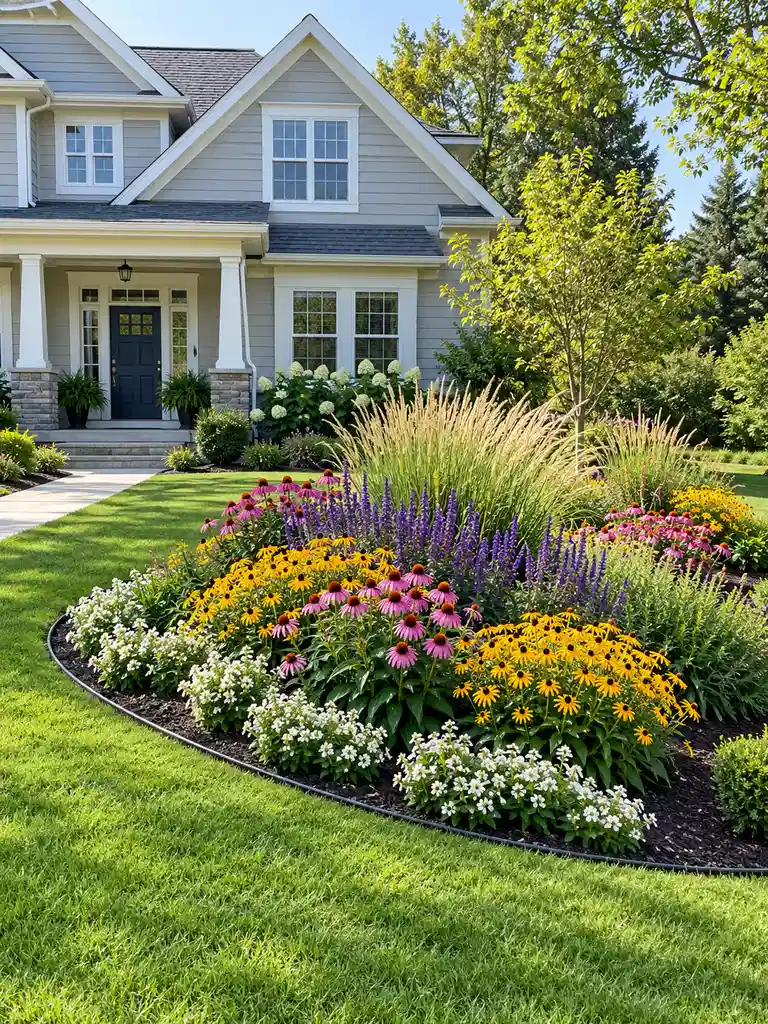
A colorful perennial flower island creates a striking focal point within an open front lawn.
Unlike traditional flower beds positioned against a house, this design stands independently in the yard.
An oval or kidney-shaped bed filled with colorful perennials introduces movement and seasonal interest to a large grassy area.
Pink coneflowers, yellow black-eyed Susans, purple salvia, and ornamental grasses can create an attractive combination in suitable climates.
Layout Design: Arrange a Freestanding Flower Bed
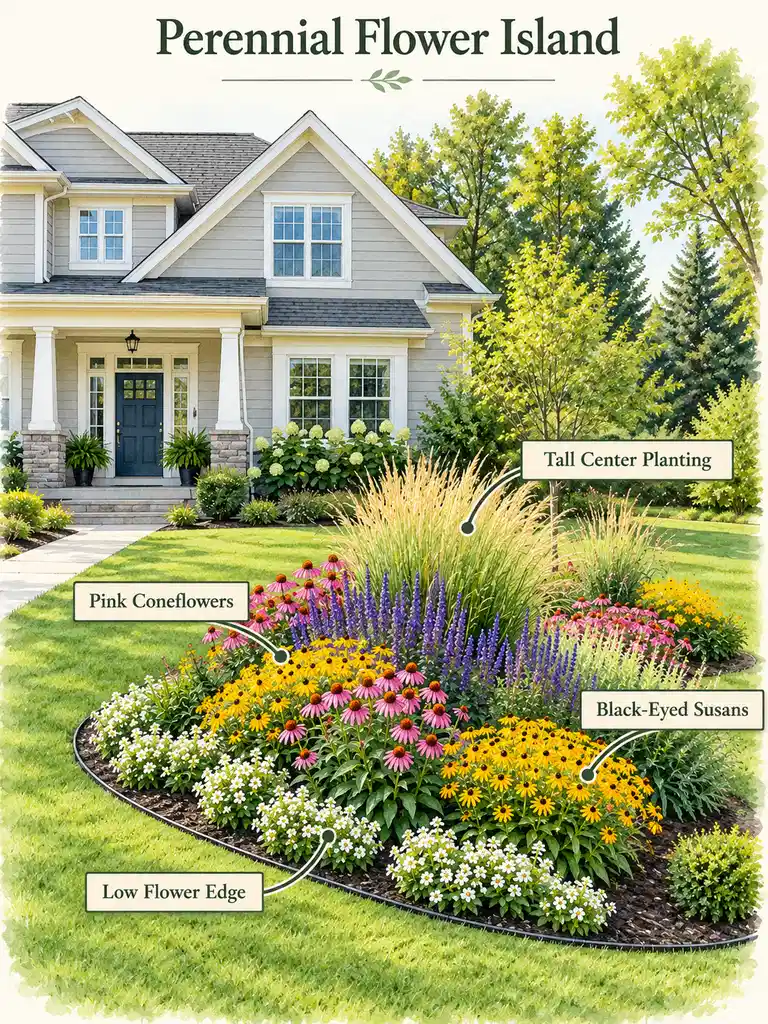
Choose an open section of lawn that doesn’t interrupt walking routes or obstruct driveway visibility.
Mark out an oval or gently curved bed using a garden hose before cutting the final edge.
Place taller flowering plants and ornamental grasses near the center.
Arrange medium-height perennials around them, finishing with shorter flowers along the perimeter.
Group similar plants in repeated clusters.
Leave enough surrounding lawn for mowing and maintain a crisp bed edge to keep the island looking intentional.
11. Raised Stone Planter Landscaping
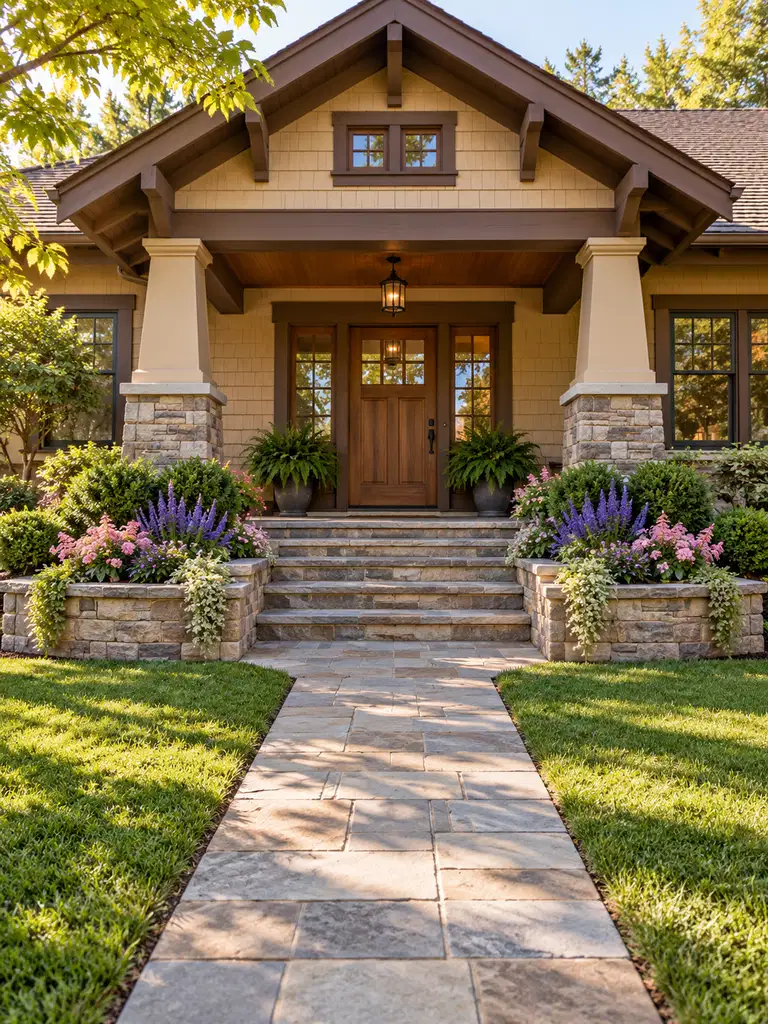
Raised stone planters add architectural character to a front yard while providing attractive spaces for flowers and shrubs.
Their natural stone surfaces contrast beautifully with green foliage and colorful blooms.
This approach works particularly well around front steps, sloping entrances, and Craftsman-style homes.
A combination of compact flowering plants, trailing greenery, and low shrubs helps soften the edges of the stonework.
Layout Design: Build Defined Raised Planting Beds
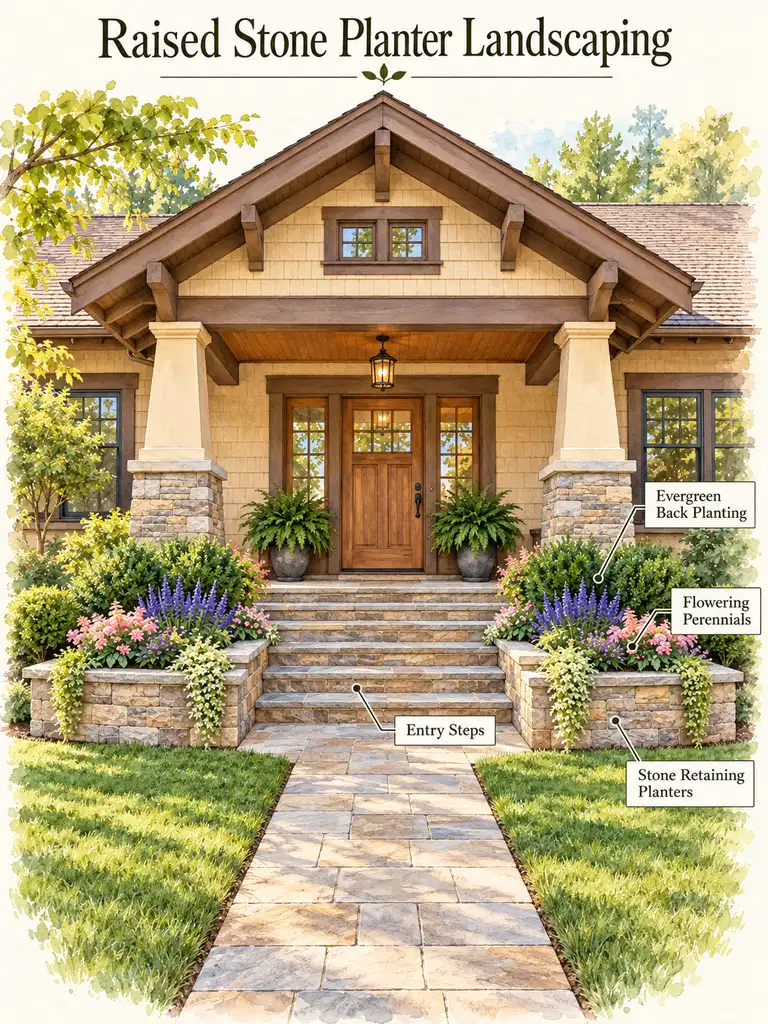
Position raised beds alongside the entrance steps or within an existing sloped planting area.
Choose stone or landscape blocks that complement the house’s exterior materials.
Keep the planters low enough to maintain clear views toward the entrance.
Install appropriate drainage and fill the beds with suitable planting soil.
Place larger shrubs toward the back, with flowering perennials and trailing plants near the front edge.
For tall or soil-retaining structures, consult a qualified professional about structural and drainage requirements.
12. Mediterranean Lavender and Olive-Inspired Garden
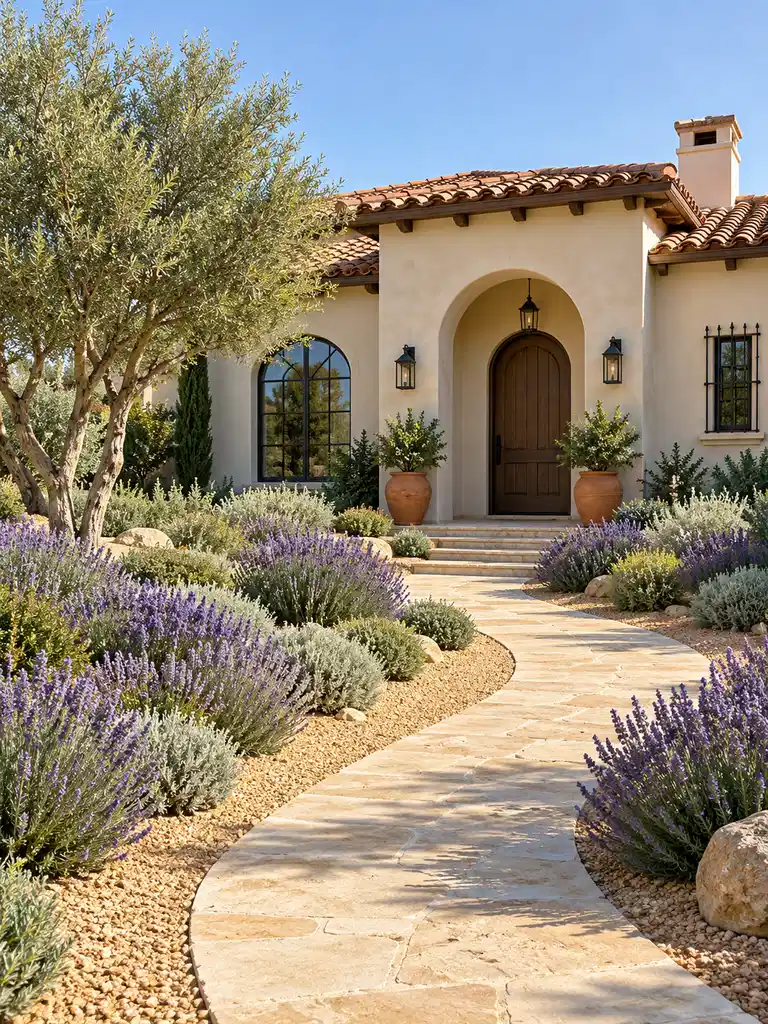
Mediterranean-inspired landscaping combines warm natural materials with soft, silvery-green foliage.
Terracotta planters, lavender-colored flowers, gravel, and stone walkways create a relaxed, sun-filled appearance.
Olive trees and lavender are classic elements where growing conditions allow.
In colder or wetter American climates, similar-looking locally suitable plants can recreate the style more successfully.
The design complements stucco homes, Spanish-inspired architecture, and warm-toned exterior finishes.
Layout Design: Combine Warm Stone and Drought-Tolerant Plants
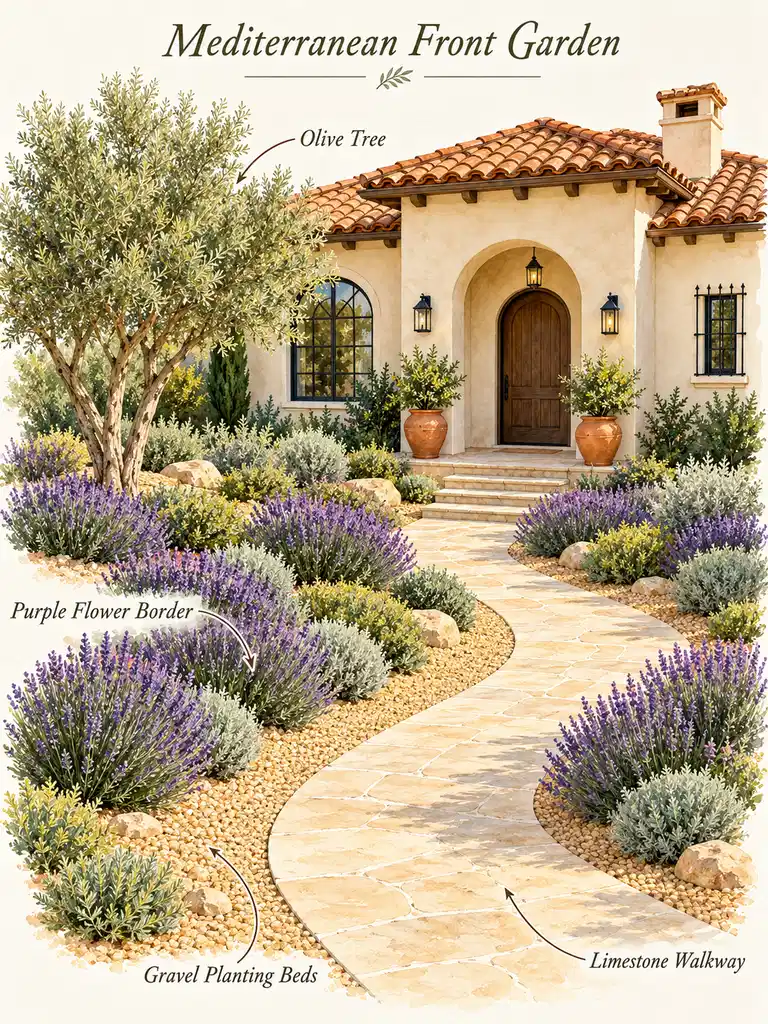
Create a stone or gravel walkway leading toward the entrance.
Arrange terracotta planters near the front steps and establish broad planting groups beside the path.
Use silvery foliage plants, suitable flowering herbs, and architectural shrubs.
Place a small feature tree to one side if the available space and climate support it.
Group plants with similar watering needs and provide appropriate drainage.
Keep decorative stone areas open enough to highlight the contrast between paving, gravel, and foliage.
13. Small Front Yard With a Circular Flower Bed
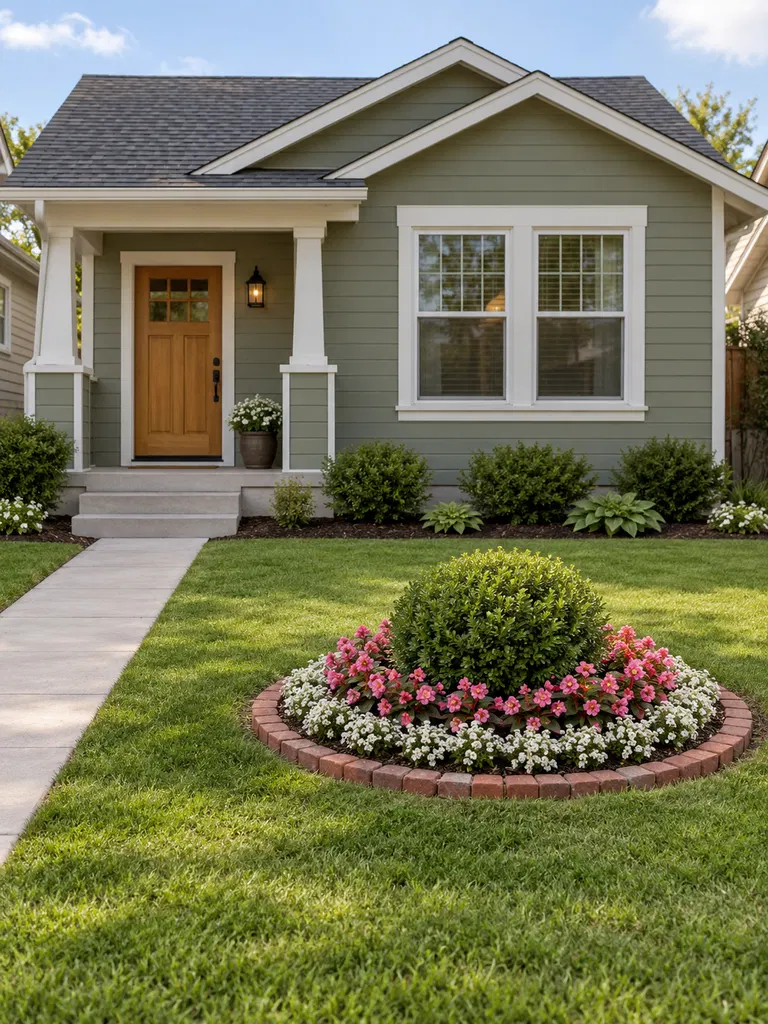
A circular flower bed is a simple way to make a small front lawn more interesting without overwhelming the space.
Its rounded shape introduces a gentle contrast against the straight lines of the house and walkway.
A compact ornamental shrub surrounded by colorful flowers creates an attractive centerpiece.
The surrounding lawn remains open, helping the front yard appear spacious and uncluttered.
Layout Design: Create a Compact Circular Garden
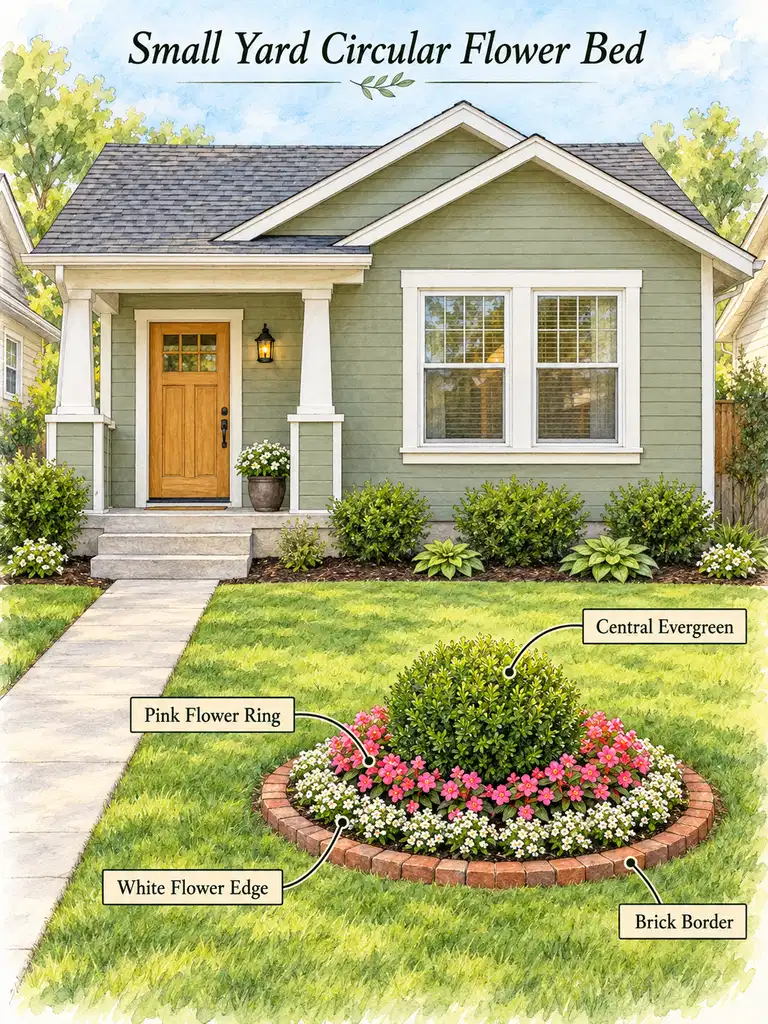
Choose a location within the lawn that allows comfortable access to the entrance and driveway.
Mark a circle using string and a center stake, adjusting its size to fit the yard.
Place one compact focal shrub in the middle and arrange low-growing flowering plants around it.
Use brick, stone, or landscape edging to define the outer circle.
Avoid plants that will eventually spread far beyond the bed.
Keep the remaining lawn simple so the circular arrangement becomes the visual highlight.
14. Rustic Wooden Fence and Flower Borders
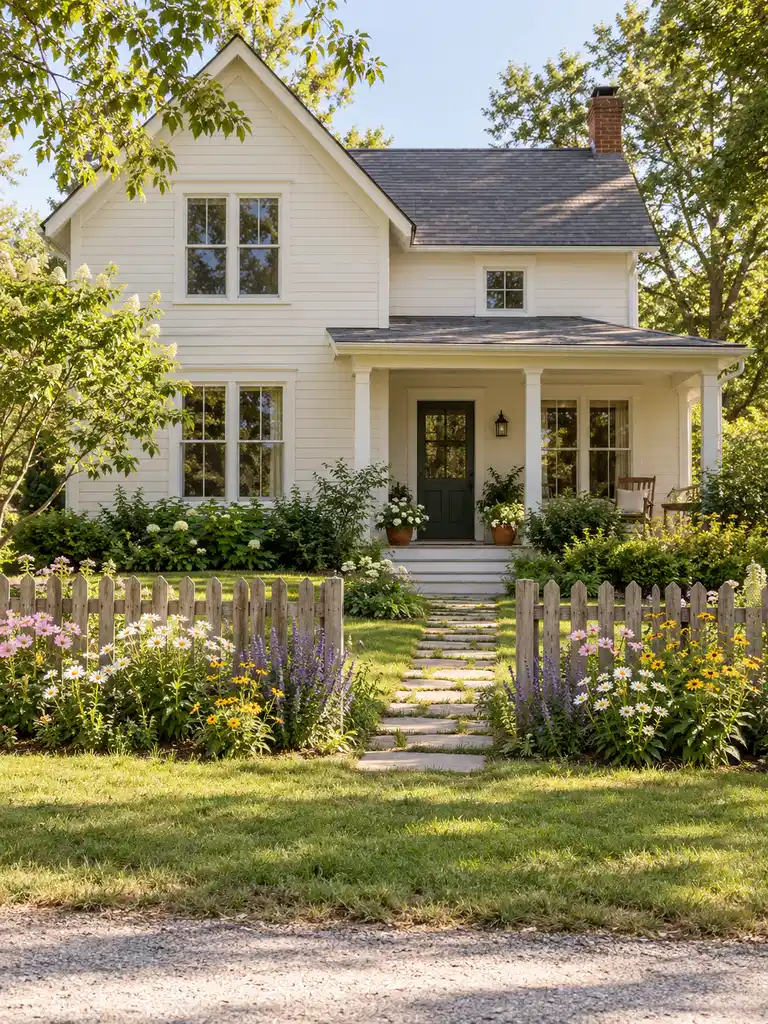
A short wooden fence paired with colorful flowers gives a front yard a charming countryside feel.
Natural wood adds warmth, while flowering borders soften the structure and bring seasonal color.
This design works beautifully around country cottages, farmhouse-style properties, and traditional suburban homes.
Pink, purple, yellow, and white flowers can create a cheerful display against a natural wooden or white picket fence.
Layout Design: Frame the Yard With Flowers
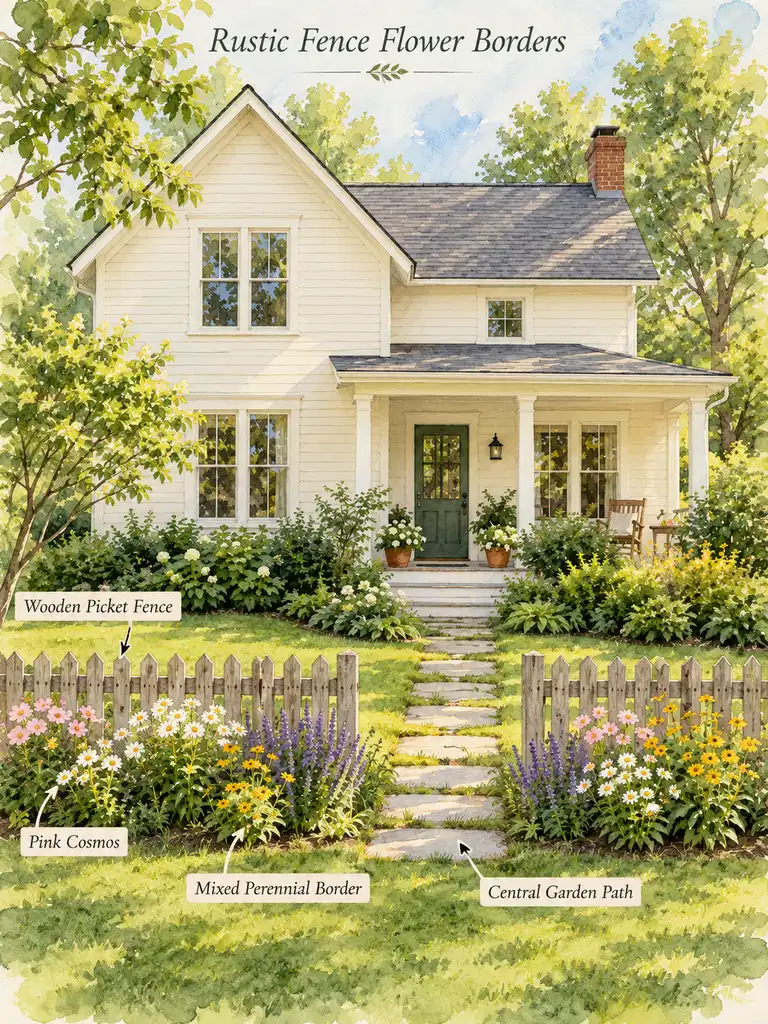
Install a low fence along an appropriate section of the front boundary, following local visibility and property rules.
Create a planting bed parallel to the fence, leaving space for future maintenance.
Place medium-height flowers toward the fence and shorter varieties along the lawn-facing edge.
Repeat similar colors and plant groups throughout the border.
Keep shrubs and climbing plants from growing tightly against wooden surfaces.
Include a clearly defined entrance opening or gate so the fence complements, rather than interrupts, access to the house.
15. Modern Boxwood and White Pebble Design
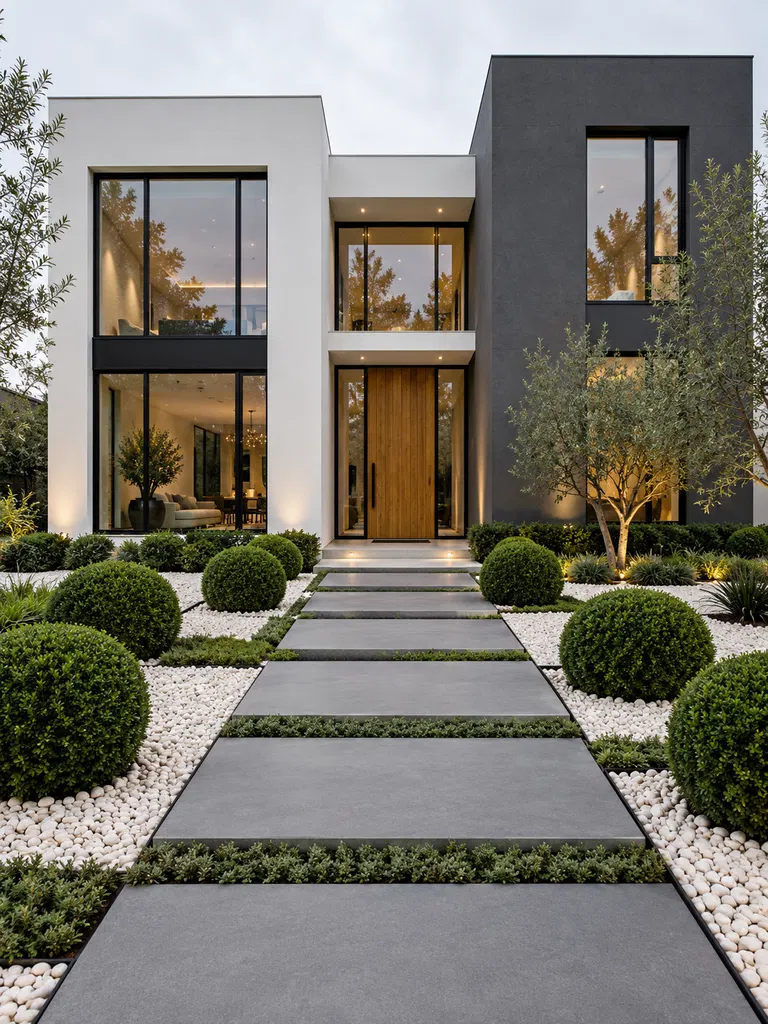
Rounded evergreen shrubs against white decorative stones create a clean, sophisticated front yard.
The contrast between rich green foliage and light-colored pebbles makes even a simple planting arrangement visually impressive.
Geometric stepping stones and crisp edging enhance the modern look.
This style works particularly well with contemporary houses featuring white, charcoal, gray, or natural wood exteriors.
Layout Design: Create Clean Geometric Planting Zones
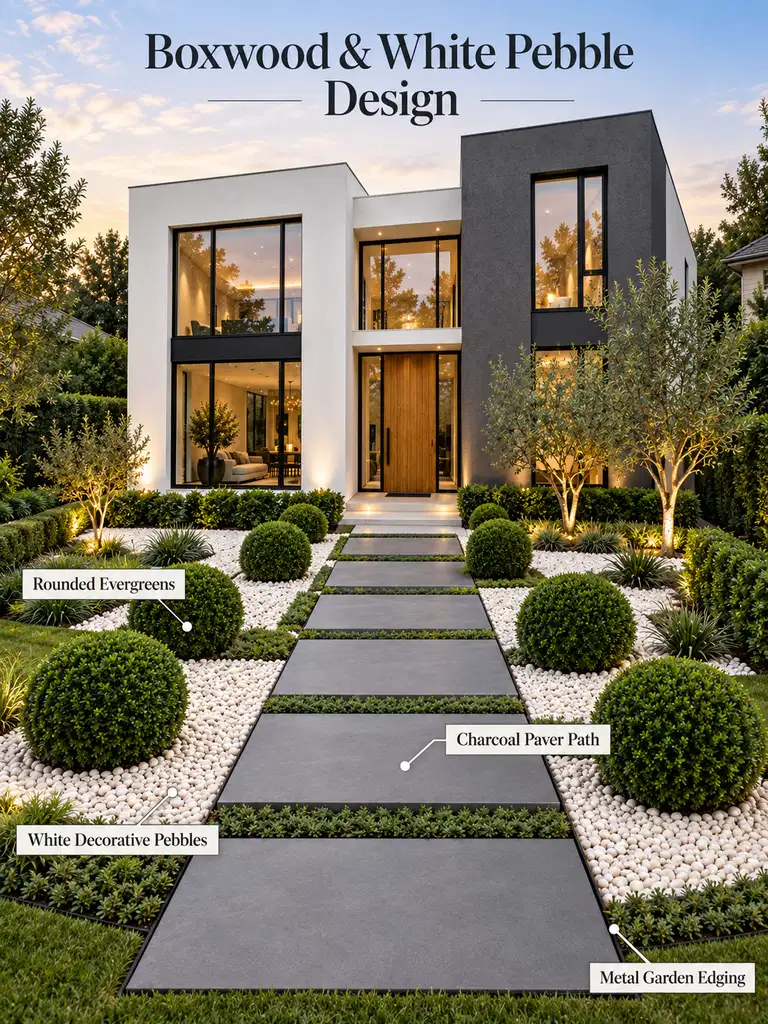
Divide the planting area into rectangular or gently curved geometric sections.
Position compact boxwoods or suitable evergreen alternatives in repeated groups.
Use white decorative pebbles in selected areas and install edging to keep the stones separate from lawn and mulch.
Add a simple walkway using rectangular concrete or stone pavers.
Maintain consistent spacing between shrubs while accounting for mature plant width.
Before choosing boxwoods, check local climate suitability and potential disease concerns.
16. Front Porch Garden With Matching Planters
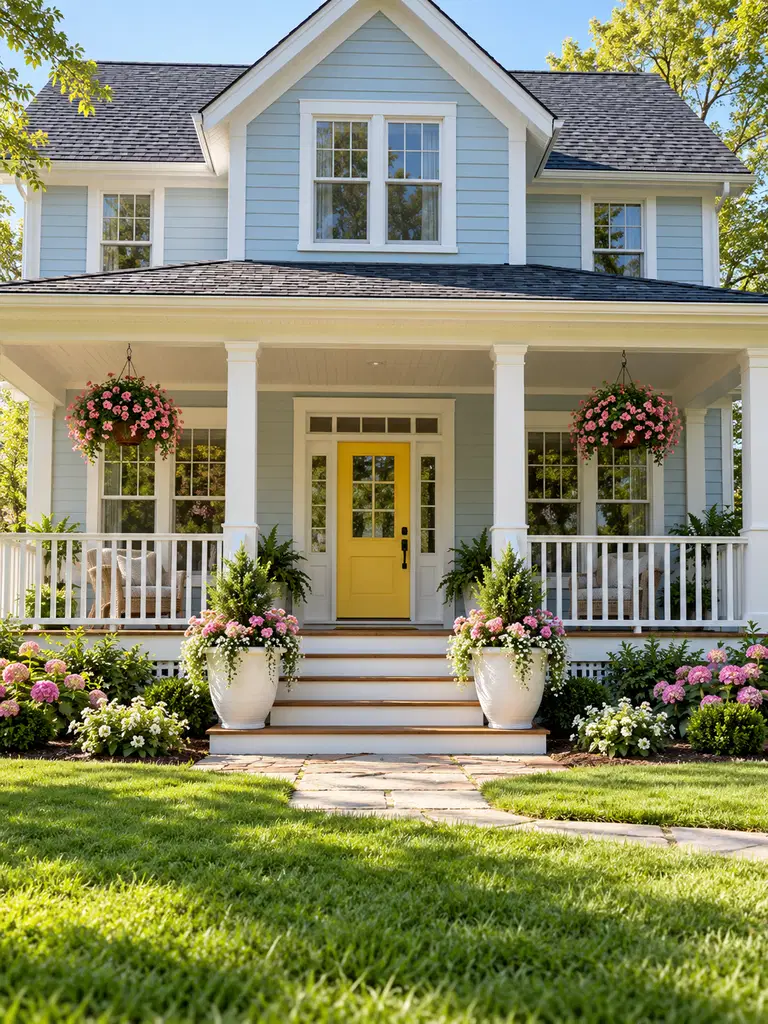
A beautiful porch garden can make a home feel welcoming before visitors even reach the front door.
Matching planters, colorful hanging baskets, and flowering borders introduce charm without requiring a large lawn.
The combination of container plants and foundation beds creates layers of greenery at different heights.
This design looks especially attractive with traditional farmhouses, cottages, and homes with covered porches.
Layout Design: Arrange Coordinated Porch Planters
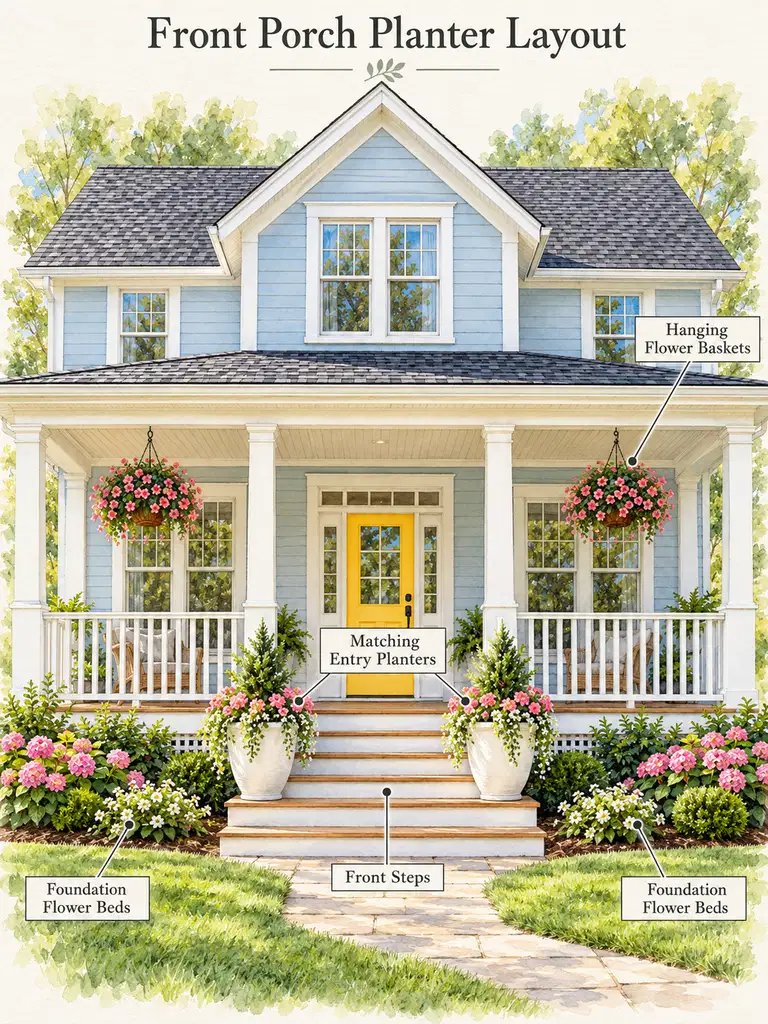
Place two matching containers on either side of the entrance, keeping the walking space clear.
Use upright foliage plants as the main features, then add flowering and trailing plants for variety.
Position hanging baskets where they can be safely supported without obstructing movement.
Create low planting beds along the porch foundation to connect the container arrangement with the surrounding landscape.
Choose plants according to actual sunlight exposure, and ensure every container has adequate drainage.
17. Decorative Dry Creek Bed Landscaping
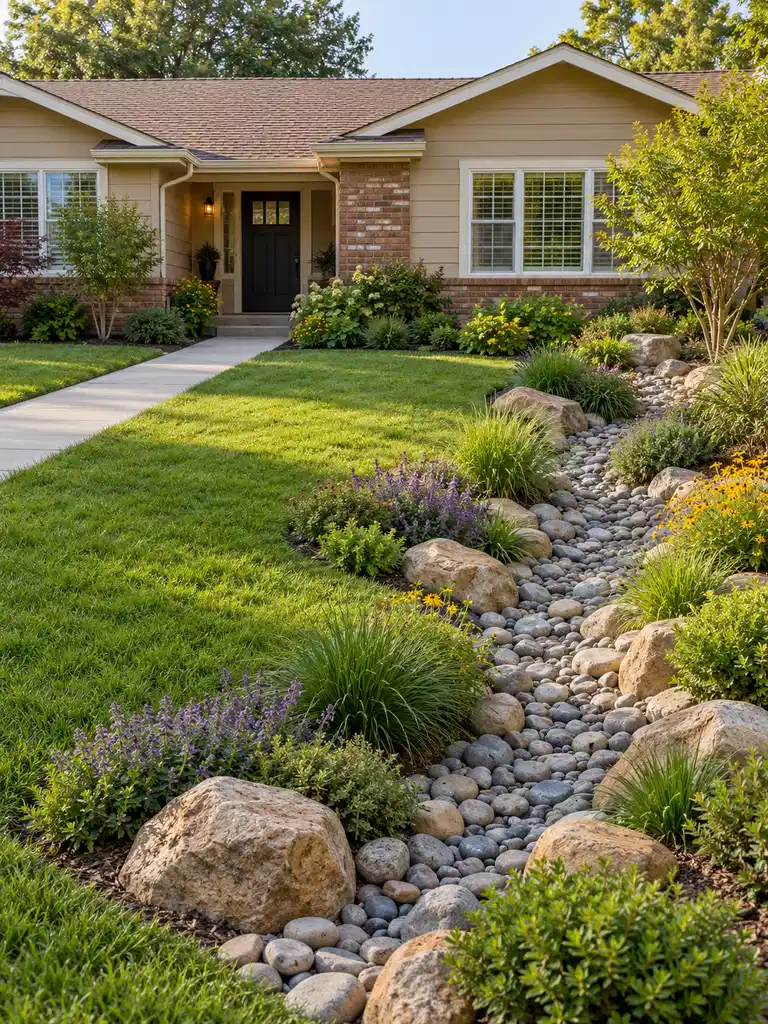
A decorative dry creek bed introduces a natural-looking feature that can make ordinary landscaping feel more interesting.
Smooth river rocks, larger boulders, and gently curving lines create the impression of a small stream running through the garden.
Ornamental grasses, compact shrubs, and flowering plants soften the stone edges.
This feature is particularly attractive in front yards with natural slopes or informal landscape designs.
Layout Design: Arrange a Natural Stone Creek Bed
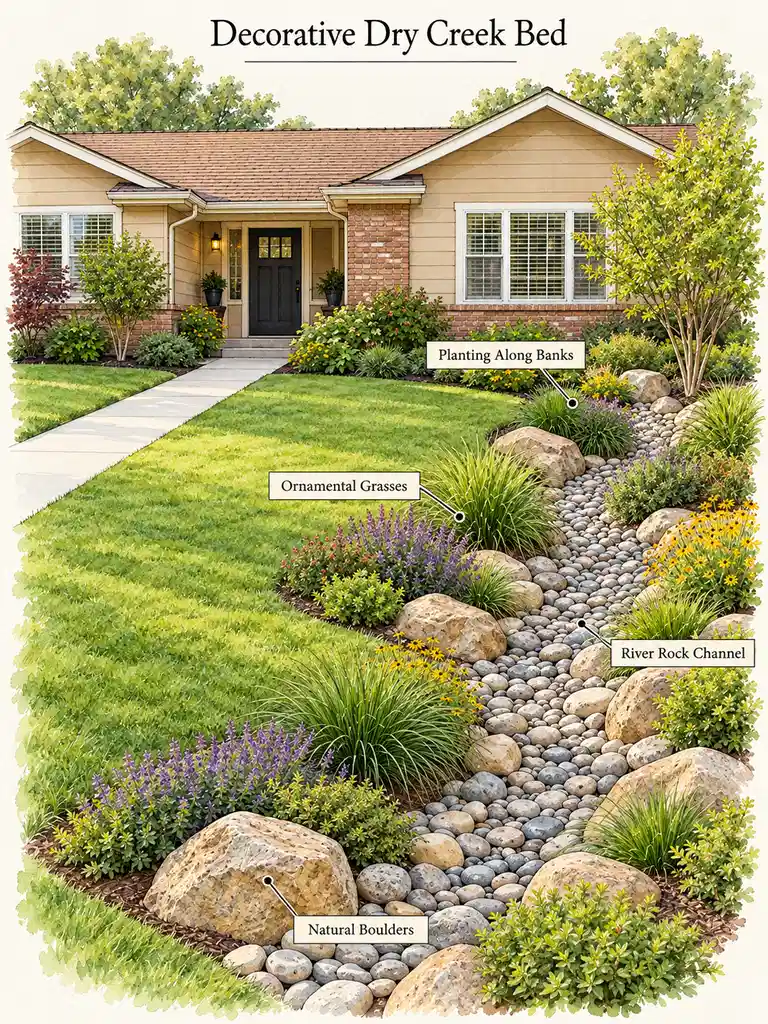
Mark a gently winding channel through a suitable section of the front yard.
Place larger stones along selected edges and use smaller river rocks through the center.
Vary stone sizes and avoid arranging everything in perfectly straight lines.
Plant ornamental grasses and shrubs beside the rock feature, leaving some stones visible.
If the creek bed must carry stormwater, have its slope, outlet, erosion protection, and drainage capacity assessed properly.
A decorative stone feature alone is not a substitute for a functioning drainage system.
18. Tiered Front Yard With Retaining Walls
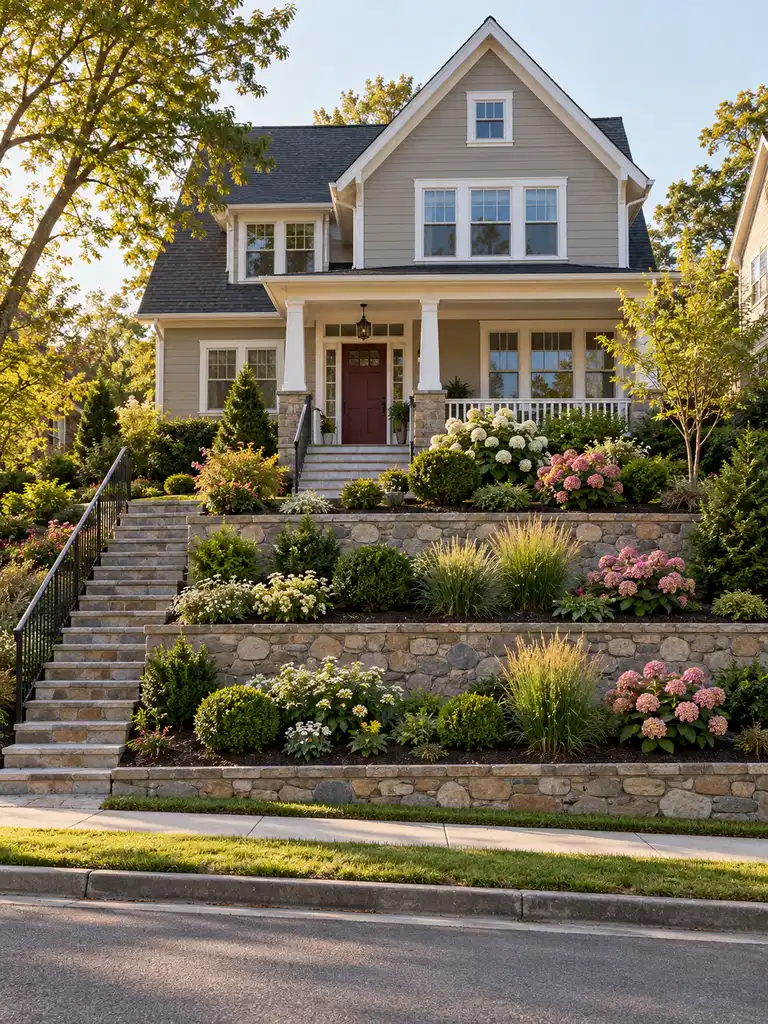
A sloping front yard can become one of the most beautiful features of a property when organized into attractive planting terraces.
Low stone retaining walls create separate garden levels, giving flowers and shrubs clearly defined spaces.
Layered greenery, colorful blooms, and natural stone steps create an elegant approach to the house.
This design works especially well for elevated suburban homes and properties built into hillsides.
Layout Design: Arrange Multiple Garden Levels
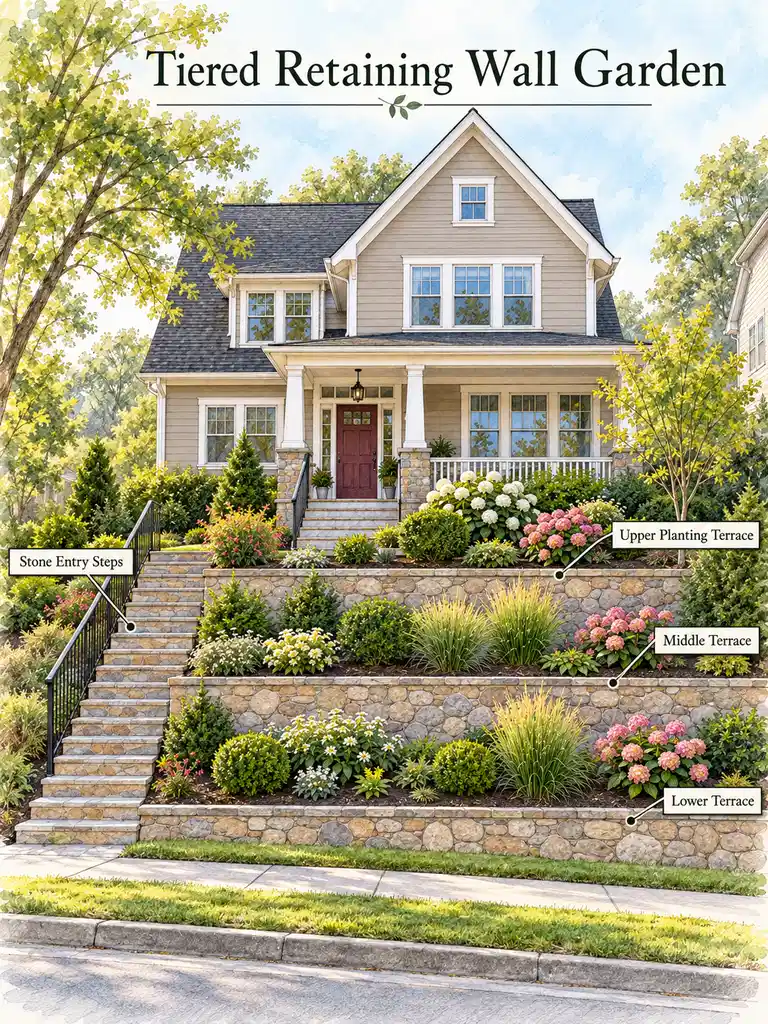
Divide the slope into broad terraces based on the property’s existing elevation.
Position retaining walls where they can support planting areas without interfering with necessary drainage.
Connect the levels using appropriately designed steps and handrails where required.
Place larger shrubs on upper terraces and lower-growing flowers along visible bed edges.
Repeat stone materials and plant colors across the different levels.
Retaining wall design should account for soil pressure, water drainage, local regulations, and structural stability.
19. Native Pollinator-Friendly Front Garden
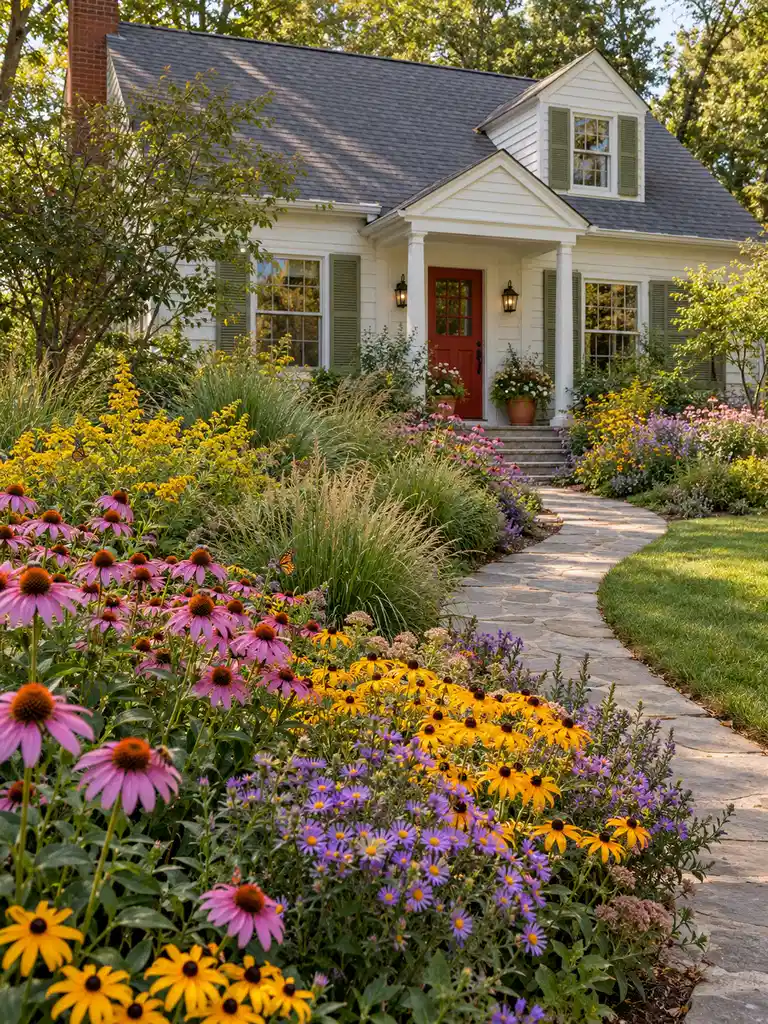
A native pollinator garden combines beautiful seasonal flowers with an environmentally thoughtful planting approach.
Regionally native plants can provide nectar, pollen, and habitat for local bees, butterflies, and other beneficial insects.
Colorful flowering groups give the garden a natural appearance while maintaining attractive curb appeal.
Depending on your region, suitable choices may include native coneflowers, asters, goldenrods, and black-eyed Susans.
Layout Design: Group Native Plants by Blooming Season
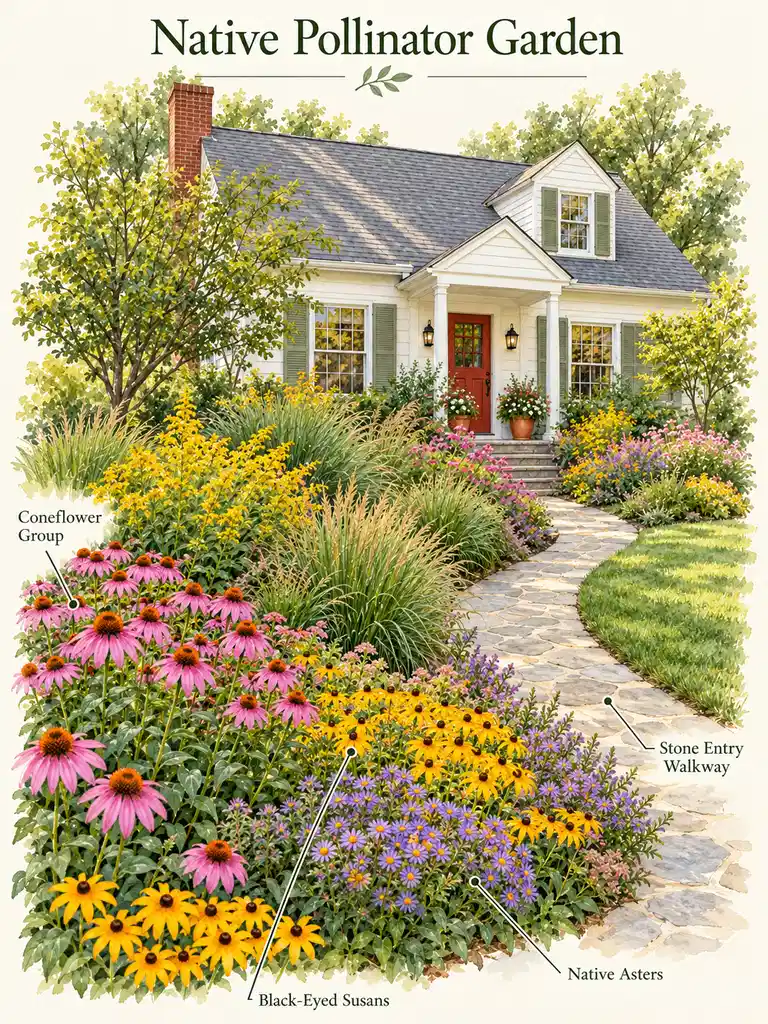
Create broad planting beds in a sunny or otherwise suitable part of the front yard.
Group plants according to mature height, sunlight requirements, and soil preferences.
Place taller native flowers toward the back, medium-height varieties through the center, and shorter plants along the edges.
Choose species with overlapping flowering seasons to provide resources over a longer period.
Maintain clear borders so the garden appears intentionally designed.
Where appropriate, include host plants and leave some natural overwintering habitat for pollinators.
20. Shaded Front Yard With Hostas and Ferns
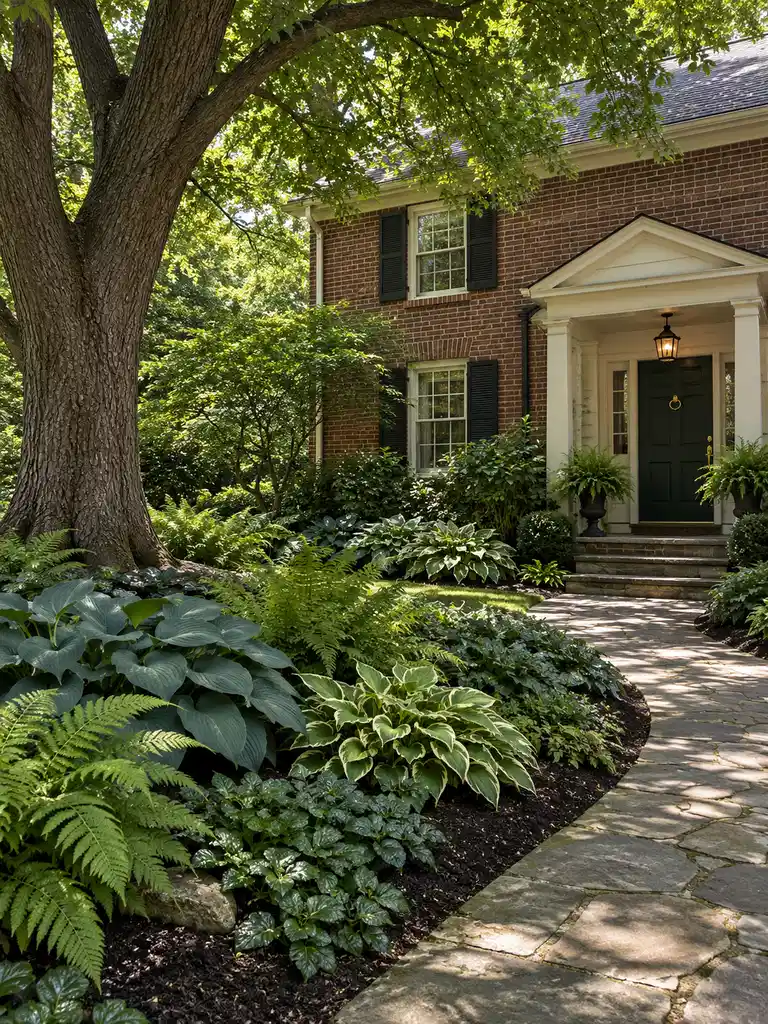
A shady front yard can look beautifully lush when designed around attractive foliage instead of relying entirely on flowers.
Hostas, ferns, woodland groundcovers, and shade-tolerant plants create layers of different leaf shapes and shades of green.
Variegated foliage brightens darker areas, while natural stone paths add texture.
This design works particularly well beneath mature trees and beside homes with north-facing entrances.
Layout Design: Layer Plants Beneath Shade Trees
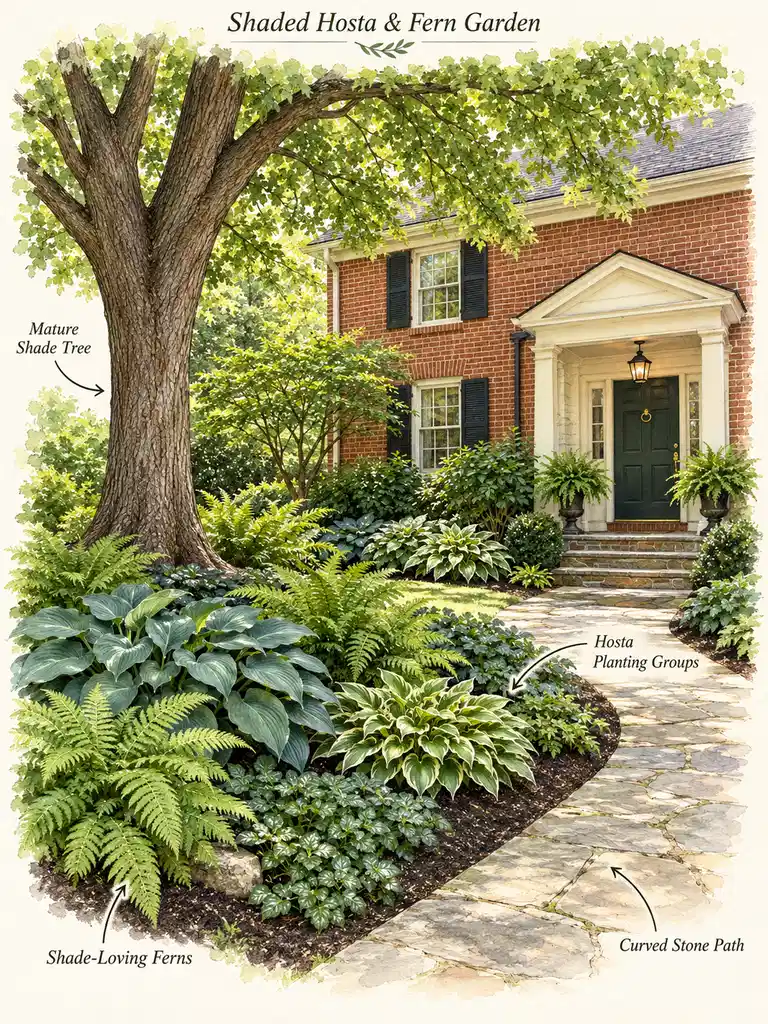
Identify areas receiving partial shade, deep shade, or dry shade before choosing plants.
Arrange larger foliage varieties toward the back of planting beds and smaller plants along walkways.
Use repeated groups of hostas and ferns to create a coordinated appearance.
Add a winding stone pathway where appropriate to provide access through the garden.
Avoid damaging established tree roots during planting.
Maintain a suitable mulch layer without piling material against the trunks of mature trees.
21. Solar-Lit Walkway With Layered Shrubs
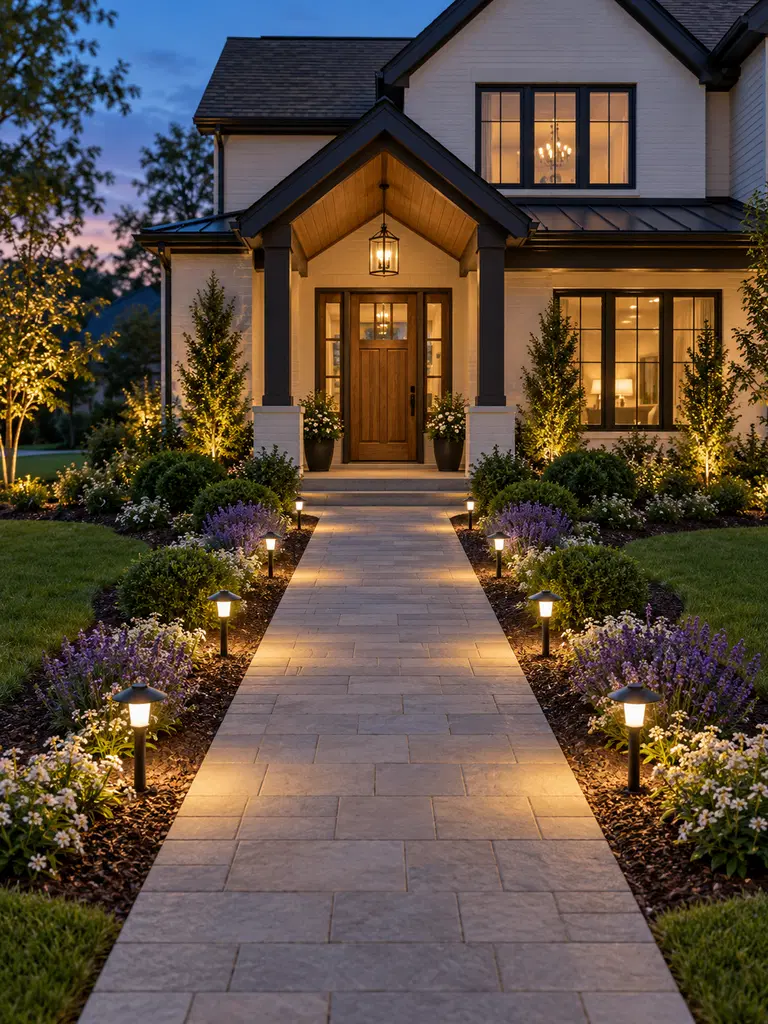
Subtle landscape lighting can make a front yard look especially beautiful after sunset.
Warm pathway lights highlight the route to the entrance while softly illuminating nearby shrubs and flowers.
Layered evergreen plants provide structure, while flowering perennials add color during daylight hours.
This combination creates an attractive landscape that remains visually appealing throughout the day and evening.
Layout Design: Position Lights Along the Walkway
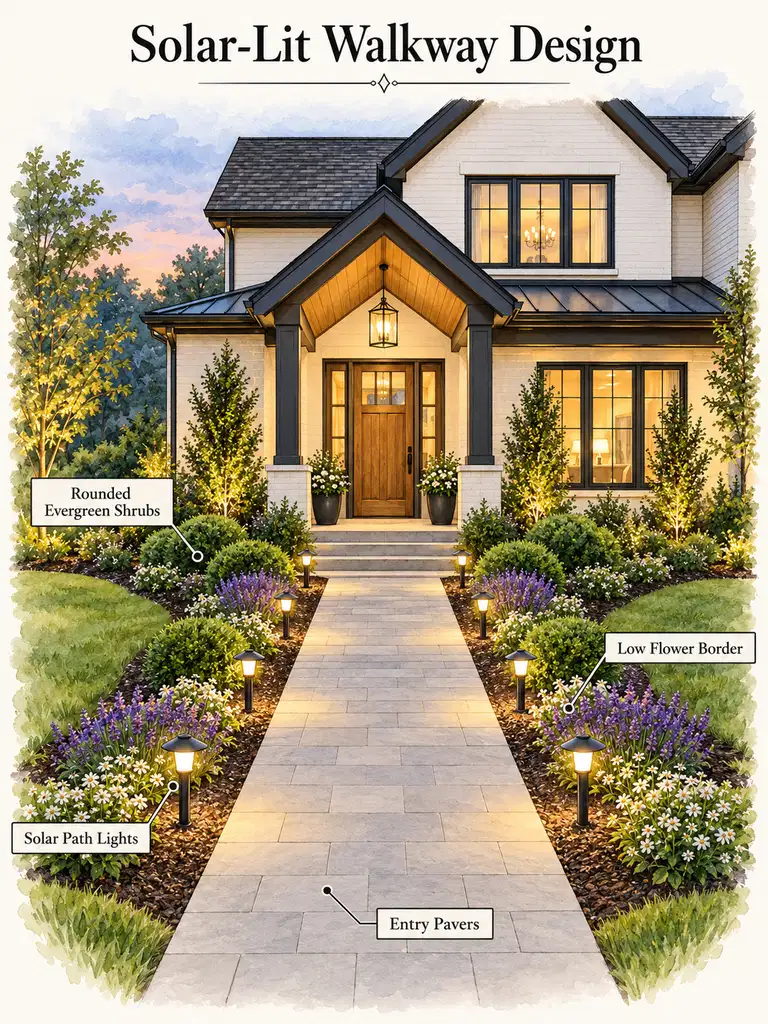
Create a stable walkway leading from the sidewalk or driveway toward the front door.
Position low-profile solar fixtures beside the path at consistent but practical intervals.
Keep fixtures away from walking surfaces and avoid directing light toward windows or neighboring properties.
Place low-growing plants near the lights and taller shrubs farther back to reduce obstruction.
Choose areas receiving sufficient daylight to charge the fixtures.
For heavily shaded locations, consider professionally installed low-voltage lighting as an alternative.
22. Four-Season Evergreen and Flowering Garden
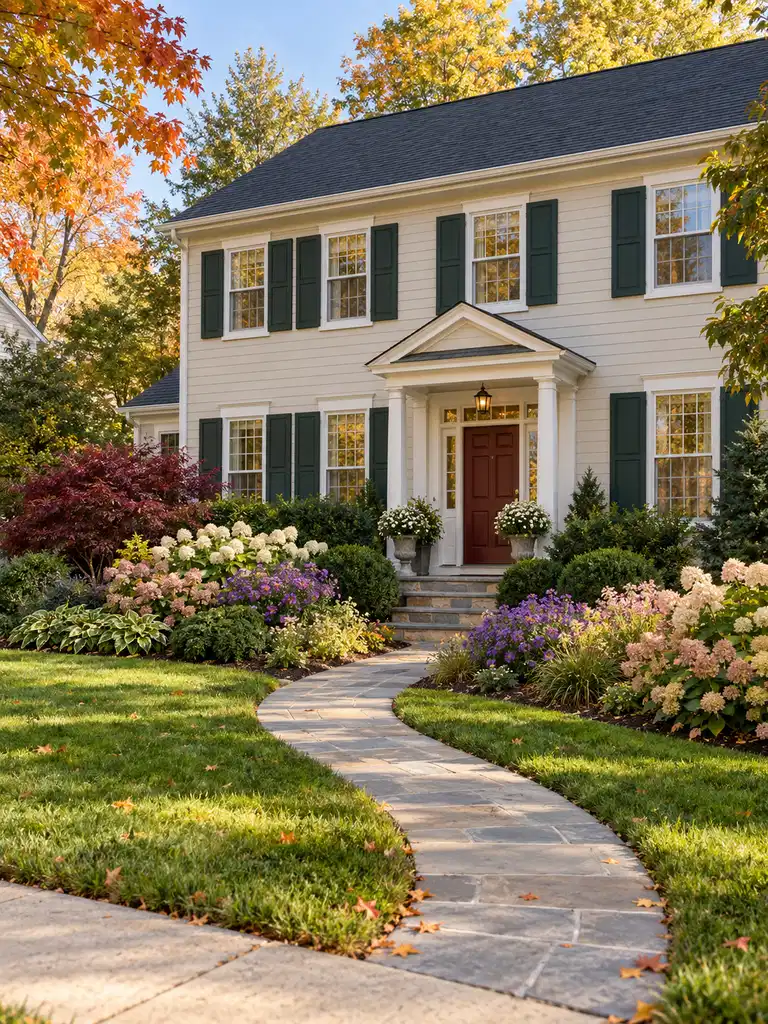
A four-season landscape is designed to remain attractive even when its main flowering plants are not blooming.
Evergreen shrubs provide a permanent foundation, while flowering perennials introduce changing colors throughout the growing season.
Plants with autumn foliage, attractive bark, or winter seed heads contribute interest during cooler months.
The result is a balanced garden that looks thoughtfully planned beyond spring and summer.
Layout Design: Combine Permanent Structure With Seasonal Color
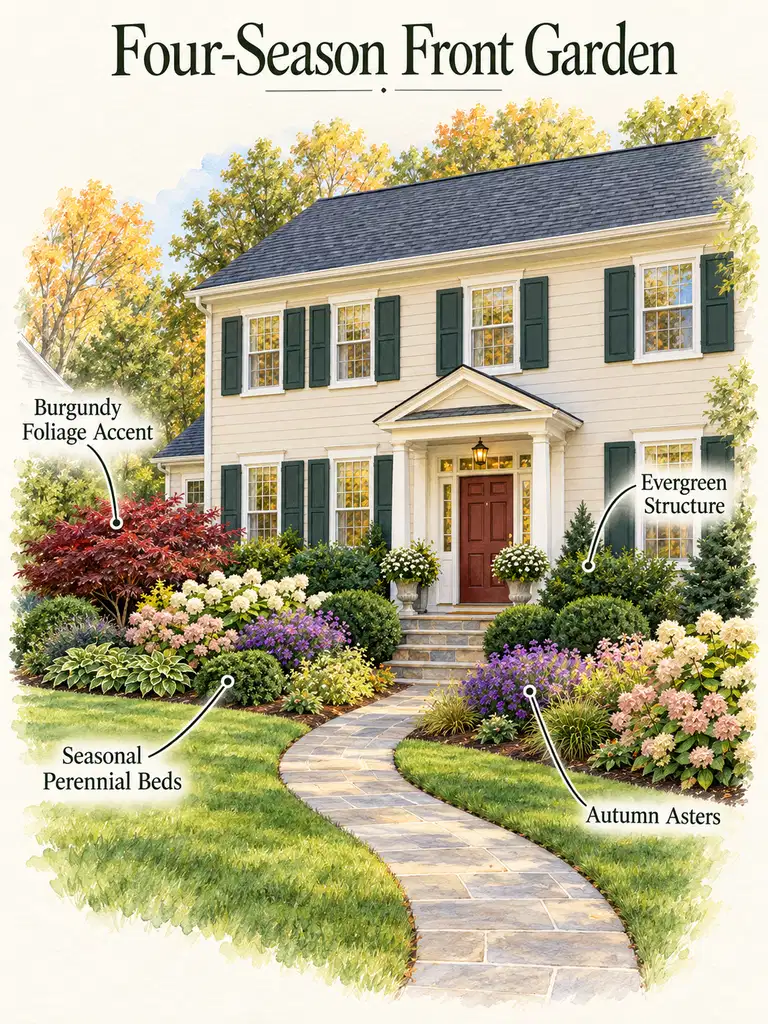
Begin by positioning evergreen shrubs near the foundation and other key areas.
Add spring-flowering plants in selected groups, followed by summer and fall perennials.
Use plants with contrasting foliage textures to maintain interest between flowering periods.
Distribute seasonal plants throughout the garden rather than concentrating them in one corner.
Choose appropriate varieties for your growing region.
Plan spacing based on mature plant size so the permanent evergreen structure doesn’t overwhelm the seasonal flowers.
23. Elegant Curved Lawn With Mixed Garden Borders
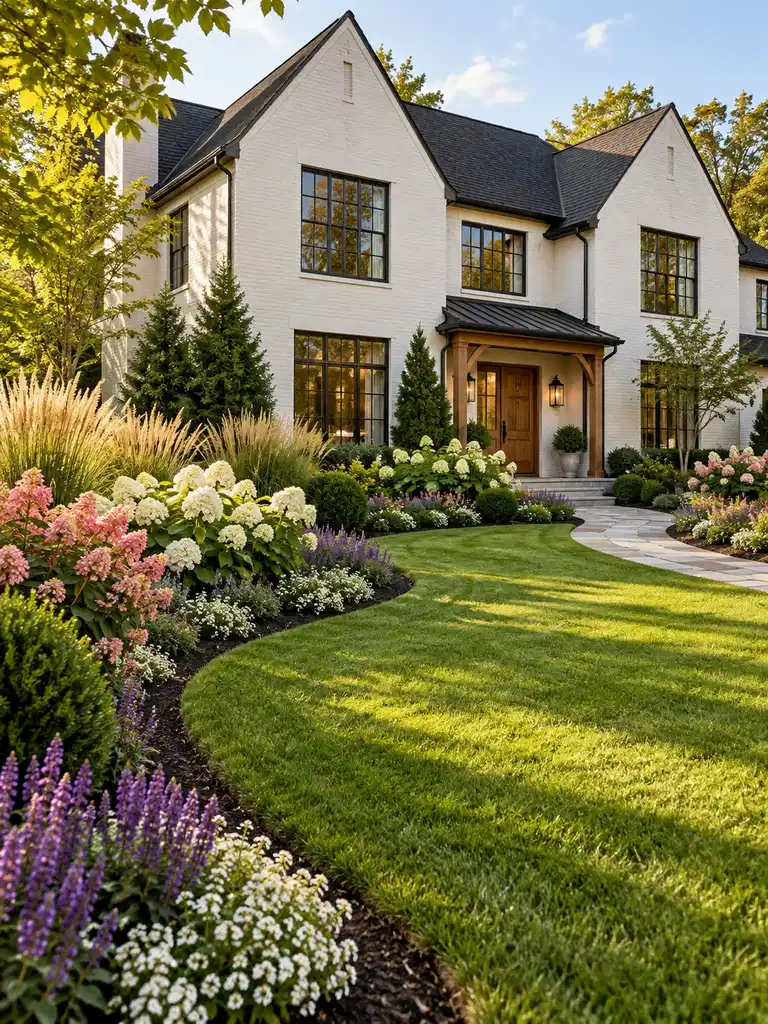
A sweeping curved lawn surrounded by beautiful flower beds creates an elegant and polished front yard.
The smooth lawn becomes an open focal point, while generous borders provide colorful flowers, attractive shrubs, and ornamental grasses.
This landscape style looks particularly impressive around spacious traditional homes and upscale suburban properties.
Repeating flower colors and maintaining clean planting edges helps create a cohesive, professionally designed appearance.
Layout Design: Frame the Lawn With Layered Garden Borders
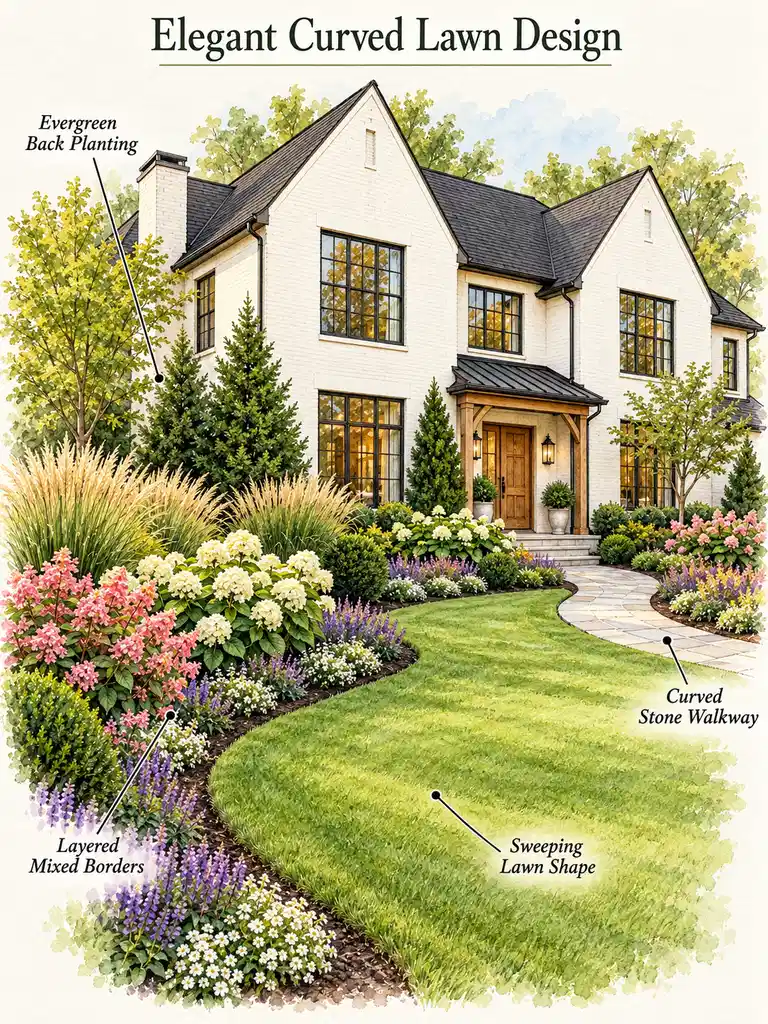
Begin by marking a smooth, sweeping lawn shape using a garden hose or marking paint.
Create broad planting beds around the outer curves, allowing enough lawn space for comfortable mowing.
Place taller shrubs and ornamental grasses toward the back of the borders.
Arrange medium-height flowering plants through the center and low-growing varieties along the lawn edge.
Repeat selected plant colors on opposite sides of the garden for visual balance.
Use consistent edging materials and keep the entrance pathway clear.
How to Plan Your Front Yard Landscape
Before choosing flowers, shrubs, or decorative stones, consider how your landscape will function throughout the year.
Understand Your Yard’s Growing Conditions
Observe sunlight during different parts of the day and identify areas that remain shaded.
Check soil drainage and use your local USDA hardiness zone as a starting point for plant selection. Match plants to your region’s summer heat, rainfall, and soil conditions as well.
Choose the Walkway Before Planting
A welcoming entrance begins with a clear, accessible pathway.
Plan its location before creating surrounding garden beds. This helps ensure flowers and shrubs don’t interfere with movement as they grow.
Use Plant Heights to Create Depth
Arrange plants according to mature height rather than their nursery size.
Combining tall structural plants, medium flowering shrubs, and low-growing edging plants creates a natural layered appearance.
Consider Maintenance From the Beginning
Choose a design that matches your available time and budget.
Large flower beds, shaped hedges, gravel areas, and lawns all require different types of maintenance. Planning ahead can prevent unnecessary work later.
Common Front Yard Landscaping Mistakes to Avoid
One of the most common mistakes is planting shrubs too close to a home’s foundation. Always consider their mature size and allow sufficient clearance.
Another mistake is choosing too many unrelated flowers and decorative materials, which can make the yard appear cluttered.
Avoid blocking windows, walkways, and driveway sightlines with tall plants.
Don’t ignore drainage when installing retaining walls, rock beds, or paved pathways.
Finally, avoid designing only for immediate appearance. Plants grow, flowering seasons change, and gardens need maintenance.
A simple, balanced design with appropriate spacing usually looks better over time than an overcrowded landscape.
Frequently Asked Questions
What Are the Best Front Yard Landscape Design Ideas for Small Yards?
Small yards benefit from compact foundation beds, narrow flower borders, coordinated porch planters, and small ornamental trees. Keep pathways clear and choose plants with manageable mature sizes. A single attractive focal point often works better than numerous decorative features competing for attention.
How Can I Landscape My Front Yard on a Budget?
Start with affordable improvements such as refreshing mulch, defining flower bed edges, removing weeds, and dividing suitable established perennials. Purchase smaller shrubs instead of expensive mature plants. Complete the landscaping in stages to spread costs over time.
What Is the Most Low-Maintenance Front Yard Landscaping?
Regionally adapted shrubs, hardy perennials, simple planting beds, and appropriately mulched soil can reduce maintenance needs. Group plants with similar water requirements, choose manageable mature sizes, and avoid unnecessarily complicated arrangements. Every garden still needs some seasonal attention.
Which Plants Are Best for Front Yard Landscaping?
Evergreen shrubs, flowering perennials, compact ornamental trees, and groundcovers are useful options. The best varieties depend on your climate, sunlight exposure, available space, and soil conditions. Choose plants that complement your home’s architecture and fit your maintenance preferences.
How Do I Make My Front Yard Look Professionally Landscaped?
Use clearly defined garden borders, repeated plant groups, coordinated colors, and varied planting heights. Keep the walkway and entrance visible, and avoid overcrowding the lawn. Thoughtful spacing and a simple, consistent layout can make a front yard look polished.
Conclusion
Creating a beautiful front yard is about more than choosing attractive flowers. The best landscapes combine thoughtful plant placement, welcoming pathways, balanced colors, and materials that complement the home.
Whether you prefer colorful cottage gardens, elegant hydrangea borders, modern gravel designs, or layered evergreen shrubs, these front yard landscape design ideas offer inspiration for different properties and budgets.
Use the matching layout designs to understand how each landscape is arranged, then adapt your favorite ideas to your own yard’s size, sunlight, and growing conditions.
Save your favorite front yard landscaping ideas to Pinterest and start planning an outdoor space you’ll love coming home to.