Skip to content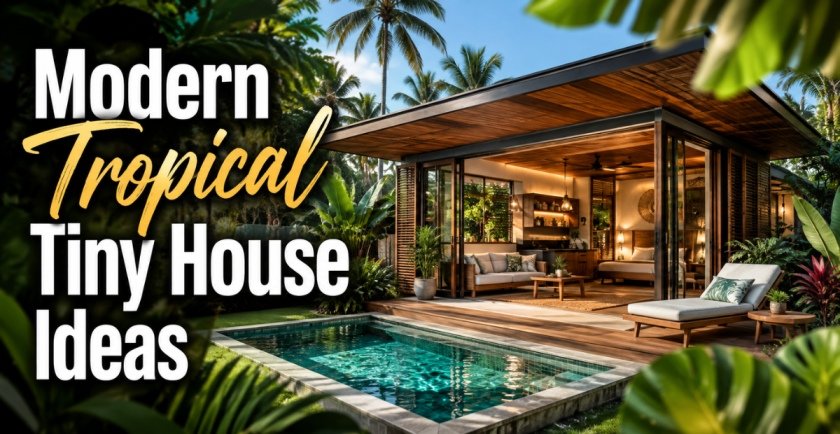
A tropical tiny house proves that a small footprint can still feel open, polished, and deeply relaxing. The style works especially well in compact homes because it relies less on oversized furniture and more on light, airflow, natural materials, greenery, and a strong connection between indoor and outdoor spaces.
Picture warm timber beside crisp plaster walls, wide glass doors opening to a shaded deck, woven textures, tropical plants, stone details, and rooms arranged around views rather than clutter. Done well, the result feels modern rather than themed. It can suit a permanent small home, a backyard guest house, a vacation cabin, or a tiny rental designed to feel memorable.
The ideas below cover exterior architecture, kitchens, bedrooms, bathrooms, storage, patios, pools, and landscaping. You can copy one feature or combine several to shape a tropical tiny house that fits your climate, budget, and lifestyle.
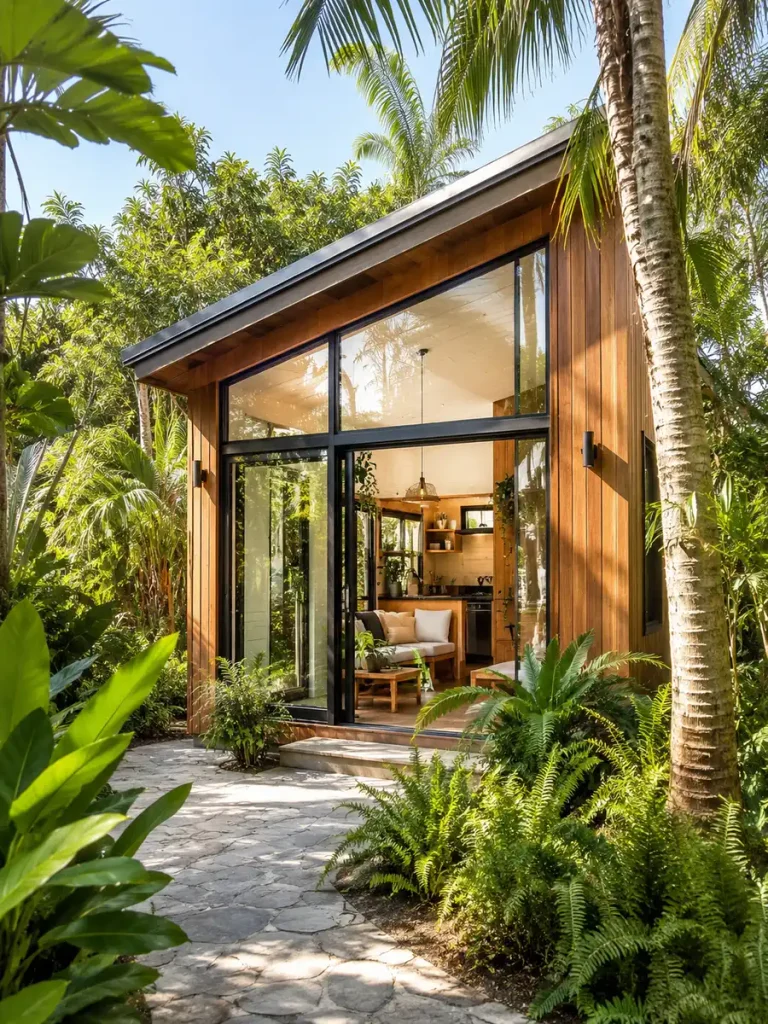
1. Warm Timber Tropical Tiny House
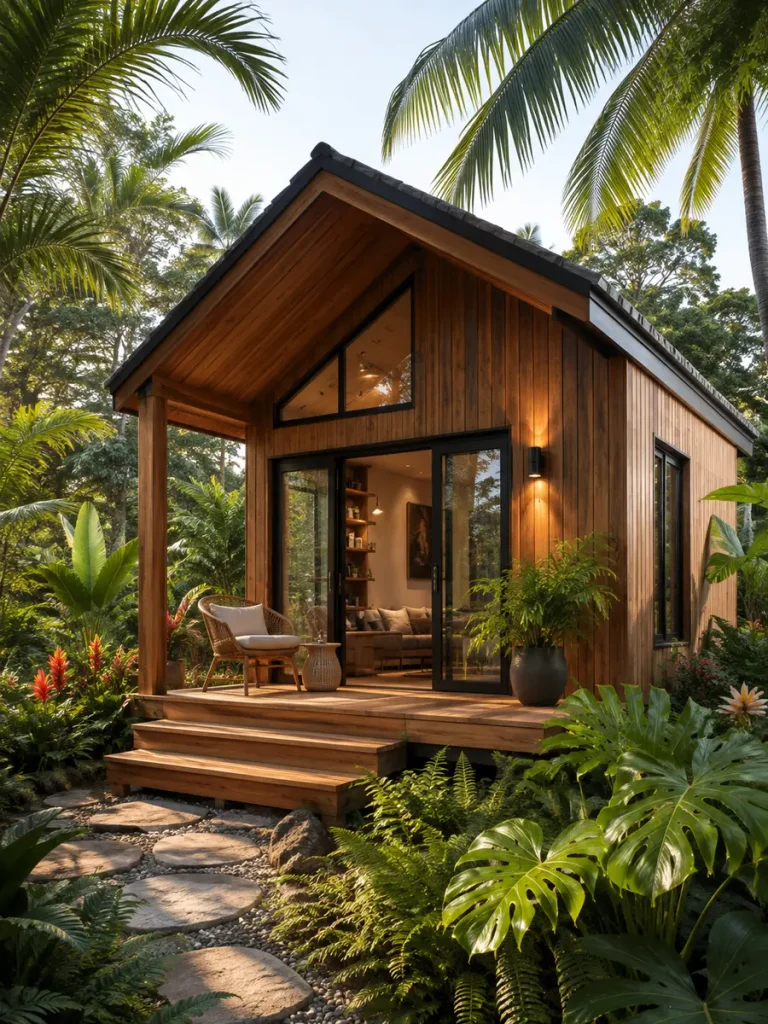
Natural timber immediately gives a compact home warmth and a strong connection to its surroundings. Vertical wood siding can make the exterior appear taller, while a simple pitched roof keeps the silhouette clean. Pair the timber with slim black window frames and a modest covered porch for a contemporary finish.
Let the landscape soften the architecture. Palms, ferns, monstera, and flowering tropical plants work beautifully around a warm wood exterior. A stone or gravel path leading to the entrance adds texture without competing with the house.
2. White Tropical Tiny House with Wood Accents
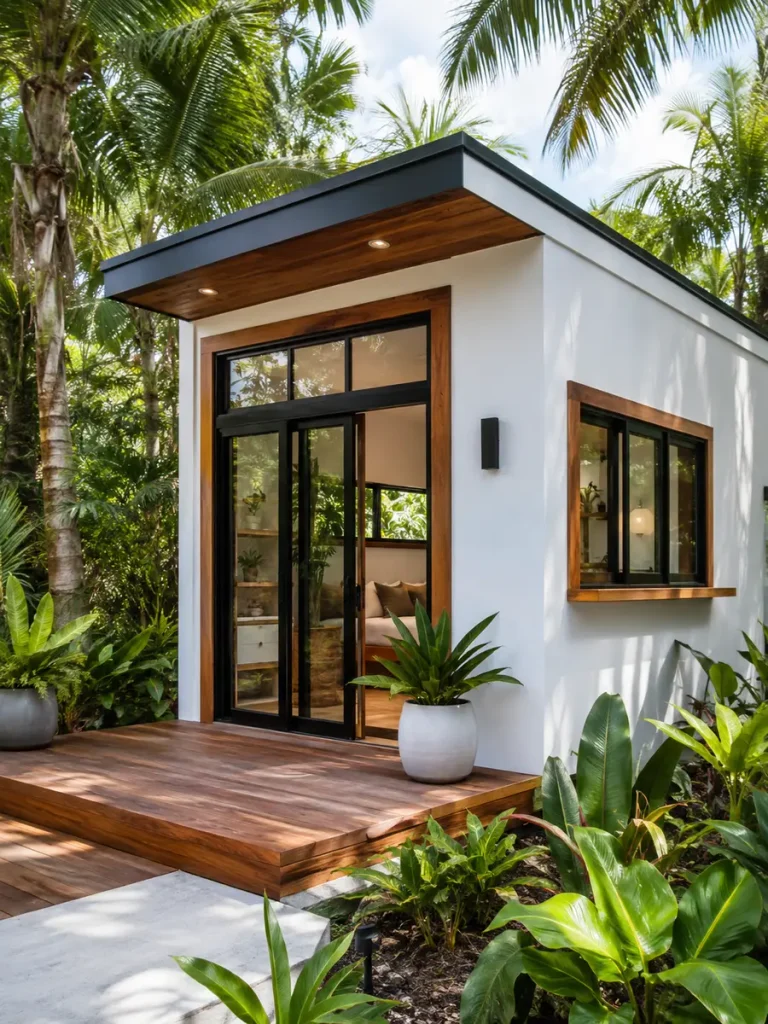
A white exterior can make a tiny house look bright, crisp, and larger than it really is. Instead of leaving every surface white, introduce natural wood around the front door, window trim, roof soffits, or deck. The contrast creates a tropical look that still feels clean and modern.
Black-framed doors and windows add definition, while lush planting keeps the palette from feeling stark. This combination is especially useful when you want a resort-inspired look without making the house overly rustic.
3. Modern A-Frame Tropical Tiny House
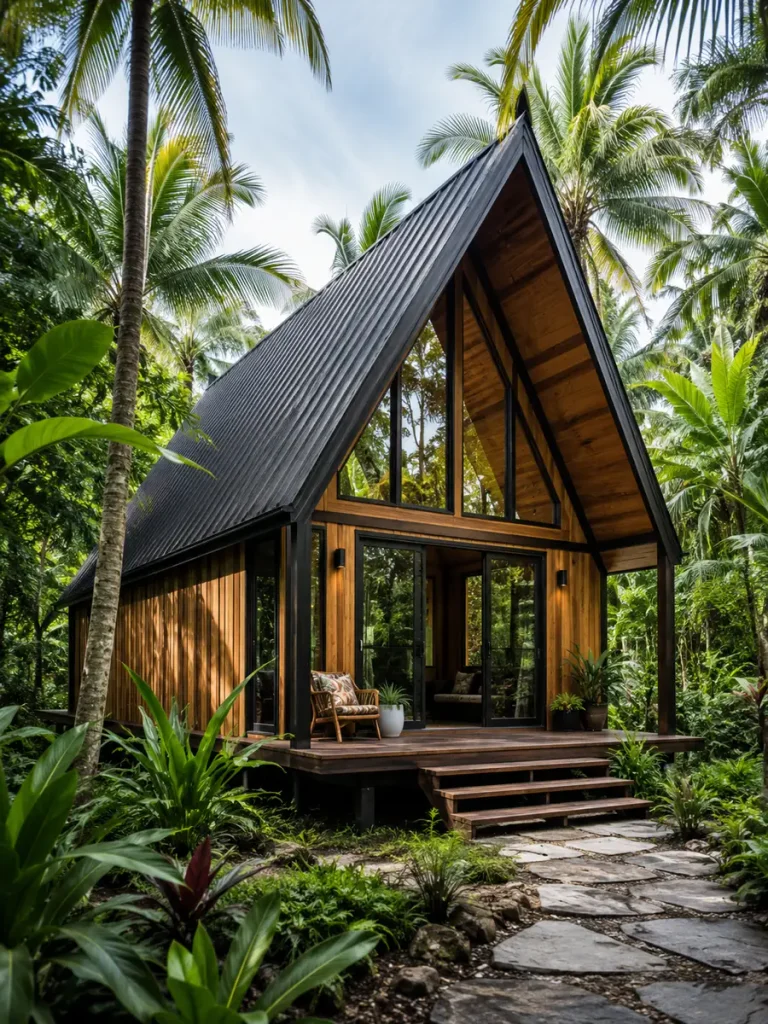
An A-frame is a natural fit for a tropical tiny house because the steep roof creates dramatic height without requiring a large footprint. A tall glazed front wall can flood the interior with daylight and give the living room a direct view of the surrounding greenery.
Warm timber cladding keeps the sharp geometry from feeling cold. Inside, the high roof can accommodate a sleeping loft, pendant lighting, or open shelving while still preserving an airy ground floor.
4. Tropical Tiny House with a Covered Veranda
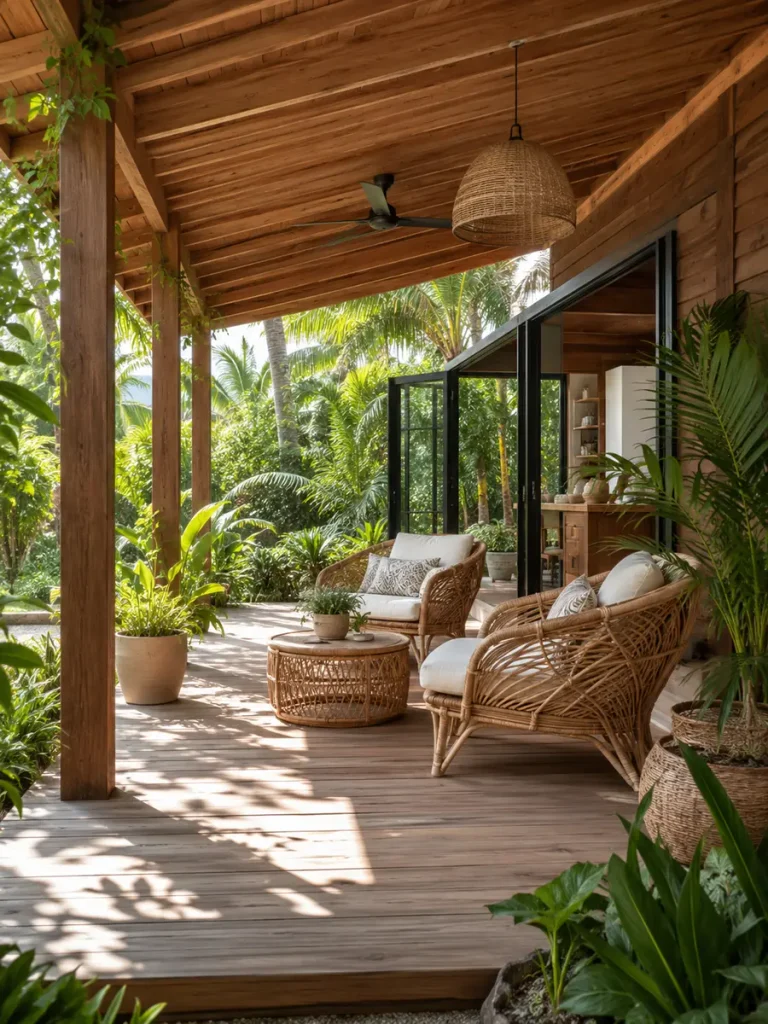
In a warm climate, a veranda can become as useful as the indoor living room. A deep roof overhang provides shade, protects the entrance from light rain, and creates a comfortable place for morning coffee or evening conversation.
Choose furniture with open frames, such as rattan lounge chairs and a compact woven table. Add a ceiling fan, potted palms, and soft outdoor cushions. The goal is to make the veranda feel like a natural extension of the home rather than a separate feature.
5. Tiny House Surrounded by Jungle Greenery
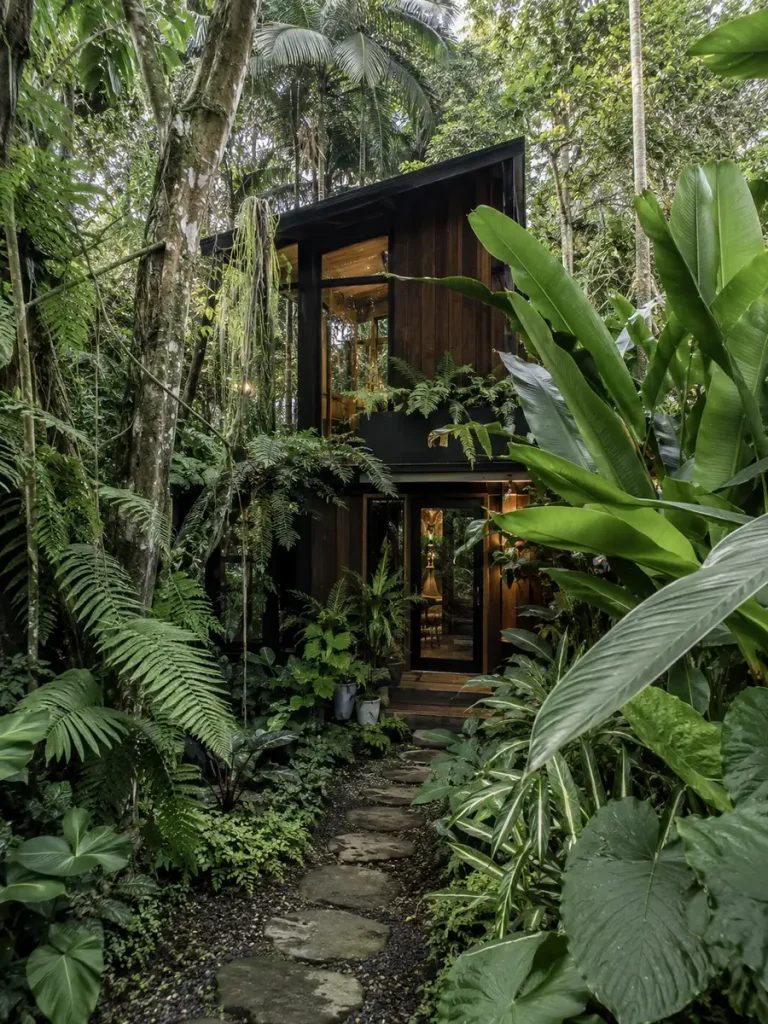
A simple house can feel incredibly private when the landscaping is layered well. Use tall palms and canopy trees in the background, medium-height foliage around windows, and ferns or groundcover close to the path.
Keep the exterior palette restrained so the plants become the main visual feature. Dark timber, charcoal, or muted brown works particularly well in dense greenery and can make the home feel tucked into the landscape.
6. Floor-to-Ceiling Glass Tropical Home
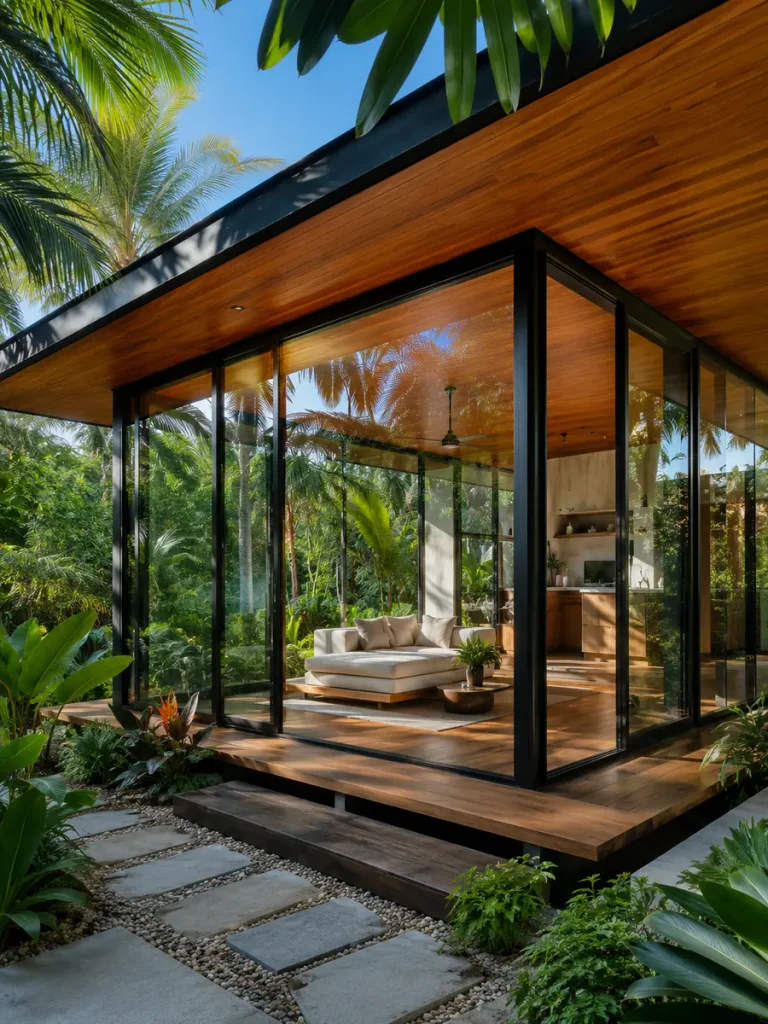
Large glass walls are one of the most effective ways to make a tiny interior feel expansive. Instead of ending visually at the wall, the room appears to continue into the garden. This is especially powerful when the house faces palms, forest, or a private courtyard.
Deep eaves, exterior screens, or sheer curtains can help manage direct sun. Keep the interior furniture low and uncluttered so the view remains the focal point.
7. Tropical Tiny House with Sliding Glass Walls
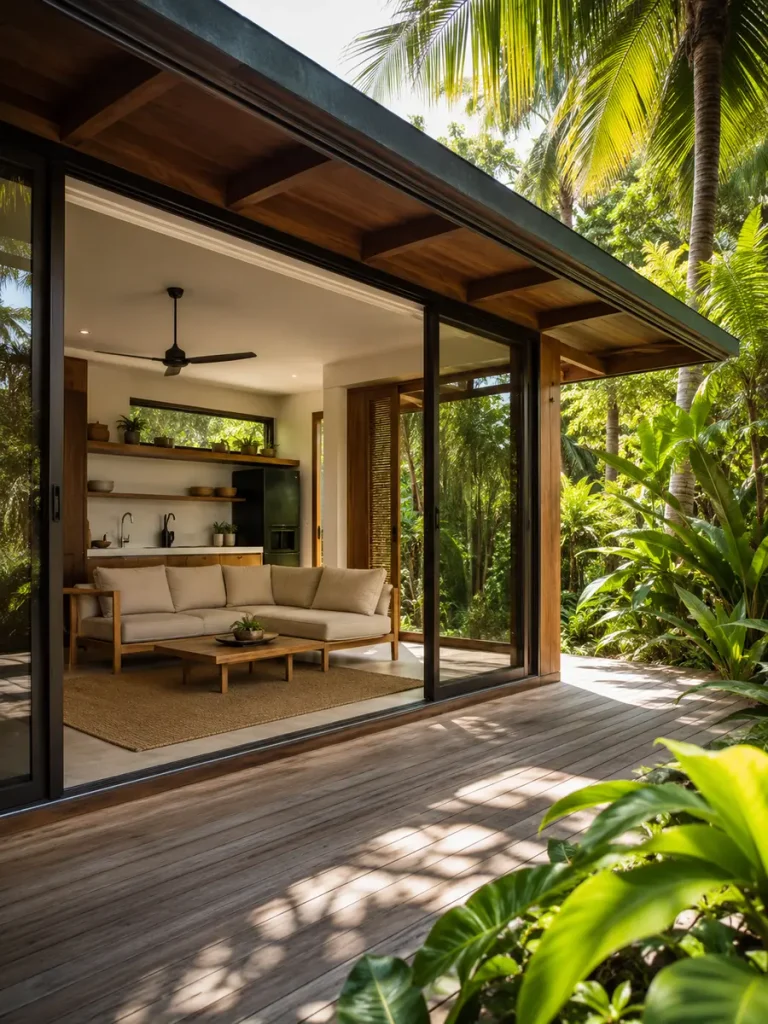
Sliding glass doors can turn a compact living room into an indoor-outdoor space within seconds. When the doors are open, a timber deck effectively becomes extra living area without permanently enlarging the footprint.
Use related flooring tones inside and outside to make the transition feel smoother. A neutral sofa, simple coffee table, woven rug, and a few plants are enough to create a relaxed setting.
8. Loft-Style Tropical Tiny House
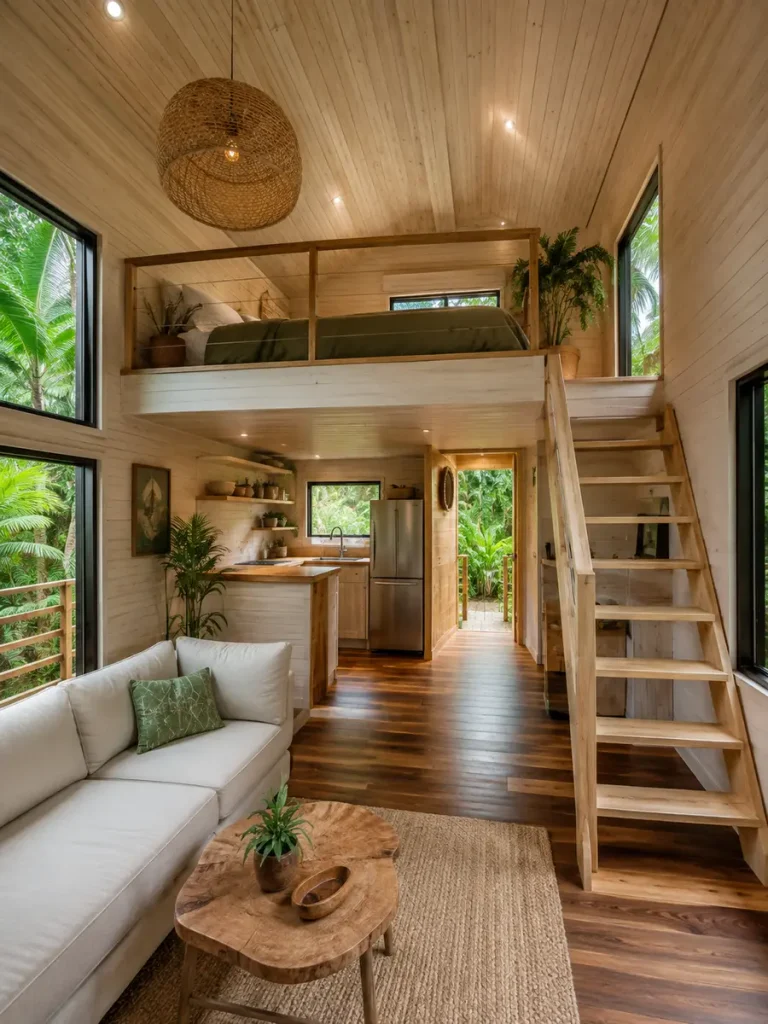
A sleeping loft frees up the main floor for the kitchen, bathroom, and living area. In a tropical tiny house, light wood and pale fabrics keep the elevated space from feeling closed in.
Add windows near the bed whenever possible and keep the loft railing visually light. Below, the open volume makes the room feel taller and more generous.
9. Tropical Tiny House with Storage Stairs
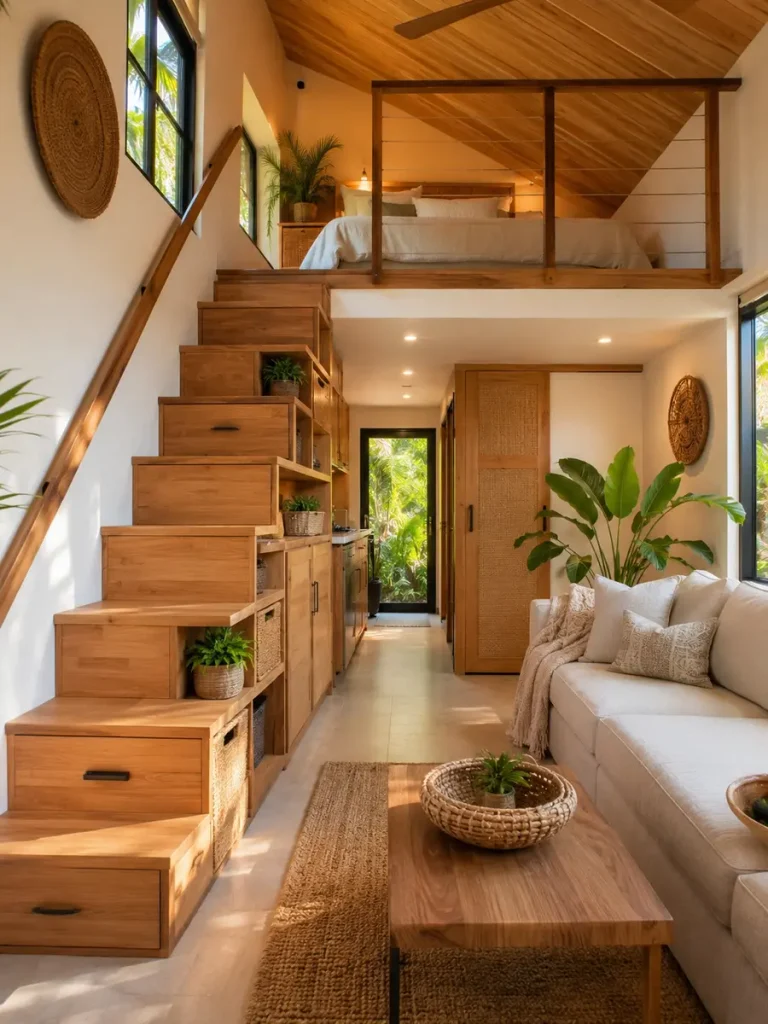
Stairs should earn their footprint in a tiny home. Built-in drawers, cupboards, or open cubbies beneath each step can hold linens, shoes, cleaning supplies, pantry items, or everyday clutter.
Use the same timber as nearby cabinetry so the staircase feels architectural rather than added later. Storage stairs are particularly useful when a loft needs safe, comfortable access without sacrificing an entire wall.
10. Minimal Tropical Living Room
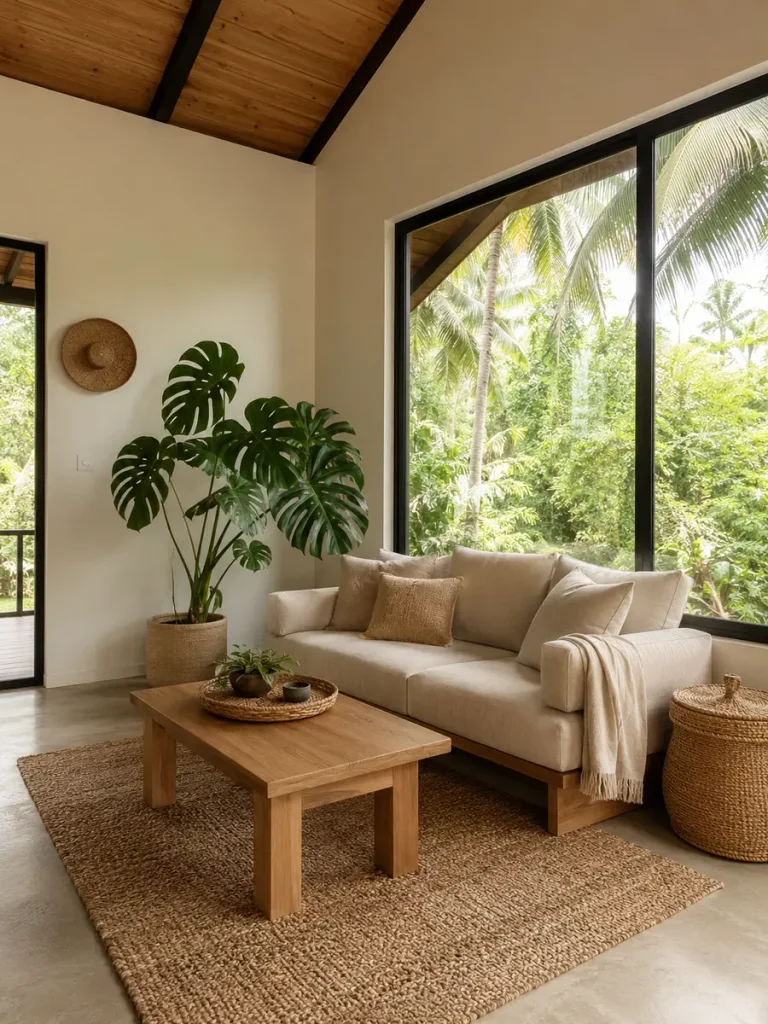
Modern tropical style does not require bright prints or a room full of accessories. A neutral sofa, warm wood coffee table, woven rug, and one large leafy plant can create the mood without overwhelming a compact floor plan.
Large windows are more important than decorative objects here. Let outdoor greenery provide much of the color, then repeat soft shades of beige, cream, tan, and muted green inside.
11. Rattan-Filled Tropical Living Space
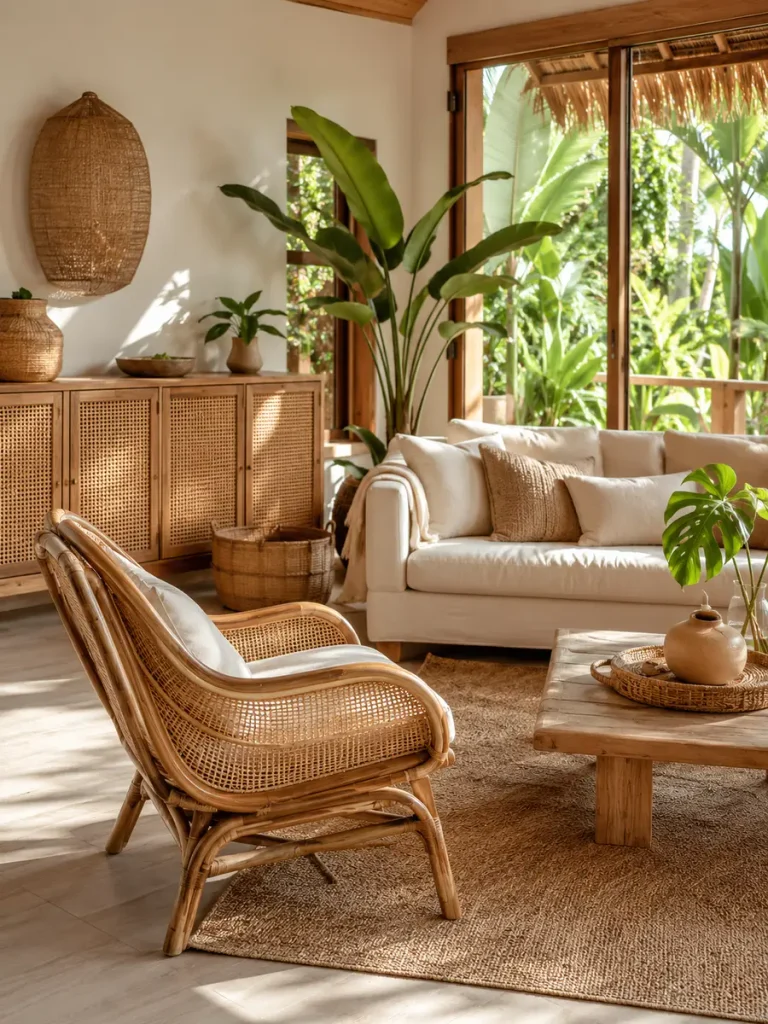
Rattan and cane are ideal for small spaces because their open construction looks lighter than bulky upholstered furniture. One statement lounge chair or cane-front cabinet can add texture without filling the room visually.
Mix woven pieces with a simple cream sofa, linen cushions, and timber surfaces. A few natural materials repeated throughout the room will look more polished than an entire matching furniture set.
12. Tropical Tiny House with Green Kitchen Cabinets
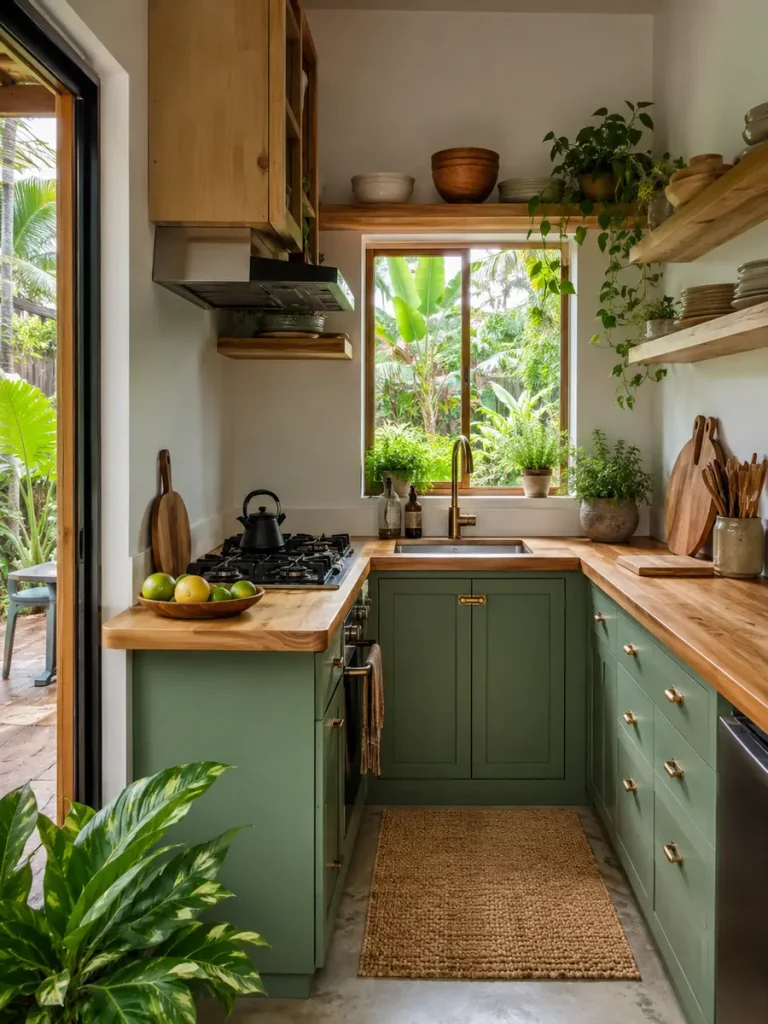
Muted green cabinetry can echo the garden outside while adding personality to a compact kitchen. Sage, olive, eucalyptus, and moss are easier to live with than very bright tropical greens.
Pair green lower cabinets with timber worktops, simple hardware, and light walls. Limiting upper cabinetry or replacing some of it with open shelves can keep the kitchen from feeling boxed in.
13. White and Timber Tiny Kitchen
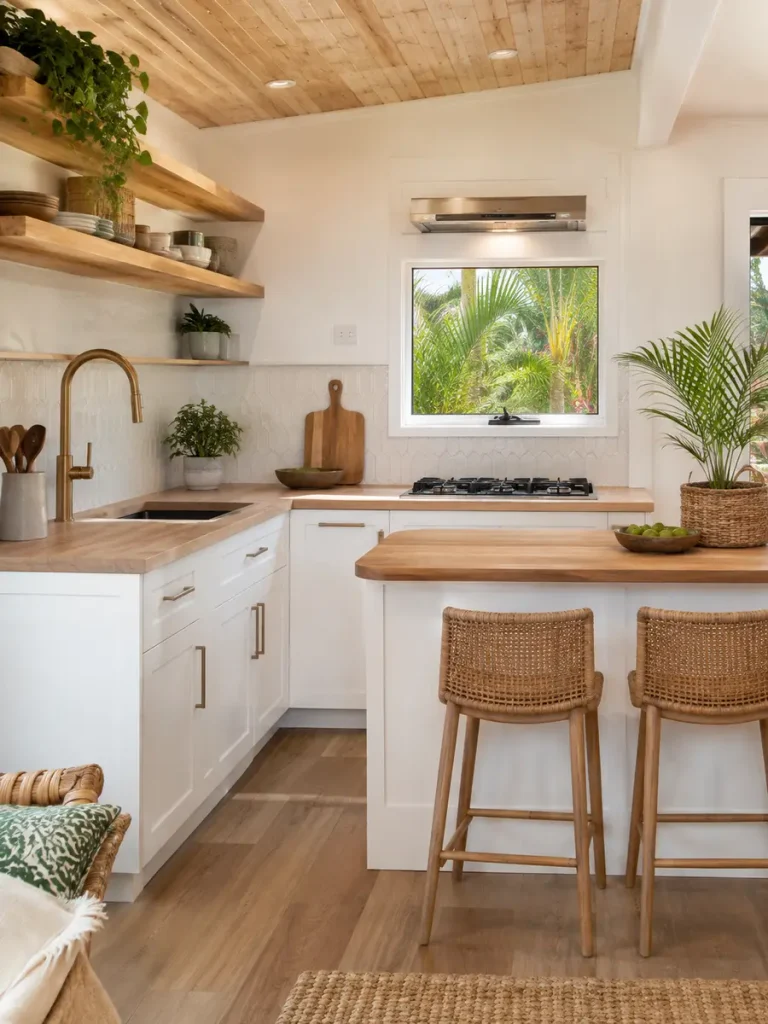
White cabinets reflect light and can make a narrow kitchen feel cleaner and more spacious. Natural wood counters, shelves, or stools add enough warmth to prevent the room from feeling clinical.
Keep the backsplash simple and use only a few decorative elements, such as potted herbs or a woven basket. In a tiny kitchen, clear work surfaces make a noticeable difference.
14. Tropical Kitchen with Open Shelving
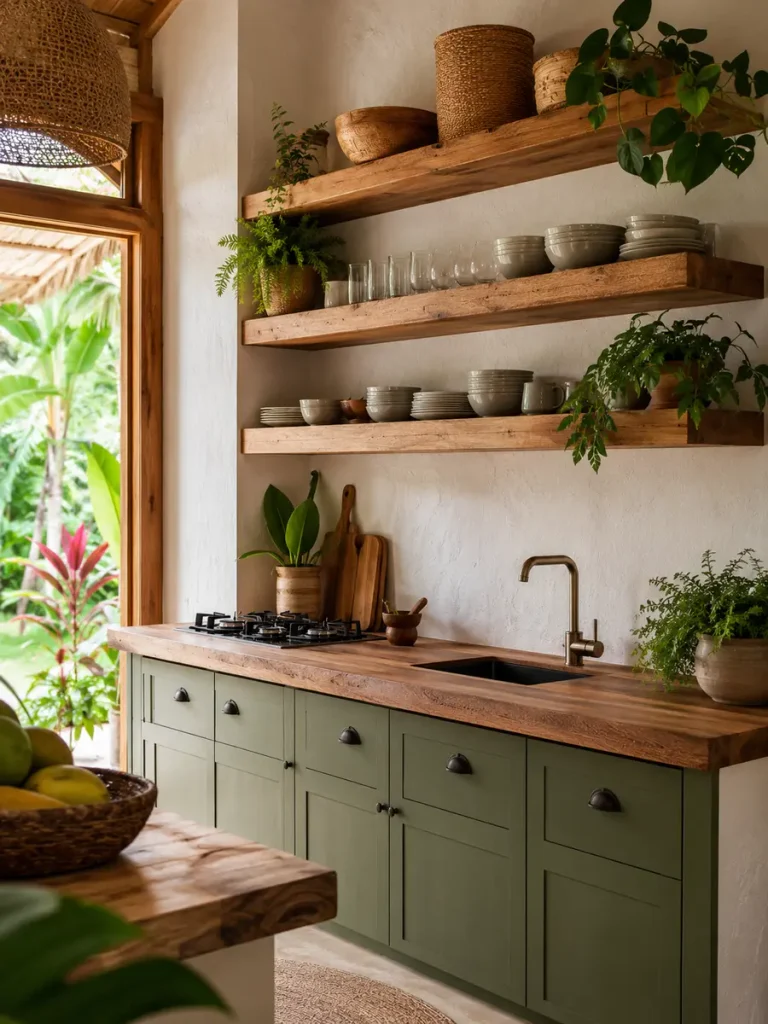
Open shelves are a practical way to make upper walls feel less heavy. Thick timber shelves can hold everyday plates, bowls, glassware, herbs, and a few decorative pieces.
The trick is restraint. Keep frequently used items within reach and leave some negative space between them. A compact kitchen feels calmer when every shelf is not completely filled.
15. Tiny Breakfast Bar Facing the Garden
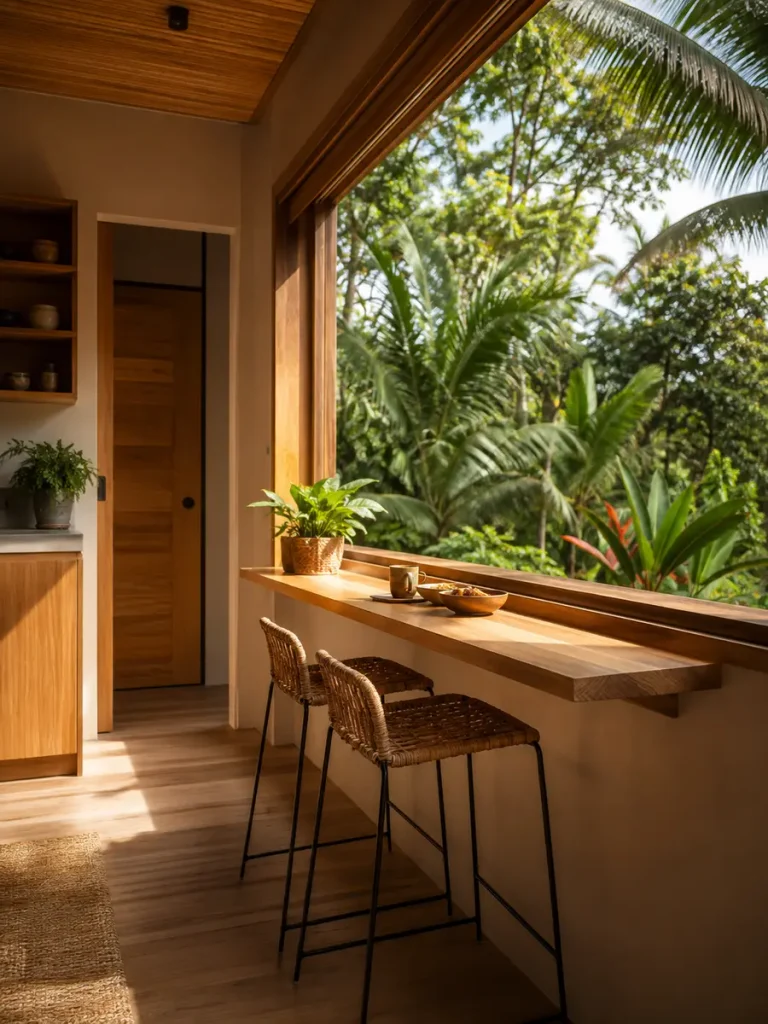
A narrow breakfast counter beneath a wide window can replace a full dining table and create one of the best seats in the house. Two slim stools can tuck underneath when not in use.
Position the bar where it looks toward palms, a courtyard, or a planted privacy screen. It can serve as a place for breakfast, laptop work, or an evening drink without taking over the living area.
16. Indoor-Outdoor Dining Area
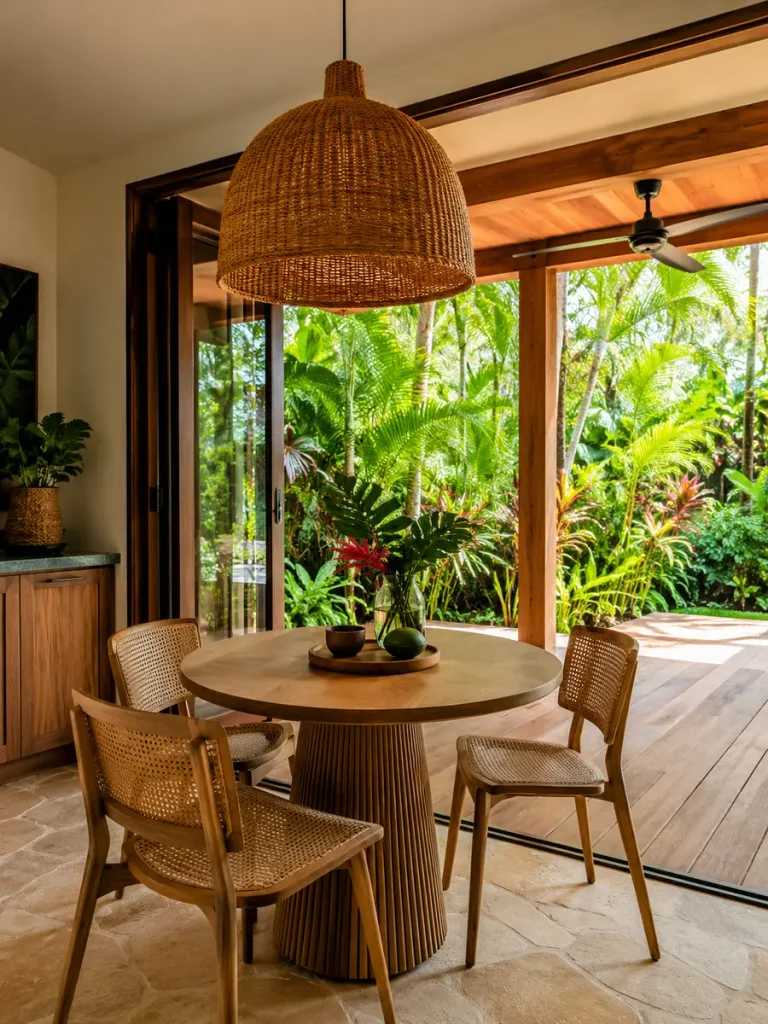
A small dining nook feels more generous when it sits beside doors that open onto a deck or patio. A round table works well because it is easy to move around and softens a compact floor plan.
Cane chairs and a woven pendant light add tropical texture, while wide openings allow the garden to become part of the dining experience. During pleasant weather, the gathering area can spill naturally outdoors.
17. Tropical Tiny House with a Window Bench
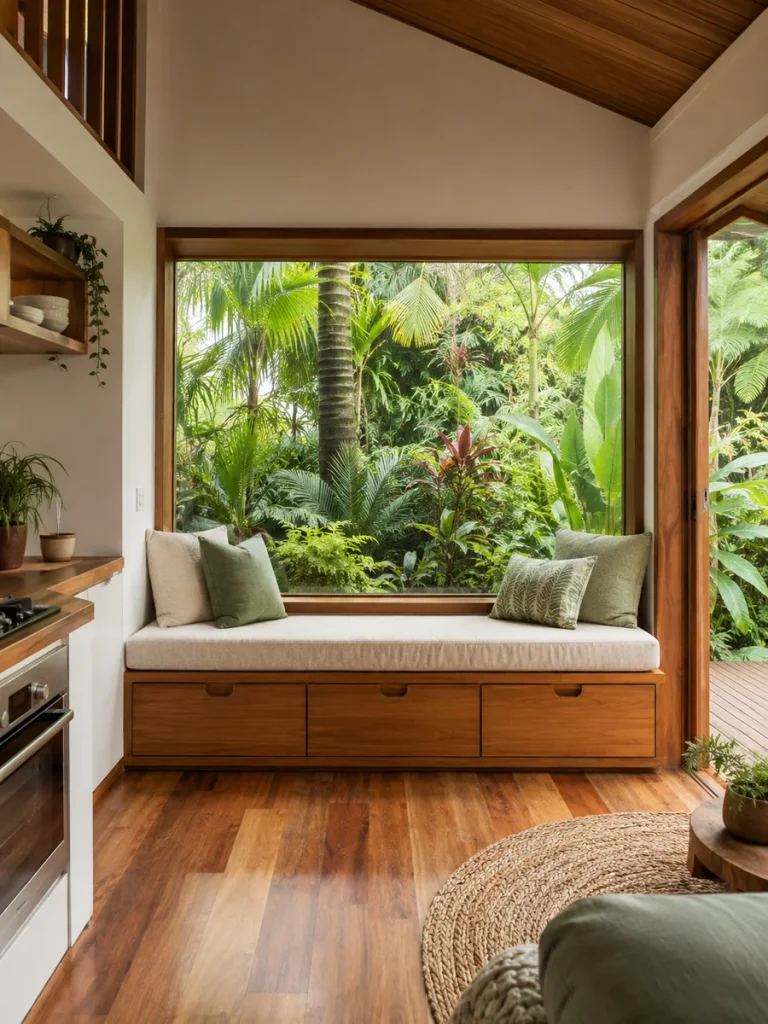
A built-in window bench combines seating, storage, and a place to enjoy the view. Drawers beneath the seat can hold linens, books, seasonal items, or other belongings that would otherwise require a separate cabinet.
Use a slim cushion rather than an oversized mattress and keep the pillows minimal. The wide window and greenery outside should remain the main attraction.
18. Tropical Reading Nook
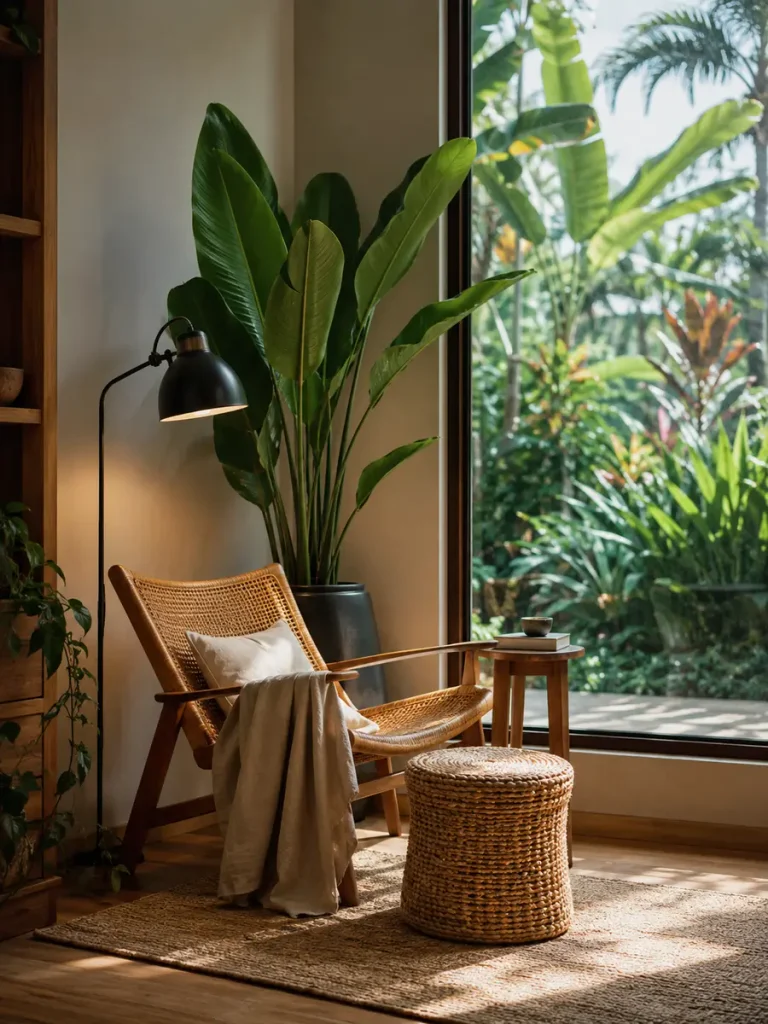
Even a narrow corner can become useful with a compact cane chair, small side table, and floor lamp. Position the chair close to a large window so natural light does most of the work during the day.
Add one large plant and a lightweight throw for comfort. Because the furniture footprint is small, the nook can fit beside a staircase, in a bedroom corner, or at the edge of the living room.
19. Tropical Bedroom with Cane Headboard
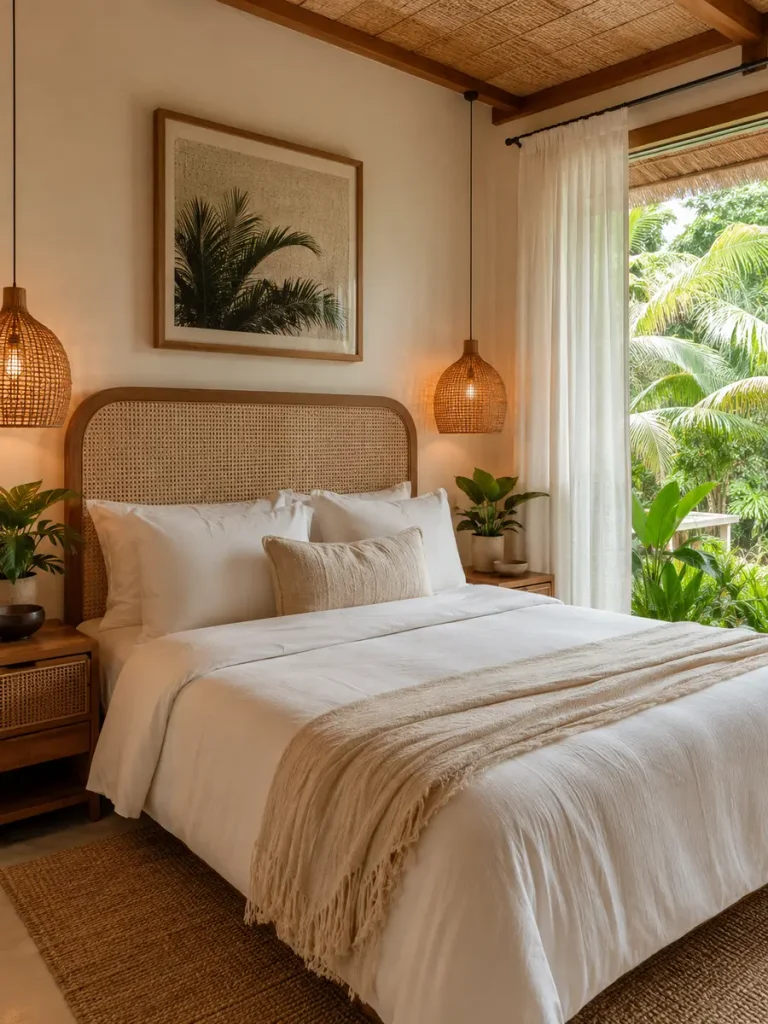
A cane headboard creates a clear focal point without feeling visually heavy. Pair it with crisp white bedding, timber nightstands, and warm woven lighting for a bedroom that feels calm rather than busy.
Keep patterns restrained. A couple of muted green cushions or a textured throw are usually enough, especially when the room already has views of tropical plants.
20. Garden-Facing Tiny Bedroom
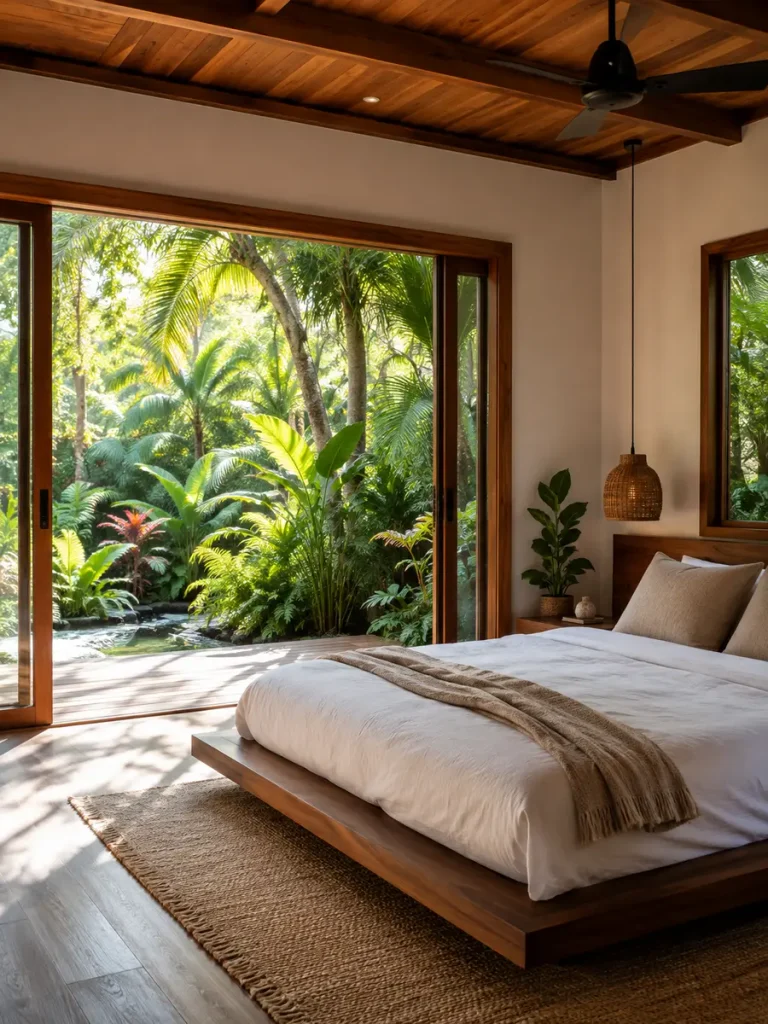
A bedroom can feel dramatically larger when glass doors open directly toward a private garden. The outdoor planting becomes the room’s backdrop and reduces the need for excessive decoration inside.
Use layered palms, ferns, and broad-leaf plants to create privacy. Inside, a low platform bed and pale bedding help maintain the open feeling.
21. Tropical Loft Bedroom with Skylight
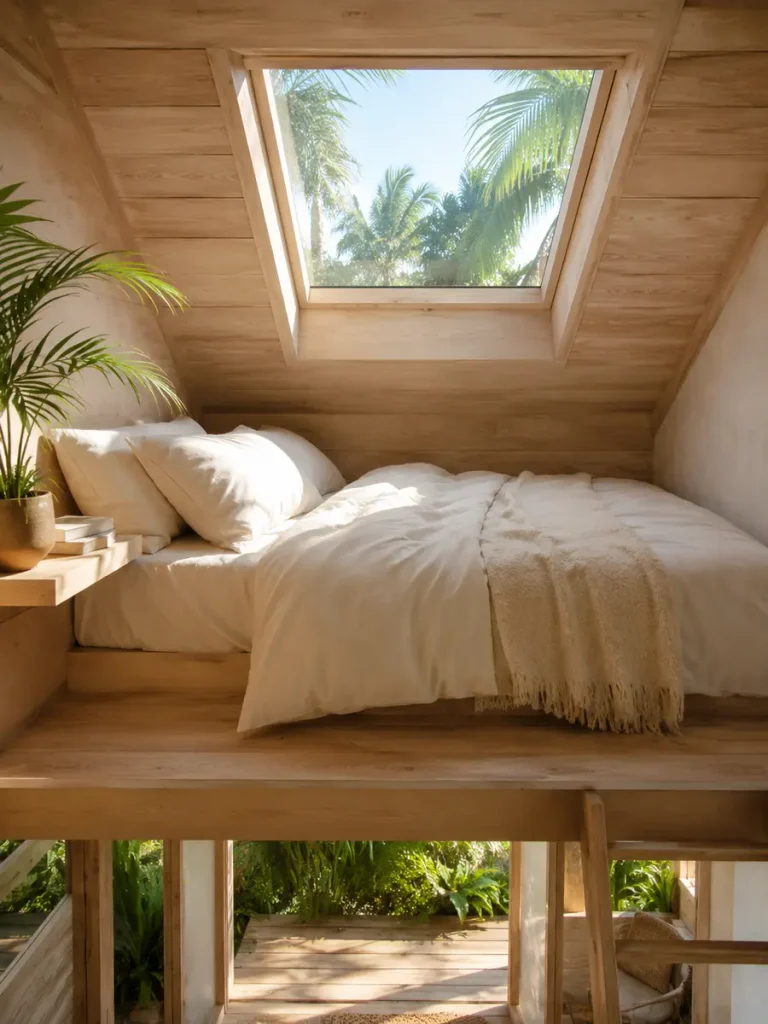
A skylight is especially valuable in a sleeping loft, where headroom and wall space may be limited. Natural light from above prevents the space from feeling tucked away or dark.
Use pale timber cladding, simple bedding, and wall-mounted shelves instead of bulky bedside furniture. At night, a small reading light is often all the loft needs.
22. Tropical Bathroom with Natural Stone
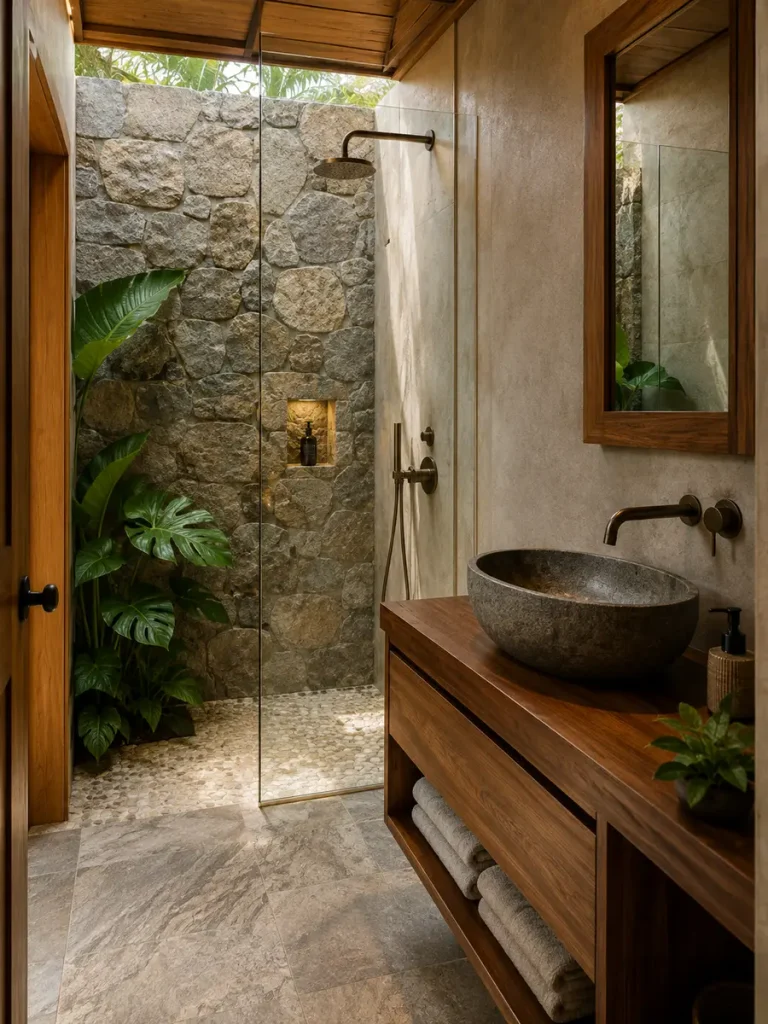
Natural stone can make a tiny bathroom feel grounded and spa-like. Use it as a shower feature wall, flooring material, or vanity detail rather than covering every surface.
Warm timber cabinetry and simple dark or brushed fixtures balance the rough texture of stone. A skylight or high window brings in daylight while maintaining privacy.
23. Green Tile Tropical Bathroom
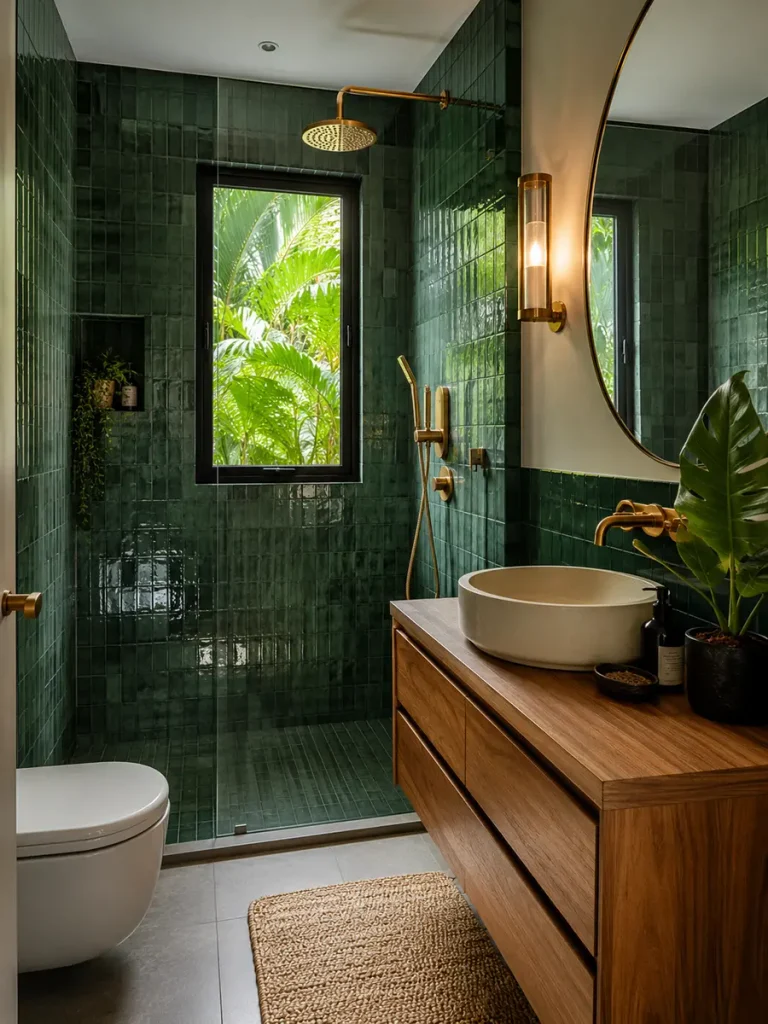
Glossy green tile creates a rich botanical atmosphere in a compact bathroom. Emerald, deep olive, and forest green work particularly well with wood and warm metallic fixtures.
Use the color on the shower wall or vanity zone, then keep the remaining surfaces quieter. Reflections from glossy tile can also help bounce light around the room.
24. Tiny Bathroom with Outdoor Views
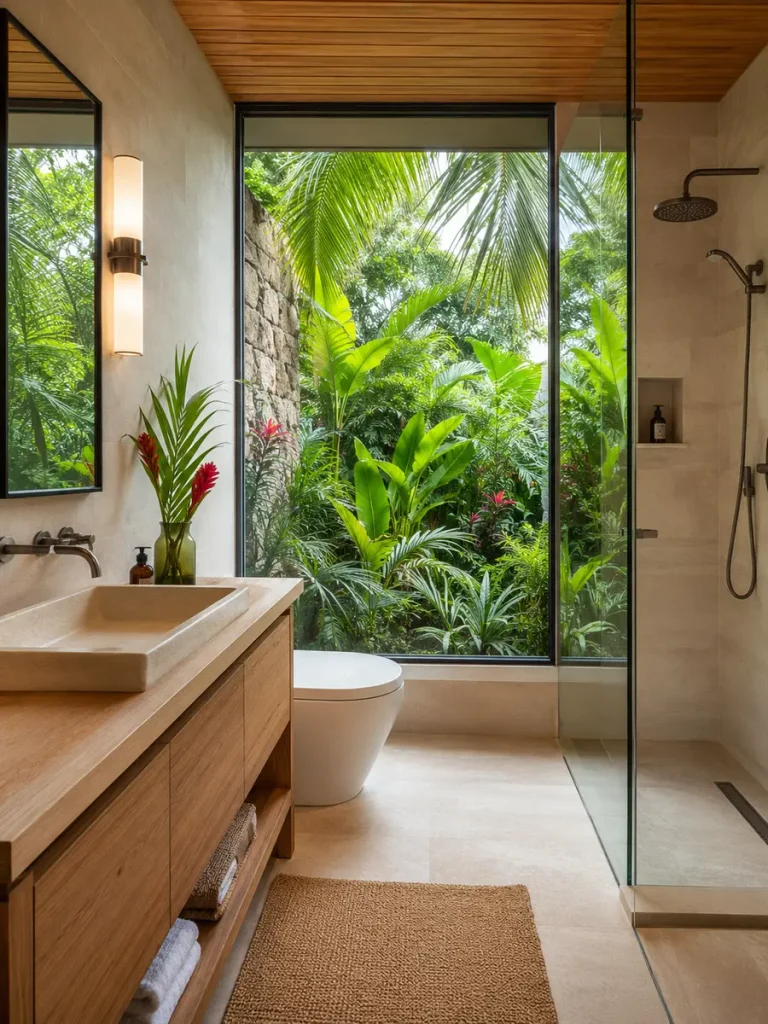
A carefully placed window can completely change a small bathroom. Instead of looking at a blank wall, the room opens visually toward palms, ferns, or a private planted courtyard.
Use landscaping, screens, or high glazing to maintain privacy. Pair the view with light stone surfaces and timber so the bathroom feels calm and connected to nature.
25. Tropical Tiny House with Outdoor Shower
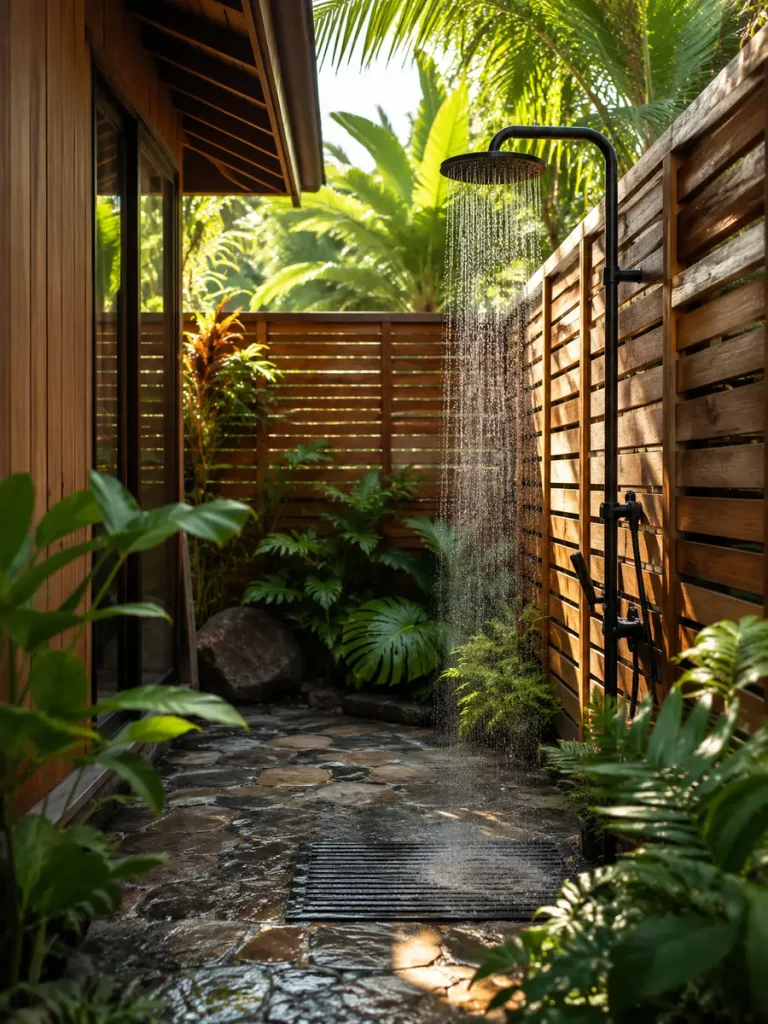
An outdoor shower brings resort character to a tiny home and can be practical near a beach, garden, or plunge pool. Timber privacy screens and dense foliage create enclosure without making the space feel boxed in.
Natural stone underfoot, a matte black shower fixture, and a few humidity-loving plants are enough to make the area feel intentional.
26. Tropical Tiny House with Plunge Pool
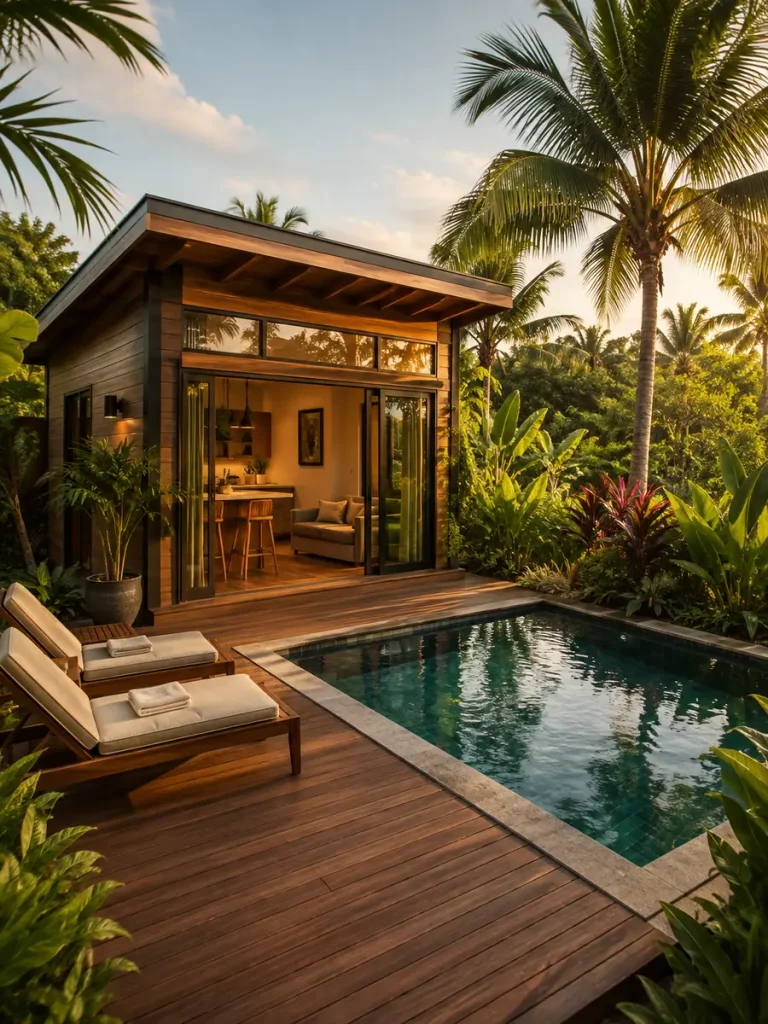
A small plunge pool can deliver the atmosphere of a larger resort pool without requiring a huge yard. A narrow rectangular design tucked alongside the deck works well with compact architecture.
Use timber decking around the water and dense planting at the perimeter. Two simple lounge chairs are often enough; leaving some open space helps the pool area feel more generous.
27. Small Tropical Courtyard
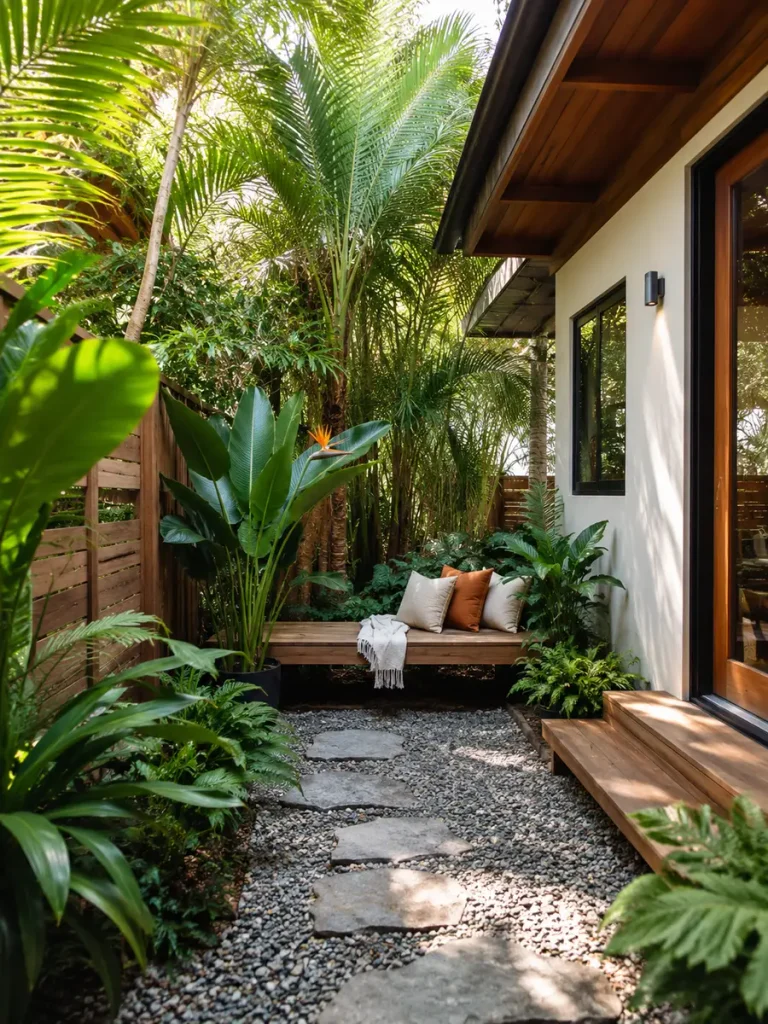
A courtyard can bring light and fresh air into the center of a tiny floor plan. Even a narrow strip between walls can become a peaceful garden room with stone paving, one bench, and layered planting.
Ferns, palms, and bird-of-paradise plants create height and privacy. Subtle lighting at ground level can turn the same courtyard into a beautiful evening feature.
28. Tropical Tiny House with Hammock Deck
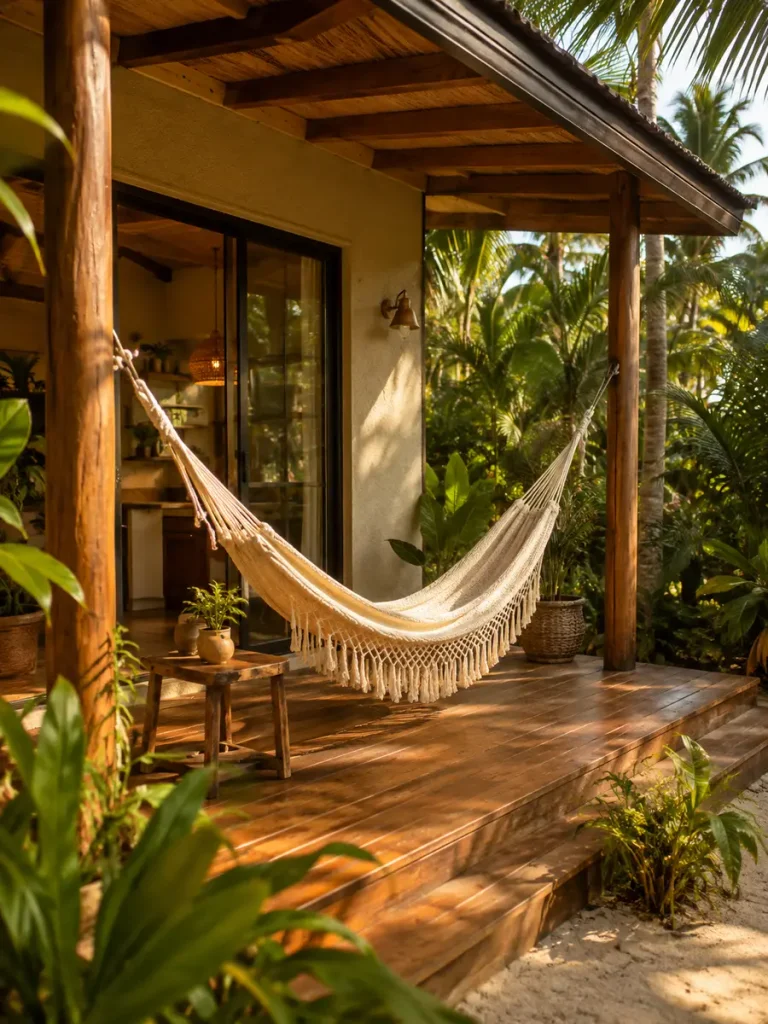
A hammock instantly adds a relaxed holiday feel to a covered deck. It also provides useful seating without requiring a large collection of outdoor furniture.
Hang it under a roof or between sturdy posts, then add a compact side table and one or two planters. Keeping the rest of the deck open allows the view and greenery to stand out.
29. Tiny House with Outdoor Lounge
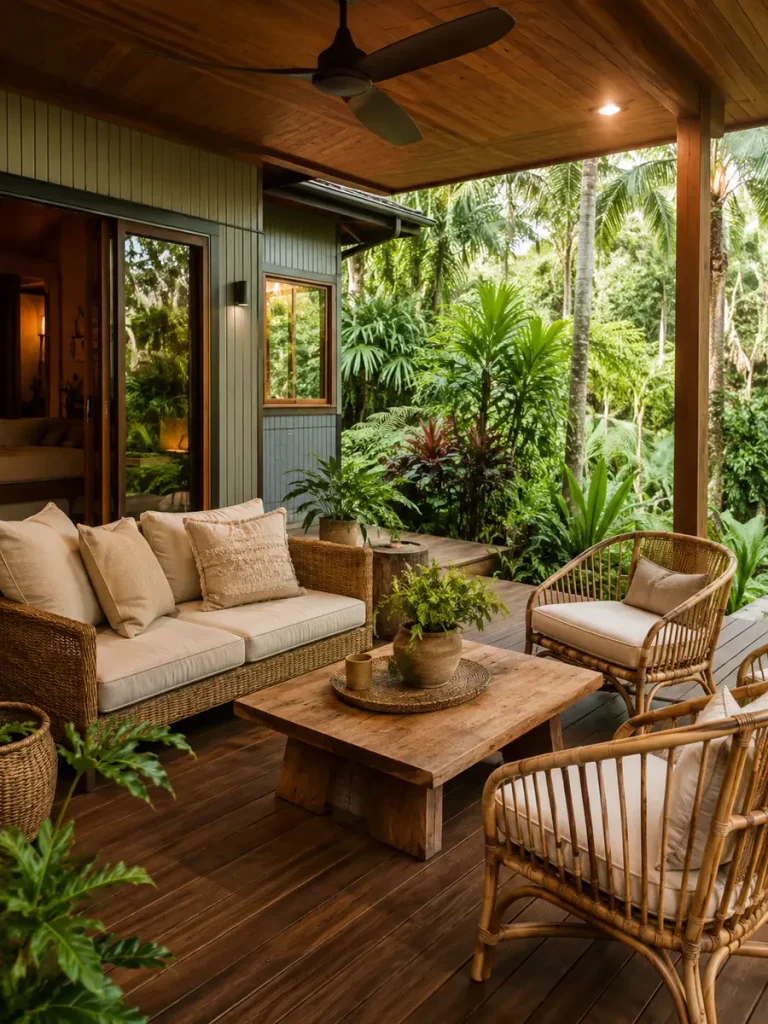
A covered outdoor lounge can function as a second living room. Use a compact sofa, a pair of woven chairs, and a low table rather than filling the deck with oversized sectional furniture.
A ceiling fan can improve comfort in warm weather. Neutral cushions and natural wood keep the area connected to the interior without feeling over-styled.
30. Tropical Tiny House with Outdoor Kitchen
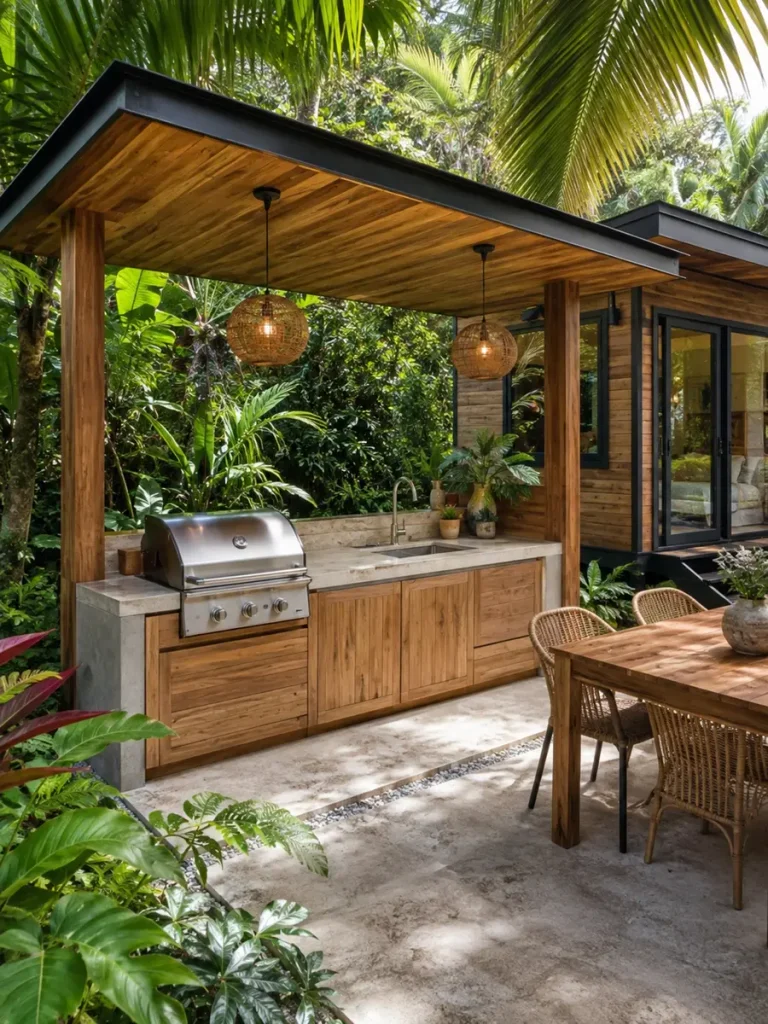
An outdoor kitchen can free valuable room inside and make entertaining easier. A simple counter with a grill, sink, and storage is often enough for a tiny-house setup.
Protect the cooking area with a roof and choose materials suited to heat and humidity. Place a small dining table nearby so cooking and eating happen in one compact outdoor zone.
31. Tropical Breezeway Tiny House
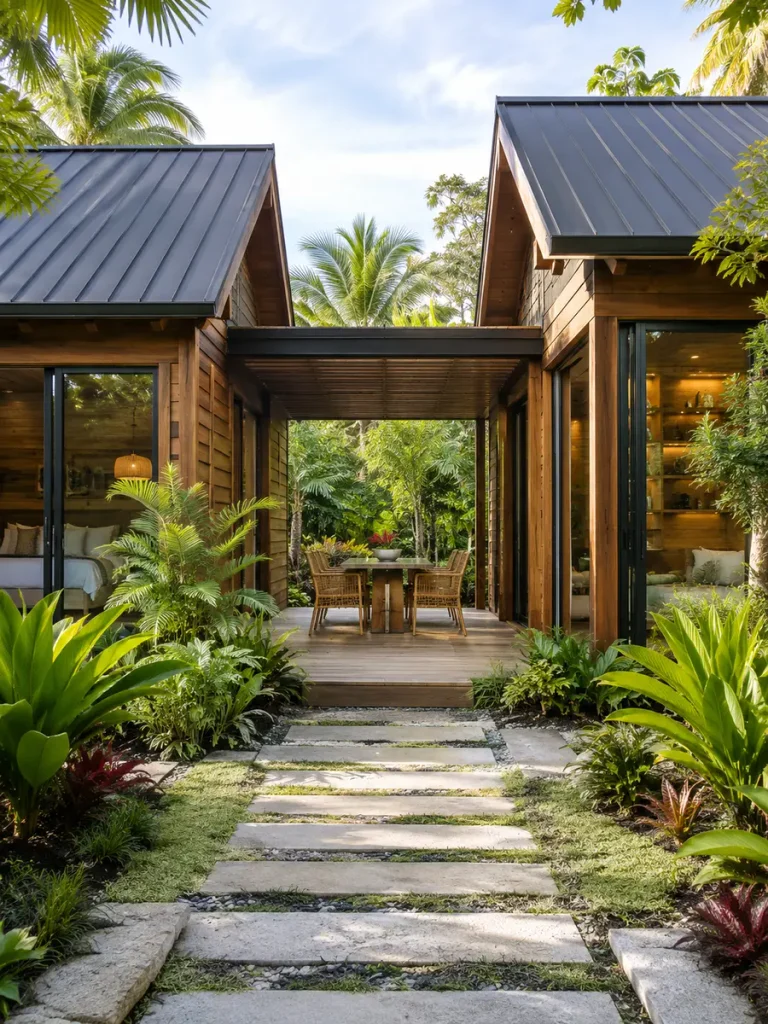
A breezeway layout divides the house into two compact structures connected by a covered open-air space. One side can hold the bedroom and bathroom while the other contains the kitchen and living room.
The space between becomes a naturally ventilated dining room or sitting area. This layout gives a small home a strong tropical identity while separating quiet and social zones.
32. Tiny House with a Steep Metal Roof
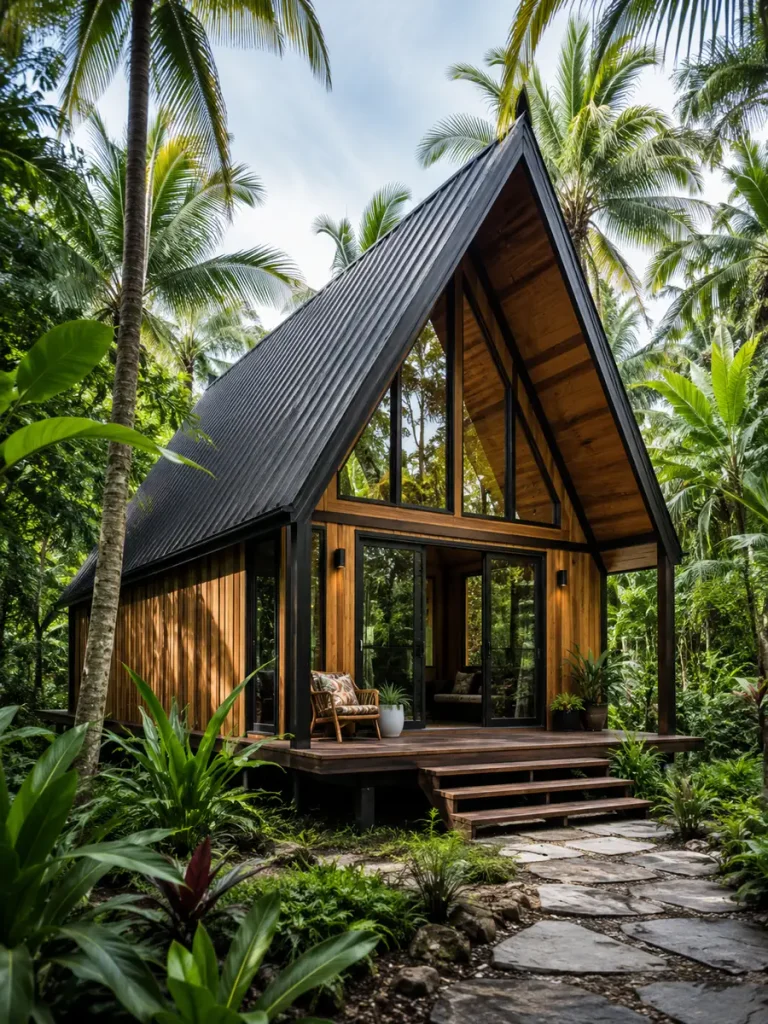
A steep metal roof gives a tiny home a distinctive profile and creates extra ceiling height inside. It also works beautifully with timber siding and dark-framed windows.
Wide eaves can provide useful shade, while the higher interior volume can accommodate a loft. Charcoal or muted gray roofing keeps the exterior looking contemporary.
33. Tropical Tiny House on Stilts
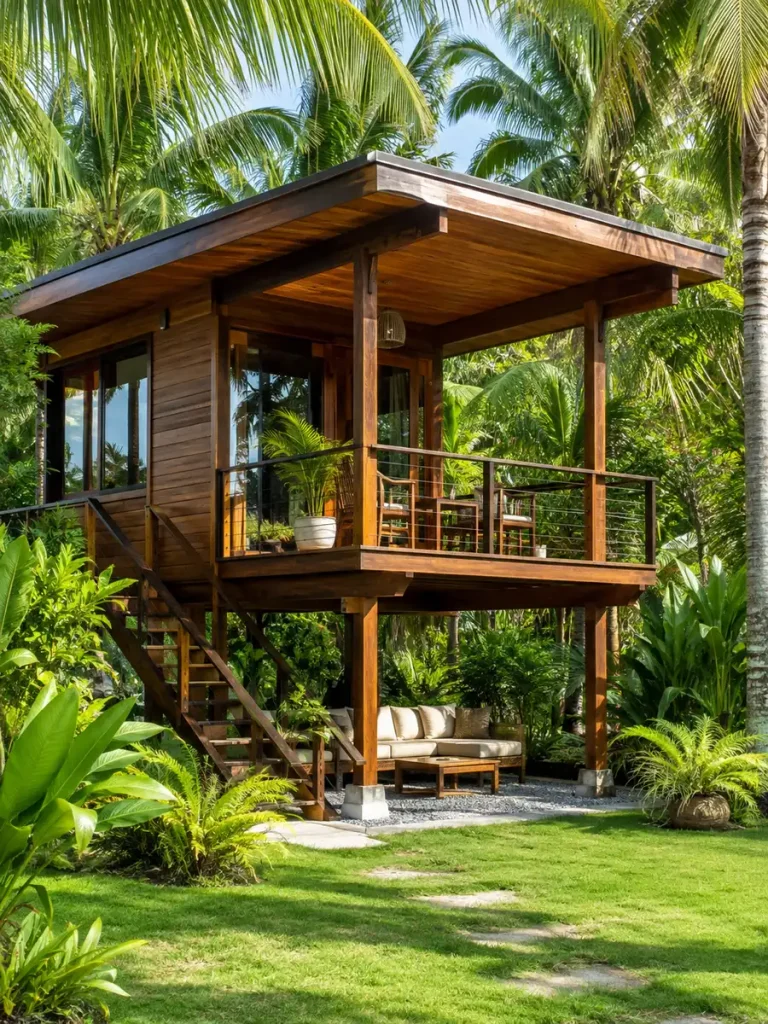
Raising a tiny home can create airflow beneath the floor and give the building a light, elevated appearance. The space underneath may also become shaded seating or storage when the structure is properly designed.
A simple staircase leading to a small veranda creates a welcoming entrance. Timber and lush planting help the raised structure blend into the landscape.
34. Black Tropical Tiny House
Matte black or charcoal siding can look striking against vibrant tropical greenery. The dark exterior gives a compact house a strong modern identity without requiring complicated architecture.
Warm timber around the entrance, deck, or soffits softens the black finish. Large windows are important so the house still feels open and inviting.
35. Tropical Tiny House with Black-Framed Windows
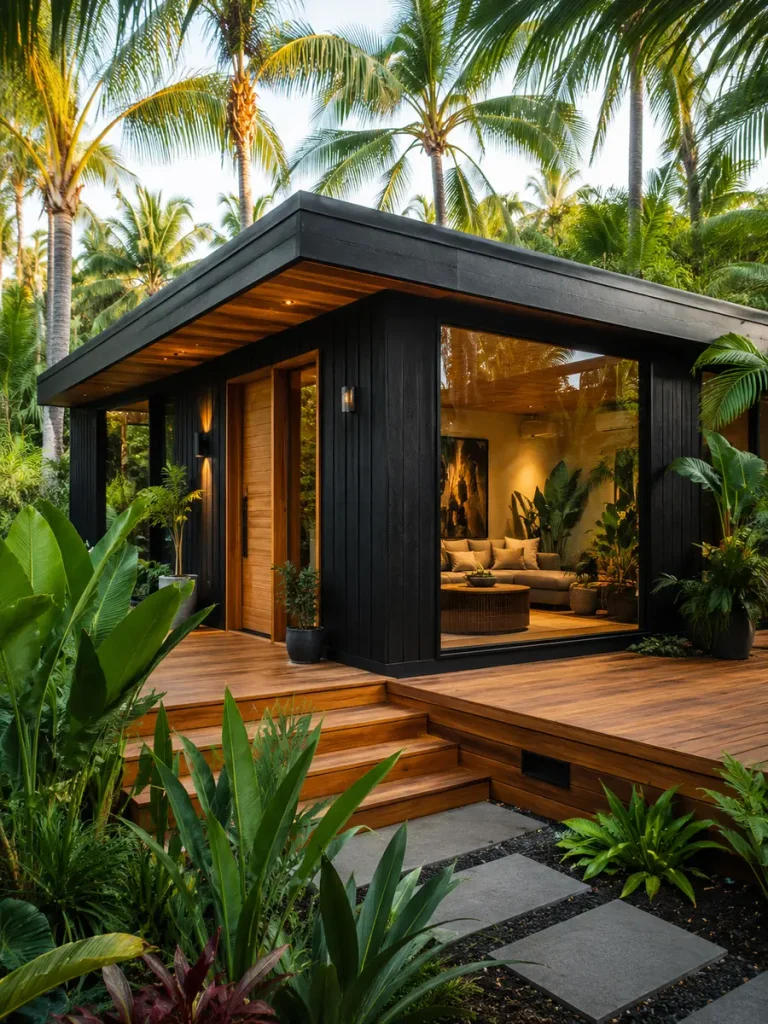
Black-framed windows add definition to timber or white exteriors and can make simple architecture feel much sharper. From inside, the dark frames also make garden views look almost like large pieces of artwork.
Choose clean window treatments that can disappear when not needed. Heavy curtains can hide one of the home’s strongest architectural features.
36. Whitewashed Coastal Tropical Tiny House
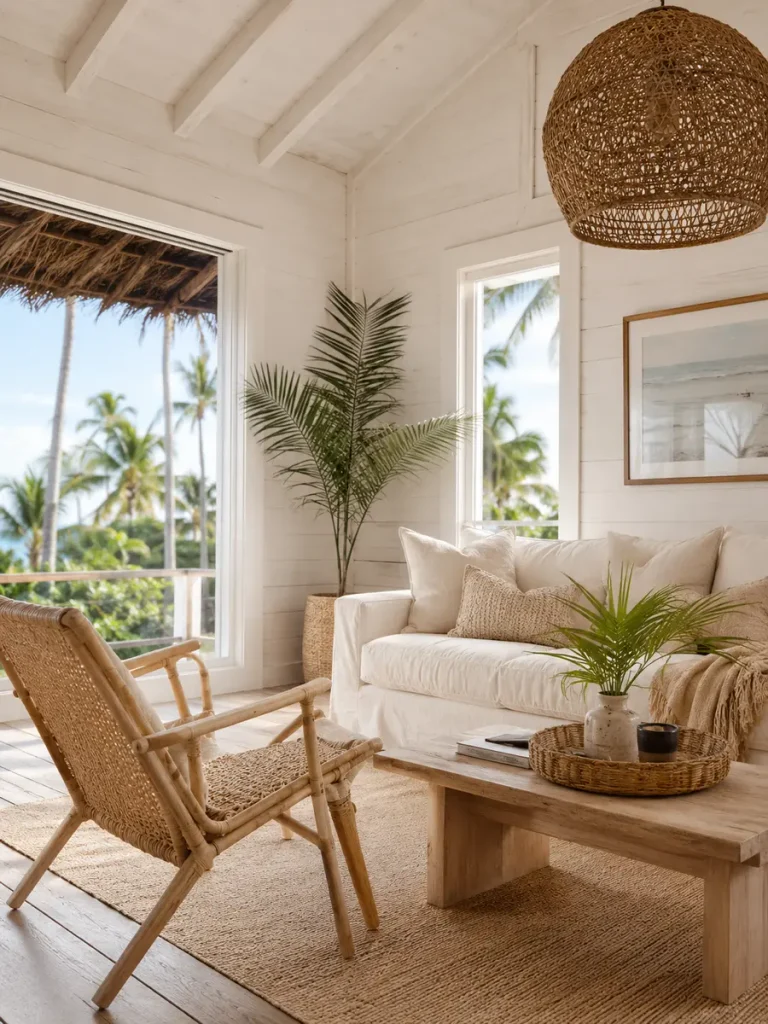
Whitewashed walls, pale wood, and woven textures create a lighter tropical look with a subtle coastal influence. The style feels airy and relaxed without relying on obvious nautical decoration.
Use linen fabrics, cane furniture, sandy neutrals, and a few palms. Large openings toward the garden or water complete the breezy atmosphere.
37. Rustic Jungle Tiny Cabin
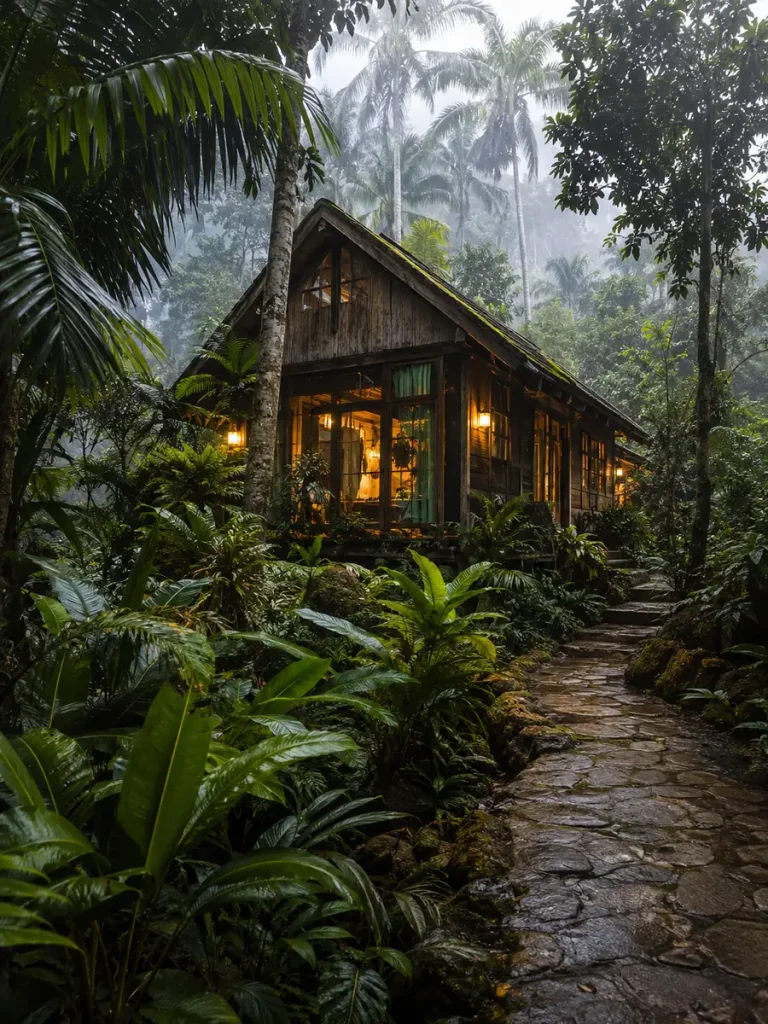
A darker timber cabin can feel incredibly cozy in dense tropical vegetation. Weathered wood, a simple roofline, and warm interior lights create the feeling of a private hideaway.
Large windows keep the deeper wood tones from becoming too heavy. Inside, cream textiles and uncomplicated furniture help balance the rustic exterior.
38. Tropical Tiny House with Vertical Garden
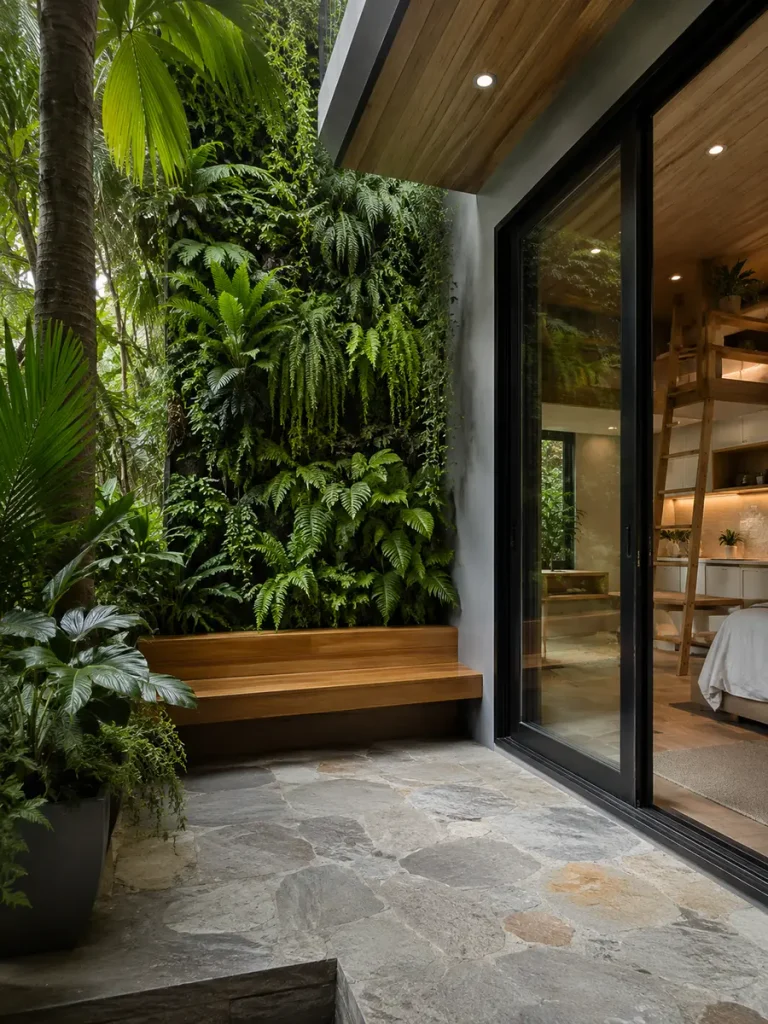
A vertical garden can add a surprising amount of greenery without using valuable floor space. It works beside an entry, on a courtyard wall, or across a sheltered patio.
Mix ferns, trailing plants, and foliage with different leaf sizes for depth. A simple built-in timber bench in front of the wall can turn the planting into a complete seating feature.
39. Tiny House with Terracotta Accents
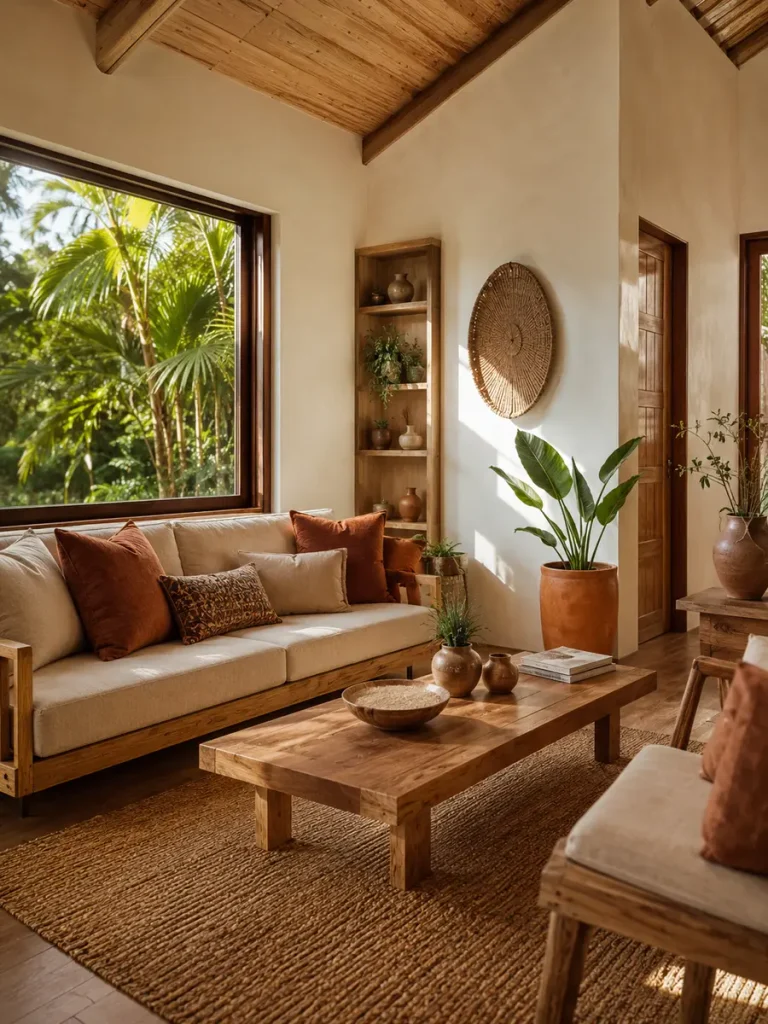
Terracotta brings warmth to rooms dominated by timber, cream, and green. Use the color through planters, cushions, pottery, or a few decorative objects rather than covering every surface.
The reddish-earth tone works particularly well with olive leaves and warm wood. Because the palette is natural, the room can feel colorful without becoming loud.
40. Tropical Tiny House with Woven Lighting
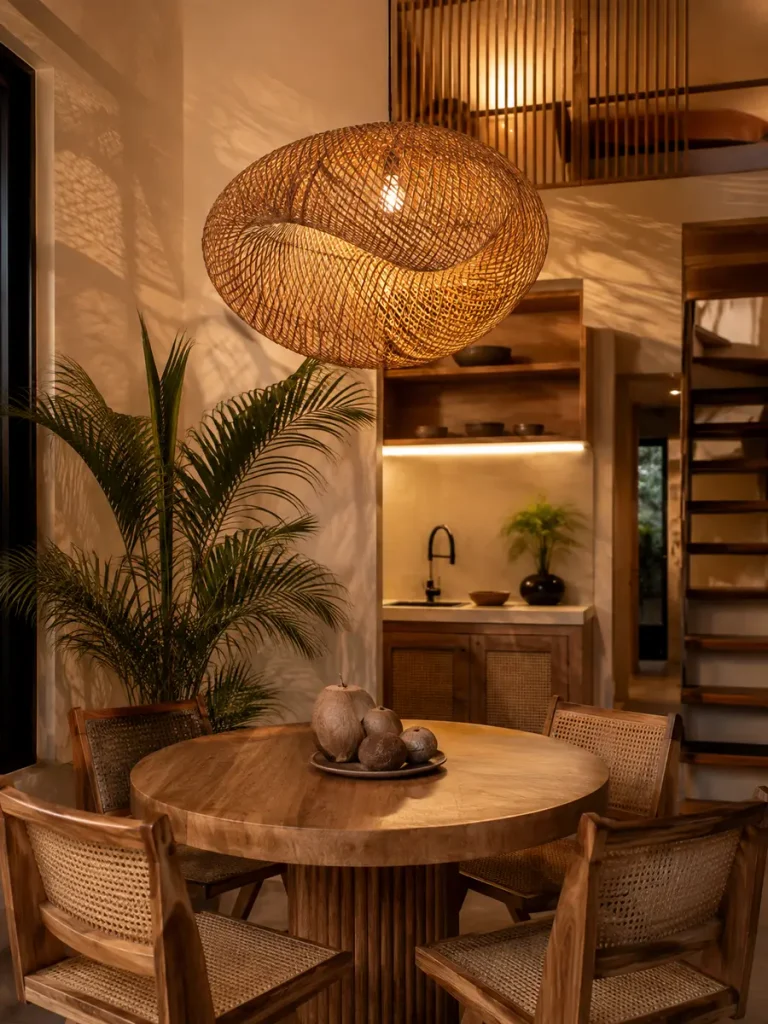
Woven pendant lighting is a space-efficient way to add texture. A large rattan or cane shade can become the focal point above a dining table while leaving the floor completely clear.
Warm bulbs create attractive patterns through the weave after sunset. Repeat the material lightly through chair backs, baskets, or cabinet fronts so the fixture feels connected to the rest of the interior.
41. Tiny House with Ceiling Fans
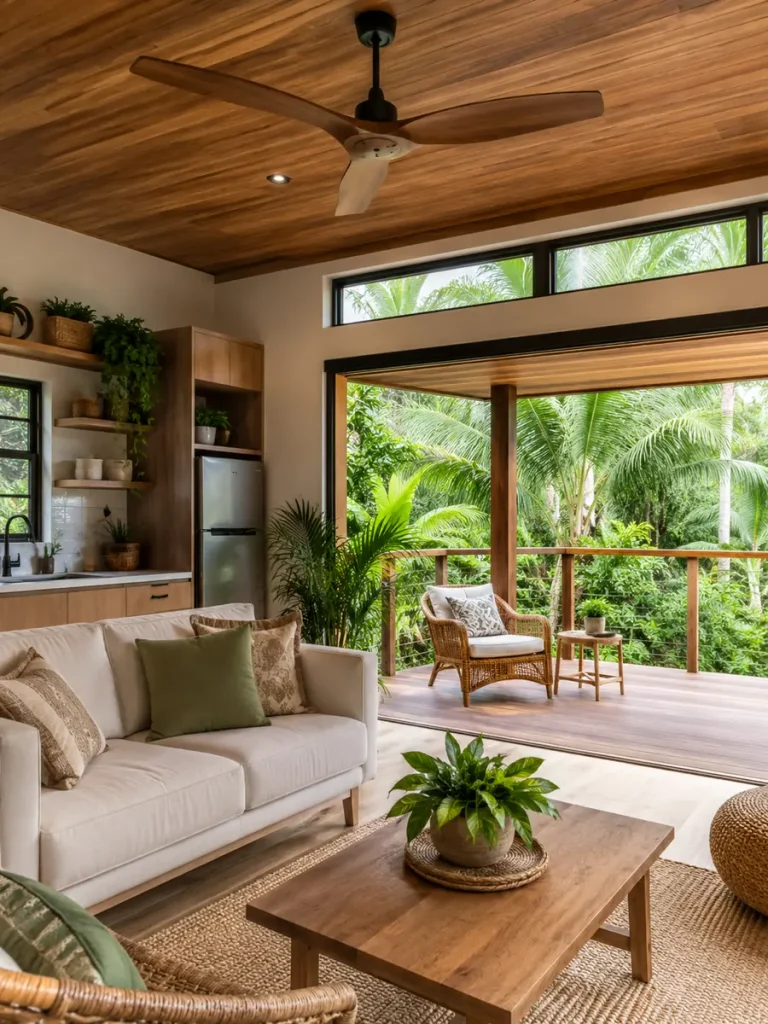
A ceiling fan is both practical and visually suited to tropical interiors. In a compact room, choose a streamlined design with timber-toned or matte blades rather than an oversized decorative model.
Place fans in the living room, bedroom, or covered veranda where air movement matters most. Combined with wide openings, they can help the home feel breezy and comfortable.
42. Tropical Tiny House with Folding Glass Doors
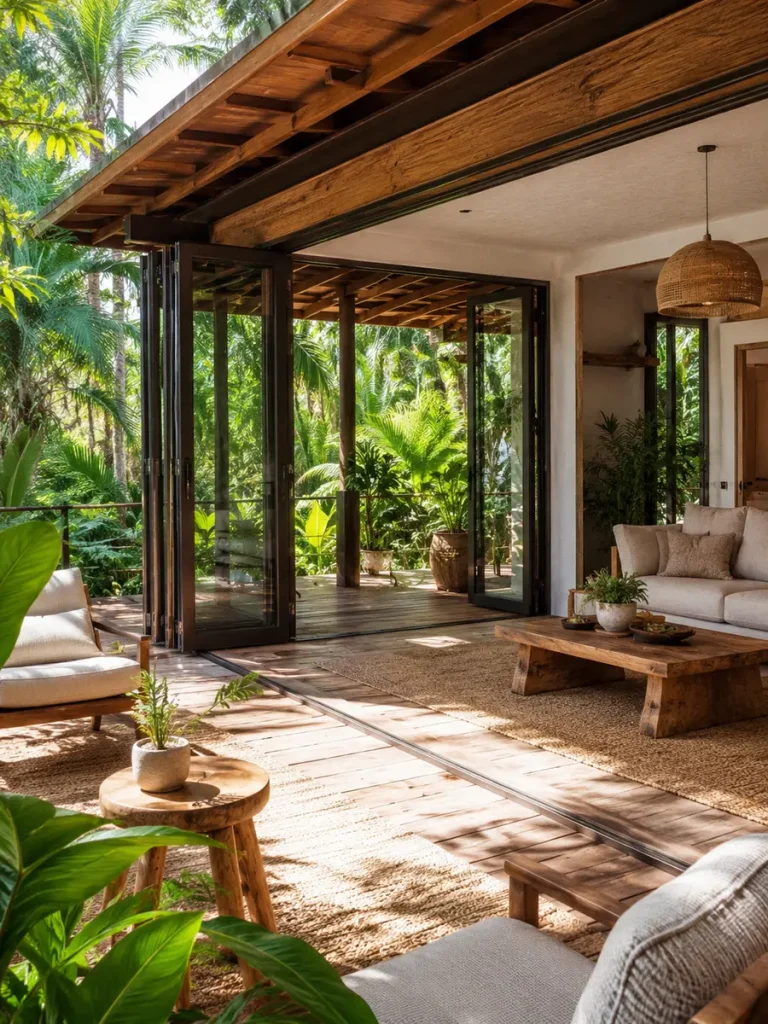
Folding glass doors can open almost an entire wall and transform the size of a small living room. When folded away, the deck and interior read as one continuous area.
Carry similar timber tones across the threshold and keep furniture away from the opening. The effect works especially well when the house faces a garden, pool, or forest view.
43. Modern Tropical Tiny House at Sunset
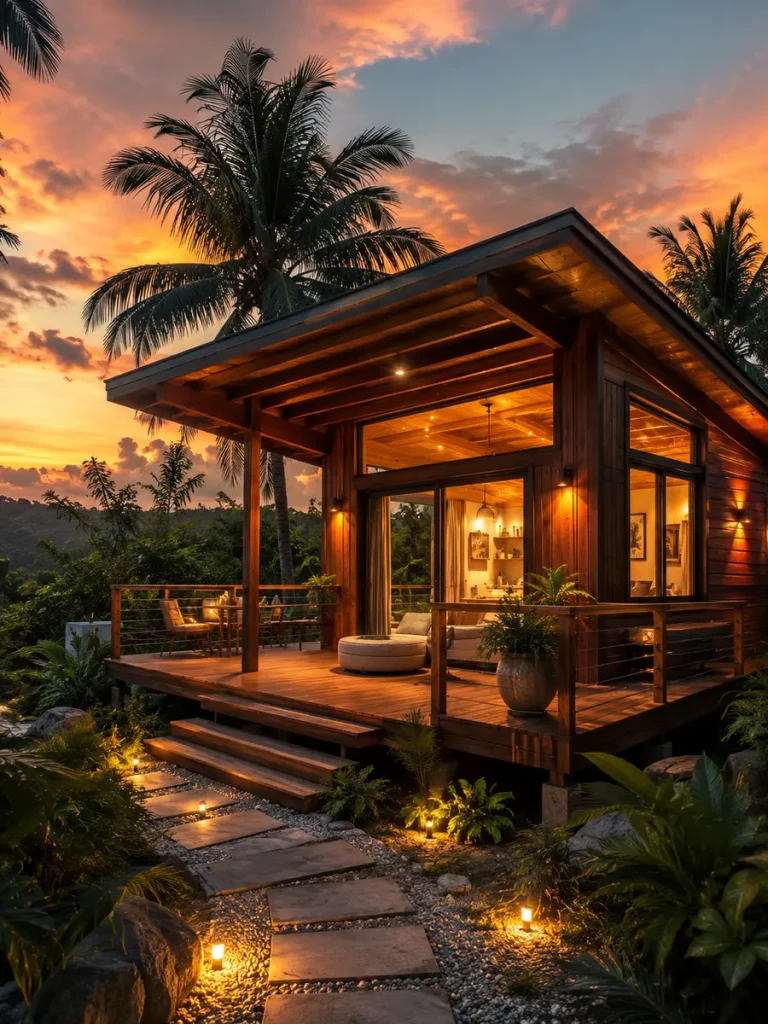
A tiny house can look completely different after sunset. Warm interior light glowing through large windows creates contrast against the dark greens of palms and surrounding foliage.
Use low pathway lights and subtle deck lighting rather than bright floodlights. A few carefully placed fixtures make the house feel welcoming while preserving the relaxed evening atmosphere.
44. Tropical Tiny House with Rooftop Terrace
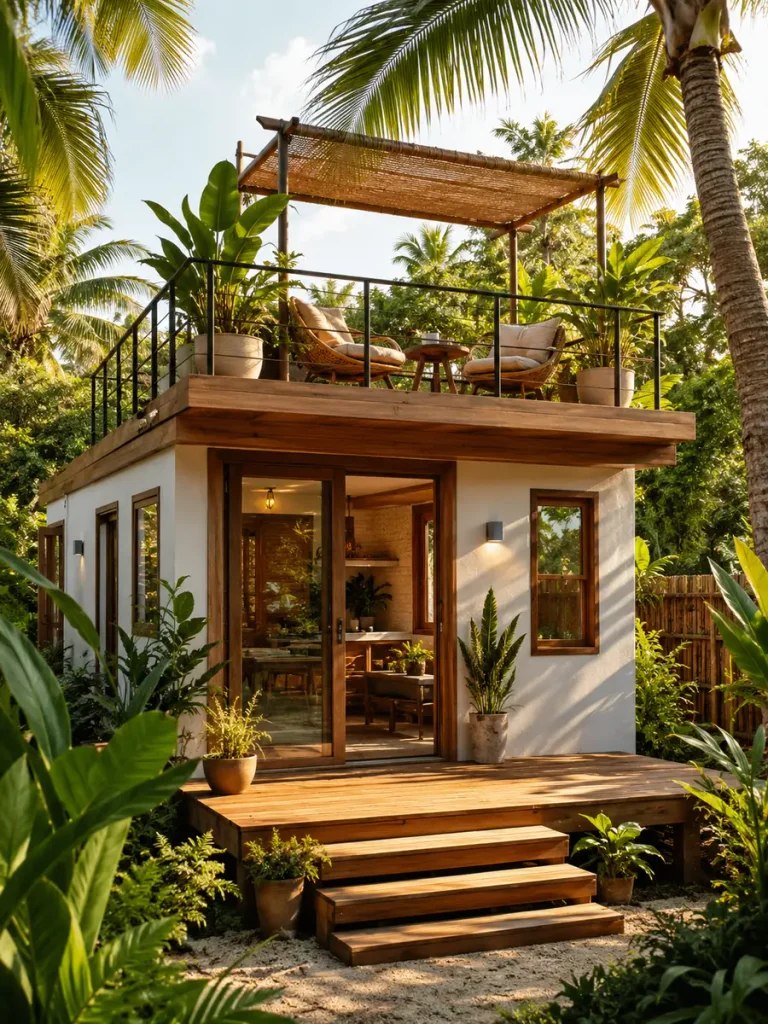
When the footprint is limited, the roof can provide extra outdoor living space. A compact rooftop terrace can hold two lounge chairs, a small table, planters, and a lightweight shade structure.
Keep the railing visually light and furniture minimal. The roof deck is especially useful when the property has attractive treetop, mountain, or water views.
45. Complete Indoor-Outdoor Tropical Tiny House
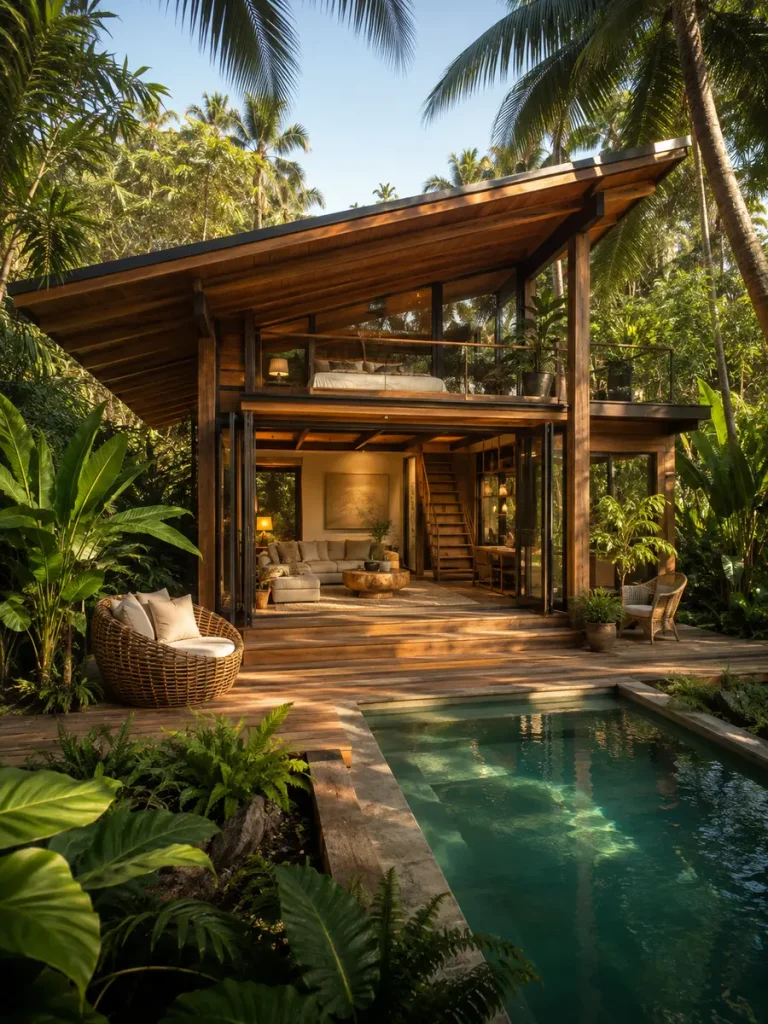
The most successful tropical tiny houses usually combine several ideas rather than relying on one decorative feature. A warm timber shell, broad glass openings, built-in storage, shaded deck, loft sleeping area, natural bathroom materials, and compact pool can work together within a surprisingly small footprint.
The key is continuity. Repeat a limited material palette, keep circulation clear, and let the landscape become part of the architecture. When indoor and outdoor areas connect naturally, a tiny house can feel much more spacious than its measurements suggest.
How to Make a Tropical Tiny House Feel Bigger
Keep sightlines as open as possible. Large windows, glass doors, and views toward planting extend the visual boundary of a room, while bulky partitions do the opposite. Use built-in storage against selected walls rather than scattering freestanding cabinets around the house.
Furniture with exposed legs can also make a small room feel lighter because more flooring remains visible. Repeating similar flooring tones between interior and exterior spaces helps the eye read them as one connected area.
Best Colors for a Modern Tropical Tiny House
A modern tropical palette works best when most surfaces are calm and natural. Warm white, cream, sand, beige, light gray, and timber are easy foundation colors. Then layer in olive, sage, forest green, terracotta, charcoal, or muted rust.
Remember that the garden already contributes a lot of green. You do not need to repeat strong tropical colors on every wall or piece of furniture.
Best Materials for Tropical Tiny House Design
Timber is one of the most useful materials because it works on walls, decks, ceilings, cabinetry, shelving, and furniture. Rattan and cane add lighter texture through chairs, lighting, baskets, and cabinet fronts.
Stone works beautifully in bathrooms, pathways, and outdoor areas, while linen and cotton keep bedrooms and living spaces soft. Repeating a smaller number of materials usually looks more sophisticated than using every tropical texture at once.
Don’t Forget Tropical Landscaping
Landscaping can make a simple tiny house feel far more established. Build layers rather than placing isolated plants around the foundation. Tall palms and trees create the background, medium plants provide privacy, and ferns or groundcover soften pathways.
Large planters are useful around decks and entrances where permanent beds are not practical. The strongest gardens frame views and provide privacy without blocking every window.
Final Thoughts
A beautiful tropical tiny house is less about decorating every corner and more about making a few choices work together. Natural wood brings warmth, wide openings bring light and views, built-in storage protects floor space, and shaded outdoor areas give the home more usable room.
You can lean modern with black frames and crisp architecture, go rustic with darker timber and jungle planting, or create a lighter coastal version with whitewashed finishes and cane furniture. Each direction can work in a small footprint.
Use these 45 ideas as a starting point, then choose the features that suit your climate and the way you actually want to live. With thoughtful planning, even a very compact home can feel calm, stylish, and closely connected to nature.