Skip to content
Indoor plants can do far more than fill an empty corner. With the right container, support, texture, and placement, even a familiar pothos or philodendron can become a piece of living decor.
The ideas below focus on creative arrangements rather than ordinary nursery pots. You will find glass bowls, driftwood, moss, sculptural supports, decorative stones, shells, mixed foliage, climbing frames, and larger statement pieces. Each idea can be adapted to suit a living room, bedroom, entryway, dining table, office, or sunny corner.
1. Pothos in a Round Glass Pebble Bowl
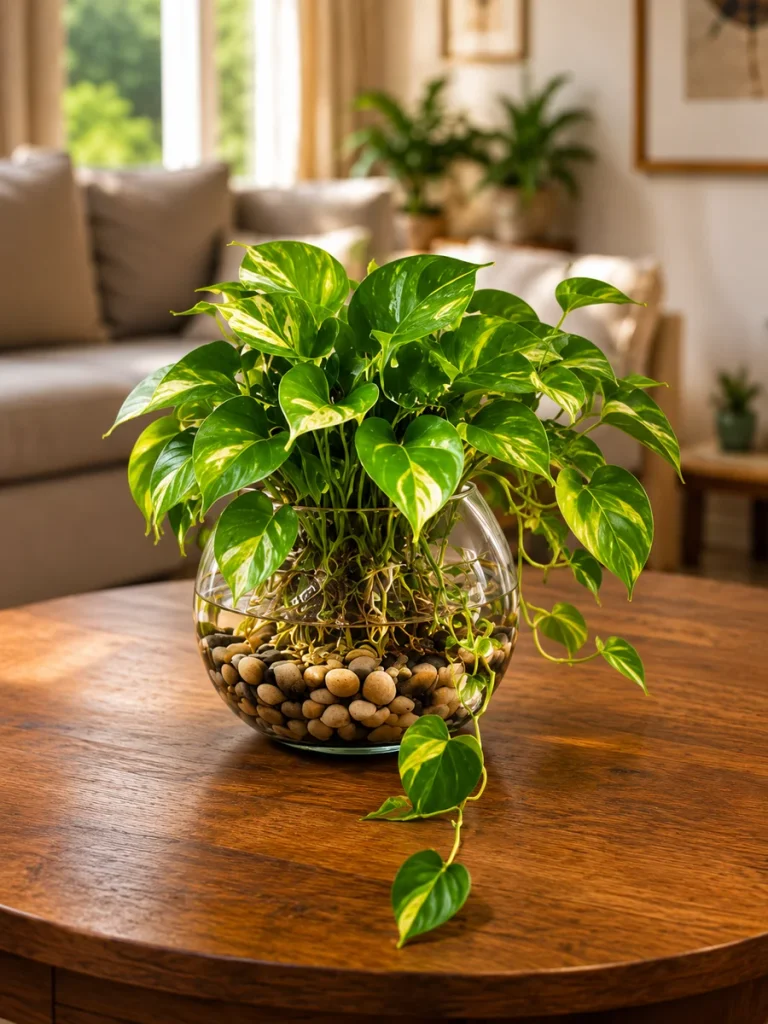
A transparent glass bowl lets the roots, pebbles, and greenery become part of the display. Golden pothos works especially well because its trailing stems soften the round shape of the bowl. Use smooth river stones in cream, gray, and tan for a natural finish. This is an easy centerpiece for a coffee table, console, or bright office.
2. Marble Queen Pothos in a Square Glass Planter
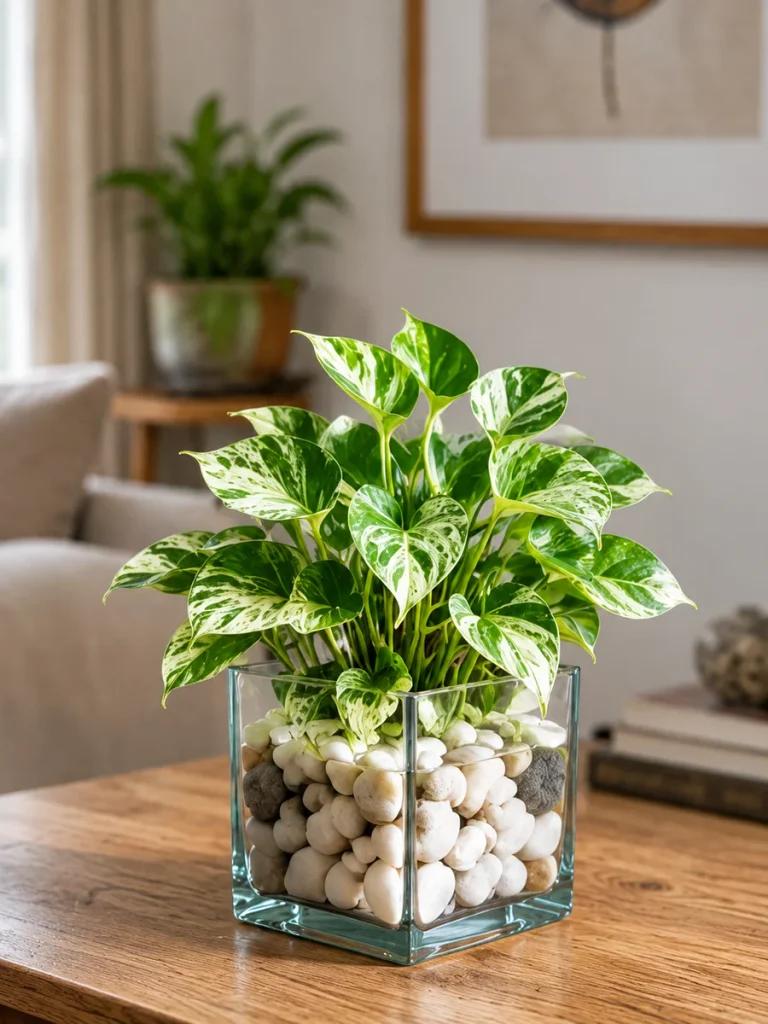
Marble Queen pothos brings a lighter, more refined look with creamy white and green leaves. A square glass planter adds clean geometry, while pale stones make the variegation stand out. Keep the arrangement slightly loose so a few leaves and vines can spill over the sides rather than forming a tight block.
3. Monstera Adansonii Driftwood Water Garden
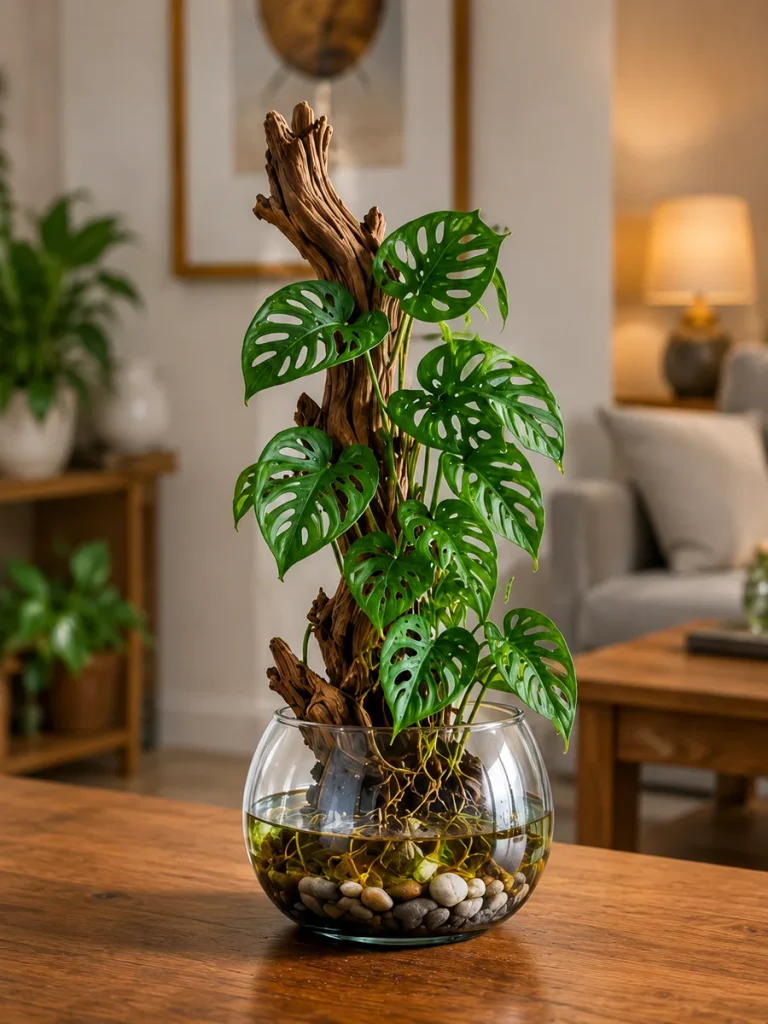
Monstera adansonii already has an artistic look thanks to its perforated leaves. Pair it with an irregular piece of driftwood inside a clear bowl to create a miniature water garden. The mix of glass, rough wood, roots, stones, and glossy foliage gives the arrangement a strong natural-sculpture quality.
4. Snake Plant Mini Water Garden
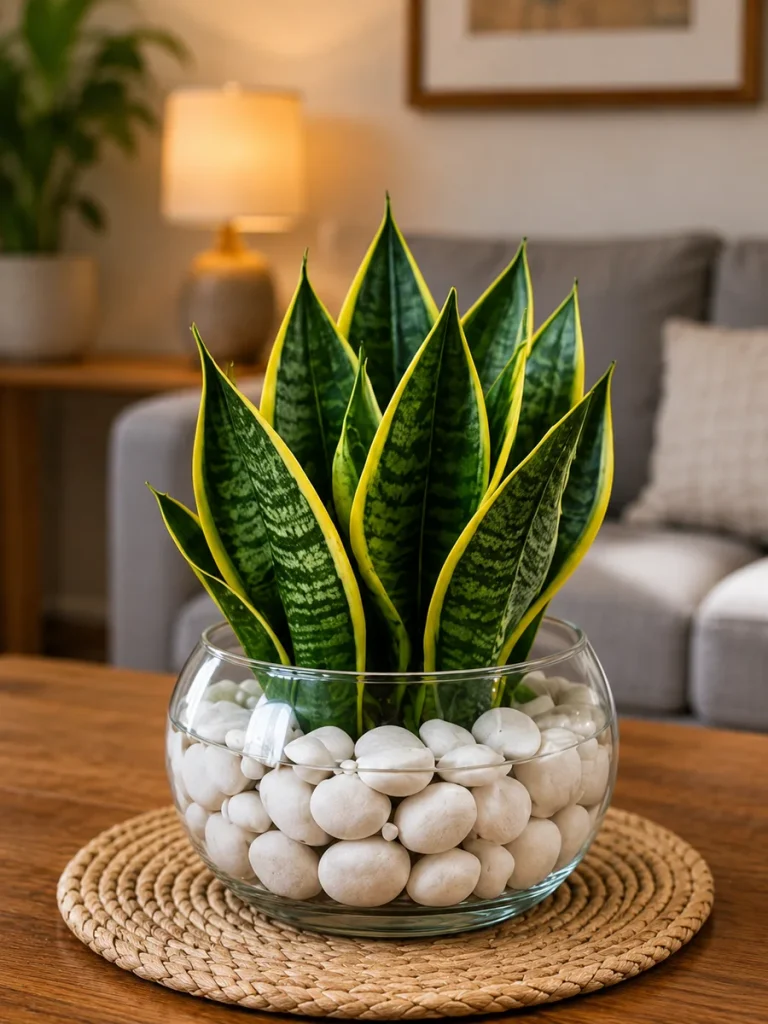
Compact snake plants look striking in a low glass bowl because their upright leaves contrast with the rounded container. White pebbles make the yellow-edged foliage pop. Use smaller snake plant varieties so the arrangement stays balanced and does not become too top-heavy.
5. Purple Tradescantia Glass Cube Display
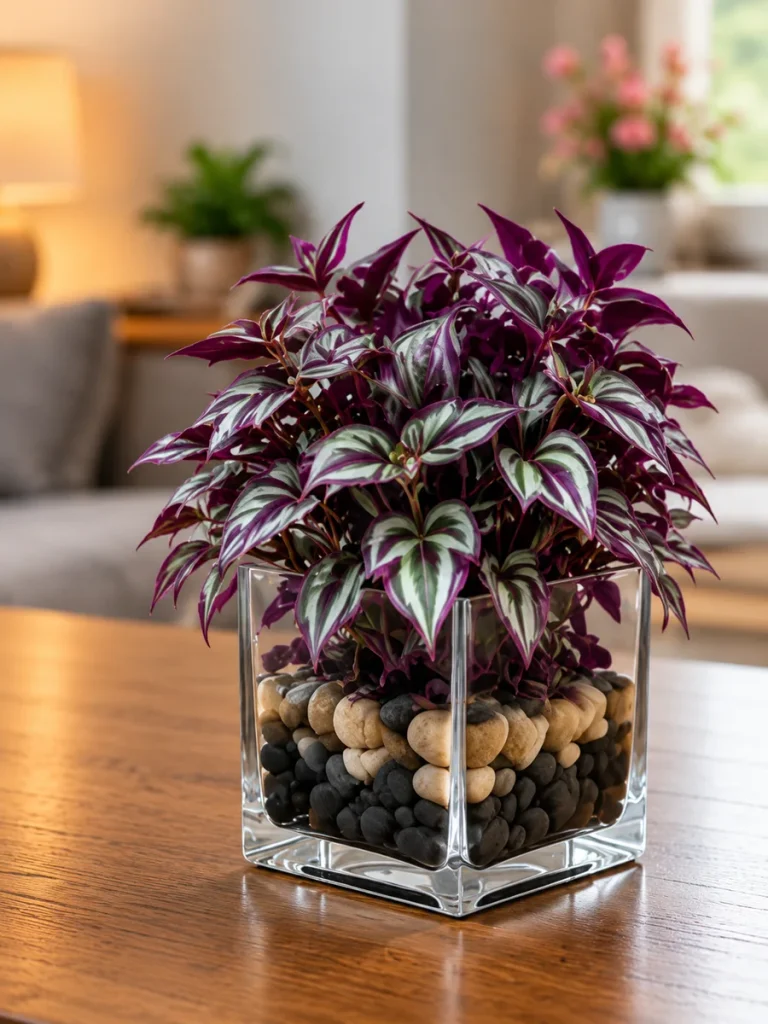
Tradescantia is a useful choice when you want something other than green. Its purple, silver, and striped leaves look polished in a clear cube filled with mixed pebbles. Let a few stems trail naturally over the edge for movement and place the display where it receives bright indirect light.
6. Heartleaf Philodendron Hydroponic Bowl
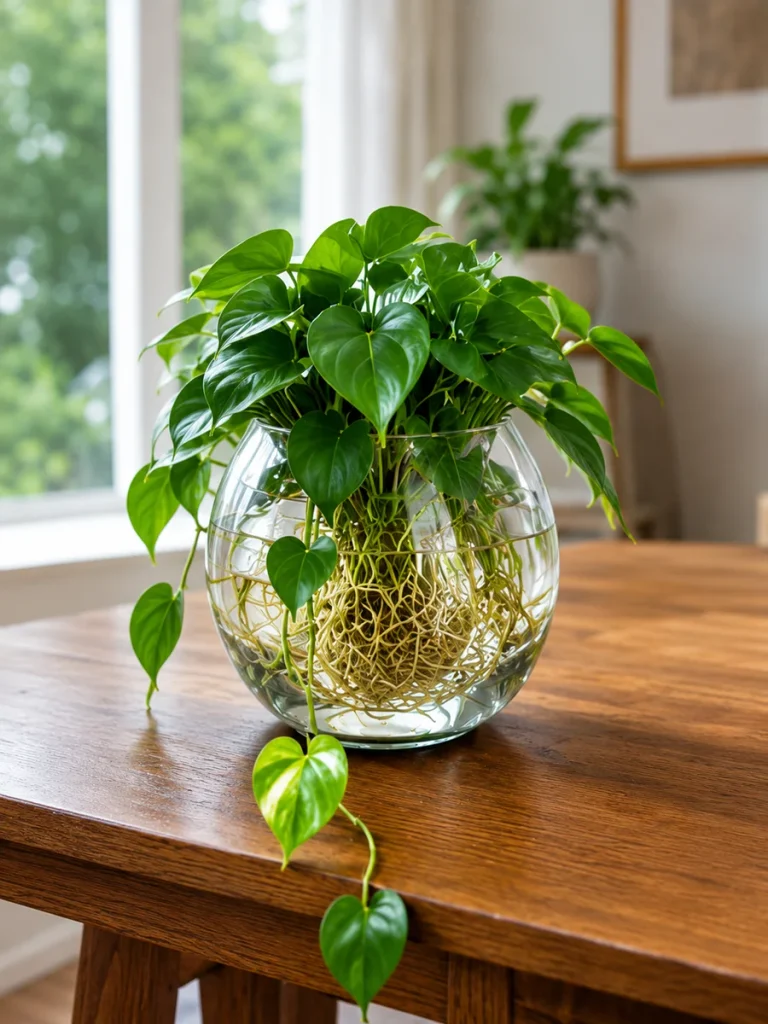
A clear hydroponic bowl turns the root system into part of the decor. Heartleaf philodendron is especially suited to this look because the vines can drape gently around the vessel. Keep the water clear, trim damaged roots, and allow some stems to trail across the table for a relaxed finish.
7. Pothos and Seashell Glass Garden
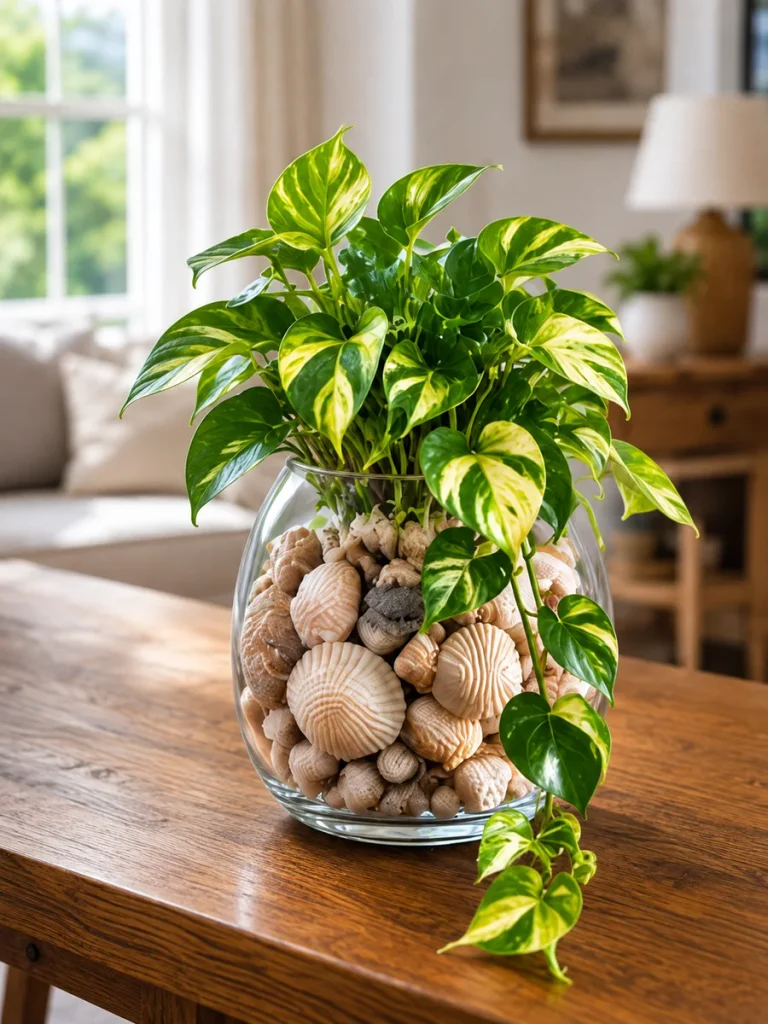
Combine pothos with shells for an easy coastal-inspired arrangement. Cream, beige, and soft peach shells look best because they complement the foliage without overpowering it. This idea works beautifully in airy rooms with pale wood, linen, and natural textures.
8. Mixed Tropical Glass Terrarium Bowl
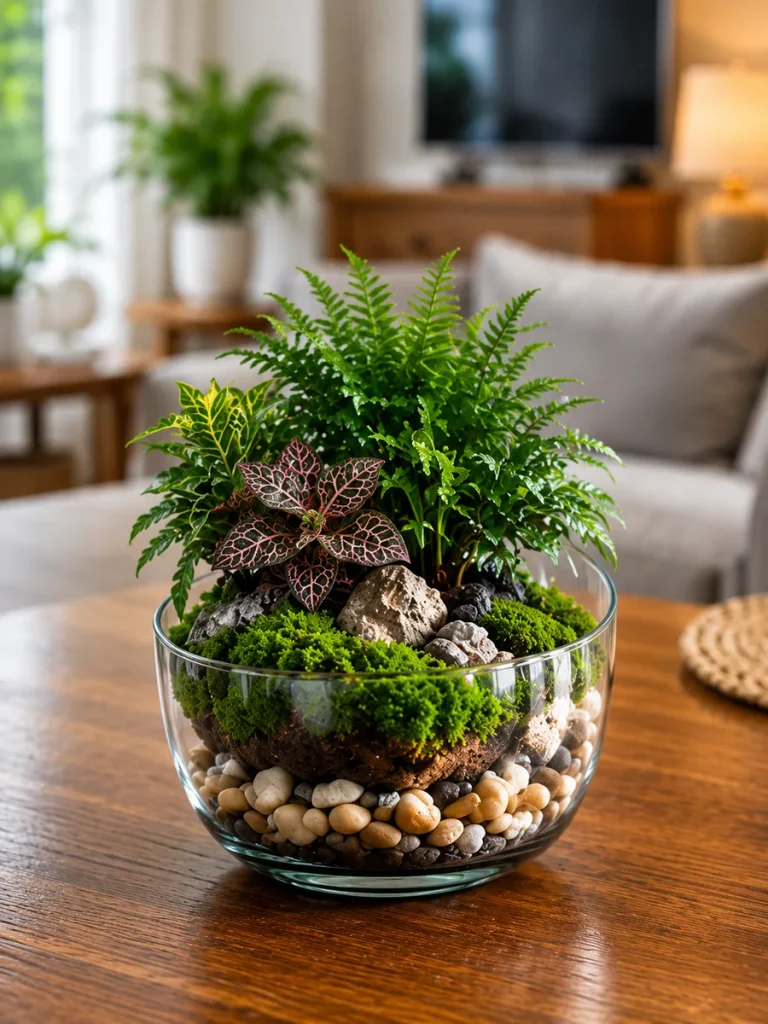
A large open glass bowl can hold several compact tropical plants. Mix foliage shapes rather than using plants that all look alike. A small fern, fittonia, and peperomia create attractive layers, while moss and stones make the surface feel finished.
9. Pothos Wrapped Around Rustic Driftwood
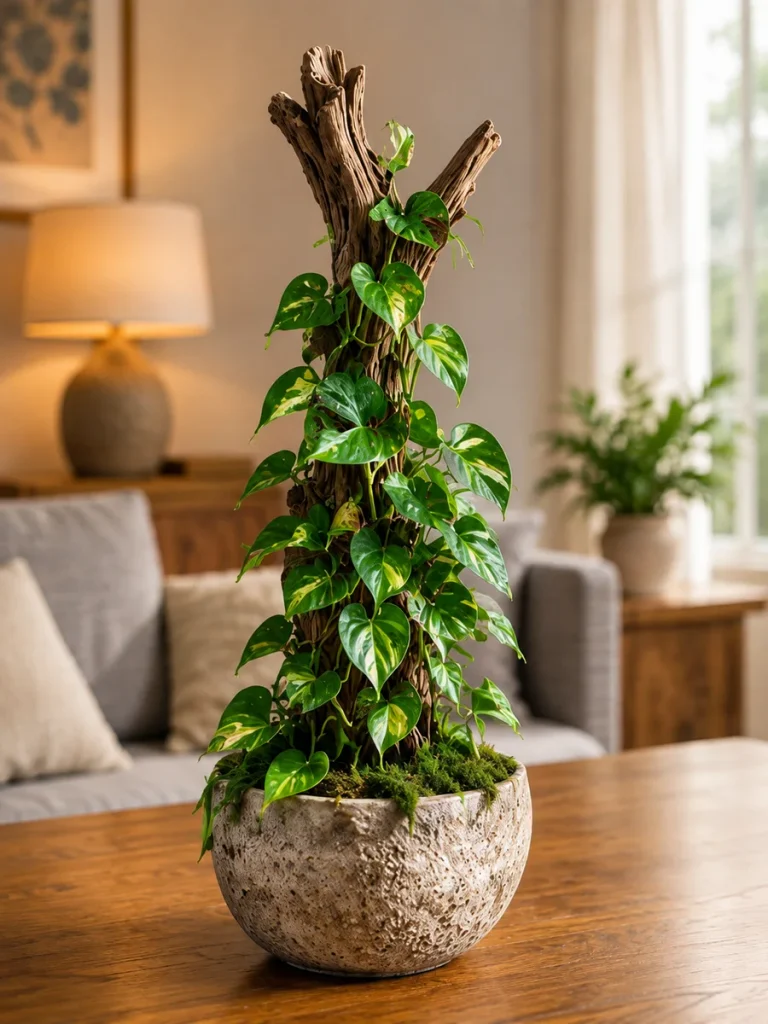
A piece of weathered driftwood can transform a basic pothos into a sculptural display. Guide the vines loosely around the wood instead of wrapping them too tightly. A simple ceramic pot keeps the emphasis on the texture of the branch and the fresh green foliage.
10. Monstera Vine on Twisted Wood
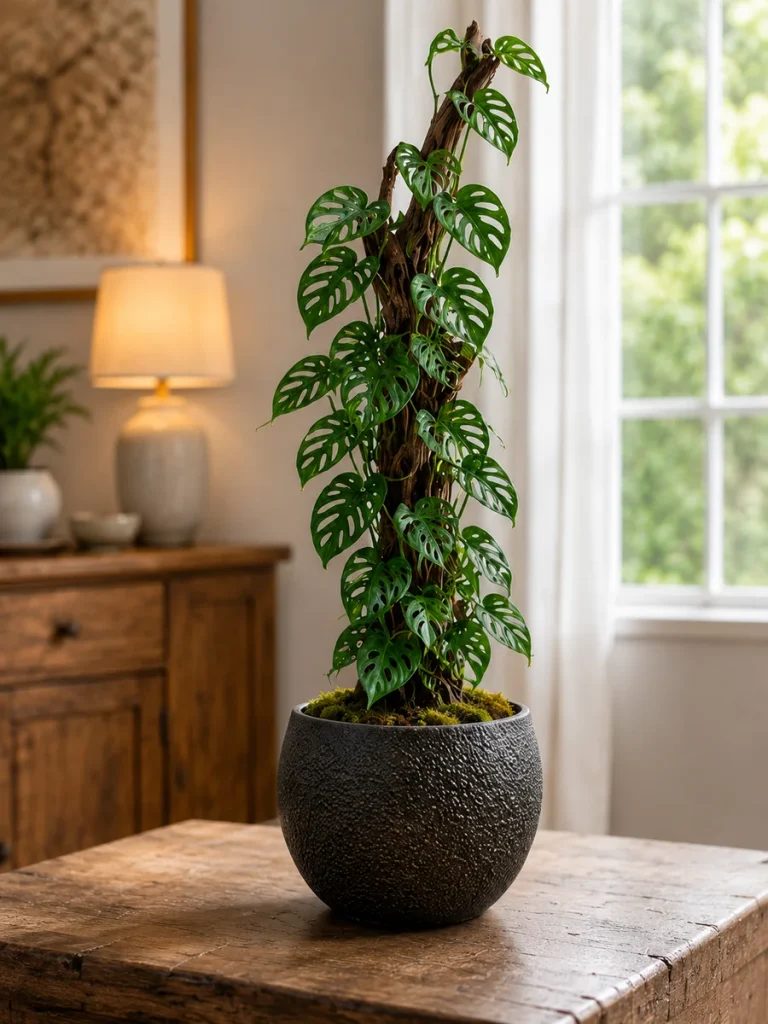
Monstera adansonii looks particularly dramatic when trained around twisted natural wood. The holes in the leaves create visual space around the branch, and the climbing habit helps the display feel taller. This is a strong choice for a console table or plant-focused corner.
11. Marble Pothos Woodland Tree Planter
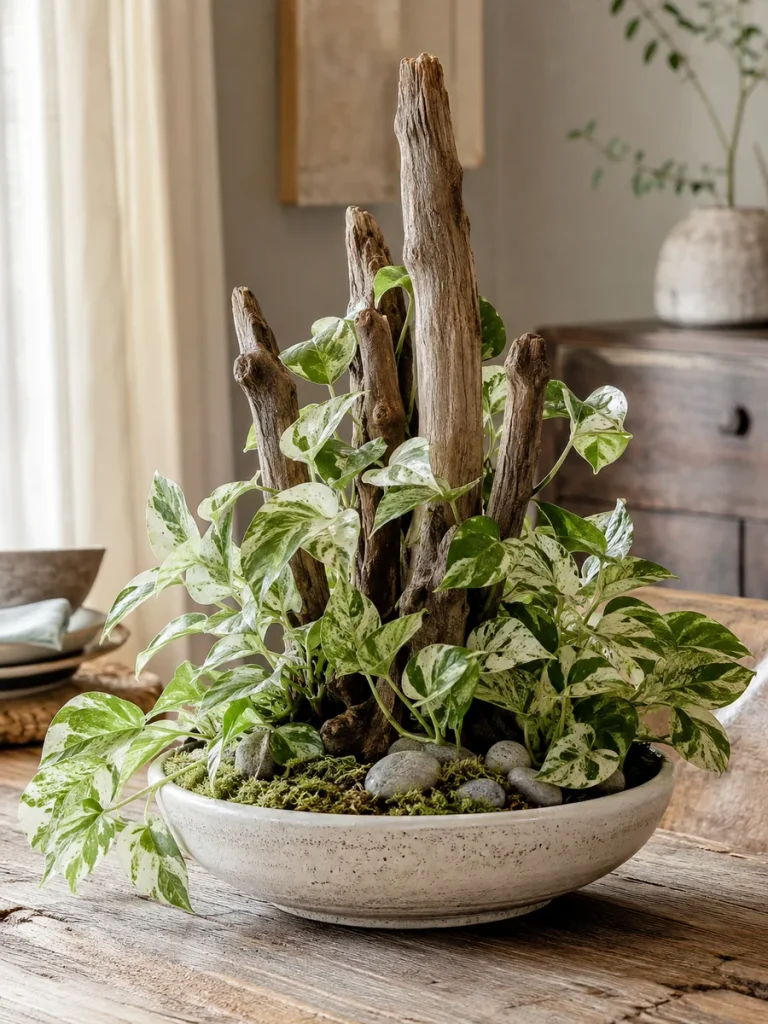
Group several weathered branches of different heights in one wide planter and grow Marble Queen pothos around the base. The pale variegation softens the rustic wood, while moss and a few stones create a woodland effect. Keep some branch surfaces visible so the arrangement does not become visually heavy.
12. Moss-Covered Branch Plant Arrangement
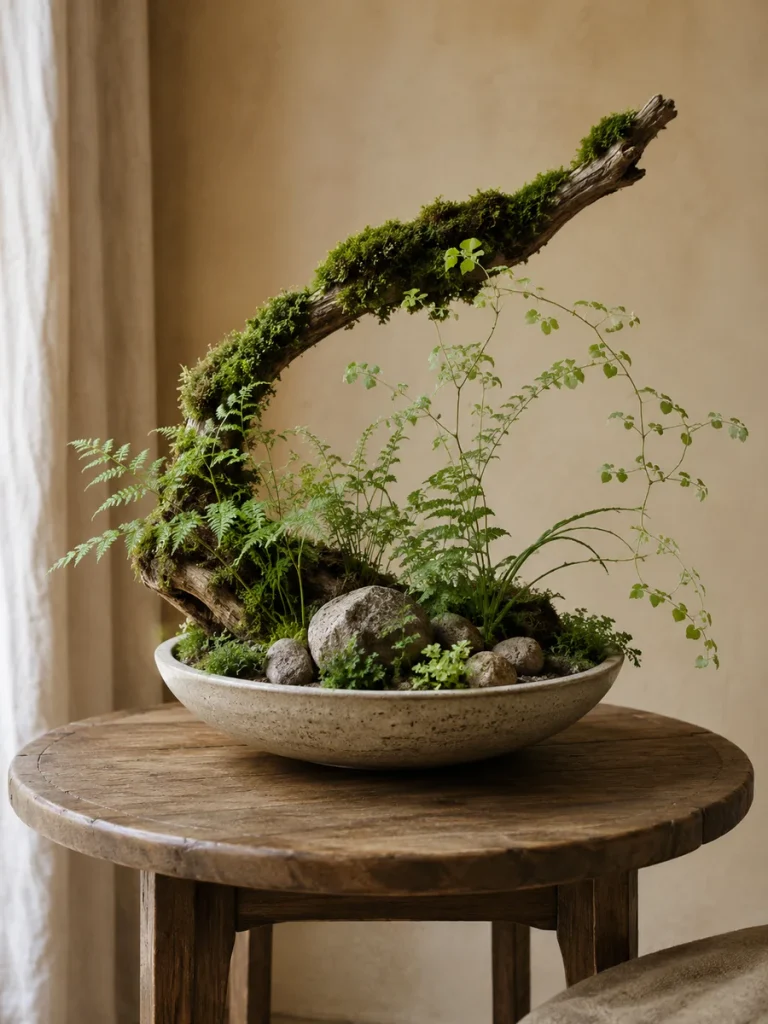
Moss can turn a simple branch arrangement into a miniature forest scene. Use one curved branch, several small ferns, and soft moss around the base. A few natural rocks break up the greenery and make the composition look more organic.
13. Driftwood and Pink Foliage Arrangement
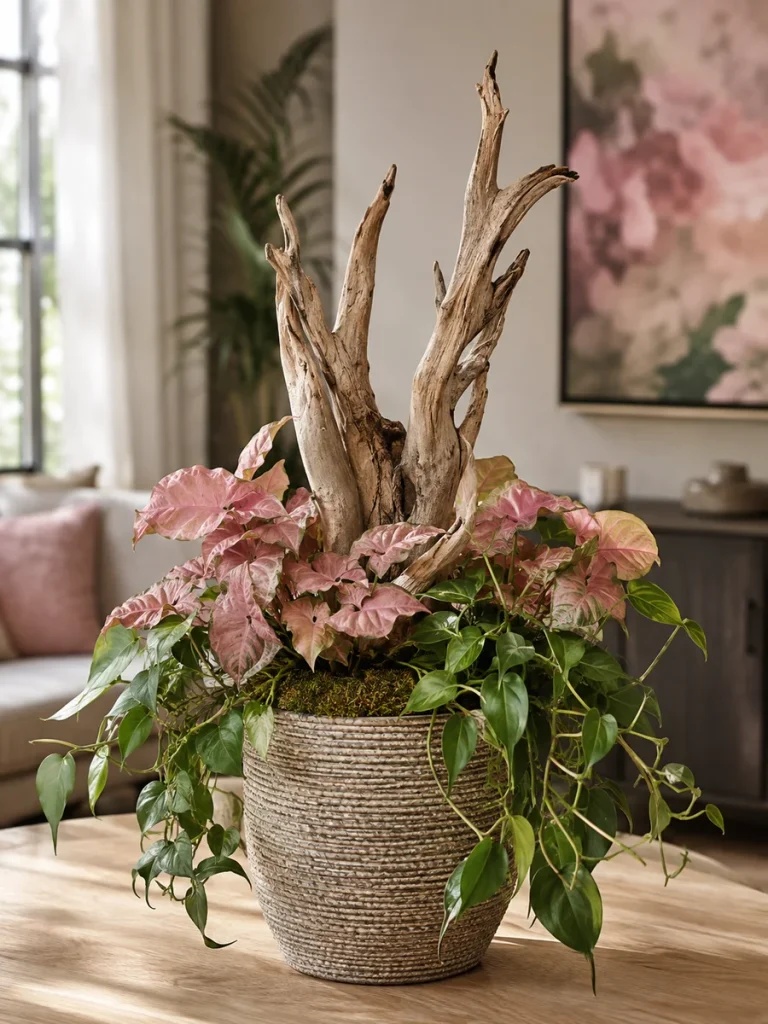
Pink foliage creates a lovely contrast against pale driftwood. Pink Syngonium can be grouped on one side, while darker green leaves balance the other. Use a neutral or woven planter so the color remains concentrated in the plants rather than the container.
14. Mini Indoor Plant Tree
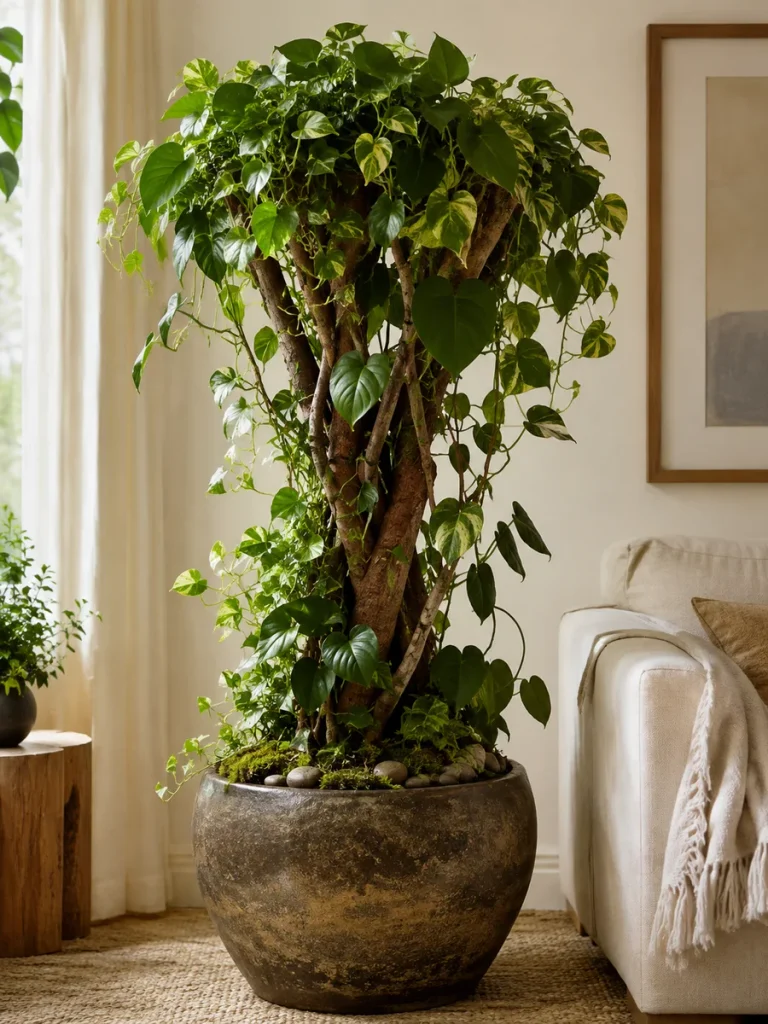
Create the look of a miniature indoor tree by using branching wood as the central structure. Train pothos and philodendron upward so the foliage gradually forms a loose canopy. This works well as a statement piece on a large side table or in a bright corner.
15. Rustic Branch and Fern Planter
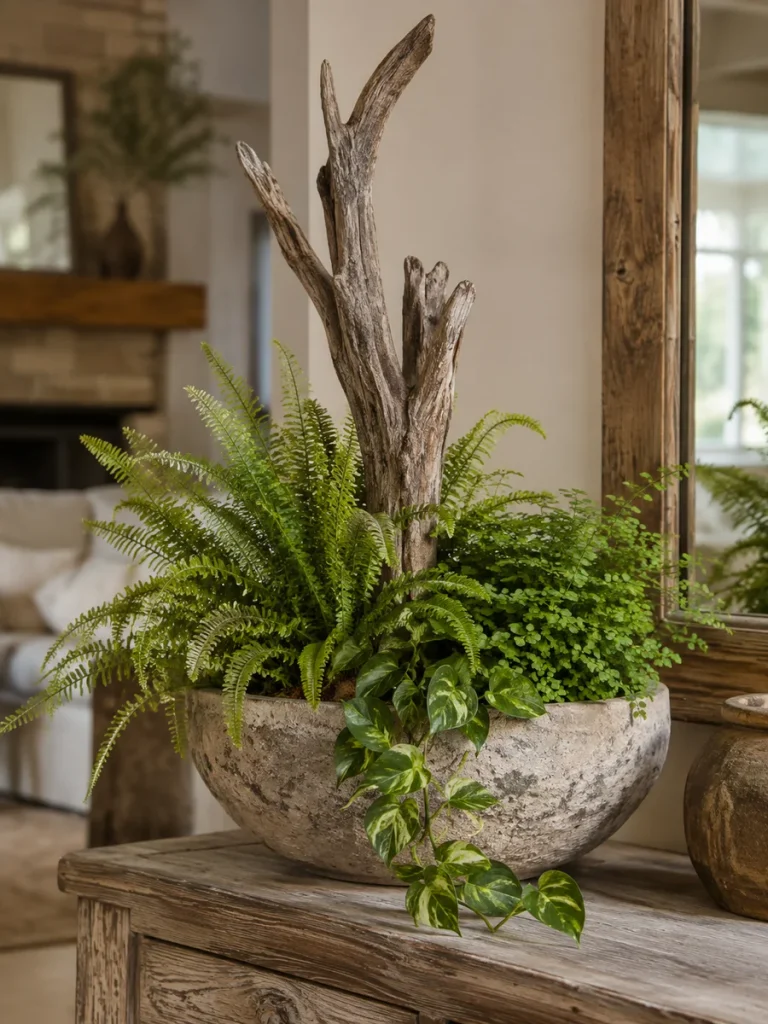
Ferns soften rugged branches beautifully. Place a tall branch toward the back of a broad planter and surround it with Boston fern, button fern, and a small trailing vine. The contrast between feathery foliage and rough wood gives the display a relaxed woodland feel.
16. Woodland Pothos Table Centerpiece
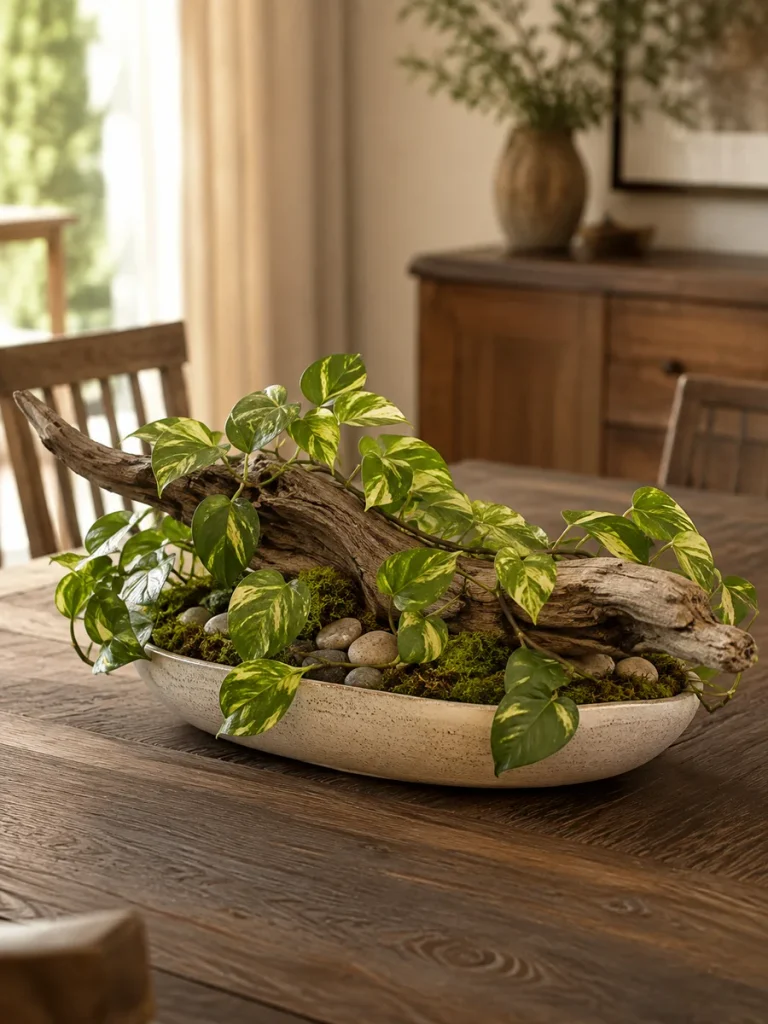
For a low centerpiece, place driftwood horizontally across a shallow planter and weave pothos around it. Moss and pebbles can fill the gaps. Because the arrangement stays low, it works especially well on dining tables where you do not want greenery blocking the view.
17. Spiral Pothos Tower
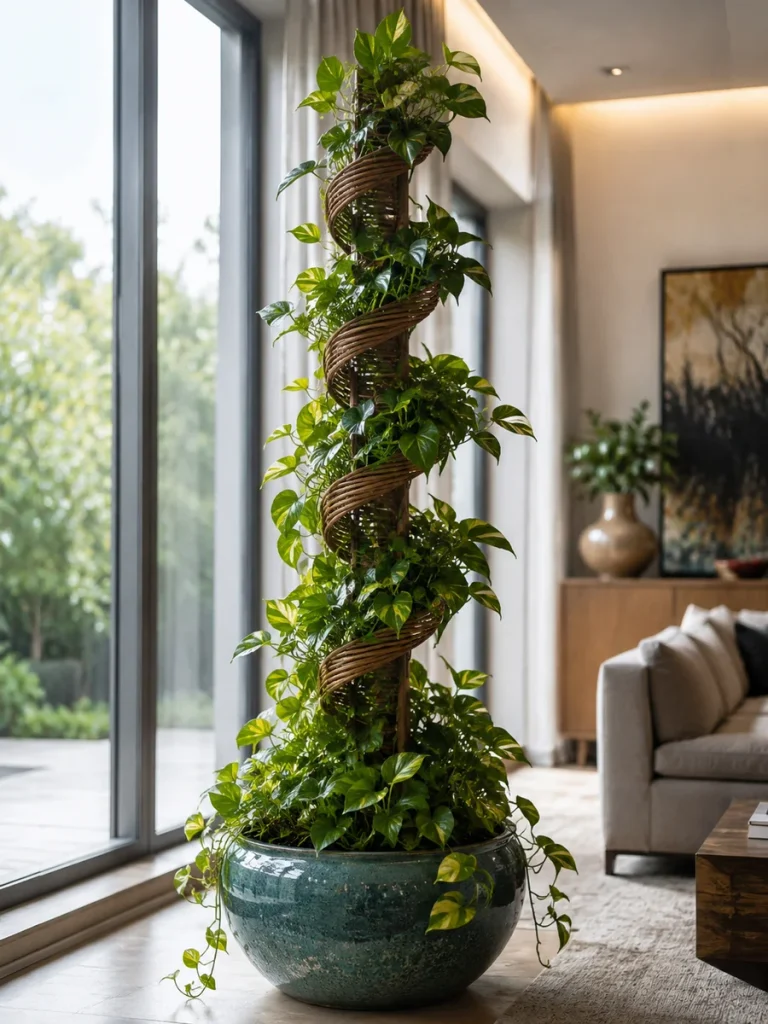
A spiral support turns a trailing pothos into a vertical sculpture. Train the vines around a rattan or natural-wood spiral and allow a few stems to fall freely near the base. A wide bowl-shaped planter helps visually anchor the height.
18. Twisted Vine Obelisk
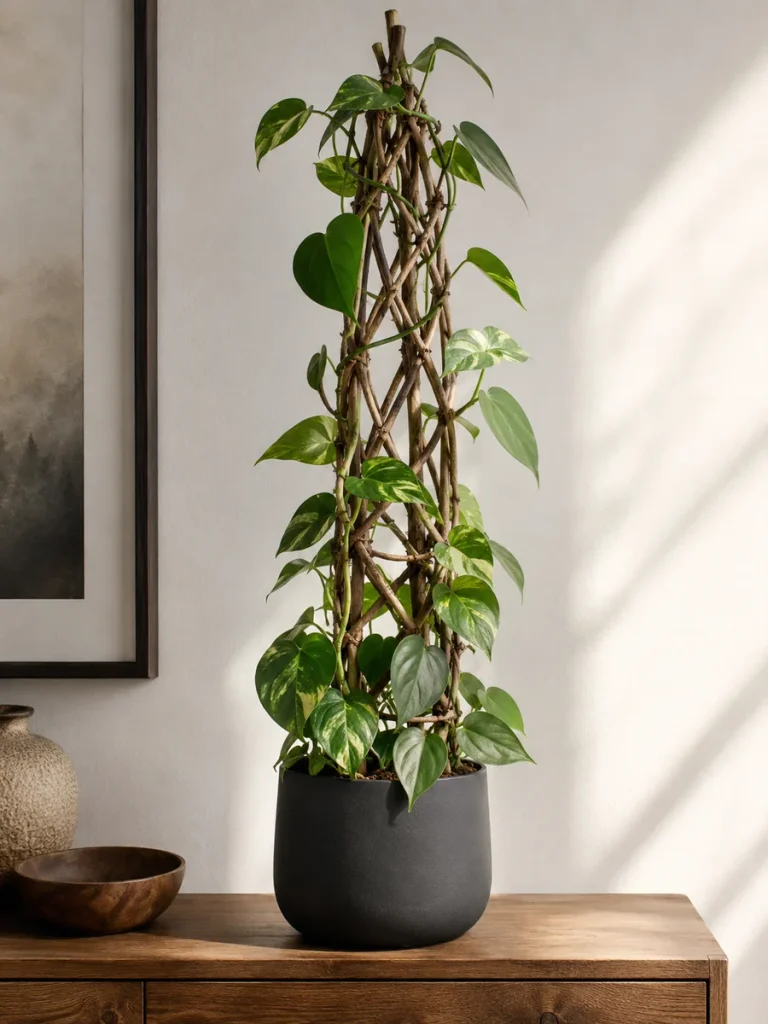
An obelisk made from intertwined branches offers a natural alternative to a plain metal trellis. Pothos and heartleaf philodendron can weave through the open spaces. Leave parts of the support visible so the structure remains part of the design.
19. Natural Wood Pothos Totem
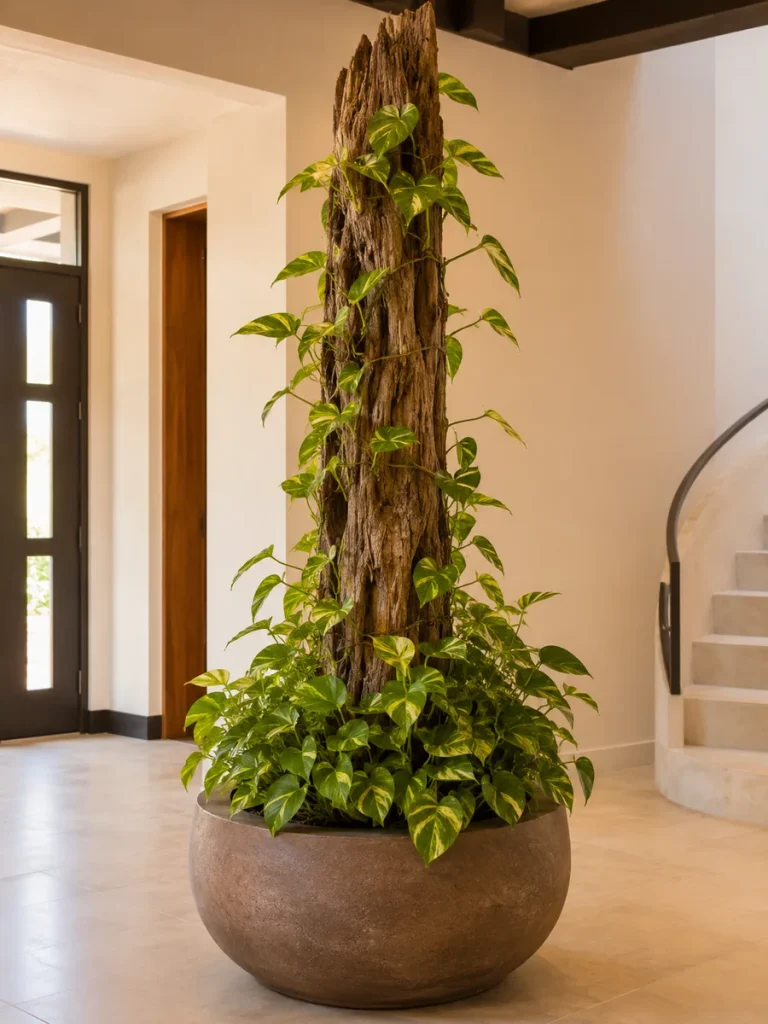
A thick natural trunk can become a dramatic pothos totem. Let the vines climb directly over the bark while keeping dense foliage around the base. This is a strong solution for an empty entryway or living-room corner where you want height without adding a conventional indoor tree.
20. Double Spiral Pothos Sculpture
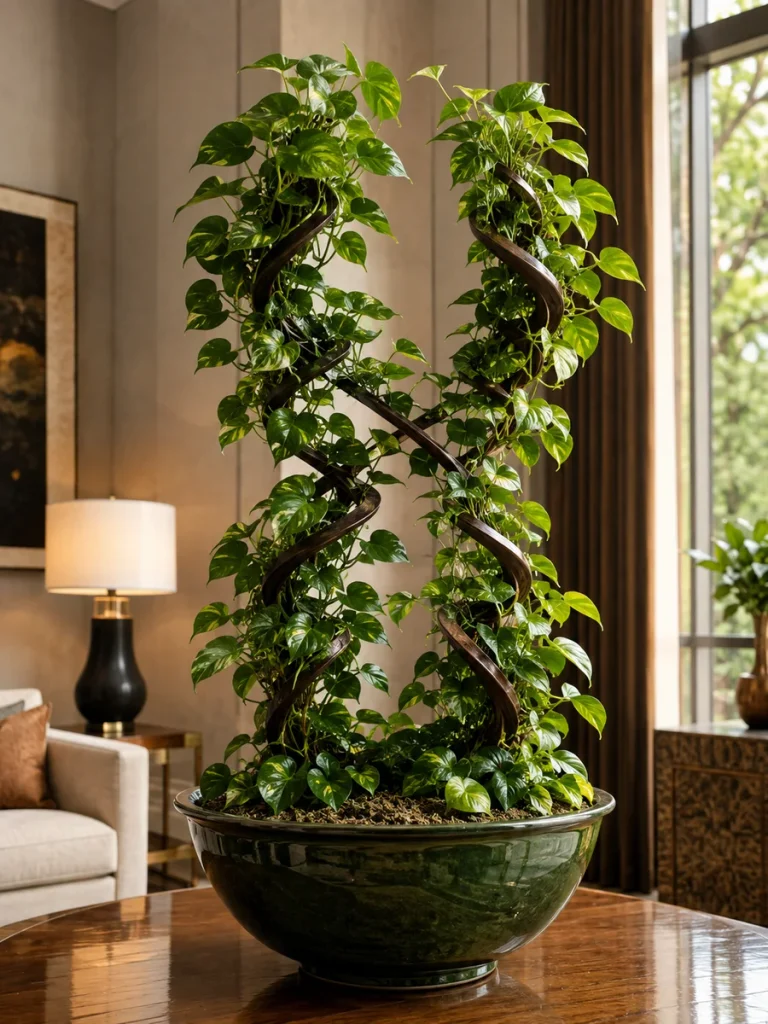
Use two spiral supports in one large planter for a bolder composition. Train vines around each spiral separately, allowing them to cross slightly in the center. The paired forms create symmetry while the foliage keeps the overall look soft and natural.
21. Tall Corner Pothos Tree
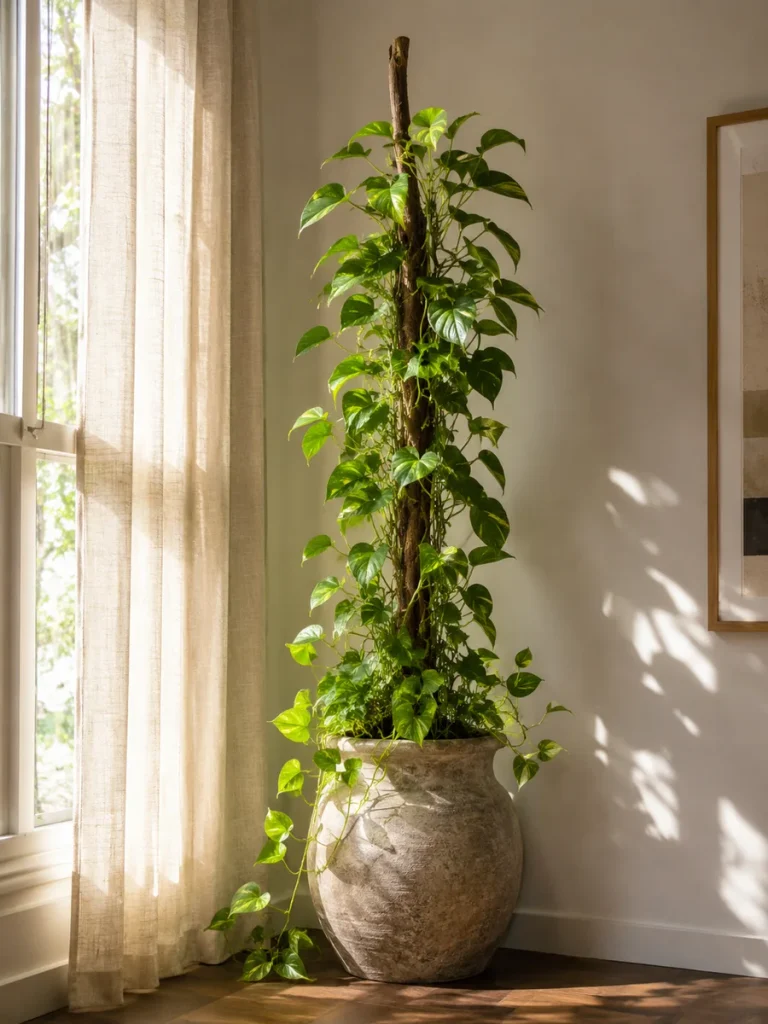
A tall corner pothos tree is ideal beside a bright window. Train the vines up a slim rustic support and allow several stems to trail around the bottom. The combination of vertical growth and loose cascading foliage makes the plant look established rather than rigid.
22. Braided Vine Plant Column
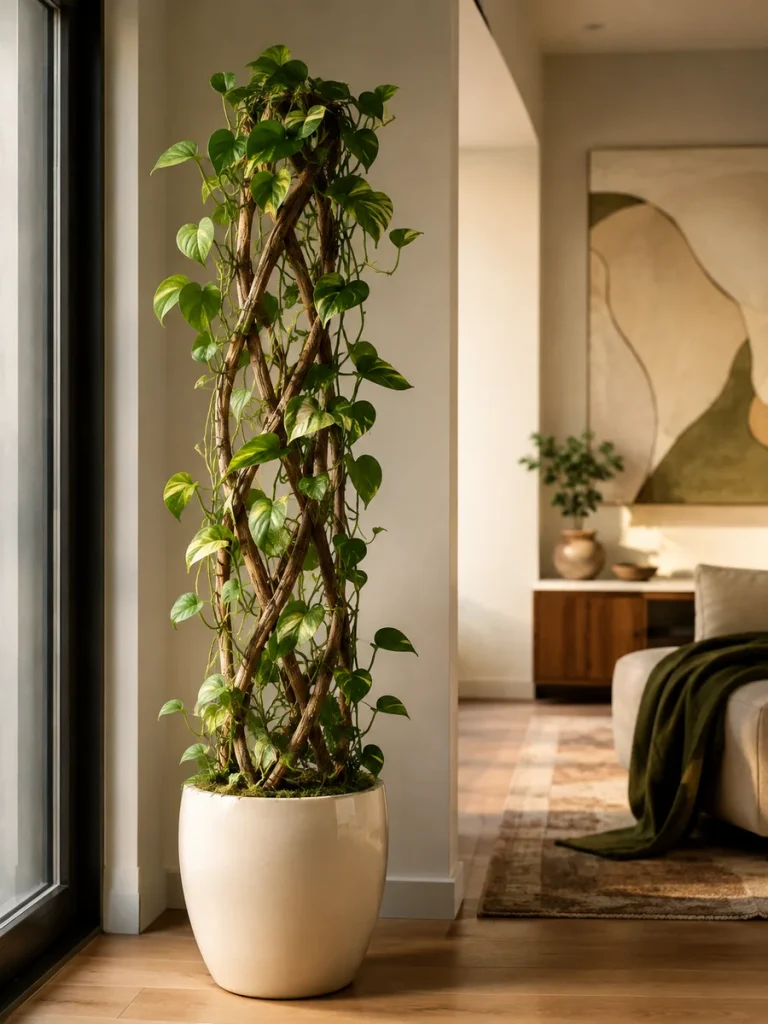
Thin natural branches can be braided or woven into a tall plant column. As pothos grows through the open spaces, the support gradually becomes part of the foliage. Use a simple planter so the woven structure remains easy to see.
23. Pothos Living Pyramid
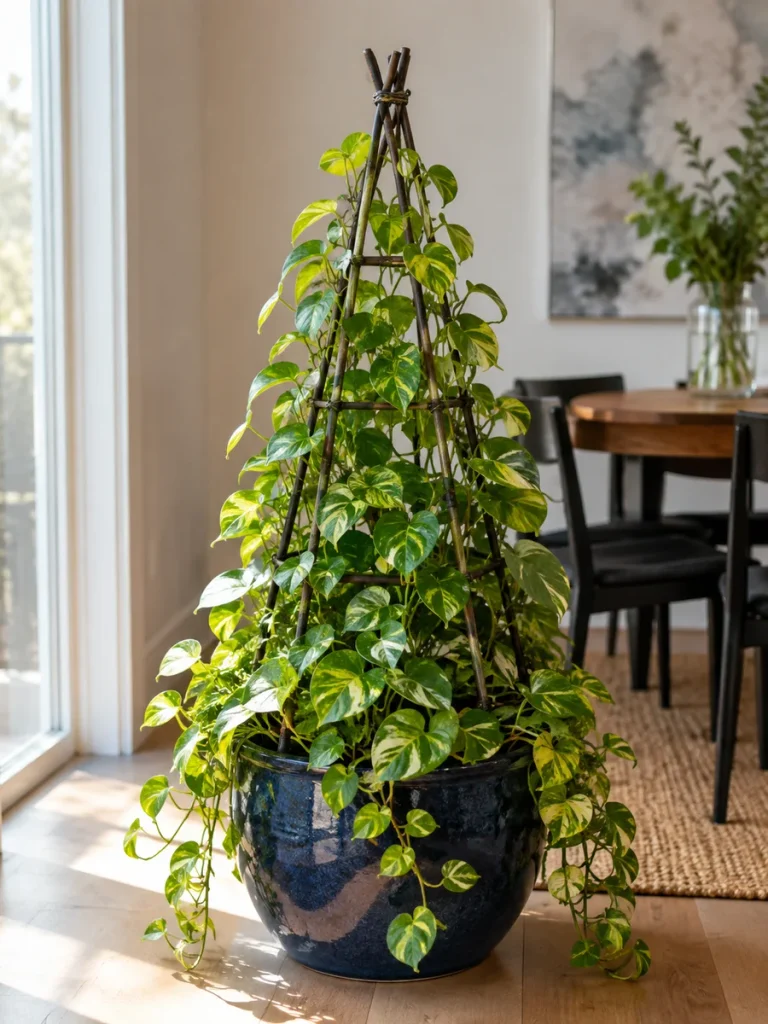
A pyramid trellis gives pothos several directions to climb while keeping the plant compact. Bring three or four slim supports together at the top and train different vines up each side. Allow a few stems to escape the frame to keep the display from looking too formal.
24. Indoor Vine Arch
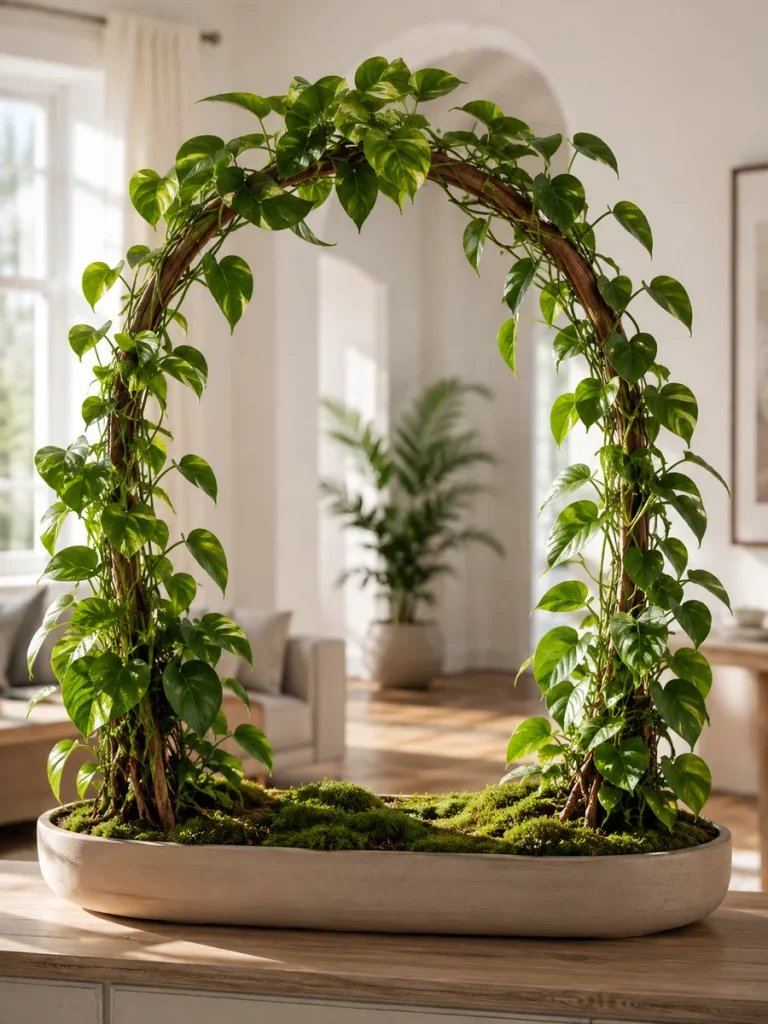
A small indoor vine arch creates the feel of a miniature garden gateway. Use two curved supports and grow vines from both sides until they meet overhead. A broad low planter gives the arch enough visual weight and room for moss or low-growing foliage at the base.
25. Circular Pothos Wreath Planter
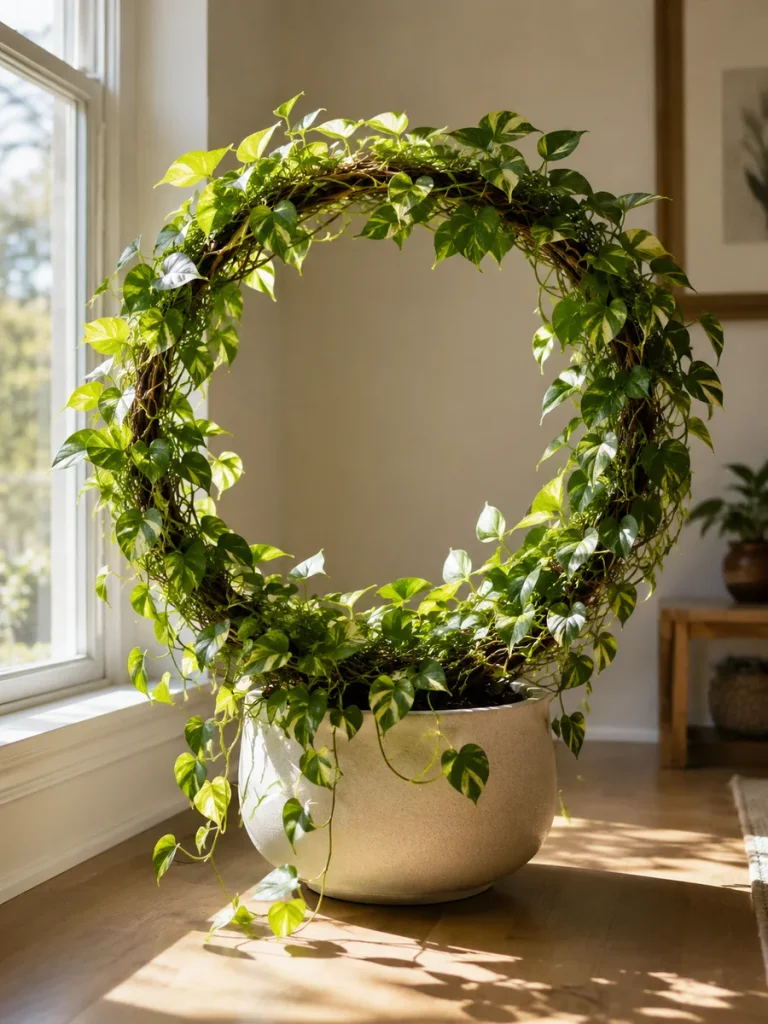
A circular hoop can turn pothos into a living wreath. Keep the center open so the shape stays clear, then let several vines trail below the ring. This idea looks especially good on a table near a bright window.
26. Variegated Pothos Heart Topiary
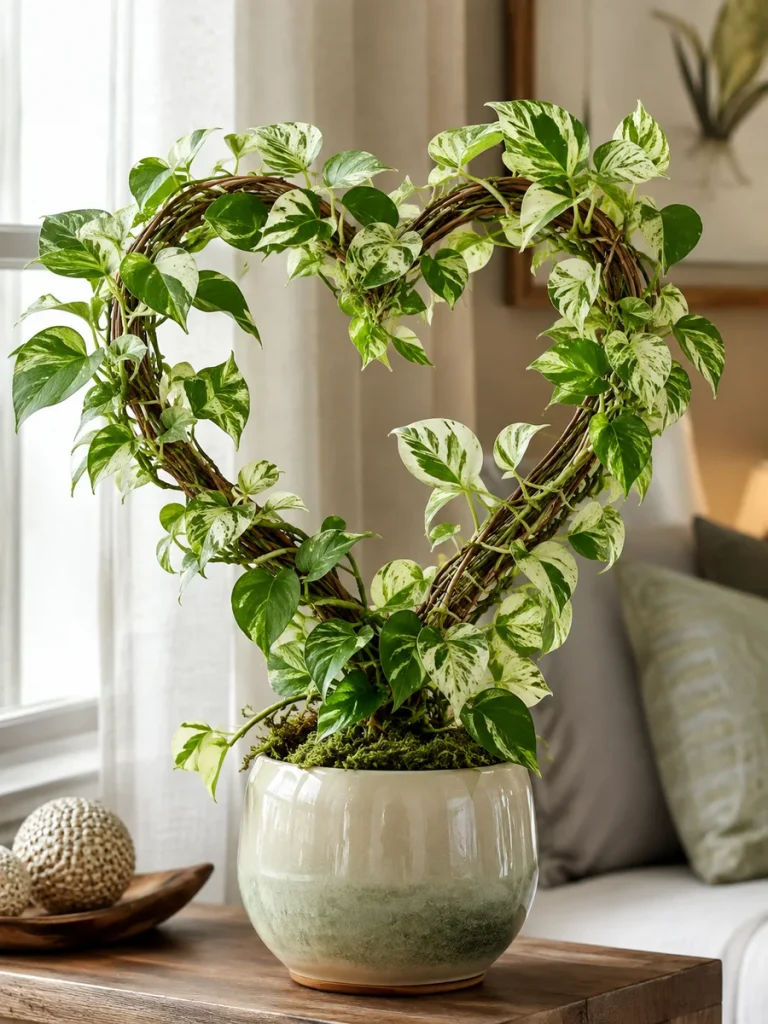
A heart-shaped frame works beautifully with Marble Queen or Manjula pothos. The creamy variegation makes the shape feel light and decorative. Keep the wrapping loose and leave a few leaves pointing outward so the plant does not look overly trained.
27. Double Heart Houseplant Display
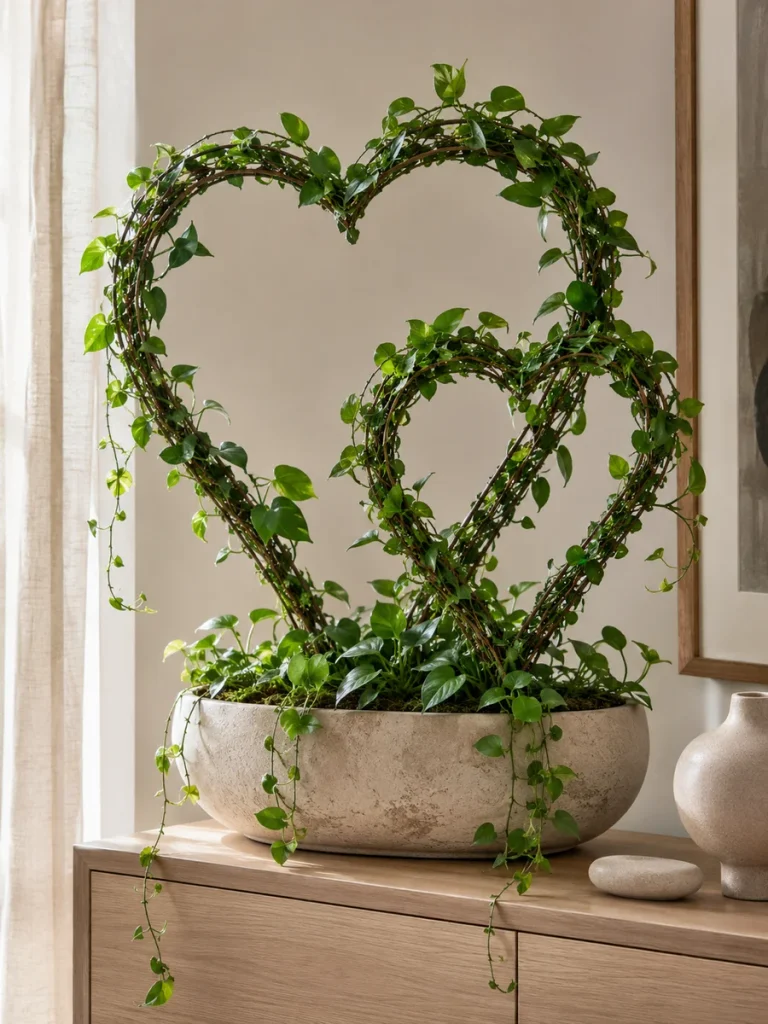
Two heart-shaped supports create a layered botanical display. Use slightly different sizes so the shapes remain distinct. Small-leaf pothos or philodendron works best because large leaves can quickly hide the frame.
28. Oval Vine Topiary
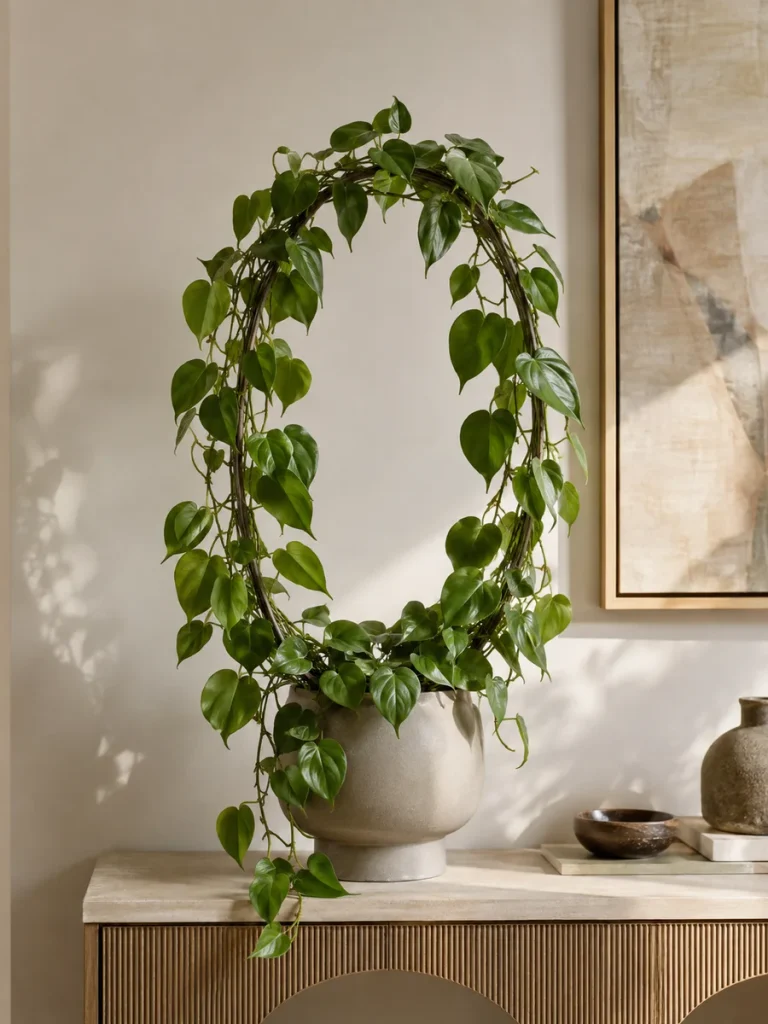
An oval frame offers the same climbing effect as a hoop but feels taller and more elegant. Train vines from both sides toward the top, then allow a few stems to cascade around the planter. This style suits narrow consoles and traditional interiors particularly well.
29. Crescent Pothos Planter
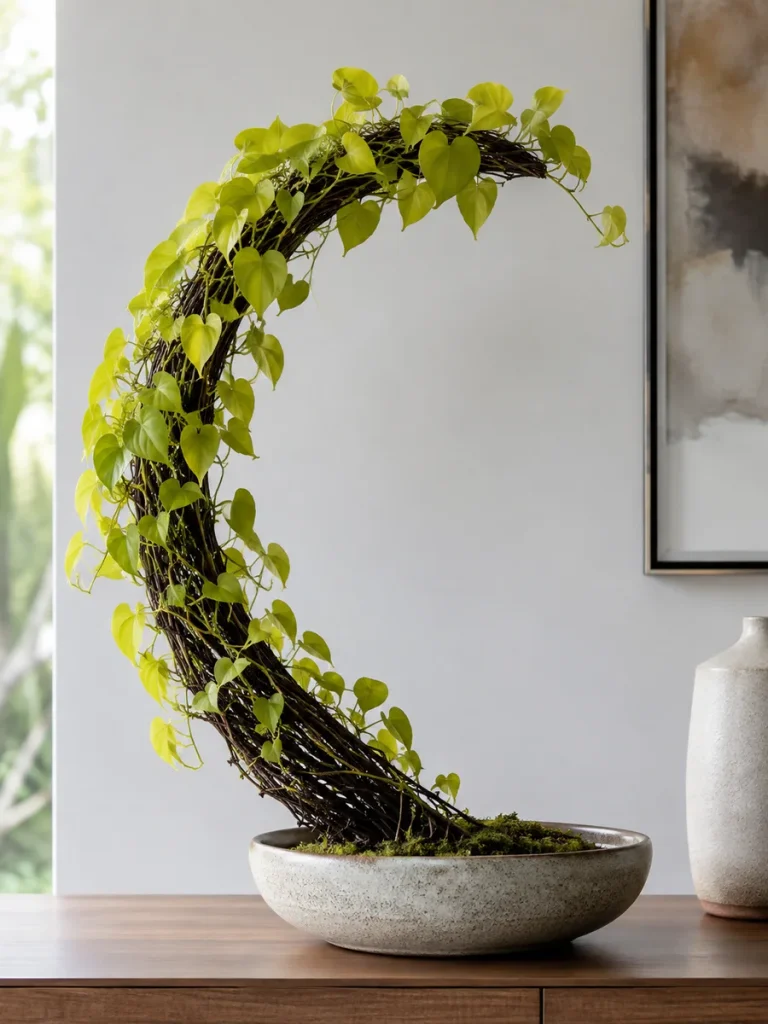
A crescent support creates an unusual asymmetrical plant sculpture. Train most of the foliage along the outer curve and keep the inner space relatively open. Neon pothos is especially attractive here because the bright foliage emphasizes the shape.
30. Infinity-Shaped Vine Display
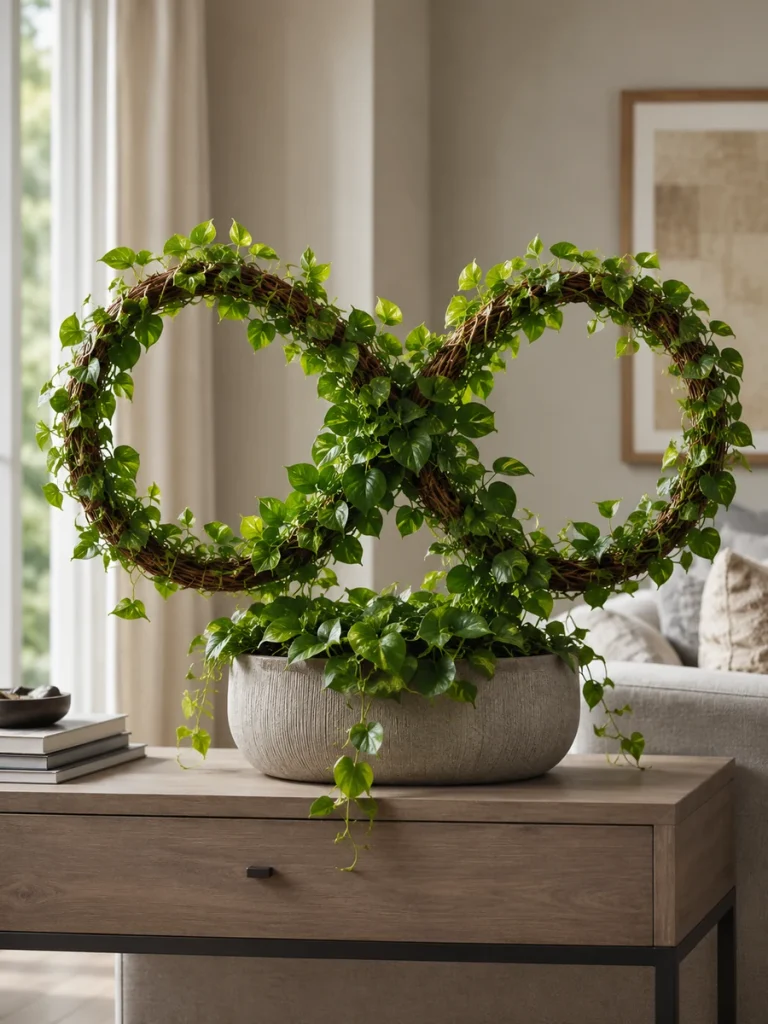
A figure-eight support can transform a small vine into a distinctive living centerpiece. The crossing point naturally becomes fuller, while the two loops remain visible. Use a low, simple planter to keep attention on the unusual silhouette.
31. Pothos Hoop Table Centerpiece
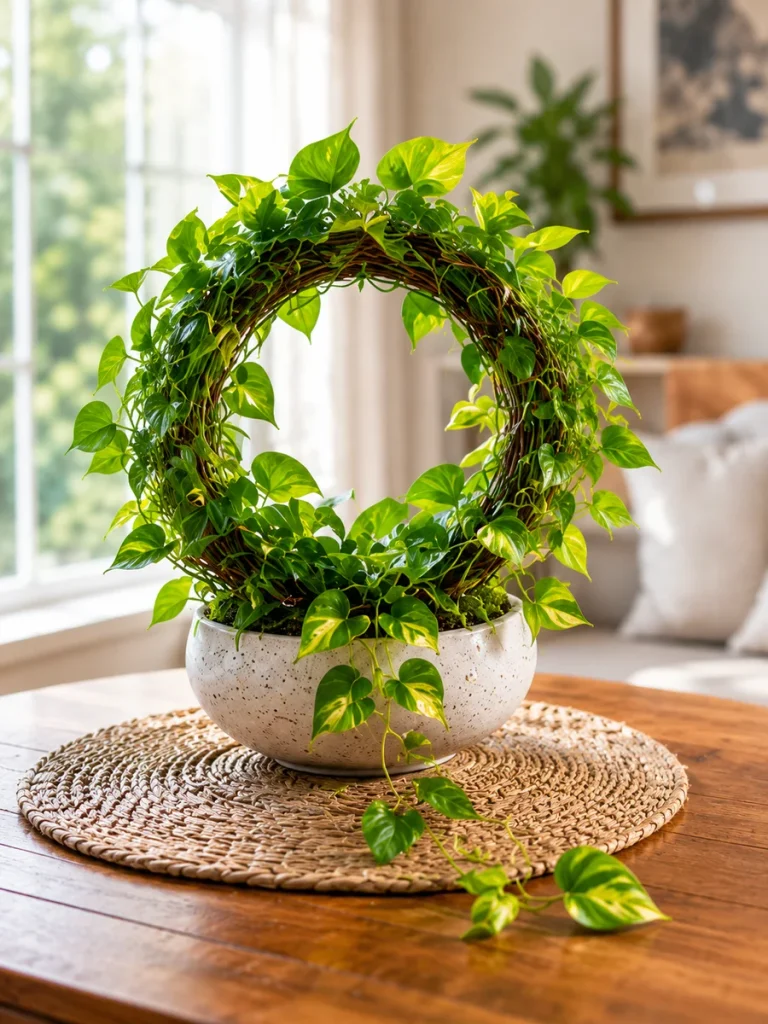
A single hoop rising from a shallow bowl is one of the simplest shaped arrangements to recreate. Let pothos cover much of the ring, but keep enough support visible to show the circle. Several trailing stems around the base make the arrangement feel relaxed.
32. Botanical Sphere Topiary
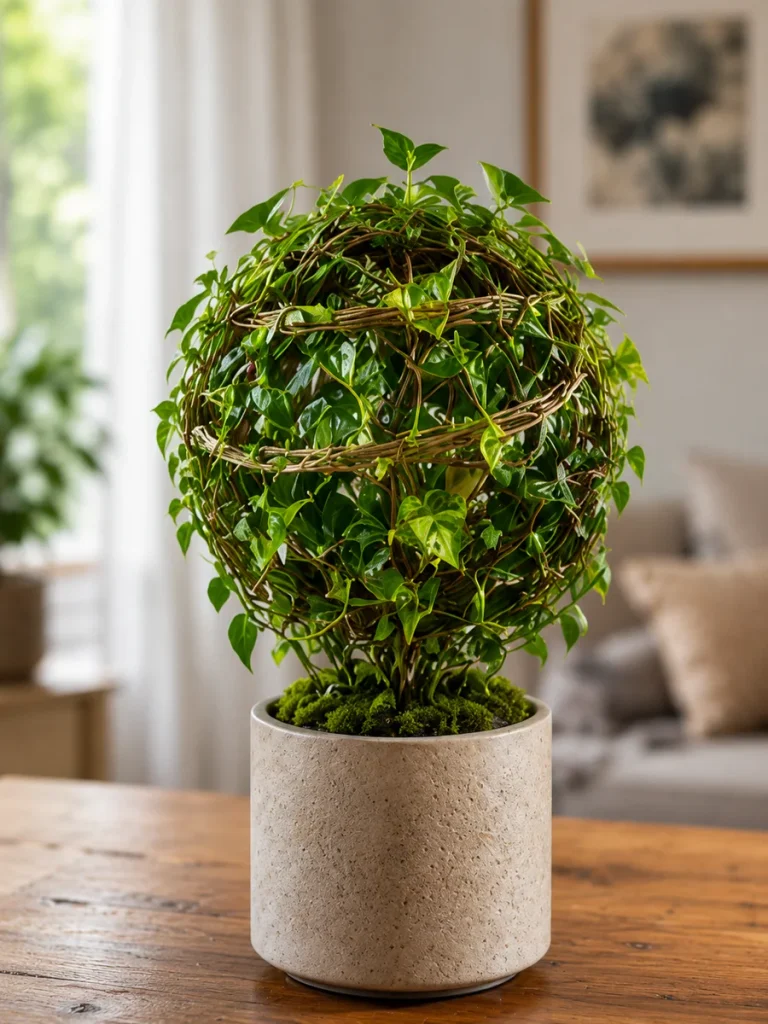
A spherical rattan frame creates a three-dimensional topiary without the stiffness of a clipped shrub. Weave small-leaf vines through the open structure and leave a few gaps visible. The result feels light, sculptural, and well suited to a tabletop.
33. Anthurium and Fern Tropical Bowl
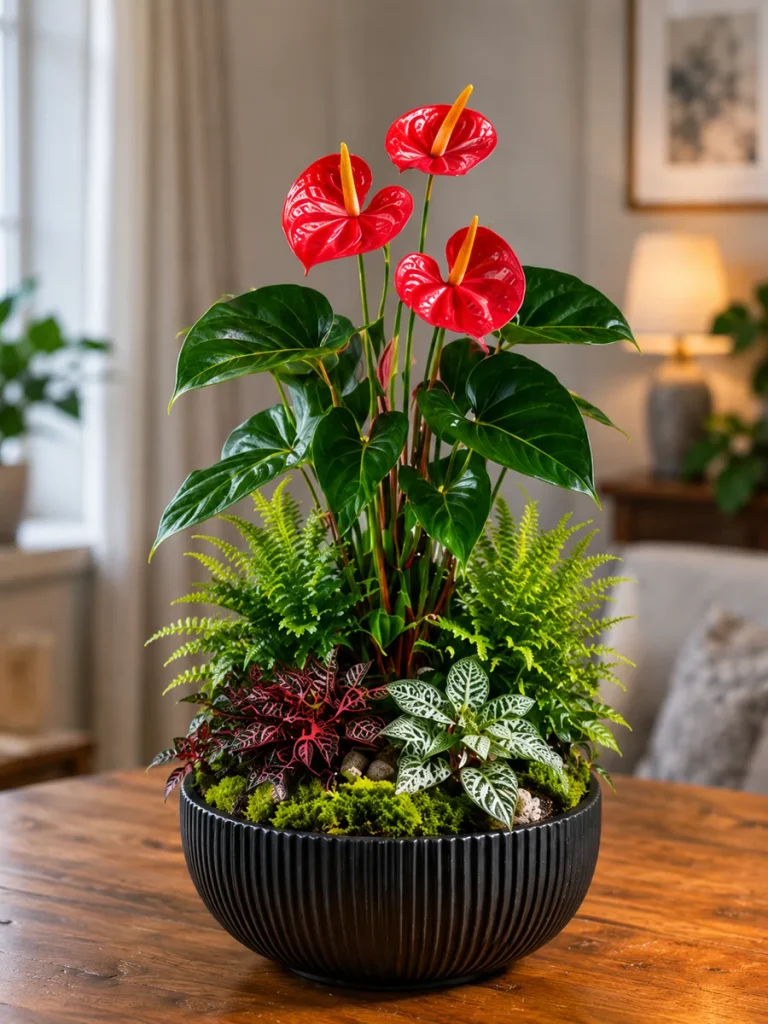
Anthurium flowers can become the tall focal point of a mixed tropical bowl. Use ferns around the base to soften the large glossy leaves, then finish the surface with moss and a few stones. A dark ribbed planter gives bright red blooms strong contrast.
34. Anthurium, Fittonia and Moss Garden
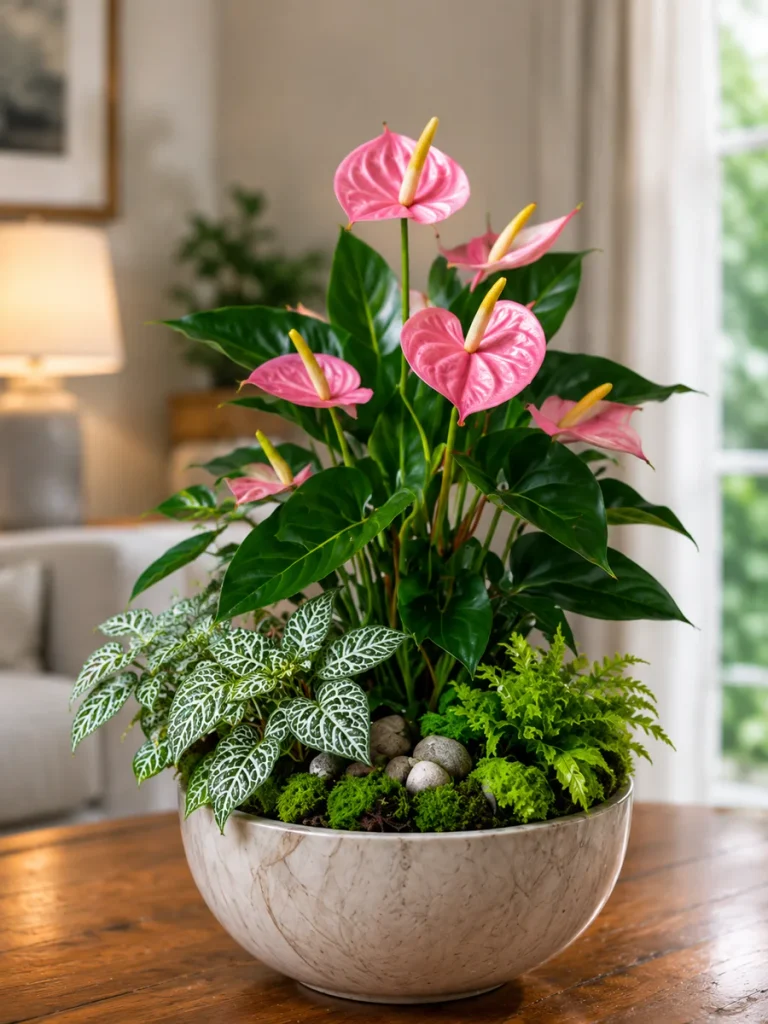
Pink anthuriums look elegant with patterned fittonia and soft moss. Keep the flowering plant taller and group lower foliage near the front. Decorative stones can separate the textures and give the arrangement a more finished, garden-like appearance.
35. Calathea and Spider Plant Combination
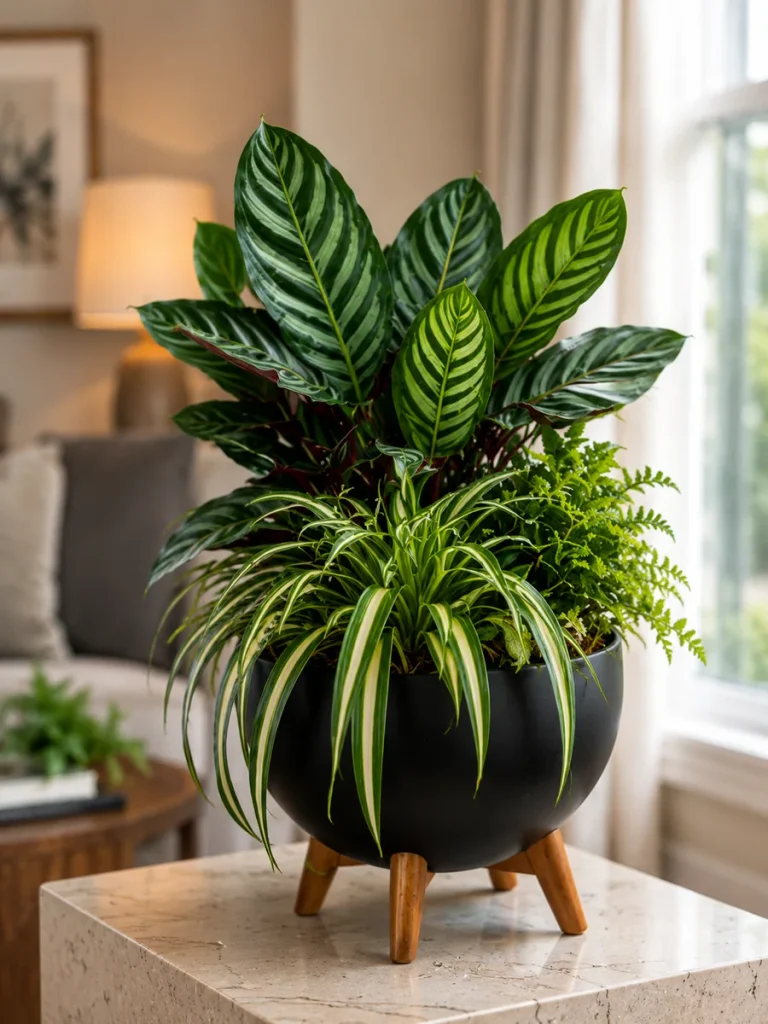
Calathea and spider plant create a strong contrast between broad patterned leaves and narrow arching foliage. Place the taller calathea toward the back, then let spider plant leaves fall over the edge. A raised planter gives the trailing foliage extra room.
36. Pink Syngonium Tropical Arrangement
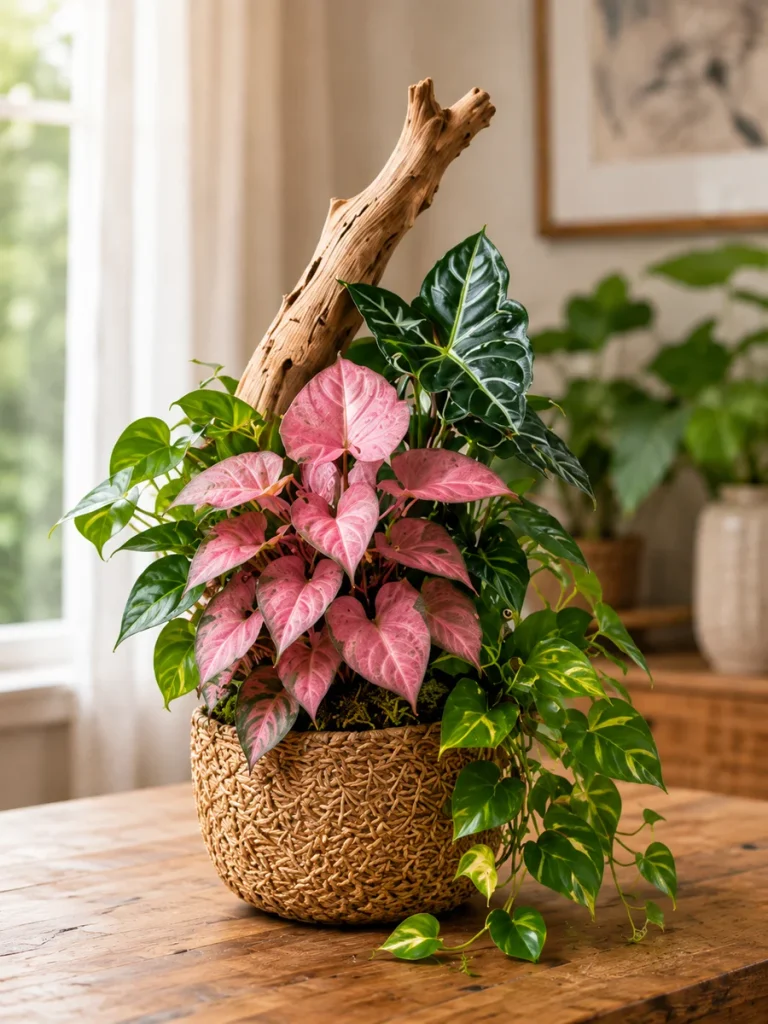
Pink Syngonium is an easy way to introduce color without using flowers. Pair it with darker green plants and a piece of pale driftwood for contrast. A woven planter reinforces the soft, handmade look.
37. White-and-Green Foliage Garden
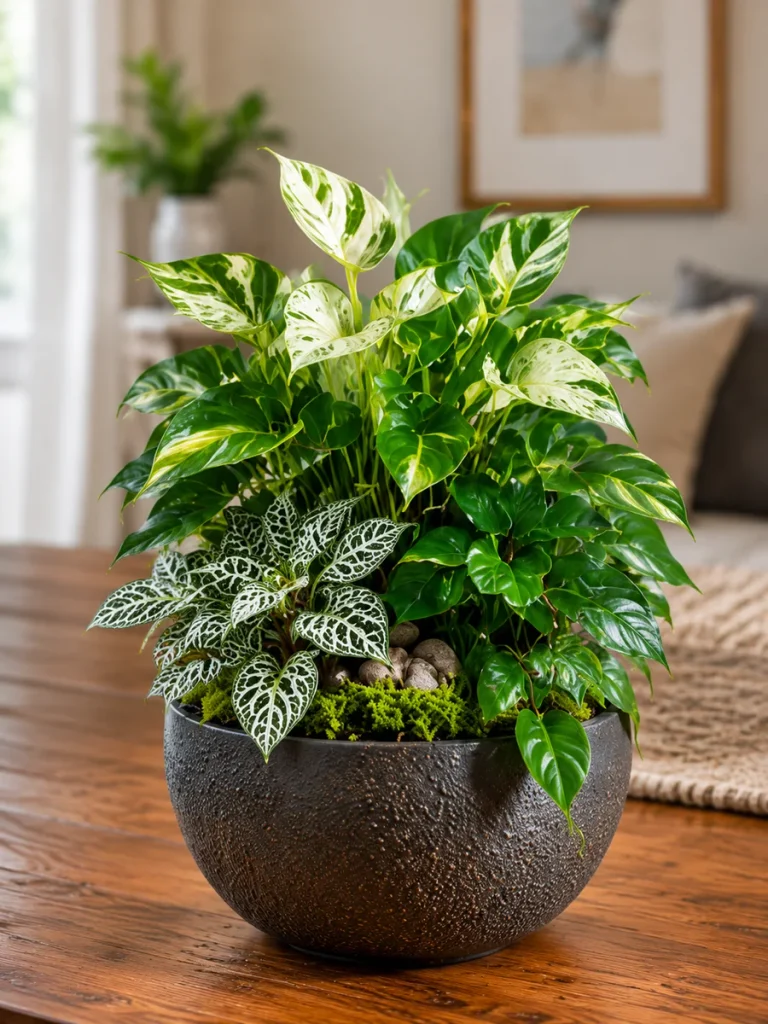
A green-and-white foliage palette can look surprisingly sophisticated. Combine Marble Queen pothos with fittonia and one or two solid-green plants. A dark bowl grounds the pale variegation and keeps the arrangement from appearing washed out.
38. Dark Leaf Tropical Centerpiece
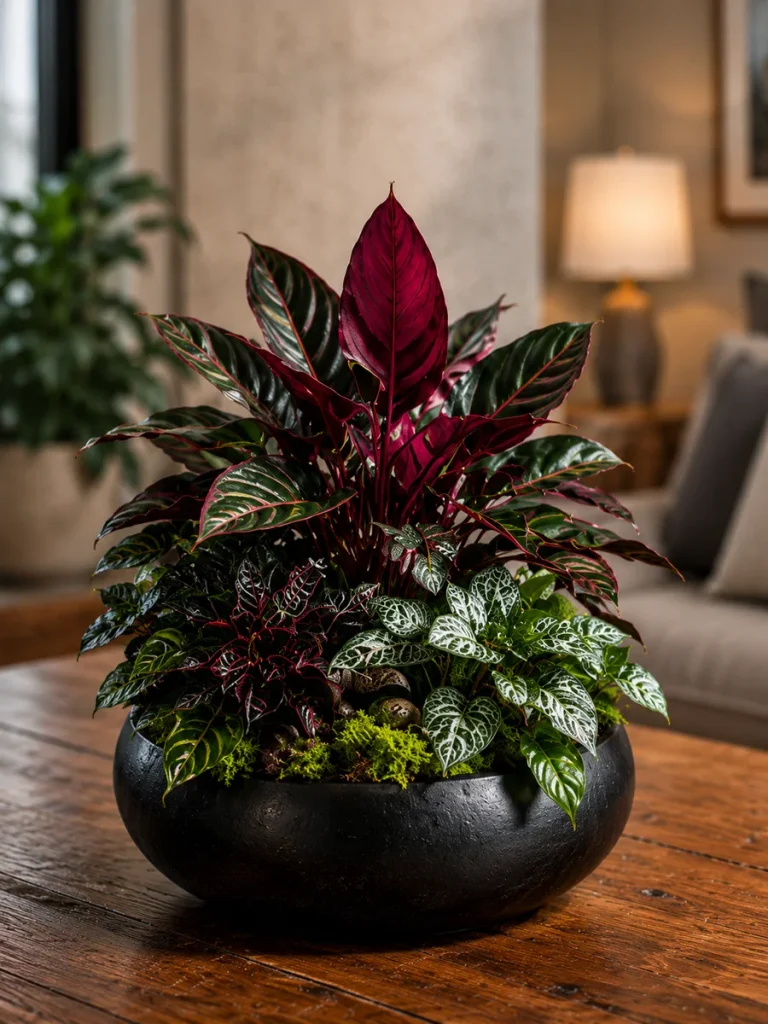
Deep burgundy and dark green foliage create a moodier indoor centerpiece. Combine dramatic leaves with lighter fittonia and small patches of moss so the arrangement still has contrast. A matte black bowl strengthens the modern look.
39. Mini Rainforest Table Garden
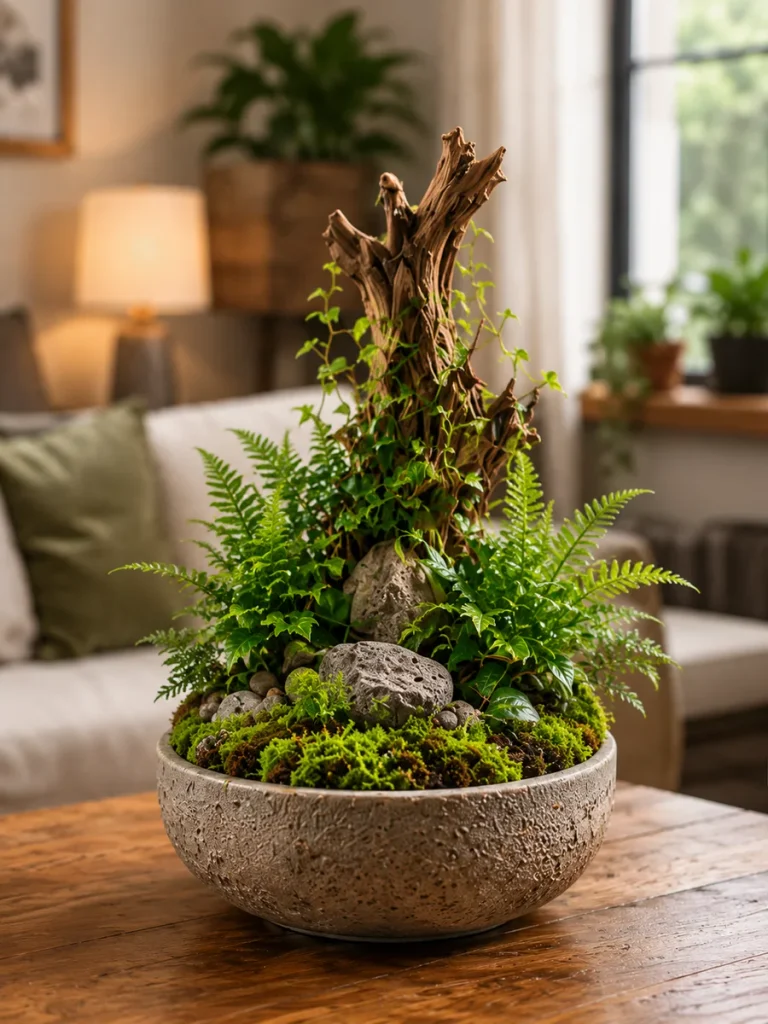
Create a miniature rainforest by layering ferns, fittonia, moss, vines, rocks, and one sculptural piece of wood. Use plants at several heights so the composition feels deeper than a simple mixed planter. Limit the number of species so it still reads as one design.
40. Colorful Indoor Foliage Bowl
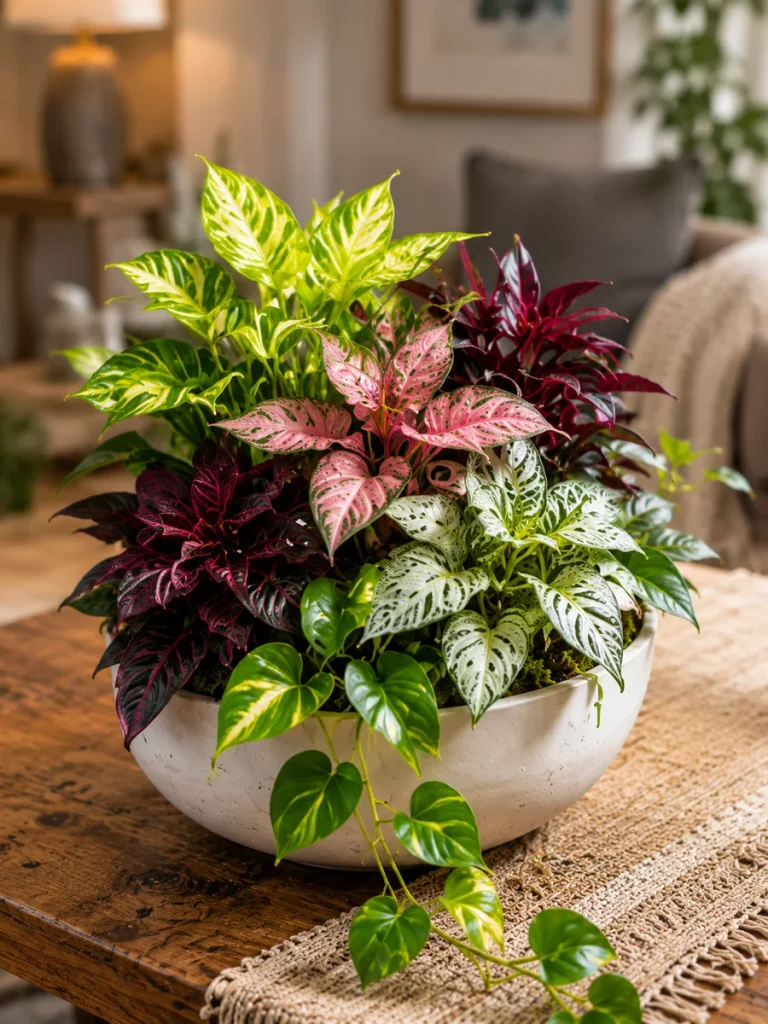
A colorful foliage bowl can combine pink, burgundy, lime, cream, and dark green leaves. The key is repeating a few colors rather than adding every possible shade. Keep one plant as the main focal point and use the others as supporting layers.
41. Tilted Glass Jar Trailing Plant
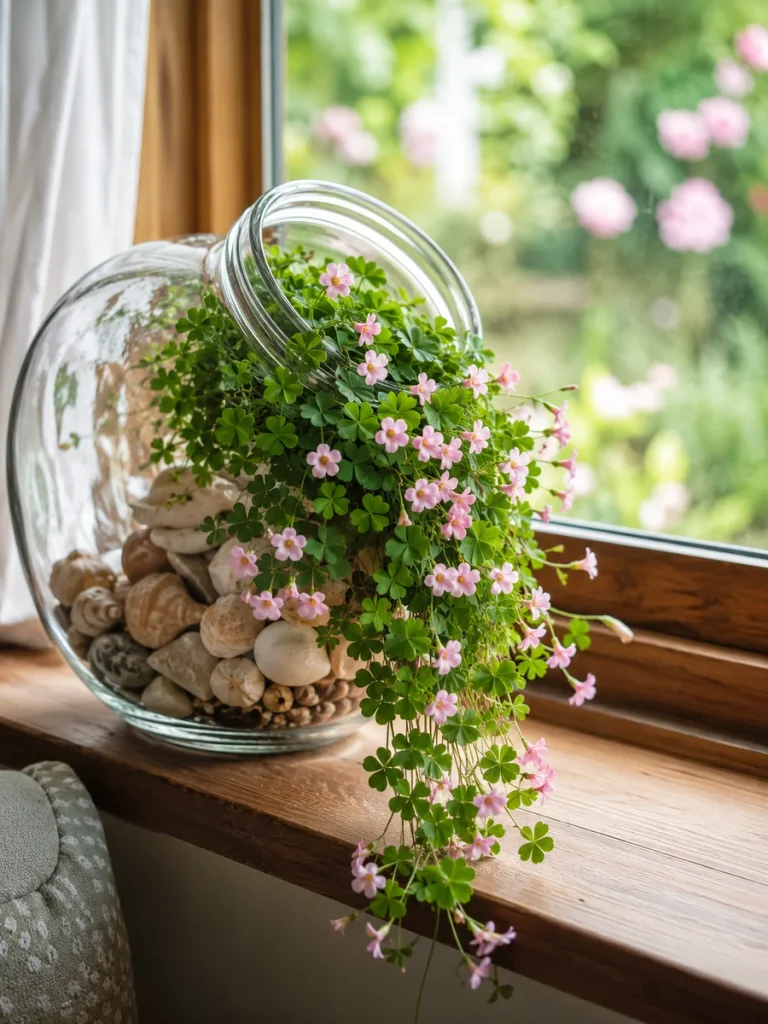
A large glass jar placed carefully at an angle can become a playful trailing display. Fill part of the vessel with shells or smooth stones and allow delicate foliage to spill through the opening. This looks especially charming on a bright windowsill.
42. Seashell-Filled Pothos Vase
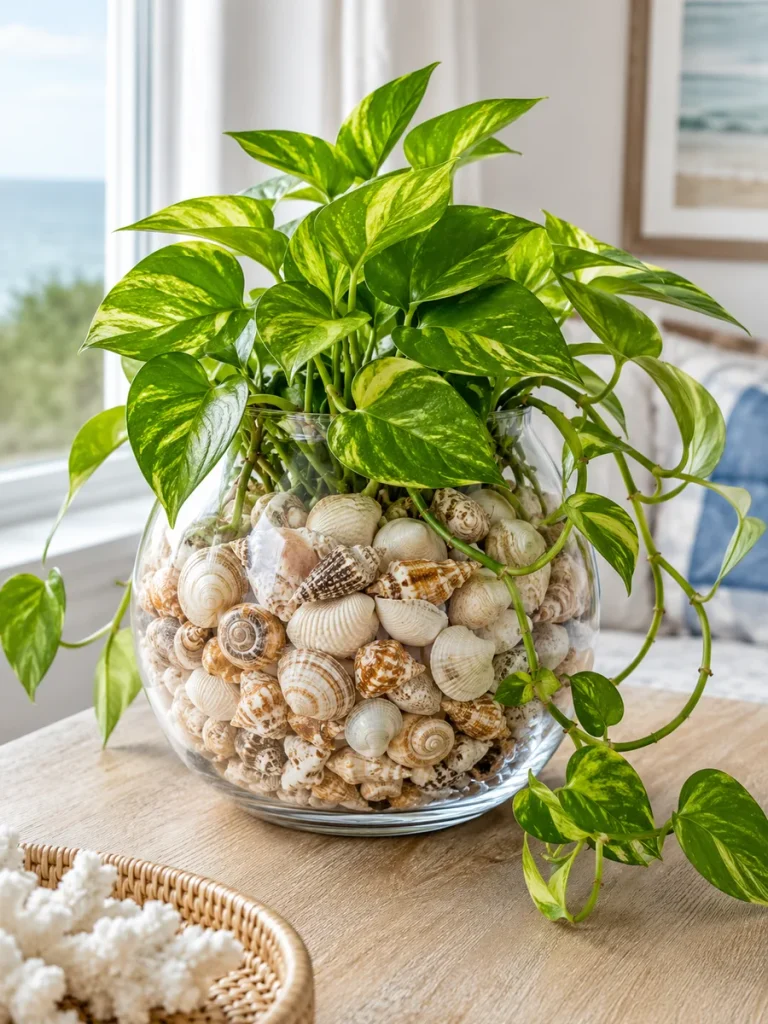
A round vase packed with natural shells gives pothos a coastal feel. Mix several shell shapes and neutral tones, then let the green vines trail around the outside. The contrast between glossy leaves and textured shells makes the arrangement feel fresh and summery.
43. Rustic Stone Bowl Plant Garden
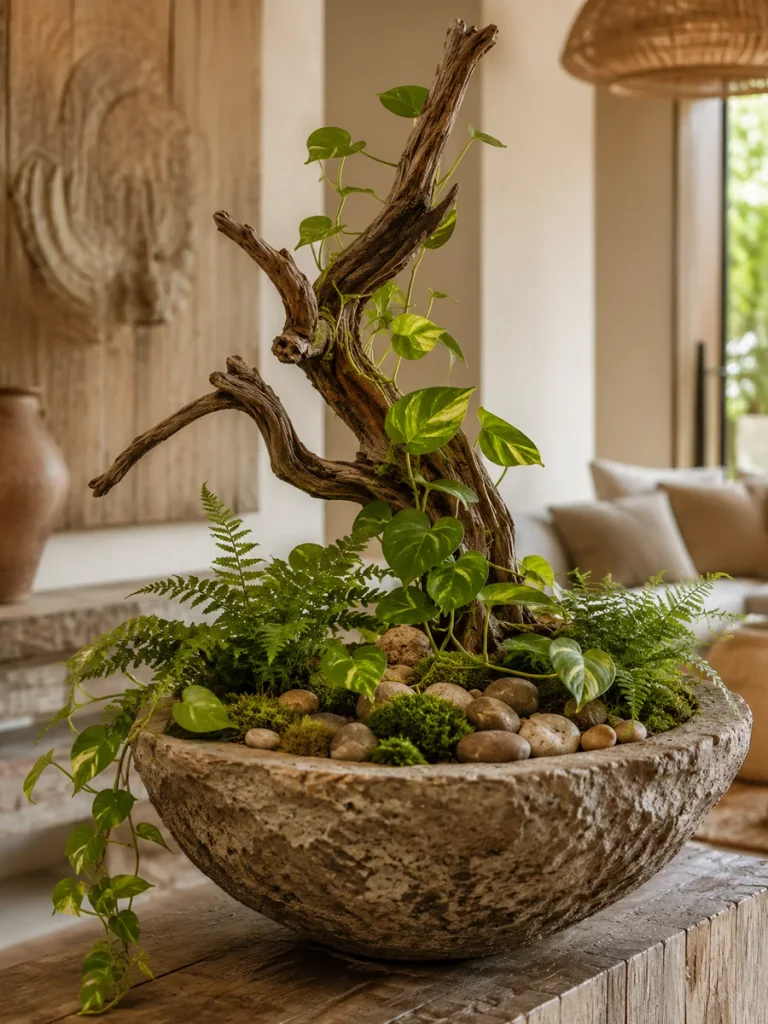
A rough stone bowl is a natural match for driftwood, moss, ferns, and pothos. Keep the planting mostly green so the material textures stand out. This arrangement works especially well in rustic, organic, and earthy interiors.
44. Wide Ceramic Bowl Jungle
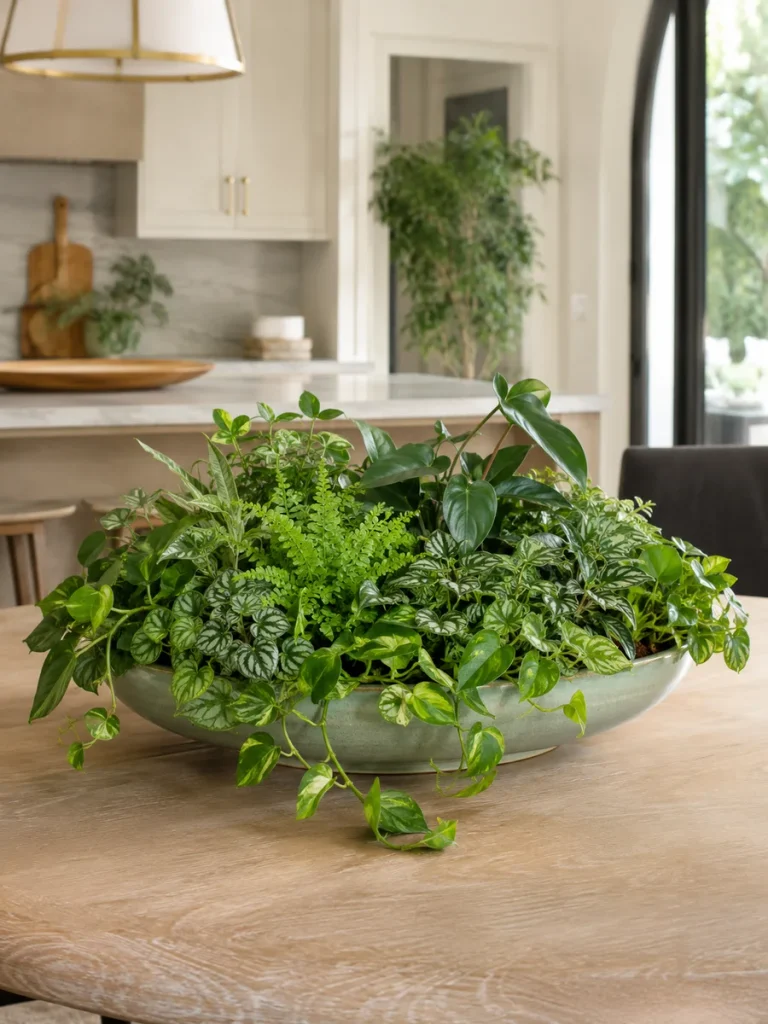
A broad ceramic bowl can hold a surprisingly lush mix of compact foliage plants. Place taller plants toward the center, softer ferns around them, and trailing vines near the edge. This style makes a strong kitchen-island or dining-table centerpiece.
45. Footed Modern Planter Arrangement
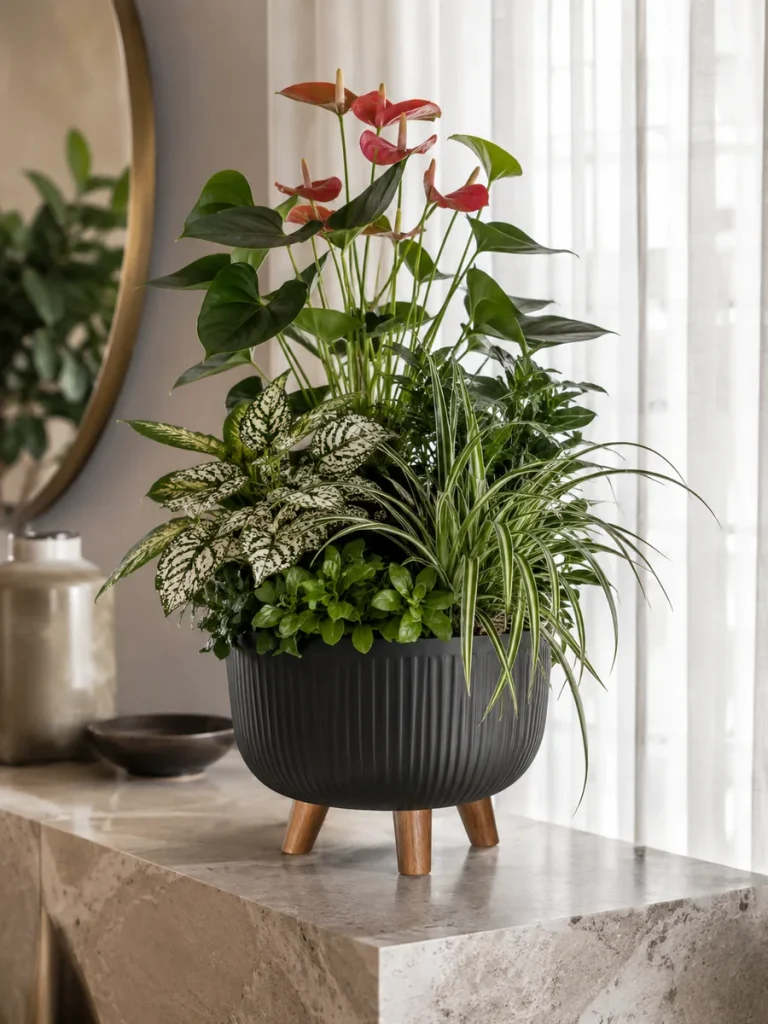
A footed planter lifts the foliage slightly above the surface and makes trailing leaves more noticeable. Combine tall anthuriums with spider plant and variegated foliage for a layered look. Matching the wooden feet to other wood tones in the room helps the planter feel intentional.
46. Kokedama-Inspired Hanging Plant Sculpture
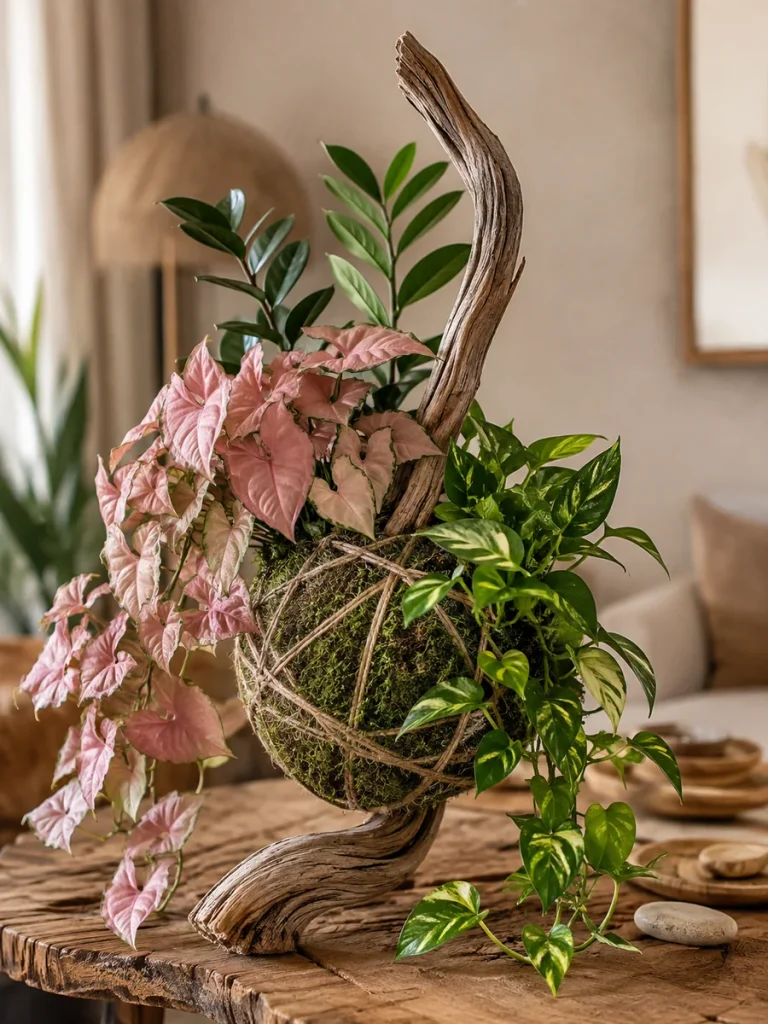
A kokedama-inspired arrangement brings a handcrafted quality to indoor plant decor. Wrap the planting form in moss and natural twine, then combine it with trailing pothos, pink Syngonium, and a curved branch. The irregular silhouette should feel organic rather than perfectly symmetrical.
47. Hanging Glass Orbs on a Plant Tree
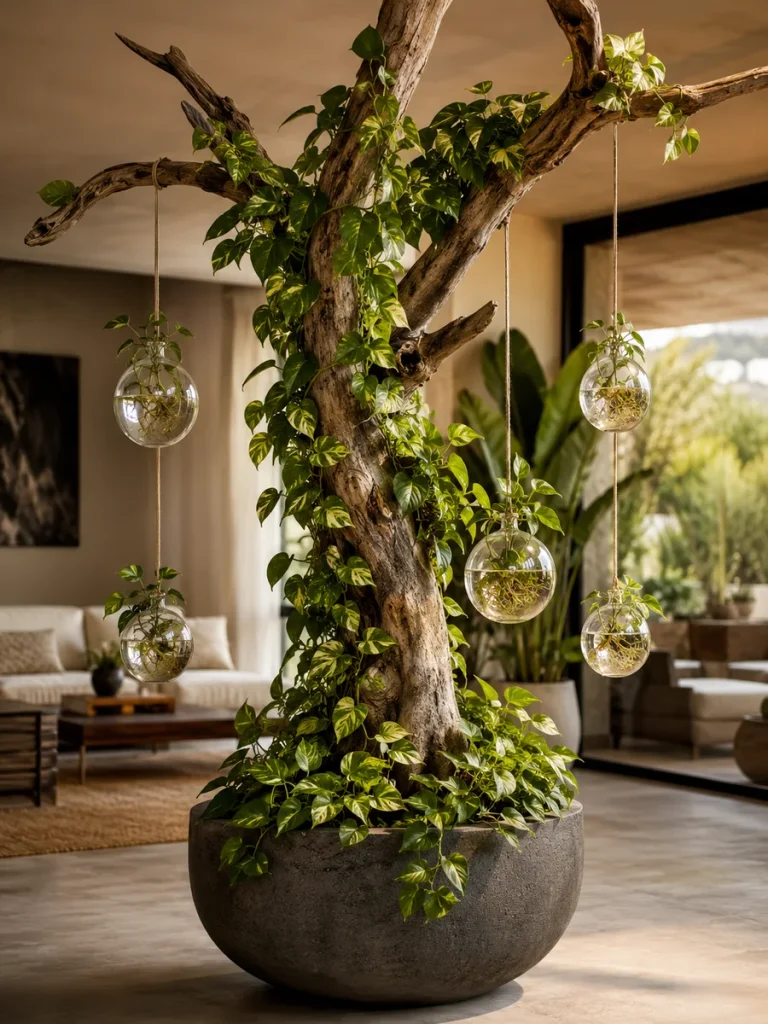
A large branching trunk can support several hanging glass orbs containing water-rooted cuttings. Grow established pothos around the trunk so the hanging vessels feel integrated rather than added separately. Vary the heights of the glass orbs for a more natural composition.
48. Indoor Living Tree Centerpiece
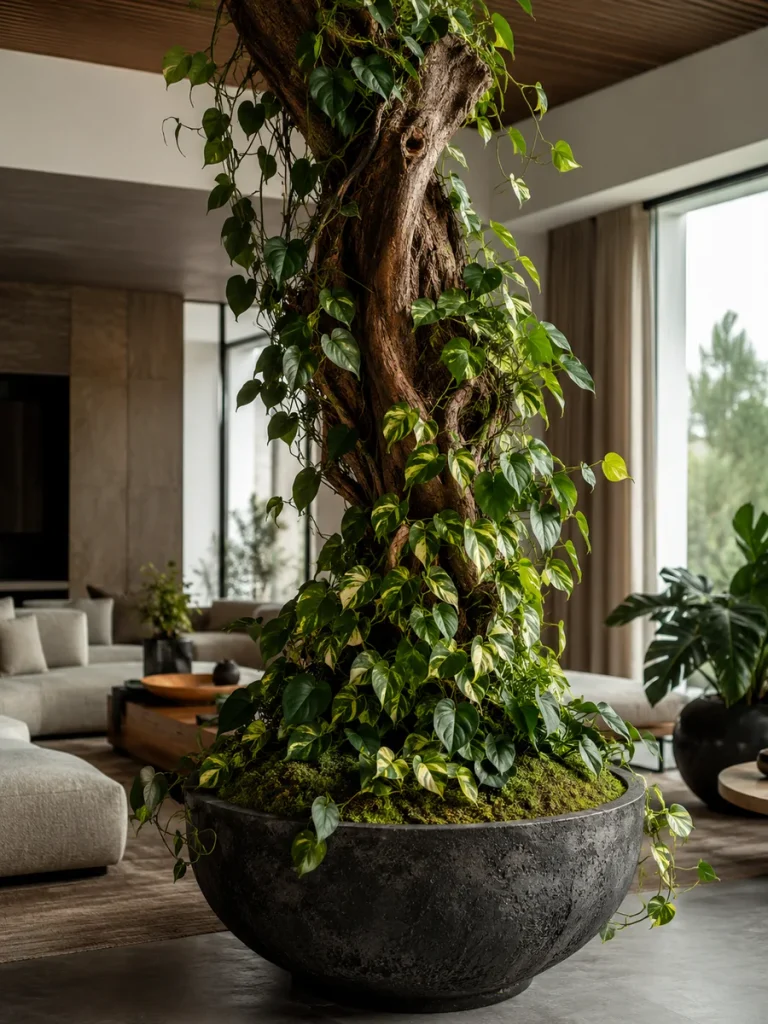
For the largest statement, build an indoor living tree around a dramatic natural trunk. Train pothos and philodendron up the wood, keep moss and greenery dense around the base, and leave sections of bark exposed. In a large room, this can function almost like a piece of botanical architecture.
How to Make Indoor Plant Decor Look More Stylish
Mix leaf shapes instead of grouping plants with identical foliage. Broad leaves, narrow arching leaves, small trailing vines, and patterned foliage create more depth when used together.
Use natural materials such as driftwood, moss, stone, shells, rattan, ceramic, and clear glass. Two or three textures are usually enough; too many decorative materials can distract from the plants.
Create different heights. Taller supports and foliage work best toward the back or center, while small plants and trailing stems soften the edges.
Leave some open space. Visible sections of a branch, hoop, frame, glass vessel, or planter help the eye understand the design and prevent the arrangement from looking crowded.
Where to Display These Arrangements
Use low bowls and horizontal driftwood pieces on coffee tables and dining tables. Tall climbing structures are better suited to entryways, corners, and spaces beside windows. Small hydroponic bowls and glass containers work well on desks, shelves, and kitchen counters.
A Practical Note About Plant Care
Decorative arrangements still need to meet the growing needs of the plants. When combining several species in one container, choose plants with similar light and moisture preferences. For water-grown cuttings, refresh the water regularly and clean the glass if algae appears. If stones or shells are used only for decoration, keep the plant in a suitable inner growing container rather than treating the decorative layer as a substitute for drainage.
Final Thoughts
Indoor plants become much more interesting when they are treated as part of the room rather than as an afterthought. A vine can become a wreath, a branch can become a climbing sculpture, and a glass bowl can turn roots and stones into part of the display. Whether you prefer simple tabletop arrangements or large statement pieces, these 48 unique indoor plant decor ideas give you plenty of ways to bring greenery, texture, and personality into your home.