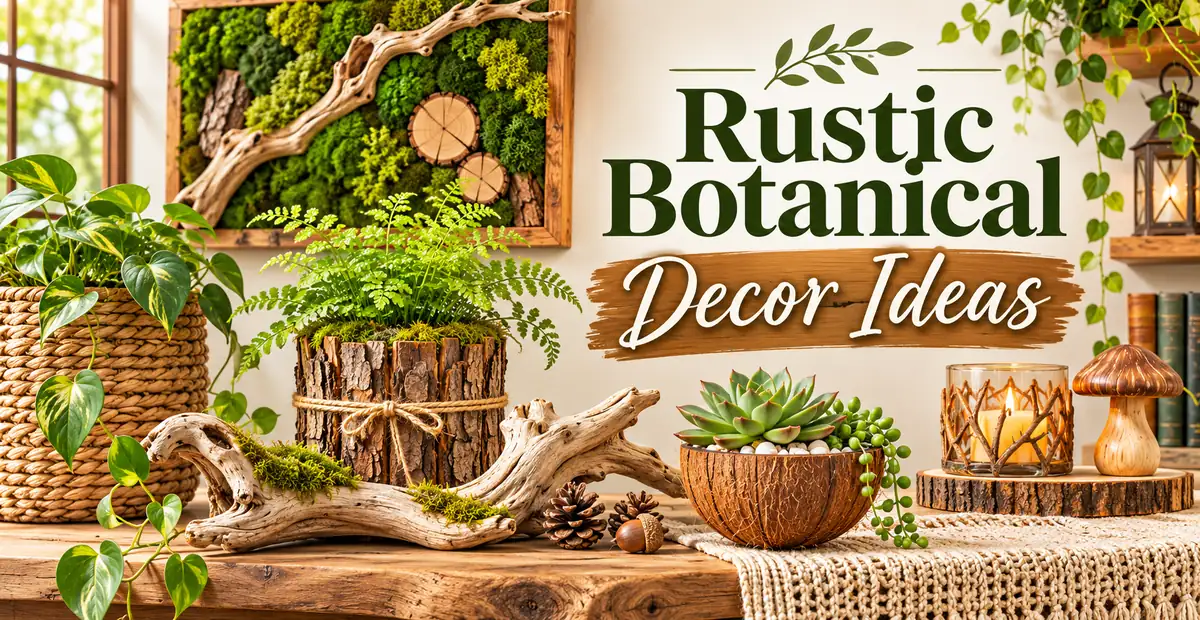
There’s something undeniably comforting about bringing nature into your home. The rich textures of weathered wood, the soft movement of trailing greenery, and the earthy beauty of handmade decorations can transform an ordinary room into a warm, welcoming retreat.
That’s exactly what makes rustic botanical decor so special. This nature-inspired decorating style blends tree trunks, driftwood, natural bark, moss, and leafy plants with creative arrangements that celebrate the beauty of the outdoors. Whether it’s a sculptural wooden plant stand, a handmade coconut shell planter, or an artistic botanical wall display, every piece adds its own unique character.
If you love earthy textures, handcrafted decorations, and fresh greenery, these 45 rustic botanical decor ideas will inspire you to create beautiful spaces that feel naturally connected to the outdoors.
Explore the Ideas
- Rustic Botanical Wall Decor Ideas
- Tree Stump, Log, and Wooden Plant Stand Ideas
- Handmade Rustic Botanical Planter Ideas
- Botanical Wood Art, Bark, and Floral Decor
- Creative Rustic Botanical Centerpieces and Home Accents
- How to Style Rustic Botanical Decor in Different Rooms
- Best Natural Materials for Rustic Botanical Decorating
- How to Keep Rustic Botanical Displays Beautiful
- Frequently Asked Questions
- Final Thoughts
Rustic Botanical Wall Decor Ideas
1. Create a Tree Bark Wall Sconce with Fresh Flowers
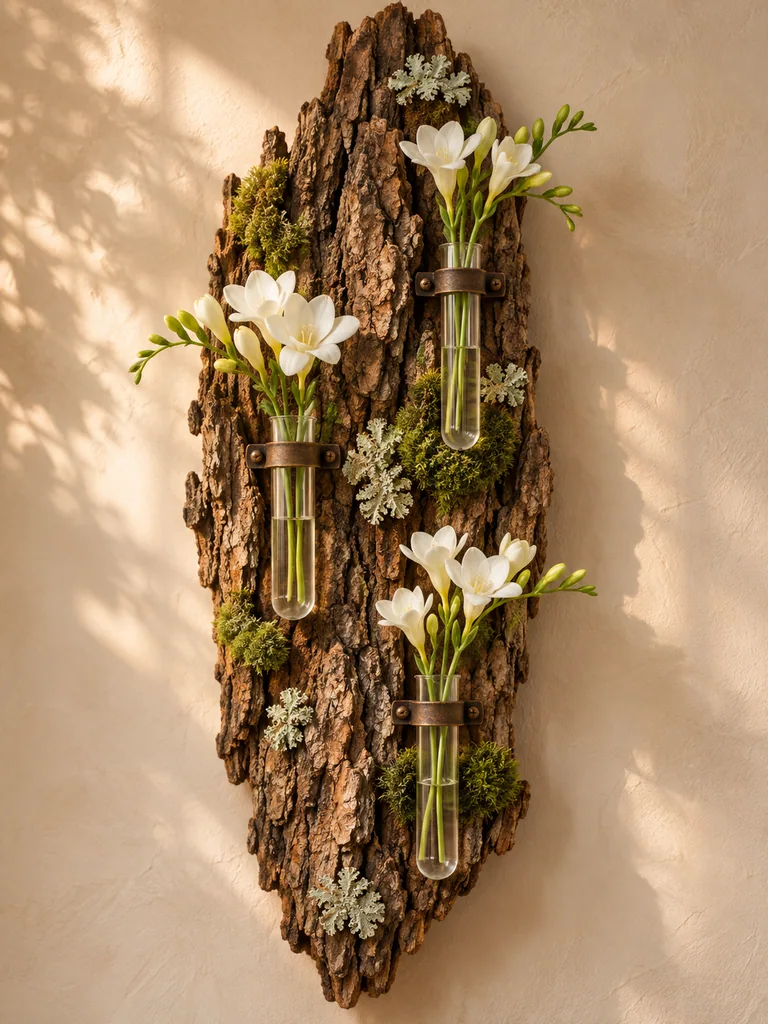
Choose a long, irregularly shaped bark slab and attach two or three narrow glass tubes using secure metal holders. Fill the tubes with white freesia, miniature daisies, or seasonal wildflowers, then tuck small patches of preserved moss into the bark’s natural crevices for a woodland-inspired finish. Display the arrangement against a warm-white or beige wall, where the contrast between rough bark and soft flowers becomes especially striking. Use removable glass vessels so you can refresh the water without soaking the wood.
2. Design a Driftwood Wall Garden with Trailing Greenery
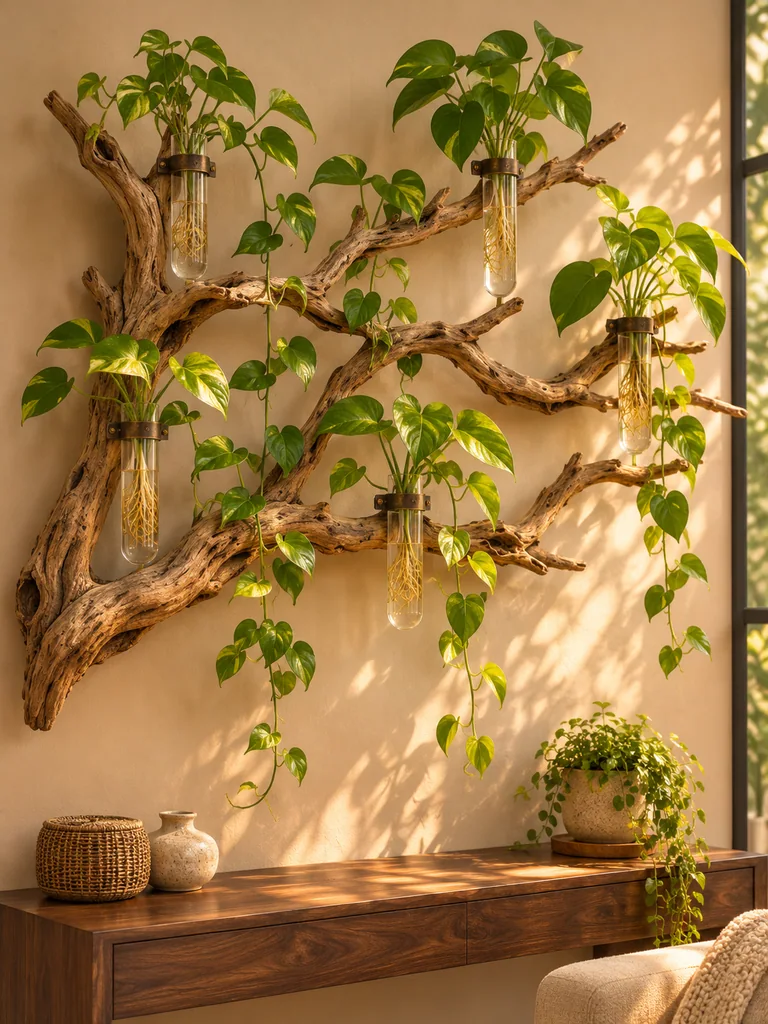
Look for a branching structure with interesting curves and securely attach small glass propagation tubes or lightweight planting holders along its natural limbs. Add heartleaf philodendron or pothos cuttings, allowing the vines to spill downward and weave around the wood. The combination of weathered timber, exposed roots, and vibrant leaves creates an organic display that looks particularly beautiful above a console table or beside a sunny window. Keep the vessels accessible for watering and position the arrangement away from delicate wall finishes.
3. Build a Reclaimed Wood Vertical Plant Wall
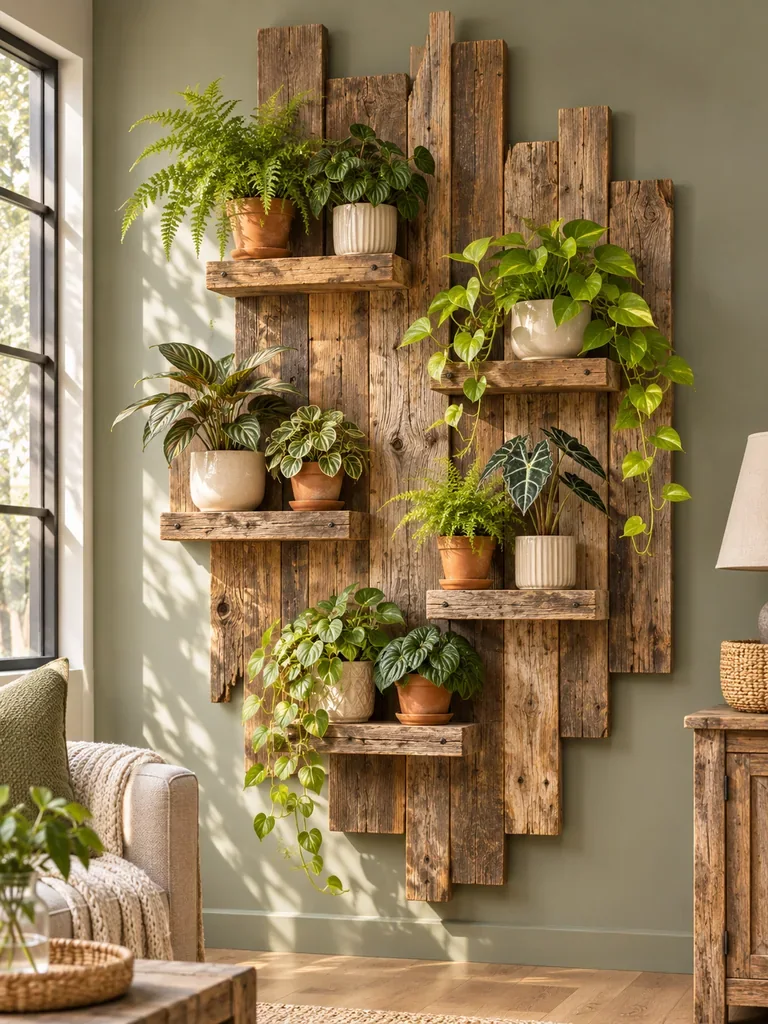
Arrange several reclaimed boards in a staggered formation, then attach small wooden shelves or secure planter holders at varying heights. Mix compact ferns, peperomias, and trailing foliage to create a layered arrangement with different leaf shapes and textures. Weathered brown wood provides a lovely contrast against fresh green plants, especially in farmhouse-style kitchens, sunrooms, or living rooms. Use removable nursery pots with drainage and securely anchor the supporting structure to suitable wall framing so the display remains stable after watering.
4. Make a Moss-Covered Wooden Wall Art Panel
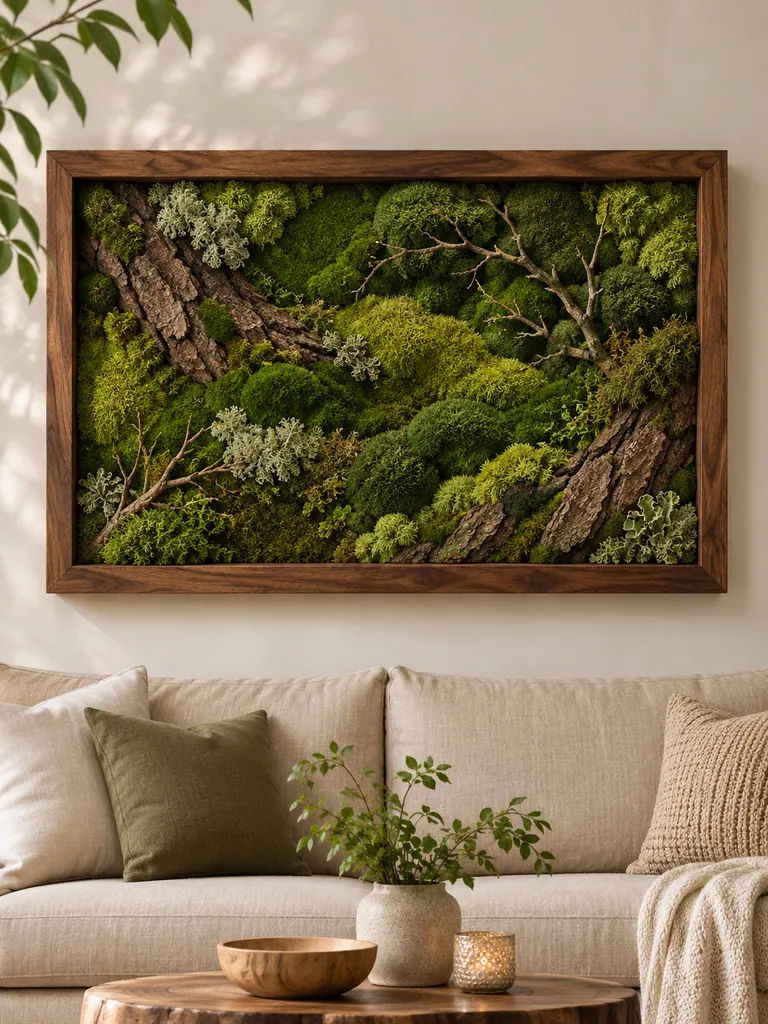
Start with a deep wooden frame and arrange different shades of green moss into flowing, uneven patterns that resemble a miniature forest landscape. Incorporate thin bark strips, naturally curved twigs, and small stones for added dimension. The irregular shapes and soft textures make the artwork feel organic rather than overly structured. Hang it above a sofa, in a hallway, or beside a reading nook. Preserved moss offers a beautiful low-maintenance option because it doesn’t require watering like living plants.
5. Hang a Botanical Branch Mobile Above a Console Table
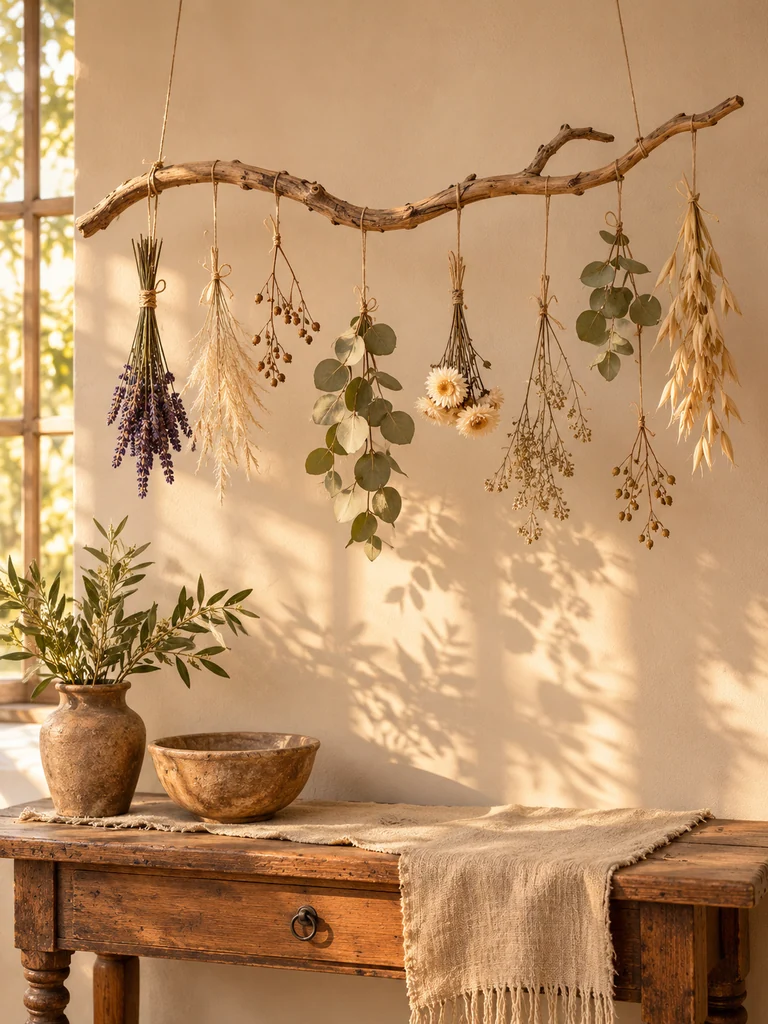
Choose an interesting piece of fallen wood and hang it horizontally using sturdy cotton cord or jute rope. Attach small bundles of dried lavender, eucalyptus, delicate grasses, and seasonal flowers at different lengths to create a relaxed cascading effect. Keep the arrangement slightly asymmetrical so it feels handmade and naturally balanced. This lightweight decoration looks especially charming above an entryway console, bedroom dresser, or narrow hallway table. Choose muted green, tan, and cream tones for a soft rustic appearance.
6. Turn Rustic Log Slices into Botanical Wall Art
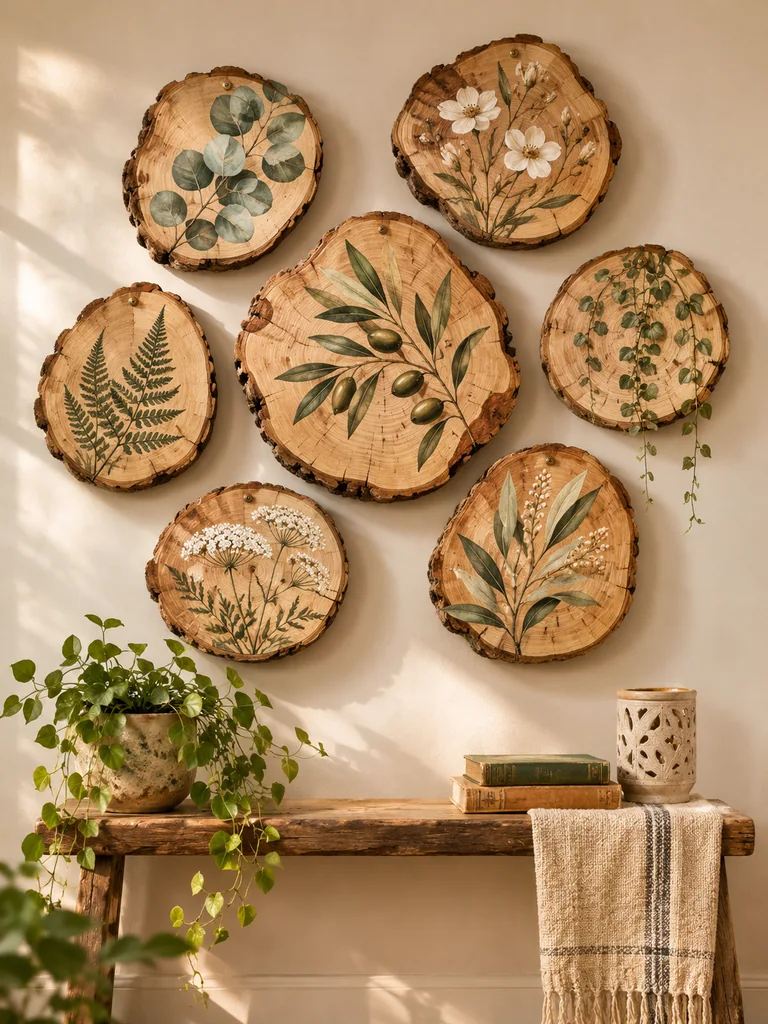
Select several dried wooden discs in different sizes and decorate their surfaces with delicate botanical paintings, such as olive branches, ferns, tiny wildflowers, or leafy vines. Use sage green, ivory, and muted earthy colors to complement the natural timber instead of hiding it. Arrange the finished slices in a loose gallery-style composition above a hallway bench or bedroom side table. Mixing painted designs with exposed wood creates an artistic rustic botanical display that feels warm, personal, and handcrafted.
7. Create a Floating Driftwood Shelf for Mini Plants
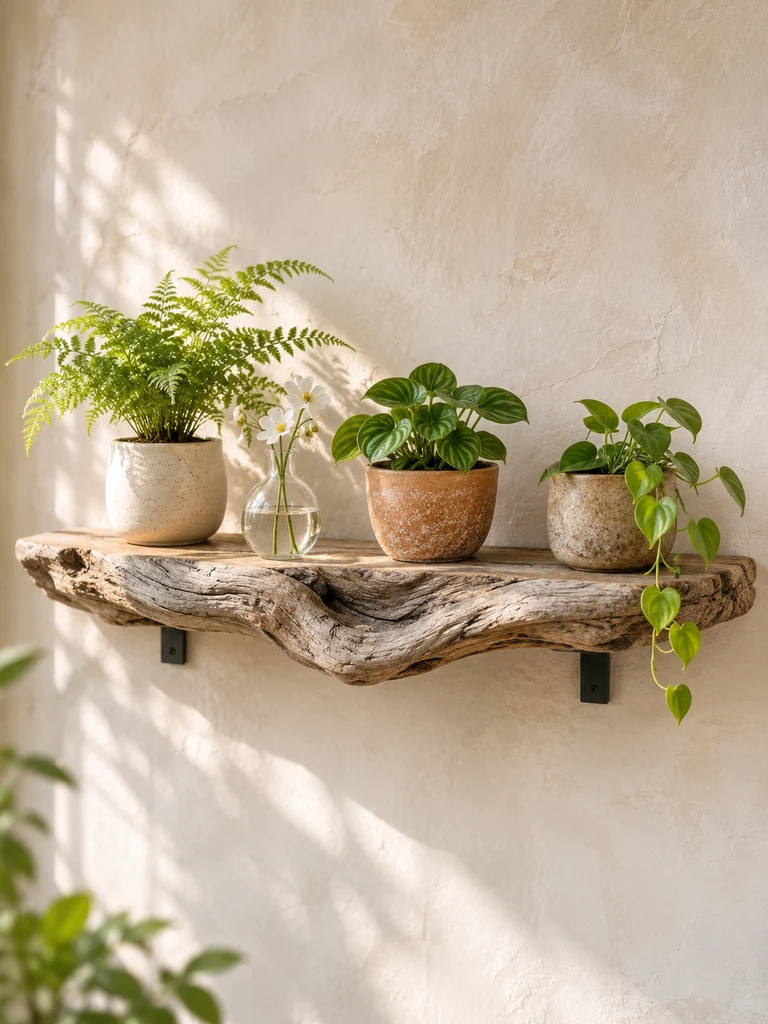
Choose a sturdy, relatively level piece with an interesting silhouette and install it using appropriately rated supports. Decorate the surface with two or three small ceramic planters, a tiny botanical vase, and one trailing plant that gently spills over the edge. Keep some of the driftwood visible so its natural curves remain the focal point. This arrangement works beautifully in bedrooms, cozy living rooms, or bright bathrooms, provided the wood is protected from prolonged moisture and the shelf can safely support its contents.
8. Design a Woodland Fern Shadow Box
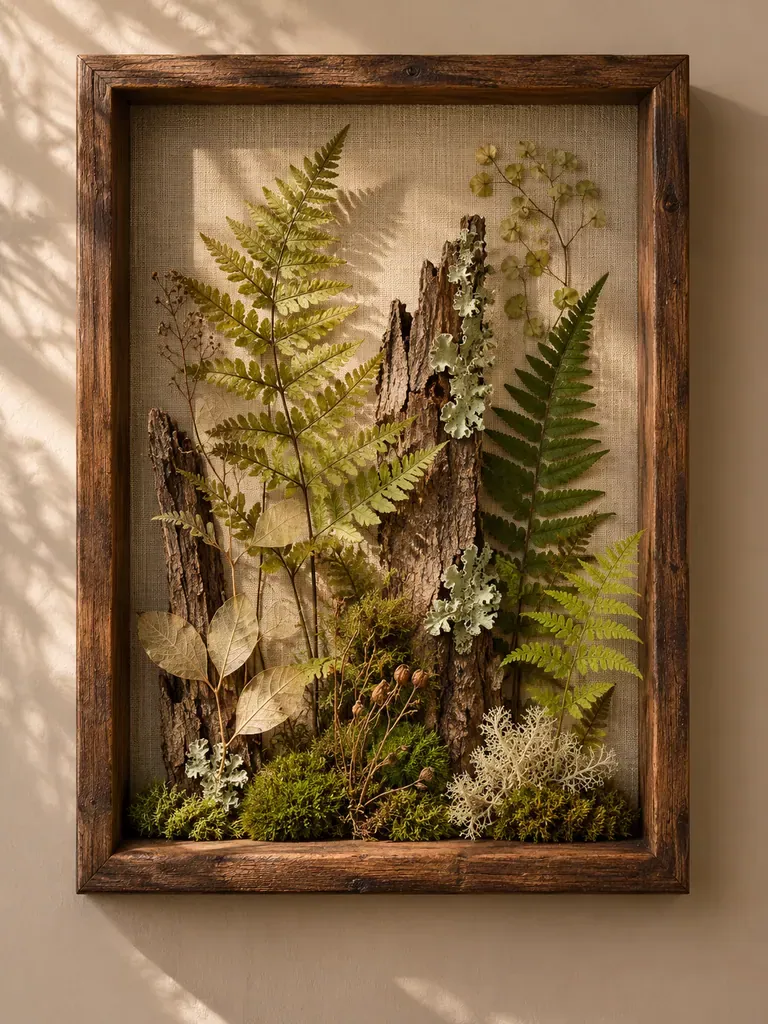
Choose a deep wooden frame and create a layered composition using pressed fern fronds, preserved moss, textured bark, and delicate twigs. Position the pieces at different depths so they cast small shadows and create a realistic three-dimensional effect. A combination of dark green foliage, pale dried leaves, and warm brown wood gives the finished artwork a sophisticated woodland appearance. Display it in a bedroom, hallway, or home office where the natural details can be appreciated without exposure to strong direct sunlight.
9. Install a Rustic Ladder Wall Garden
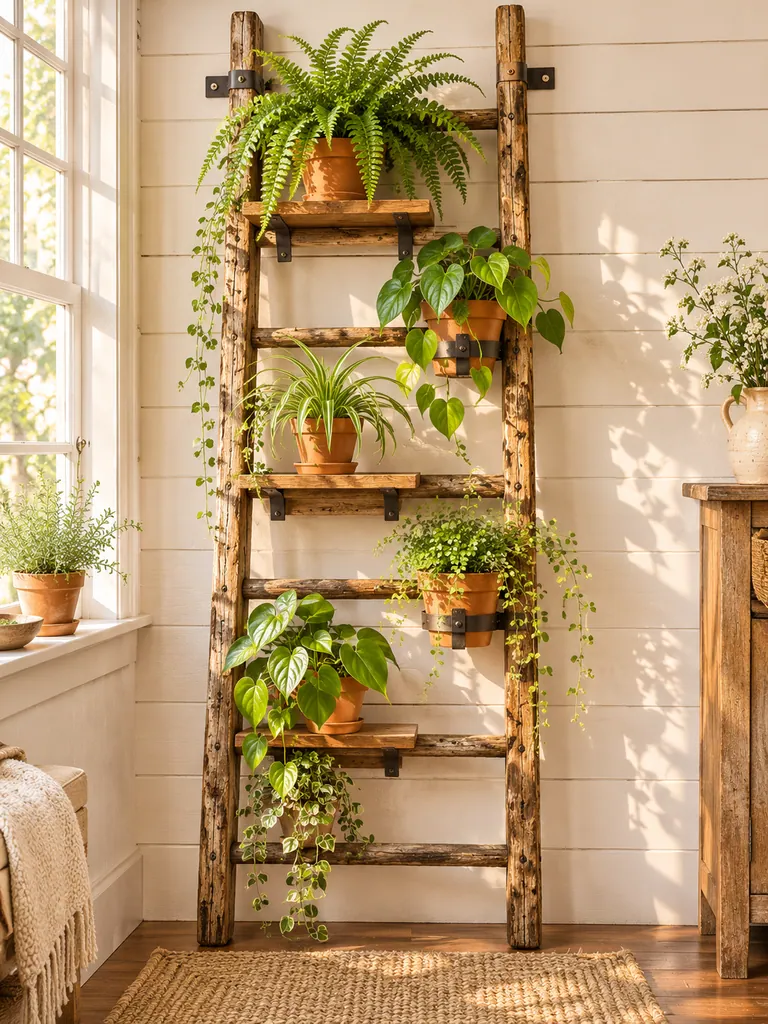
Choose a weathered ladder with attractive natural imperfections, clean and refinish it as needed, then secure it firmly against a suitable wall. Attach small shelves or planter holders to selected rungs and fill them with compact leafy plants, hanging vines, and delicate ferns. Allow some foliage to cascade downward while keeping other plants upright for a balanced appearance. This creative design is especially attractive in farmhouse-style kitchens, enclosed patios, and bright living room corners. Keep the ladder decorative rather than functional for climbing.
10. Style a Botanical Wall with Glass Propagation Tubes
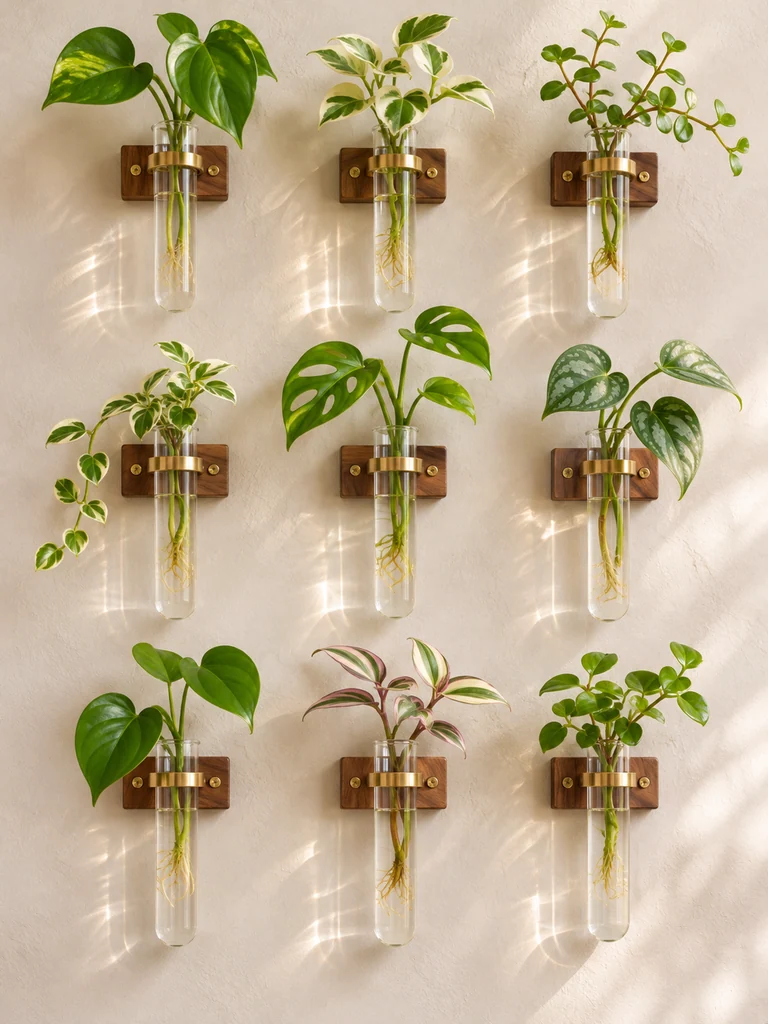
Arrange the holders in evenly spaced rows or an informal staggered pattern, then fill each glass vessel with fresh water and a healthy leafy cutting. Choose plants with interesting foliage, such as pothos, philodendron, or suitable trailing species, so their stems and developing roots become part of the decoration. The combination of transparent glass and warm wood creates a clean, elegant look that works surprisingly well in modern interiors. Place the display in bright, indirect light and refresh the water regularly.
11. Craft a Rustic Twig and Dried Flower Wall Hanging
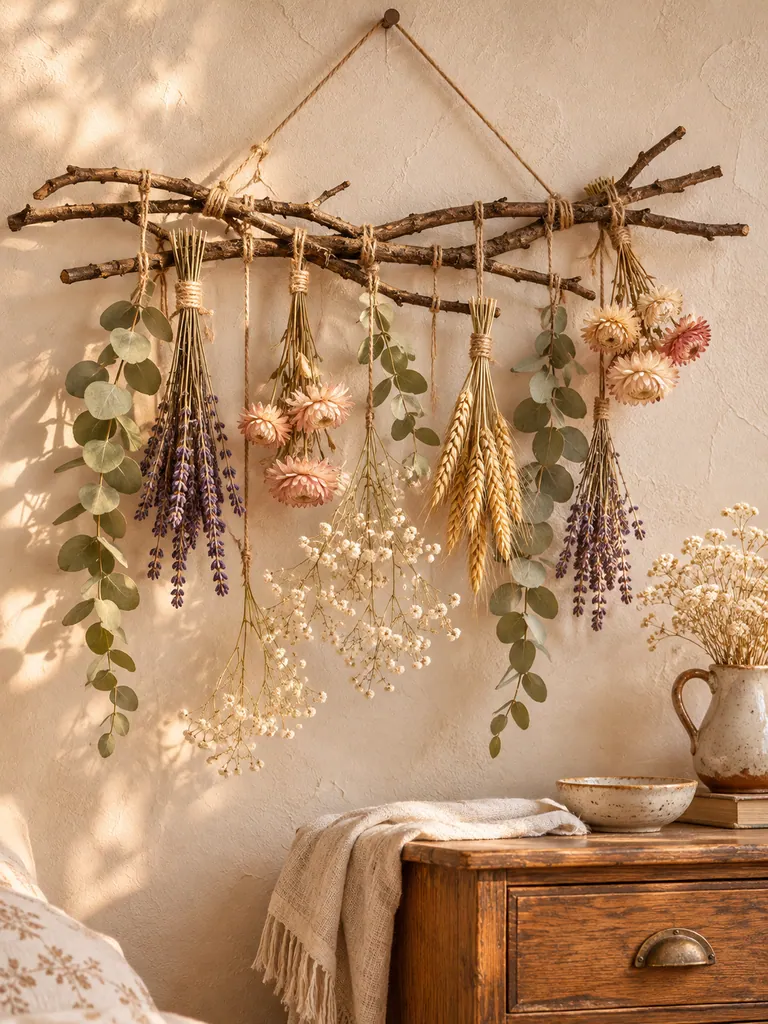
Arrange the branches into a loose horizontal structure, then tie small bundles of lavender, dried grasses, seed heads, and delicate blossoms along the lower edge. Vary the lengths of the hanging elements to create an airy, flowing appearance rather than a perfectly symmetrical design. The natural colors and textures work beautifully against cream walls, linen curtains, and warm wooden furniture. This decoration is ideal for cottagecore bedrooms, bohemian living spaces, or quiet reading corners where a soft, earthy accent feels especially welcoming.
12. Create a Living Botanical Wall Frame
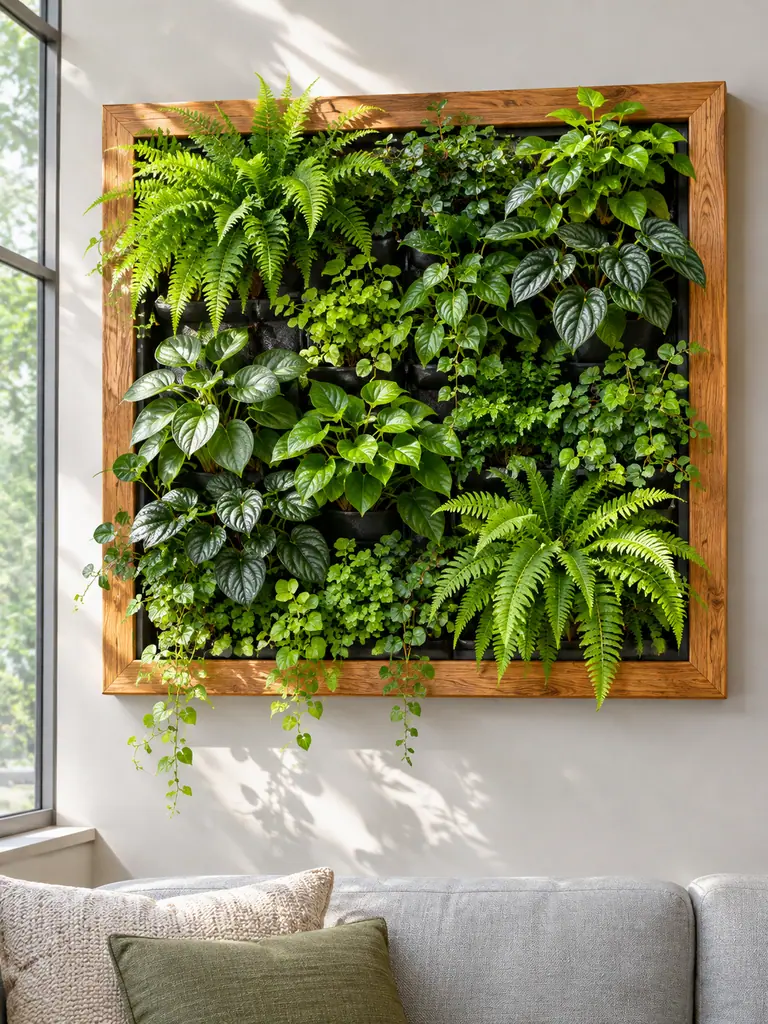
Use a sturdy frame with securely mounted shelves or waterproof planter inserts, then arrange compact plants with varying leaf shapes and shades of green. Small ferns, peperomias, and selected trailing plants can create a beautiful layered effect when their light and watering requirements are compatible. Position the display on a bright wall where the plants receive appropriate indirect sunlight. Leave enough space between containers for airflow and easy maintenance, and protect the wall behind the installation from moisture.
Tree Stump, Log, and Wooden Plant Stand Ideas
13. Transform a Hollow Tree Trunk into a Botanical Planter
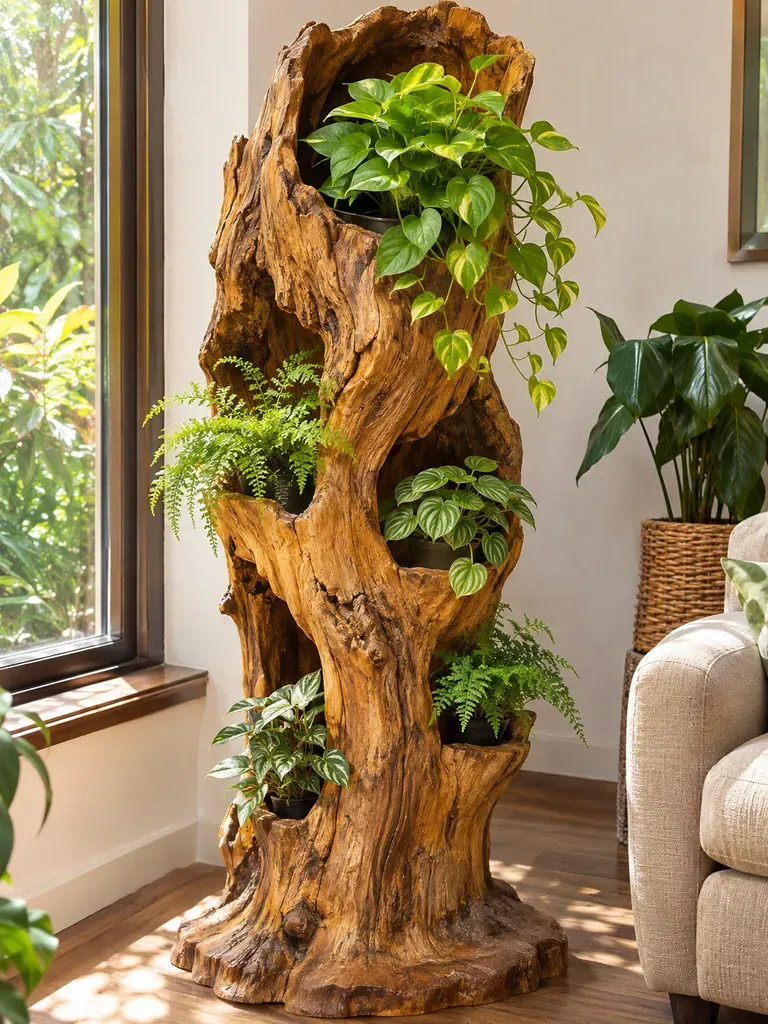
Choose a stable, thoroughly dried trunk with interesting curves and hollow sections, then insert small waterproof containers into suitable spaces. Fill them with compact ferns, leafy vines, and other indoor plants that thrive in similar conditions. Arrange the greenery at different levels to create the appearance of a tiny forest growing from the wood itself. This statement piece looks especially impressive near a large living room window, where natural light highlights the rough bark and vibrant foliage.
14. Create a Tiered Tree Stump Plant Display
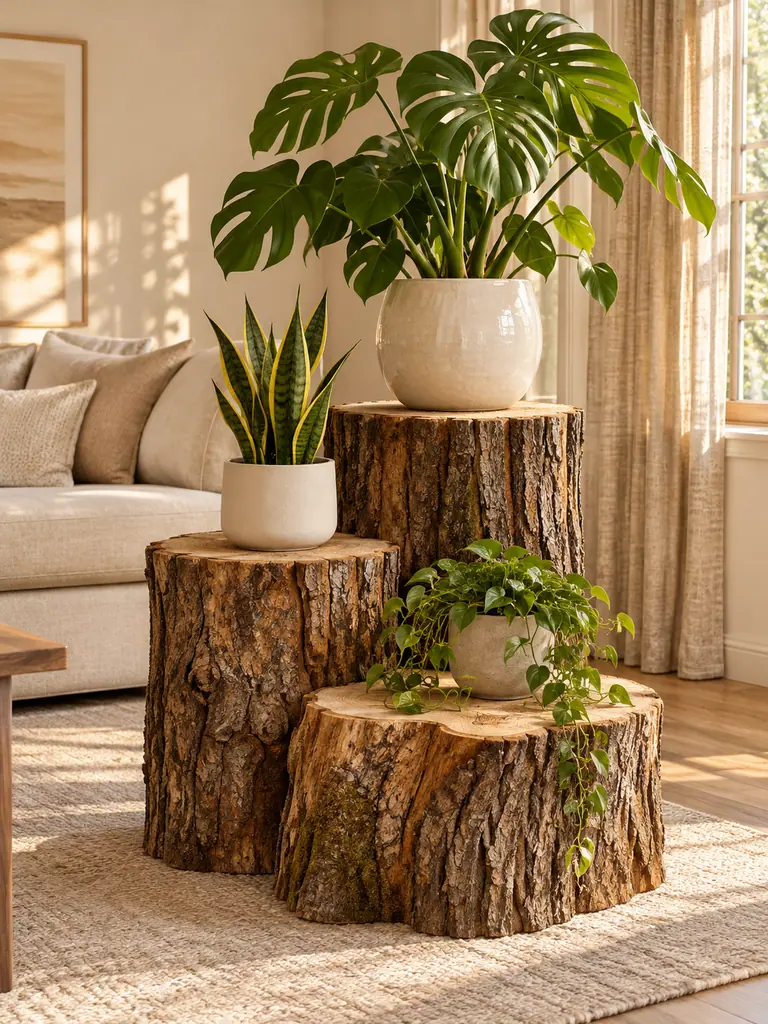
Arrange several natural wood pieces at different heights, creating a stepped formation that supports plants of varying sizes. Place a dramatic leafy plant on the tallest stump, a compact upright plant on the middle level, and trailing greenery on a lower section. Choose simple ceramic pots in white, cream, or warm beige to contrast beautifully with the textured wood. Position the arrangement beside a sofa or near a bright window, leaving enough space between the plants so every wooden platform remains visible.
15. Paint Botanical Designs on Natural Log Pedestals
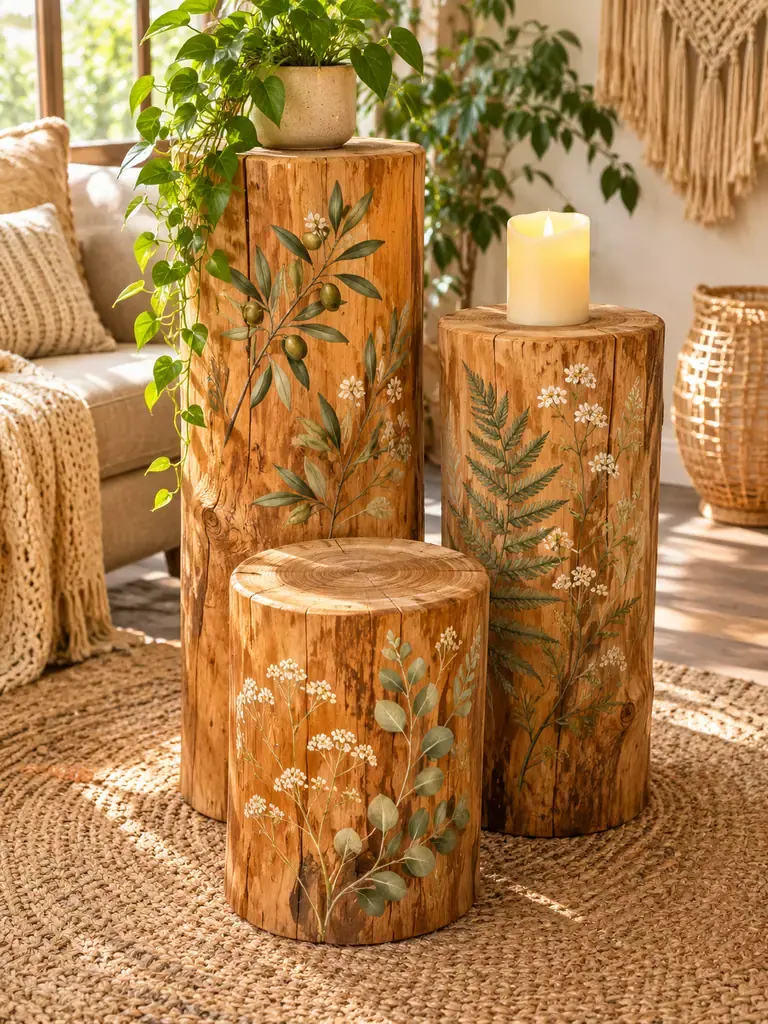
Choose three dried logs of different heights and gently smooth any rough areas before adding designs of olive branches, leafy stems, wildflowers, or small ferns. Use muted sage green, dusty blue, ivory, and warm terracotta to create a soft handmade appearance. Display the finished pedestals together on a woven rug or beside a console table, adding a small plant or battery-operated candle for extra interest. The combination of painted foliage and visible wood grain creates an appealing blend of nature and craftsmanship.
16. Make a Rustic Tree Branch Corner Plant Stand
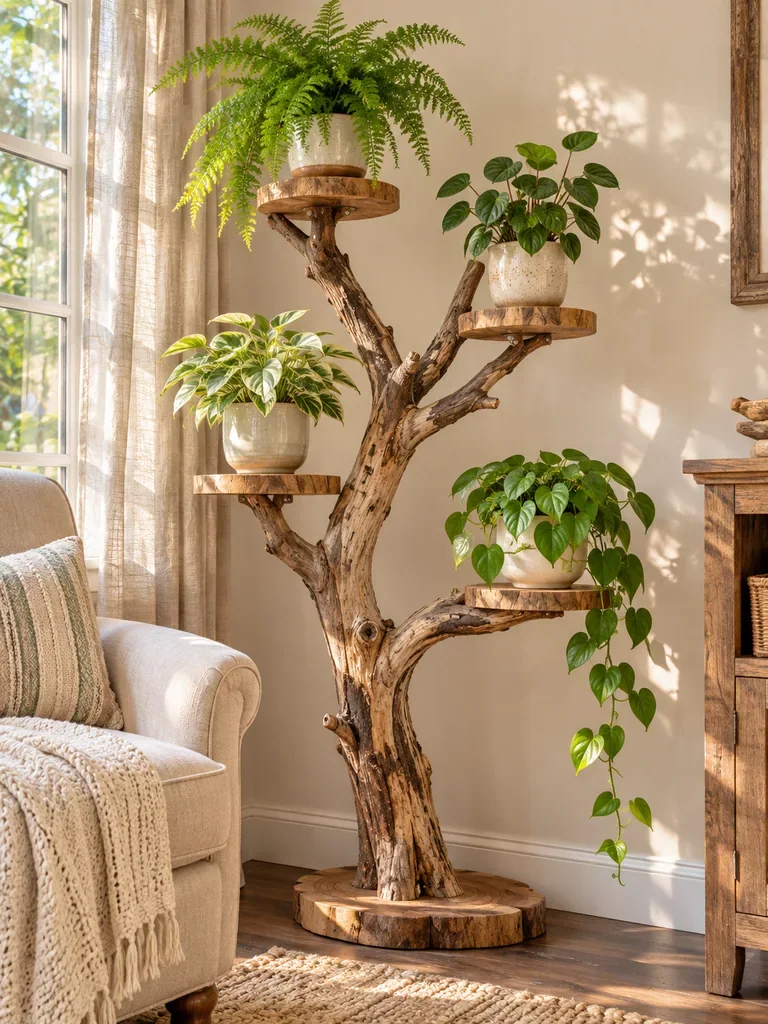
Use sturdy, responsibly sourced wooden branches as decorative elements around a stable supporting frame, then incorporate secure platforms for small potted plants. Arrange upright greenery near the base and allow lighter trailing foliage to spill gently from the upper levels. The irregular branch shapes create a sculptural appearance that feels much more organic than a conventional metal plant rack. Place the stand near a window or beside a comfortable reading chair to create a cozy botanical corner filled with natural texture.
17. Style a Live-Edge Wood Slab Plant Table
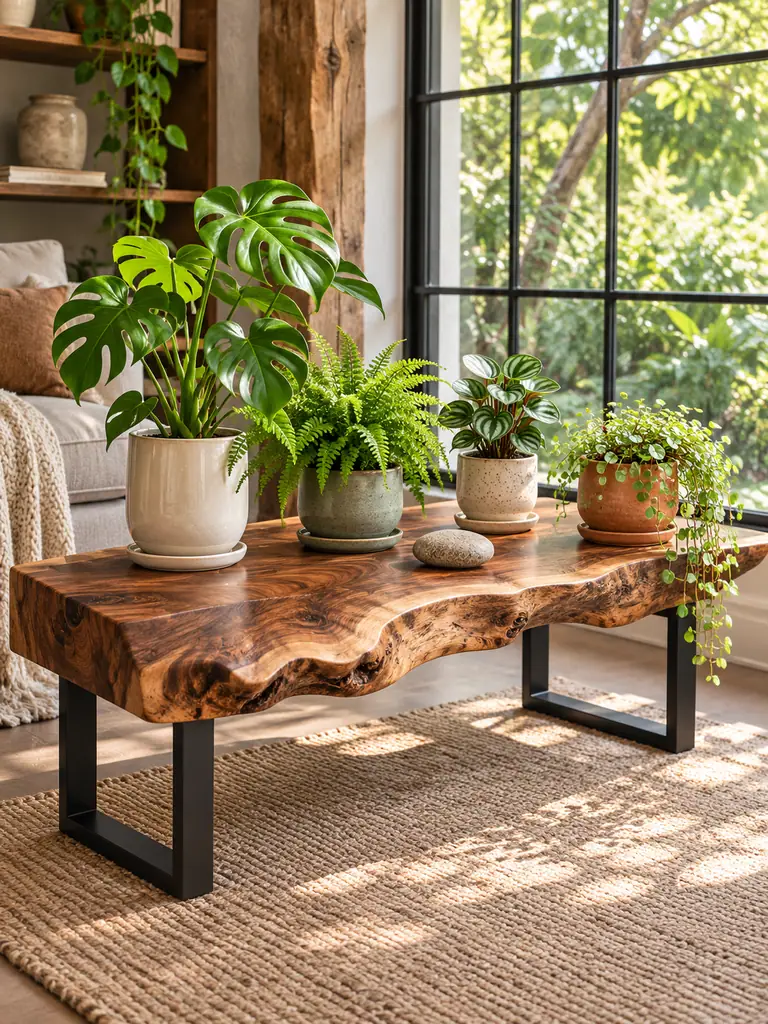
Choose a well-dried slab with an interesting irregular edge and mount it securely on sturdy wooden or metal legs. Arrange a collection of indoor plants in neutral ceramic pots, mixing one statement plant with two or three smaller varieties. Add a simple stone ornament or wooden bowl to complete the arrangement without making the surface feel crowded. This style works wonderfully in contemporary living rooms, where the organic edges soften clean furniture lines and bring a warm, earthy element into the space.
18. Create a Rustic Log Ladder Plant Display
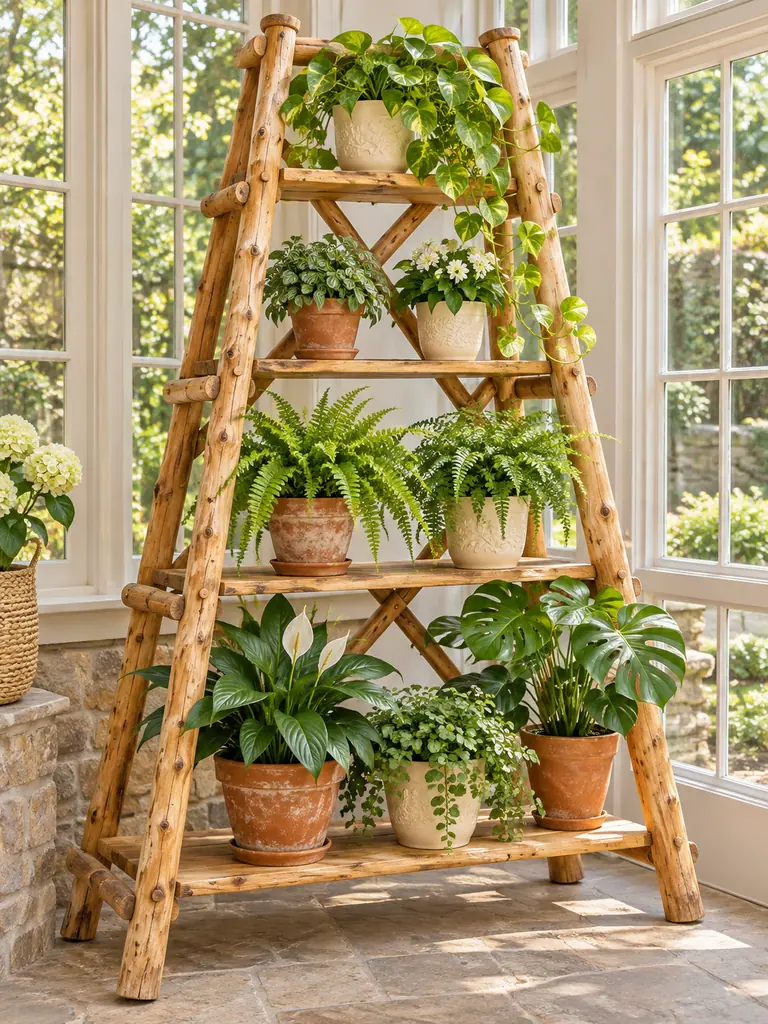
Build or repurpose a stable A-frame ladder with wide, securely attached shelves, then arrange larger potted plants on the lower levels and lightweight trailing varieties above. The combination of exposed wood, layered greenery, and varying plant heights creates an inviting botanical display. Position it in a sunroom, enclosed porch, or bright living room corner. Terracotta containers, woven baskets, and simple ceramic pots complement the rustic structure beautifully while allowing the natural timber to remain the main decorative feature.
19. Build a Woodland Tree Root Plant Sculpture
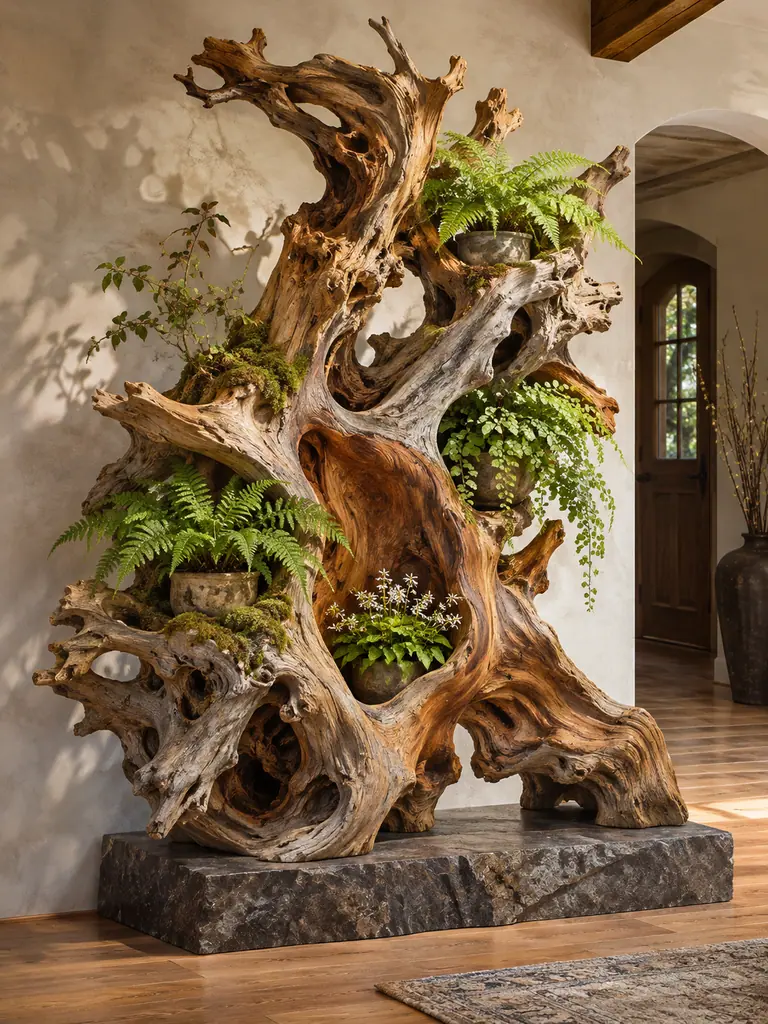
Look for a thoroughly dried root structure with twisted branches, interesting hollows, and distinctive weathered textures. Position it securely on a stable base, then incorporate small removable plant containers into suitable spaces around the wood. Delicate ferns, compact foliage, and restrained moss accents can soften the rugged structure without hiding its natural beauty. Display the finished sculpture in a spacious entryway or living room where it can be viewed from different angles. Its unusual shape makes every arrangement genuinely one of a kind.
20. Design a Minimalist Birch Log Plant Stand
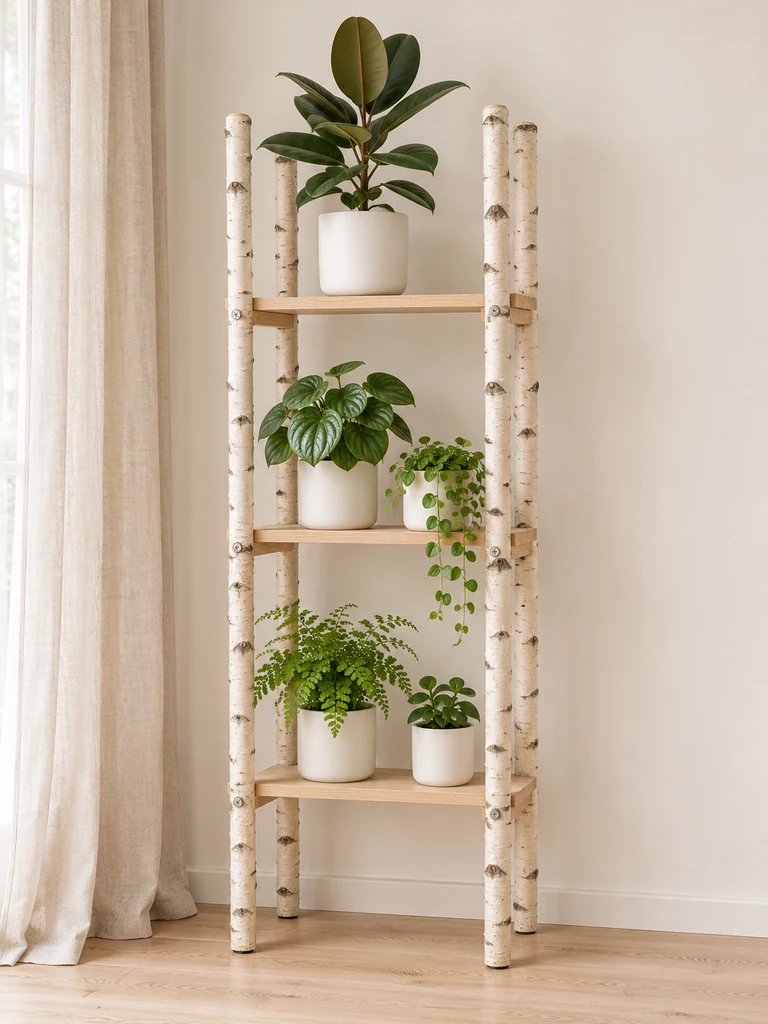
The light-colored bark and slender vertical supports create a clean, airy appearance that works especially well in Scandinavian and contemporary interiors. Arrange white ceramic planters filled with rich green foliage to emphasize the beautiful contrast between the pale wood and vibrant leaves. Keep the overall design simple, using just a few carefully positioned plants rather than overcrowding every shelf. Place the finished stand near a linen curtain, beside a light-colored sofa, or against a warm-white wall for a peaceful botanical look.
21. Create a Driftwood Plant Stand for an Empty Corner
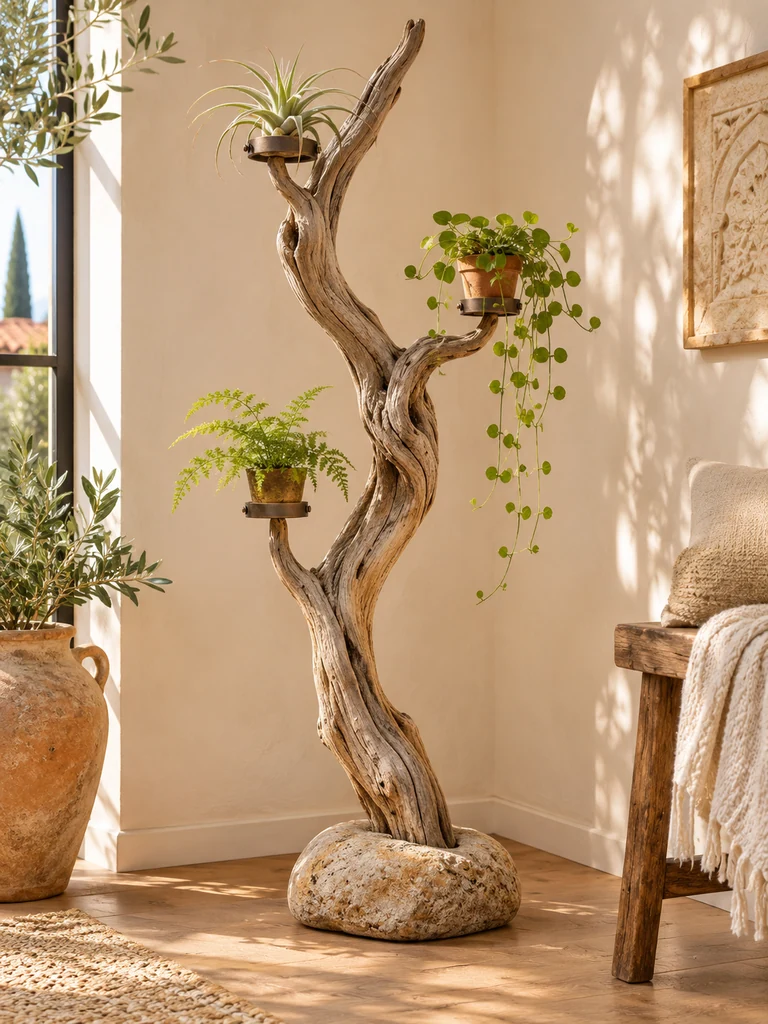
Choose a substantial, thoroughly cleaned piece with interesting twists and curves, then mount it securely onto a stable weighted base. Attach lightweight holders for air plants, miniature greenery, or small propagation vessels at selected points along the branches. Allow the wood’s natural silhouette to remain visible rather than covering every surface with plants. This arrangement works particularly well in modern rustic interiors, where its sculptural shape provides a striking contrast to simple furniture. Choose a well-lit location appropriate for the selected plants.
22. Arrange a Collection of Natural Wood Plant Pedestals
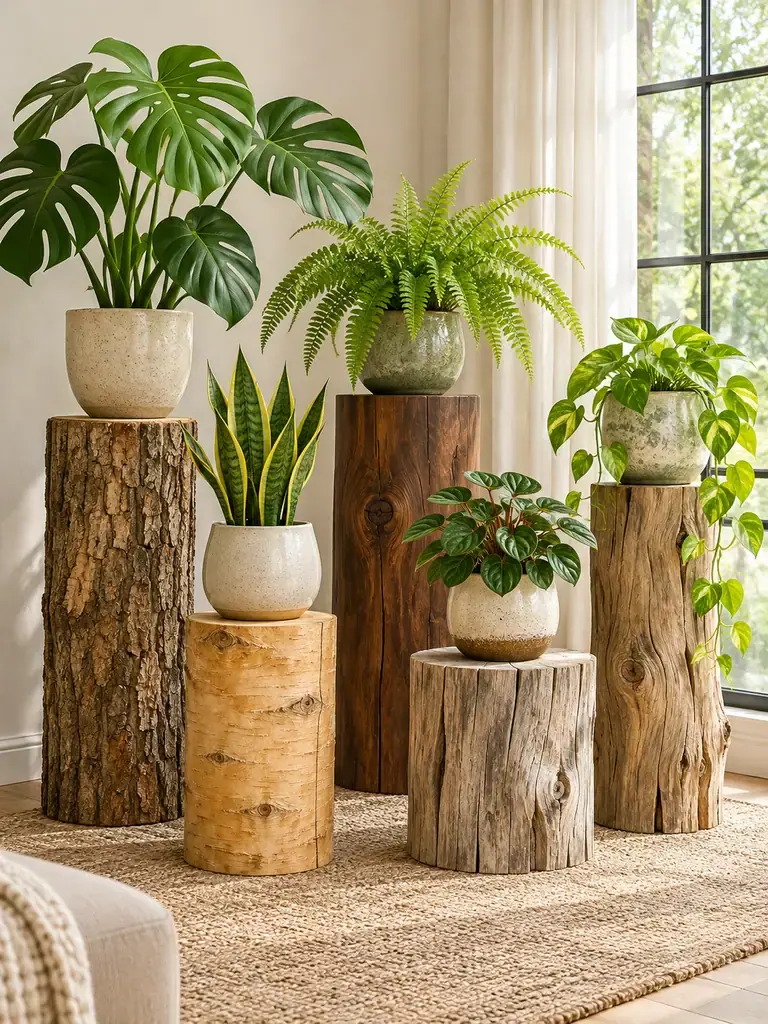
Choose solid log sections with contrasting textures, such as smooth-cut timber, rough bark, and weathered wood, while keeping their overall color palette harmonious. Position a different plant on each pedestal, balancing broad tropical leaves with upright foliage and smaller trailing varieties. Arrange the tallest pedestal toward the back and allow the lower pieces to create a gentle visual progression. This simple decorating technique works beautifully beside a large window, along an empty wall, or in a spacious entryway where natural textures can take center stage.
Handmade Rustic Botanical Planter Ideas
23. Make Coconut Shell Planters for Mini Succulents
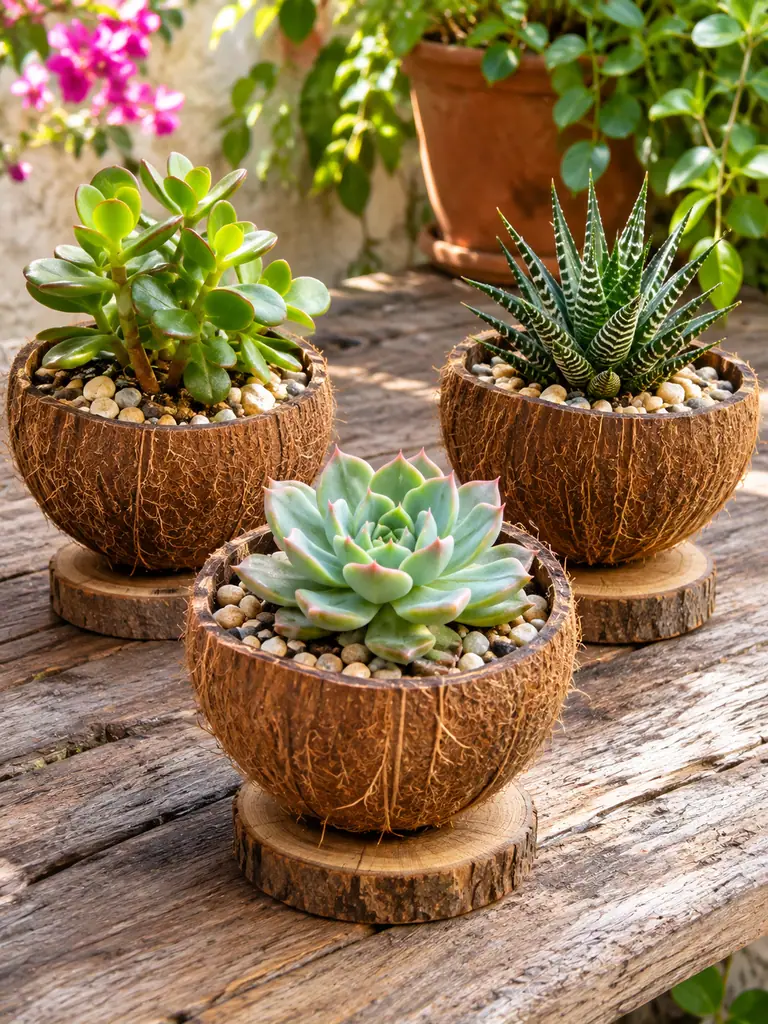
Clean and dry several shell halves, smooth their sharp edges, and prepare suitable drainage openings before adding a well-draining succulent potting mix. Choose compact plants such as haworthia, echeveria, or small jade plants, and position each shell on a stable wooden ring or stand. Group three planters together on a rustic table, sunny windowsill, or sheltered balcony for a naturally coordinated arrangement. The fibrous brown shells contrast beautifully with the smooth green leaves, creating an earthy decorative display that feels both simple and thoughtfully handmade.
24. Wrap Plant Pots with Natural Tree Bark
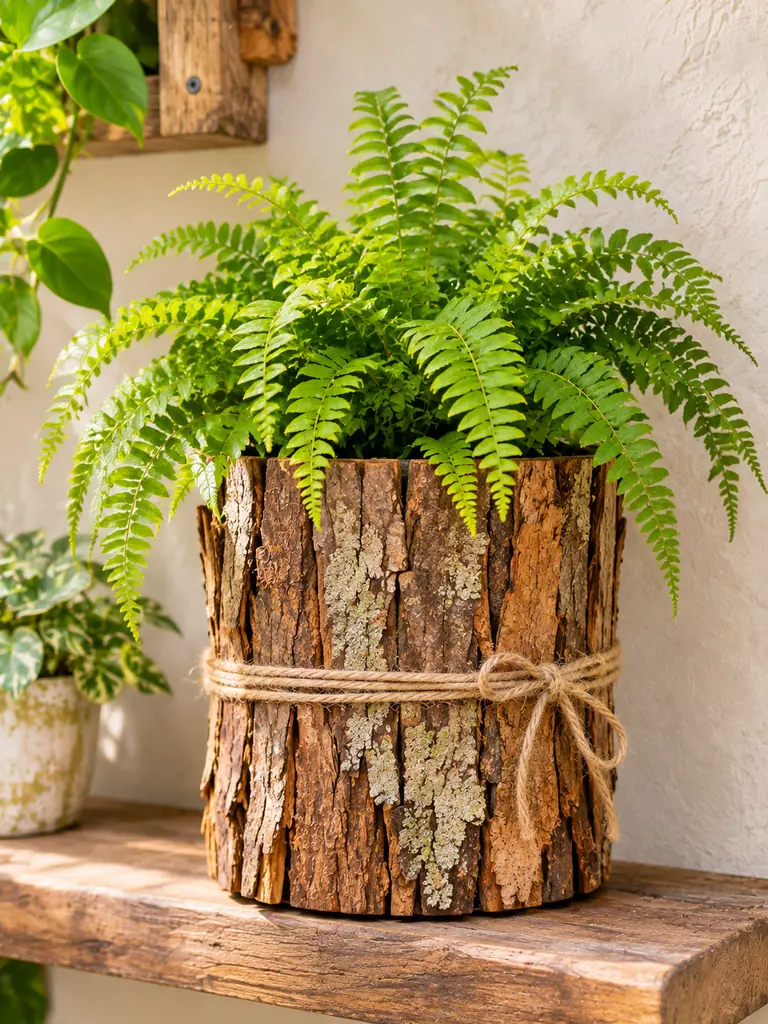
Choose a simple ceramic or plastic outer pot and surround it with carefully cleaned, dried bark pieces, arranging the irregular sections so their ridges and colors form an interesting textured surface. Secure the bark using suitable adhesive or natural cord, keeping the planting container removable for easy maintenance. Fill the inner nursery pot with a small fern, peperomia, or leafy houseplant. The combination of rugged brown bark and delicate green foliage creates a charming botanical arrangement that looks particularly attractive on wooden shelves, side tables, or farmhouse-style kitchen counters.
25. Create Moss-Covered Stone Planters
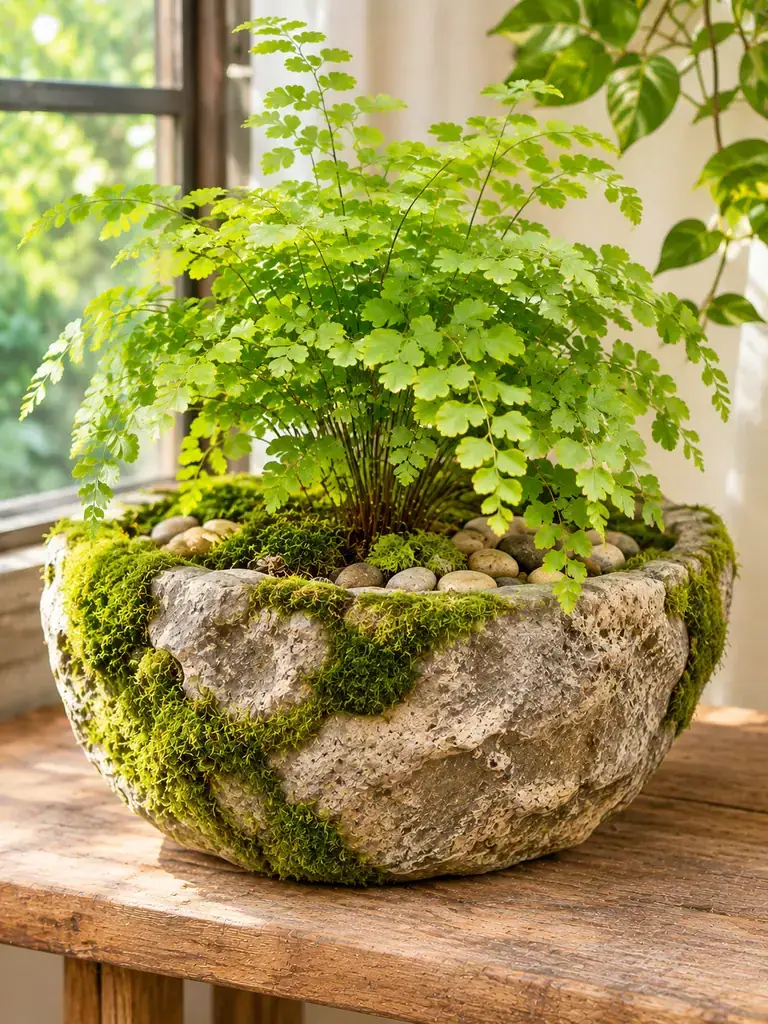
Start with a shallow stone-effect container or lightweight faux-stone pot, then attach small patches of preserved moss around its exterior, leaving areas of the rough stone visible. Add a removable planting container filled with a compact fern or another suitable indoor plant. The contrasting textures create the appearance of a naturally aged woodland planter. Display it on an entryway table, shaded shelf, or alongside other natural decorations. Keep preserved moss separate from regular watering, since it is decorative and doesn’t need to be treated like living greenery.
26. Turn a Fallen Log into a Woodland Succulent Garden
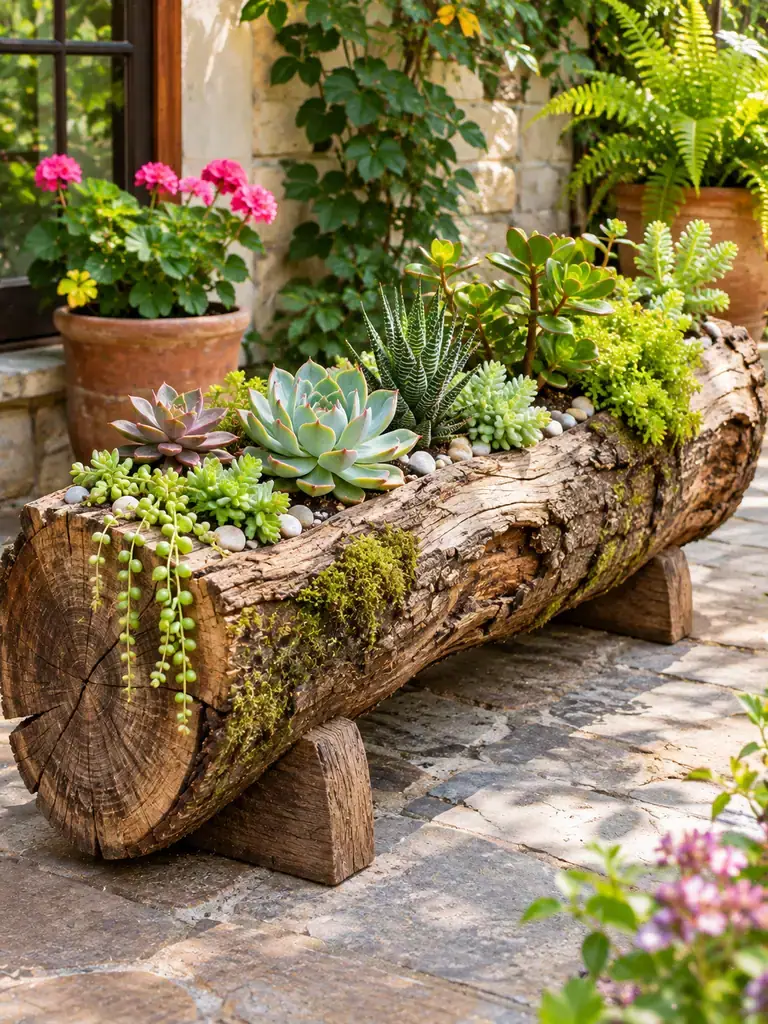
Choose a stable, thoroughly dried fallen log and create space along its upper surface for a removable planting trough or individual small nursery pots. Arrange succulents with contrasting shapes, including compact rosettes, upright leaves, and softly rounded foliage. Add decorative gravel and a few smooth stones around the planting inserts to create a realistic woodland-inspired composition. Place the display near a bright window where the succulents receive enough light. The rugged bark and sculptural plants create a beautiful contrast while keeping the overall arrangement compact and easy to style.
27. Make Rustic Clay Pots with Botanical Imprints
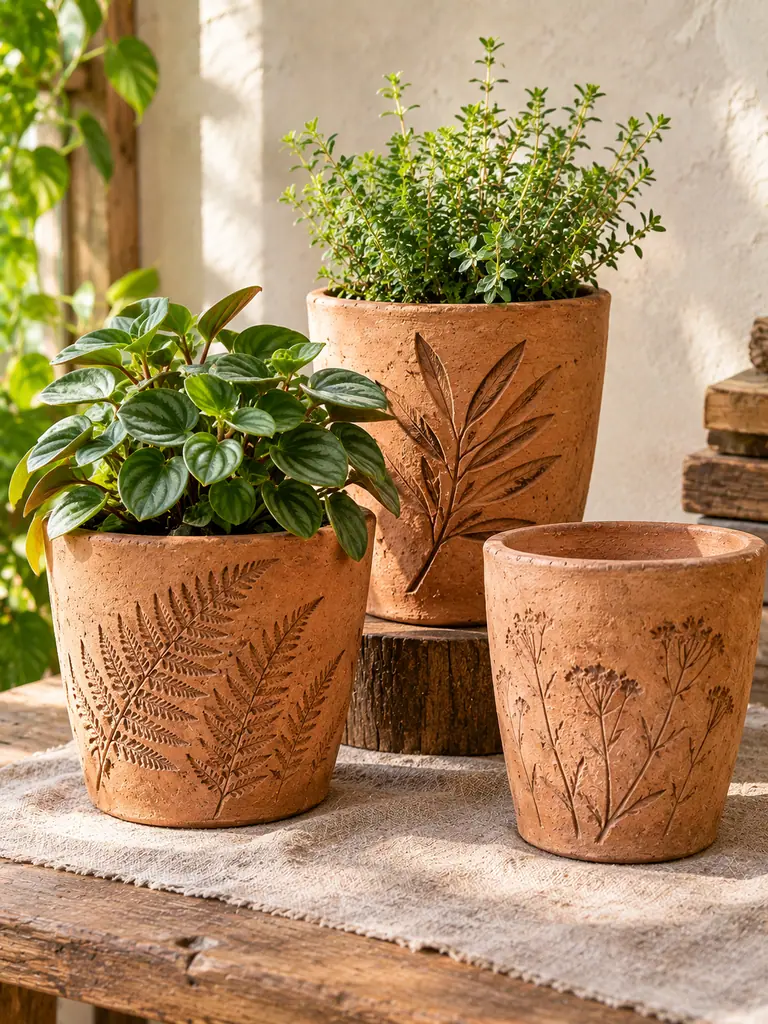
Press small fern fronds, wildflower leaves, or interesting foliage into soft pottery clay to create detailed natural patterns, then carefully remove the plant material to reveal its shape. Form the clay into small containers or use the technique on decorative sleeves, following the proper drying and firing instructions for the material. Finish the pots in warm terracotta, soft beige, or muted earthy tones. Pair them with simple leafy plants and arrange several together on a kitchen shelf or wooden windowsill for an elegant handmade display.
28. Design a Hanging Coconut Shell Botanical Garden
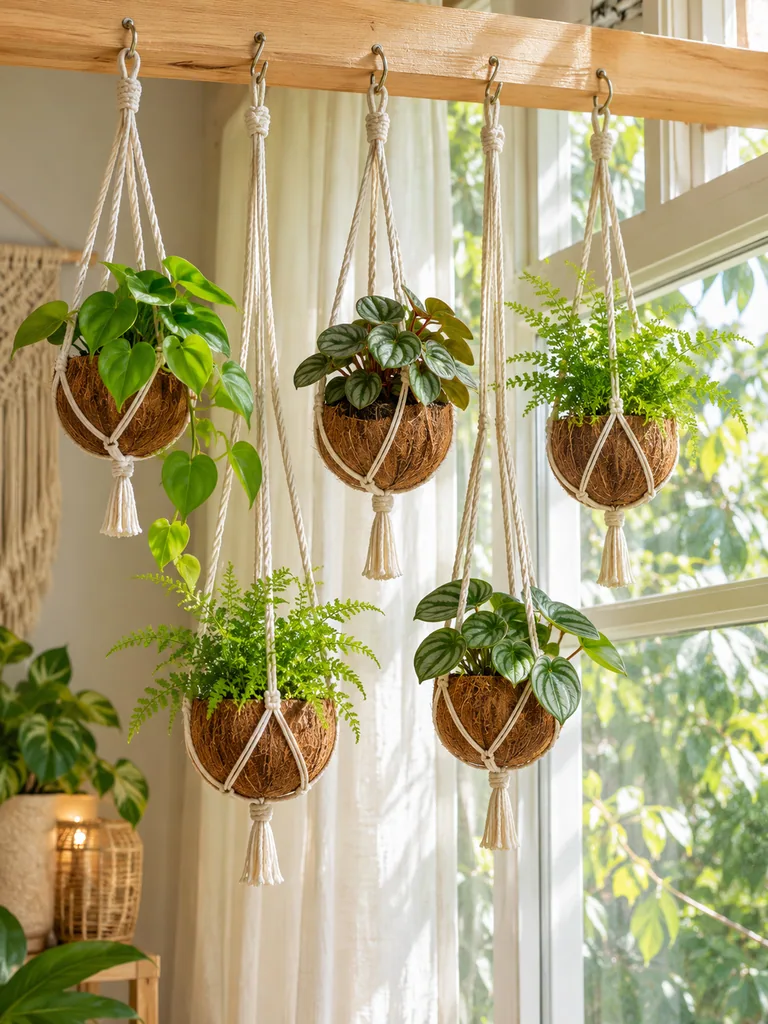
Prepare several cleaned shell halves, add appropriate drainage, and attach strong hanging cords through evenly spaced holes so each planter remains balanced. Fill them with compact plants suited to the available light and arrange the shells at different heights near a window or sheltered indoor corner. The combination of natural fibers, textured coconut shells, and fresh greenery creates a playful rustic appearance without taking up valuable floor space. Use secure overhead supports and remember that planted shells become heavier after watering.
29. Create a Rustic Woven Basket Plant Display
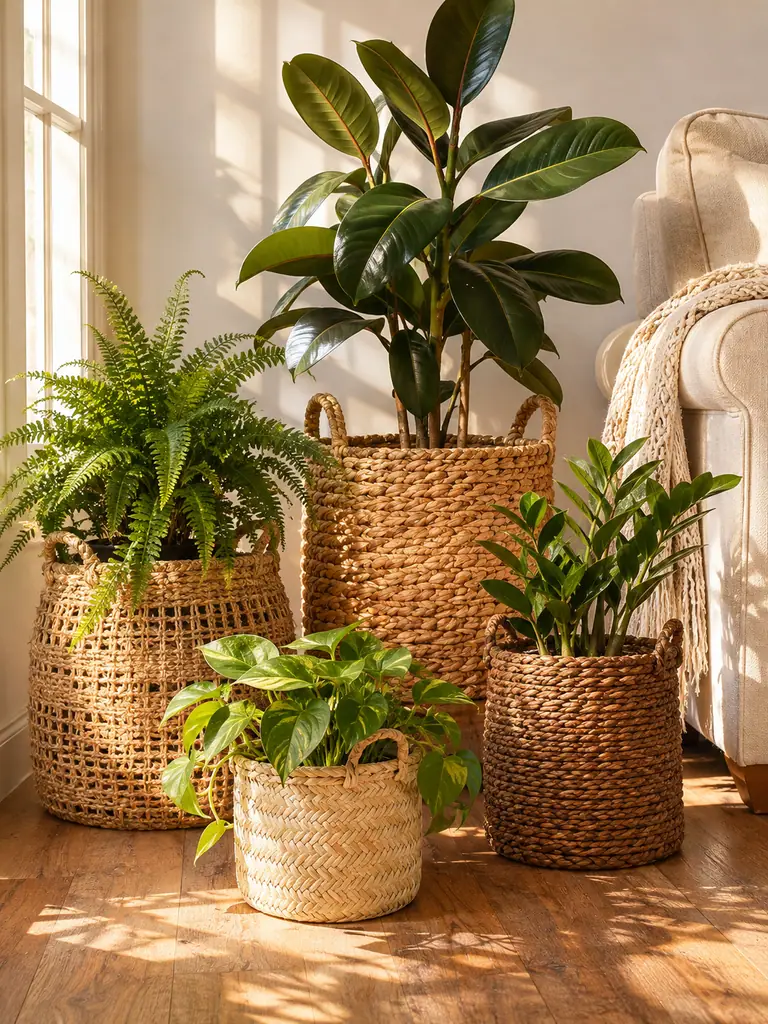
Choose a collection of seagrass, jute, or woven-grass baskets in complementary sizes and place removable nursery pots with waterproof liners inside. Arrange taller foliage plants toward the back and smaller leafy varieties in front to create a naturally layered composition. The neutral basket colors pair beautifully with cream upholstery, light wooden furniture, and earthy textiles. Position the arrangement beside a sofa, near a bright window, or in a cozy reading corner, making sure excess watering moisture doesn’t remain trapped inside the basket fibers.
30. Style a Botanical Terrarium Inside a Glass Jar
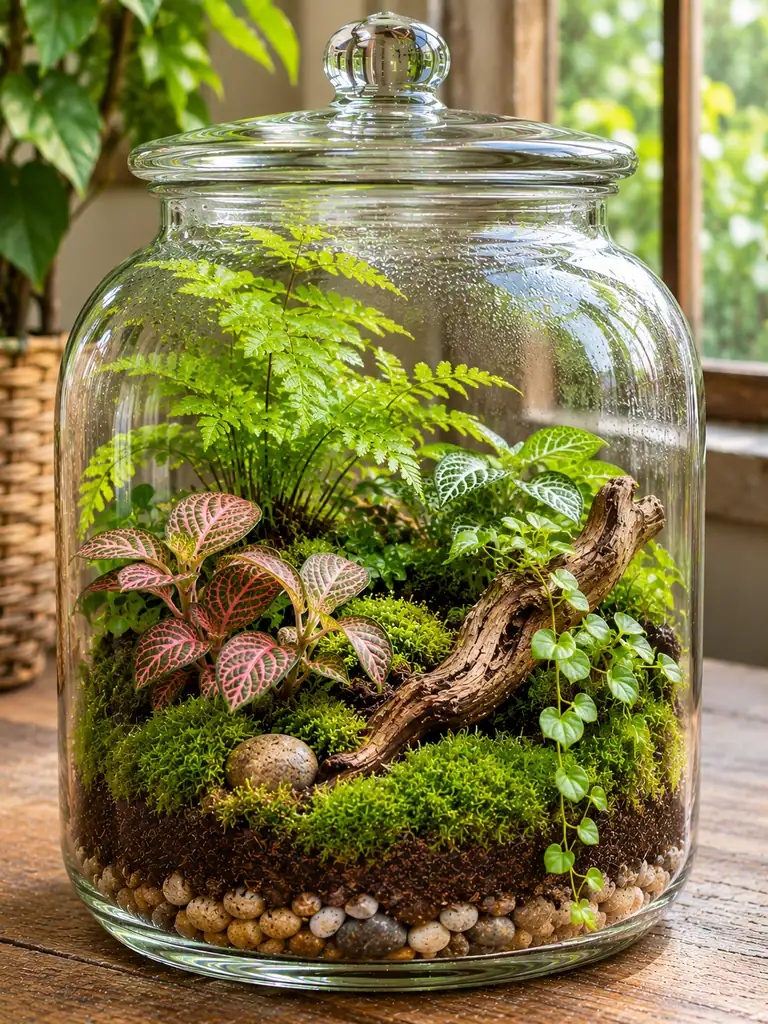
Begin with suitable terrarium substrate and arrange small stones, moss, miniature humidity-loving plants, and a piece of decorative driftwood inside. Use varied heights and textures to make the miniature landscape resemble a peaceful forest floor. A wide-mouthed jar is especially convenient because it allows easier planting and maintenance. Display the finished arrangement on a bookshelf, coffee table, or bright surface away from harsh direct sunlight. Choose plants with compatible moisture requirements, and avoid mixing desert succulents with humidity-loving terrarium species.
Botanical Wood Art, Bark, and Floral Decor
31. Create a Rustic Botanical Pressed Flower Frame
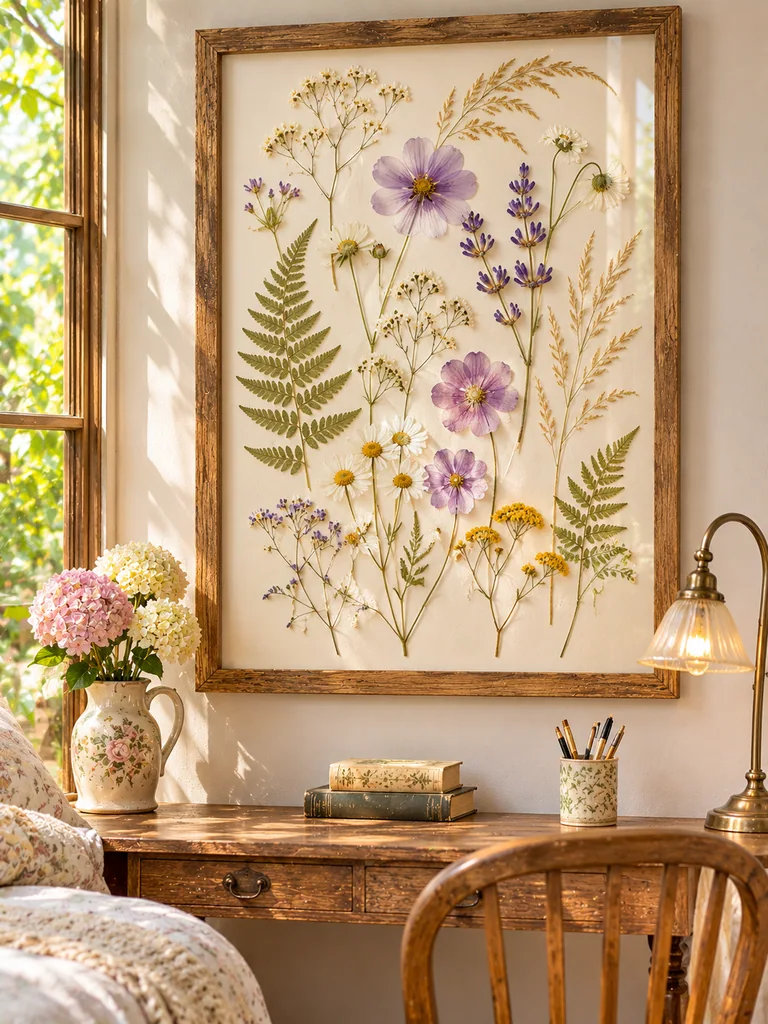
Carefully press small wildflowers, fern leaves, and interesting foliage until completely dry, then arrange them on an acid-free background inside a simple wooden frame. Leave some open space around each botanical element so its natural silhouette remains visible. A combination of muted green leaves, soft cream flowers, and warm wood creates an elegant rustic appearance. Hang the finished artwork in a bedroom, hallway, or reading nook where it can complement natural furniture and soft textiles. Keep the frame away from direct sunlight to reduce fading.
32. Decorate a Natural Wood Slice with Botanical Illustrations
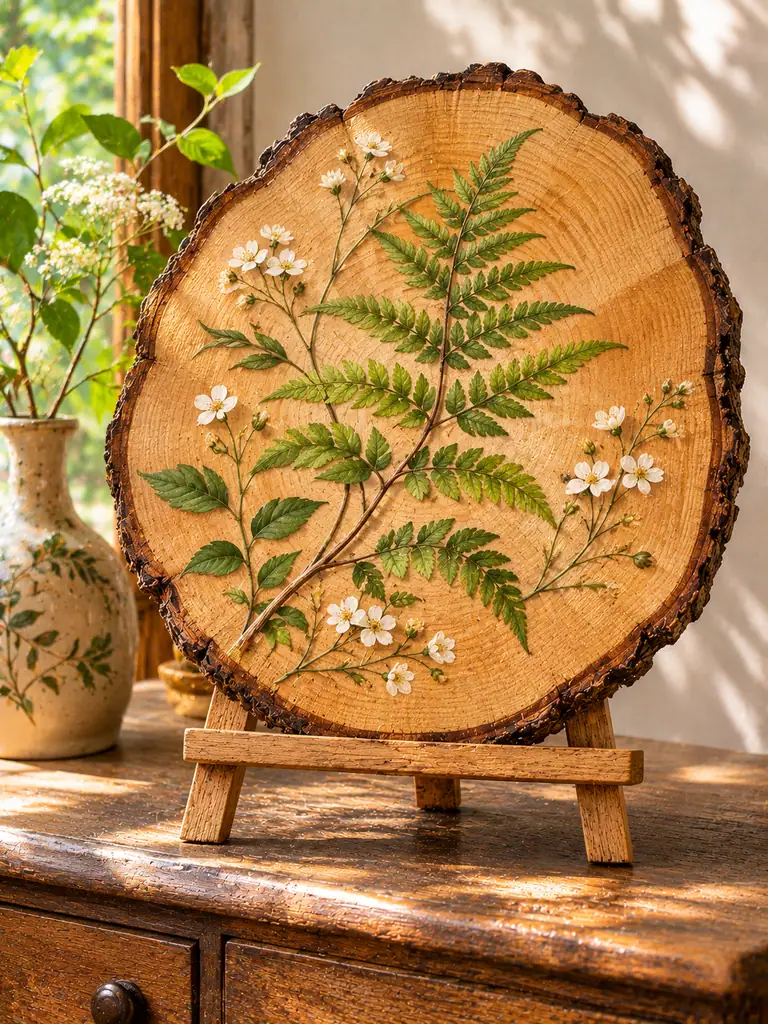
Choose a smoothly sanded wooden disc that retains its natural outer edge, then sketch a delicate design featuring olive branches, ferns, or simple woodland flowers. Paint the illustration using soft sage green, muted brown, ivory, and other earthy shades, allowing the visible growth rings to remain part of the artwork. Display one large painted slice on a shelf or arrange several smaller pieces together on a wall. The combination of natural wood grain and delicate artwork gives the finished decoration an appealing balance of rustic texture and handmade elegance.
33. Make a Woodland Moss and Mushroom Art Display
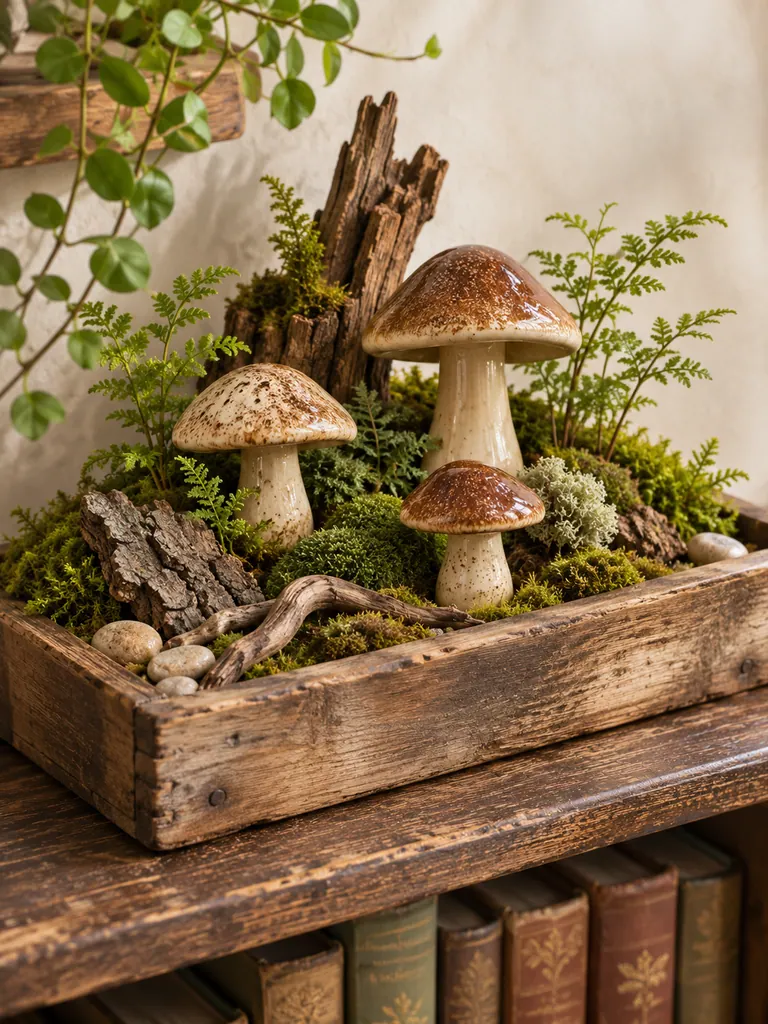
Start with a shallow wooden tray or shadow box, then create a textured landscape using preserved moss, small bark fragments, smooth stones, and decorative mushroom ornaments. Arrange the materials at different heights to resemble a tiny forest floor, leaving enough visible space for the individual elements to stand out. Wooden or ceramic mushroom decorations work particularly well because they blend naturally with earthy materials. Place the finished display on a bookshelf, side table, or entryway console, where its whimsical details can be appreciated up close.
34. Design a Rustic Botanical Wreath with Olive Branches
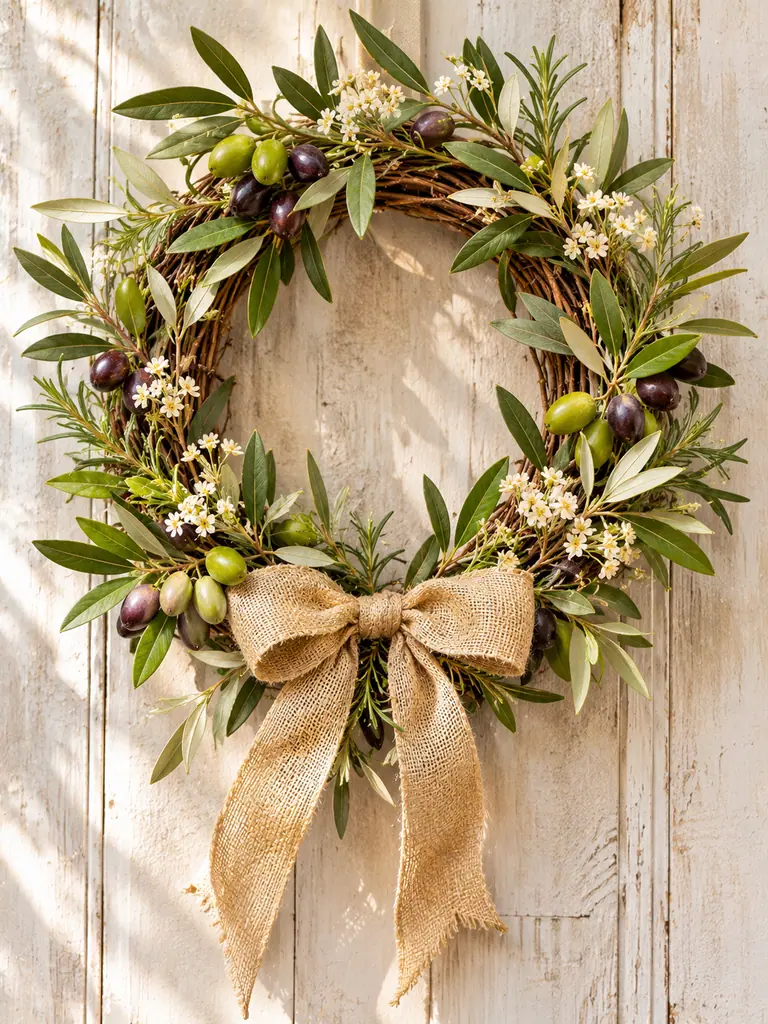
Start with a grapevine or twig wreath base, then weave olive branches, eucalyptus, dried grasses, and delicate seasonal flowers around selected sections. Keep the arrangement slightly asymmetrical, allowing a few branches to extend naturally beyond the circular shape. Muted silvery greens, warm brown twigs, and soft cream flowers create a sophisticated rustic palette that suits farmhouse, cottage, and Mediterranean-inspired interiors. Display the finished wreath above an entryway console, on an interior door, or against a neutral wall where its natural textures can become a beautiful decorative feature.
35. Create a Driftwood and Air Plant Sculpture
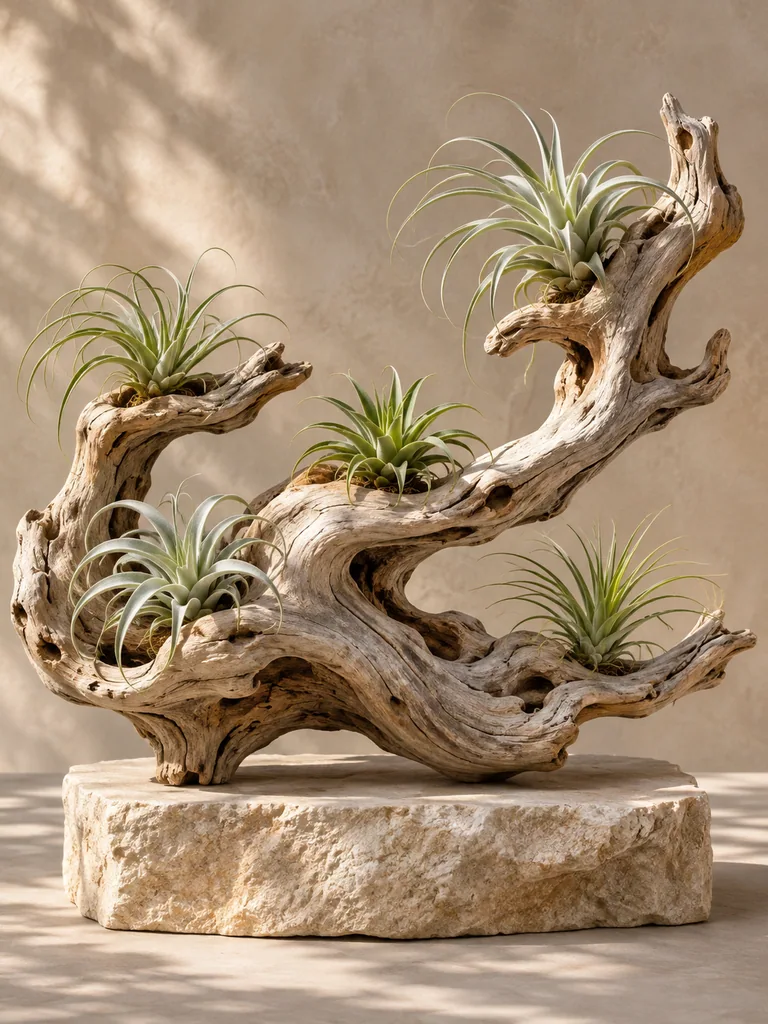
Select a naturally twisted piece of driftwood with several interesting crevices, then position Tillandsia plants along suitable branches using gentle, plant-safe supports. The narrow, arching leaves contrast beautifully with the rugged wood, giving the arrangement a modern yet distinctly rustic appearance. Place the sculpture on a side table, bookshelf, or bright windowsill with filtered light. Air plants still require regular watering and airflow, so make sure they can be accessed or removed for care and allowed to dry thoroughly afterward.
36. Style a Rustic Bark Vase with Wildflowers
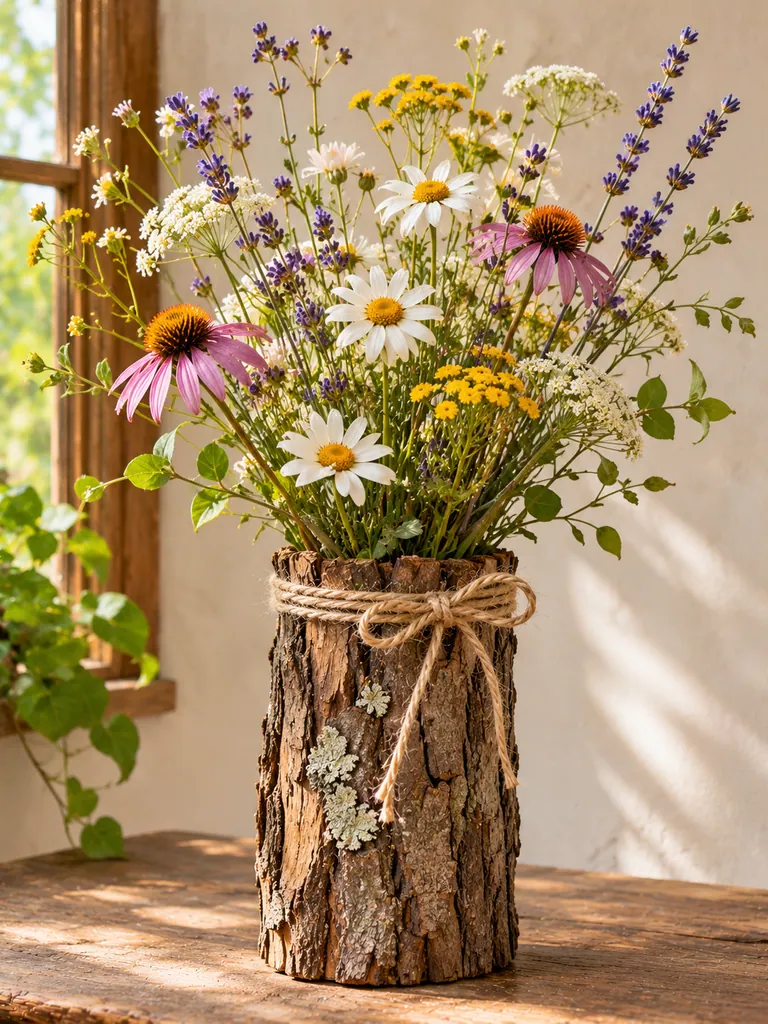
Select a sturdy glass vase or waterproof container and arrange pieces of dried natural bark vertically around its exterior. Secure the bark carefully while leaving the inner vessel removable for easy cleaning and water changes. Fill the vase with a loose arrangement of seasonal wildflowers, delicate white blossoms, leafy branches, or dried botanical stems. The contrast between rugged bark and soft flowers creates a warm, natural centerpiece that feels especially beautiful on a dining table, wooden console, or farmhouse-style mantel. Keep fresh flower water away from the bark to prevent moisture damage.
37. Make a Botanical Wood-Burning Art Panel
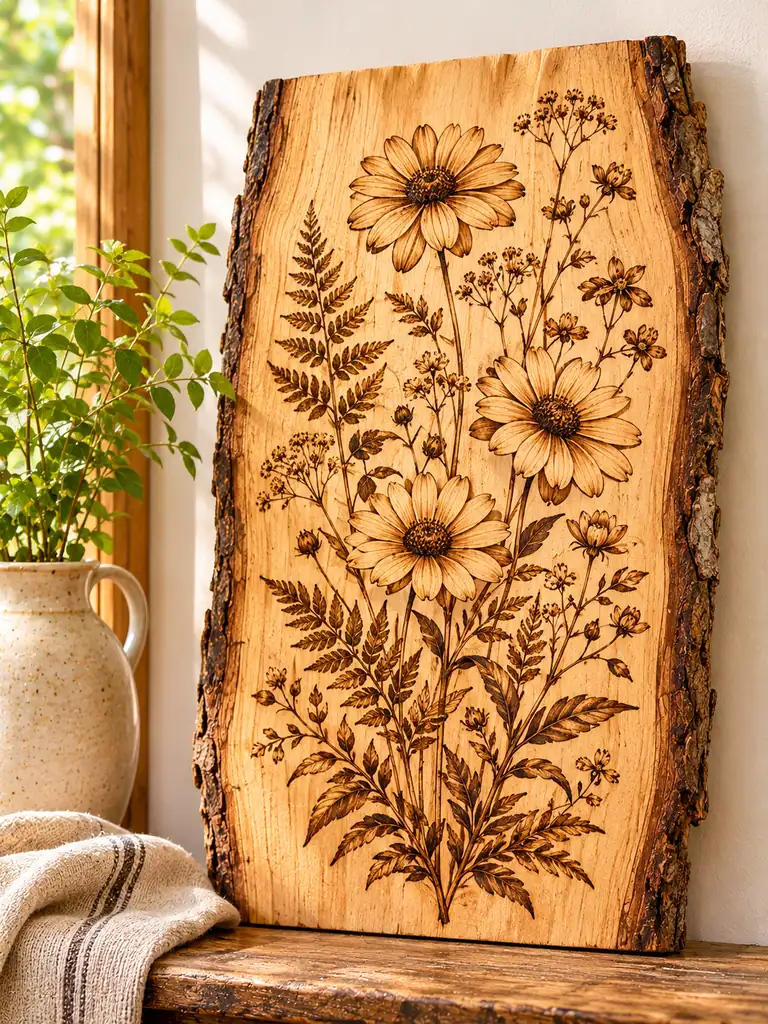
Begin with a smooth piece of untreated timber and sketch fern leaves, wildflower stems, or a flowing botanical branch onto the surface. Use a suitable wood-burning tool to carefully trace the design, creating subtle dark lines that contrast with the natural color of the wood. Leave enough unmarked space so the illustration feels elegant rather than overcrowded. Display the finished panel in a simple frame or on a wooden easel. Complete the project in a well-ventilated workspace and avoid burning painted, treated, or unidentified reclaimed wood.
38. Create a Rustic Woodland Lantern with Moss Accents
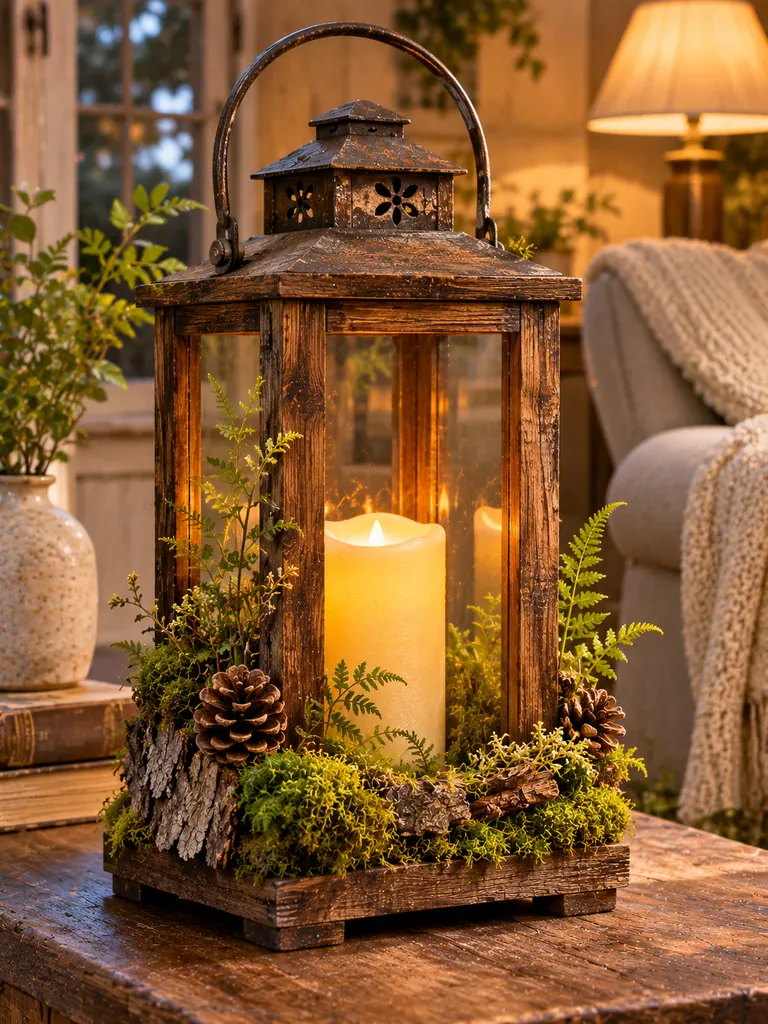
Choose a lantern with a sturdy timber frame and add small amounts of preserved moss, decorative bark, miniature pinecones, and delicate faux greenery around its lower edges. Place a warm battery-operated candle inside to create a cozy glow without the risk of exposing dry materials to an open flame. Display the lantern on an entryway table, beside a reading chair, or as part of a larger woodland-inspired arrangement. Keeping the botanical accents restrained allows the warm light and natural wood textures to remain the most beautiful features.
Creative Rustic Botanical Centerpieces and Home Accents
39. Style a Rustic Botanical Coffee Table Centerpiece
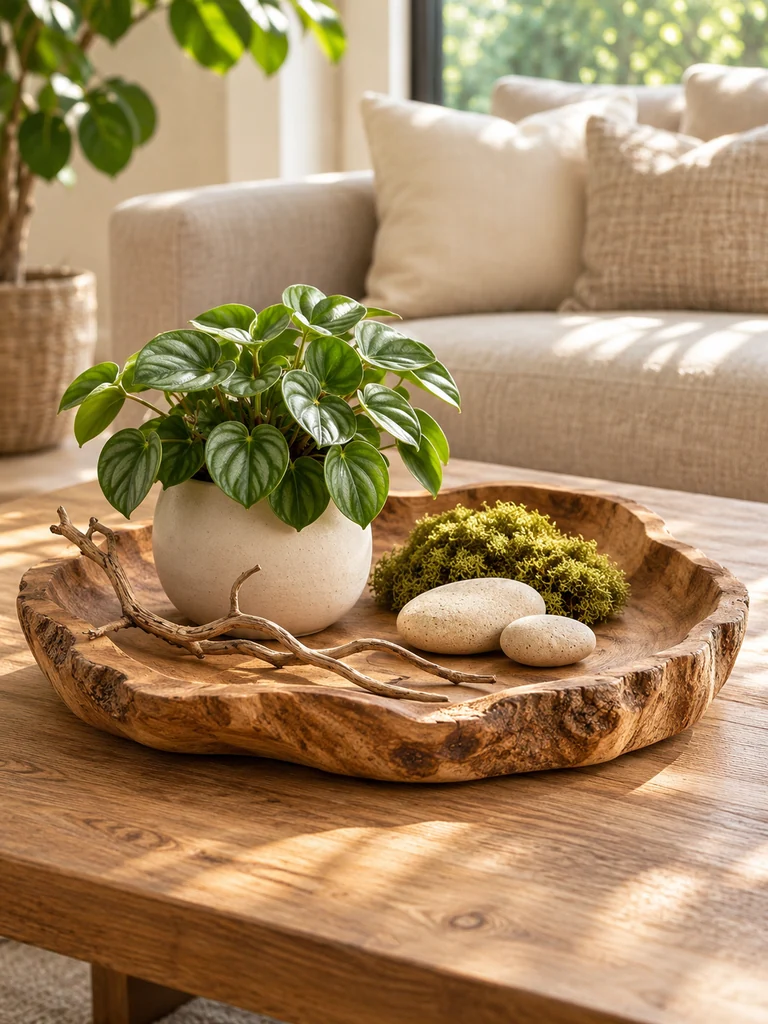
Choose a low wooden tray or rustic carved bowl and fill it with a small potted plant, decorative stones, preserved moss accents, and a few naturally curved twigs. Use different textures rather than too many colors, allowing the warm wood and fresh greenery to create the main visual interest. A small ceramic container in ivory or beige can provide a lovely contrast to the rougher materials. Keep the arrangement low and compact so it remains practical for everyday use and doesn’t interrupt conversation across the table.
40. Create a Woodland Dining Table Runner with Natural Greenery
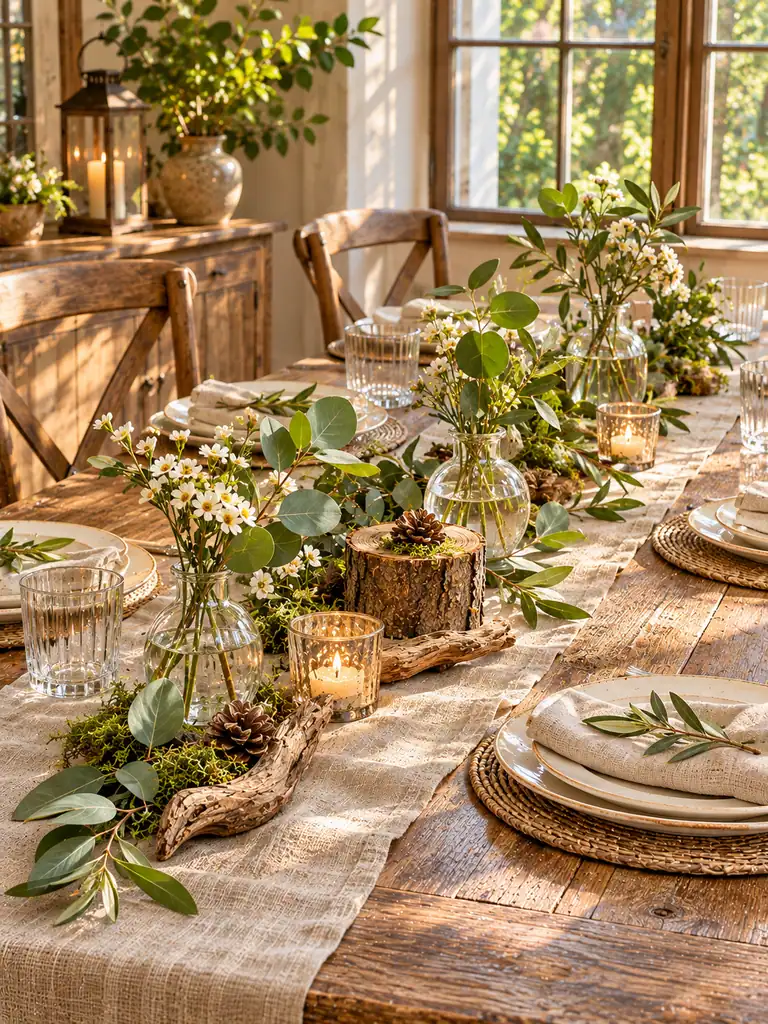
Begin with a simple linen runner, then arrange leafy branches, small flower vases, decorative wooden pieces, and carefully placed moss accents along its length. Mix different heights and textures while keeping the overall arrangement low enough for guests to see one another comfortably. Soft green foliage combined with white flowers and warm wooden details creates an elegant woodland atmosphere suitable for everyday meals or special gatherings. Complete the display with battery-operated candles or simple ceramic accents for a cozy finishing touch.
41. Design a Rustic Botanical Window Display
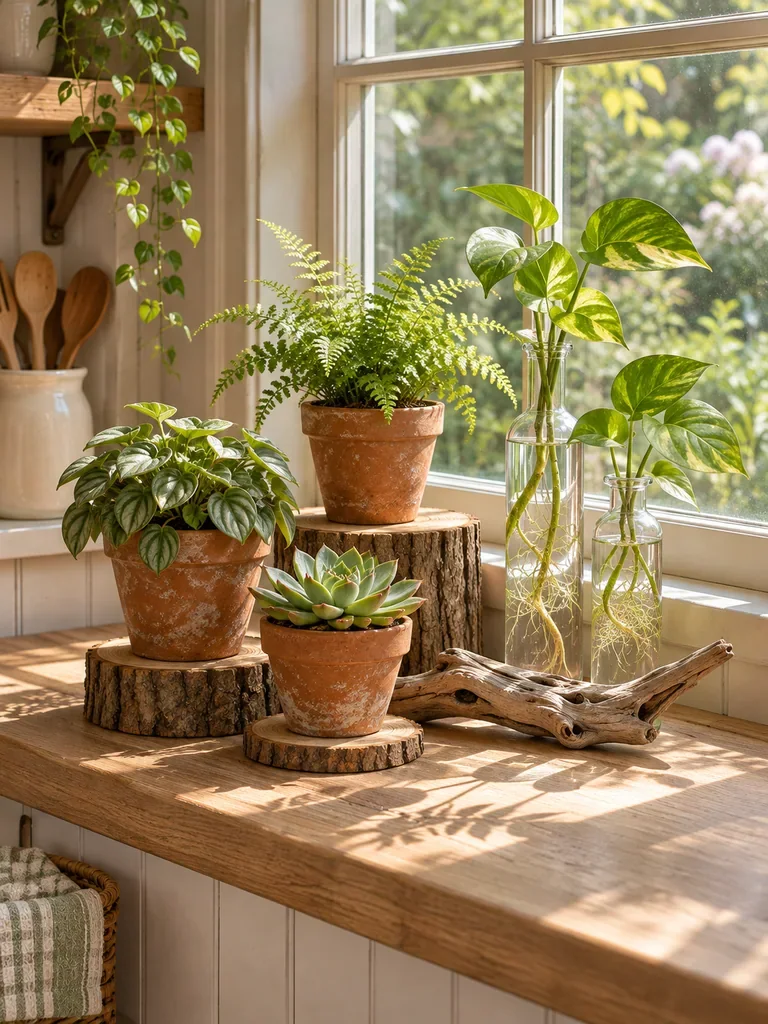
Use narrow wooden risers to elevate selected pots, then combine terracotta planters, clear glass propagation vessels, and a small piece of driftwood. Choose greenery with contrasting leaf shapes, mixing compact upright plants with softer trailing varieties. The natural daylight highlights the textures of the containers and creates beautiful shadows throughout the day. This simple arrangement works wonderfully in kitchens, bedrooms, and small apartments. Protect the windowsill with waterproof trays and select plants that suit the direction and intensity of the available sunlight.
42. Make a Hanging Driftwood Botanical Chandelier
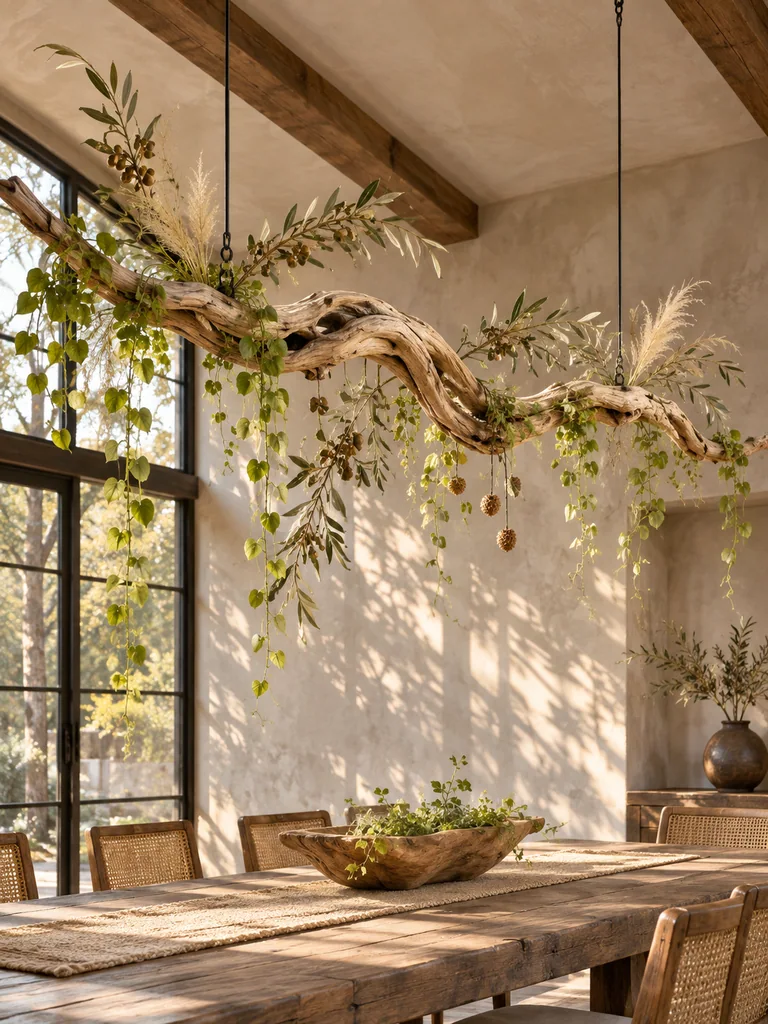
Choose a lightweight but sturdy branch structure and decorate it with carefully arranged dried grasses, faux trailing greenery, and delicate botanical accents. Allow some elements to hang lower than others, creating an airy, sculptural silhouette that resembles foliage growing naturally from the wood. This statement decoration looks extraordinary above a dining table or in a spacious entryway with sufficient ceiling height. Use properly rated ceiling supports and lightweight materials, keeping the installation well away from flames, electrical fixtures, and areas where people could accidentally strike it.
43. Create a Rustic Botanical Entryway Console Display
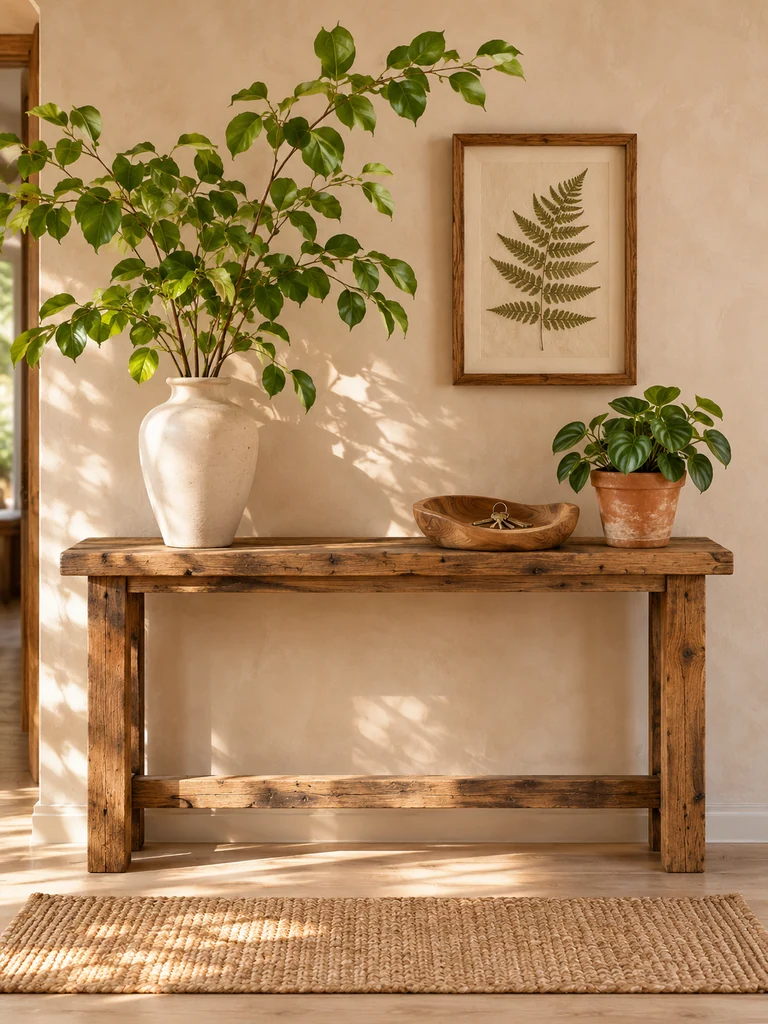
Start with a simple wooden console table and position a tall ceramic vase filled with leafy branches on one side. Balance it with a smaller potted plant, a shallow wooden bowl, and a framed botanical illustration. Choose complementary shades of sage green, beige, cream, and warm brown for a cohesive rustic appearance. The varying heights create an attractive composition without making the table feel overcrowded. Leave enough space for everyday essentials such as keys and mail so the display remains both beautiful and practical.
44. Style a Botanical Reading Nook with Wood and Greenery
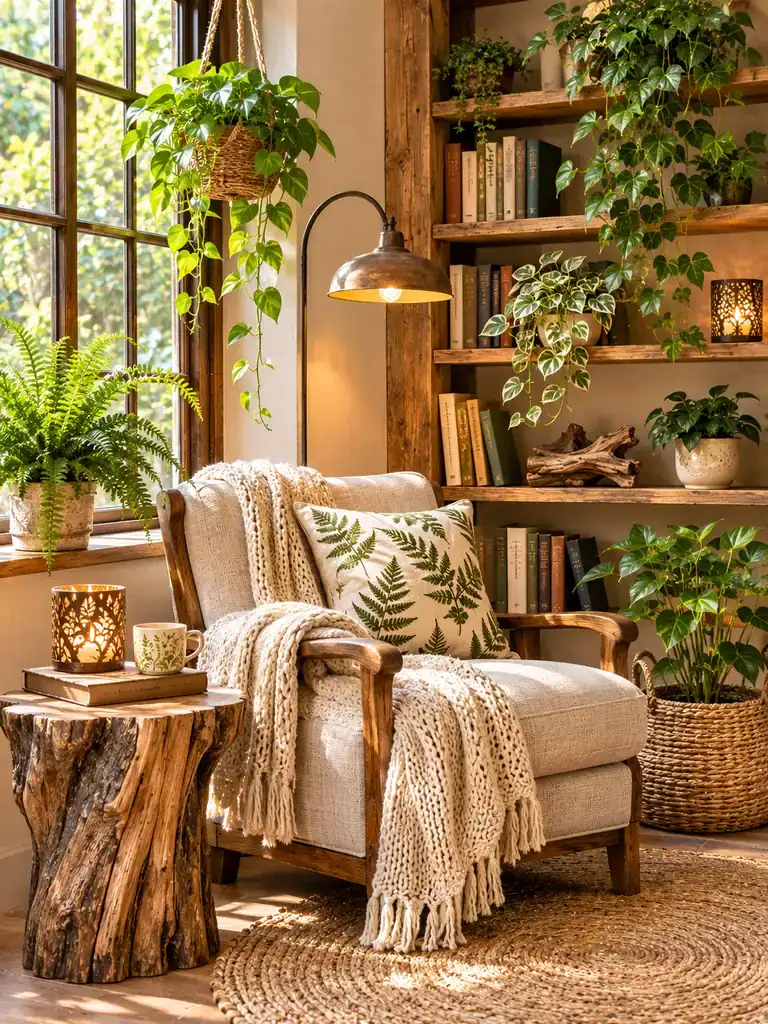
Position a cozy armchair beside a small wooden side table, then add a leafy floor plant and a compact botanical arrangement on a nearby shelf. A woven basket, textured linen cushions, and a soft throw blanket enhance the relaxed rustic atmosphere. Choose plants that suit the available light and arrange them so they don’t obstruct your reading lamp or walking space. The combination of warm wood, soft fabrics, and greenery creates a wonderfully comfortable setting for enjoying a book or relaxing after a busy day.
45. Design a Statement Woodland Botanical Corner
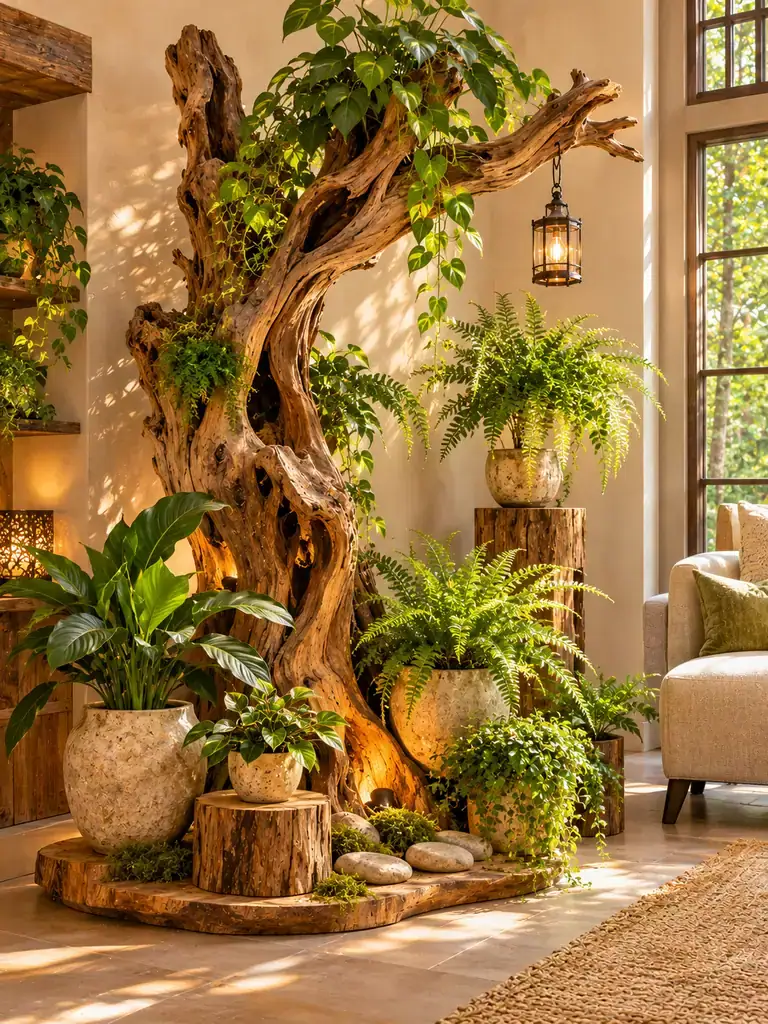
Begin with a large sculptural tree trunk or beautifully weathered piece of salvaged timber, then surround it with potted ferns, smaller leafy plants, and natural wooden pedestals. Introduce a few preserved moss accents and decorative stones to connect the different elements visually. Vary the plant heights while leaving enough open space to appreciate the natural shape of the wood. Soft indirect lighting can highlight the bark’s texture and create a warm evening atmosphere. This arrangement works especially well in spacious living rooms or bright indoor corners.
How to Style Rustic Botanical Decor in Different Rooms
Living room: Build around one focal piece: a sculptural wood plant stand, driftwood wall installation, or stump arrangement. Balance it with neutral upholstery and woven textiles.
Bedroom: Choose calming pressed-flower artwork, small potted plants, and soft natural textures instead of overcrowding the nightstand.
Kitchen: Try easy-to-clean herb pots, glass propagation displays, or narrow botanical shelves, keeping everything clear of food preparation surfaces.
Entryway: Add a bark-wrapped vase, botanical wreath, or simple console arrangement while leaving space for keys and everyday essentials.
Small apartments: Use wall-mounted displays, vertical stands, and windowsills to add greenery without losing useful floor space.
Best Natural Materials for Rustic Botanical Decorating
Rustic botanical styling works best when a few materials repeat across the space. Combine reclaimed wood for plant stands and shelves, weathered driftwood for sculptural shapes, bark for textured vase sleeves, preserved moss for decorative artwork, and coconut shells for compact planters. Terracotta and clay add earthy warmth; glass propagation tubes add lightness; woven baskets soften larger plant displays. Choose responsibly sourced or salvaged wood, and allow some natural grain and negative space to remain visible.
How to Keep Rustic Botanical Displays Beautiful
Moisture and drainage: Keep living plants in removable, properly draining inner pots and use waterproof liners or saucers beneath them. Never let wet soil rest directly against untreated wood.
Light and watering: Match plants to the actual location. Succulents generally favor brighter light; many tropical foliage plants prefer bright, indirect light. Refresh propagation water and water individual species according to their needs.
Cleaning and stability: Gently dust bark, moss artwork, and driftwood with a soft brush. Secure wall-mounted holders and ceiling installations to suitable supports, allowing for the additional weight of wet soil.
Household safety: Research the pet and child safety of each plant, use battery-operated candles near dried botanicals, and keep large displays out of walkways.
Frequently Asked Questions
What is rustic botanical decor?
It combines natural greenery and botanical motifs with organic materials such as reclaimed wood, bark, driftwood, moss, terracotta, and handmade textures. The goal is a comfortable, nature-inspired home.
How can I decorate with rustic botanical elements on a budget?
Repurpose glass jars for propagation, paint botanical designs on wooden offcuts, or group inexpensive potted plants on existing shelves and wood slices. Start with one focal arrangement.
Which indoor plants work best with rustic wood decorations?
Pothos, peperomias, ferns, spider plants, and carefully selected succulents complement rustic wood. Choose each species according to its light, watering, and household safety requirements.
Can I create rustic botanical decor without live plants?
Yes. Preserved moss, pressed flowers, dried branches, handmade botanical art, and realistic faux greenery create similar visual warmth with less maintenance.
How do I protect wooden planters from moisture?
Use a removable waterproof inner pot with drainage, empty excess water promptly, and avoid placing damp soil against decorative timber.
How can I use rustic botanical decor in a small apartment?
Choose compact windowsill arrangements, narrow wooden shelves, wall propagation tubes, and one vertical garden. Keep floor space and walking routes clear.
Final Thoughts
Rustic botanical decor celebrates the warmth of wood, the beauty of natural imperfections, and the calming presence of greenery. From coconut shell planters and pressed flowers to driftwood sculptures and woodland-inspired corners, small changes can add real character to a room. Start with one idea you love, adapt it to the light and space available, and build a home that feels naturally personal and welcoming.
Which of these 45 rustic botanical decor ideas would you love to try first?