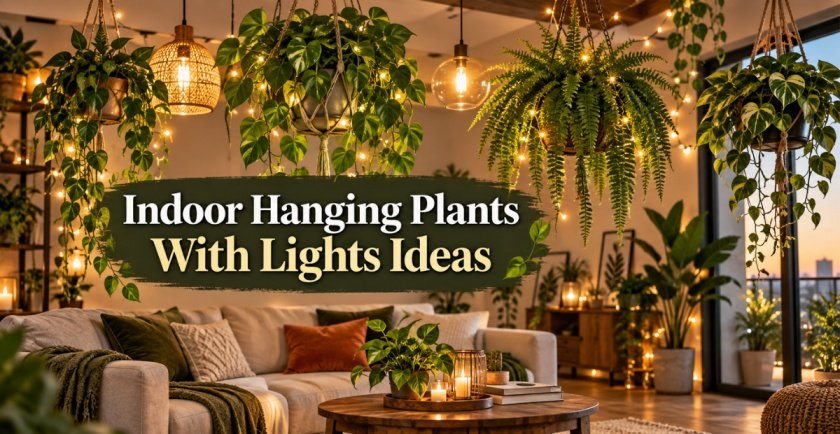
Indoor greenery can completely change the atmosphere of a room, but when plants are lifted off tables and shelves and paired with thoughtful lighting, the effect becomes even more striking. Hanging vines catch the light, glossy leaves create delicate shadows, and unused ceiling space becomes part of the decor.
That is why indoor hanging plants with lights ideas work so beautifully in bedrooms, living rooms, kitchens, bathrooms, offices, stairwells, and compact apartments. You are combining two powerful design elements at once: natural greenery and ambient illumination.
The light can be purely decorative or, in darker locations, a properly chosen grow light can support the plant while still looking intentional. The key is to give the greenery enough breathing room, keep wiring neat, and make sure the lighting complements rather than overwhelms the foliage.
1. Fairy Lights Wrapped Around a Pothos Hanging Basket
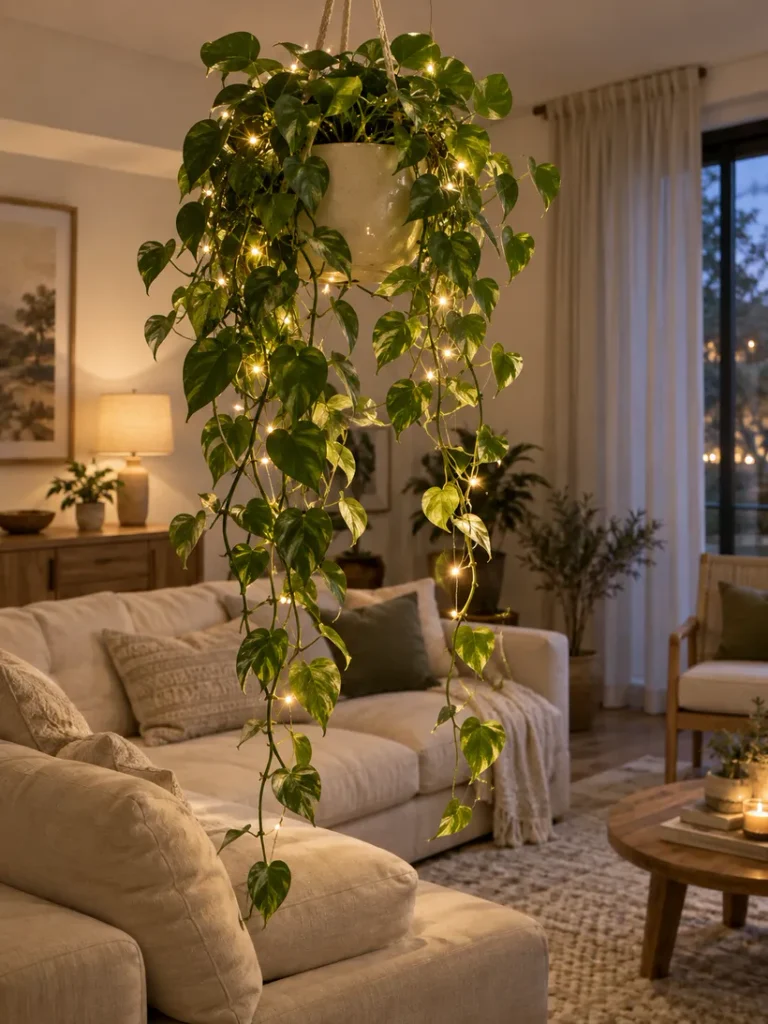
A simple pothos basket becomes much more atmospheric once tiny warm LEDs are woven loosely through its vines. Choose a full plant with several long stems so the light appears to float between the heart-shaped leaves rather than forming one obvious wire line.
Keep the strand relaxed instead of twisting it tightly around stems. Warm white light works especially well in bedrooms and living rooms because it makes the green foliage feel softer after sunset while still allowing the plant itself to remain the focal point.
2. Macramé Planter With Warm String Lights
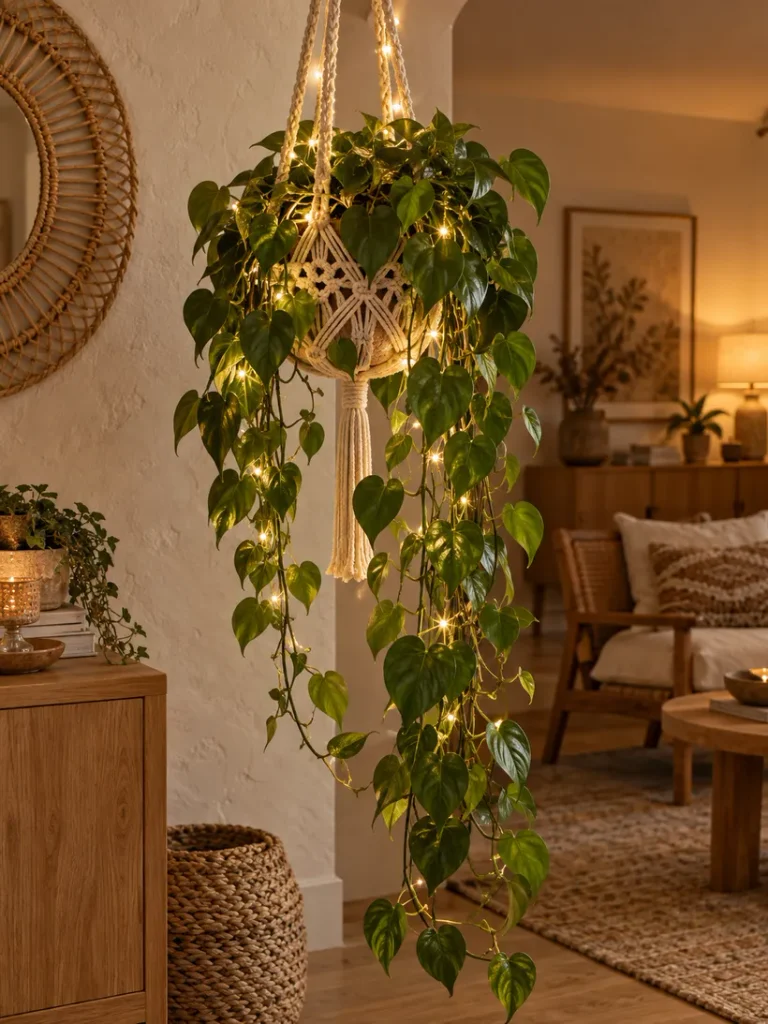
Macramé already brings texture and movement to a hanging planter, so adding a thin strand of warm lights can make the cords glow as well as the foliage. A cream cotton hanger paired with pothos, heartleaf philodendron, or a compact spider plant gives the display an easy bohemian character.
Weave the LEDs through only a few sections of cord and let the rest of the light fall naturally around the leaves. This keeps the arrangement refined instead of overly decorative and makes it easier to remove the plant for watering.
3. Hanging Ivy Above a Bed With Soft Lights
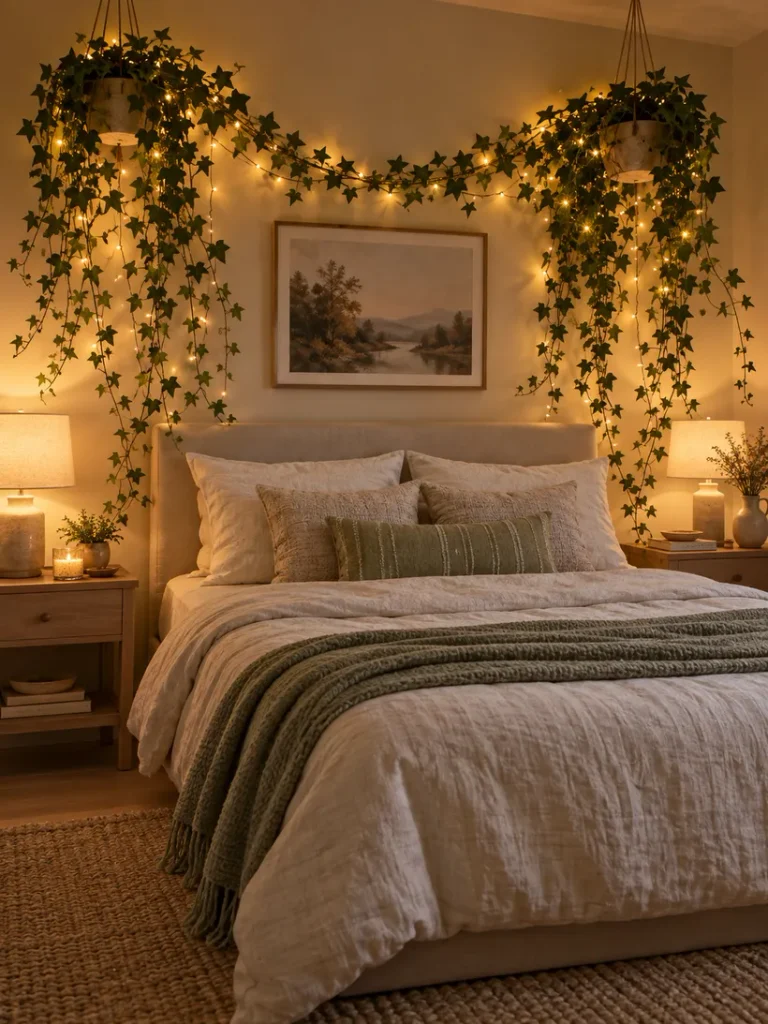
Hanging ivy or another trailing vine above the bed can create a gentle canopy effect without requiring a full ceiling installation. Two planters positioned toward the outer edges of the headboard usually look more balanced than one heavy planter directly overhead.
Run soft fairy lights behind the vines so the leaves are silhouetted against a warm glow. Keep the pots easy to access and far enough from bedding that watering remains simple and safe.
4. Floating Plant Shelf With Hidden LED Strips
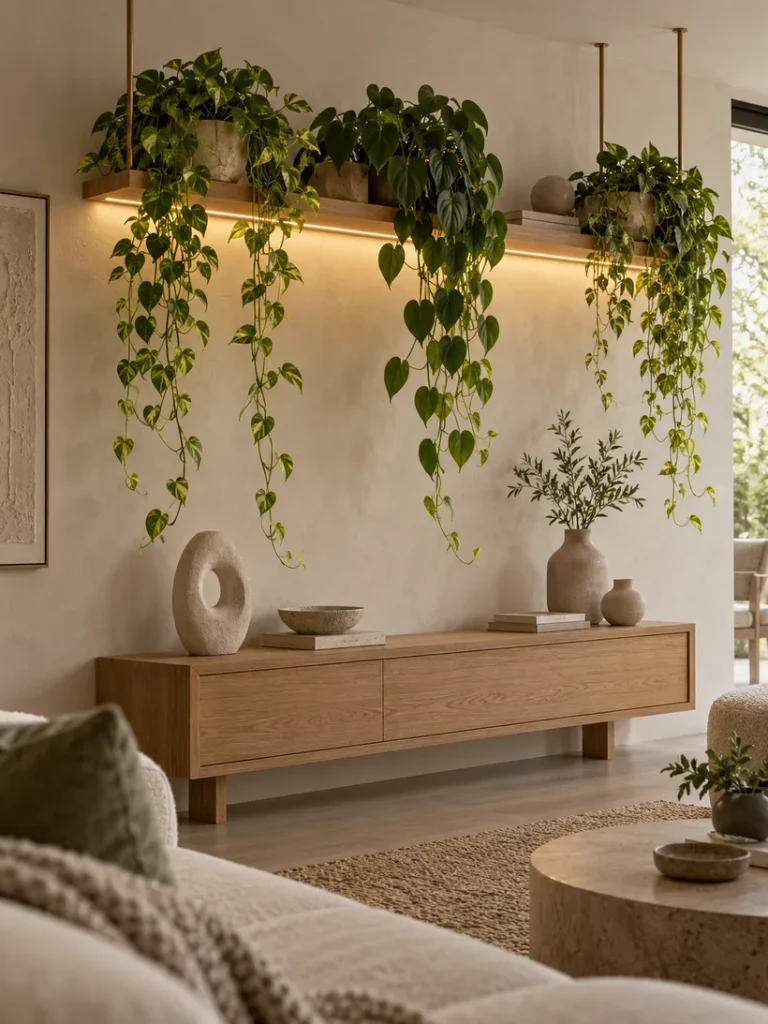
A slim shelf suspended from the ceiling gives you room for several plants while still preserving the visual lightness of a hanging display. Trailing plants can spill over the front and sides, creating a floating ribbon of greenery.
Hide a warm LED strip beneath the shelf to illuminate the foliage and any console or seating area below. Concealed wiring is important here; the cleaner the installation, the more the shelf looks like a built-in architectural feature.
5. Hanging Glass Terrariums With Micro Lights
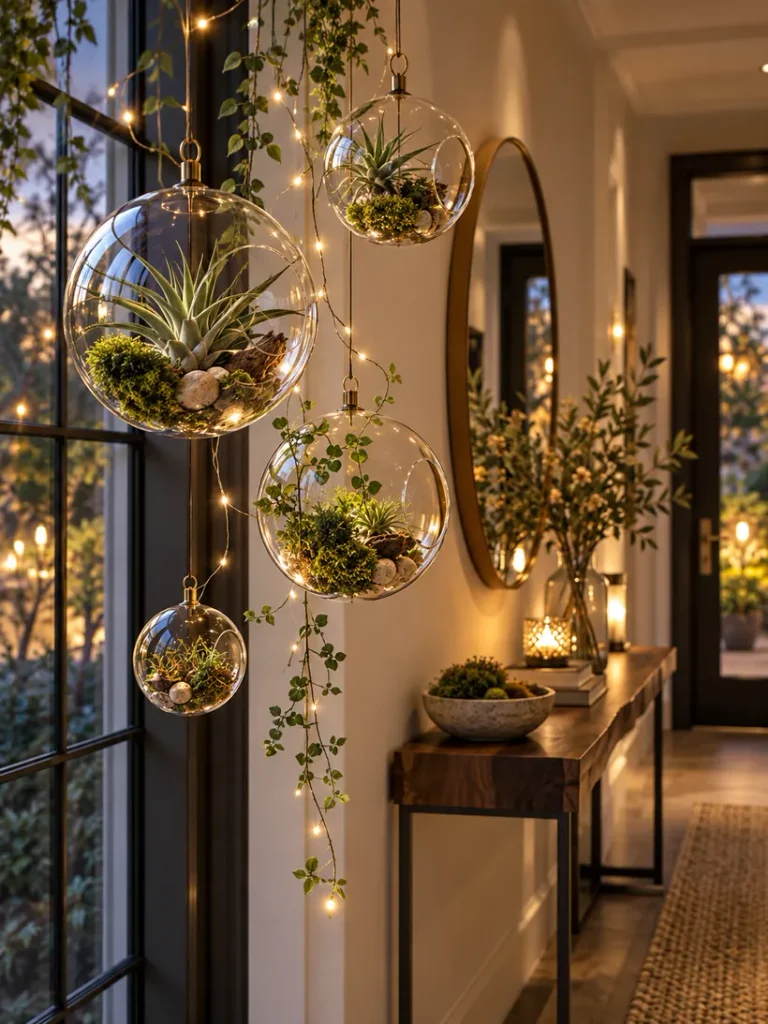
Clear glass terrariums work beautifully with miniature lighting because the glass multiplies reflections. Suspend several globes at different heights and use air plants, moss, or other plants that suit the container conditions.
Instead of filling each globe with lights, weave micro LEDs around the group so the glow reflects across the glass surfaces. The result feels delicate and jewel-like, particularly near a window or entry console.
6. Ceiling-Mounted Pothos With Cascading Fairy Lights
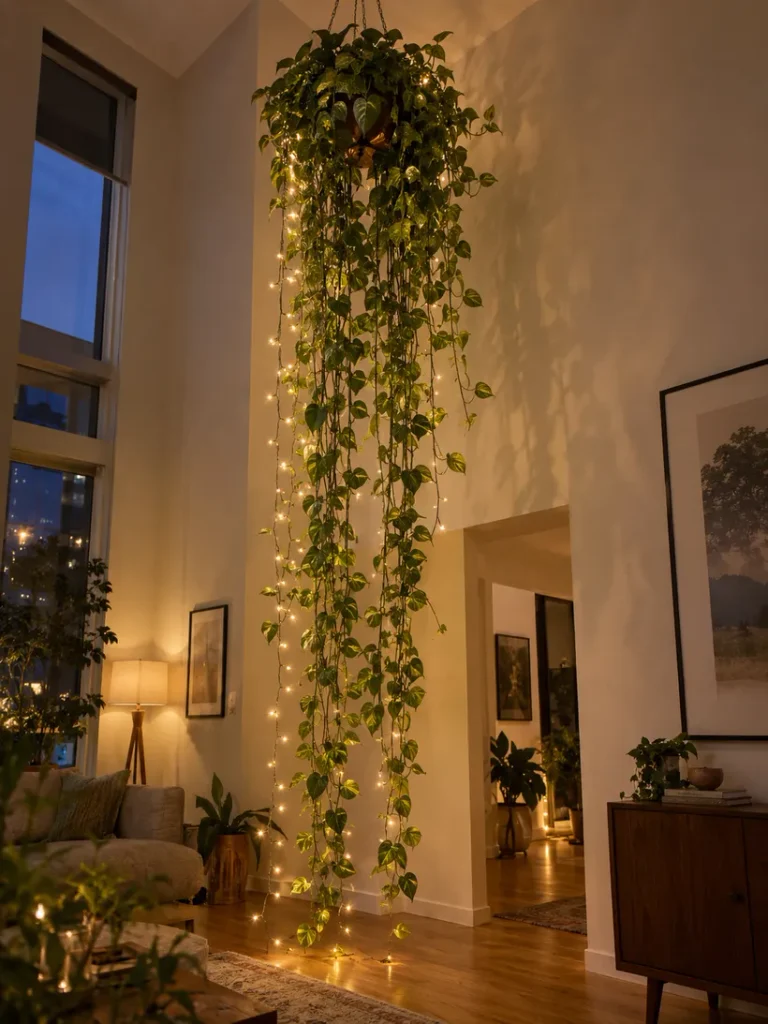
A mature pothos hanging from a high ceiling can become a dramatic vertical feature when its vines are allowed to fall several feet. Add a few thin strands of fairy lights beside the longest vines to emphasize the downward movement.
Avoid perfect symmetry. Natural differences in vine length make the installation feel more like a living waterfall and less like a decorative curtain.
7. Hanging Fern Under a Pendant Grow Light
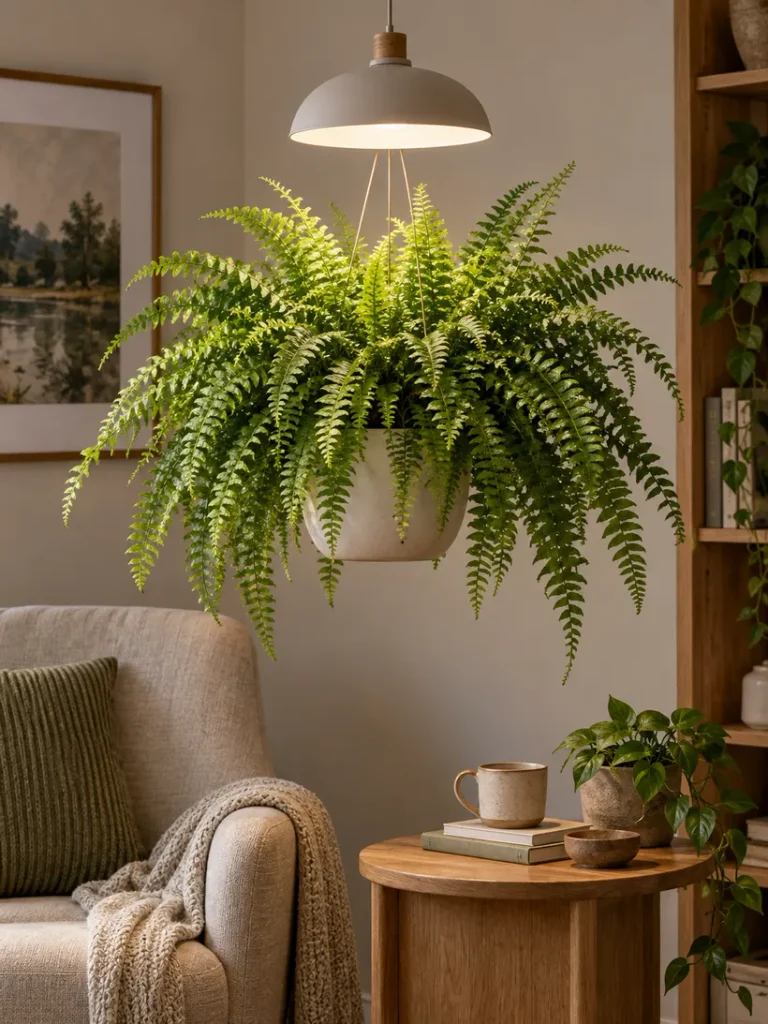
A hanging fern under a pendant grow light combines practical plant care with a strong decorating moment. The layered fronds catch light beautifully and create soft, feathery shadows around the planter.
Choose a grow fixture that looks like an ordinary pendant so the setup feels integrated with the room. Always follow the light manufacturer’s guidance for distance and intensity rather than assuming a decorative bulb provides enough usable light.
8. LED Halo Above a Hanging Plant
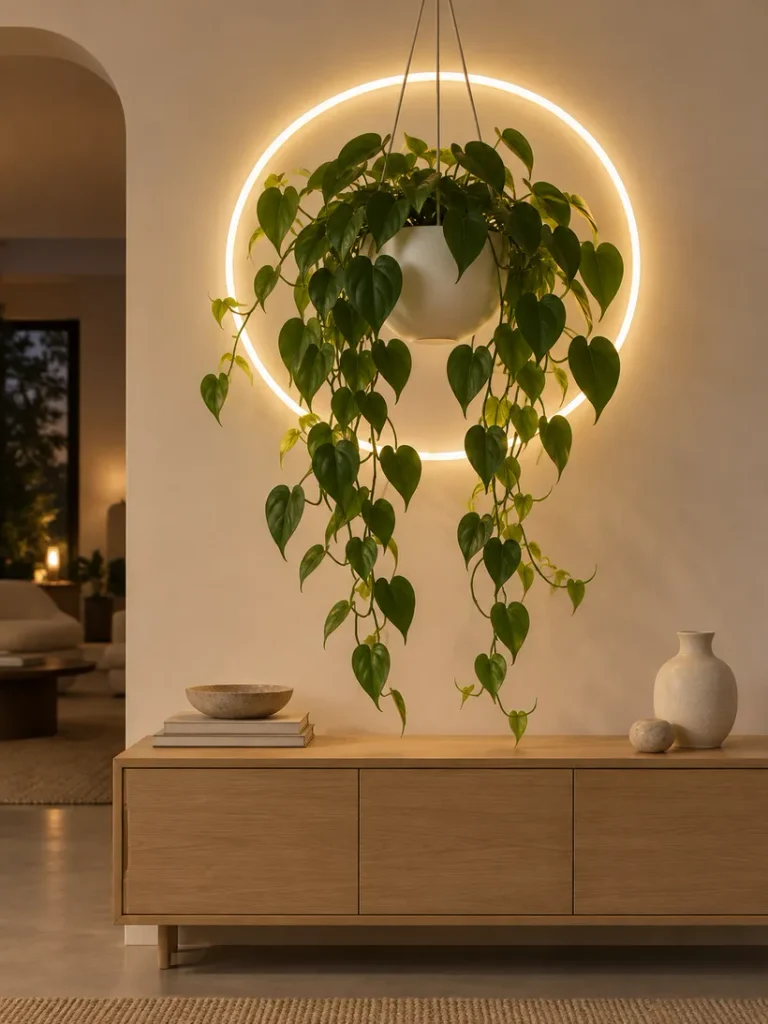
A circular LED halo behind a hanging plant creates a clean contemporary focal point. Heartleaf philodendron, pothos, and hoya all work well because their vines can gradually overlap the illuminated ring.
Keep the planter and surrounding decor simple so the contrast between the geometric circle and organic foliage remains strong. This is particularly effective in minimalist bedrooms, offices, and modern apartments.
9. Window Hanging Plants With Curtain String Lights
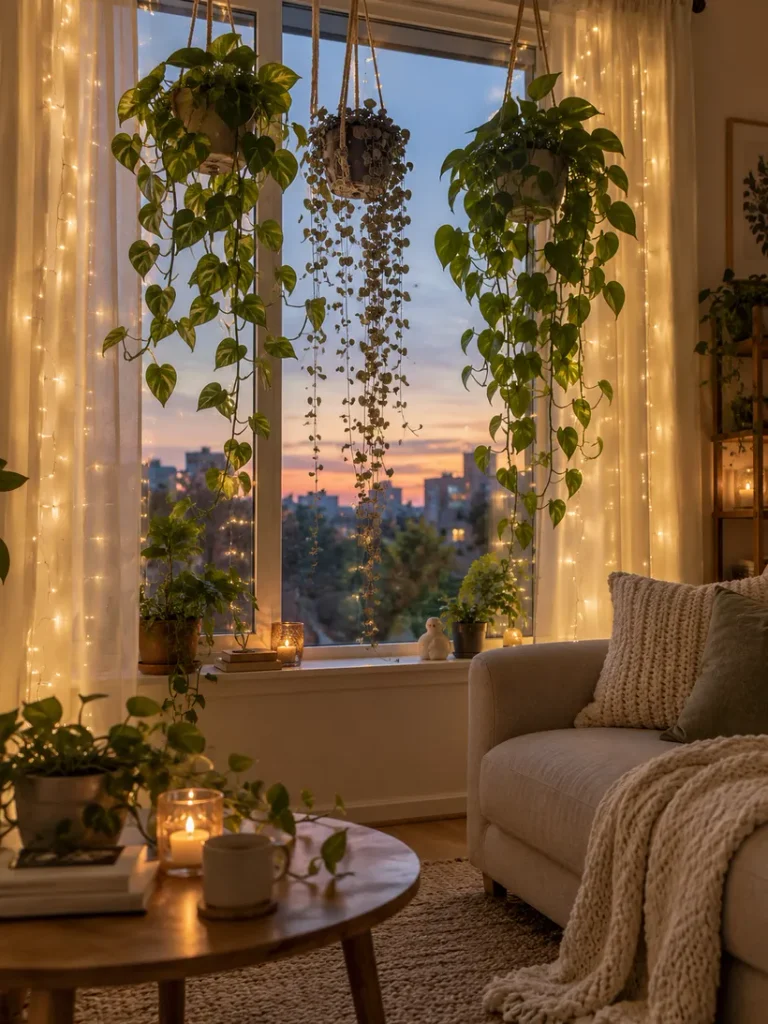
A bright window is a natural place for hanging plants, and curtain lights can turn the same arrangement into an evening feature. Suspend several planters across the top of the window and allow their vines to fall to different lengths.
Place vertical string lights behind the foliage rather than in front of it. You will still see the window and outdoor view during the day, while the lights create a glowing botanical backdrop after sunset.
10. Plant Chandelier Over a Dining Table
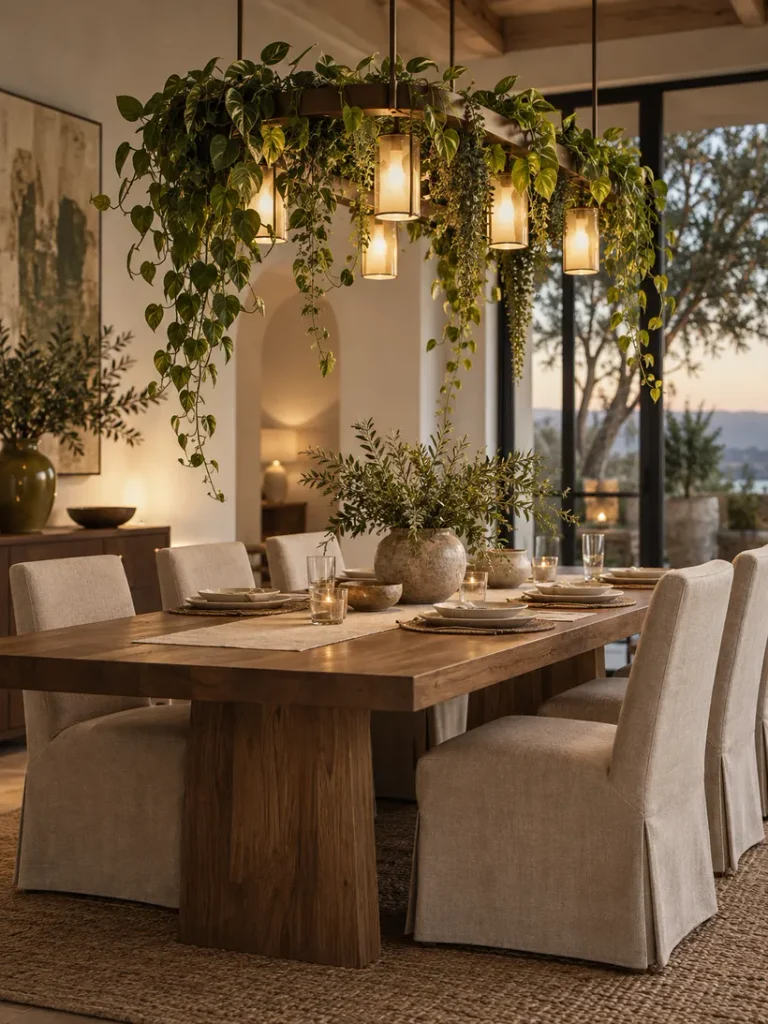
A plant chandelier combines the greenery and dining-room light fixture into one statement piece. Use a suspended frame that supports a few trailing plants around a central pendant or a small group of bulbs.
Keep all greenery high enough that diners can comfortably see across the table. One dramatic installation is usually enough for the room, so let surrounding wall decor remain quiet.
11. Hanging Herb Garden With Under-Shelf Grow Lights
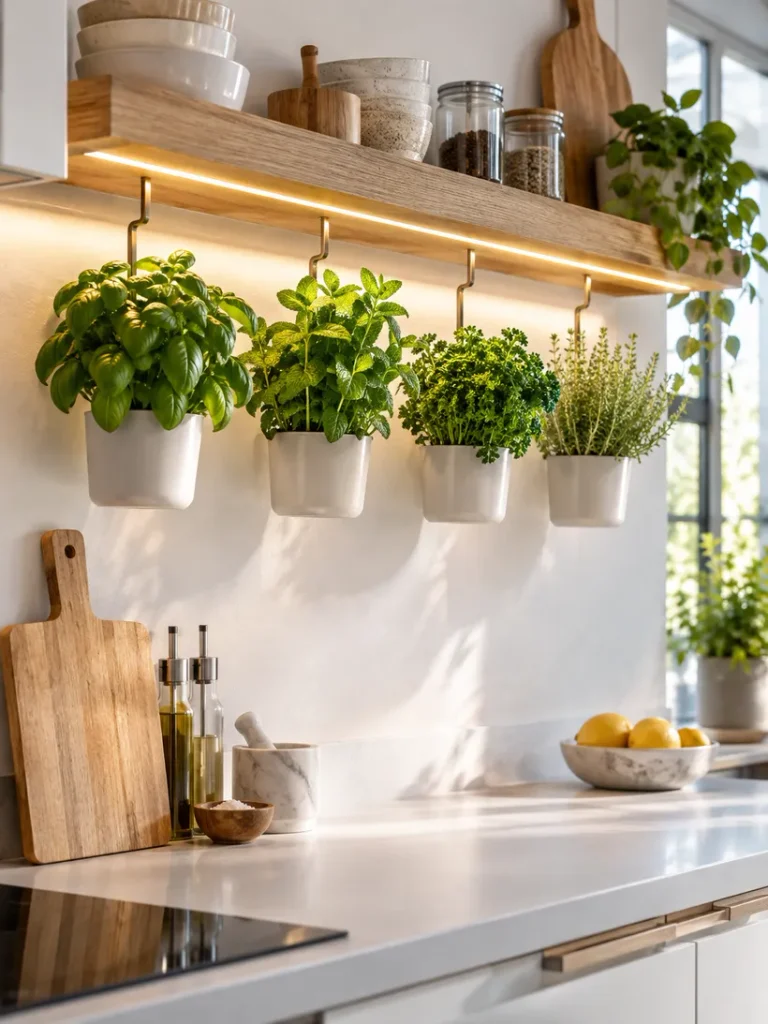
A hanging herb garden can save counter space while keeping fresh herbs close to the cooking area. Small pots of basil, mint, parsley, thyme, or other suitable herbs can hang beneath a narrow shelf or frame.
Slim grow lights integrated above the plants make the arrangement practical in kitchens with limited natural light. Position everything where the herbs can be watered and harvested without needing a stool every time.
12. Edison Bulb and Trailing Plant Corner
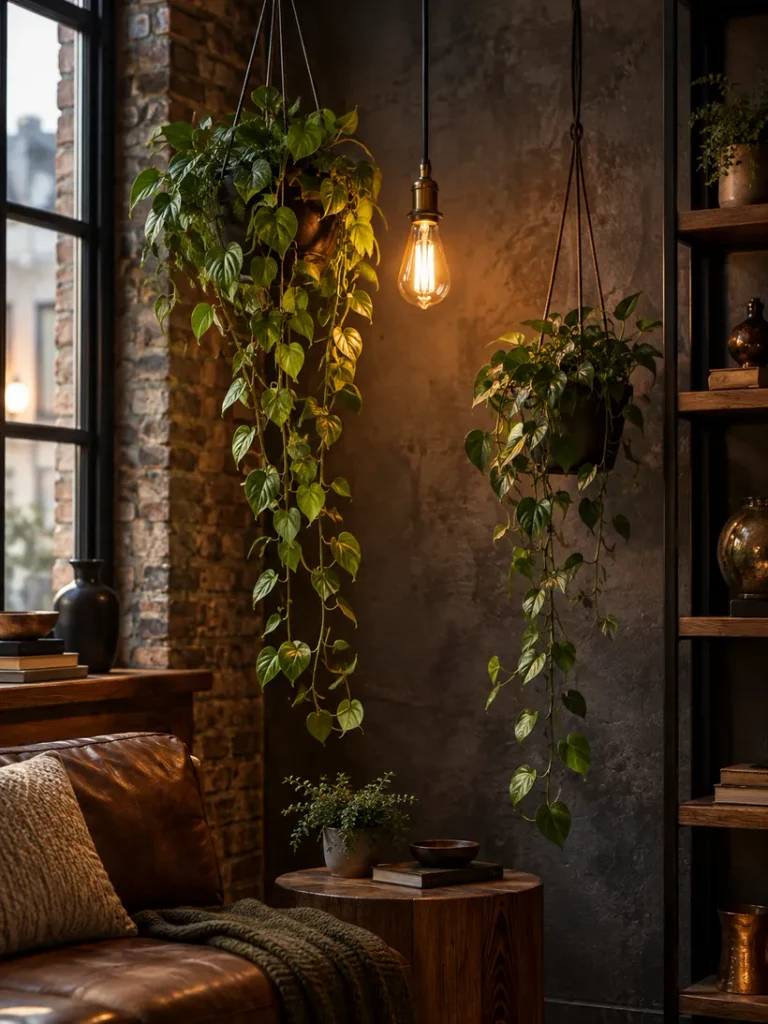
Vintage-style Edison bulbs pair beautifully with trailing greenery because their amber glow highlights leaf edges and creates a relaxed industrial mood. Hang one or two plants at slightly different heights beside the bulb.
Treat the bulb as decorative lighting unless it is specifically designed for plant growth. Keep foliage away from hot components and choose LED versions when you want the vintage look with less heat.
13. Cascading Philodendron Around a Wall Sconce
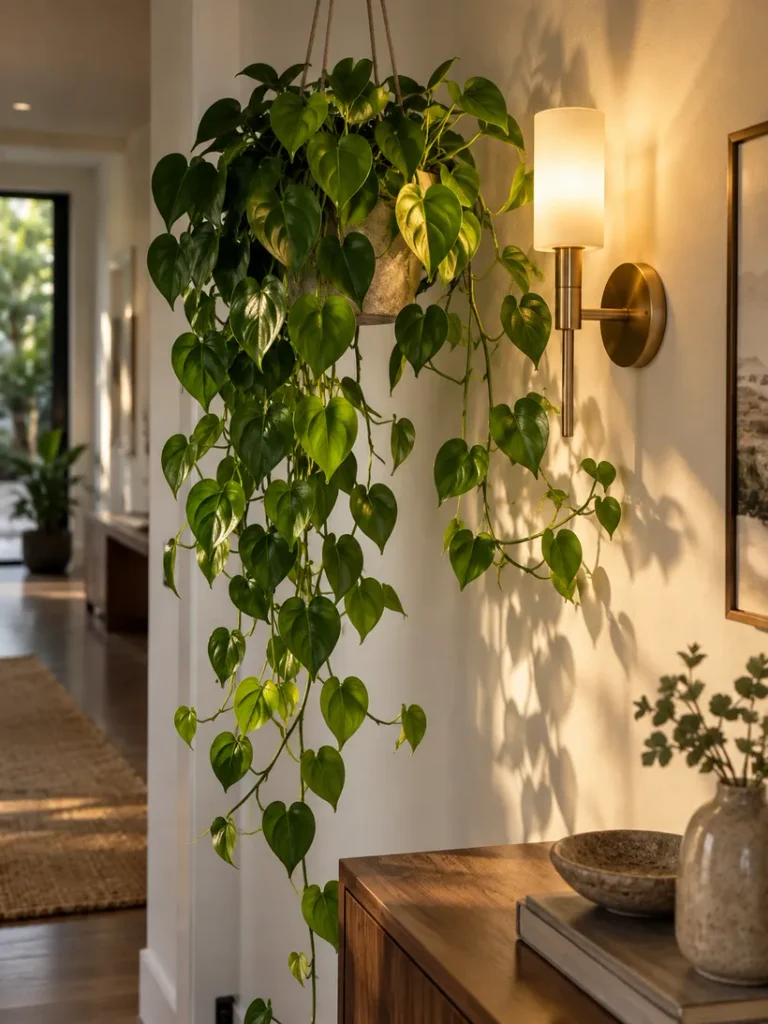
A wall sconce can become part of the plant display when a hanging philodendron is placed beside it. Let a few vines frame the fixture while leaving enough clearance for heat and maintenance.
Side lighting is especially attractive because it reveals the glossy surface of each leaf and casts botanical shadows across the wall. The idea works well in hallways, reading corners, and small living-room niches.
14. Hanging Spider Plants With Soft Globe Lights
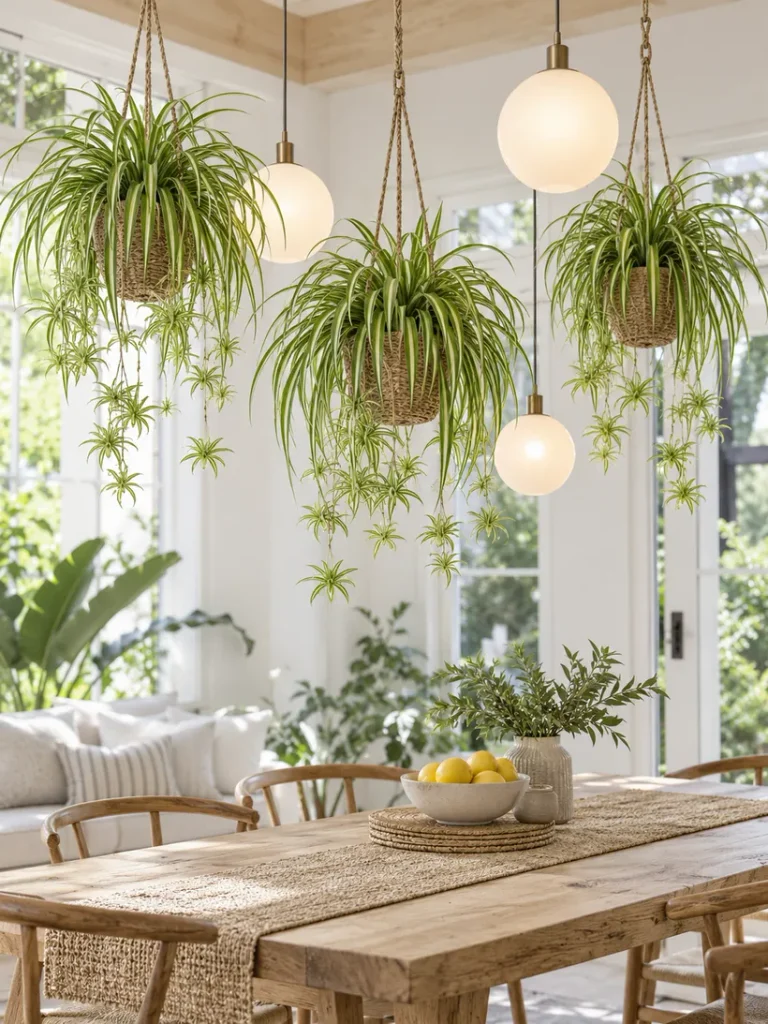
Spider plants already have a light, airy shape thanks to their arching leaves and hanging plantlets. Pairing them with frosted globe lights emphasizes that playful movement.
Use several planters and globes at different heights rather than arranging everything in a perfectly straight row. White or neutral pots help the greenery and soft light remain the focus.
15. Boho Hanging Plant Corner With Lantern Lights
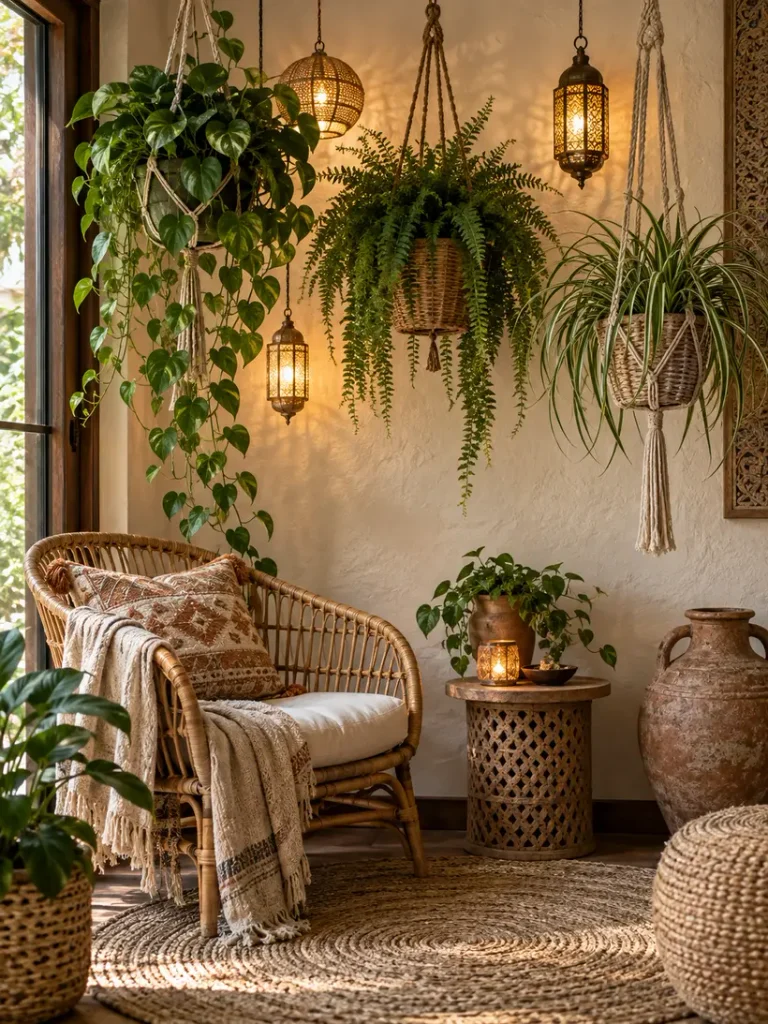
For a relaxed bohemian corner, layer macramé planters, woven textures, pothos, ferns, and warm lantern-inspired lights. The goal is a collected look rather than a dense wall of objects.
Leave some empty wall visible between the elements. A rattan chair or simple floor cushion can turn the arrangement into a small reading or coffee nook without making the corner feel crowded.
16. Minimalist White Planters With Linear LEDs
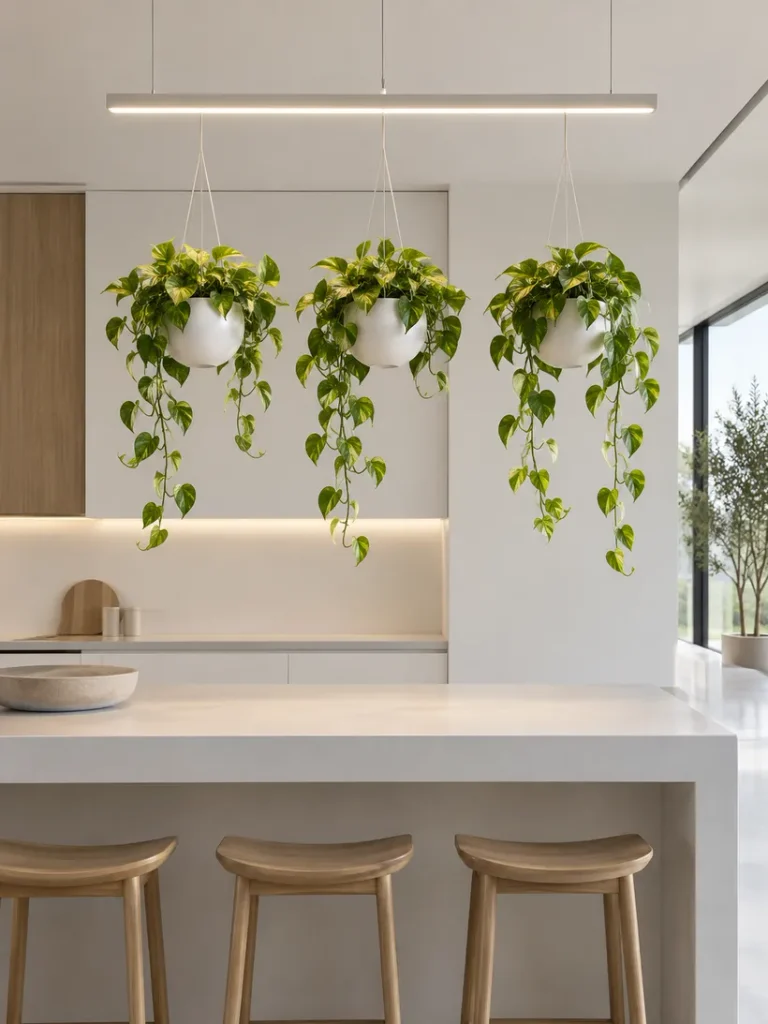
If you prefer a cleaner look, suspend matching white planters in a straight line and illuminate them with a slim linear LED fixture. Repeating one plant variety keeps the display calm and architectural.
This approach suits modern kitchens, offices, and hallways where macramé or fairy lights might feel too decorative. Conceal cords and use consistent hanging heights for a precise finish.
17. Hanging Plants Around a Reading Nook
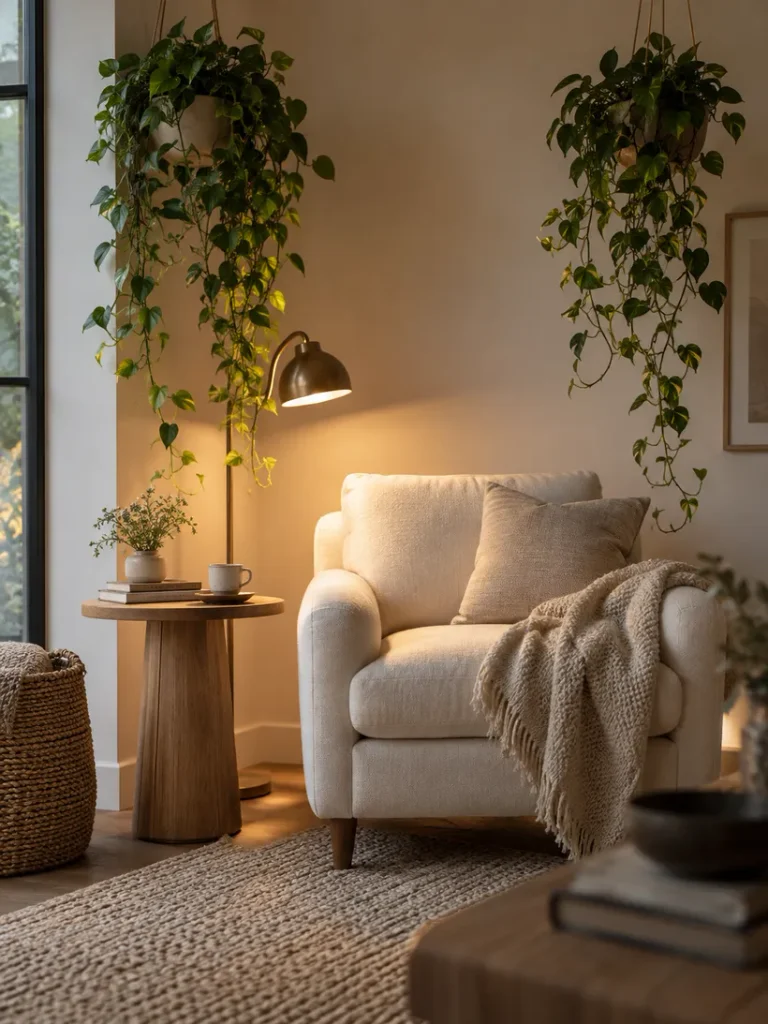
Hanging plants can make a reading chair feel like a small retreat within a larger room. Position one or two trailing plants slightly behind the chair and use the existing reading lamp to catch the foliage.
Keep vines away from the seating path so they do not brush against anyone sitting down. A side table, warm lamp, and textured throw are usually enough to complete the nook.
18. Plant-Lined Hanging Rail With Fairy Lights
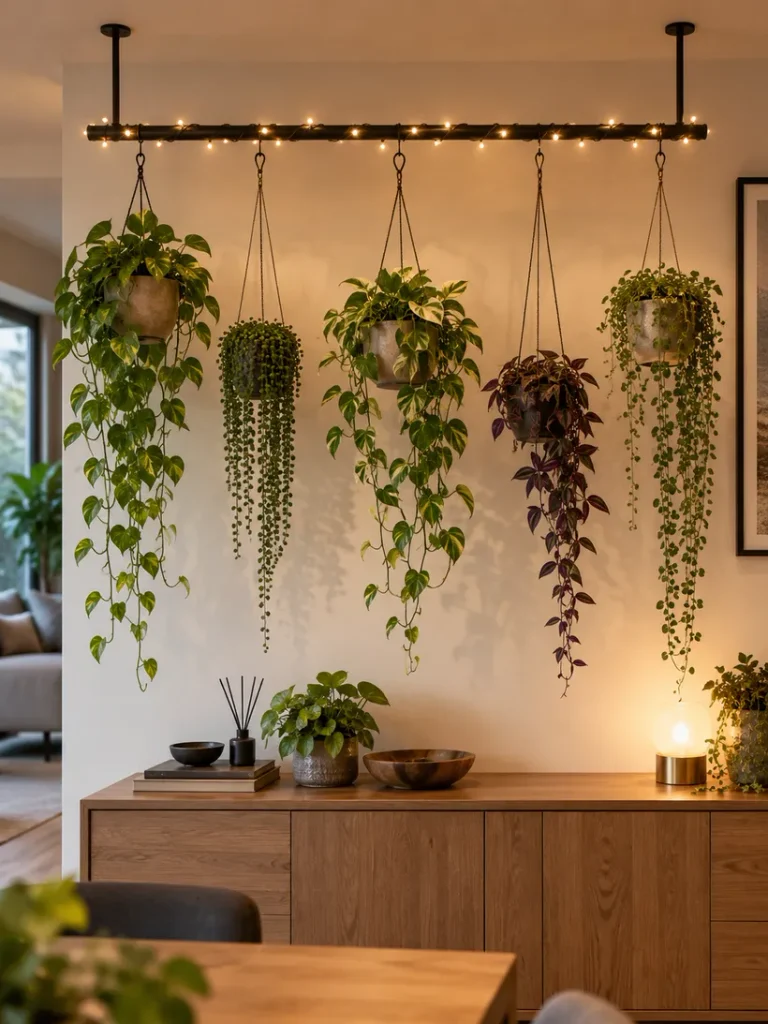
A ceiling or wall-mounted rail gives you flexibility to hang several planters from one structure. Add a delicate strand of lights along the rail to visually connect the individual pots.
This setup is useful if you like rearranging plants because hooks can be moved without installing new ceiling points each time. Remember that several freshly watered pots can be surprisingly heavy, so use secure hardware.
19. Bathroom Hanging Ferns With Moisture-Safe Accent Lighting
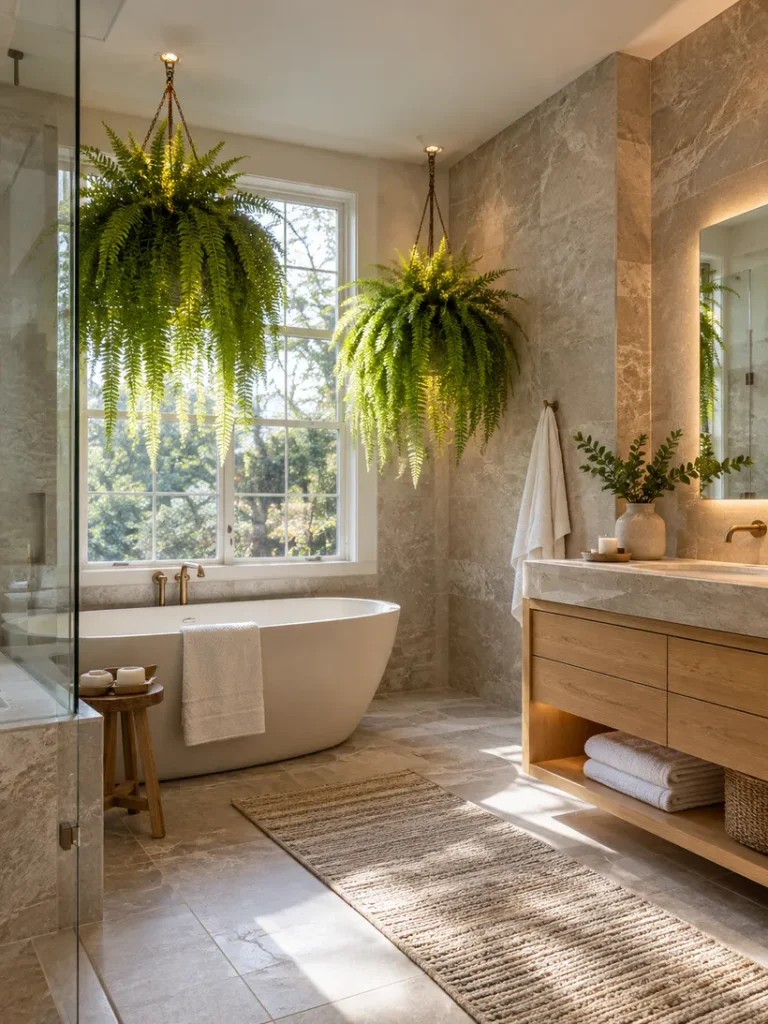
Humidity-loving ferns can make a bathroom feel like a spa when the room also provides suitable light and temperature. Hang them near a bright window and use moisture-appropriate accent lighting to highlight the fronds.
Keep ordinary electrical connections away from sinks, showers, and splash zones. In bathrooms, decorative impact should always come after safe fixture placement.
20. Hanging Plants Around a Bathroom Mirror
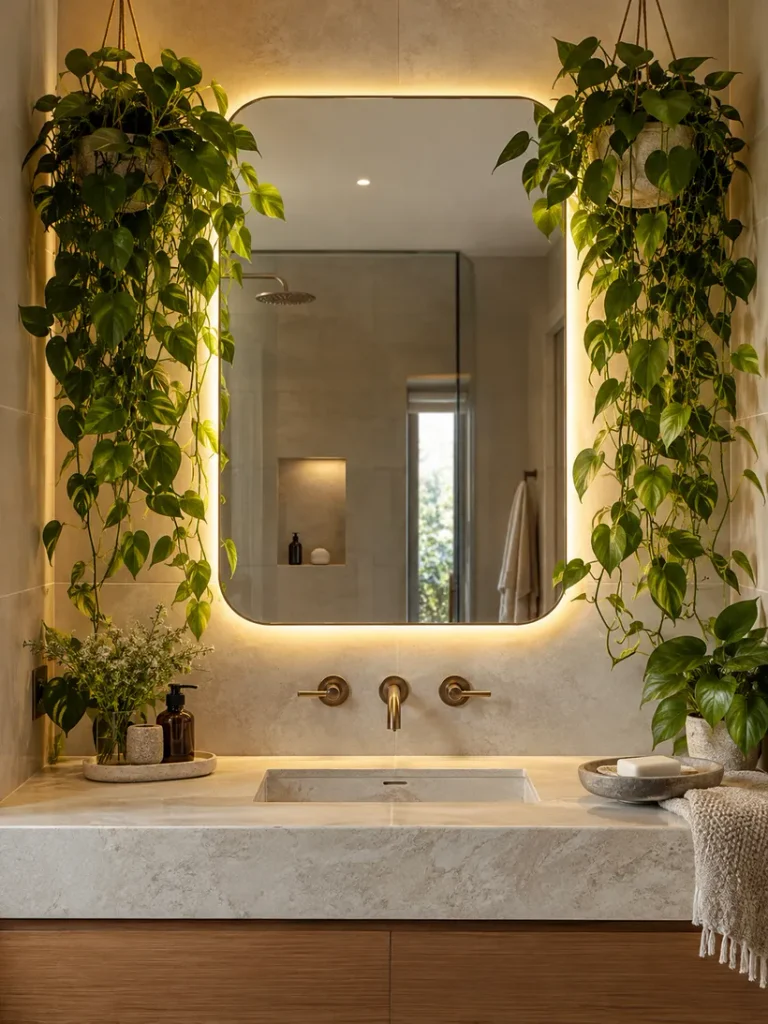
An illuminated bathroom mirror can double as a light source for nearby trailing plants. Hang pothos or philodendron above or beside the mirror and let the vines soften its outer edge.
Keep the reflective center clear and use removable inner pots so plants can be watered away from the electrical fixture. The combination works especially well with stone, pale wood, and simple metal finishes.
21. Staircase Hanging Plant Installation With Lights
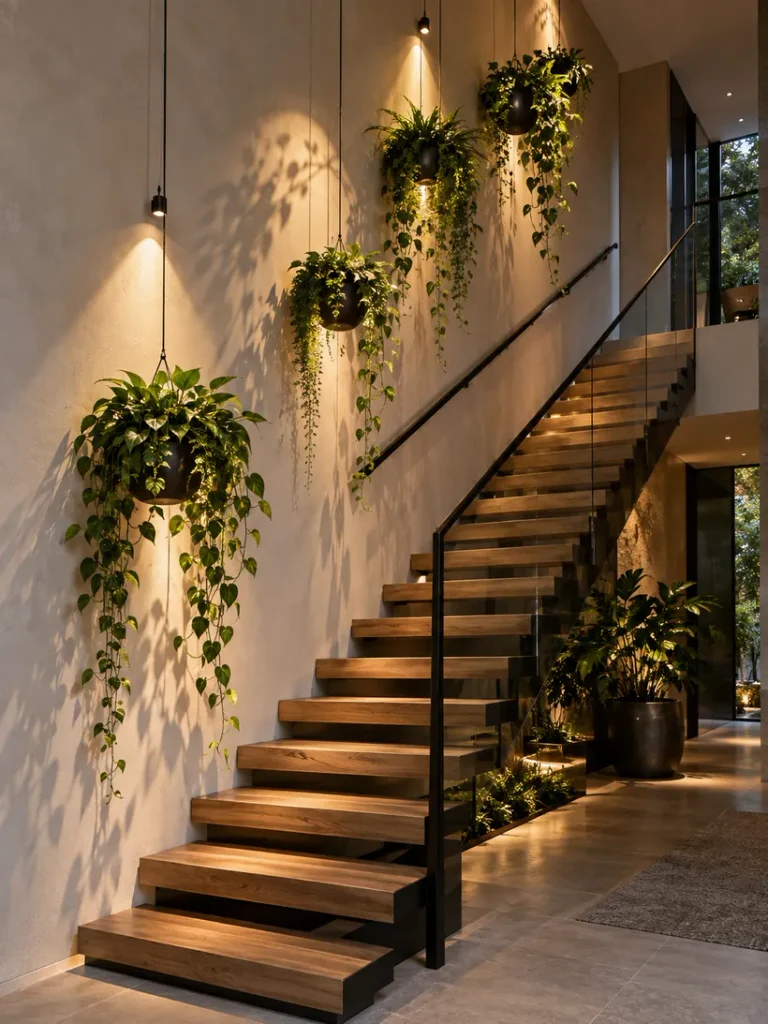
Tall stairwells often contain unused vertical space, making them ideal for plants hung at staggered heights. Arrange the pots so they visually follow the rise of the staircase.
Directional spotlights can illuminate separate clusters and create dramatic shadows on the tall wall. Keep plants, cords, and planters completely outside the walking path and clear of the handrail.
22. Hanging Plants Under Skylights With Evening Accent Lights
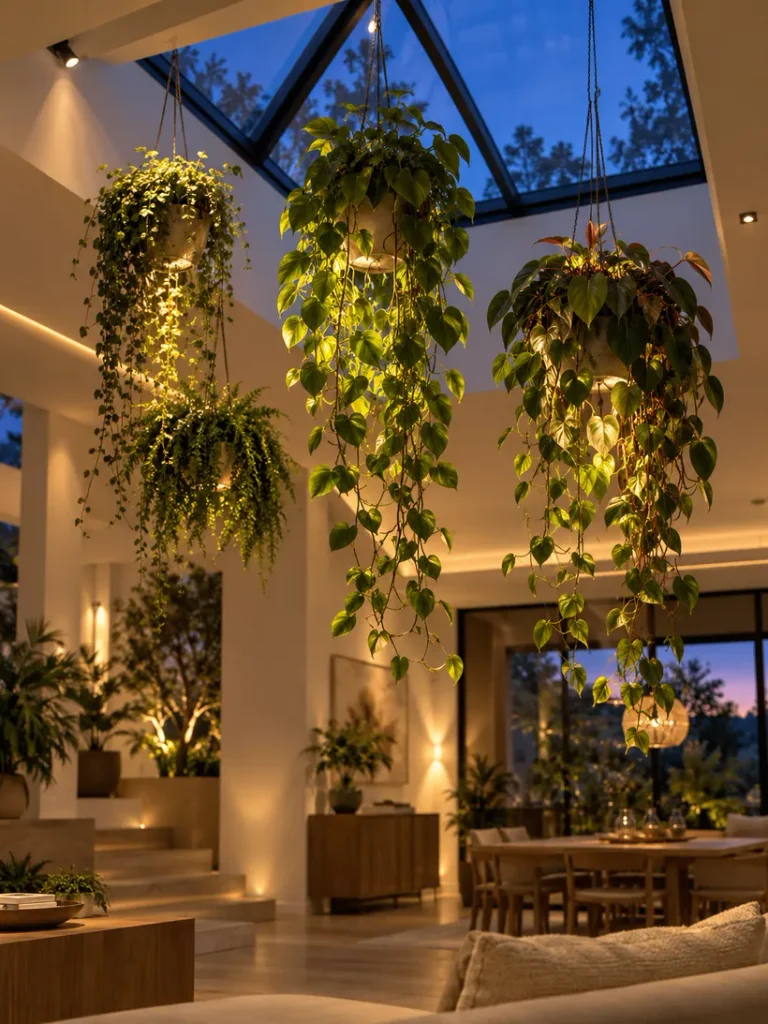
A skylight gives hanging plants excellent visual prominence during the day, but the display can become even more dramatic after sunset. Suspend plants beneath or close to the skylight and add warm accent lights that illuminate the foliage once the sky turns blue.
The contrast between cool twilight above and warm light on the leaves creates depth without requiring large decorative fixtures. Check heat levels beneath the skylight because these locations can become warmer than the rest of the room in daytime.
23. Hanging Basket Cluster With One Central Pendant
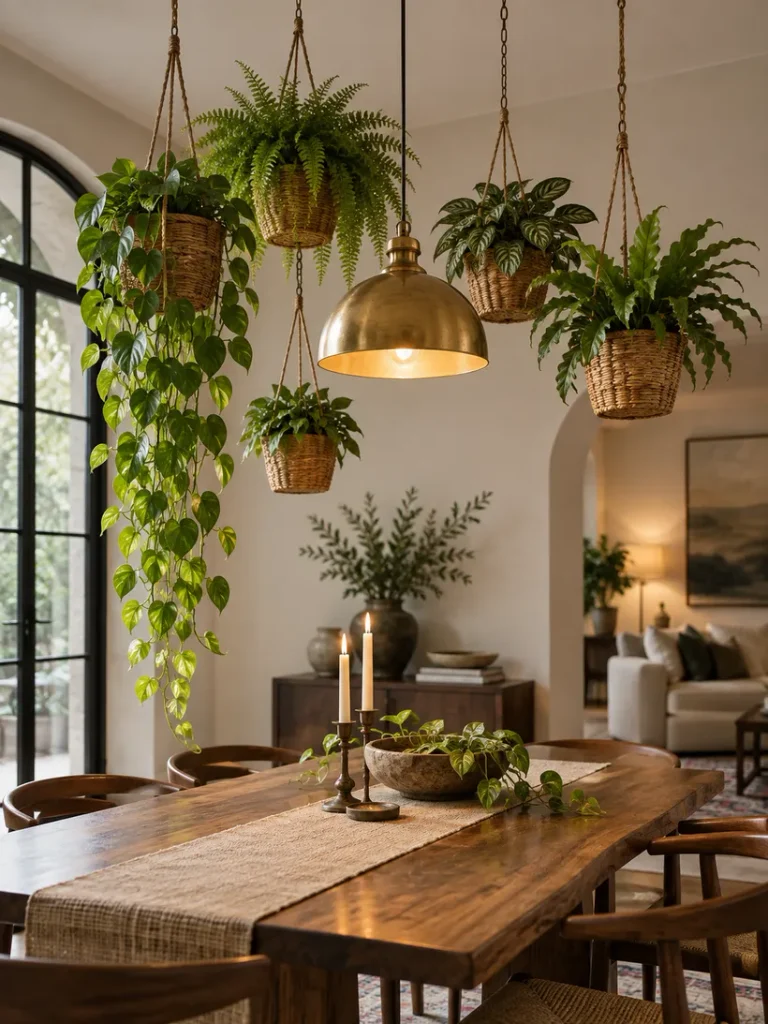
Instead of lighting every plant separately, group three or five hanging baskets around one central pendant. The pendant acts as a visual anchor and makes the entire collection read as one composition.
Mix one long trailing plant with fuller varieties so the silhouette has different shapes. Keep enough space around the bulb for airflow and to prevent foliage from touching the fixture.
24. Corner Ceiling Hooks With Twinkling Vines
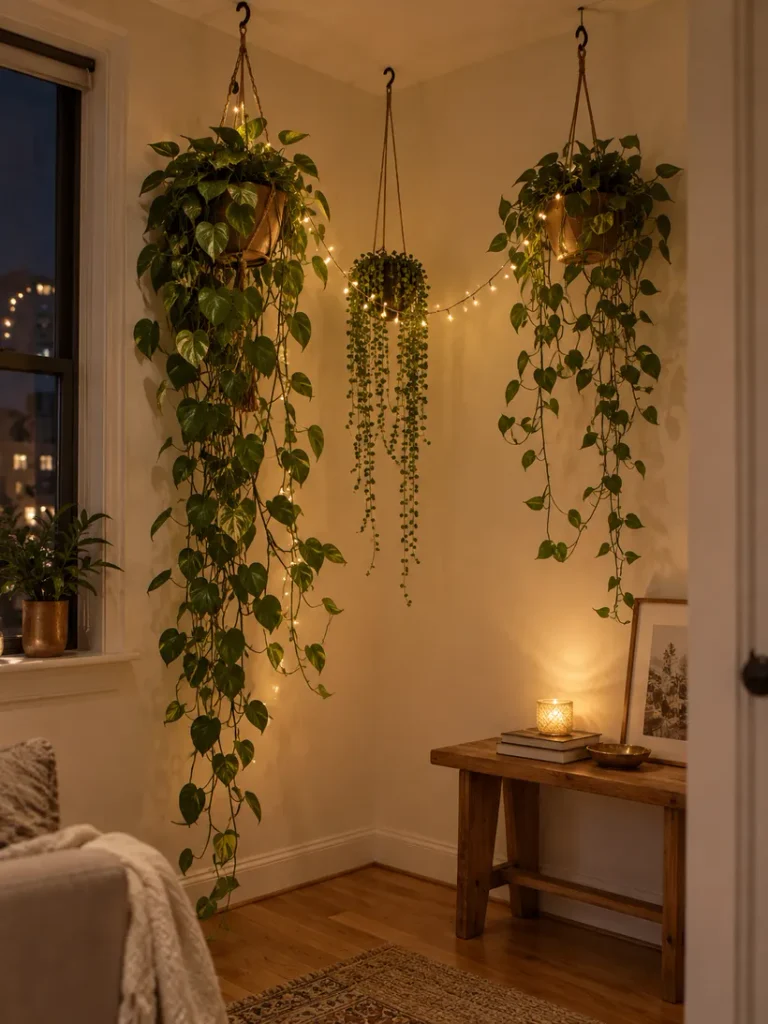
A few ceiling hooks can turn an empty apartment corner into a vertical garden. Hang three plants at different heights and drape a single strand of micro lights loosely between them.
This is an approachable option for small spaces because it does not require a large wall or shelf. Concentrate the lights near the foliage rather than spreading them across the entire room.
25. Hanging Succulent Globes With Mini LEDs
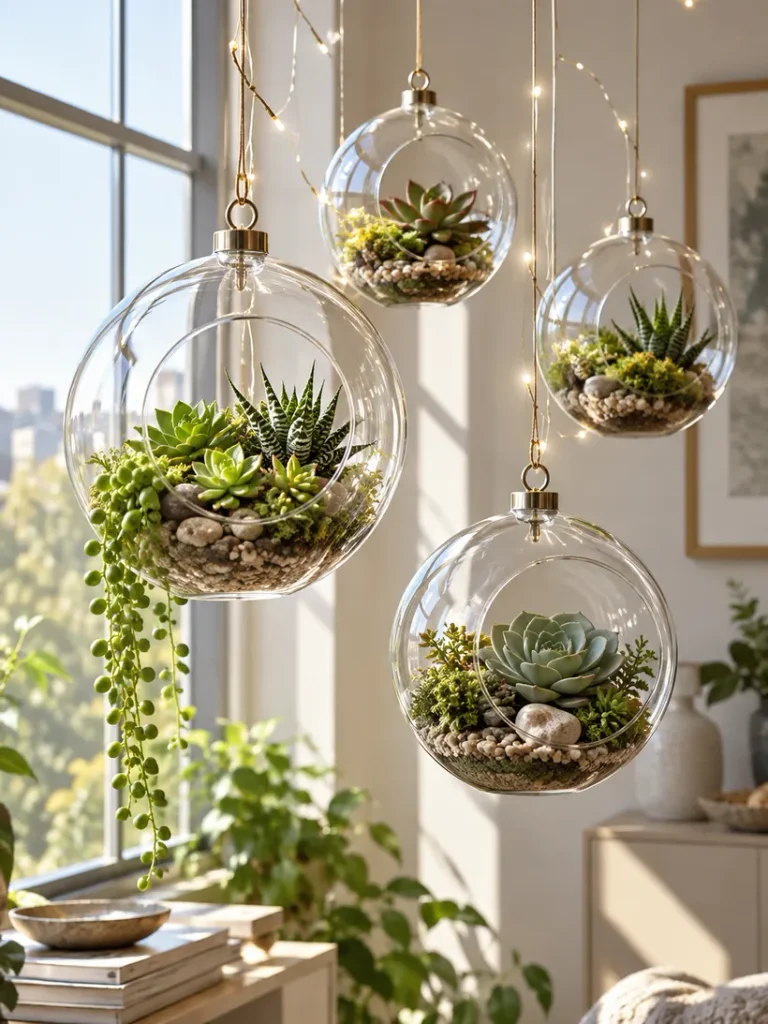
Small succulent arrangements inside clear hanging globes can look like miniature illuminated gardens. Suspend several near a genuinely bright window and add tiny LEDs around the group for evening sparkle.
Remember that decorative LEDs do not replace the strong light many succulents need. Choose containers and plant combinations that allow appropriate drainage and airflow.
26. Air Plant Mobile With Tiny Lights
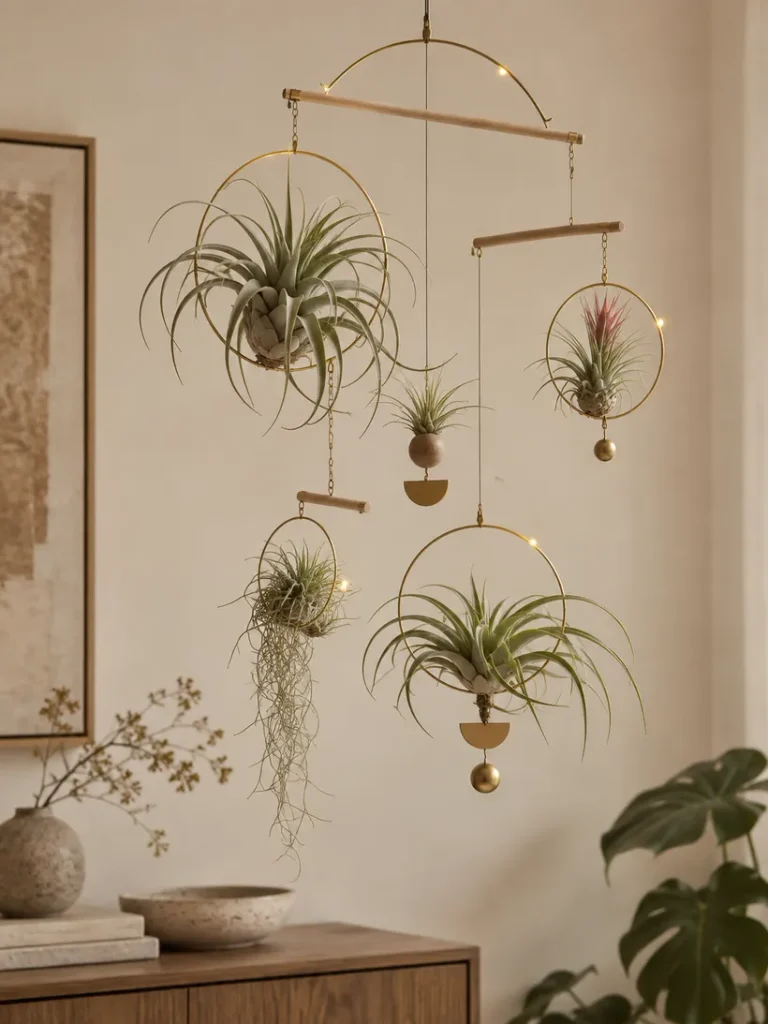
Air plants are ideal for hanging mobiles because they do not require heavy soil-filled pots. Attach several tillandsias to brass hoops, thin wood rods, or decorative wire and add a few tiny points of light.
The finished piece feels closer to botanical sculpture than a traditional planter. Hang it where air can circulate and where the plants receive the light conditions required by their particular species.
27. Neon Sign Framed With Hanging Greenery
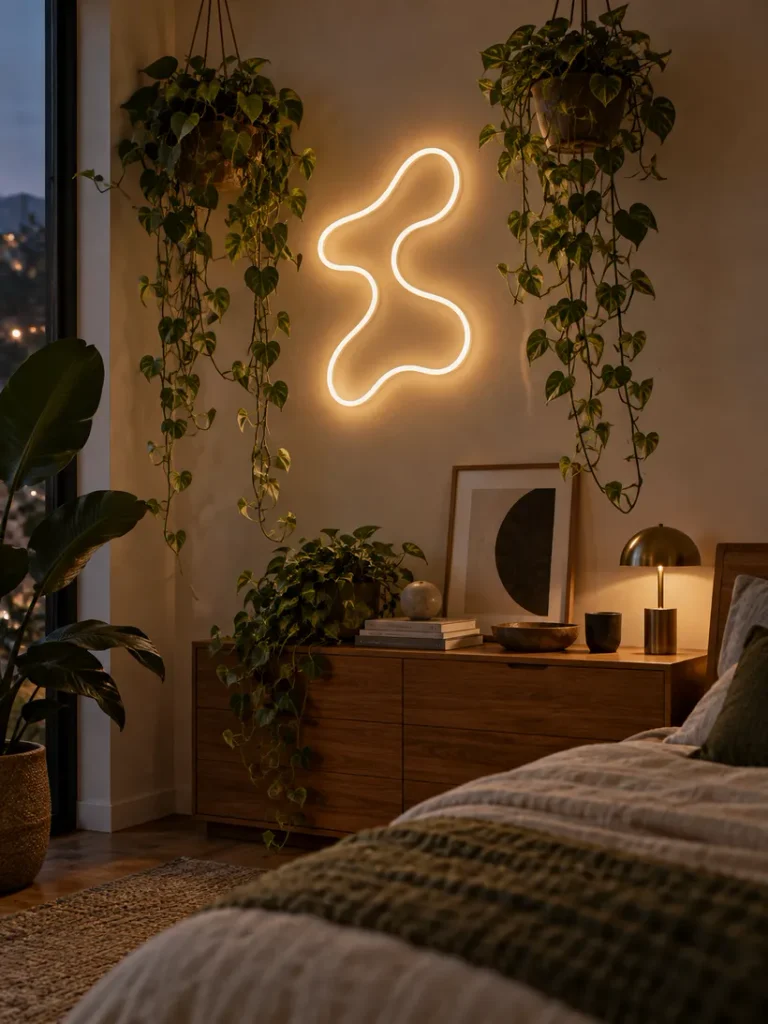
A small neon-style wall light can become more sophisticated when it is framed with real greenery. Suspend trailing plants to either side and let the vines overlap the outer edge of the glow without covering the center.
Abstract shapes or warm-white lighting are easier to blend with home decor than very bright multicolor signs. Keep the rest of the wall relatively simple so the combination reads as one focal point.
28. Hanging Plants Over a Console Table With Picture Lights
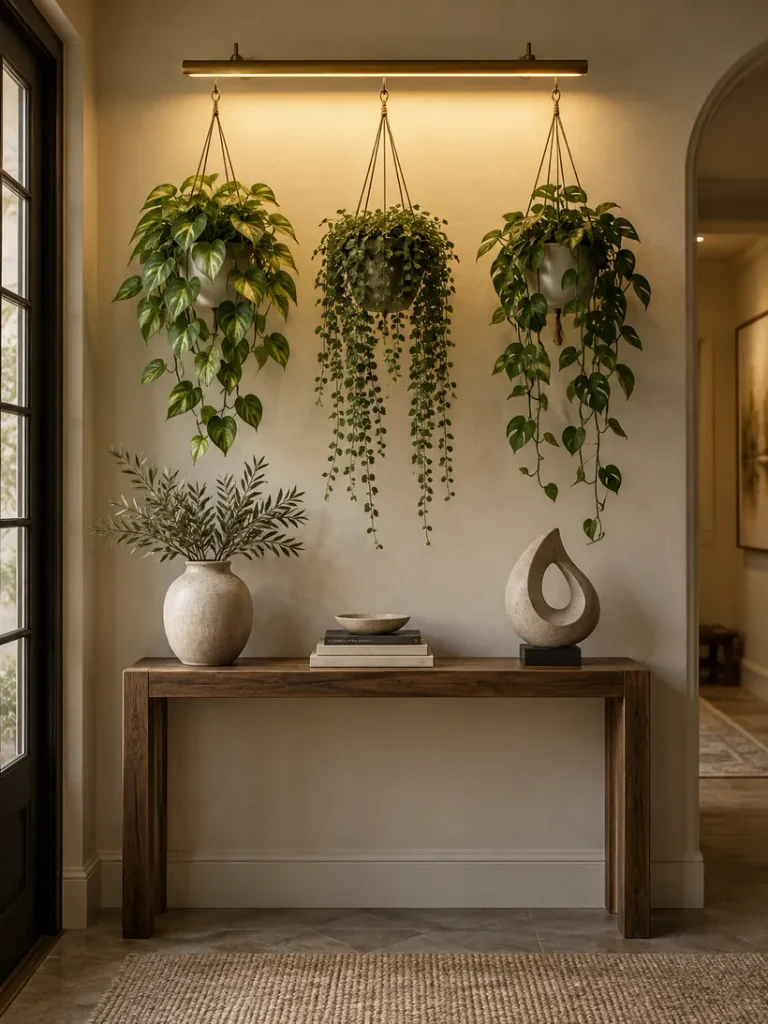
Treat hanging greenery like artwork by positioning it above a console table and illuminating it with a picture light. Three plants at slightly different heights create a balanced composition.
Style the console with only a few quiet objects such as pottery, books, or a sculptural piece. A wide, soft beam looks more polished than one harsh spotlight focused on a single leaf.
29. Indoor Jungle Ceiling With Hidden Spotlights
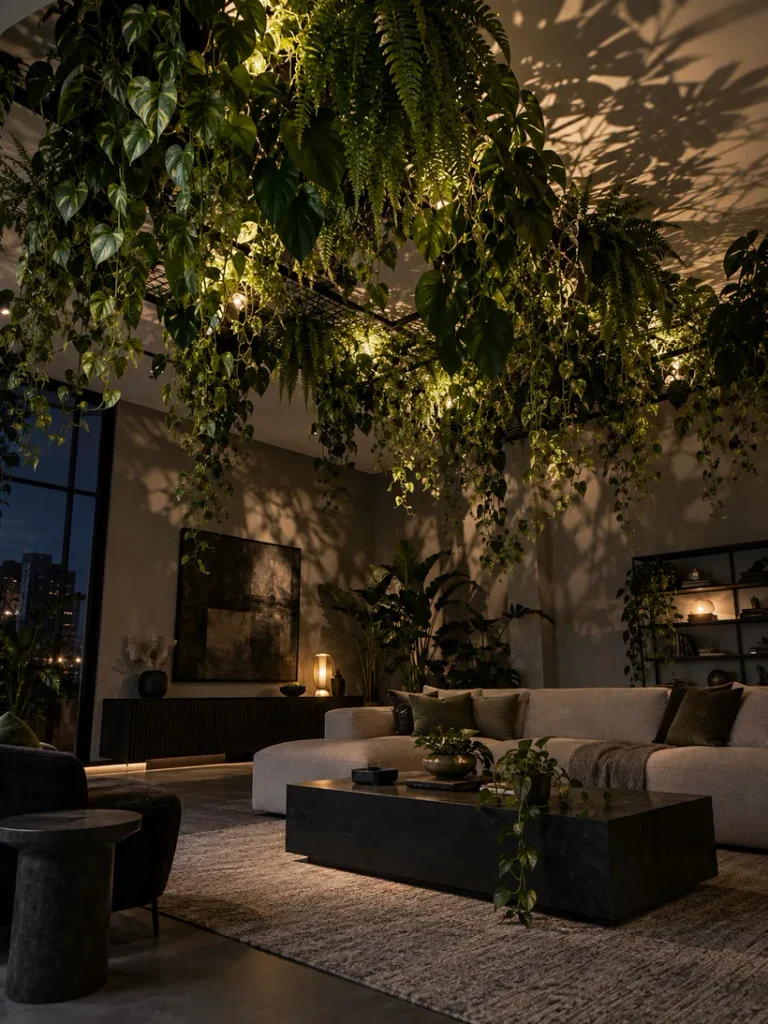
For a dramatic indoor-jungle effect, suspend several trailing plants from a ceiling framework and hide spotlights within or around the installation. Light passing through multiple leaf layers creates moving patterns across the ceiling and walls.
Because this idea has so much visual impact, let it dominate the room. Simple furniture and a restrained color palette will keep the greenery from feeling chaotic.
30. Hanging Planters Along a Kitchen Island
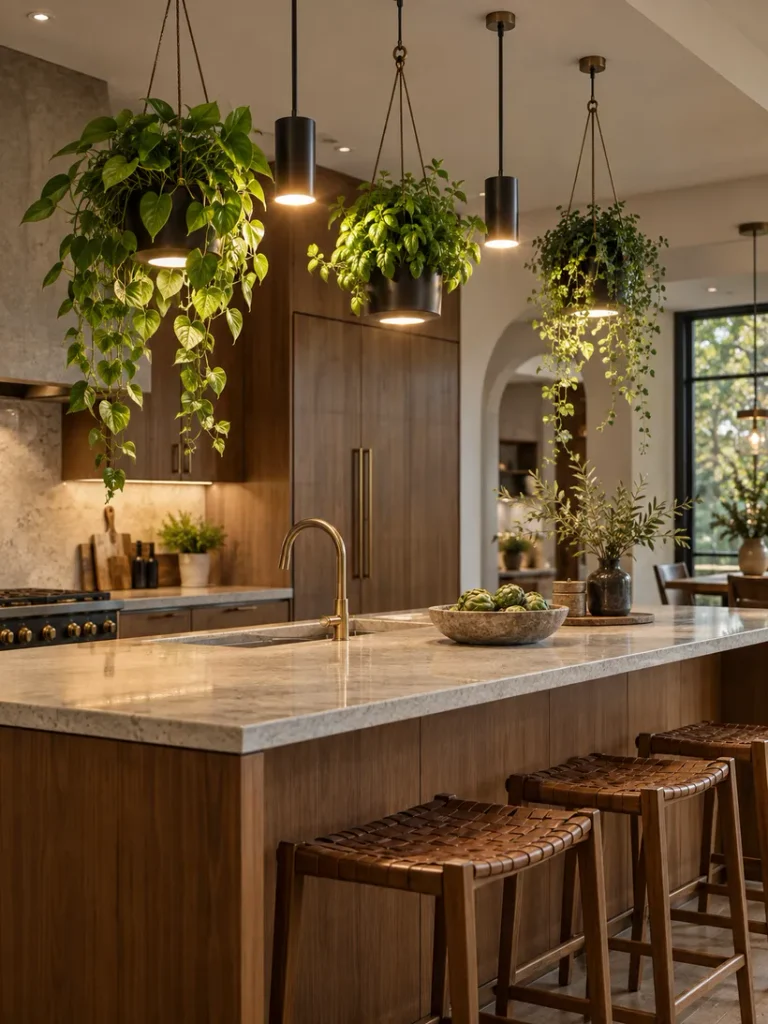
Hanging planters above a kitchen island can add greenery without giving up valuable counter space. Use compact herbs and trailing plants positioned over the seating or prep side rather than directly over active cooking heat.
Place slim pendant grow lights between the planters so the fixtures look intentional and also provide useful plant illumination. Keep the lowest leaves high enough that conversation and sight lines across the island remain open.
31. Rustic Wooden Beam With Hanging Plants and Bulbs
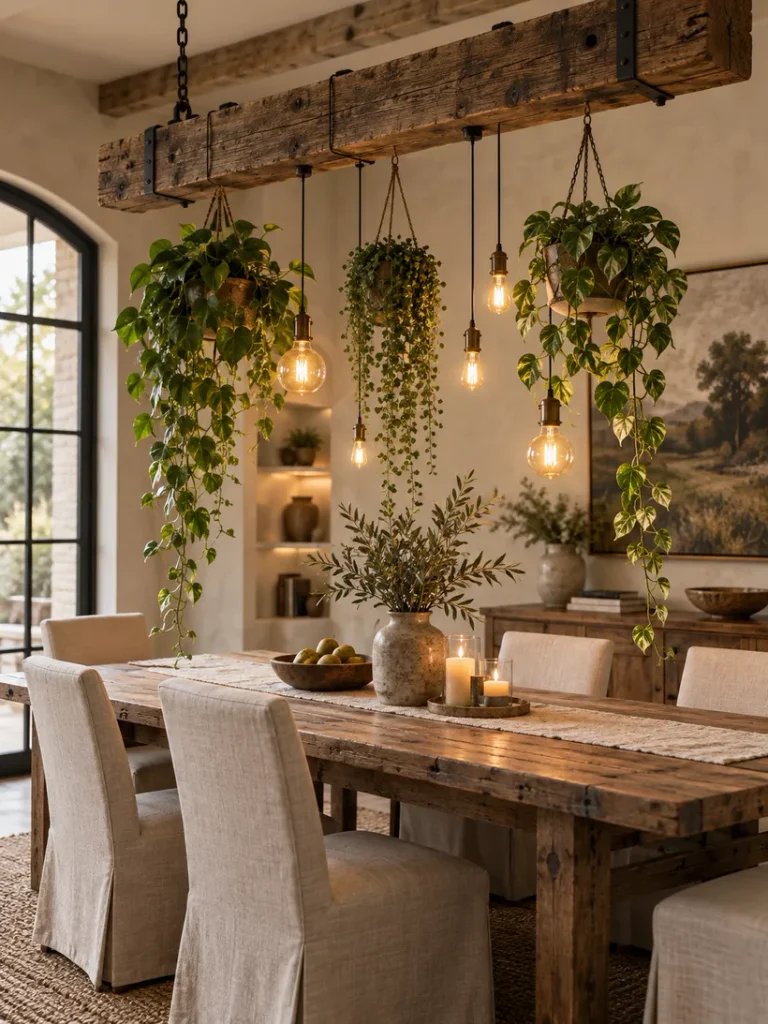
A reclaimed-look wooden beam can support both hanging plants and exposed bulbs, creating an easy rustic-modern centerpiece over a dining area. Let the vines soften the strong horizontal line of the timber.
Use structurally sound hardware and keep the bulbs at varied but comfortable heights. The combination works especially well with linen chairs, plaster walls, and warm natural wood.
32. Copper Pipe Hanging Plant Rack With Lights
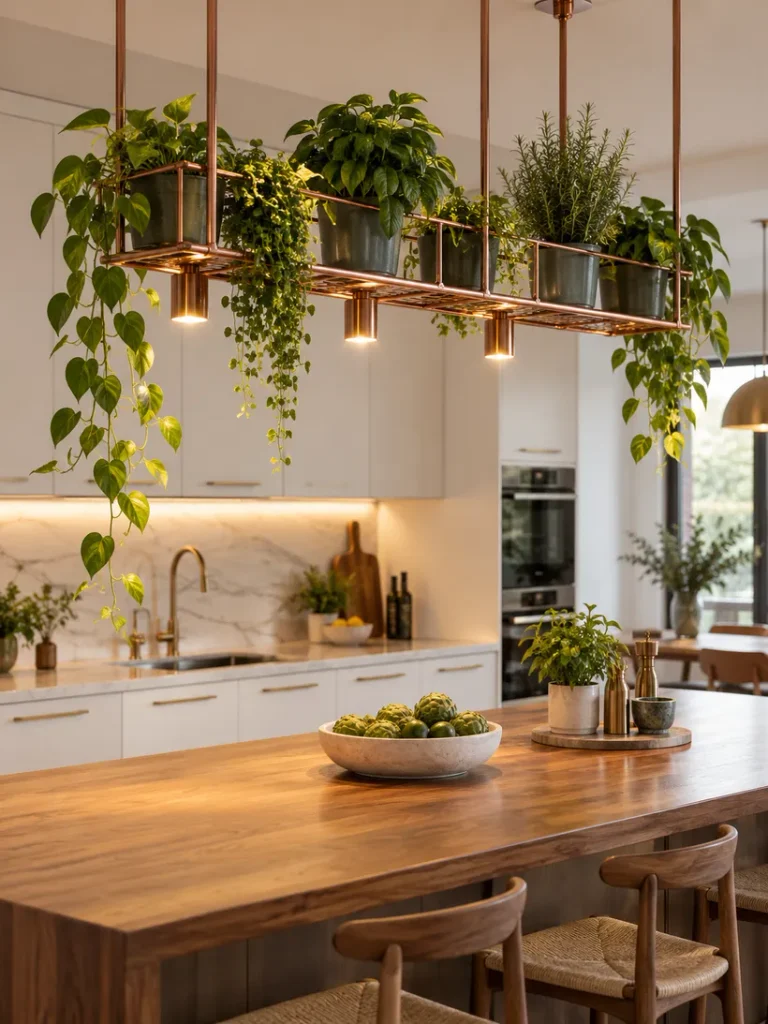
Copper provides a beautiful warm contrast to green foliage. A suspended copper-colored pipe rack can hold small planters while compact lights are integrated between them.
The arrangement works particularly well above a kitchen island or dining counter. Make sure the frame and anchors are designed for the full weight of watered pots, not just the dry display.
33. Hanging Plant Wall With Vertical LED Bars
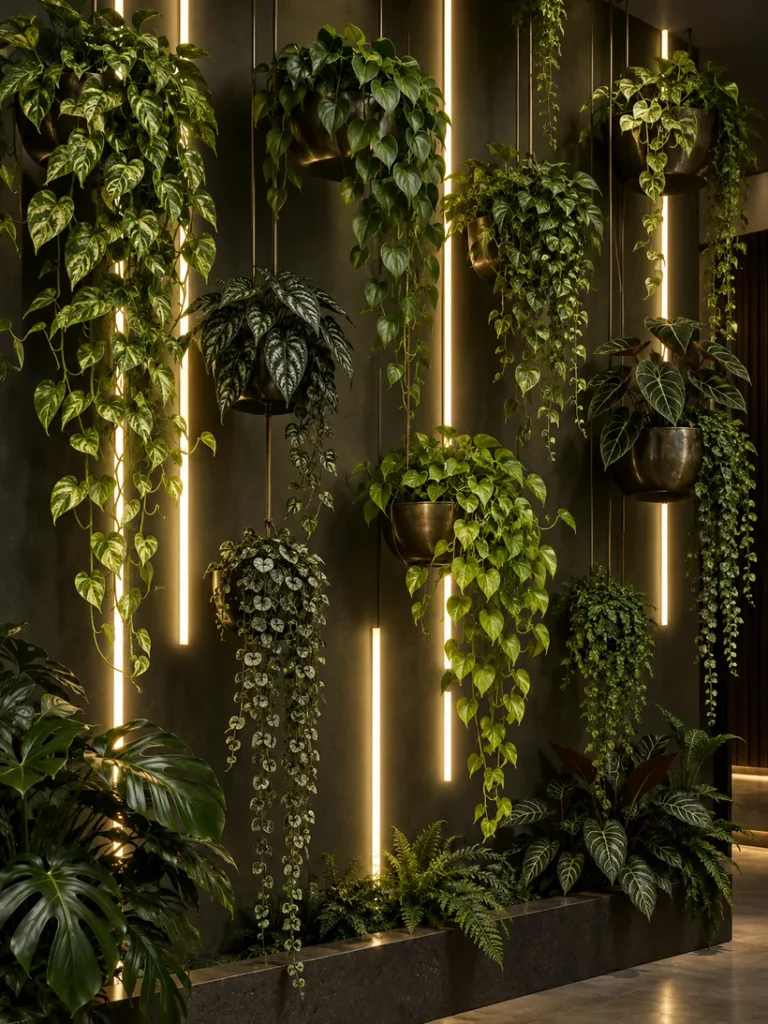
A dark feature wall can become a contemporary indoor garden when hanging planters are arranged between narrow vertical LED bars. The bright lines create structure while the foliage adds softness.
Use plants with different textures but a related color palette so the wall feels curated rather than random. Warm-white bars are especially effective against charcoal, deep olive, or dark plaster finishes.
34. Bedroom Window Plant Curtain With Fairy Lights
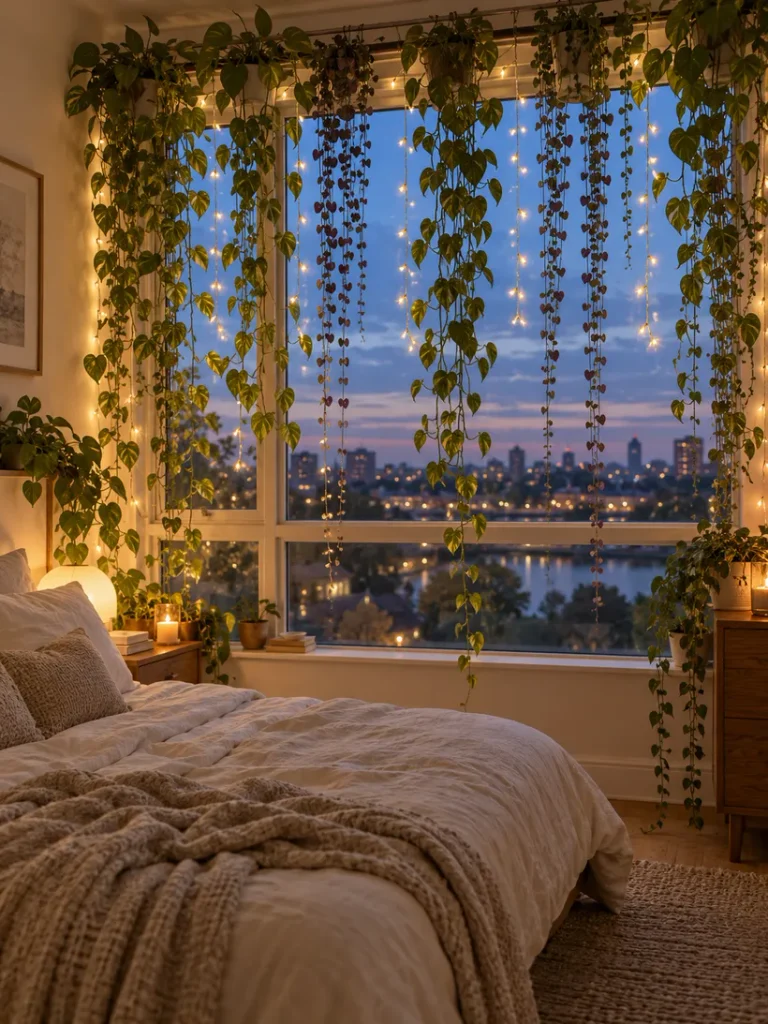
Create a living curtain by hanging trailing plants along the upper edge of a bedroom window. Leave gaps between vines so daylight, ventilation, and the outdoor view are still available.
Add vertical fairy lights between the foliage for a warm evening layer. The contrast between cool twilight outside and the golden strands inside makes the window feel especially cozy.
35. Bookshelf Hanging Plants With Shelf Lighting
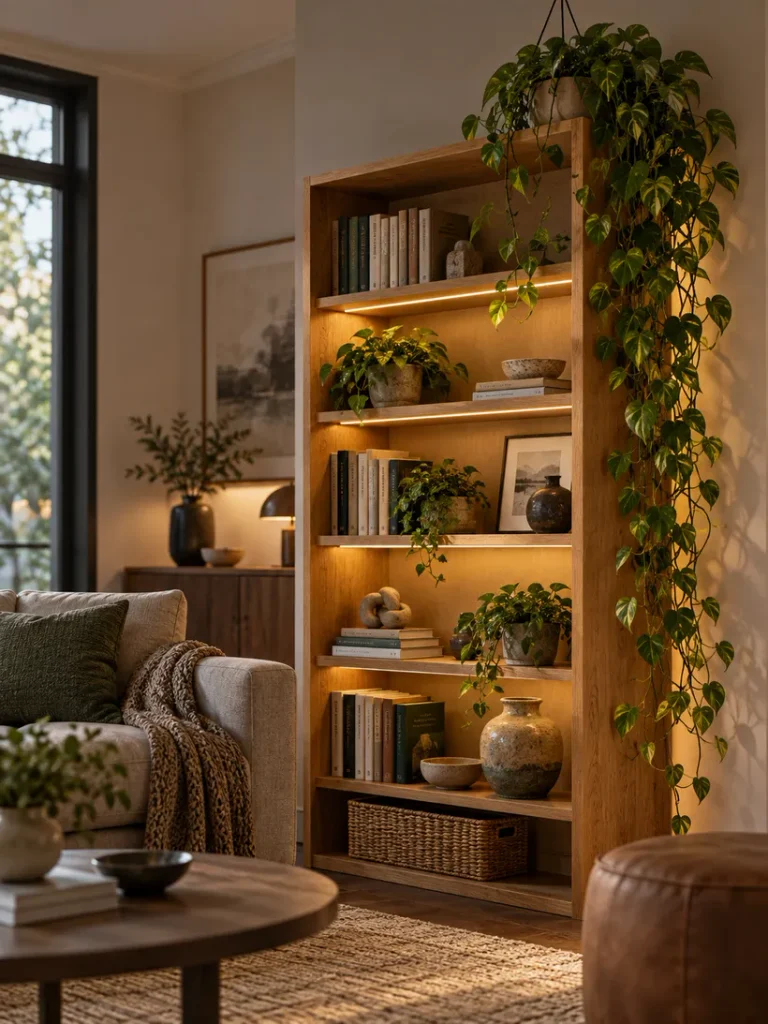
Bookshelves are ideal for combining greenery and built-in lighting. Hang one trailing planter from the top corner and let its vines descend along the outside of the shelving.
Integrated shelf LEDs can illuminate both the leaves and the books below. Keep recently watered pots and damp vines away from paper, unfinished wood, and electrical components.
36. Hanging Plants Around a Floor Lamp
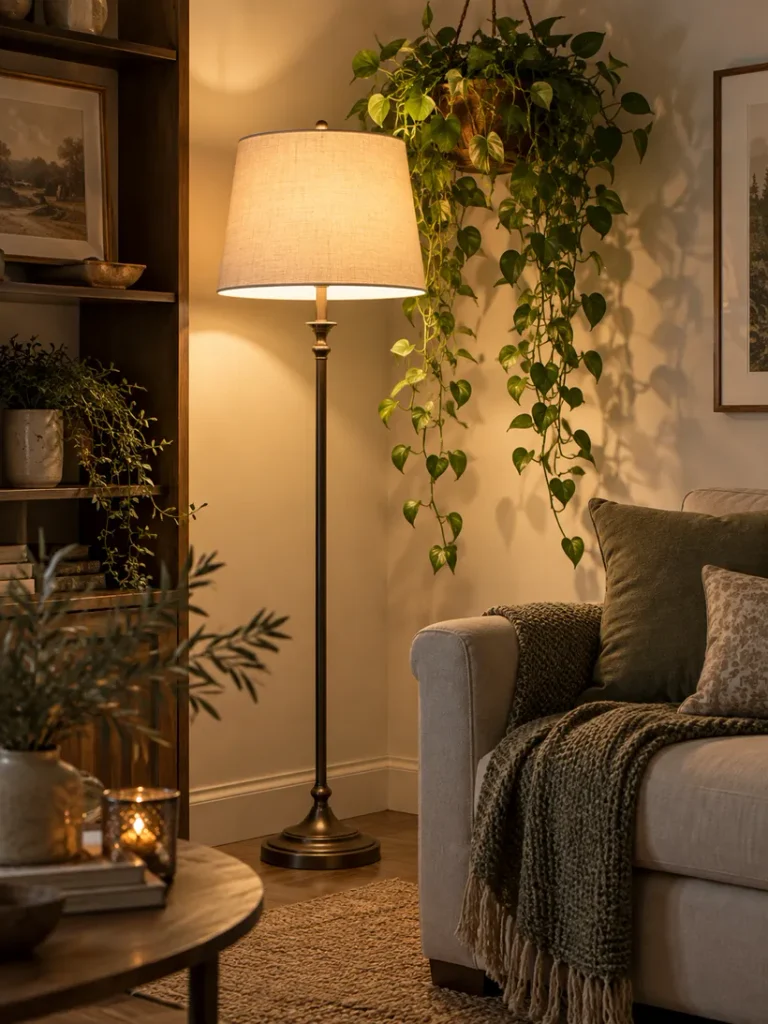
You can create a strong plant-and-light composition without installing a new fixture at all. Hang a trailing plant slightly above and behind an existing floor lamp so the lamp shines through the leaves.
The shadows add interest to a plain wall and make the plant feel integrated with the seating area. Keep foliage clear of shades or bulbs that become warm.
37. Industrial Black Planters With Track Lighting
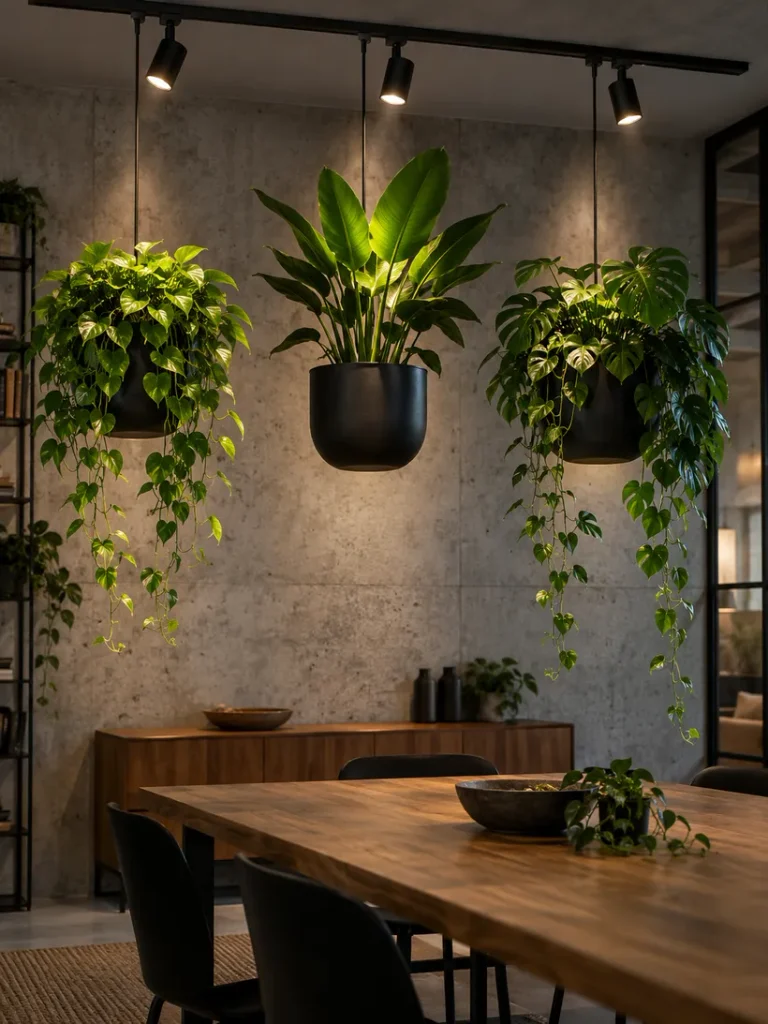
Matte-black hanging planters and track lights create a sharper, urban version of the botanical look. Aim individual track heads toward each plant so the leaves appear almost gallery-lit.
Concrete, warm timber, and black metal reinforce the industrial style. If the track lights are expected to support plant growth, use suitable grow bulbs rather than ordinary accent lamps.
38. Scandinavian Hanging Plants With Warm Minimal Lighting
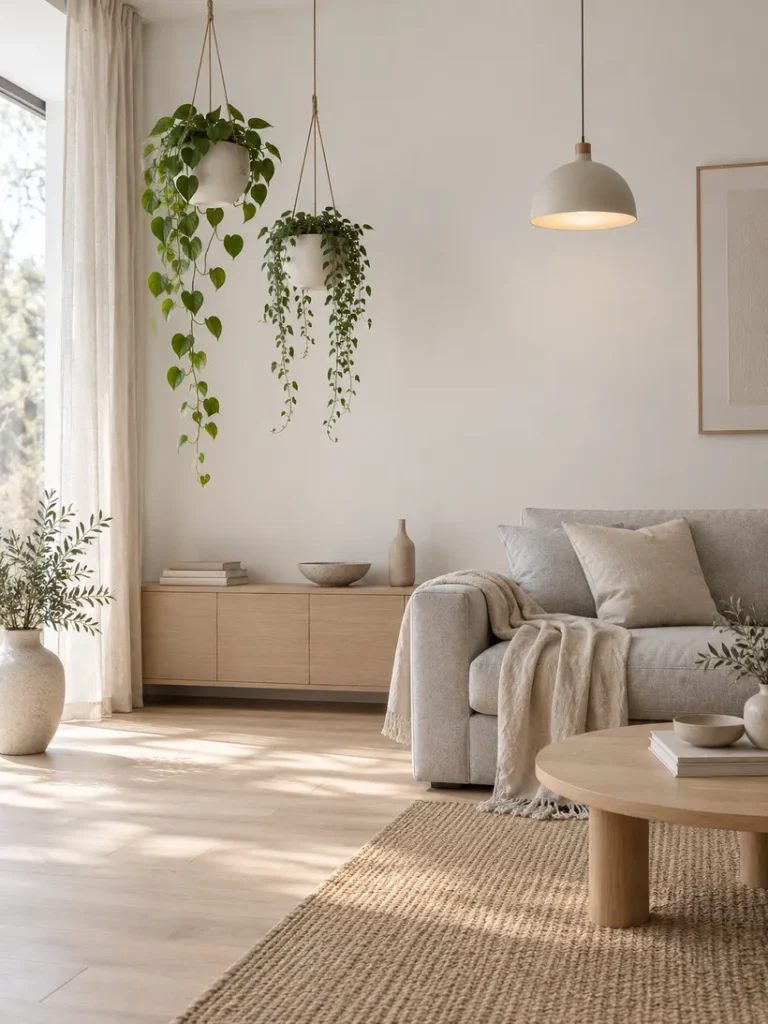
Scandinavian interiors benefit from restraint, so two simple hanging planters and one warm pendant can be enough. Use white ceramics, pale wood, soft textiles, and uncomplicated trailing greenery.
Leave plenty of blank wall around the display. The contrast between natural leaves and a quiet neutral interior gives each plant more visual importance.
39. Tropical Hanging Plant Corner With Amber Lighting
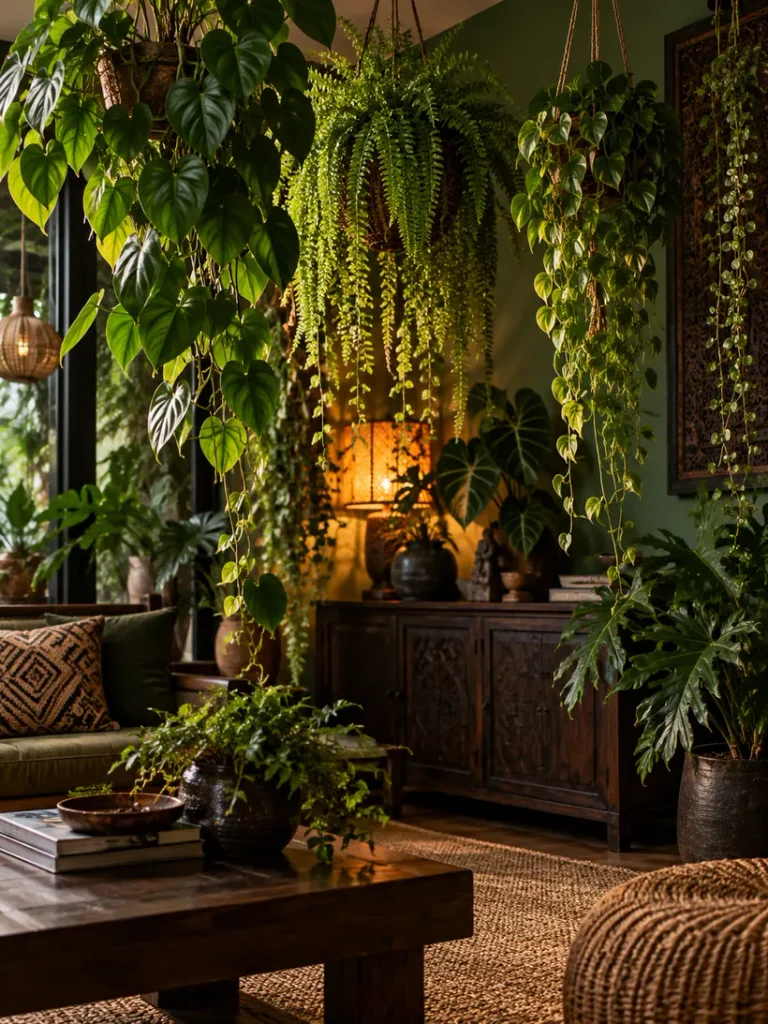
For a richer tropical mood, combine hanging philodendrons, ferns, and other full foliage with a concealed amber light. Backlighting makes leaf textures more pronounced and deepens the shadows between layers.
Dark wood, woven accents, and muted green walls complement this treatment. The amber lamp is decorative, so make sure the plants still receive adequate natural or grow light during the day.
40. Hanging Plants Above a Home Office Desk
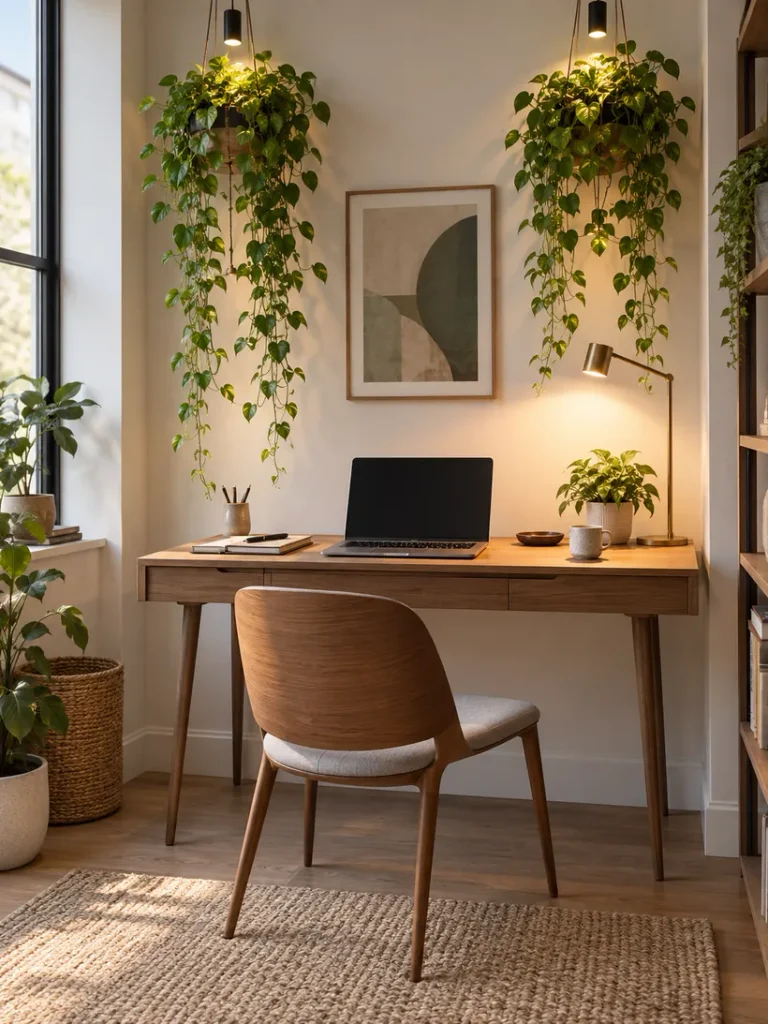
Hanging plants are especially useful above a home-office desk because they add softness without using work-surface space. Place them toward the rear of the desk so leaves do not interfere with the keyboard or monitor.
A task lamp can handle working light while a discreet grow fixture supports the plants. Keep the desk styling minimal so the greenery remains refreshing rather than distracting.
41. Plant Canopy Over a Sofa With Recessed Lighting
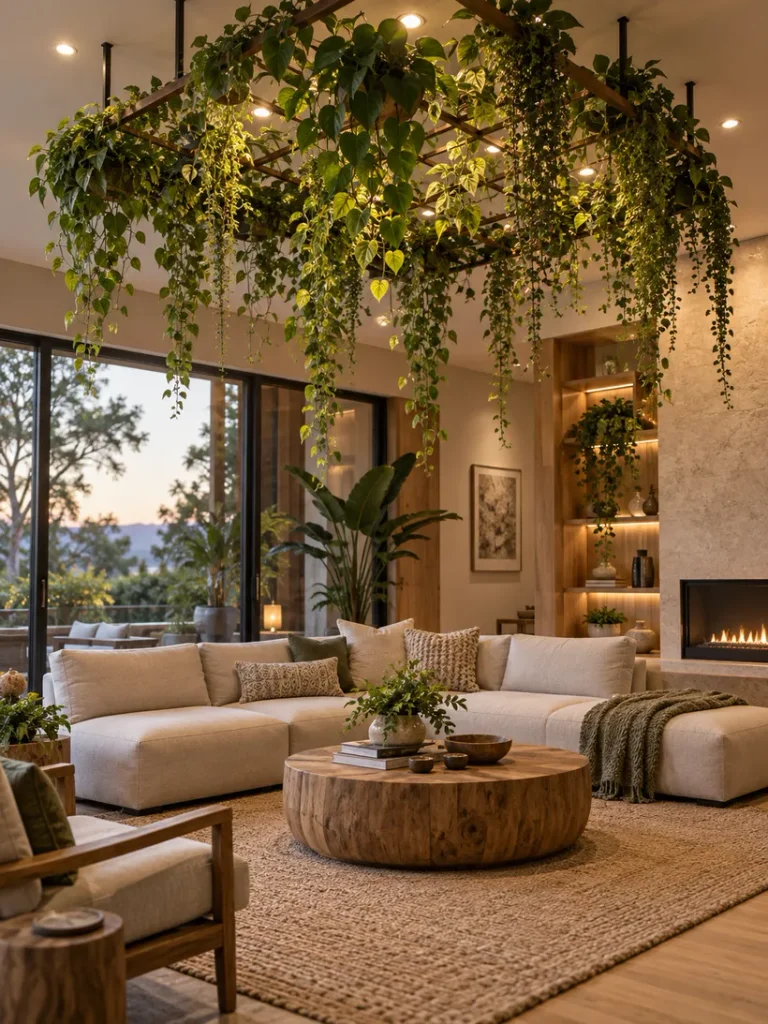
A plant canopy above a sofa can visually define the seating area in an open-plan room. Use a secure overhead framework and arrange trailing foliage so it forms a loose ceiling-level layer rather than hanging into head space.
Recessed lights shining through the leaves create a beautiful pattern in the evening. Maintain generous clearance above anyone standing up from the sofa and make sure every support is rated for wet planter weight.
42. Hanging Planters With Color-Changing Smart Lights
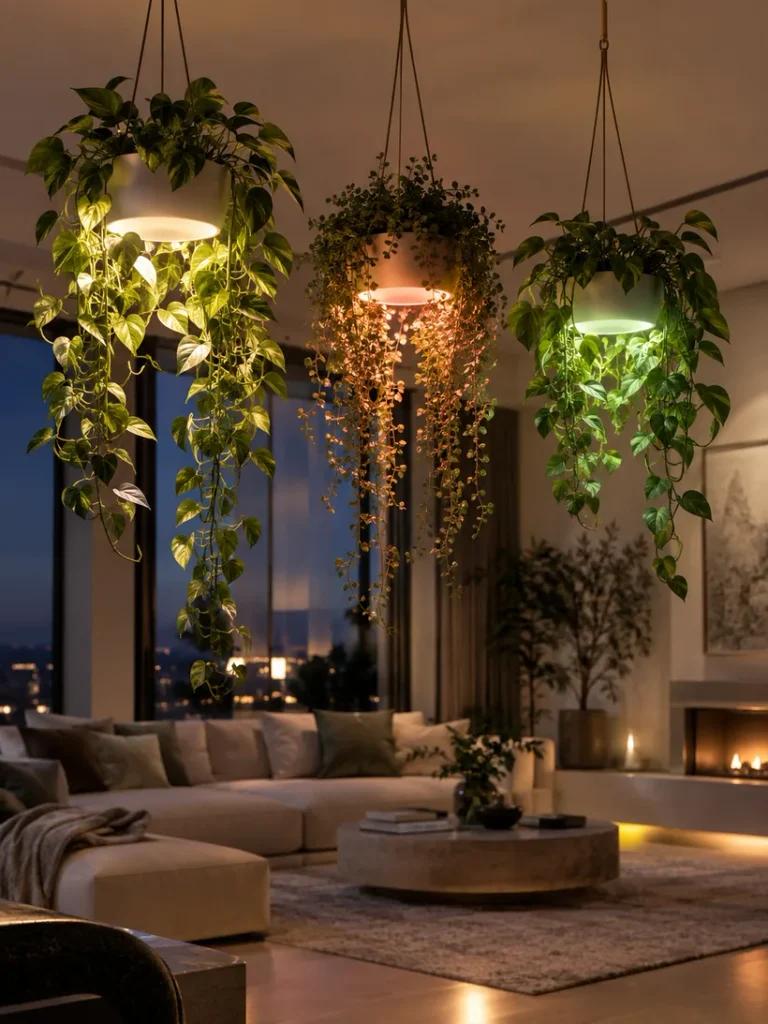
Smart lighting allows one hanging-plant arrangement to change character without changing any decor. Use warm white for everyday evenings, then shift individual fixtures to subtle peach, sage, or other restrained tones when you want a different mood.
Avoid highly saturated party colors if the goal is an elegant living room. Soft color differences are enough to show the smart-light effect while keeping the leaves natural and the overall room sophisticated.
43. Hanging Plants Inside a Cozy Balcony Room
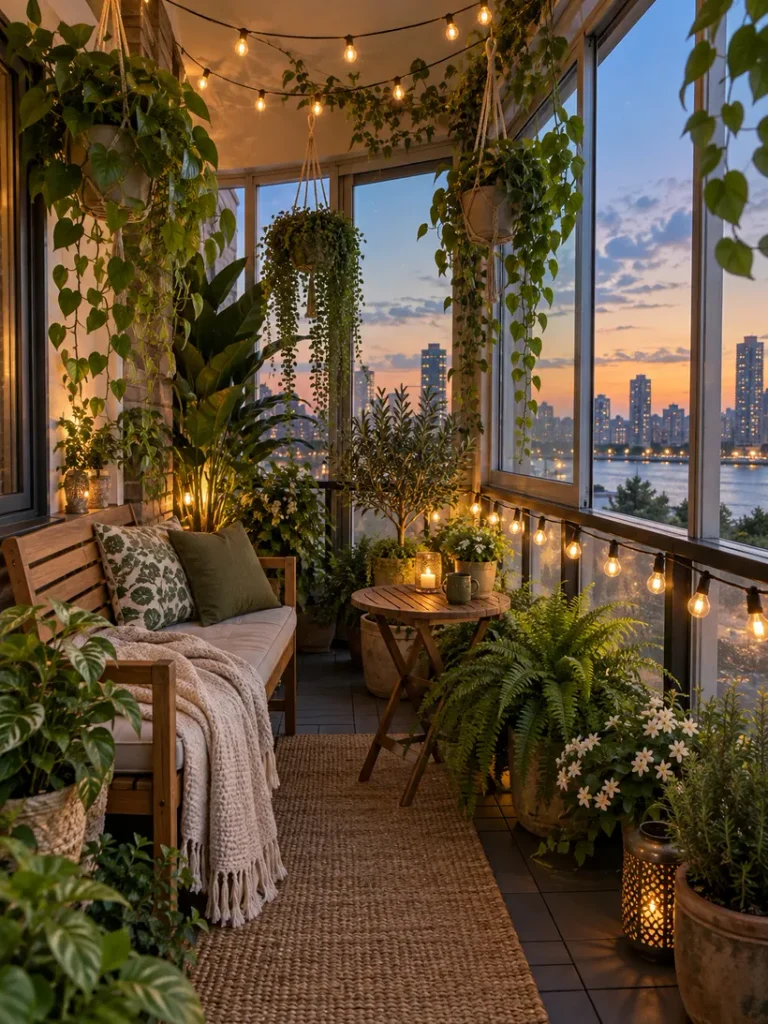
An enclosed balcony or sunroom can become a compact indoor garden with hanging plants near the windows, a small bench, and warm string lights overhead. The abundance of glass usually makes the space feel larger than it is.
Choose plants according to the real temperature and sunlight conditions because enclosed balconies can heat up quickly. In the evening, a few warm bulbs and lanterns turn the same space into a cozy retreat.
44. Hanging Orchid Display With Gentle Spotlights
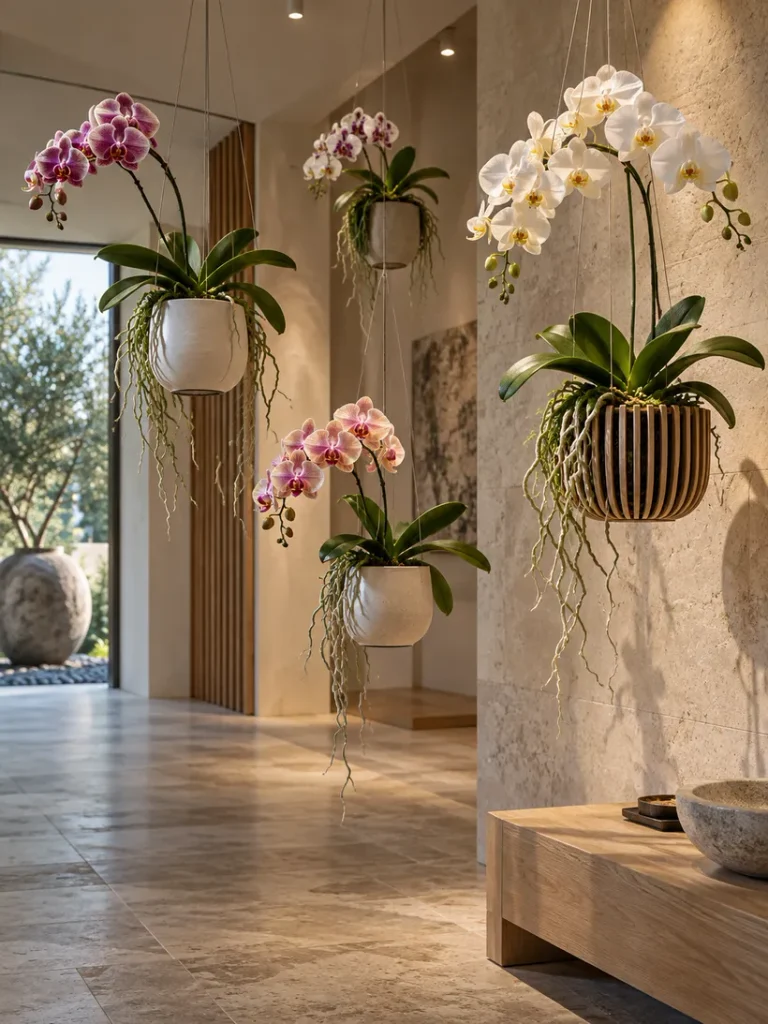
Orchids make a graceful alternative to heavily trailing foliage. Suspend several at different heights and use gentle spotlights to emphasize their flowers, aerial roots, and arching stems.
Simple ceramic or slatted planters keep the display gallery-like. Always choose the location according to the orchid’s light requirements first, then adjust the spotlight angle for the decorative effect.
45. Vintage Lantern Hanging Plant Arrangement
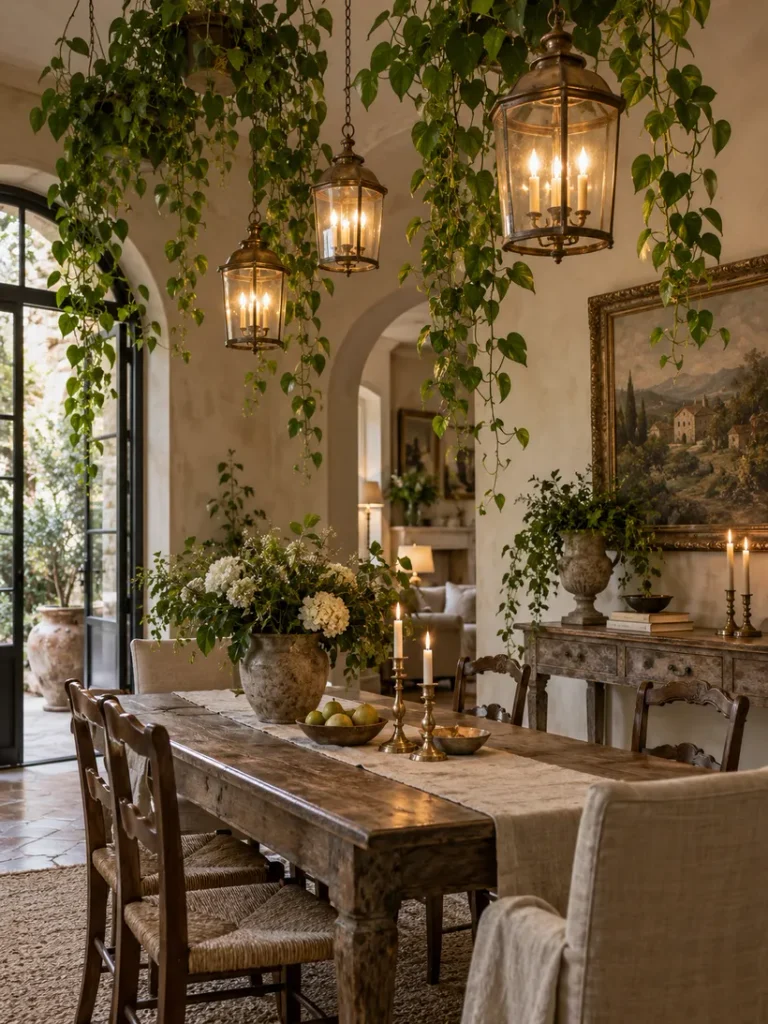
Vintage lantern-style pendants and trailing greenery create a romantic old-world atmosphere. Aged brass, glass panels, plaster walls, and classic wood furniture all work naturally with the warm green canopy.
Leave clear space around each lantern so vines never touch the fixture. Keep other decorative objects restrained because the combination of lanterns and foliage already provides a strong focal point.
46. Multi-Level Hanging Plant Installation With Layered Lighting
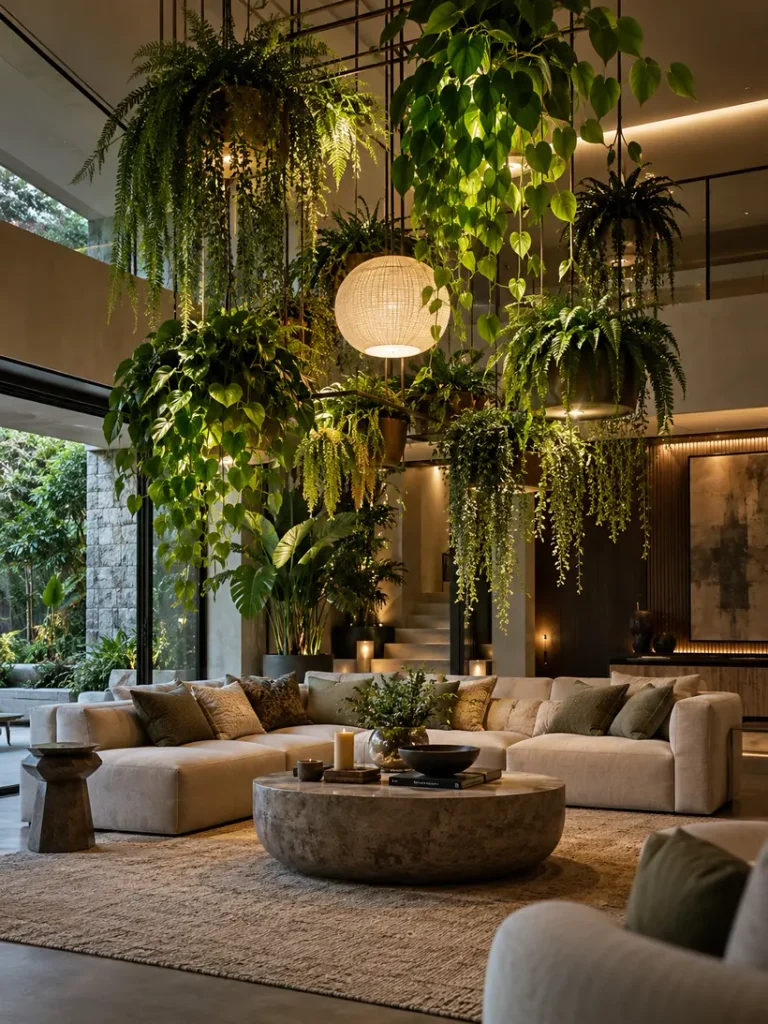
For the most dramatic interpretation, combine plants at several heights with more than one type of light. A central pendant can establish the main focal point while hidden spotlights and subtle LEDs add secondary layers.
Do not illuminate every leaf equally. Areas of shadow make the brighter foliage feel more dimensional and help the installation look sophisticated both during the day and after dark.
How to Choose the Right Lights for Indoor Hanging Plants
The most important decision is whether the light is meant to decorate the plant, support plant growth, or do both. Fairy lights, ordinary pendants, wall sconces, lanterns, and most household lamps are primarily decorative. They can make foliage look beautiful, but they should not automatically be treated as grow lights.
If a plant already receives enough daylight, decorative lighting can simply enhance its appearance in the evening. In darker locations, use a purpose-designed grow bulb, strip, or pendant and follow the manufacturer’s guidance for distance and operating time. LEDs are often convenient around plants because many options use relatively little energy and produce less heat than older lighting technologies.
Best Plants for Hanging Displays With Lights
Trailing plants usually create the strongest effect because light catches leaves at several levels. Pothos and heartleaf philodendron are popular choices for long cascading vines, while spider plants add arching leaves and dangling plantlets. Ferns provide fullness and texture, hoyas bring thicker glossy foliage, and string of hearts creates delicate vertical lines.
Air plants are useful for lightweight sculptural mobiles, while orchids can create an elegant flowering display. Succulents can also work in hanging designs, but many need substantially brighter growing conditions than common foliage plants. Always match the plant to the actual daylight, humidity, and temperature of the room.
Decorative Lights vs. Grow Lights
Decorative light and plant-growing light are not the same thing. A strand of fairy lights may look bright to us but still provide very little useful light for photosynthesis. Grow lights are designed to deliver suitable intensity and wavelengths for plants.
In a bright window, this distinction may not matter because daylight does most of the work. In a dark interior corner, however, a decorative lamp cannot compensate for inadequate growing conditions. Plan the plant’s light needs first and then layer decorative illumination around that practical foundation.
Safety Tips for Combining Hanging Plants and Lights
Use ceiling hooks, rails, and anchors rated for the full wet weight of each planter. Soil and containers become significantly heavier after watering. Keep electrical connections away from drip paths and use suitable fixtures in bathrooms or other humid areas.
Do not wrap wires tightly around stems, and keep foliage away from bulbs or housings that become hot. Secure long cords so they do not create tripping hazards or interfere with windows, doors, handrails, or walking routes. For permanent electrical work, use a qualified electrician.
Styling Tips for a More Luxurious Botanical Glow
Variation is what gives a hanging installation depth. Mix planter heights, combine one full plant with one or two trailing varieties, and let a single light act as the main focal point while smaller sources create background glow. Hiding cords and battery packs makes a surprisingly large difference to the finished look.
Match planter materials to the room: terracotta and woven baskets feel relaxed, white ceramics look minimal, and black metal feels architectural. Most importantly, leave negative space. A few well-lit leaves often look more refined than an overcrowded ceiling.
Frequently Asked Questions
Can indoor plants grow with decorative fairy lights?
Fairy lights are generally decorative and should not be relied on as the main light source for plant growth. Use natural daylight or an appropriate grow light based on the plant’s requirements.
What type of light is best for hanging indoor plants?
For decoration, warm LED pendants, sconces, strips, and micro lights all work well. For plant growth, choose a dedicated grow fixture that provides suitable intensity for the species you are growing.
Are LED lights safe around plants?
Many LED fixtures are useful around plants because they produce relatively little heat, but water and electricity still need to be kept safely separated. Follow the manufacturer’s installation instructions.
How far should a grow light be from a hanging plant?
There is no universal distance because fixtures vary greatly in output. Use the manufacturer’s recommended hanging height and adjust according to the plant’s response.
Which hanging plants tolerate lower light?
Pothos and heartleaf philodendron are often more tolerant of moderate indoor light than sun-loving plants, but low light is not the same as no light. Every living plant still needs usable light.
Can fairy lights stay on around plants overnight?
Decorative LEDs can often run for extended periods when used as directed, but they do not need to stay on all night for the plant. A timer can reduce unnecessary energy use and maintain a normal day-night rhythm in the room.
How can I hide cords around hanging plants?
Run cords along suspension wires, ceiling edges, or suitable cable covers, and hide battery packs behind or above planters where they remain accessible. Battery-powered micro lights can reduce visible wiring in small displays.
Are battery-operated lights good for hanging plant displays?
Yes, they are convenient for decorative installations where a power cord would be distracting. Choose a design with an accessible battery compartment so maintenance does not require dismantling the entire arrangement.
Final Thoughts
The best indoor hanging plants with lights ideas do not have to be complicated. A single pothos beside a warm pendant can be just as effective as a ceiling-wide botanical installation when the plant, light, and room are well matched.
Start with one unused vertical area, choose a plant that can genuinely thrive there, and add lighting that improves the atmosphere without compromising safety. Once that foundation is right, you can experiment with different heights, shadows, materials, and layers of illumination to create a botanical glow that feels completely integrated with your home.
