 Skip to content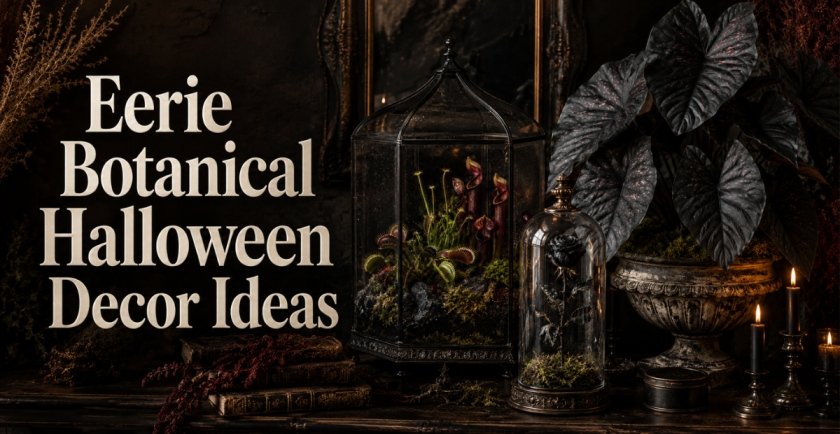
Transform your home into a shadowy conservatory with dark foliage, moss-covered terrariums, antique cloches, dried botanicals, and candlelit natural-history displays.
Halloween decorating does not have to begin with plastic skeletons, orange garlands, or novelty signs. Some of the most memorable seasonal rooms borrow their atmosphere from nature itself: almost-black leaves, twisted branches, seed pods, moss, preserved ferns, glass domes, and the strange sculptural shapes of carnivorous plants. That is the appeal of Eerie Botanical Halloween Decor—it can feel haunting and unmistakably seasonal while still looking sophisticated enough for a beautifully designed home.
The ideas below move from living dark plants into miniature terrariums, Victorian-style cloches, dried botanical arrangements, and full-room vignettes. You can recreate only one small display or layer several concepts together for a complete gothic greenhouse look. Keep the palette grounded in charcoal, burgundy, moss green, aged brass, warm candlelight, and worn natural materials, and let the plants remain the stars.
Decorating note: When using real candles near dried plants, moss, books, curtains, or hanging herbs, keep generous clearance and never leave flames unattended. Flameless candles can create the same atmosphere in tighter arrangements.
Section 1: Dark Plants & Gothic Greenery
1. Black Caladium Halloween Display
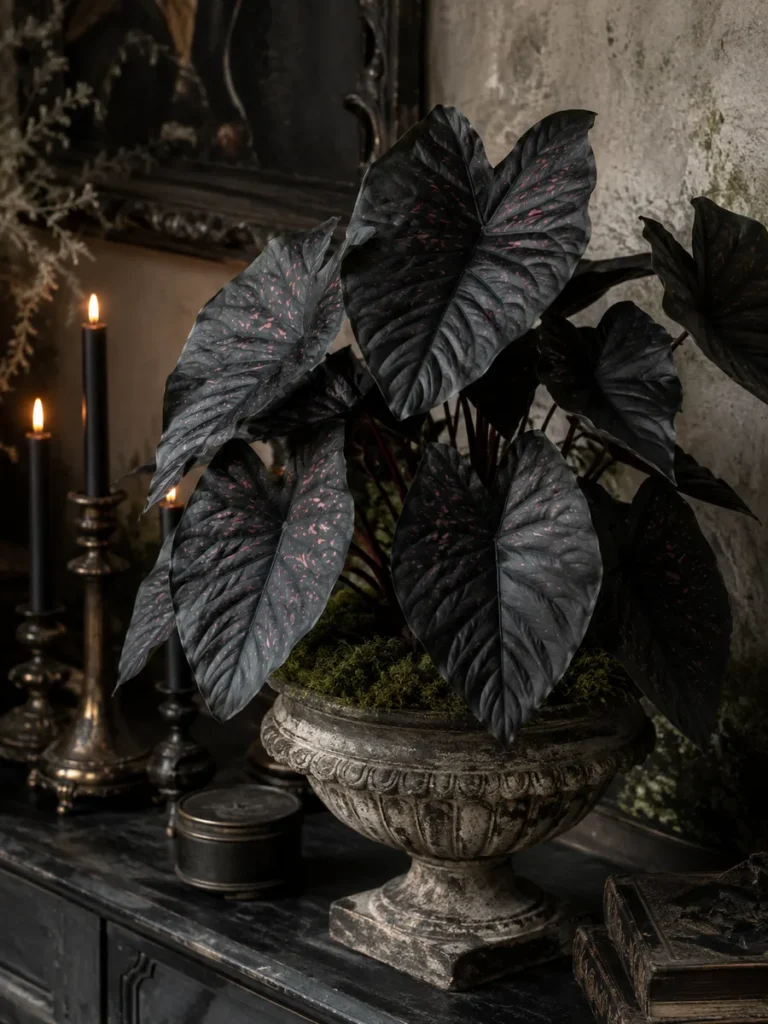
Few plants create instant Halloween drama as naturally as black caladium. Its broad, heart-shaped leaves already look theatrical, so the trick is to let the foliage do most of the decorating. Place a full plant in an aged stone or charcoal planter and soften the soil line with preserved moss. Against a dark wall, the leaves read almost like botanical silhouettes while still feeling alive and sophisticated.
Keep the supporting accents restrained. Two or three taper candles, a weathered console, and perhaps one antique frame are enough to establish the mood. This is an especially effective Eerie Botanical Halloween Decor idea for an entry table, mantel-adjacent corner, or dining-room sideboard because it feels seasonal without looking temporary.
Styling Tip: Use warm candlelight from one side so the veins and edges of the dark leaves remain visible instead of disappearing into the background.
2. Black Velvet Alocasia Corner
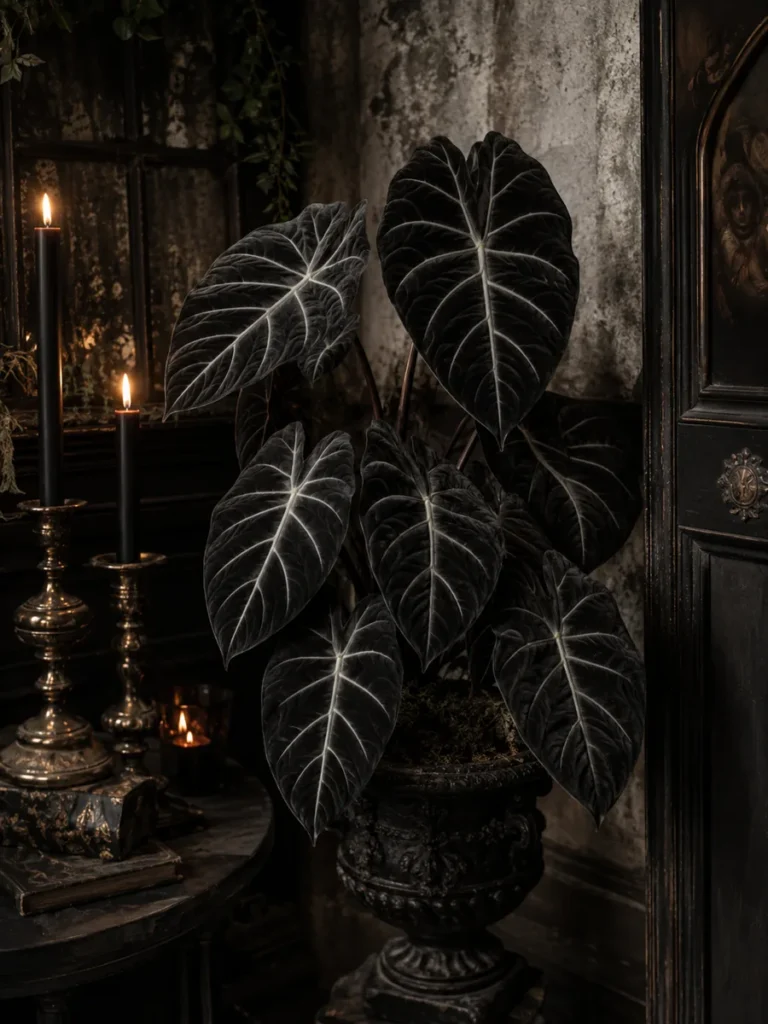
Black velvet alocasia brings a luxurious, almost otherworldly texture to a shadowy corner. Its velvety leaves and contrasting pale veins look particularly striking beside antique brass or aged bronze. Rather than surrounding the plant with obvious Halloween props, build a small vignette around texture: a dark pedestal, two candlesticks, a faded painting, and a little moss at the base.
This works beautifully in a reading nook, bedroom corner, or beside a fireplace where the foliage can be viewed close up. The result feels like a forgotten Victorian conservatory rather than a themed display. Because the plant itself supplies the drama, the arrangement can remain in place well beyond Halloween with only minor styling changes.
Styling Tip: Choose a planter with a low-sheen finish; glossy containers compete with the alocasia’s velvety leaf surface.
3. Purple Oxalis in an Antique Urn
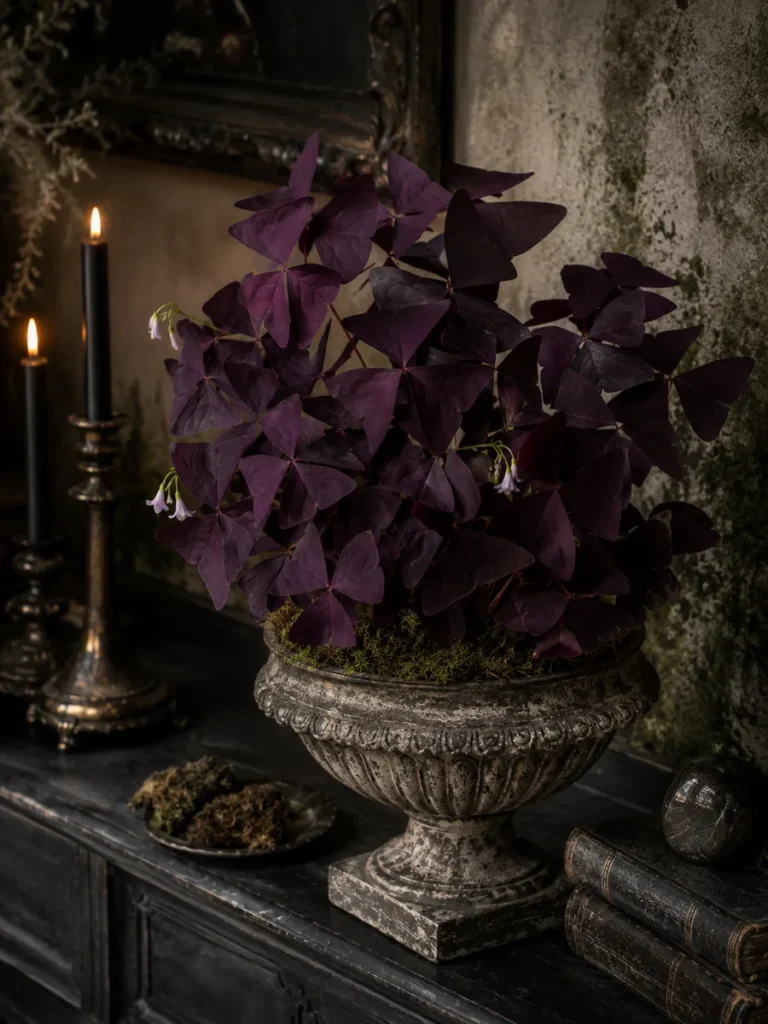
Purple oxalis is one of the easiest plants to turn into elegant Halloween decor because the foliage already arrives in a deep plum palette. Its triangular leaves create a fluttering, almost moth-like effect when massed in an antique urn. A shallow layer of moss over the soil makes the container look older and more established, as if it has been growing in a conservatory for years.
Pair the oxalis with black tapers, worn books, or an old mirror rather than bright seasonal accessories. The contrast between delicate foliage and heavy antique materials keeps the composition interesting. It is a strong choice for a console table or buffet where the leaves can spill outward without being crowded.
Styling Tip: Place the urn slightly off-center and let one or two candleholders rise behind it for a layered, collected look.
4. Raven ZZ Plant Gothic Arrangement
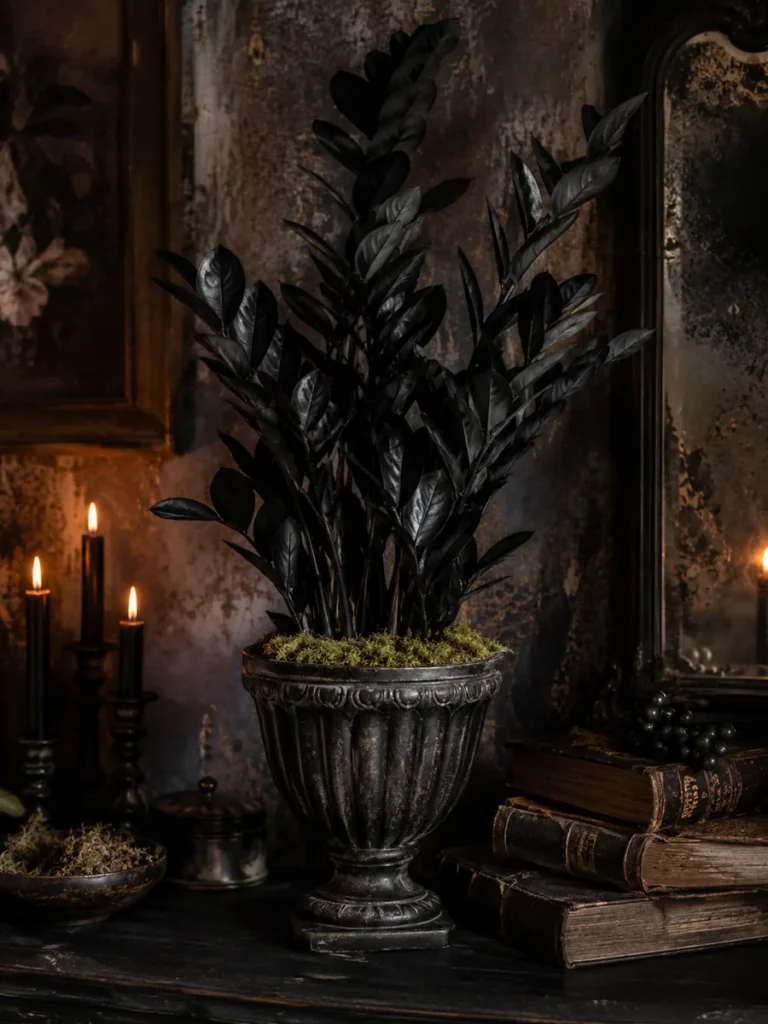
The Raven ZZ plant is ideal for a sleek, sculptural version of Eerie Botanical Halloween Decor. New growth starts greener and matures toward a glossy near-black tone, giving the plant natural tonal variation. Set it in a simple dark ceramic pot, then place it beside aged books, a smoky glass vessel, or a small brass object to create a refined gothic still life.
Because the stems are upright and architectural, this arrangement suits narrow consoles and side tables where a sprawling plant would feel too busy. The polished foliage also reflects candlelight beautifully, adding movement without adding clutter. Keep the background matte and textured so the glossy leaves remain the focal point.
Styling Tip: Use one strong vertical accessory—such as a tall candle or narrow framed print—to echo the plant’s upright shape.
5. Dark Coleus Halloween Planter
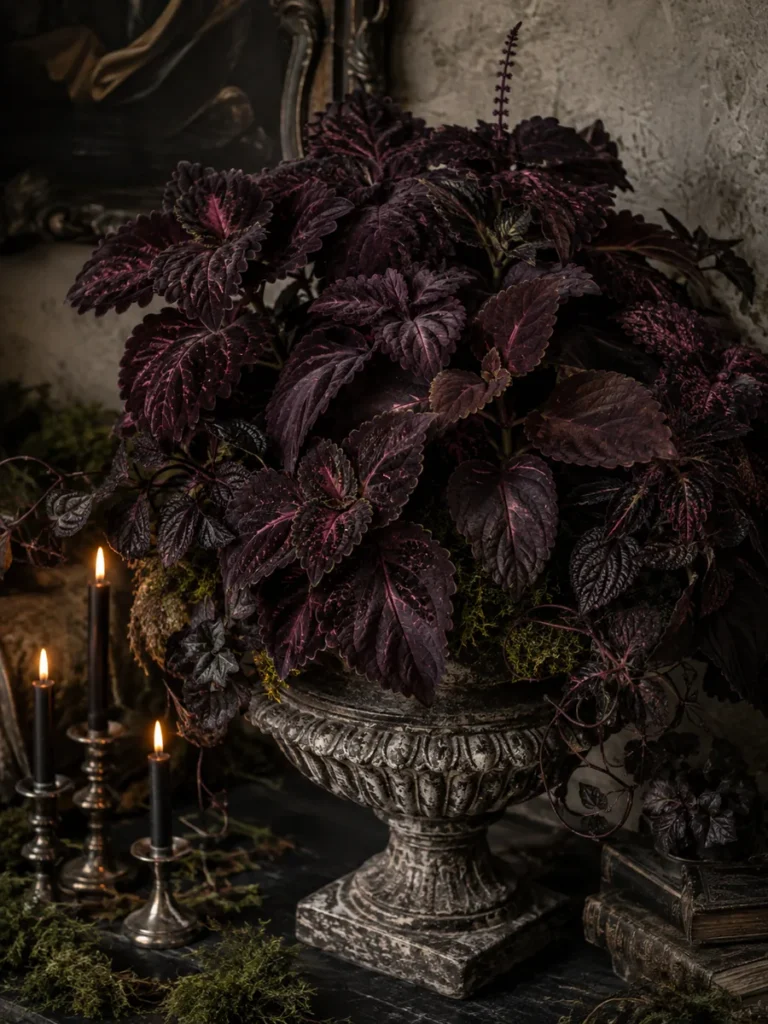
A planter filled with burgundy, plum, wine, and near-black coleus offers more color variation than an all-black arrangement while remaining unmistakably moody. Mix different leaf shapes and markings so the display looks layered rather than flat. A weathered urn, stone bowl, or blackened metal planter helps keep the palette sophisticated.
Coleus is especially useful when you want Eerie Botanical Halloween Decor that still feels lush. Place the arrangement near a mirror, under a framed botanical print, or on a covered porch where the varied leaves can catch soft side light. Small moss accents and a few dried seed heads can make the planter feel even more seasonal without overwhelming it.
Styling Tip: Repeat one burgundy tone from the foliage in a nearby candle or textile to make the vignette feel intentionally coordinated.
6. Black Mondo Grass Table Arrangement
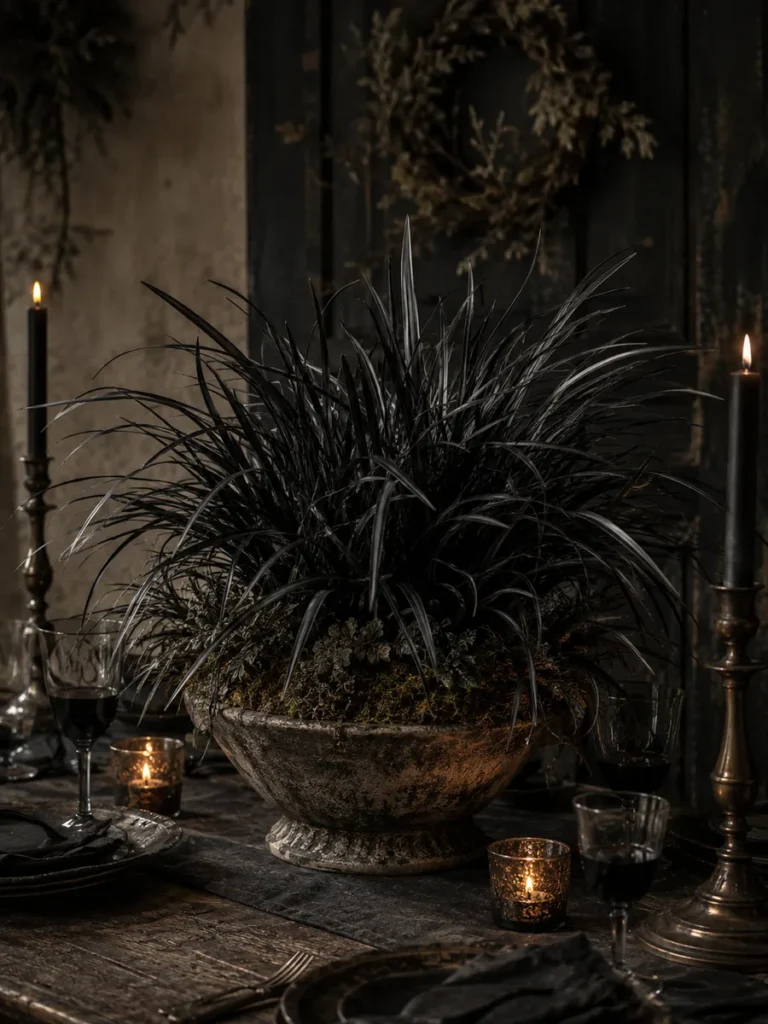
For a spikier, more minimalist centerpiece, black mondo grass is hard to beat. Its narrow, almost ink-colored blades create a dramatic silhouette without blocking sight lines across the table. Plant it in a low antique bowl or shallow footed vessel and top the surface with moss or dark gravel.
This idea works especially well on a dining table because the arrangement feels graphic from every angle. Surround it with simple taper candles and keep the rest of the table restrained—dark linens, aged metal, and neutral ceramics are enough. The contrast between the grass’s fine texture and the weight of an antique container makes the display feel designed rather than merely potted.
Styling Tip: Keep the vessel low and wide so the grass reads as a centerpiece rather than a houseplant placed on the table.
7. Deep Burgundy Begonia Display
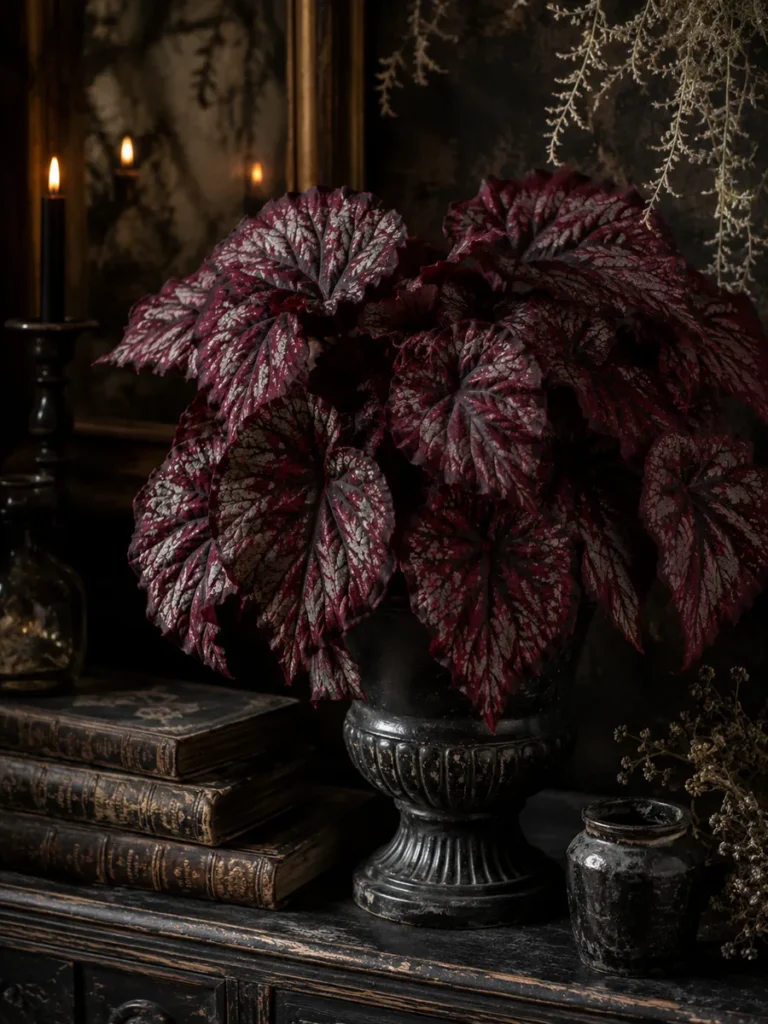
Patterned begonia leaves bring an almost painted quality to a gothic botanical vignette. Look for varieties with burgundy, silver, charcoal, or deep red markings and let the foliage become the artwork. An aged urn or dark pedestal pot gives the plant visual weight, while stacked books and black ceramics create a believable old-library backdrop.
This is a particularly good option for shelves, sideboards, and small reading corners because the plant looks detailed even at close range. Rather than using many decorative objects, choose only a few pieces with strong patina. Candlelight grazing across the leaves will highlight their texture and make the darker areas look richer.
Styling Tip: Position the plant near a mirror or dark artwork so its patterned leaves stand out against a calmer background.
8. Gothic Fern and Moss Planter
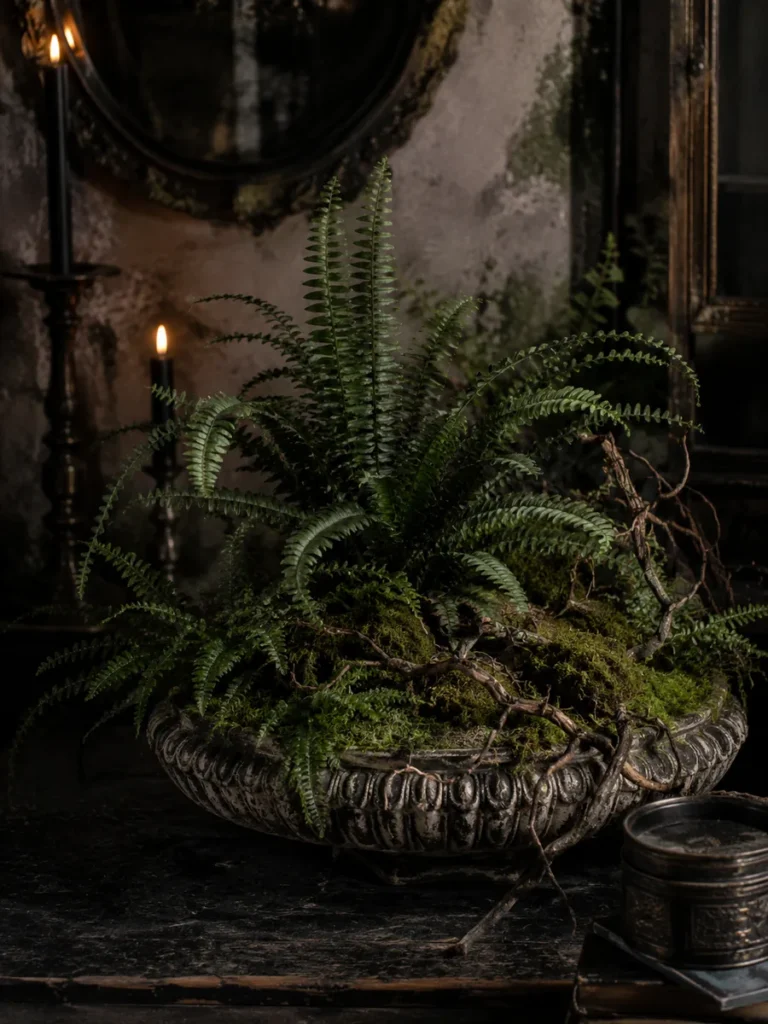
Ferns and moss can make a room feel like an abandoned greenhouse faster than almost any other combination. Choose arching fern fronds and tuck thick moss around the soil, allowing a few roots or pieces of weathered wood to remain visible. A low stone or blackened metal container gives the arrangement an old-world, collected feeling.
The appeal of this Eerie Botanical Halloween Decor idea is its organic messiness. Let fronds lean in different directions and allow moss to creep slightly over the rim rather than trimming everything perfectly. Place the planter near candles, a dark mirror, or aged plaster so the fresh greenery contrasts with the distressed setting.
Styling Tip: Add one twisted piece of natural wood through the moss to make the planter look more like a miniature forest floor.
9. Trailing Ivy Haunted Mantel
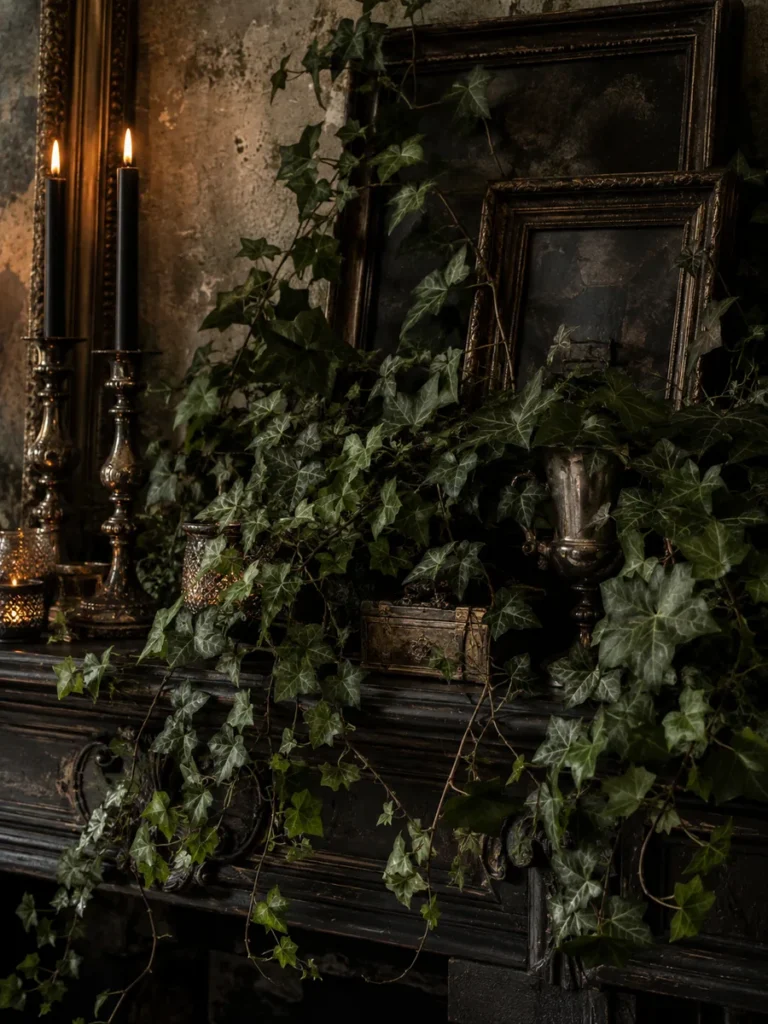
Trailing ivy can transform an ordinary mantel into something that looks beautifully overgrown. Start with real or realistic ivy and weave the stems around antique frames, candlesticks, and small vessels. Allow several vines to cascade down the front so the greenery breaks the straight horizontal line of the mantel.
The best versions feel as though the plants have slowly reclaimed the room. Mix fresh green leaves with a few dried stems or muted botanicals for variation, but avoid filling every surface. Dark frames, warm candlelight, and an aged wall provide enough atmosphere on their own. The result is lush, haunted, and still elegant enough for a living room.
Styling Tip: Let some vines cross in front of frames rather than keeping every decorative object completely visible.
10. Dark Botanical Window Garden
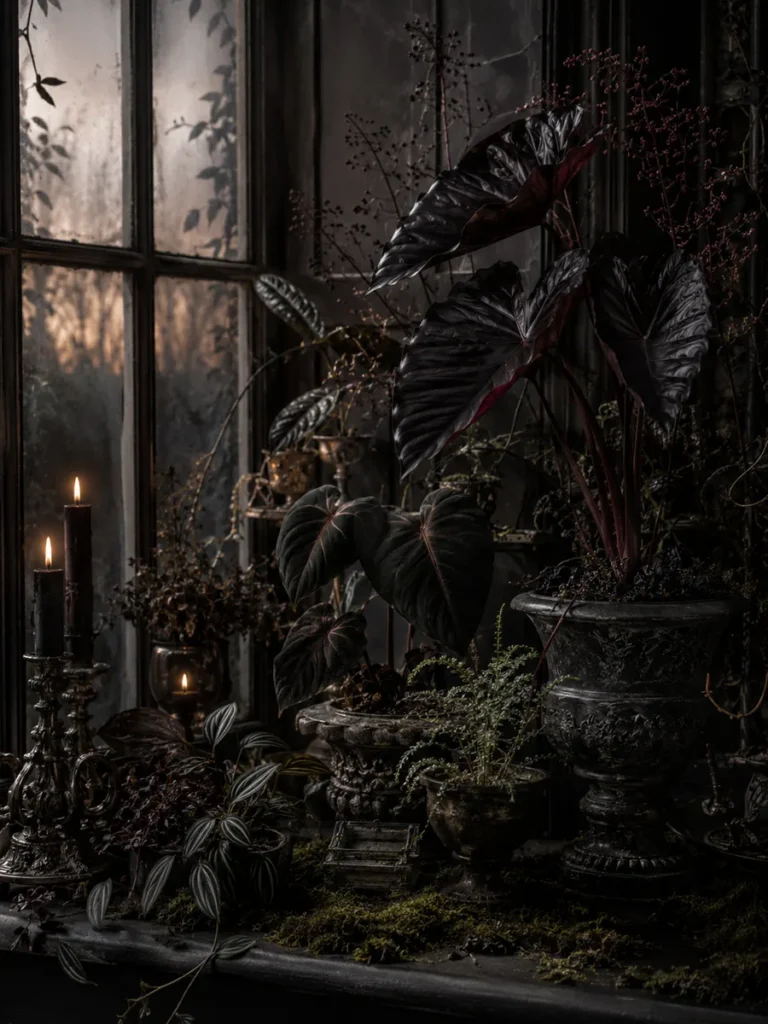
A window garden of dark foliage creates a striking silhouette as daylight fades. Group several plants with different leaf shapes—large alocasia, compact begonia, trailing vines, and fine ferns—near a softly lit window. Use antique pots in dark stone, charcoal ceramic, or aged metal to keep the arrangement visually cohesive.
At dusk, the plants become layered shapes against the glass, which makes the display feel naturally mysterious. A few candles placed safely nearby can introduce warm points of light without turning the setup into a conventional Halloween scene. This is a beautiful way to decorate a conservatory, dining nook, or deep windowsill using plants that can stay in place throughout the season.
Styling Tip: Vary plant height deliberately so the silhouettes overlap without completely hiding the window.
Section 2: Haunted Terrarium Ideas
11. Abandoned Greenhouse Terrarium
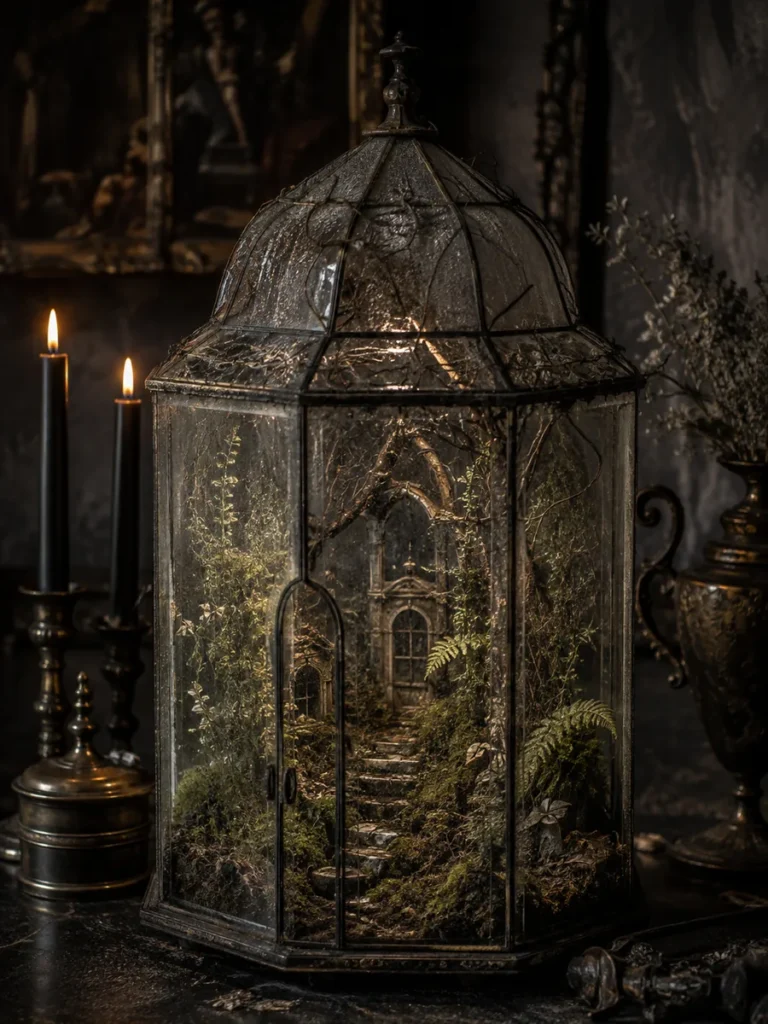
Build a miniature abandoned greenhouse inside glass using moss, tiny ferns, twisted roots, and weathered wood. A few small stones or a broken-looking path can suggest forgotten structure without requiring obvious miniature Halloween props. Slight condensation on the glass only adds to the feeling that the terrarium has been quietly growing for years.
Set the terrarium on a dark tabletop and surround it with one or two antique objects rather than a crowd of accessories. The miniature landscape should be detailed enough to invite a closer look. This makes a wonderful focal point for a console or bookshelf, especially where side lighting can reveal the layers inside the glass.
Styling Tip: Create depth by placing taller branches toward the back and keeping the mossy foreground lower and more open.
12. Miniature Witch Garden Terrarium
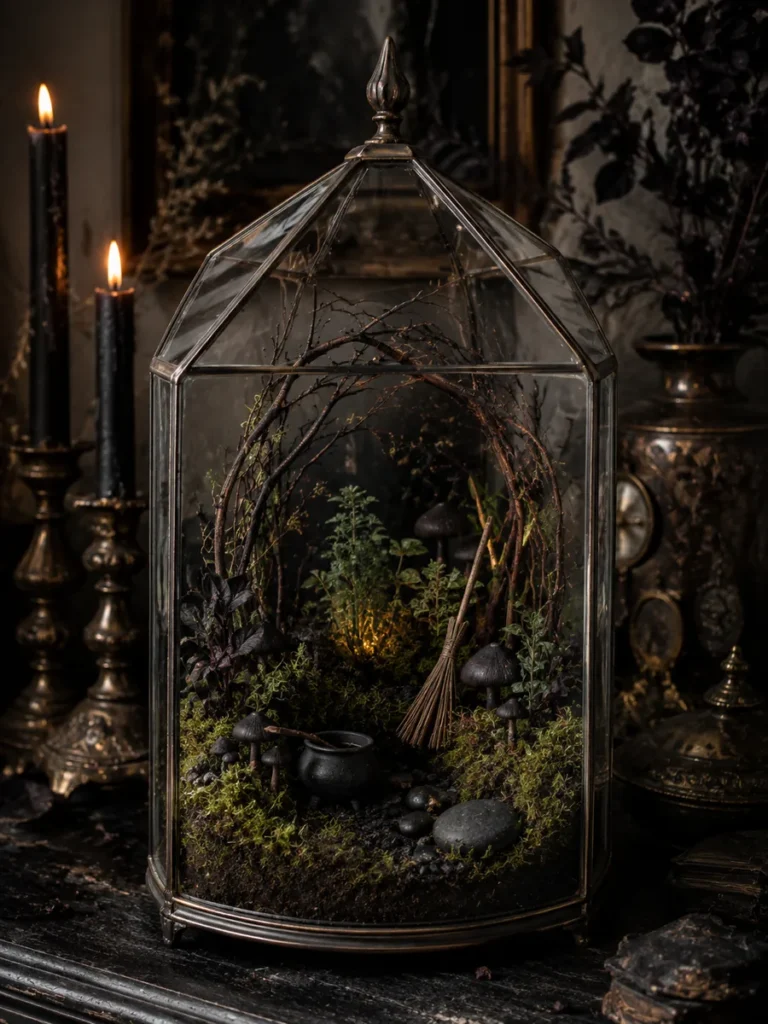
A witch garden terrarium can feel refined when it relies on natural materials instead of novelty miniatures. Start with dark soil, moss, black pebbles, small herbs, and tiny mushrooms. Arch thin twigs over the planting to create a natural gateway, then add a few unusual leaves or seed heads for an enchanted appearance.
Keep the color palette earthy and muted—deep green, charcoal, brown, and touches of plum. Presented in an antique-style glass terrarium, the arrangement looks more like a mysterious botanical experiment than a themed craft. Place it beside old books or brass candleholders to complete the apothecary mood.
Styling Tip: Use only one or two miniature accents; too many small props can quickly make the terrarium feel toy-like.
13. Overgrown Cemetery Terrarium
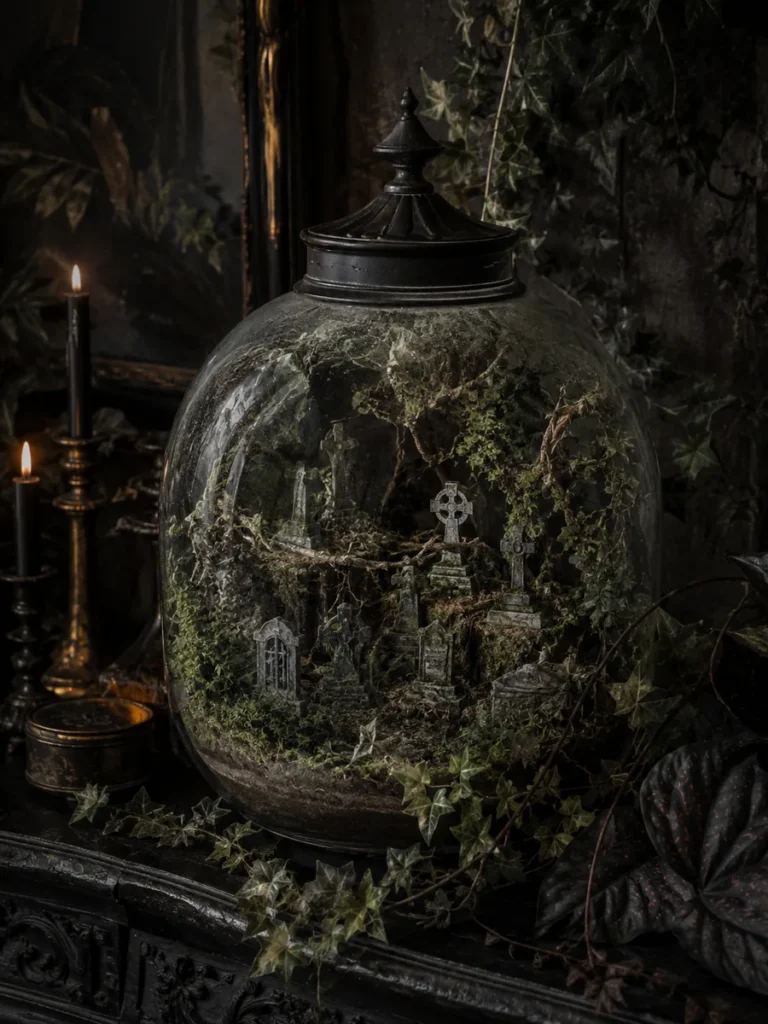
For a more recognizable Halloween scene, create a tiny overgrown cemetery inside a glass vessel. Weathered miniature headstones should sit partly buried in moss rather than standing perfectly upright. Add creeping ivy, small ferns, twisted roots, and patches of dark soil so the scene looks as though nature has taken over.
The key is restraint. A few aged markers among dense greenery feel far more atmospheric than a crowded graveyard. Slightly fogged glass, dark stones, and candlelight outside the terrarium help create depth. Display it against a quiet background so the miniature details remain easy to see.
Styling Tip: Partially cover the bases of the gravestones with moss to make the scene look genuinely old and overgrown.
14. Carnivorous Plant Terrarium
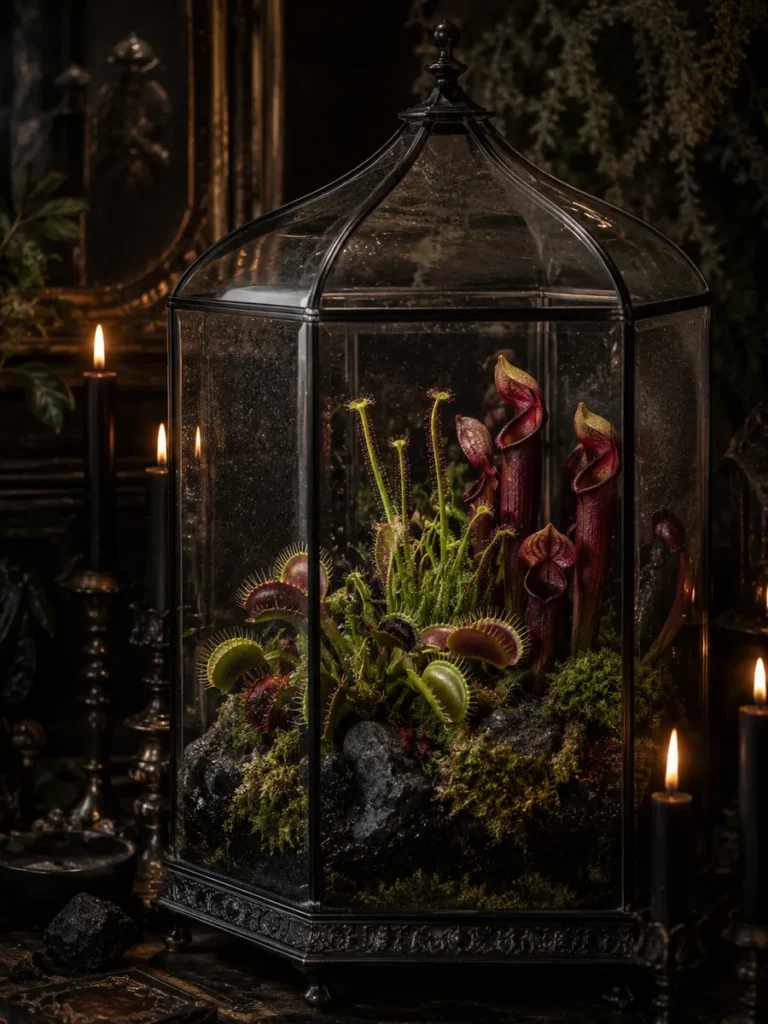
Venus flytraps, pitcher plants, and sundews provide Halloween drama without any artificial decoration at all. Arrange several carnivorous plants in a humid glass terrarium with damp moss, dark stones, and rich soil. The unusual leaf forms immediately create a curious, slightly sinister botanical display.
Use a tall glass case so pitcher plants have room to rise while lower flytraps remain visible near the front. Burgundy and red tones in the plants pair beautifully with black metal framing and warm candlelight outside the glass. This is one of the strongest Eerie Botanical Halloween Decor ideas because the plants themselves look extraordinary even in daylight.
Styling Tip: Cluster plants by height rather than scattering them evenly; the terrarium will look more like a real miniature habitat.
15. Moonlit Forest Terrarium
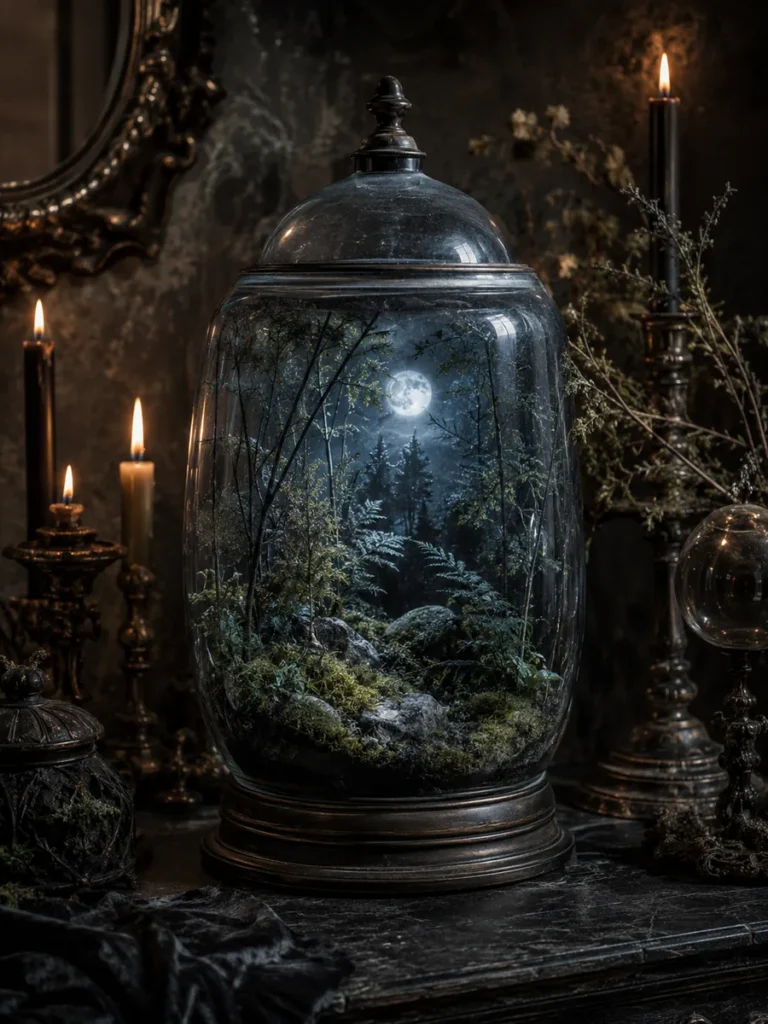
Turn a simple terrarium into a miniature moonlit forest by focusing on ferns, moss, slender branches, and cool-toned lighting. Build a low mossy floor with a few rocks, then allow narrow branches to rise through the scene like tiny trees. A subtle blue or silvery light source behind the glass can suggest moonlight without looking theatrical.
The surrounding room can remain warm and candlelit, creating a beautiful contrast between the cool miniature forest and the darker interior. This terrarium works especially well as an evening focal point on a sideboard or library table.
Styling Tip: Keep the internal light soft and indirect; the goal is moonlit atmosphere, not a brightly illuminated display case.
16. Victorian Apothecary Terrarium
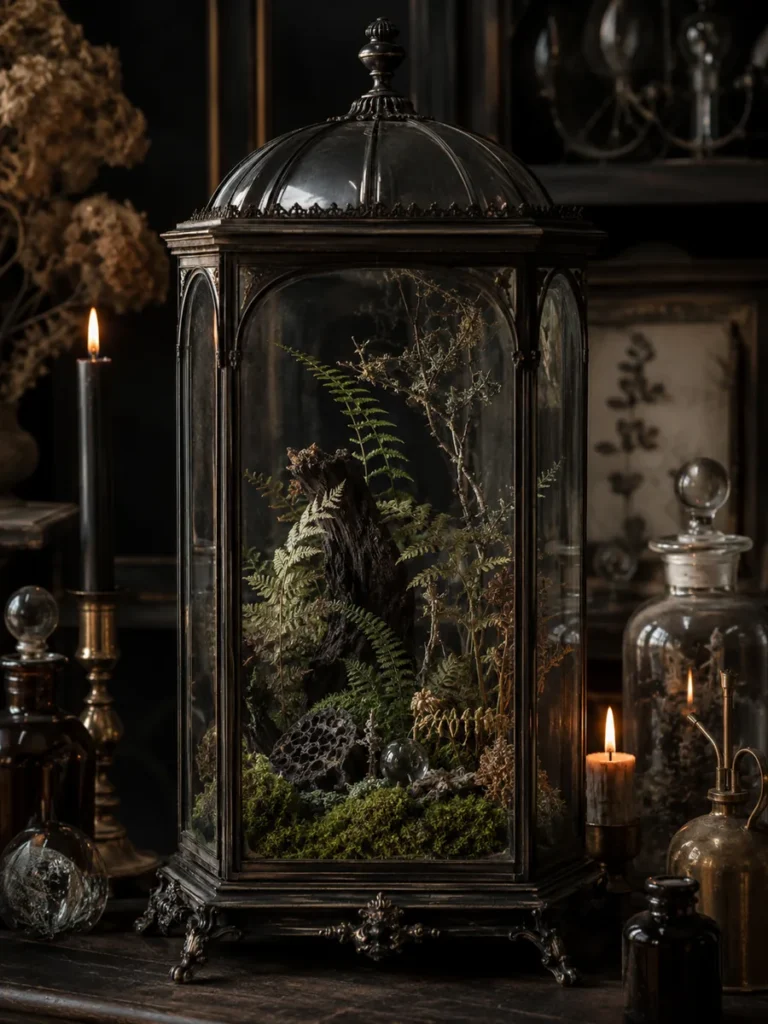
A Victorian apothecary terrarium should feel like a botanical specimen preserved for study. Fill an ornate glass case with moss, delicate ferns, dried lichen, interesting roots, and a sculptural piece of bark. Around it, group amber bottles, clear jars, brass tools, and old books to suggest a collector’s workspace.
The beauty comes from mixing living and preserved textures. Fresh moss and fern fronds soften the harder glass and metal, while dried elements introduce age. Keep labels absent or unreadable so the vignette remains decorative rather than busy. The result feels scholarly, mysterious, and perfectly suited to a Halloween study or mantel.
Styling Tip: Use different heights of bottles around the case but leave the front mostly clear so the terrarium remains the hero.
17. Black Sand Succulent Terrarium
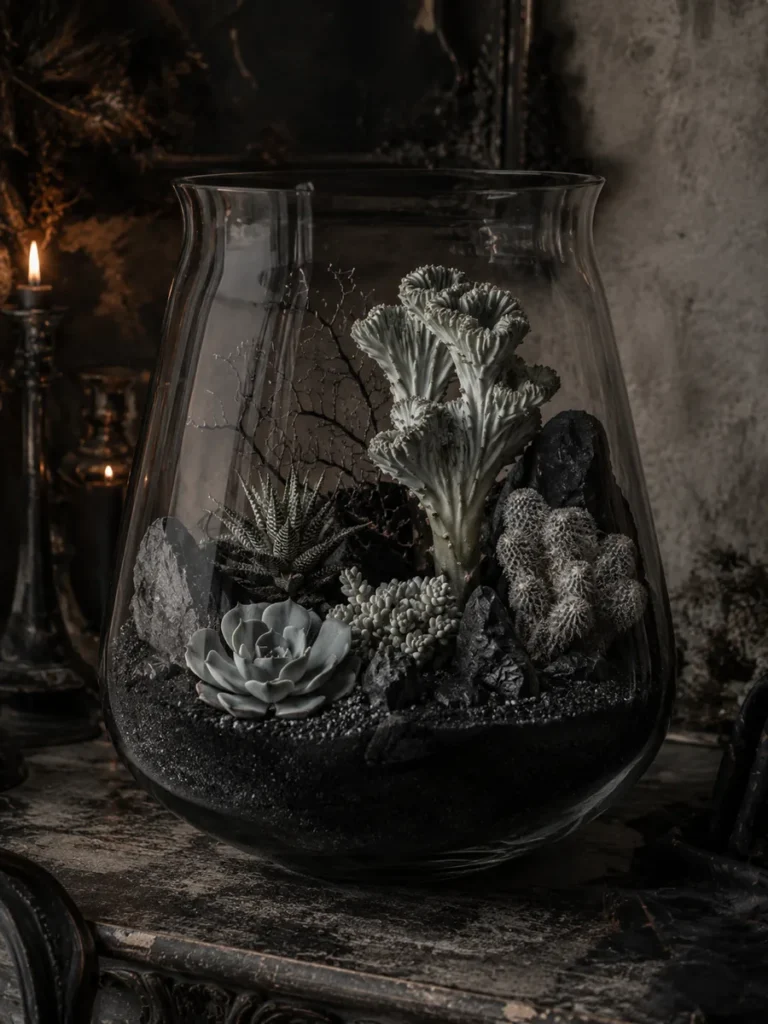
Black sand creates an instant dramatic backdrop for pale succulents. Fill a wide glass vessel with charcoal sand or fine black gravel, then arrange ghostly gray echeveria, sculptural haworthia, and other pale succulents among dark rocks. The strong contrast turns a simple desert garden into a moody seasonal centerpiece.
Because succulents have clean shapes, this terrarium offers a nice visual break from the tangled moss and vines used elsewhere in Eerie Botanical Halloween Decor. Place it against a textured wall and add a single candle nearby. The display feels modern, eerie, and surprisingly elegant.
Styling Tip: Leave visible areas of black sand between plants; negative space is what makes the pale succulents look especially dramatic.
18. Mushroom Woodland Terrarium
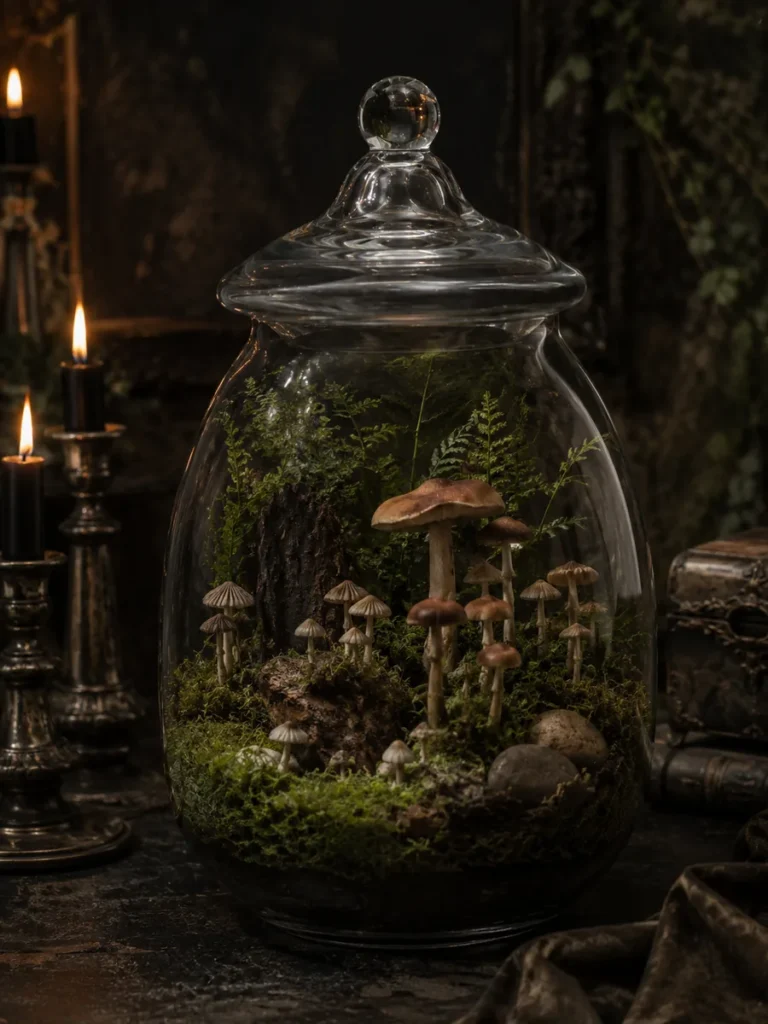
A mushroom woodland terrarium captures the damp, mysterious feeling of the forest floor. Use thick moss, bits of bark, tiny ferns, stones, and realistic mushrooms in several sizes. Keep the mushrooms in natural beige and brown tones so the scene feels believable rather than whimsical.
A lidded glass jar or cloche helps frame the miniature ecosystem and creates beautiful reflections in candlelight. Place taller mushrooms toward the middle or back, with smaller clusters peeking from moss near the front. The result is enchanting enough for Halloween but subtle enough to remain on display throughout autumn.
Styling Tip: Mix cap shapes and heights rather than repeating identical mushrooms; natural irregularity makes the display much more convincing.
19. Miniature Swamp Terrarium
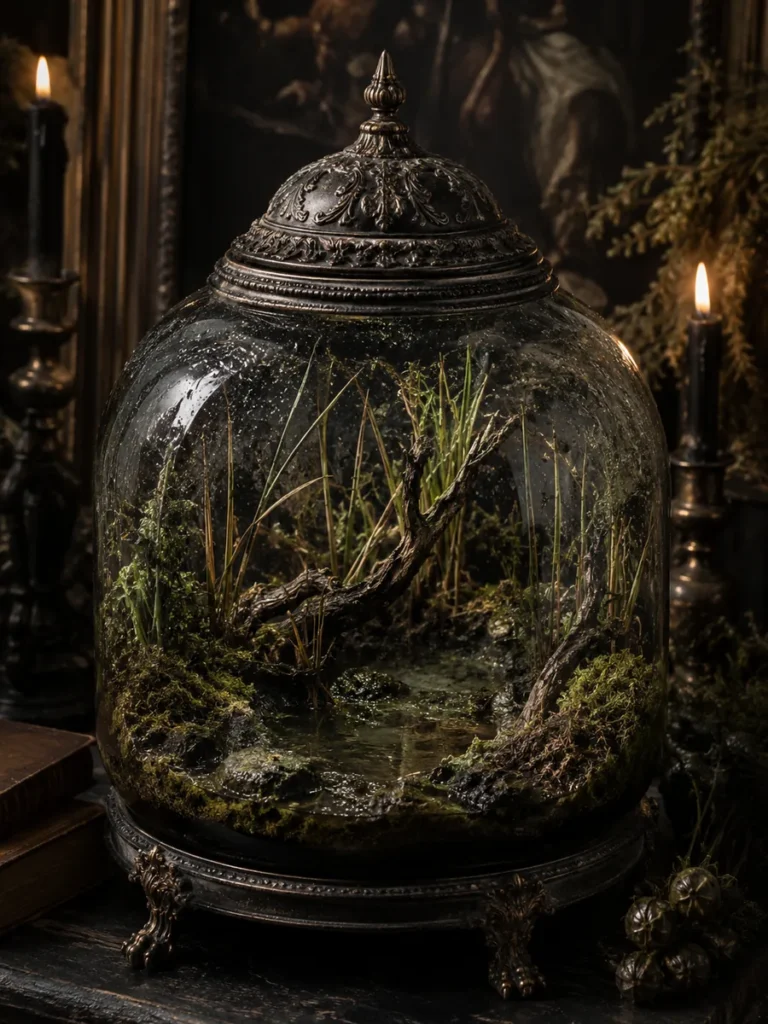
A miniature swamp terrarium is all about wet texture: shallow dark water, moss, tangled roots, reeds, and slick stones. Use a rounded glass vessel so reflections reinforce the watery feeling. A gnarled piece of wood emerging from the center can act as the main sculptural feature.
Keep the palette muted green, brown, and charcoal, with just enough open water to create shine. Candlelight reflecting off the glass and damp surfaces makes the scene feel especially atmospheric at night. This is a strong choice for anyone who wants Halloween decor that feels unusual and nature-driven rather than traditional.
Styling Tip: Do not overfill the water area—small reflective pools are more convincing and easier to read visually than a flooded container.
20. Enchanted Poison Garden Terrarium
Create the impression of a miniature poison garden with unusual dark leaves, pitcher-like forms, pale blossoms, twisted roots, and moss. You do not need to use genuinely toxic plants; the visual effect comes from shape, color, and presentation. Deep plum foliage beside ghostly flowers immediately suggests an old botanical collection with secrets.
An ornate bell jar or dark-framed terrarium makes the idea feel especially Victorian. Add seed pods and curling fern tips for more unusual silhouettes. Keep the surrounding decor simple—one candle, an aged book, and a brass object are enough to support the mood.
Styling Tip: Combine only a few dramatic plant forms so each one remains identifiable instead of becoming lost in a dense arrangement.
Section 3: Halloween Cloches & Glass Domes
21. Dried Black Rose Cloche
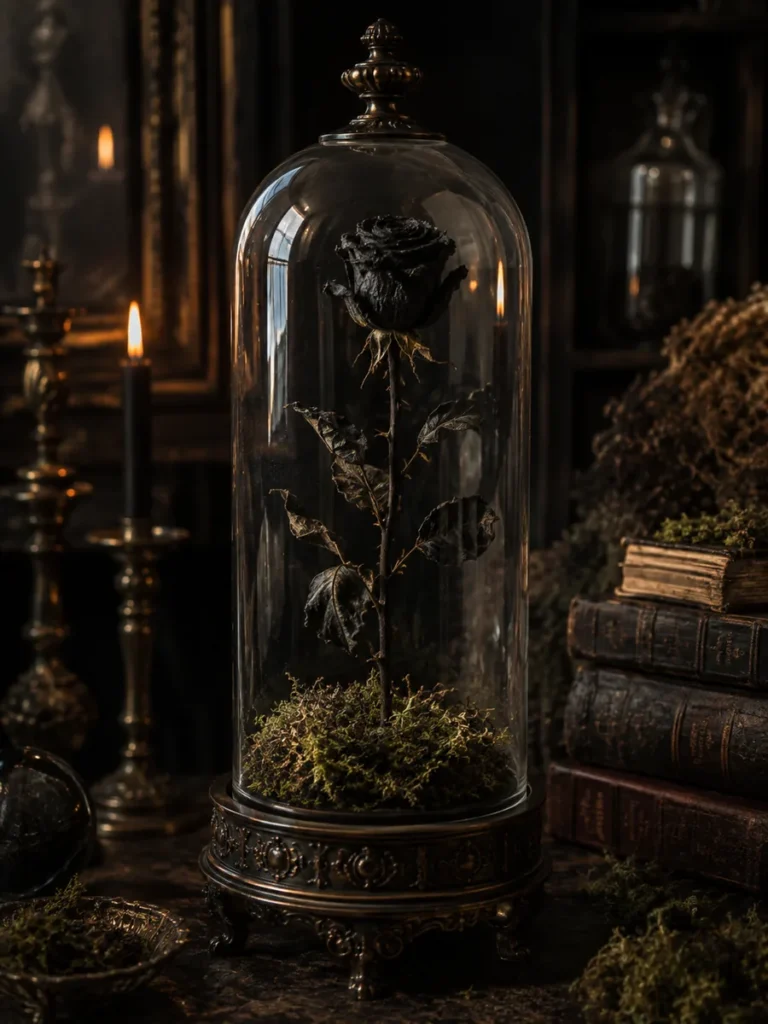
A single dried black rose under glass is one of the simplest and most dramatic cloche displays. Choose a rose with a strong shape, leave the stem and a few curled leaves intact, and anchor it in a small bed of moss. A tall bell jar gives the flower enough negative space to feel like a treasured specimen.
Place the cloche on an ornate dark base and add a few old books or taper candles nearby. The display looks romantic, gothic, and slightly haunting without requiring any extra Halloween symbols. It is perfect for a bedside table, mantel, or small console where a single object can make an impact.
Styling Tip: Resist filling the empty space inside the cloche; the isolation of the rose is what makes the arrangement powerful.
22. Moss and Mushroom Cloche
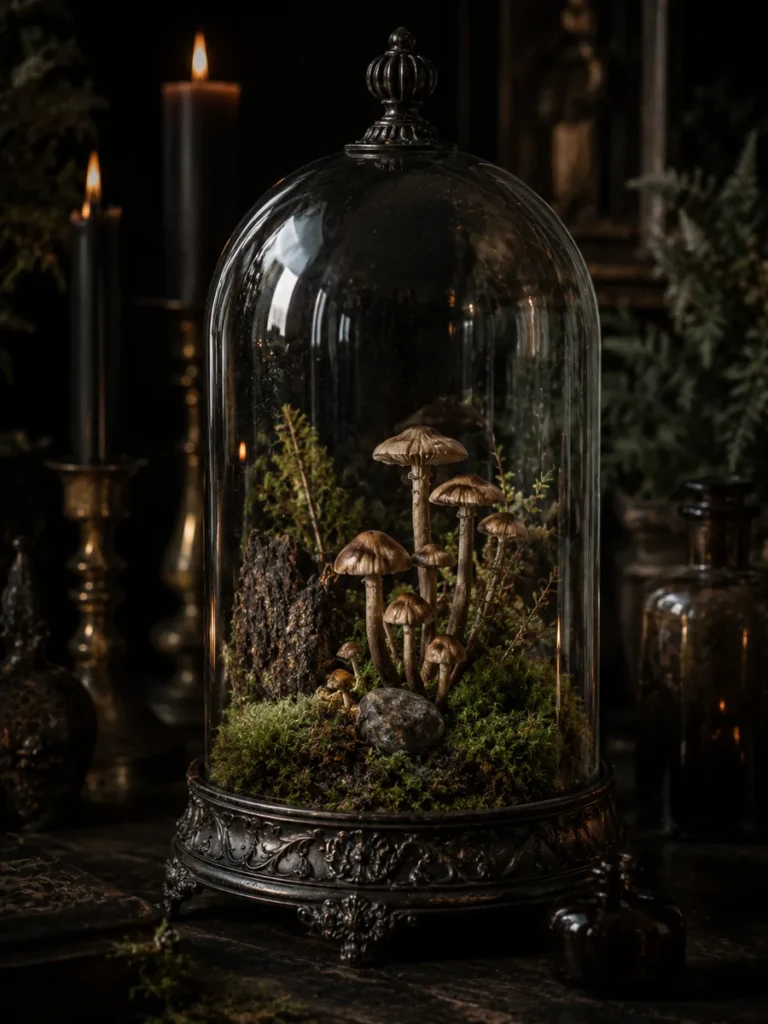
A low forest-floor cloche brings together some of the most effective textures in Eerie Botanical Halloween Decor. Start with a thick carpet of moss, then add bark, one or two stones, and a small cluster of realistic mushrooms. Keep the arrangement compact so it looks as though you lifted a piece of woodland and placed it under glass.
The simplicity makes this idea versatile. It works beside candles, among books, or as part of a larger botanical vignette. Warm light reflecting off the dome highlights the mushroom caps and moss without needing any additional decoration.
Styling Tip: Use one taller mushroom among several smaller ones to give the tiny landscape a clear focal point.
23. Twisted Branch Botanical Cloche
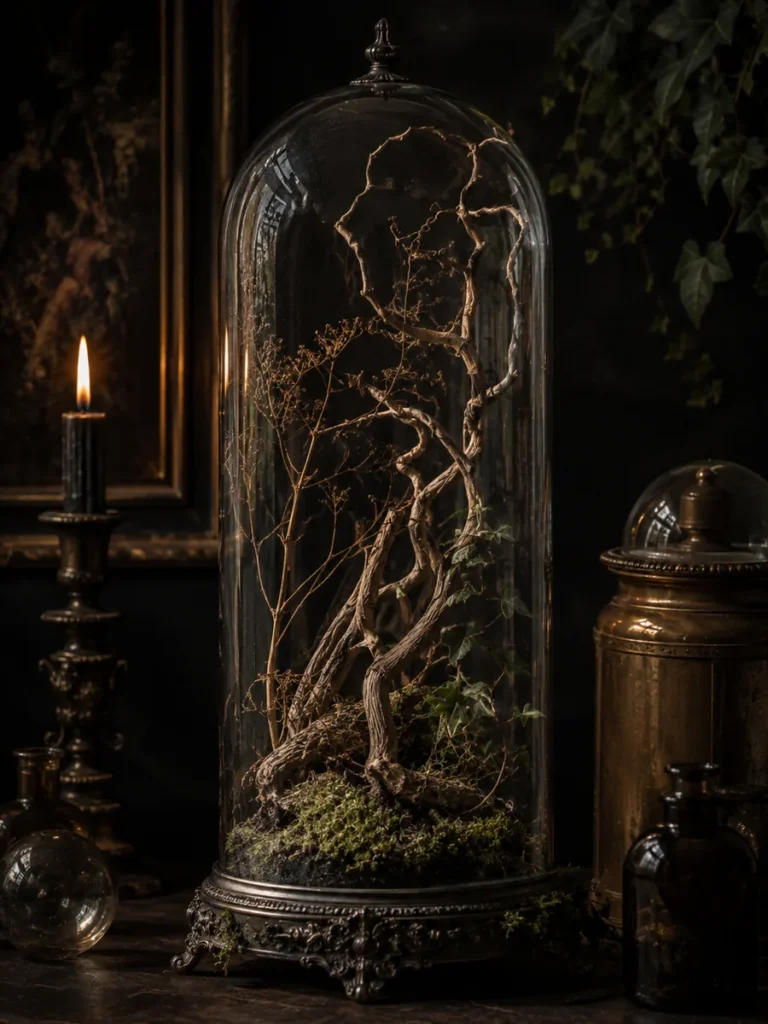
Twisted branches become sculptural art when isolated under a tall glass dome. Choose naturally contorted wood with interesting curves, then add a little moss, dried seed stems, and perhaps a small trailing vine at the base. The arrangement should remain airy so the silhouette of the branches is easy to appreciate.
This is an excellent option for minimalist gothic decor. Pair the cloche with aged brass, black candles, or a single antique frame and let the natural form provide the drama. The display works particularly well on a narrow console or mantel where height is more useful than width.
Styling Tip: Rotate the branch before placing the dome until the most interesting curves face the main viewing direction.
24. Carnivorous Plant Glass Dome
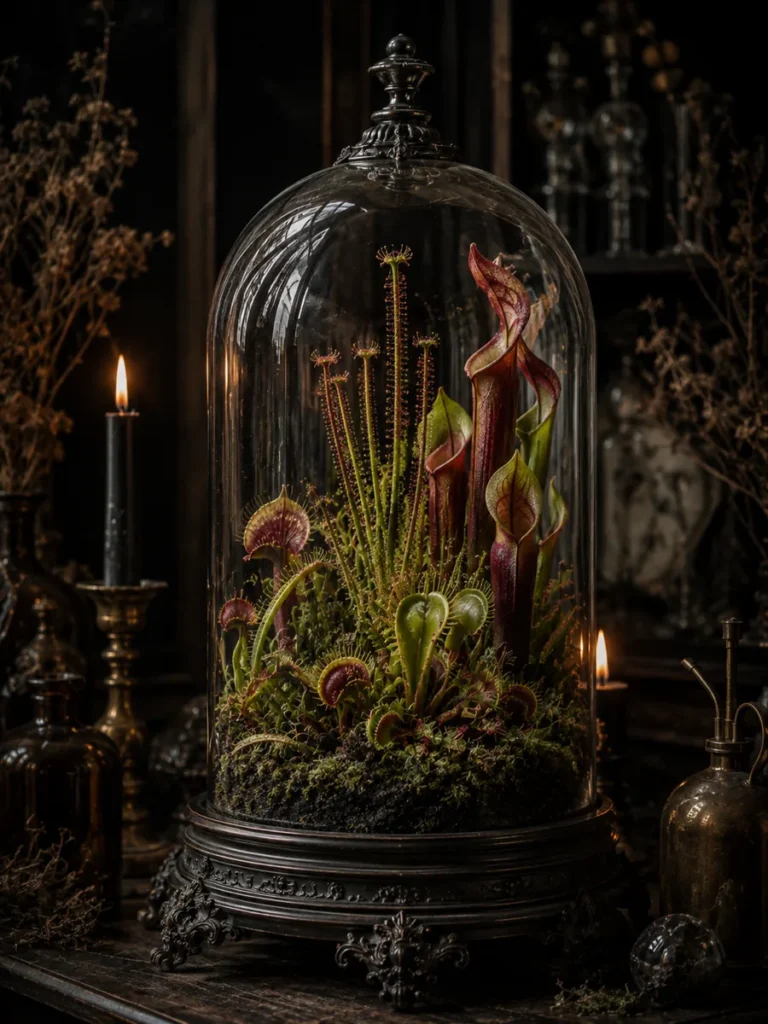
A glass dome filled with carnivorous plants feels like something collected from a Victorian expedition. Combine Venus flytraps, sundews, and small pitcher plants in mossy soil, keeping taller forms toward the back and lower traps near the front. Their unusual shapes naturally create a strange and beautiful centerpiece.
Choose a wide dome with enough internal space so leaves do not press against the glass. Dark metal at the base and candlelight around the outside will intensify the reds and greens in the plants. The result is lush, scientific, and perfectly eerie without a single plastic prop.
Styling Tip: Leave room for air circulation and choose a vessel appropriate for live plants if you plan to keep the arrangement beyond a short display period.
25. Pressed Fern Specimen Cloche
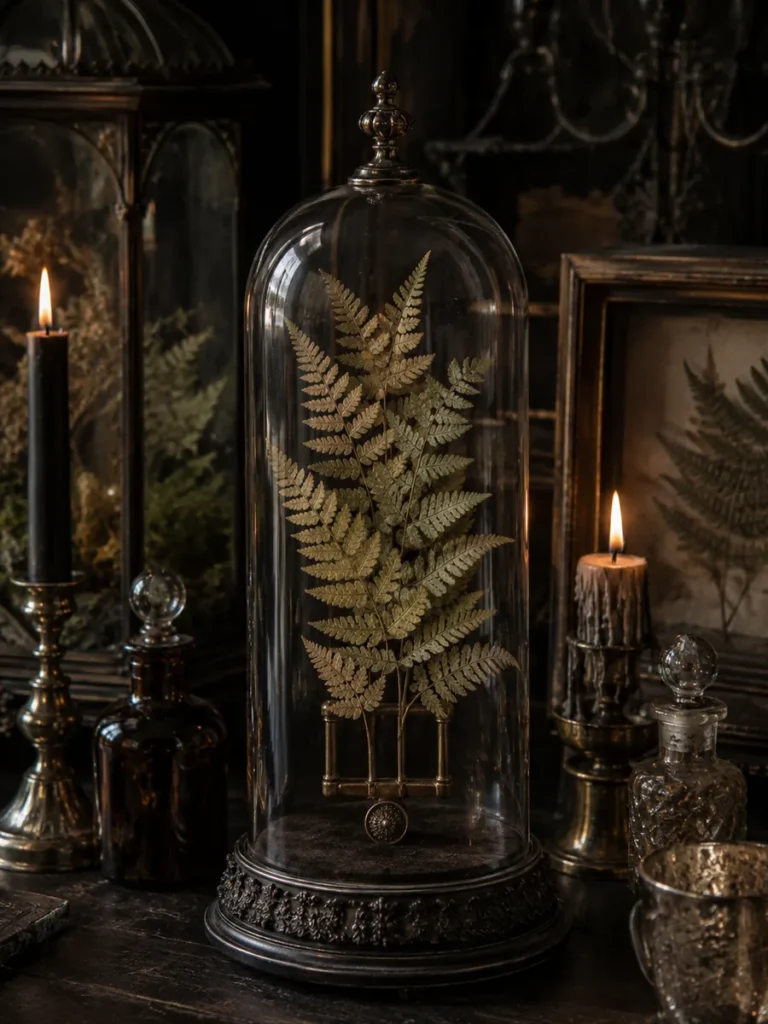
Pressed ferns are usually framed, but placing them upright under glass creates a more dimensional natural-history display. Arrange several preserved fronds on a slim brass or dark support so their delicate leaflets remain visible. A tall cloche makes the specimen feel archival and precious.
Surround the dome with a few amber bottles, an old botanical frame, and warm candles to complete the look. This idea is especially elegant for an office, library, or hallway table because it has a museum-like quality while still fitting the Halloween palette.
Styling Tip: Choose fronds in slightly different sizes so the display feels layered without becoming dense.
26. Miniature Poison Garden Cloche
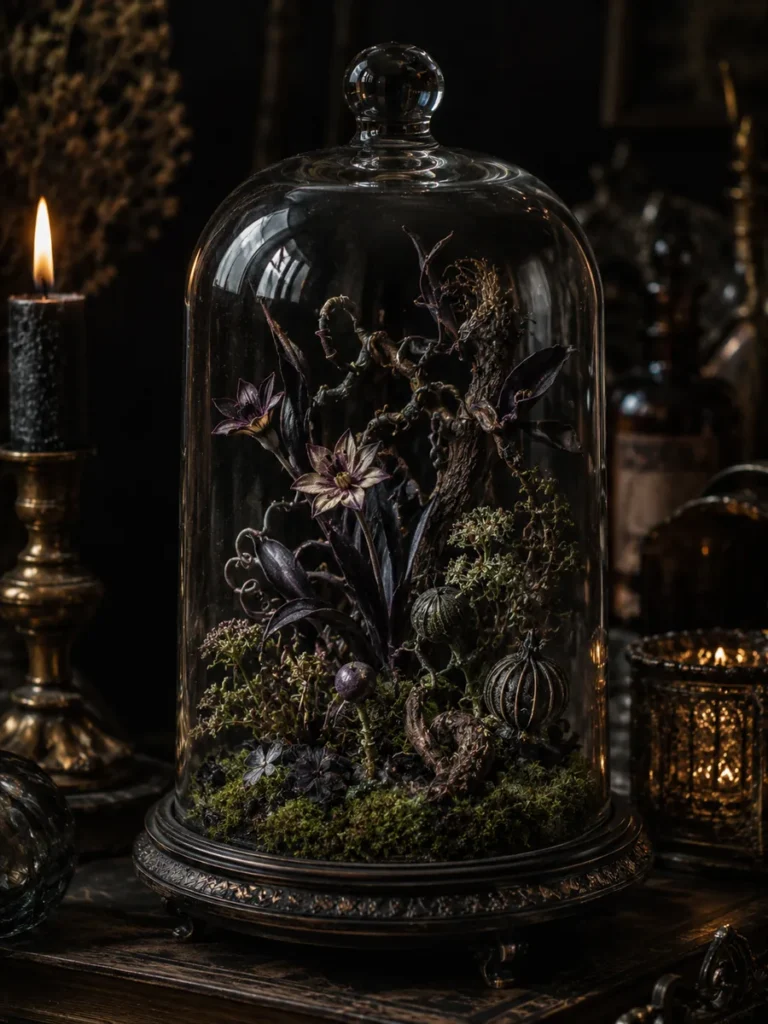
Under a glass dome, a small collection of black-purple leaves, twisted roots, strange seed pods, and pale flowers can suggest a mysterious poison garden. The goal is visual storytelling rather than botanical accuracy. Use moss to tie the elements together and arrange the plants so they appear to grow naturally from one small patch of ground.
A dark ornate base and low candlelight enhance the effect, while the clear glass keeps the display refined. This is a beautiful centerpiece for a console or sideboard where guests can view the details from close range.
Styling Tip: Limit the palette to deep purple, black, muted green, and one pale accent color for a cohesive, curated look.
27. Autumn Seed Pod Cloche
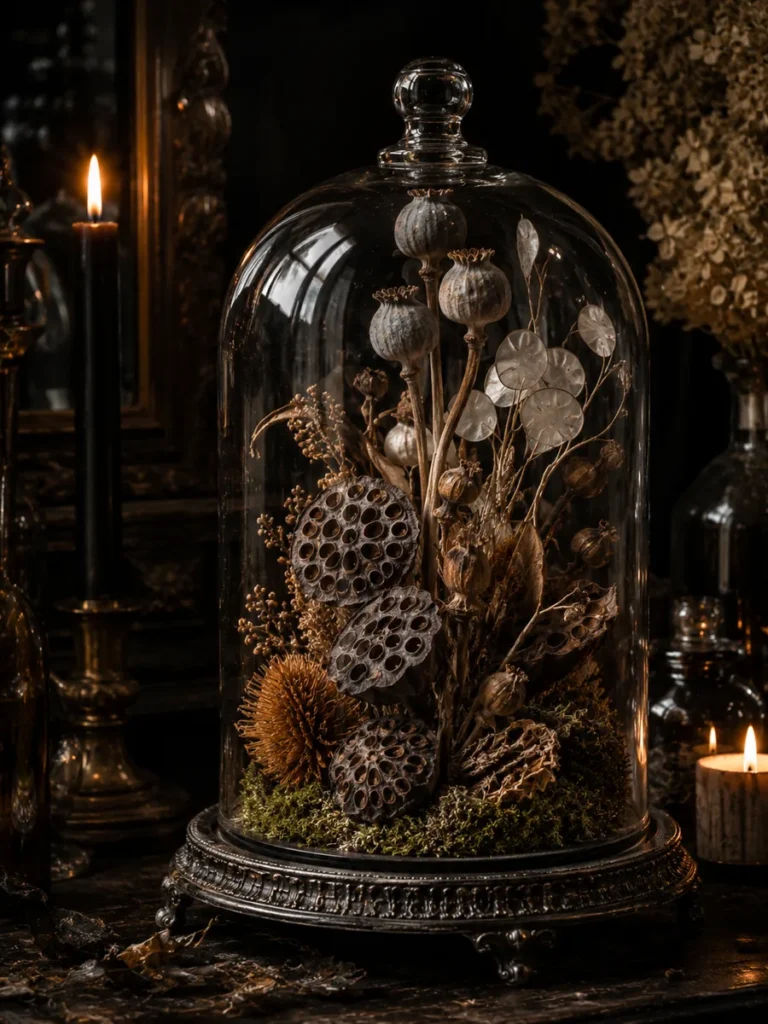
Lotus pods, poppy heads, lunaria, teasel, and other dried seed forms look fascinating when grouped under glass. Arrange them at varying heights like a botanical bouquet, allowing the perforated lotus pods and rounded poppy heads to provide strong shapes. A little moss at the base softens the display and connects the dried material to the rest of your decor.
Seed pods are a great alternative to flowers when you want Halloween styling that feels mature and natural. Their sculptural forms cast beautiful shadows in candlelight and pair easily with antique brass and dark wood.
Styling Tip: Mix round, flat, and spiky seed forms so the cloche remains visually interesting from top to bottom.
28. White Pumpkin and Moss Cloche
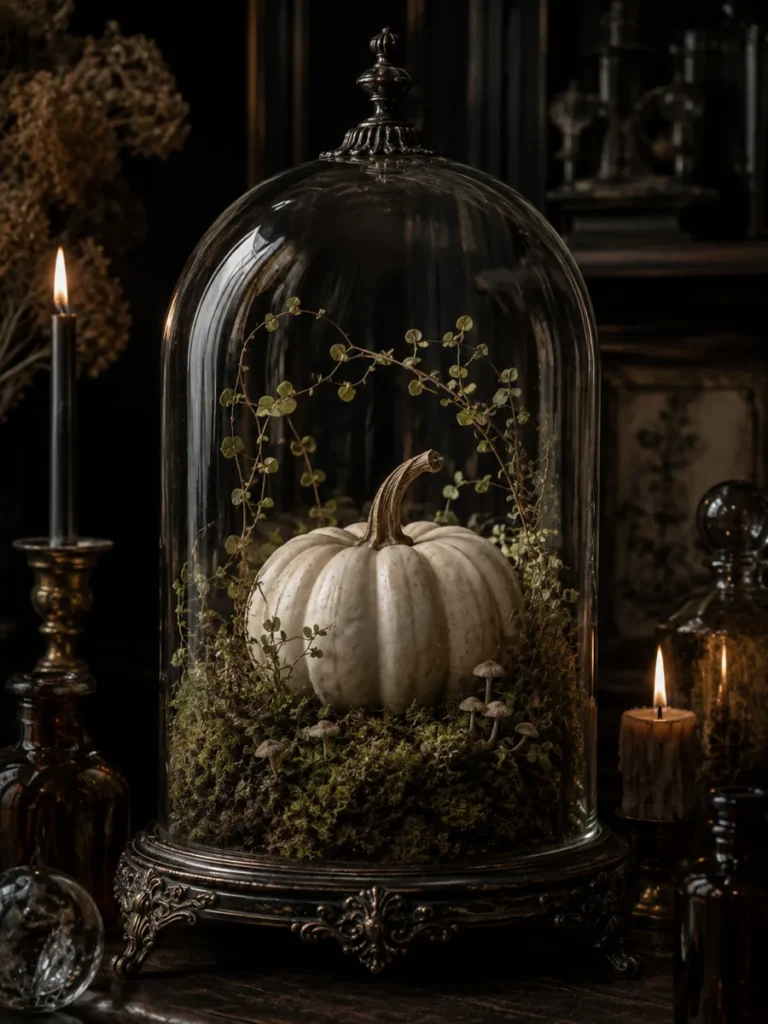
A pale heirloom pumpkin becomes unexpectedly eerie when placed under a tall cloche. Nestle it in thick moss and weave a delicate trailing vine around the base, allowing a few tiny mushrooms or dried leaves to peek through. Against a dark background, the creamy pumpkin looks almost luminous.
This idea offers a softer version of Eerie Botanical Halloween Decor while still feeling sophisticated. Use an ornate black or bronze base and keep nearby accessories minimal. A single dark taper candle is often enough to finish the vignette.
Styling Tip: Choose a matte, naturally imperfect pumpkin rather than a glossy decorative one for a more believable botanical display.
29. Moth and Botanical Curiosity Cloche
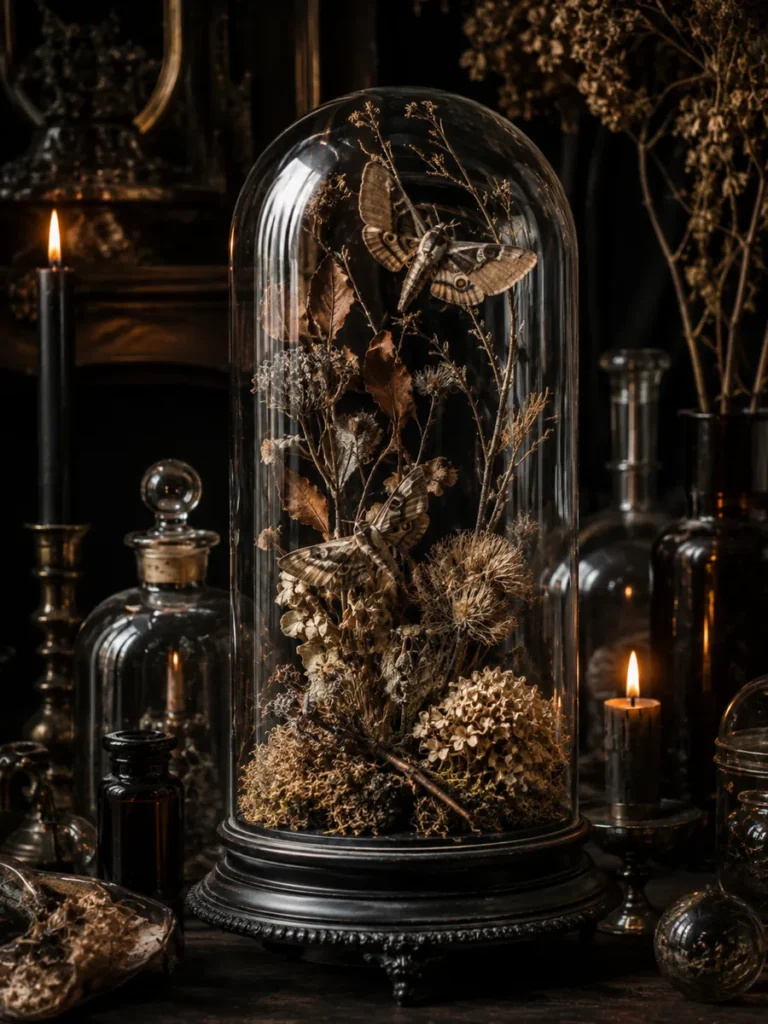
A natural-history cloche combining moths, dried leaves, seed heads, and slender branches creates the feeling of a Victorian curiosity cabinet. Arrange one or two realistic moth specimens among the botanicals rather than filling the dome with insects. The surrounding dried textures should remain just as important as the moths themselves.
Use neutral browns, faded cream, charcoal, and moss so the arrangement feels archival. Set the cloche beside amber glass and candlelight to bring out the fine wing patterns and delicate stems. It is a subtle way to introduce Halloween imagery without relying on bats or spiders.
Styling Tip: Position the moths at different heights so the composition feels collected and dimensional rather than flat.
30. Overgrown Candle Cloche Display
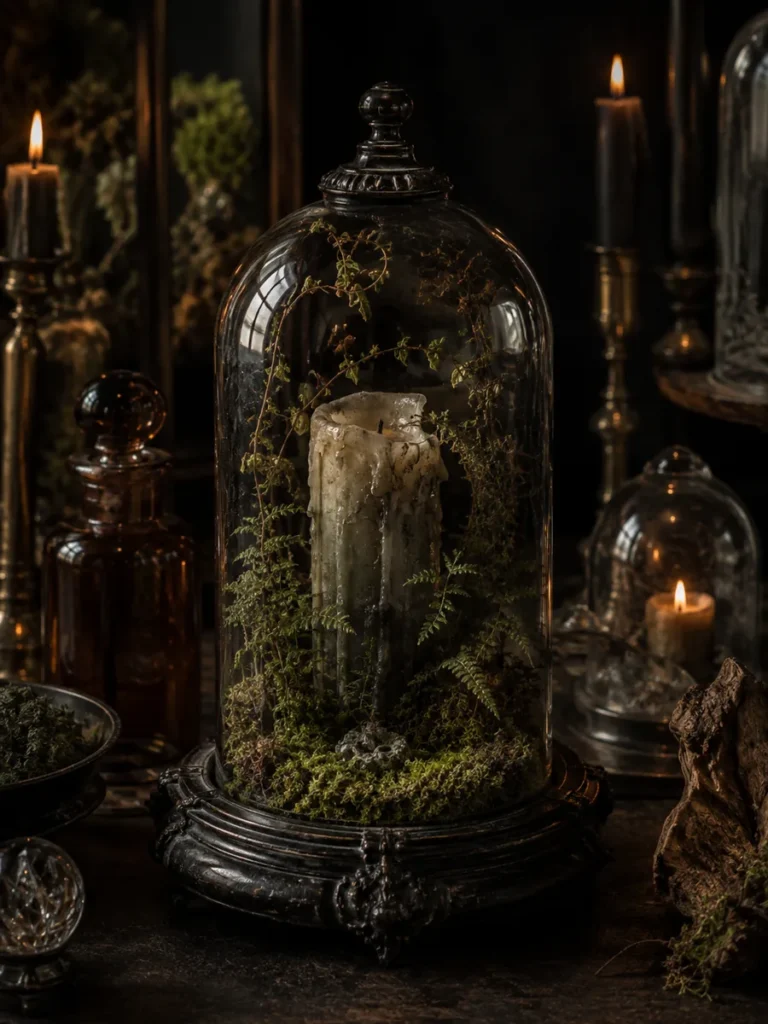
A heavily dripped candle under glass looks like a relic when surrounded by moss and creeping vines. Use a weathered pillar candle with softened edges and place it on a small dark base. Add tiny fern fronds and moss around the bottom, allowing one fine vine to climb partway up the candle.
Even when the candle inside the cloche is not lit, nearby candlelight makes the wax glow softly through the glass. This creates a quiet, romantic focal point for a mantel or nightstand. The combination of wax, moss, and glass feels aged and ceremonial without becoming overtly spooky.
Styling Tip: For safety, treat the candle under the closed cloche as decorative and use exterior candles or LED illumination for the glow.
Section 4: Dried Botanicals & Dark Floral Arrangements
31. Black-and-Burgundy Dried Bouquet
A generous bouquet in black, burgundy, plum, and faded green can anchor an entire Halloween room. Combine dark dahlias, preserved roses, eucalyptus, dried grasses, bare branches, and seed pods in a heavy aged urn. The uneven height and wild silhouette make the bouquet feel gathered from an enchanted garden rather than arranged for an event.
This is a strong centerpiece for a console, buffet, or mantel because it carries color without relying on orange. Moss tucked around the rim of the vase adds another botanical layer, while brass candlesticks introduce warm contrast. The arrangement should feel lush but slightly weathered.
Styling Tip: Let bare branches extend above the flowers to add height and a skeletal structure without using literal Halloween props.
32. Dead Garden Mantel Arrangement
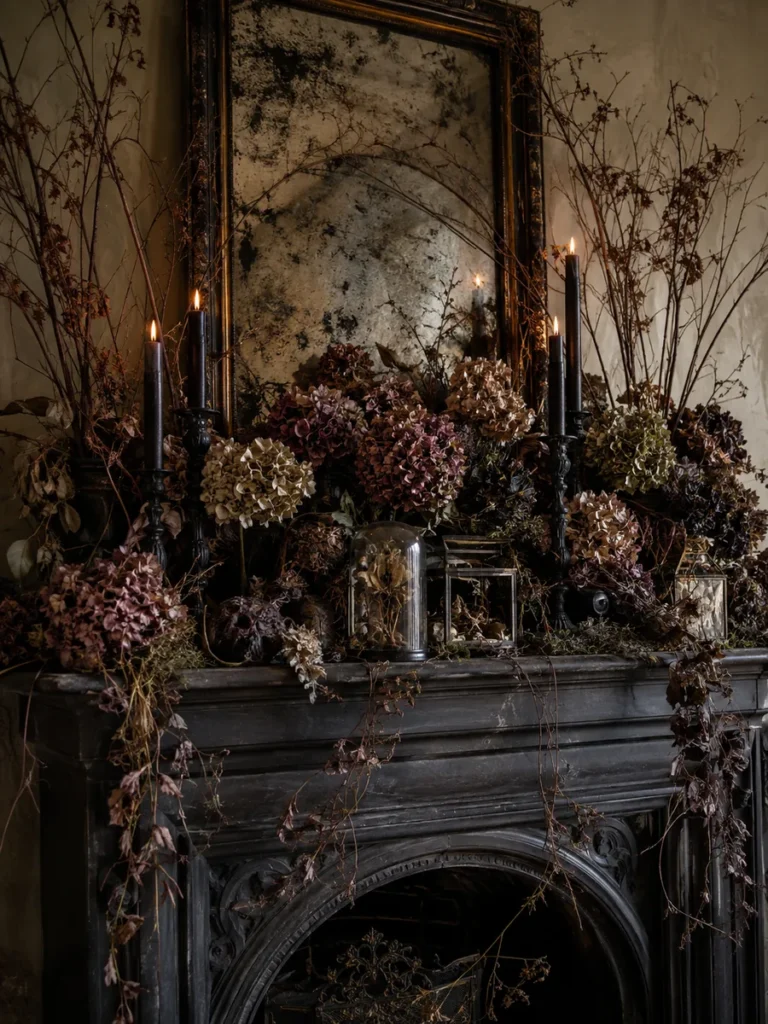
Turn the mantel into a faded garden by layering dried hydrangeas, brittle vines, bare stems, and muted foliage across the shelf. Instead of arranging everything in neat bouquets, let some flowers rest directly on the mantel and allow vines to trail over the edge. The slight disorder makes the display feel convincingly abandoned.
An aged mirror above the mantel amplifies candlelight and doubles the tangled branches. Add black taper candles at different heights and a few glass cloches or old frames among the botanicals. The overall effect is romantic decay—perfect for Eerie Botanical Halloween Decor that feels atmospheric rather than theatrical.
Styling Tip: Concentrate the heaviest flowers near the center, then let vines and branches become progressively lighter toward the edges.
33. Gothic Herbarium Wall
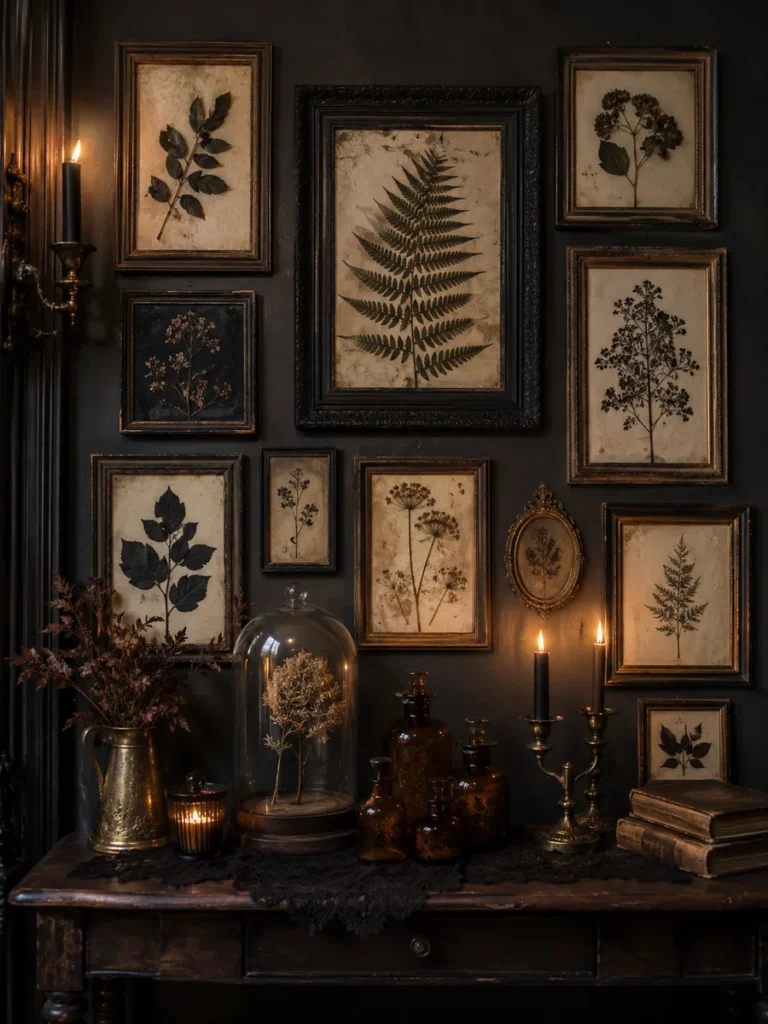
A gallery wall of pressed plants creates a sophisticated backdrop for Halloween without taking up table space. Frame dark leaves, fern fronds, umbels, and delicate seed stems on aged cream paper, then mix black, wood, and antique-gold frames for a collected look. Vary frame size but keep the botanical palette consistent.
Below the gallery, a small console with amber bottles, candles, and one cloche reinforces the old naturalist theme. This setup works especially well in a hallway, dining room, or study where it can remain after Halloween. The framed specimens give the space a scholarly, slightly mysterious quality.
Styling Tip: Use one oversized fern frame as the visual anchor, then build the smaller specimens around it.
34. Dried Fern Halloween Wreath
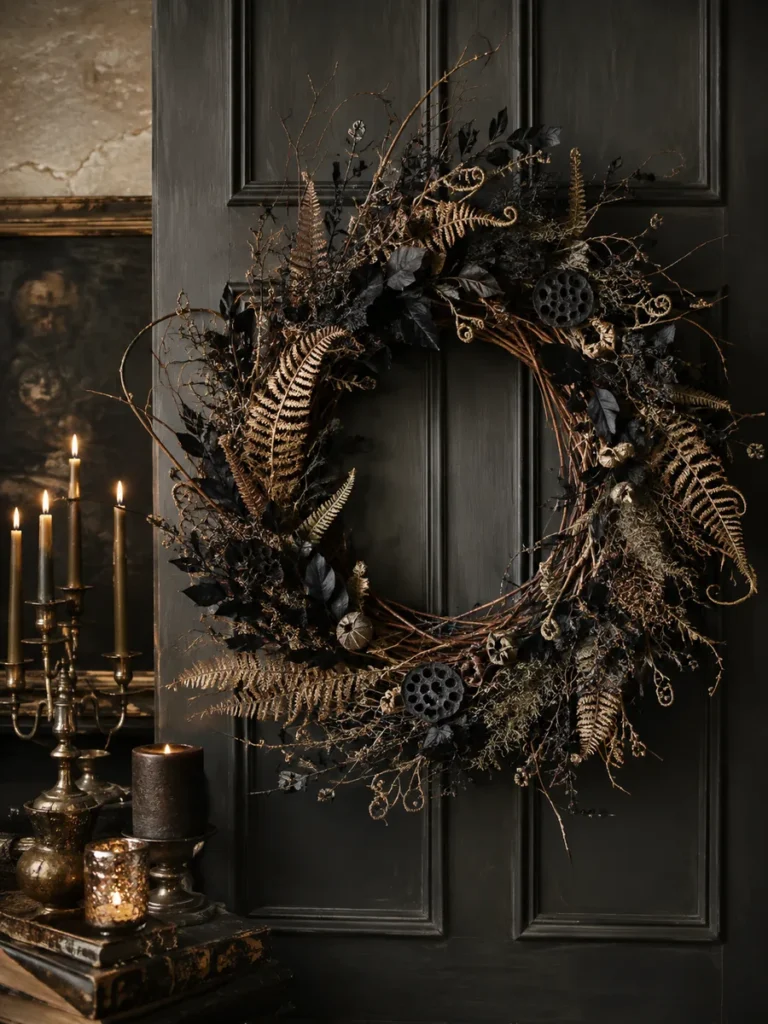
A dried fern wreath offers a darker, more organic alternative to traditional orange door decor. Start with a twig or vine base and layer preserved ferns, black foliage, curling stems, seed pods, and bits of moss around the ring. Leave some branches extending beyond the circle so the silhouette feels untamed.
Hung on a charcoal door or paneled wall, the wreath becomes almost sculptural. Nearby candles or a small console with brass accents can turn it into a complete interior vignette. Because the materials are mostly natural, the wreath feels appropriate through late autumn as well as Halloween.
Styling Tip: Keep one section slightly heavier than the others; asymmetry gives a dried botanical wreath more character.
35. Apothecary Shelf With Dried Herbs
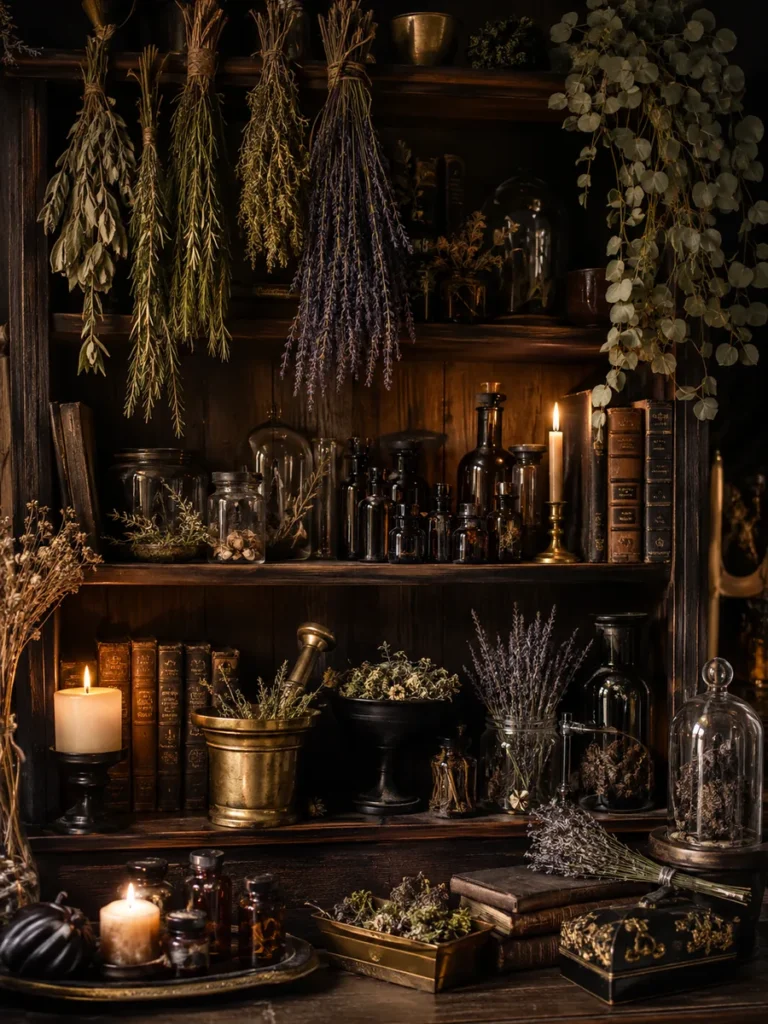
An apothecary shelf packed with dried herbs, amber bottles, books, and botanical tools can become one of the most immersive displays in the room. Hang bundles of rosemary, lavender, sage, thyme, and eucalyptus from the upper shelf, then group bottles and jars below. Add a brass mortar and pestle, candlelight, and a few cloches for height.
The secret is controlled abundance. Repeat materials—dark wood, amber glass, brass, and dried green tones—so the shelf feels curated rather than cluttered. This arrangement is especially effective in a kitchen, dining room, or study where the herbs feel naturally at home.
Styling Tip: Group small bottles together on trays or books to prevent the display from looking scattered.
36. Suspended Dried Herb Ceiling Display
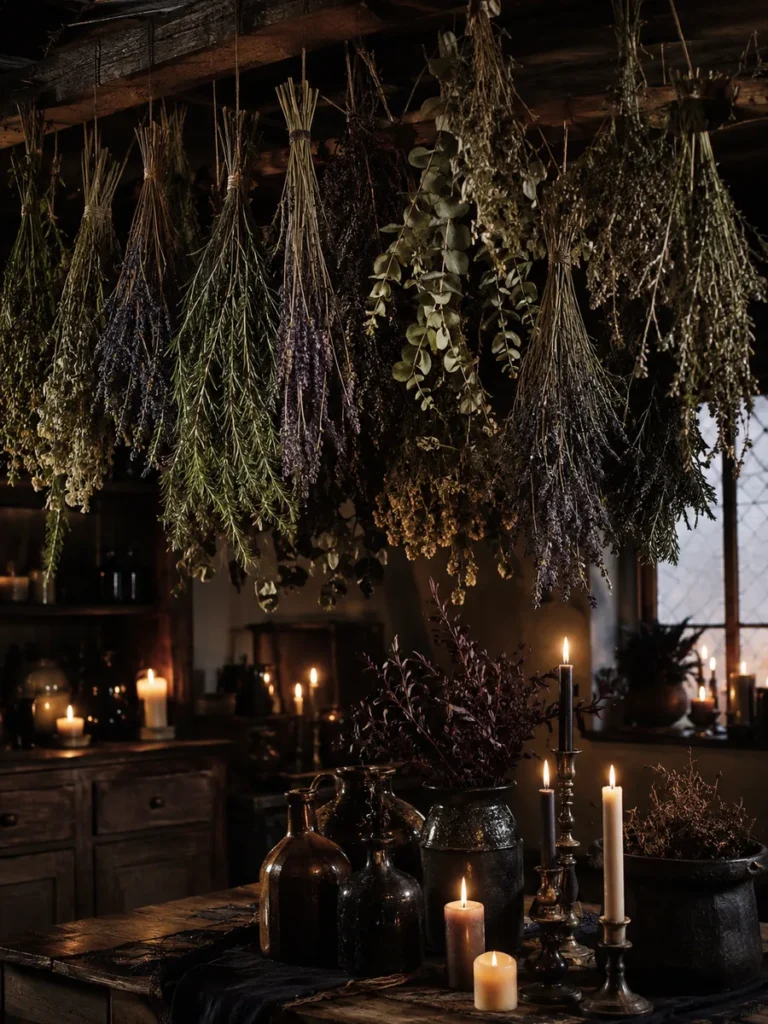
Hanging bundles of herbs overhead creates instant atmosphere and makes use of vertical space. Tie rosemary, lavender, eucalyptus, and other dried stems with simple twine and suspend them from a rustic beam or ceiling rack. Mix bundle lengths so the display feels organic rather than perfectly aligned.
Below, keep the table or counter relatively simple with dark bottles, pottery, and candles. The hanging botanicals will cast beautiful shadows as candlelight moves through them. This idea works particularly well in a kitchen or dining nook where the herbs feel believable as part of the room rather than temporary decor.
Styling Tip: Leave comfortable head clearance and keep hanging herbs well away from open flames or heat sources.
Section 5: Eerie Botanical Halloween Vignettes
37. Gothic Greenhouse Halloween Table
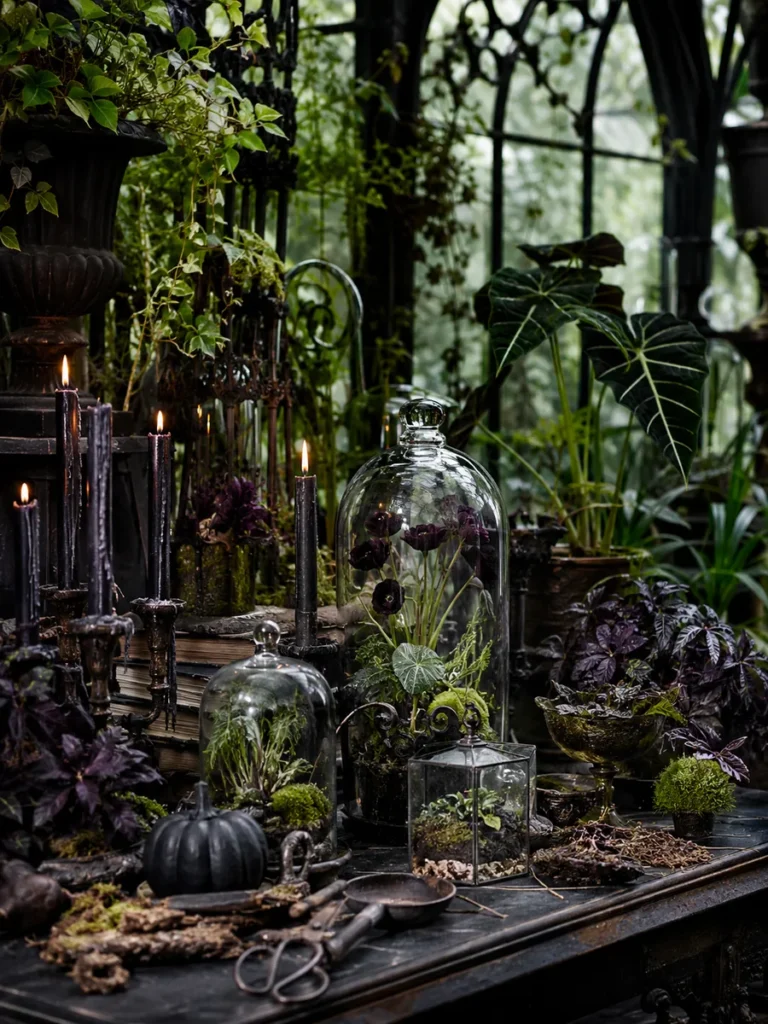
A greenhouse table lets you combine nearly every element of Eerie Botanical Halloween Decor in one layered vignette. Mix potted dark foliage, glass cloches, small terrariums, moss, antique gardening tools, old books, and taper candles across a large worktable. The key is to keep each object botanical or functional so the scene still feels like a greenhouse workspace.
Use plants at several heights and let some moss and vines spill naturally across the tabletop. Glasshouse windows or a bright conservatory background keep the dark accessories from making the image feel too heavy. The final look is lush, mysterious, and richly detailed.
Styling Tip: Create a clear focal point—such as one tall cloche or dramatic dark plant—then build smaller objects around it.
38. Victorian Botanical Cabinet of Curiosities
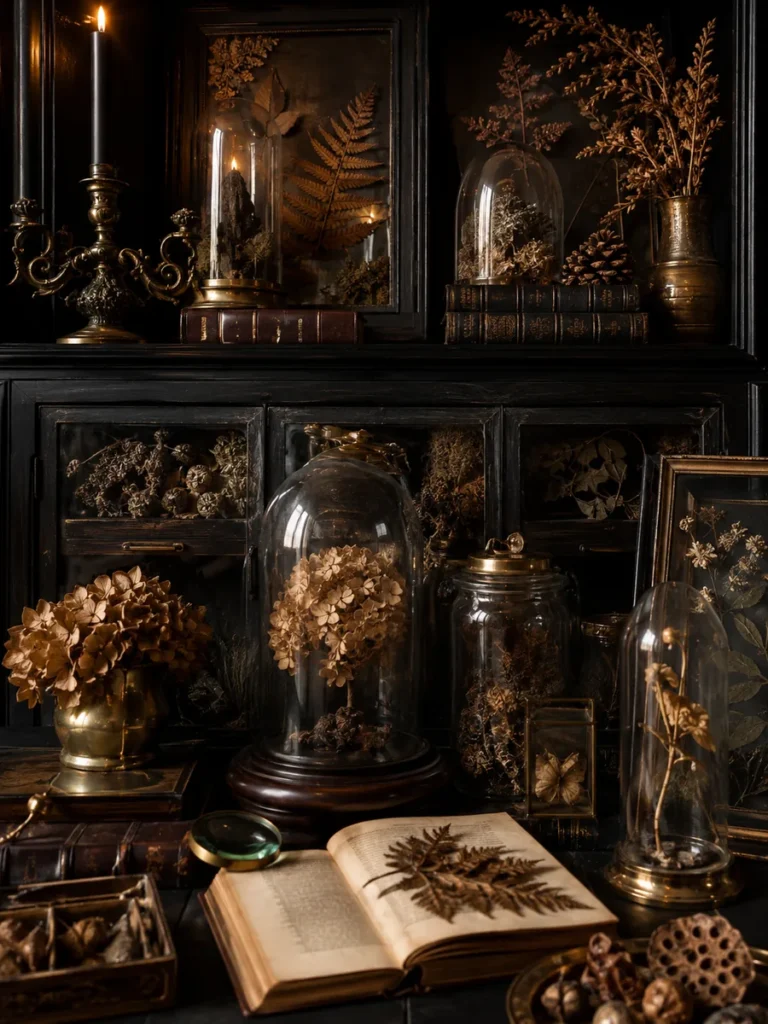
A botanical cabinet of curiosities is ideal for anyone who loves collected, layered decor. Fill shelves and a tabletop with glass domes, pressed specimens, seed pods, dried hydrangeas, old books, small jars, and natural-history objects. Use brass, dark wood, amber glass, and aged paper repeatedly so the collection feels unified.
An open book displaying a pressed fern can serve as a focal point, while cloches at different heights add depth. Keep the cabinet dense but purposeful: each object should look as if it belongs to the same collector. Candlelight turns the glass and brass surfaces into warm highlights against the dark background.
Styling Tip: Repeat one botanical element—such as fern fronds—in several forms: framed, pressed in a book, and displayed under glass.
39. Moonlit Botanical Halloween Dining Table
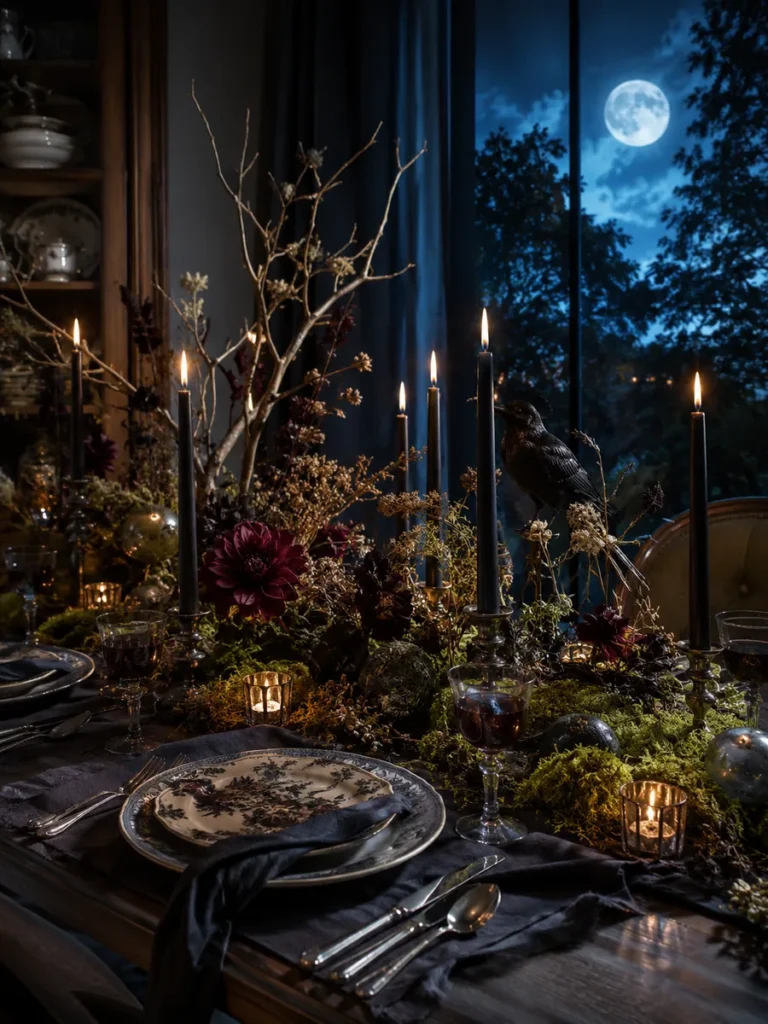
For a dramatic dinner setting, combine cool moonlight with warm candlelight. Run moss, dark greenery, bare branches, dried flowers, and burgundy blooms down the center of the table, then place black taper candles at varied heights. Antique dishes, dark napkins, and clear goblets keep the setting elegant rather than costume-like.
The centerpiece should feel almost like a woodland floor spreading across the table. Leave enough open space around each place setting so the display remains usable. Near a window, the blue night beyond the glass creates a striking contrast with the warm flames and deep botanical colors.
Styling Tip: Use low moss and flowers near plates, reserving taller branches and candles for the center line where they will not interfere with place settings.
40. Overgrown Haunted Conservatory Corner
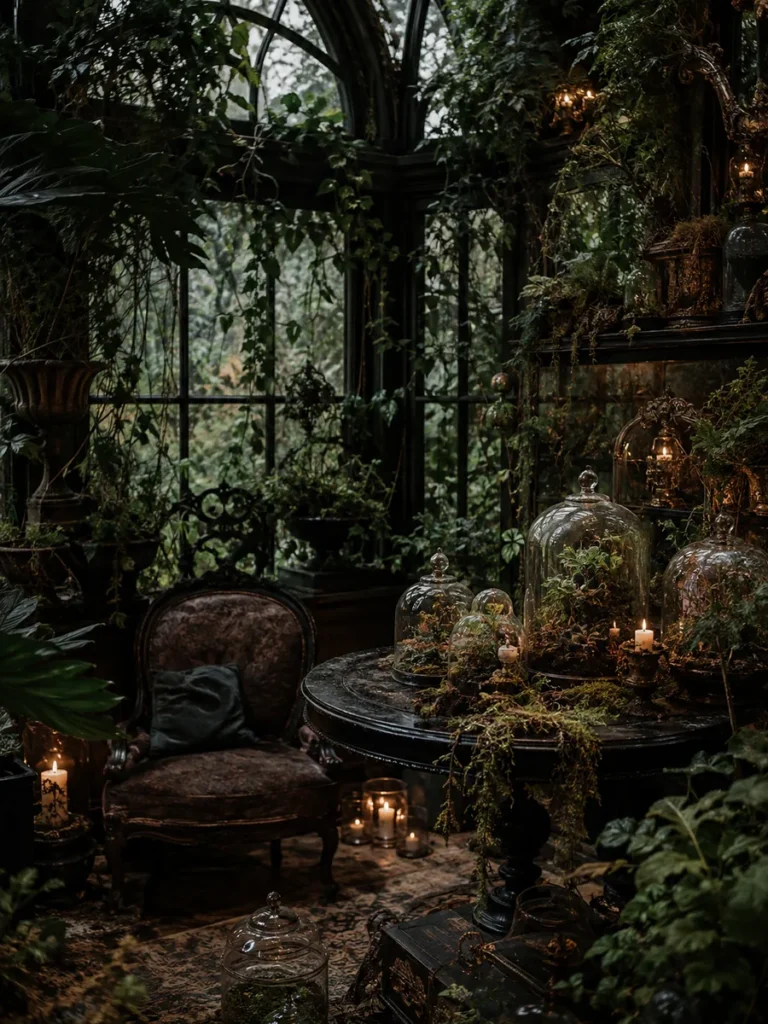
End the look with an overgrown conservatory corner that feels as if the plants have slowly taken over the room. Layer large foliage plants, trailing ivy, ferns, antique furniture, glass cloches, terrariums, moss, and candlelight beneath tall windows. Allow vines to climb frames and spill across shelves rather than keeping every plant neatly contained.
The space should feel lush first and haunted second. A worn chair, dark round table, or small cabinet gives the greenery something architectural to reclaim. Glass domes catch the candlelight while the windows keep the scene connected to the garden outside. This final idea brings the entire Eerie Botanical Halloween Decor theme together into one immersive room moment.
Styling Tip: Combine living greenery with a few preserved botanicals so the conservatory looks layered, old, and naturally overgrown rather than freshly staged.
Creating an Eerie Botanical Halloween Home That Still Feels Elegant
The most convincing botanical Halloween rooms do not try to make every object look spooky. Instead, they build atmosphere through contrast: fresh greenery against dried stems, clear glass against dark wood, pale moss against black foliage, and cool moonlight against warm candle flames. Those combinations create a sense of mystery while keeping the room visually rich and livable.
Start with one focal idea—perhaps a carnivorous terrarium, a dark plant corner, or an overflowing dried bouquet—and repeat two or three materials elsewhere in the room. Moss, antique brass, black taper candles, aged books, and glass cloches can tie separate arrangements together without making them identical. With that approach, Eerie Botanical Halloween Decor feels less like temporary holiday decorating and more like a beautifully strange conservatory that happens to be at its most dramatic in October.Article: Eerie Botanical Halloween Decor: Using Dark Plants, Terrariums, and Cloches
Includes 40 original 3:4 concept images embedded directly in this HTML file. No shoppable or affiliate product links are included.

