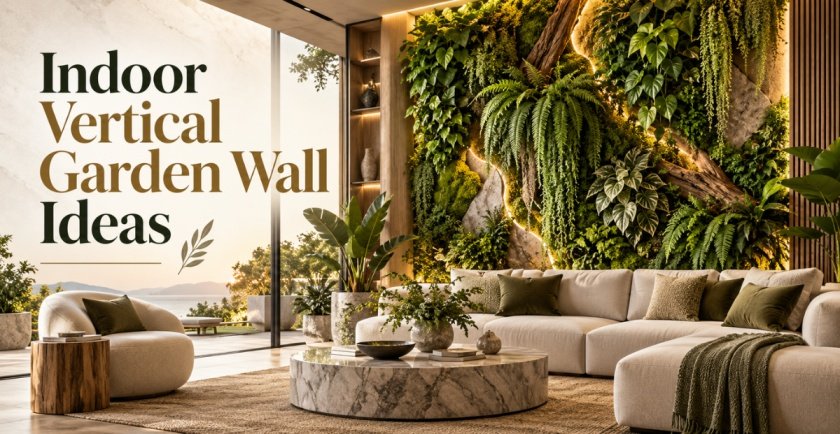
Indoor greenery has moved far beyond a few pots placed beside the sofa. Today, some of the most exciting Indoor Vertical Garden Wall Ideas blur the line between landscaping, architecture, sculpture, lighting, and interior design. Instead of treating plants as accessories, these spaces make greenery part of the wall itself. A beautifully planned installation can transform an empty living-room wall, soften a staircase, give a foyer hotel-like impact, or make a dining room feel more connected to nature. The most luxurious designs also do not depend on covering every square inch with foliage. Stone, wood, metal, concealed lighting, water, preserved moss, sculptural frames, and deliberate negative space can make a smaller amount of greenery feel far more special.
This collection explores 45 ideas for modern interiors, ranging from achievable shelves and slatted walls to dramatic double-height gardens, reflecting pools, and botanical courtyards. The common thread is that every concept treats the garden as part of the architecture. Whether your taste leans toward quiet luxury, organic modern, contemporary minimalism, spa-inspired design, or resort-style drama, you can adapt these ideas to suit the scale and maintenance level of your home.
1. Oversized Butterfly Wing Living Wall
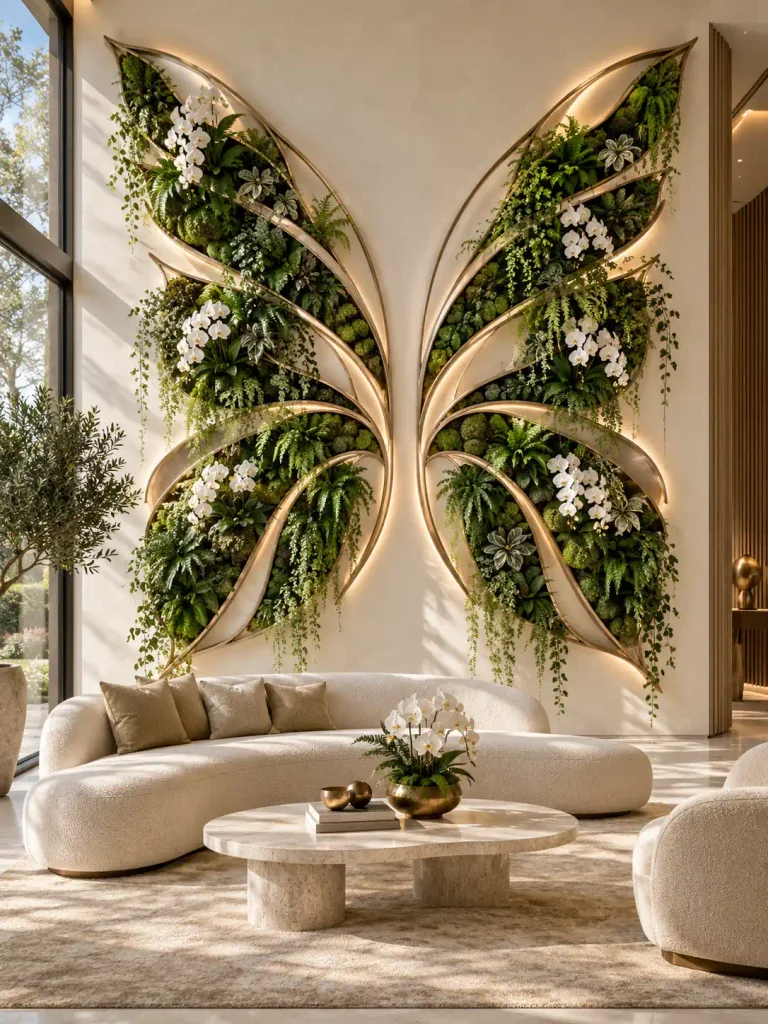
Turn a blank wall into a piece of living sculpture with an oversized butterfly-wing installation. Instead of covering the entire surface with foliage, use two sweeping wings made from slim metal ribs and fill only selected sections with moss, maidenhair ferns, peperomia, trailing vines, and a few white orchids. Leaving some areas open keeps the silhouette light and architectural. A warm ivory or pale stone backdrop lets the greenery stand out, while subtle champagne-bronze edging introduces a polished, luxurious finish. This design works beautifully behind a sofa, in a foyer, or on a large stair landing where the full shape can be appreciated from a distance.
2. Flowing Ribbon Moss Wall
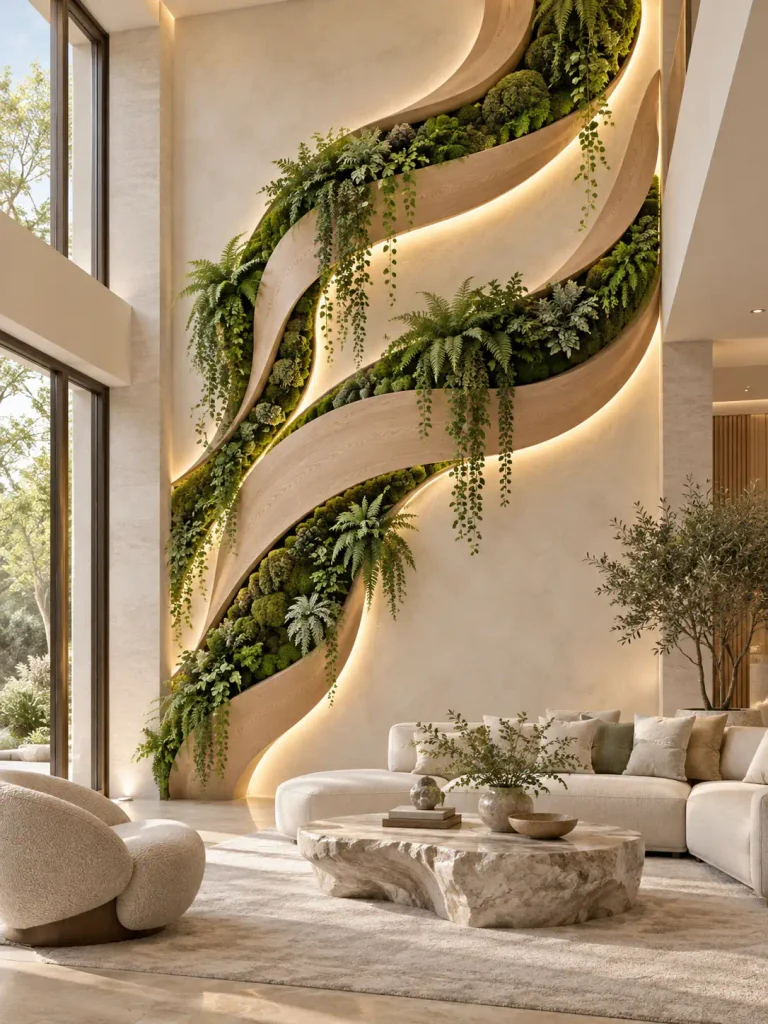
A flowing ribbon moss wall brings movement to a modern room without relying on a conventional rectangular living wall. Imagine several wide three-dimensional ribbons sweeping diagonally across a creamy plaster surface, alternating between pale oak, smooth stone, and recessed strips of preserved moss. Tiny ferns and delicate trailing plants can soften the edges without hiding the sculptural form. Concealed lighting placed behind selected curves creates layers of shadow after sunset. The result feels closer to contemporary gallery art than ordinary plant décor, making it ideal for an organic-modern lounge with neutral furniture and natural textures.
3. Giant Botanical Feather Wall
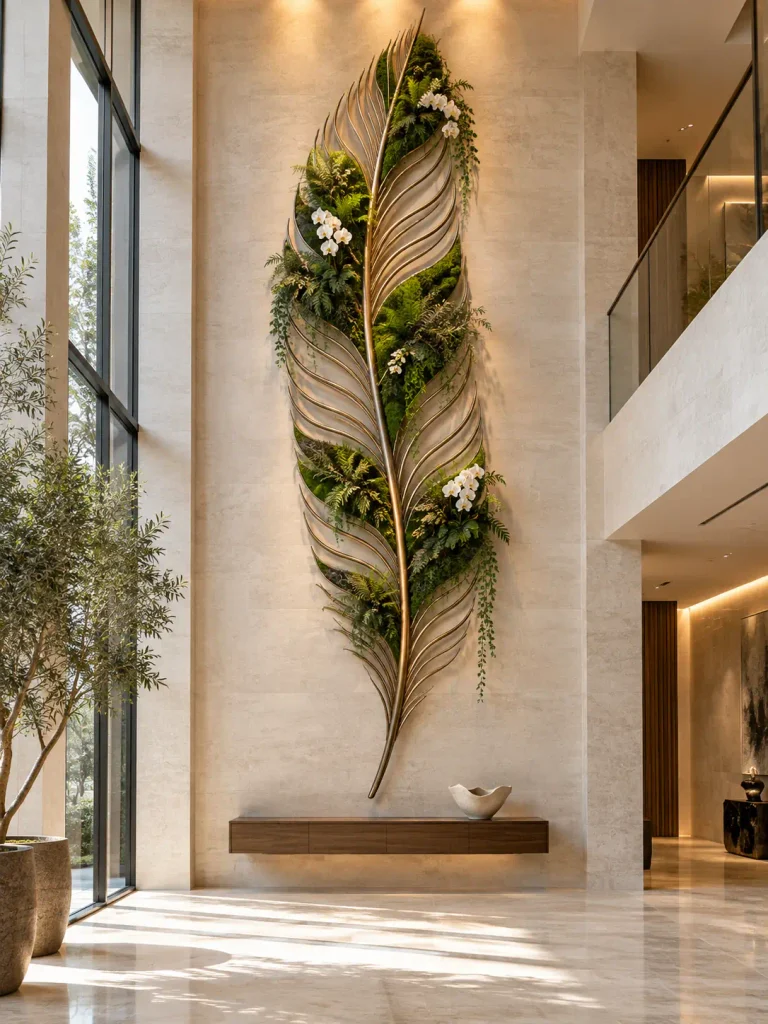
A giant botanical feather is an elegant way to decorate a tall, narrow wall. The key is to make the feather unmistakable: use one long central shaft with many fine curved barbs extending outward, then weave greenery into only some of those sections. Moss, miniature ferns, orchids, and slender trailing vines add texture without overwhelming the metallic structure. A brushed-bronze or champagne-metal frame looks especially sophisticated against pale limestone. Position a floating walnut console below and keep accessories minimal so the feather remains the focal point. This idea suits double-height foyers and refined contemporary hallways particularly well.
4. Circular Living Art Medallion
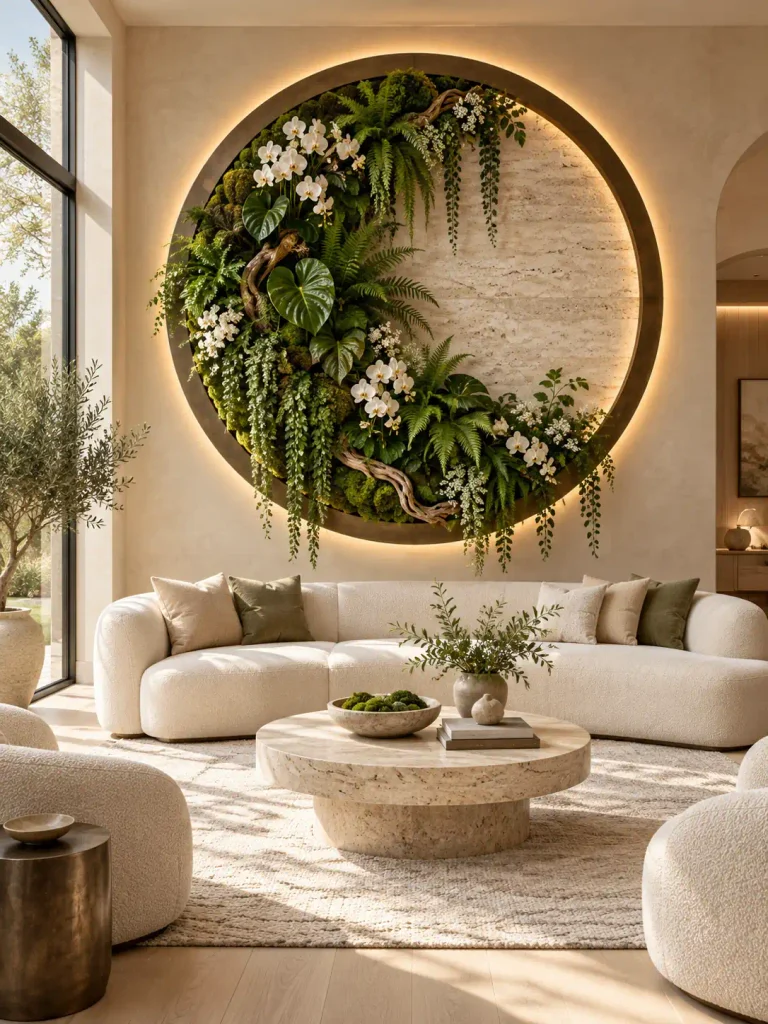
A circular living-art medallion gives greenery the presence of oversized artwork. Use a large bronze, wood, or dark-metal ring and build an asymmetrical composition of moss, compact ferns, sculptural leaves, and cascading plants inside it. Leaving part of the circle open to reveal a textured stone backing makes the arrangement feel intentional rather than crowded. A soft halo of concealed light behind the ring can make the installation appear to float. Because the design is contained within one strong shape, it works beautifully over a sofa, console, sideboard, or bench and is easier to visually control than a full-wall garden.
5. Abstract Mountain-Shaped Green Wall
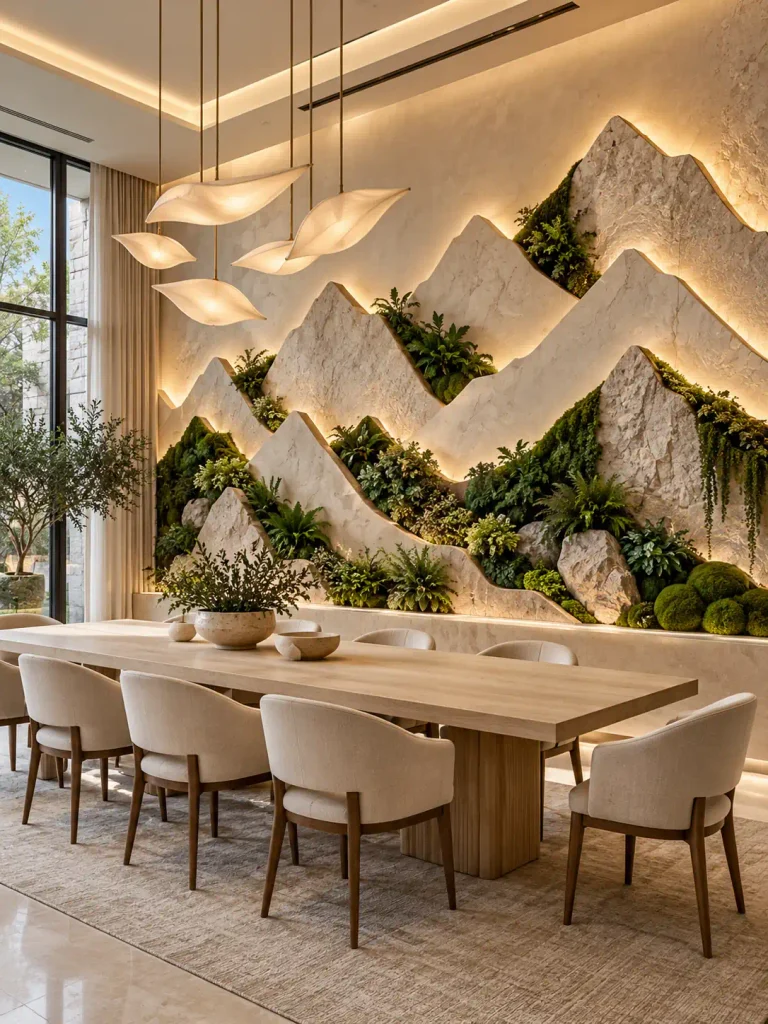
For a landscape-inspired statement wall, create an abstract mountain range from layered limestone, plaster, and greenery. Several three-dimensional peaks at different heights can form a sculptural horizon, while preserved moss and low-growing foliage gather in the valleys and along selected slopes. Keep plenty of stone exposed so the wall still reads as architecture rather than a mass of plants. Thin concealed lighting behind a few peaks adds depth and makes the layers appear to float. This concept works especially well in a dining room, where the horizontal mountain composition can echo the length of the table and create a memorable backdrop.
6. Crescent Moon Botanical Installation
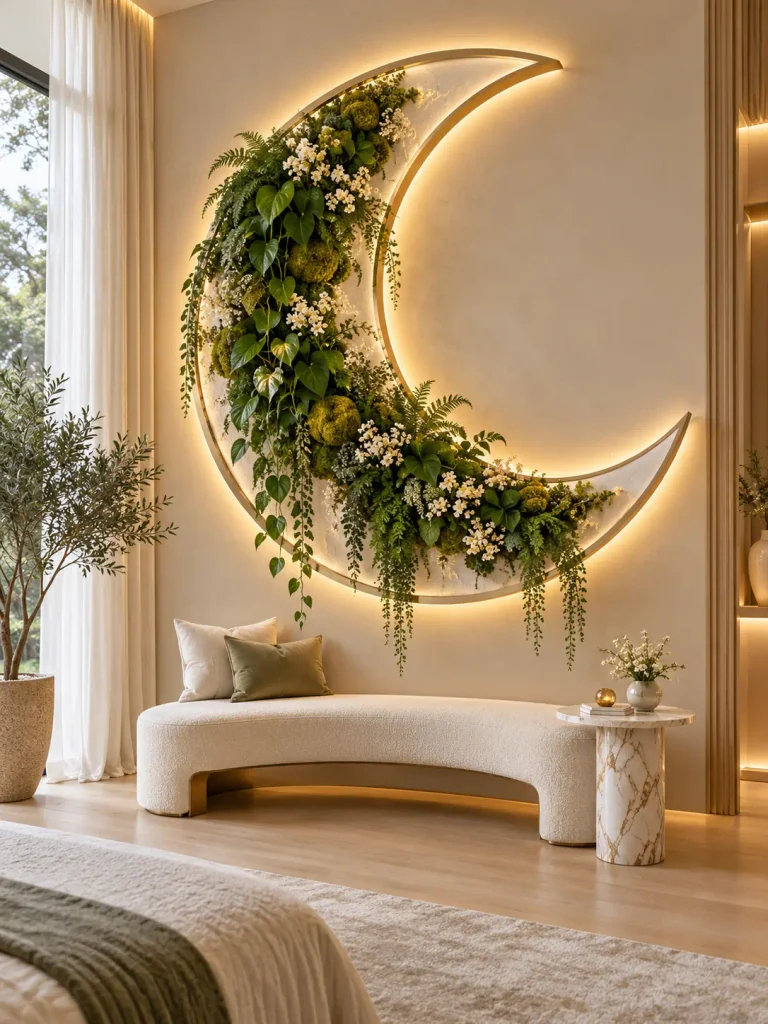
A crescent-shaped botanical installation offers a softer, more romantic take on modern biophilic design. Frame the crescent in brushed champagne metal, pale plaster, or stone, then fill the inner curve with preserved moss, pothos, miniature ferns, and small pale flowers. Concealed lighting behind the outer edge creates a gentle glow without turning the piece into novelty décor. Keep the surrounding wall simple so the crescent remains sophisticated. This installation is especially effective in a bedroom, reading nook, quiet lounge, or sitting room where its curved shape can create a calm visual focal point.
7. Three-Dimensional Botanical Wave Wall
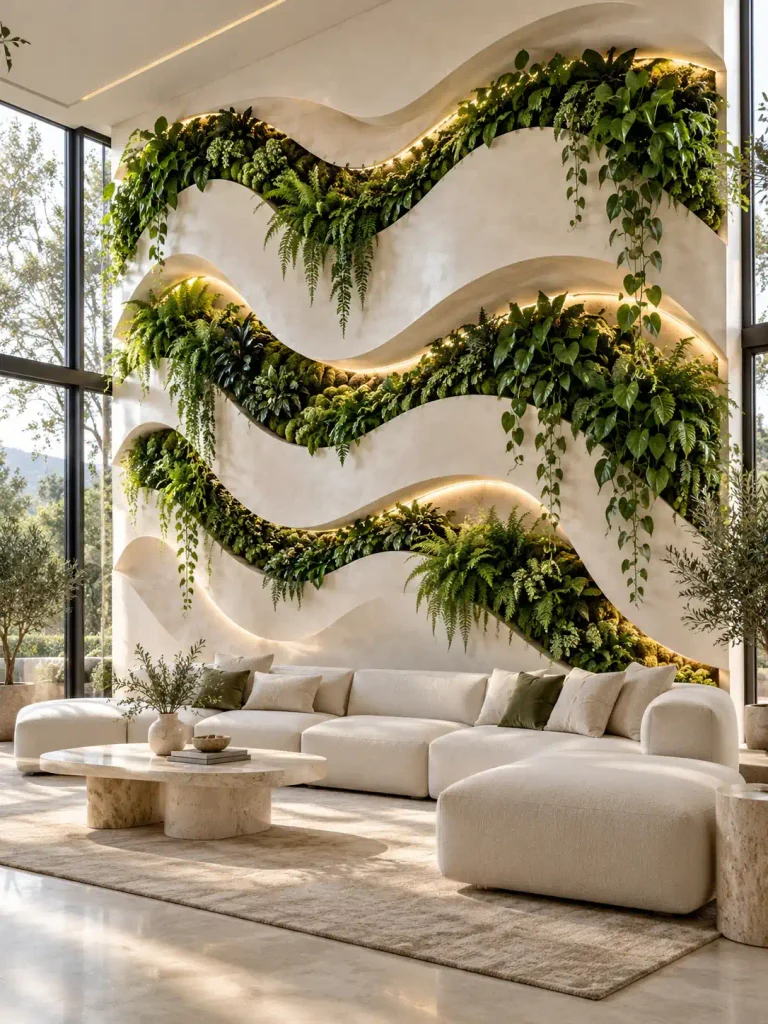
A three-dimensional botanical wave wall turns architecture itself into the planter. Broad microcement or plaster panels curve outward and inward across the room, while strips of greenery grow from the recessed valleys between each wave. Ferns, trailing philodendron, moss, and compact foliage create softness against the smooth sculptural surfaces. Warm LEDs hidden within a few recesses highlight the changing depth and shadows. This approach is excellent for long living-room walls because the horizontal movement guides the eye across the entire space. It also softens interiors that otherwise contain many straight lines and hard edges.
8. Oversized Leaf Sculpture With Living Greenery
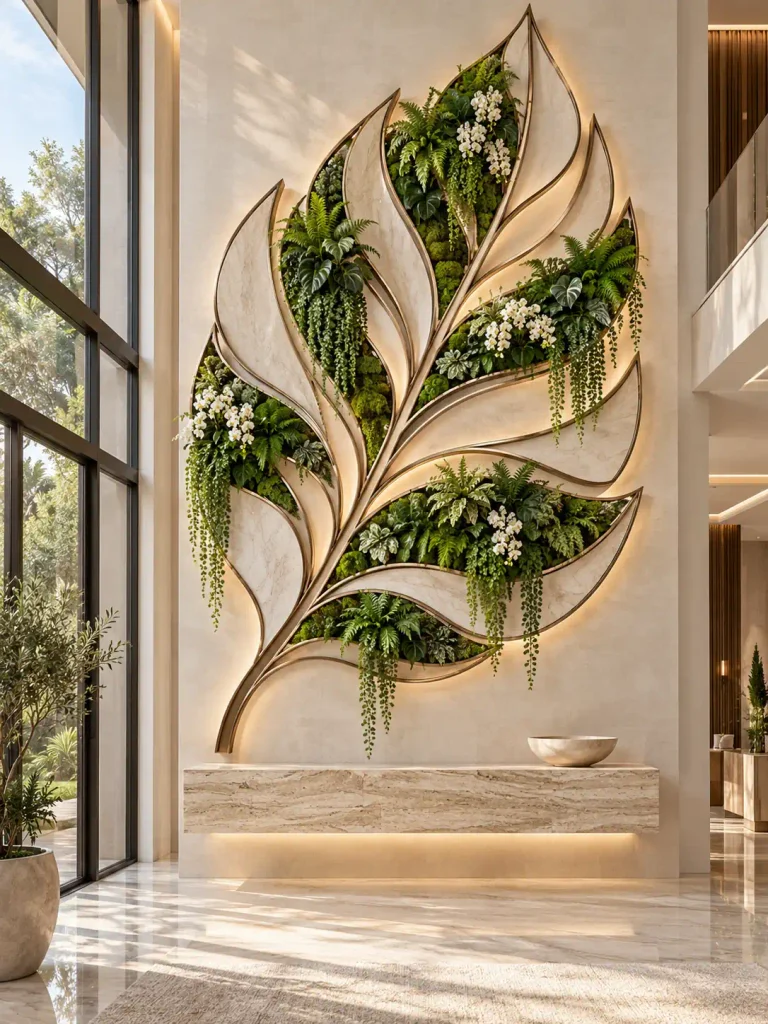
Instead of installing dozens of individual plants, turn one enormous leaf into a living artwork. Create a stylized tropical-leaf silhouette using slim bronze outlines and pale stone panels, with the leaf veins dividing the piece into distinct compartments. Fill only selected compartments with moss, peperomia, ferns, or trailing vines and leave the others as stone or open voids. The contrast makes the botanical sections feel more valuable and intentional. A floating travertine console beneath the sculpture completes the quiet-luxury effect. This idea gives a foyer or living room strong botanical character without the maintenance demands of an entire planted wall.
9. Botanical Spiral Statement Wall
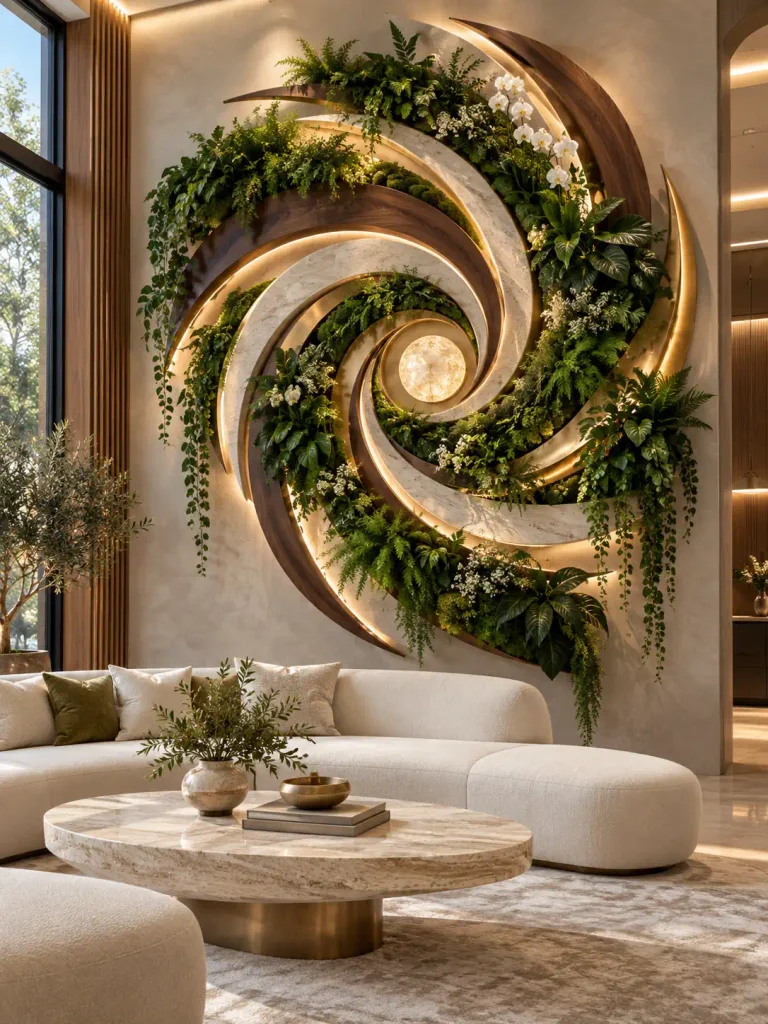
A botanical spiral naturally draws the eye inward and can become a spectacular focal point in a contemporary lounge. Build several sweeping concentric bands from walnut, pale stone, and antique brass, then alternate planted sections with open architectural surfaces. Moss, delicate ferns, trailing vines, and sculptural foliage can follow the spiral without completely filling it. A small glowing light at the center reinforces the sense of movement. Because the composition is already dramatic, pair it with low, curved furniture and minimal accessories. The result feels energetic, artistic, and luxurious while still staying connected to natural materials.
10. Travertine Vertical Garden With Floating Plant Niches
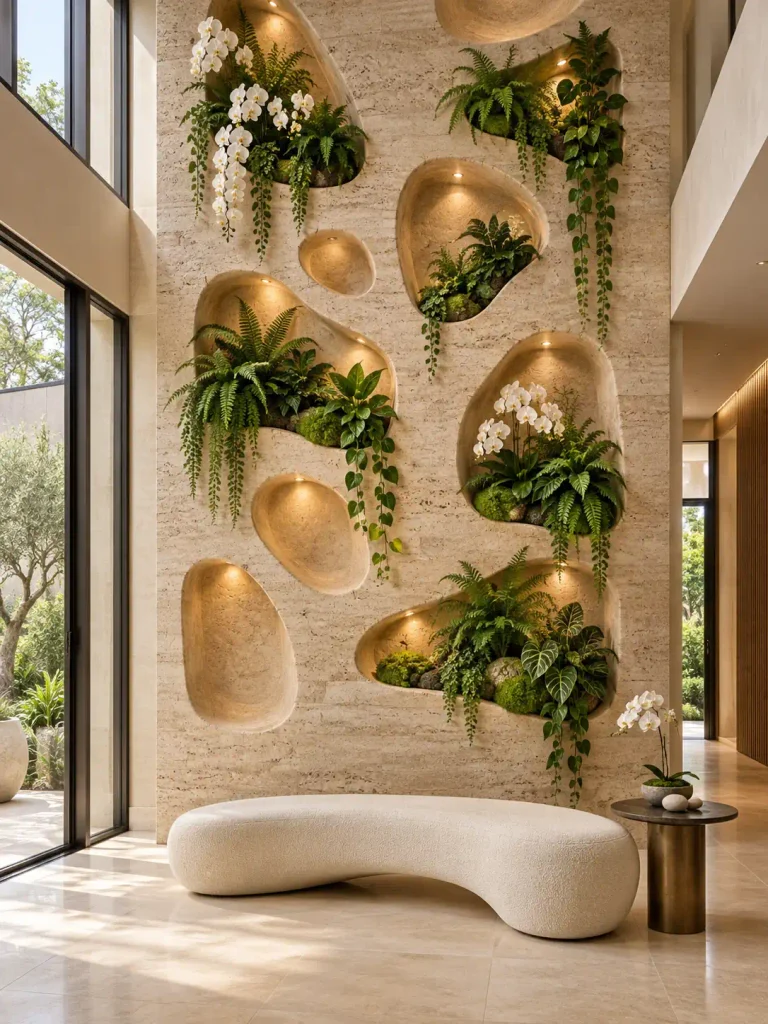
Warm travertine is an ideal partner for greenery because its soft color and porous texture already feel natural. Instead of placing plants in front of the stone, carve irregular recessed niches directly into a travertine wall and treat each one as a miniature garden. Fill selected niches with ferns, orchids, moss, philodendrons, and trailing plants while leaving others empty for visual balance. Tiny concealed downlights can illuminate each pocket individually. This creates the feeling of a curated botanical gallery and is especially effective in an entryway, where the stone and plants can establish a luxurious first impression without covering the entire wall.
11. Black Marble and Emerald Moss Wall
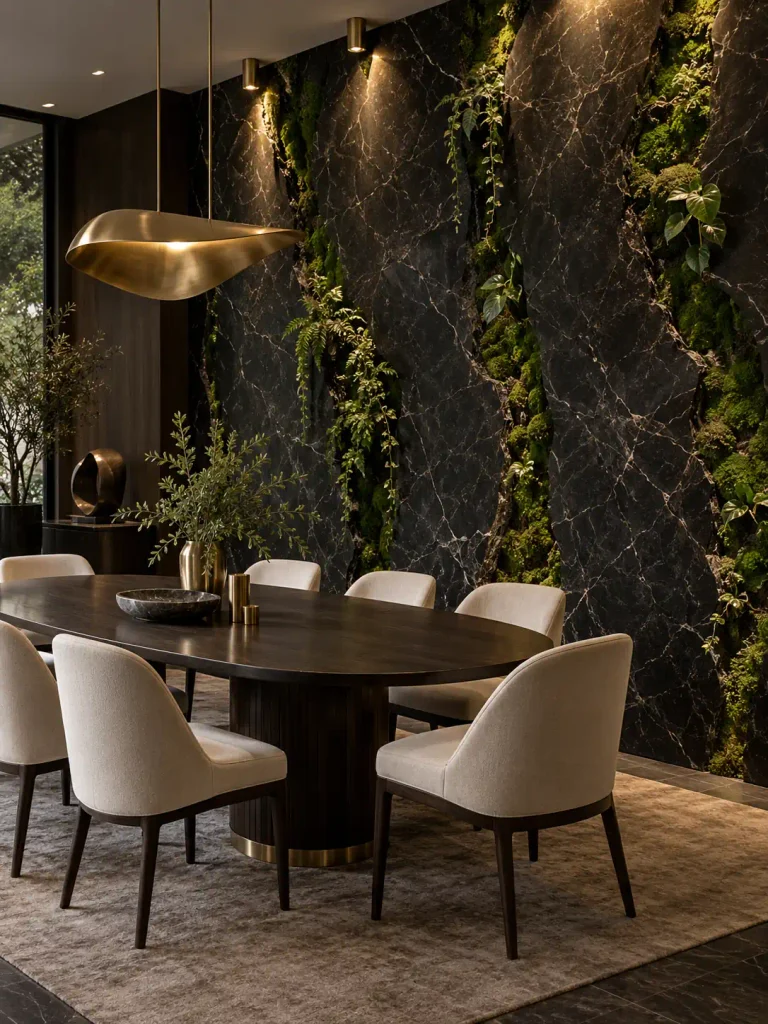
For a moodier interpretation of an indoor garden, pair charcoal or black marble with emerald-green preserved moss. Rather than adding a separate planter, cut irregular vertical fissures through the stone and allow moss and restrained trailing vines to appear as if they are growing from inside the marble. Fine pale veining keeps the dark surface elegant, while warm brass wall washers emphasize the texture. This dramatic combination works beautifully in a dining room, media room, home office, or cocktail-style lounge. Pale upholstered furniture can keep the room from feeling too heavy and make the green sections appear even richer.
12. White Marble Botanical Arch
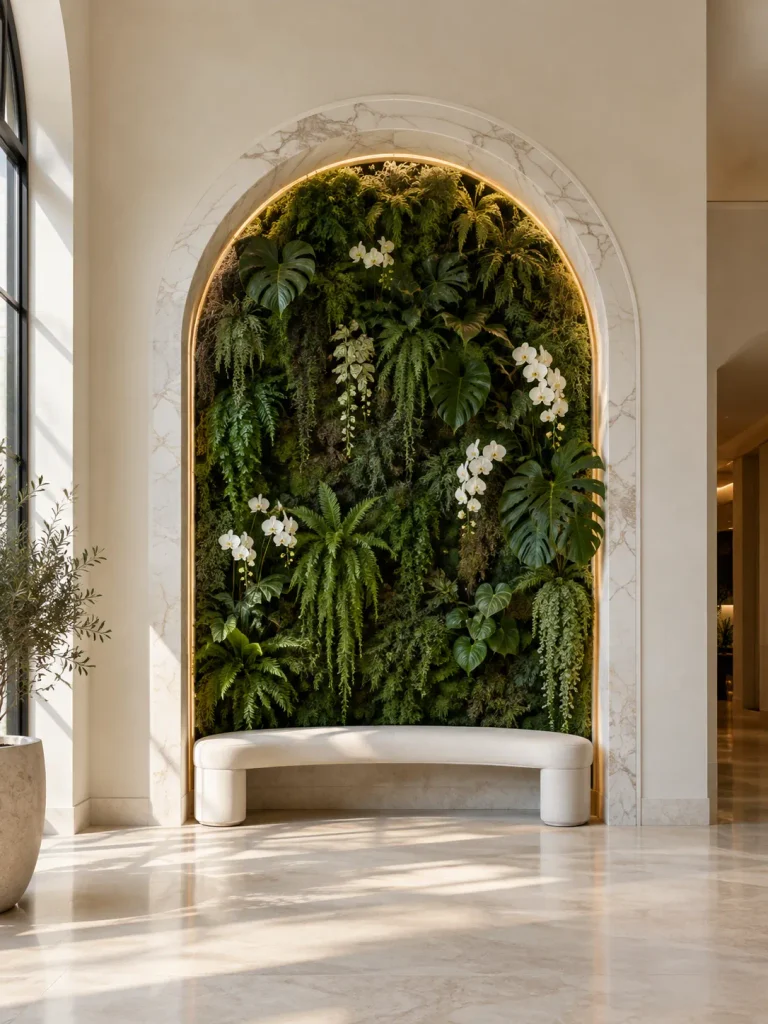
A single marble botanical arch can make a stronger statement than a completely planted wall. Frame a tall rounded recess in softly veined white or cream marble and create a layered garden inside it using ferns, moss, philodendron leaves, trailing vines, and a few white orchids. The surrounding wall should remain clean and uncluttered, allowing the arch to read as part of the architecture. A narrow curved bench beneath it gives the composition purpose. Warm concealed lighting around the inner edge can add depth after dark. This idea is ideal for a foyer, hallway, or formal living space that needs one memorable focal point.
13. Textured Limestone Garden Wall
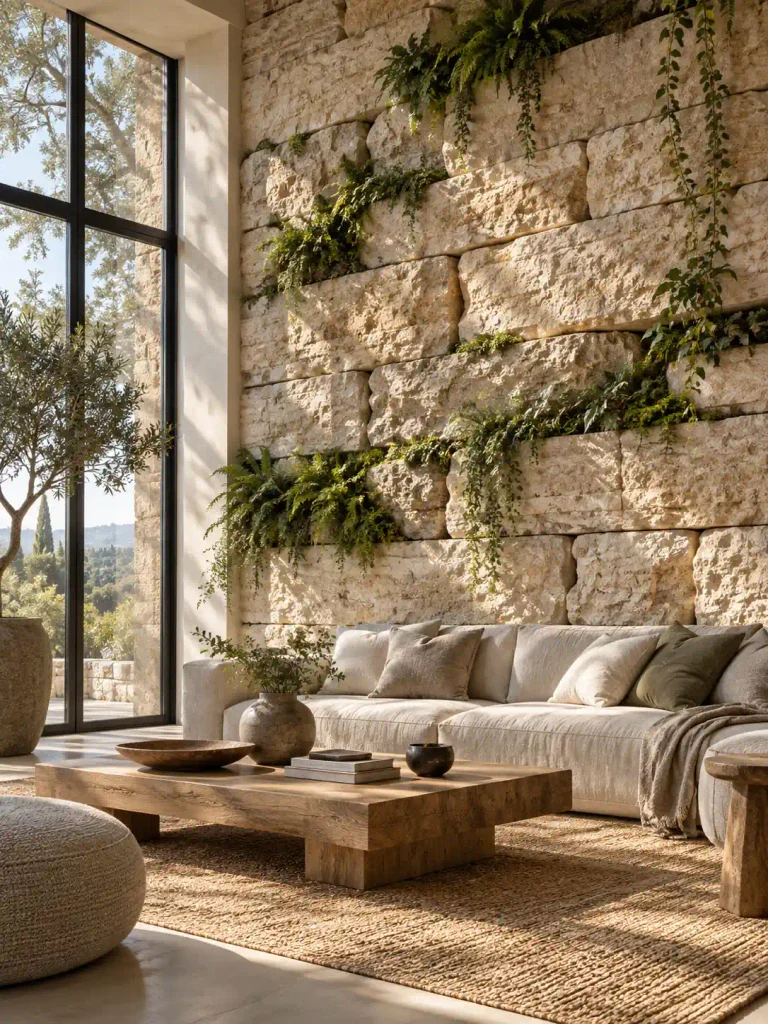
A textured limestone garden wall creates a quieter, more natural form of luxury. Use rough horizontal stone blocks or irregular slabs, then allow ferns, moss, and creeping greenery to emerge from selected joints. Avoid filling every gap; scattered planting makes the wall look more believable, as though nature has slowly reclaimed the stone. Morning or side lighting can bring out the rough surface and cast attractive shadows behind the foliage. Pair the wall with linen upholstery, warm oak, and a simple woven rug for an organic-modern living room that feels relaxed rather than formal.
14. Floating Stone Shelves With Cascading Greenery
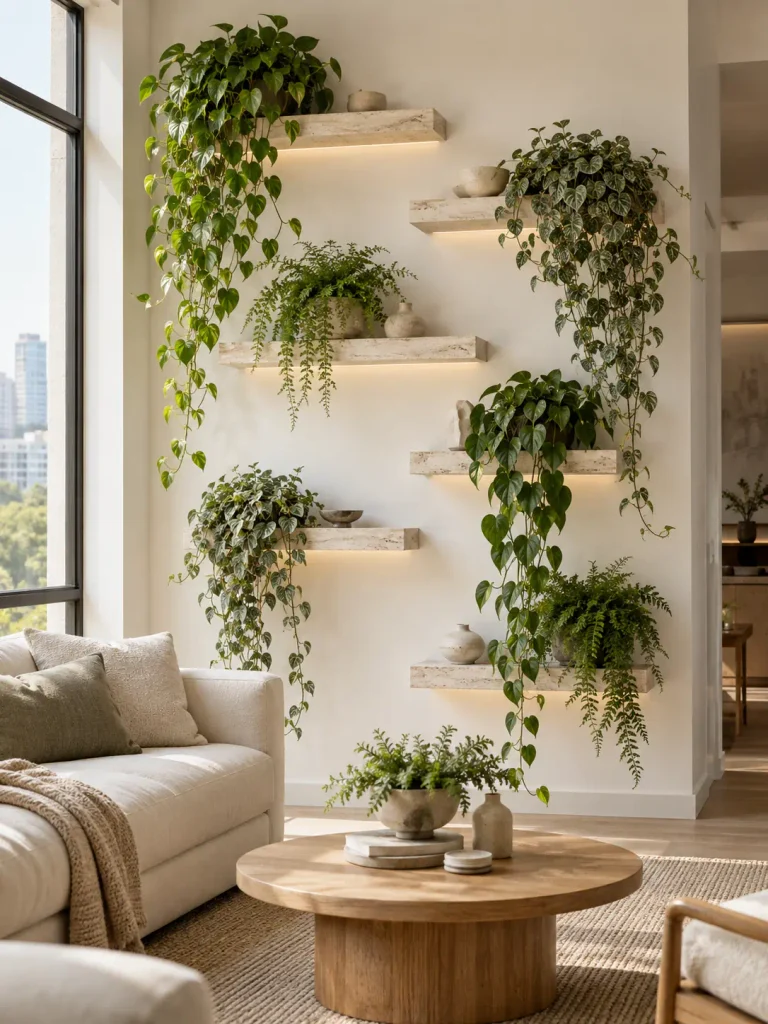
Floating stone shelves offer an approachable alternative to a complex irrigation-based living wall. Install slim travertine, limestone, or marble shelves at staggered heights and place a carefully chosen plant on each one. Pothos, hoya, small ferns, and trailing philodendron can cascade downward and overlap the shelves below, gradually creating a vertical garden effect. A few minimalist ceramic objects add visual breaks. Because each plant remains individually accessible, this design is practical for smaller homes and apartments. Integrated shelf lighting can elevate the look at night while also highlighting the movement of trailing foliage.
15. Onyx Backlit Plant Wall
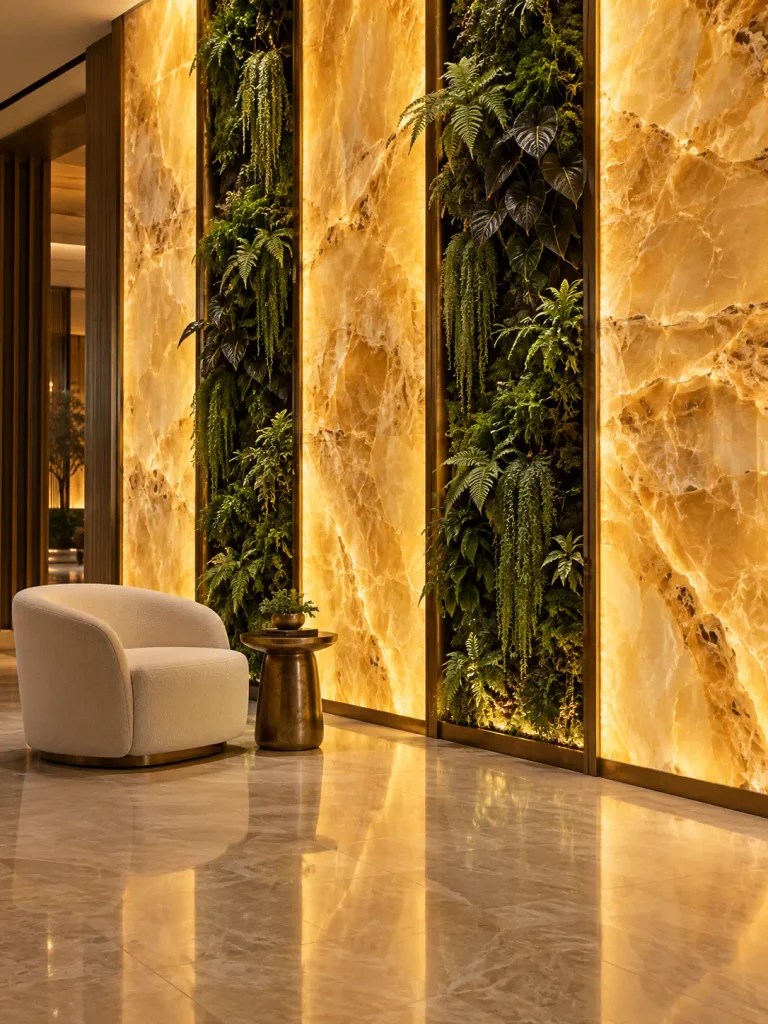
Few combinations feel as luxurious as glowing translucent stone and deep green foliage. Create a wall with alternating narrow botanical sections and backlit panels of honey-toned onyx or another translucent stone. When illuminated from behind, the stone produces a warm amber glow that contrasts beautifully with moss, ferns, cascading vines, and dark sculptural leaves. Keep the surrounding room restrained so the wall does not compete with too many other finishes. Polished pale flooring can reflect the light subtly and amplify the effect. This design is particularly striking in an entrance hall, formal living room, or sophisticated dining area.
16. Pebble-and-Moss Zen Feature Wall
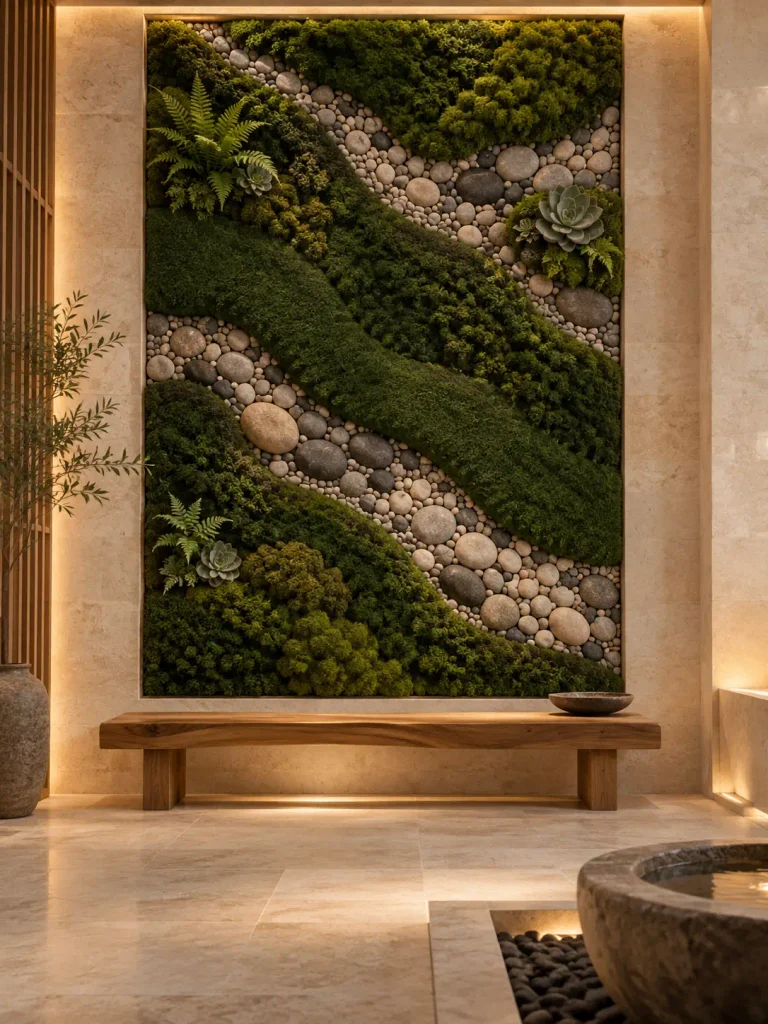
A pebble-and-moss wall can create the atmosphere of a miniature landscape without requiring a dense collection of plants. Arrange flowing bands of preserved moss and smooth river stones in gray, beige, and charcoal, almost like a topographic view of a garden. Add only a few small ferns or sculptural plants for extra dimension. The restraint is what makes the design feel refined. A low natural-wood bench and indirect lighting can reinforce the calm, spa-like effect. This is a strong choice for a wellness room, meditation corner, bedroom, or quiet foyer where visual serenity matters more than dramatic color.
17. Arched Stone Niches Filled With Greenery
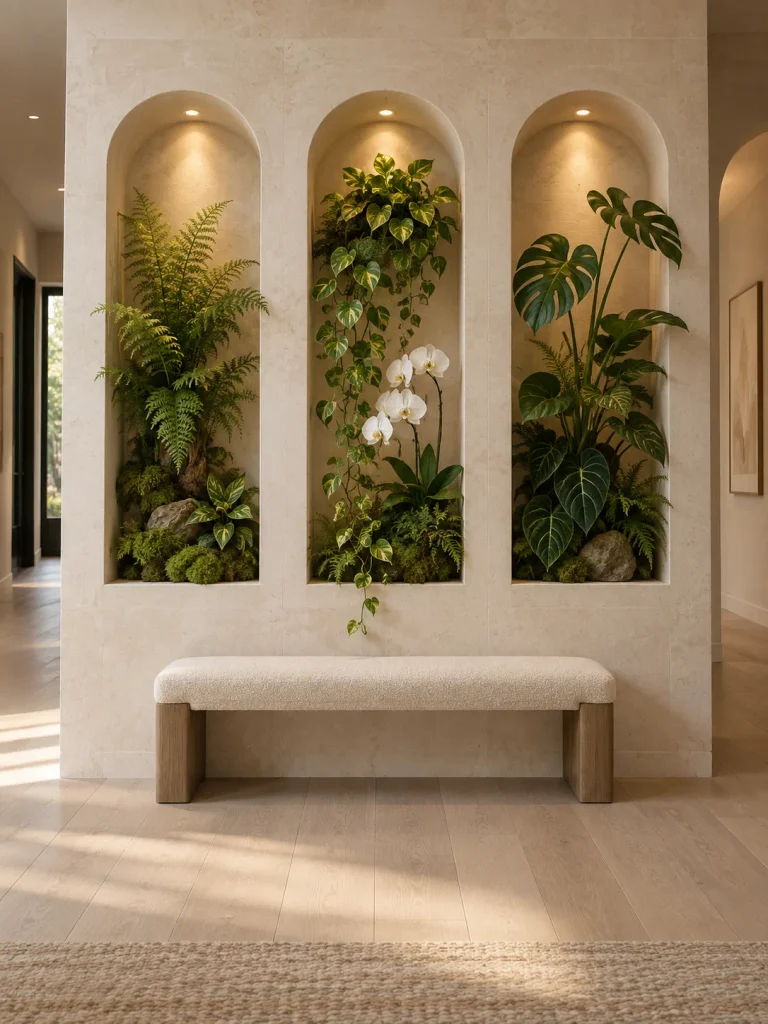
Repeated arched niches can bring rhythm and symmetry to a long wall while allowing every plant grouping to feel curated. Create three tall rounded recesses in pale stone or plaster and give each niche a coordinated but slightly different botanical composition. One might feature ferns and moss, another cascading pothos and orchids, and the third sculptural philodendron leaves. Warm light from above helps each garden read like an individual display. This design is especially useful in hallways and dining rooms because it turns a long, difficult wall into a sequence of elegant living artworks rather than one heavy continuous garden.
18. Split Marble and Greenery Feature Wall
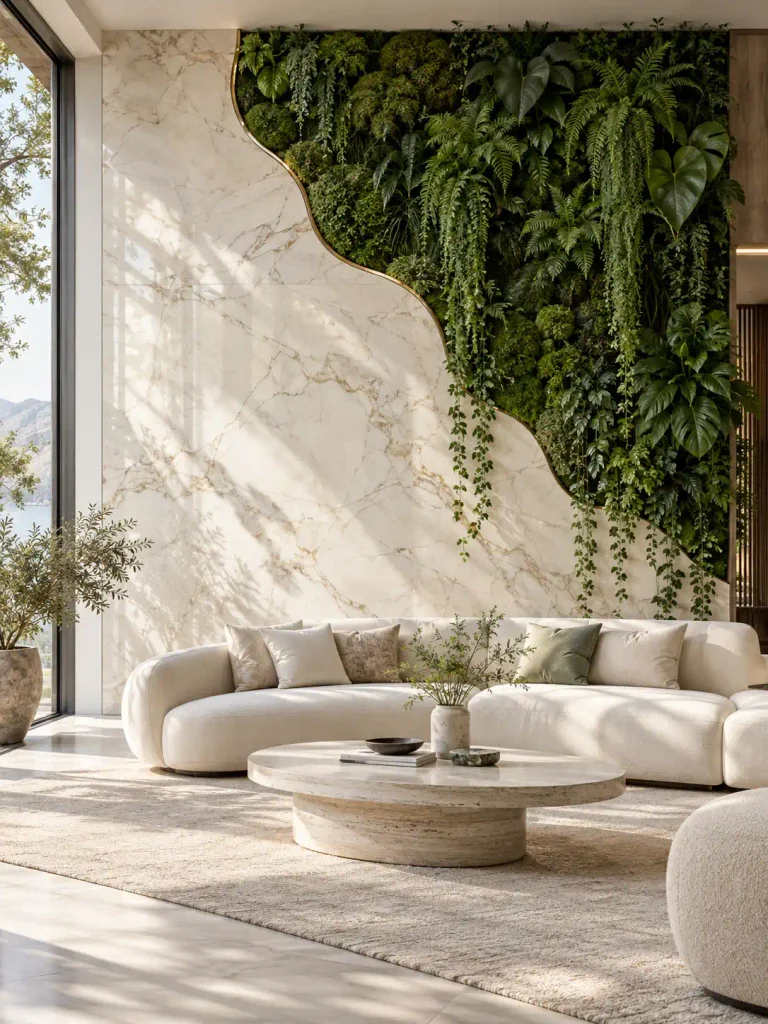
A split marble-and-greenery wall combines polished luxury with organic softness. Instead of dividing the two materials with a straight line, let the border curve across the wall like an abstract landscape. One side can remain softly veined cream marble while the other holds moss, ferns, trailing vines, and deeper foliage. A thin champagne-bronze detail tracing only part of the transition can make the composition feel even more intentional. Because the greenery occupies only part of the surface, the room stays clean and modern. This concept works particularly well behind a sofa or in a formal lounge with minimal furniture.
19. Walnut Slat Wall With Hidden Plant Pockets
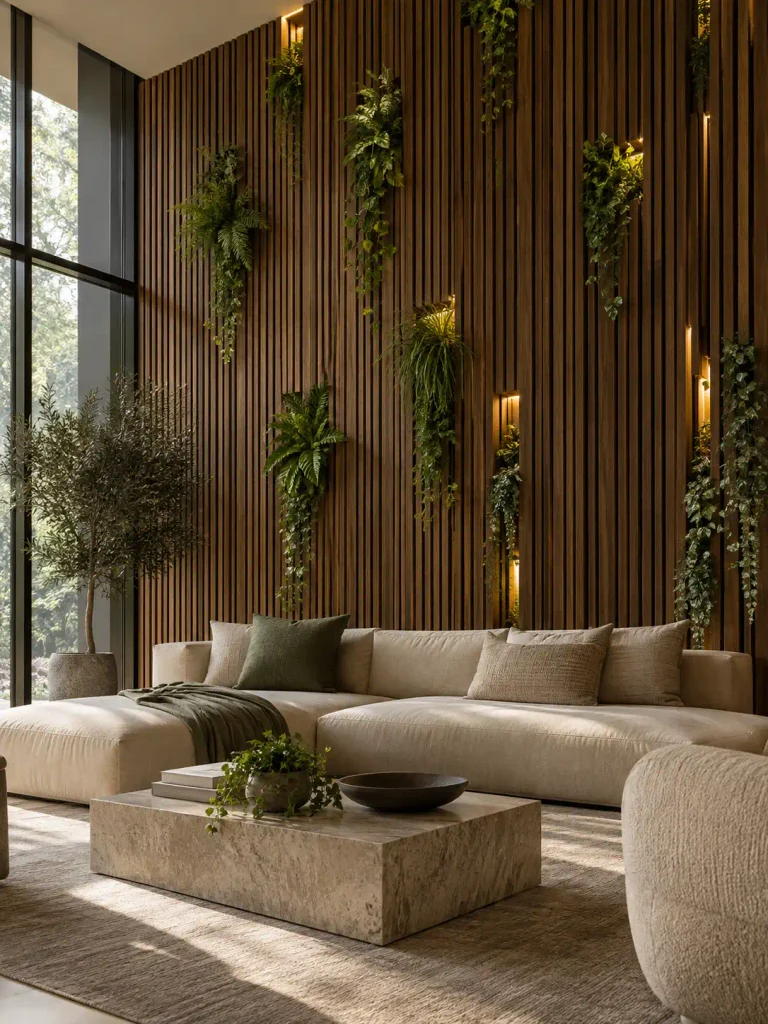
A walnut slat wall becomes far more interesting when greenery appears to emerge unexpectedly from between the timber. Use many narrow vertical slats rather than broad wood panels, and conceal small recessed planter pockets behind selected gaps. Ferns, vines, and narrow-leaf plants can spill out in controlled clusters while most of the wood remains visible. Warm integrated lighting inside a few pockets adds depth and makes the greenery feel built into the architecture. This idea is practical for a modern living room, dining space, or home office because it combines a familiar slatted-wall treatment with a subtle biophilic twist.
20. Sculptural Wooden Rings With Mini Gardens
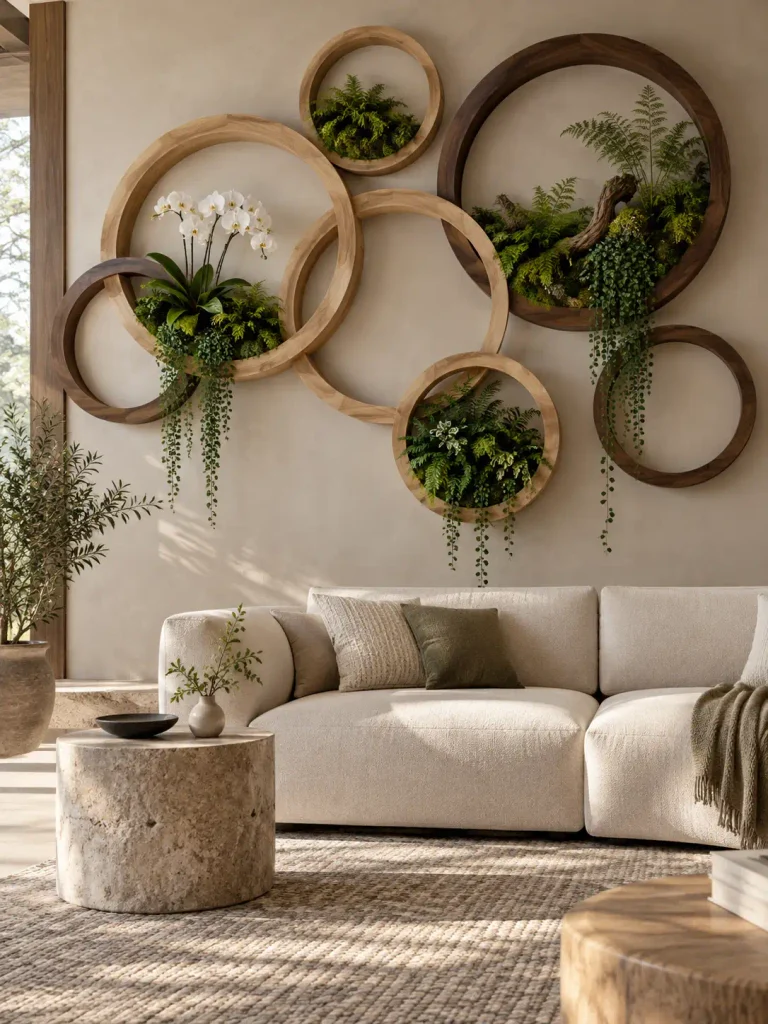
Overlapping wooden rings can create a playful but sophisticated plant display. Arrange circles of different sizes across a neutral wall, mixing light oak and darker walnut for depth. Fill only some rings with mini gardens of moss, ferns, orchids, and trailing foliage, while leaving others completely empty. Let a few rings project slightly from the wall so natural light produces soft shadows. The repeated circular shapes make the installation feel cohesive even when the planting varies. This is a good solution for a living room that needs greenery and wall art at the same time without committing to a full-height garden.
21. Floating Timber Cubes Botanical Wall
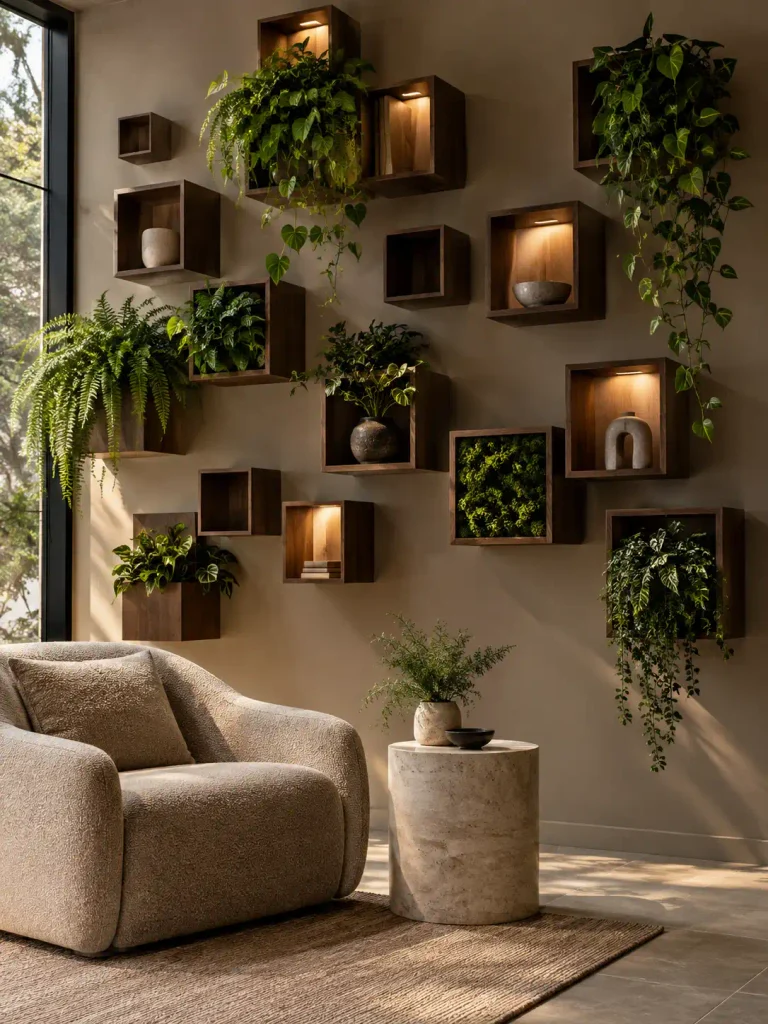
Floating timber cubes turn individual plant pockets into a three-dimensional wall composition. Use walnut boxes in several sizes and mount them at different depths, allowing some to hold ferns, pothos, moss, or compact leafy plants. Other cubes can remain empty or display a ceramic object, book, or sculptural bowl. This mix prevents the design from feeling like repetitive shelving. Add warm lighting to only a few boxes for visual hierarchy. Because the components can be rearranged or replanted individually, this is a flexible way to create an indoor vertical garden in a lounge, reading nook, or contemporary apartment.
22. Curved Oak Panel Living Wall
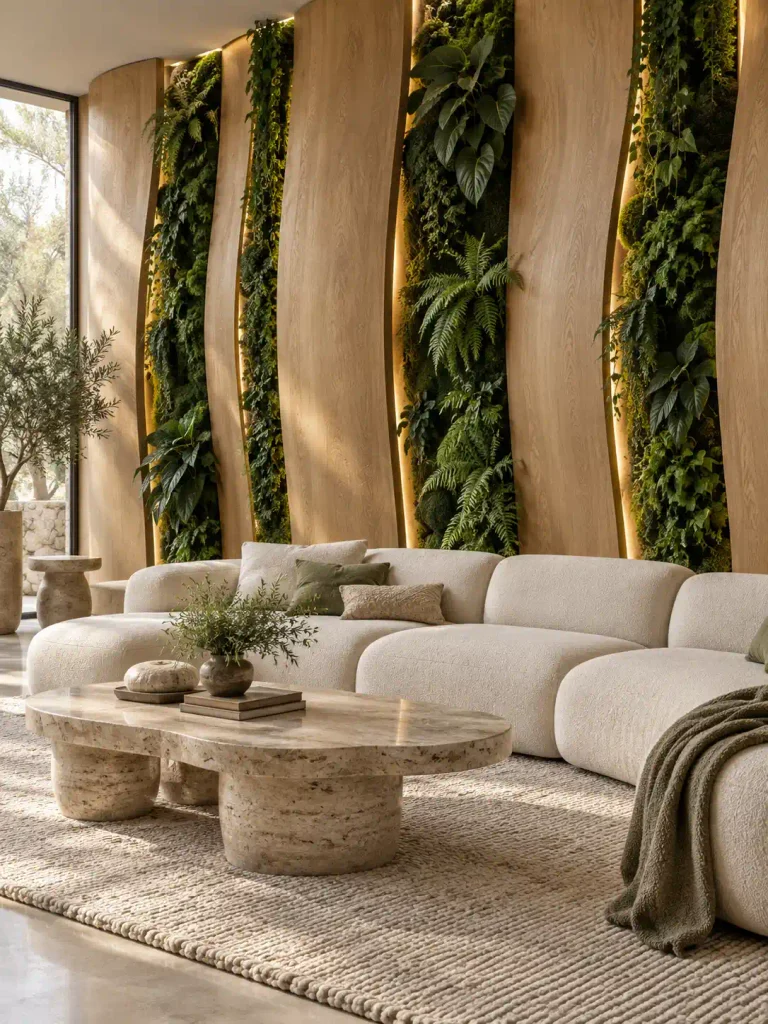
Curved oak panels can make a vertical garden feel integrated into the architecture rather than applied to it. Alternate broad timber panels that gently bow outward with narrow floor-to-ceiling strips of greenery. Moss, ferns, philodendrons, and controlled trailing foliage can fill the planted sections, while warm concealed lighting glows from selected gaps. The repeated curves soften a modern room and create beautiful changes in shadow throughout the day. Pair the wall with a low ivory sectional, a textured wool rug, and a sculptural stone table for a warm organic-modern look that feels luxurious but still comfortable.
23. Wood-and-Moss Geometric Feature Wall
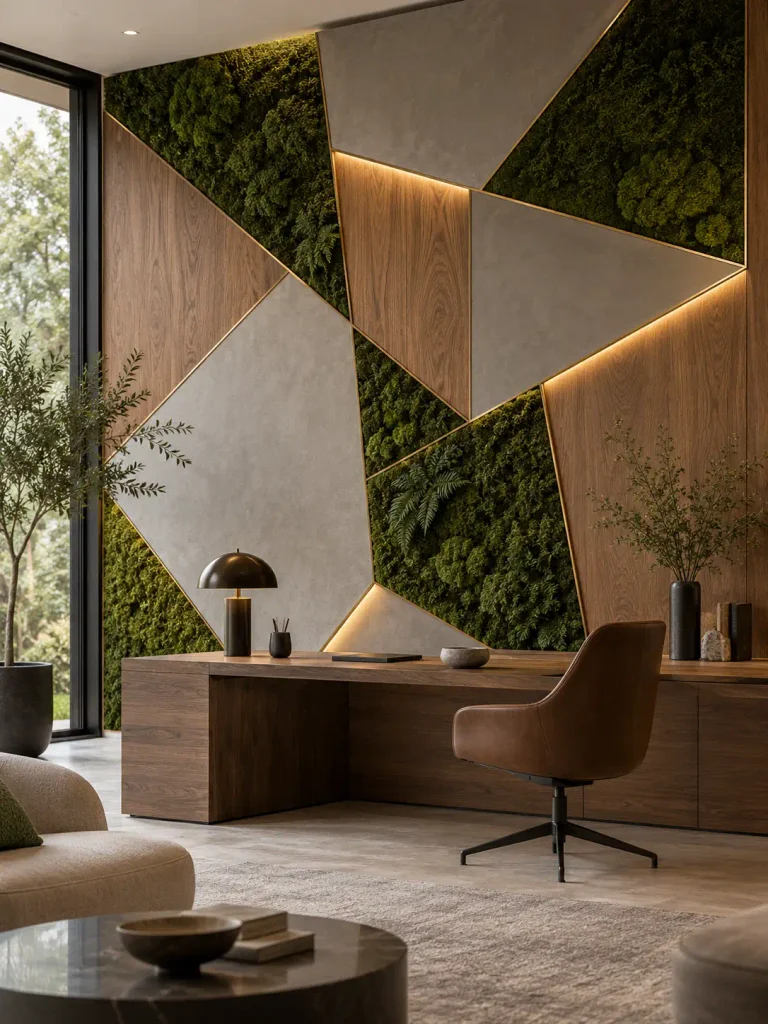
A geometric composition of wood, moss, and plaster can work like a large piece of contemporary art. Divide the wall into asymmetrical polygons rather than simple squares and alternate rich oak veneer, preserved forest moss, and matte warm-gray plaster. Fine brass edging around selected shapes can add a tailored finish, while hidden lighting behind just a few panels creates depth. This idea works especially well in a home office or lounge because it offers greenery without the visual softness of a traditional garden wall. Preserved moss also makes the installation practical in spaces where regular watering would be inconvenient.
24. Vertical Garden Integrated Into a Media Wall
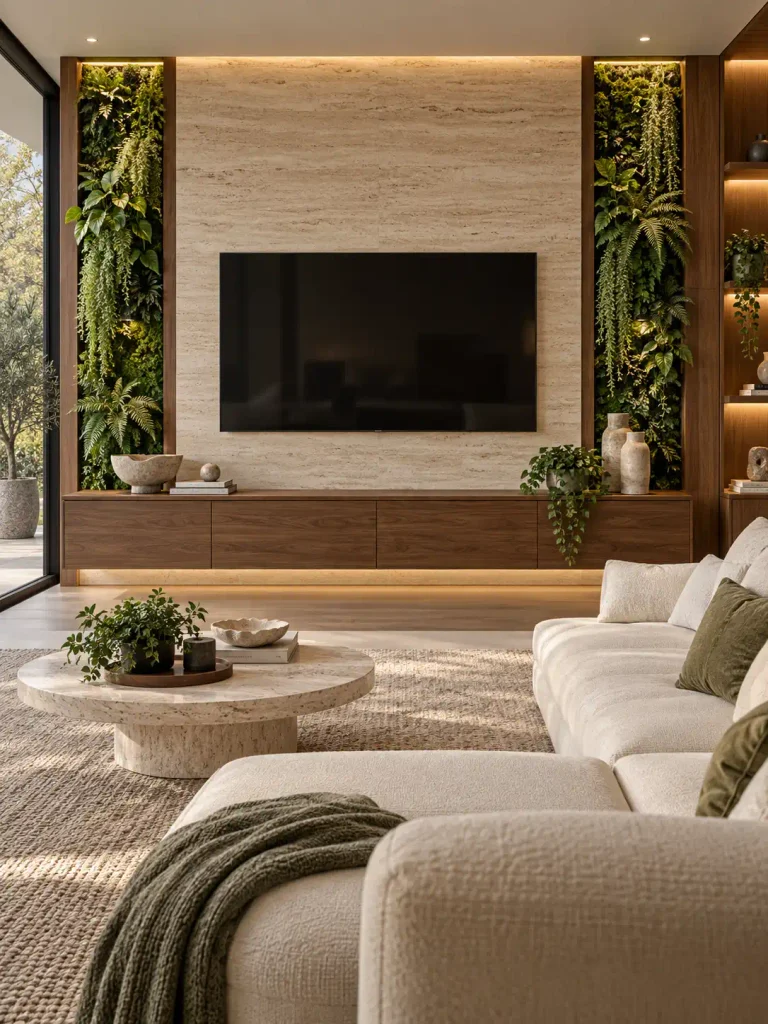
A media wall can incorporate greenery without placing plants too close to electronics. Keep the television centered on a clean travertine or plaster panel, then frame it with narrow vertical botanical sections on either side. Moss, compact ferns, and controlled trailing plants add texture while generous clear space around the screen maintains a calm viewing area. Floating walnut cabinetry below can repeat the natural tones and provide storage. Subtle shelf lighting completes the composition. This is one of the most practical indoor vertical garden wall ideas because it uses a surface that already dominates the living room and combines technology with natural materials in a balanced way.
25. Botanical Fireplace Surround
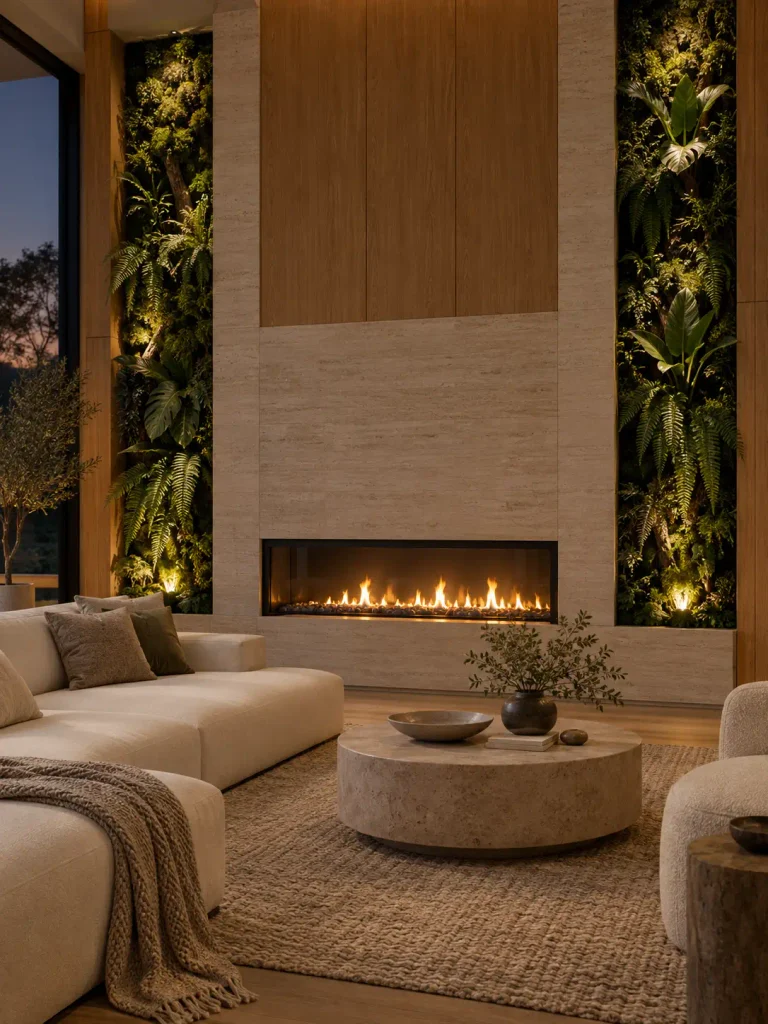
A modern fireplace can feel warmer and more inviting when framed with greenery, provided the plants remain safely separated from heat. Use tall vertical garden sections on both sides of the fireplace and divide them from the firebox with wide stone borders. Moss, ferns, and sculptural leafy plants work well because they create texture without hanging into the heated area. Warm oak panels can visually connect the entire composition. In the evening, the combination of flame, plant lighting, stone, and timber produces a relaxed resort-like atmosphere. Always treat the final construction as a professional architectural installation with proper fire-safe clearances.
26. Floating Wood Console With Garden Rising Behind It
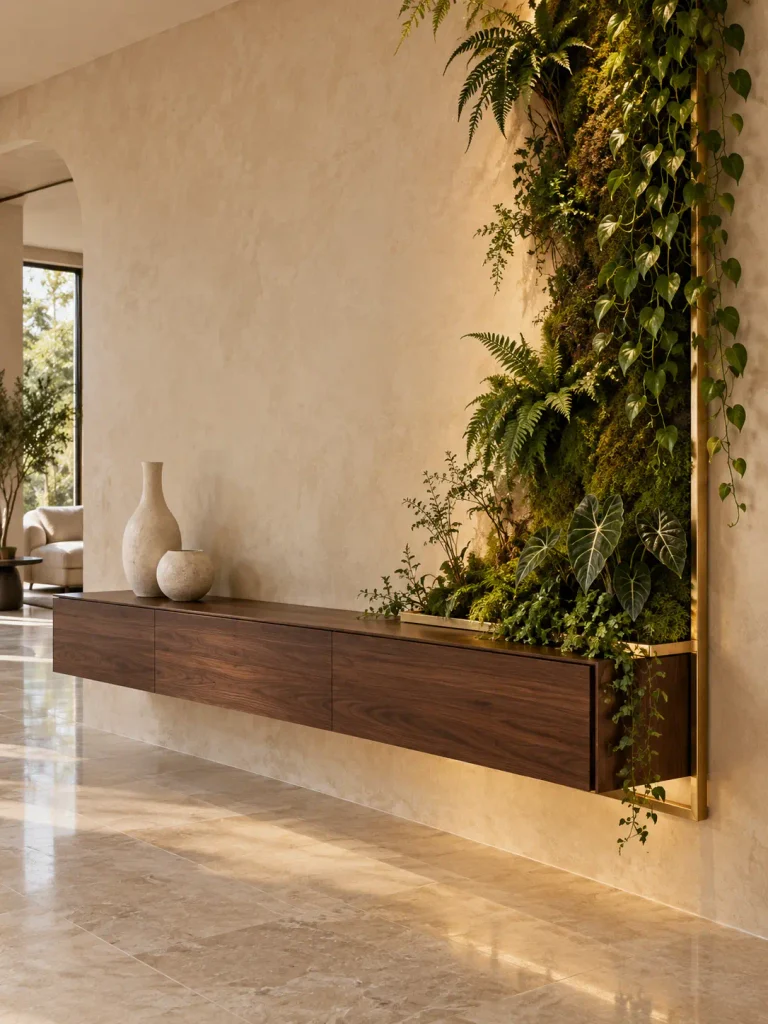
Design the furniture and the garden as one continuous feature by allowing a floating walnut console to transition into a vertical planted section. The greenery can begin sparsely near the cabinet and become gradually denser as it rises, creating a strong sense of movement. Moss, vines, ferns, and sculptural leaves work well, especially when a slim brass frame visually links the planting to the console. Keep decorative objects minimal so the garden remains dominant. This approach is ideal for an entryway or living room because it combines storage, styling space, and vertical greenery within one cohesive architectural composition.
27. Wooden Archway Wrapped With Indoor Greenery
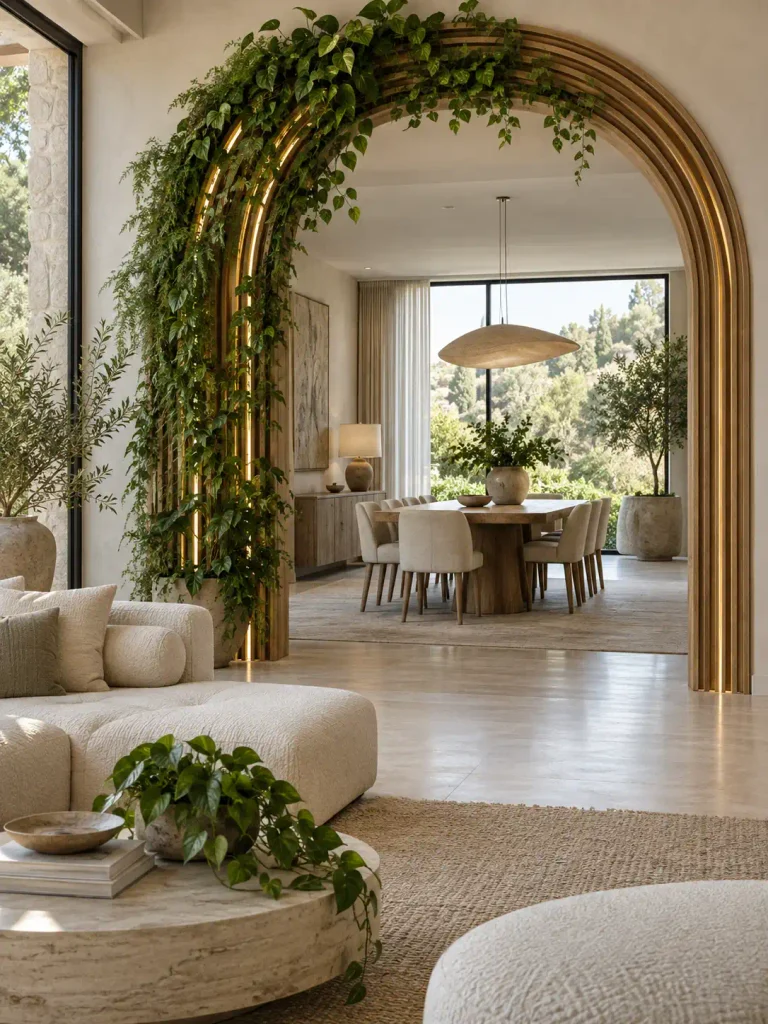
An interior archway can become a botanical transition between rooms. Frame a wide opening with slim curved oak ribs, then allow controlled greenery to climb one side and sweep partially across the top. Pothos, delicate ferns, and trailing vines work well because they can follow the curve naturally. Keep the opposite side mostly exposed so the result feels asymmetrical and contemporary rather than like a floral wedding arch. Integrated warm lighting between selected timber ribs adds depth at night. This idea works beautifully between a living room and dining room, where it can create gentle separation while maintaining an open-plan feeling.
28. Halo-Lit Botanical Circle
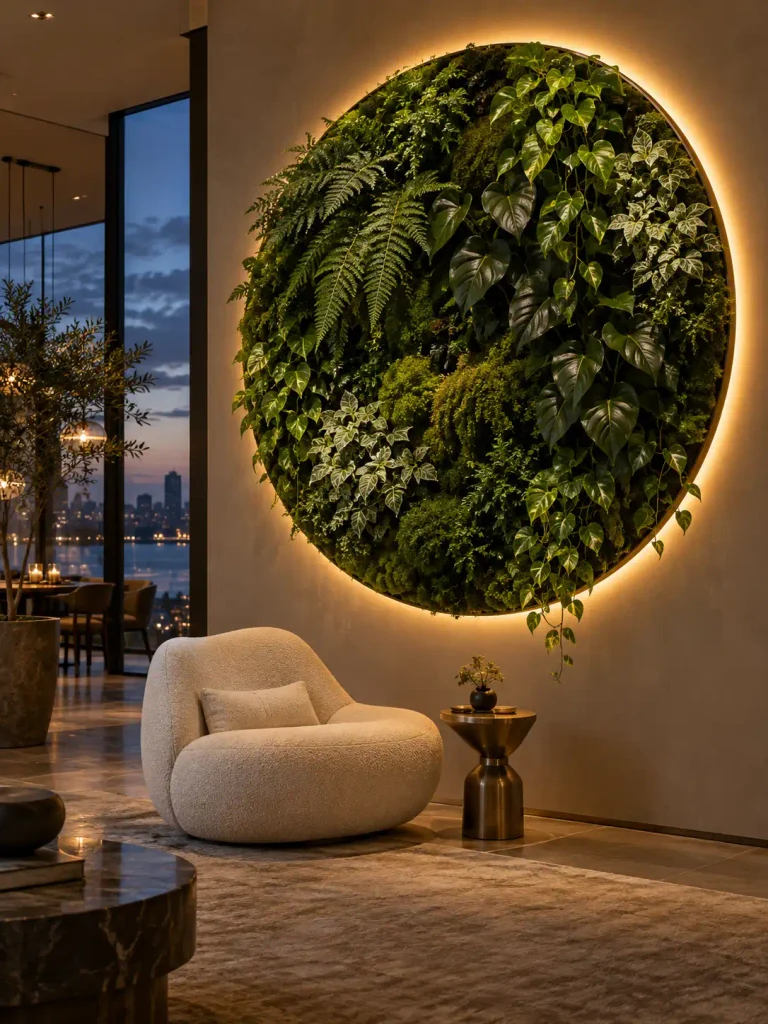
A halo-lit botanical circle is simple in concept but can look extremely luxurious when scaled correctly. Float a large circular plant panel slightly away from a taupe or stone wall and hide warm LED lighting behind the outer edge. Fill the circle with moss, ferns, pothos, dark philodendron leaves, and pale-green foliage, keeping the palette mostly green. The soft halo makes the entire piece appear suspended after sunset. Place a sculptural lounge chair and a small bronze side table beneath it rather than cluttering the area with furniture. This design is ideal for a dramatic reading corner, foyer, or quiet evening lounge.
29. Vertical Garden With Floating Light Lines
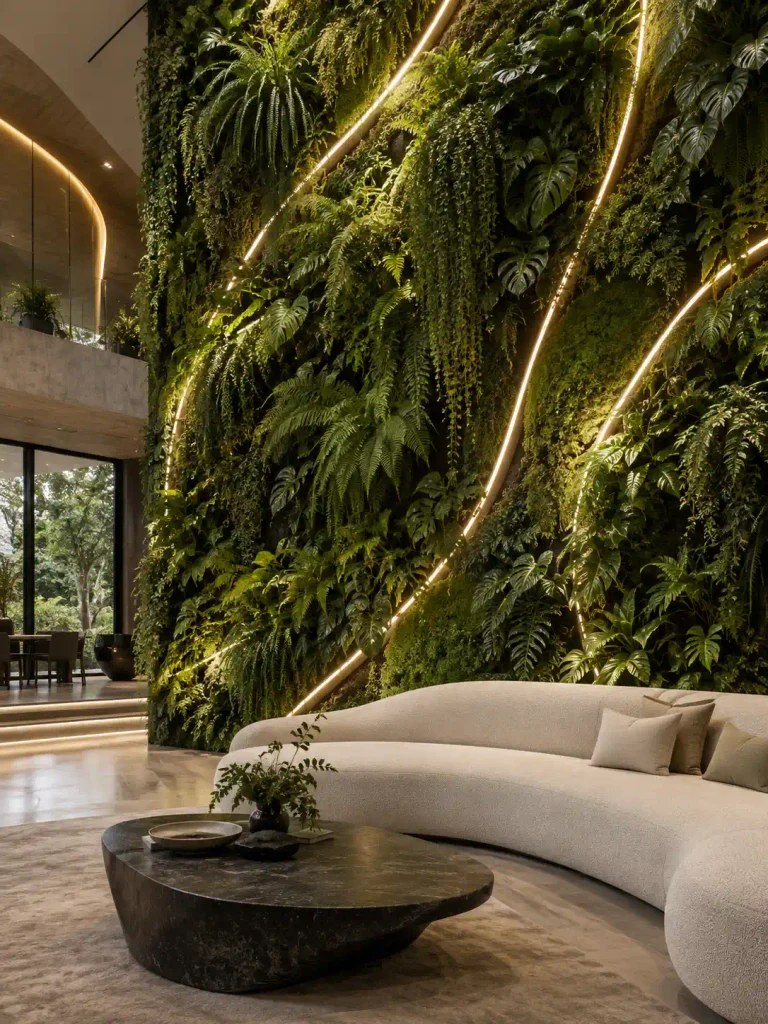
Integrate light directly into a lush vertical garden by running several slender illuminated lines through the foliage. Instead of creating a rigid grid, let the lines curve and travel diagonally like abstract brushstrokes, disappearing into and re-emerging from the plants. Ferns, moss, philodendrons, and cascading vines create enough depth for the lighting to feel embedded within the wall rather than placed on top. Warm-white light is usually more residential than cool white. Because the combination is visually powerful, use simple furniture nearby. The final effect is contemporary, slightly futuristic, and especially striking in a lounge or large foyer.
30. Starburst Green Wall Installation
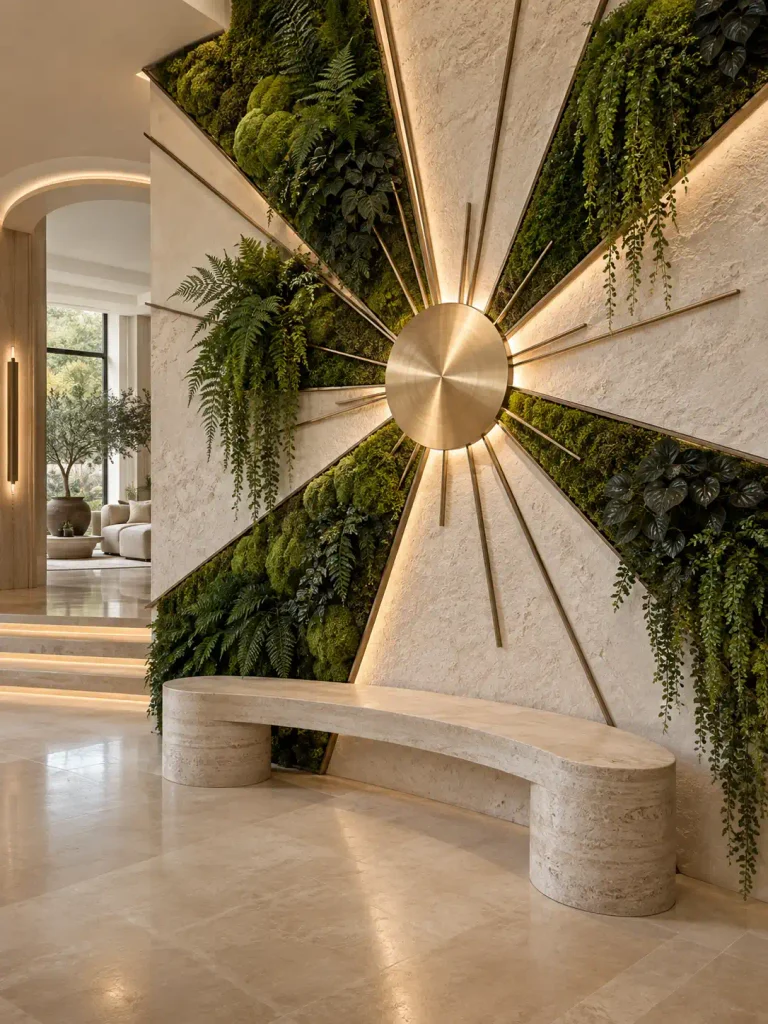
A botanical starburst brings greenery and statement lighting together in one composition. Place a circular brushed-brass light at the center of the wall and extend fine metallic rays outward in many directions. Between the rays, alternate wedges of moss, ferns, compact foliage, textured plaster, and intentional negative space. The greenery should support the geometry rather than cover it. A curved stone bench beneath the installation can echo the central form while keeping the area functional. This is a strong choice for a foyer because it immediately creates a memorable focal point and combines the decorative impact of sculpture, lighting, and plants.
31. Hidden-Cove Moss Wall
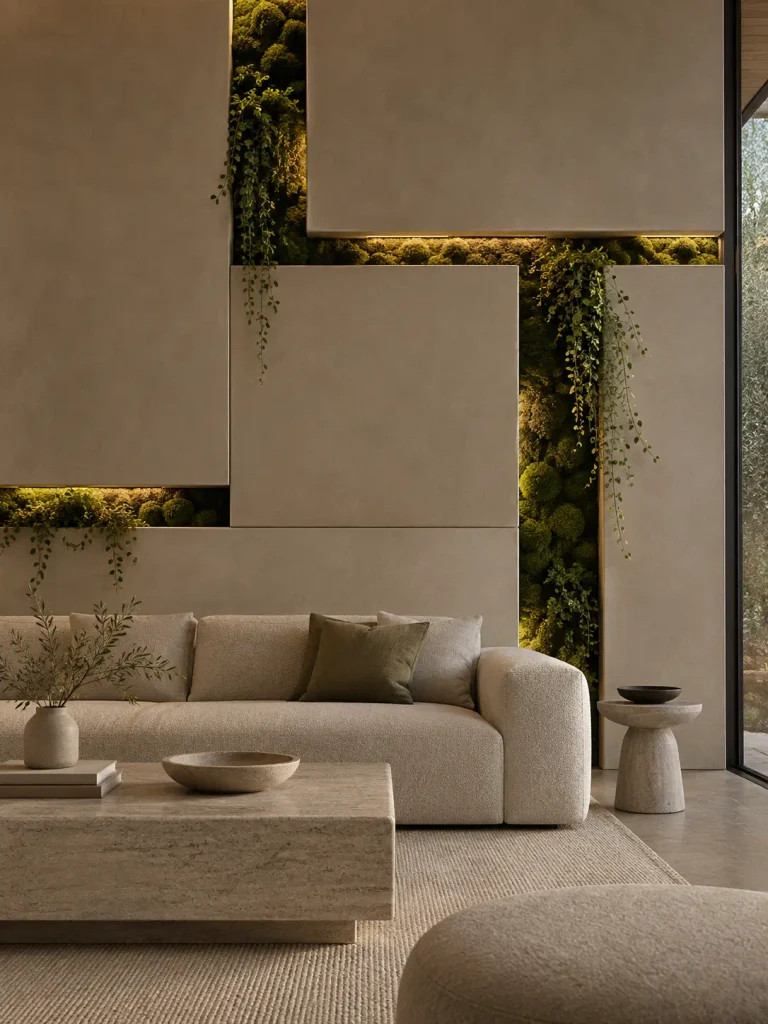
A hidden-cove moss wall is ideal for anyone who wants biophilic texture without a visibly dense plant installation. Mount several large warm-beige wall panels so they float slightly away from the surface, leaving narrow horizontal and vertical gaps between them. Fill the recessed spaces with preserved moss and delicate trailing greenery, then use concealed warm lighting to illuminate the plants from within the shadows. The greenery appears only where the architecture opens up, creating a mysterious layered effect. Pair the wall with a low oatmeal sofa and pale stone furniture for a minimalist quiet-luxury room that still feels connected to nature.
32. Floor-to-Ceiling Garden With Sunset Lighting
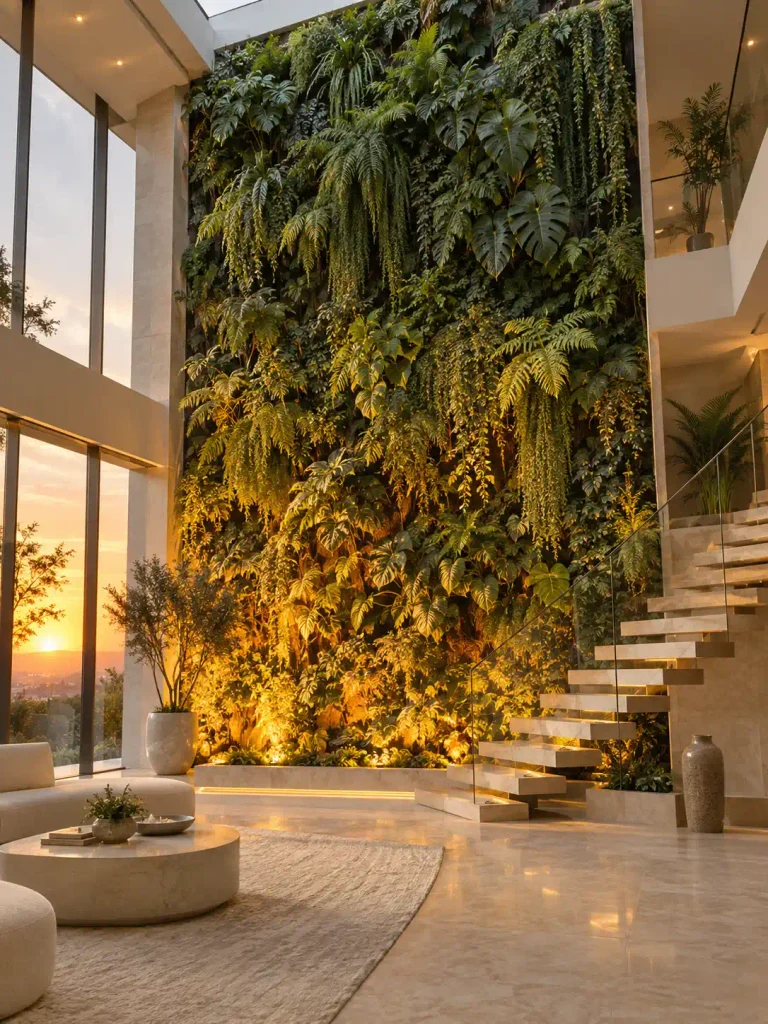
Lighting can completely change the character of a large living wall. In a double-height foyer, create a floor-to-ceiling garden using ferns, moss, philodendrons, and trailing plants, then introduce a deliberate sunset-style gradient. The base should glow with rich amber and golden light, transitioning upward through warm honey tones into softer, more neutral illumination near the top. This creates the impression of late-afternoon sun filtering through a forest. A floating staircase can sit to one side without covering the planting. Pale stone floors and minimal cream furniture keep the dramatic lighting and greenery as the clear focal point.
33. Illuminated Botanical Columns
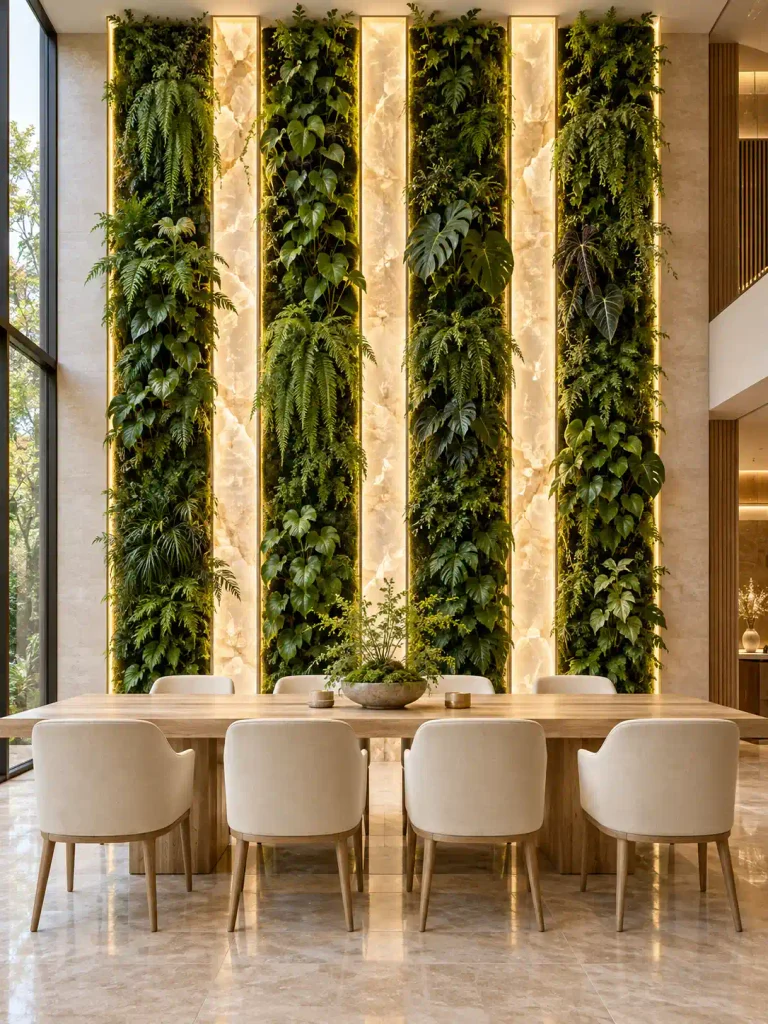
Instead of one continuous garden, divide greenery into several tall botanical columns. Four narrow floor-to-ceiling planted strips can make a dining room appear taller while giving the wall a disciplined rhythm. Fill each column with a slightly different balance of ferns, moss, pothos, and sculptural leaves, then separate them with luminous translucent stone panels. The glowing dividers add warmth and prevent the greenery from feeling too heavy. A long pale-oak dining table in front reinforces the vertical and horizontal geometry. This approach is ideal for modern interiors where a full living wall might feel too visually dense.
34. Green Wall With Pendant Light Cascade
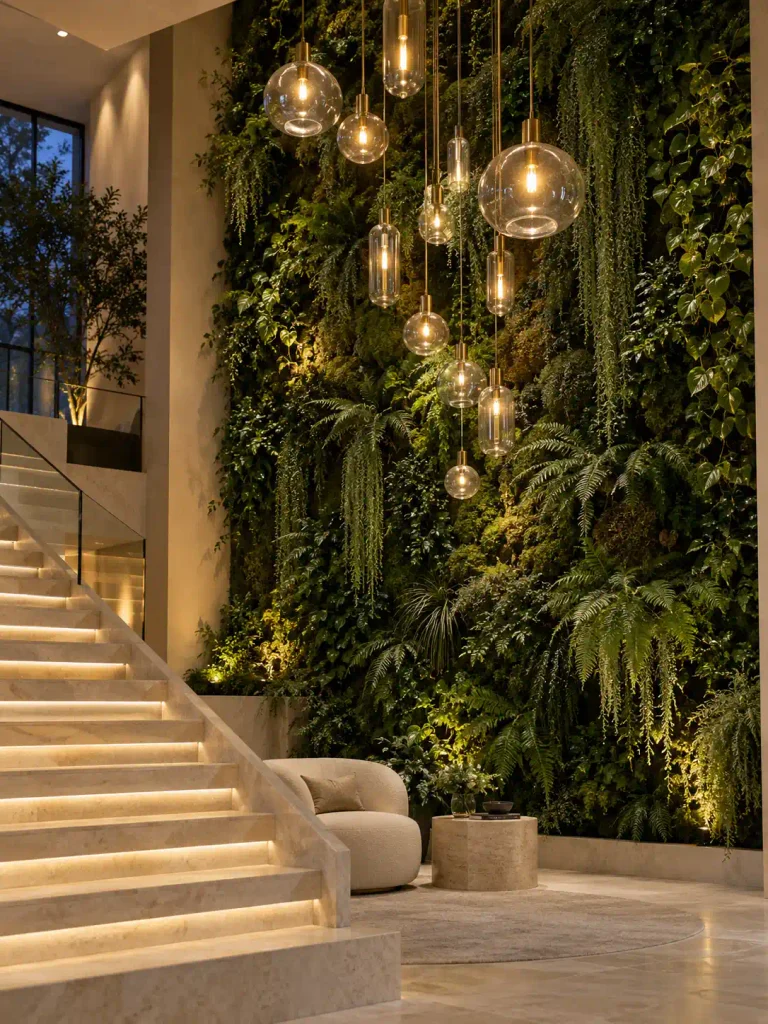
A lush plant wall can become even more dramatic when paired with a cascade of sculptural pendant lights. Suspend clear-glass globes and elongated brass-accented pendants at different heights in front of the greenery, while maintaining safe spacing between fixtures and plants. The glass catches warm light and creates sparkling highlights against moss, ferns, and trailing foliage. This works particularly well beside a staircase or within a double-height hall because the pendants can fill vertical space that would otherwise feel empty. Keep the surrounding furniture minimal so the layered combination of light and greenery remains the main attraction.
35. Backlit Arched Botanical Panels
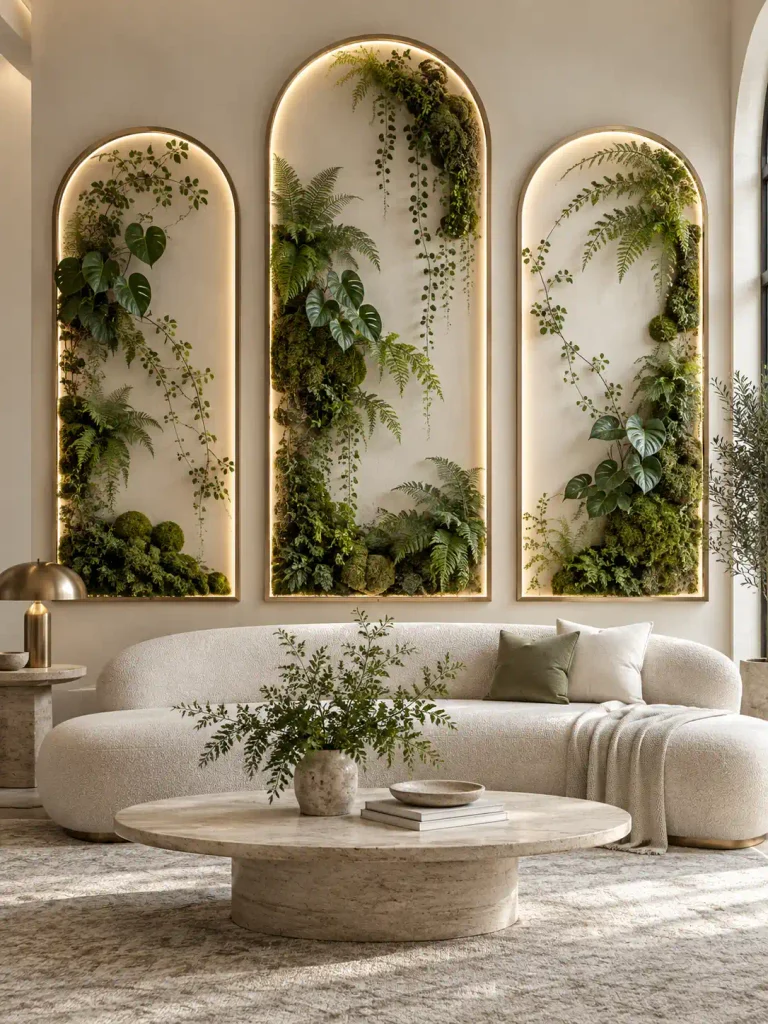
Three backlit botanical arches create a refined sense of repetition without making a wall feel heavy. Make the central arch slightly taller and frame all three with slim champagne metal. Inside each one, place controlled clusters of moss, ferns, philodendron leaves, and delicate vines, leaving generous pale background visible around the plants. Warm concealed lighting around the arches emphasizes their shapes after dark. A curved cream sofa and oval stone table can echo the soft geometry. This design suits living rooms where you want a strong architectural feature but still prefer a bright, airy atmosphere rather than a dense floor-to-ceiling garden.
36. Floating Greenery Clouds With Underlighting
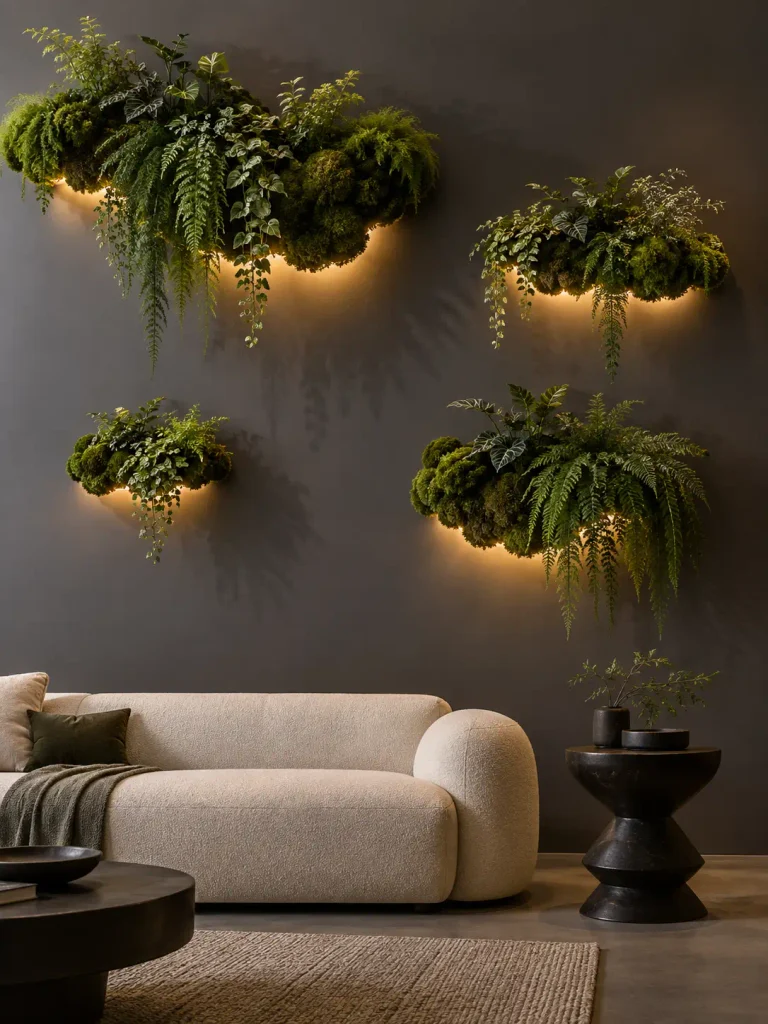
Floating greenery clouds offer one of the most unusual ways to bring plants onto a wall. Create irregular clusters of preserved moss, ferns, and delicate foliage that project several inches from a charcoal or warm-gray surface. Hide lights underneath each cluster so the edges glow and soft shadows fall downward, making the gardens appear suspended. Vary the sizes and heights, and leave plenty of empty wall between them so the floating effect remains clear. A low ivory sofa and dark sculptural table can complete the dramatic gallery-like setting. This concept is especially suitable for a contemporary lounge or creative workspace.
37. Rain Curtain Botanical Wall
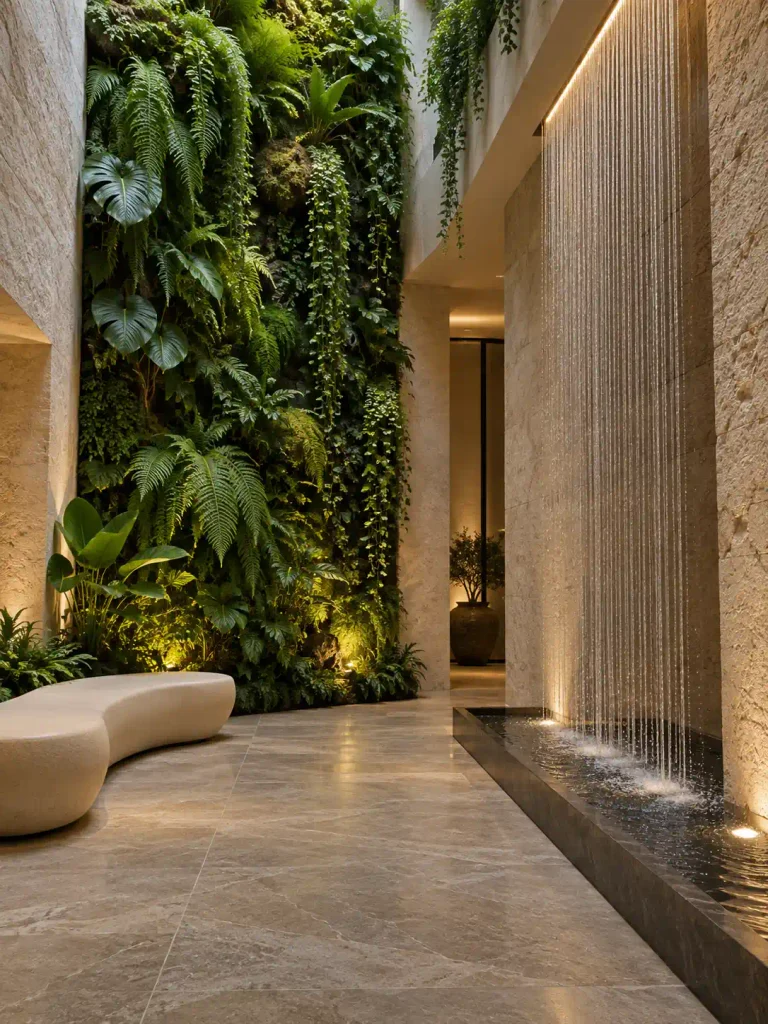
Combine plants and moving water by keeping the two features visually connected but physically separate. Place a tall vertical garden on one side of an indoor courtyard and install a narrow rain curtain beside it, allowing fine water streams to fall from a concealed ceiling channel into a dark stone basin. The water should not run over the plants. Limestone walls, large-format flooring, and warm concealed lights can create a resort-like atmosphere. This is a high-impact idea for spacious foyers or wellness-inspired interiors, but it requires professional waterproofing, filtration, drainage, and humidity planning to keep surrounding surfaces protected.
38. Green Wall Above a Reflecting Pool
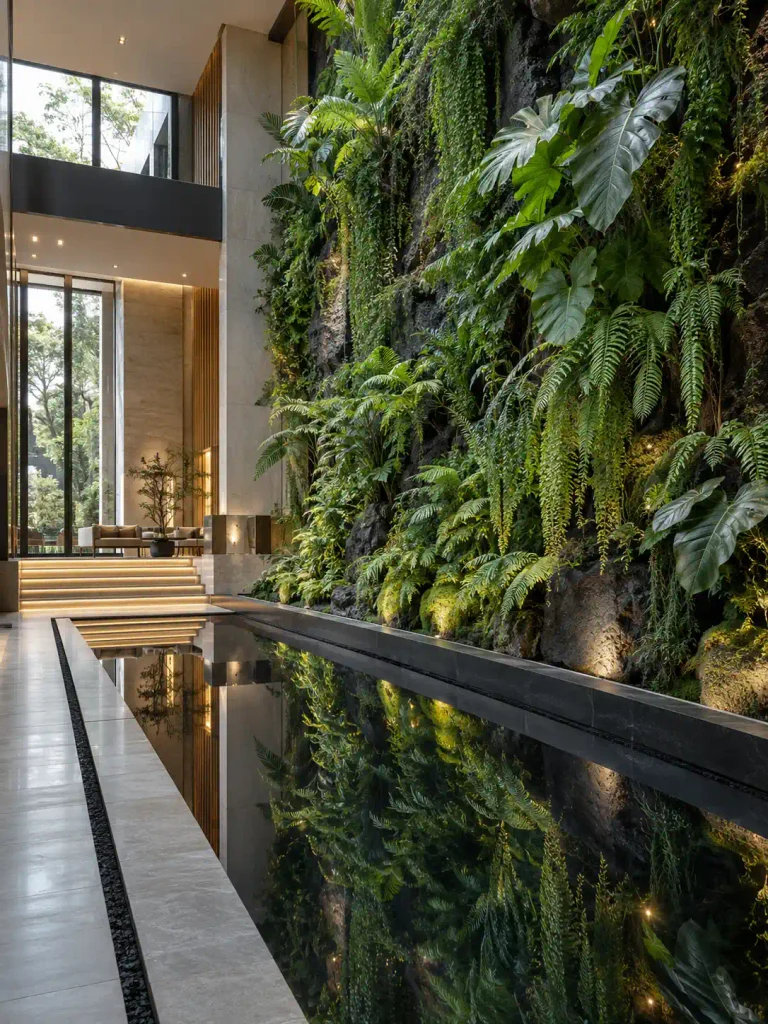
A reflecting pool doubles the visual impact of a vertical garden by repeating the foliage and light on the water surface. Build a tall green wall of moss, ferns, vines, and sculptural leaves against a dark background, then place a long shallow pool at its base. A charcoal basin creates stronger reflections and makes the water appear deeper. Keep the surface as calm as possible so the mirrored image remains clear. This design works best in large entrance halls or interior courtyards where there is enough room to appreciate the reflection from a distance. Subtle lighting can make the effect especially beautiful at night.
39. Stepped Waterfall Garden Wall
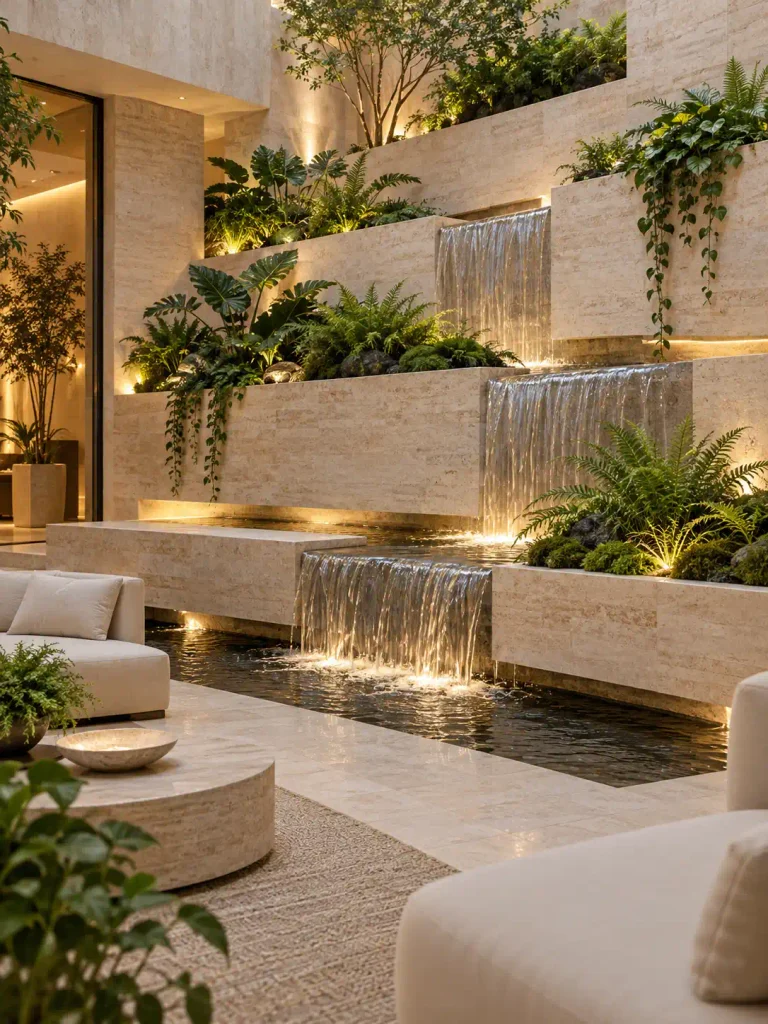
A stepped waterfall wall combines strong architectural geometry with gentle movement. Build several horizontal limestone terraces at different heights and allow water to flow in thin sheets from one ledge to the next before entering a concealed lower basin. Plant ferns, moss, pothos, and sculptural foliage between selected terraces while leaving plenty of pale stone visible. Warm recessed lighting under the ledges can illuminate wet surfaces and make each water sheet shimmer. The effect feels luxurious without requiring a full wall of plants. This concept is best suited to an interior courtyard or large lounge where water systems can be professionally managed.
40. Floating Bowl Fountain With Vertical Garden Backdrop
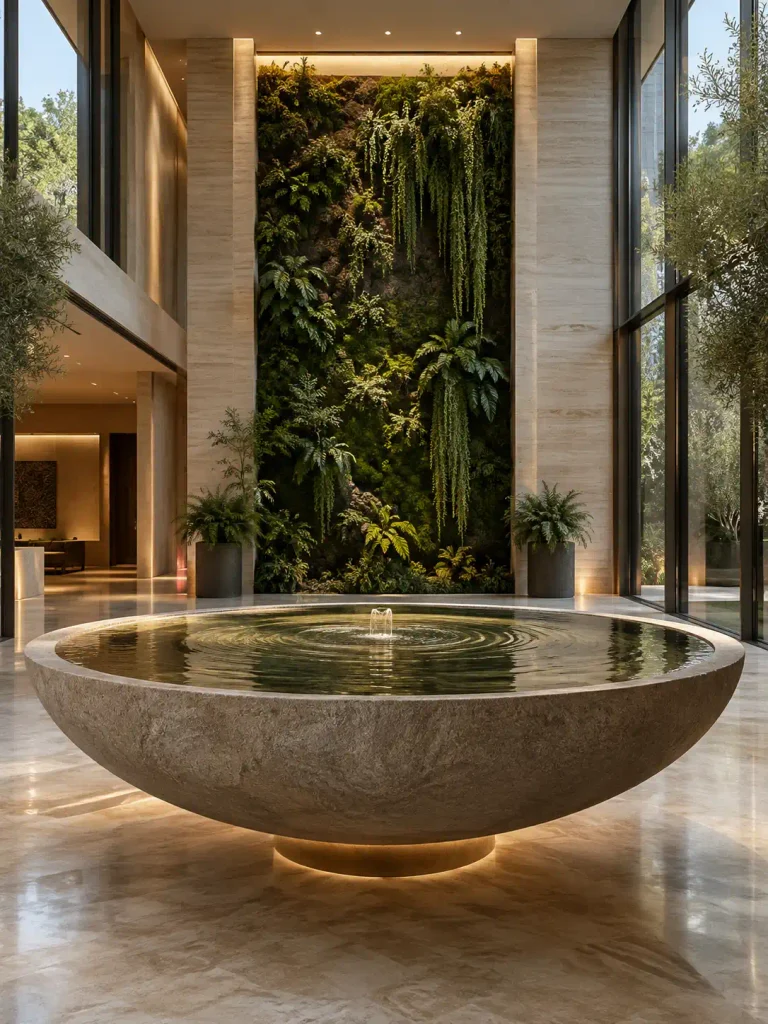
A single sculptural fountain can provide a strong foreground element for a vertical garden. Use a large shallow stone bowl on a concealed pedestal so it appears to float, with only a small central water ripple or gentle bubbling feature. Behind it, install a restrained wall of deep moss, ferns, and cascading foliage framed by pale travertine. Keeping the garden simpler allows the bowl to remain the star. High ceilings, side windows, and warm accent lighting make the scene feel like a luxury hotel foyer. This is a good choice when you want both water and greenery without combining them into one complicated structure.
41. Indoor Garden With Miniature Water Channels
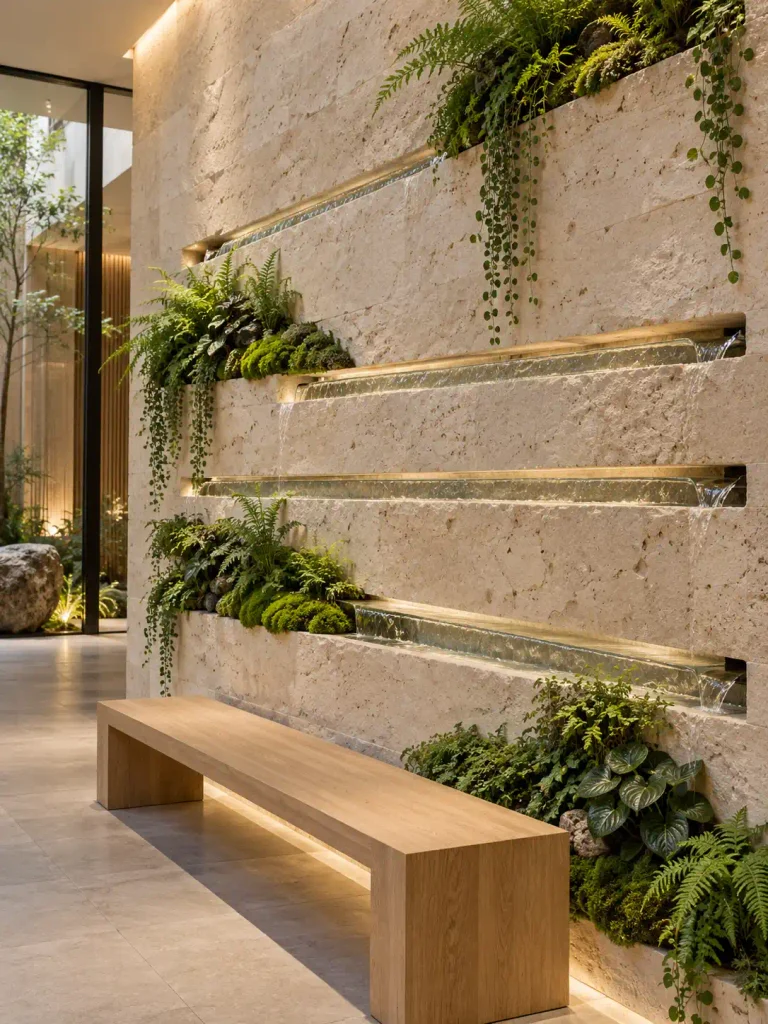
For a quieter alternative to a waterfall, carve narrow horizontal water channels directly into a pale limestone wall. Let clear water travel gently through the shallow grooves before disappearing into concealed side drains. Place small botanical pockets of moss, ferns, peperomia, and trailing greenery above and below selected channels so the wall resembles a miniature landscape. Warm integrated lighting can catch the moving water without making it overly dramatic. A simple light-oak bench keeps the foreground calm. This idea is especially appealing for a foyer or wellness area where subtle sound and motion are more desirable than a large fountain.
42. Mist Garden Feature Wall
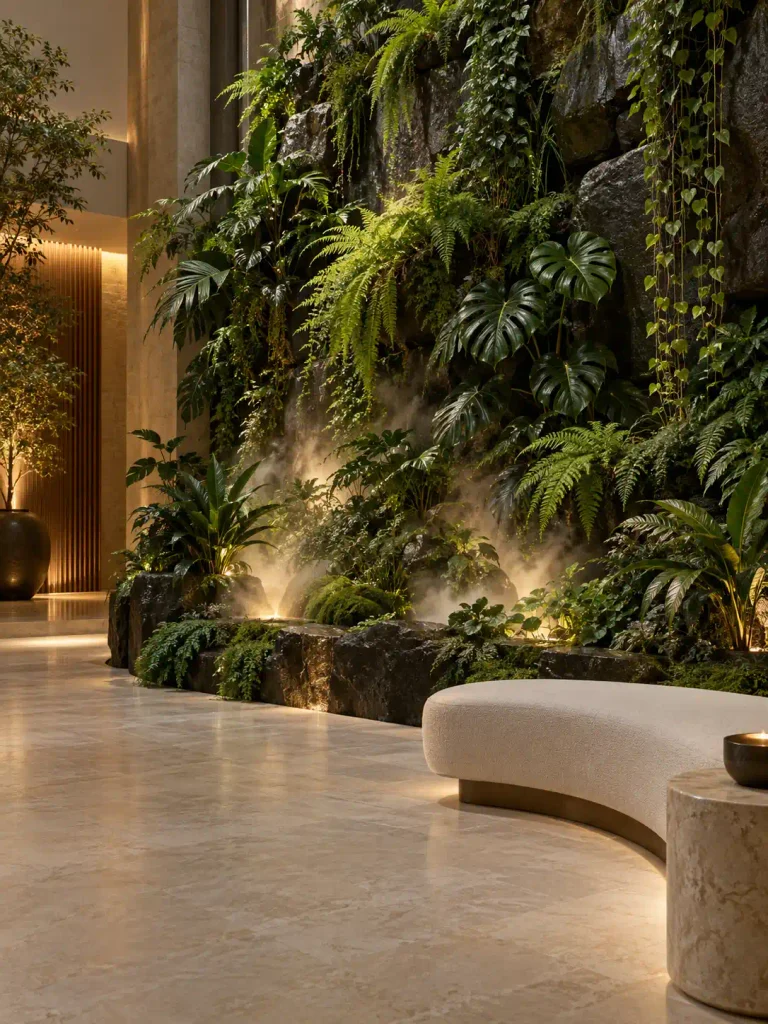
A light mist effect can give a tropical vertical garden a soft, atmospheric quality. Build the wall from dark stone, moss, ferns, philodendrons, and glossy deep-green foliage, then allow a very controlled mist to rise only from hidden outlets near the base. Warm low-level lighting can create delicate beams through the moisture and highlight the plant textures. The mist should remain localized rather than filling the room. A curved cream bench and pale stone flooring help maintain a sophisticated spa-like look. Proper ventilation and humidity control are essential so nearby furniture, walls, and flooring stay dry and comfortable.
43. Living Wall Behind a Floating Staircase
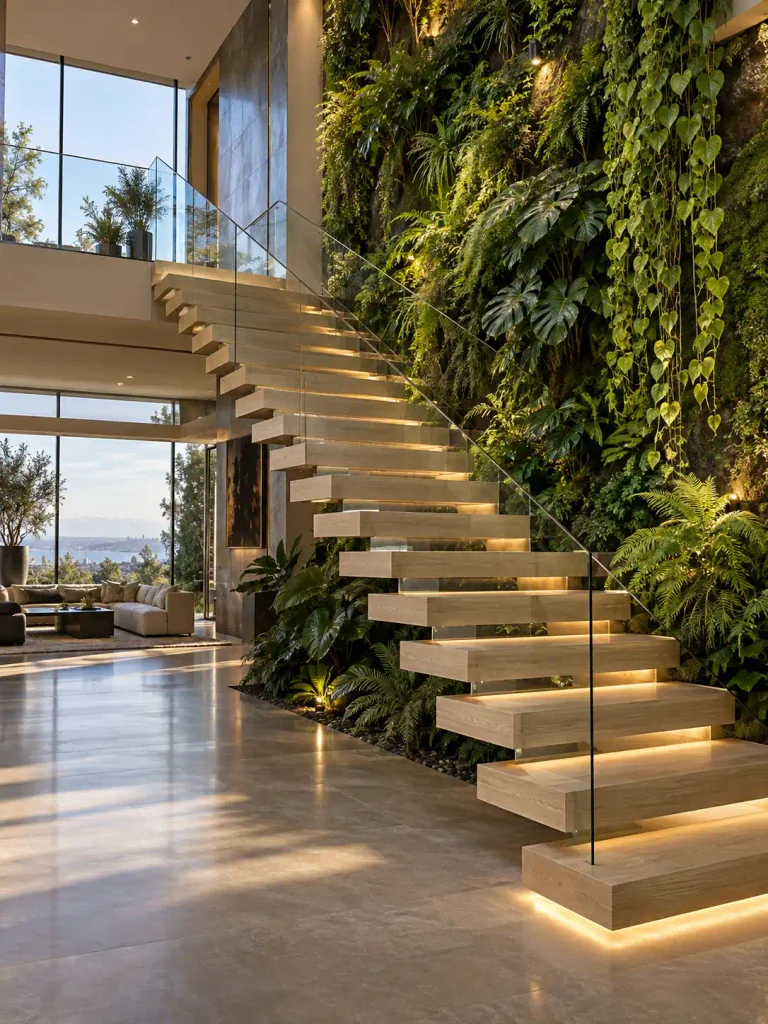
A floating staircase offers one of the most dramatic locations for a vertical garden because the greenery remains visible between the steps. Build a double-height living wall behind thick pale-oak treads and use a frameless glass balustrade so nothing visually blocks the plants. Moss, ferns, philodendrons, and trailing vines can create a rich green backdrop, while subtle step lighting and carefully aimed spotlights emphasize the height. Large upper windows bring in daylight and make the wall feel more architectural. This design can transform an ordinary circulation area into one of the most memorable features in a contemporary home.
44. Double-Height Indoor Garden With Suspended Plants
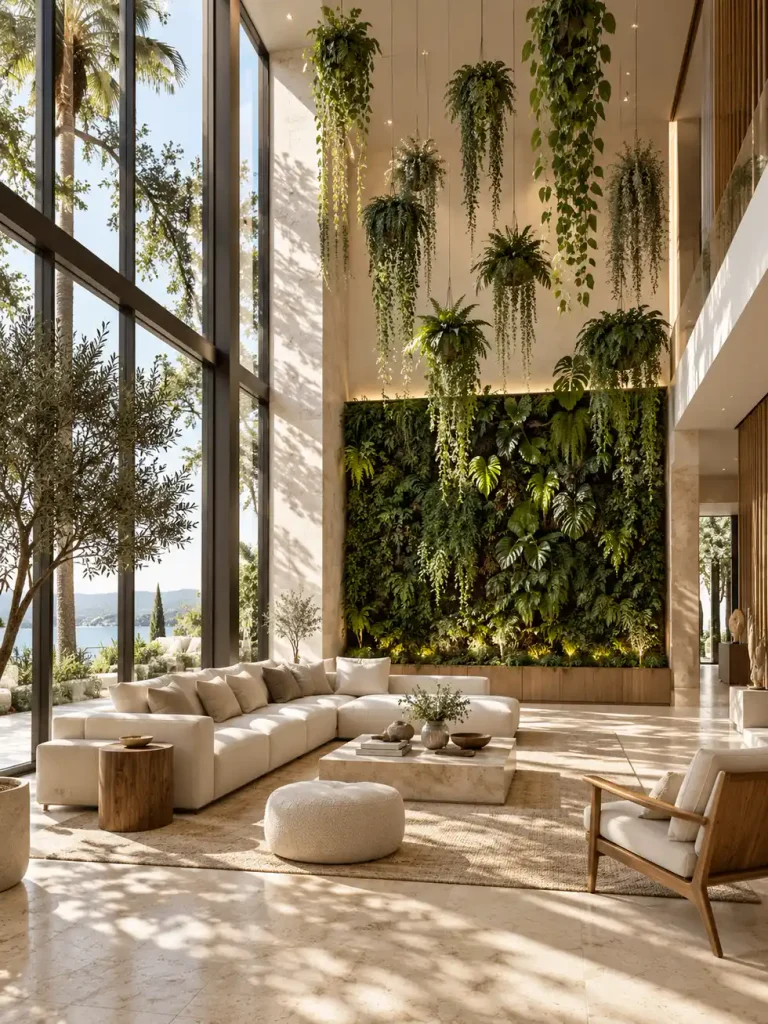
In a double-height living room, combine a structured lower plant wall with greenery suspended from the ceiling. Hang trailing plants at different lengths using discreet cables so the upper layer feels airy rather than crowded. The lower wall can provide a dense anchor of moss, ferns, and broad leaves, while the suspended plants connect the garden visually to the ceiling. Floor-to-ceiling windows are particularly useful because they provide strong natural light and cast shifting leaf shadows across the room. Keep furnishings low and neutral so the vertical planting remains visible. This approach makes excellent use of space that would otherwise be difficult to decorate.
45. Indoor Botanical Courtyard Wall
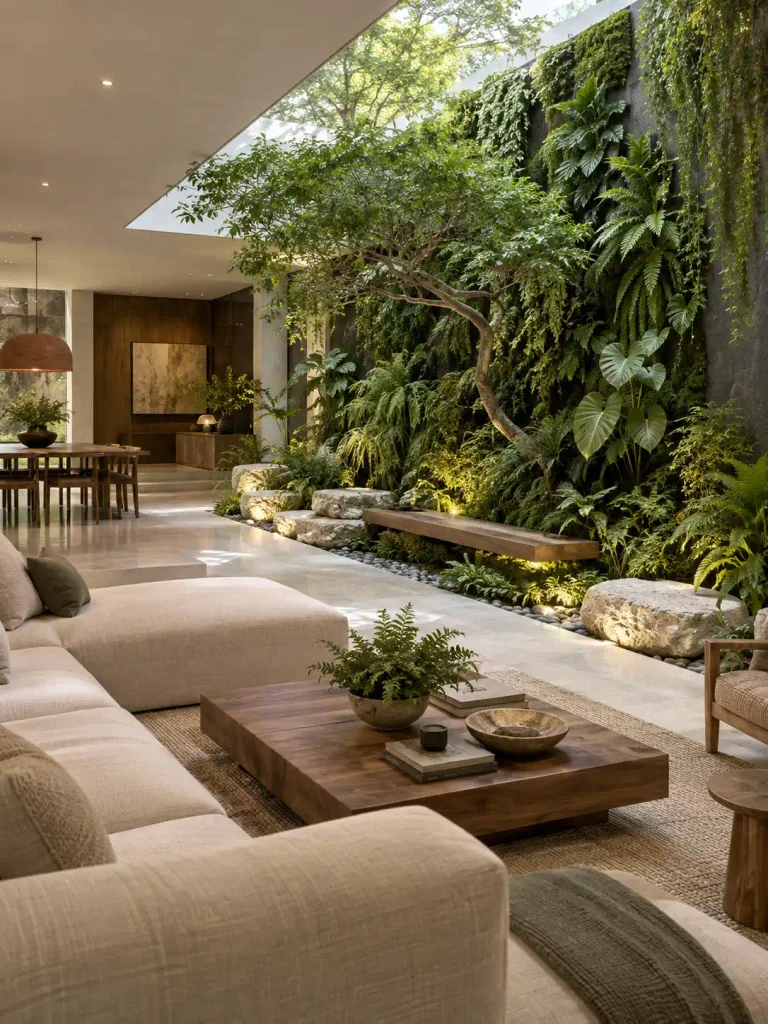
For the grand finale, turn one side of an open-plan living room into an indoor botanical courtyard. Build a sophisticated vertical garden behind a small sculptural tree with an elegant branching canopy, then arrange natural limestone slabs, smooth river stones, low ferns, and a narrow floating wooden bench at the base. A skylight or ceiling opening can wash the courtyard in soft daylight and strengthen the indoor-outdoor feeling. Ground-level lighting adds depth in the evening. The key is to integrate the garden with the room rather than enclosing it behind glass, so the planting feels like a natural extension of the architecture and furniture.
How to Make an Indoor Vertical Garden Look Luxurious
A luxurious plant wall is rarely about using the greatest possible number of plants. In many cases, restraint is what makes the result feel expensive. Start with a limited plant palette and repeat the same species or leaf shapes throughout the composition. Three or four compatible varieties often look more intentional than a random collection of twenty. Think about the wall as an architectural elevation: where will the eye rest, where should there be negative space, and which part should be the focal point? Materials matter just as much as plants. Travertine, limestone, warm walnut, oak, brushed metal, textured plaster, and translucent stone can elevate the greenery and connect it to the rest of the room. Concealed lighting is another important detail. Rather than exposing bright LED strips, hide the source so you see only a glow around curves, behind panels, or inside niches. Finally, coordinate the garden structure with furniture and hardware already used in the space so it feels built in rather than added later.
Best Plants for Indoor Vertical Garden Walls
The right plants depend on natural light, artificial grow lighting, humidity, irrigation, temperature, and how easily the wall can be reached for maintenance. Pothos is popular because it trails well and tolerates a range of indoor conditions. Philodendrons provide many leaf shapes and sizes, from compact varieties to larger sculptural foliage. Ferns add softness and work especially well where humidity is higher. Peperomia and fittonia can fill smaller pockets, while hoya offers attractive trailing growth. Orchids can provide elegant flowering accents but usually need more specialized care. Preserved moss is useful where you want natural texture without irrigation. In decorative installations, combining live plants with preserved botanical material or high-quality artificial foliage can be a practical way to achieve a lush look while keeping difficult-to-reach sections manageable.
Live Plants vs. Preserved Moss vs. Artificial Greenery
Live plants offer genuine growth, natural variation, and the satisfaction of caring for a living garden, but they also require suitable light, watering, nutrients, airflow, drainage, and regular maintenance. Preserved moss is real botanical material that has been treated to maintain its appearance, so it provides natural texture without watering or active growth. It is useful for geometric panels, moss art, or low-light locations. High-quality artificial foliage can be valuable in very high walls, dark corridors, or places where access is difficult. Many sophisticated projects mix these materials strategically. For example, live plants can be used at reachable heights while preserved or artificial elements complete the upper composition. The most important goal is visual consistency, so choose materials with compatible leaf scale, color, and texture.
Where to Place an Indoor Vertical Garden
Living rooms are an obvious choice because they often contain large blank walls, but vertical gardens can work in many other parts of the home. A foyer can use a sculptural installation to create a powerful first impression. Dining rooms benefit from botanical backdrops that soften hard furniture and stone surfaces. Staircases offer valuable vertical area that might otherwise remain empty, while home offices can use compact green panels to introduce texture without taking up floor space. Long hallways can be broken into smaller botanical niches or columns. Double-height rooms can support tall garden walls and suspended plants, and covered interior courtyards provide the greatest flexibility for combining greenery with stones, trees, benches, and water. Before choosing a location, consider sunlight, grow-light access, drainage, humidity, electrical equipment, and how maintenance crews or homeowners will reach the plants safely.
Indoor Vertical Garden Lighting Tips
Lighting has two different jobs in a vertical garden: it must support plant health when necessary and it must make the installation look beautiful. Decorative accent lighting may not provide enough energy for live plants, so locations without sufficient daylight may need proper horticultural grow lights. From a design perspective, warm accent lighting usually feels more residential and luxurious than harsh cool light. Backlighting is excellent for circular panels, arches, floating clouds, and sculptural shapes. Downlights can emphasize trailing leaves, while uplights are useful for stone, moss, and larger foliage. Linear light hidden inside slats or recessed coves can make the architecture feel deeper. Avoid lighting every area equally. A mix of brighter focal zones and softer shadowed areas gives the wall dimension and makes the greenery feel more natural.
How to Keep a Vertical Garden Looking Modern
Overcrowding is one of the easiest ways to make a plant wall look dated or chaotic. Modern installations usually benefit from repetition, strong shapes, clean edges, and controlled asymmetry. Let the structure remain visible so wood, stone, metal, or plaster can participate in the design. Repeat materials already found elsewhere in the room: if the cabinetry is walnut, use walnut around the garden; if brass appears in lighting fixtures, a thin brass frame can create continuity. Keep flowers limited unless the room is intentionally colorful and pay close attention to how plants will grow over time. Leave room for vines to trail and leaves to expand so the composition remains attractive months after installation. Regular trimming, cleaning, and replacement of tired plants are essential for keeping the wall polished.
Frequently Asked Questions
Are indoor vertical gardens difficult to maintain? They can range from easy to demanding. A small wall made from individual planters may require ordinary plant care, while a large living wall with automatic irrigation can need professional maintenance. Preserved moss and artificial greenery are lower-maintenance alternatives.
Can you create one without natural sunlight? Yes, but live plants may need appropriate grow lighting when daylight is insufficient. Preserved and artificial greenery can also work in darker areas.
Do vertical gardens need irrigation? Not always. Small systems can be watered manually, while large walls may benefit from automatic irrigation and drainage.
Can preserved moss replace live plants? Yes. It is useful when the goal is natural texture rather than active growth.
How do you make an indoor plant wall look expensive? Use a limited palette, quality materials, deliberate shapes, concealed lighting, clean detailing, and enough negative space for the greenery to breathe.
Can a vertical garden go near a television or fireplace? It can, but water, heat, and electronics need safe separation. In both cases, framing the feature with greenery rather than placing plants directly behind the equipment is often the better approach.
Final Thoughts
The most memorable Indoor Vertical Garden Wall Ideas do much more than cover a wall with leaves. They turn greenery into architecture. A vertical garden can become a glowing circular artwork, an abstract sculpture, a staircase backdrop, a stone-and-moss landscape, a water feature, or even the foundation of an entire indoor courtyard. The best approach is to choose one strong design direction and let it guide the rest of the room. If your home already uses warm wood, bring that material into the garden structure. If you prefer quiet luxury, combine controlled greenery with travertine, limestone, soft plaster, or marble. For more drama, explore sculptural silhouettes, concealed lighting, reflections, or double-height planting. You also do not need a huge property to borrow these ideas. A botanical niche, moss medallion, floating shelf garden, or illuminated plant pocket can deliver the same sense of nature on a smaller scale. When the plants, lighting, furniture, materials, and proportions all work together, a blank wall can become one of the most distinctive features in the entire home.
