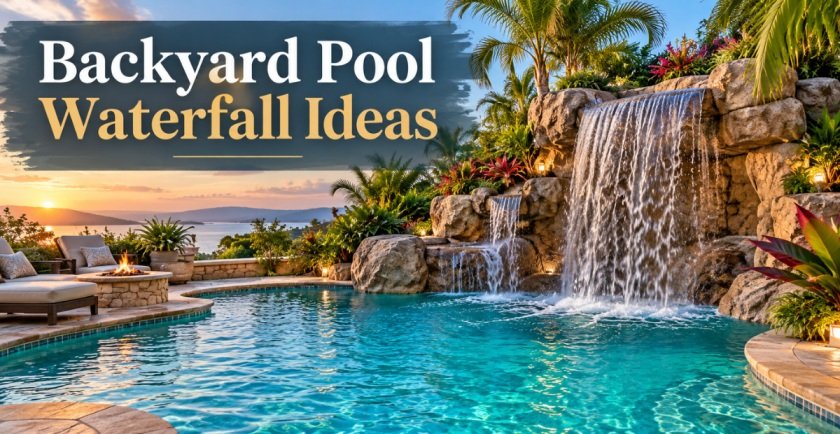
A beautiful swimming pool already gives a backyard a strong focal point, but moving water can change the entire mood of the space. A waterfall adds sound, motion, reflection, texture, and a sense of escape that a standard pool often cannot create on its own. It can make a compact plunge pool feel like a boutique hotel, soften a modern architectural pool, or turn a large freeform pool into a tropical retreat.
The most successful Backyard Pool Waterfall Ideas are not simply decorative fountains attached to the edge of the water. They feel connected to the architecture and landscape around them. Some disappear behind tropical foliage, some spill from raised spas or garden beds, and others use clean concrete, glass, dark stone, fire, lighting, or sculptural forms. The right design depends on the size of the pool, the style of the home, the amount of space available, and the atmosphere you want to create.
You also do not need an enormous backyard to achieve a five-star-resort feeling. A narrow wall spillway, compact corner cascade, raised planter, or courtyard waterfall can create just as much visual interest as a huge rock formation when the proportions and materials are right. The following 45 ideas cover natural, modern, luxurious, compact, creative, and destination-inspired approaches so you can find a concept that suits your own outdoor space.
Natural & Resort-Inspired Backyard Pool Waterfall Ideas
1. Layered Natural Stone Waterfall
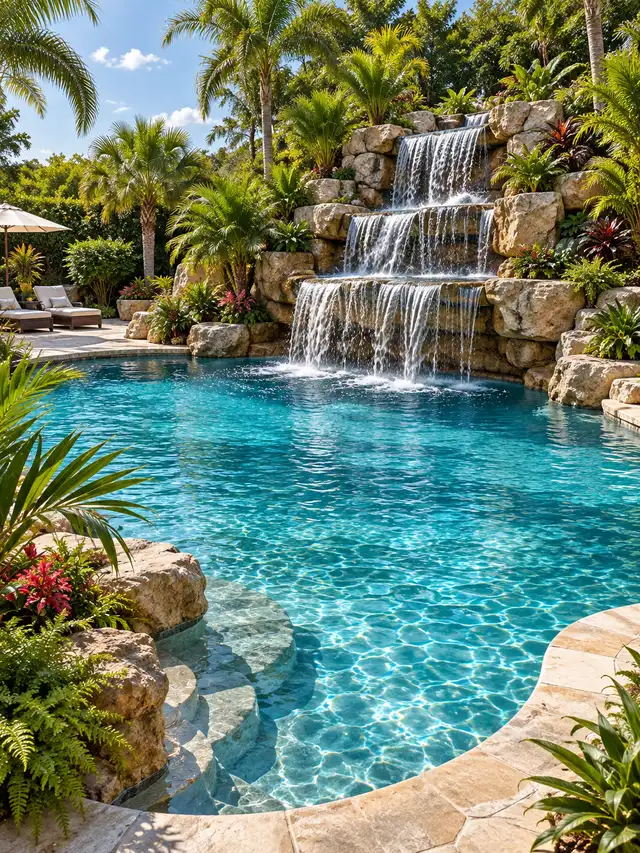
A layered stone waterfall is one of the easiest ways to give a backyard pool the visual depth of a luxury resort. Instead of sending water over one single ledge, build several broad stone shelves so the flow changes character as it travels downward. The upper level can begin quietly, the middle ledges can spread the water, and the final drop can create the strongest movement before it reaches the pool.
Choose stones with related colors but varied shapes so the feature does not look too uniform. Small pockets between the rocks are ideal for ferns, ornamental grasses, groundcover, and compact palms. A freeform pool suits this treatment especially well because the soft curves echo the irregular rockwork. At night, a few concealed lights between the stones can reveal the wet texture without making the waterfall look theatrical.
2. Hidden Jungle Waterfall
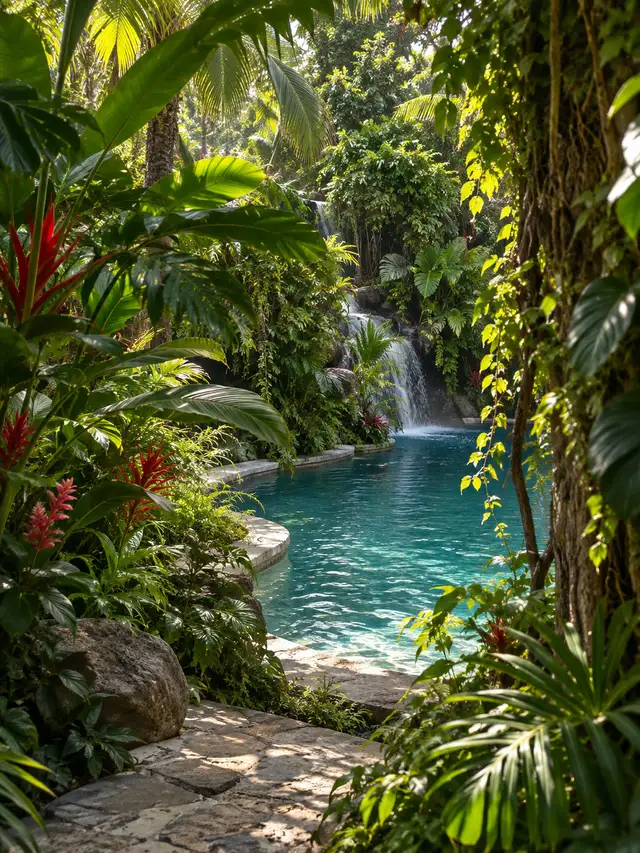
A hidden jungle waterfall works best when the water is not revealed all at once. Dense planting can conceal most of the rocky cascade so guests first notice the sound of water and then discover glimpses of the feature between leaves. This creates a stronger sense of escape than a waterfall that is completely exposed from every angle.
Use palms, broad-leaf tropical plants, ferns, trailing vines, and a limited number of colorful flowers to build layers around the water. Keep a clear pool edge and enough open water so the garden still feels usable. This idea is especially effective beside a privacy wall, where foliage can soften the boundary and make the backyard feel deeper, greener, and more secluded.
3. Rocky Lagoon Pool Waterfall
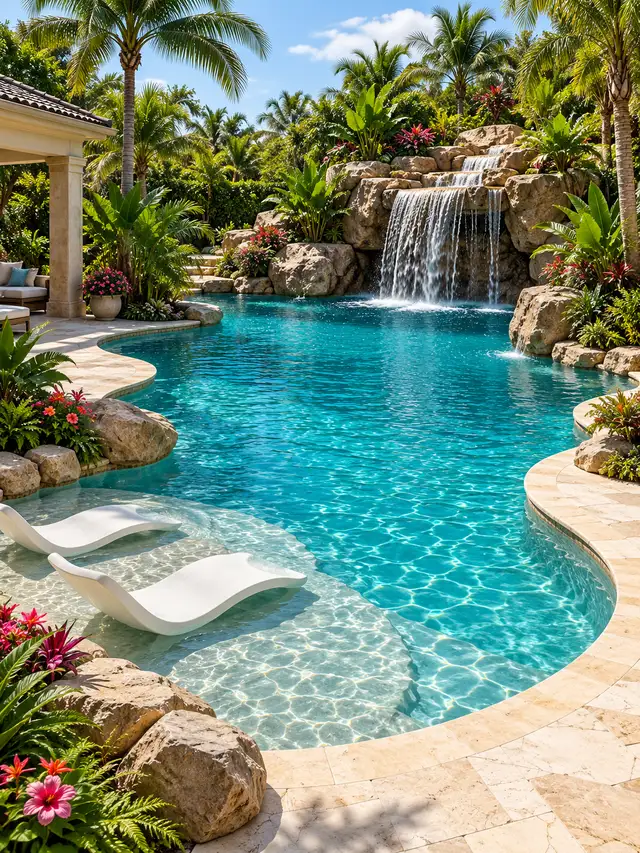
A rocky lagoon pool combines curved waterlines, oversized boulders, and a relaxed waterfall to create the feeling of a natural swimming hole. The waterfall does not need to be extremely tall. A medium-height cascade framed by stone can be more convincing when the pool shape, coping, and planting all support the same organic style.
Add a shallow tanning shelf away from the waterfall so the pool has a comfortable resort-style lounging zone. Pale sand-toned coping, a few flowering plants, and carefully placed tropical greenery can brighten the heavy stonework. The key is balance: keep enough open water visible so the lagoon still feels spacious rather than crowded by rocks and landscaping.
4. Mountain-Spring Inspired Waterfall
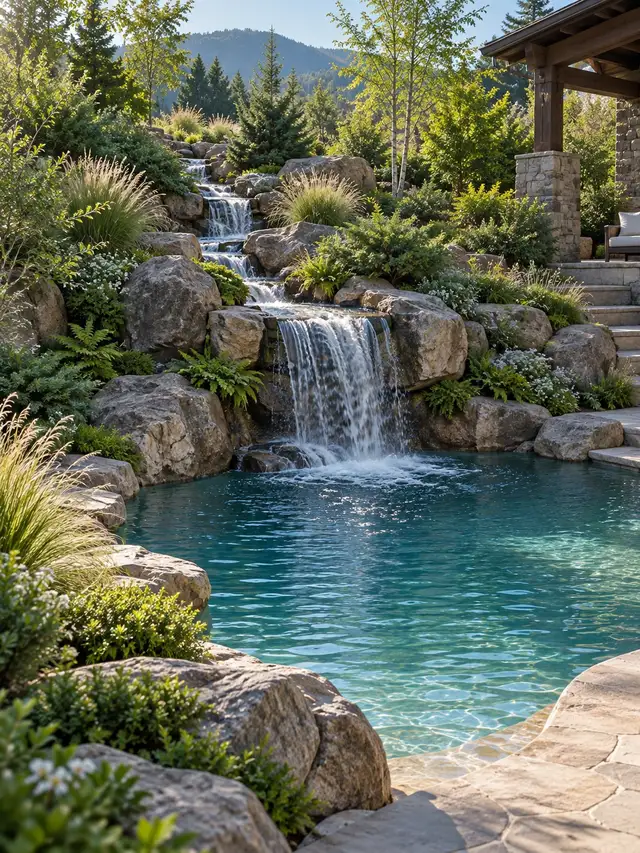
For a cooler, more natural look, design the water feature as though a mountain spring is feeding the pool. Start the flow higher on a landscaped slope and allow it to travel between rugged stones before it reaches the final drop. Several small changes in elevation create believable movement and make the waterfall feel connected to the terrain.
This style looks especially convincing with ornamental grasses, small ferns, evergreen-style shrubs, and low groundcover instead of dense tropical planting. Gray-brown stone and blue-green pool water reinforce the mountain-resort character. If the backyard already has a slope, work with that grade rather than trying to flatten everything; the change in level can become the main strength of the design.
5. Tropical Garden Waterfall Wall
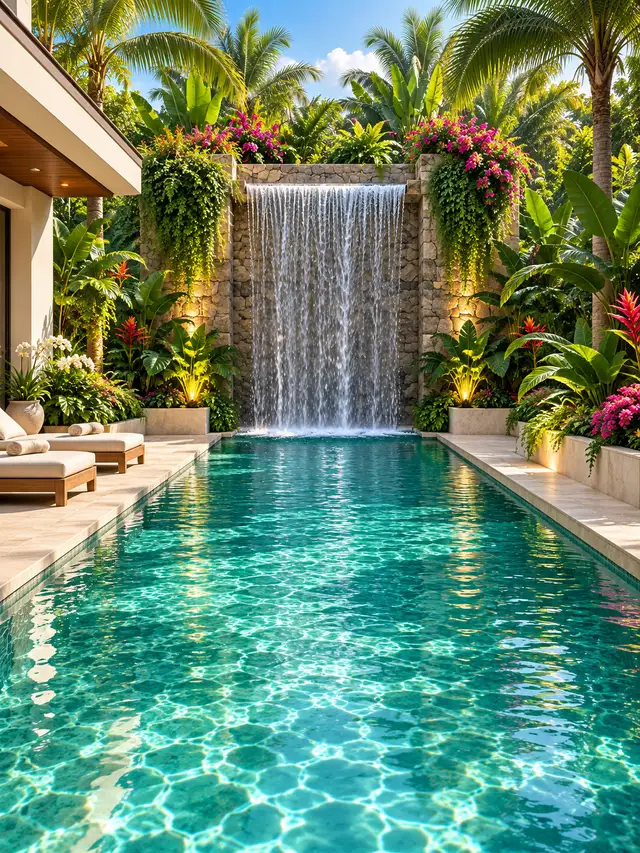
A tall waterfall wall can deliver strong visual impact without taking up as much ground space as a large boulder formation. Place the wall at the far end of a rectangular pool and use a concealed spillway to create a wide curtain of water over a textured stone surface. The vertical feature naturally draws the eye through the length of the pool.
Frame the wall with palms, flowering shrubs, trailing plants, and layered greenery, but leave enough stone visible for the waterfall to remain the focal point. Clean paving and simple loungers keep the overall scene polished. This combination of structured architecture and lush planting is ideal when you want a backyard to feel tropical without becoming visually chaotic.
6. Multi-Tier Resort Waterfall
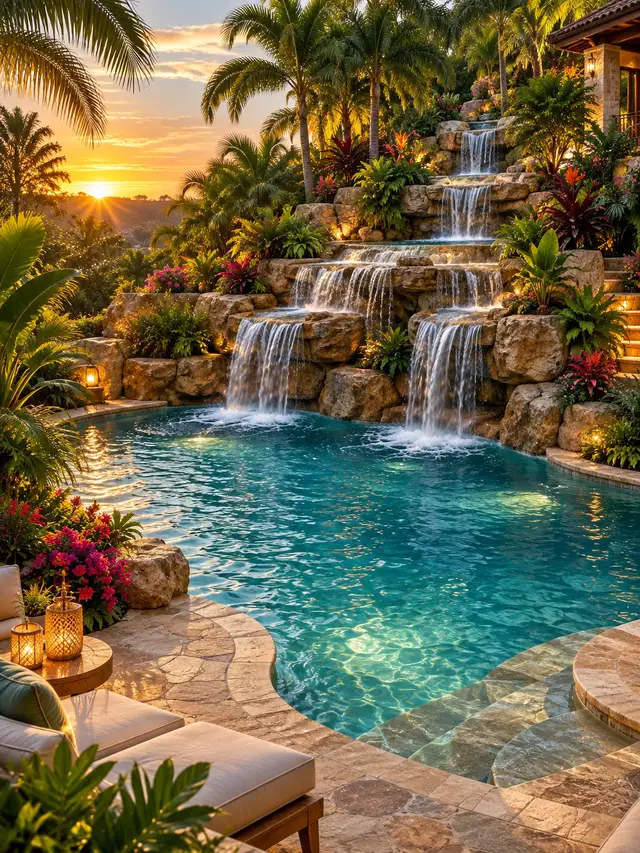
A multi-tier waterfall creates a dramatic resort effect by allowing the water to change direction and intensity several times before reaching the pool. One upper basin can feed a broad middle ledge, which then divides into smaller cascades. The result is richer sound, more movement, and a stronger sense of depth than a single straight drop.
Repeat the same stone family through every level so the feature still feels cohesive. Planting pockets between the tiers can hold palms, ferns, flowering accents, and decorative grasses. If the waterfall is large, leave nearby paving and furniture relatively simple so the landscape does not compete with the water. This is a statement feature that works best when it has room to breathe.
7. Boulder Grotto Waterfall
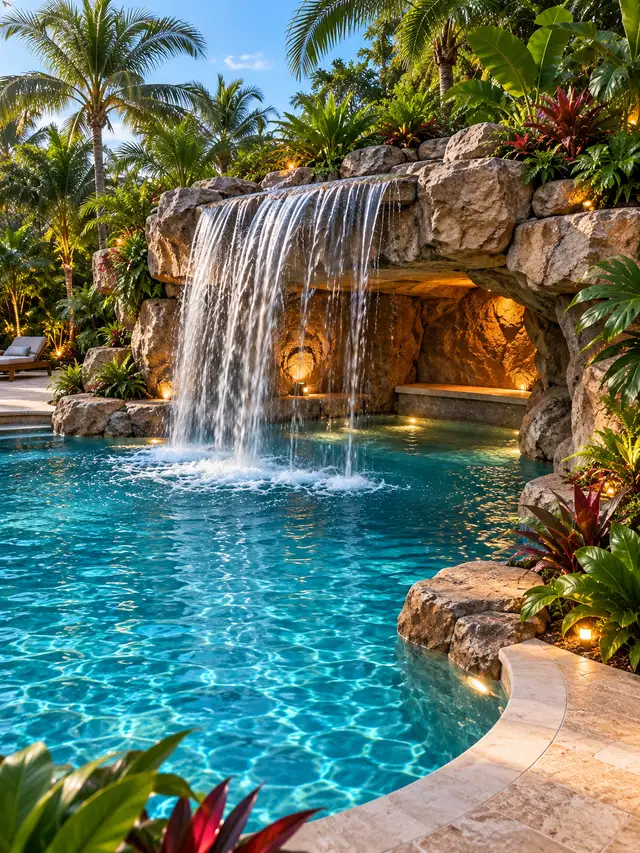
A boulder grotto adds an element of discovery by combining a waterfall with a shaded recess beside the pool. Large rock forms can create an overhang while water pours over the outer edge. Inside the grotto, a built-in underwater bench gives swimmers a cool place to sit while still feeling connected to the main pool.
Lighting is especially important in a grotto because the interior can become too dark after sunset. Concealed warm lights can reveal the stone texture and make the alcove feel inviting. Keep the rock formation proportional to the pool; a well-detailed smaller grotto usually looks more luxurious than an oversized structure that overwhelms the entire backyard.
8. Rainforest Corner Waterfall
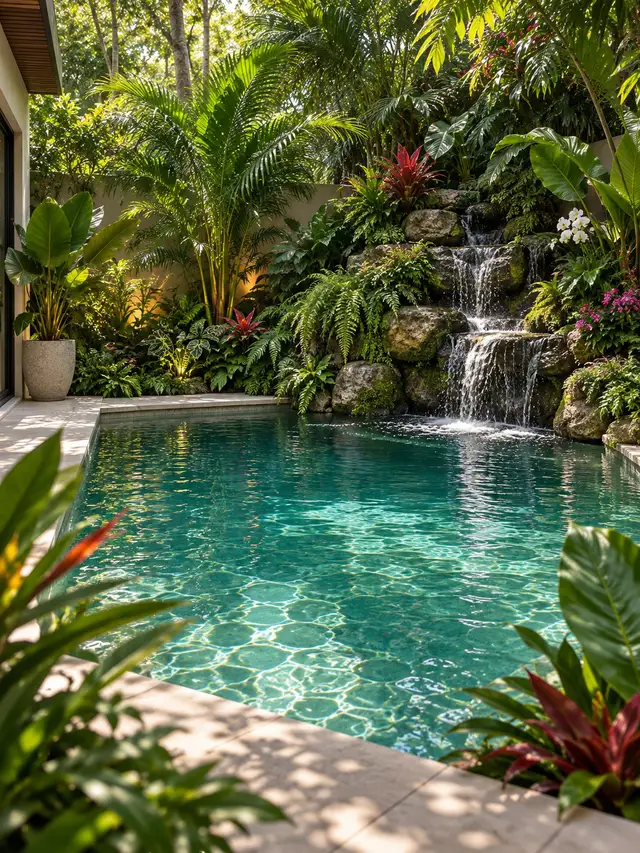
If the pool has an unused corner, turn it into a compact rainforest feature instead of building a waterfall across an entire wall. A series of small, mossy-looking stones can create gentle trickles surrounded by ferns, broad-leaf plants, palms, and a few colorful accents. The result feels lush without sacrificing much swimming space.
This idea works best when the rest of the pool remains relatively simple. Smooth coping and open water provide contrast against the dense planted corner. Use plants at different heights so the feature has depth, and choose species suited to the local climate and splash conditions. The goal is to make the corner feel like a small pocket of rainforest rather than a decorative pile of rocks.
9. Creek-to-Pool Waterfall
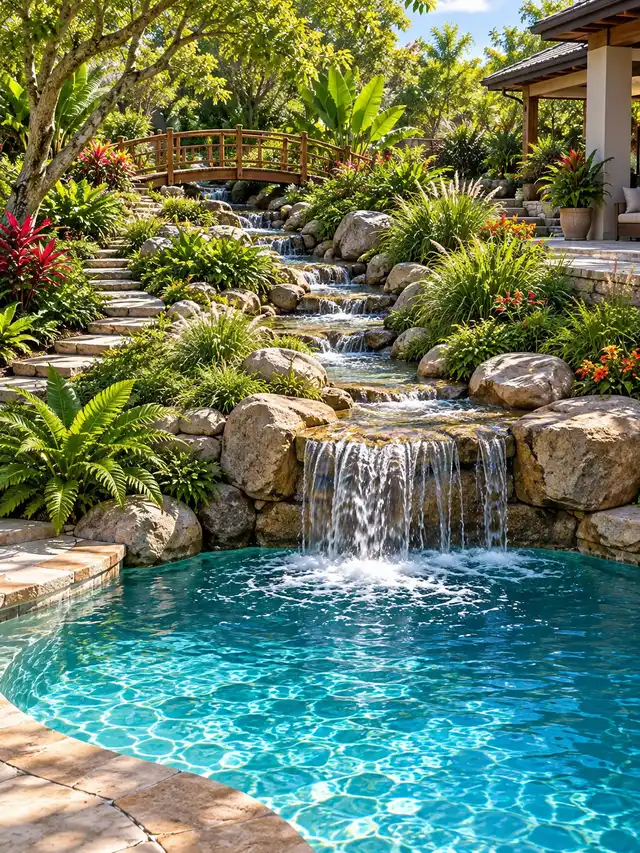
A creek-to-pool design extends the water feature beyond the edge of the swimming pool. A narrow stream can weave through river stones and planting before making a final gentle drop into the pool. This creates a more immersive garden experience because the moving water becomes part of the landscape rather than a feature attached directly to the pool wall.
A small bridge or stepping stones can cross the stream and turn it into a functional part of the garden route. This idea works particularly well on a property with a slight slope. Keep the stream shallow and visually natural, and use low grasses, ferns, and smooth stones to soften the edges without obscuring the direction of the water.
Modern Backyard Pool Waterfall Ideas
10. Minimalist Sheet Waterfall
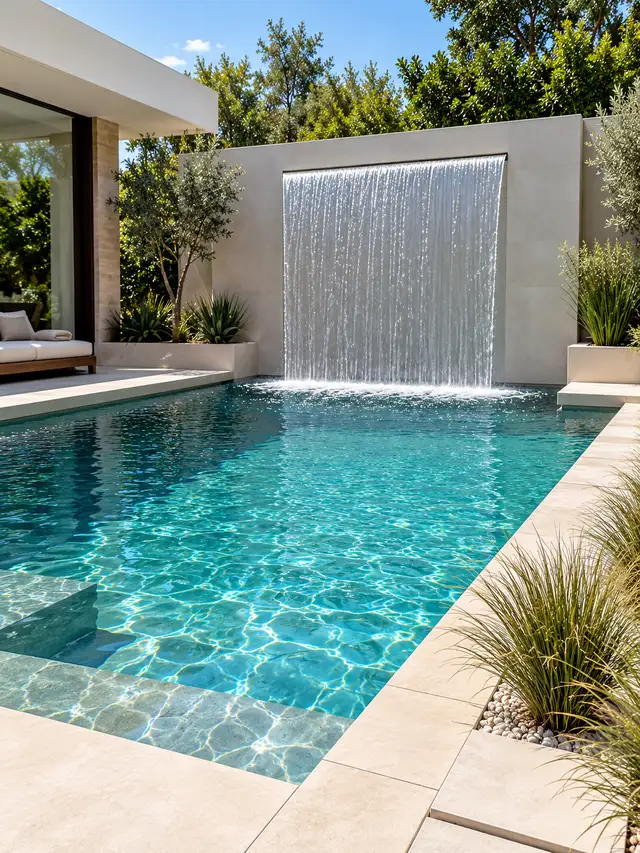
For a contemporary backyard, a sheet waterfall can be more effective than elaborate rockwork. A long horizontal opening in a smooth wall can release one uninterrupted curtain of water into a geometric pool. Because the design is simple, precision matters: the wall lines, spillway, coping, and paving should all feel carefully aligned.
Use a restrained material palette such as pale concrete, limestone-look tile, and a small amount of architectural greenery. Avoid unnecessary decoration around the waterfall. A hidden light beneath the falling water can add nighttime drama while preserving the minimalist character. This style pairs naturally with modern homes that feature flat roofs, large windows, and strong horizontal lines.
11. Floating Concrete Spillway
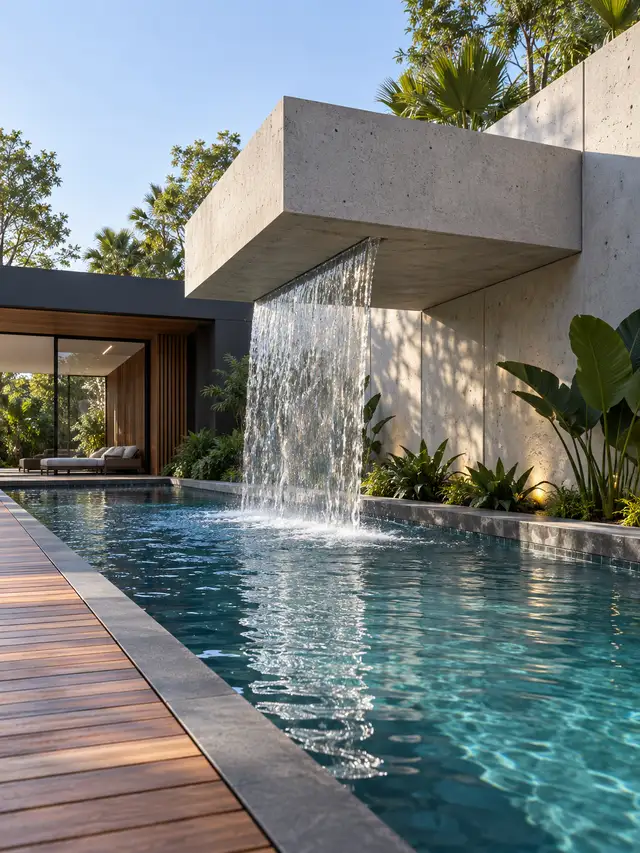
A cantilevered concrete spillway gives the waterfall a sculptural quality. The water can emerge from beneath a projecting slab so the structure appears to float above the pool. This approach is particularly striking beside a long, narrow pool where the extended horizontal form emphasizes the architecture and makes the backyard feel custom designed.
Pair pale concrete with dark metal accents, warm timber, and a small number of bold plants. A slightly lower viewing angle makes the floating effect more noticeable. Because the design relies on clean geometry, conceal pipes and drainage details carefully. When executed well, the feature can look like part of the house itself rather than an added pool accessory.
12. Black Stone Water Wall
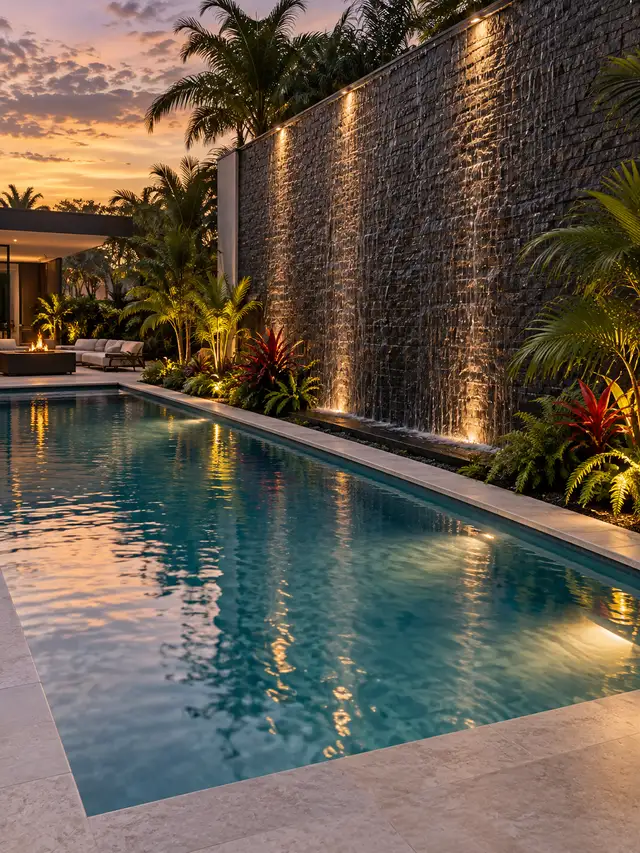
Dark stone gives a pool waterfall a sophisticated, moody character while also creating strong contrast with bright blue water. Instead of allowing the cascade to project far from the wall, let water move directly over the textured surface. This creates a controlled, calming effect and highlights the wet stone as light changes throughout the day.
Charcoal stone looks especially attractive with pale paving and green architectural plants. Add warm uplighting at the base or narrow lights above the wall for evening use. A few palms, grasses, or red-toned tropical plants can soften the dark surface without covering it. The feature works well in modern yards where texture is more important than ornament.
13. Triple Linear Waterfall
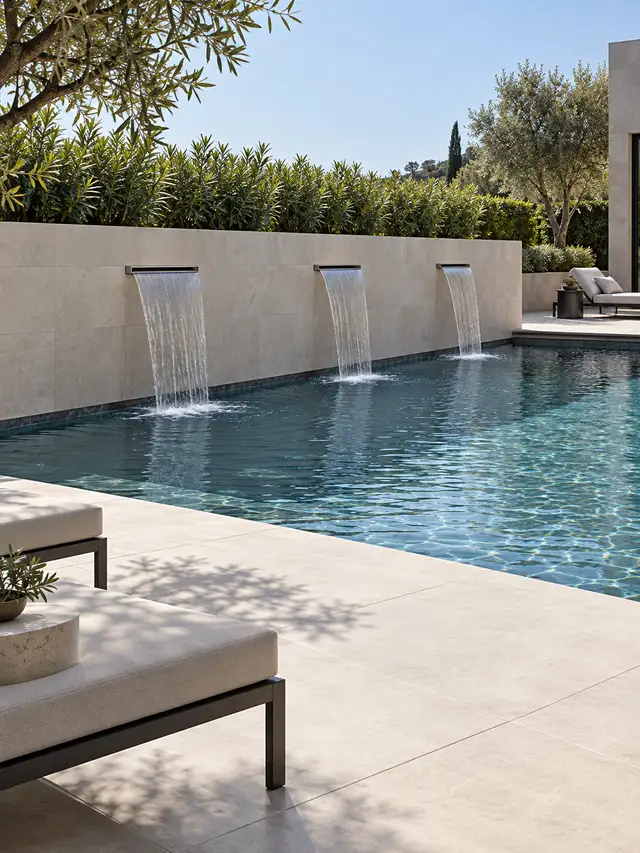
Three evenly spaced spillways can create a strong sense of rhythm along a modern pool wall. Each outlet should release a similar sheet of water so the repetition looks deliberate. This is a great option for a long rectangular pool because the waterfalls fill a wide wall without requiring one massive central feature.
Keep the background simple with a raised planter, clipped greenery, or a smooth architectural wall. Large-format paving and streamlined loungers support the clean hotel-inspired look. The spacing between the three spillways is just as important as the width of the water itself, so plan the layout carefully before plumbing is installed.
14. Glass-Edge Waterfall Feature
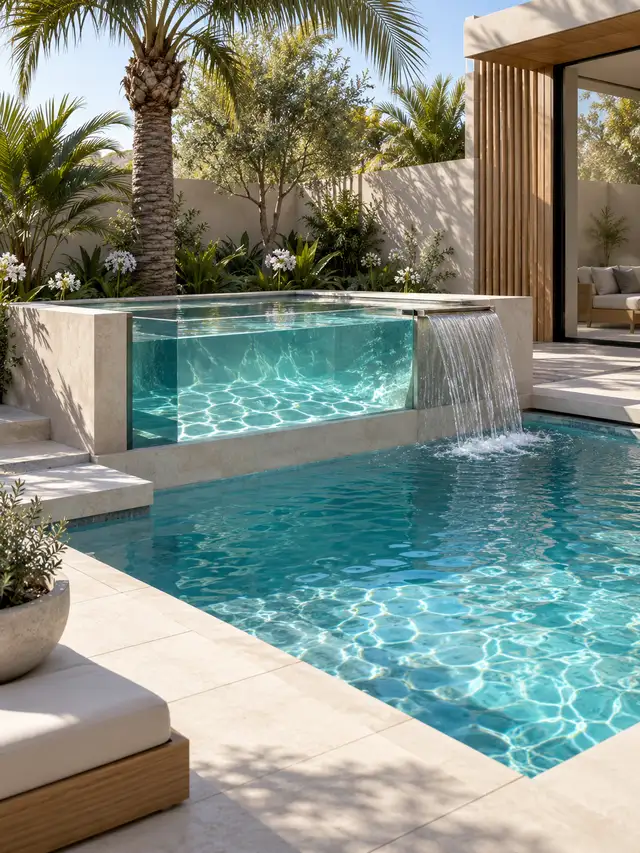
Glass can make a raised water feature feel lighter and more transparent. A clear panel along one side of an elevated basin allows sunlight to pass through the water while a nearby edge releases a narrow cascade into the main pool. The combination feels particularly elegant in compact contemporary backyards where heavy walls could make the space feel enclosed.
Use pale paving, warm timber, and restrained planting to keep attention on the water and glass. Because every edge remains visible, construction quality is critical. The glass should feel integrated into the architecture rather than added as a novelty. This idea is especially effective where the pool is viewed from indoor living areas through large windows or sliding doors.
15. Sculptural Curved Waterfall Wall
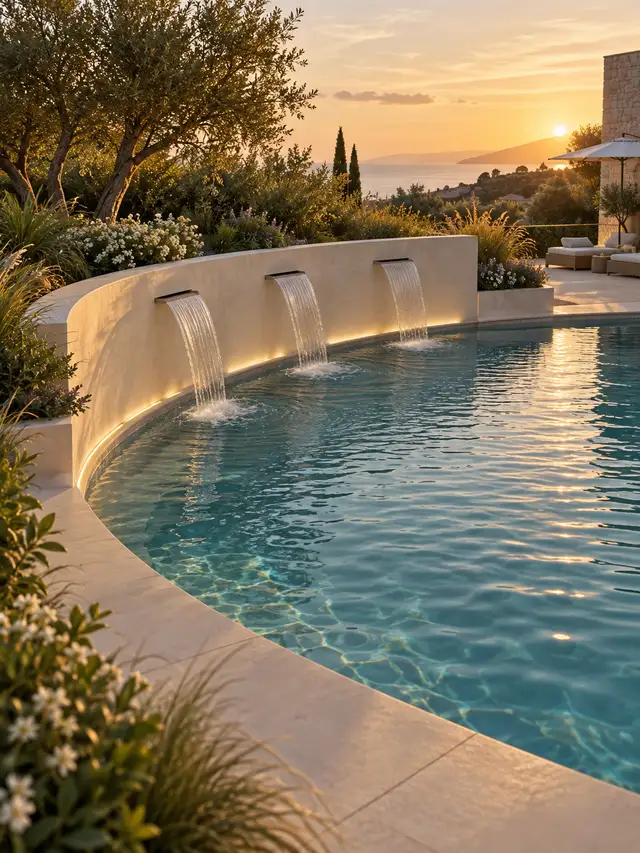
A curved waterfall wall introduces softness into a modern pool design without giving up a clean architectural style. The wall can wrap gently around one end of the pool while several subtle outlets follow the curve. Repeating the same radius in the pool edge helps the entire composition feel intentional.
Smooth cream stone, pale microcement, or lightly textured plaster can keep the feature elegant. Low ornamental planting along the outer edge softens the architecture, while concealed lighting can trace the curve after sunset. This concept is ideal when you want a contemporary waterfall that feels less rigid than a traditional straight feature wall.
16. Floating Planter Waterfall
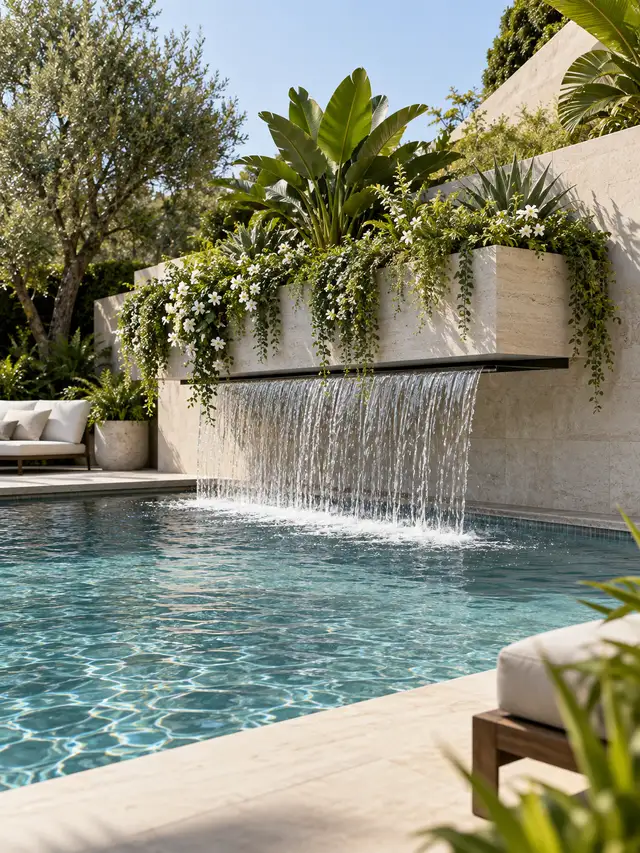
A floating planter waterfall combines greenery and architecture in one compact feature. The planter should project above the pool wall with a visible shadow gap beneath it so it genuinely appears suspended. Trailing foliage can spill over the planter while a concealed horizontal outlet below releases a smooth curtain of water into the pool.
Use one clean stone finish around the planter and wall so the floating effect remains the focus. Choose plants with varied leaf shapes, but avoid overcrowding the planter with too many colors. This is particularly useful along a tall privacy boundary because it adds greenery, vertical interest, and moving water without taking up valuable deck space.
17. Raised Platform Cascade
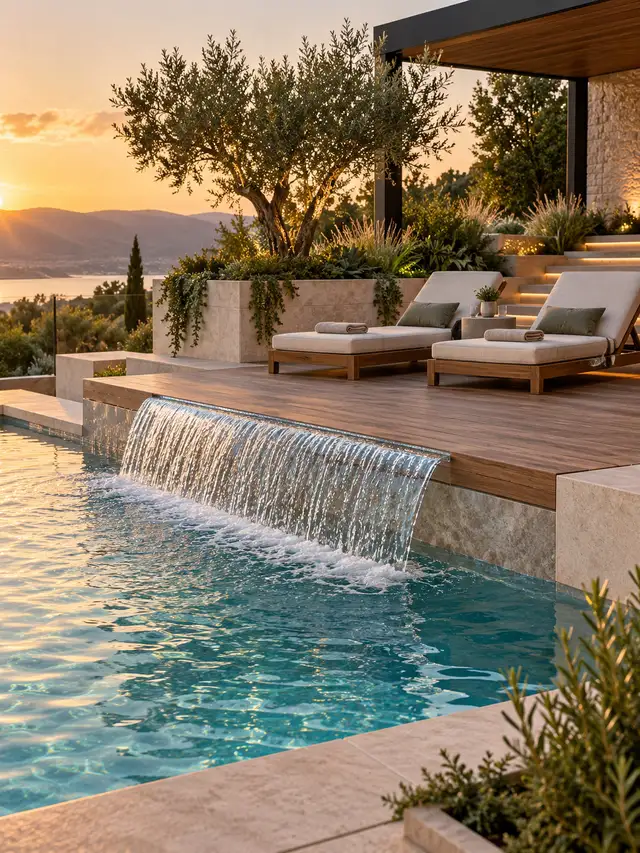
A raised lounging platform can do more than create a place for chairs. By integrating a spillway into the edge, the platform can release water into the pool below and visually connect two different levels of the backyard. This is a smart approach for sloped properties where changes in elevation already need to be managed.
Use water-resistant timber-look decking or stone on the upper terrace and coordinate the coping with the lower pool. Two loungers and a small side table are enough to establish a private relaxation zone. The waterfall should remain broad and shallow so it complements the platform rather than turning the seating area into an overly noisy space.
Luxury Five-Star Resort Pool Waterfalls
18. Infinity Pool With Waterfall Edge
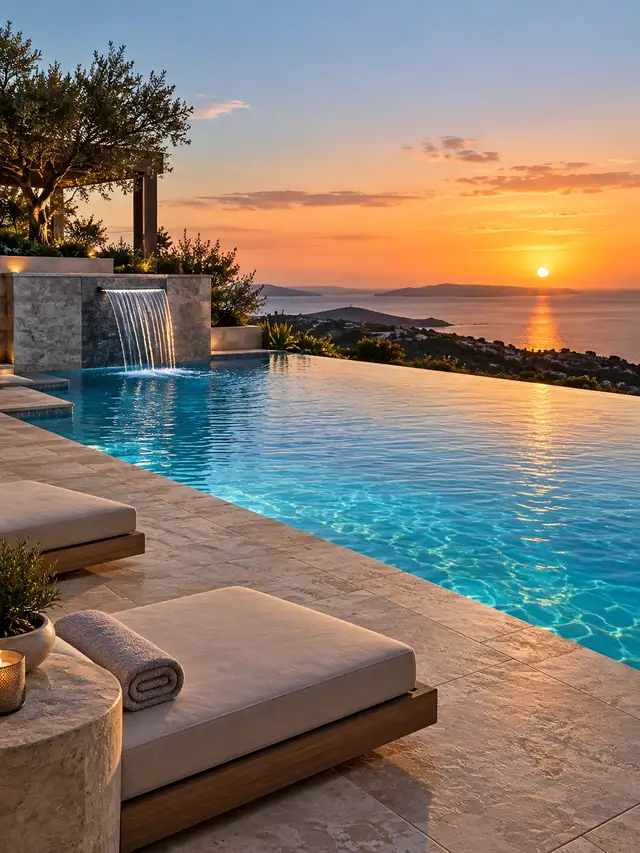
An infinity pool already creates a powerful visual connection with the horizon. Adding a secondary waterfall can introduce movement without interfering with that view. Place a narrow cascade to one side of the pool so the disappearing edge remains open and uncluttered, especially on a property overlooking hills, water, or a distant landscape.
Keep planting low near the infinity edge and use simple stone decking so nothing competes with the horizon. The secondary waterfall can be built into a raised wall or small side feature. This combination feels luxurious because it mixes two different water experiences: the calm illusion of an endless pool and the sound of a controlled cascade nearby.
19. Spa-to-Pool Overflow Waterfall
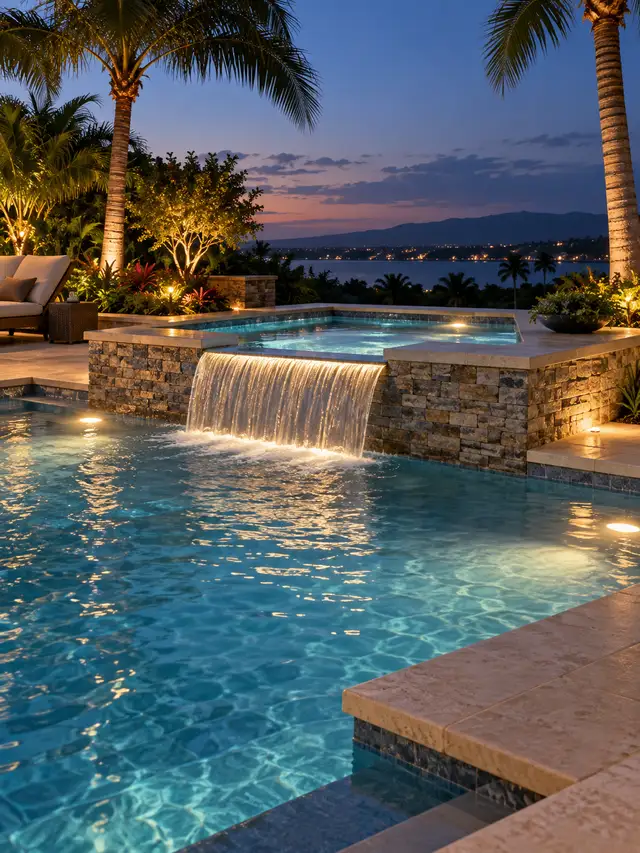
An elevated spa is a practical way to create a waterfall while also adding another functional water zone. Raise the spa above the main pool and incorporate a broad spillway so water continuously overflows from the spa into the swimming area. The moving water helps visually connect the two features and creates a polished resort-style composition.
Clad the spa in the same stone or tile used elsewhere around the pool to avoid a disconnected look. Warm lighting can highlight the overflow at night, while nearby palms and ornamental planting soften the hard surfaces. Keep the spillway wide enough to look intentional but not so powerful that it overwhelms the relaxing character of the spa.
20. Waterfall With Sunken Lounge
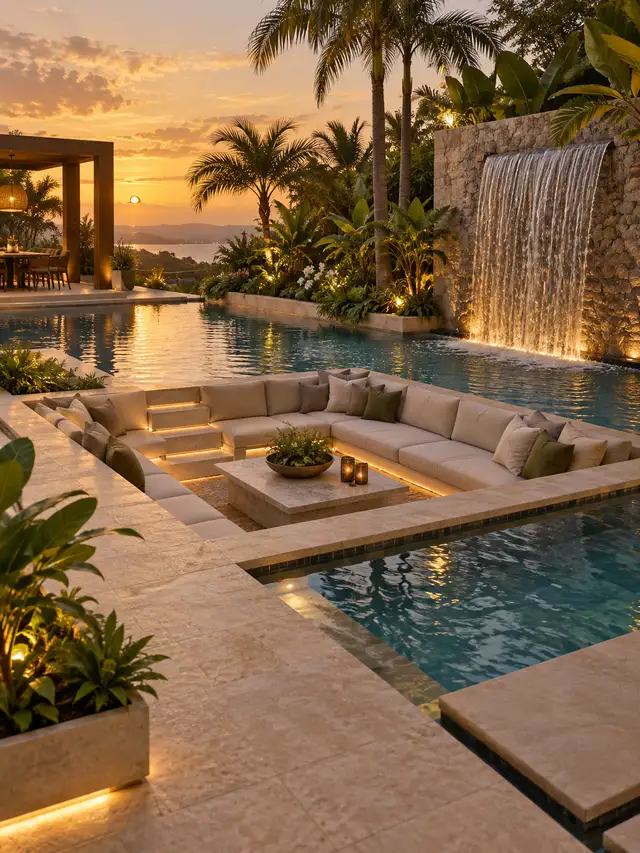
A sunken conversation lounge beside the pool creates a dramatic social area, especially when a waterfall forms the backdrop. Built-in seating can sit slightly below the surrounding deck so guests feel close to the water while remaining dry. Position the lounge to face the waterfall and give the feature a clear role in the overall layout.
Neutral outdoor cushions, a central low table, warm stone, and discreet lighting can make the lounge comfortable for evening entertaining. Leave generous walkways around the lowered seating area and make transitions easy to see. This idea works best when the waterfall sound is noticeable but not so loud that it makes conversation difficult.
21. Poolside Cabana Waterfall
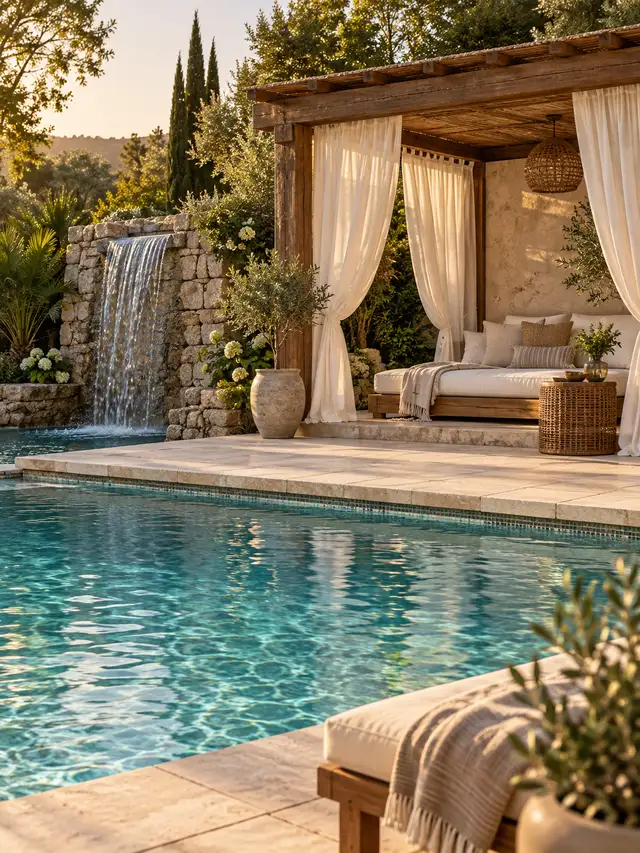
A poolside cabana instantly makes a backyard feel more like a vacation property, and a nearby waterfall can strengthen that atmosphere. Place the cascade beside the cabana rather than directly behind the seating so guests can enjoy the sound without excessive splash. Flowing curtains, a cushioned daybed, and natural materials help complete the resort mood.
Repeat one or two materials between the cabana and waterfall structure to make them feel designed together. For example, the same stone can appear on the feature wall and cabana columns, while timber accents can connect the roof and furniture. The result should feel coordinated and comfortable rather than heavily themed.
22. Fire-and-Water Feature
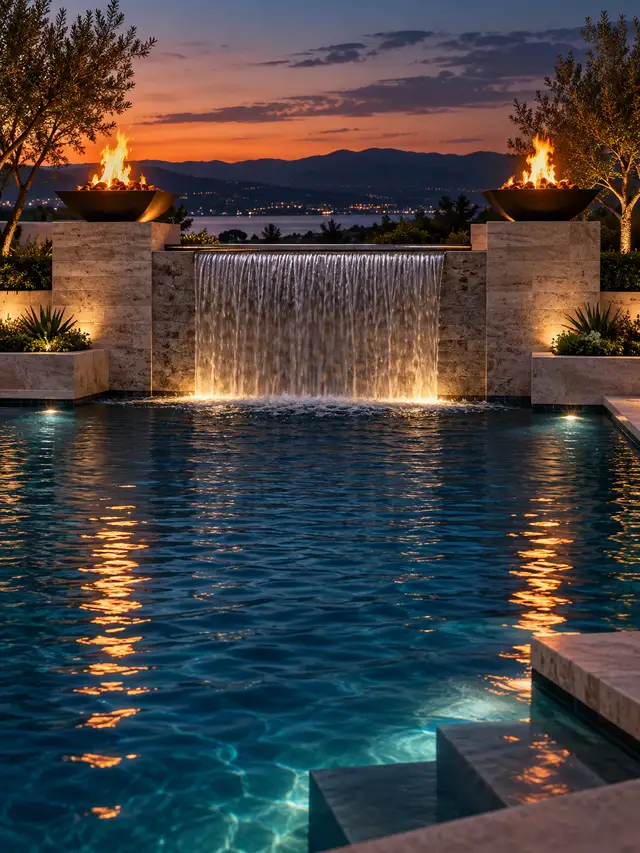
Fire and water create a memorable evening focal point when they are used with restraint. A central spillway can sit beneath elevated fire bowls or beside a professionally designed linear flame feature, allowing the warm light to reflect across moving water. The contrast is dramatic without requiring a huge waterfall.
Safety and professional installation are essential when combining flame features with pools. Keep fire elements separated from swimming paths and seating circulation. Use low, simple landscaping around the feature so the reflections remain visible. At dusk, the combination of firelight, underwater illumination, and falling water can transform an otherwise simple pool wall into the highlight of the backyard.
23. Illuminated Night Waterfall
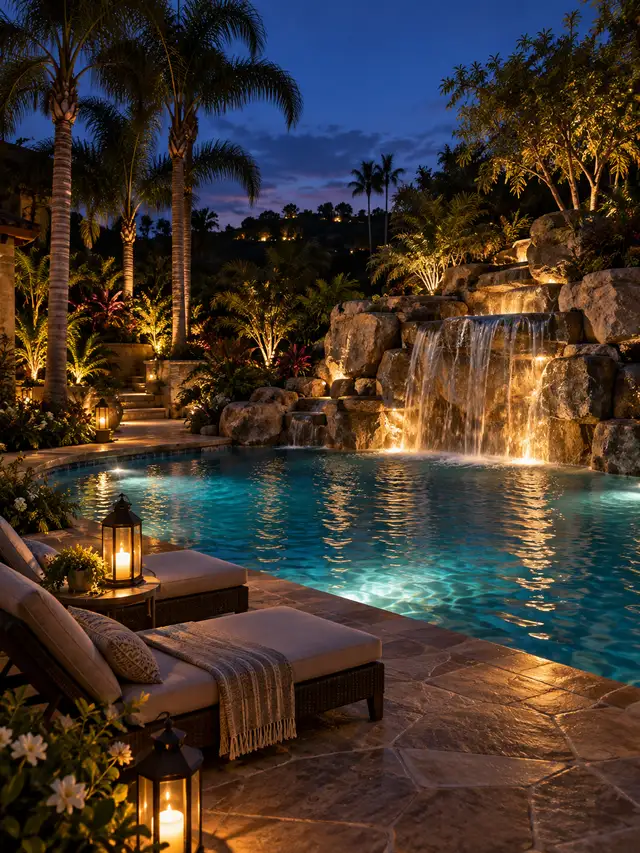
Lighting can completely change the appearance of a pool waterfall after sunset. Rather than relying on one bright spotlight, layer several subtle sources: underwater lights near the splash zone, warm uplighting between rocks, and soft accent lights on surrounding palms or shrubs. This gives the scene depth while keeping the atmosphere relaxing.
Leave some portions of the garden darker so the illuminated water stands out. Warm landscape lighting usually feels more resort-like than overly cool white light, although the pool itself can remain blue. If lantern-style fixtures or pathway lights are used, keep them consistent in design. The goal is a soft glow that reveals texture, not an over-lit backyard.
24. Luxury Pavilion Cascade
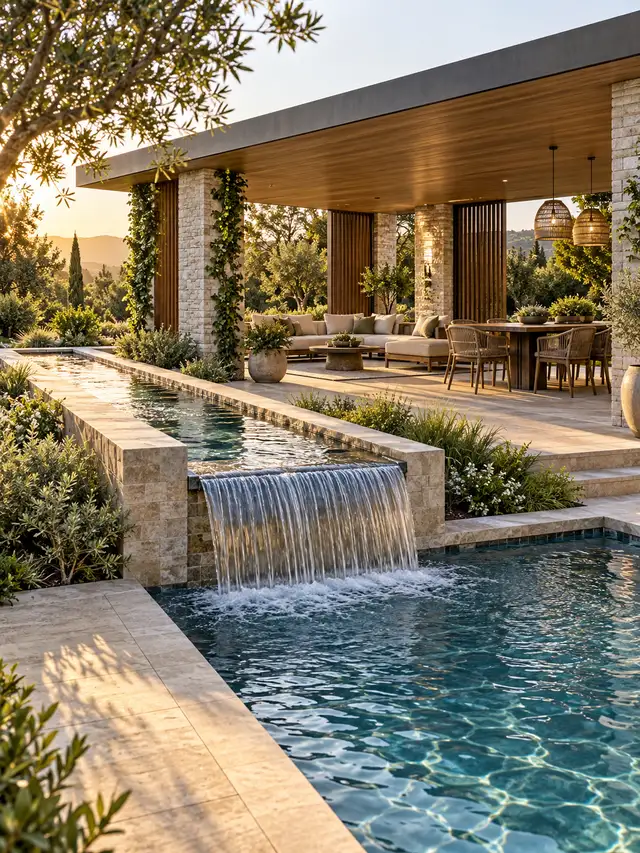
A pavilion can become the architectural anchor of the pool area when moving water is integrated into its design. Run a narrow raised water channel beside the structure and allow it to finish in a broad cascade into the swimming pool. This creates a visual connection between the outdoor living space and the water without relying on decorative rockwork.
Use the same timber, stone, and neutral finishes across the pavilion and waterfall structure. Inside, the pavilion might contain lounge seating, dining, or an outdoor kitchen. Because the water feature is part of the architecture, it should remain clean and restrained. This concept works particularly well in large backyards where the pavilion and pool need to feel like one coordinated destination.
25. Raised Garden Waterfall
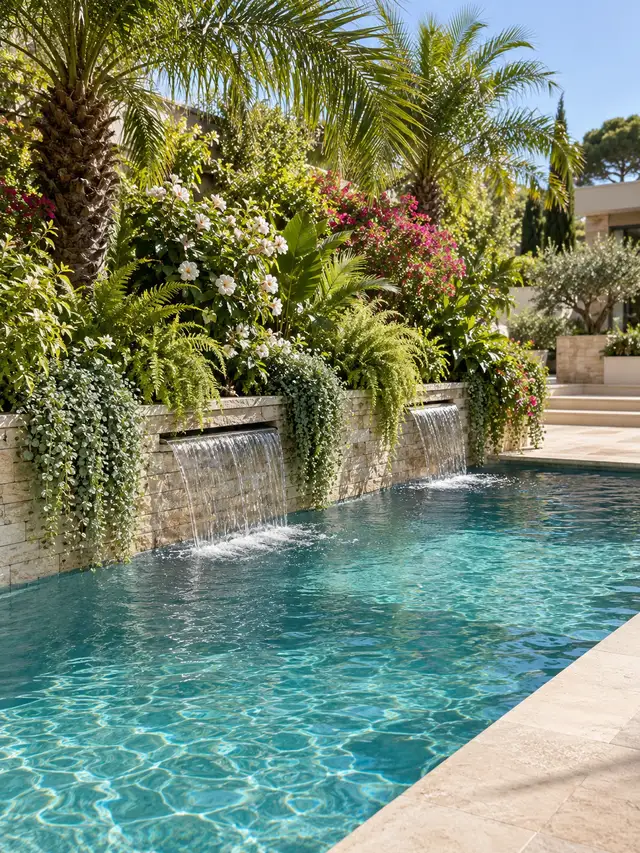
A raised planting bed can hide the mechanics of a waterfall while giving the pool a lush garden backdrop. Build the bed above pool level and install one or two horizontal spillways beneath the greenery. From the water, the cascades appear to emerge directly from the landscape, which makes the feature feel softer than a conventional wall fountain.
Layer taller plants toward the back, medium foliage in the center, and trailing greenery near the spillways. Use the same stone on the planter wall and pool details for a cohesive finish. This idea is especially useful when the backyard needs both privacy and a decorative water feature, because the raised garden can accomplish both at once.
26. Pool Bar Waterfall Backdrop
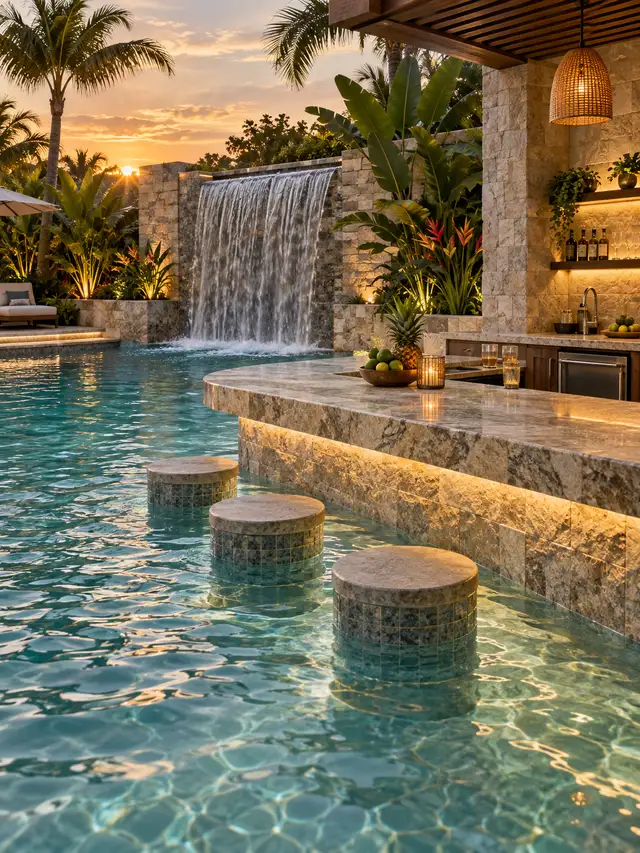
A swim-up bar can feel much more like a private resort when a waterfall forms the background. Position submerged stools along a shallow counter and place a textured water wall behind the dry-side service area. The moving water creates atmosphere while also giving the bar a strong visual identity from across the pool.
Use matching stone on the bar front and waterfall wall so the two elements do not compete. A compact outdoor counter, shelves, and subtle lighting are usually enough; there is no need to overload the space with decoration. Tropical planting around the sides can soften the structure and help the bar feel integrated with the surrounding landscape.
Small Backyard Pool Waterfall Ideas
27. Compact Corner Rock Cascade
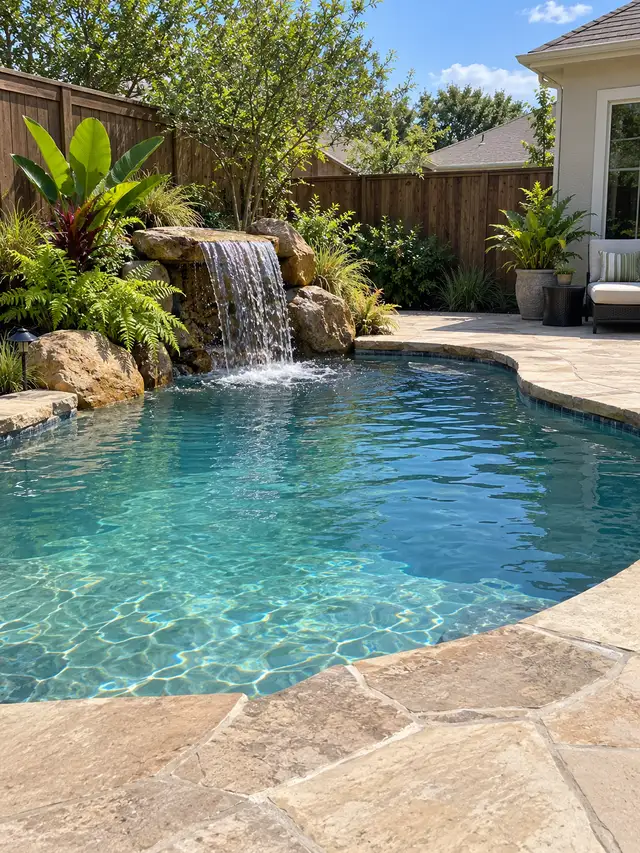
A small pool does not need a giant waterfall to feel special. Tuck a compact rock cascade into one corner and use only a handful of carefully shaped boulders. One broad stone can form the waterfall lip while smaller rocks conceal plumbing and create a natural transition into the pool edge.
Surround the feature with a few ferns, ornamental grasses, and compact tropical plants, but keep most of the deck open. This prevents the waterfall from making the backyard feel cramped. A corner location also preserves longer uninterrupted swimming lines while still giving the pool a clear focal point.
28. Narrow Wall Spillway
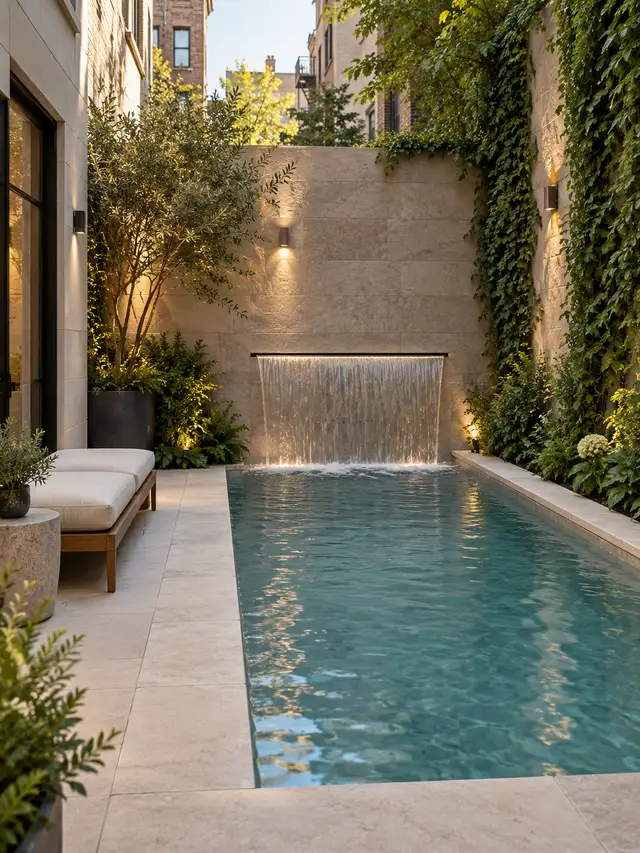
For a slim urban backyard, a wall-mounted spillway can add movement without consuming valuable floor area. Install one long horizontal outlet into a privacy wall and allow a shallow curtain of water to fall directly into the pool. The design works especially well with a narrow rectangular pool and clean paving.
Vertical greenery can soften the wall while maintaining the compact footprint. Add simple wall lights for evening interest and keep furniture minimal, perhaps using one bench or a pair of compact loungers. The waterfall should feel integrated into the boundary rather than projected into the yard, making this one of the most space-efficient ideas on the list.
29. Small Plunge Pool Waterfall
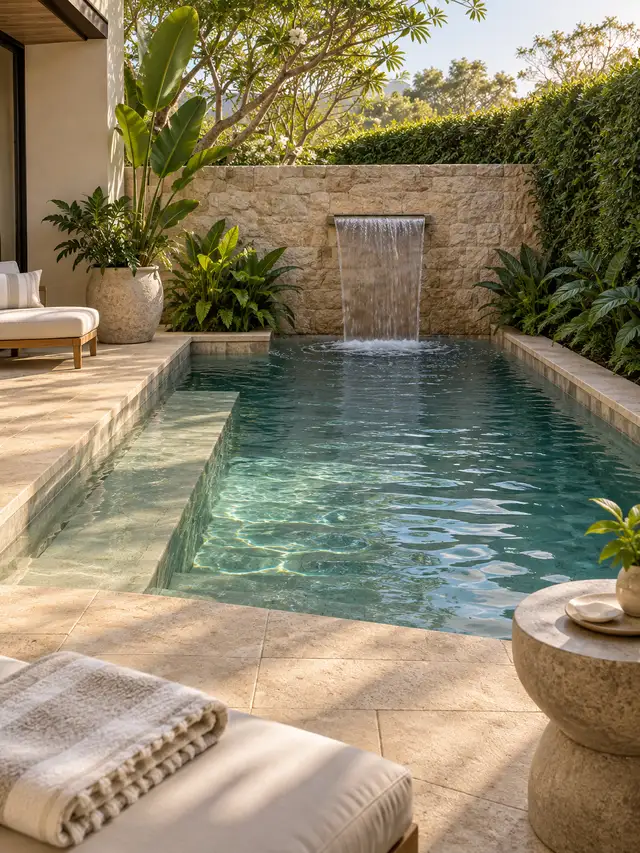
A plunge pool can still deliver a boutique-hotel experience when the design is focused. Place one elegant waterfall at the far end, add a submerged bench, and use warm stone around the water. Because the pool is compact, every material and proportion becomes more visible, so simplicity usually creates the most luxurious result.
A textured stone wall can provide enough visual interest without requiring large boulders. Add a privacy hedge or a few restrained tropical plants and leave some deck space for a small side table or towel. The waterfall should create a pleasant background sound rather than overwhelming the intimate scale of the plunge pool.
30. Raised Planter Spillway
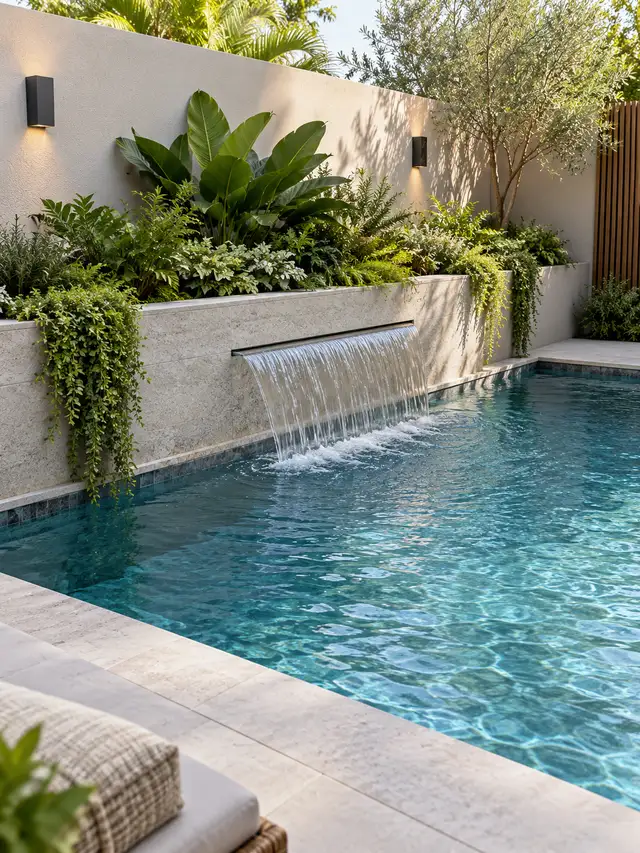
When space is limited, combine greenery and moving water in a single structure. A narrow raised planter can run along the pool boundary while a centered spillway below releases water into the swimming area. Trailing plants soften the planter edge and help the feature feel more layered than a plain wall fountain.
Use tidy planting rather than dense jungle foliage so the narrow yard remains visually open. Light decking, simple coping, and a few modern wall sconces can reinforce the streamlined appearance. This layout is especially practical in suburban side yards where privacy planting is needed anyway and every inch of deck space matters.
31. Courtyard Pool Waterfall
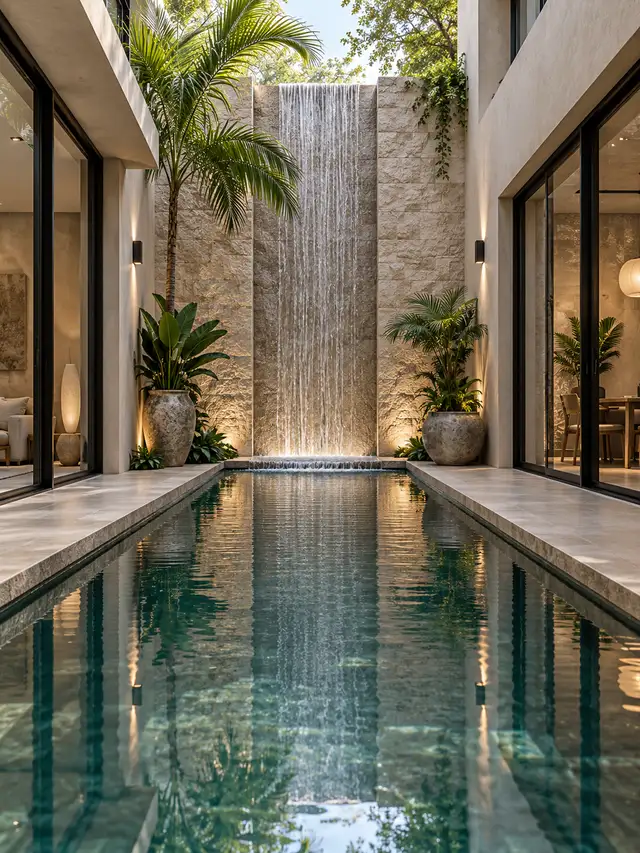
An enclosed courtyard can become a private spa-like retreat when a tall waterfall anchors one end of the pool. Position the feature opposite the main indoor viewing area so it is visible through glass doors or windows. A narrow rectangular pool can reflect the vertical water and make the small courtyard feel longer and more dramatic.
Use textured limestone-look stone, a few large planters, and restrained palms rather than dense landscaping. Warm wall lighting can reveal the architecture in the evening without cluttering the courtyard. Because the space is enclosed, pay attention to waterfall sound; a controlled flow is usually more comfortable than a powerful cascade in such a close setting.
32. Side-Yard Pool Cascade
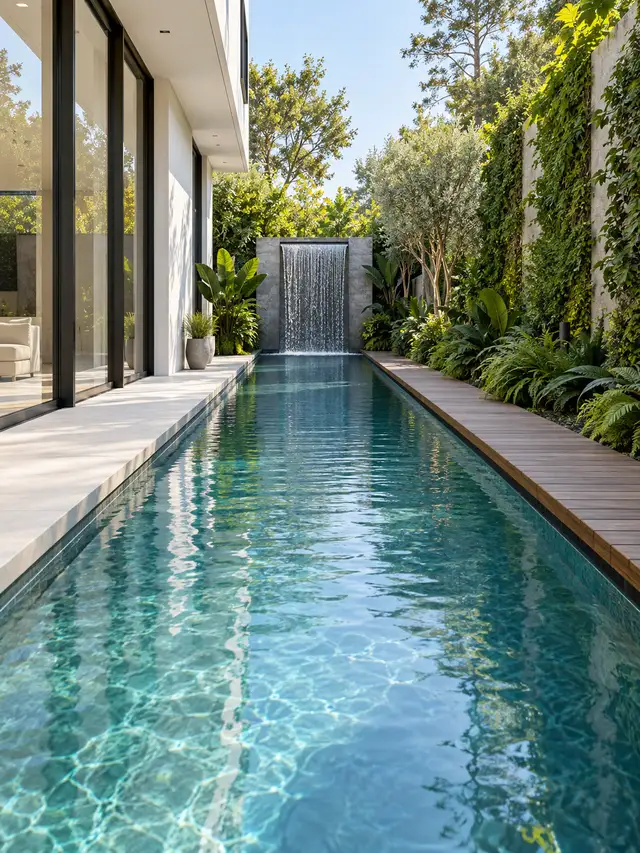
A long side yard can accommodate a surprisingly elegant lap or plunge pool. Place the waterfall at the far end so it becomes the destination of the view from the house or patio. Even a moderate cascade will appear more substantial when seen along the full length of a narrow pool.
Use vertical planting or a green wall along the boundary for privacy while keeping the pool deck slim. A timber walkway on one side can introduce warmth without reducing swimming space. Keep the waterfall shape simple and aligned with the pool so the entire side yard reads as one deliberate architectural composition.
Creative Pool Waterfall Features
33. Stepping-Stone Waterfall Channel
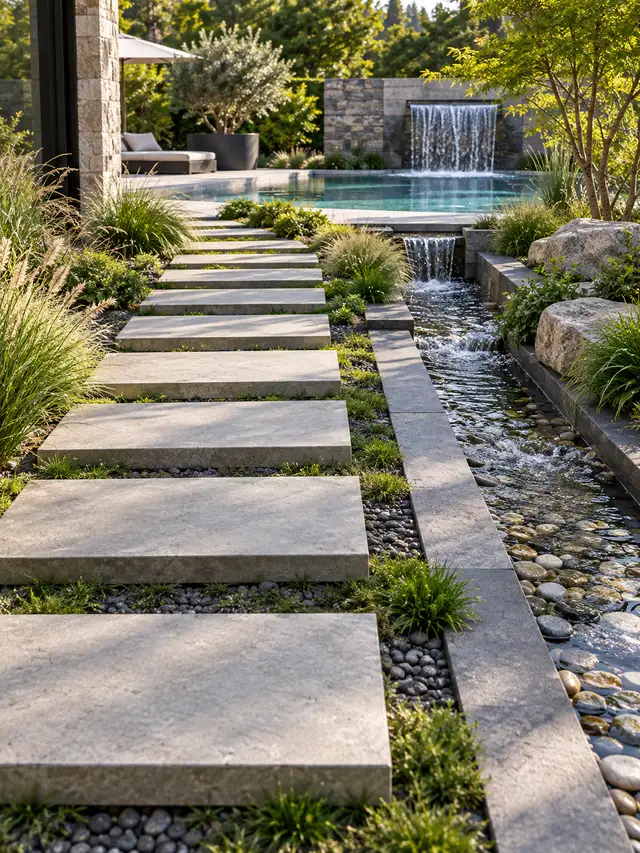
A shallow water channel beside a stepping-stone path can make the approach to the pool feel like part of the experience. Let the channel run through gravel, grasses, and smooth stones before it finishes in a small drop into the swimming pool. The combination of path and water creates movement even before guests reach the main pool deck.
Use large rectangular stepping stones with generous spacing and keep the channel shallow enough to read as a decorative landscape feature. Low planting maintains visibility and makes the route feel calm rather than crowded. This idea works particularly well between the house and pool where a conventional paved walkway might otherwise feel plain.
34. Waterfall With Floating Deck
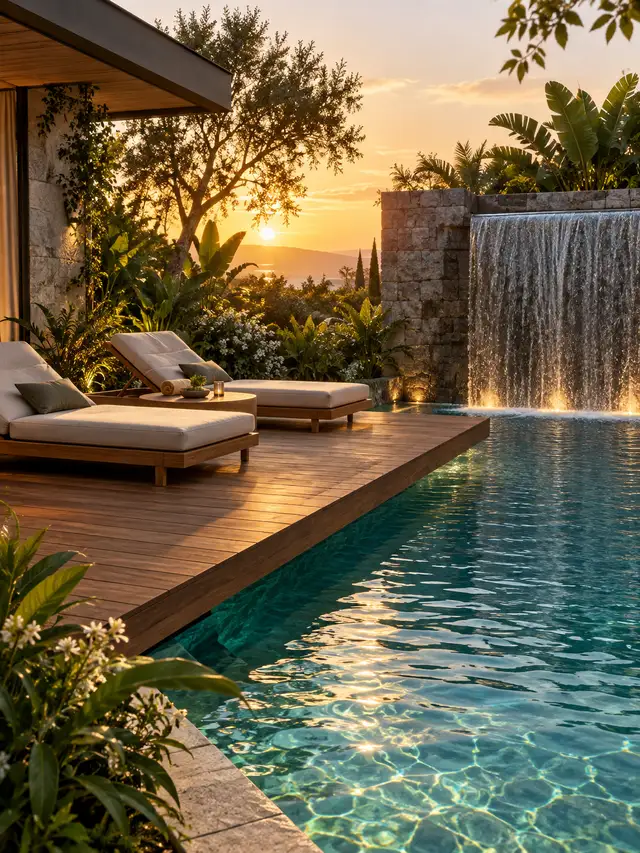
A deck that appears to hover over the water can create an intimate lounge zone beside a waterfall. Position the platform just above the pool edge, add two low loungers, and place a contemporary cascade nearby. The water should feel close enough to create atmosphere while remaining far enough away to prevent constant spray on the seating.
Warm timber-look decking contrasts beautifully with pale stone and blue water. Keep the furniture streamlined so the floating effect of the platform remains visible. Surround the outer pool edge with planting rather than filling the deck itself with pots. This produces the clean, relaxing look associated with modern tropical resorts.
35. Arched Water Curtain
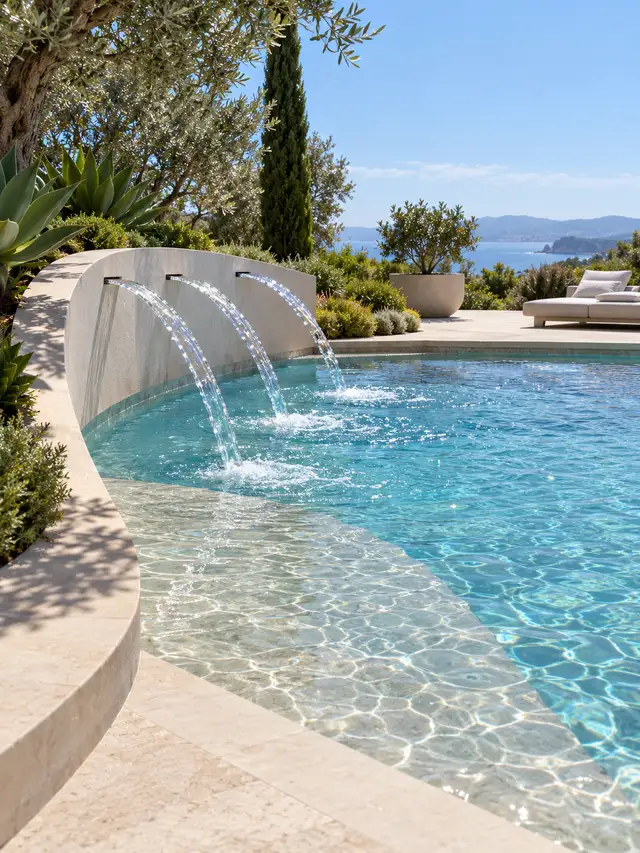
Arched water streams can introduce a playful feature without abandoning a sophisticated design. Instead of dozens of small jets, use three or four evenly spaced arcs emerging from a slim curved wall. The streams should land in a shallow portion of the pool where the movement can be enjoyed visually and physically.
Pale stone and uncluttered landscaping keep the arches from looking like a theme-park feature. Strong sunlight can make droplets sparkle and emphasize the shape of each stream. If the pool is used by families, place the arcs where swimmers can move underneath them safely while still preserving clear circulation around the rest of the pool.
36. Waterfall Island Feature
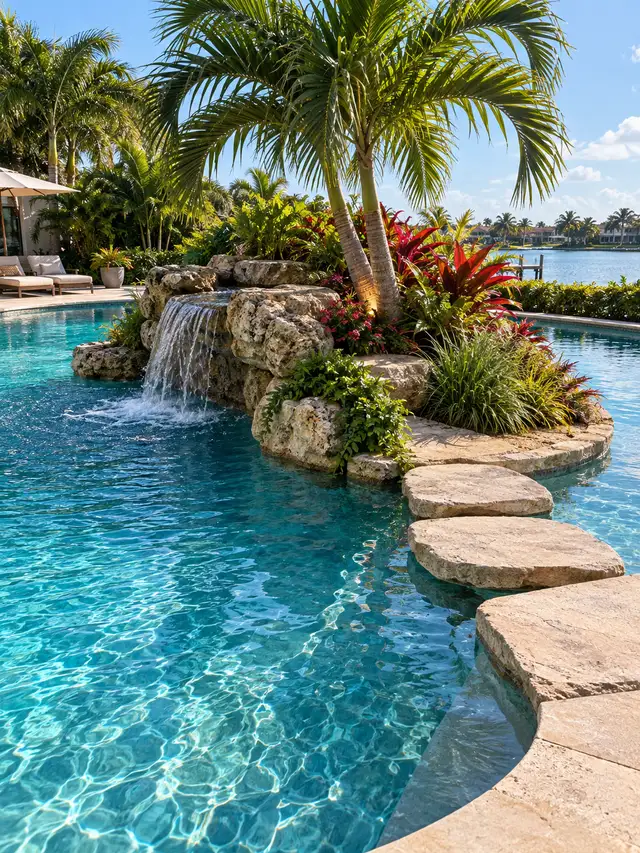
A landscaped island can turn a large pool into a more immersive resort-style environment. Build a low island partially surrounded by water and place a compact rock waterfall on one side. A palm, ornamental grasses, and colorful foliage can give the island enough presence without making it feel oversized.
Connect the island to the deck with broad stepping stones or a narrow bridge. Keep the route easy to understand so it feels intentional rather than decorative. This idea works best in a curved or freeform pool where the island can become part of the overall shape instead of appearing like an object placed in the middle of a geometric pool.
37. Sculptural Stone Cascade
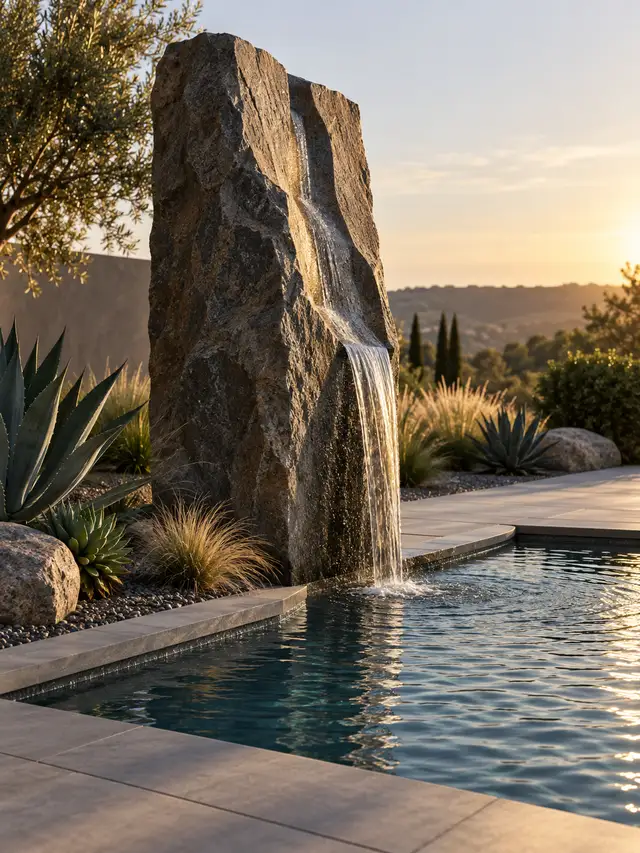
A single dramatic stone can create as much impact as a large rock formation when it is treated like outdoor sculpture. Use a tall monolithic slab beside the pool and carve or shape a narrow channel that guides water down its face. The wet stone becomes the focal point as sunlight catches the texture.
Keep the surrounding landscape minimal with gravel, ornamental grasses, sculptural succulents, and a few dark-green plants. A clean rectangular pool allows the stone to stand out clearly. This concept suits modern, desert, and Mediterranean-inspired gardens where material quality and form are more important than lush tropical abundance.
38. Waterfall Stair Feature
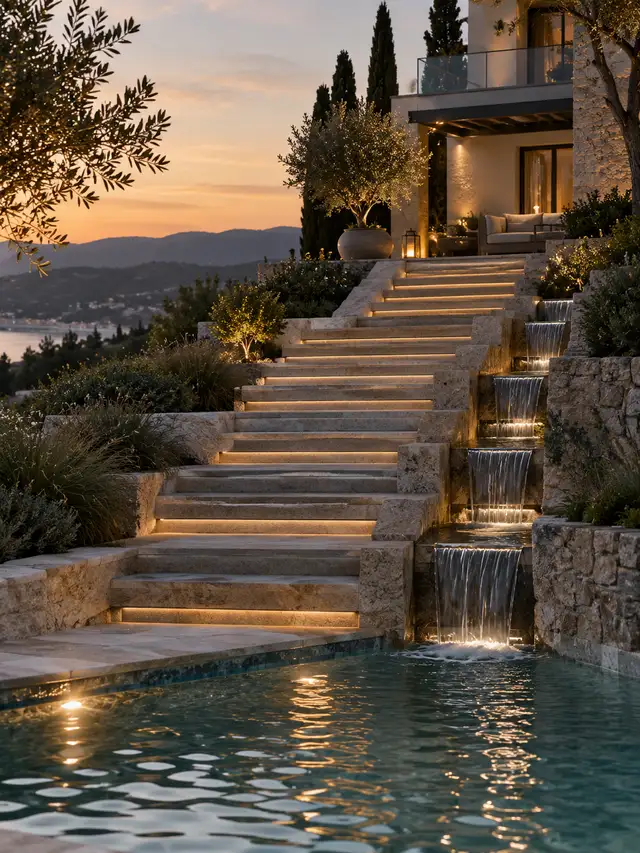
If the backyard changes elevation, integrate a water channel beside the steps instead of treating the slope as a problem. The water can descend in small cascades parallel to the staircase before reaching the pool. This creates a strong visual connection between the upper patio and lower swimming area.
Use the same stone for the steps, channel edge, and nearby retaining walls to keep the feature architectural. Concealed step lights can highlight both the walking route and moving water in the evening. Keep planting restrained so the staircase remains safe and clearly visible. This is a particularly elegant solution for terraced or hillside properties.
39. Bridge Over Waterfall Stream
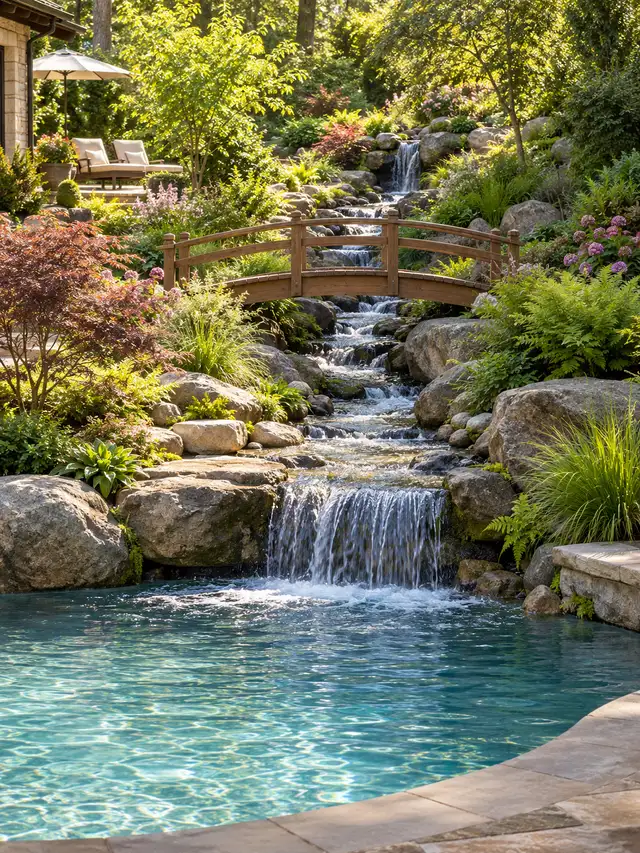
A small bridge over a landscaped stream can make the backyard feel like a private resort garden. The best layout makes the water direction obvious: the stream begins in the upper garden, passes beneath the bridge, continues downhill, and then forms a final waterfall into the swimming pool. This sequence gives the feature a natural sense of movement.
Use smooth river stones, ferns, ornamental grasses, flowering shrubs, and a few mature trees to soften the channel. The bridge can be timber for warmth or stone for a more formal look. Keep the stream narrow enough that the bridge feels proportional. The final drop into the pool should remain clearly visible so the connection between garden and swimming area is easy to understand.
Tropical & Vacation-Inspired Pool Waterfalls
40. Bali-Inspired Pool Waterfall
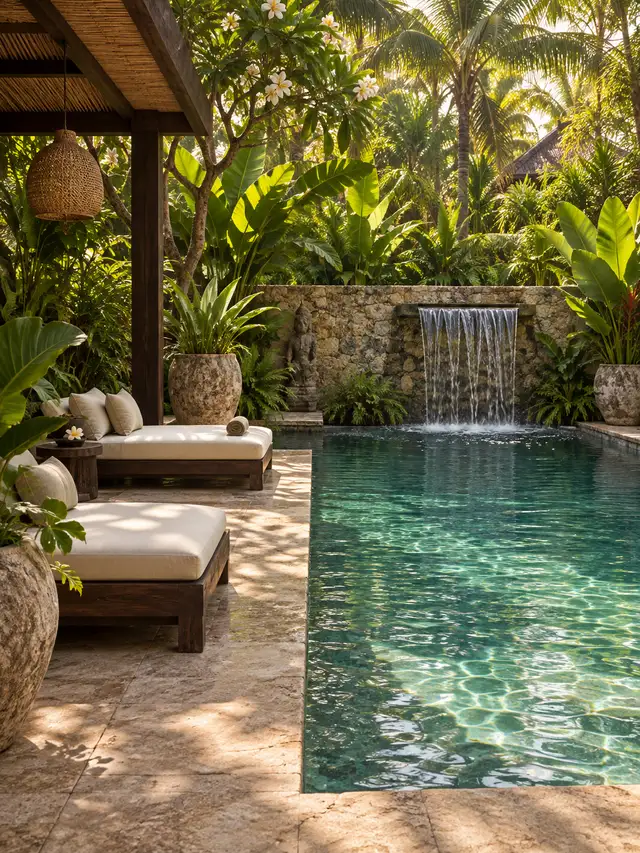
A Bali-inspired pool feels calm, earthy, and surrounded by nature. Use warm textured stone, dark timber, lush tropical greenery, and a low gentle waterfall rather than an enormous cascade. The goal is serenity, so the water should add sound and movement without becoming visually aggressive.
Neutral daybeds, cream cushions, handcrafted-looking planters, and soft golden light can reinforce the villa-like atmosphere. Choose a limited palette of natural materials and let greenery provide most of the color. This style is especially effective in private yards where tall planting can create a strong sense of enclosure and separation from neighboring properties.
41. Mediterranean Pool Cascade
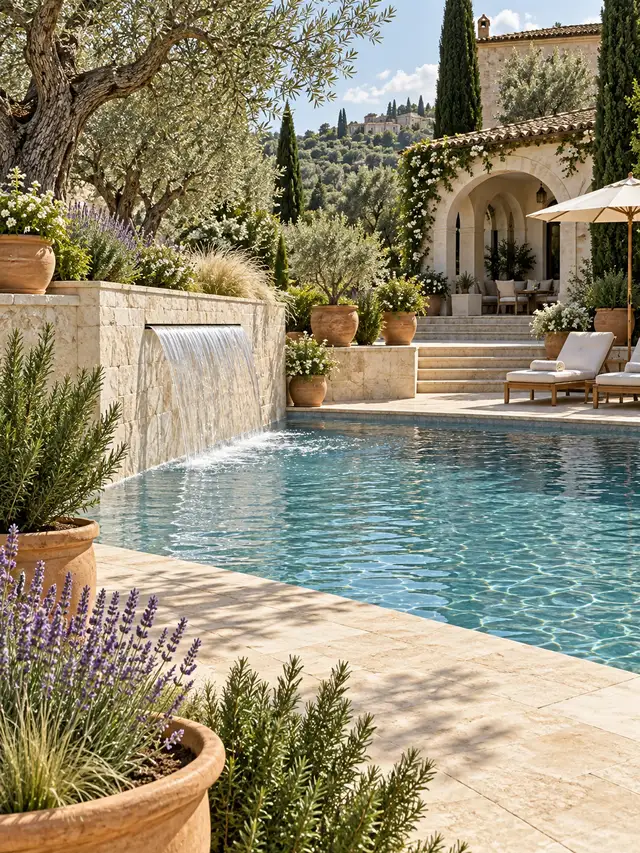
A Mediterranean pool waterfall is usually most successful when it feels restrained. Build a broad spillway into a pale limestone-style wall and surround it with terracotta planters, olive-style trees, rosemary, lavender-like flowers, and ornamental grasses. The combination creates a warm European resort atmosphere without relying on tropical plants.
Cream paving and subtle arches or stucco details can connect the pool to Mediterranean-inspired architecture. Avoid overly rugged rockwork; a clean stone wall usually looks more authentic with this style. The water should provide a cooling contrast to the sun-washed materials and dry-climate planting, making the backyard feel elegant and relaxed.
42. Hawaiian-Inspired Lava Rock Waterfall
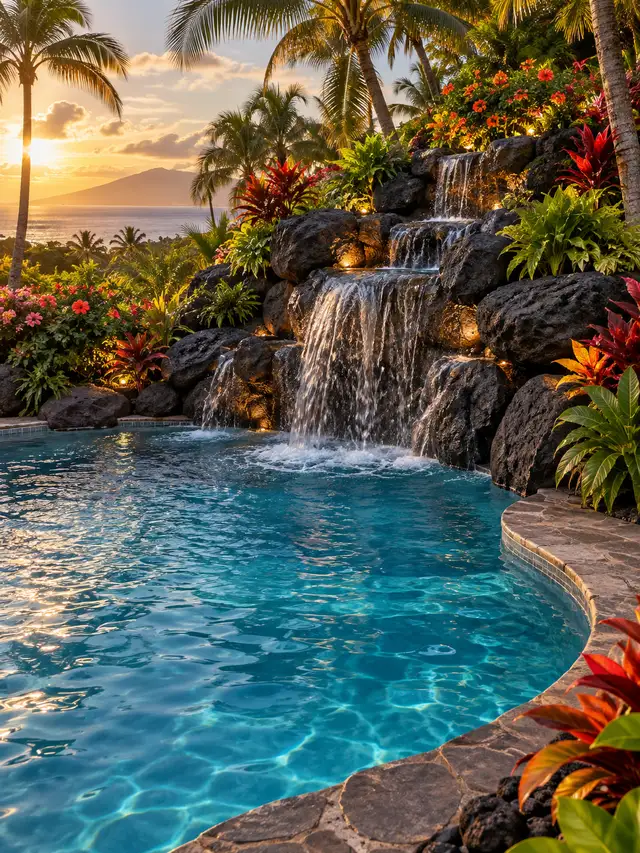
Dark volcanic-inspired stone can create a bold island character around the pool. Build an irregular cascade with charcoal rocks and surround it with palms, deep green foliage, and red or orange tropical plants. Bright blue water creates strong contrast against the dark stone and makes the feature especially striking in warm late-afternoon light.
Use hidden landscape lights among the rocks to reveal the texture at sunset. Keep the waterfall organic rather than symmetrical, allowing several small paths of water to form naturally. Although the design is dramatic, maintain open pool space and a clear deck so the landscape still feels like a functional residential retreat rather than an oversized themed environment.
43. Desert Oasis Pool Waterfall
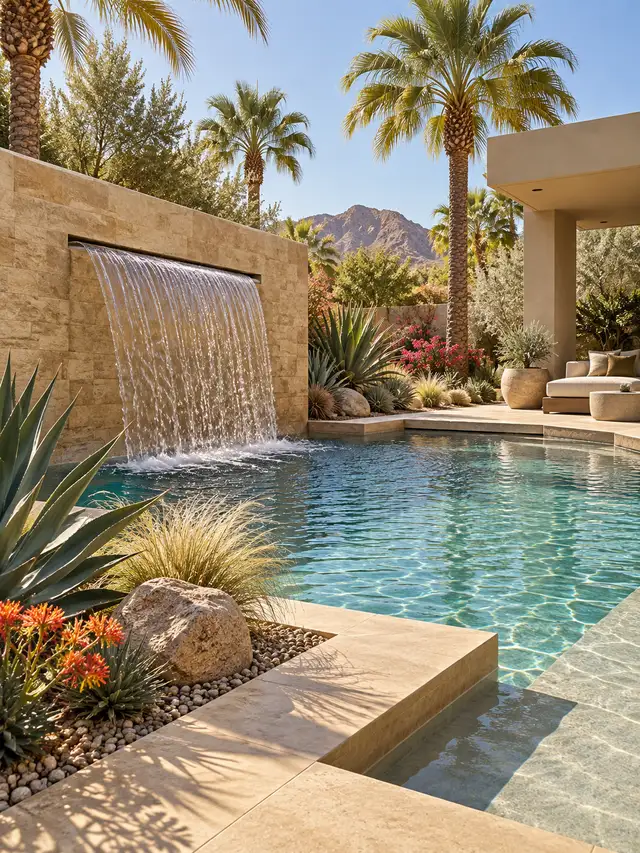
A waterfall can be particularly striking in a desert-inspired yard because moving water contrasts with the dry landscape. Build a warm sandstone-colored wall beside a geometric pool and release one broad sheet of water into clear turquoise water. Surround the scene with palms, agaves, gravel, boulders, and drought-tolerant grasses.
A shaded lounge area in pale neutral tones can provide relief from strong sun while keeping the palette cohesive. Use flowering succulents sparingly for color. The feature does not need lush planting to feel luxurious; the contrast between sculptural desert plants, warm stone, and reflective water can create a very sophisticated resort atmosphere.
44. Coastal Resort Waterfall
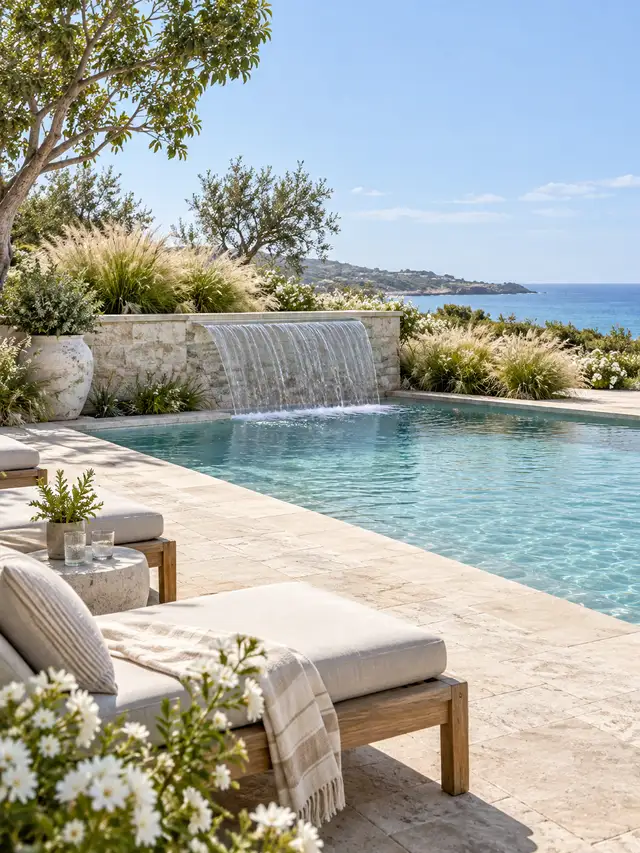
A coastal-inspired waterfall should feel open, light, and breezy. Use pale textured stone, soft blue-green water, airy ornamental grasses, white flowers, and warm timber-look loungers. A low wall with a broad gentle spillway provides movement without blocking the view or making the pool feel enclosed.
Keep planting loose and wind-friendly rather than dense. Neutral cushions, pale paving, and simple accessories reinforce the relaxed seaside character. This idea works especially well on properties with distant water views, but the look can also be recreated inland by emphasizing light colors, open sightlines, and a clean, uncluttered pool deck.
45. Ultimate Backyard Resort Waterfall
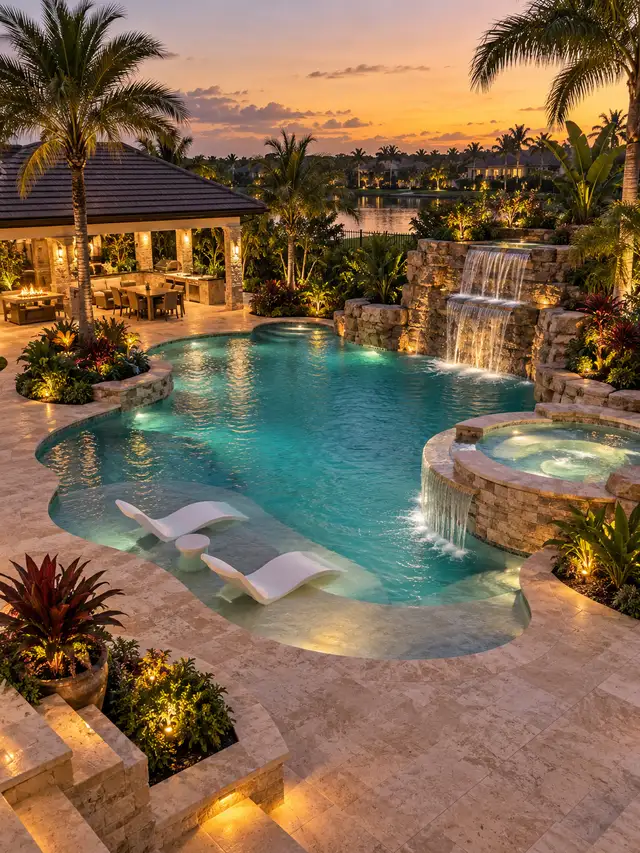
For the ultimate resort-style backyard, combine several ideas into one carefully coordinated plan: a large pool, a believable two-level waterfall, an elevated spa overflow, a shallow sun shelf, comfortable loungers, a pavilion, layered planting, and warm evening lighting. The key is not the number of features but how well they relate to one another.
Repeat the same stone on the waterfall, spa, and selected architectural surfaces, and use a consistent planting palette throughout the property. Keep circulation clear and avoid filling every open space. When the pool, waterfall, seating, landscaping, lighting, and architecture share the same visual language, the entire backyard feels professionally designed rather than assembled feature by feature.
How to Choose the Right Backyard Pool Waterfall Design
When choosing between these backyard pool waterfall ideas, begin with scale. A towering rock formation can overwhelm a small plunge pool, while a narrow spillway may disappear beside a very large lagoon. The feature should feel proportional to the water around it and should remain attractive even when the pump is turned off.
Next, look at the architecture of the house. Clean concrete, linear spillways, glass, and dark stone generally work well with modern homes. Pale stone and restrained cascades suit Mediterranean and coastal architecture, while tropical landscapes can support larger boulders, grottos, and dense planting. Repeating materials from the house or pool deck is one of the easiest ways to make the waterfall feel original to the property.
Sound matters too. A tall waterfall with heavy flow can mask road or neighborhood noise, which may be useful, but it can also make conversation difficult near a dining or seating area. Gentle surface cascades and broad spillways produce a softer background sound. Think about how the space will actually be used before selecting the strongest possible water flow.
Lighting should be planned early rather than added as an afterthought. Underwater lights can emphasize the splash zone, while concealed lights between rocks reveal texture. Warm uplighting on planting helps the landscape feel deeper after sunset. Avoid illuminating every surface equally; areas of shadow make the waterfall stand out more clearly.
Planting should frame the water rather than hide it completely unless the idea specifically calls for a hidden waterfall. Place taller plants behind the feature, medium foliage around the sides, and smaller groundcover near the front. Consider maintenance as well. Dense flowering plants close to the water can introduce leaves and debris into the pool, while architectural grasses and palms may be easier to manage.
Finally, have the pump, plumbing, drainage, electrical work, and structural requirements designed by qualified professionals. A large waterfall needs substantially more water movement than a small wall spillway, and the system should be sized for the intended effect rather than improvised after construction.
How to Make a Pool Waterfall Look More Expensive
A five-star look usually comes from consistency rather than excess. Limit the number of materials and repeat them throughout the backyard. If one limestone appears on the waterfall, use it again on a planter, spa, or selected coping detail. If timber is part of a pavilion, echo the same tone in loungers or decking.
Hide mechanical equipment and visible plumbing wherever possible. Use planting, stonework, or architectural panels to conceal functional elements without making maintenance access difficult. Large, healthy plants often look more luxurious than dozens of small unrelated varieties, and repeated plant species help the landscape feel professionally composed.
Furniture also affects the overall impression. Leave enough open deck around loungers and seating so the pool does not feel crowded. After dark, use subtle lighting rather than maximum brightness. A few carefully chosen pools of light on water, stone, steps, and foliage will usually look more sophisticated than illuminating every corner.
Are Pool Waterfalls Worth Adding?
A pool waterfall can add a great deal of enjoyment if you value the sound and appearance of moving water. It gives the backyard visual interest even when no one is swimming and can become a strong focal point from inside the house. It may also help mask unwanted background noise.
The tradeoff is additional complexity. Pumps use energy, surfaces need cleaning, and surrounding planting can increase debris. That does not mean every waterfall is high maintenance; a small controlled spillway can be relatively simple. The best choice is the one that creates enough atmosphere and visual impact to justify the maintenance required for your household.
Final Thoughts
The best Backyard Pool Waterfall Ideas are not necessarily the biggest or most expensive. What makes a pool feel like a five-star resort is the relationship between the waterfall, waterline, materials, planting, furniture, architecture, lighting, and the way people actually move through the backyard.
A lush tropical yard may look best with layered stone and partially hidden cascades. A contemporary home may need nothing more than one clean sheet waterfall. A small courtyard can become incredibly atmospheric with a single vertical water wall, while a large property can combine spa overflows, streams, bridges, grottos, and pavilions into a complete outdoor retreat.
Choose a concept that suits the scale and style of your home, then focus on execution. When the waterfall feels like it belongs in the landscape rather than something added afterward, even a relatively simple pool can gain the calm, polished, vacation-at-home feeling that makes resort spaces so memorable.
