 Skip to content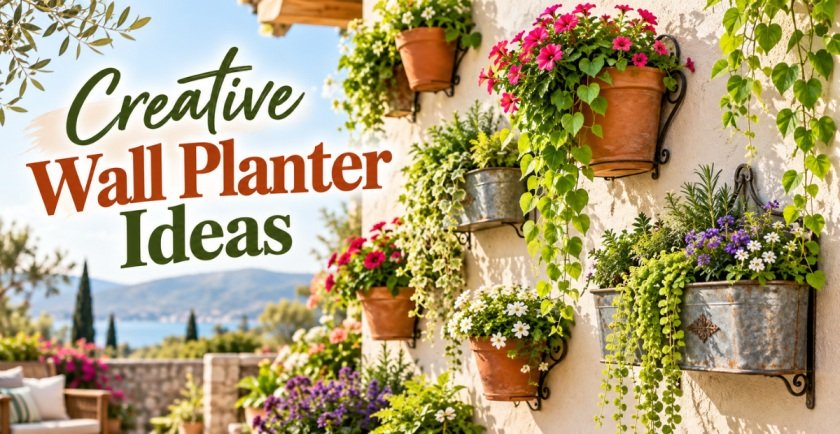
Outdoor walls often become forgotten spaces, yet they can offer some of the best opportunities for adding color, texture, and personality to a garden. With the right wall planter ideas, a plain fence, shed wall, balcony, patio, garage, or exterior wall can become a beautiful vertical garden without taking up valuable ground space.
Wall planters are especially useful in smaller yards where every square foot matters, but they can look equally impressive in spacious landscapes. You can create anything from a rustic farmhouse display made from reclaimed containers to a sleek living wall filled with sculptural greenery. Flowers add seasonal color, herbs make the space practical, and trailing plants soften hard architectural surfaces.
1. Rustic Galvanized Bucket Wall Planter
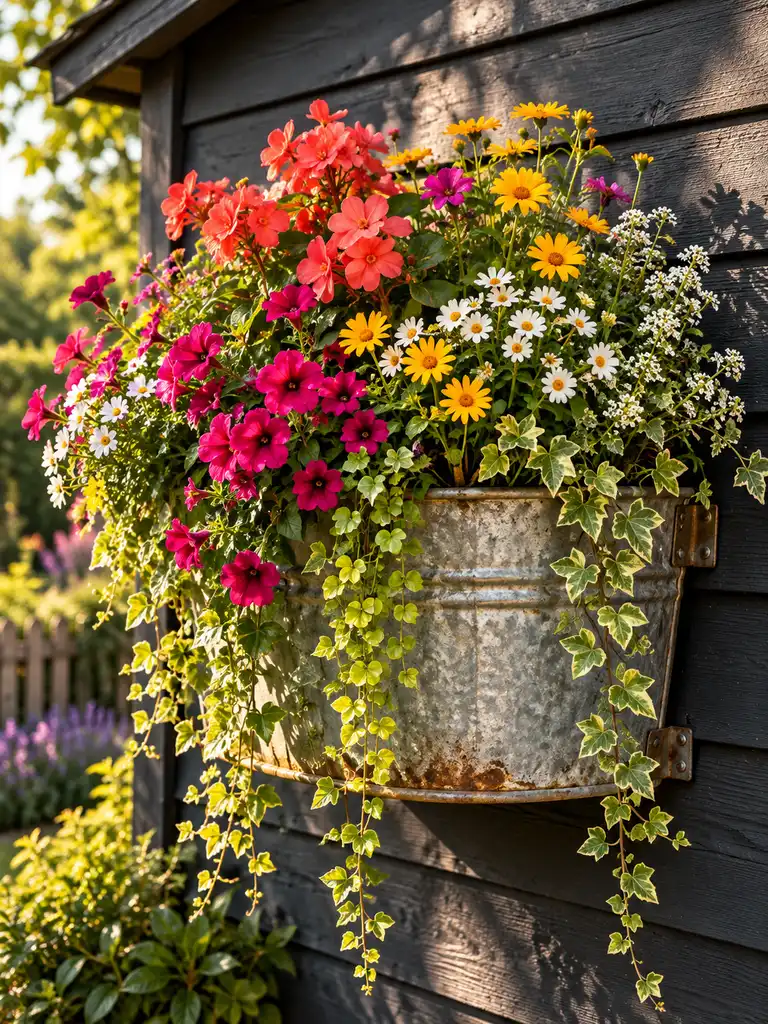
A weathered galvanized bucket makes an easy focal point for farmhouse and cottage gardens. Mount a broad metal bucket securely against dark timber siding or a fence, then fill it with colorful seasonal flowers and trailing greenery.
Petunias, calibrachoa, sweet alyssum, and ivy-like spillers help soften the metal and create an abundant, relaxed display. The aged finish becomes part of the charm, especially when the planter is surrounded by natural wood and warm sunlight.
2. Vintage Chair Wall Planter
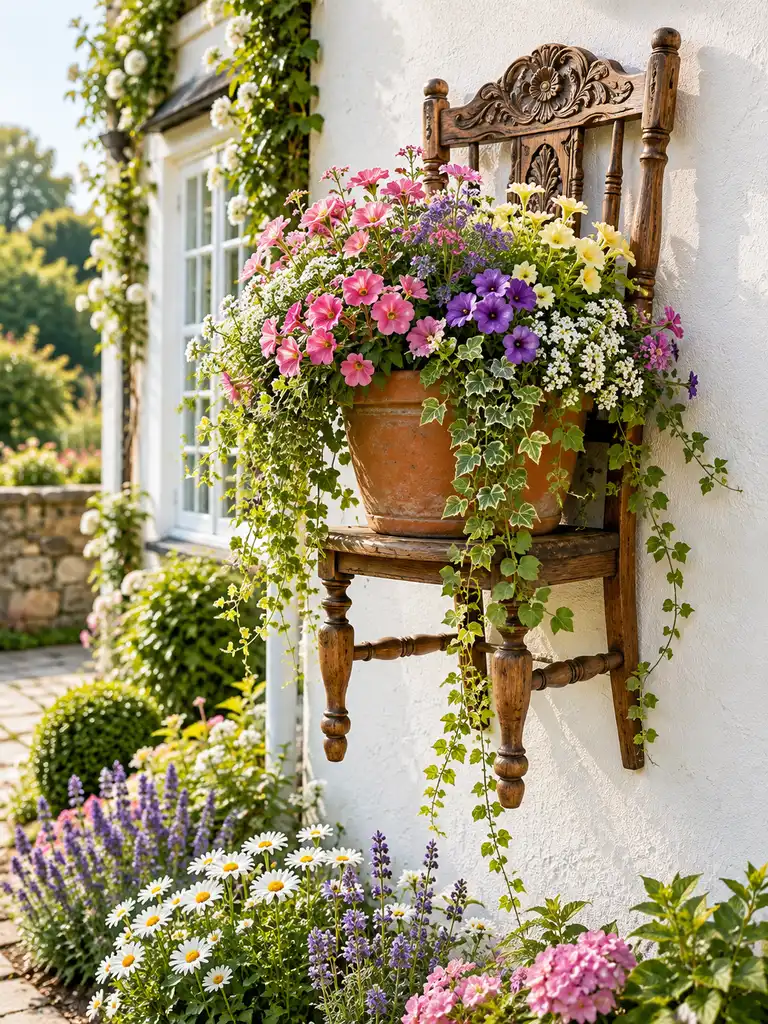
Turn an old carved wooden chair into unexpected vertical garden decor by mounting it securely to an exterior wall. Place a generous terracotta pot where the seat would normally be and let flowers cascade around the chair frame.
The decorative back, spindles, and turned legs should remain visible so the furniture itself contributes to the design. This idea works especially well on white cottage walls where the warm wood and colorful blooms create a romantic contrast.
3. Bright Painted Pallet Flower Wall
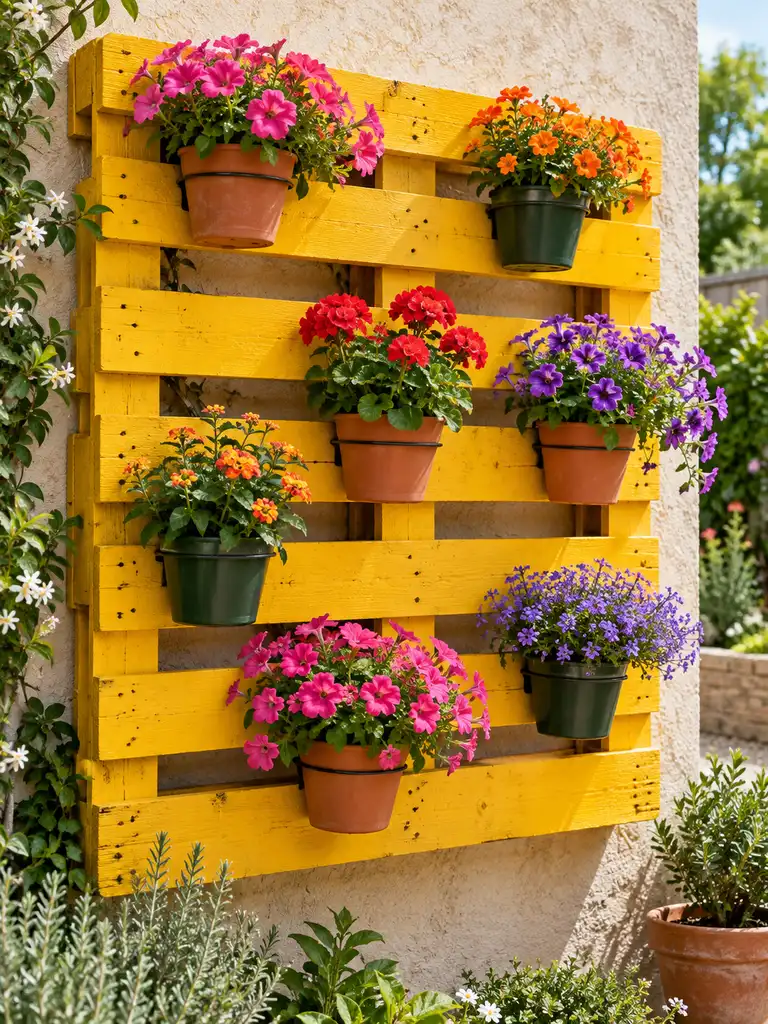
A reclaimed shipping pallet can become a cheerful wall garden with outdoor paint and a collection of small pots. Choose a bold color such as yellow, coral, turquoise, or sage, mount the pallet vertically, and attach containers across different slats.
Mixing flower colors gives the installation an energetic look while the repeating pallet structure keeps everything visually connected. It is a practical option for sheds, patio walls, and compact backyards that need a strong decorative focal point.
4. Terracotta Pot Wall Grid
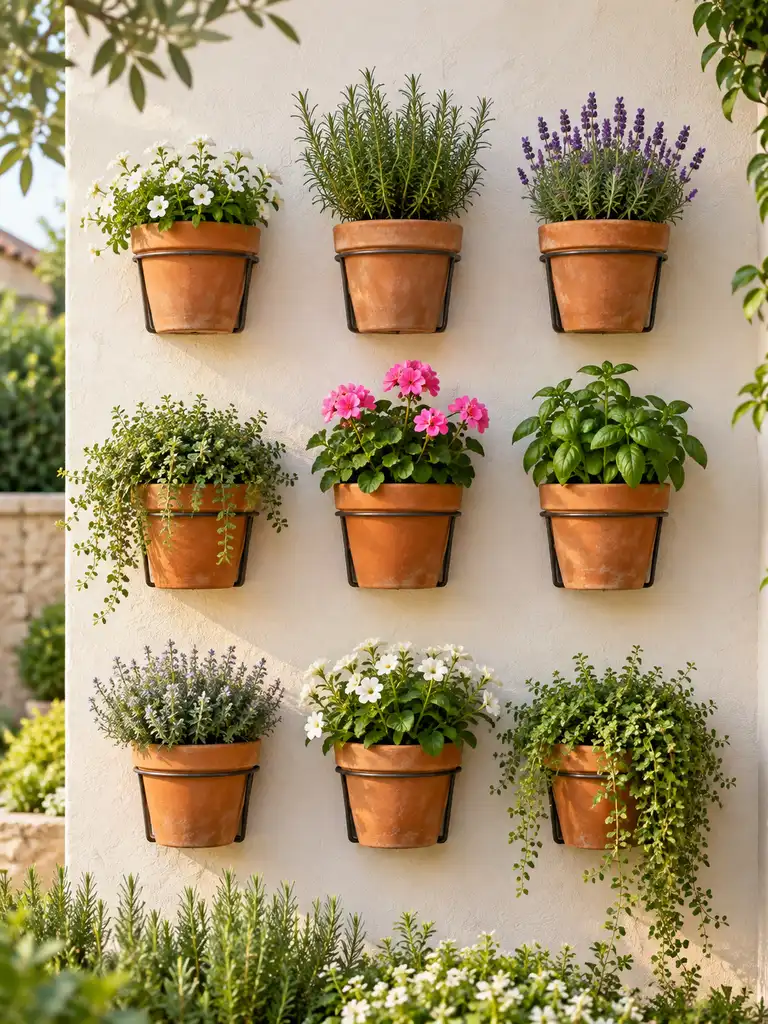
Create a clean, organized display by mounting classic terracotta pots in evenly spaced rows. A three-by-three grid looks especially effective because the repetition becomes part of the design even when the plants differ.
Alternate flowers, herbs, and small trailing plants to add variety without losing structure. Against a pale stucco or cream wall, the warm clay color stands out beautifully and gives the garden a timeless Mediterranean-inspired touch.
5. Modern Circular Wall Planters
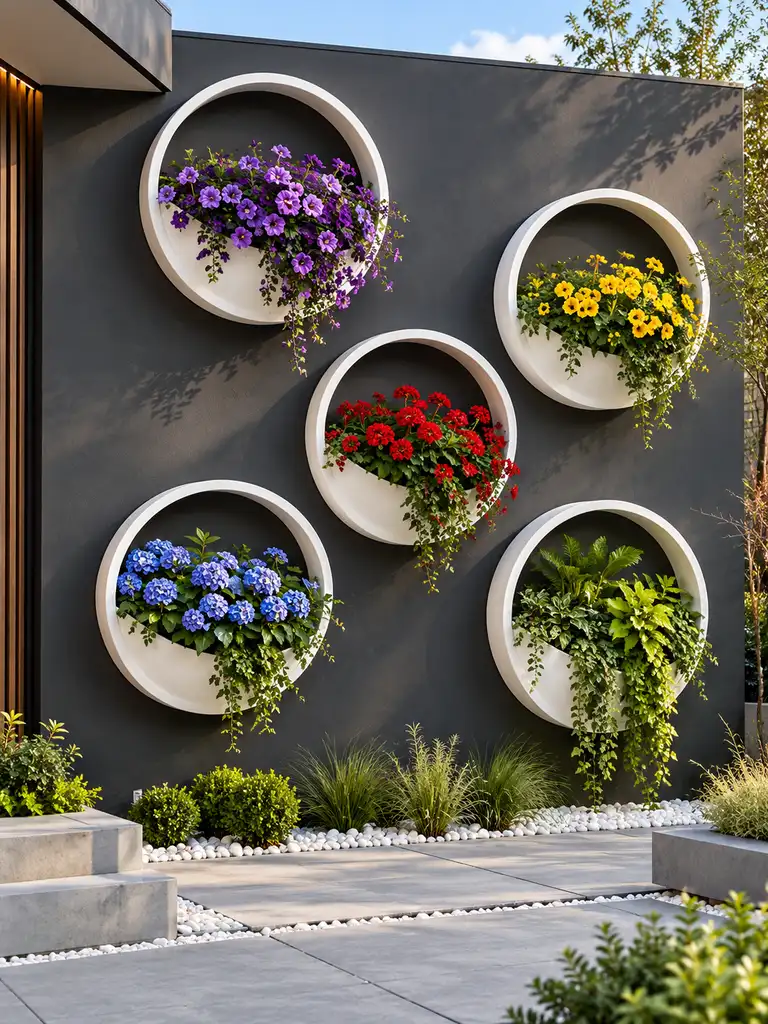
Circular wall planters can turn planting into architectural artwork. Choose several large round frames with integrated planting pockets and arrange them asymmetrically across a charcoal or concrete wall.
Fill each circle with a dominant color or foliage theme so the shapes remain distinct from a distance. Purple flowers, yellow blooms, red accents, and green foliage can create a gallery-like composition, especially when the ground below is kept minimal with clean paving and decorative stone.
6. Antique Window Frame Planter
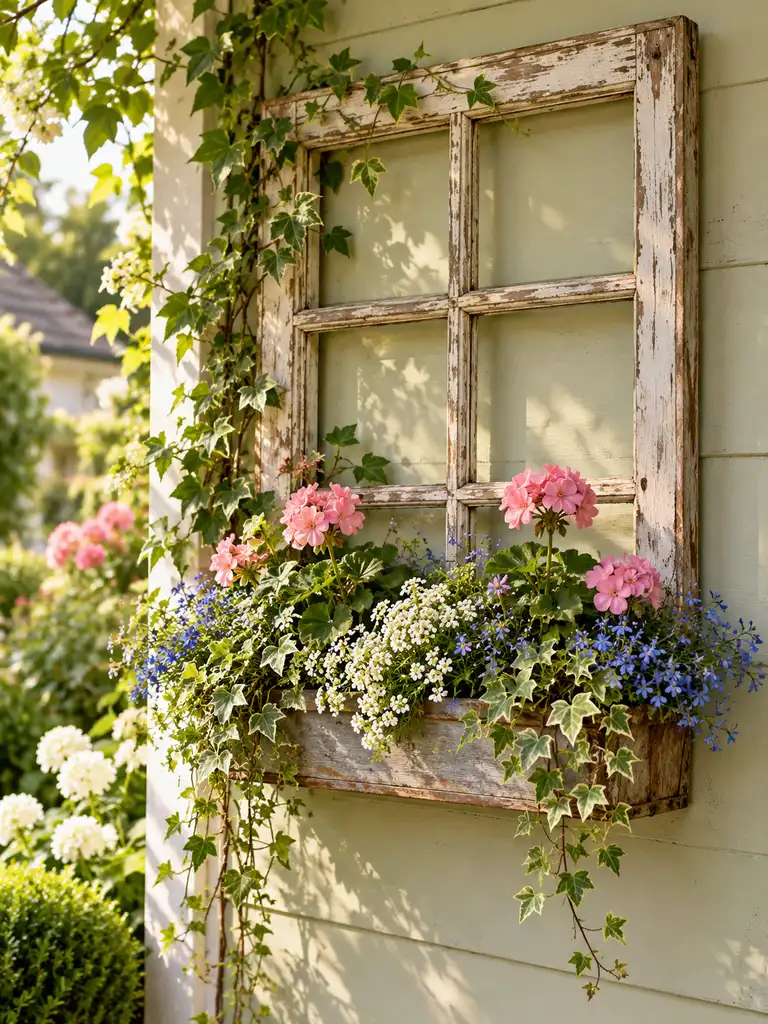
A reclaimed window frame can become a charming backdrop for a cottage-style wall planter. Mount the empty frame against an exterior wall and attach a narrow flower box beneath it.
Soft geraniums, lobelia, alyssum, and trailing vines can spill around the frame without completely hiding its panes and weathered wood. The result resembles a tiny garden window and works beautifully on sheds, porches, and pale painted siding.
7. Wooden Crate Wall Garden
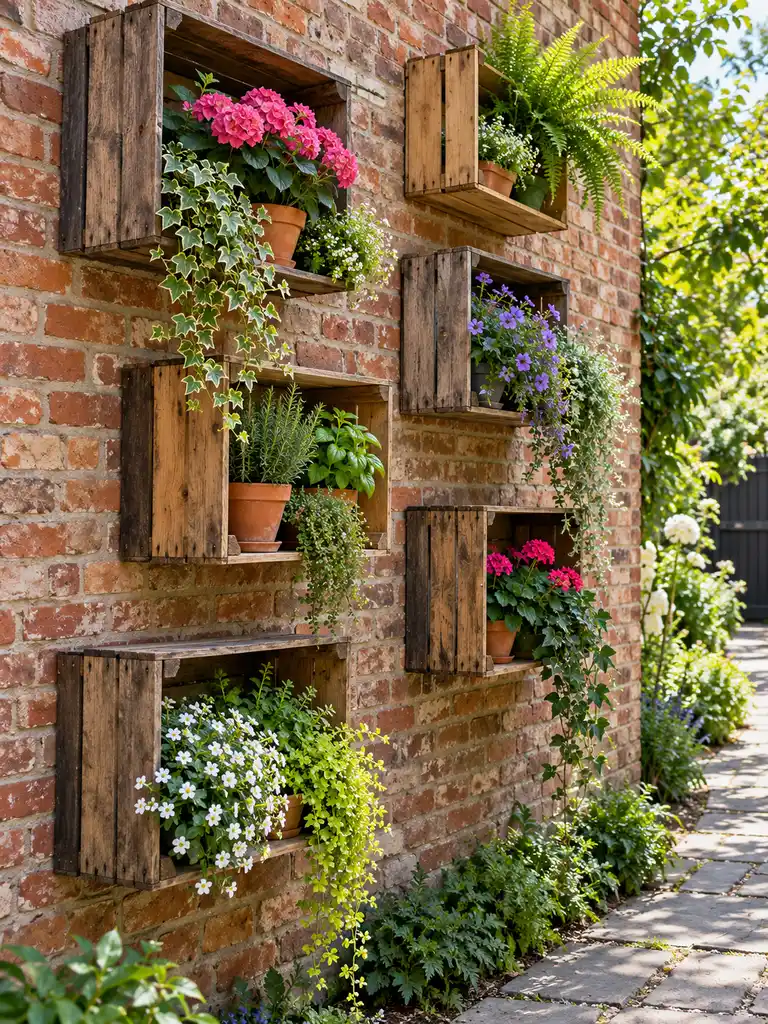
Rustic wooden crates provide deeper planting space while adding strong texture to a plain wall. Mount several crates at staggered heights and keep their box shapes visible rather than packing them too tightly.
Use some for flowering plants, others for herbs, succulents, ferns, or trailing greenery. A brick wall is an especially attractive background because the warm masonry and aged timber create a layered, handcrafted look without requiring elaborate construction.
8. Hanging Basket Wall Display
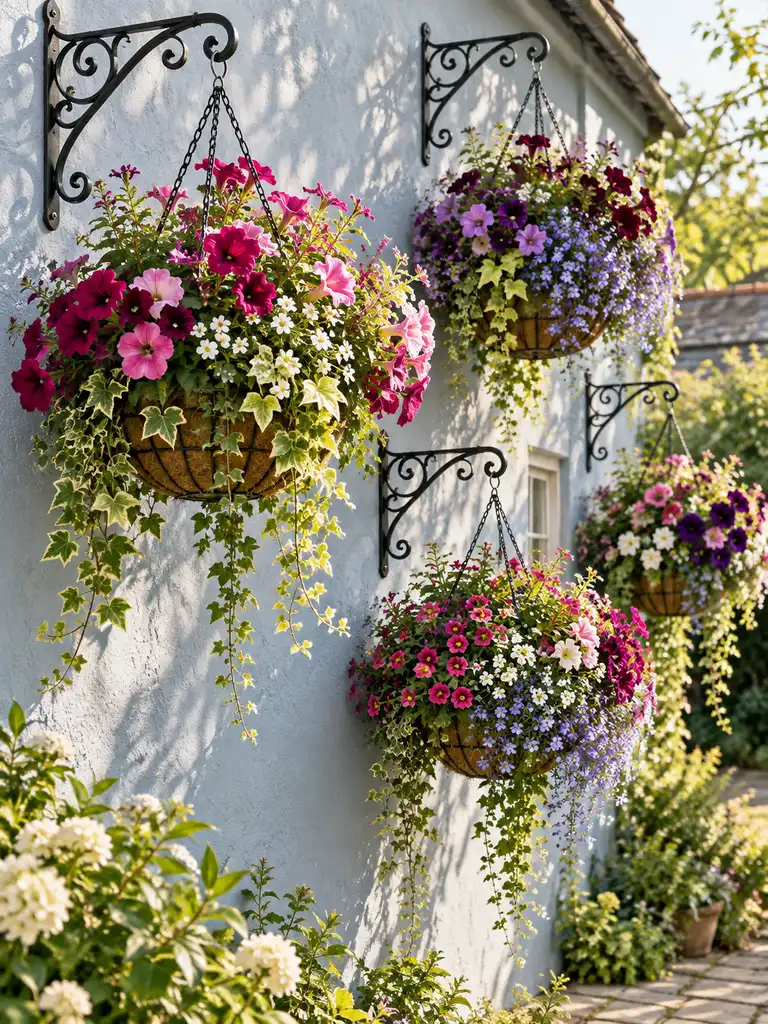
Decorative wall brackets let traditional hanging baskets become part of a vertical wall garden. Install several wrought-iron brackets at different heights and suspend round baskets filled with petunias, calibrachoa, lobelia, and long trailing vines.
Repeating similar basket shapes helps the arrangement feel cohesive, while varied flower colors keep it lively. This works particularly well on cottage walls, porch exteriors, and garden paths where the baskets can be viewed from the side as well as the front.
9. Vertical Herb Planter Wall
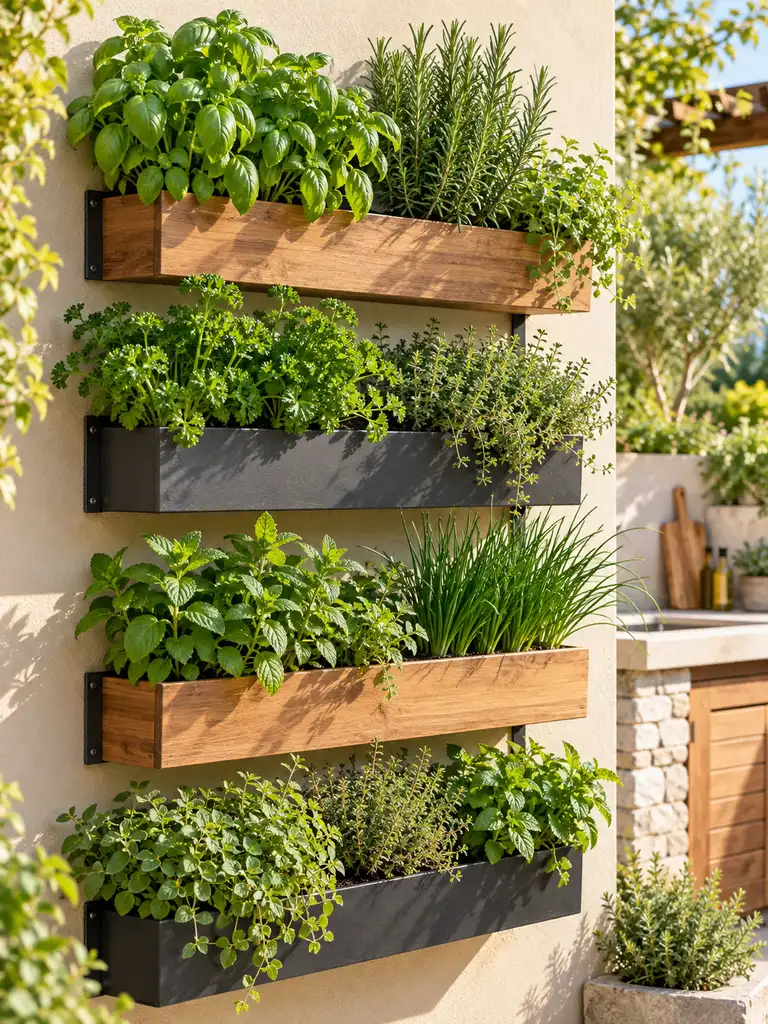
A sunny wall can double as a productive herb garden when compact planters are mounted within easy reach. Grow basil, parsley, rosemary, thyme, mint, chives, and oregano in separate containers so each plant has room to develop.
Keep the palette mostly green to emphasize the edible purpose of the display. Positioning the wall near a back door or outdoor prep area makes harvesting convenient while adding texture and fragrance to the space.
10. Repurposed Metal Toolbox Planter
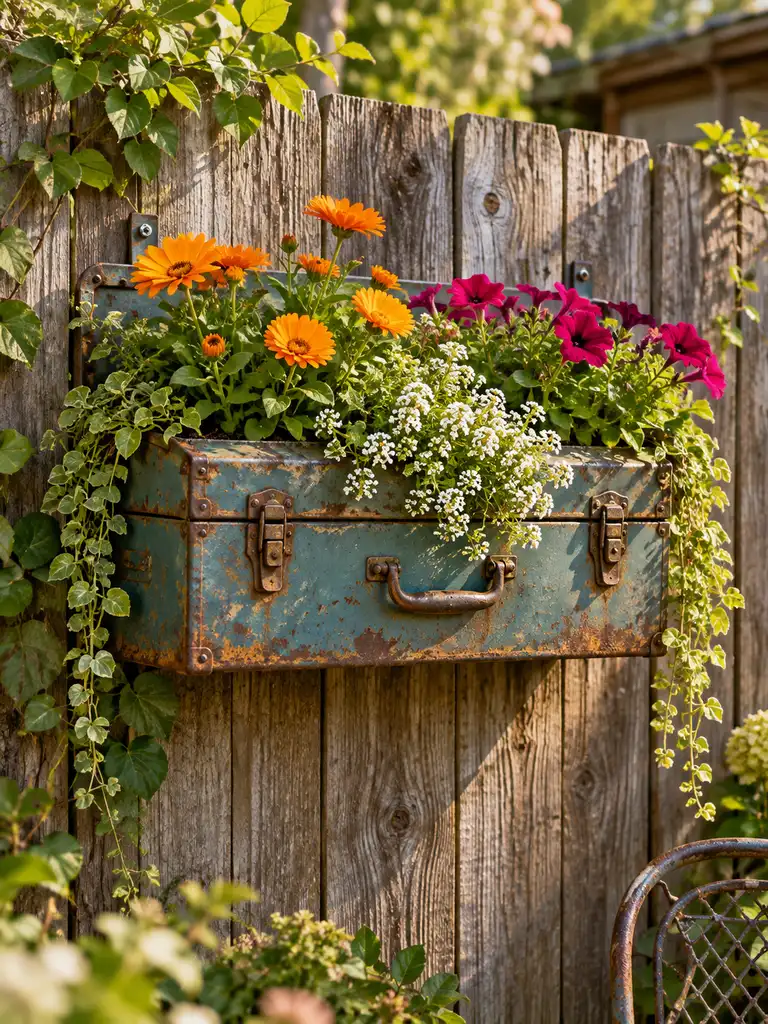
An old metal toolbox can become a character-filled planter instead of ending up in storage. Mount the toolbox securely on a fence or strong shelf and let its handle, latches, corners, and aged paint remain visible.
Fill the open top with bright calendula, petunias, alyssum, and trailing foliage. Light rust and worn paint can enhance the vintage feeling, making this a memorable addition to a rustic backyard or workshop garden.
11. Cottage-Style Flower Pot Wall
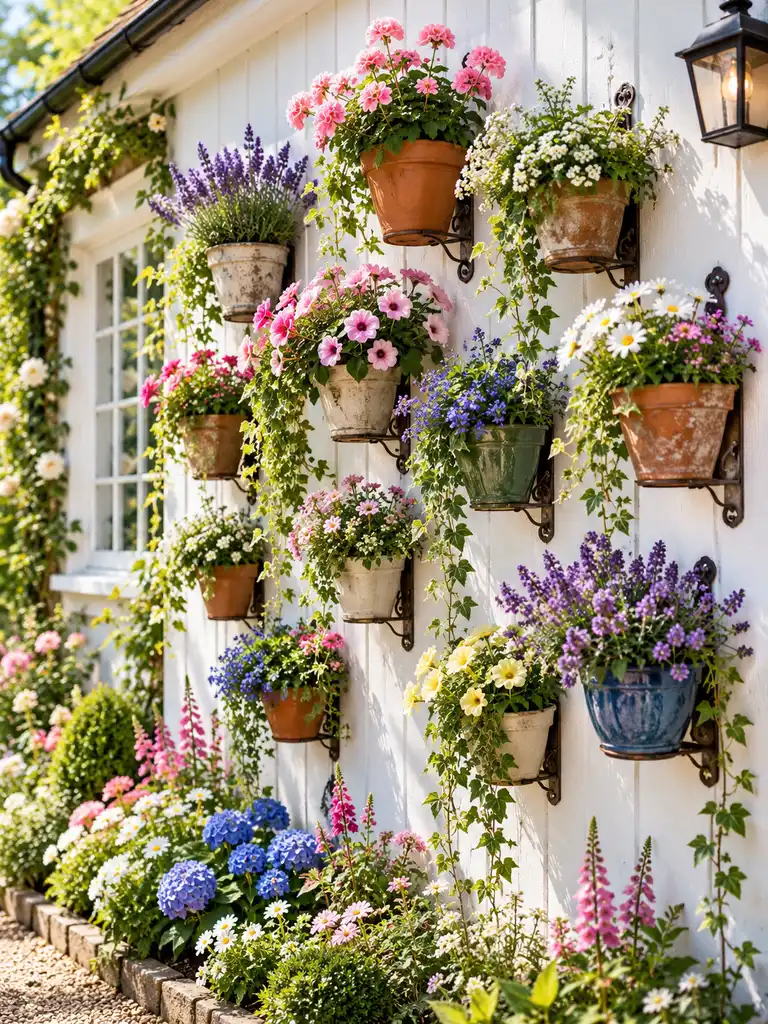
Create a relaxed cottage look with an informal collection of terracotta and glazed pots mounted across a white exterior wall. The containers do not need to match exactly; slightly different shapes, finishes, and sizes make the display feel collected over time.
Fill them with soft pink, purple, blue, white, and pale yellow blooms, then add a few trailing vines. Repeating several flower colors keeps the arrangement cohesive even when the pots themselves are mismatched.
12. Wooden Ladder Wall Planter
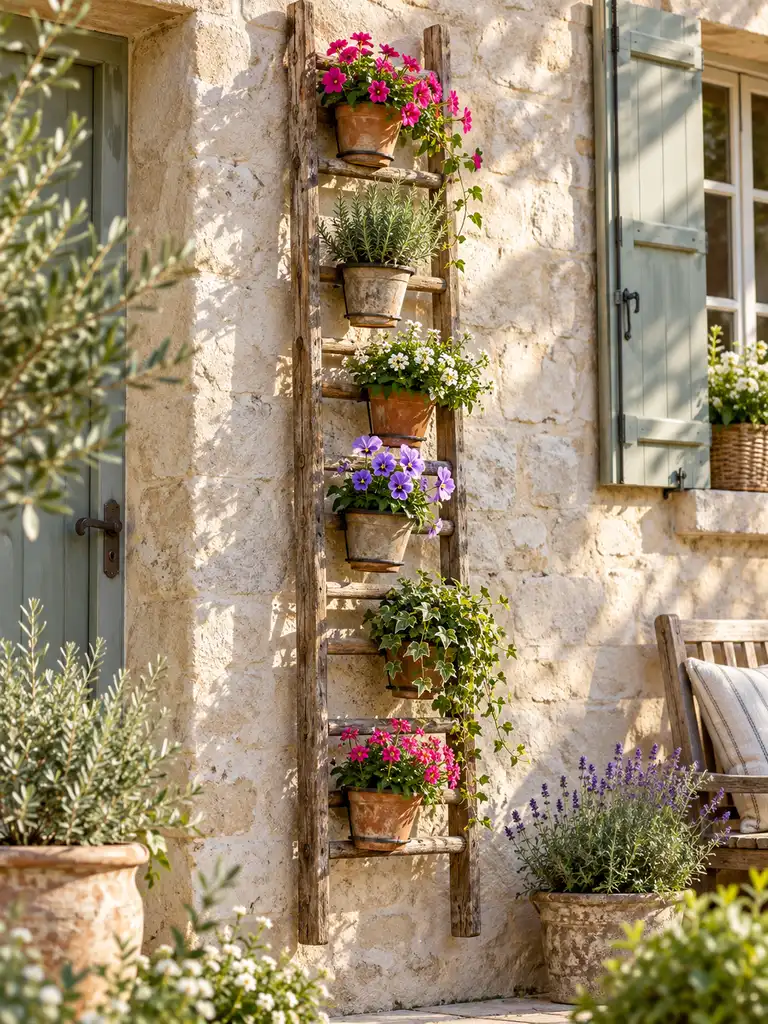
A narrow wooden ladder naturally provides a vertical framework for displaying small pots. Mount it securely against stone, stucco, or timber and attach one container to several rungs, leaving enough of the ladder visible to make the structure obvious.
Alternate flowers, herbs, and cascading greenery from top to bottom. Weathered timber suits rustic gardens, while a painted ladder can introduce a brighter cottage or coastal feel.
13. Minimalist Black Wall Planters
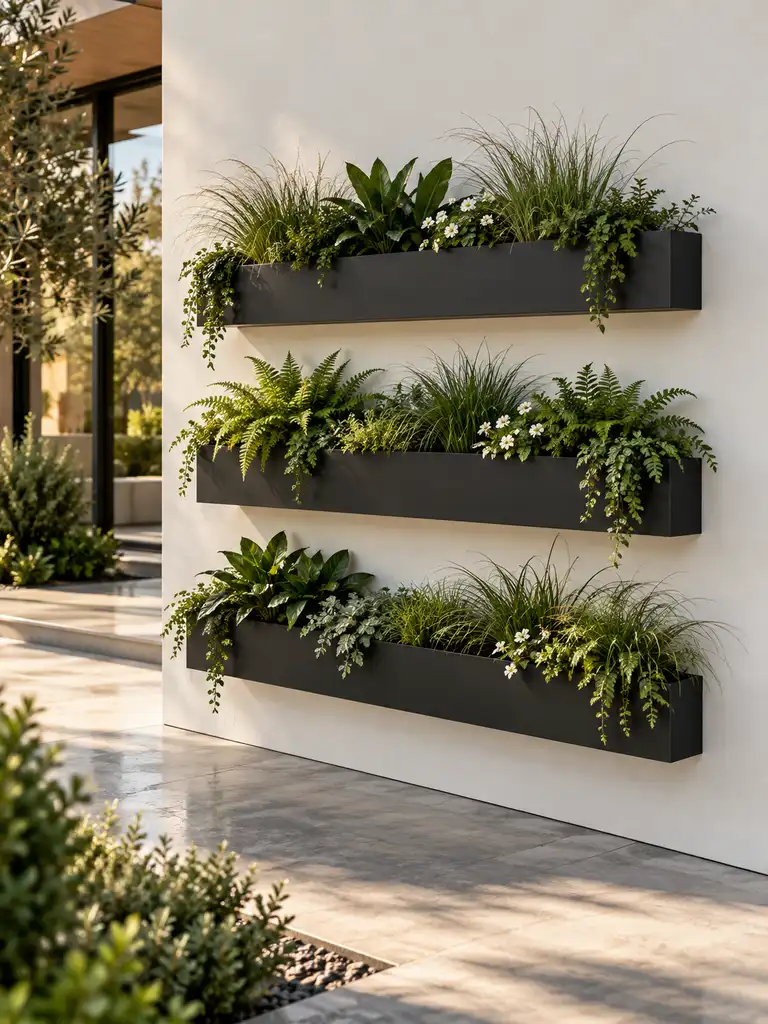
For a more contemporary look, choose long matte-black wall planters with simple rectangular forms. Mount them in clean horizontal alignment against an off-white or pale gray wall and fill them mainly with sculptural foliage, ornamental grasses, ferns, and restrained white flowers.
The dark containers create graphic contrast without overwhelming the architecture. Keep surrounding decor minimal so the planter lines and green textures remain the main focus.
14. Colorful Ceramic Pot Wall
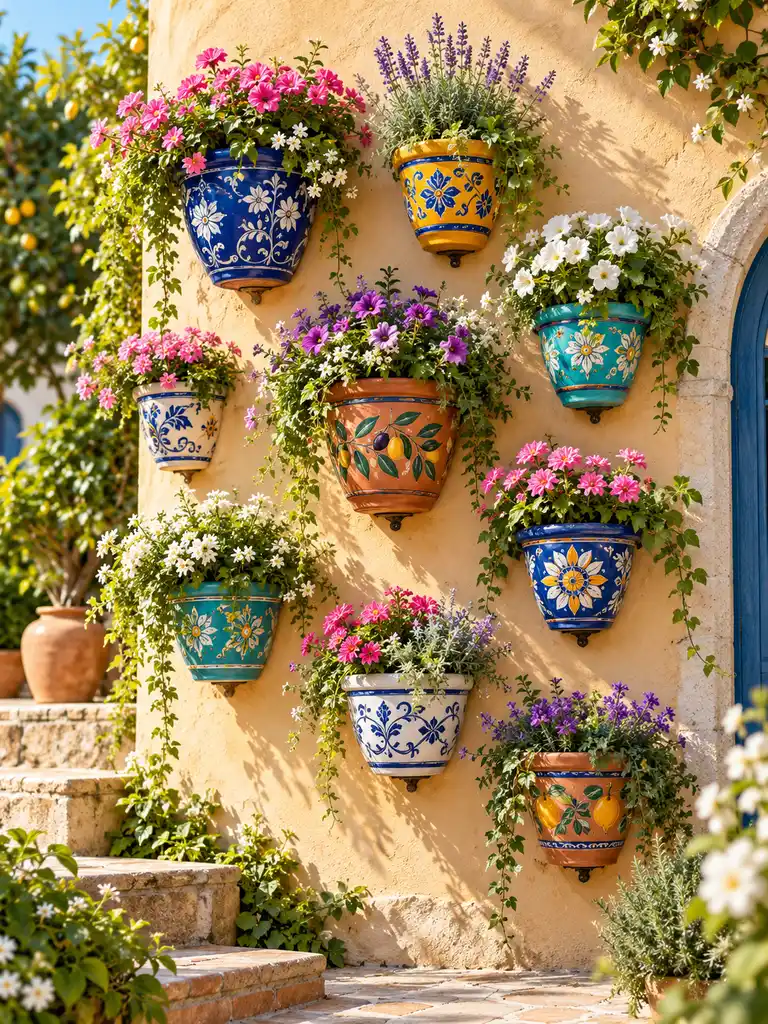
Decorative ceramic pots can turn a wall into garden artwork before the plants even begin to flower. Mix complementary tones such as cobalt blue, turquoise, mustard, terracotta, and white, then arrange the pots organically rather than in rigid rows.
Fill them with a more limited flower palette so the patterned containers remain visible. Against warm stucco or brick, glossy ceramics add color, craftsmanship, and a distinctly Mediterranean feeling.
15. Half-Barrel Wall Planter
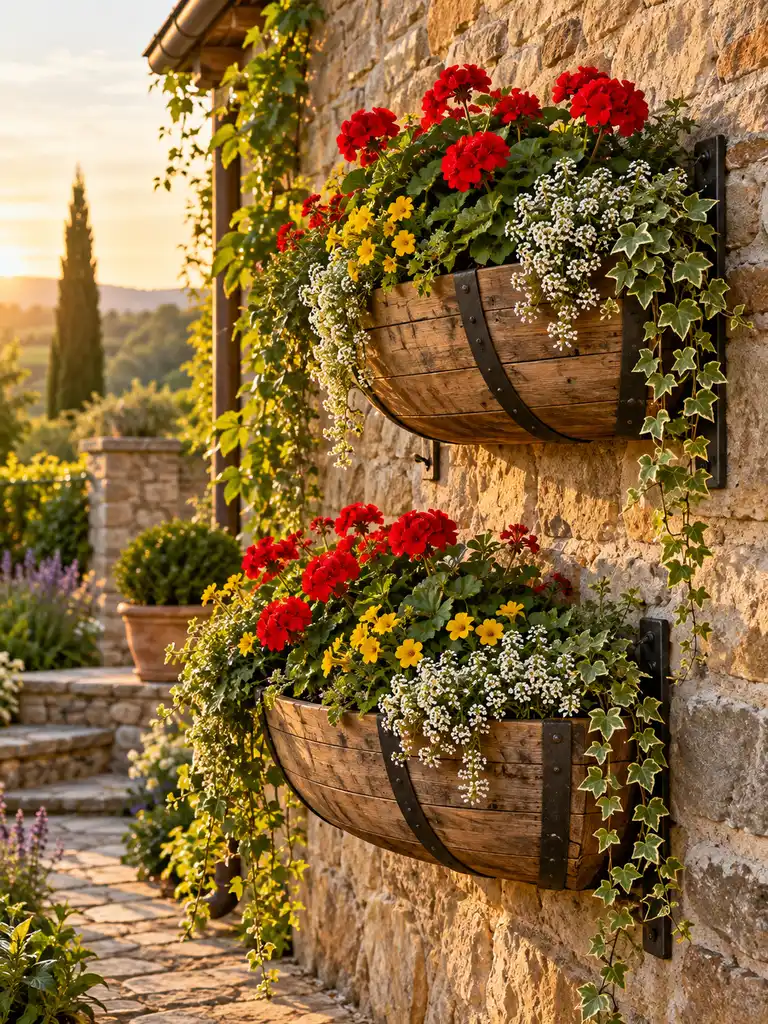
Shallow half-barrel planters bring strong farmhouse character to stone and timber walls. Look for containers with visible wooden staves and dark metal hoops, then mount them with sturdy brackets capable of supporting wet soil.
Fill each barrel with geraniums, yellow flowers, white alyssum, and trailing greenery so the planting spills over the curved edge. The warm wood looks especially attractive in golden-hour light and rustic garden settings.
16. Vertical Succulent Wall Frame
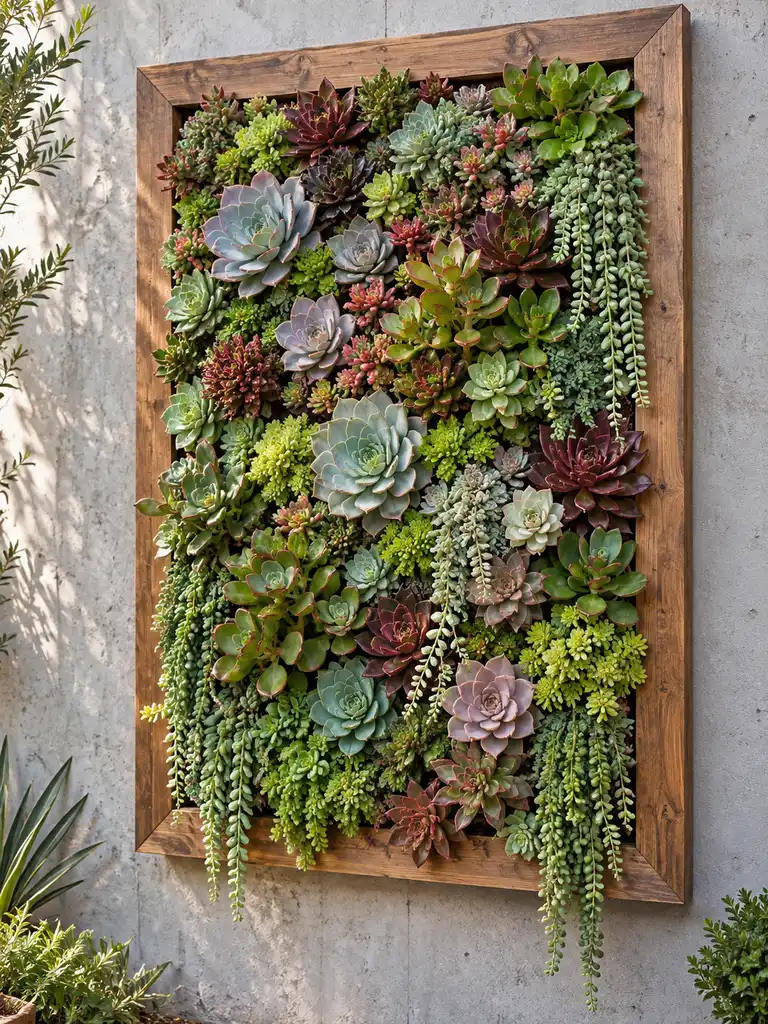
A framed succulent garden can function like living artwork. Use a shallow vertical planting frame and arrange rosette succulents, sedum, crassula, and trailing varieties in a dense pattern of green, dusty blue, burgundy, and pale pink.
Keep the timber border clearly visible so the installation still reads as a framed piece. Succulents work best where the wall receives suitable light and the planting system provides excellent drainage.
17. Woven Basket Wall Planters
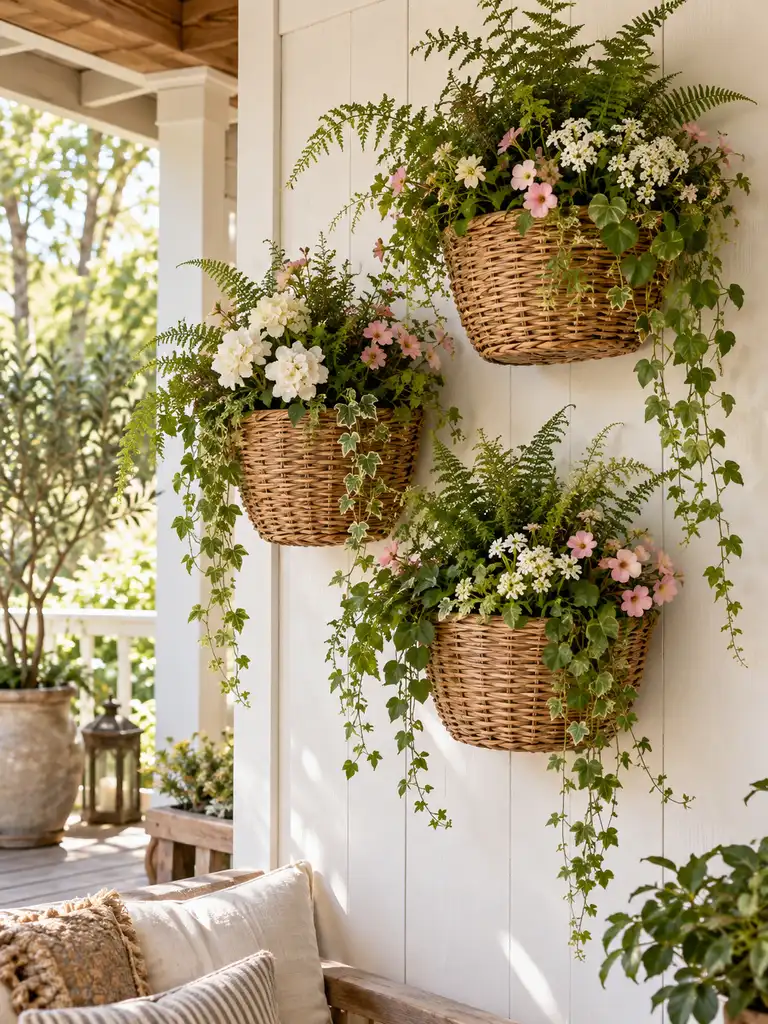
Natural woven baskets bring softness and handcrafted texture to a covered porch or protected patio. Mount several weather-resistant baskets at staggered heights and line them appropriately before adding soil.
Ferns, pale flowers, and trailing greenery emphasize the relaxed shape of the baskets. Their warm fibers pair beautifully with white siding, timber, rattan furniture, and other bohemian or farmhouse details.
18. Tiered Wooden Shelf Planter Wall
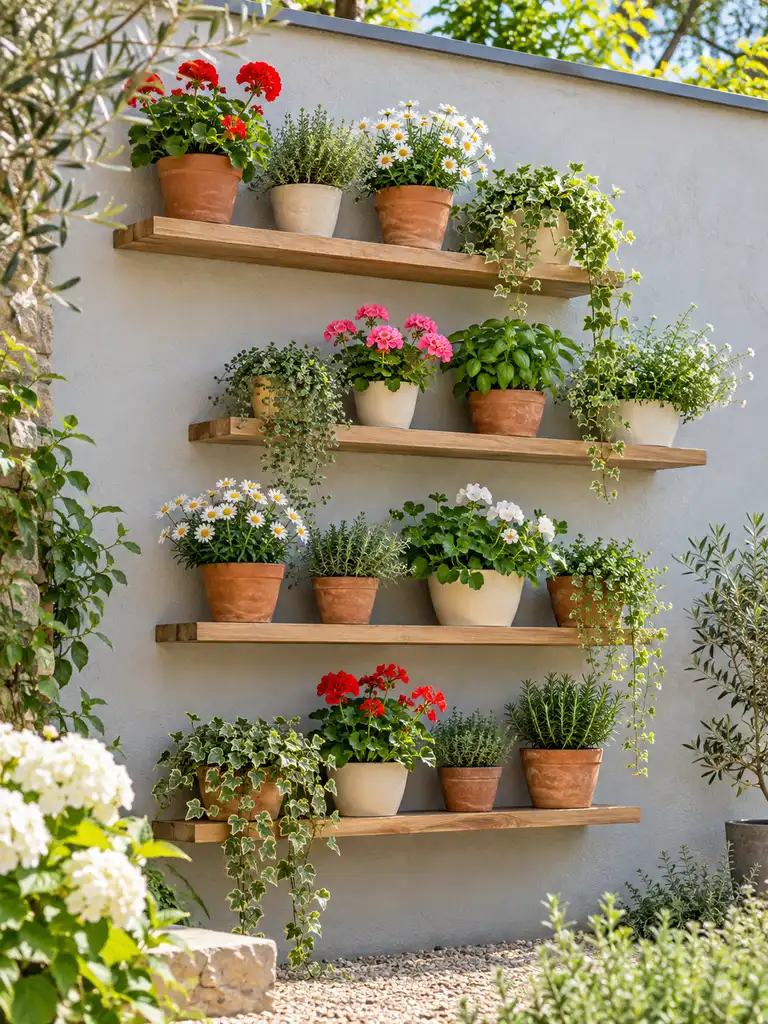
Narrow timber shelves make a flexible vertical garden because the pots can be rearranged whenever the season changes. Install several shelves at varied heights and combine terracotta, cream, and neutral containers filled with daisies, geraniums, herbs, foliage, and a few trailing plants.
Leave visible shelf space between groups so the display does not feel crowded. This approach works well when you want vertical impact without permanently fixing every pot to the wall.
19. Copper Pot Wall Garden
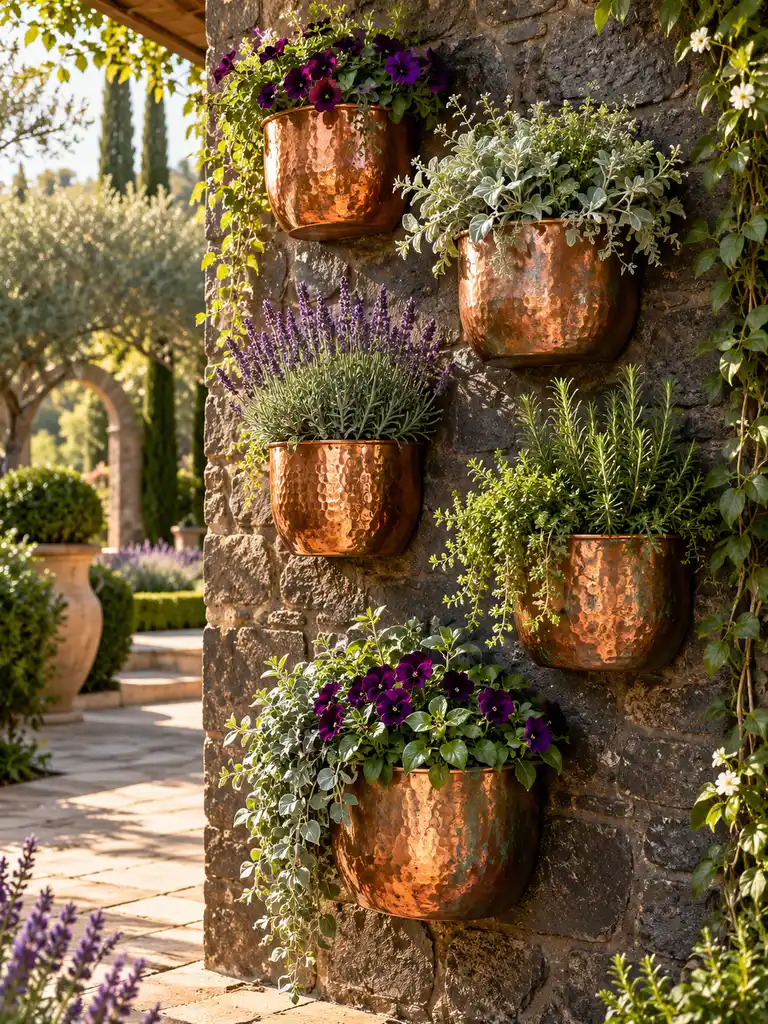
Hammered copper pots introduce warmth and subtle shine to an outdoor wall. Mount several containers individually against dark stone, brick, or charcoal siding and let the copper surfaces remain visible around the plants.
Purple flowers, lavender, silvery foliage, and deep green herbs complement the metal particularly well. Over time, natural patina can add even more character, making the wall garden feel richer rather than worn.
20. Fence-Mounted Flower Boxes
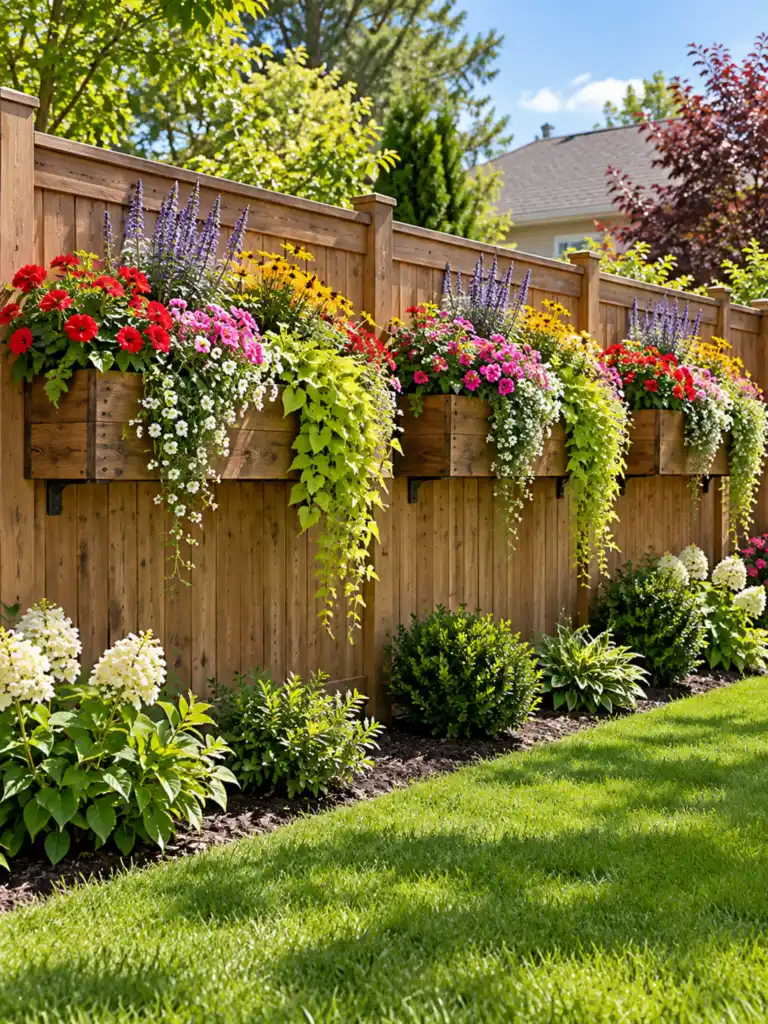
Long rectangular flower boxes can transform an ordinary backyard fence into a colorful garden feature. Attach several boxes at a comfortable height and fill them generously with annual flowers and trailing plants.
Repeating the same box style creates continuity along the fence, while changing the flower combinations adds movement from section to section. This is especially effective in narrow yards where floor space is valuable but the fence offers a long unused surface.
21. Recycled Tin Can Wall Planters
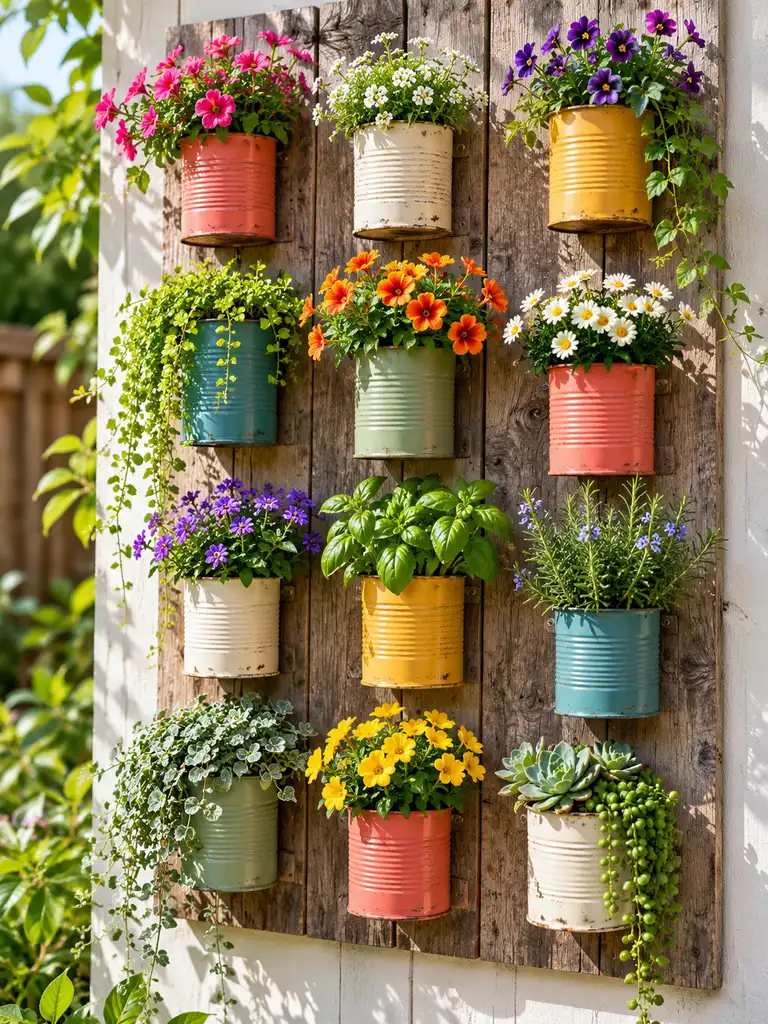
Large food cans can be repurposed into inexpensive planters with a little preparation. Clean them thoroughly, add drainage holes, paint them in coordinated outdoor colors, and mount them to a timber backing board.
Coral, teal, mustard, sage, and cream create a cheerful palette without becoming chaotic. Use compact herbs, small flowers, succulents, and trailing plants that suit the limited soil volume. The recognizable cylindrical cans keep the project playful and clearly DIY.
22. Rustic Watering Can Wall Planter
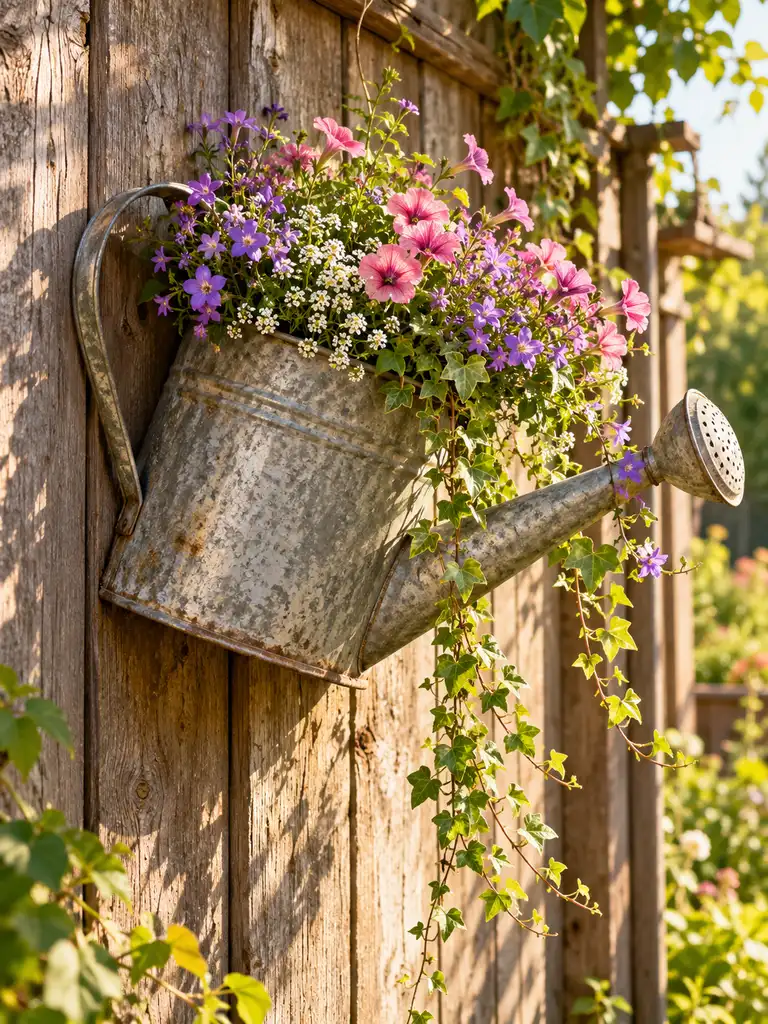
A vintage galvanized watering can becomes a charming focal point when it is mounted directly to a wooden wall. Position it at a slight angle so the handle and long spout stay visible, then fill the top with pink and purple flowers, white alyssum, and trailing vines. Let a little greenery drape near the spout to emphasize the object’s original function without turning the arrangement into a novelty display.
23. Modern Geometric Wall Planters
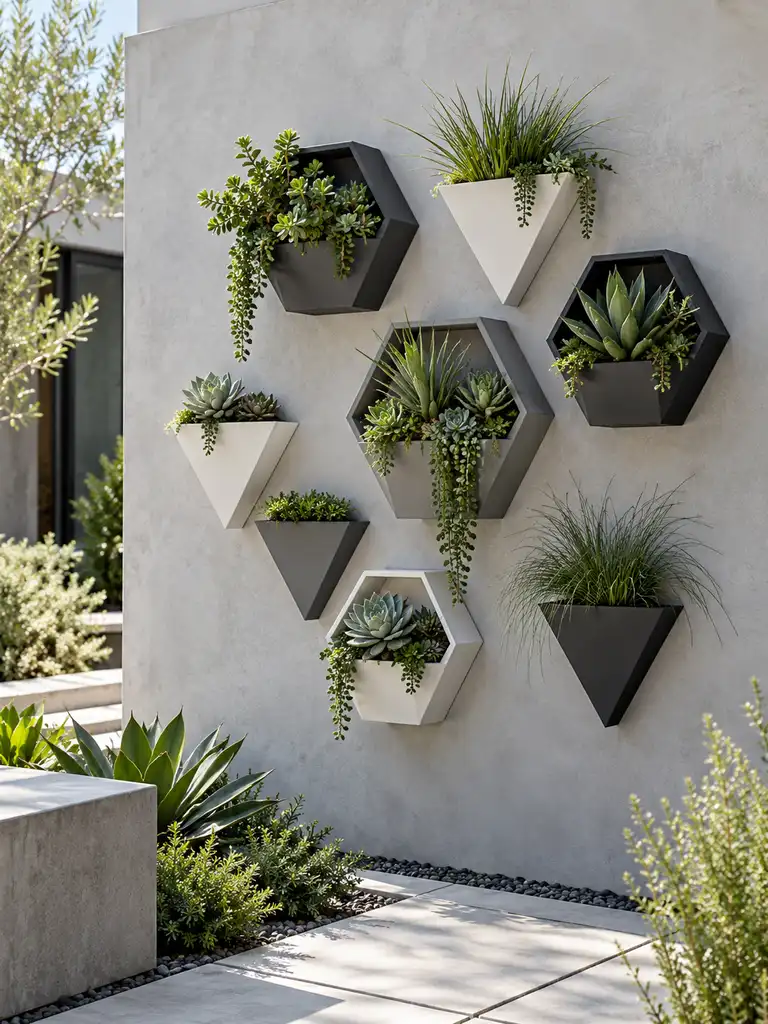
Angular planters are ideal for contemporary courtyards and modern exterior walls. Combine hexagonal, triangular, and faceted containers in charcoal, white, and warm gray, leaving enough negative space for each shape to read clearly.
Plant them with succulents, grasses, and compact foliage rather than oversized flowers. The strong geometry should remain visible after planting so the finished wall feels more like an outdoor art installation than a collection of ordinary pots.
24. Vertical Fern Wall
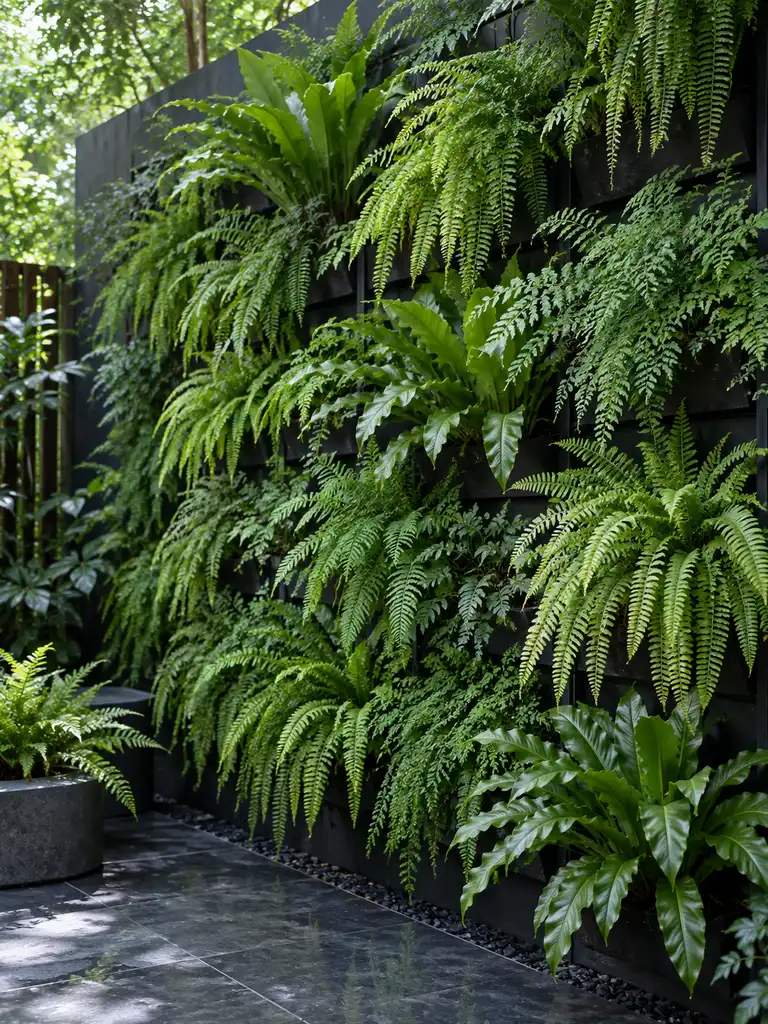
A shaded wall can become a lush green feature using ferns alone. Plant several varieties with different frond shapes in a purpose-built vertical system or deep wall pockets, combining arching, upright, fine, and broad textures.
Avoid bright flowers so the range of greens becomes the visual focus. This approach works especially well in cool, sheltered courtyards where soft filtered light supports moisture-loving foliage.
25. Macramé Wall-Mounted Plant Display
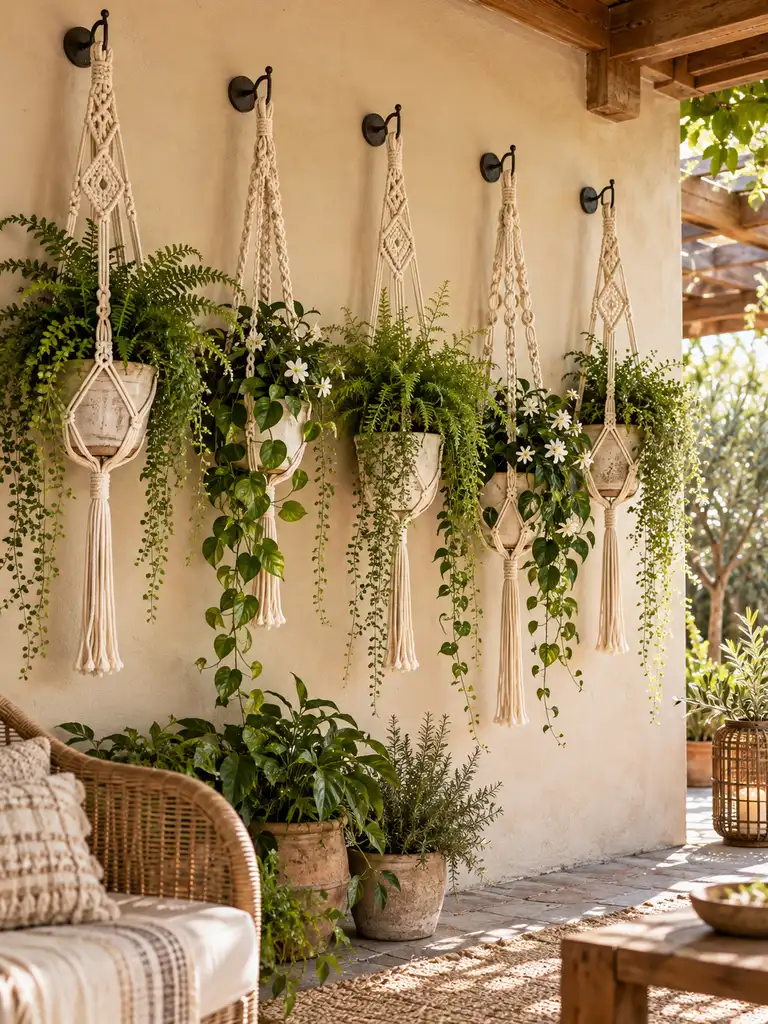
Macramé hangers add a relaxed bohemian layer to a covered patio or porch. Fix sturdy hooks to the wall and suspend several cream-colored knotted holders at different heights, each supporting a compact ceramic pot.
Fill them with ferns, trailing foliage, and a few delicate white blooms. Weather-resistant cord and a sheltered location will help the display stay attractive while preserving the handmade texture of the knots.
26. Wooden Pocket Wall Planter
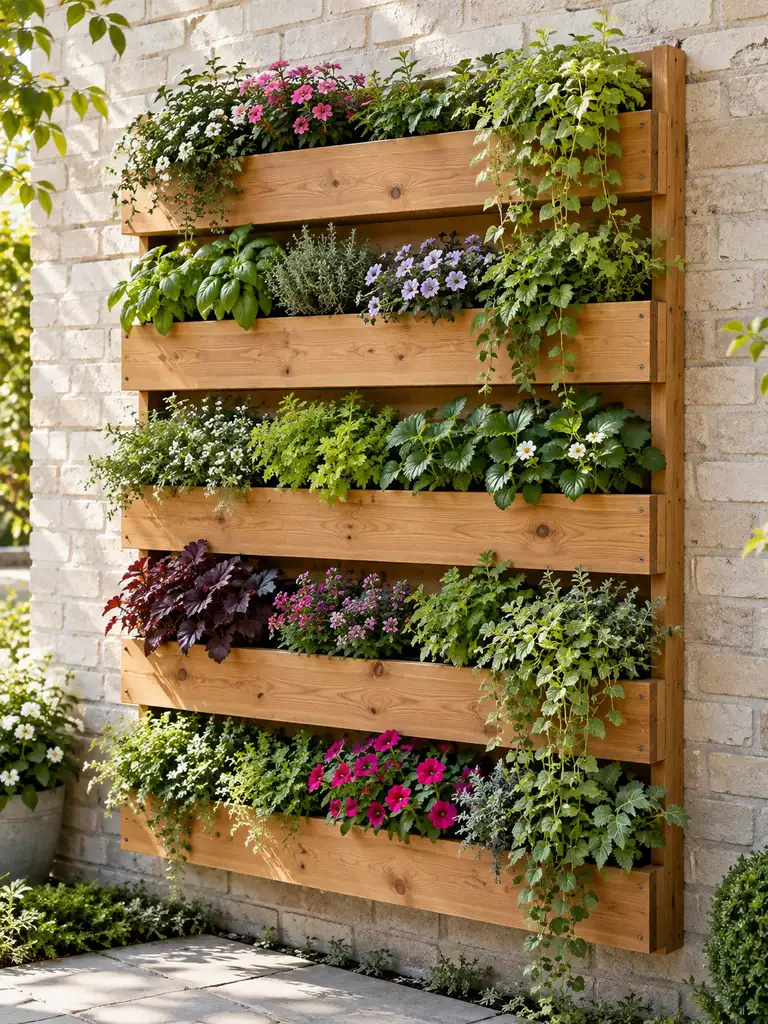
Built-in wooden planting pockets create a more permanent vertical garden than individual pots. Construct several long horizontal boxes and stack them vertically with enough space for plants to spread.
Fill each level with a mixture of compact flowers, leafy herbs, strawberries, and trailing greenery. Keeping the timber edges visible makes the construction part of the design and gives the wall a warm, organized appearance.
27. Repurposed Rain Gutter Planters
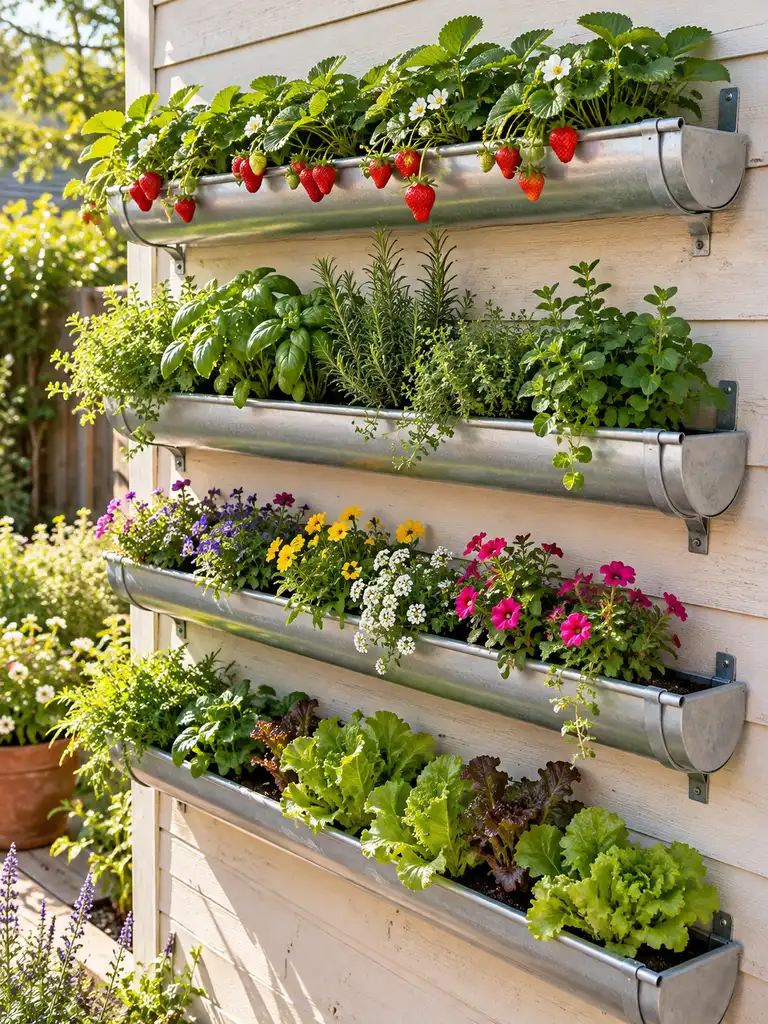
Sections of clean rain gutter can become shallow horizontal planters for compact crops and flowers. Mount several lengths one above another with sturdy brackets and proper drainage, then use each row for a different planting theme.
Strawberries, herbs, small annuals, and leafy greens all work well when root depth is suitable. The repeating half-round gutter shape creates a practical, space-saving garden on sheds, fences, and exterior walls.
28. Farmhouse Enamel Basin Planter
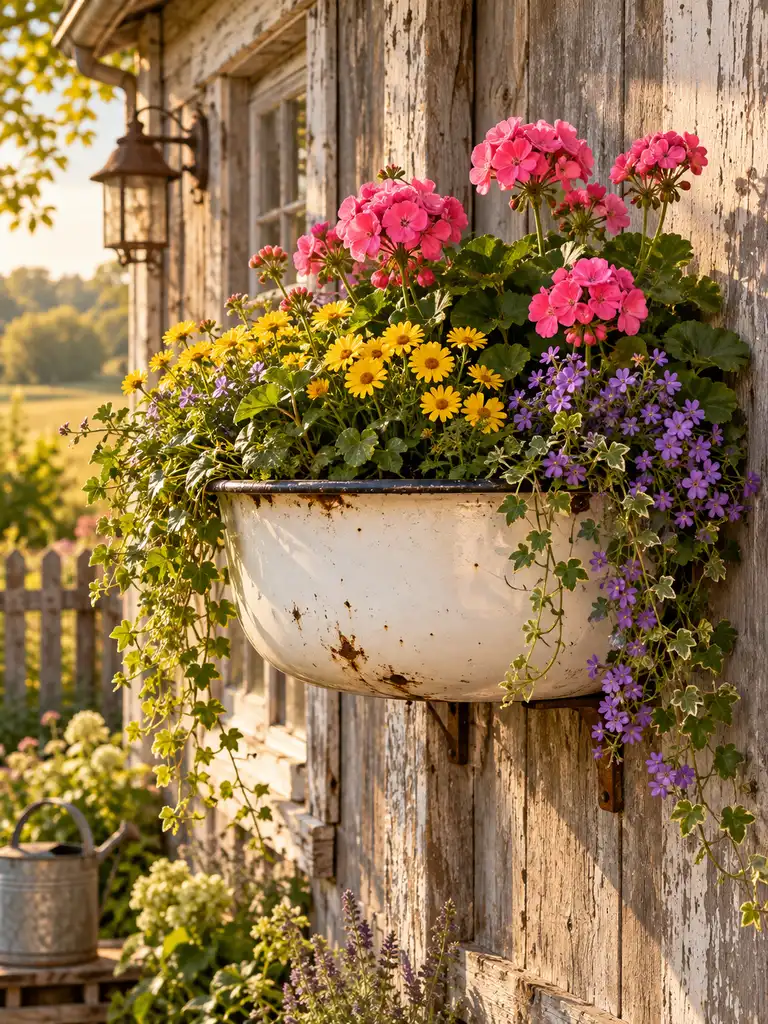
A vintage enamel wash basin makes a bold farmhouse wall planter because its rounded shape remains visible beneath the flowers. Choose a white basin with a dark rim or other classic finish, secure it to a weathered wall, and fill it with geraniums, daisies, purple blooms, and trailing greenery. Slight wear on the enamel adds authenticity and pairs beautifully with aged timber, lanterns, and other country-garden details.
29. Wall-Mounted Strawberry Garden
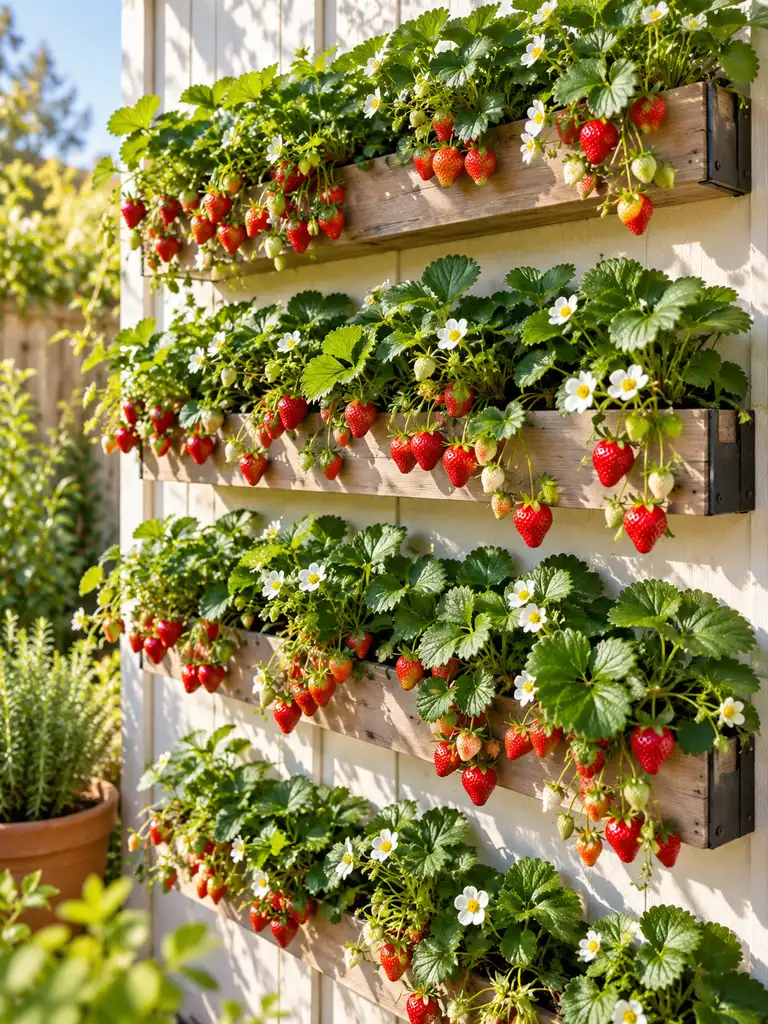
Strawberries are particularly attractive in vertical planters because the leaves, white blossoms, runners, and fruit all contribute to the display. Use several stacked troughs or planting pockets on a sunny wall and allow ripe berries to hang over the edges where they are easy to see and harvest. Keep the planters accessible for regular watering, because elevated containers can dry faster than garden beds during warm weather.
30. Vertical Kitchen Herb Garden
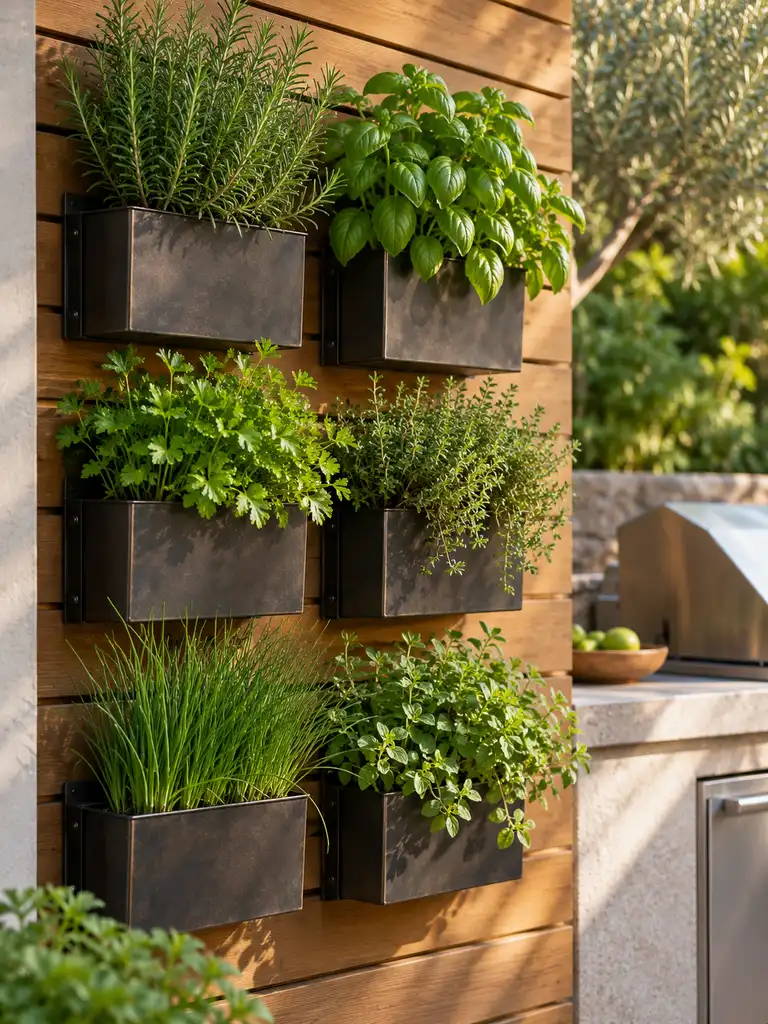
A wall beside an outdoor kitchen can become a compact source of fresh herbs. Mount several containers within comfortable reach and fill them with rosemary, basil, parsley, thyme, chives, and oregano.
Keeping each herb visually distinct makes harvesting easier while providing varied leaf shapes and shades of green. The nearby counter or grill gives the display practical context without needing additional decoration.
31. Mediterranean Terracotta Wall Garden
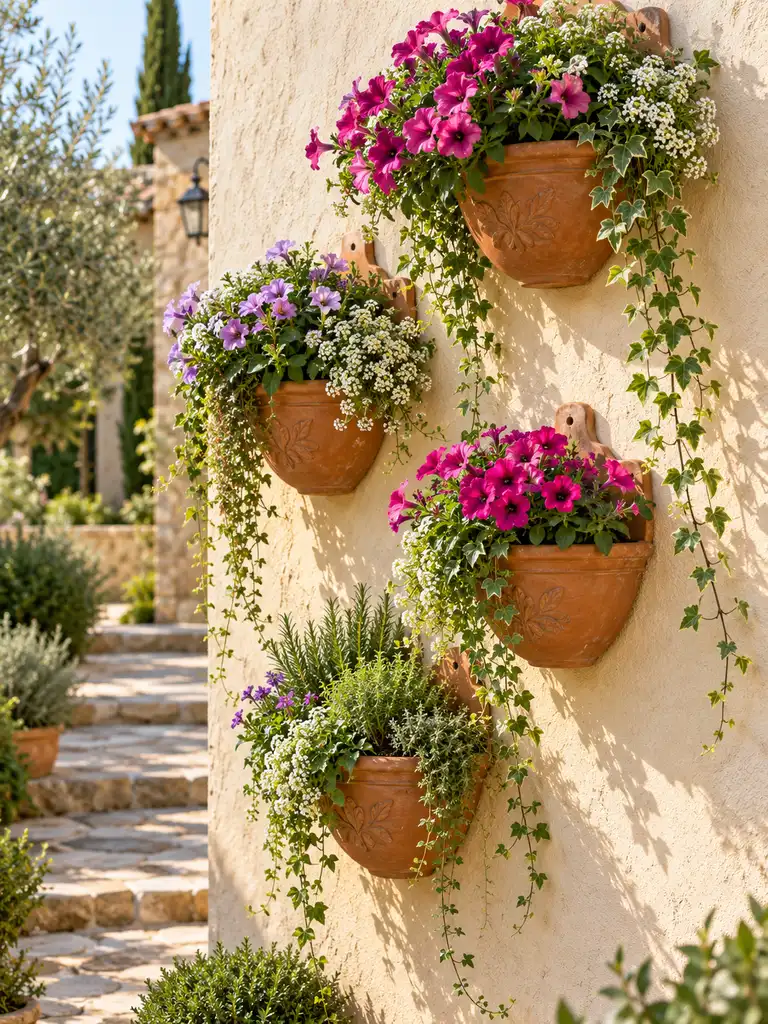
Warm terracotta containers against pale stucco instantly create a Mediterranean courtyard feeling. Fill the wall planters with lavender, rosemary, geraniums, thyme, and cascading greenery, then complement them with natural stone paving and sun-loving landscape plants. Using several pot sizes keeps the composition relaxed, while repeating the same clay material makes the whole arrangement feel unified and timeless.
32. Modern White Wall Planter Display
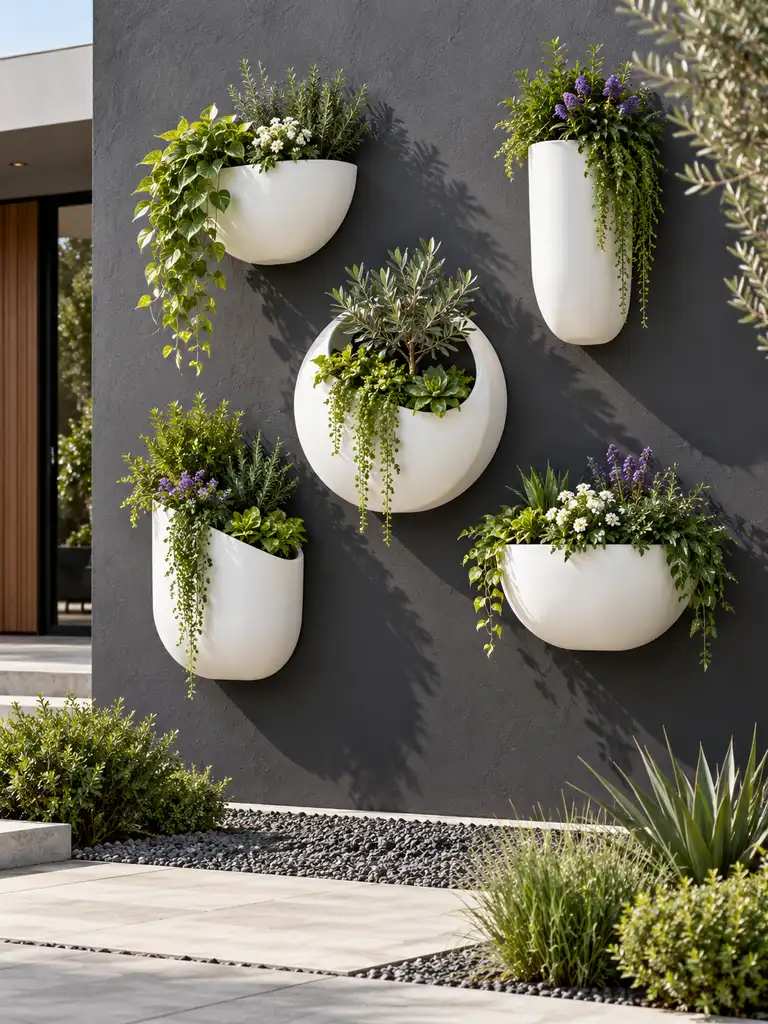
Crisp white sculptural planters look striking against charcoal, dark gray, or timber-clad walls. Choose a mix of smooth rounded and elongated forms, mount them with generous space between each piece, and fill them mostly with green foliage plus small accents of purple or white flowers. The contrast between white containers and the darker wall gives the display an architectural quality that suits modern homes and minimalist courtyards.
33. Reclaimed Wooden Shutter Planter
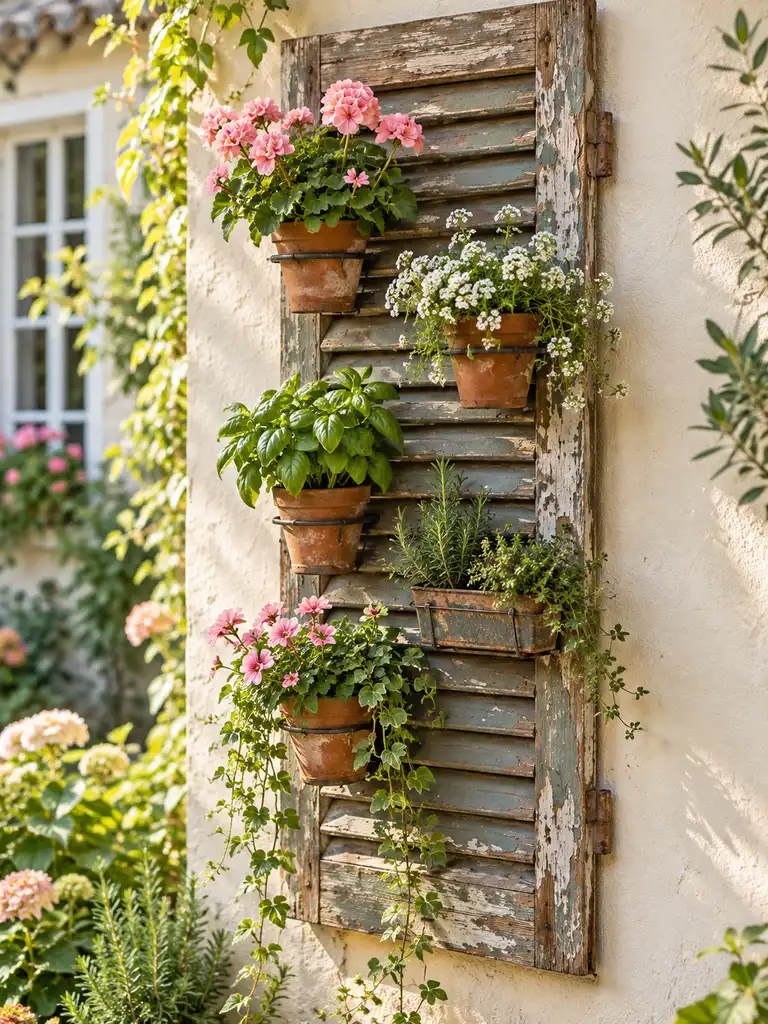
An old wooden shutter can become an instant vertical planter support. Mount the weathered shutter securely and attach small terracotta pots and narrow containers directly to its slats, leaving plenty of faded paint and aged wood visible.
Pink flowers, white alyssum, basil, rosemary, and trailing vines create a cottage-style mixture. The shutter itself should remain the dominant structure rather than disappearing behind the plants.
34. Hanging Mason Jar Wall Garden
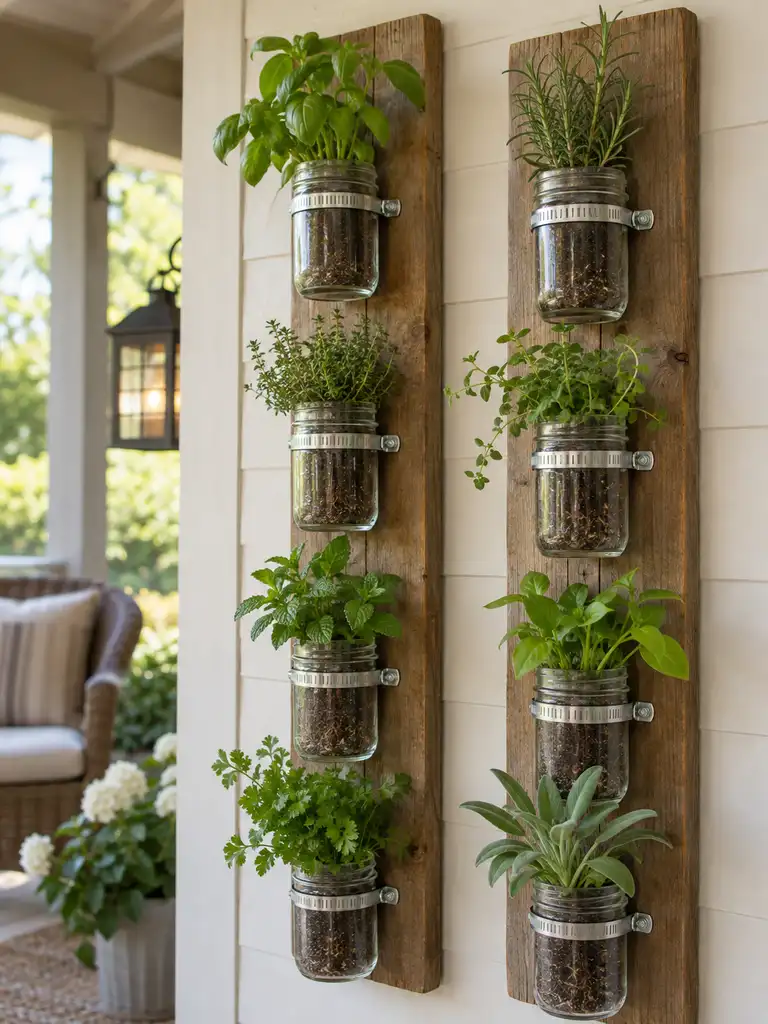
For a protected porch, clear mason jars can become neat compact planters when they are secured to rustic boards with metal clamps. Arrange several jars vertically, keeping the glass, metal rims, and mounting hardware clearly visible.
Use small herbs such as basil, thyme, mint, parsley, or rosemary that suit the available root space. The transparent jars make the planting medium part of the visual appeal and give the display a handcrafted farmhouse feel.
35. Wall Planter Around an Outdoor Mirror
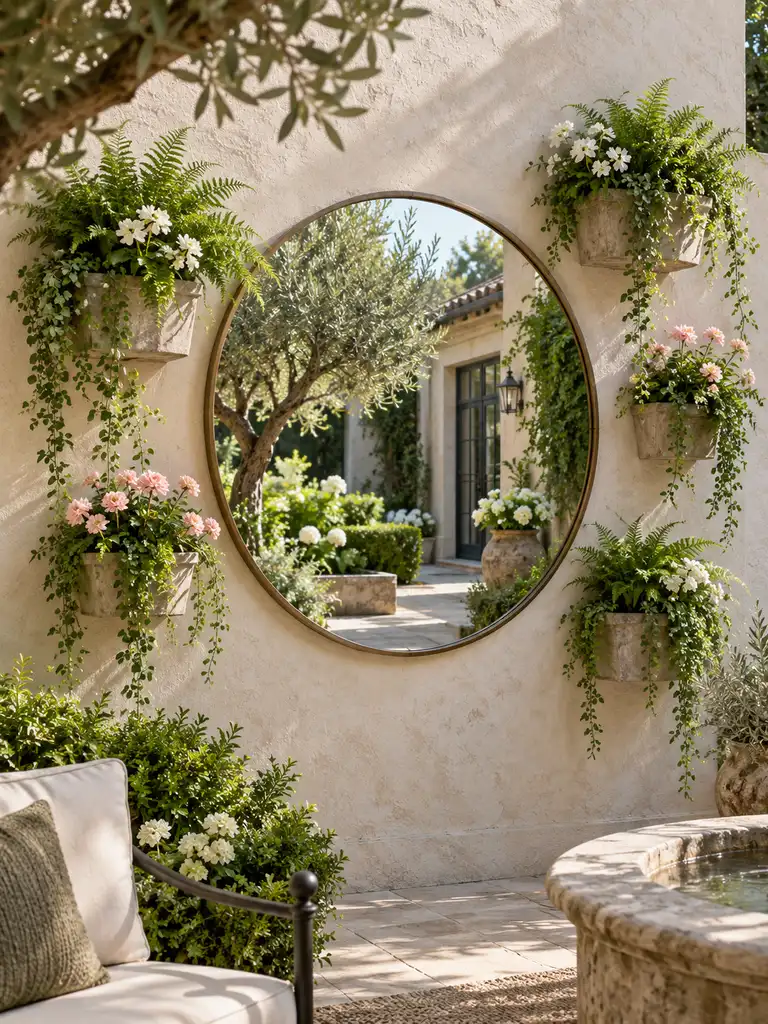
A weather-resistant mirror can visually enlarge a small courtyard while doubling as the center of a garden display. Mount a large round mirror on a sheltered exterior wall and arrange compact planters around its perimeter, using ferns, white flowers, soft pink blooms, and trailing greenery as a living frame. Reflections of trees and surrounding garden beds add extra depth, making a modest space feel more open and layered.
36. Cascading Ivy Wall Planters
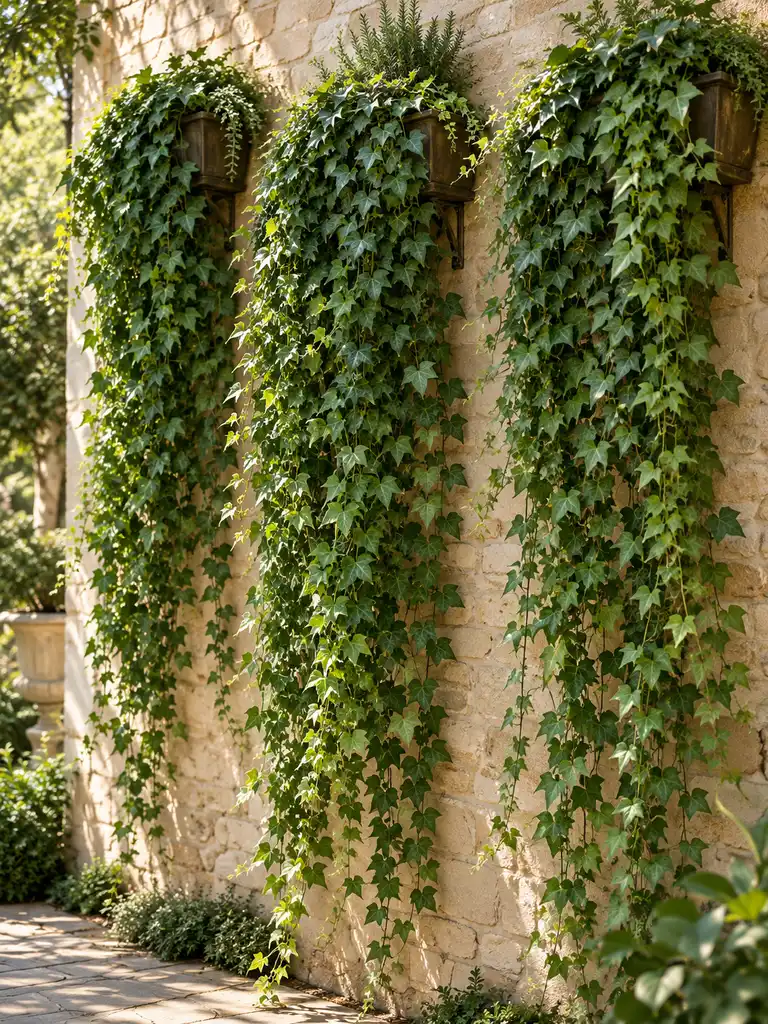
Mount several planters high on a stone or brick wall and fill them primarily with vigorous trailing ivy. Let the vines fall in long curtains so they soften the hard surface and create a strong vertical effect.
A few upright herbs or fine-leaved plants can add contrast near the top, but the cascading greenery should remain the defining feature. Regular trimming helps keep the vines clear of doors, windows, lighting, and gutters.
37. Color-Blocked Planter Wall
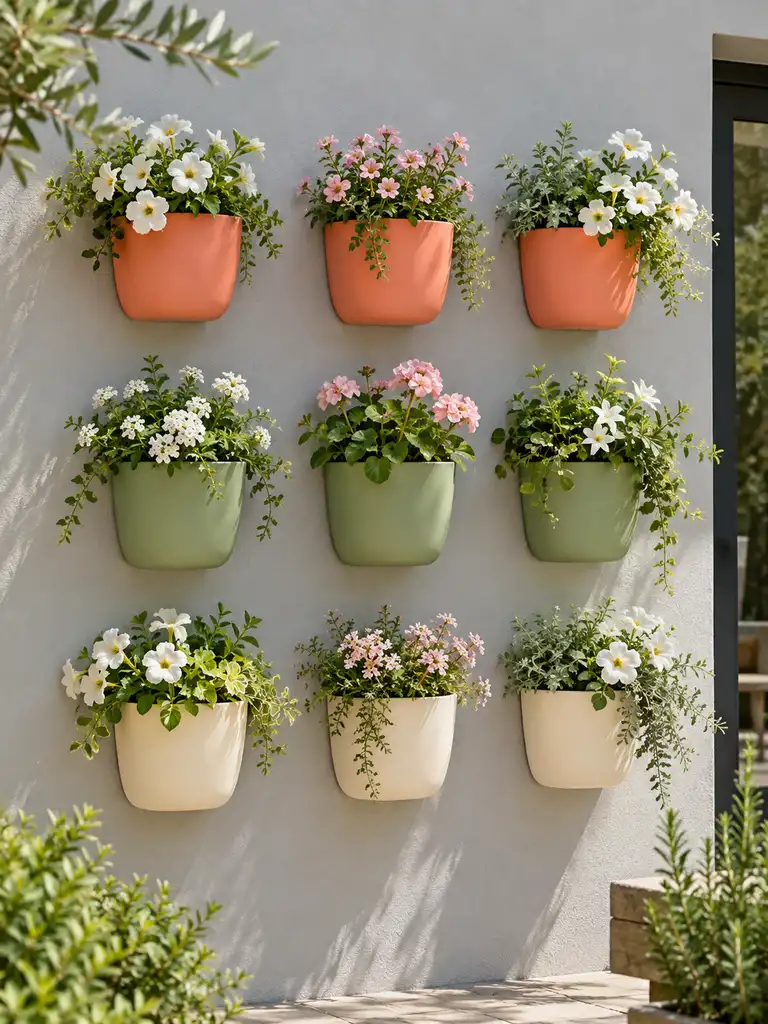
Turn simple wall pots into graphic outdoor decor by painting them in coordinated color groups. Coral, sage green, and warm cream can form three distinct horizontal bands, while restrained white and blush flowers prevent the planting from competing with the containers.
Mount the pots in a balanced grid against a neutral wall so the repeated blocks of color are immediately visible. This works particularly well with simple modern planter shapes.
38. Industrial Pipe Wall Planter
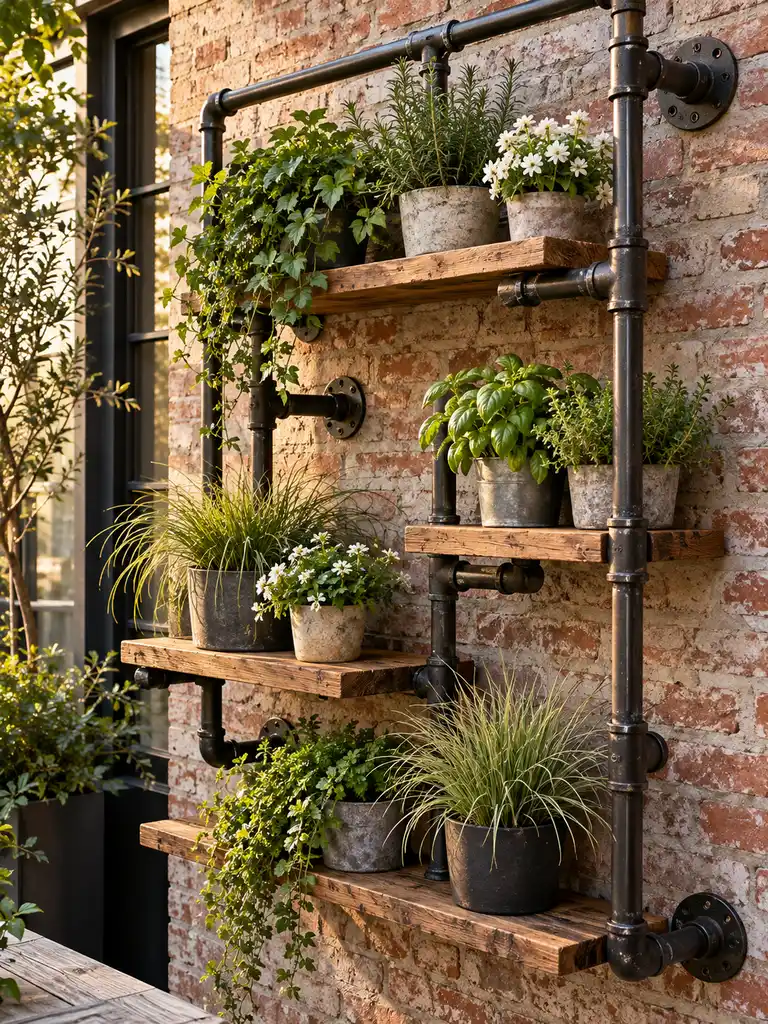
Exposed black metal pipe can form both the structure and visual identity of an industrial-style wall garden. Fix vertical and horizontal pipes to brick using visible flanges, elbows, and joints, then support reclaimed wooden shelves between them.
Add simple pots filled with herbs, ornamental grasses, ivy, and a few understated white flowers. Keeping the hardware exposed gives the design a workshop-inspired character that pairs well with urban patios and loft-style architecture.
39. Living Wall With Mixed Foliage
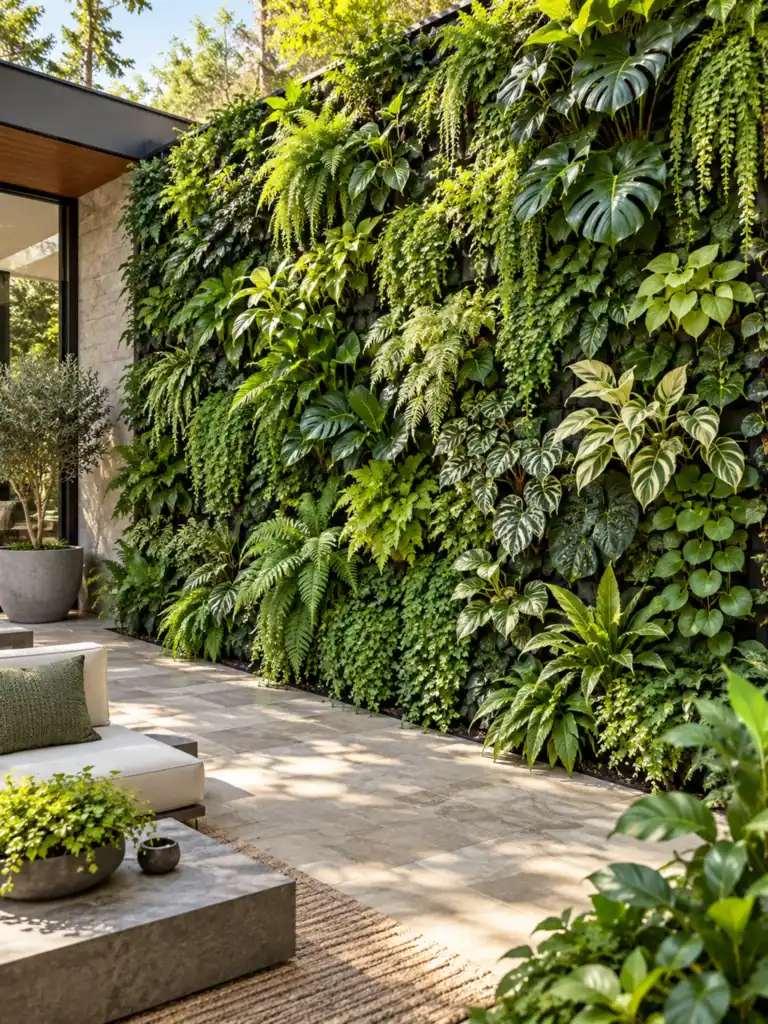
A dense living wall can create maximum impact without relying on colorful flowers. Use a modular vertical planting system and combine broad tropical leaves, fine ferns, variegated foliage, trailing plants, and small rounded leaves in many shades of green.
Repeat several species throughout the installation so the wall feels cohesive rather than random. Beside a modern patio, the layered foliage can become a dramatic architectural feature and natural backdrop.
40. Butterfly-Friendly Flower Wall
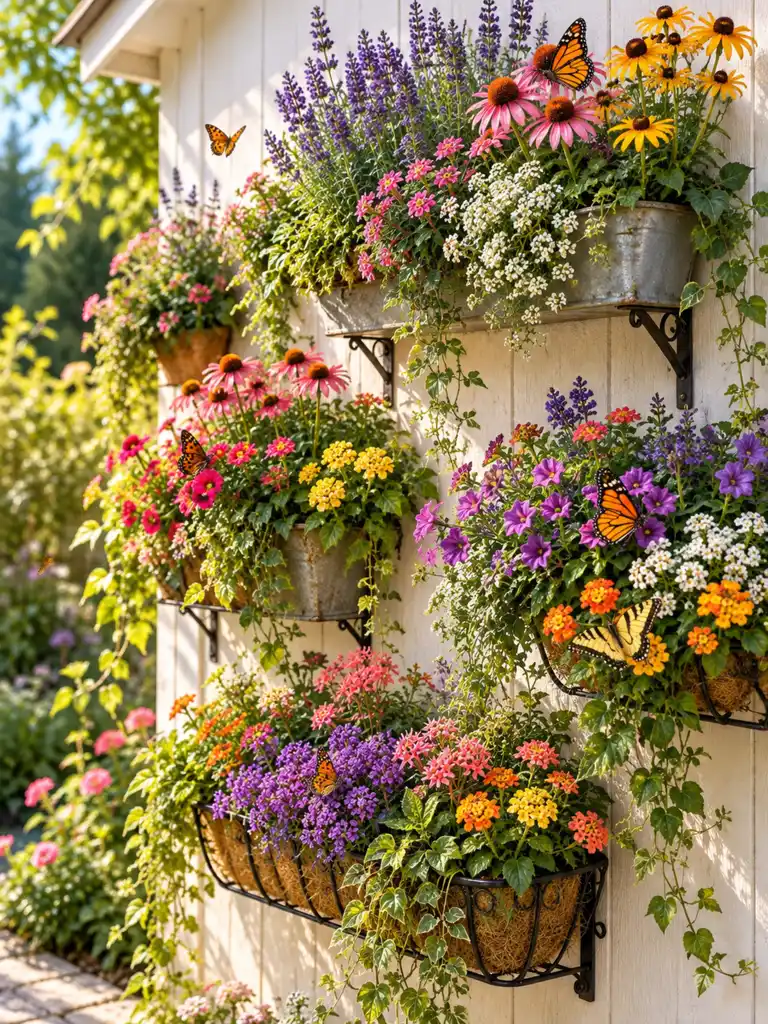
Fill multiple wall planters with generous groups of nectar-rich flowering plants suited to your climate. Coneflowers, lavender-like spikes, yellow daisy forms, pink clusters, purple blooms, and white flowers create varied landing points and a long season of interest.
Several butterflies visiting the flowers make the purpose of the wall clear, while trailing greenery connects the containers. Position the display in a sunny, sheltered area where pollinators can reach it easily.
41. Pollinator Wall Planter Garden
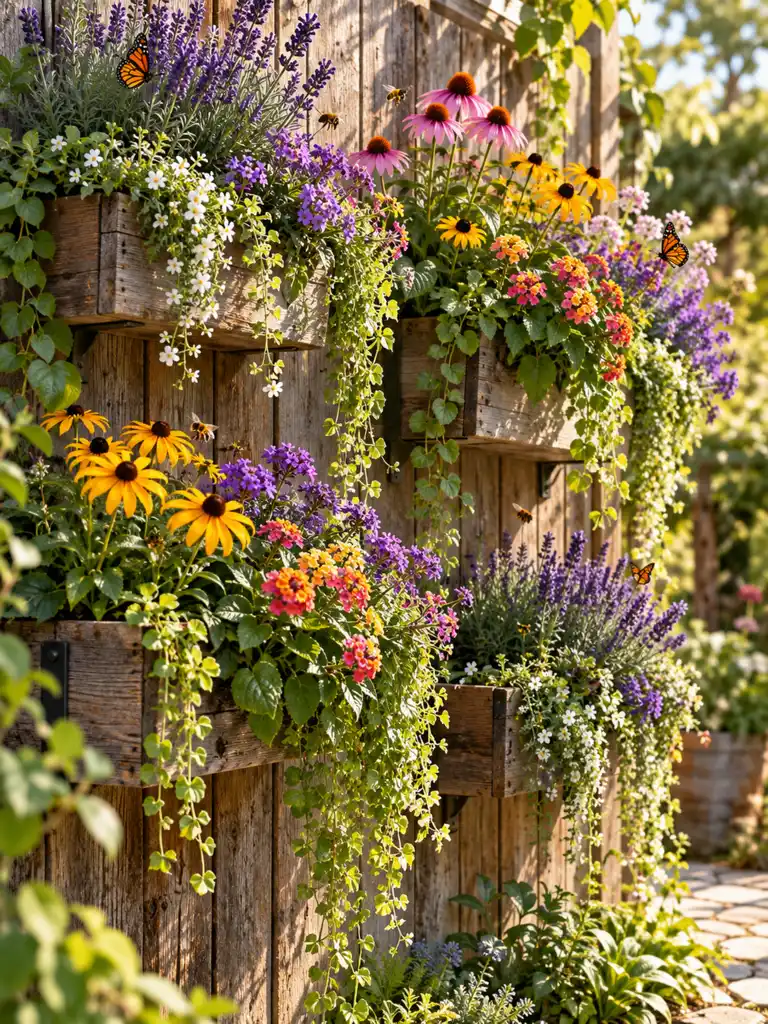
A dedicated pollinator wall can support bees and other beneficial insects while adding strong color to an unused surface. Combine compact flowering plants with different bloom shapes and flowering periods, including purple spikes, yellow daisies, small white blossoms, pink clusters, and orange accents.
Grouping flowers generously makes the display easier for pollinators to notice. Choose plants appropriate for local conditions and avoid treating the wall merely as decoration.
42. Solar-Lit Wall Planter Display
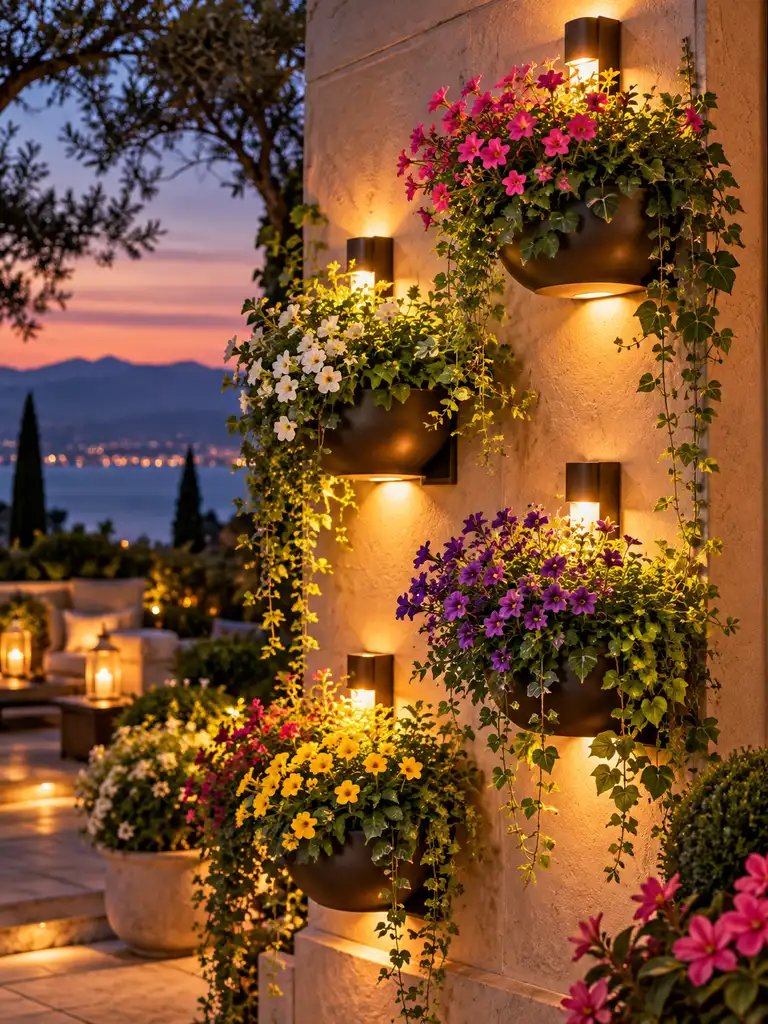
Wall planters can stay attractive after sunset when subtle solar lighting is integrated into the arrangement. Use warm, downward or upward-facing fixtures positioned between containers so the light grazes flowers, foliage, and the wall surface without overpowering them.
Photographing or viewing the display at blue hour creates a beautiful contrast between the cool evening sky and warm illumination. Keep wiring and fixtures discreet so the plants remain the visual focus.
43. Corner Wall Planter Arrangement
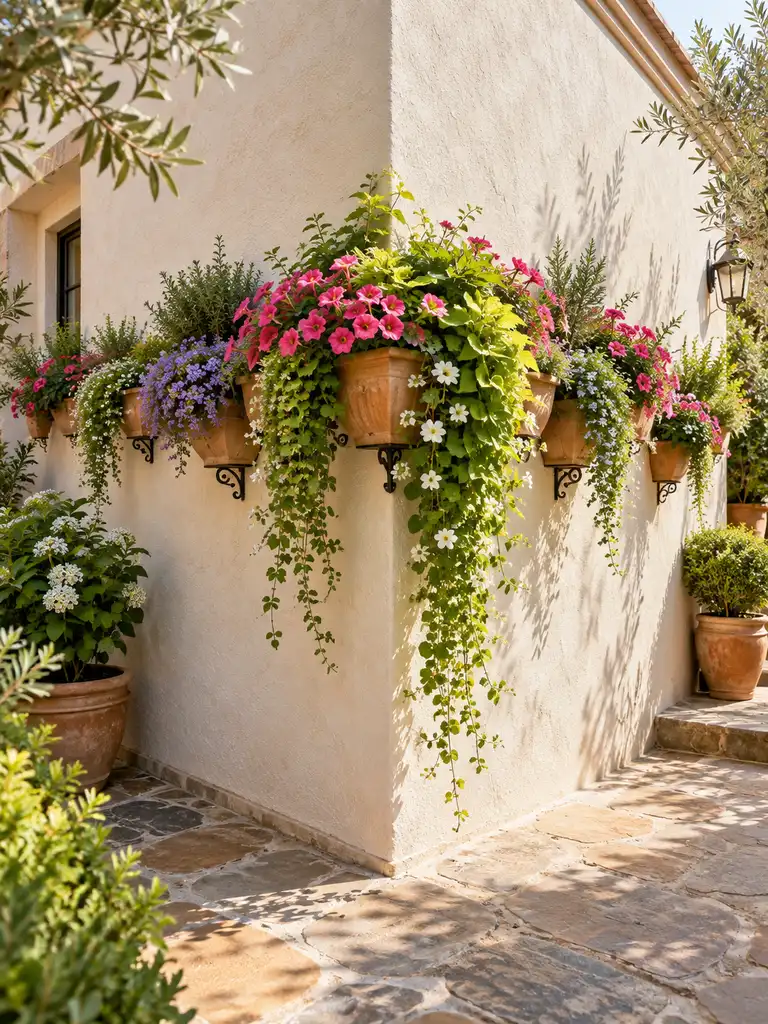
An exterior corner can become a cohesive garden feature when planters continue across both adjoining walls. Place larger containers close to the ninety-degree corner, then stagger smaller planters outward on each side.
Use related flower colors and trailing greenery to visually connect the two surfaces. Clearly showing both walls makes the arrangement feel intentional and turns an awkward architectural junction into a focal point instead of leaving it empty.
44. Small Balcony Wall Planter Garden
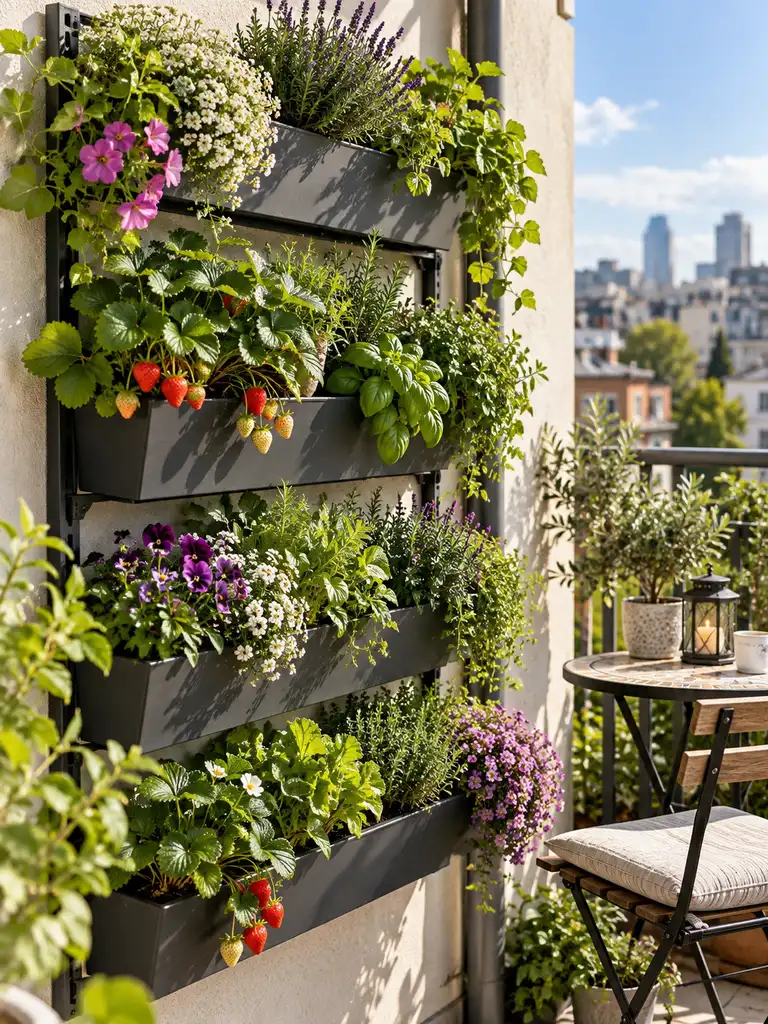
A compact balcony can support a surprisingly productive garden when the wall is used vertically. Install slim planters for herbs, strawberries, compact flowers, succulents, and trailing greenery while leaving most of the floor open.
A small folding chair or bistro table provides scale and keeps the space usable. Choose plants carefully for the balcony’s sunlight and wind exposure, and keep watering access simple so the display remains practical.
45. Statement Mixed-Flower Wall Garden
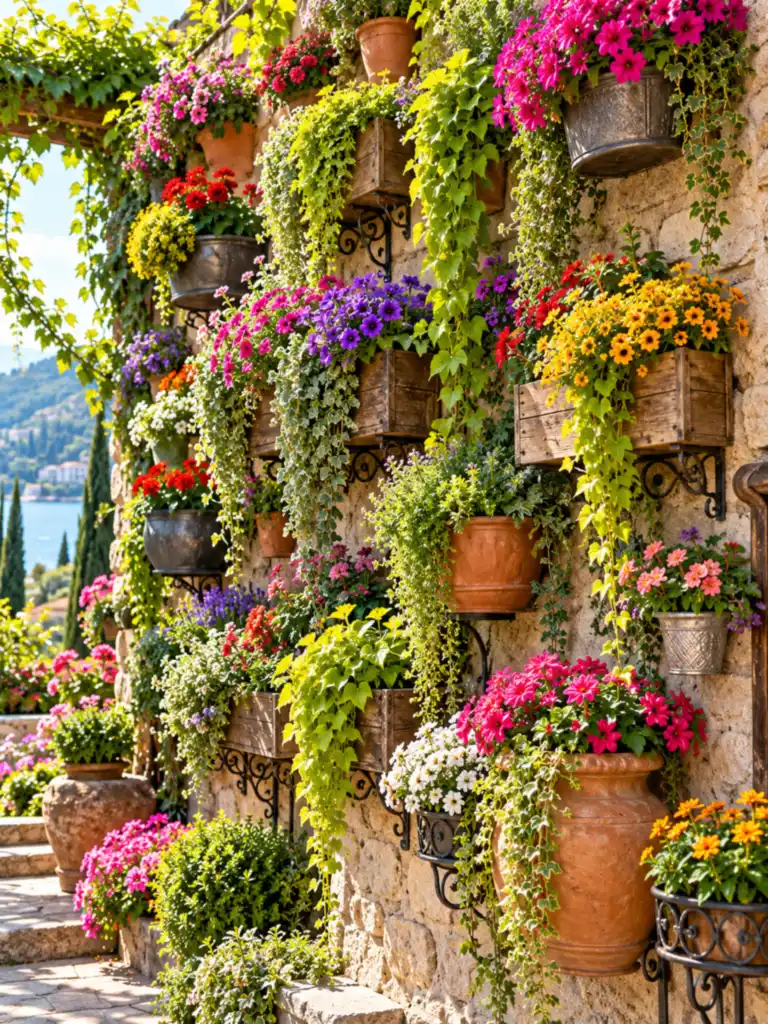
For maximum impact, cover one feature wall with a coordinated collection of wall-mounted planters in varied shapes and sizes. Fill them abundantly with pink, coral, purple, yellow, white, and burgundy flowers, then weave long trailing greenery through the composition so separate containers begin to read as one continuous garden.
Keep enough edges visible to show the underlying planter structure. This dramatic approach works best where the wall can be enjoyed from a patio or seating area.
How to Choose the Right Wall Planter
Before installing a wall garden, consider more than appearance. Containers become substantially heavier once they are filled with moist potting mix and mature plants, so the wall, fence, brackets, screws, and anchors must be appropriate for the expected load. Large containers may require stronger supports than decorative pots.
Observe how much direct sun the wall receives and how heat reflects from the surface. A west-facing wall may become much hotter than an open garden bed, while a covered porch may stay shaded for most of the day. Match container depth and plant choice to those conditions, provide reliable drainage, and keep planters within comfortable reach for watering and maintenance.
Best Plants for Outdoor Wall Planters
The best plants depend on climate, light, container depth, and how much maintenance you want. For abundant seasonal flowers, suitable varieties of petunias, calibrachoa, geraniums, begonias, lobelia, sweet alyssum, verbena, and compact daisies can create strong color. Ferns are useful for shaded walls, while many succulents suit sunny positions with excellent drainage.
Trailing plants are especially valuable because they soften the edge of containers and connect separate planters visually. Herbs such as thyme, oregano, parsley, rosemary, mint, basil, and chives can turn a decorative wall into an edible garden.
Tips for Creating a Beautiful Wall Planter Display
One simple way to make containers feel full is to combine different growth habits. A taller or more distinctive plant can provide height, mid-sized plants can fill the center, and trailing plants can spill over the edges. You do not need every flower color available; repeating two or three colors across the wall often looks more polished and intentional.
Foliage matters just as much as flowers. Combine rounded, fine, upright, variegated, and trailing leaves for texture that lasts between bloom periods. Varying planter heights creates movement, but leave enough space for plants to reach mature size. A newly planted wall may look slightly open at first, yet overcrowding can make watering, airflow, and maintenance much harder later.
Wall Planter Maintenance Tips
Vertical containers can dry faster than plants growing in the ground, particularly when they are small or exposed to sun and wind. Check moisture regularly and adjust watering to weather rather than relying on the same schedule all season. Keep drainage holes open so excess water can escape and the containers do not remain unnecessarily heavy.
Deadhead flowering plants when appropriate, feed container plants according to their needs, and trim vigorous vines before they cover windows, lights, gutters, or neighboring planters. Inspect hooks, brackets, shelves, screws, and other supports during the year because weather and repeated watering can affect mounting hardware. Refresh tired annuals and potting mix when needed.
Final Thoughts
You do not need a huge backyard to create an impressive garden feature. Start with the space you have, choose plants suited to the light and climate, and build a display that fits the style of your home. With thoughtful planting and secure installation, a previously unused wall can become one of the most memorable parts of the garden.

