 Skip to content
A balcony may be small compared with a backyard, but it can still become one of the most relaxing and beautiful spaces in your home. With thoughtful plant choices, comfortable furniture, creative lighting, and a few decorative touches, even an ordinary apartment balcony can feel like a private garden retreat.
The best Balcony Garden Ideas make use of every available surface. Railings can hold overflowing flower boxes, walls can support vertical gardens, ceilings can display hanging baskets, and corners can become cozy seating areas surrounded by greenery. You also do not need to follow one particular decorating style. A balcony garden can feel tropical and lush, clean and modern, romantic and flower-filled, or rustic and cottage-inspired.
Whether you have a tiny urban balcony or a spacious terrace with an incredible view, these 45 ideas will help you create an outdoor space that feels inviting, personal, and dreamy.
1. Flower-Filled Balcony Garden With Cozy Seating
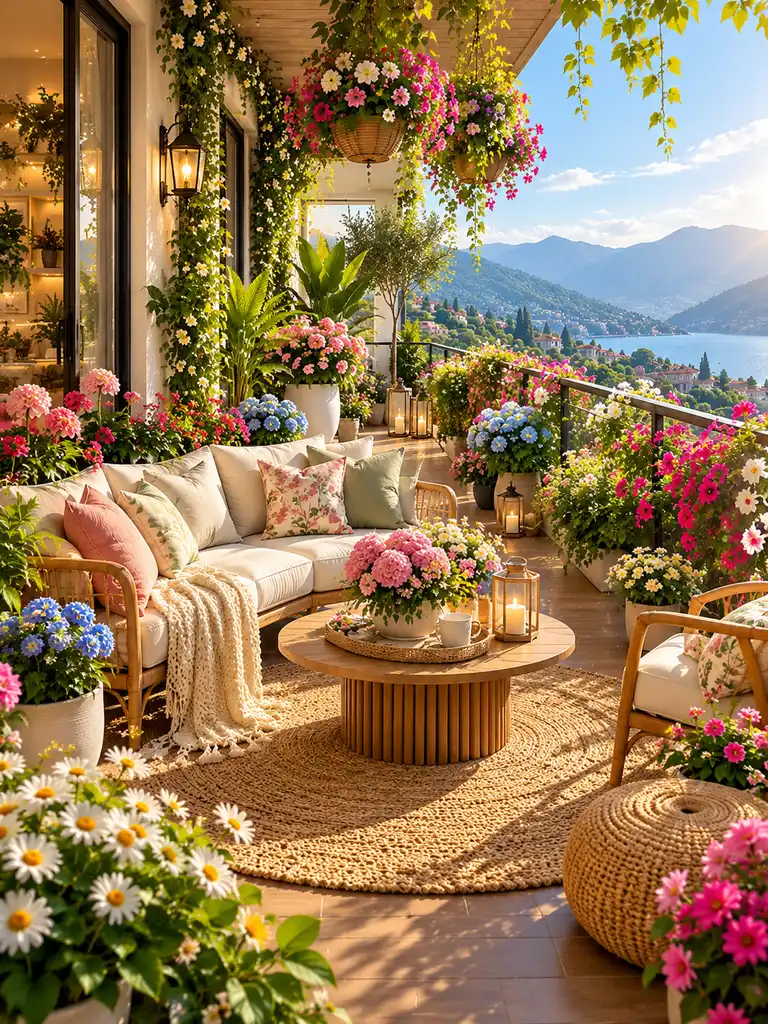
Turn your balcony into a cheerful flower garden by surrounding a comfortable seating area with colorful container plants. A compact outdoor sofa or loveseat can become the centerpiece, while hydrangeas, petunias, daisies, and geraniums create layers of color around it. Add a small wooden coffee table, soft outdoor cushions, and a woven rug. Keep taller plants toward the edges so the seating area still feels open and easy to use.
2. Romantic Pink Flower Balcony Garden
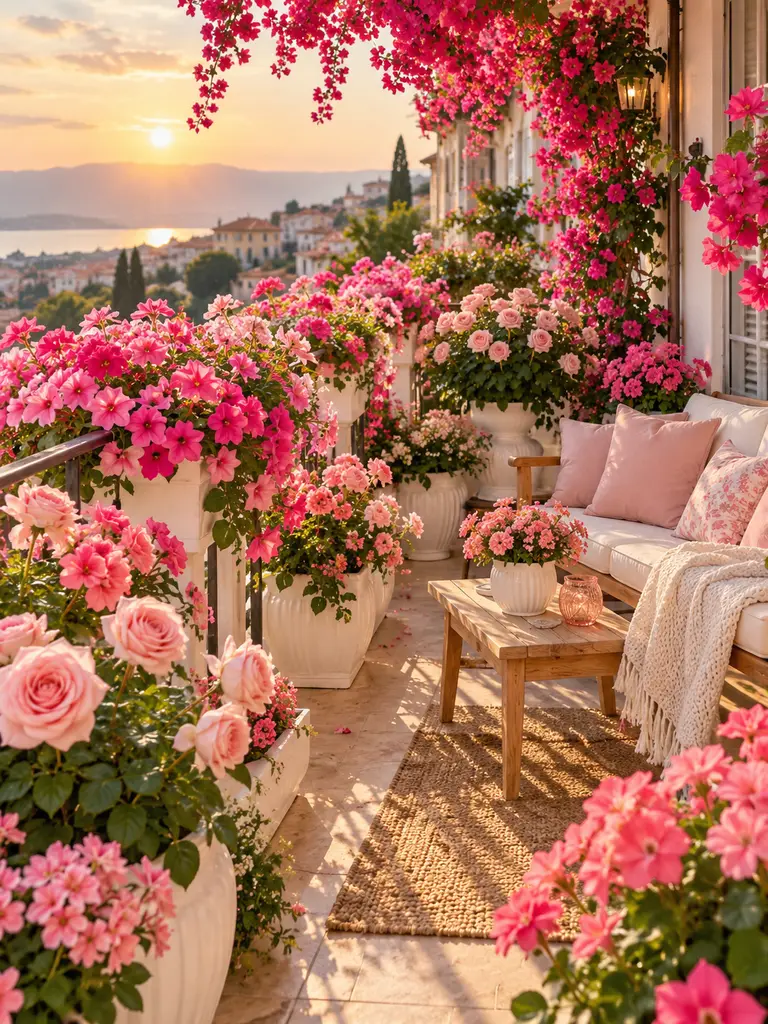
A pink flower palette can instantly make a balcony feel romantic and charming. Combine several shades rather than relying on one color. Pale roses, bright petunias, blush begonias, and vibrant bougainvillea can create a beautifully layered display. White planters and natural wood furniture help balance the stronger colors. Finish the space with blush cushions, a lightweight throw, and delicate lighting for a dreamy balcony that looks especially beautiful around sunset.
3. Blue and White Hydrangea Balcony Garden
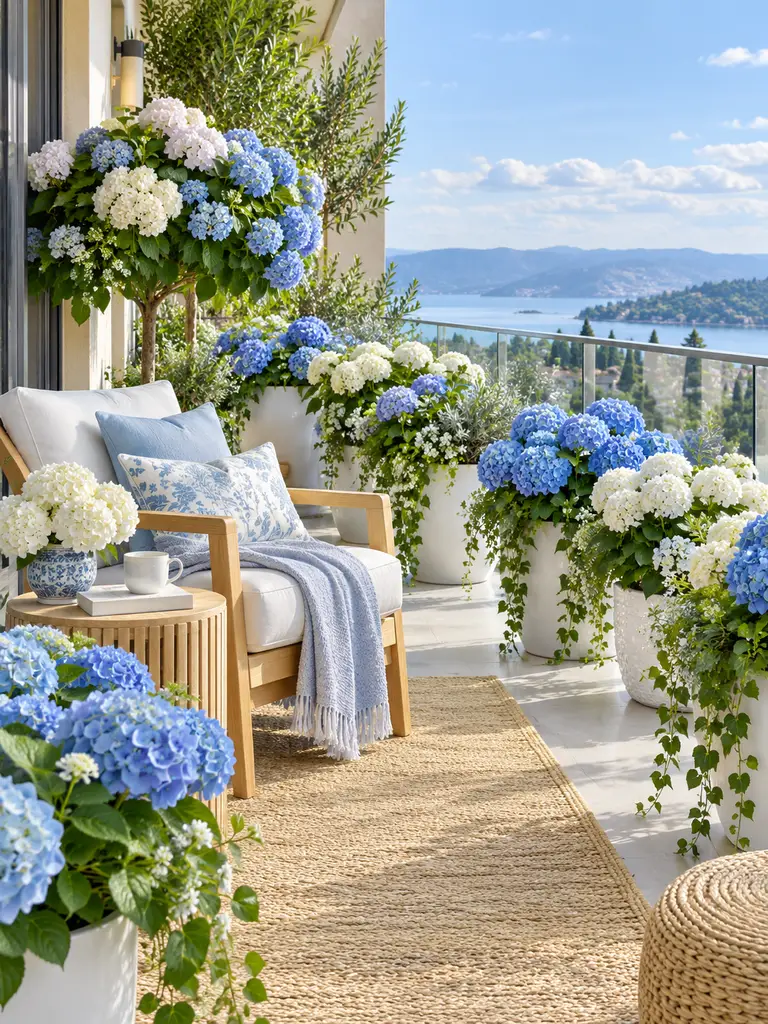
For a refreshing and elegant balcony, build your color palette around blue and white flowers. Blue hydrangeas can make wonderful statement plants, particularly when paired with white petunias and abundant green foliage. Choose pale wood furniture, white ceramic-style planters, and blue floral cushions to continue the theme. Trailing plants hanging from above can soften the architecture and make the space feel more established without adding too many different colors.
4. Hanging Basket Balcony Garden
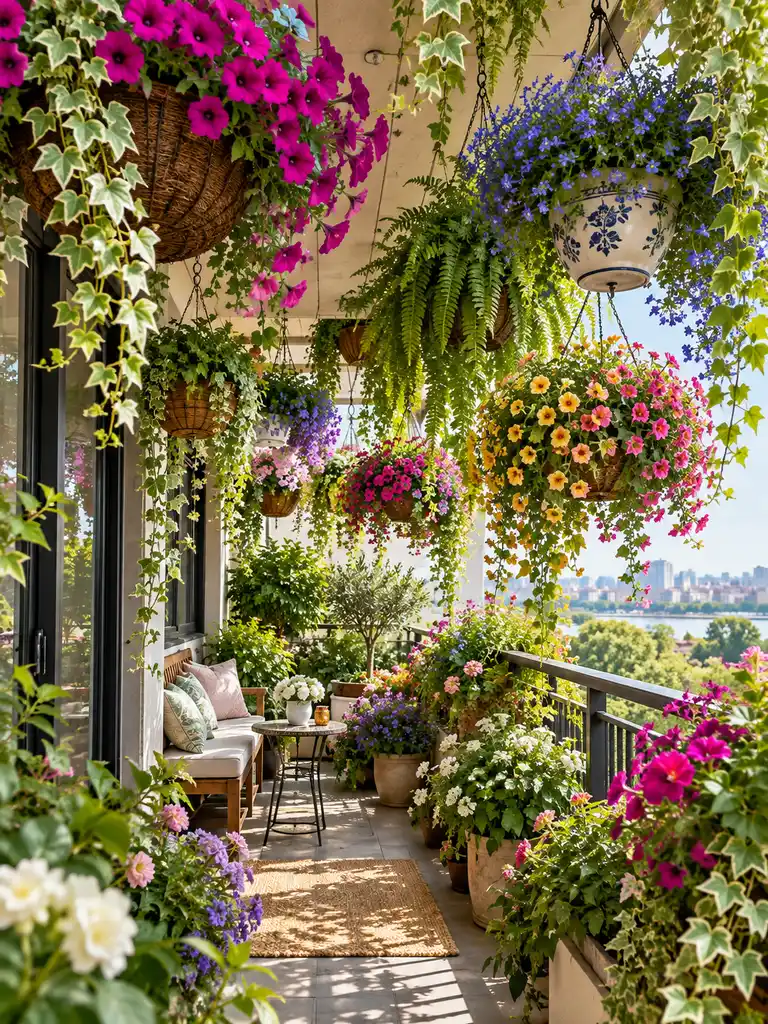
When balcony floor space is limited, start looking upward. Hanging baskets filled with petunias, lobelia, ivy, ferns, or million bells can create a lush garden without occupying valuable walking space. Hang the baskets at slightly different heights rather than placing them in one straight line. This makes the greenery feel more organic. Always use secure outdoor hooks and keep baskets positioned where they will not interfere with doors or seating areas.
5. Vertical Trellis Balcony Garden
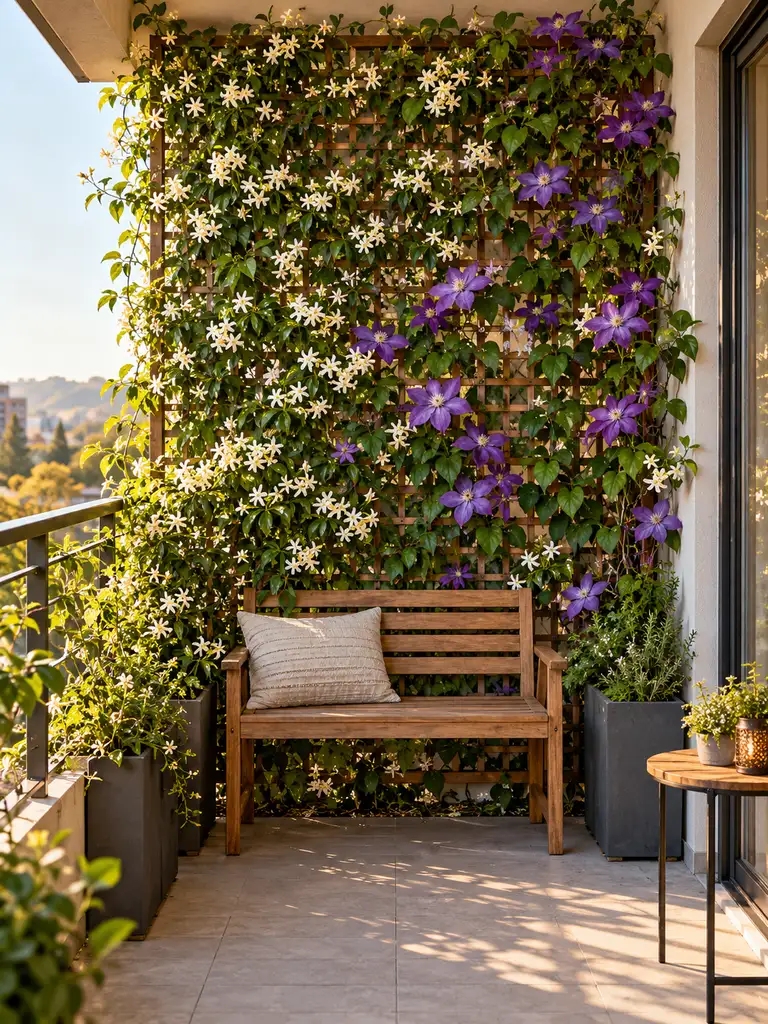
A vertical trellis is one of the most useful Balcony Garden Ideas for compact apartments. Install a freestanding or wall-mounted trellis and train climbing plants such as jasmine, clematis, morning glory, or climbing roses across it. Over time, the plants can create an attractive green backdrop behind a chair or bench. A trellis can also provide additional privacy while leaving most of the balcony floor available for furniture and containers.
6. Fairy-Light Balcony Garden Retreat
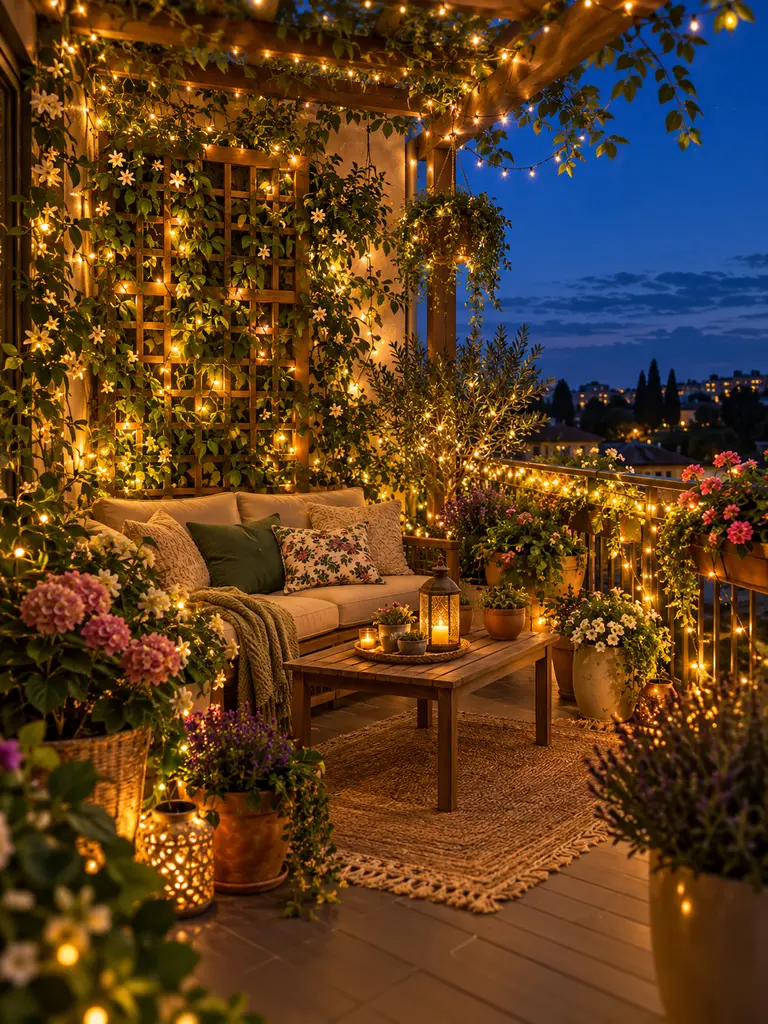
A balcony can completely change once the sun goes down. Wrap warm fairy lights around railings, pergola beams, trellises, or plant shelves to create a soft evening glow. Combine them with flowering plants and plenty of greenery so the lights appear to sparkle between leaves. Choose outdoor-rated lights and avoid making the space excessively bright. The goal is gentle illumination that creates atmosphere while still allowing you to relax comfortably outside.
7. Small Balcony Garden With an Egg Chair
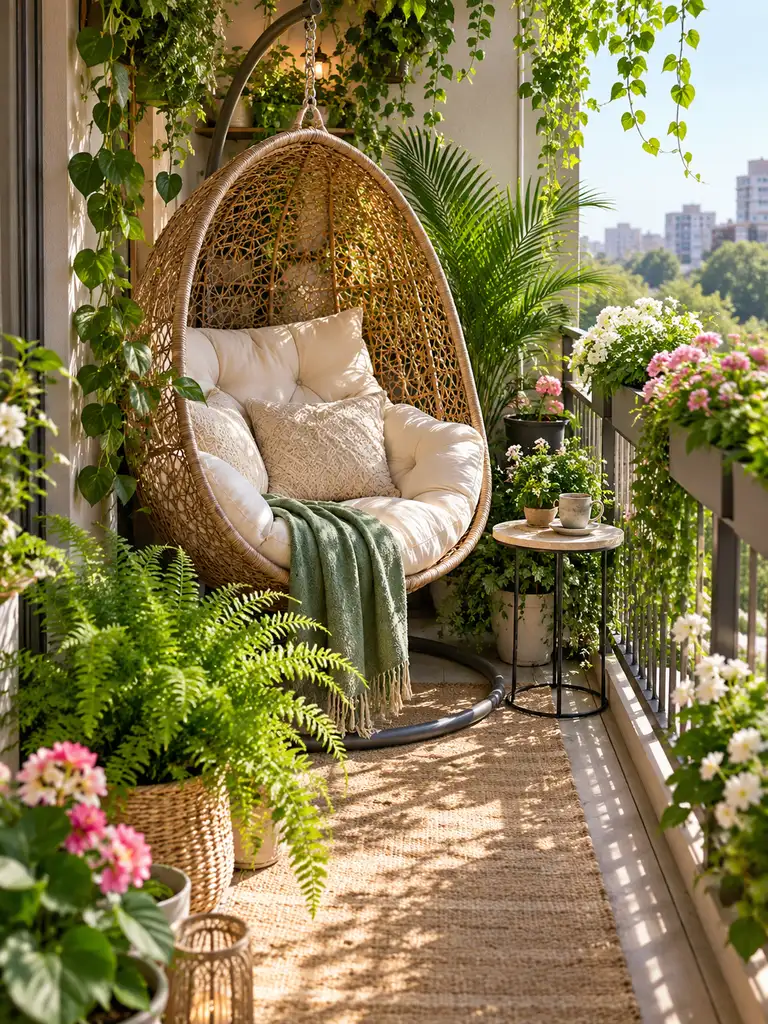
A hanging egg chair can transform an ordinary balcony corner into a cozy personal retreat. Position the chair near the back or side of the balcony and surround it with ferns, palms, flowering containers, and trailing vines. A small table beside the chair provides space for coffee or a book. Keep the remaining furniture minimal so the egg chair stays visually dominant. Soft cushions can introduce additional color without taking up more floor space.
8. Curved LED Path Balcony Garden
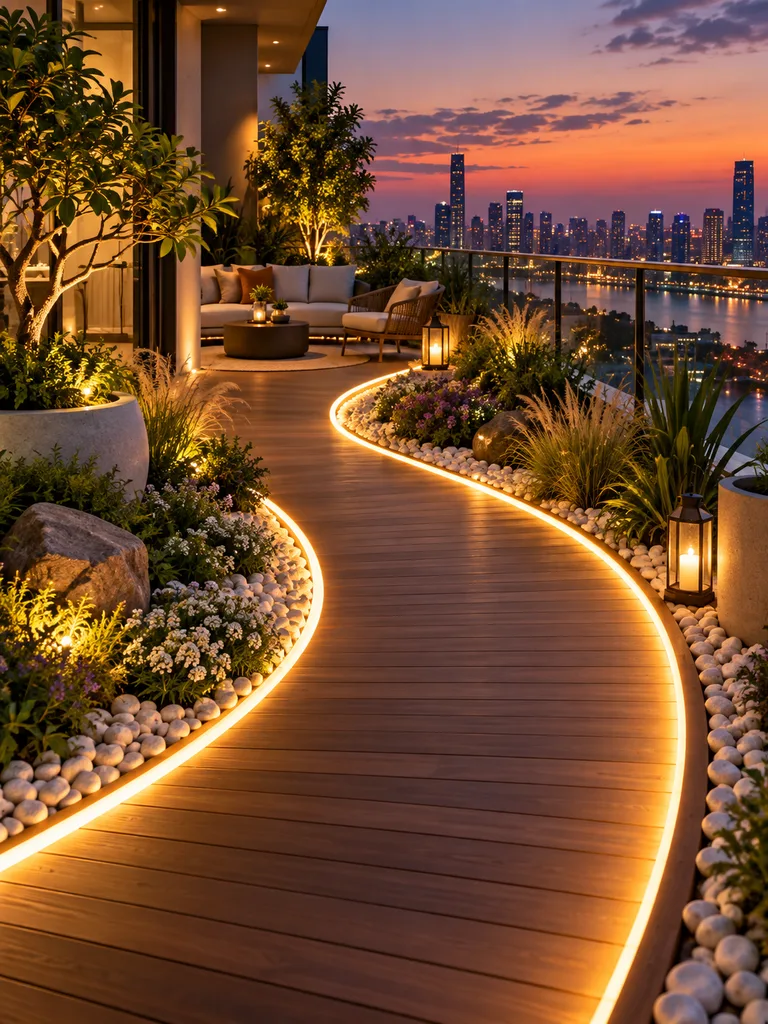
For a more contemporary approach, define your balcony with a softly illuminated walkway. Warm LED strips can follow the edges of a curved wooden deck or raised platform, producing a luxurious nighttime effect. Surround the pathway with decorative pebbles, compact flowering plants, and subtle lanterns. This style works particularly well on longer balconies because the curve introduces movement and helps divide lounging and planting areas while making the overall design feel more intentional.
9. Boho Balcony Garden With Rattan Furniture
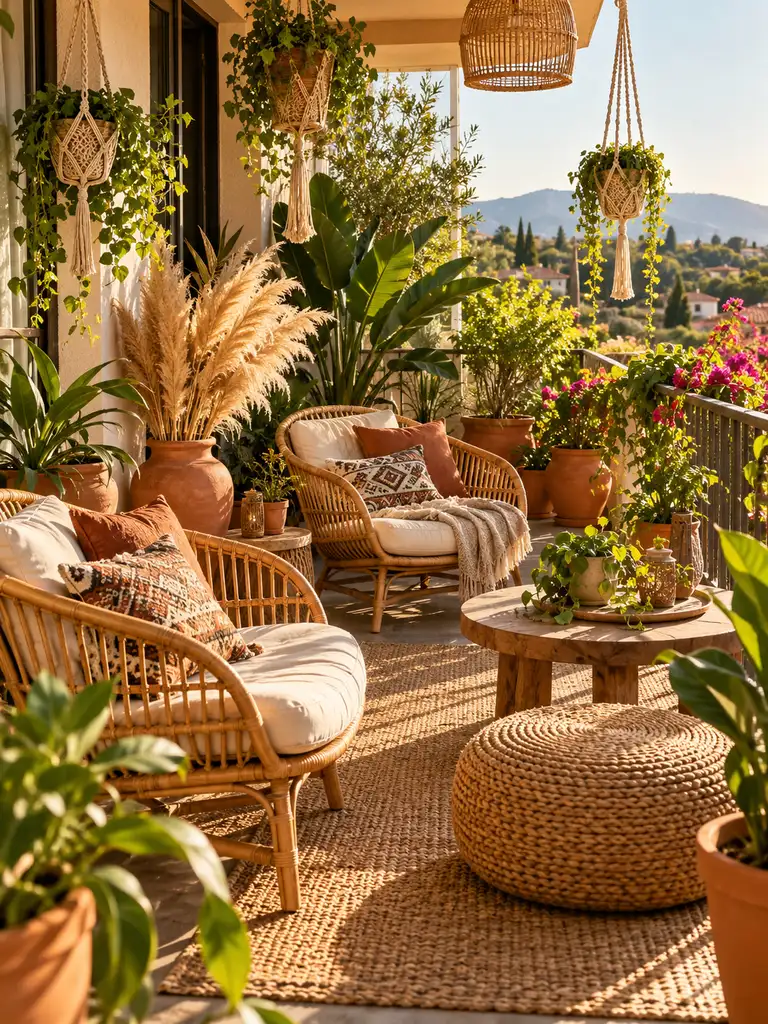
Combine relaxed garden planting with layered bohemian textures for a balcony that feels casual and welcoming. Use rattan chairs, woven poufs, jute rugs, macramé planters, and terracotta containers. Fill unused corners with tropical plants and hanging greenery, then introduce patterned cushions in earthy or muted colors. The most successful boho balconies look collected rather than perfectly matched, so mix textures while keeping the overall palette warm and natural.
10. Mediterranean Balcony Garden
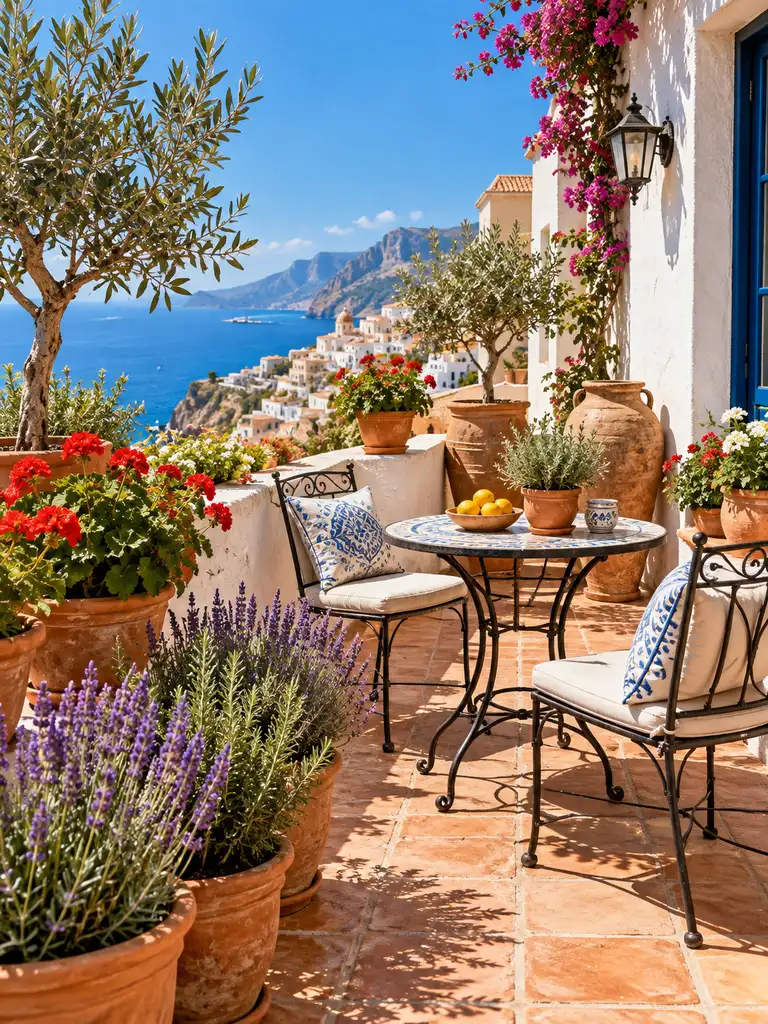
Create the atmosphere of a Mediterranean terrace using sun-loving plants and warm natural materials. Terracotta pots are ideal for lavender, rosemary, geraniums, and small olive trees. Add wooden or wrought-style furniture, striped or patterned cushions, and warm-toned flooring. Keeping the overall design simple allows fragrant herbs and flowering plants to become the main attraction. This style can be especially beautiful on sunny balconies where Mediterranean plants receive plenty of light.
11. Tropical Jungle Balcony Garden
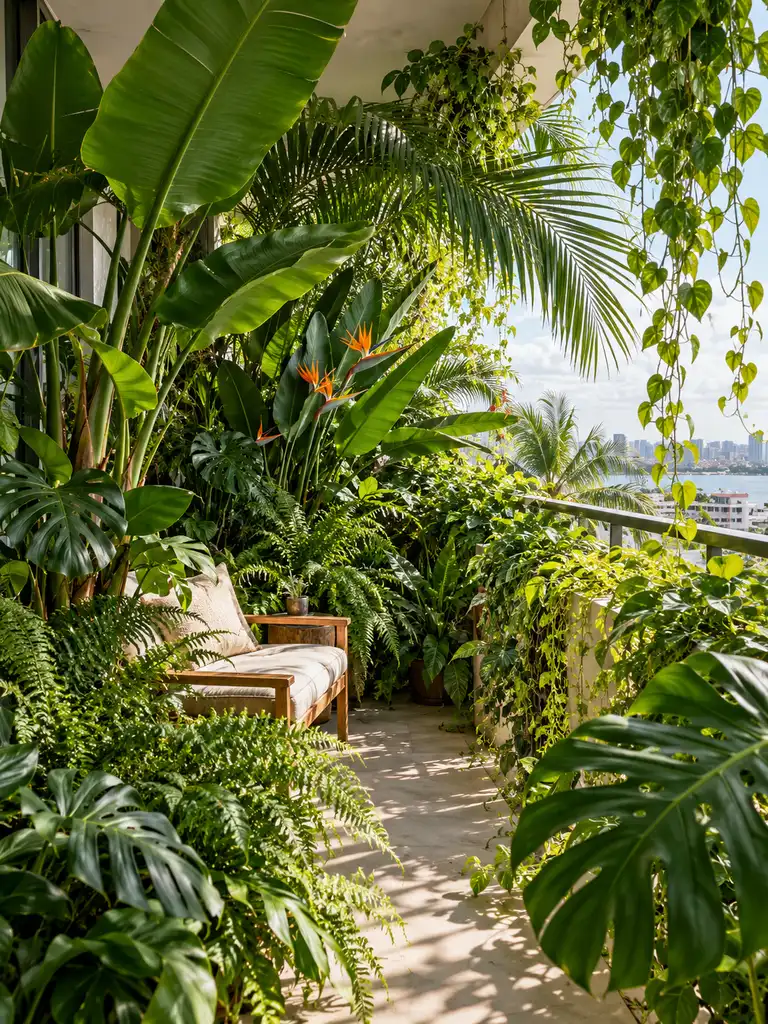
If you prefer greenery to flowers, transform the balcony into a miniature tropical jungle. Large-leaf plants such as banana plants, palms, monstera, and bird of paradise can create instant visual impact. Fill gaps with ferns and trailing foliage. Arrange plants at several different heights so the garden feels deep and layered. Keep furniture simple and relatively neutral because the dramatic leaves should remain the dominant feature of the space.
12. Cottage-Style Balcony Flower Garden
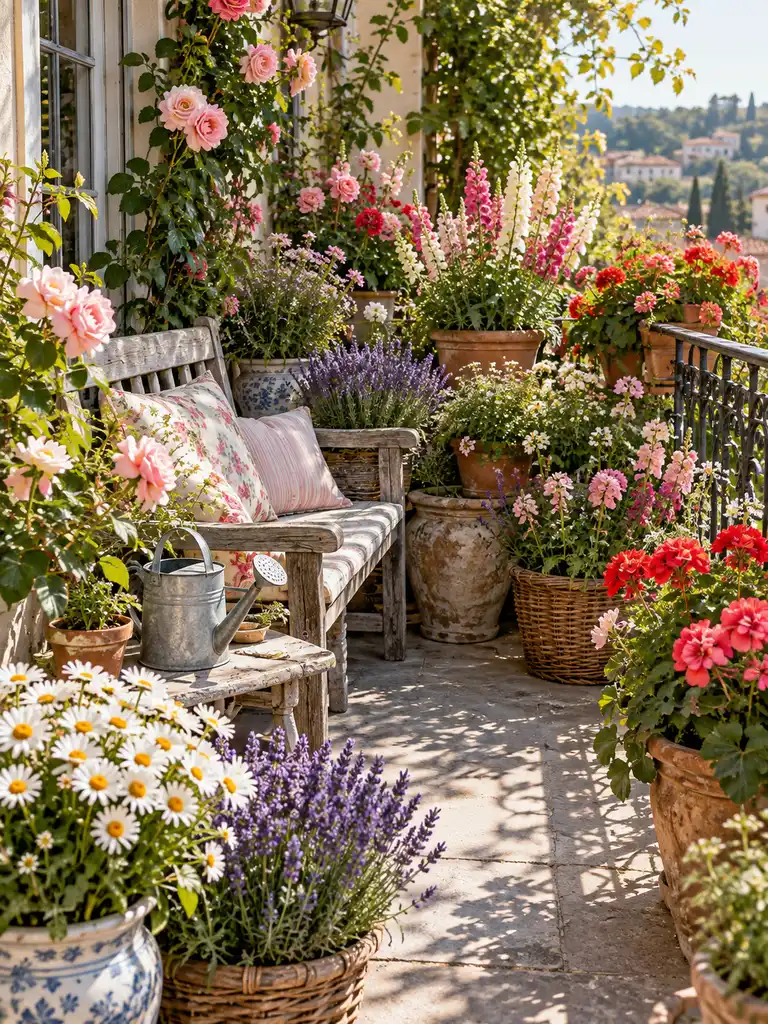
Bring the informal beauty of a cottage garden to your balcony with an abundant mixture of flowers. Roses, daisies, lavender, snapdragons, and geraniums can be grouped in different containers for a relaxed look. Vintage-inspired planters, wicker baskets, and weathered wooden furniture suit the style perfectly. Avoid arranging every pot symmetrically. Slightly irregular placement helps the balcony look more natural, as though the garden has gradually developed over time.
13. Minimalist Green Balcony Garden
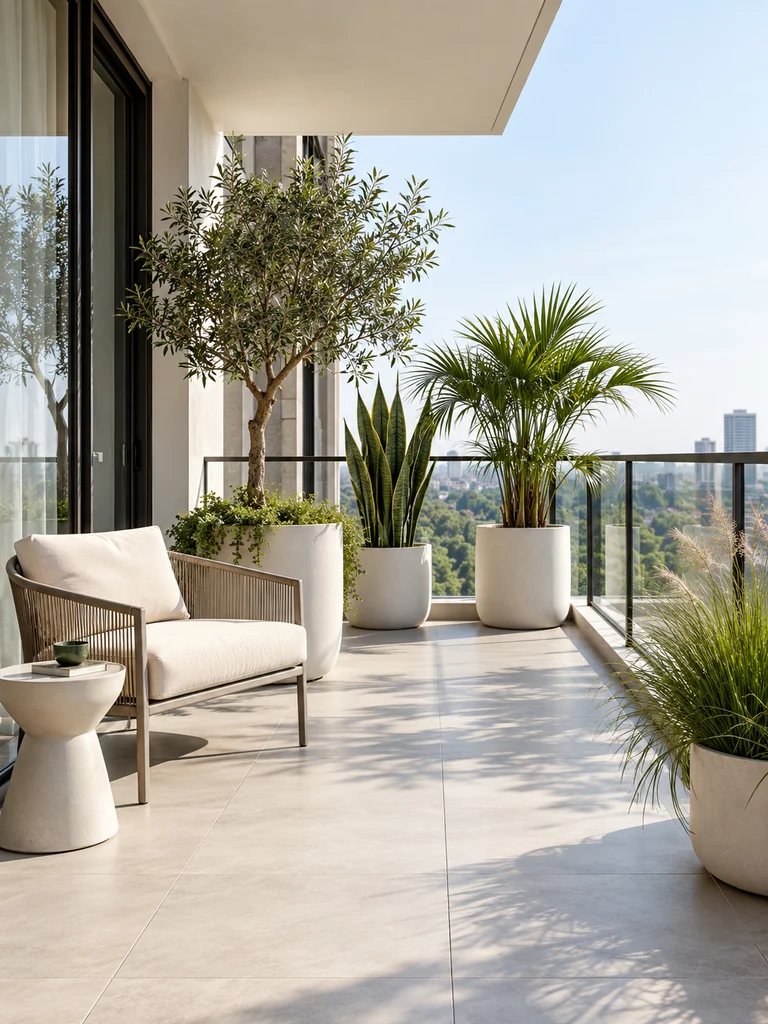
Not every balcony needs to be overflowing with flowers. A minimalist garden can feel equally beautiful when the plants have distinctive shapes and textures. Choose a few architectural plants and repeat similar containers throughout the space. Add one simple chair or bench and keep decorative accessories to a minimum. Neutral flooring and uncluttered surfaces make the greenery stand out. This design is especially effective on modern balconies with clean lines and simple railings.
14. Sunset Balcony Garden Lounge
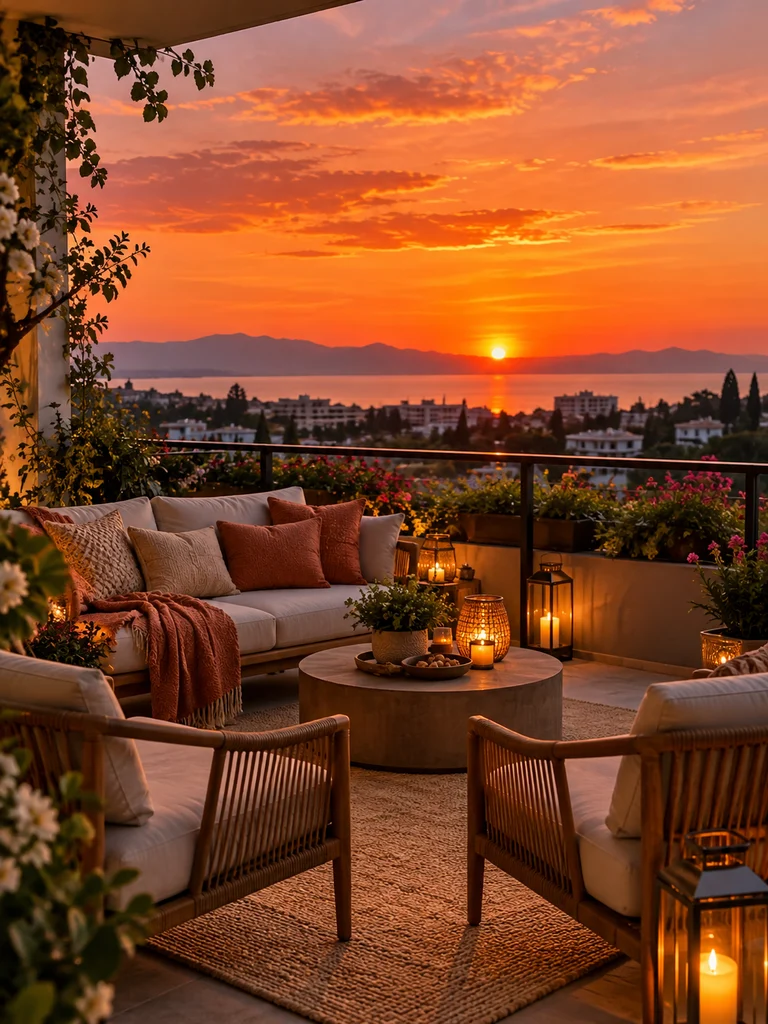
If your balcony has an attractive view, arrange the entire space around enjoying it. Position chairs or a small sofa toward the open side and use low planters along the railing so the scenery remains visible. Add a compact table, lanterns, comfortable cushions, and a lightweight blanket for cooler evenings. Flowering plants can frame the view rather than compete with it. This creates an ideal place for evening drinks, reading, or simply watching the sunset.
15. White Flower Balcony Garden
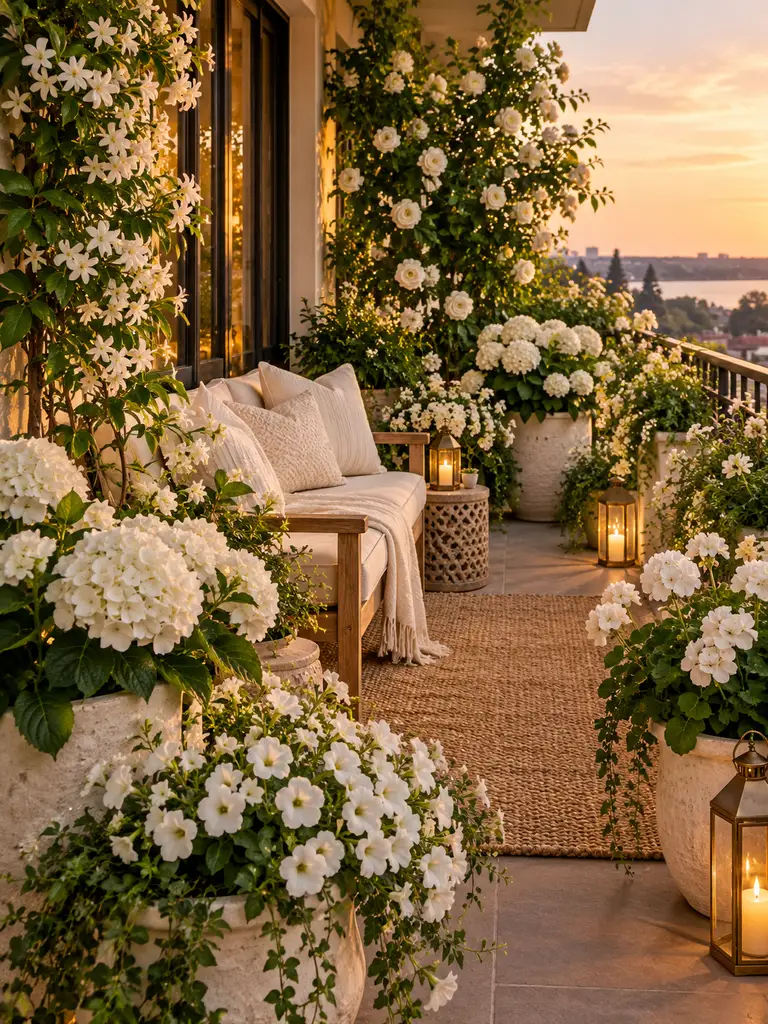
A predominantly white flower garden can make a balcony feel elegant, calm, and surprisingly luxurious. Mix white hydrangeas, jasmine, petunias, roses, or geraniums with plenty of green foliage so the design does not look flat. Choose white, cream, or stone-colored containers and natural wood furniture. At night, warm lantern lighting will make pale flowers gently stand out from the surrounding leaves, giving the balcony an especially romantic appearance.
16. Yellow and White Sunny Balcony Garden
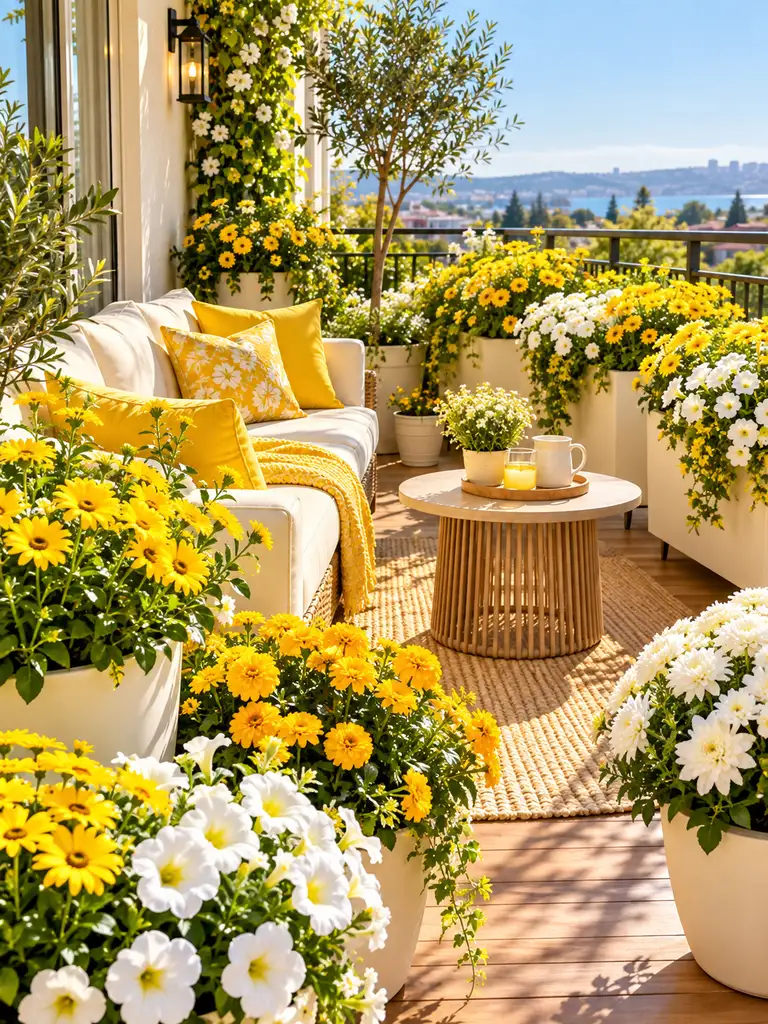
Yellow and white are perfect for creating a bright, cheerful outdoor space. Combine yellow daisies, chrysanthemums, marigolds, or petunias with crisp white blooms. Use cream seating, yellow accent pillows, and warm wooden furniture to repeat the palette. This color combination works particularly well on balconies that receive strong daylight. Green foliage prevents the yellow from becoming overwhelming and gives the entire garden a fresh, summery appearance.
17. Purple Flower Balcony Garden
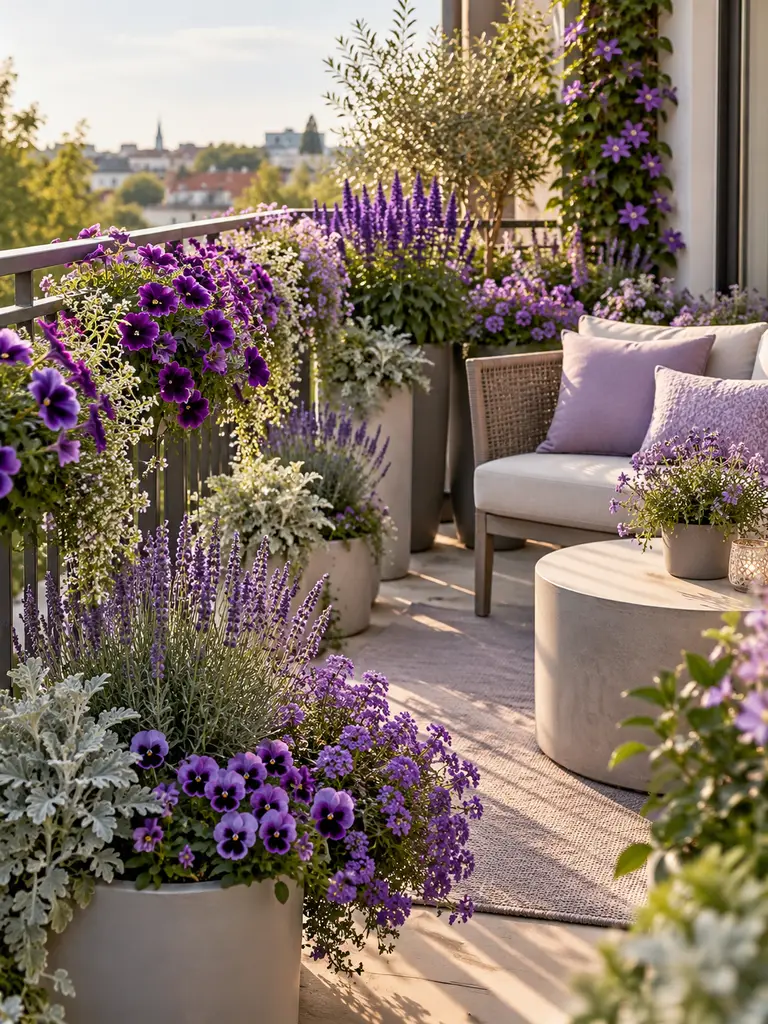
Purple flowers can create a balcony that feels colorful without appearing overly busy. Combine different shades through lavender, salvia, verbena, pansies, and petunias. Silver-green foliage complements purple particularly well and adds another layer of texture. Keep the planters and furniture fairly neutral so the flowers remain the main feature. Repeating similar purple tones in several locations helps visually connect the entire balcony and makes the design feel deliberate.
18. Red and Pink Balcony Garden
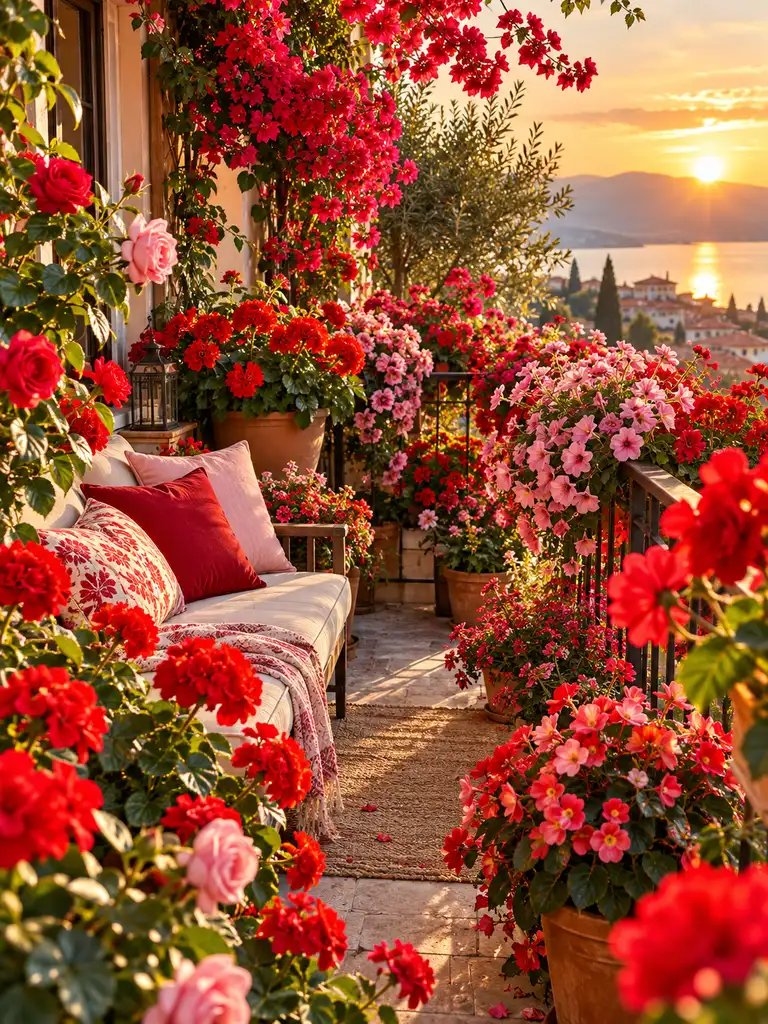
For a balcony packed with energy and color, mix deep reds with vibrant pinks. Roses, begonias, geraniums, petunias, and bougainvillea can produce an abundant flowering display. Place the strongest colors along the railing and near corners, then introduce lighter shades closer to the seating area. Cream-colored cushions and natural wooden furniture provide visual relief. This is a great choice if you want the balcony to look dramatic from both inside and outside the home.
19. Balcony Garden With a Flowering Pergola
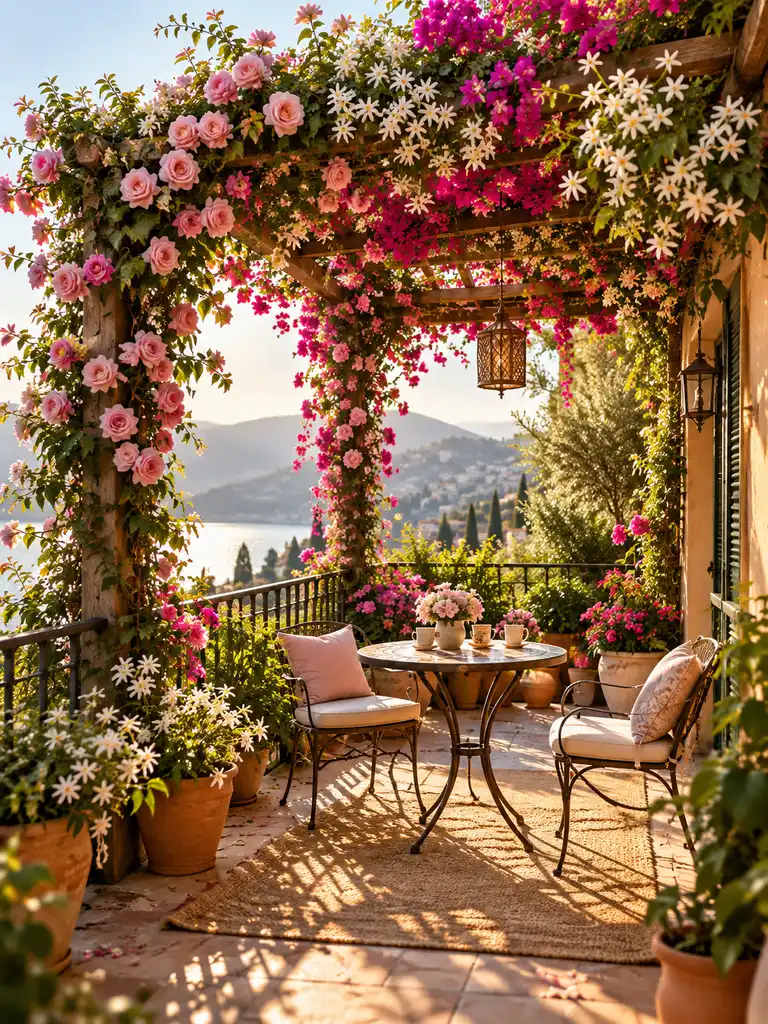
A lightweight pergola or suitable overhead frame can turn a larger balcony into an intimate outdoor room. Train climbing jasmine, clematis, bougainvillea, or roses around the supports and gradually across the top. Place a small table or lounge chair underneath to enjoy the shade created by the foliage. Before adding any substantial structure, make sure it is suitable for your balcony and permitted by building or rental requirements.
20. Balcony Garden With a Living Green Wall
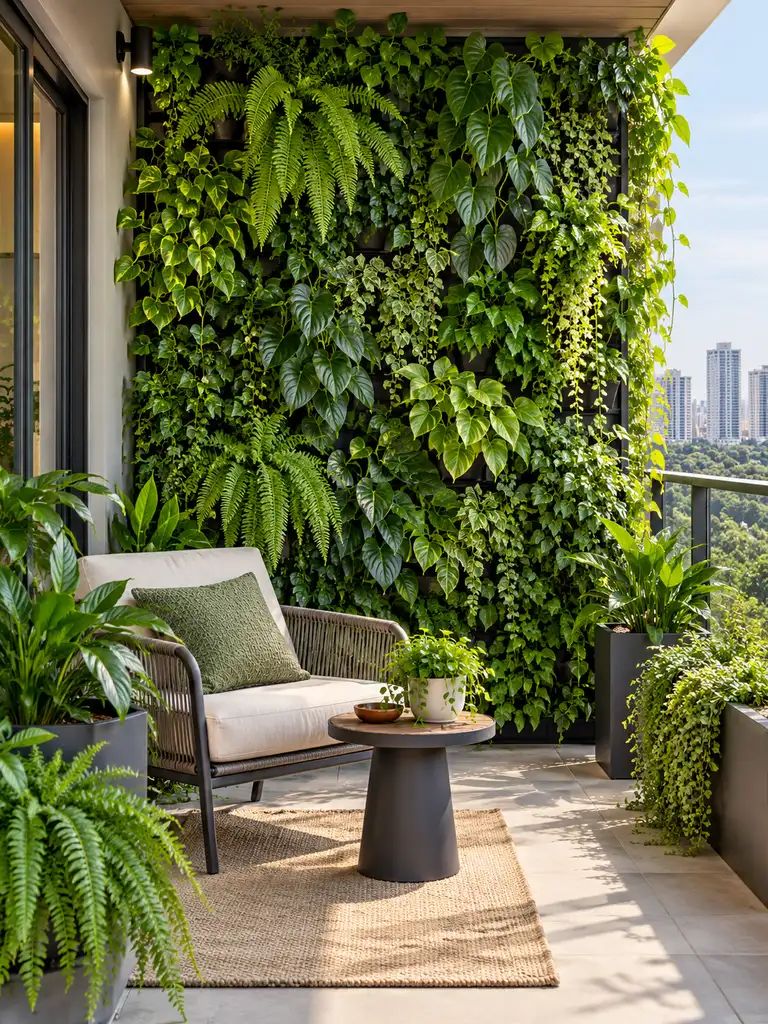
If you have a large blank wall, transform it into a vertical garden instead of filling the floor with additional pots. Modular planters can hold ferns, pothos, herbs, compact flowering plants, and other suitable varieties. Mixing leaf shapes creates more visual depth than using one plant everywhere. A living wall can become a dramatic backdrop for a small seating area while making excellent use of vertical space in a compact balcony.
21. Tiny Apartment Balcony Garden
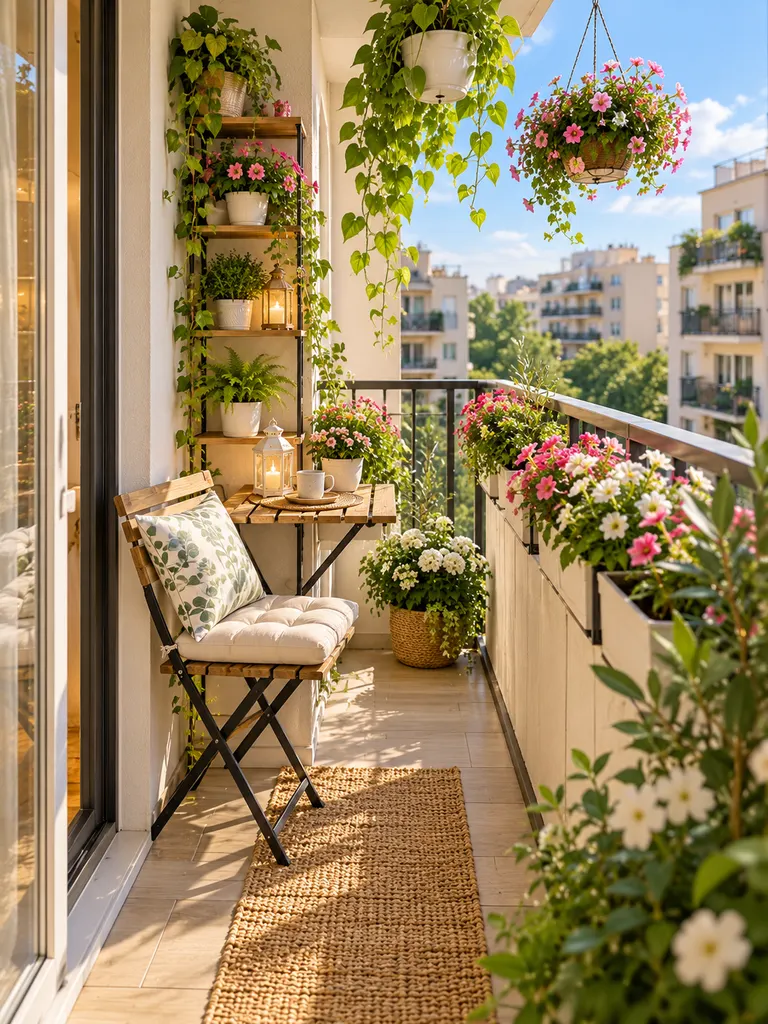
A tiny apartment balcony requires more careful planning, but it can still feel beautifully green. Choose folding chairs, narrow plant stands, railing boxes, hanging pots, and wall-mounted containers. Repeat a few favorite plant varieties instead of squeezing in dozens of unrelated species. Keeping the center of the balcony clear creates a comfortable path from the door to the seating area. Light-colored furniture can also help the space feel more open.
22. Long Narrow Balcony Garden
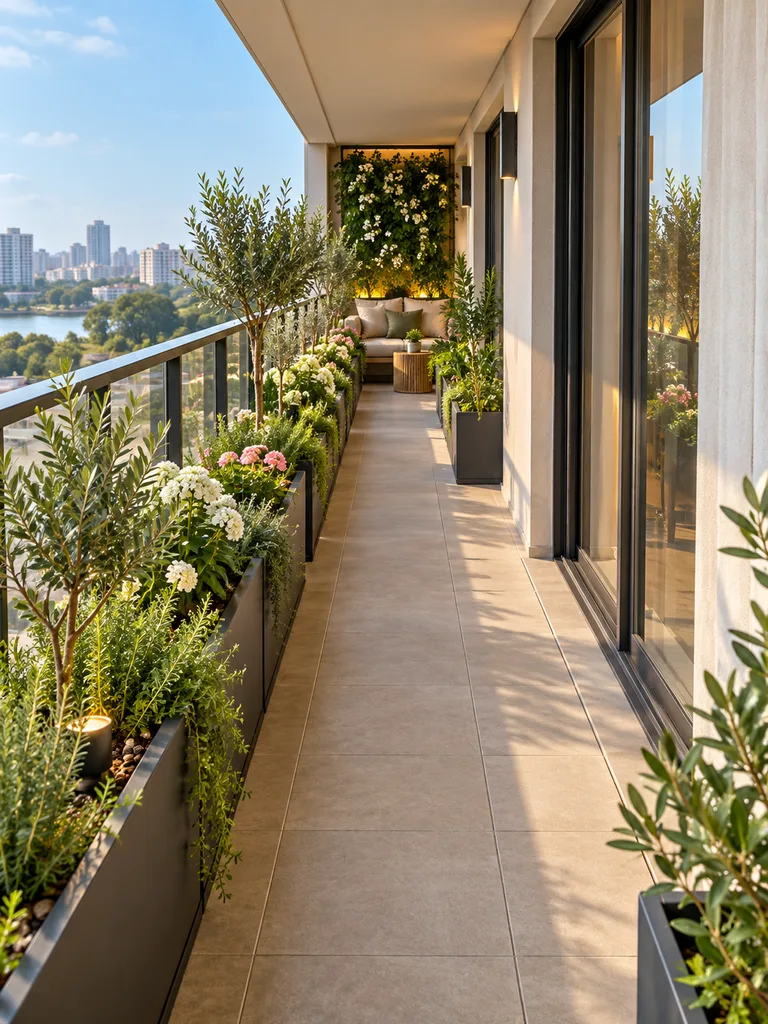
Long balconies are easier to decorate when you divide them into simple functional zones. Place seating at one end, keep narrow rectangular planters along the railing, and use a vertical garden or tall greenery at the other end. Leave a clear central walkway so moving through the space remains comfortable. Repeating similar pots and plants throughout the balcony creates visual continuity and prevents the long layout from appearing fragmented.
23. Corner Balcony Garden Retreat
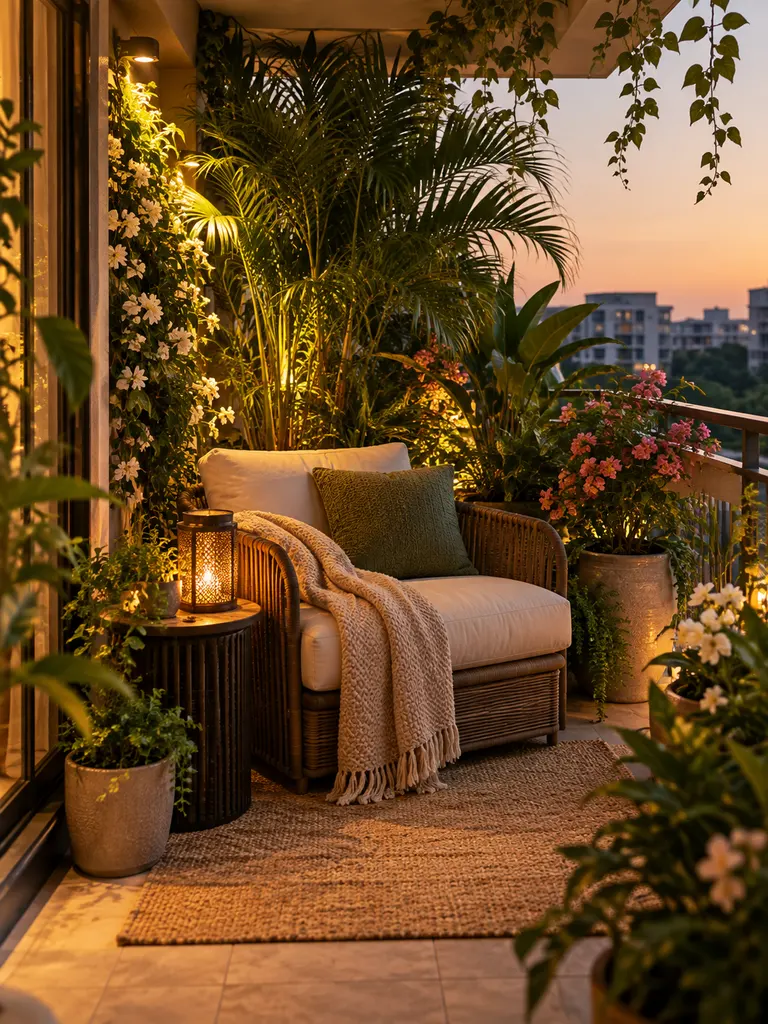
An unused balcony corner can become one of the most inviting areas in the home. Place a cushioned armchair or compact bench against the corner, then surround it with taller greenery for a sense of privacy. Add a side table, lantern, soft throw, and perhaps trailing plants above. By concentrating greenery around the seating area rather than distributing it evenly everywhere, you can create a cozy garden nook without needing a large number of plants.
24. Balcony Garden With a Built-In Bench
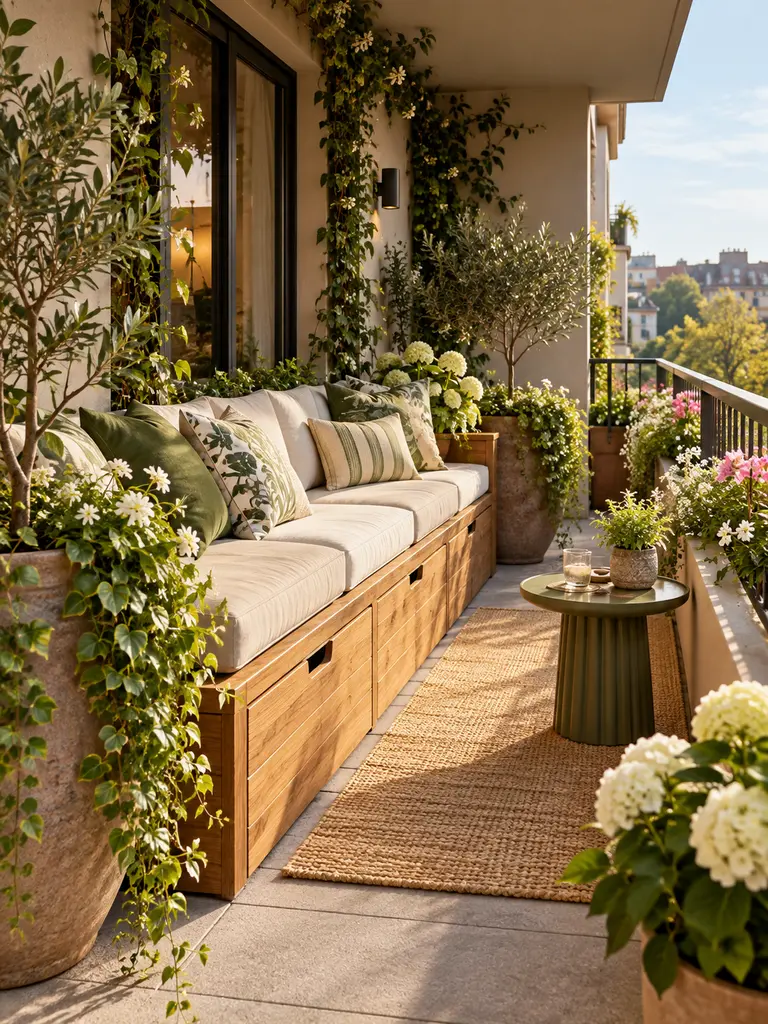
A built-in bench is a clever way to combine seating, storage, and garden design. Choose a bench with hidden compartments underneath where you can store gardening tools, outdoor cushions, or watering supplies. Surround it with tall planters and soften the seating with weather-resistant pillows. On narrow balconies, a bench positioned directly against the wall can occupy far less space than freestanding chairs while still providing comfortable seating for several people.
25. Balcony Garden With Floor Cushions
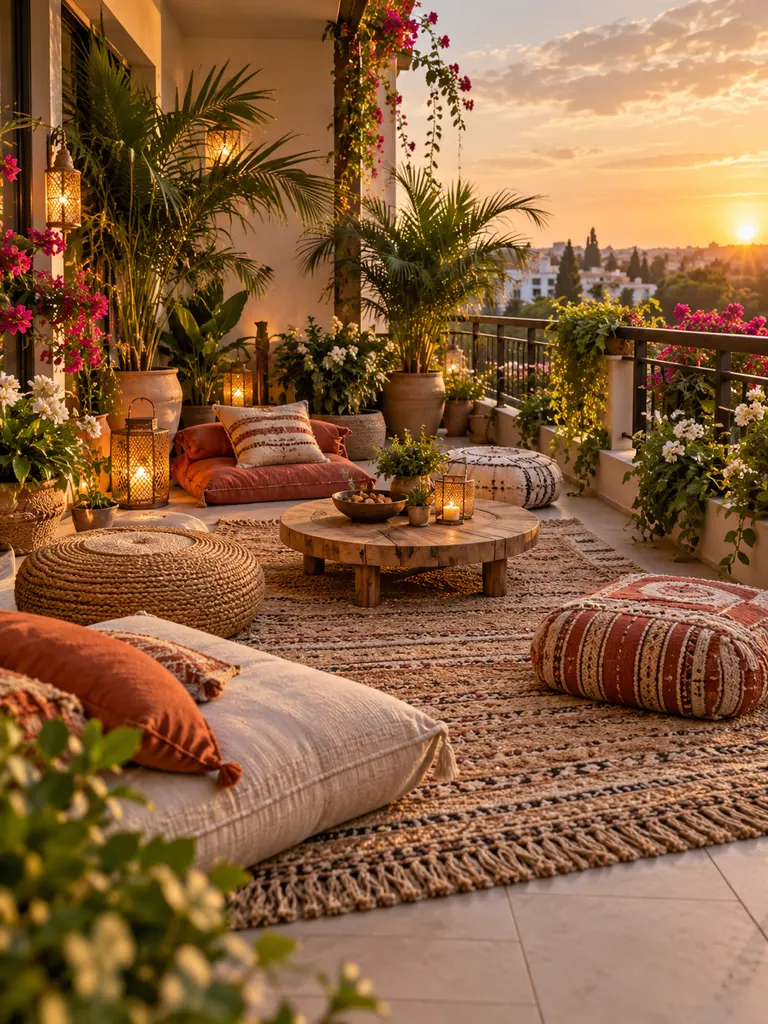
For a casual, flexible balcony, replace bulky furniture with large outdoor floor cushions and poufs. Add a low coffee table and a weather-resistant rug, then surround the lounge area with flowering containers and foliage plants. Because the cushions can be moved or stored, this design is particularly useful for renters or multifunctional balconies. Choose fabrics intended for outdoor conditions and bring softer furnishings inside during prolonged rain if necessary.
26. Japanese-Inspired Balcony Garden
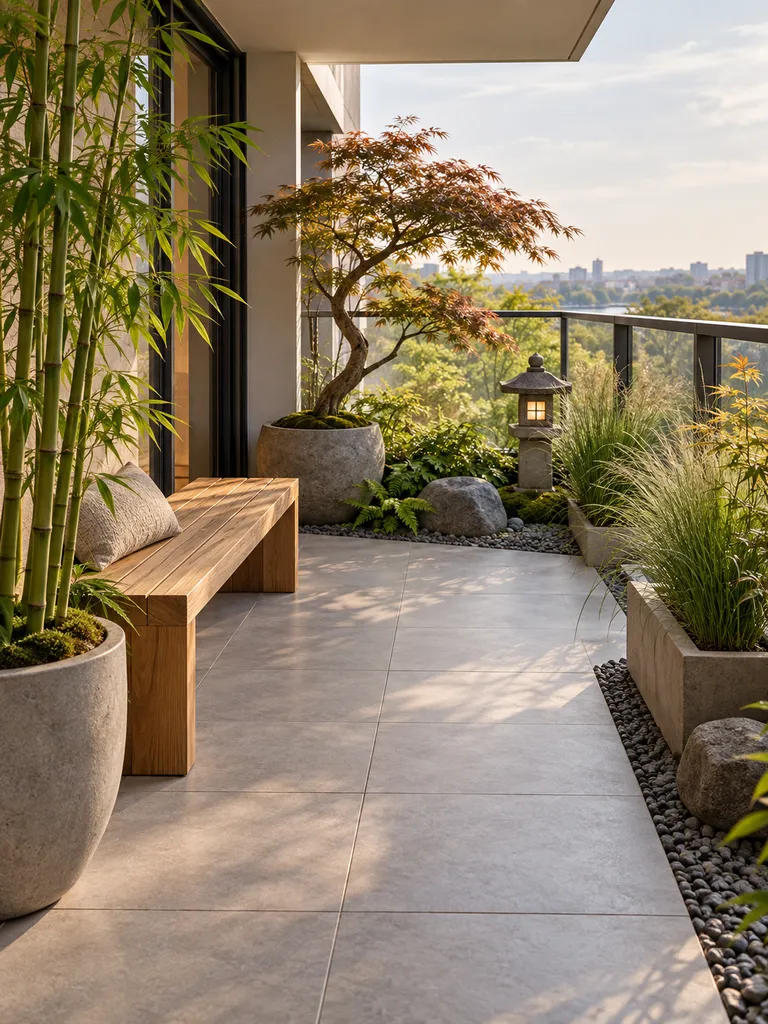
Create a peaceful balcony influenced by Japanese garden design by focusing on simplicity, balance, and natural textures. Bamboo, ornamental grasses, sculptural small trees, stones, and restrained lighting can create a calm atmosphere. Use fewer plants but give each one enough space to be appreciated. Simple wooden furniture works better than heavily patterned accessories. Instead of filling every empty area, allow some open space to become part of the overall composition.
27. Zen Balcony Garden With Pebbles
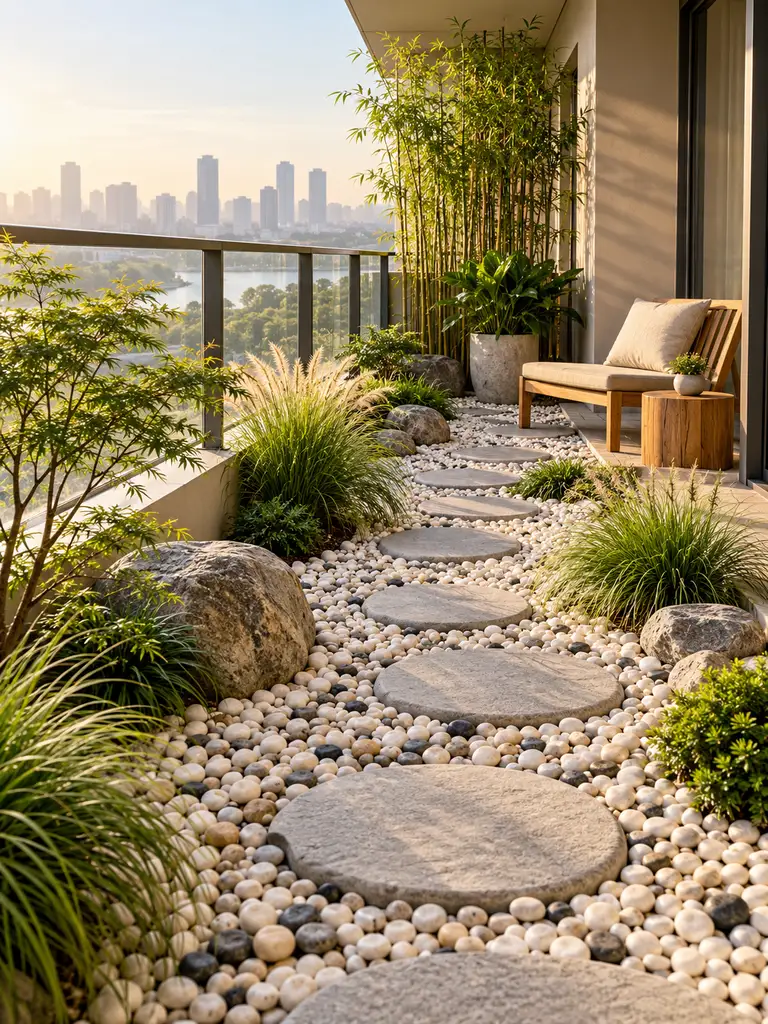
Decorative pebbles can help turn an ordinary balcony into a clean, meditative retreat. Use white or natural stones around large containers or within a defined decorative strip. Add stepping stones, bamboo, grasses, and sculptural foliage plants. One comfortable chair may be all the furniture you need. Keep the color palette neutral and limit decorative accessories. The combination of stone, greenery, and natural wood creates a balanced space that feels peaceful rather than cluttered.
28. Modern Black and Green Balcony Garden
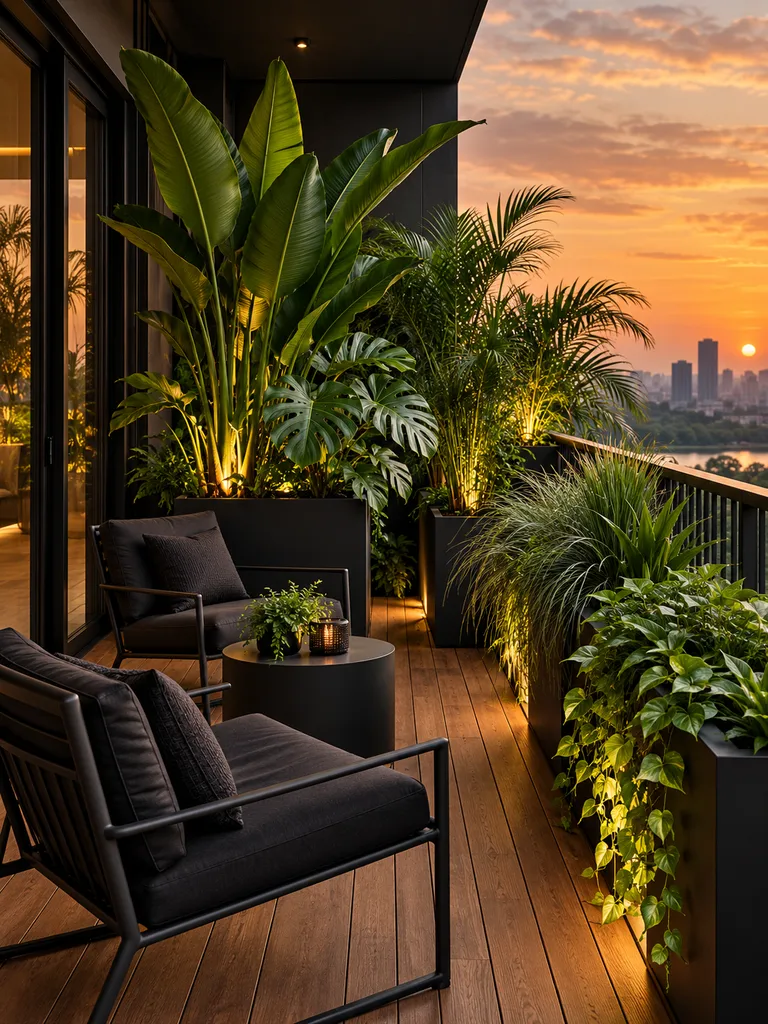
A black-and-green palette gives balcony gardens a sophisticated contemporary edge. Use matte-black planters, dark metal furniture, and clean-lined accessories against vibrant foliage. Plants with large or interesting leaves look especially striking against dark containers. Warm wooden flooring can soften the overall design and stop it from appearing too cold. Add subtle uplighting near larger plants at night to create dramatic shadows and emphasize their shape.
29. Luxury Balcony Garden With Glass Railing
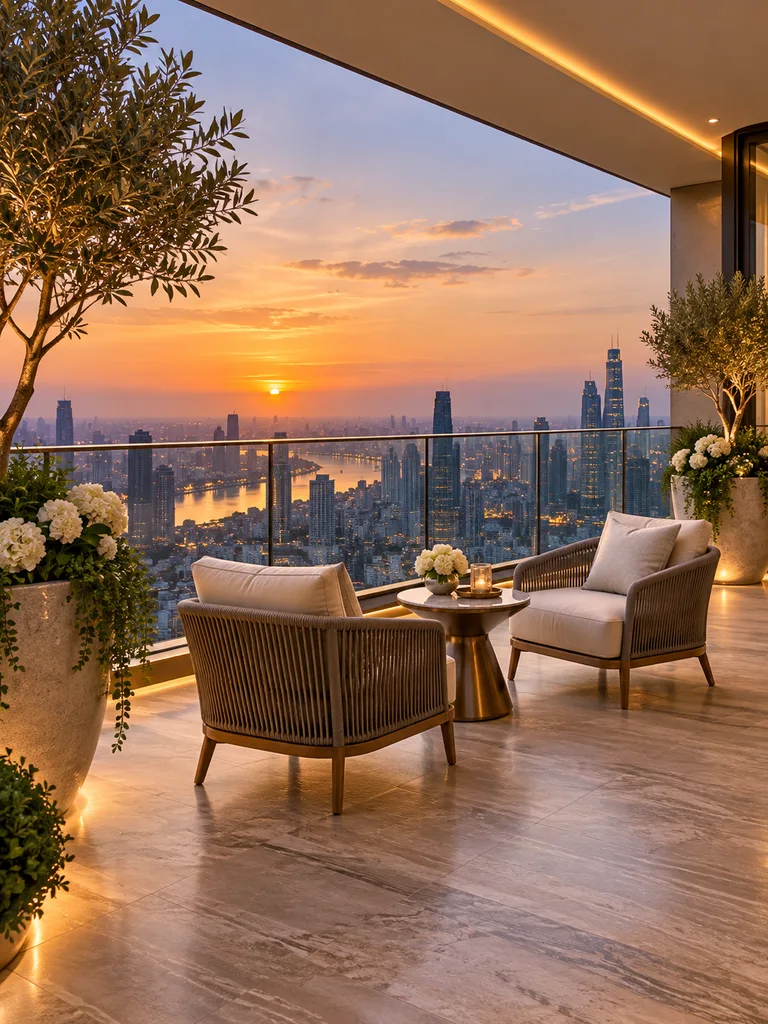
A balcony with a glass railing often benefits from a more restrained design because the surrounding view already provides strong visual interest. Place elegant planters toward the edges rather than blocking the center of the railing. Add comfortable lounge chairs, a small side table, and a few sculptural plants. Concealed lighting can create a polished evening atmosphere. Keeping colors and materials consistent helps the entire balcony feel sophisticated rather than overcrowded.
30. Rustic Wooden Balcony Garden
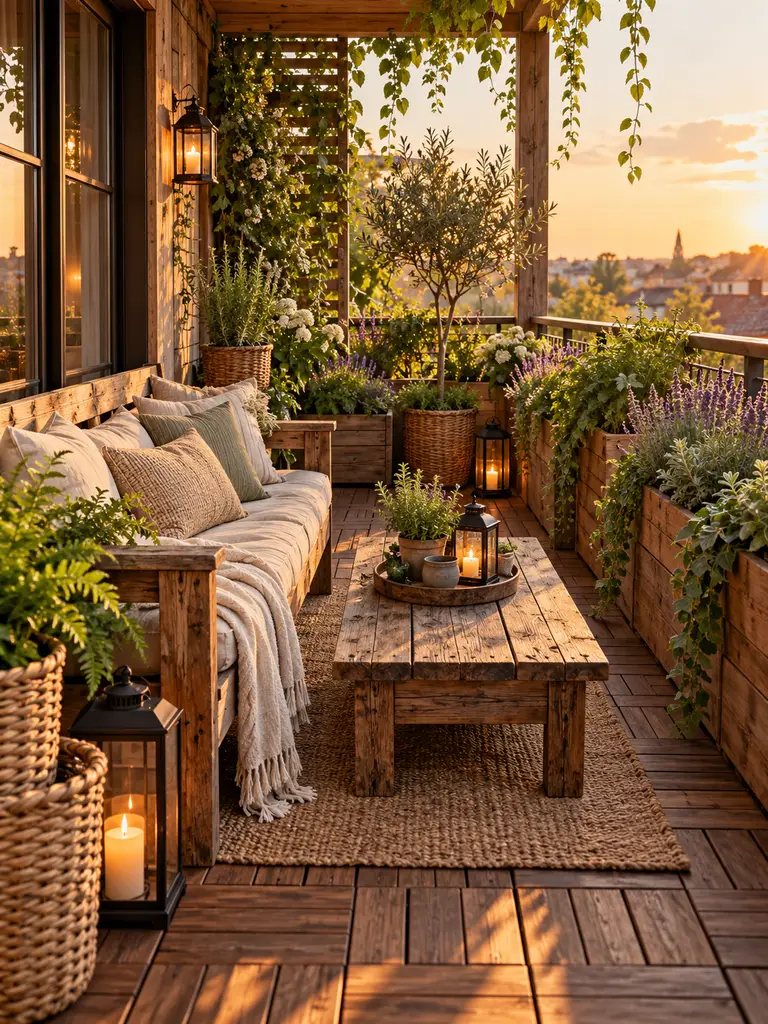
Natural timber immediately makes a balcony feel warmer and more inviting. Use wooden deck tiles, timber planter boxes, wooden furniture, and woven baskets to establish a rustic foundation. Add flowering herbs, lavender, ferns, and trailing plants for softness. Vintage-style lanterns work beautifully in the evening. The wood does not need to match perfectly; slightly different tones can create character, especially when repeated alongside neutral cushions and earthy terracotta pots.
31. Balcony Garden With a Mini Water Feature
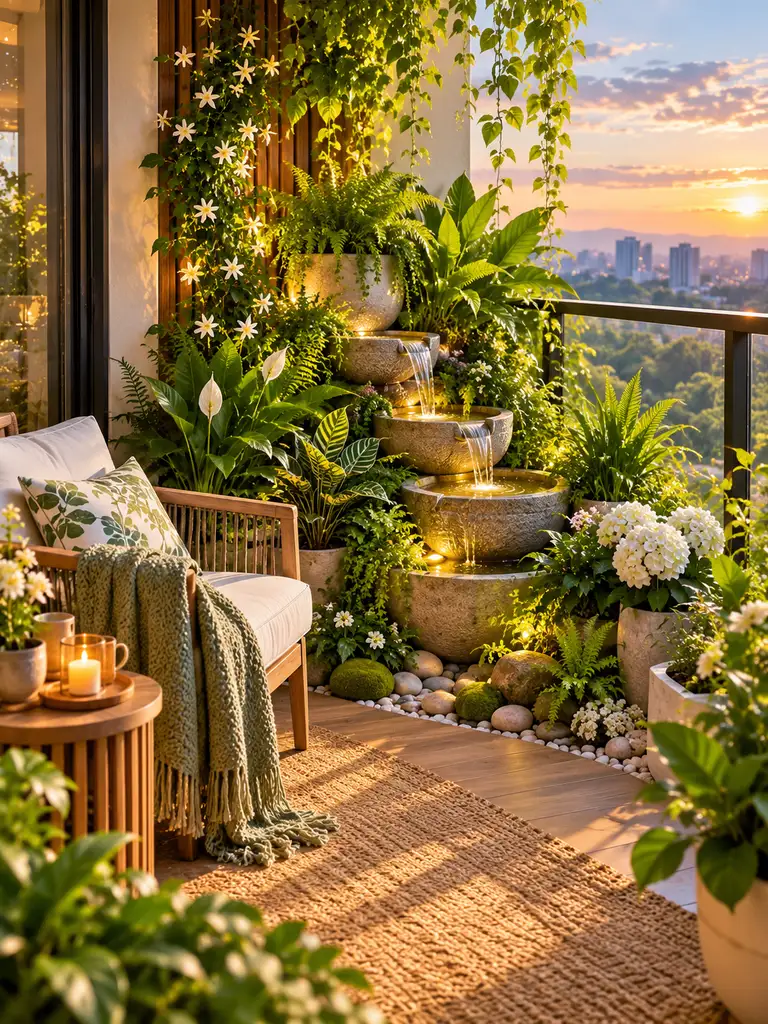
A compact fountain can introduce gentle movement and relaxing sound into a balcony garden. Position the water feature in a corner or among groups of leafy plants so it looks integrated rather than isolated. Ferns and other greenery can help create a lush atmosphere around it. Decorative stones add a natural finishing touch. Choose a fountain that fits the available space and always consider electrical requirements, weight, drainage, and any building restrictions before installation.
32. Herb and Flower Balcony Garden
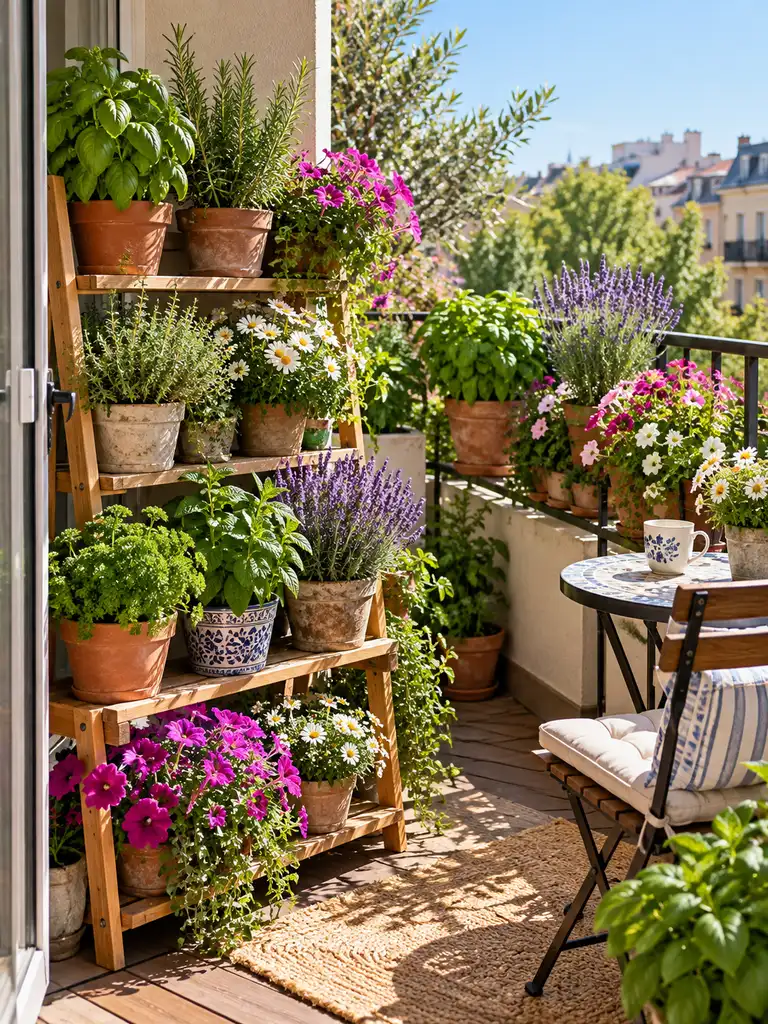
A balcony garden can be decorative and useful at the same time. Grow basil, rosemary, thyme, parsley, mint, and lavender alongside colorful flowers. Place frequently harvested herbs close to the balcony door so they are easy to reach while cooking. Different herb textures can look surprisingly ornamental, especially in coordinated containers. Keeping strongly spreading plants such as mint in separate pots also makes the garden easier to manage throughout the growing season.
33. Edible Balcony Garden With Vegetables
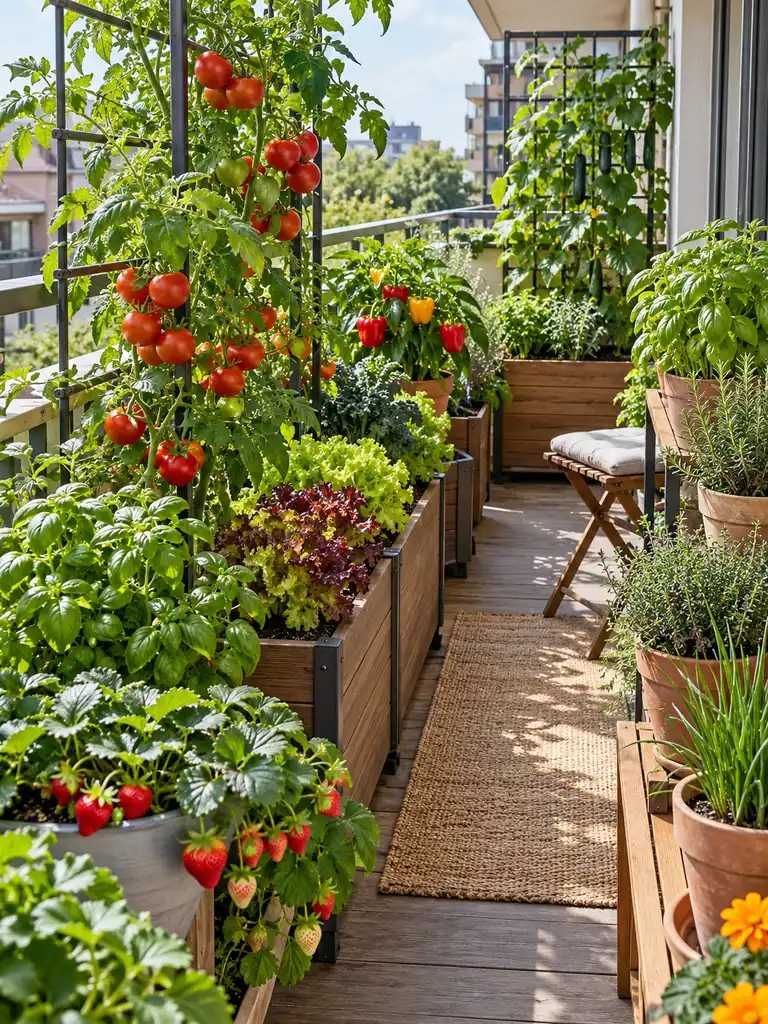
You do not need a backyard to enjoy homegrown food. Tomatoes, peppers, lettuce, strawberries, and many herbs can be grown in suitable containers when conditions are right. Use vertical supports for climbing or vining plants to save floor space. Companion flowers can make the garden more attractive while adding extra color. Select container sizes according to each crop’s needs and place sun-loving vegetables where they receive sufficient direct light.
34. Pollinator-Friendly Balcony Garden
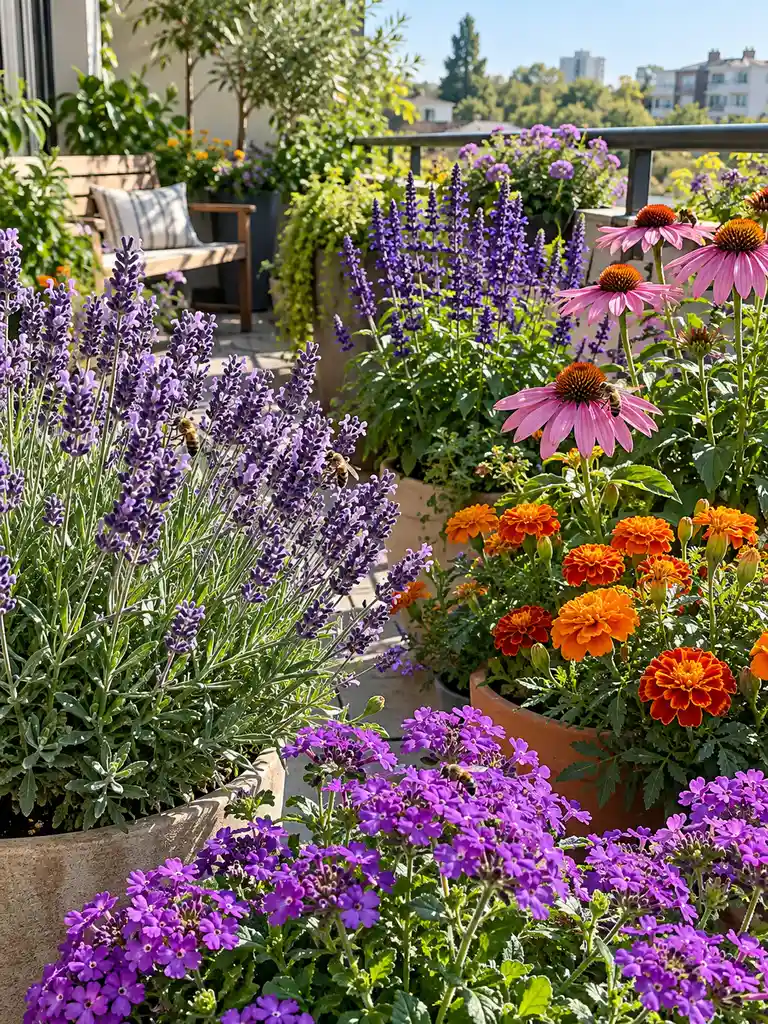
Even a balcony can provide useful flowering plants for visiting pollinators. Lavender, salvia, verbena, marigolds, and coneflowers are examples worth considering where local growing conditions suit them. Try to include plants that bloom at different times so flowers are available across more of the growing season. Grouping several flowering plants together can also create a stronger visual display. Always select varieties that match your climate, sunlight, and available balcony space.
35. Butterfly Balcony Garden
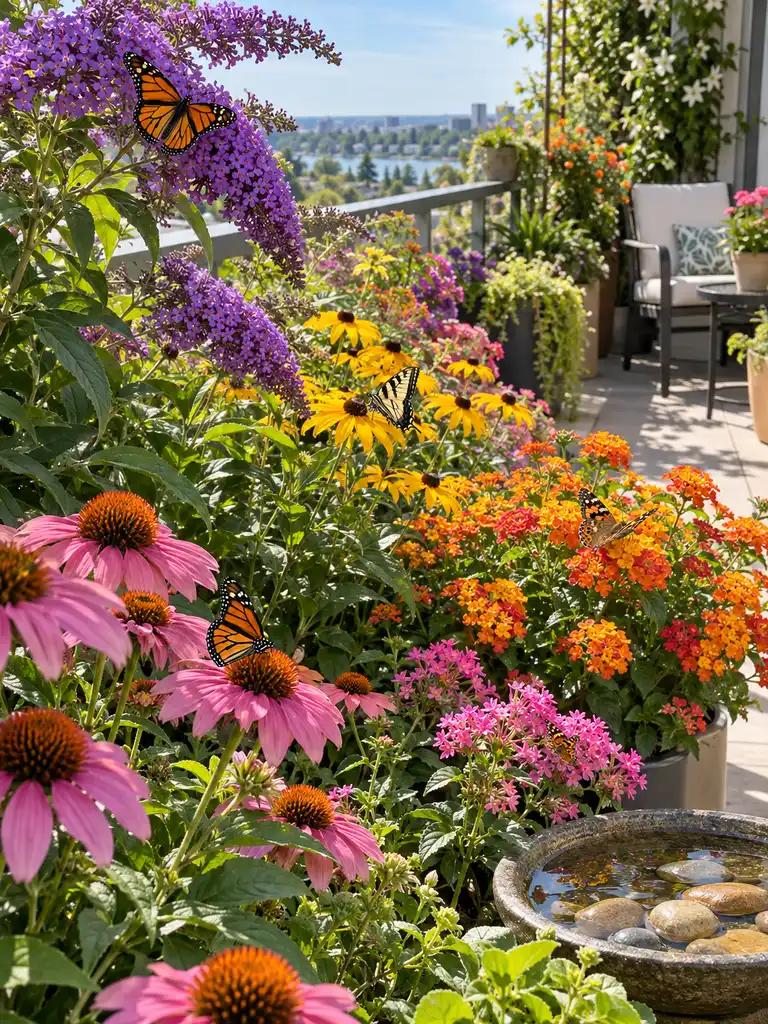
Design a colorful balcony with butterflies in mind by planting clusters of nectar-rich flowers and, where practical, appropriate host plants. Sunny positions are often especially valuable for a butterfly-focused garden. Instead of scattering single flowers around the balcony, group similar varieties together to create noticeable patches of color. Since butterfly species and suitable plants differ by region, choose plants based on what naturally occurs in your local area.
36. Fragrant Balcony Garden
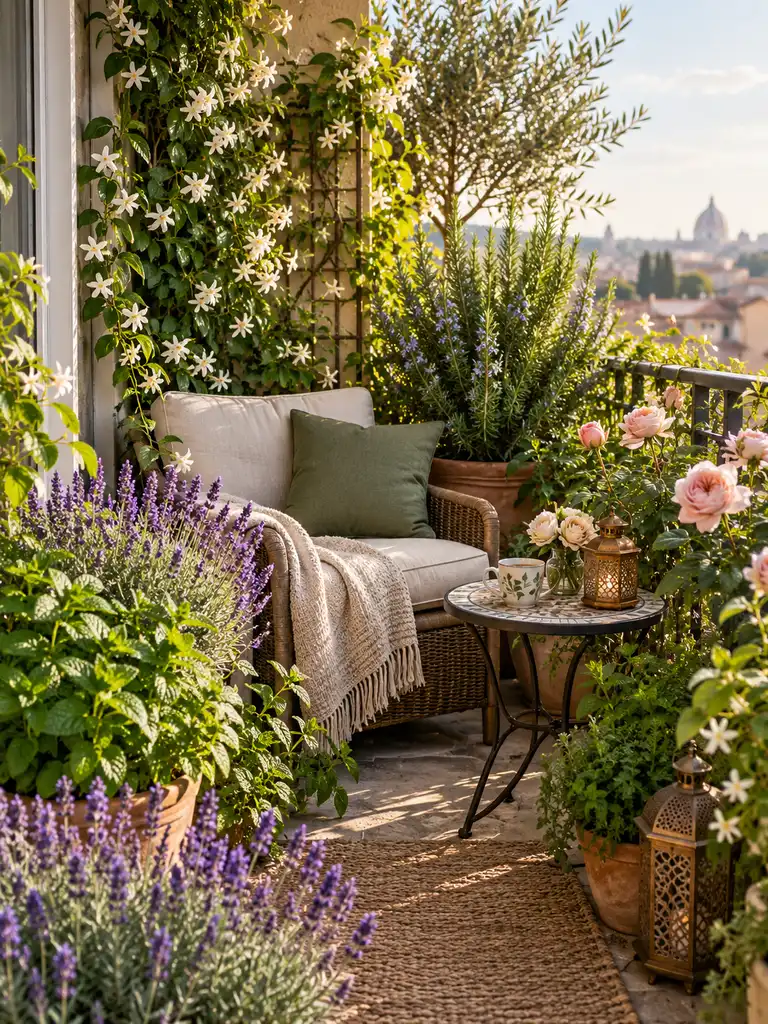
A balcony can become even more relaxing when fragrance is included in the design. Position jasmine, lavender, gardenia, rosemary, mint, or scented roses near seating areas where their fragrance can be enjoyed. Avoid filling the space with too many strongly scented plants at once, because competing fragrances may become overwhelming. A few carefully chosen varieties can make sitting outside with morning coffee or relaxing in the evening much more enjoyable.
37. Balcony Rose Garden
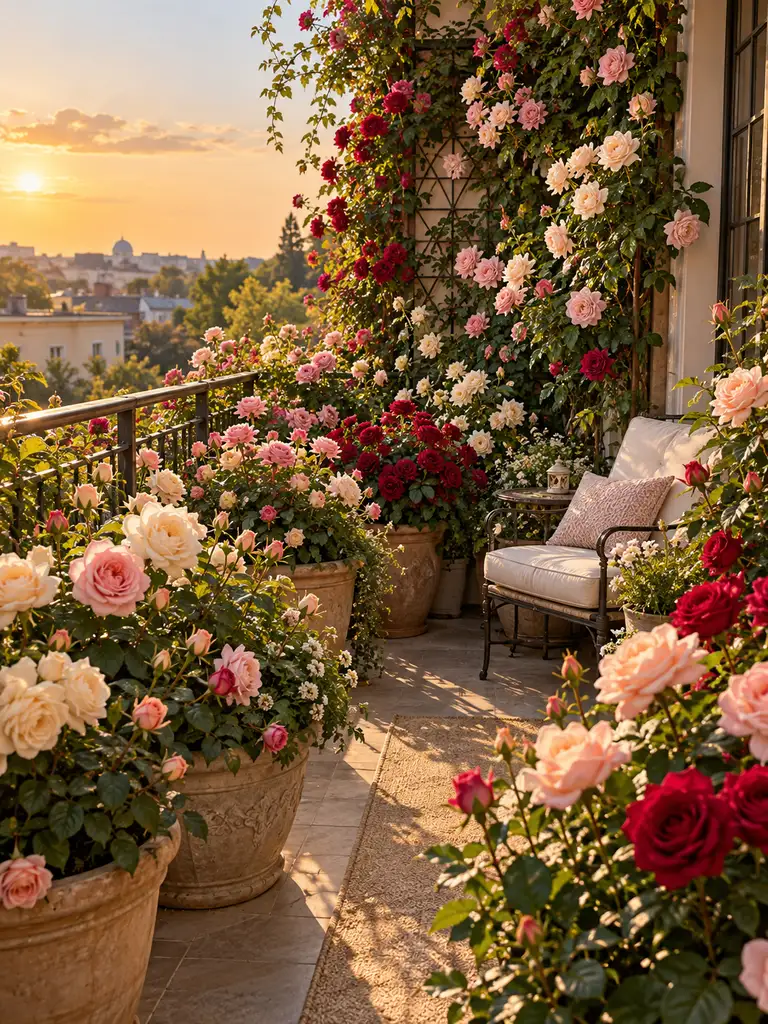
Roses can create a wonderfully romantic balcony when the right varieties are grown in suitable containers. Compact roses work well in larger pots, while climbing varieties can be trained onto sturdy supports where conditions allow. Surround them with simple foliage plants so the flowers remain visually dominant. Choose containers with adequate drainage and enough room for root development. Roses should also be positioned according to the sunlight requirements of the particular variety you select.
38. Bougainvillea Balcony Garden
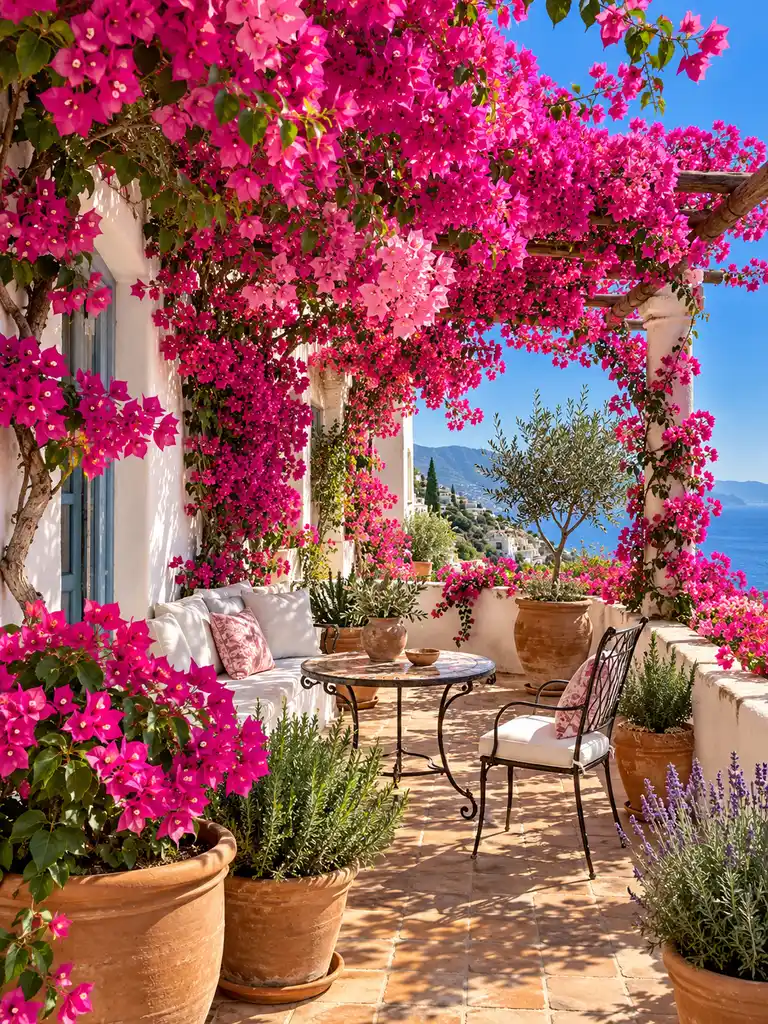
Few plants create visual drama quite like colorful bougainvillea. Where the climate is suitable, train it along a trellis, wall support, or balcony structure to produce a striking flowering display. Terracotta planters, white furniture, and Mediterranean-inspired accessories complement its vivid color beautifully. Because bougainvillea generally prefers bright conditions, evaluate the amount of sunlight your balcony receives before making it the centerpiece of your garden.
39. Balcony Garden With a Flower Arch
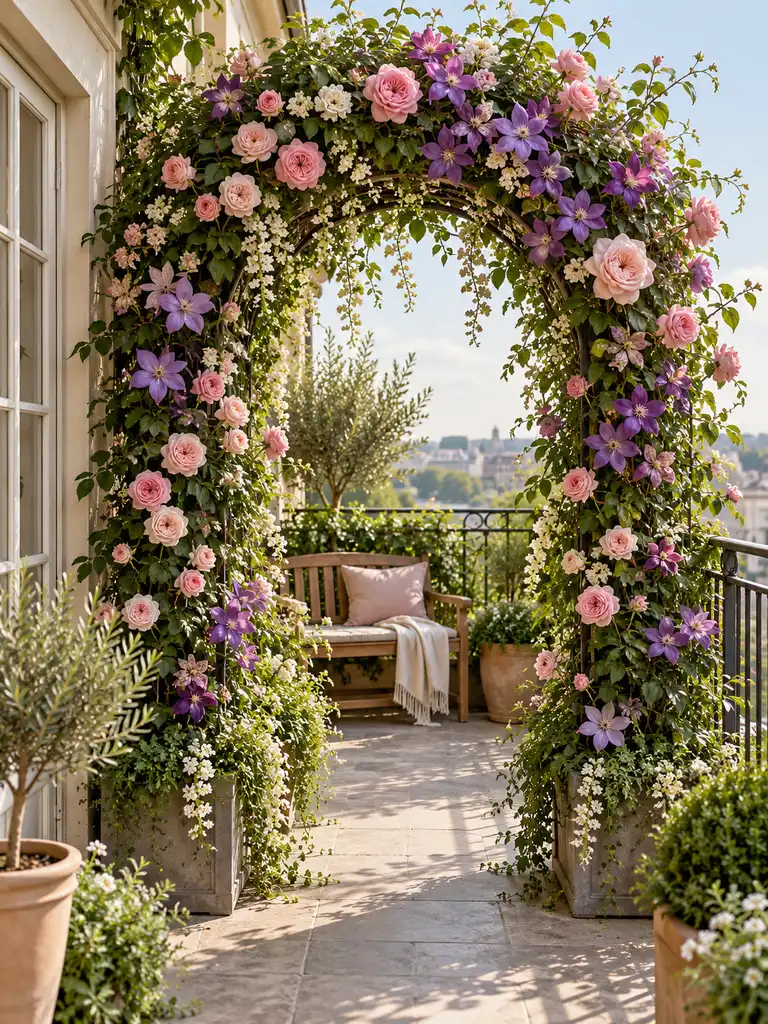
A flower-covered arch can give a larger balcony a romantic garden entrance or dramatic focal point. Position the arch at one end of the space or around a transition between seating and planting areas. Train suitable climbing flowers and greenery around the frame. Keep nearby containers slightly simpler so the arch remains the main attraction. A small bench positioned close to it can turn the area into a charming reading or photo corner.
40. Nighttime Balcony Garden With Lanterns
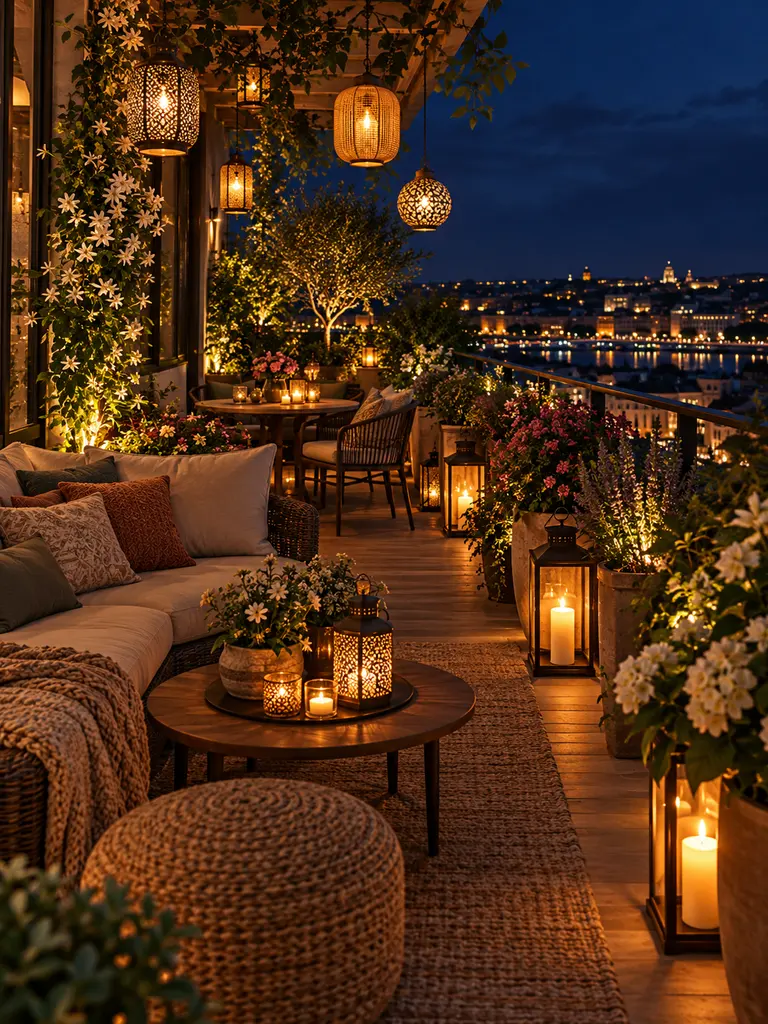
If you use your balcony mainly after sunset, make lighting an important part of the garden design. Combine hanging lanterns, table lanterns, floor lights, subtle uplighting, and warm string lights rather than relying on one strong ceiling light. Place lighting at different heights to create depth. Soft illumination around plants can reveal interesting leaf shapes and textures while making the balcony feel cozy enough for relaxing, entertaining, or enjoying quiet evenings outdoors.
41. Solar-Lit Balcony Garden
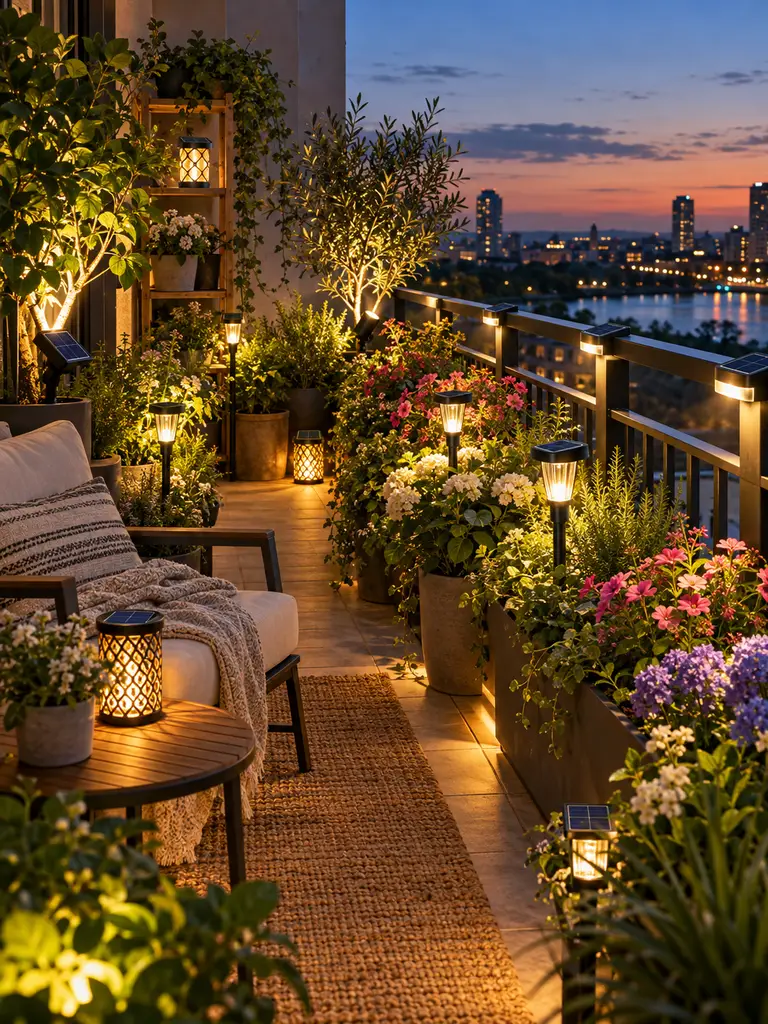
Solar lighting can be a practical decorative option for balconies that receive sufficient daytime sunlight. Try small railing lights, solar lanterns, string lights, or miniature spotlights positioned around larger plants. Distribute them throughout the balcony instead of clustering every light in one area. Solar lights work especially well as accent lighting rather than the sole source of illumination. Their soft glow can make flower containers and pathways more noticeable after dark.
42. Rainy-Day Covered Balcony Garden
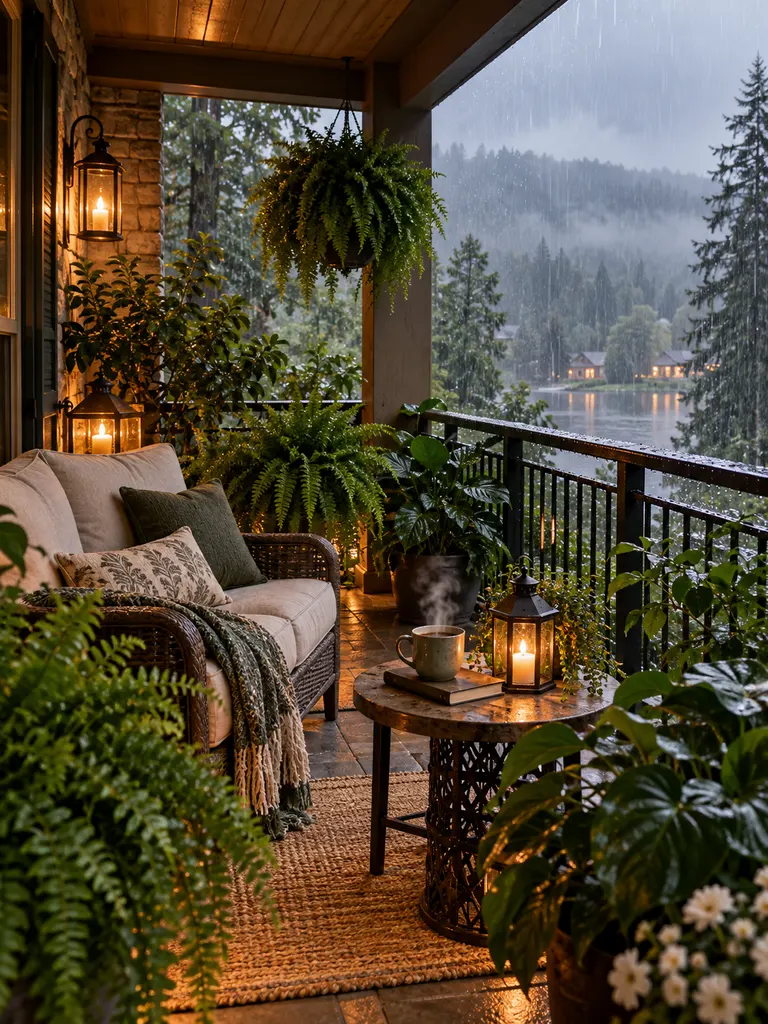
A covered balcony can become an atmospheric place to enjoy rainy weather. Use weather-resistant seating, lush green foliage, ferns, lanterns, and protected outdoor cushions to create a comfortable retreat. Keep furniture slightly away from open edges where wind-driven rain might reach it. Covered balconies may receive less direct sunlight than uncovered ones, so choose plants according to the actual light levels rather than assuming every outdoor plant will thrive there.
43. Autumn Balcony Garden
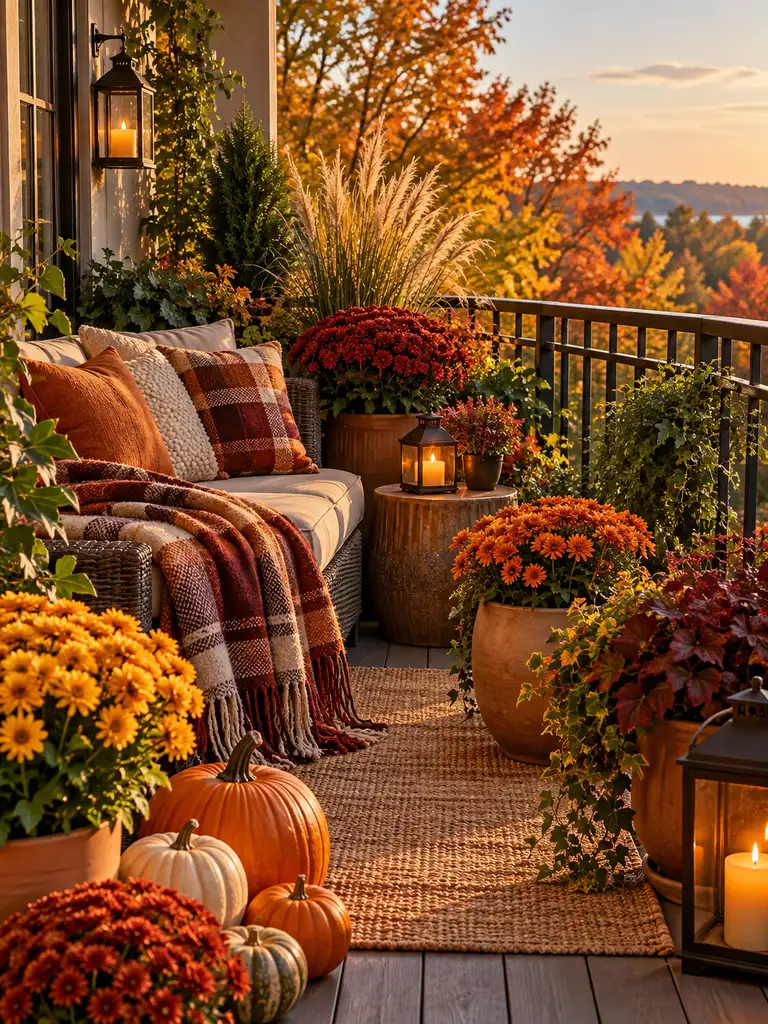
Give your balcony a seasonal transformation with warm fall colors and textures. Chrysanthemums, ornamental grasses, pumpkins, textured throws, and rust or amber-toned cushions can create a cozy autumn look. Warm lantern lighting works particularly well with these colors during shorter evenings. Instead of replacing the entire garden, keep evergreen or permanent foliage as the base and add seasonal plants and decorations around it. This makes future updates easier and more affordable.
44. Spring Pastel Balcony Garden
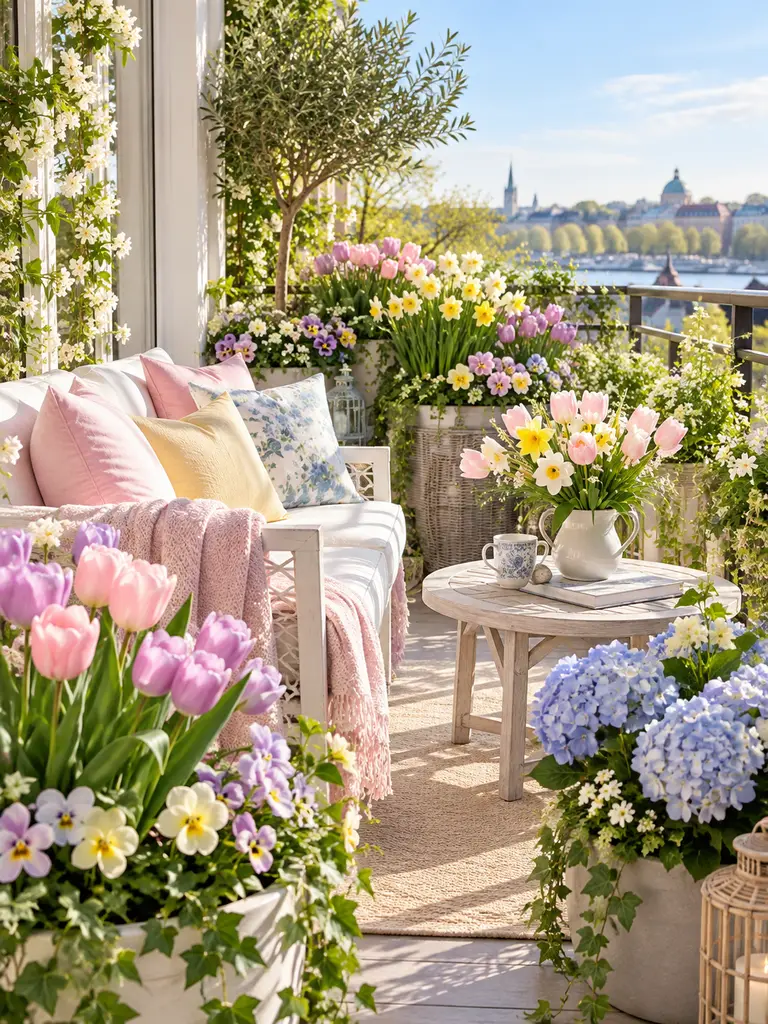
Celebrate spring with a fresh palette of pale pink, lavender, yellow, and blue. Tulips, pansies, daffodils, and other suitable seasonal flowers can create a cheerful display in coordinated containers. Add pastel cushions and light-colored furniture for an airy appearance. Mix seasonal blooms with permanent foliage so the balcony still has structure after early spring flowers fade. A few hanging baskets can add another layer of color without taking up floor space.
45. Four-Season Balcony Garden Retreat
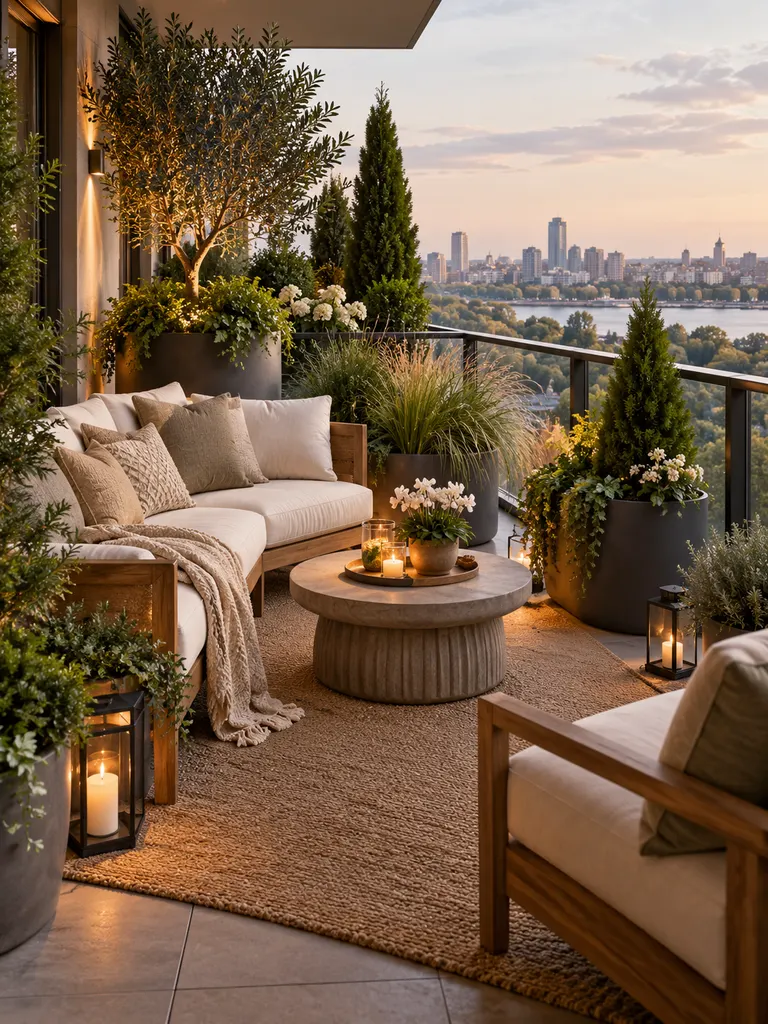
A well-planned balcony can remain attractive beyond a single season. Start with an evergreen framework of suitable permanent plants, then rotate flowers and decorative accents throughout the year. Weather-resistant furniture, durable planters, adaptable lighting, and neutral outdoor textiles provide a consistent foundation. Spring flowers, summer color, autumn accessories, and seasonal winter greenery can then be introduced gradually. This approach prevents you from needing to redesign the entire balcony every few months.
How to Make Your Balcony Garden Look Dreamy
Beautiful Balcony Garden Ideas usually have more in common than simply using attractive plants. The most inviting spaces combine greenery with practical planning, comfortable furniture, and a consistent decorating style.
Begin by observing how much direct sunlight your balcony receives throughout the day. A balcony exposed to several hours of strong sun will require different plants from one shaded by surrounding buildings. Choosing plants according to real growing conditions makes it much easier to maintain a healthy garden.
Next, work with different heights. Place larger floor plants toward corners or walls, use medium-sized containers around seating, attach smaller planters to suitable railings, and introduce hanging baskets above. These layers create the lush appearance often seen in professionally designed balconies.
At the same time, avoid covering every available inch. Keep a comfortable path between the balcony door, seating area, and railing. Leaving some visible flooring can actually make the greenery appear more intentional.
Furniture should also match the scale of the balcony. Folding chairs and compact tables work well in tiny spaces, while larger balconies can accommodate loveseats, benches, or lounge chairs. Soft outdoor cushions and a rug help the garden feel like an extension of your indoor living space.
Lighting is another easy way to create atmosphere. Warm fairy lights, lanterns, solar lights, and discreet LEDs can highlight plants while making the balcony inviting after dark.
Finally, repeat a limited selection of colors and materials. Using similar planter finishes, wood tones, flower colors, or cushion shades gives even a garden filled with many different plants a more coordinated appearance.
Choosing the Right Containers for a Balcony Garden
Containers affect both the appearance and practicality of your balcony garden. Lightweight pots can be easier to reposition, while rectangular planters fit efficiently against walls and railings. Hanging baskets and vertical planters are excellent when floor space is limited, and larger decorative containers can be used as focal points where space allows.
Whatever style you choose, good drainage is essential for most container plants. Consider how excess water will be managed so it does not create problems for flooring or neighboring properties.
Think about the mature size of each plant as well. A container that looks generous when a plant is young may become too small later.
Balconies also have structural limits, so avoid adding numerous extremely heavy pots, large amounts of stone, major structures, or substantial water features without understanding what the space can safely support. Rental properties and apartment buildings may also have rules covering railing planters, drilling, hanging items, and permanent installations.
Conclusion
Creating a beautiful balcony garden is less about having a huge outdoor area and more about using the available space thoughtfully. These Balcony Garden Ideas can be adapted to tiny apartment balconies, long narrow spaces, covered balconies, and spacious terraces.
You do not need to complete the entire transformation at once. Start with comfortable seating and a few coordinated plants, then gradually introduce flowers, hanging baskets, lighting, rugs, or decorative details as the garden develops.
Most importantly, choose plants that match your climate and the amount of sunlight your balcony actually receives. When practical planting is combined with a style you genuinely enjoy, even a small balcony can become a peaceful extension of your home—a place for morning coffee, gardening, reading, entertaining, or simply relaxing outdoors at the end of the day.

