 Skip to content
A beautifully arranged fruit platter can do much more than provide something fresh to eat. With colorful fruit, thoughtful placement, and a little creativity, it can become one of the most attractive centerpieces on a party table. From birthday celebrations and brunches to baby showers, weddings, holiday gatherings, and summer parties, creative Fruit platter designs can be adapted to almost any occasion.
You also do not need professional food-styling skills to create an impressive platter. Familiar fruits such as strawberries, grapes, oranges, kiwi, pineapple, watermelon, blueberries, and mango can look completely different depending on how they are sliced and arranged. Circular patterns create elegant displays, geometric layouts feel modern, while flowers, hearts, butterflies, and seasonal shapes make a platter more playful.
The following 45 ideas include simple arrangements as well as more decorative designs. Each point also includes the main fruits you will need, making it easier to plan your shopping list before you begin. Use the designs exactly as shown or adapt them to seasonal availability, the colors of your event, and the size of your serving board.
1. Rainbow Spiral Fruit Platter
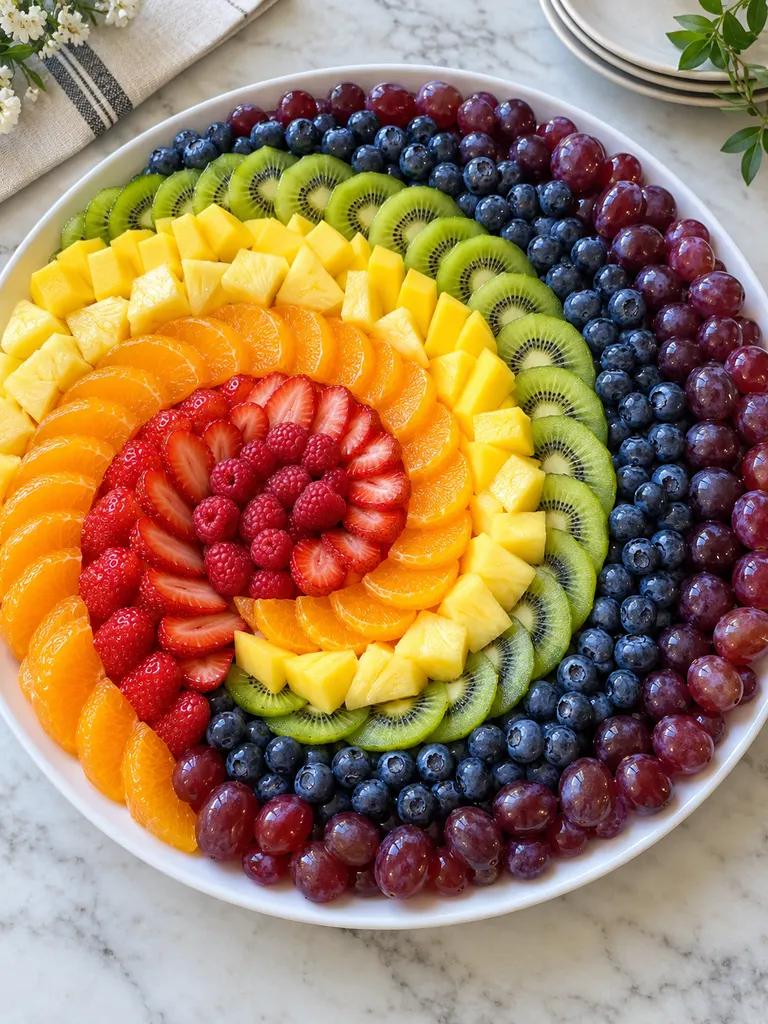
A rainbow spiral turns familiar fruit into a centerpiece with plenty of movement. Start in the middle with strawberries and raspberries, then continue the curve with orange, yellow, green, blue, and purple fruit until the spiral reaches the edge.
Fruits you’ll need: Strawberries, raspberries, oranges, mango, pineapple, kiwi, blueberries, and purple grapes.
2. Tropical Palm Tree Fruit Platter
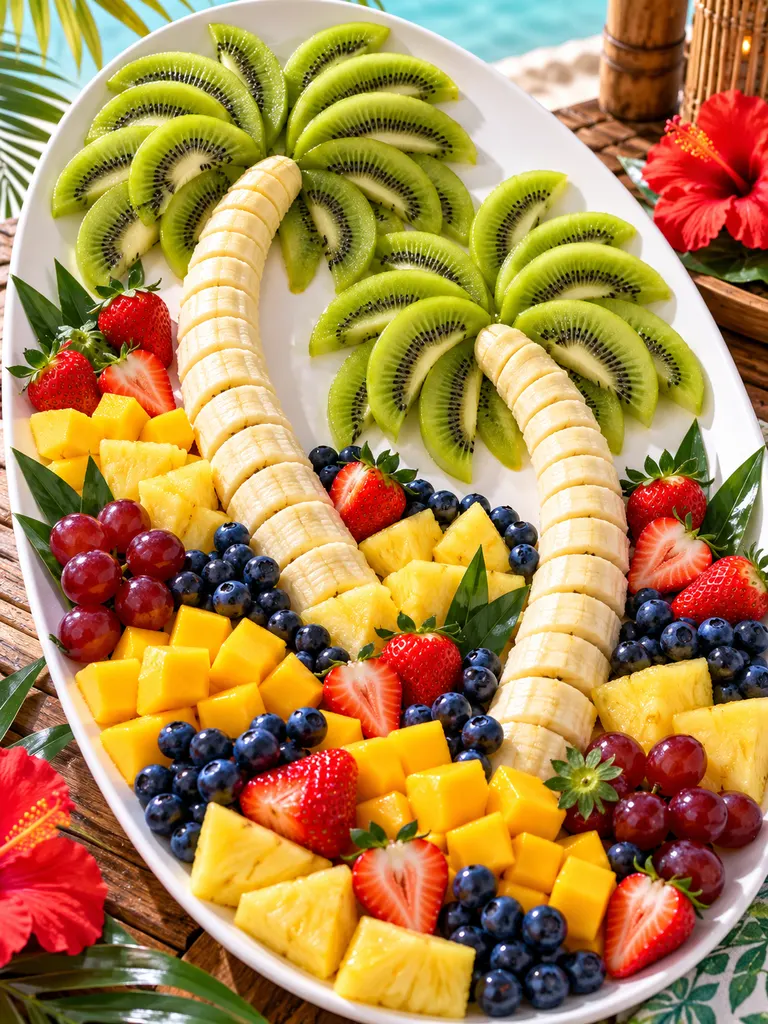
This playful tropical design works especially well for summer birthdays and poolside parties. Build two curved trunks from banana slices and fan kiwi slices above them to make broad palm leaves.
Fruits you’ll need: Bananas, kiwi, pineapple, mango, blueberries, grapes, and strawberries.
3. Watermelon Flower Garden Platter
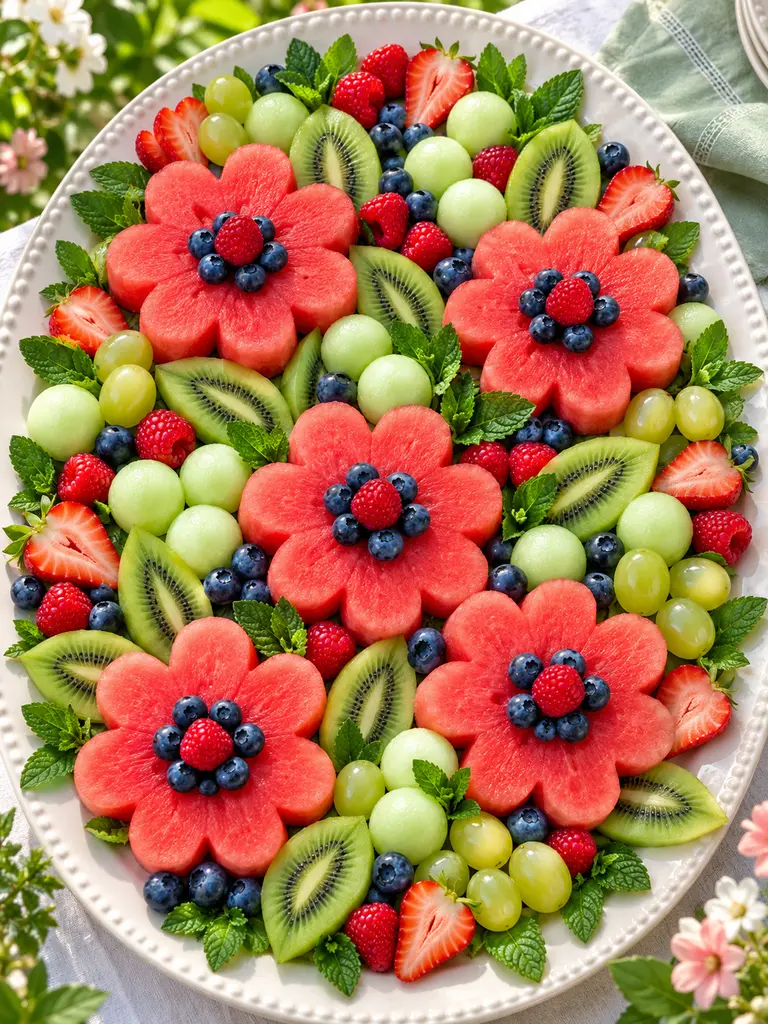
Large watermelon blossoms make this garden-inspired platter instantly recognizable. Cut thick watermelon pieces with flower cutters and give each bloom enough open space to stand out.
Fruits you’ll need: Watermelon, kiwi, honeydew melon, blueberries, raspberries, green grapes, strawberries, and mint.
4. Heart-Shaped Romantic Fruit Platter
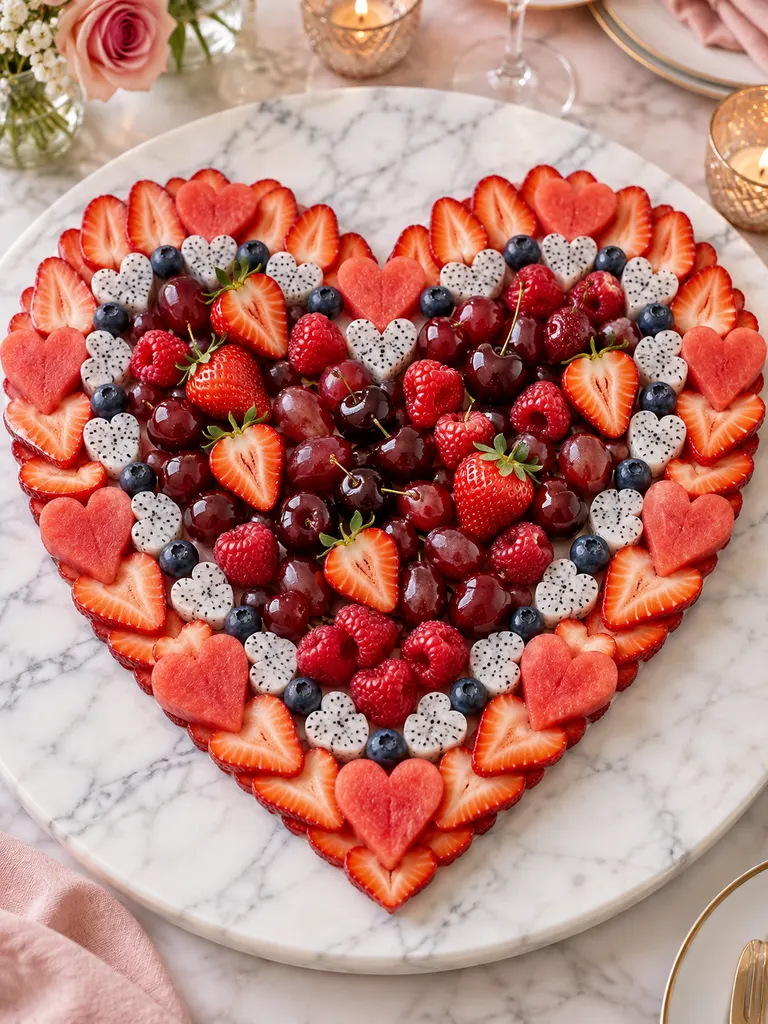
A large fruit heart creates a simple but striking focal point for Valentine’s Day, anniversaries, engagement parties, and bridal showers. Outline the heart first with strawberries or watermelon, then fill the center with red grapes, cherries, and raspberries.
Fruits you’ll need: Strawberries, raspberries, cherries, red grapes, watermelon, dragon fruit, and blueberries.
5. Sunflower Fruit Platter Design
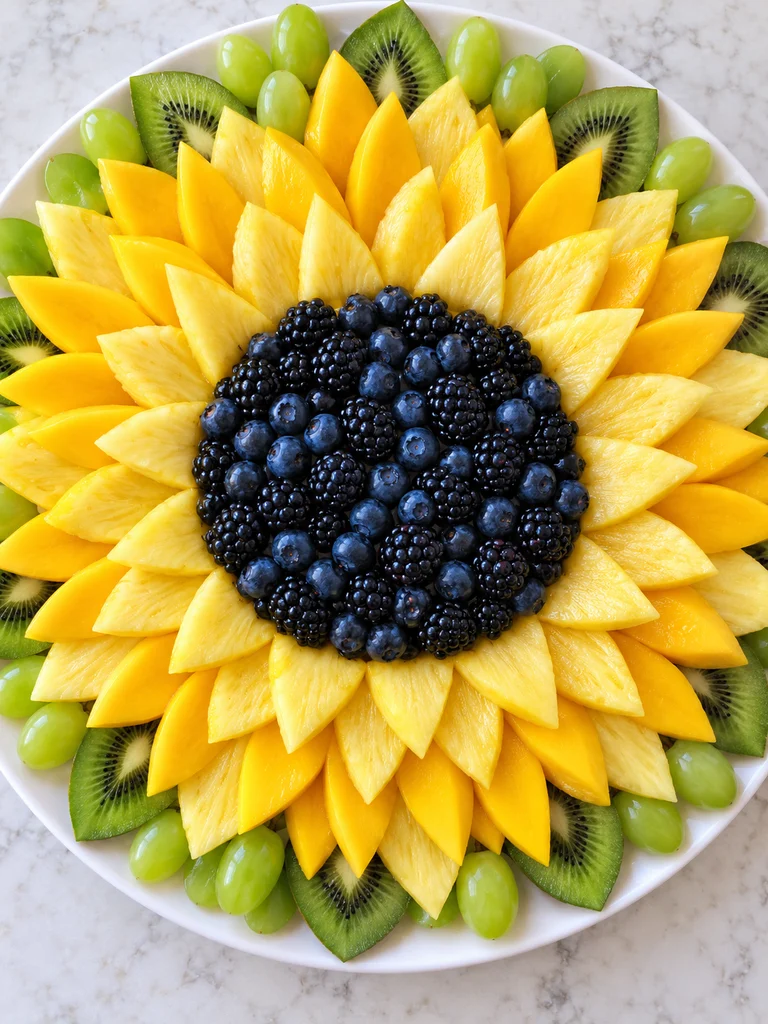
For a cheerful sunflower effect, use dark berries to create a dense circular center and surround it with wide yellow fruit petals. Mango slices and pineapple wedges naturally provide the right color and shape.
Fruits you’ll need: Mango, pineapple, blueberries, blackberries, kiwi, and green grapes.
6. Butterfly Fruit Platter
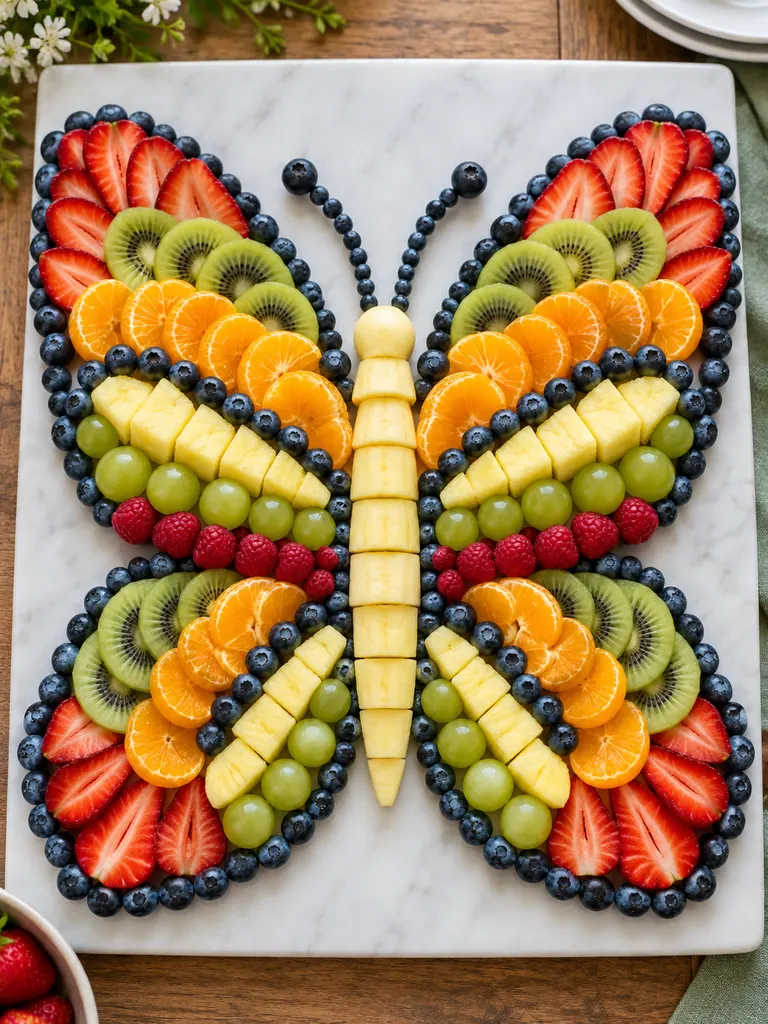
A butterfly platter looks best when both wings mirror one another. Use matching sections of strawberries, oranges, kiwi, grapes, berries, and pineapple on each side of a slim banana or pineapple body.
Fruits you’ll need: Strawberries, kiwi, oranges, blueberries, green grapes, raspberries, pineapple, and banana.
7. Peacock-Inspired Fruit Platter
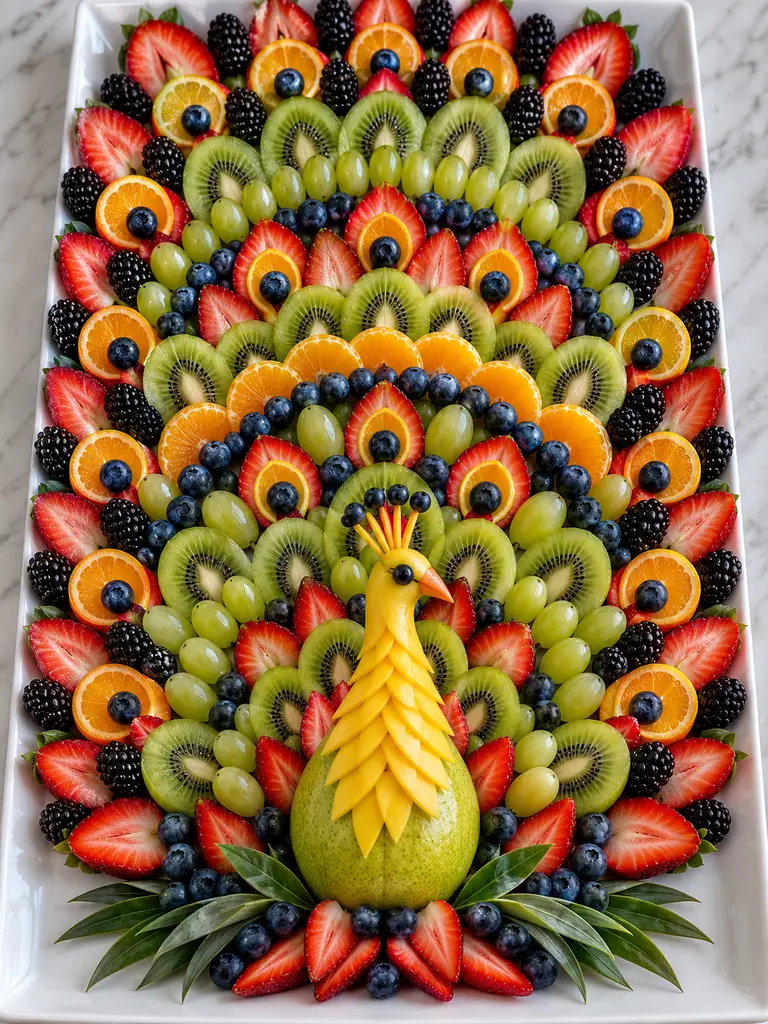
A peacock design gives you room to create a dramatic fan of color. Shape a compact body from pear or mango near one end of the platter, then spread curved rows of kiwi, grapes, blueberries, oranges, and berries behind it.
Fruits you’ll need: Pear, mango, kiwi, blueberries, green grapes, oranges, strawberries, and blackberries.
8. Fruit Rose Garden Platter
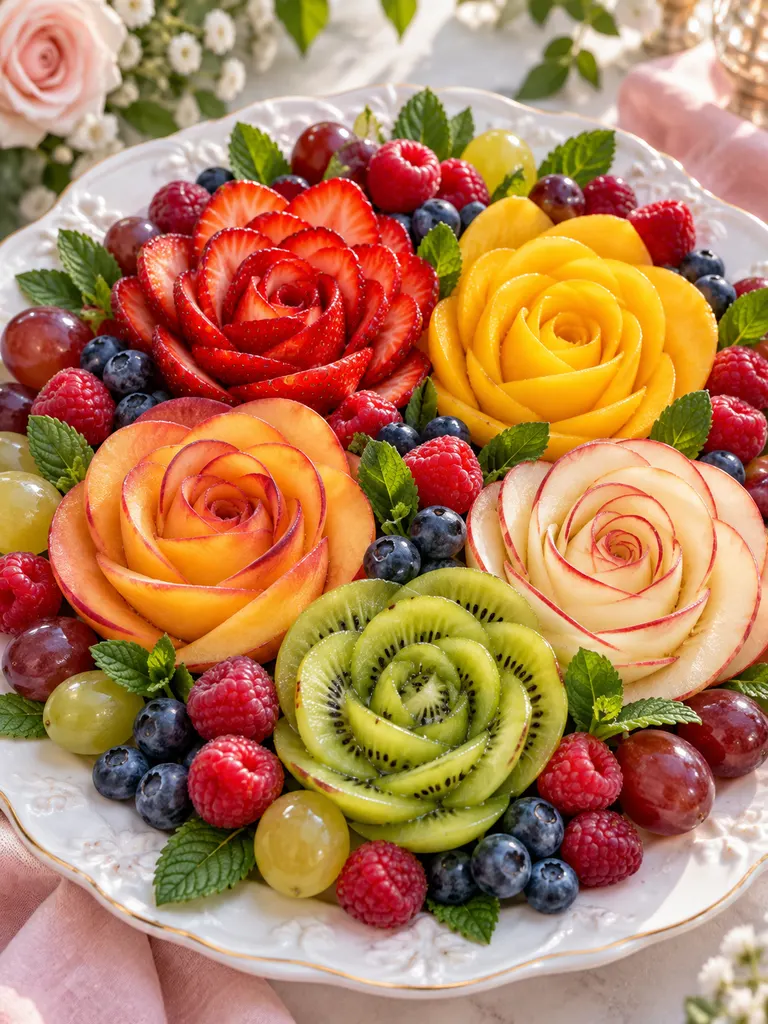
Thin fruit slices can be overlapped into surprisingly convincing roses. Create several separate blooms using strawberries, mango, peaches, apples, and kiwi, then place them across the platter like a small rose garden.
Fruits you’ll need: Strawberries, mango, peaches, apples, kiwi, raspberries, blueberries, grapes, and mint.
9. Mandala Fruit Platter Design
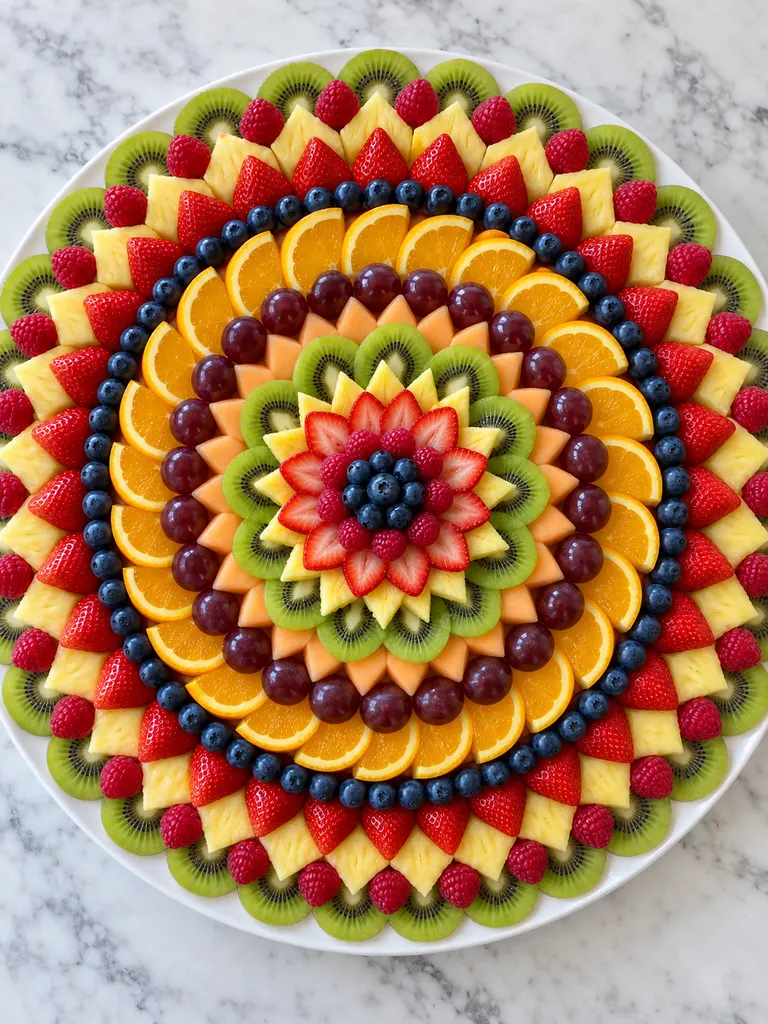
The beauty of a fruit mandala comes from repetition and symmetry. Begin with a small central rosette and build outward in complete circular rings, repeating the same fruit shape at even intervals.
Fruits you’ll need: Kiwi, strawberries, oranges, blueberries, grapes, raspberries, pineapple, and cantaloupe.
10. Citrus Burst Fruit Platter
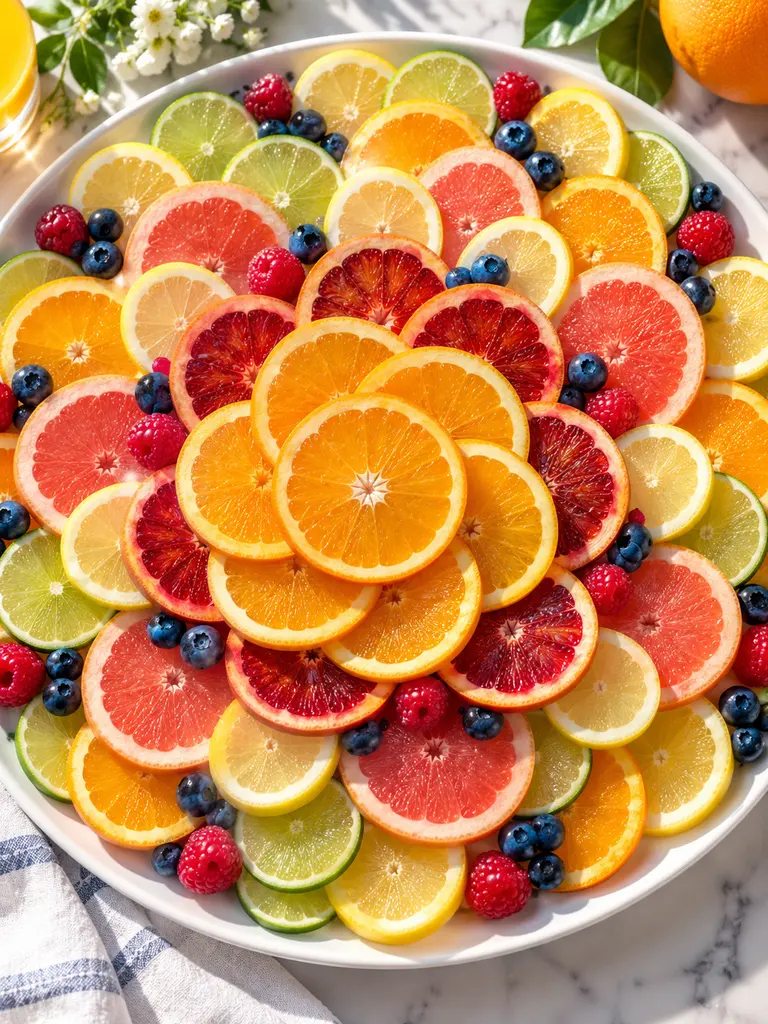
Make citrus the star by layering thin rounds and half-moons so they radiate from the center like a sunburst. Mix standard oranges with blood orange, grapefruit, lemon, lime, and mandarins to create several shades instead of one flat orange tone.
Fruits you’ll need: Oranges, blood oranges, grapefruit, mandarins, lemon, lime, blueberries, and raspberries.
11. Pastel Fruit Platter Design
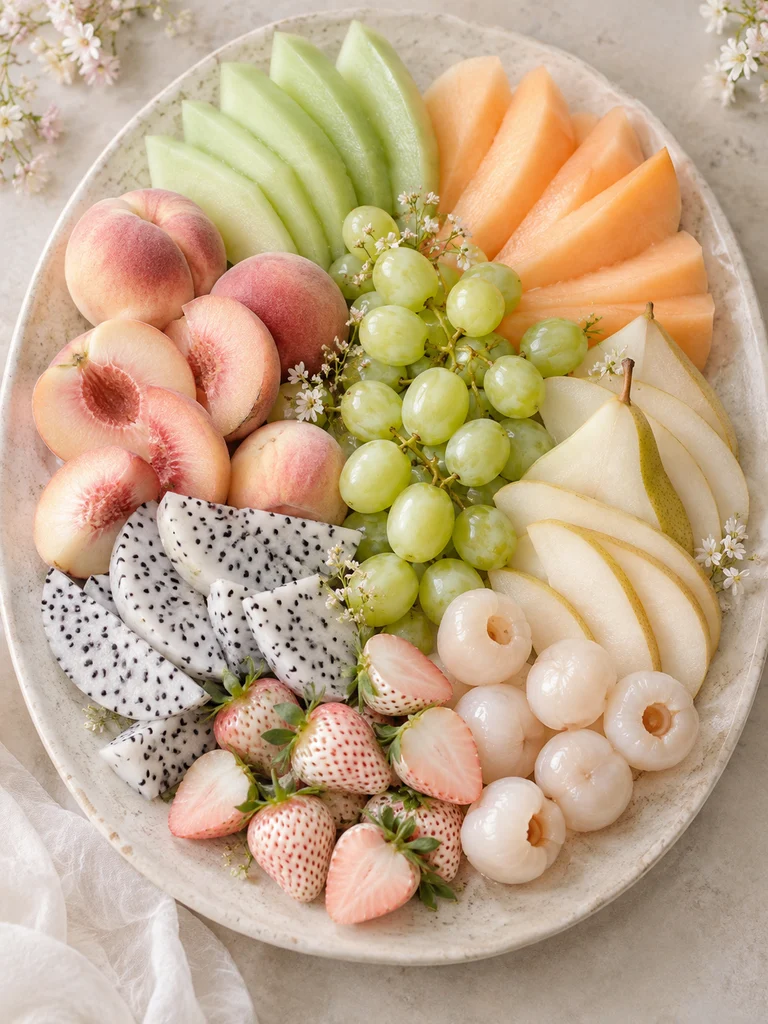
A pastel platter feels softer than a traditional rainbow board and is lovely for spring parties or baby showers. Choose pale green, peach, cream, blush, and white fruit, then arrange them in loose clusters with plenty of breathing space.
Fruits you’ll need: Honeydew melon, cantaloupe, peaches, pears, green grapes, dragon fruit, strawberries, and lychee.
12. Ombre Fruit Platter
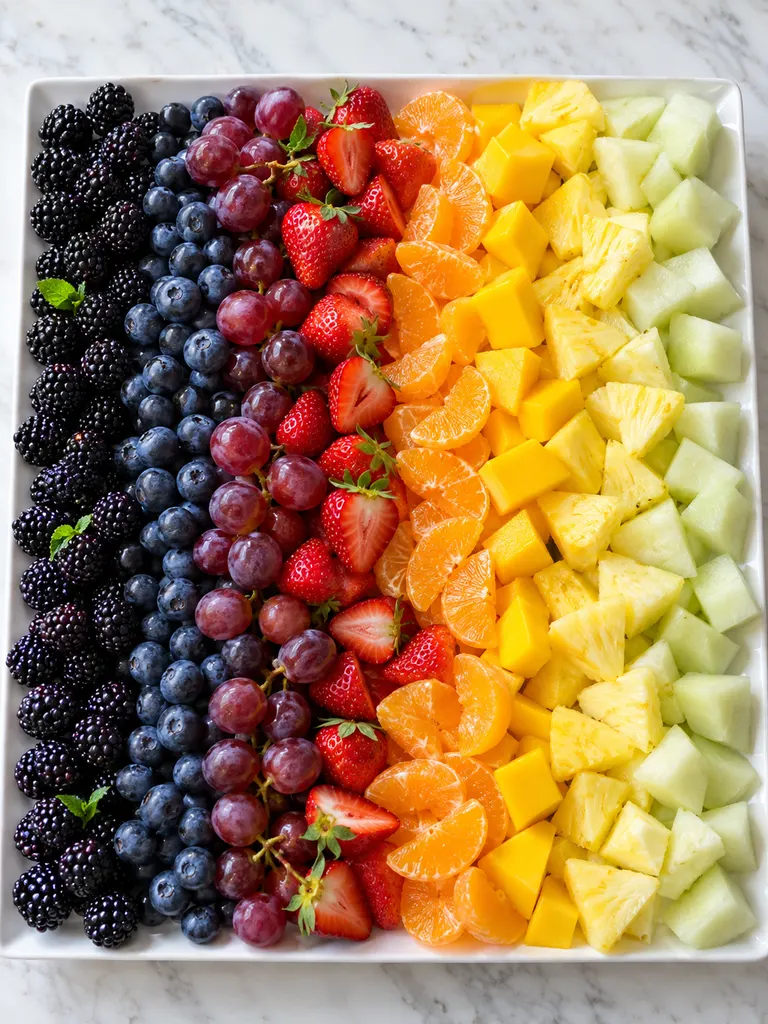
An ombre fruit platter is all about a smooth visual transition. Begin with blackberries and blueberries, move into purple grapes and red strawberries, then continue through orange fruit, mango, pineapple, and finally pale melon.
Fruits you’ll need: Blackberries, blueberries, purple grapes, strawberries, oranges, mango, pineapple, and honeydew.
13. Color-Blocked Fruit Platter
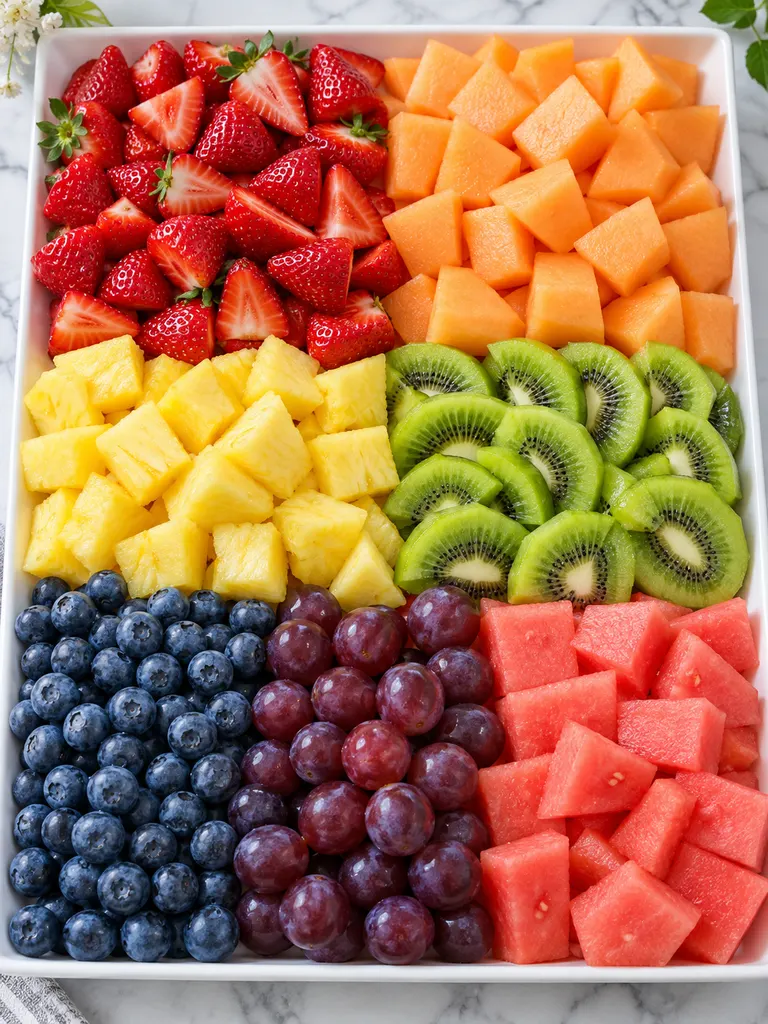
For a clean modern look, separate each fruit into a bold block of color instead of blending varieties together. Build distinct sections of red strawberries, orange cantaloupe, yellow pineapple, green kiwi, blue berries, purple grapes, and pink watermelon.
Fruits you’ll need: Strawberries, cantaloupe, pineapple, kiwi, blueberries, purple grapes, and watermelon.
14. Diagonal Rainbow Fruit Board
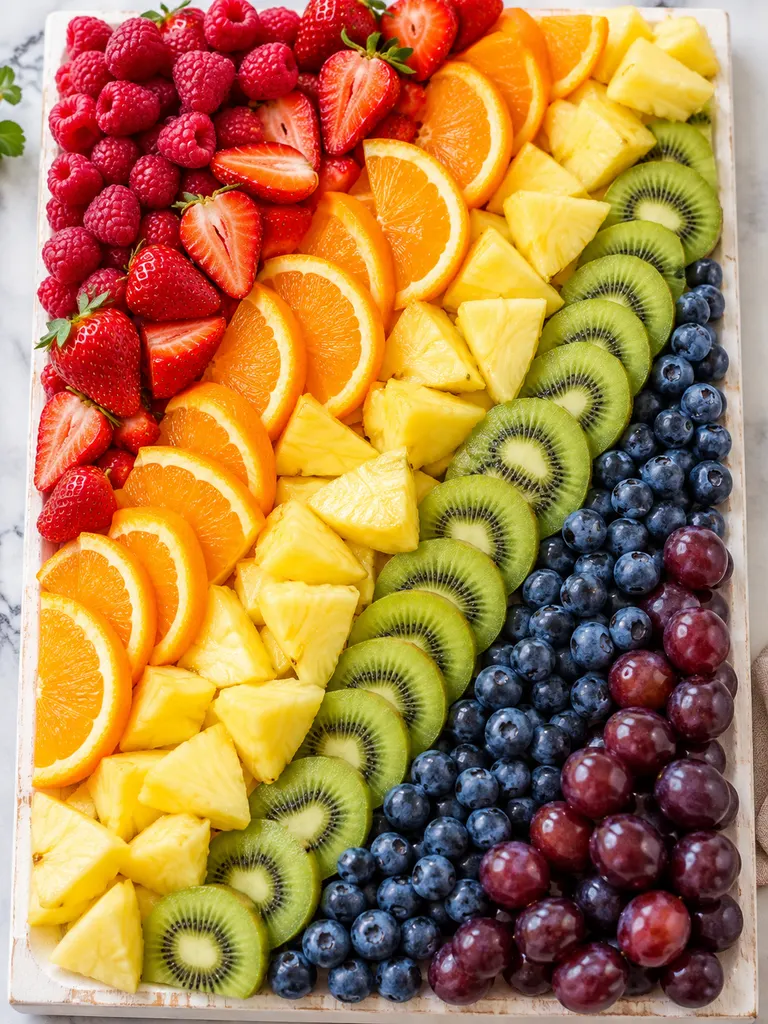
Diagonal rows make a rainbow arrangement feel more energetic than standard horizontal stripes. On a rectangular board, run each fruit band from one side toward the opposite corner, keeping the angle consistent across the platter.
Fruits you’ll need: Raspberries, strawberries, oranges, pineapple, kiwi, blueberries, and purple grapes.
15. Checkerboard Fruit Platter
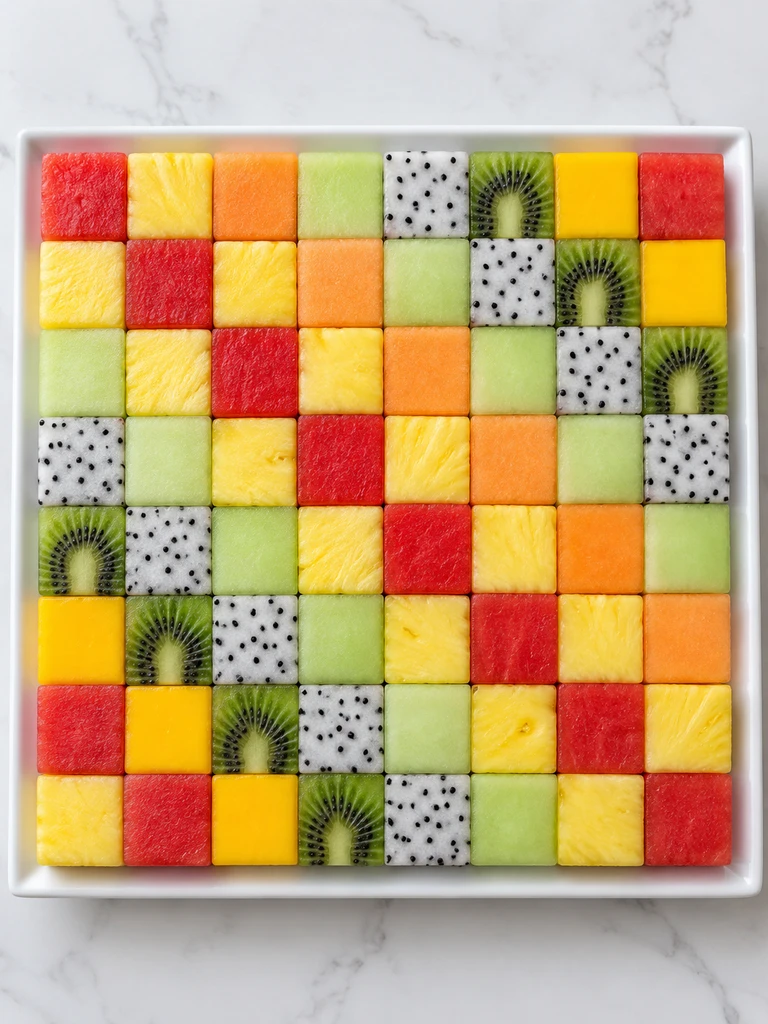
Turn firm fruit into an edible checkerboard by cutting it into similarly sized cubes and arranging the pieces in alternating colored squares. Watermelon, pineapple, cantaloupe, honeydew, mango, and dragon fruit hold their shape particularly well.
Fruits you’ll need: Watermelon, pineapple, cantaloupe, honeydew, dragon fruit, kiwi, and mango.
16. Fruit Mosaic Platter
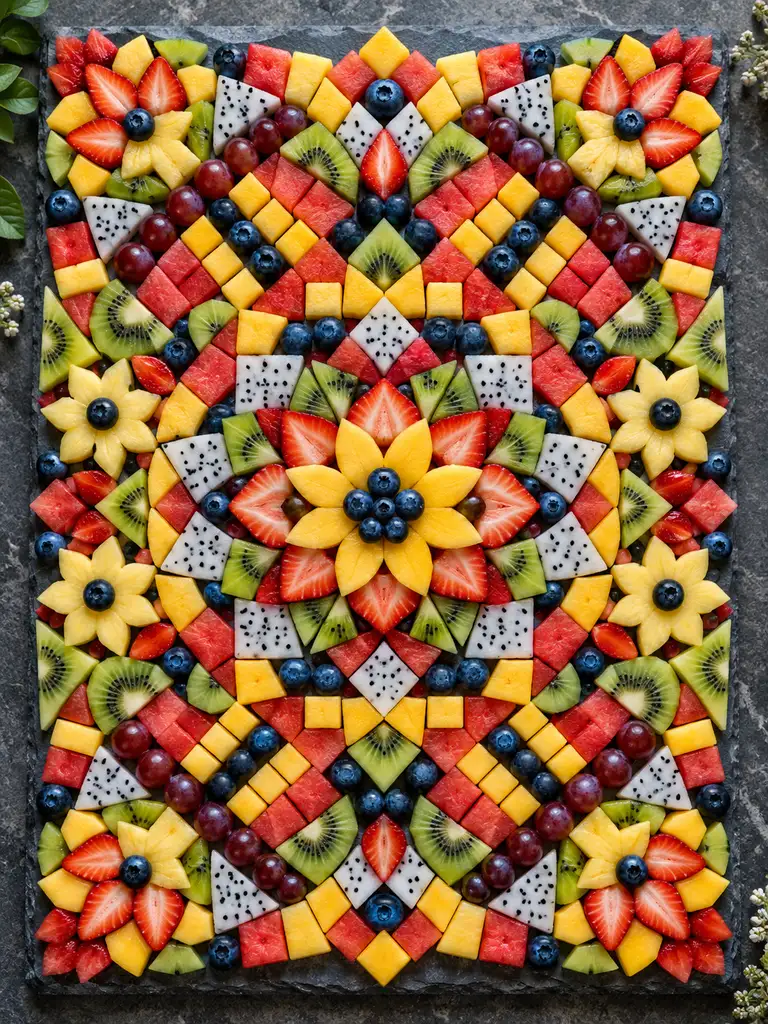
A fruit mosaic lets you mix many shapes while still creating an intentional pattern. Cut fruit into small squares, circles, triangles, stars, and petals, then fit the pieces together like colorful tiles.
Fruits you’ll need: Watermelon, pineapple, kiwi, mango, strawberries, blueberries, grapes, and dragon fruit.
17. Geometric Triangle Fruit Platter
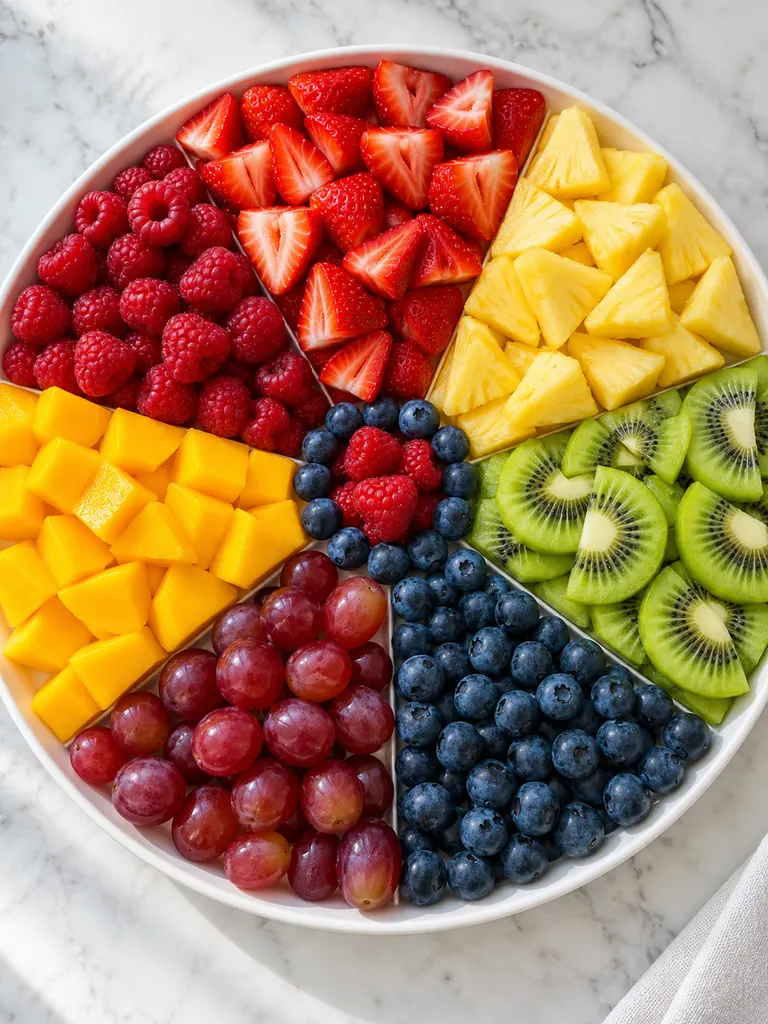
Divide a round platter into several triangular wedges that meet at the center, almost like slices of a colorful wheel. Fill every wedge with a different fruit and keep the edges as straight as possible.
Fruits you’ll need: Strawberries, pineapple, kiwi, blueberries, grapes, mango, and raspberries.
18. Concentric Ring Fruit Platter
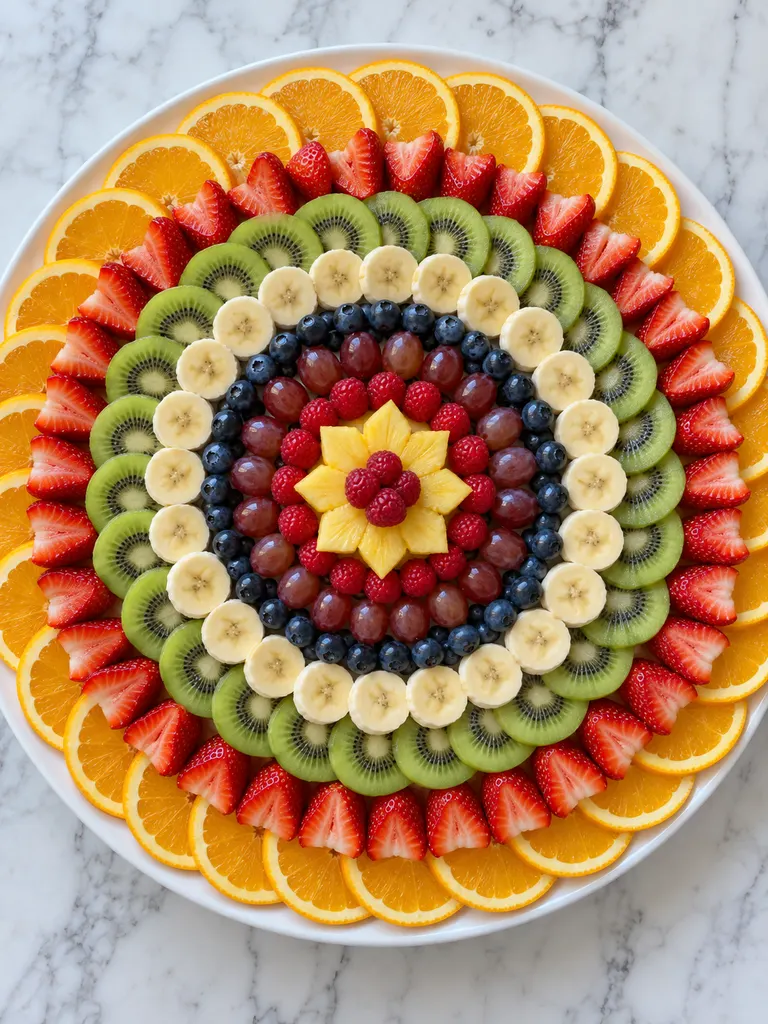
Concentric rings create a classic, orderly platter that still feels festive. Begin at the outside edge and form complete circles with sliced fruit, grapes, or berries, then continue inward using a contrasting color for each new ring.
Fruits you’ll need: Oranges, strawberries, kiwi, bananas, blueberries, grapes, raspberries, and pineapple.
19. Fruit Wave Platter Design
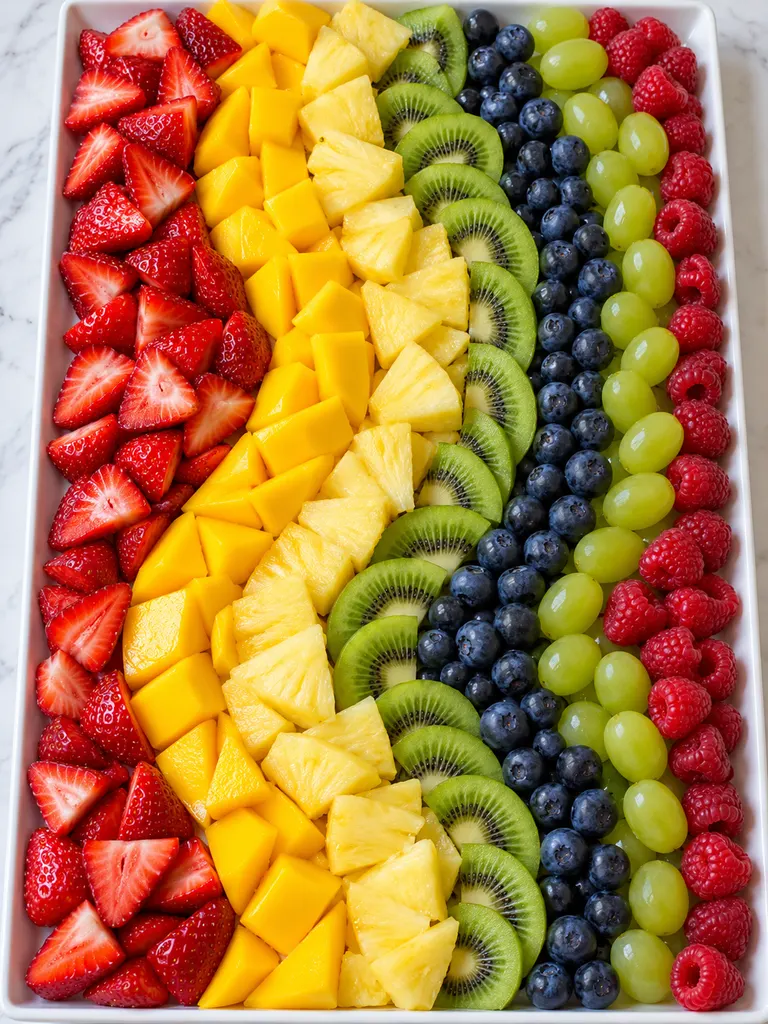
Instead of straight stripes, arrange each color in a flowing S-shaped band that travels across a rectangular platter. Repeat the same curve with strawberries, mango, pineapple, kiwi, blueberries, grapes, and raspberries so the lines appear to move together like waves.
Fruits you’ll need: Strawberries, mango, pineapple, kiwi, blueberries, green grapes, and raspberries.
20. Minimalist Luxury Fruit Platter
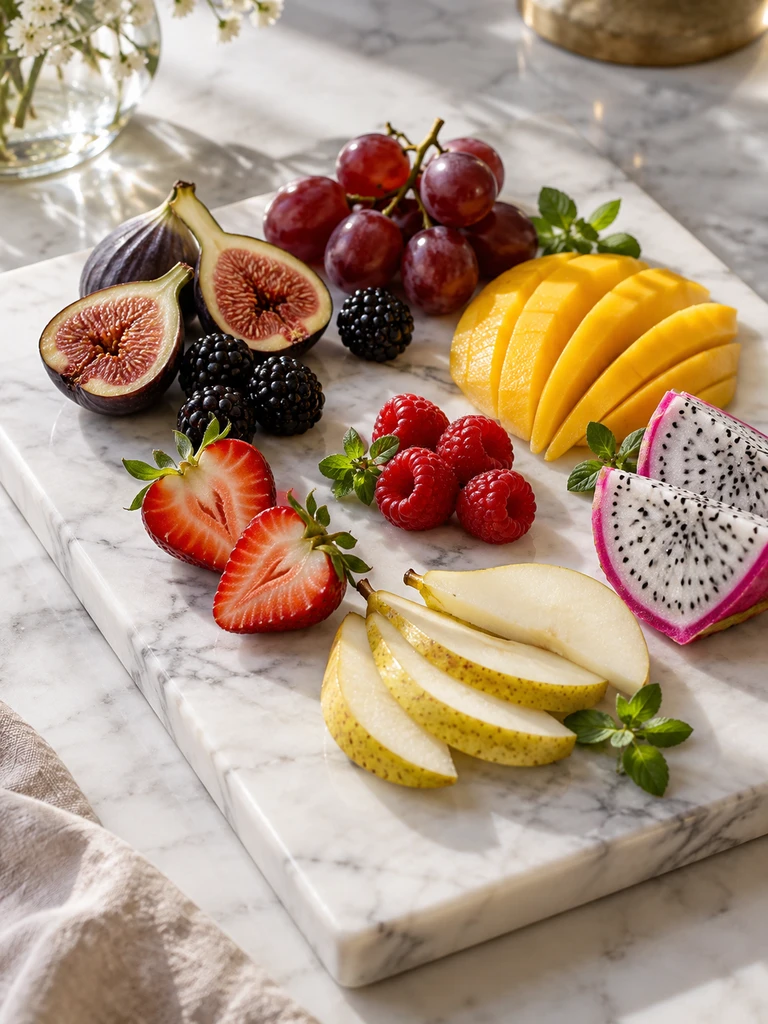
A luxury platter does not need to be crowded. Choose a smaller selection of visually striking fruit, arrange it in carefully balanced clusters, and leave intentional areas of the serving board visible.
Fruits you’ll need: Fresh figs, blackberries, raspberries, red grapes, mango, dragon fruit, strawberries, and pear.
21. Rustic Wooden Fruit Grazing Board
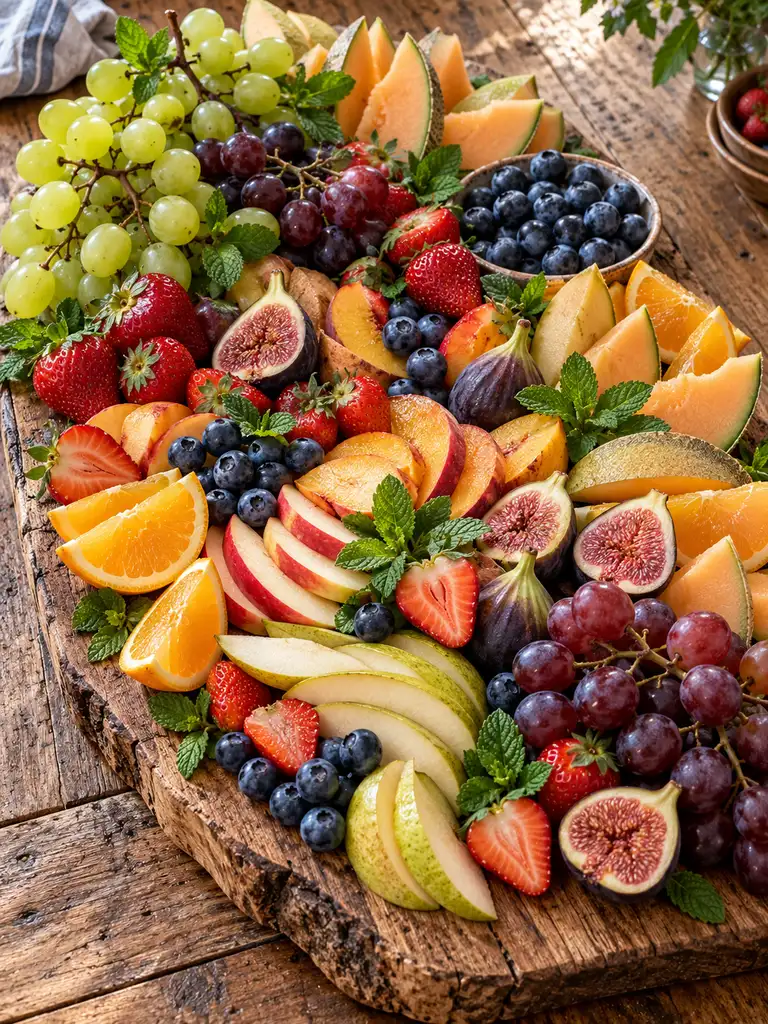
For an abundant rustic presentation, use a large wooden board and keep the arrangement relaxed. Leave grapes on their stems, halve figs, fan apple and orange slices, and mix whole berries between larger fruit.
Fruits you’ll need: Grapes, strawberries, blueberries, figs, oranges, apples, pears, peaches, melon, and mint.
22. Overflowing Fruit Cornucopia Platter
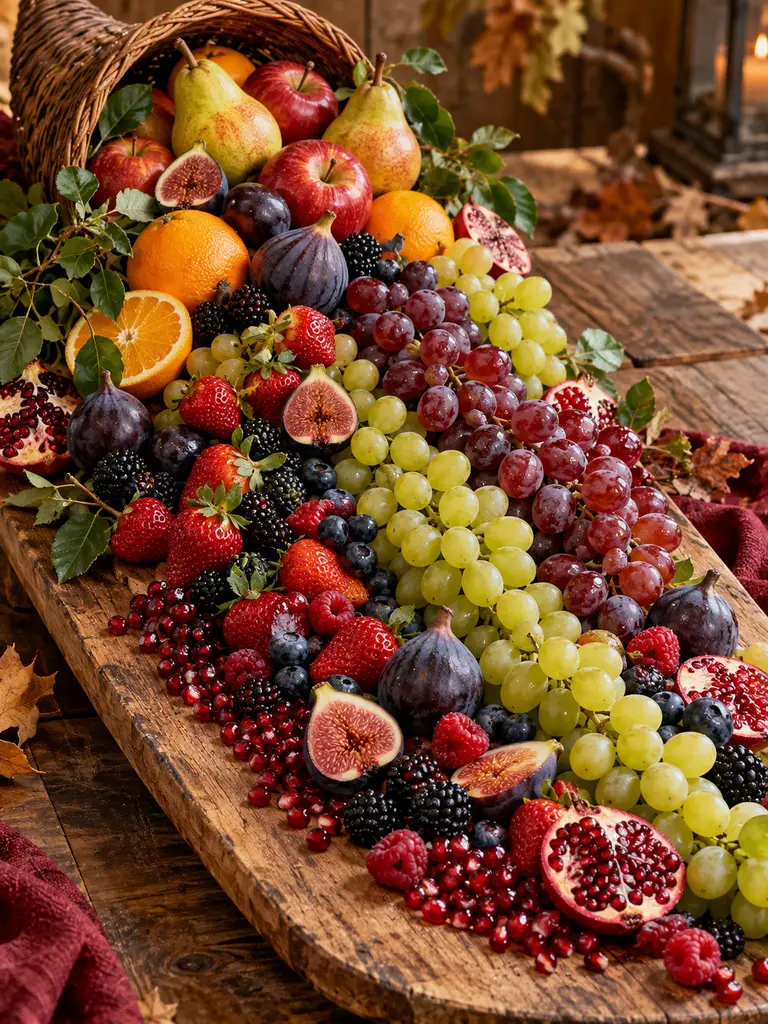
This design should look intentionally abundant, as though fruit is spilling from one end of the board. Build height with whole pears, apples, oranges, figs, or plums, then let grapes and berries cascade outward in a long trail.
Fruits you’ll need: Grapes, pears, apples, figs, oranges, berries, plums, and pomegranate.
23. Tiered Fruit Platter Display
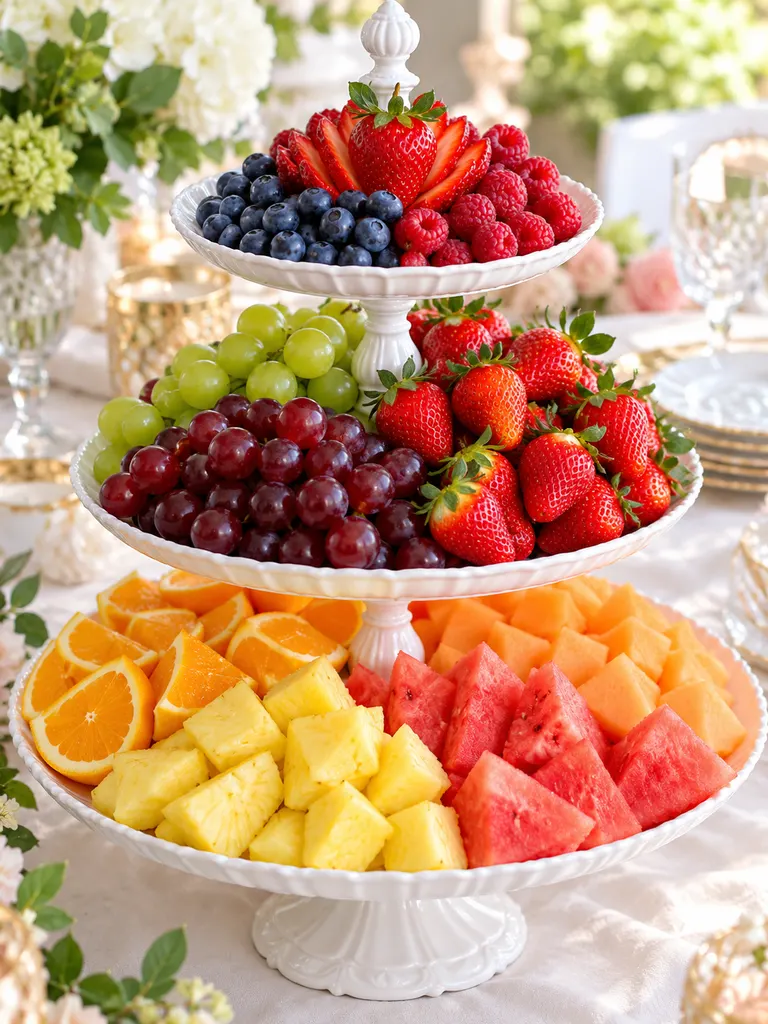
A tiered stand adds vertical impact while leaving more room on the party table. Place heavier fruit such as melon, pineapple, and citrus on the bottom tier, grapes and strawberries in the middle, and delicate berries at the top.
Fruits you’ll need: Pineapple, watermelon, cantaloupe, oranges, grapes, strawberries, blueberries, and raspberries.
24. Mini Individual Fruit Platter Cups
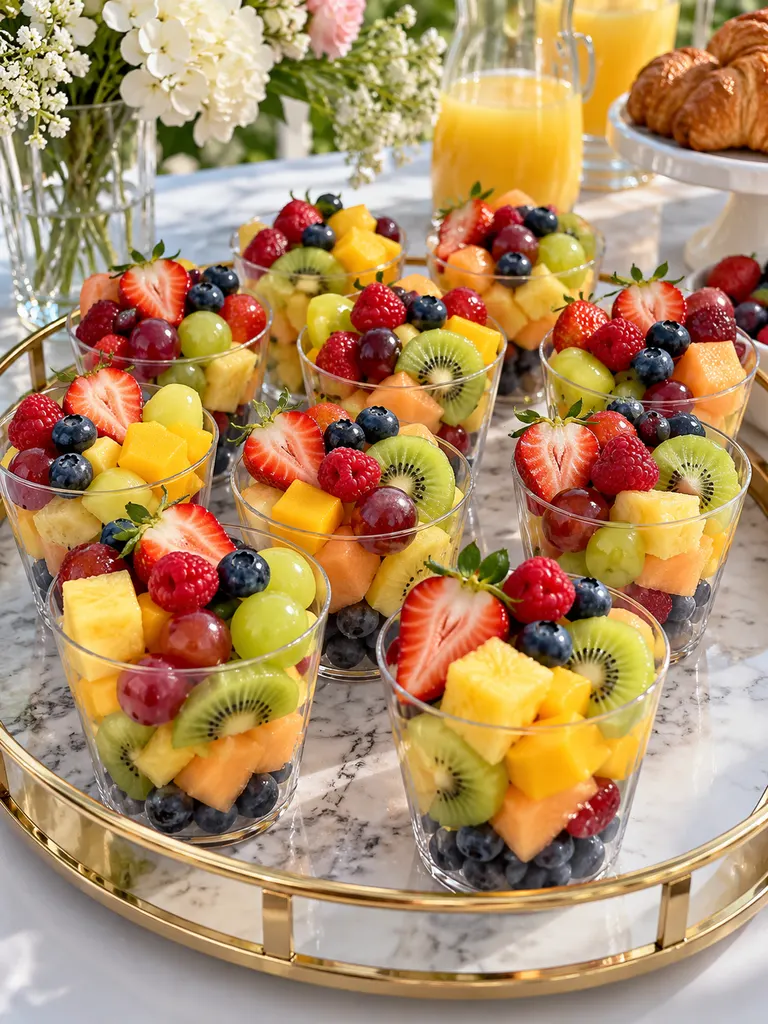
Individual fruit cups are convenient when you want guests to serve themselves quickly. Fill matching clear cups with small portions of grapes, berries, kiwi, mango, pineapple, and melon, then arrange the cups together on one large tray.
Fruits you’ll need: Grapes, strawberries, blueberries, kiwi, mango, pineapple, raspberries, and melon.
25. Fruit Charcuterie Board
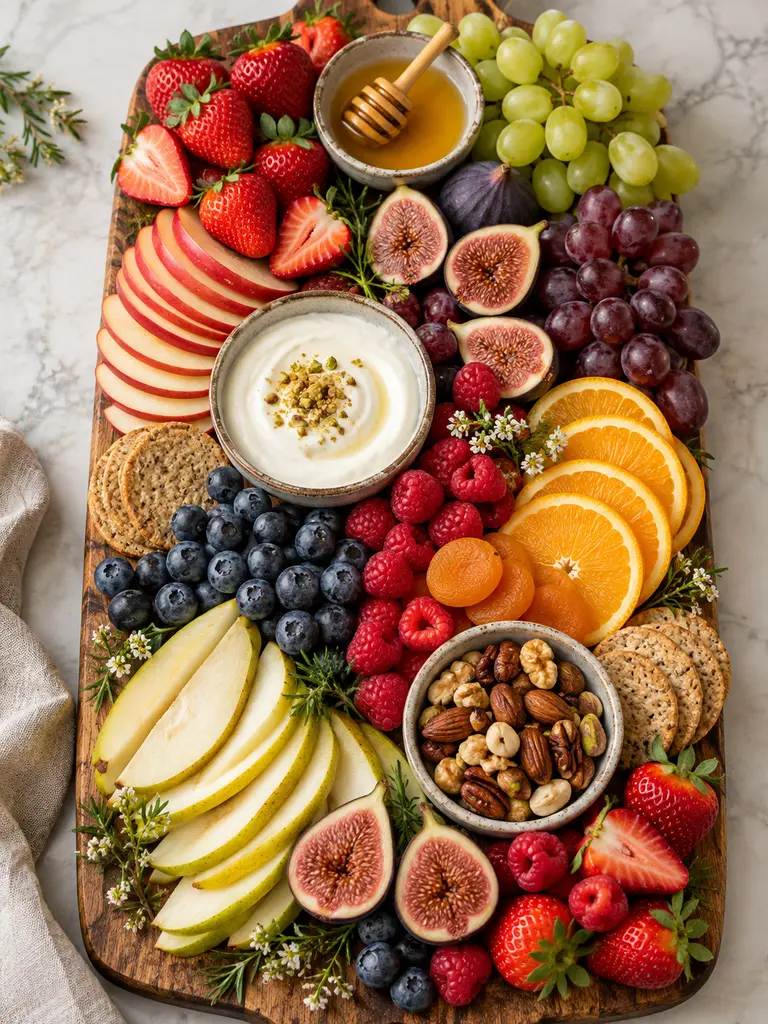
A fruit charcuterie board combines fresh fruit with small complementary snacks while keeping fruit as the main attraction. Arrange strawberries, grapes, figs, apples, pears, berries, and citrus around bowls of yogurt dip, honey, or nuts.
Fruits you’ll need: Strawberries, grapes, figs, apples, pears, blueberries, raspberries, oranges, and dried apricots.
26. Breakfast Brunch Fruit Platter
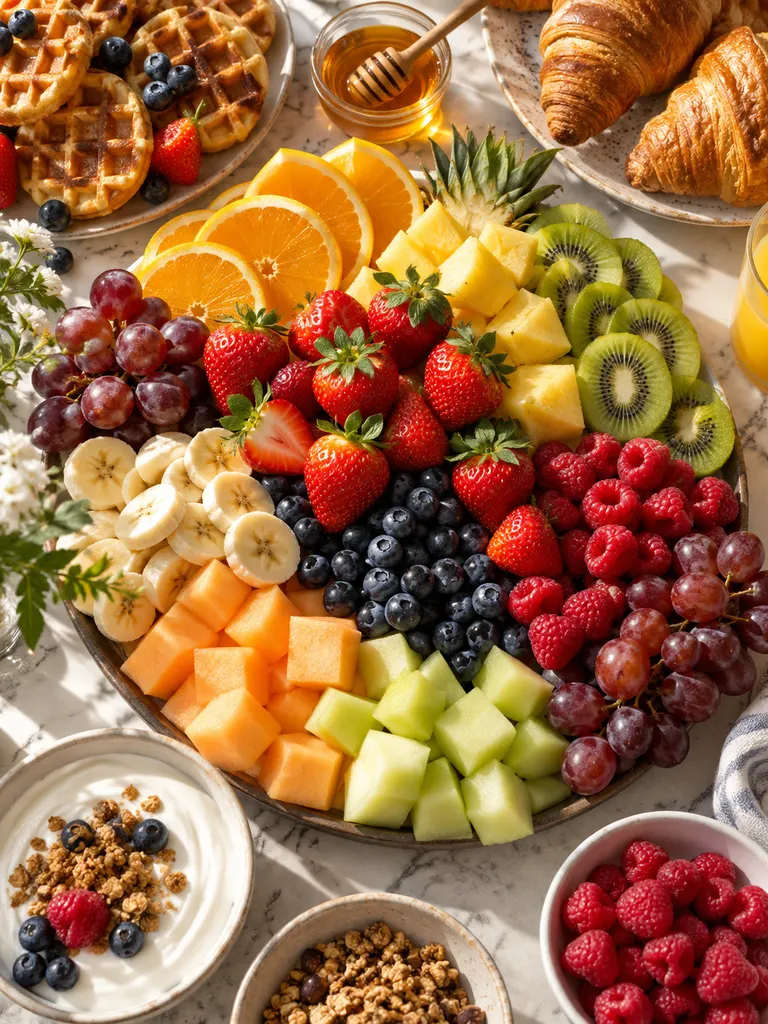
Build this platter around fruits that pair naturally with breakfast favorites. Combine berries, oranges, kiwi, pineapple, grapes, banana, and melon, then place the fruit beside waffles, croissants, yogurt, granola, or honey.
Fruits you’ll need: Strawberries, blueberries, raspberries, oranges, kiwi, pineapple, grapes, bananas, and melon.
27. Summer Picnic Fruit Platter
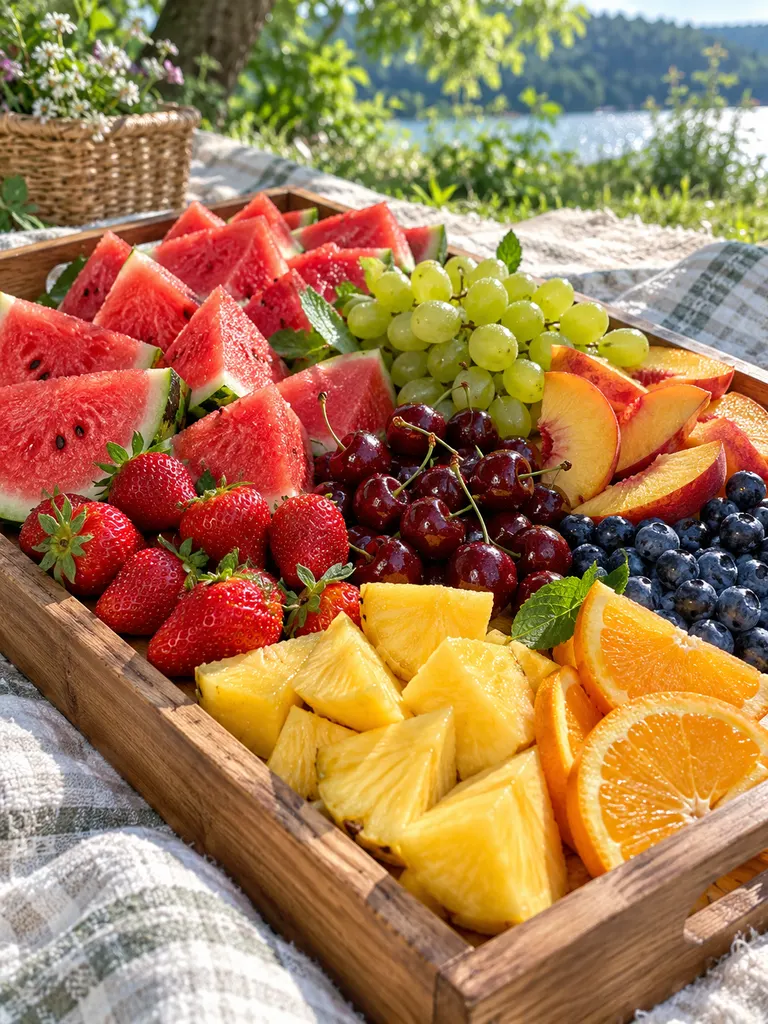
A summer picnic platter should be colorful, refreshing, and easy to eat outdoors. Use watermelon wedges, strawberries, cherries, peaches, grapes, berries, pineapple, and citrus in bite-sized portions.
Fruits you’ll need: Watermelon, strawberries, cherries, peaches, grapes, blueberries, pineapple, and oranges.
28. Pool Party Tropical Fruit Platter
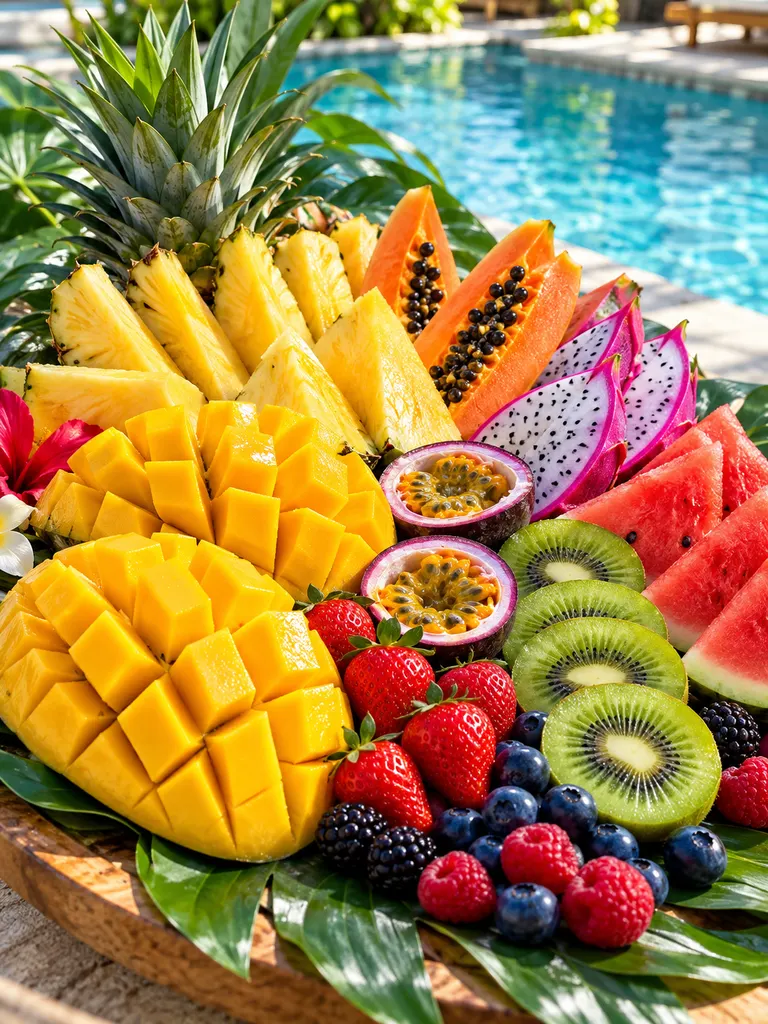
Lean into saturated tropical colors for a poolside platter. Scored mango cheeks, pineapple wedges, papaya, dragon fruit, watermelon, kiwi, and passion fruit create a vacation-like look even before you add decorations.
Fruits you’ll need: Mango, pineapple, papaya, dragon fruit, watermelon, kiwi, passion fruit, and berries.
29. Beach-Themed Fruit Platter
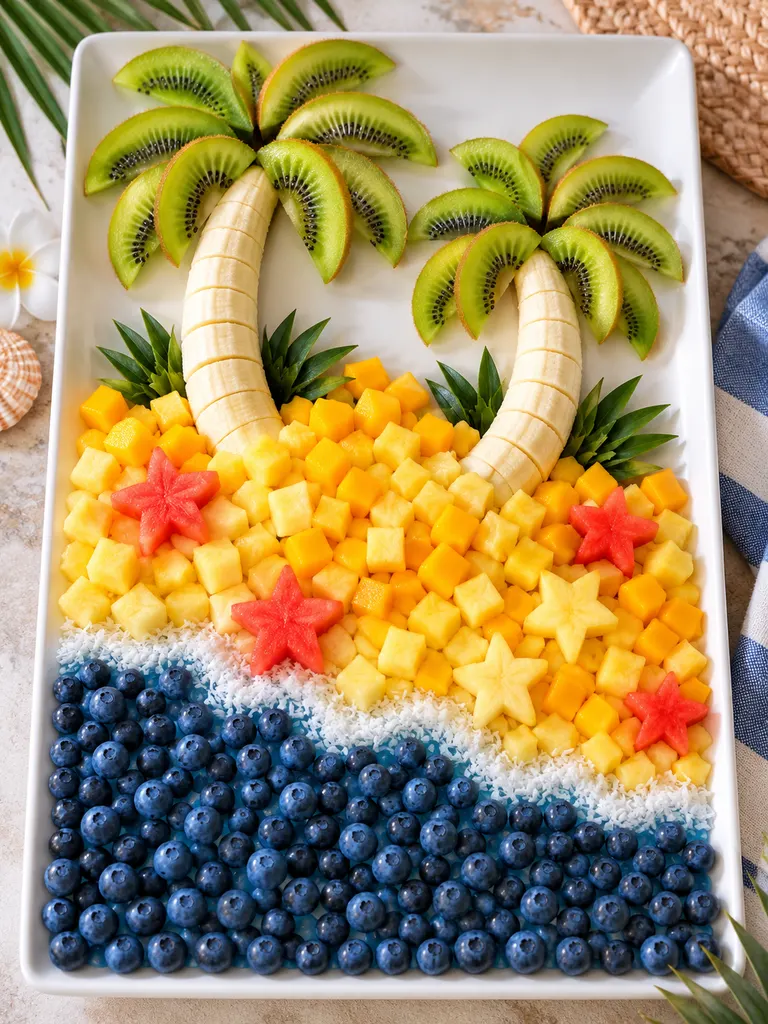
Turn a rectangular tray into an edible beach scene. Use pineapple and mango for golden sand, blueberries for blue water, banana pieces and kiwi for miniature palm trees, and star-shaped melon or pineapple for beach details.
Fruits you’ll need: Pineapple, mango, blueberries, kiwi, bananas, watermelon, grapes, and oranges.
30. Garden Party Fruit Platter
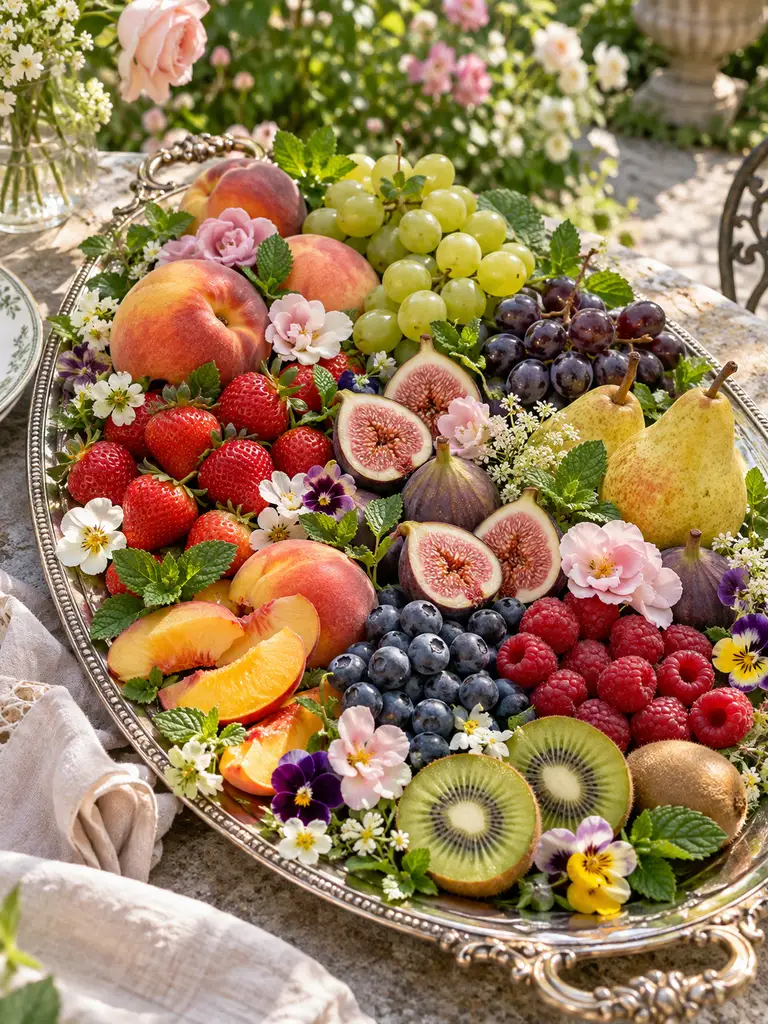
A garden-party platter should feel botanical, relaxed, and elegant. Combine ripe peaches, strawberries, figs, berries, grapes, pears, and kiwi in loose clusters, then add mint and a few culinary edible flowers between the fruit.
Fruits you’ll need: Peaches, strawberries, figs, blueberries, raspberries, grapes, pears, kiwi, mint, and culinary edible flowers.
31. Wedding Fruit Platter Design
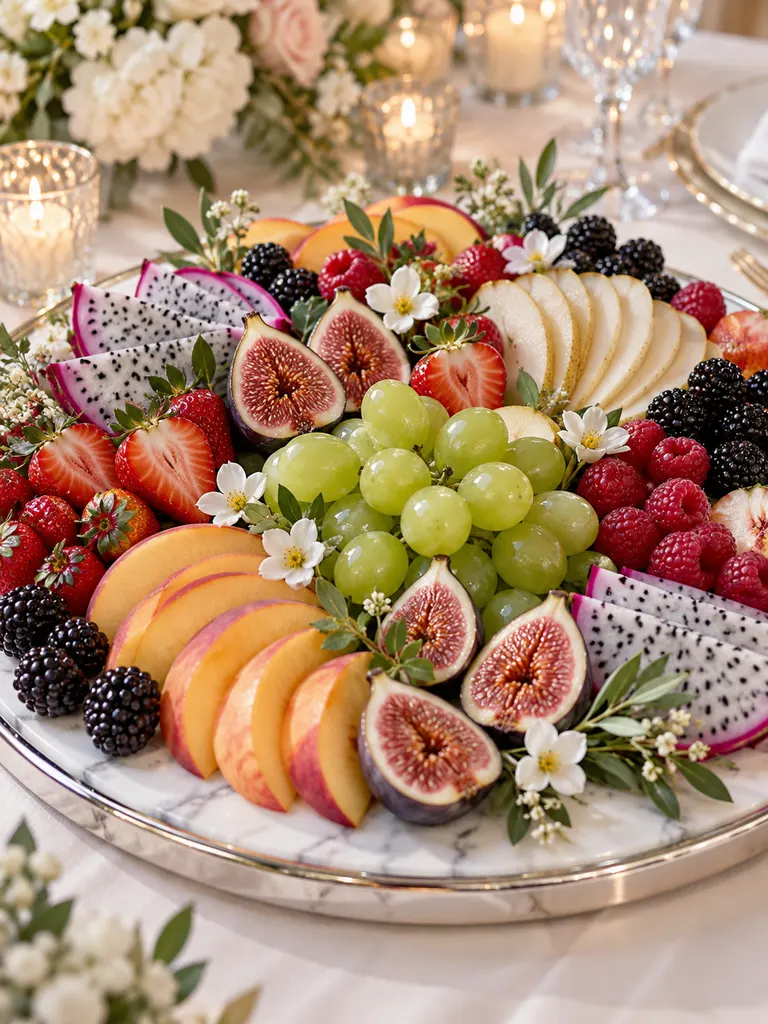
For a wedding reception, use a restrained palette and symmetrical placement rather than every fruit color at once. Figs, green grapes, berries, pears, peaches, and dragon fruit create a refined mix.
Fruits you’ll need: Figs, green grapes, strawberries, raspberries, pears, peaches, dragon fruit, blackberries, and culinary edible flowers.
32. Baby Shower Fruit Platter
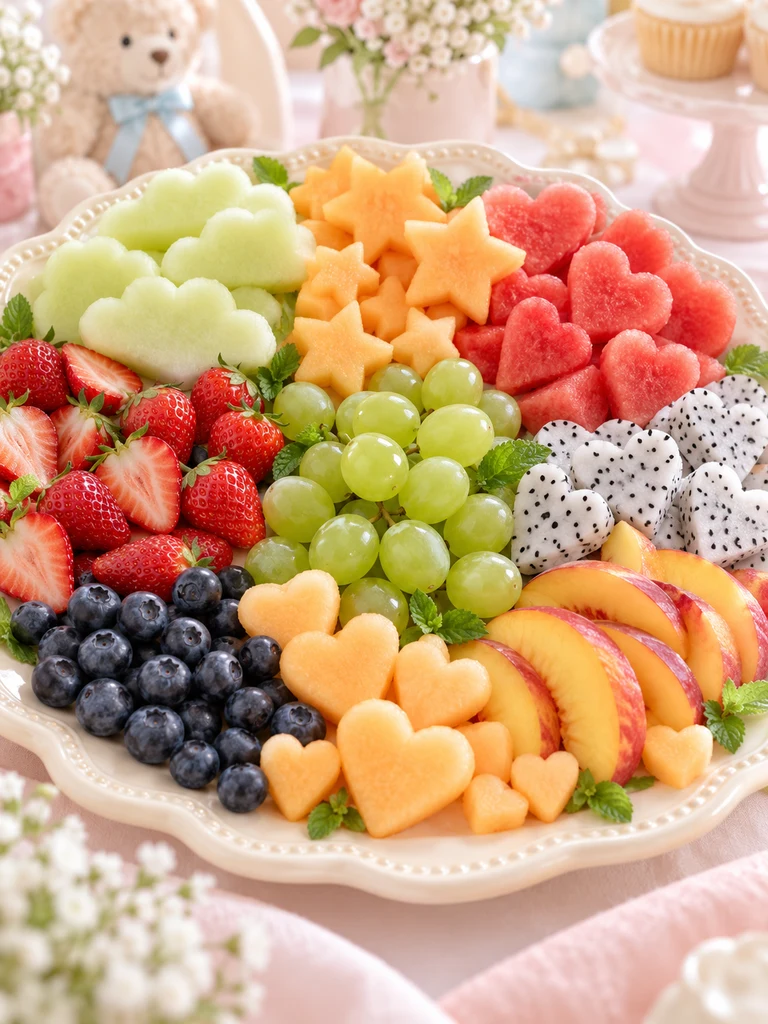
Soft colors and playful shapes make this platter ideal for a baby shower. Cut melon into clouds, stars, and small hearts, then combine the shapes with green grapes, strawberries, dragon fruit, blueberries, and peaches.
Fruits you’ll need: Honeydew, cantaloupe, watermelon, green grapes, strawberries, dragon fruit, blueberries, and peaches.
33. Birthday Number Fruit Platter
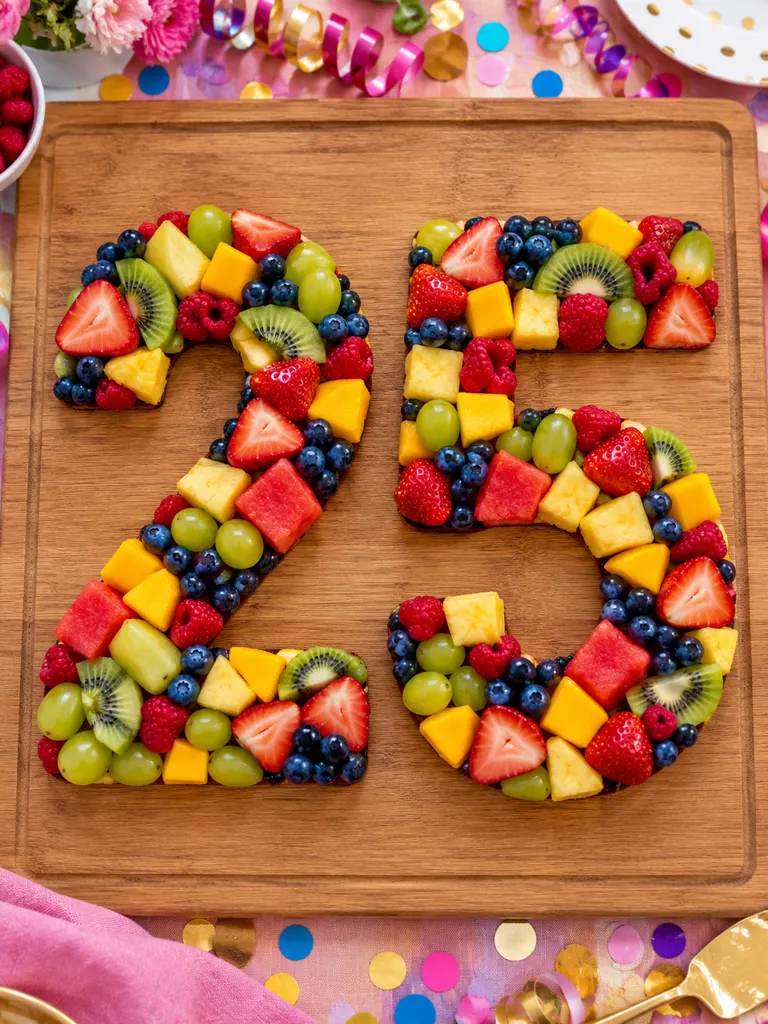
A large fruit number gives a birthday spread an easy personalized centerpiece. Sketch the number visually on a rectangular board, build the outline with berries or grapes, and then fill it with colorful sliced fruit.
Fruits you’ll need: Strawberries, blueberries, grapes, kiwi, watermelon, pineapple, mango, and raspberries.
34. Fruit Platter Letter Design
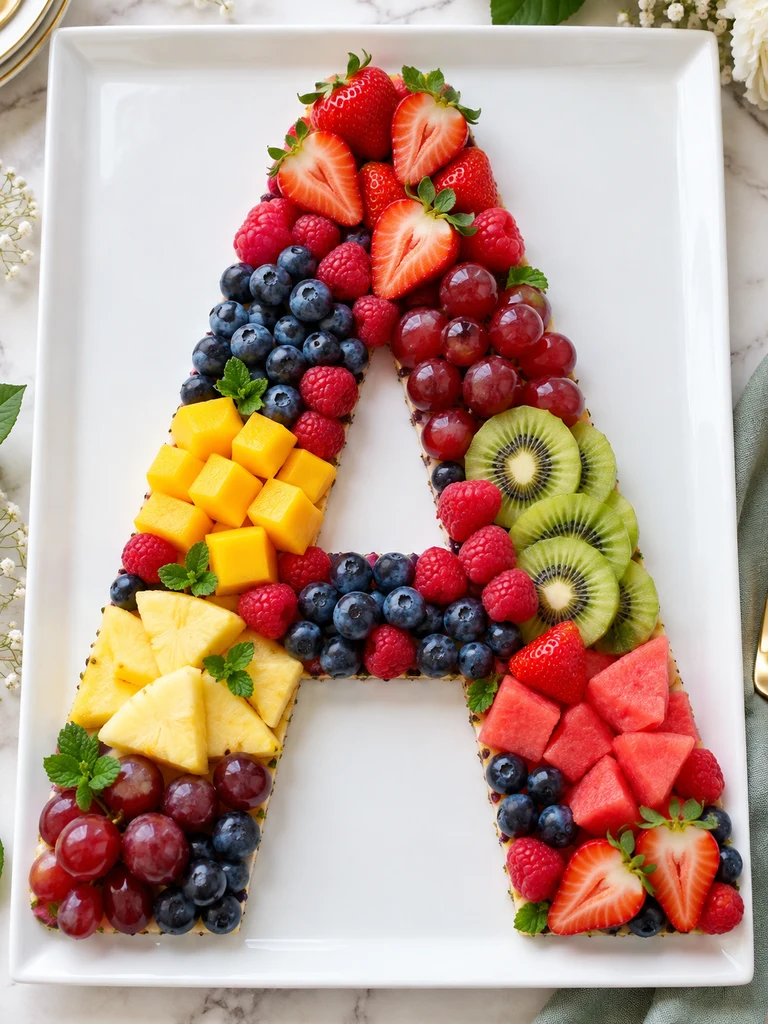
Create a monogram-style platter by arranging fruit into one large capital letter. Start with a clean outline and then fill the letter with berries, grapes, mango, kiwi, pineapple, and watermelon.
Fruits you’ll need: Strawberries, raspberries, blueberries, grapes, mango, kiwi, pineapple, and watermelon.
35. Christmas Tree Fruit Platter
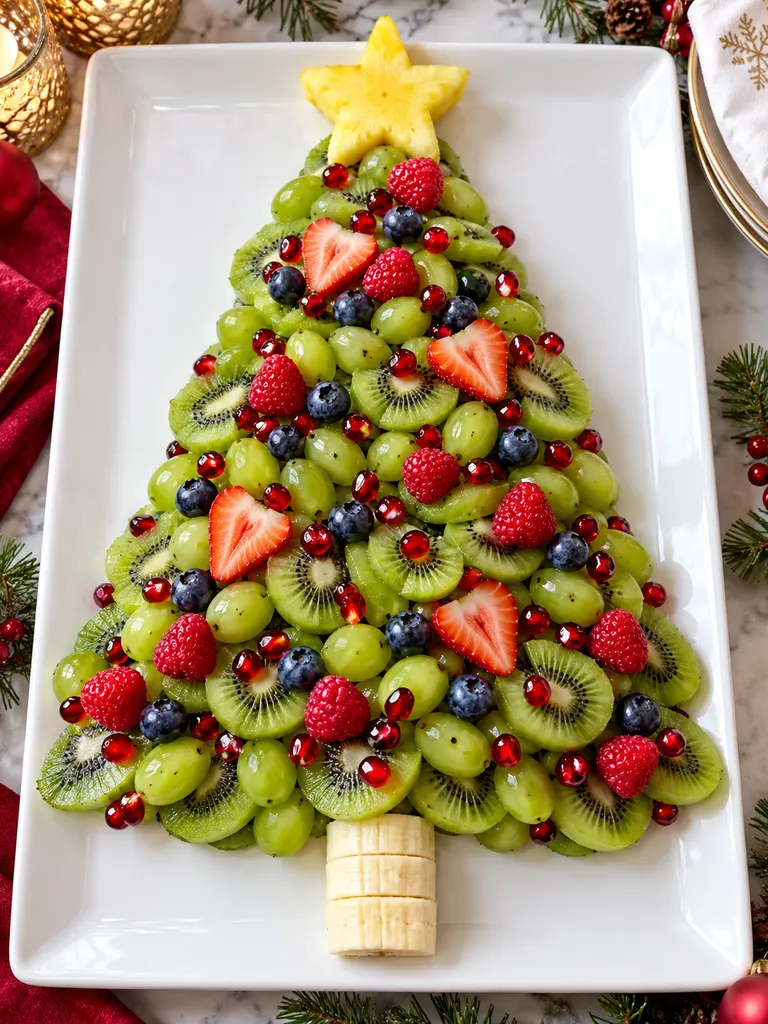
Shape kiwi and green grapes into a broad triangular Christmas tree, then decorate it with strawberries, raspberries, blueberries, and pomegranate seeds as edible ornaments. A star-shaped piece of pineapple makes an easy topper, while banana or pineapple can form a short trunk.
Fruits you’ll need: Kiwi, green grapes, strawberries, raspberries, blueberries, pomegranate, pineapple, and banana.
36. Christmas Wreath Fruit Platter
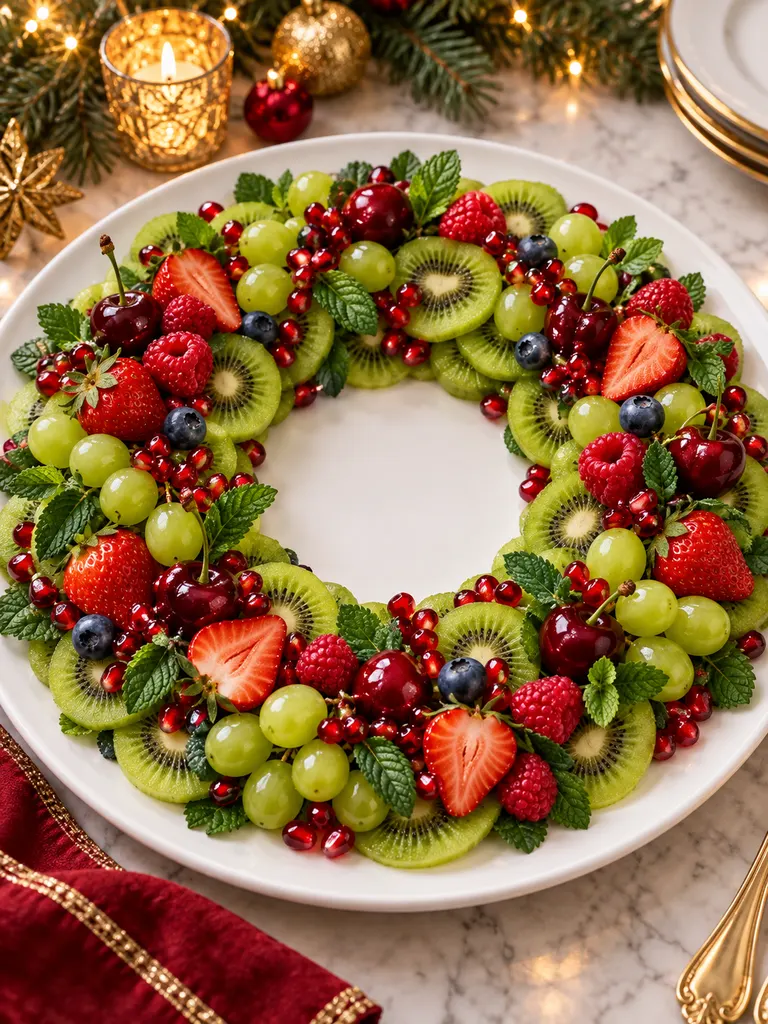
A fruit wreath needs a thick circular ring and a clearly empty center. Build the green base from kiwi, green grapes, and mint, then scatter strawberries, raspberries, cherries, and pomegranate across the ring like red ornaments.
Fruits you’ll need: Kiwi, green grapes, strawberries, raspberries, cherries, pomegranate, blueberries, and mint.
37. Valentine’s Day Fruit Platter
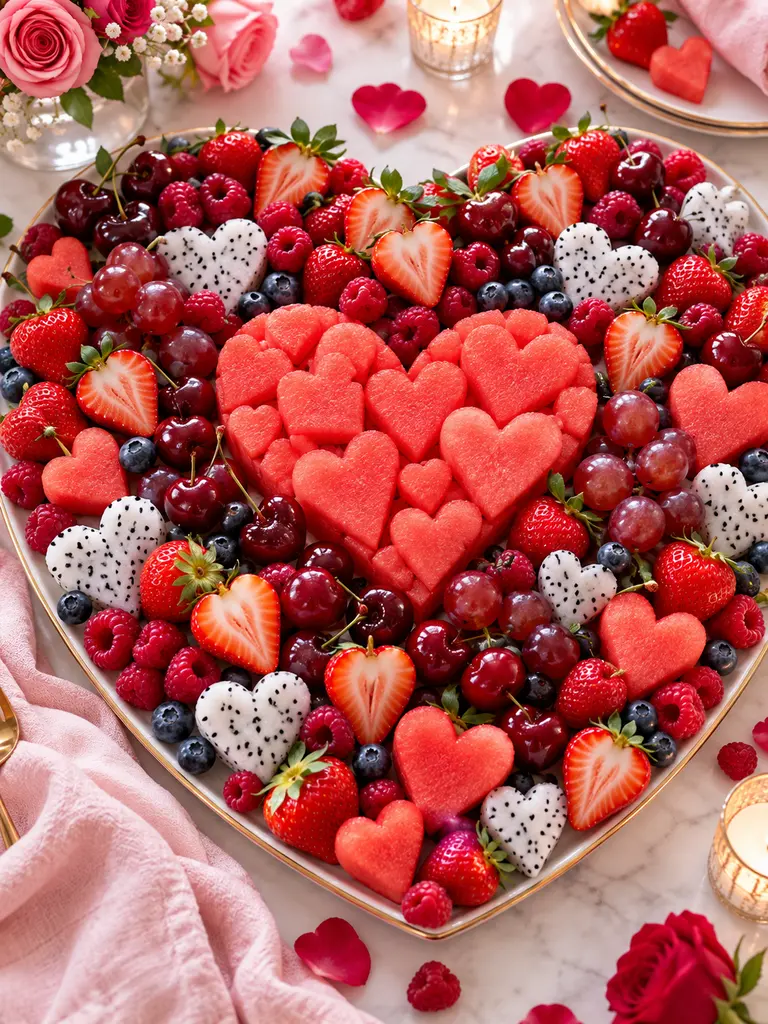
Red, pink, and white fruit creates an easy Valentine’s theme. Cut watermelon into several obvious hearts and mix them with strawberries, raspberries, cherries, and red grapes.
Fruits you’ll need: Strawberries, raspberries, watermelon, cherries, red grapes, dragon fruit, and blueberries.
38. Easter Bunny Fruit Platter
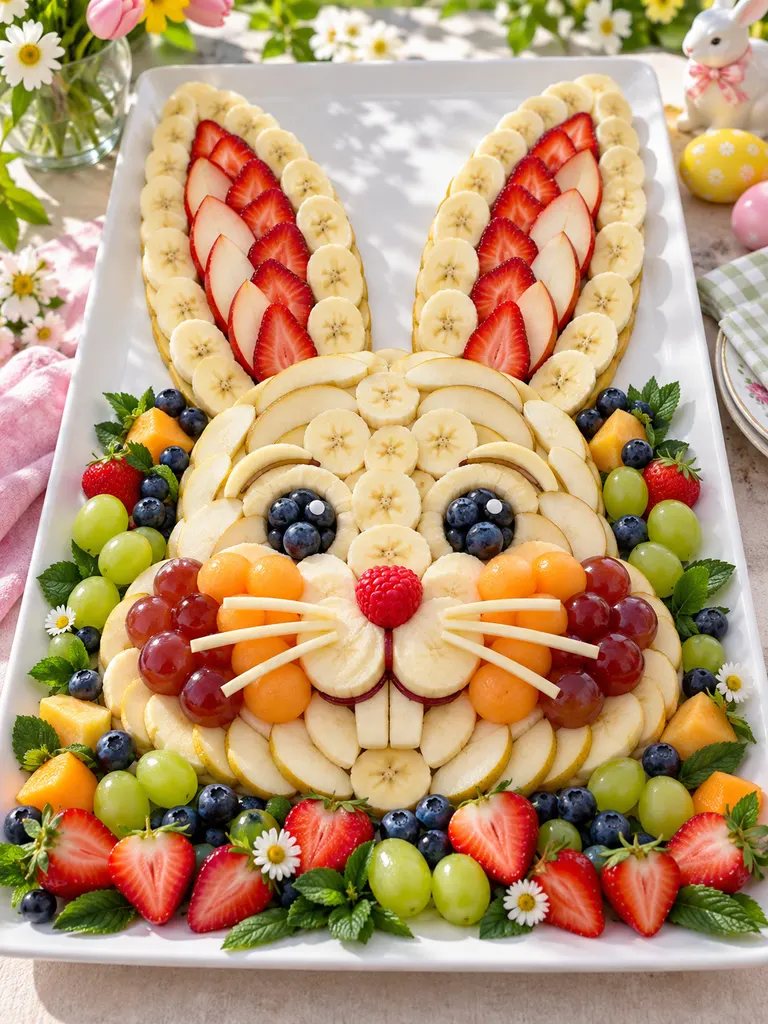
Build a bunny face with two long upright ears so the character is obvious before adding decorative details. Banana, pear, apple, or pale melon works well for the face, while berries can become the eyes and nose.
Fruits you’ll need: Bananas, pears, apples, strawberries, blueberries, grapes, melon, and raspberries.
39. Halloween Fruit Platter
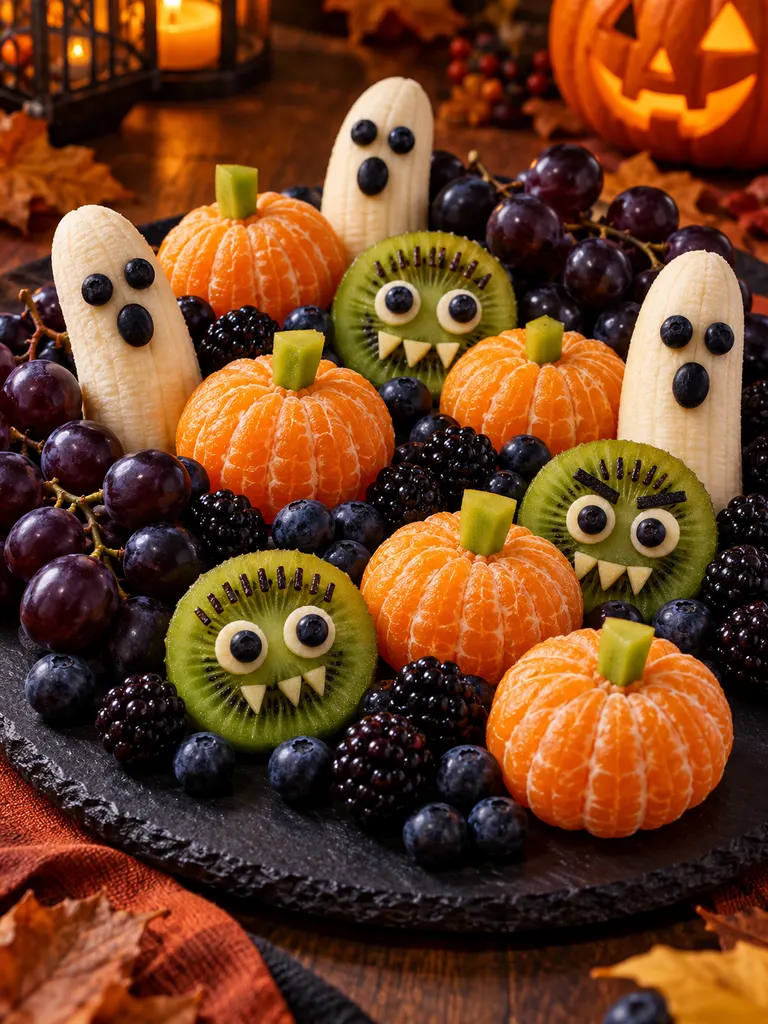
A Halloween fruit board can feel festive without being overly spooky. Turn mandarins into little pumpkins, banana halves into ghost shapes, kiwi into green monster faces, and dark grapes or berries into dramatic filler.
Fruits you’ll need: Oranges or mandarins, green grapes, purple grapes, bananas, kiwi, blueberries, blackberries, and strawberries.
40. Autumn Harvest Fruit Platter
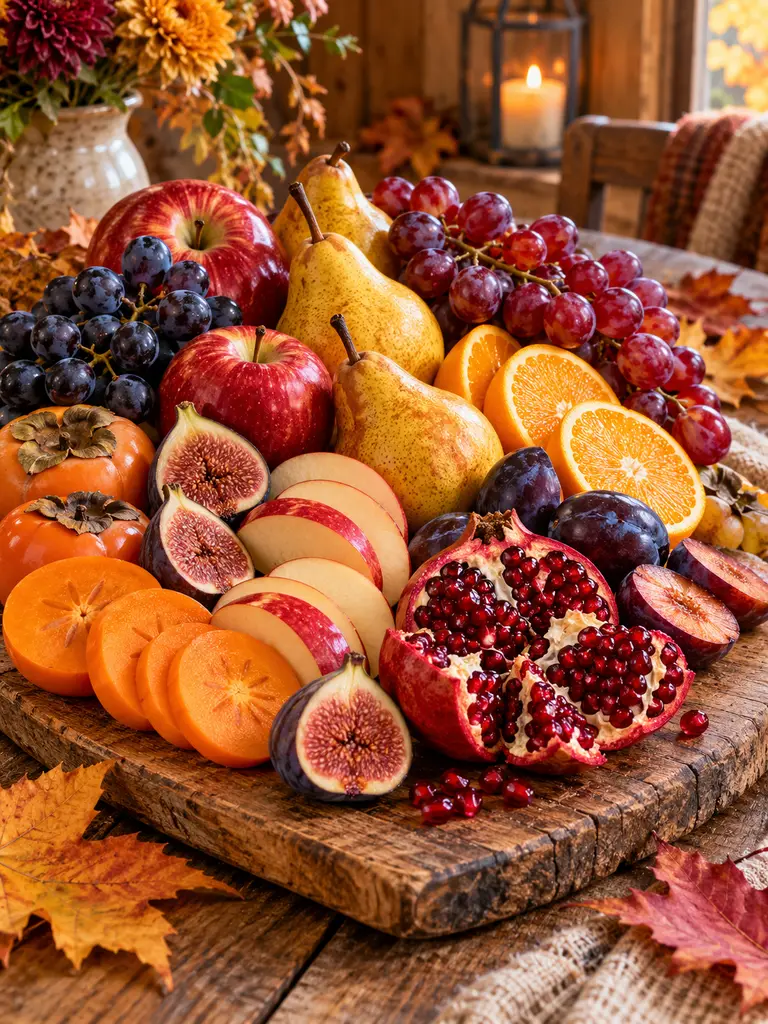
Celebrate autumn with deeper red, orange, gold, and purple fruits arranged on a rustic wooden board. Use apples, pears, figs, grapes, persimmons, citrus, plums, and an opened pomegranate to introduce varied shapes and textures.
Fruits you’ll need: Apples, pears, figs, grapes, persimmons, oranges, plums, and pomegranate.
41. Edible Flower Fruit Platter
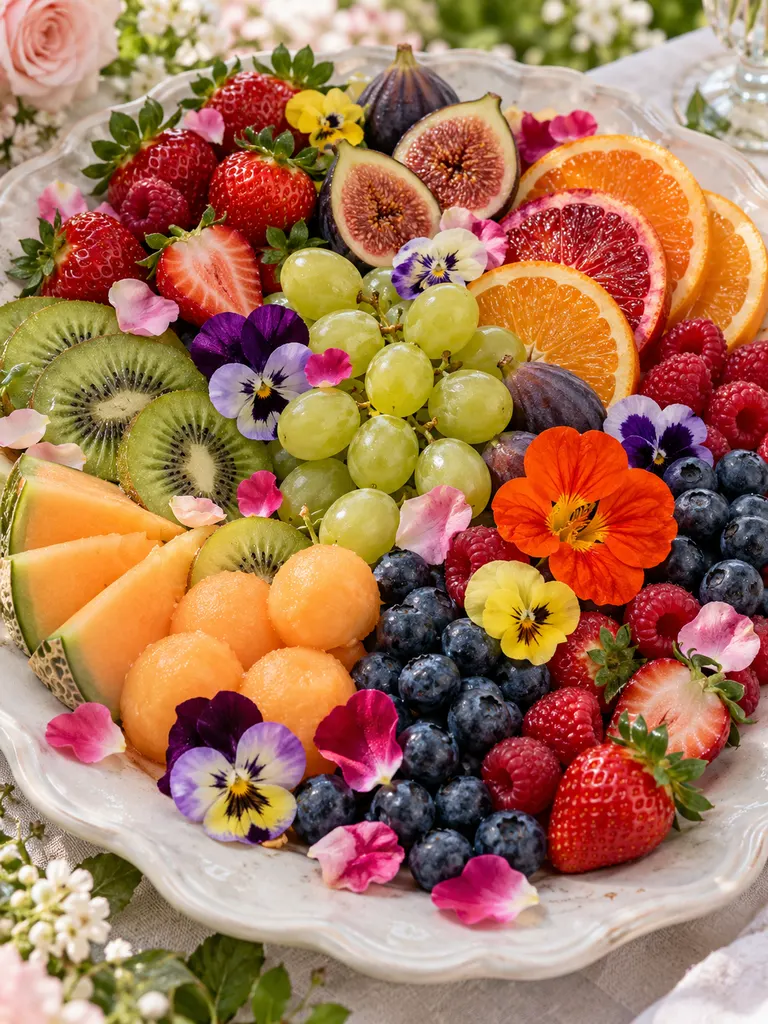
Culinary flowers can make a simple fruit arrangement feel special enough for a garden party or elegant brunch. Arrange strawberries, figs, grapes, citrus, kiwi, berries, and melon in flowing clusters, then tuck edible pansies, violas, nasturtiums, or rose petals between them.
Fruits you’ll need: Strawberries, figs, grapes, citrus fruit, kiwi, blueberries, melon, raspberries, and culinary edible flowers.
42. Fruit Bouquet Platter
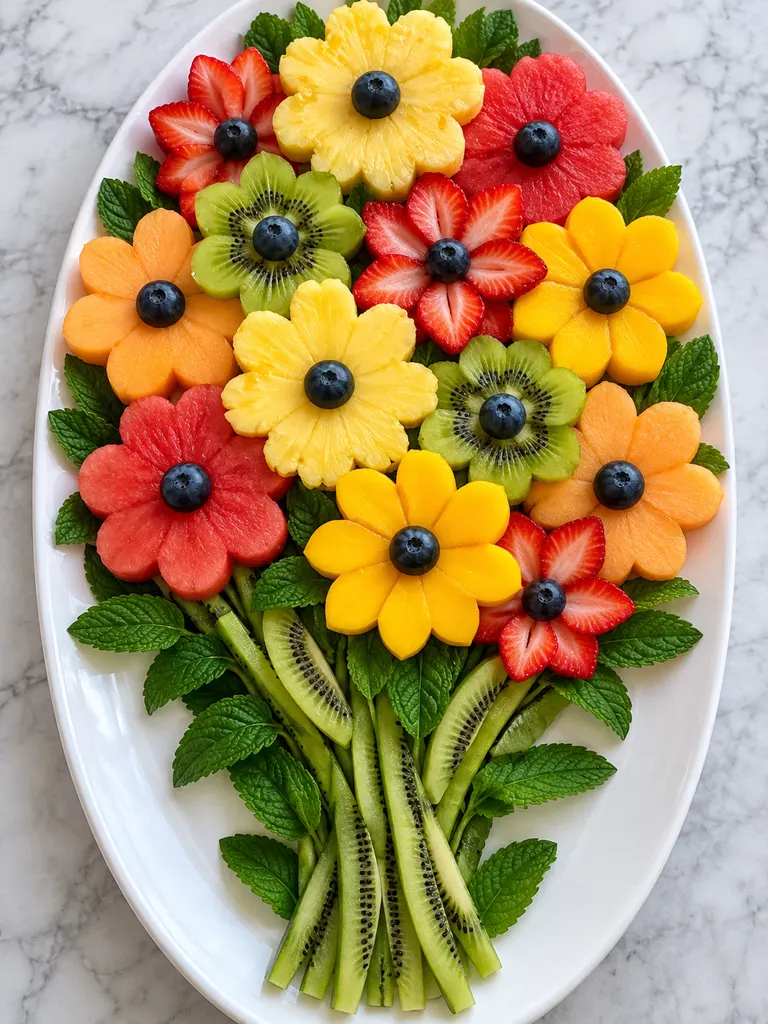
Cut pineapple, watermelon, cantaloupe, mango, kiwi, and strawberries into large flower shapes and group them tightly so the arrangement resembles a bouquet. Place grapes or blueberries in the center of some blossoms and use kiwi or mint as foliage beneath them.
Fruits you’ll need: Pineapple, watermelon, cantaloupe, kiwi, strawberries, blueberries, grapes, mango, and mint.
43. Swan-Shaped Fruit Platter
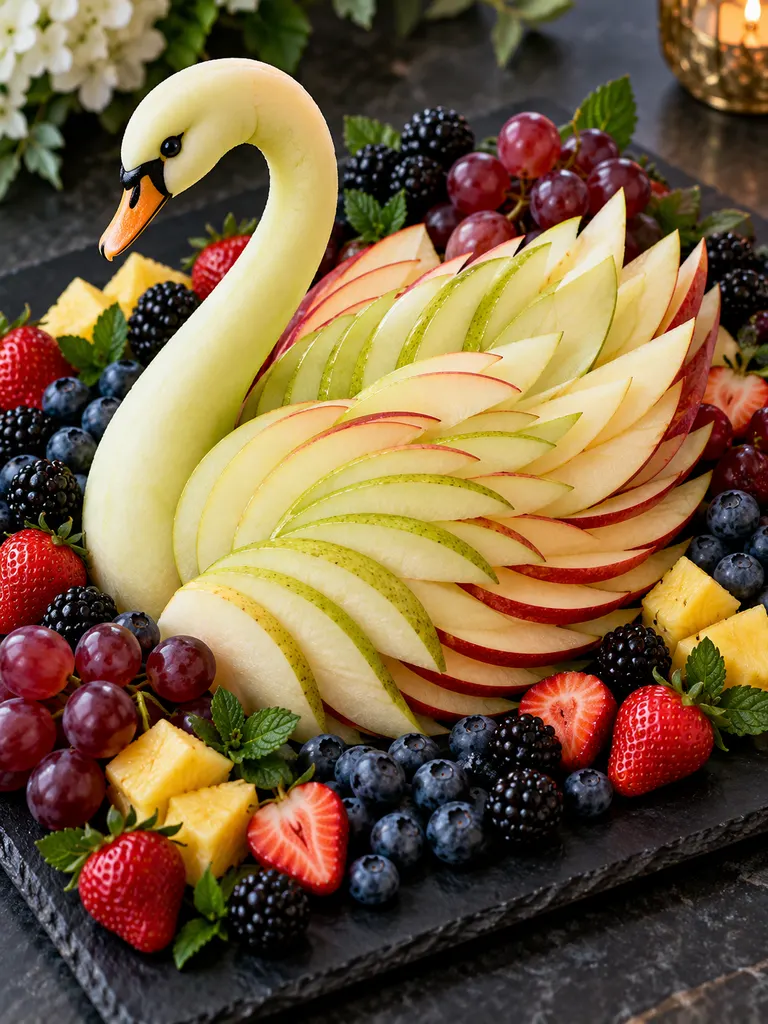
A swan platter works best when the long curved neck and feathered body are easy to see at first glance. Use pale pear, apple, honeydew, or pineapple for the bird, fanning thin slices to suggest layered feathers.
Fruits you’ll need: Pears, apples, honeydew, pineapple, blueberries, blackberries, grapes, and strawberries.
44. Crescent Moon Fruit Platter
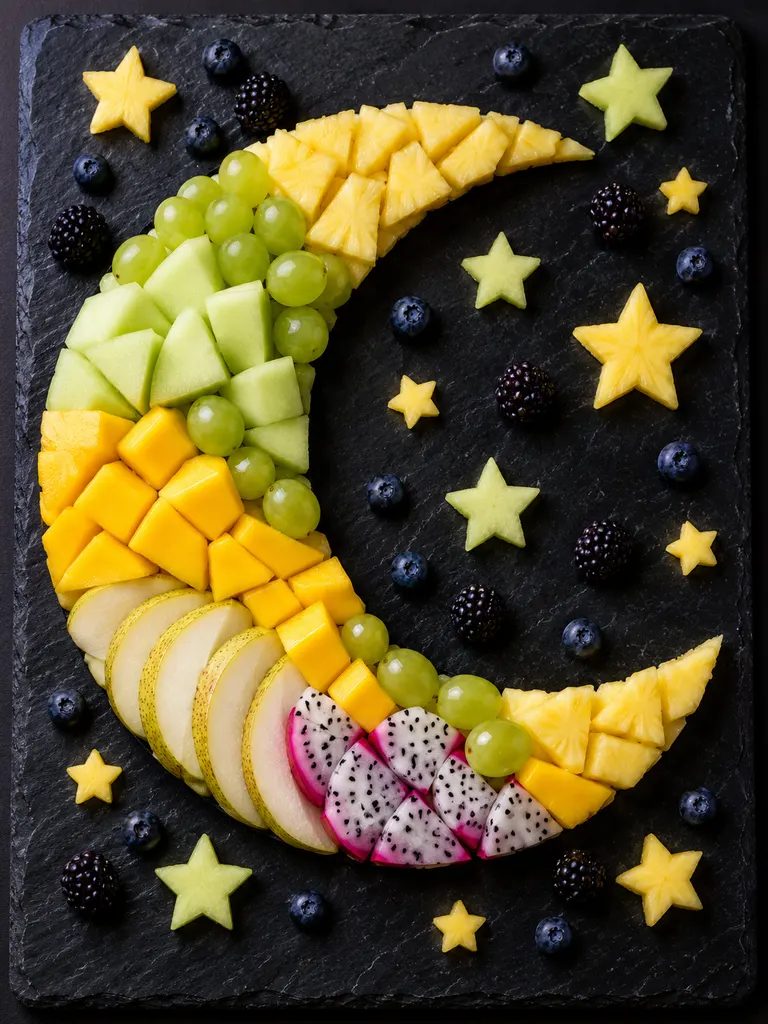
Shape pale fruit into a thick crescent with a clearly defined inner curve and outer edge. Pineapple, honeydew, pear, mango, grapes, and dragon fruit provide enough tonal variation without losing the moon shape.
Fruits you’ll need: Pineapple, honeydew, mango, pear, green grapes, blueberries, blackberries, and dragon fruit.
45. Luxury Tropical Fruit Centerpiece Platter
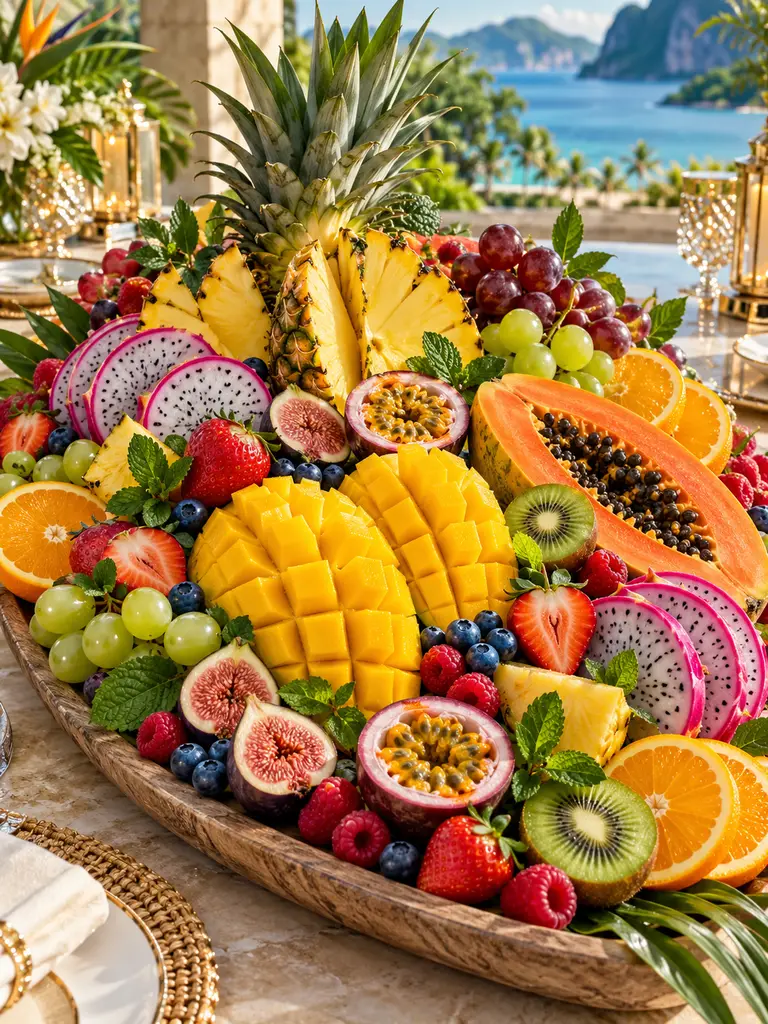
For the final design, create an abundant tropical centerpiece with several cutting styles and different heights. Keep scored mango cheeks, pineapple wedges, dragon fruit, passion fruit, kiwi, figs, berries, grapes, citrus, papaya, and mint clearly identifiable.
Fruits you’ll need: Mango, pineapple, dragon fruit, passion fruit, kiwi, figs, strawberries, blueberries, grapes, oranges, papaya, raspberries, and mint.
Tips for Making Fruit Platter Designs Look Beautiful
A successful fruit platter starts with fruit that is ripe enough to taste good but still firm enough to hold its shape after cutting. Wash everything thoroughly and dry it well, especially berries and grapes. Extra moisture can collect on the serving board, soften nearby fruit, and make carefully arranged patterns lose their definition. If you are using melon or pineapple, drain the cut pieces briefly before they go onto the final platter.
Color contrast is one of the easiest ways to improve Fruit platter designs. Place red strawberries beside green kiwi, yellow pineapple beside dark blueberries, or pale dragon fruit beside raspberries. Unless you are intentionally making an ombre arrangement, avoid placing too many similarly colored fruits together. Strong contrast helps individual shapes remain visible in photographs and makes a large party platter look lively from a distance.
Cutting style matters just as much as color. Mix wedges, thin circles, cubes, halves, melon balls, flower cutouts, scored mango cheeks, and whole berries. Start with your largest pieces and the defining shape of the design, then use berries, grapes, cherries, or pomegranate seeds to fill smaller gaps. Decorative designs such as hearts, swans, butterflies, and numbers need more open space than casual grazing boards, so resist the urge to fill every empty area.
- Choose fruit with contrasting colors and similar levels of ripeness.
- Dry washed fruit before placing it on the serving board.
- Build the main shape or pattern before filling small gaps.
- Use several cutting styles to create more texture and dimension.
- Add mint or culinary edible flowers sparingly so the fruit remains the focus.
- Keep juicy fruit from pooling against dry or delicate pieces.
- Chill the platter until close to serving time whenever possible.
Best Fruits for a Party Fruit Platter
Some fruits are especially useful because they provide strong color, hold their shape, and are easy for guests to pick up. Strawberries can be served whole, halved, sliced, or cut into hearts. Blueberries, raspberries, and blackberries are excellent gap fillers. Grapes add volume quickly and can be left in small clusters for a more natural grazing-board look.
Pineapple, watermelon, cantaloupe, and honeydew are ideal when you need larger pieces for cubes, stars, flowers, or other cutout shapes. Kiwi provides a vivid natural green and works well in rings, fans, leaves, and palm-tree designs. Mango contributes rich golden color, while dragon fruit adds a distinctive white-and-black interior framed by bright pink skin. Citrus slices introduce translucent texture and strong circular shapes.
Figs, passion fruit, cherries, peaches, pears, apples, persimmons, and pomegranate can make a platter feel more seasonal or luxurious. Rather than buying every fruit available, choose varieties that support the design you want to create. A simple platter with five coordinated fruits often looks more polished than a crowded board where the intended pattern is difficult to see.
How Far in Advance Can You Make a Fruit Platter?
Preparation time depends on the fruit you are using. Grapes, melon, pineapple, citrus, and many berries can usually be washed and prepared earlier than delicate or fast-browning fruits. Store cut fruit in covered containers in the refrigerator and assemble the final design as close to serving time as is practical, especially if the arrangement relies on crisp lines or an exact shape.
Bananas, sliced apples, pears, peaches, and other fruits that discolor or soften quickly are best added later. Very juicy watermelon, citrus, and ripe pineapple can release liquid while sitting, so drain them before arrangement and keep them away from pieces that absorb moisture easily. For an elaborate platter, prepare tools, boards, sturdy fruit, and decorative cutouts first, then complete the most delicate details shortly before guests arrive.
How Much Fruit Do You Need for a Party?
The amount of fruit you need depends on the role it plays in the menu. When fruit is one of many appetizers, desserts, and side dishes, guests generally take smaller servings. A brunch, picnic, children’s gathering, or health-focused event may require more because fruit is likely to be eaten several times throughout the event. Individual cups naturally limit portions, while a large grazing board encourages repeat visits.
For decorative platters, buy a little more than the visible design requires. Extra strawberries, grapes, berries, melon, or pineapple make it easy to replace bruised pieces and fill unexpected gaps without changing the color plan. If you are making a detailed number, letter, wreath, or animal shape, having spare fruit is particularly useful because consistent pieces help preserve clean edges.
Frequently Asked Questions
What fruits look best on a fruit platter?
Colorful fruit with strong natural shapes tends to photograph well. Strawberries, kiwi, pineapple, mango, blueberries, grapes, watermelon, dragon fruit, raspberries, oranges, and blackberries provide a reliable mixture of red, green, yellow, blue, purple, and white while also offering different textures.
How do you make a fruit platter look expensive?
Use ripe, high-quality fruit and edit your selection instead of overcrowding the board. Combine several cutting styles, create intentional clusters or symmetry, and choose a refined wooden, marble, stone, or ceramic platter. Small amounts of mint or culinary edible flowers can add polish without making the arrangement feel busy.
What fruits should not be cut too early?
Bananas, apples, pears, peaches, and similarly delicate fruits can brown, soften, or release juice after cutting. Add them closer to serving time when possible. If your design depends on very crisp fruit edges, it is also worth leaving the most delicate decorative pieces until the final stage of assembly.
How do you keep a fruit platter fresh?
Keep prepared fruit cold, covered, and as dry as possible. Assemble the platter on a chilled board if convenient, refrigerate it until close to serving time, and avoid leaving it in direct sun. Add fast-browning fruit and delicate garnishes last so they stay attractive during the event.
What can I put in the center of a fruit platter?
The center can hold a berry mound, citrus rosette, melon flower, scored mango, pineapple feature, or a small bowl of yogurt-style fruit dip. For geometric or circular designs, choose a center that reinforces the pattern instead of hiding it. A simple berry cluster is often enough when the surrounding arrangement is already detailed.
Final Thoughts
Beautiful fruit platters do not require unusual ingredients. Often, familiar fruit becomes impressive simply because it is cut, grouped, layered, or arranged in a more intentional way. A rainbow spiral can make a birthday table feel playful, while a minimalist board, floral arrangement, or wedding platter can suit a more elegant celebration. Seasonal shapes also make the same basic idea easy to revisit throughout the year.
Use these 45 beautiful Fruit platter designs for parties as starting points and adjust the fruit according to season, availability, your event colors, and the number of guests. Focus first on the defining shape of the design, then add contrast and smaller fillers. With fresh fruit, clean cuts, and thoughtful placement, even a simple selection can become a centerpiece guests notice before they take the first bite.

