 Skip to content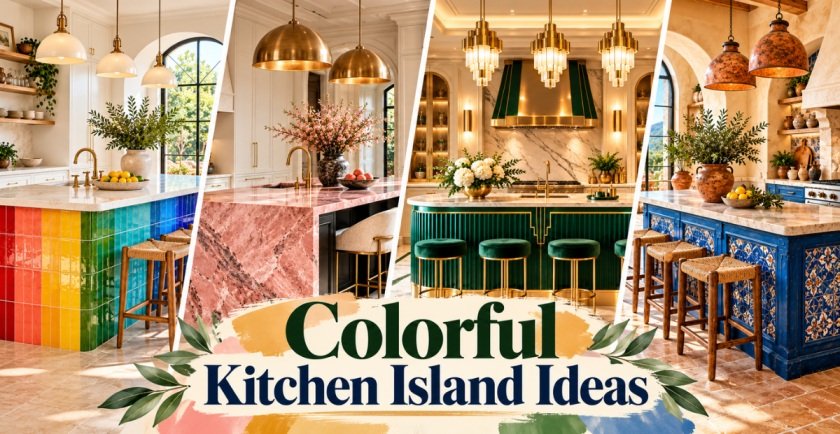
A kitchen island is often the hardest-working feature in the room, but it can also be the most expressive. Instead of treating it as a purely practical block for food prep, storage, and seating, you can turn it into the visual centerpiece of the kitchen with color, texture, pattern, and interesting materials. From soft sage green and powder blue to dramatic emerald marble, hand-painted tiles, and bold coral finishes, there are countless ways to give an island more personality.
The best colorful kitchen island ideas do more than simply introduce a bright paint shade. They create contrast, connect different finishes, highlight architectural details, and give the kitchen a memorable focal point. A colorful island can be subtle and sophisticated or joyful and artistic, depending on the mood you want to create.
Whether you prefer modern luxury, Mediterranean charm, cottage warmth, coastal freshness, or eclectic bohemian style, the following ideas offer plenty of inspiration. Each one can be adapted to different kitchen sizes, layouts, and budgets without copying a single look exactly.
1. Deep Cobalt Blue Kitchen Island
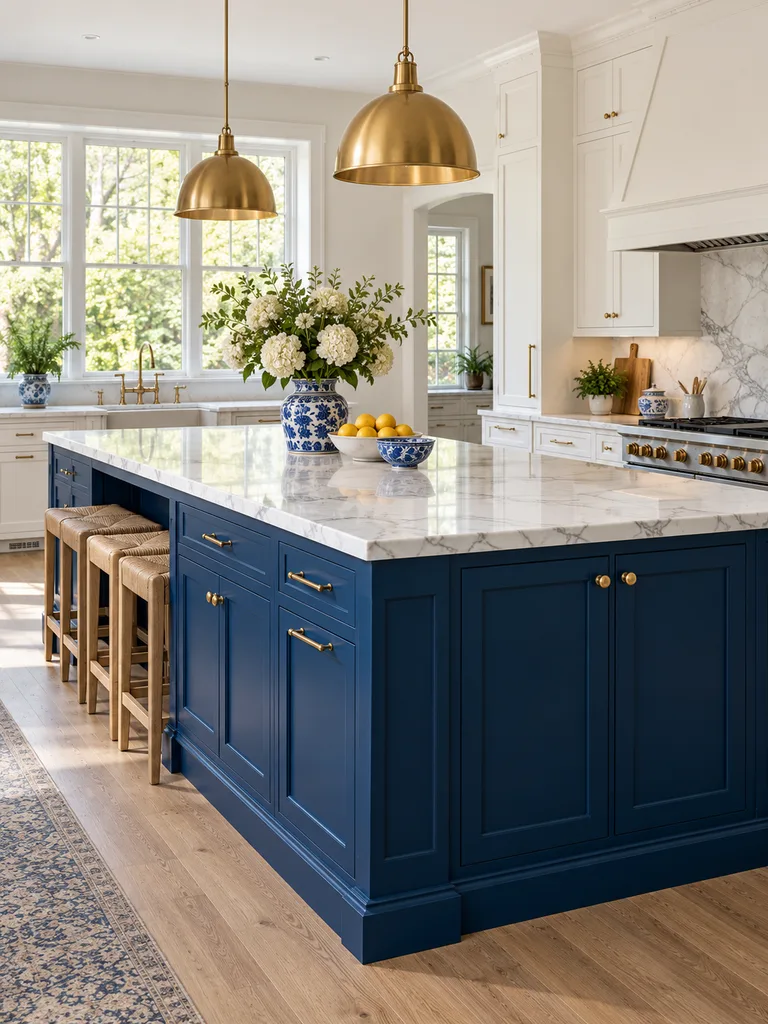
A deep cobalt blue island instantly adds confidence to an otherwise neutral kitchen. Pair the saturated base with white or warm cream cabinets so the blue becomes the clear focal point. A pale marble or quartz countertop keeps the look bright, while brushed brass handles and pendant lights bring warmth. For extra depth, repeat small touches of cobalt in pottery, artwork, or patterned backsplash tiles without overwhelming the room.
2. Sage Green Island With a Warm Wood Countertop
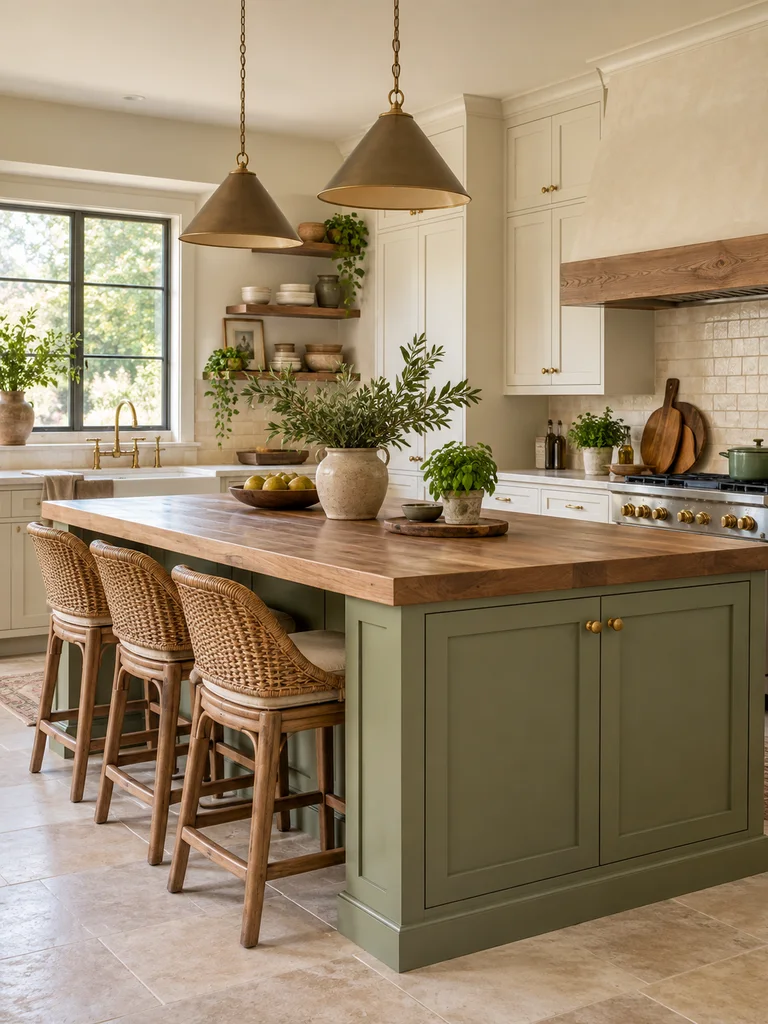
Sage green is ideal when you want color that still feels calm and natural. Use it on a simple shaker-style island and top it with warm oak, walnut, or butcher block. The combination works especially well with off-white walls, earthy ceramic accessories, and woven stools. Because sage has a muted quality, it introduces personality without making the kitchen feel overly bold or difficult to decorate around.
3. Terracotta Kitchen Island
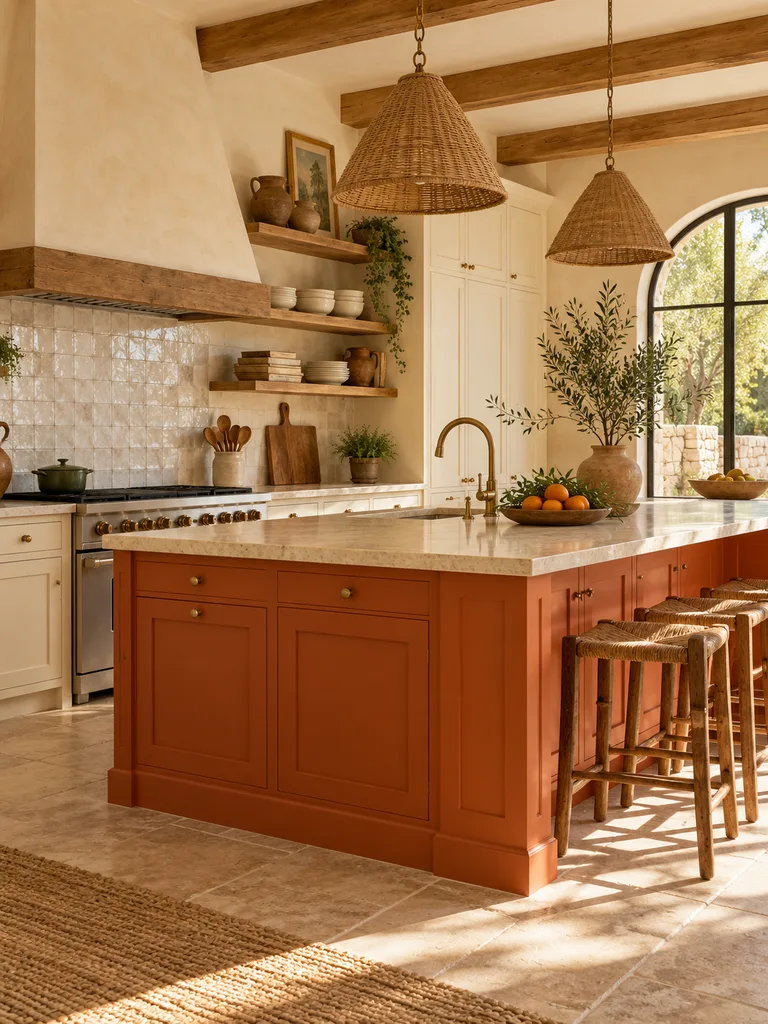
Terracotta brings warmth, depth, and an inviting Mediterranean character to a kitchen. Paint the island in a clay-inspired orange-brown shade and surround it with creamy cabinetry, handmade-look tiles, and natural timber. A light limestone or quartz countertop prevents the palette from feeling too heavy. Terracotta is particularly effective in kitchens with lots of daylight, where the color takes on a soft, sun-warmed appearance throughout the day.
4. Blush Pink Waterfall Island
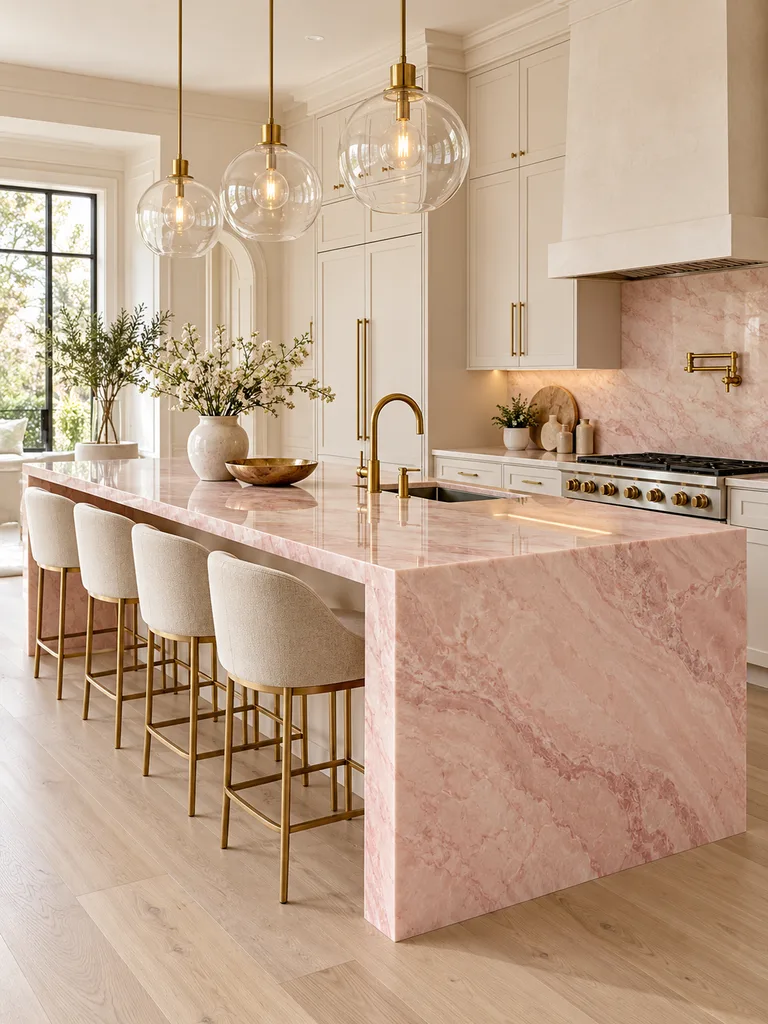
A blush pink island can look surprisingly refined when the color is paired with clean lines and elegant materials. Choose a pale dusty pink base or a pink-veined stone surface that continues down the sides in a waterfall profile. Keep the surrounding cabinetry simple and neutral so the island feels intentional rather than overly sweet. Brass hardware, clear glass pendants, and soft cream stools complete the polished look.
5. Emerald Green Marble Island
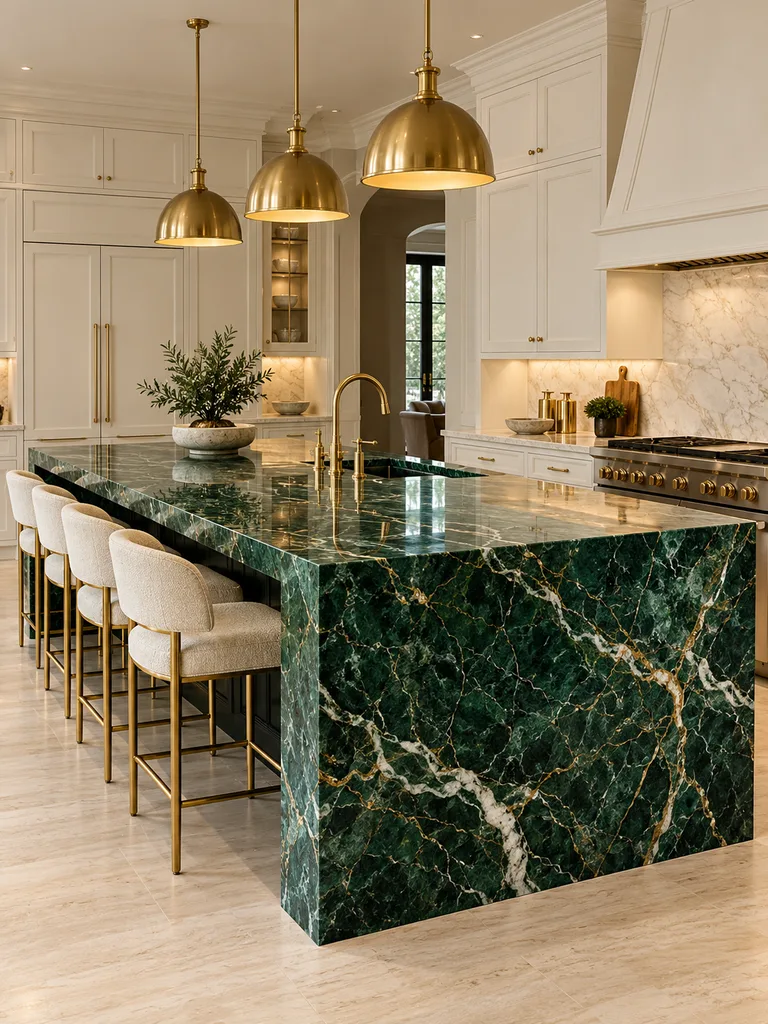
For a dramatic centerpiece, consider an island wrapped in emerald green marble or a similar richly veined stone. The movement in the surface gives the island an almost artistic quality, especially when used on both the countertop and vertical sides. Balance the intensity with warm white cabinets and minimal accessories. Gold or aged brass details complement the green beautifully and help create a luxurious, jewel-box effect.
6. Mediterranean Blue-and-White Tile Island
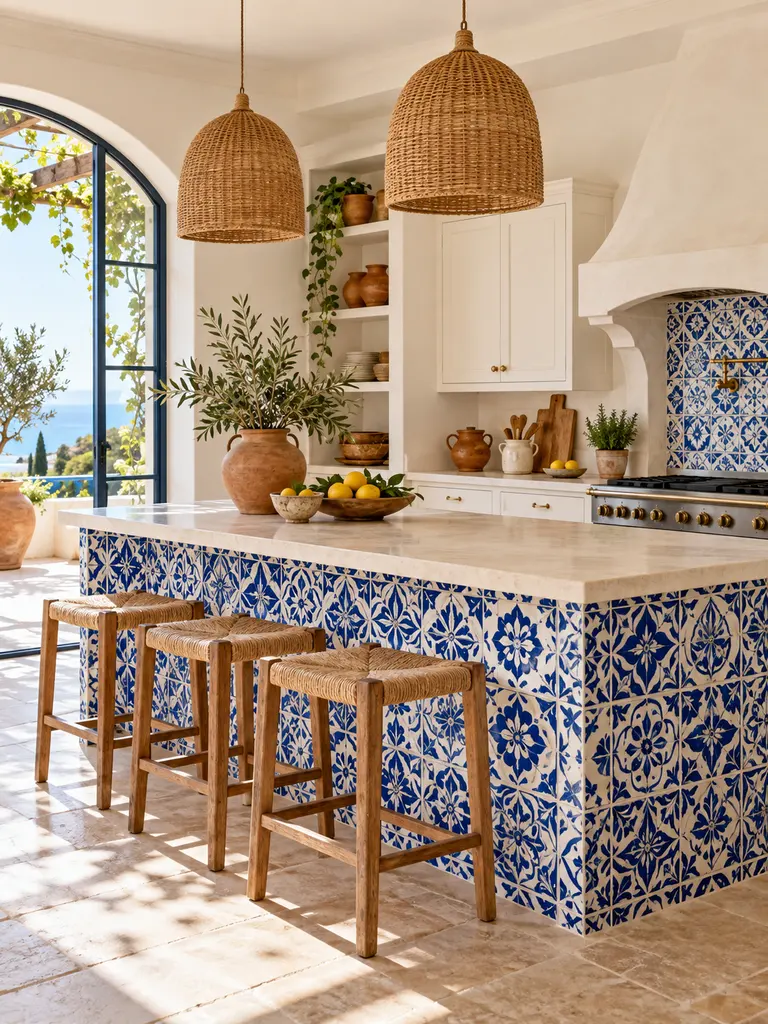
Blue-and-white patterned tiles are perfect for bringing Mediterranean energy into a kitchen. Use them on the island base while keeping the countertop light and simple. Instead of covering every surface, let the pattern remain concentrated on one or two sides so it feels decorative rather than busy. Natural wood stools, textured ceramics, and warm metal accents can soften the crisp blue-and-white palette and make it feel more collected.
7. Sunny Yellow Kitchen Island
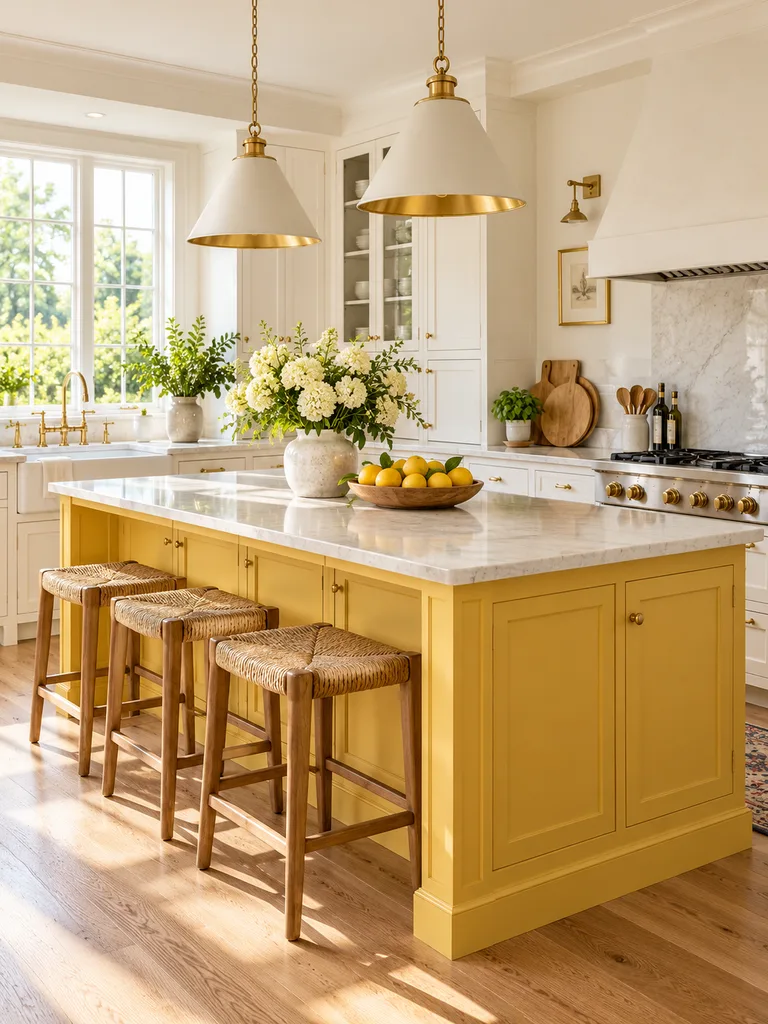
A sunny yellow island can completely change the atmosphere of a kitchen by making it feel brighter and more cheerful. For a sophisticated version, choose a mustard, ochre, or buttery yellow rather than a neon shade. Pair it with white cabinets, oak flooring, and simple black or brass hardware. Yellow works especially well in kitchens that receive plenty of natural light and need a warm, optimistic focal point.
8. Coral Kitchen Island
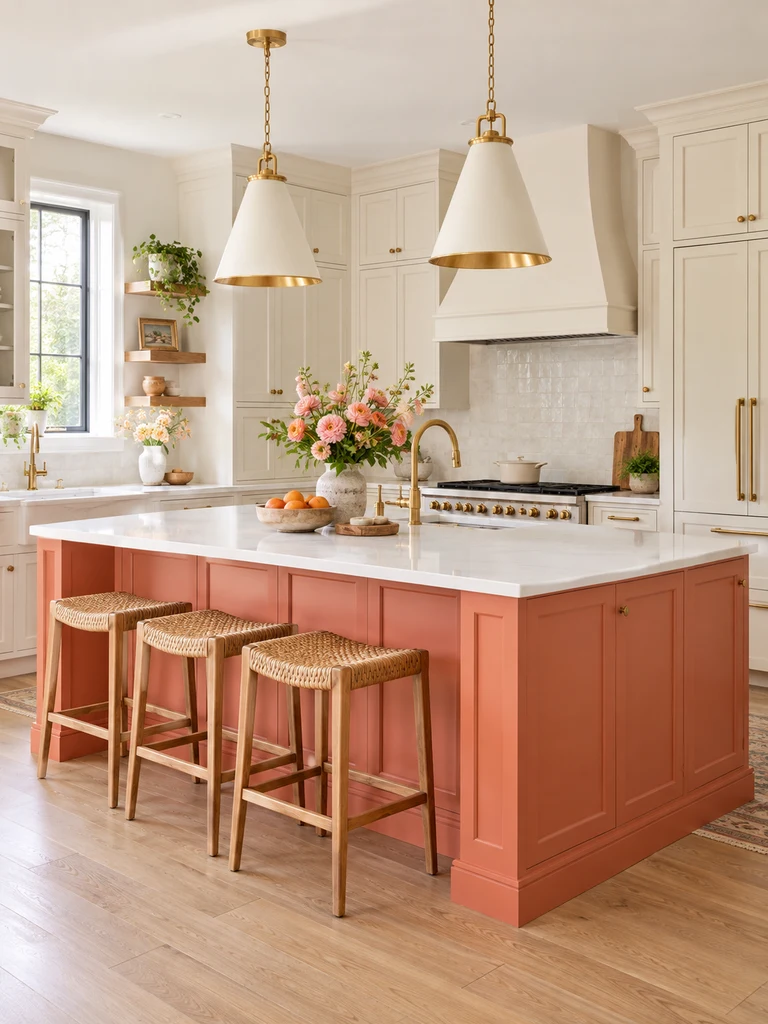
Coral sits between pink and orange, making it energetic without feeling too sharp. Use a warm coral paint on the island and combine it with creamy white cabinetry, pale stone, and subtle brass accents. This color works beautifully in coastal, transitional, and playful contemporary kitchens. To keep the design balanced, repeat coral only in small decorative details such as flowers, artwork, or a patterned runner rather than across the entire room.
9. Navy Blue Island With Brass Hardware
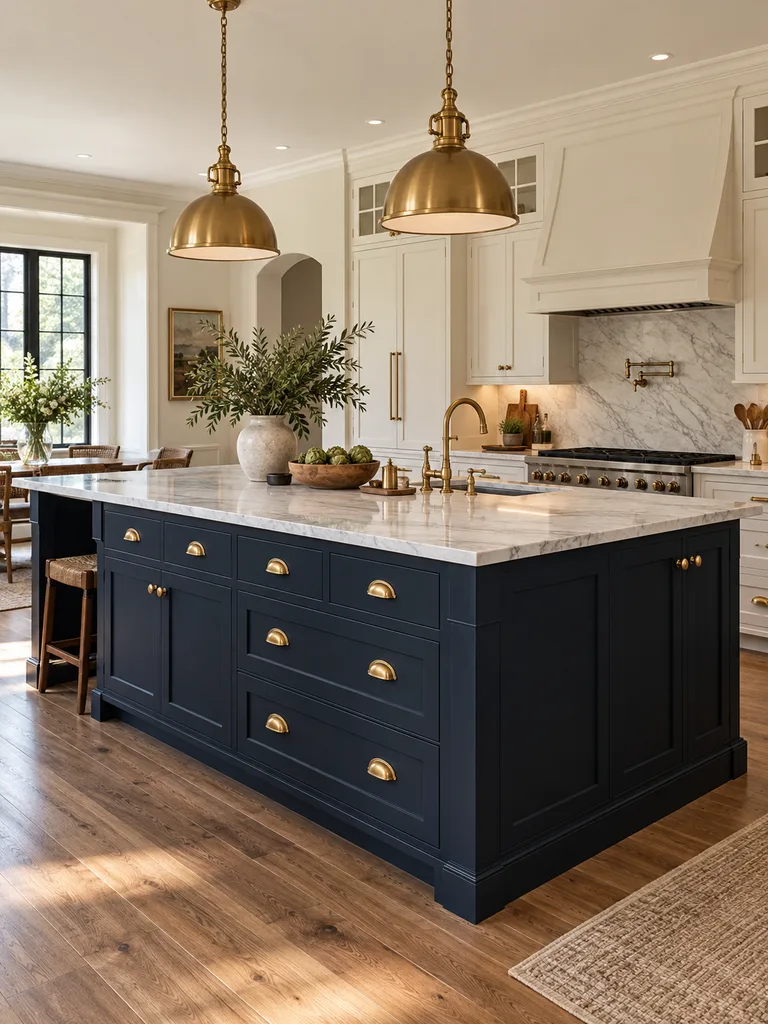
Navy remains one of the easiest bold colors to use in a kitchen because it feels classic and grounded. A navy island can anchor a bright space while still offering plenty of personality. Add brass knobs, cup pulls, or pendants for contrast, and choose white or lightly veined stone for the countertop. If the kitchen has wood flooring, the warmth of the timber helps soften the deep blue and creates a timeless look.
10. Mint Green Retro Kitchen Island
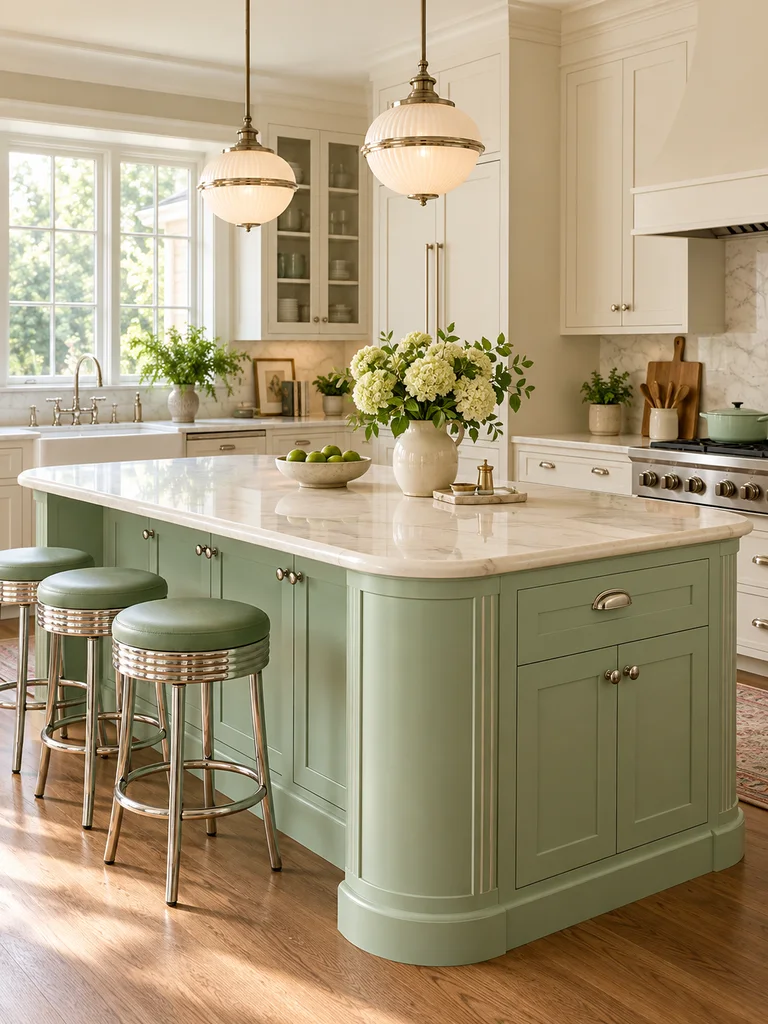
Mint green can give a kitchen a cheerful vintage character without making it feel dated. Choose cabinetry with rounded corners, simple hardware, or subtle retro detailing and pair it with a pale countertop. Chrome or brushed nickel accents reinforce the nostalgic mood, while modern appliances keep the room fresh. This idea is especially effective in light-filled kitchens where mint can feel crisp, airy, and almost refreshing.
11. Multicolored Mosaic Tile Island
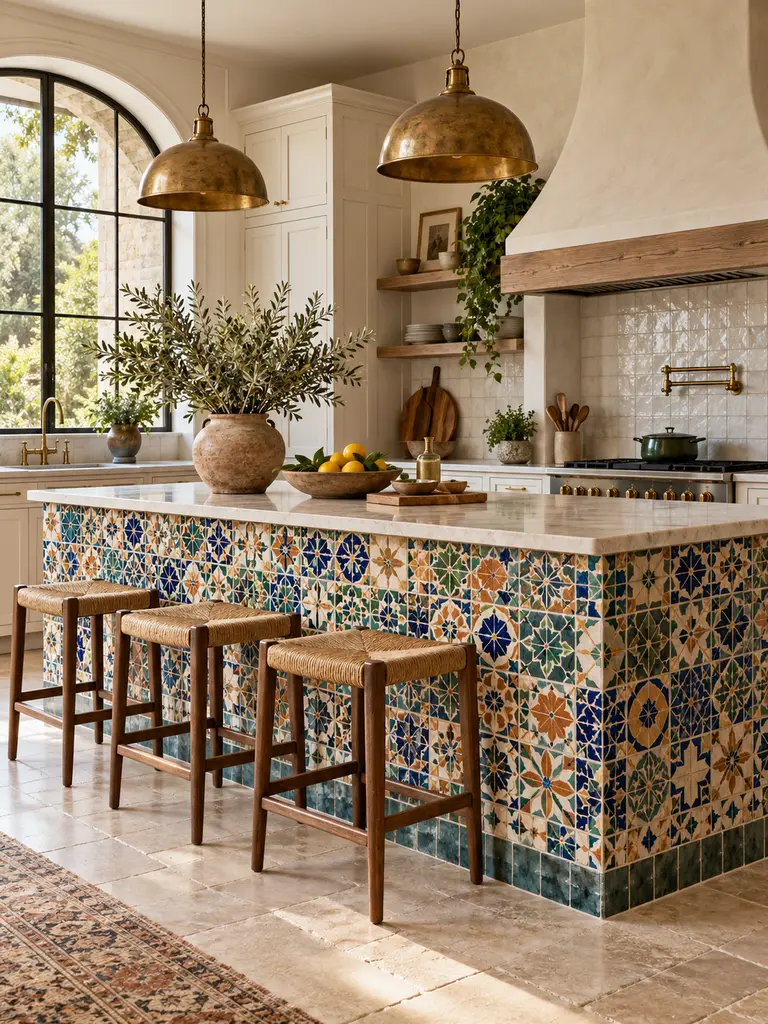
A mosaic-tiled island is an excellent choice if you love pattern and handmade details. Use small tiles in a coordinated palette rather than mixing every possible color. Blues, greens, terracotta, cream, and gold can work beautifully together. Keep the countertop simple so the mosaic remains the star. The finished island feels more like a decorative furniture piece and works especially well in eclectic or globally inspired kitchens.
12. Raspberry Pink Kitchen Island
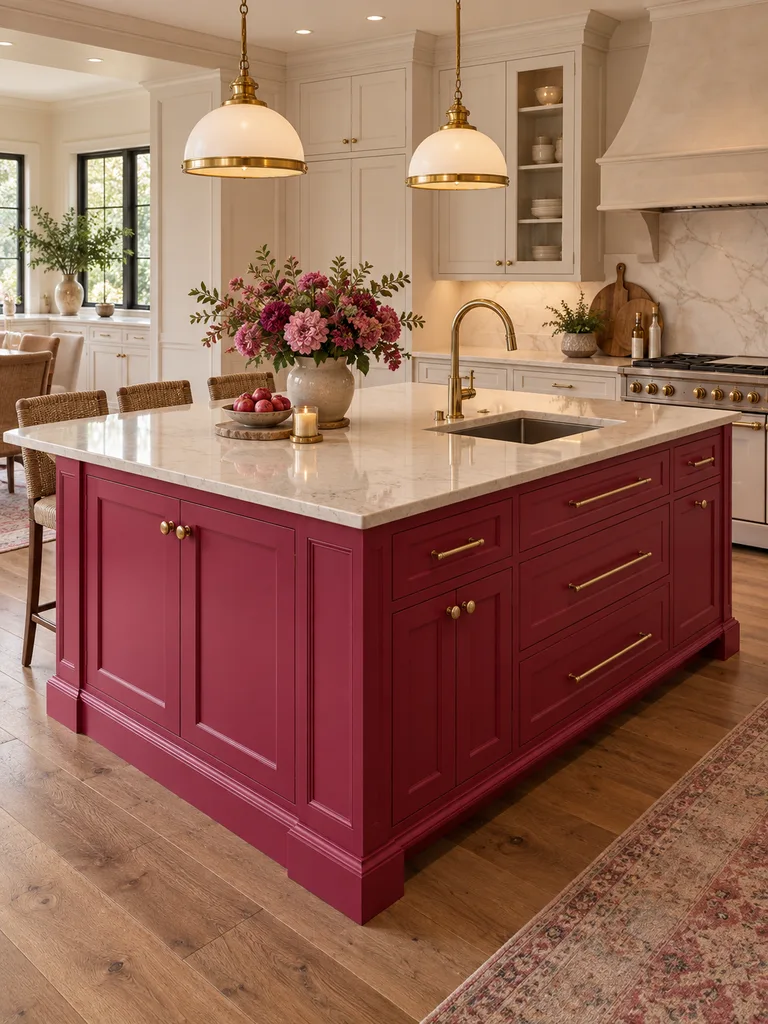
Raspberry pink is deeper and richer than blush, making it a strong option for homeowners who want a colorful island with real impact. Pair it with neutral walls, pale counters, and warm wood to prevent the palette from becoming too intense. Brass hardware adds elegance, while darker accents can make the shade feel more sophisticated. This color works particularly well in kitchens that already include floral, vintage, or maximalist influences.
13. Burnt Orange Kitchen Island
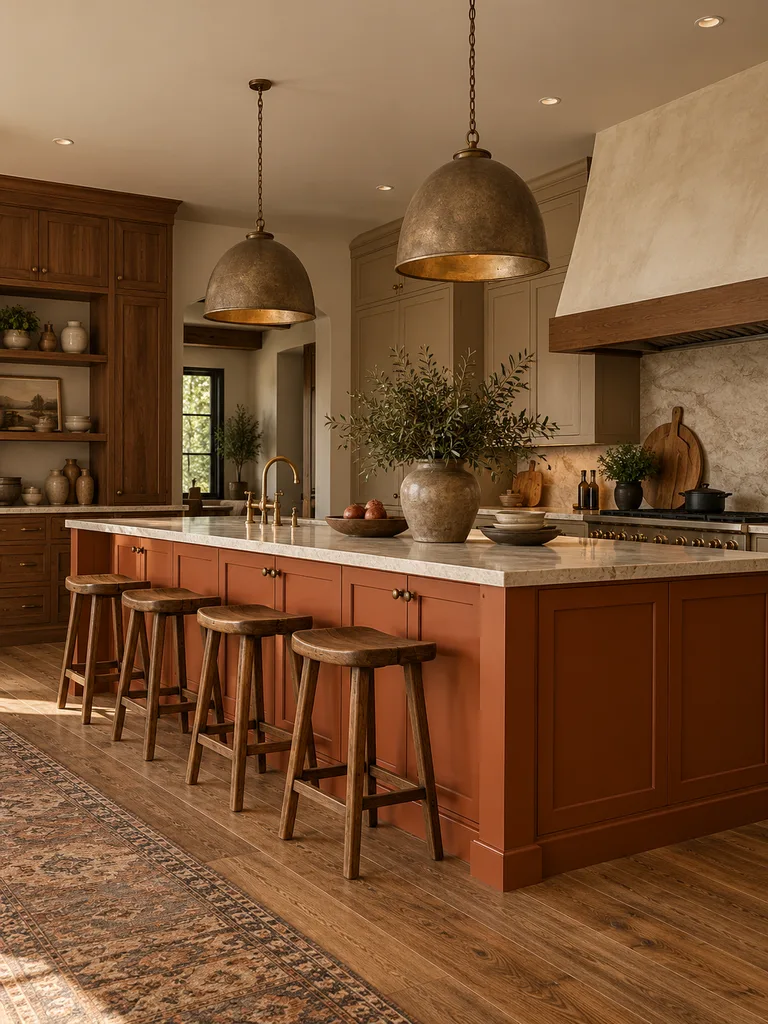
Burnt orange brings the warmth of autumn into the kitchen without feeling seasonal. Its earthy quality pairs naturally with walnut, cream, charcoal, and bronze. Use it on a substantial island with simple cabinetry so the color does most of the visual work. A stone countertop in ivory or soft gray can balance the richness. Add handmade pottery or textured pendant lights to create a relaxed, collected atmosphere.
14. Turquoise Coastal Kitchen Island
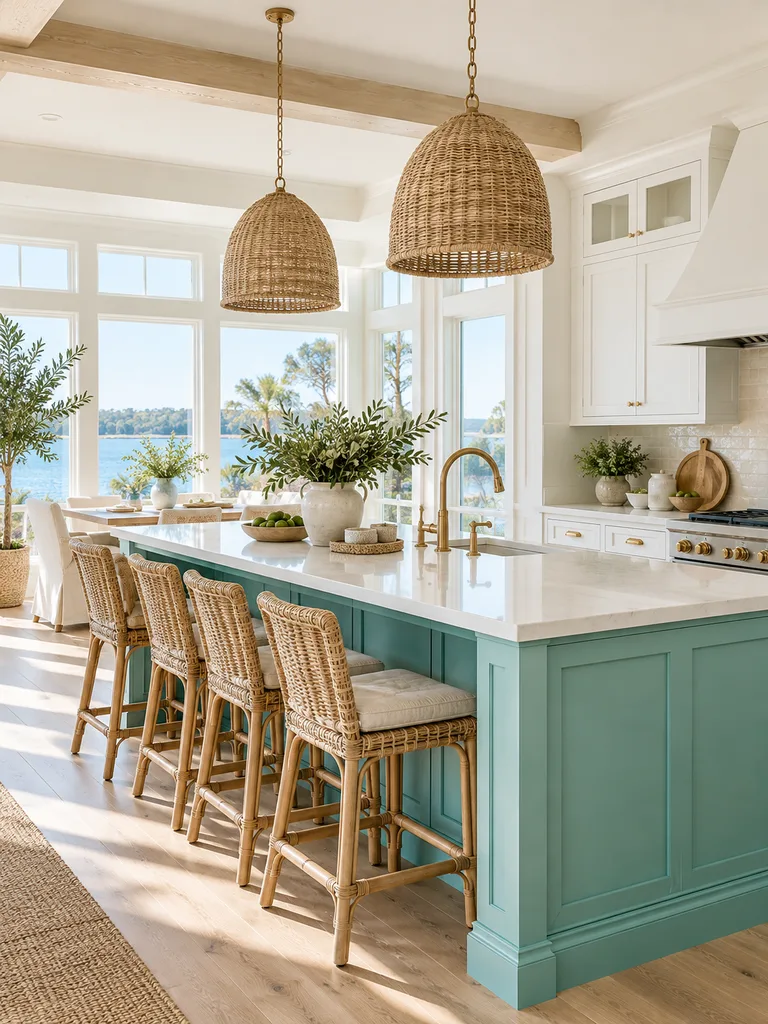
Turquoise can instantly create a breezy coastal mood, especially when combined with pale wood and white surroundings. Choose a slightly muted turquoise rather than an overly bright aqua for a more grown-up look. Woven stools, rattan pendants, seagrass accessories, and sandy neutral tones reinforce the relaxed style. The result feels colorful and refreshing while still maintaining the lightness associated with coastal interiors.
15. Lavender Kitchen Island
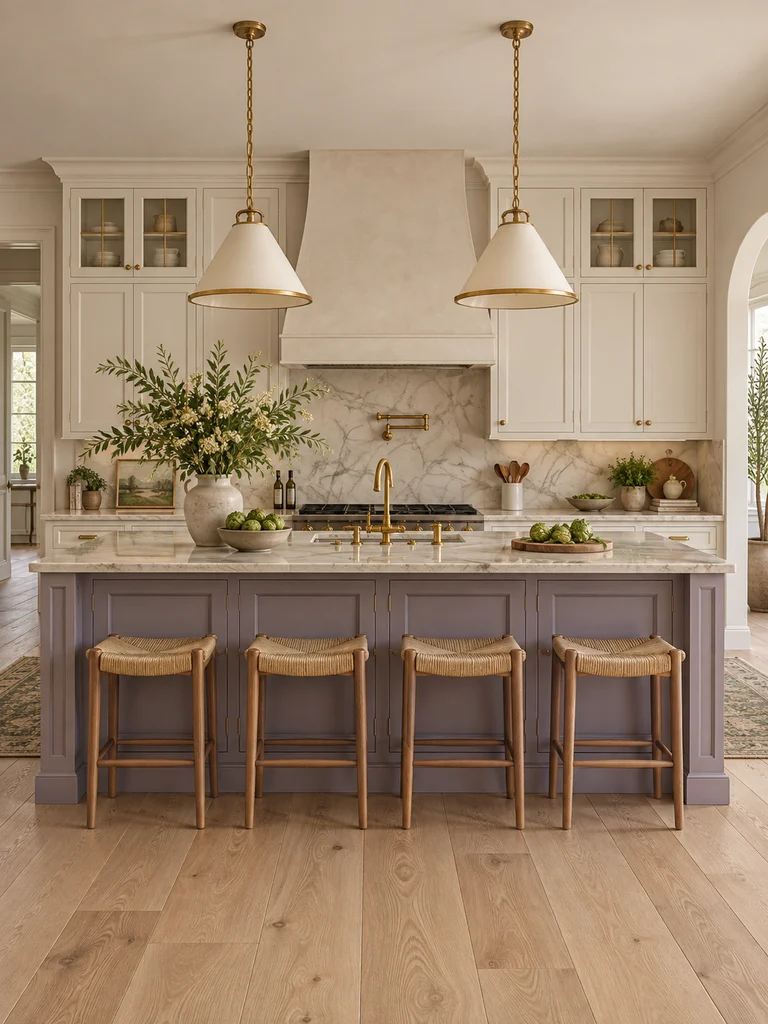
Lavender is unexpected in a kitchen, which is exactly why it can feel so distinctive. A soft gray-lavender shade works beautifully with warm white cabinetry, natural stone, and brushed brass. Keep the rest of the palette understated so the color remains elegant rather than whimsical. Lavender can also pair surprisingly well with sage green accents, creating a soft garden-inspired color scheme that feels gentle and sophisticated.
16. Forest Green Fluted Island
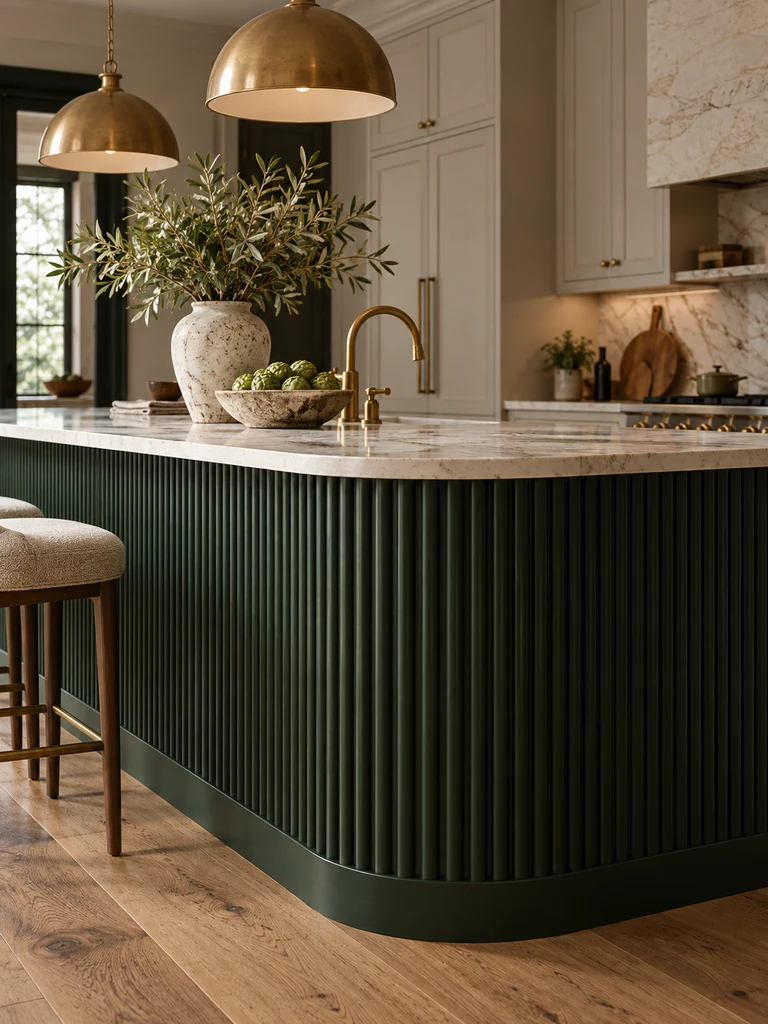
Deep forest green becomes even more striking when combined with vertical fluting or ribbed paneling. The texture catches light and shadow, making the island feel architectural as well as colorful. A pale stone top provides contrast, while brass or antique bronze hardware adds warmth. This approach suits both modern and traditional kitchens because the rich green feels timeless, while the fluted detail gives the design a contemporary edge.
17. Powder Blue Kitchen Island
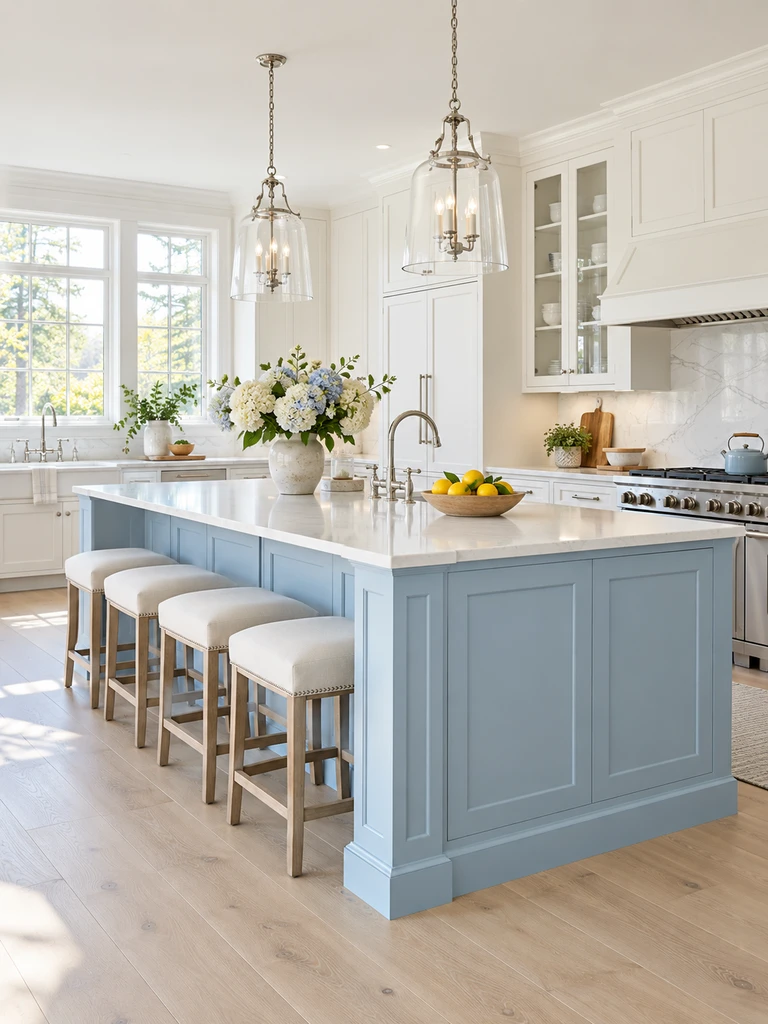
Powder blue is a wonderful choice for creating a light and inviting focal point. It works particularly well in cottage, coastal, farmhouse, and transitional kitchens. Pair the island with white perimeter cabinets, light oak flooring, and a soft gray or white countertop. The result is colorful without being loud. Add small touches of blue through ceramics or textiles to make the island feel connected to the rest of the room.
18. Burgundy Kitchen Island
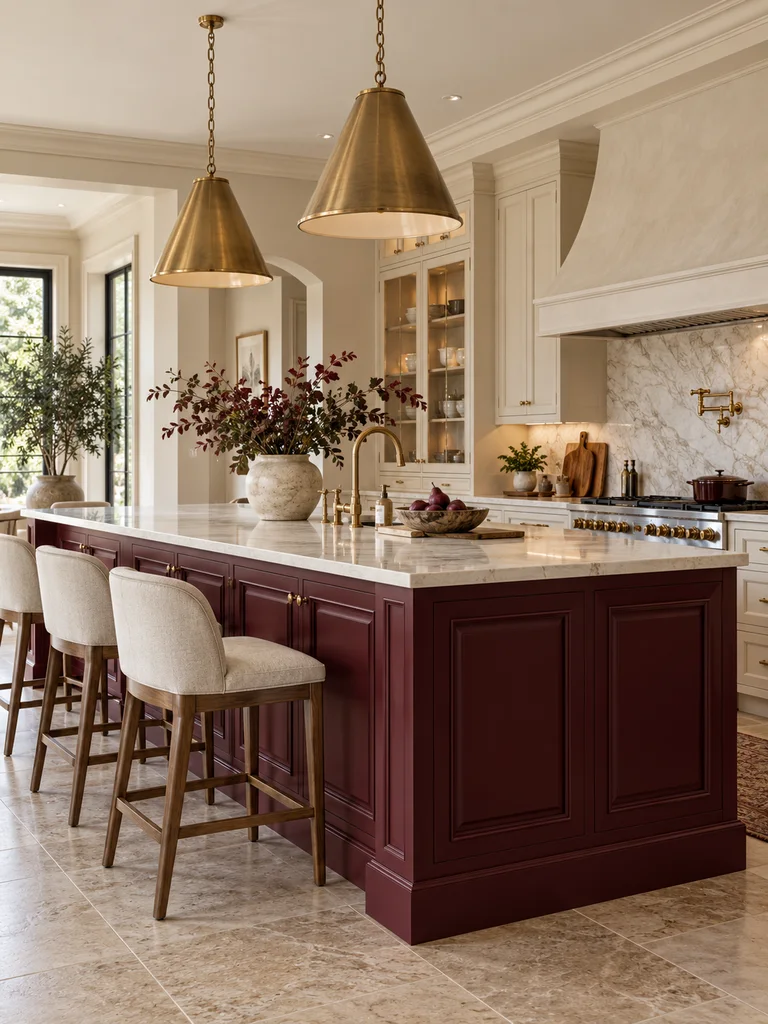
A burgundy island creates a rich, dramatic effect that feels warm rather than stark. This deep wine-inspired shade is especially beautiful with creamy cabinetry, dark wood flooring, and aged brass fixtures. Choose a simple island shape so the color remains the main feature. A light marble or quartz countertop provides enough contrast to keep the kitchen bright. Burgundy is ideal for creating a sophisticated, slightly traditional atmosphere.
19. Mustard Yellow Island With Walnut Accents
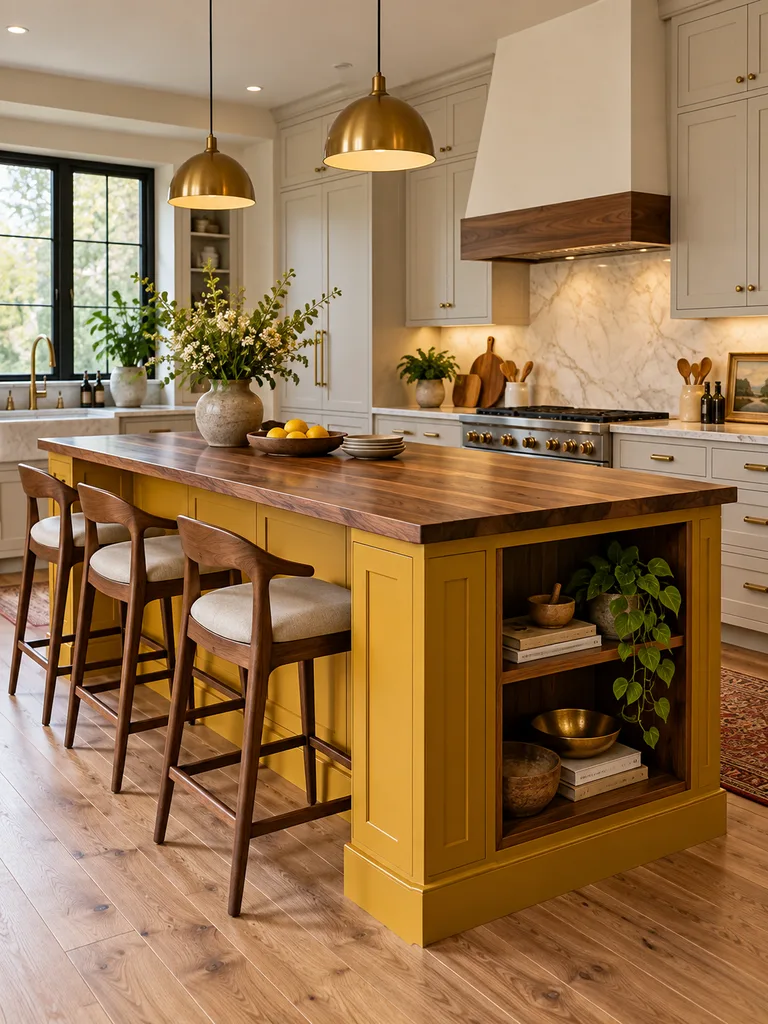
Mustard yellow has an earthy depth that makes it easier to live with than brighter yellows. Pair it with walnut panels, dark wood stools, or a rich timber countertop for a layered, mid-century-inspired palette. Cream walls and simple lighting help keep the combination from feeling too heavy. This island works best when the surrounding cabinetry is restrained, allowing the yellow and wood tones to create warmth and personality.
20. Teal Kitchen Island With White Marble
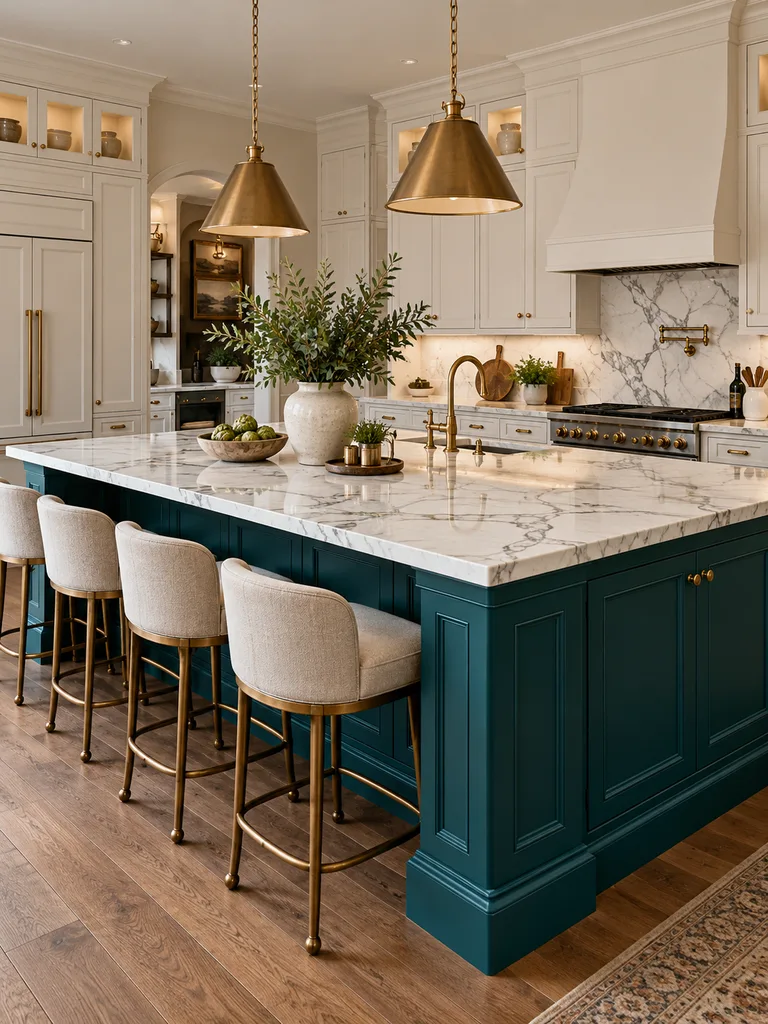
Teal offers the richness of blue with the freshness of green, making it one of the most versatile statement colors. Use it on a generously sized island and pair it with crisp white marble or quartz. Brass hardware can make the combination feel luxurious, while matte black details create a more modern look. Teal is particularly effective in open-plan spaces because it adds color without feeling overly playful.
21. Hand-Painted Floral Kitchen Island
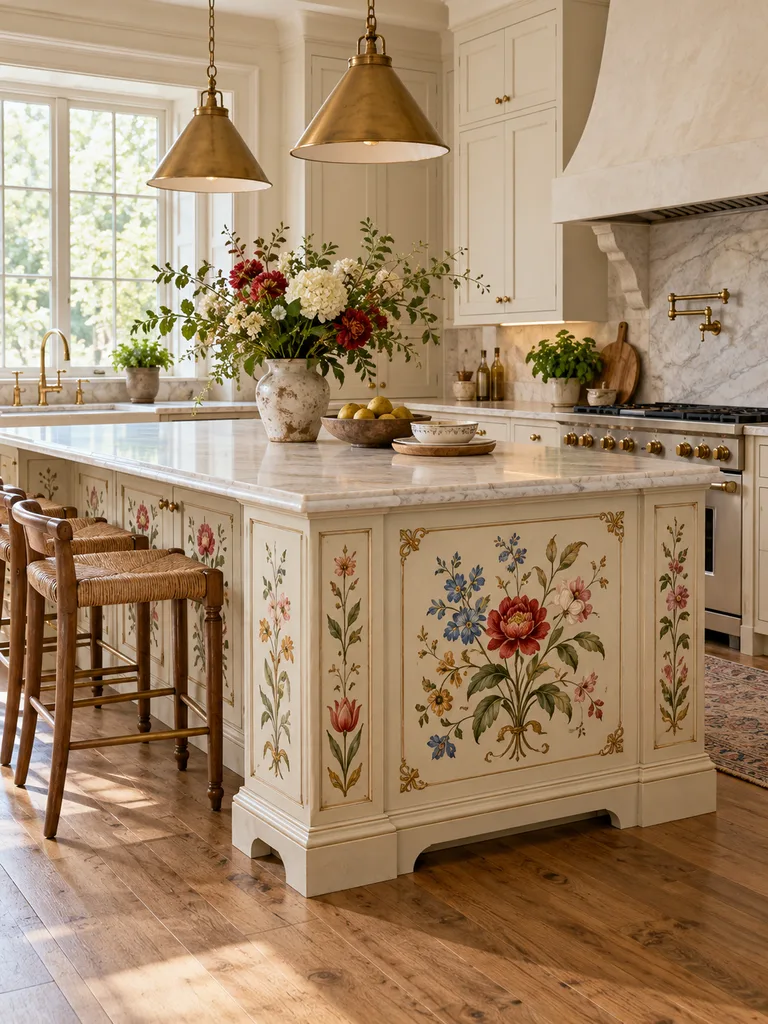
Turn your island into a piece of functional art with hand-painted floral panels. Instead of covering the entire base, focus the artwork on framed cabinet sections or the seating side. Botanical motifs in muted reds, greens, blues, and golds can look charming against a cream or warm wood background. Keep the countertop simple so the painting remains the focal point. This idea suits folk-inspired, cottage, and eclectic interiors beautifully.
22. Moroccan-Inspired Patterned Island
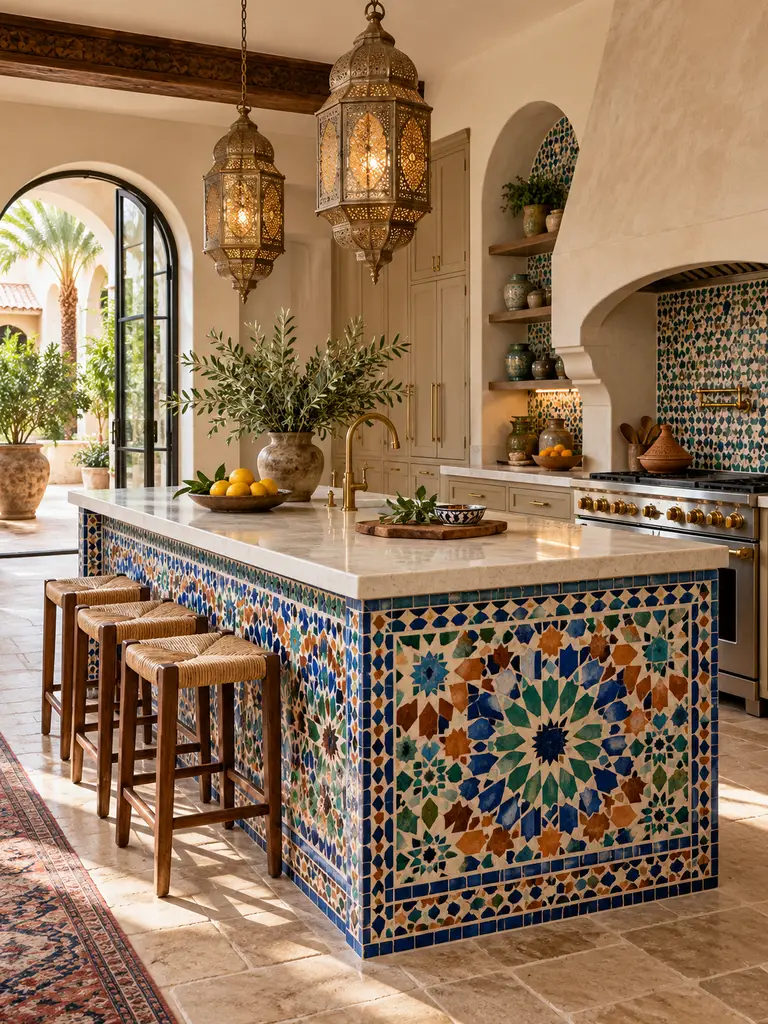
Moroccan-inspired patterns can bring intricate geometry and vibrant color to a kitchen island. Choose tiles featuring combinations of cobalt, turquoise, terracotta, cream, and green. Use the pattern on the island front or sides while keeping surrounding cabinets quieter. A solid stone countertop and simple stools help balance the detail. The result feels artistic, globally inspired, and full of character without requiring the entire kitchen to follow the same theme.
23. Two-Tone Blue and Green Island
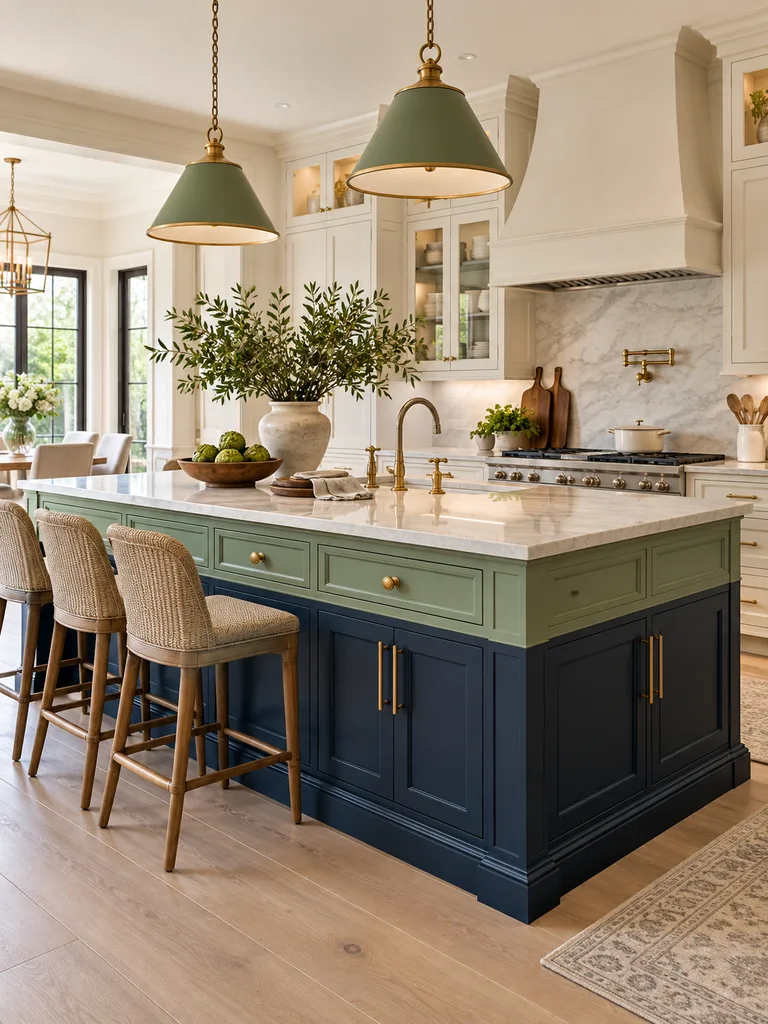
If choosing one color feels too limiting, combine blue and green on the same island. For example, use deep teal cabinetry with sage end panels, or navy drawers with an olive seating section. The colors should share similar undertones so the combination looks intentional. A neutral countertop connects everything visually. Two-tone designs are especially useful for large islands because they can break up the visual mass and highlight different functional zones.
24. Color-Blocked Kitchen Island
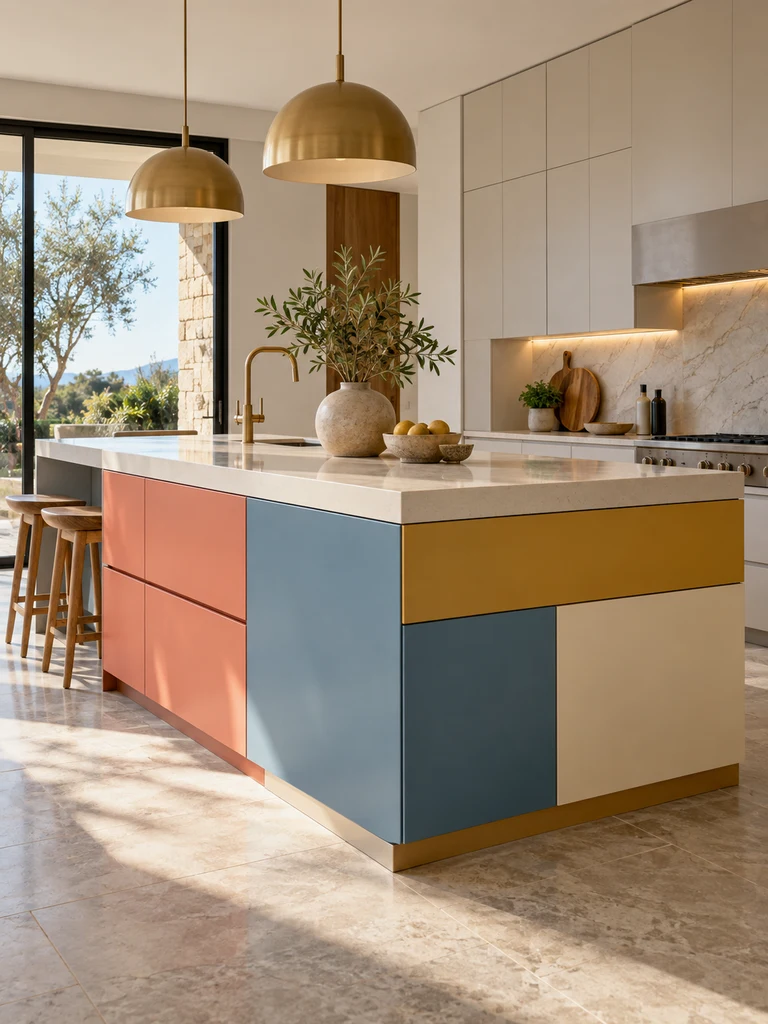
Color blocking gives a kitchen island a playful contemporary look. Divide the base into clear sections using two or three complementary colors, such as terracotta, dusty blue, and cream. Keep the shapes simple and geometric so the result feels designed rather than random. This concept works especially well on flat-panel cabinetry. A plain countertop and restrained surrounding kitchen allow the colorful composition to stand out like modern artwork.
25. Peacock Blue Curved Kitchen Island
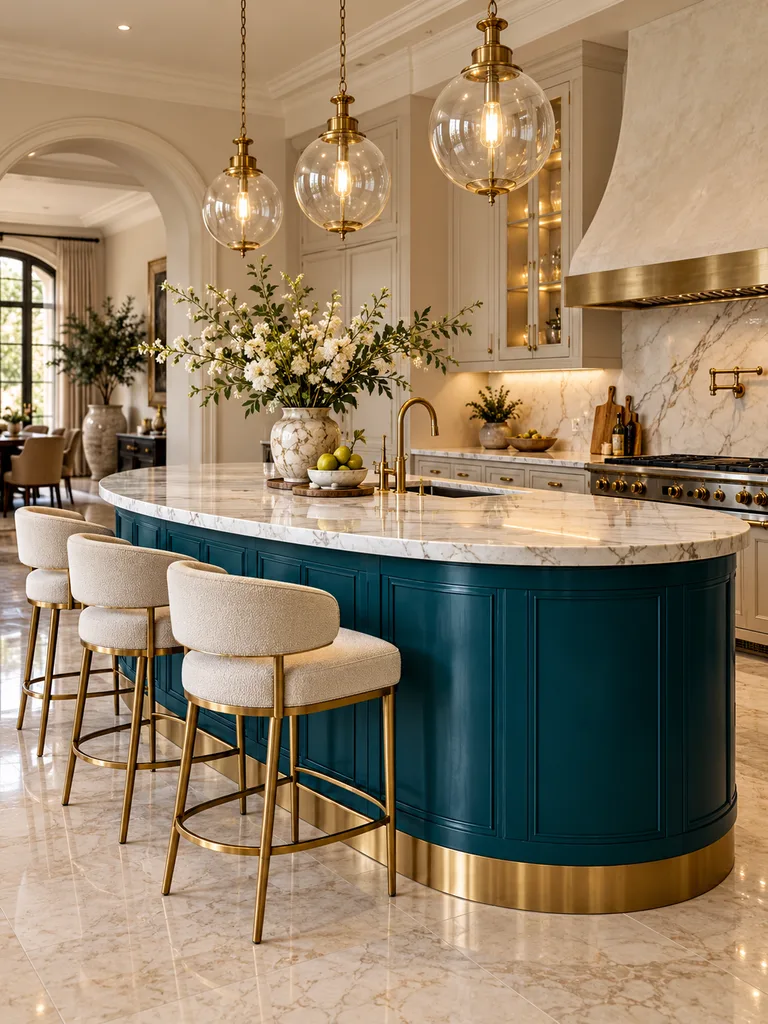
A curved island becomes even more eye-catching when finished in a rich peacock blue. The rounded form softens the strong color and creates a luxurious, flowing centerpiece. Use ribbed or paneled detailing on the curved base to add texture. A creamy stone top, gold-toned lighting, and upholstered stools complete the look. This is an excellent choice for larger kitchens where the island can become a sculptural feature.
26. Pastel Peach Kitchen Island
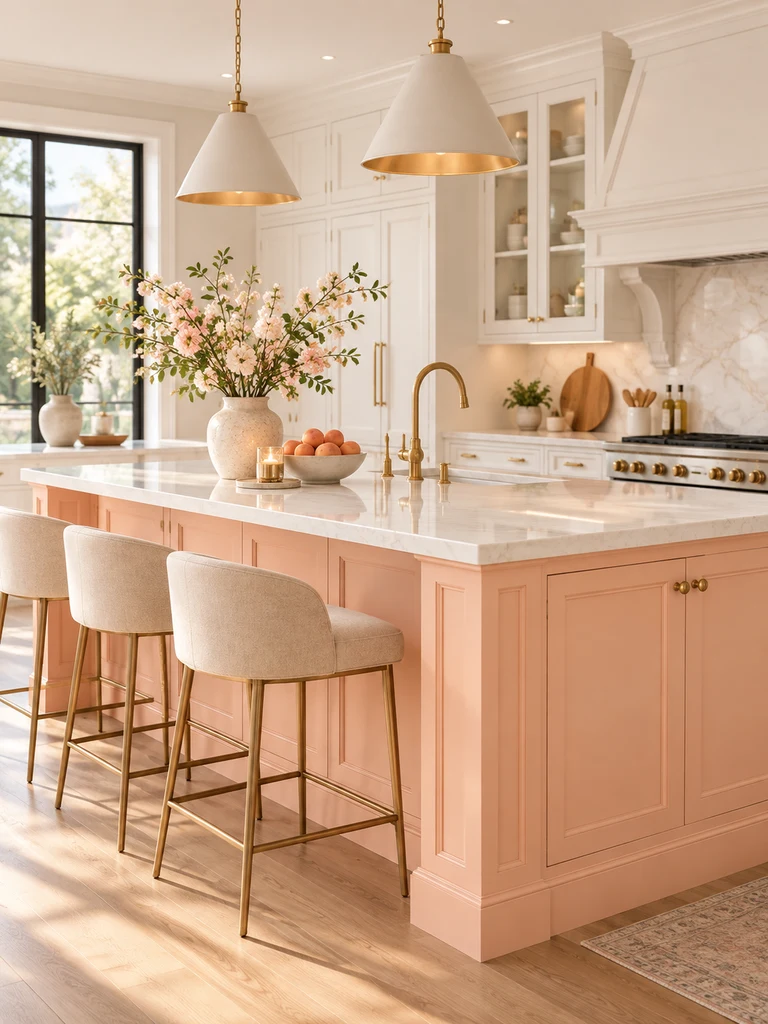
Pastel peach introduces warmth without the intensity of orange or coral. It pairs naturally with warm whites, pale oak, beige stone, and soft brass. Use a matte finish for a contemporary look or slightly traditional cabinetry for a cottage-inspired feel. Peach is especially attractive in kitchens with abundant daylight, where it creates a soft glow. Keep accessories minimal so the unusual island color feels fresh and intentional.
27. Olive Green Rustic Island
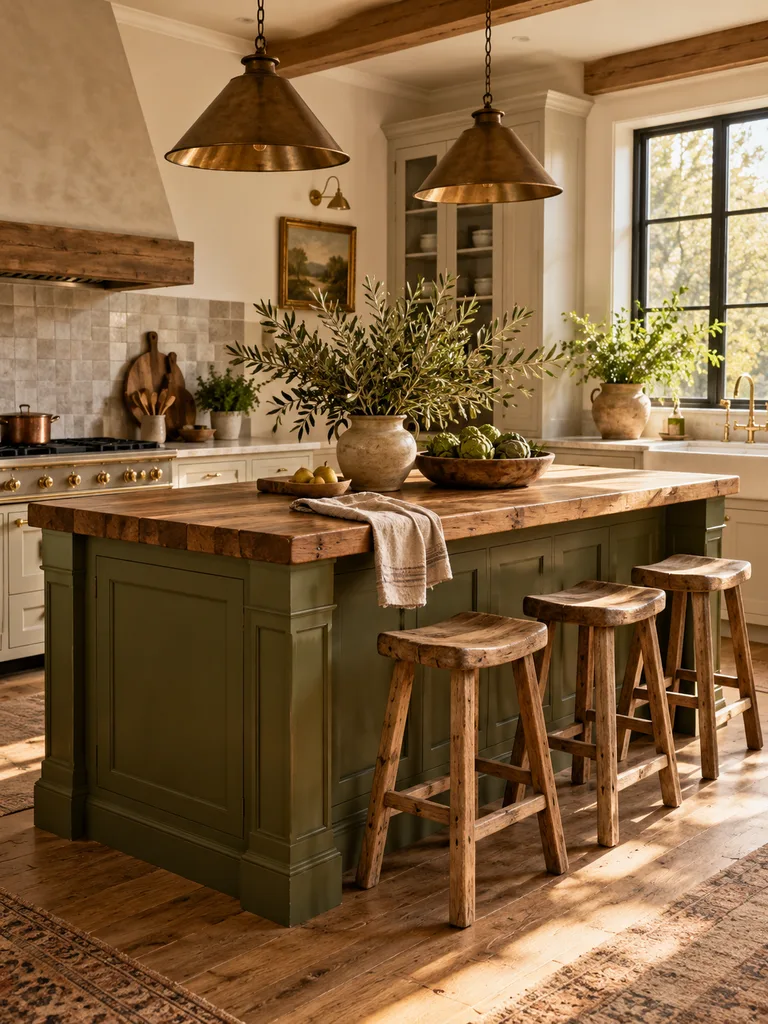
Olive green is perfect for a rustic or country-style island because it connects naturally with timber and aged finishes. Use it on paneled cabinetry and pair it with a butcher-block or honed stone top. Woven stools, pottery, and vintage-style hardware add to the relaxed look. Because olive is muted rather than bright, it can introduce color while still making the kitchen feel calm, grounded, and easy to live with.
28. Red Kitchen Island With Natural Wood
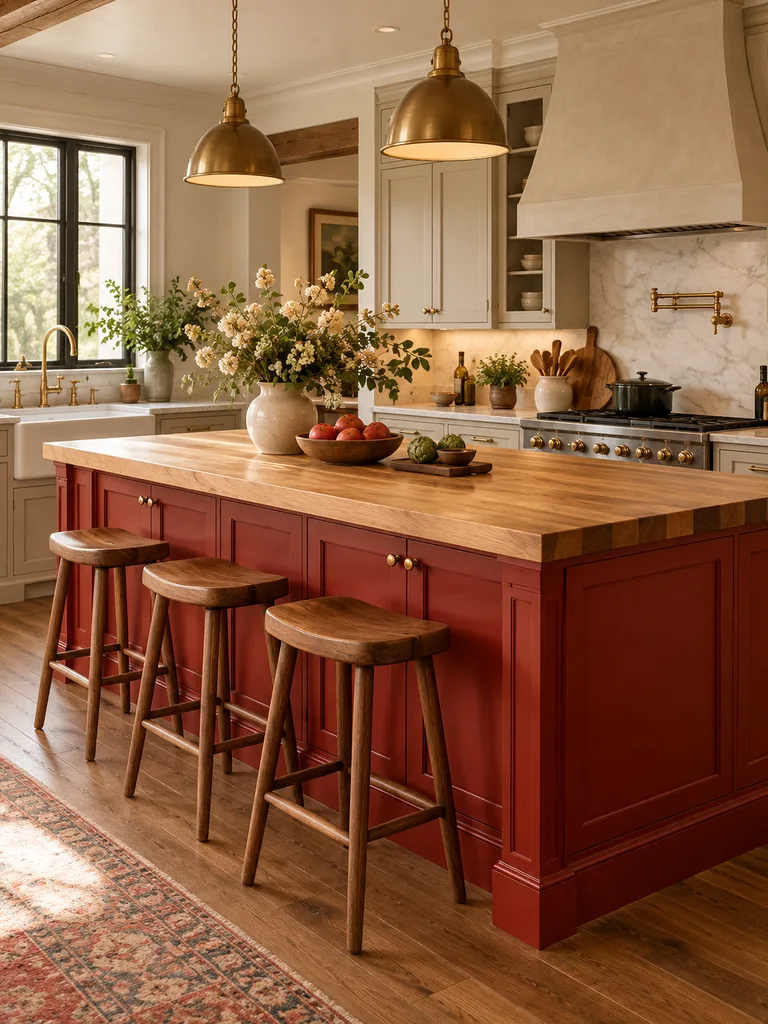
A red island can be striking without feeling overwhelming when paired with natural materials. Choose a deep brick, barn, or tomato red rather than a very bright primary shade. Combine it with oak or walnut details, cream walls, and a neutral countertop. The wood helps soften the intensity and gives the island warmth. This approach can work in rustic, modern farmhouse, eclectic, or even contemporary kitchens.
29. Aqua Glass-Tile Kitchen Island
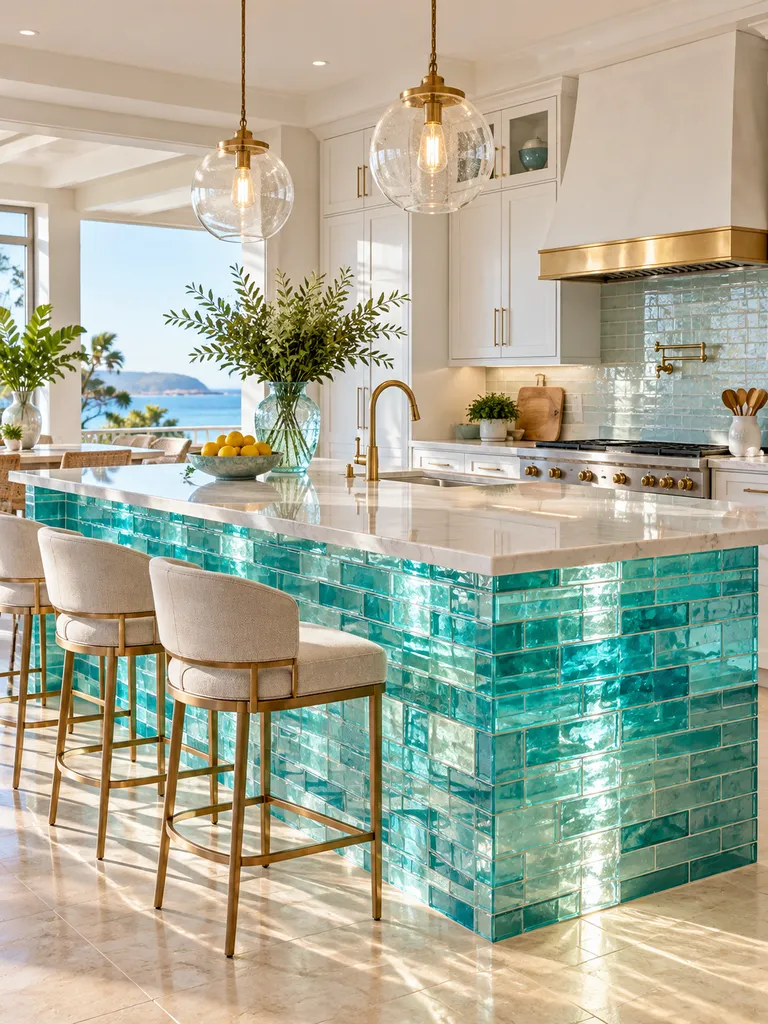
Glossy aqua tiles can make a kitchen island shimmer as light moves across the surface. Use elongated, square, or handmade-look glass tiles on the island base and pair them with a simple white or pale gray countertop. The reflective finish works especially well in smaller kitchens because it adds brightness and depth. Keep other colorful elements limited so the tiled island remains the room’s fresh, watery focal point.
30. Colorful Terrazzo Kitchen Island
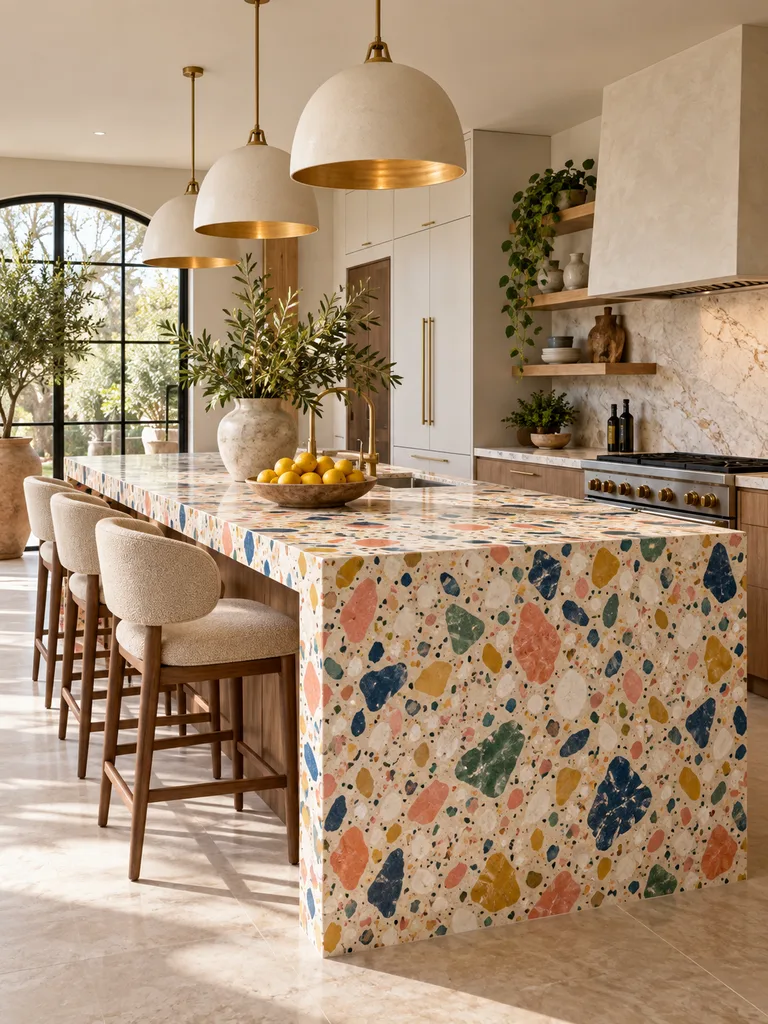
Terrazzo is a playful way to introduce multiple colors without relying on painted cabinetry. Choose a terrazzo surface with chips in shades such as pink, blue, green, ochre, and rust. Use it as the countertop, waterfall side, or even the full island shell. Keep the base simple if the terrazzo is especially busy. This idea suits modern kitchens that need color while maintaining a clean architectural appearance.
31. Jewel-Tone Purple Kitchen Island
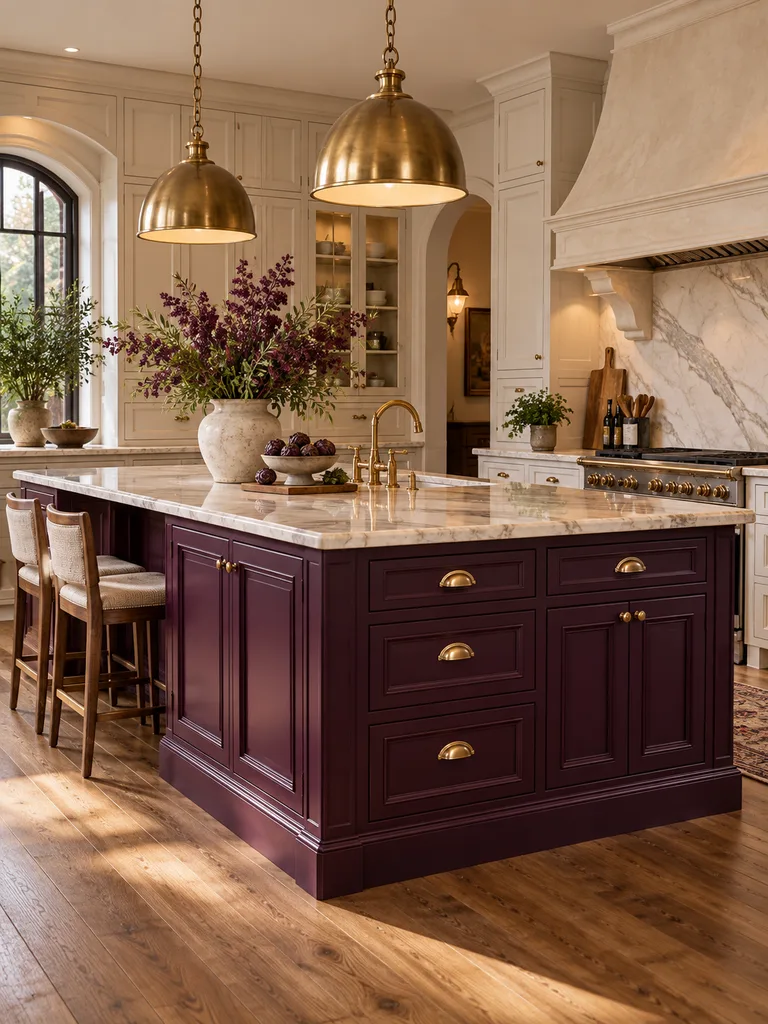
A plum or aubergine island can feel incredibly sophisticated when treated as a jewel tone rather than a novelty color. Pair it with pale stone, brass details, and warm neutral cabinetry. The shade looks especially beautiful under soft pendant lighting, which brings out its depth. For a more dramatic room, combine purple with dark wood; for something lighter, surround it with cream or off-white surfaces.
32. Checkerboard Tile Kitchen Island
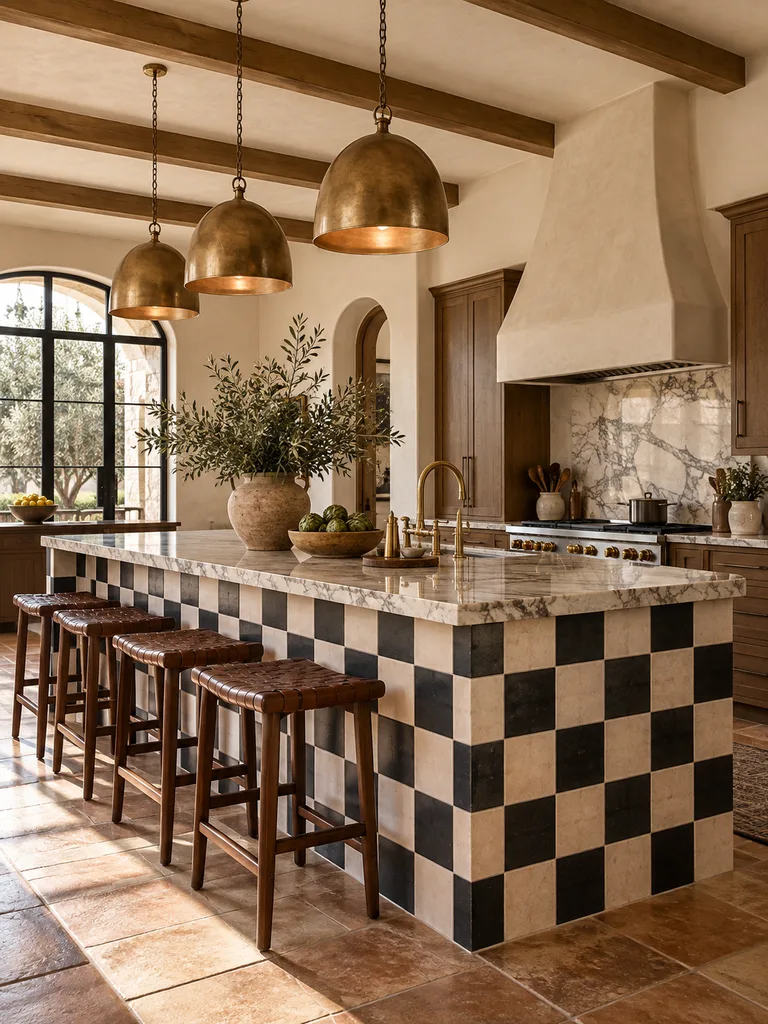
Checkerboard patterns are bold, graphic, and surprisingly adaptable. Cover the seating side of an island in square tiles using combinations such as blue and cream, terracotta and ivory, or green and white. Keep the pattern limited to one main area so it does not compete with the rest of the kitchen. A simple countertop and solid-color cabinetry allow the checkerboard detail to create a fun focal point.
33. Dusty Rose Kitchen Island
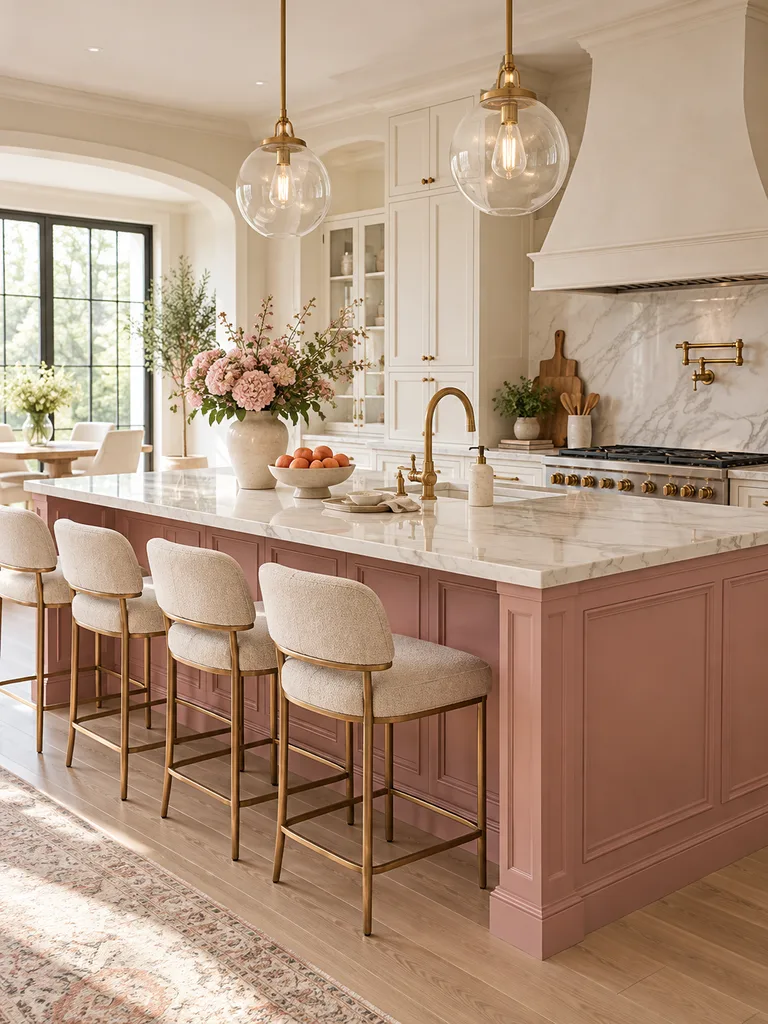
Dusty rose offers a mature, muted version of pink that works beautifully in sophisticated interiors. Pair it with warm gray, cream, walnut, or brushed brass for a layered look. The color is particularly effective on shaker-style cabinets because the traditional detailing keeps it grounded. Use natural stone on top and avoid too many additional pink accents. The island should feel like a subtle statement rather than a themed feature.
34. Blue Agate-Inspired Stone Island
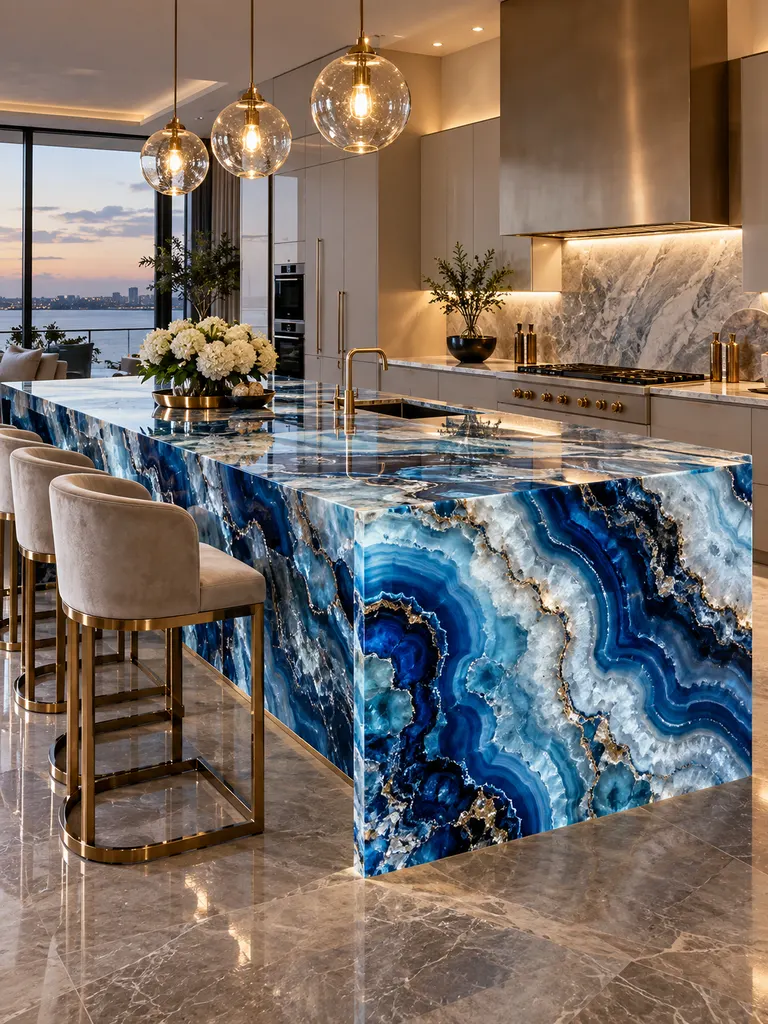
For an island that feels truly artistic, look for stone with dramatic blue, aqua, or teal veining. Quartzite, onyx-inspired surfaces, and engineered materials can all create this effect. Use the stone on the countertop and waterfall ends so the veining remains visible from several angles. Keep the cabinetry around it restrained. The island then functions almost like a natural artwork placed at the center of the kitchen.
35. Tropical Green Kitchen Island
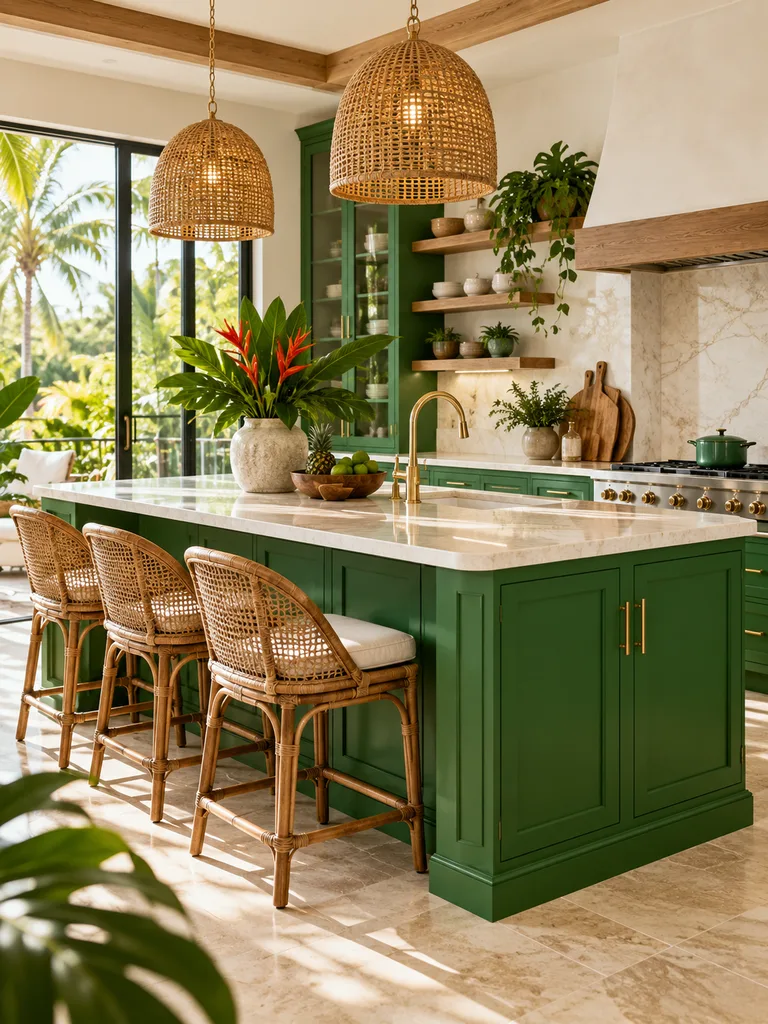
A vibrant tropical green island can make a kitchen feel energetic and fresh. Pair it with white or pale wood cabinets so the color remains crisp rather than heavy. Rattan stools, botanical prints, and large leafy plants can support the tropical mood without turning the space into a theme. A light quartz countertop keeps the overall effect clean and contemporary while still allowing the green to make a strong statement.
36. Painted Folk-Art Kitchen Island
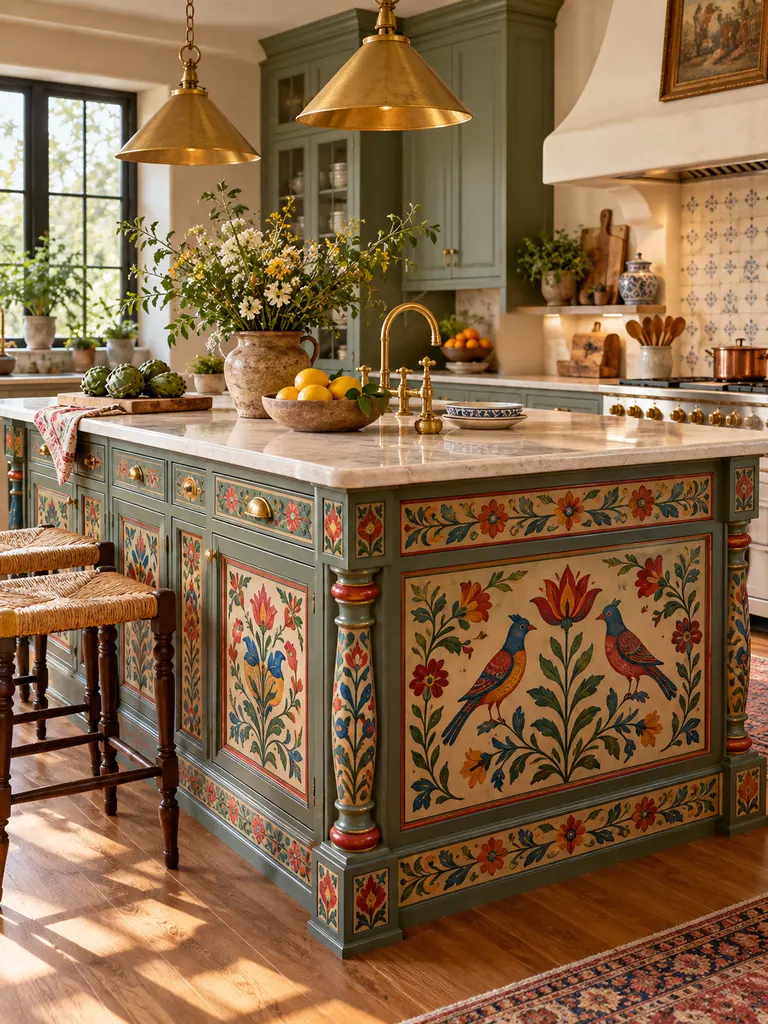
Folk-art detailing can transform a plain island into something personal and handmade. Decorate selected panels with stylized flowers, leaves, birds, or geometric borders using a coordinated palette. A cream, blue, or natural wood base provides a good foundation. The key is to leave enough plain surface around the artwork so every motif has room to breathe. This approach works beautifully in eclectic homes with collected furniture and handcrafted decor.
37. Mediterranean Terracotta-and-Blue Island
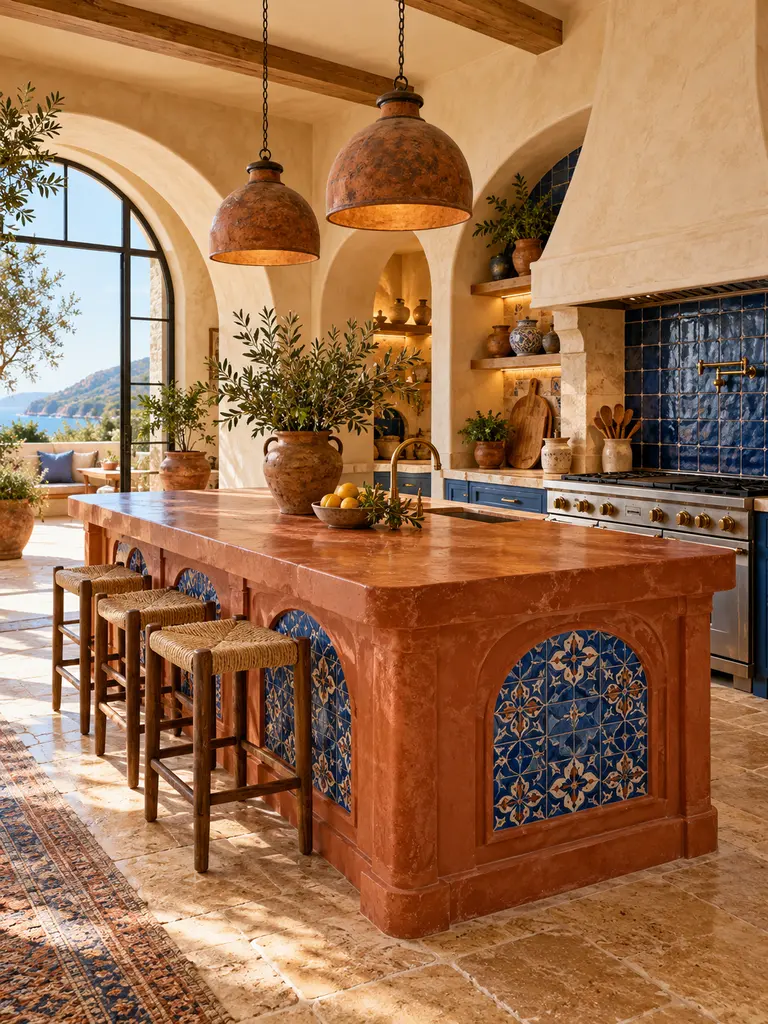
Terracotta and Mediterranean blue create one of the most energetic color combinations for a kitchen. Use earthy orange on the cabinetry with blue patterned tiles, or reverse the scheme with a blue island and terracotta accents. Ivory stone helps separate the stronger colors. Natural wood, woven stools, and ceramic accessories reinforce the relaxed southern-European feeling while keeping the island practical and inviting.
38. Turquoise Fluted Island With Brass Accents
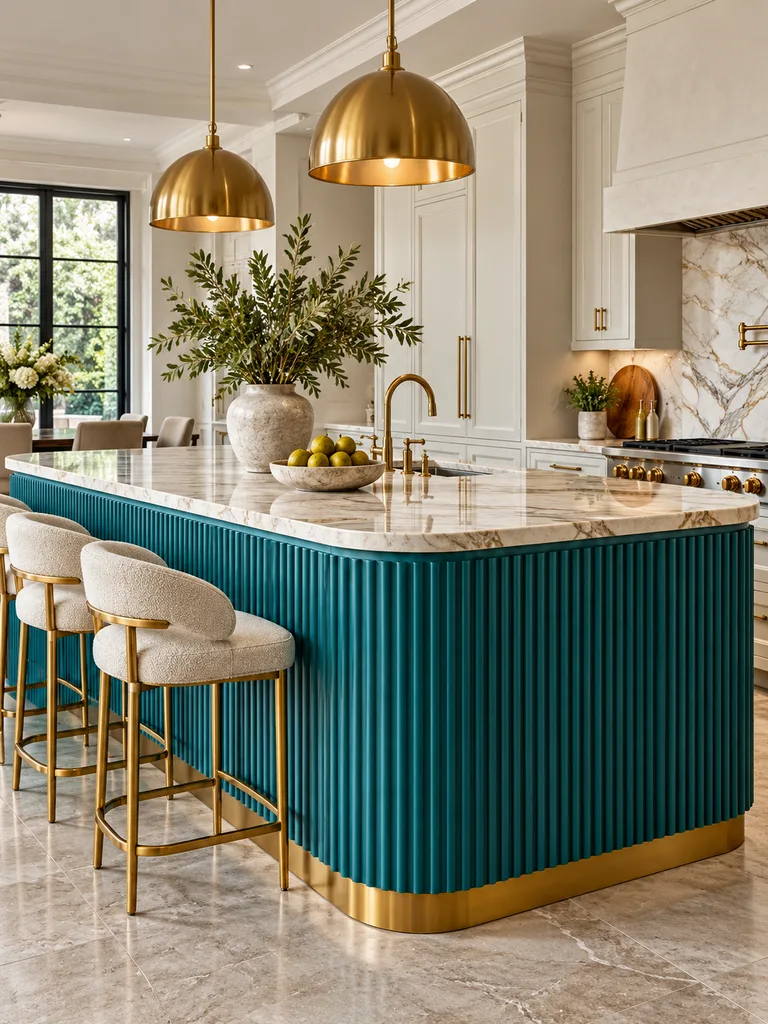
Combine saturated turquoise with vertical fluting for an island that feels both playful and polished. The grooves add texture and help the strong color appear more dimensional. A pale stone countertop keeps the design light, while brass foot rails, handles, or pendant lights add warmth. This idea is especially effective in contemporary kitchens where the surrounding cabinetry is clean and minimal, allowing the island to provide most of the personality.
39. Rainbow Tile Kitchen Island
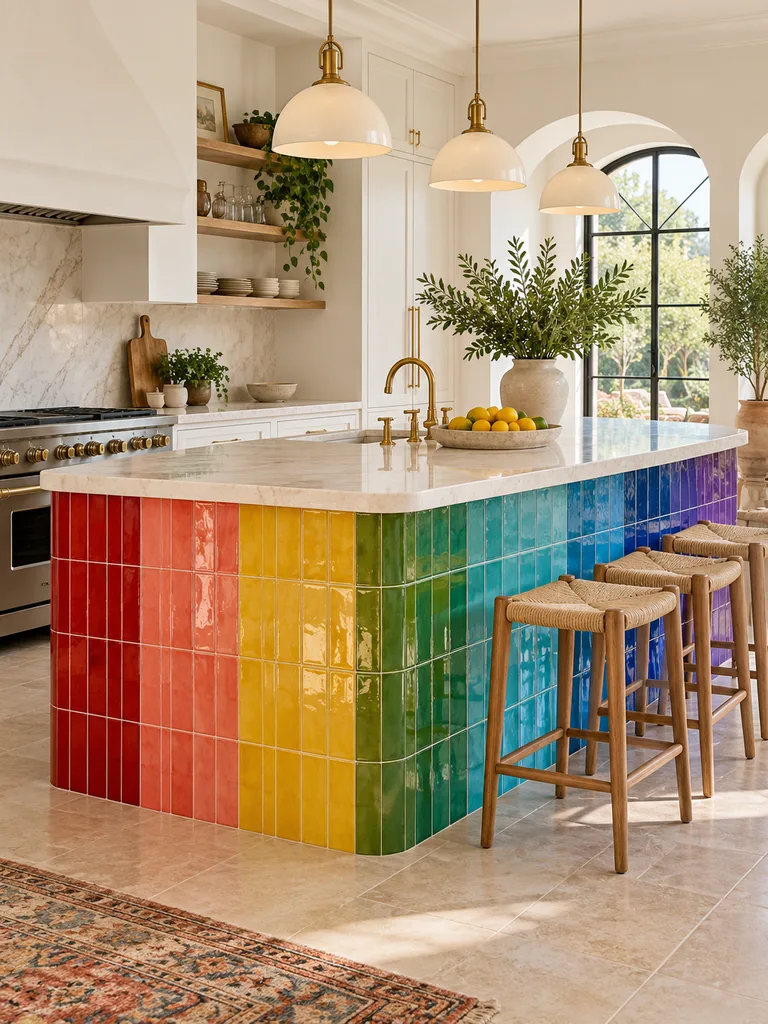
A rainbow-inspired island can be colorful without looking chaotic if the palette is carefully controlled. Use glazed tiles in coordinated jewel tones or soft pastels and arrange them in a repeating sequence. Restrict the treatment to the island front while keeping the countertop and surrounding cabinets simple. This creates a joyful focal point that feels intentional. It is a great option for homeowners who genuinely love color and creative interiors.
40. Soft Pistachio Kitchen Island
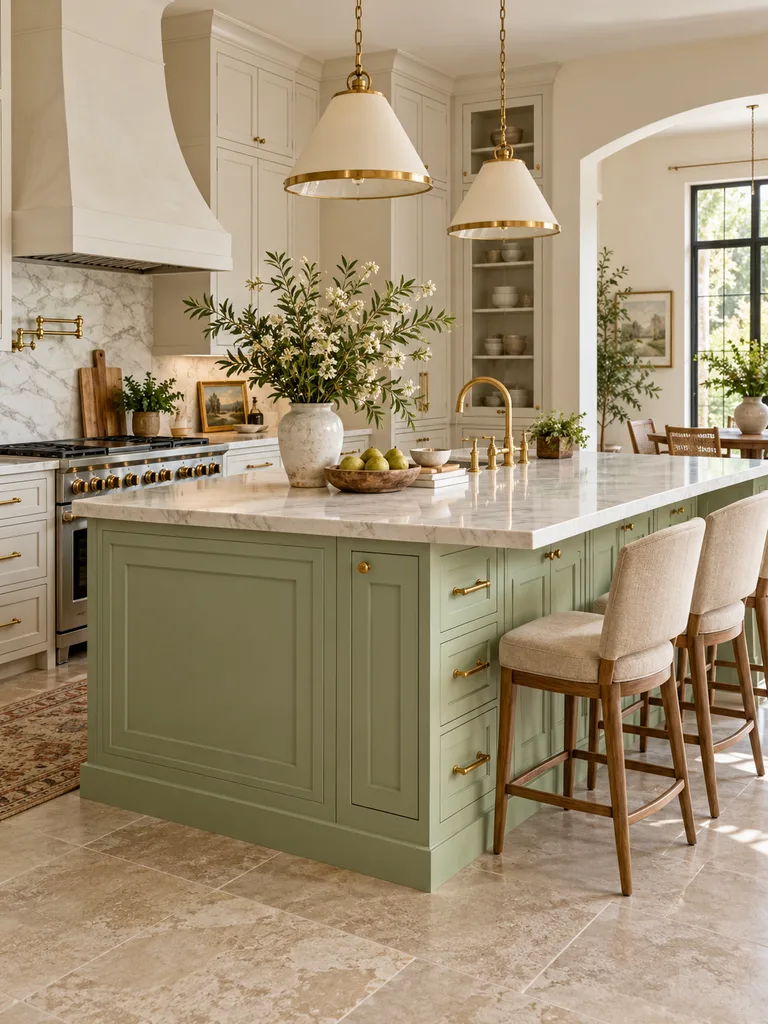
Pistachio green is lighter and fresher than olive, making it ideal for bright kitchens. Pair it with cream cabinetry, pale timber, and warm white stone for a soft organic palette. The color works particularly well with unlacquered brass or brushed nickel hardware. Add a few natural textures, such as linen shades or woven stools, to keep the look relaxed. The finished island feels cheerful without being overly bold.
41. Dramatic Black-and-Pink Kitchen Island
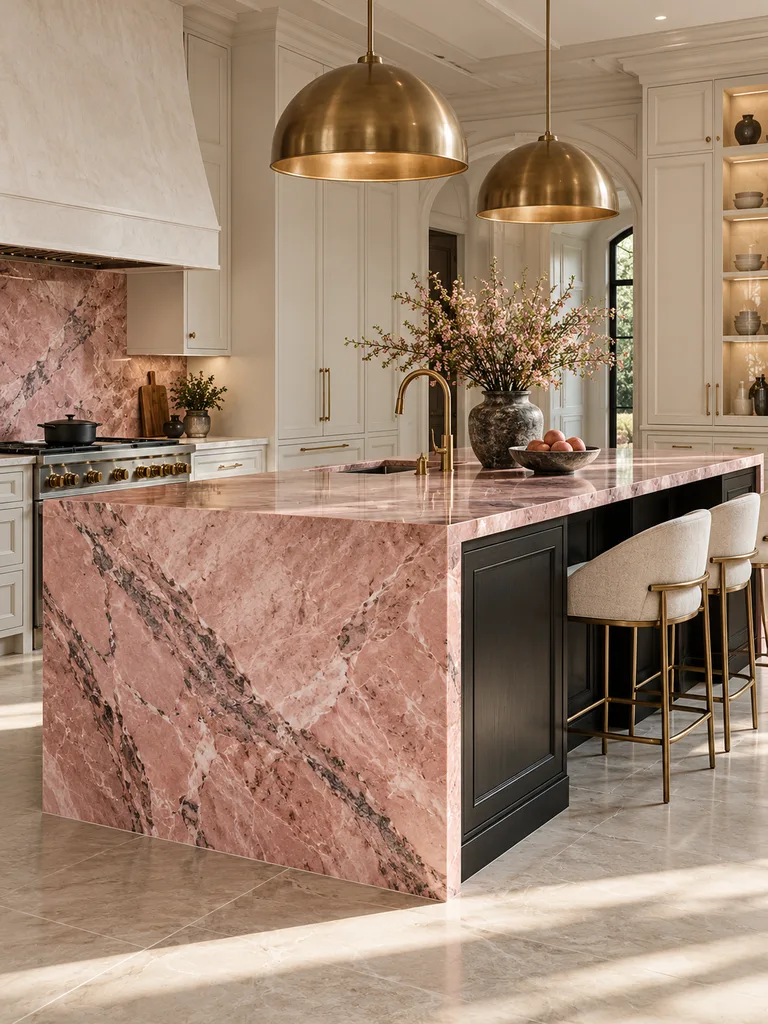
Black and pink can create a surprisingly sophisticated combination when the tones are carefully chosen. Use charcoal or near-black cabinetry with a dusty pink stone, tile, or upholstered seating detail. Alternatively, reverse the palette with a pink island and black countertop. Metallic accents can help connect the two colors. This idea works especially well in modern or Art Deco-inspired kitchens where strong contrast is part of the overall design.
42. Ocean Blue Waterfall Stone Island
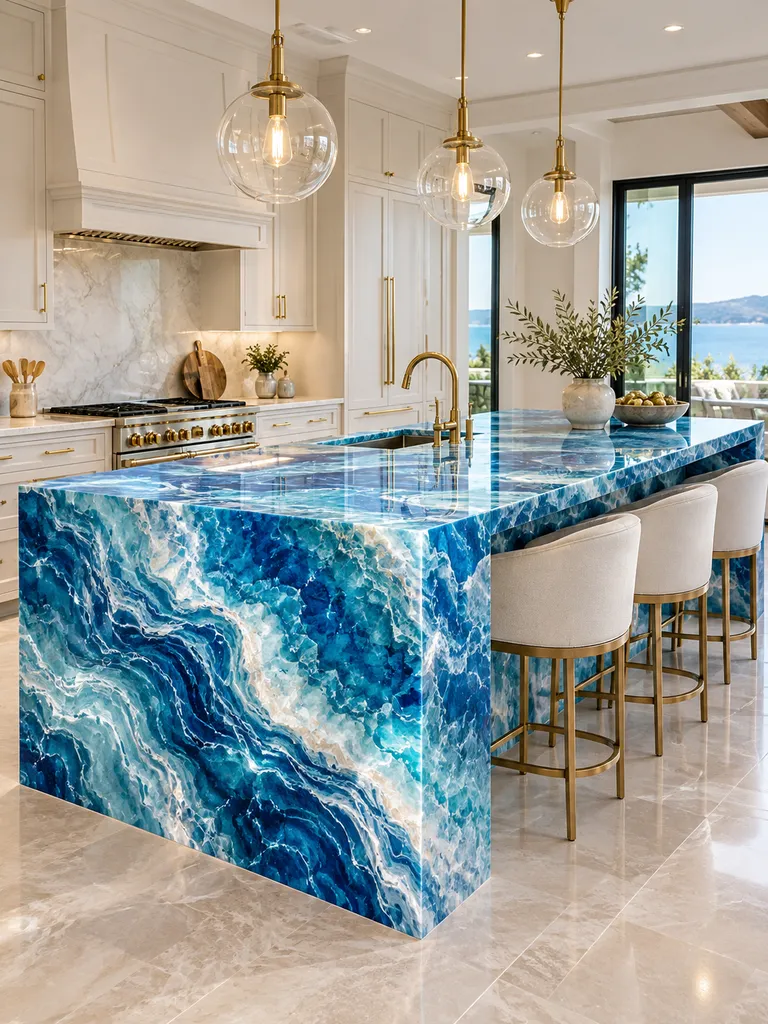
An ocean-inspired blue stone island can bring color through natural-looking movement rather than paint. Choose a surface featuring layers of blue, turquoise, gray, and white, then continue it down one or both sides. Keep the base cabinetry understated so the stone becomes the visual focus. Clear or metallic pendants allow the surface to remain visible. This approach is ideal for creating a luxurious coastal look without obvious nautical decoration.
43. Multicolor Bohemian Kitchen Island
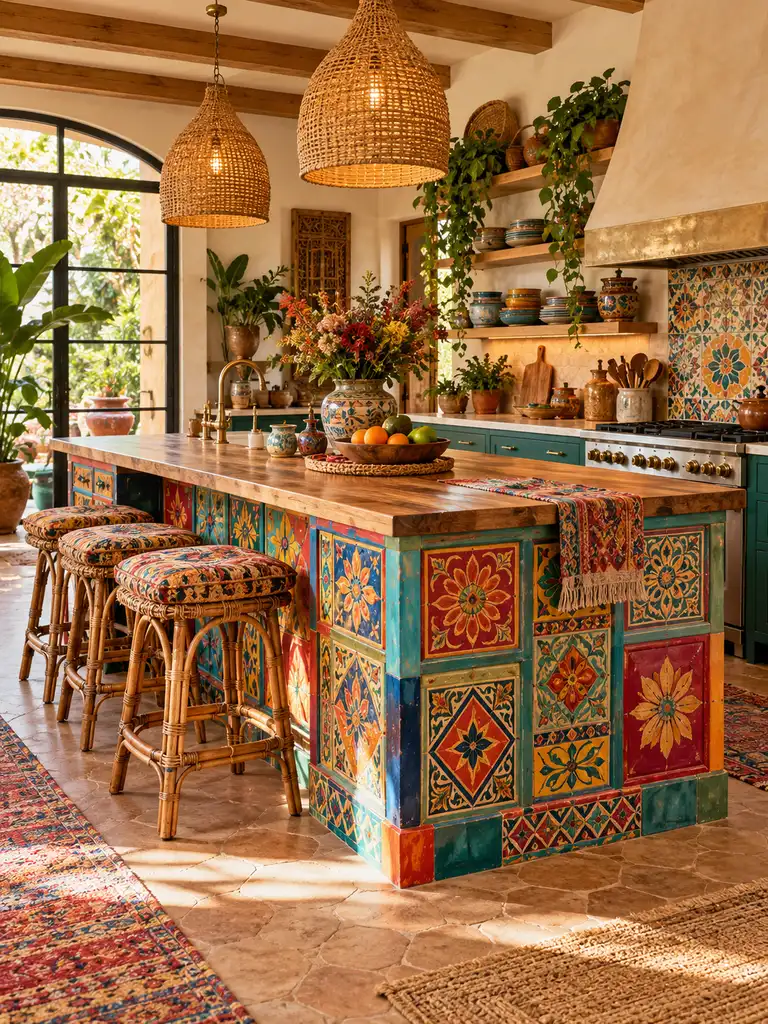
A bohemian island can combine several materials and colors in one relaxed composition. Try painted wood cabinetry, patterned tile panels, a warm timber countertop, and mismatched upholstered stools. The palette should still share a few repeating tones so the look feels collected rather than cluttered. Handmade ceramics, woven pendant lights, and vintage accessories can continue the character. This is a great option for a kitchen that embraces individuality over perfect uniformity.
44. Art Deco Emerald-and-Gold Island
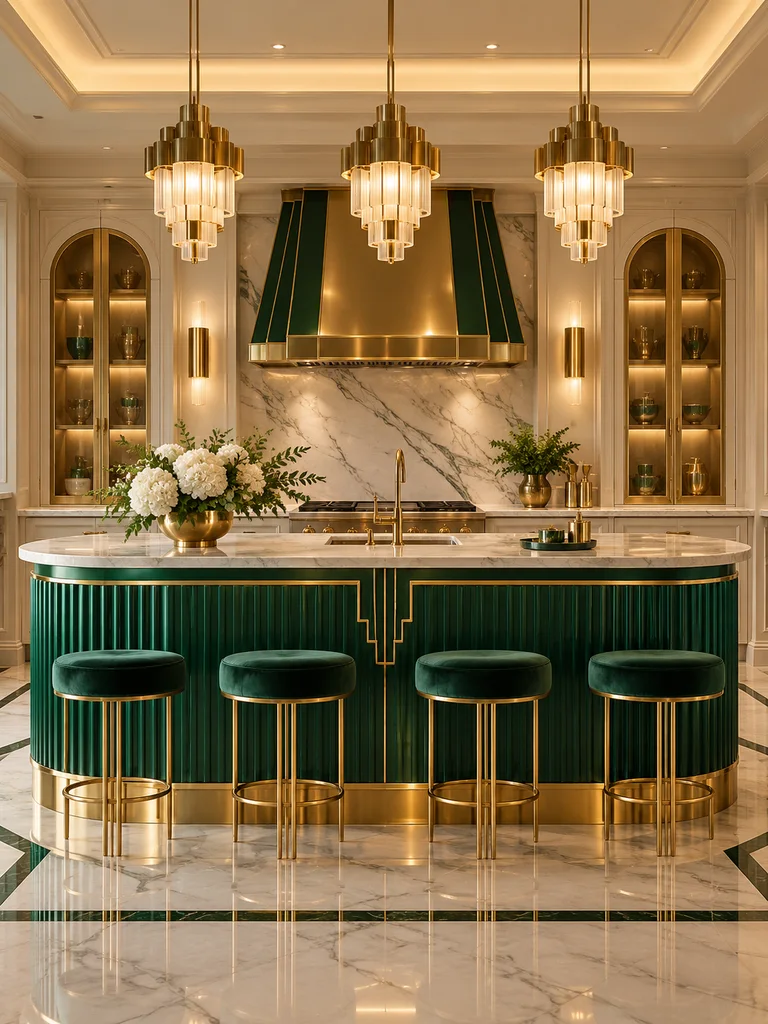
Emerald green and gold naturally create an Art Deco-inspired sense of glamour. Use deep green cabinetry with subtle curved corners, fluted detailing, or geometric paneling. Add brass trim, foot rails, or pendant lights, but avoid overusing metallic finishes. A white or lightly veined stone countertop keeps the design crisp. The result is dramatic and elegant, making the island feel like a centerpiece rather than just another run of cabinetry.
45. Custom Painted Statement Kitchen Island
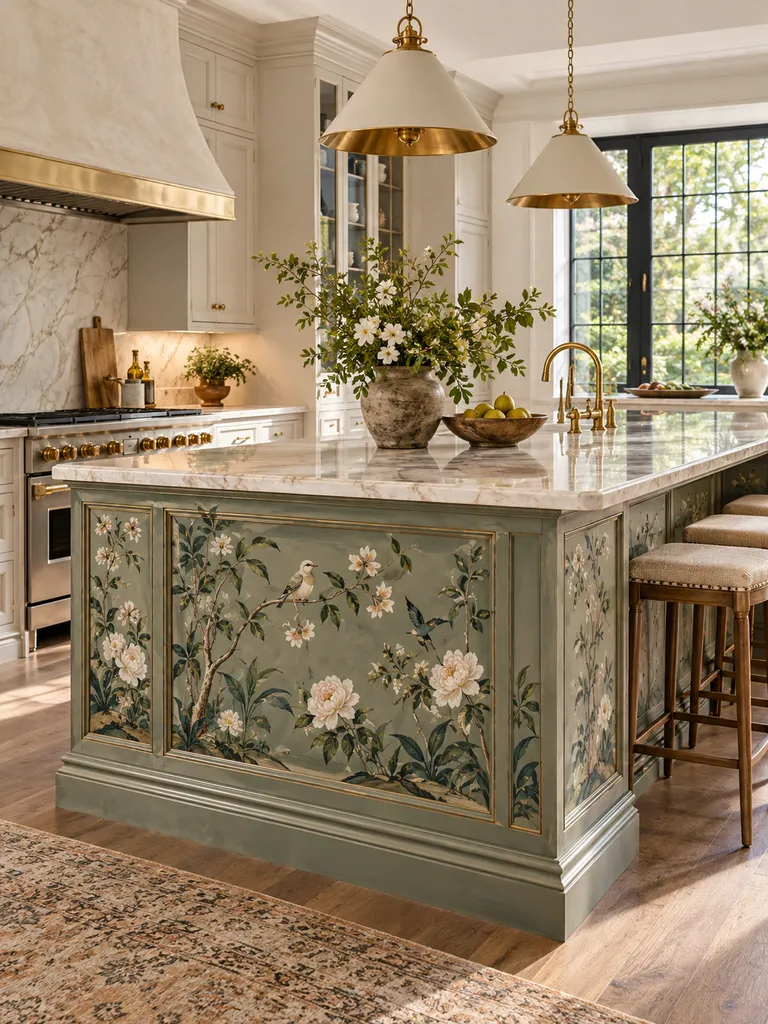
A custom-painted island is the perfect final idea because it allows you to create something completely personal. Start with a favorite color palette, then add decorative borders, subtle murals, contrasting panels, or hand-painted motifs. You can also highlight architectural details such as legs, drawers, or end panels in different tones. Keeping the rest of the kitchen relatively simple gives the custom artwork room to shine and makes the island unmistakably unique.
How to Choose the Right Color for Your Kitchen Island
Choosing the right island color starts with looking at what is already in the room. Consider the undertones in your flooring, countertops, backsplash, wall color, and perimeter cabinets before deciding on a shade. Warm floors usually pair naturally with earthy greens, terracotta, mustard, coral, and warm blues, while cooler surfaces can work beautifully with navy, teal, lavender, or crisp pastel tones.
Natural light also matters. Dark colors can look dramatic in a large, bright kitchen but may feel heavy in a compact room with limited daylight. Pale shades such as powder blue, pistachio, mint, or peach can introduce personality while helping a smaller kitchen remain visually open.
Think about how much contrast you want. If your cabinets are white, almost any island color can become a strong focal point. If the kitchen already includes several bold materials, a muted island shade may create better balance.
Finally, remember that color does not have to come only from paint. Tile, stone, fluting, terrazzo, decorative panels, patterned surfaces, and upholstery can all introduce color in more layered ways. The most successful island usually connects with at least one other small element in the kitchen, whether that is a light fixture, piece of artwork, textile, or accessory.
Final Thoughts
A colorful kitchen island can completely change the personality of a room. It can bring warmth to a white kitchen, give an open-plan space a clear focal point, or provide an opportunity to experiment with a color you might not want across every cabinet.
The possibilities range from calm sage, powder blue, and pistachio to bolder choices such as coral, raspberry, emerald, burgundy, and peacock blue. Patterned tile, dramatic stone, terrazzo, folk-art painting, and fluted finishes offer even more ways to create visual interest.
When exploring colorful kitchen island ideas, focus on balance rather than simply choosing the brightest shade. A strong island usually looks best when the surrounding materials give it enough breathing room. Whether you prefer understated color or a full artistic statement, the right island can make your kitchen feel more personal, memorable, and uniquely yours.

