 Skip to content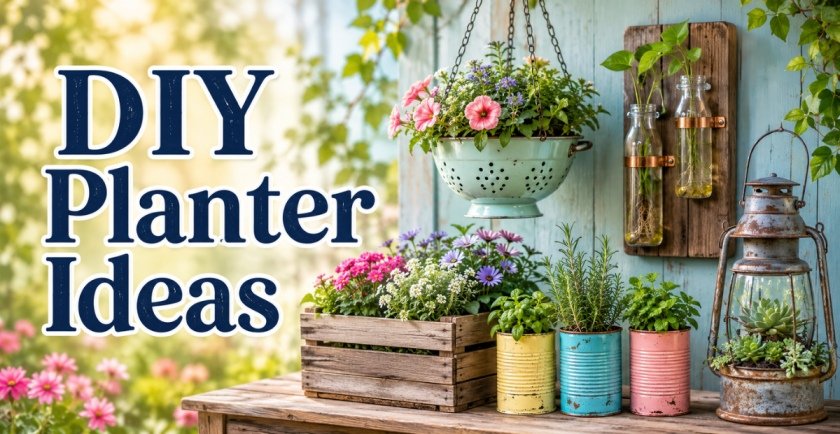
Recycled containers can add more character to a garden than brand-new pots, especially when the original material is still recognizable. These DIY Planter Ideas turn everyday throwaways and forgotten household pieces into practical planters for flowers, herbs, succulents, and trailing greenery.
The goal is not to make the garden look cluttered. Each project uses a simple combination of cleaning, safe drainage, weather protection, and thoughtful planting so the finished result feels intentional. You can adapt the colors and plants to match a cottage garden, farmhouse patio, small balcony, or colorful backyard.
Affiliate disclosure: This article includes product recommendations that may be suitable for affiliate links. If you add your Amazon Associates or LTK links, you may earn a commission from qualifying purchases at no extra cost to the reader.
Before You Start: A Few Safety and Planting Tips
- Wear gloves when cutting, drilling, sanding, or handling rusty metal, broken terracotta, glass, and sharp can edges.
- Use the correct drill bit for wood, metal, ceramic, or masonry and follow the tool manufacturer’s safety instructions.
- Do not use containers that previously held toxic chemicals, pesticides, fuels, or unknown substances for edible plants.
- Prioritize drainage. Most recycled planters fail because water cannot escape.
- Use container potting mix rather than dense garden soil.
- Secure wall-mounted and hanging planters to hardware rated for the completed wet weight.
1. Vintage Metal Colander Hanging Flower Planter
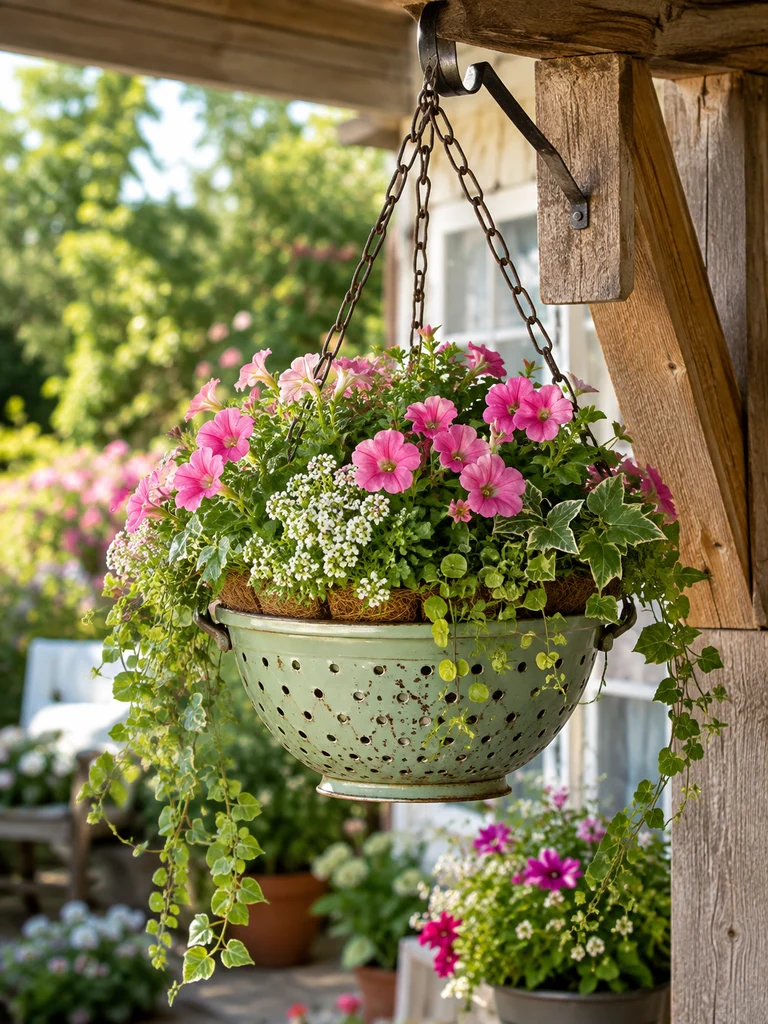
Turn an old metal colander into a breezy hanging planter that already has built-in drainage. A soft outdoor paint finish and a coco liner make the piece feel intentional rather than improvised, while trailing flowers soften the perforated metal.
Things You’ll Need
- Old metal colander
- Fine-grit sandpaper
- Outdoor metal primer and spray paint
- Coco coir liner
- Container potting mix
- Trailing annuals such as calibrachoa, lobelia, alyssum, or ivy
- Hanging basket chain or sturdy jute rope
How to Make It
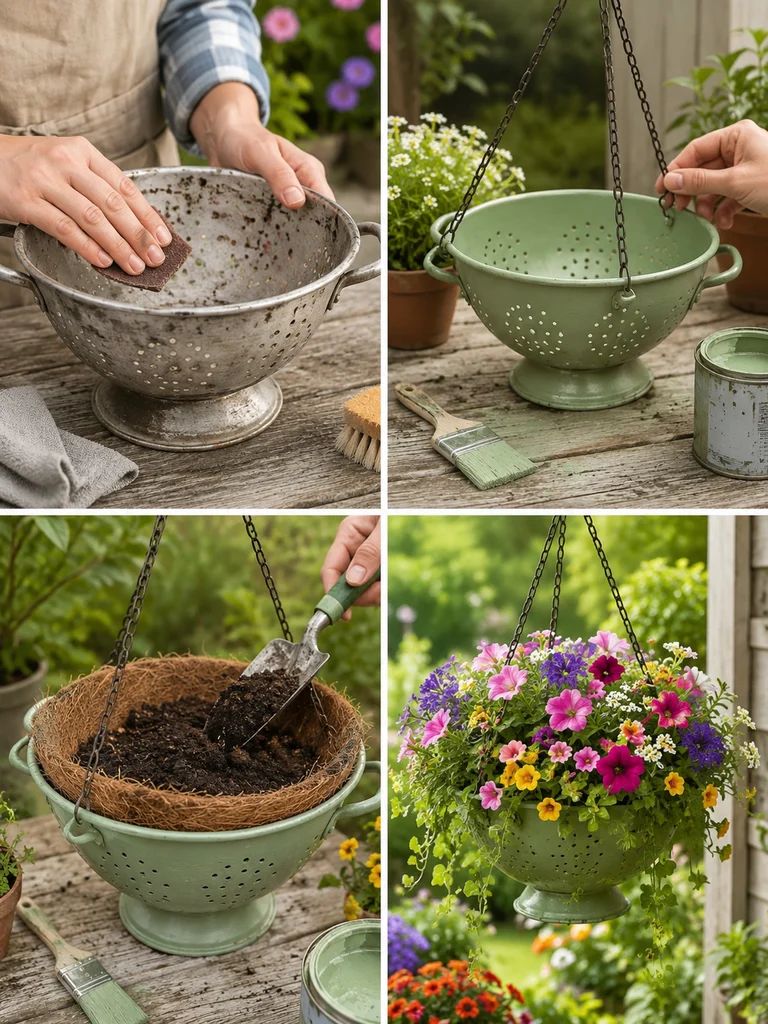
- Wash the colander thoroughly and remove grease, rust, and loose finish.
- Lightly sand the surface so primer and paint can grip properly.
- Apply outdoor metal primer, then add two light coats of weather-resistant paint and let it cure.
- Fit a coco liner inside the bowl, trimming it so it sits just below the rim.
- Add potting mix, leaving enough room for the plant root balls.
- Arrange upright flowers toward the center and trailing plants around the edges.
- Attach a strong hanging chain to the handles and hang from a secure outdoor hook.
Product Recommendations
- Coco coir hanging basket liner
- Outdoor metal spray paint
- Hanging basket chain set
- Gardening gloves or hand trowel
2. Upcycled Wooden Drawer Herb Planter
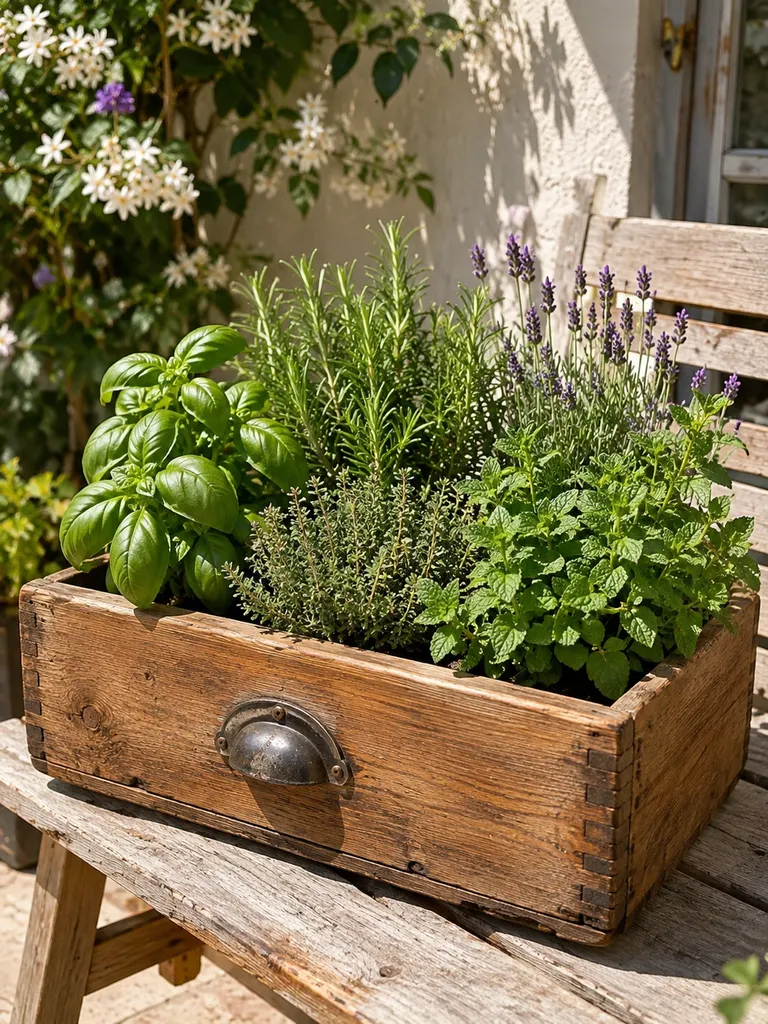
A discarded dresser drawer makes a surprisingly attractive herb box, especially when the old pull and worn wood are kept visible. This project works on patios, balconies, potting benches, and kitchen-door steps, and it is especially useful for grouping herbs that need similar light and watering.
Things You’ll Need
- Old wooden drawer
- Drill and wood bit
- Sandpaper or sanding block
- Outdoor wood sealer
- Landscape fabric or heavy planter liner
- Pea gravel
- Potting mix
- Herb plants such as basil, rosemary, thyme, parsley, and mint
How to Make It
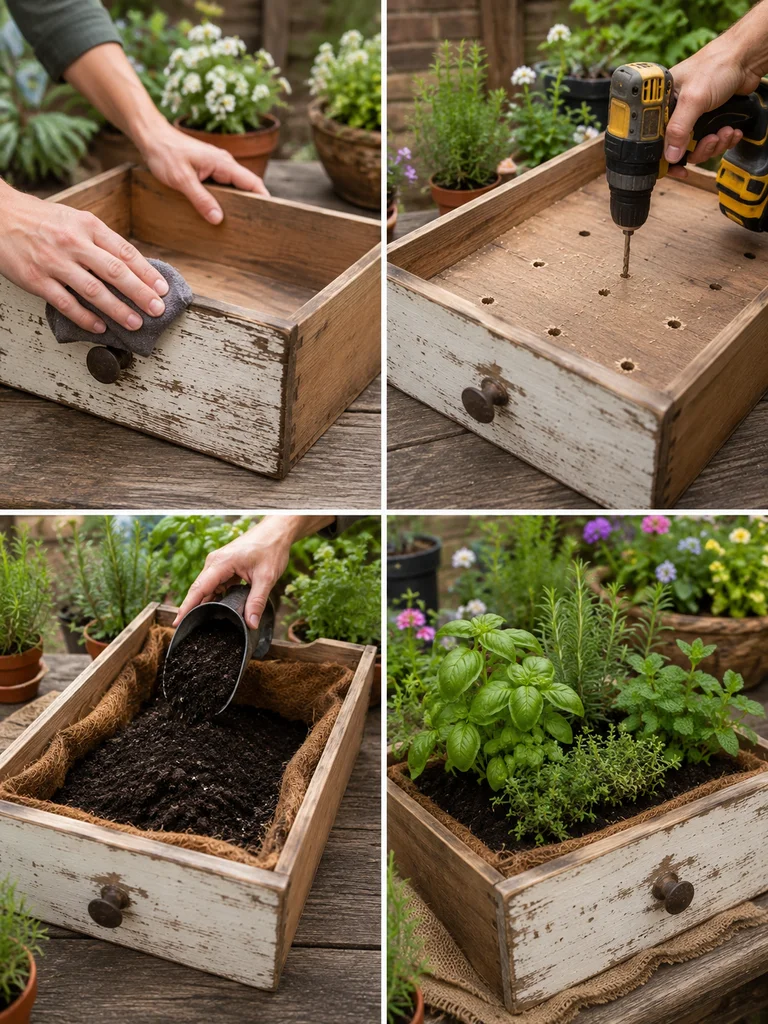
- Remove loose hardware, splinters, and peeling finish, but keep attractive vintage details.
- Drill several drainage holes across the base of the drawer.
- Sand rough edges and coat the wood with a plant-safe outdoor sealer.
- Line the inside with landscape fabric, leaving the drainage holes unobstructed.
- Add a shallow gravel layer followed by fresh container potting mix.
- Arrange taller herbs toward the back and lower-growing herbs toward the front.
- Water thoroughly and place the drawer where it receives the light your herbs prefer.
Product Recommendations
3. Recycled Paint Can Vertical Planter Trio
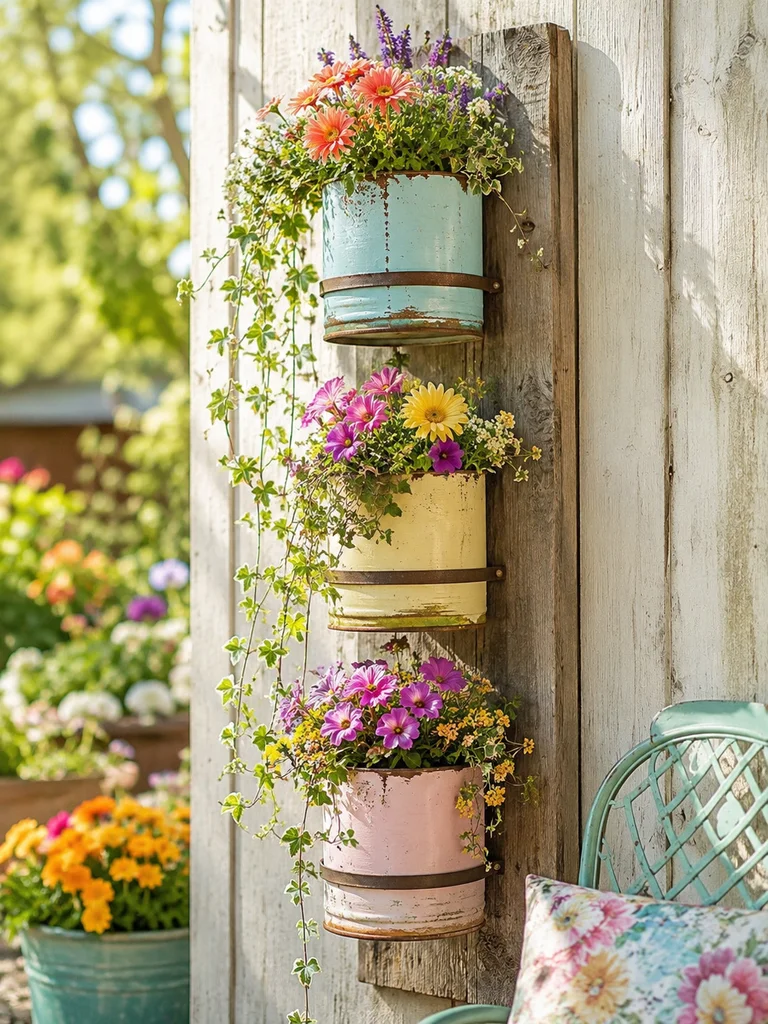
Empty metal paint cans can become a compact vertical flower display when cleaned, repainted, and mounted to reclaimed timber. Using three coordinated but different colors gives the wall a playful cottage-garden look without copying the exact style of store-bought planters.
Things You’ll Need
- Three clean empty metal cans
- Reclaimed wood board
- Metal drill bit
- Exterior primer
- Outdoor paint in three coordinating colors
- Metal straps or planter brackets
- Exterior screws and wall anchors
- Potting mix
- Compact flowers or herbs
How to Make It
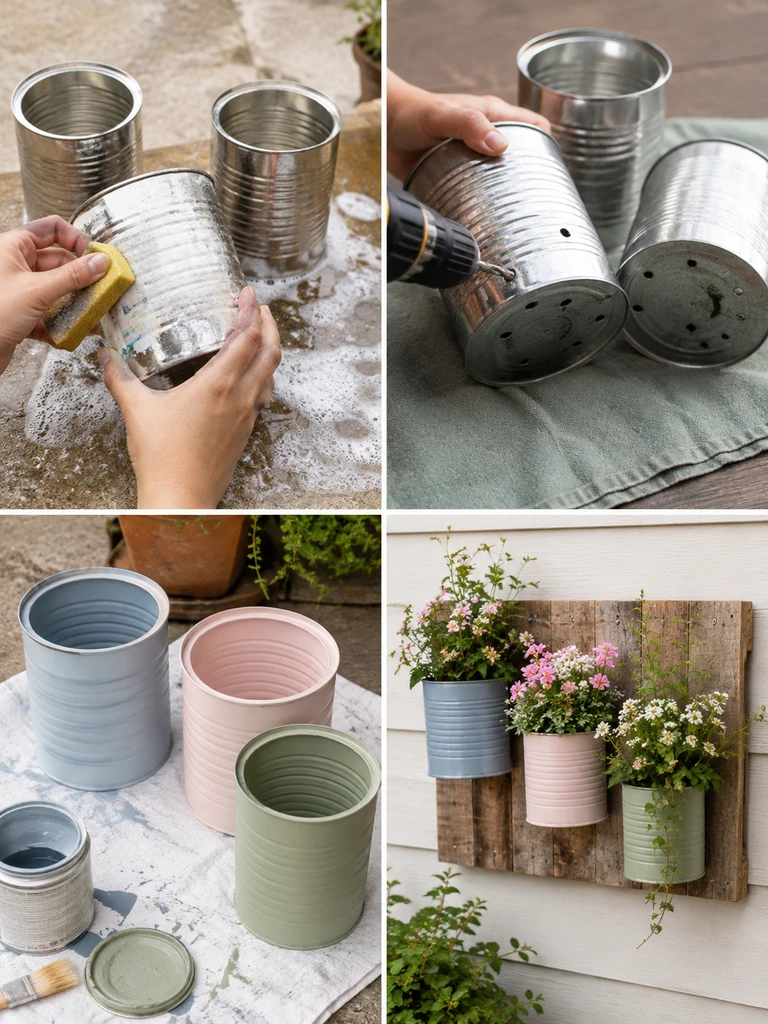
- Remove labels and clean every can until no residue remains.
- Drill several small drainage holes in each base.
- Prime the cans and paint them in coordinating outdoor colors.
- Sand and seal the reclaimed backing board if needed.
- Mark three staggered positions and attach heavy-duty metal straps or brackets.
- Fill the cans with potting mix and plants before sliding them securely into the mounts.
- Mount the board to a structurally suitable outdoor wall or fence.
Product Recommendations
- Metal planter mounting straps
- Outdoor multi-surface paint
- Masonry or exterior wall anchors
- Decorative outdoor hardware
4. Old Enamel Kettle Succulent Planter
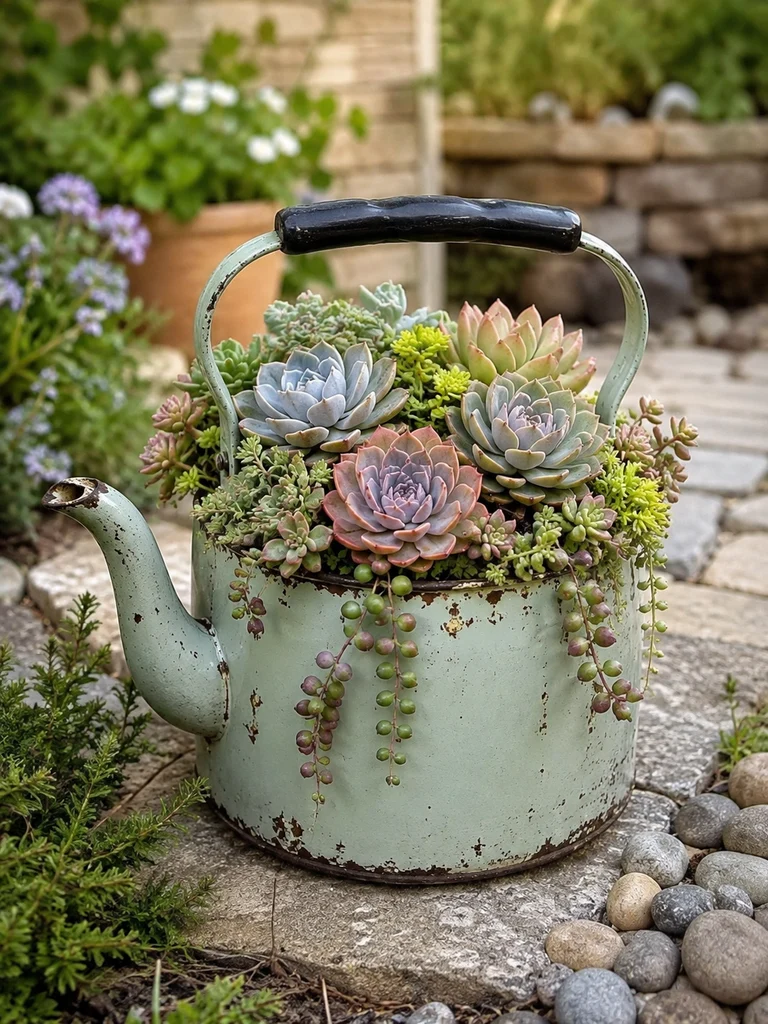
An enamel kettle with chips, scratches, or a missing lid can become a low-maintenance succulent planter. The handle and spout give the finished piece instant character, while a gritty soil blend helps protect succulents from excess moisture.
Things You’ll Need
- Old enamel kettle
- Drill with metal bit
- Small gravel or pumice
- Cactus and succulent soil
- Assorted succulents
- Decorative pebbles
- Protective gloves and eye protection
How to Make It
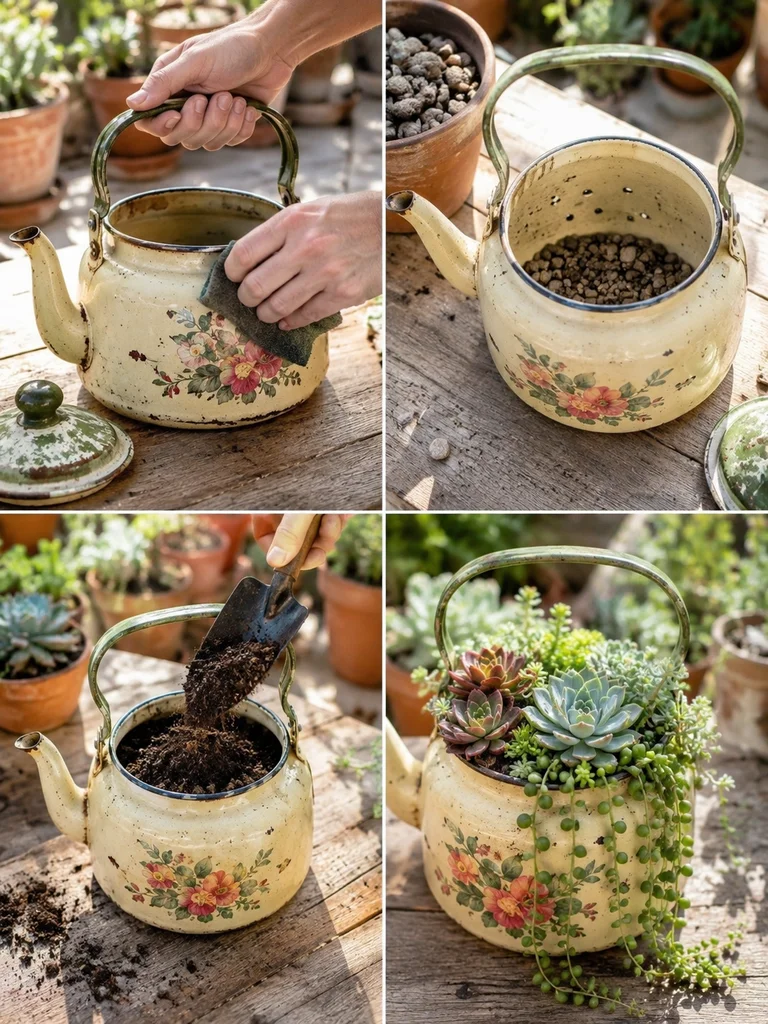
- Clean the kettle and inspect it for sharp edges.
- Carefully drill drainage holes through the base using the correct bit and protective equipment.
- Add a thin layer of pumice or coarse gravel over the bottom.
- Fill most of the kettle with cactus and succulent mix.
- Position the largest rosette first, then tuck smaller succulents around it.
- Add trailing varieties near the rim or spout for movement.
- Top-dress with pebbles and place the planter in bright light appropriate for the plants.
Product Recommendations
- Cactus and succulent potting mix
- Pumice or horticultural grit
- Diamond/metal drill bit set
- Decorative garden pebbles
5. Tin Can Cottage Herb Wall
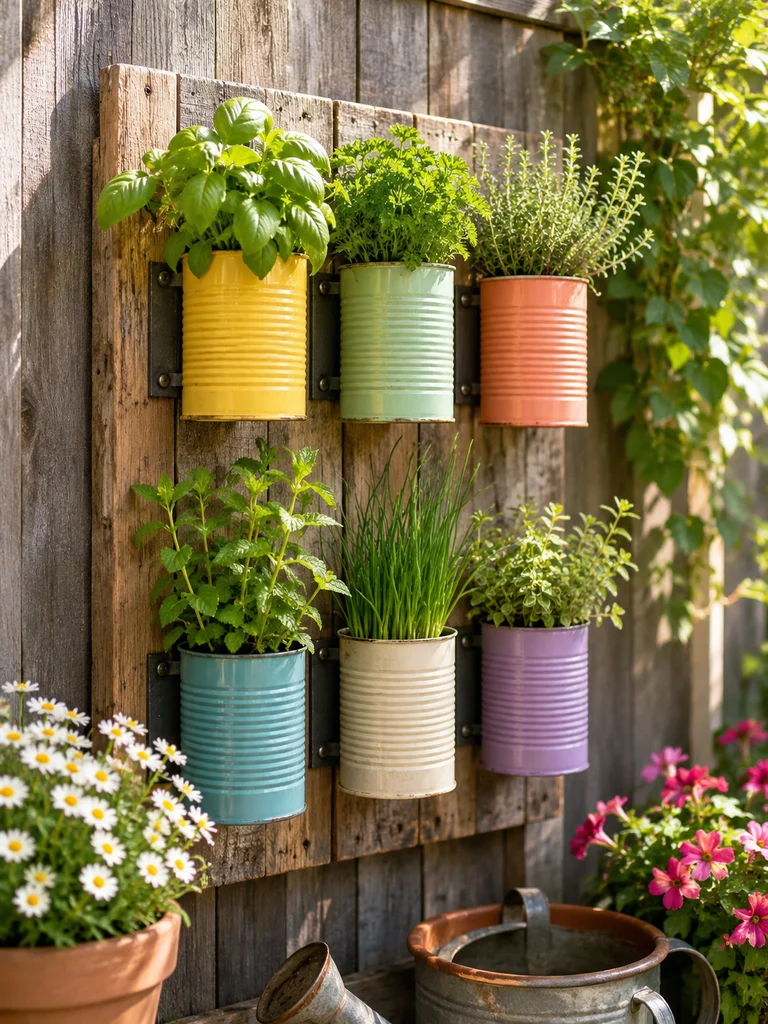
Food cans are easy to save, easy to customize, and excellent for a small herb wall when their sharp edges are handled properly. A floral or softly painted finish makes the finished project feel decorative enough for a patio or kitchen garden.
Things You’ll Need
- Six to eight clean food cans
- Safety edge file or sanding tool
- Drill and metal bit
- Outdoor paint or decoupage finish
- Reclaimed wood panel
- Metal clamps or brackets
- Potting mix
- Small herb plants
How to Make It
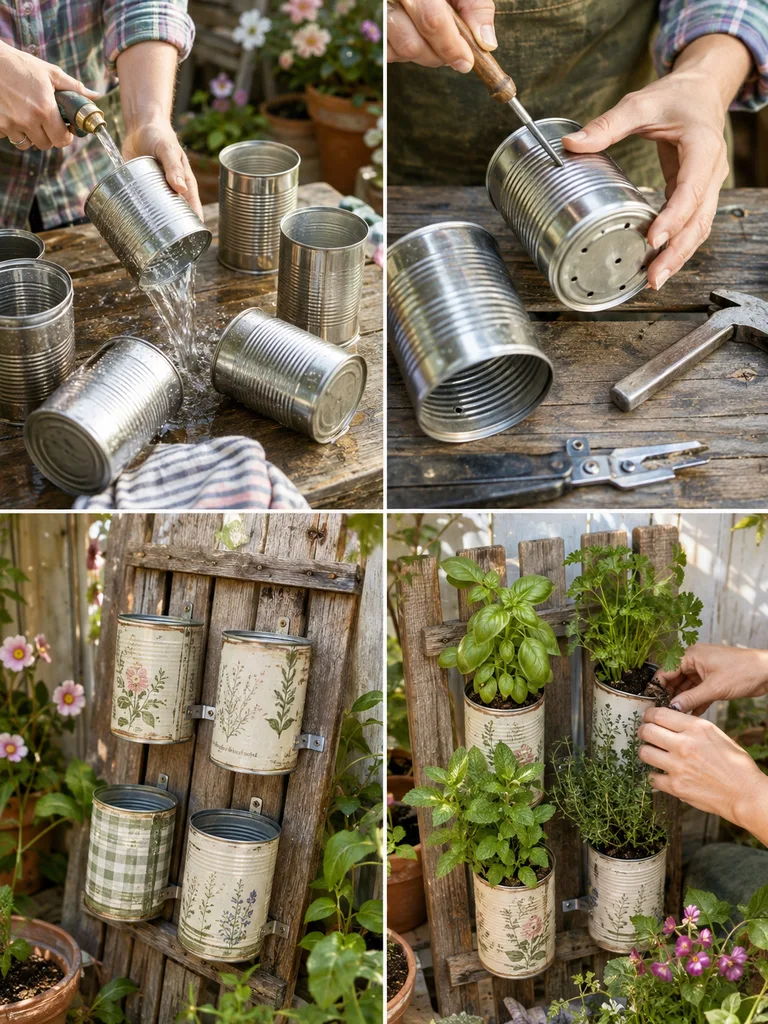
- Remove labels, wash the cans, and smooth every sharp edge.
- Drill drainage holes in the bases.
- Paint or decorate the cans and seal any paper decoration for outdoor use.
- Prepare and seal a wooden backing panel.
- Attach the cans in evenly spaced rows using strong metal clamps.
- Fill each can with potting mix and one compact herb plant.
- Mount the finished panel securely and water carefully so excess water can drain.
Product Recommendations
- Stainless hose clamps
- Decoupage outdoor sealer
- Small-bag herb potting mix
- Herb starter plants and garden snips
6. Reclaimed Wooden Ladder Tiered Planter
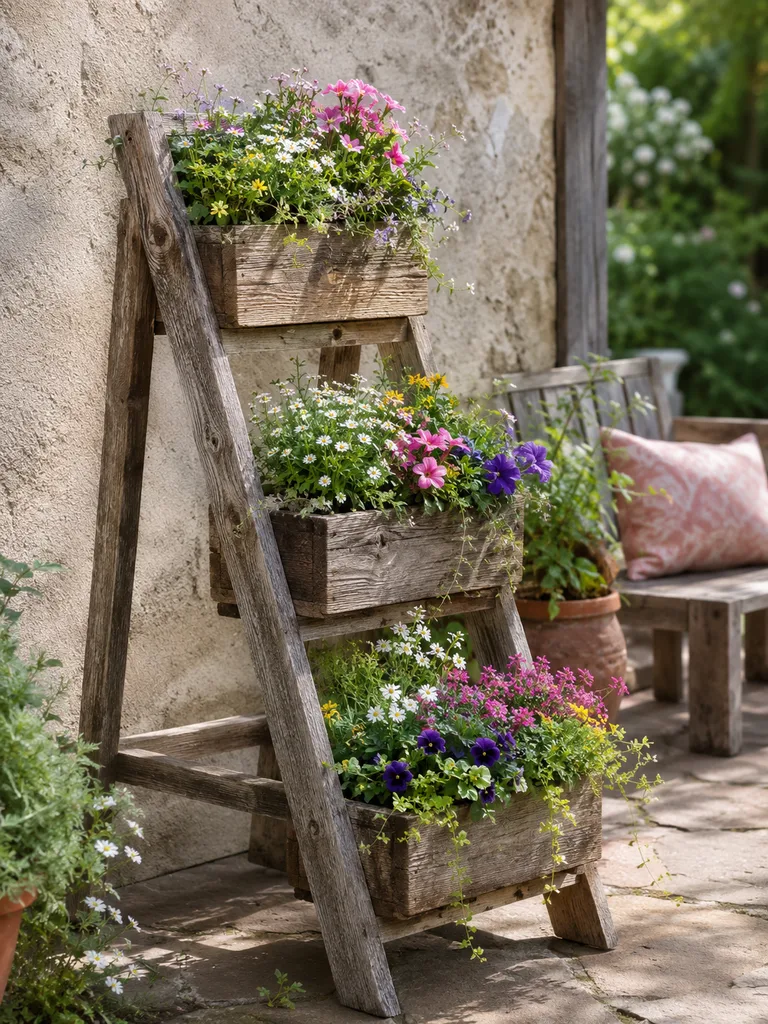
A weathered wooden ladder can become a vertical garden that adds height without taking up much floor space. Attaching simple reclaimed boxes to the steps creates several planting levels for flowers, herbs, or a mix of both.
Things You’ll Need
- Old wooden A-frame ladder
- Three reclaimed wooden boxes
- Sandpaper
- Exterior wood sealer
- Exterior screws
- Drill/driver
- Planter liner
- Potting mix
- Flowers and trailing greenery
How to Make It
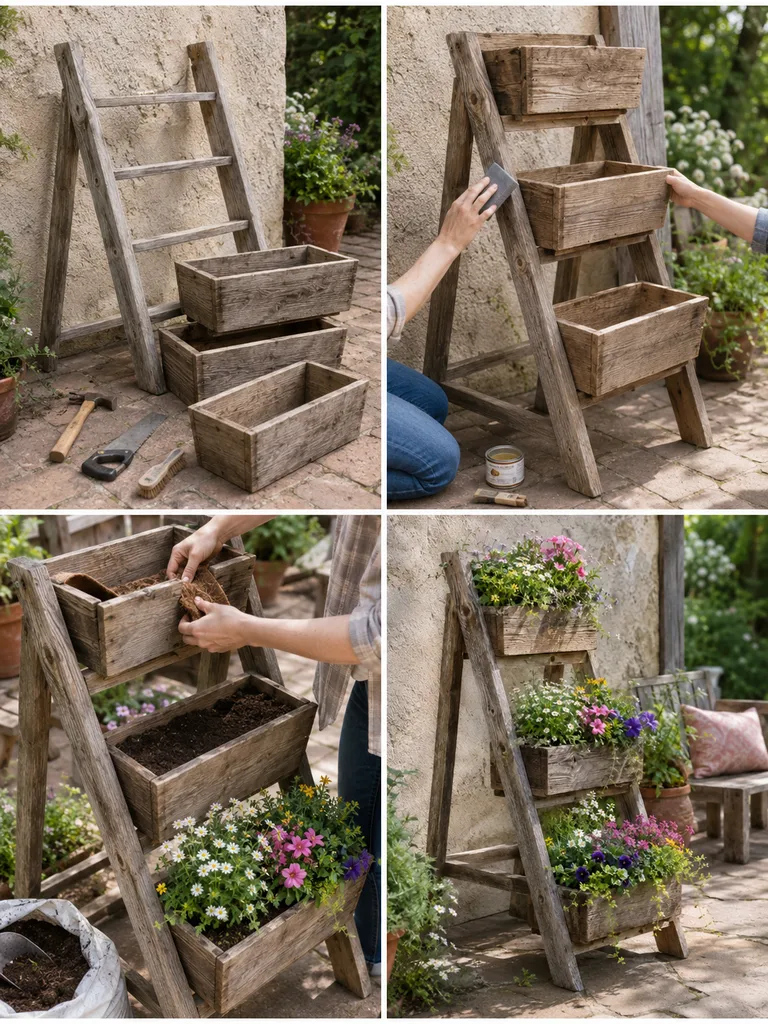
- Check the ladder for structural damage and tighten loose joints.
- Sand splinters while preserving some of the aged character.
- Seal the ladder and planter boxes for outdoor exposure.
- Position one box at each chosen level and fasten it securely to the ladder.
- Line the boxes while keeping drainage openings clear.
- Fill with potting mix and plant a different flower combination on each level.
- Place the ladder on a stable, level surface and secure it against tipping if necessary.
Product Recommendations
- Exterior wood sealer
- Exterior deck screws
- Heavy-duty planter liner
- Trailing annuals and watering can
7. Broken Terracotta Pot Succulent Garden
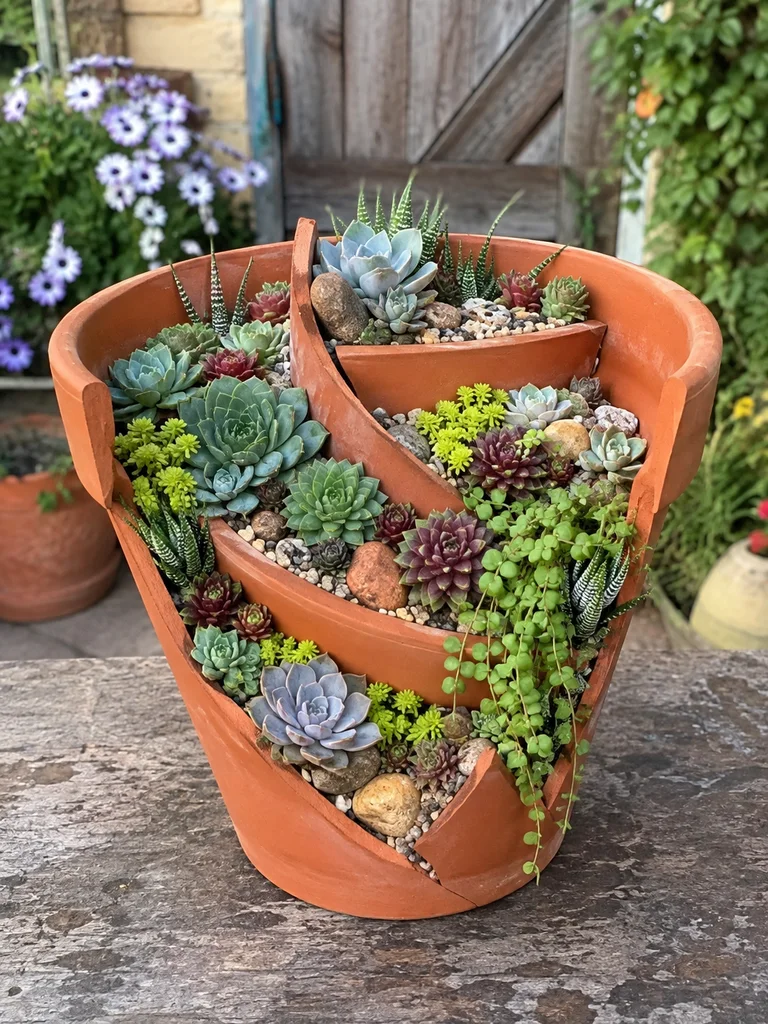
A cracked terracotta pot does not need to go into the trash. Large broken pieces can be arranged inside the remaining shell to create curved terraces, giving succulents several planting pockets and turning the damage into the main design feature.
Things You’ll Need
- Large broken terracotta pot
- Several curved terracotta shards
- Cactus soil
- Pumice or gravel
- Assorted small succulents
- Decorative stones
- Gardening gloves
How to Make It
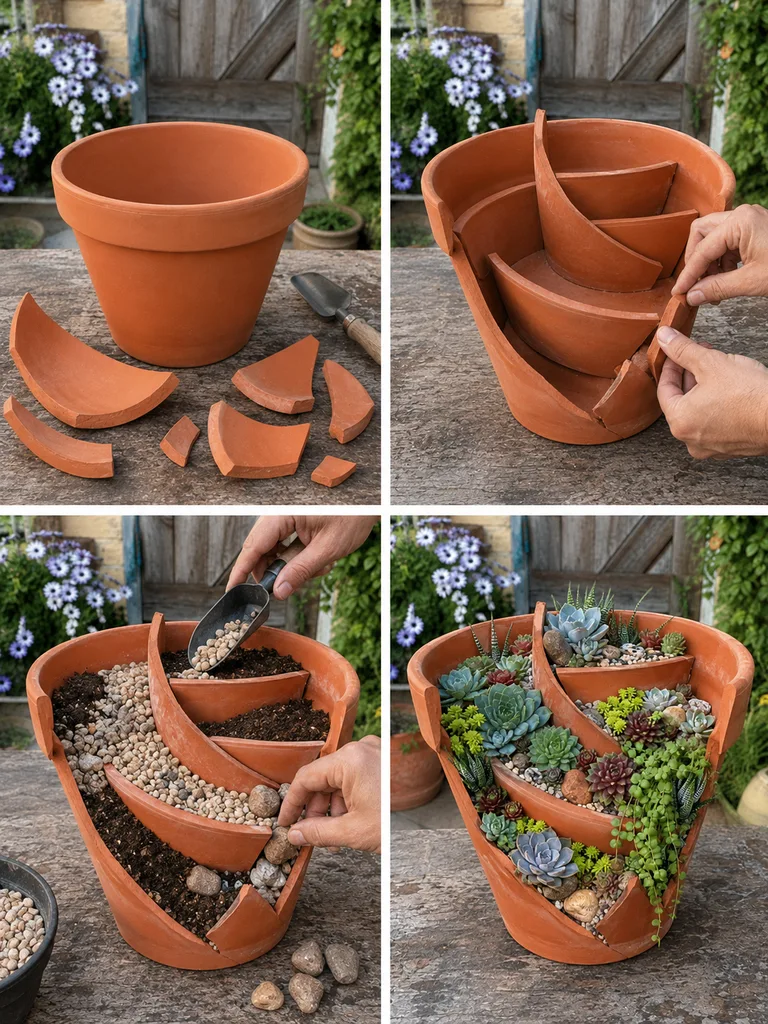
- Wear gloves and remove any dangerously loose fragments.
- Choose the largest remaining pot shell as the outer container.
- Set curved shards vertically and diagonally inside to create tiered planting pockets.
- Add cactus mix around the shards, packing lightly so they stay stable.
- Plant small succulents on each level, placing trailing varieties near open edges.
- Add decorative gravel and stones to reduce soil splash and emphasize the terraces.
- Water lightly and allow the soil to dry appropriately between waterings.
Product Recommendations
- Succulent soil mix
- Horticultural pumice
- Mini succulent tool kit
- Decorative gravel and outdoor gloves
8. Old Bicycle Basket Flower Planter
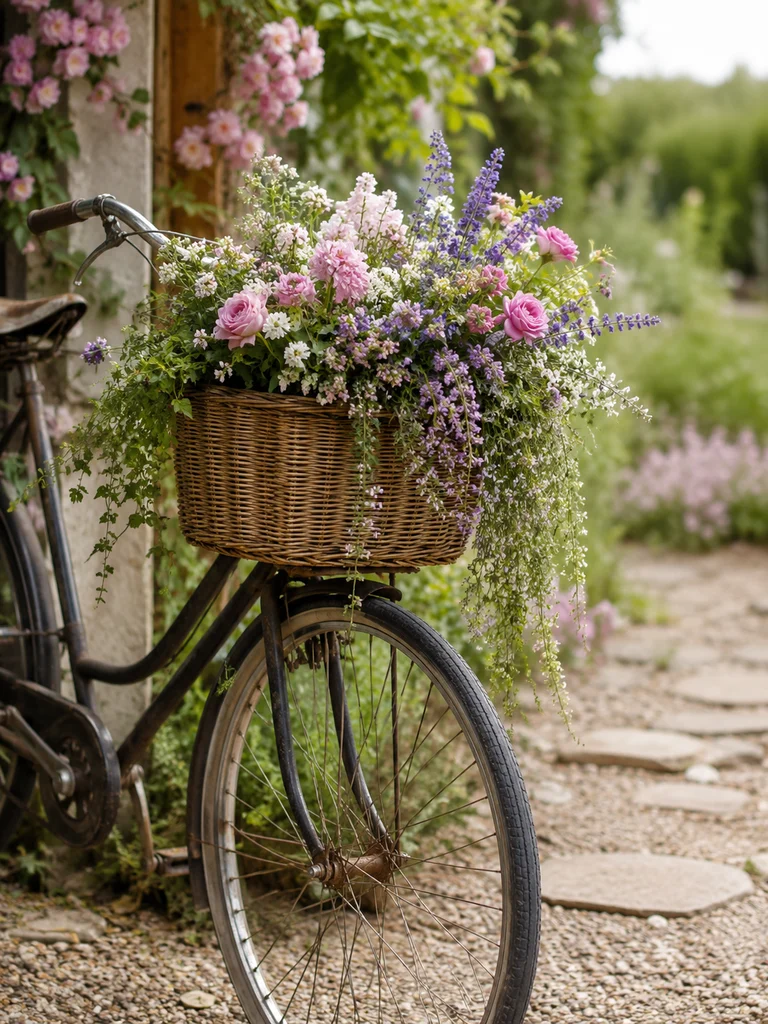
A vintage bicycle becomes garden art when its front basket is transformed into an overflowing flower planter. The trick is to use a liner that contains soil while allowing drainage, then choose lightweight flowers and trailing plants that look abundant without overloading the basket.
Things You’ll Need
- Old bicycle with front basket
- Coco coir or burlap basket liner
- Lightweight potting mix
- Slow-release flower fertilizer
- Mixed flowering annuals
- Trailing foliage plants
- Wire or cable ties for extra basket support
How to Make It
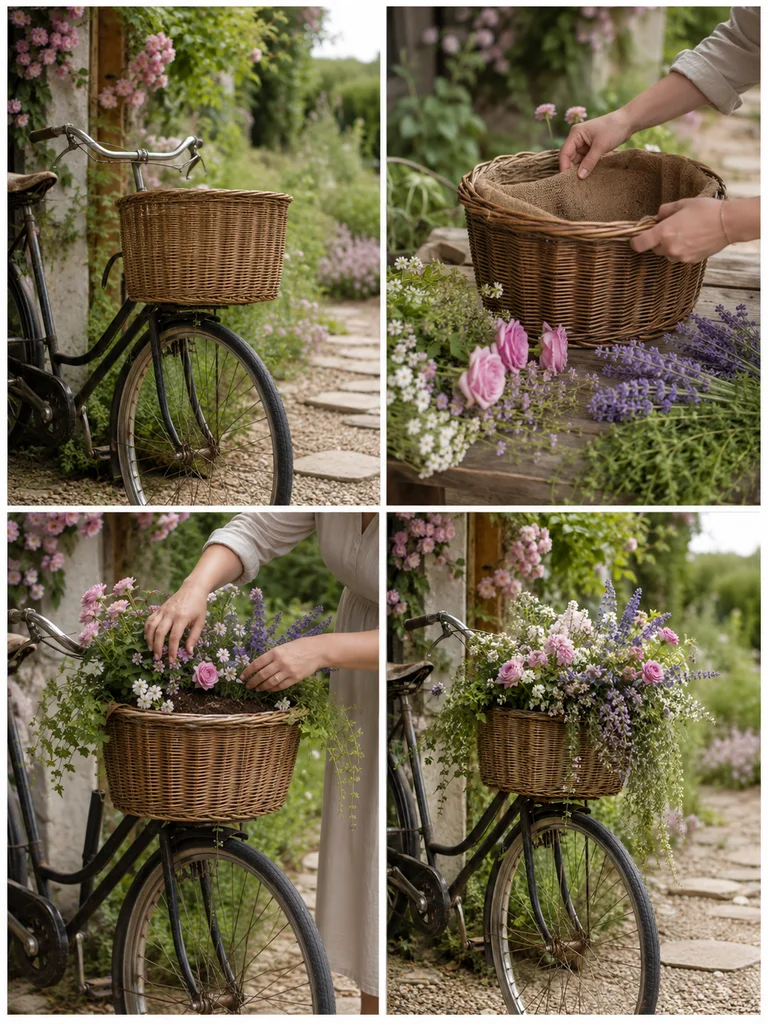
- Clean the bicycle and make sure the basket is firmly attached.
- Line the basket with coco coir or a double layer of burlap.
- Add lightweight container mix rather than heavy garden soil.
- Place the tallest flowers toward the back or center.
- Fill the middle with compact flowering plants and tuck trailers around the rim.
- Water slowly so the soil settles without washing through the liner.
- Position the bicycle where it will not roll or tip and lock the wheels if needed.
Product Recommendations
- Coco basket liner roll
- Lightweight container potting mix
- Slow-release flower fertilizer
- Cottage-style annuals and garden accessories
9. Plastic Bottle Self-Watering Vertical Garden
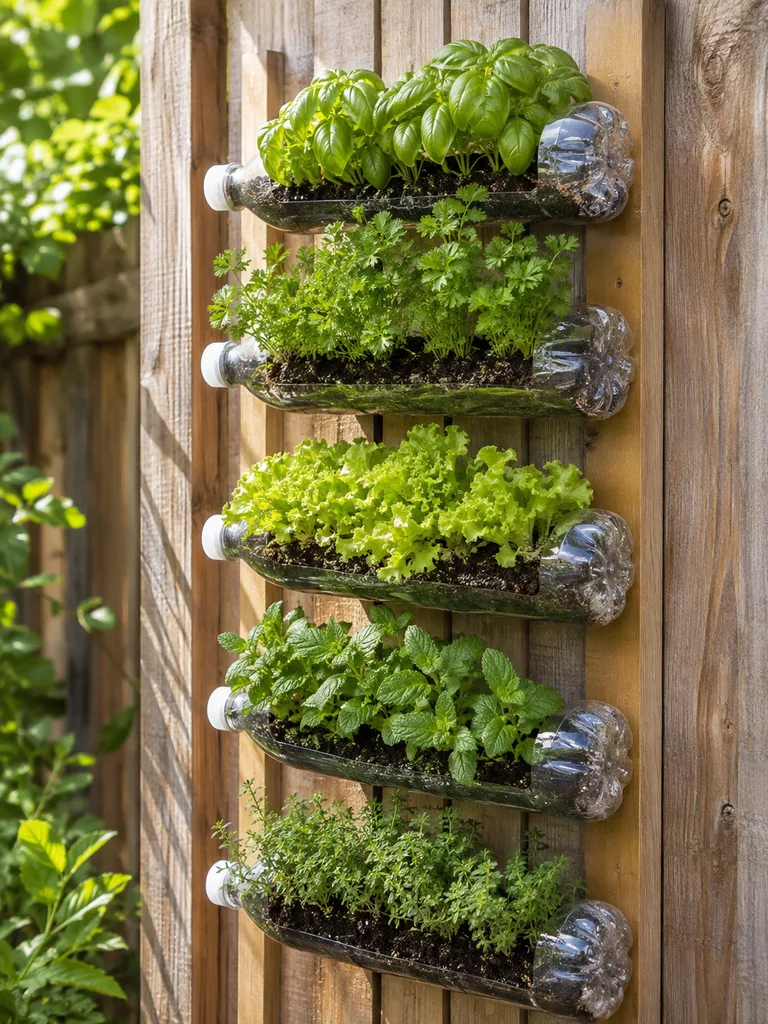
Large plastic bottles can be cut horizontally and mounted to a timber board to form a lightweight vertical garden. For a simple recycled version, keep the caps in place, add drainage carefully, and grow shallow-rooted herbs or leafy greens.
Things You’ll Need
- Five or six large plastic bottles
- Utility scissors or craft knife
- Drill or heated awl for drainage
- Wood backing board
- Exterior screws or strong mounting straps
- Potting mix
- Herbs or leafy greens
How to Make It
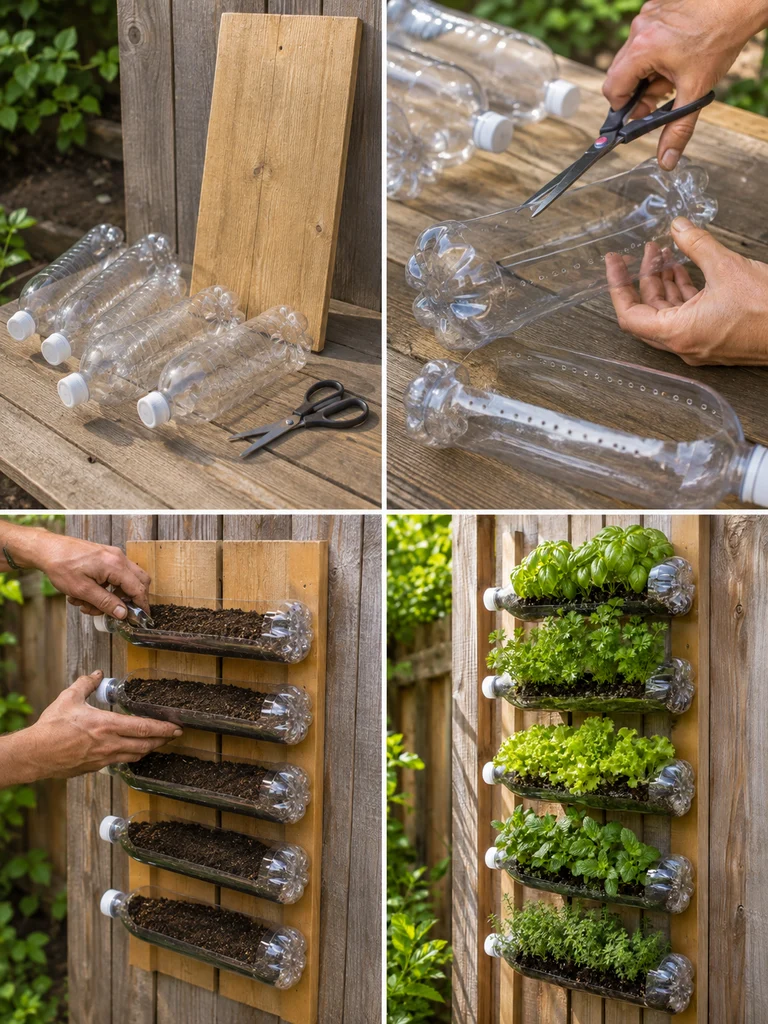
- Wash the bottles and remove labels.
- Cut a long planting opening along one side of each bottle, leaving enough plastic for strength.
- Add drainage holes along the lowest edge when the bottle is mounted horizontally.
- Secure the bottles in evenly spaced rows on a sturdy wooden board.
- Add lightweight potting mix to each bottle.
- Plant shallow-rooted herbs, lettuce, or similar compact plants.
- Water gently and monitor moisture because recycled bottle planters can dry faster than deep pots.
Product Recommendations
- Precision utility scissors
- Exterior mounting straps
- Lightweight potting mix
- Herb seedlings and hand mister
10. Reclaimed Rain Gutter Strawberry Planter
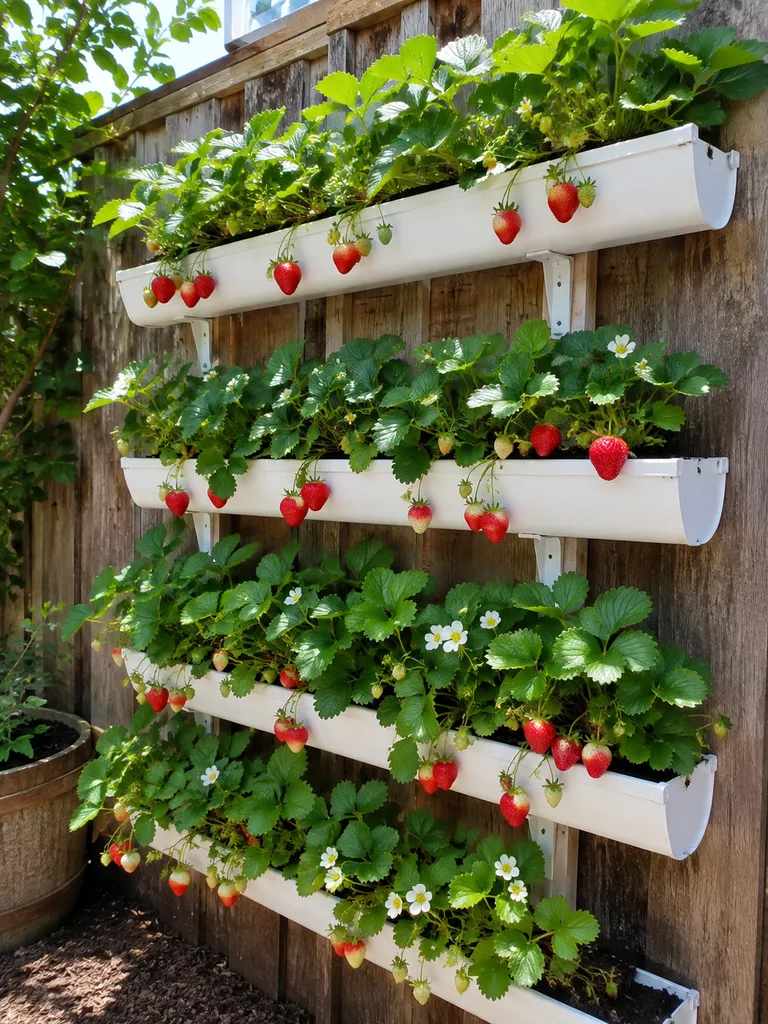
Short sections of leftover rain gutter can form an excellent vertical strawberry wall. The narrow channels keep fruit visible and easy to harvest, while multiple tiers make good use of a sunny fence or garden wall.
Things You’ll Need
- Four lengths of rain gutter
- Matching end caps
- Gutter brackets
- Exterior screws
- Drill
- Potting mix suitable for berries
- Strawberry plants
- Slow-release berry fertilizer
How to Make It
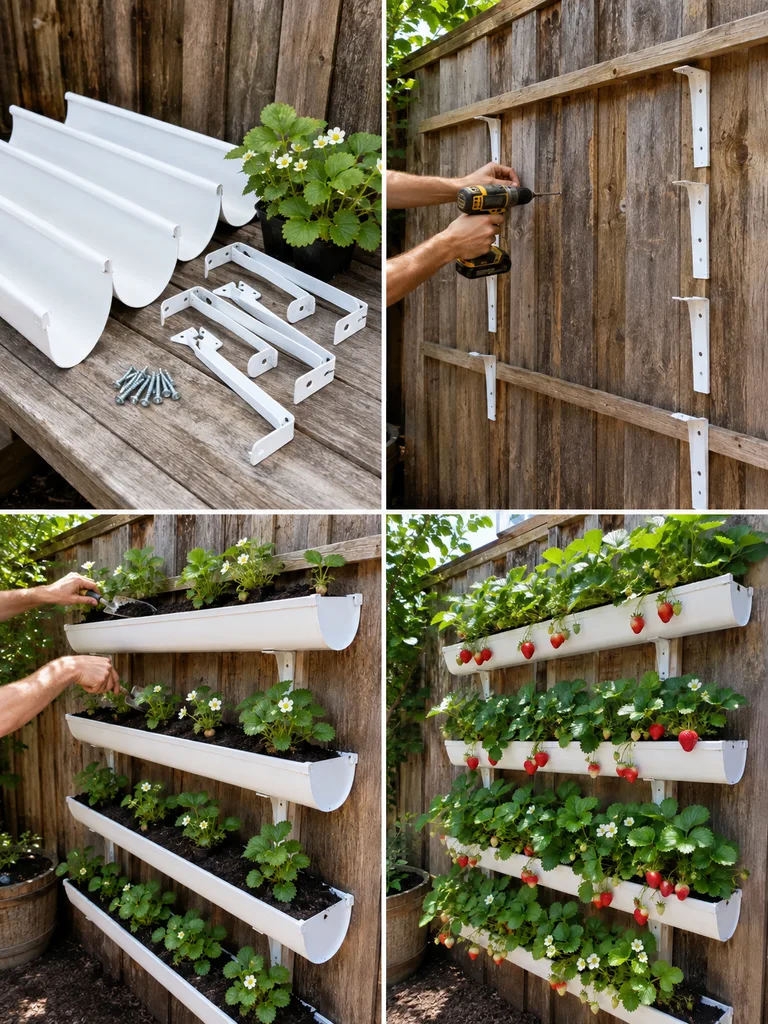
- Cut the gutter into equal lengths and smooth rough edges.
- Install end caps and drill several drainage holes along each section.
- Mark evenly spaced rows on a strong fence or wall.
- Attach gutter brackets securely, checking each row with a level.
- Set the gutter sections into the brackets and fill with quality potting mix.
- Plant strawberries at comfortable spacing and keep the crowns above the soil line.
- Water regularly and feed according to the fertilizer label during active growth.
Product Recommendations
- Gutter mounting brackets
- Strawberry potting mix
- Berry fertilizer
- Strawberry plants and watering wand
11. Vintage Metal Toolbox Herb Planter
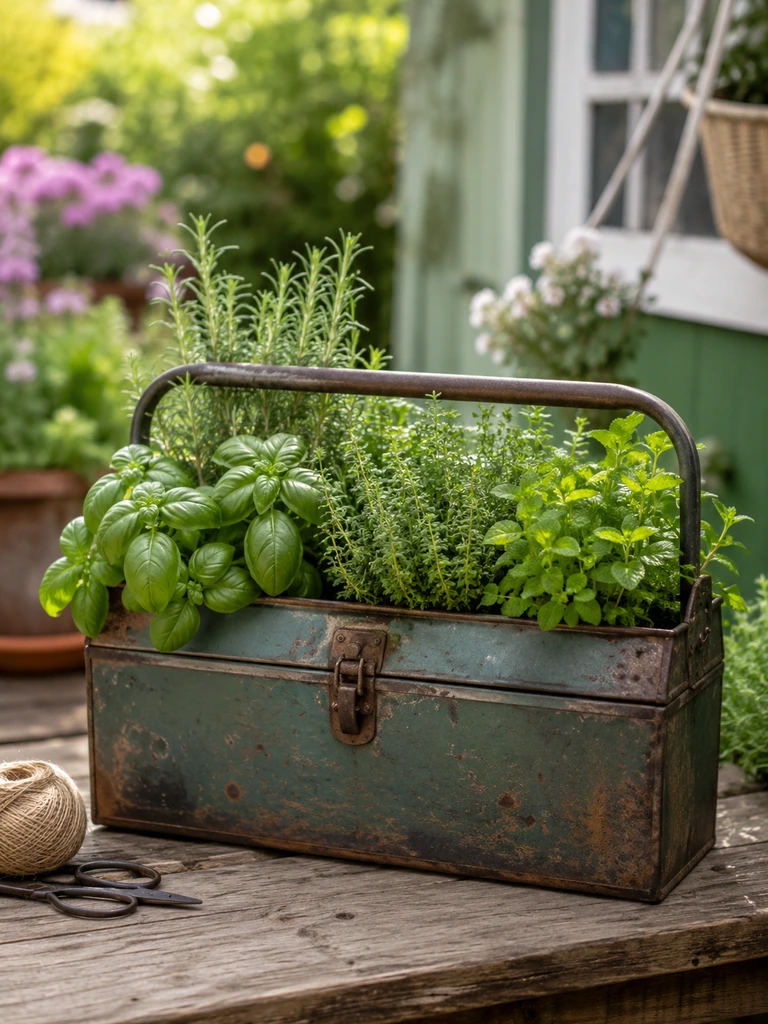
A rusty old toolbox already has the right proportions for a portable herb planter. Keeping the aged paint and metal handle gives it strong farmhouse character, while drainage and a liner make the container more practical for real plants.
Things You’ll Need
- Vintage metal toolbox
- Wire brush or sandpaper
- Rust-stabilizing clear sealer
- Drill with metal bit
- Coco liner or landscape fabric
- Small gravel
- Potting mix
- Basil, rosemary, thyme, mint, or parsley
How to Make It
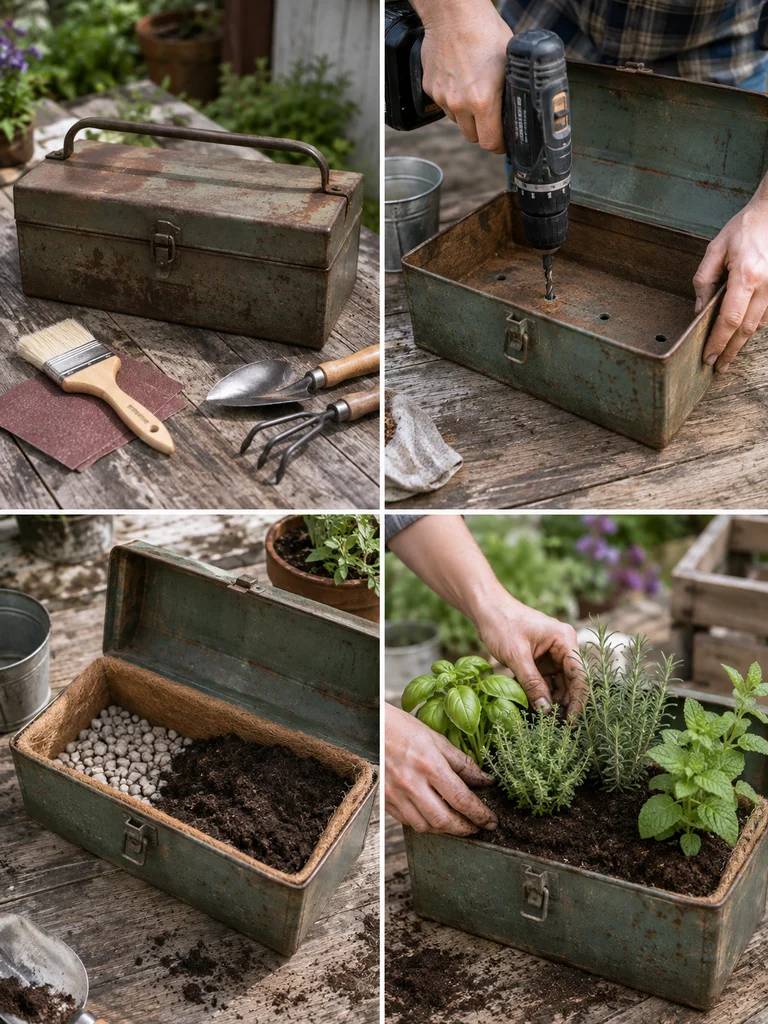
- Brush away loose rust and dirt without removing all of the patina.
- Drill drainage holes in the base.
- Seal unstable rusty areas with a suitable clear outdoor finish.
- Add a breathable liner and a shallow gravel layer.
- Fill with container potting mix.
- Plant herbs with similar watering needs together.
- Keep the handle usable so the planter can be moved before watering or extreme weather.
Product Recommendations
- Rust converter or clear metal sealer
- Metal drill bit set
- Landscape fabric
- Herb plants and garden shears
12. Recycled Glass Bottle Propagation Garden
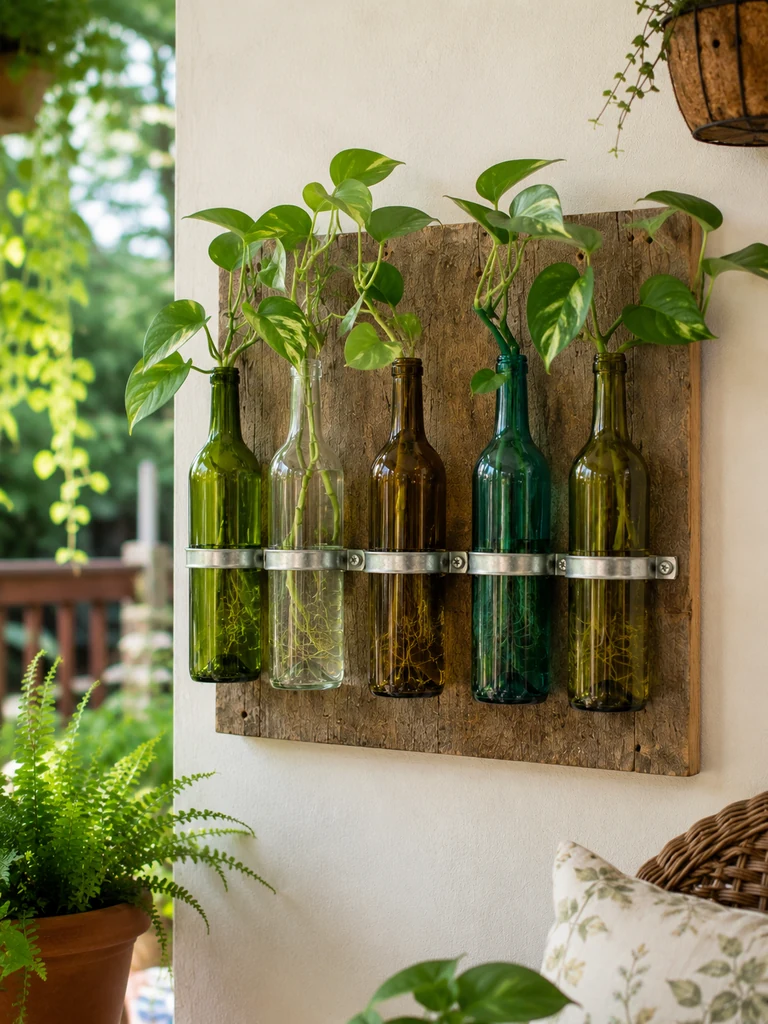
Empty wine or beverage bottles can become a striking water-propagation display when held against reclaimed timber with sturdy bottle clamps. It is a clean way to root pothos, philodendron, tradescantia, and other easy cuttings indoors or on a protected porch.
Things You’ll Need
- Four or five clean glass bottles
- Reclaimed timber board
- Heavy-duty bottle clamps
- Exterior or wall screws
- Wall anchors
- Plant cuttings
- Clean water
How to Make It
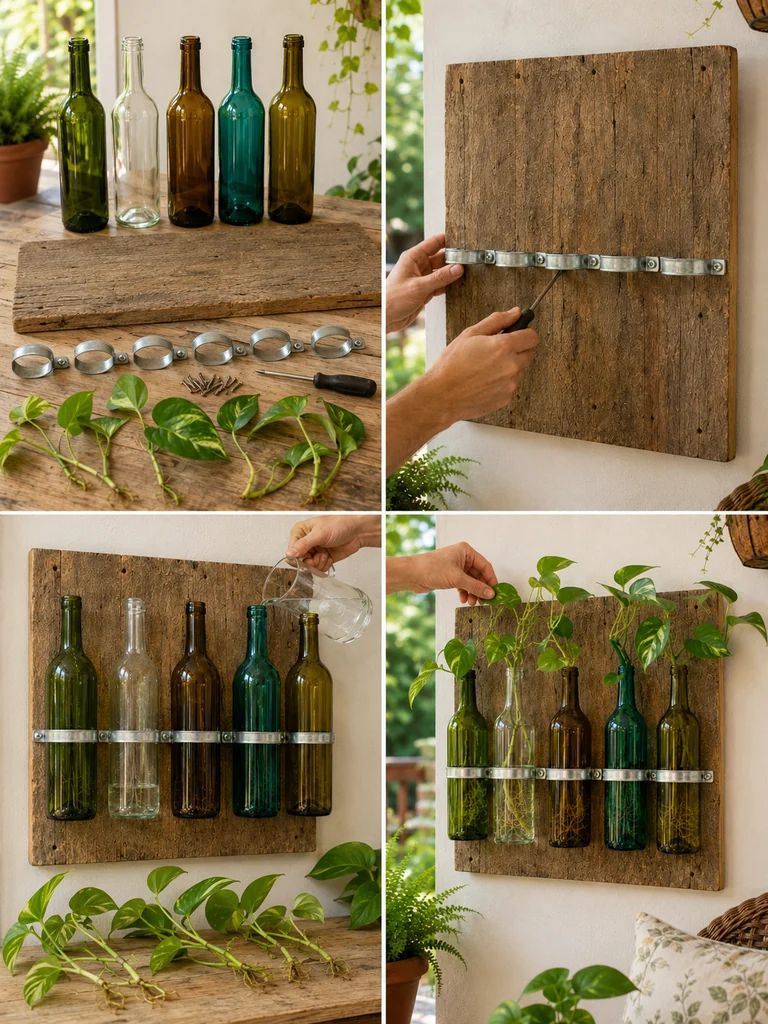
- Wash the bottles thoroughly and remove labels.
- Sand the timber board and seal it if it will be used in a humid area.
- Measure the bottle positions and attach one metal clamp for each bottle.
- Secure the board to wall studs or suitable anchors before adding the bottles.
- Slide the bottles into the clamps and tighten carefully without over-compressing glass.
- Fill with clean water and add one or two cuttings per bottle.
- Refresh the water regularly and transplant rooted cuttings when desired.
Product Recommendations
- Adjustable bottle clamps
- Wall anchor and screw kit
- Plant propagation tools
- Decorative wall hardware or indoor plant care tools
13. Old Denim Pocket Mini Planters
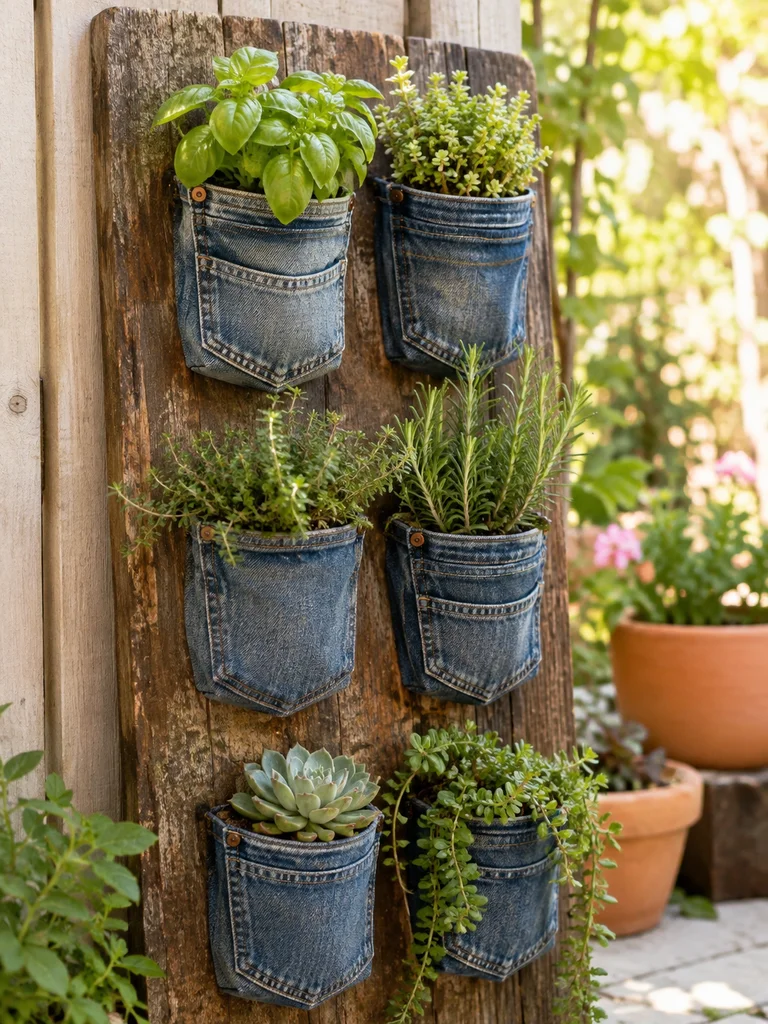
Old jeans can contribute more than rags to the garden. Cut-off back pockets mounted to reclaimed wood create soft planting sleeves for tiny succulents and herbs, especially when a waterproof or breathable liner protects the denim from constant moisture.
Things You’ll Need
- Old denim jeans
- Fabric scissors
- Reclaimed wood panel
- Staple gun or upholstery tacks
- Small breathable liners
- Lightweight potting mix
- Small succulents or herbs
How to Make It
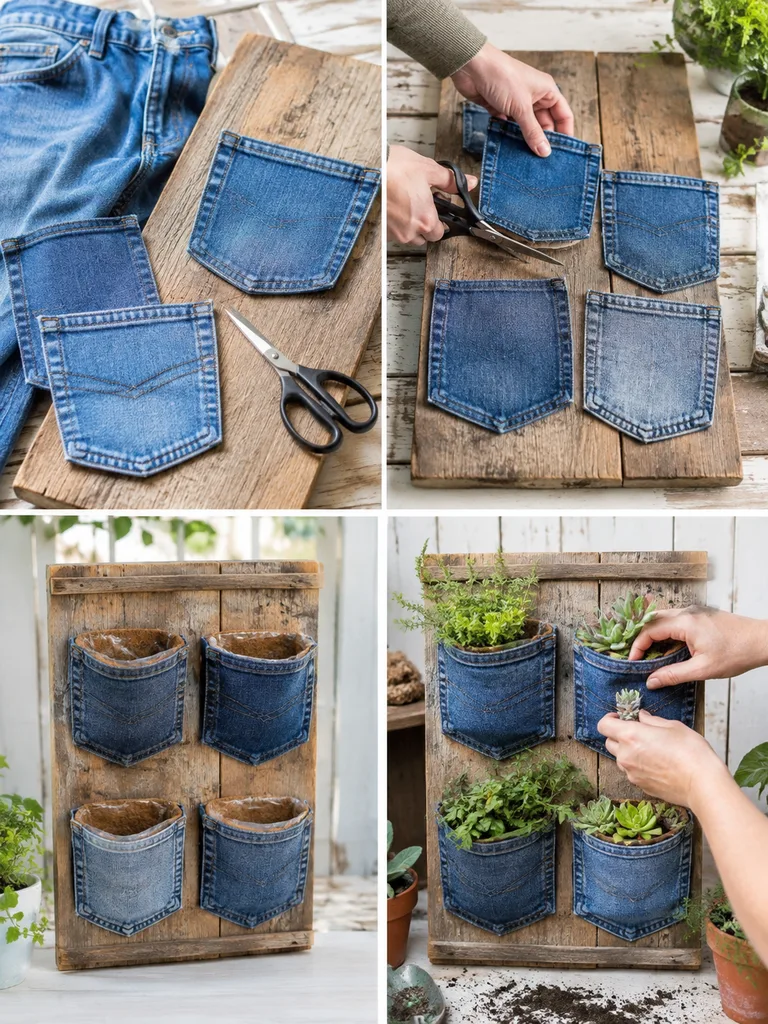
- Cut the back pockets from the jeans, leaving extra denim around the seams.
- Trim the edges neatly while keeping the original stitching visible.
- Line each pocket with a small planter liner and add a few drainage openings.
- Attach the pockets to a sturdy wood panel with staples, tacks, or screws and washers.
- Add a small amount of lightweight potting mix to each pocket.
- Plant compact herbs or succulents and gently firm the soil.
- Hang the panel in a protected location and water sparingly to extend the life of the fabric.
Product Recommendations
- Heavy-duty fabric scissors
- Staple gun kit
- Small planter liner sheets
- Succulent starter plants and rustic wall hooks
14. Coconut Shell Hanging Planters
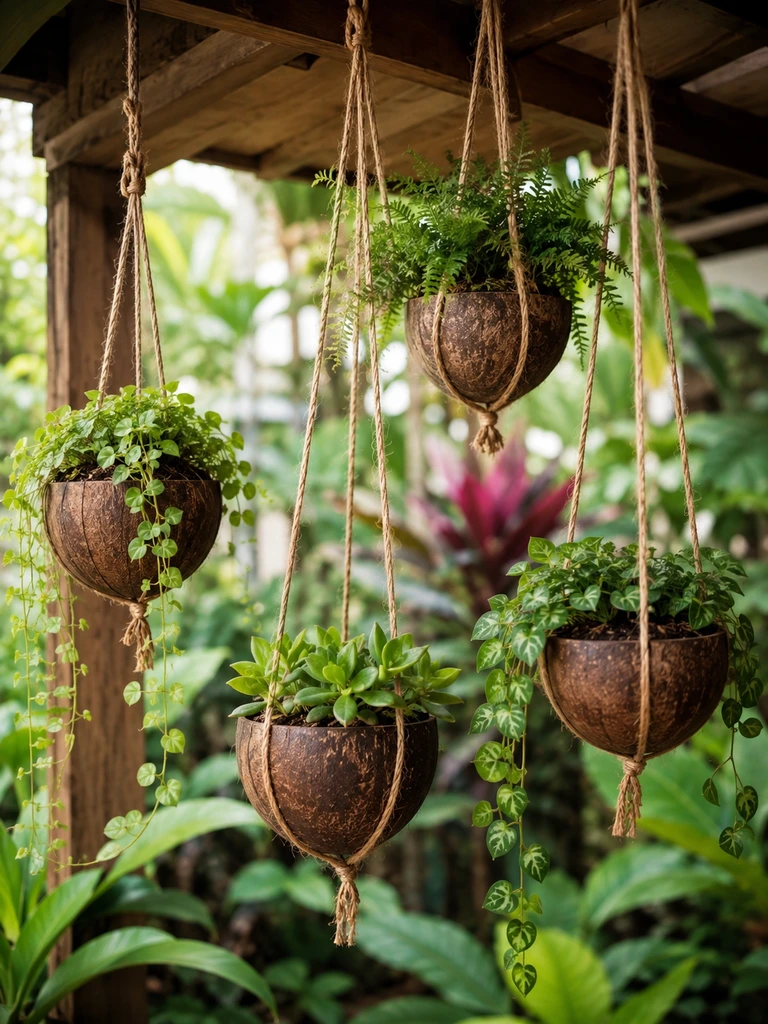
Coconut shells make naturally textured mini planters and look especially good in groups at different heights. Their small size suits compact tropical foliage, spider-plant babies, small ferns, and trailing plants.
Things You’ll Need
- Clean coconut shell halves
- Drill with small bit
- Jute rope or macrame cord
- Small amount of potting mix
- Compact foliage plants
- Optional clear natural-oil finish
How to Make It
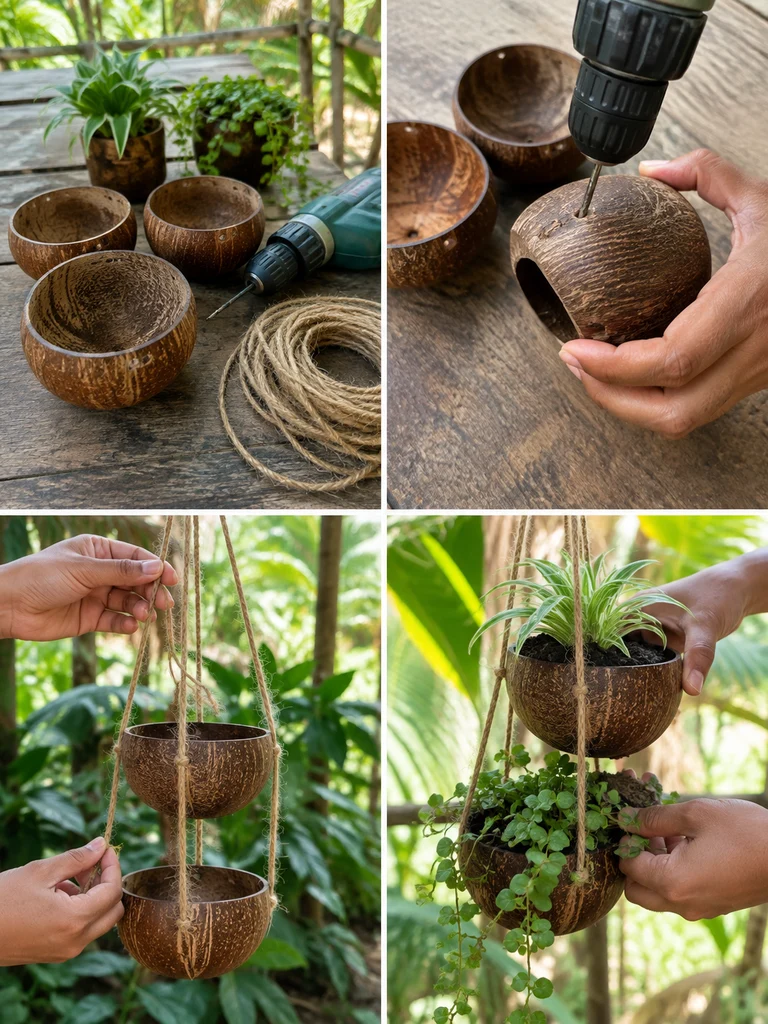
- Clean and dry the coconut shells completely.
- Drill three evenly spaced hanging holes near the rim plus a small drainage hole at the base.
- Thread equal lengths of jute rope through the hanging holes and knot them securely.
- Bring the cords together above the shell and tie a strong hanging loop.
- Add potting mix and plant a small foliage or trailing plant.
- Repeat to create several planters at different hanging lengths.
- Hang from a strong beam or hook and water lightly to avoid saturating the shell.
Product Recommendations
- Natural jute twine
- Compact drill bit set
- Indoor/outdoor potting mix
- Hanging hooks and tropical starter plants
15. Old Tea Tin Mini Flower Garden
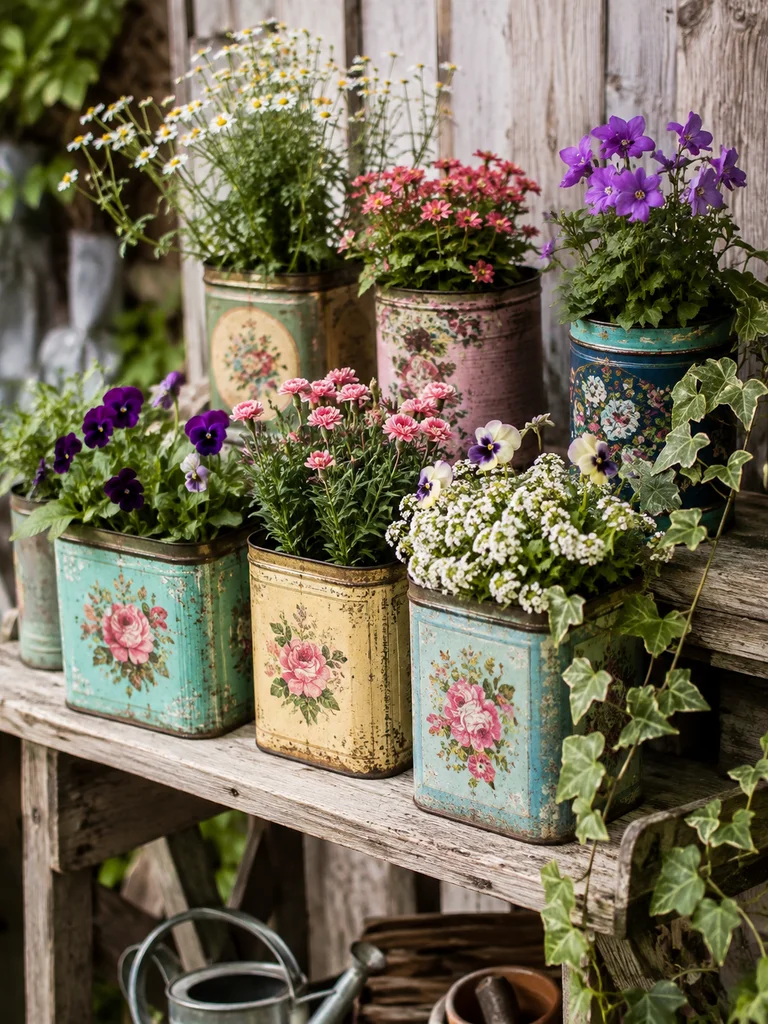
Decorative tea tins are almost too pretty to throw away, and their colorful printed surfaces make excellent small flower containers. Grouping mismatched tins together produces a collected vintage look that suits cottage gardens and potting shelves.
Things You’ll Need
- Assorted metal tea tins
- Metal drill bit
- Clear outdoor sealer
- Small gravel
- Container potting mix
- Compact flowering plants
- Protective gloves
How to Make It
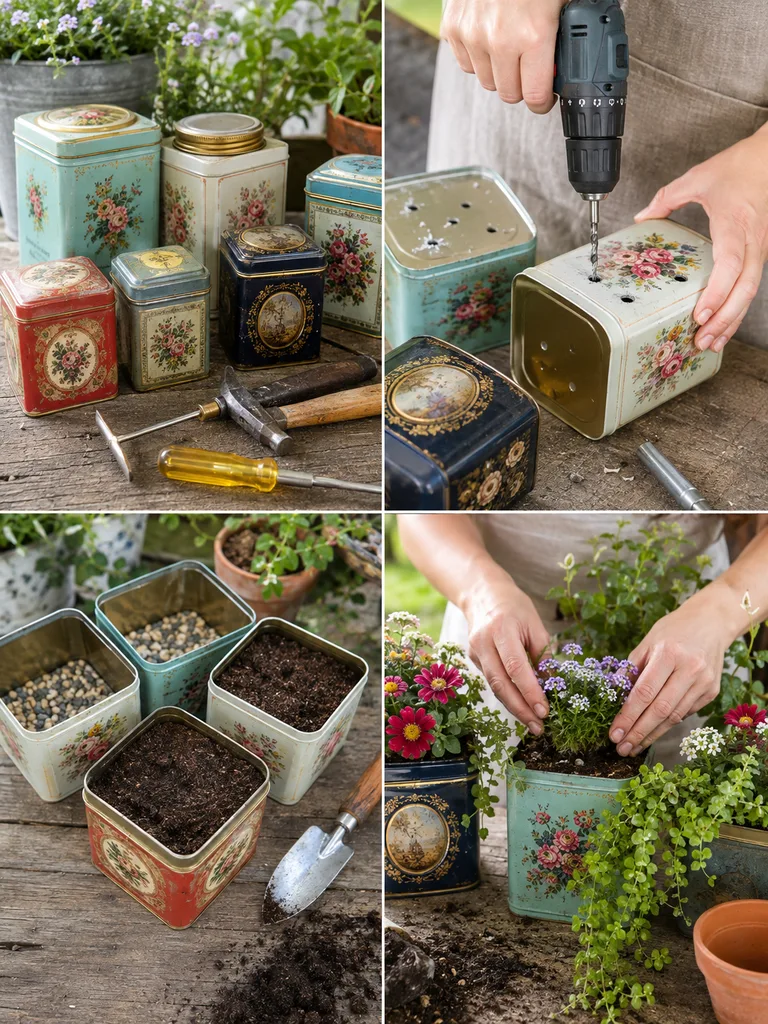
- Remove tea residue and wash each tin thoroughly.
- Drill several drainage holes in the bottom of every container.
- Seal delicate printed finishes if the tins will be exposed to outdoor moisture.
- Add a shallow layer of gravel.
- Fill with potting mix and plant one compact flower or small mixed combination per tin.
- Group tins of different heights and colors together for a layered display.
- Water carefully and move delicate vintage tins under cover during prolonged rain.
Product Recommendations
- Metal drill bit set
- Clear outdoor protective sealer
- Small container potting mix
- Flowering annuals and decorative plant stands
16. Reclaimed Wine Crate Garden Planter
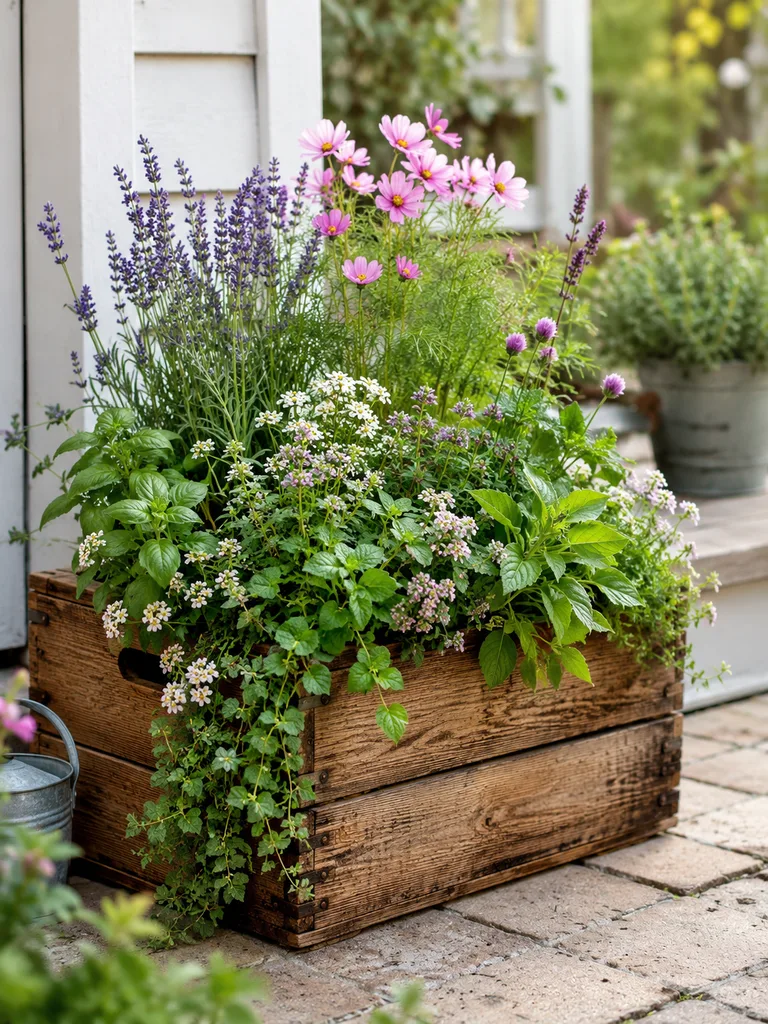
A sturdy wooden wine crate can hold a surprisingly lush mixture of herbs and flowers. Its broad planting area gives you room to combine tall lavender or cosmos with compact herbs and trailing greenery for a full cottage-style container.
Things You’ll Need
- Reclaimed wooden crate
- Sandpaper
- Drill and wood bit
- Outdoor wood sealer
- Burlap or planter liner
- Potting mix
- Mixed herbs and flowers
How to Make It
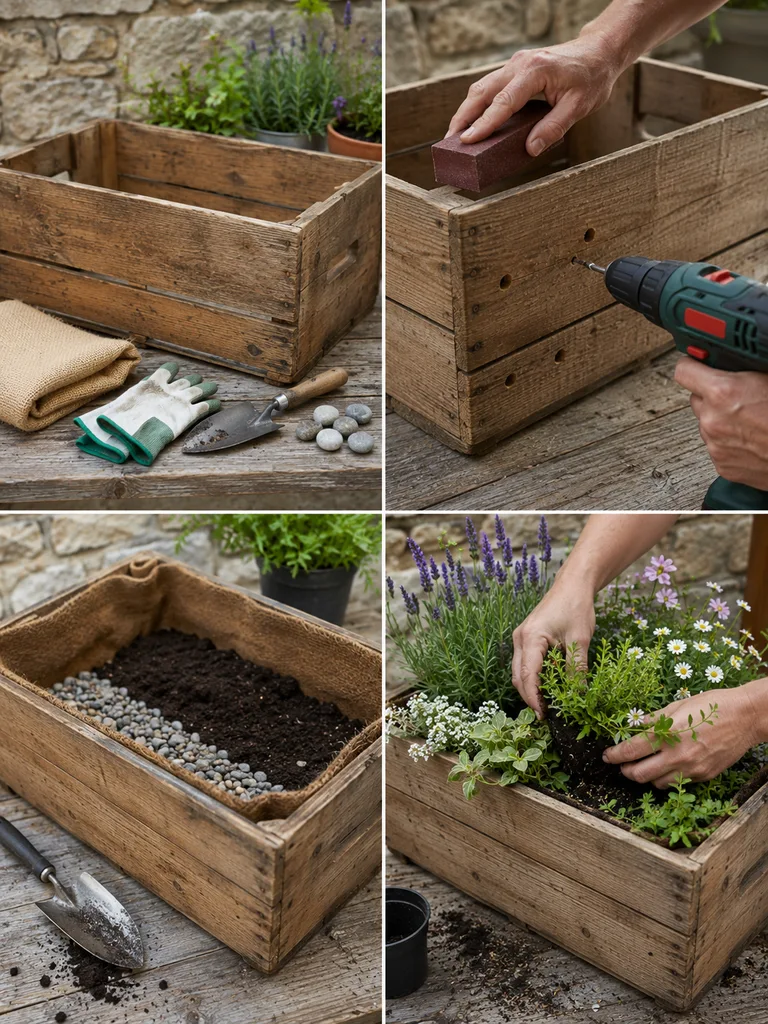
- Inspect the crate and reinforce any loose boards.
- Drill drainage holes through the base and sand sharp edges.
- Apply a weather-resistant wood sealer and let it cure.
- Line the crate with burlap or planter fabric, keeping drainage holes open.
- Fill with high-quality container mix.
- Place taller plants toward the rear and trailers near the front corners.
- Water thoroughly and position the crate where it receives suitable sunlight.
Product Recommendations
- Burlap roll or planter liner
- Exterior wood protector
- Premium container soil
- Lavender, herbs, annuals, or planter feet
17. Recycled Shoe Organizer Vertical Herb Garden
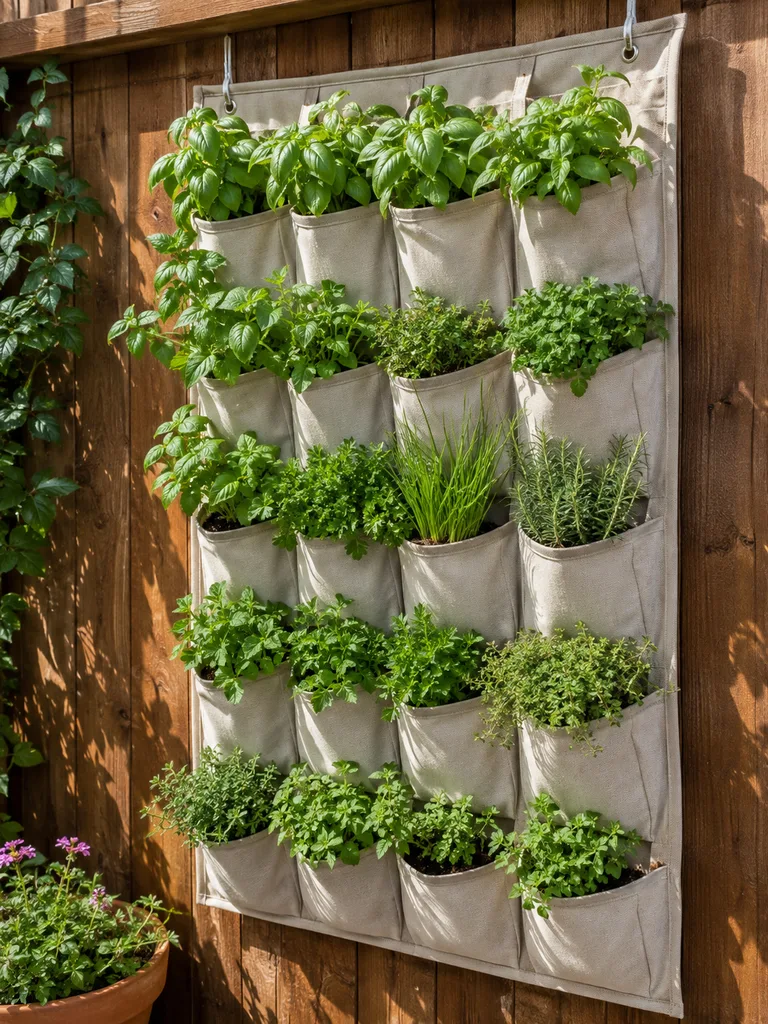
A fabric pocket shoe organizer is a clever vertical growing system for a fence, balcony rail, or sunny wall. Each pocket becomes an individual herb container, allowing you to grow many varieties in a very small footprint.
Things You’ll Need
- Heavy fabric shoe organizer
- Strong S-hooks or outdoor hooks
- Small liner pieces
- Potting mix
- Assorted herbs
- Watering can with narrow spout
How to Make It
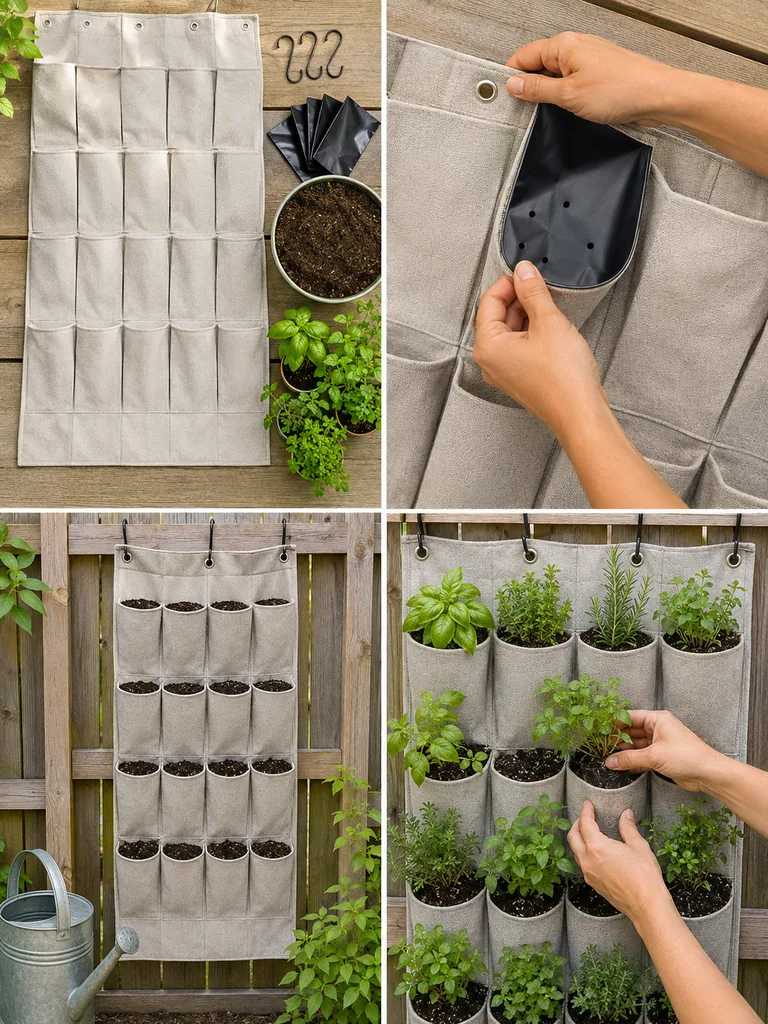
- Choose a strong organizer with reinforced hanging grommets.
- Add a small liner to each pocket and make drainage holes at the lowest point.
- Hang the empty organizer from a strong fence or rail before adding soil.
- Fill each pocket about three-quarters full with lightweight potting mix.
- Plant herbs according to their mature size, putting larger plants in lower pockets.
- Water slowly from the top and check that every pocket drains freely.
- Trim herbs regularly to keep the vertical garden compact and productive.
Product Recommendations
- Heavy-duty hanging pocket organizer
- S-hook assortment
- Lightweight potting mix
- Herb starter plants and slim watering can
18. Old Metal Muffin Tin Succulent Wall
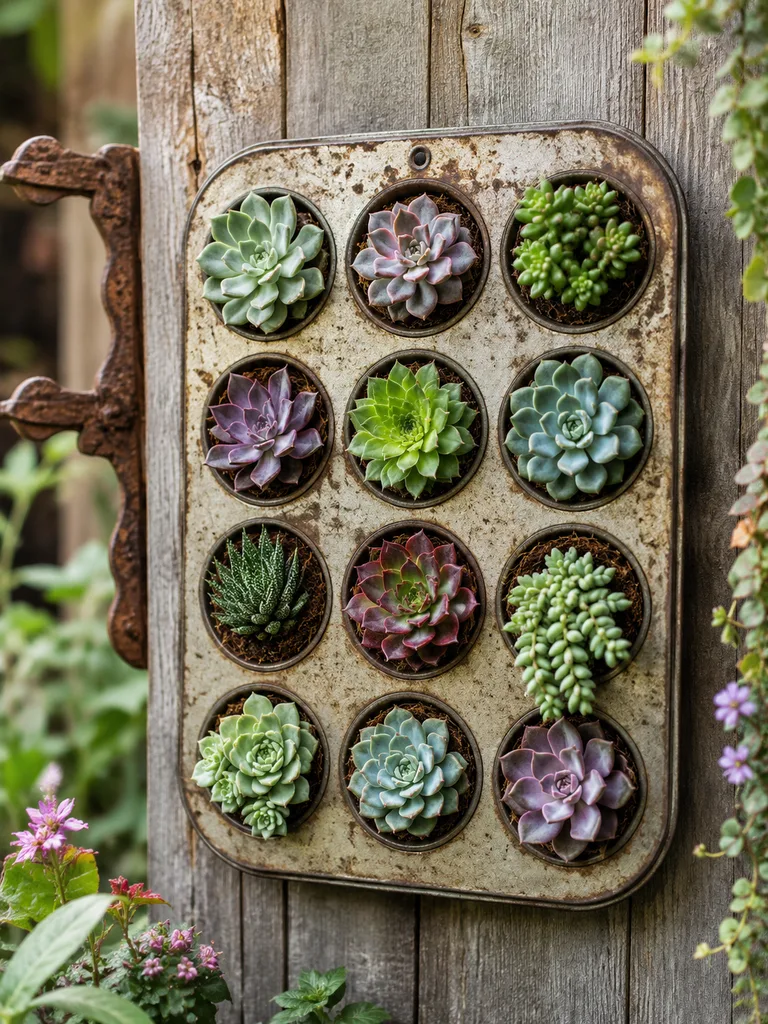
An old muffin pan offers a ready-made grid of small planting pockets. Mounted vertically, it becomes a compact succulent wall with each cup holding a different rosette or trailing variety.
Things You’ll Need
- Old metal muffin pan
- Wire brush or sandpaper
- Clear metal sealer
- Small hanging hardware
- Cactus soil
- Mini succulents
- Fine gravel
How to Make It
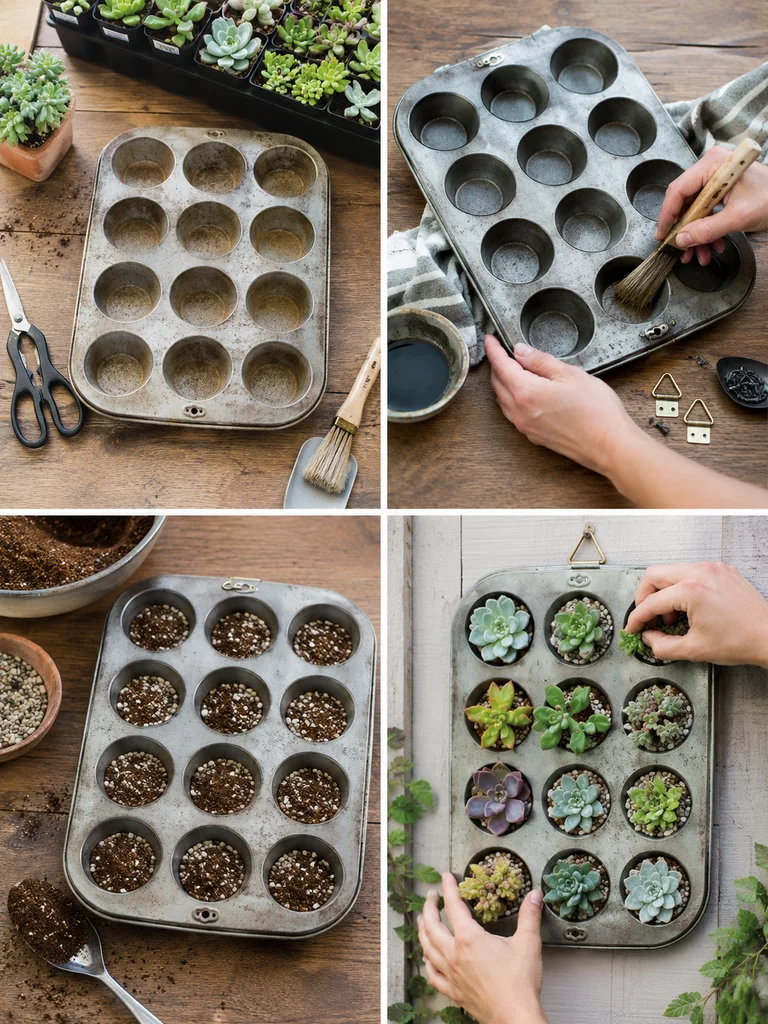
- Clean the muffin pan and remove loose rust.
- Seal the surface if you want to slow additional corrosion.
- Add or reinforce hanging hardware along the top edge.
- Fill each muffin cup with a small amount of cactus soil.
- Plant one compact succulent in each cup and firm it gently.
- Top with fine gravel to help hold the soil in place.
- Mount the pan securely and water very lightly, especially when displayed vertically.
Product Recommendations
19. Vintage Kitchen Grater Plant Holder
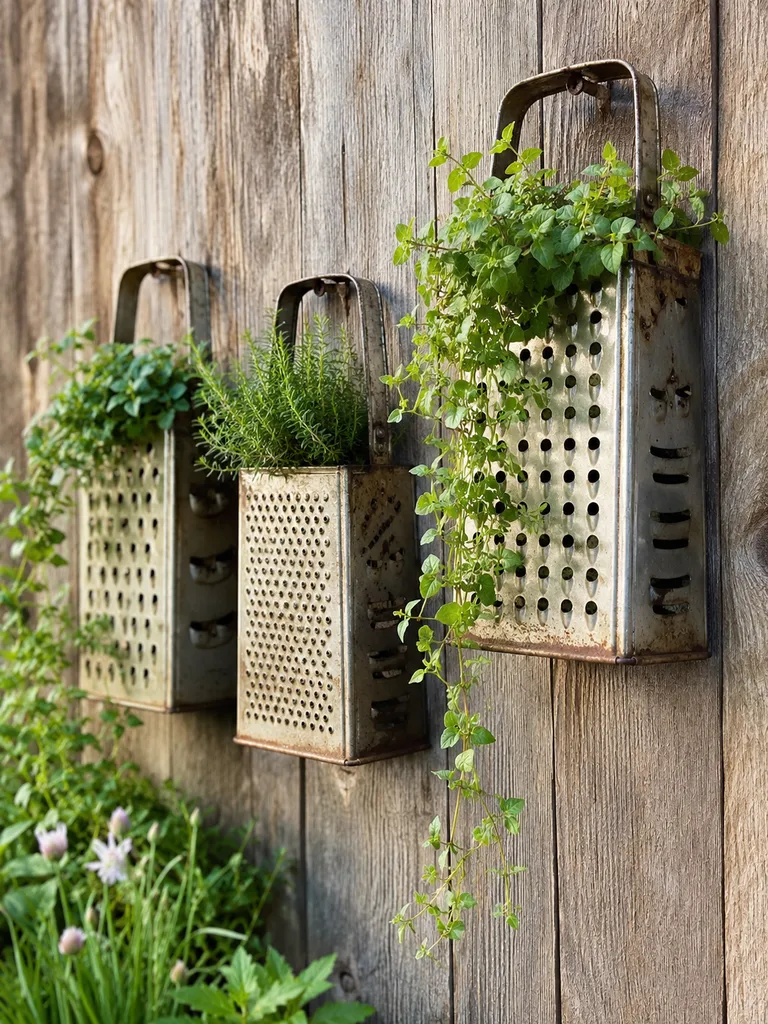
Old box graters have texture, ventilation, and ready-made handles that make them fun wall planters. A liner is essential so the soil stays in place while trailing herbs or foliage emerge from the open top and soften the industrial metal.
Things You’ll Need
- Old box graters
- Fine-grit sandpaper
- Coco liner or burlap
- Small S-hooks
- Lightweight potting mix
- Trailing herbs or foliage plants
- Protective gloves
How to Make It
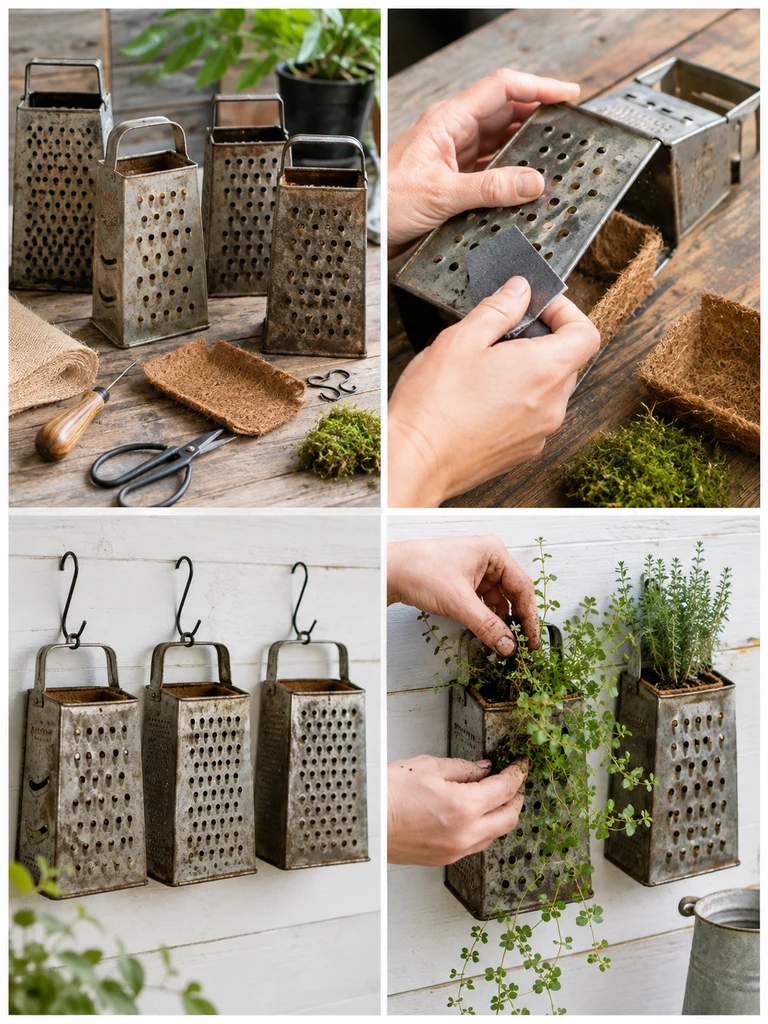
- Wash the graters carefully and sand any dangerously sharp or rusty areas.
- Cut coco liner or burlap to fit inside each grater.
- Fill the lined interior with lightweight potting mix, leaving space at the top.
- Plant trailing herbs or small foliage plants through the top opening.
- Use the existing handle to hang each grater from a strong S-hook.
- Arrange several graters at different heights for a collected wall display.
- Water slowly and remove the planters temporarily if needed to prevent water staining the wall.
Product Recommendations
- Coco coir liner roll
- Heavy-duty S-hooks
- Lightweight potting mix
- Trailing herbs, hooks, or outdoor wall hardware
How to Make Recycled Planters Look Cohesive
When several recycled planters are displayed together, repeat one or two design elements so the collection looks planned. You might use the same wood stain across all backing boards, repeat two paint colors, choose matching metal hardware, or plant the same trailing greenery in several containers. The recycled objects can be completely different while the repeated details visually connect them.
Choosing Plants for Recycled Containers
Shallow containers suit succulents, thyme, sedum, alyssum, and other compact plants. Deeper crates, drawers, toolboxes, and gutters can support herbs and flowering annuals as long as they drain well. Match plants with similar light and moisture requirements in the same container, and remember that small recycled planters usually dry faster than conventional pots.
Final Thoughts
The best DIY Garden Decor Ideas are not only attractive—they give materials a useful second life. A dented kettle, drawer, ladder, bottle, crate, or kitchen tool can become a memorable garden feature with a little preparation and the right plants. Start with one project using something you already own, then build a recycled planter collection that feels personal to your space.

