 Skip to content
Few outdoor features can transform a garden as quickly as moving water. A carefully designed waterfall fountain adds sound, movement, reflections, texture, and an immediate sense of calm to patios, courtyards, pool areas, and larger landscapes. It can also become an architectural focal point that gives an otherwise simple outdoor space much more personality.
The best outdoor waterfall fountain ideas do not all have to look natural or rustic. Contemporary gardens can use stainless steel, terrazzo, acrylic, concrete, glass, porcelain, Corten steel, and sculptural forms to create striking water features that feel like outdoor artwork. Traditional landscapes can still incorporate stone, timber, pottery, copper, and lush planting for a softer appearance.
This collection combines natural-looking cascades with highly modern architectural fountains so every design has its own identity. Whether you have a compact patio, a secluded courtyard, or a spacious backyard, these ideas offer inspiration for creating a memorable outdoor water feature that suits the scale and style of the surrounding landscape.
1. Modern Stacked-Stone Waterfall Wall
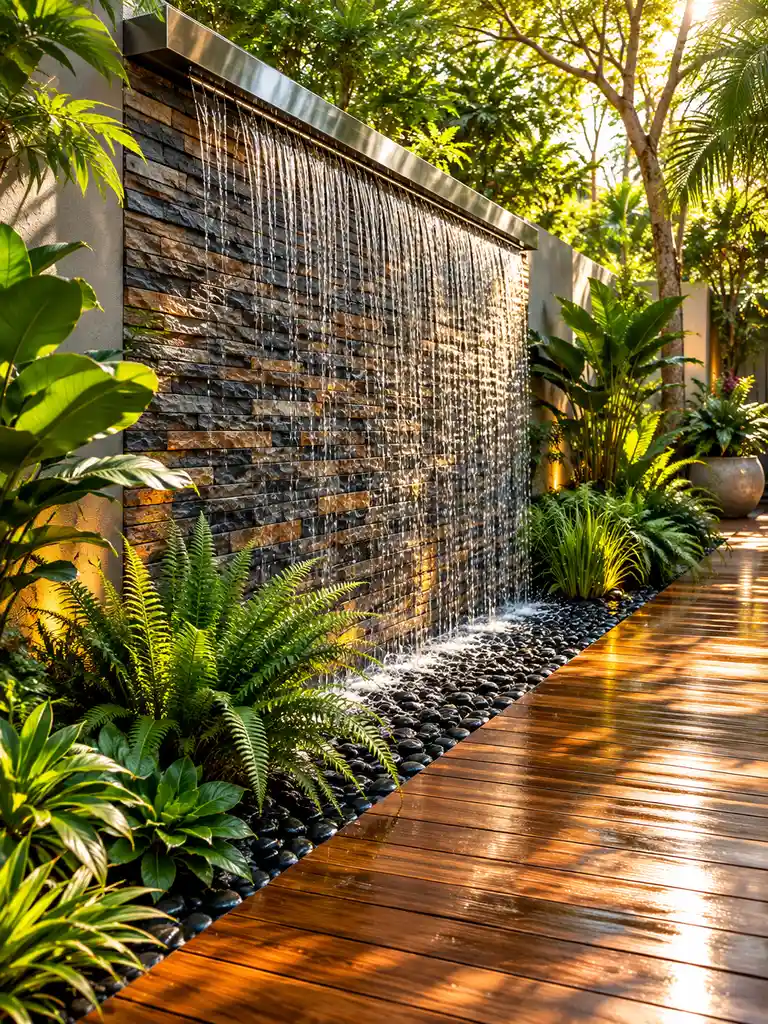
A stacked-stone waterfall wall blends natural texture with contemporary structure. Use narrow horizontal stones in charcoal, brown, and gray tones, then conceal a long spillway along the upper edge so water falls in a clean curtain. A slim basin filled with polished black pebbles keeps the footprint tidy, while ferns, ornamental grasses, and tropical foliage soften the stone and help the feature feel connected to the garden.
2. Tropical Living Wall Waterfall Fountain
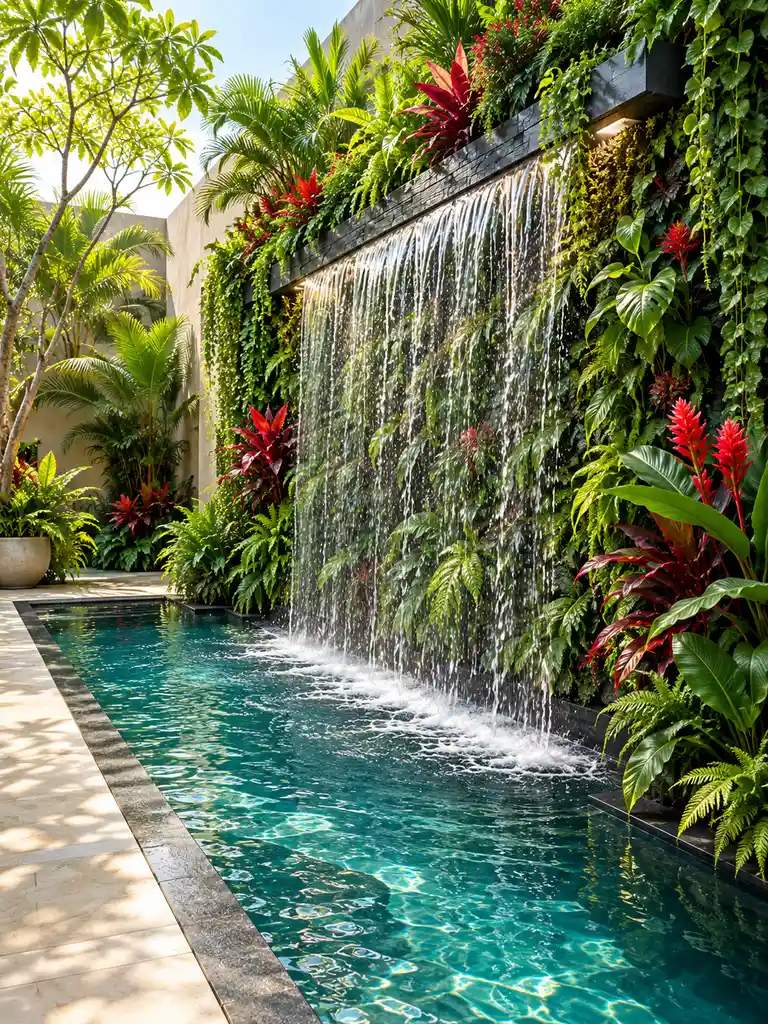
A living wall becomes much more dramatic when flowing water is built directly into the greenery. Dense ferns, bromeliads, philodendrons, trailing vines, and colorful foliage can frame a broad central waterfall that drops into a narrow reflecting pool. Leave parts of the dark backing wall visible for contrast. The combination of lush planting and structured water gives a patio or pool area a polished resort-inspired atmosphere.
3. Poolside Curtain Waterfall Wall
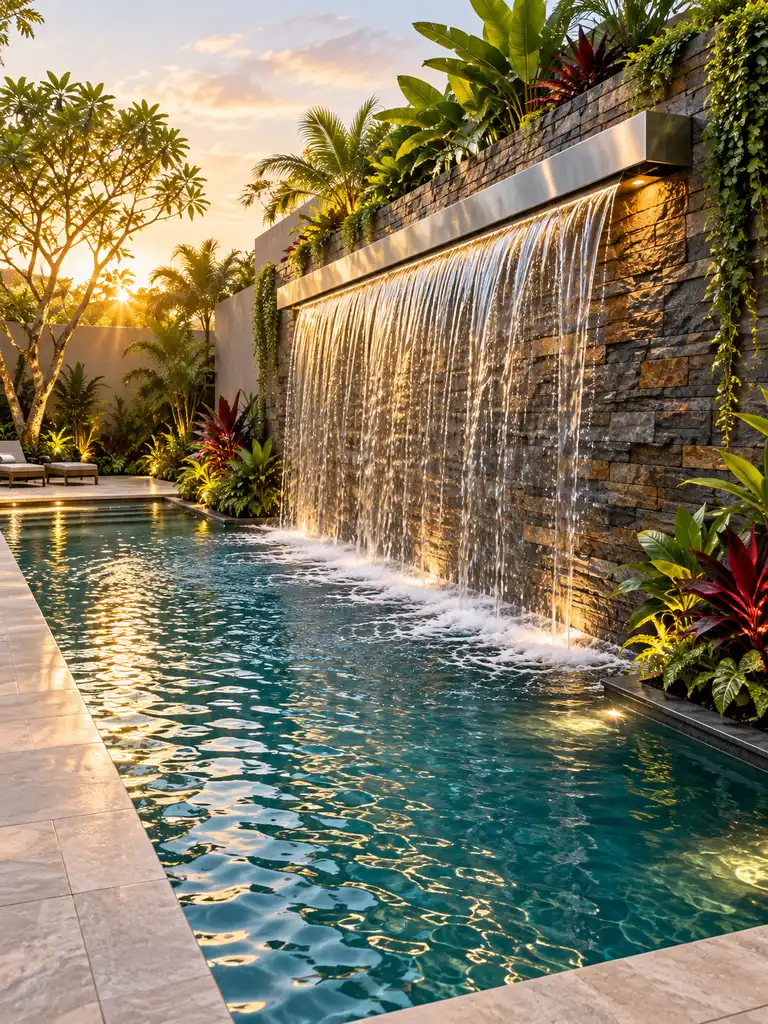
A long curtain waterfall works beautifully beside a pool or linear garden basin. A concealed horizontal spillway can release a continuous transparent sheet of water straight into the pool, creating movement without adding bulky structures. Keep nearby planting simple so the falling water remains the focal point. At night, subtle lights beneath the spillway or inside the water can make the curtain glow and reflect across the surface.
4. Spiral Metal Sculpture Waterfall
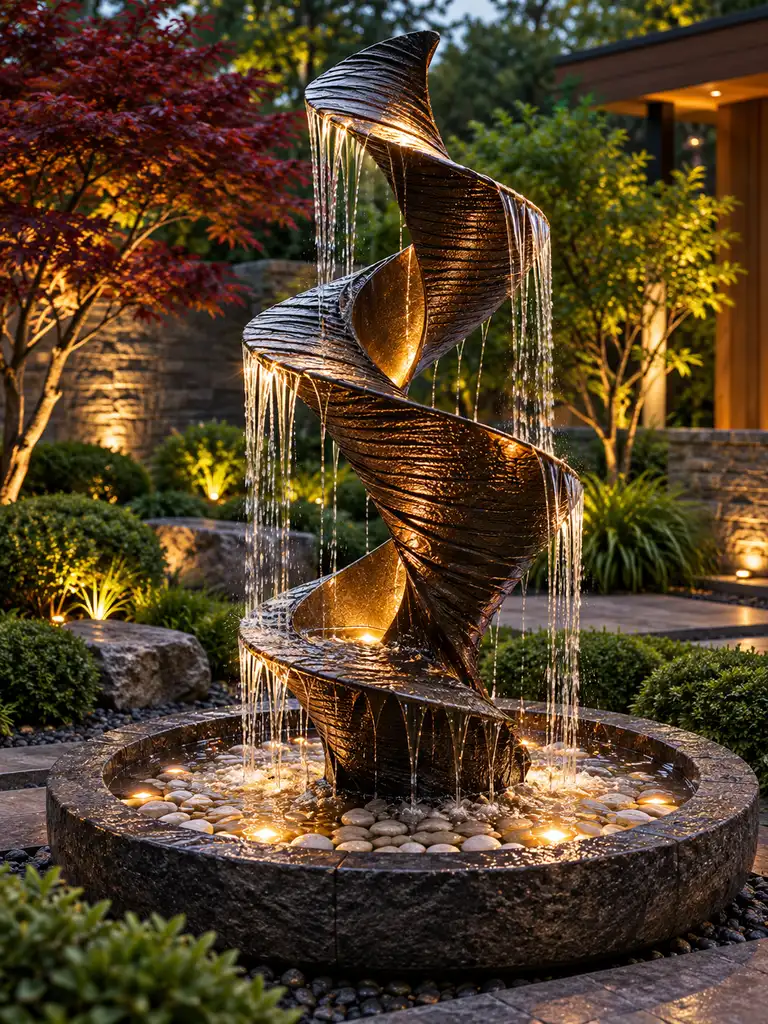
A spiral metal fountain adds the presence of outdoor sculpture as well as moving water. Choose bronze, copper, or a dark weathered finish and let the form twist upward in one continuous ribbon. Water can follow selected curves before dropping into a circular basin below. Warm lighting at the base emphasizes the wet metal after sunset, making the fountain attractive even when viewed from several different angles.
5. Stainless-Steel Cascade Fin Fountain
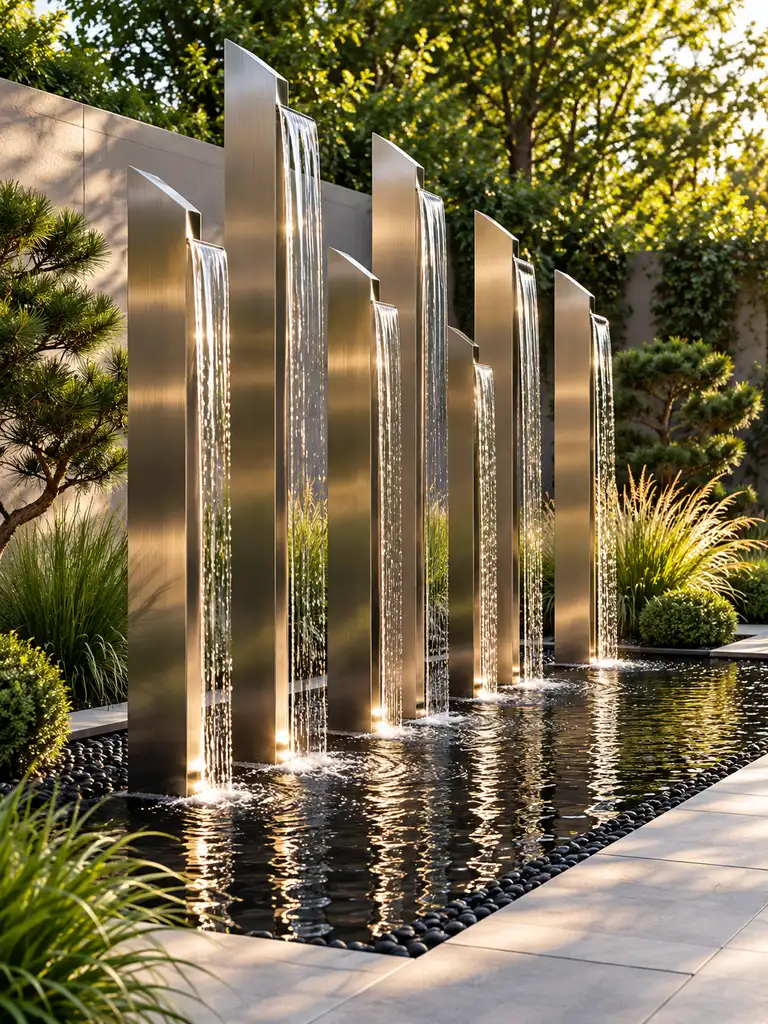
Tall stainless-steel fins create a sleek fountain that feels more architectural than traditional. Arrange several brushed-metal fins at different heights and slight angles, with water sliding along narrow edges before reaching a dark reflecting basin. Sunlight produces changing highlights on the wet steel throughout the day. Black pebbles, sculptural evergreens, and ornamental grasses add softness without competing with the crisp metallic forms.
6. Japanese Pagoda Waterfall Fountain
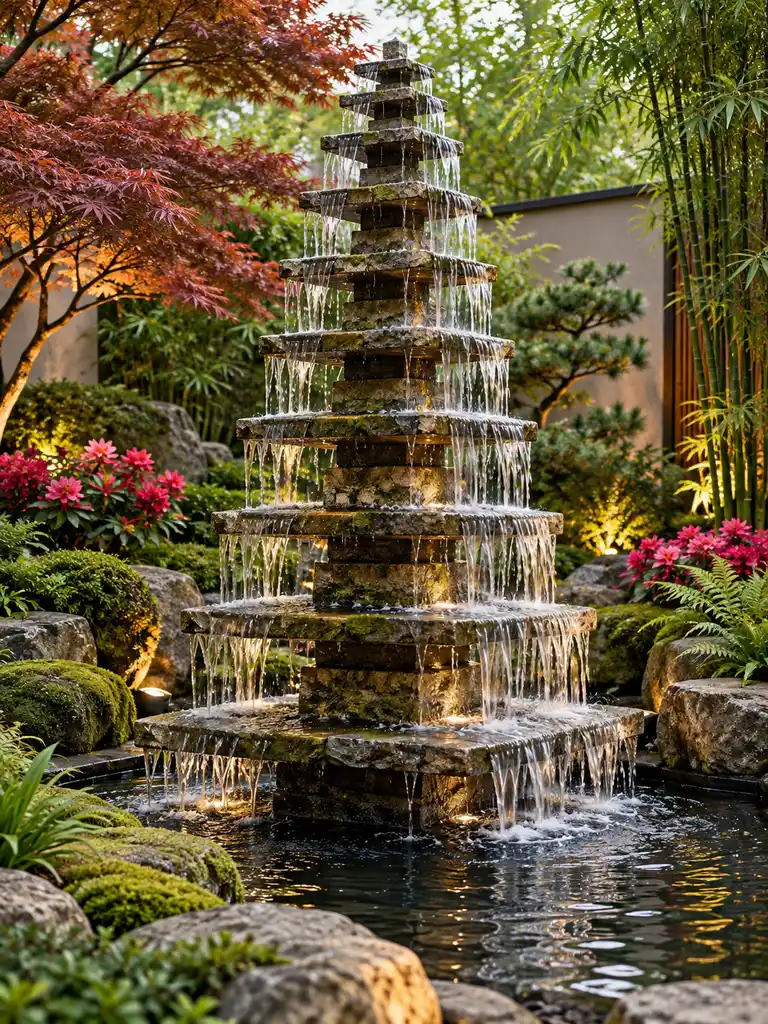
A pagoda-inspired fountain introduces height while keeping a peaceful, layered appearance. Stack square or rectangular platforms so they gradually become smaller toward the top, then allow water to spill gently from the edges of each tier. Mossy rocks, bamboo, Japanese maples, and clipped shrubs complement the structure. Position it where the repeated cascades can be seen from a path, bench, or quiet patio seating area.
7. Sculptural Stone Loop Cascade Fountain
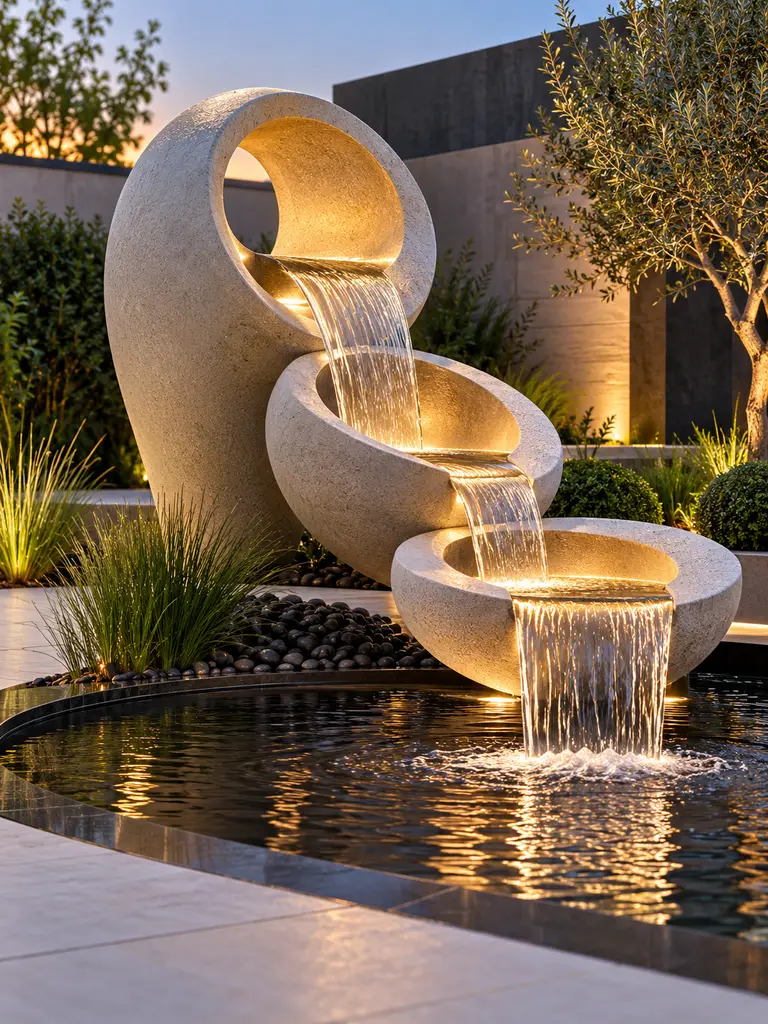
A solid stone loop fountain provides a modern organic look without relying on unsupported or unrealistic forms. Use one large upright loop as the main structure and connect smaller rounded basins below it. Water can pour from the upper opening into each lower basin before reaching a dark reflecting pool. Soft internal lighting highlights the curved surfaces and gives the sculptural stone a warm, refined appearance at dusk.
8. Circular Stone Ring Rainfall Fountain
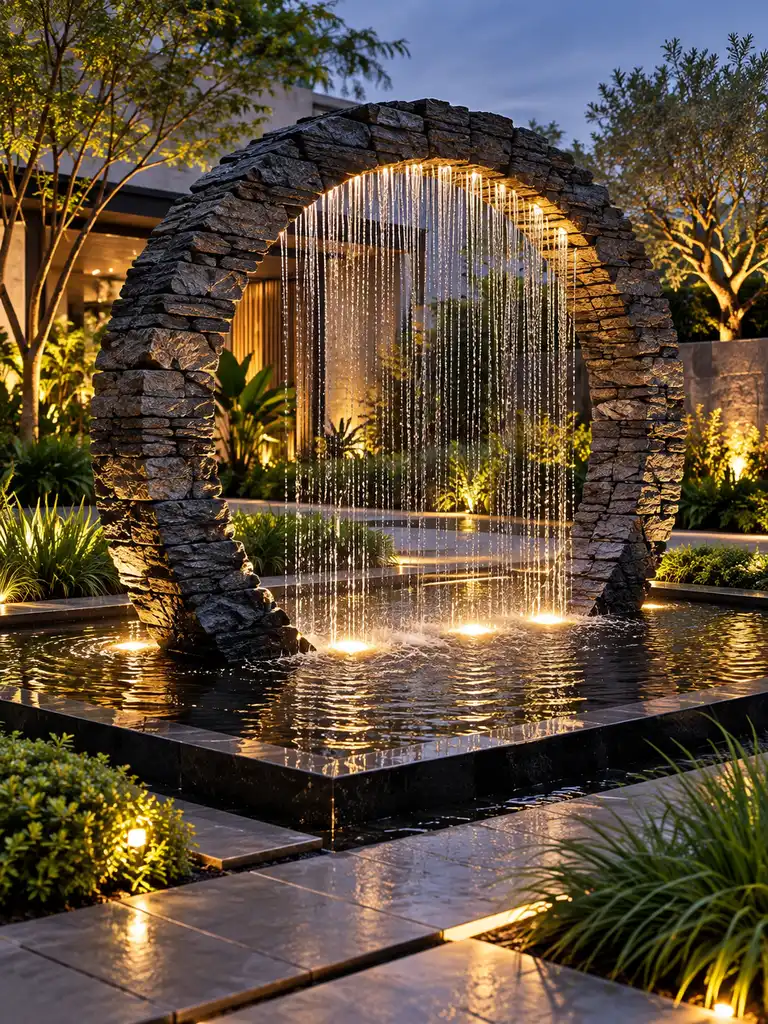
A circular stone ring creates an eye-catching focal point while keeping the center visually open. Install small outlets along the inner upper curve so fine streams fall like rain into a shallow black reflecting pool. Warm submerged lighting can illuminate the vertical strands after dark. Because the garden remains visible through the center, the feature feels dramatic without completely blocking views across a modern courtyard or patio.
9. Rustic Timber Curtain Waterfall
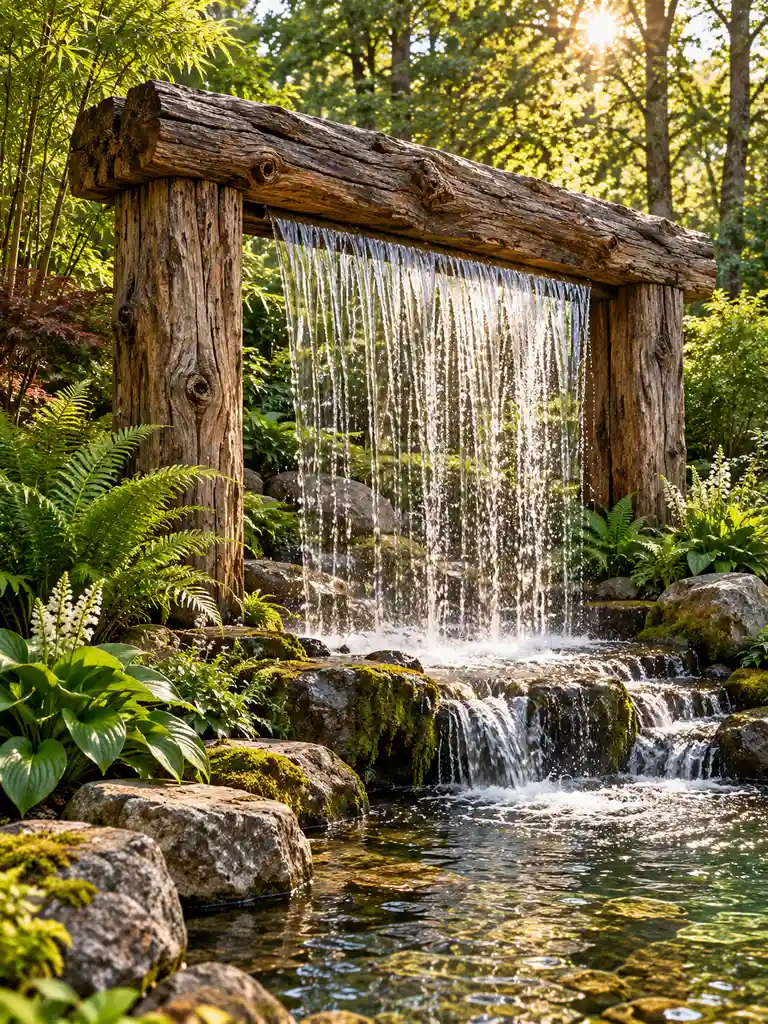
Heavy timber beams give a waterfall a warm handcrafted character. Two vertical posts and one substantial horizontal beam can frame a broad sheet of water that falls into a natural stone pond or hidden pebble reservoir. Weathered wood pairs especially well with ferns, bamboo, moss, hostas, and irregular rocks. The result feels relaxed and established, making it a good choice for woodland-inspired or rustic garden settings.
10. Geometric Corten Steel Waterfall Sculpture
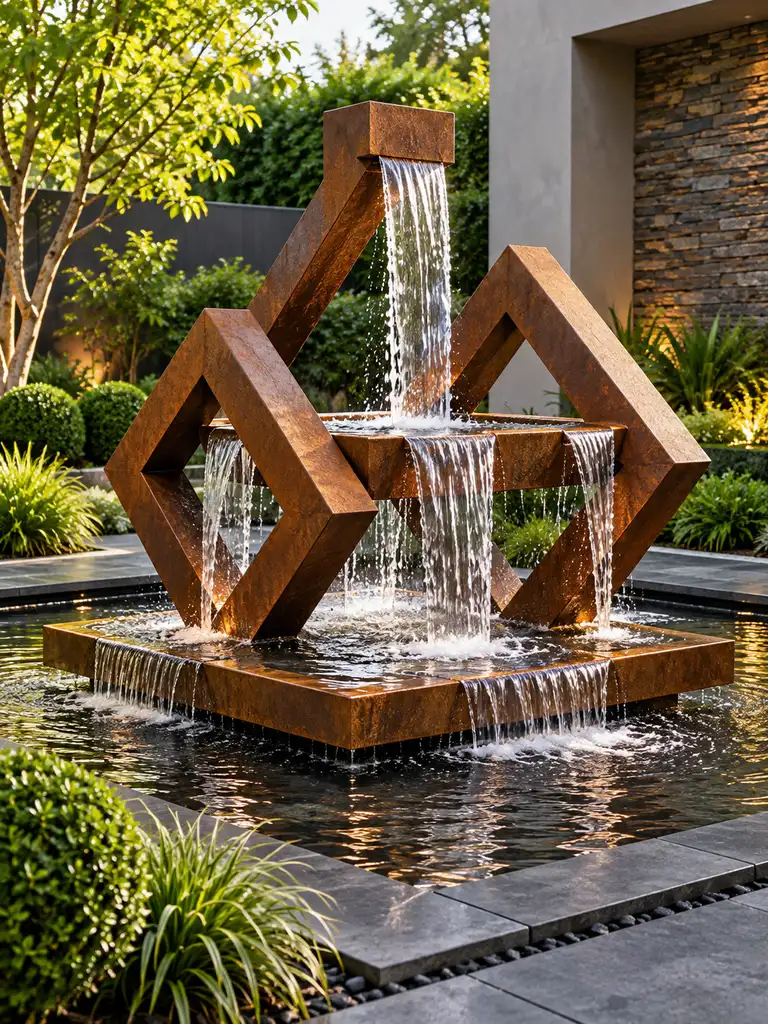
Corten steel is ideal for a bold contemporary fountain because its rust-toned finish looks striking beside greenery and clear water. Intersecting square or diamond-shaped frames can form the sculpture, while water travels through a central outlet and over several steel surfaces before reaching a shallow pool. Dark paving and ornamental grasses complete the composition without distracting from the strong geometry and rich weathered finish.
11. Multi-Level Planter Waterfall
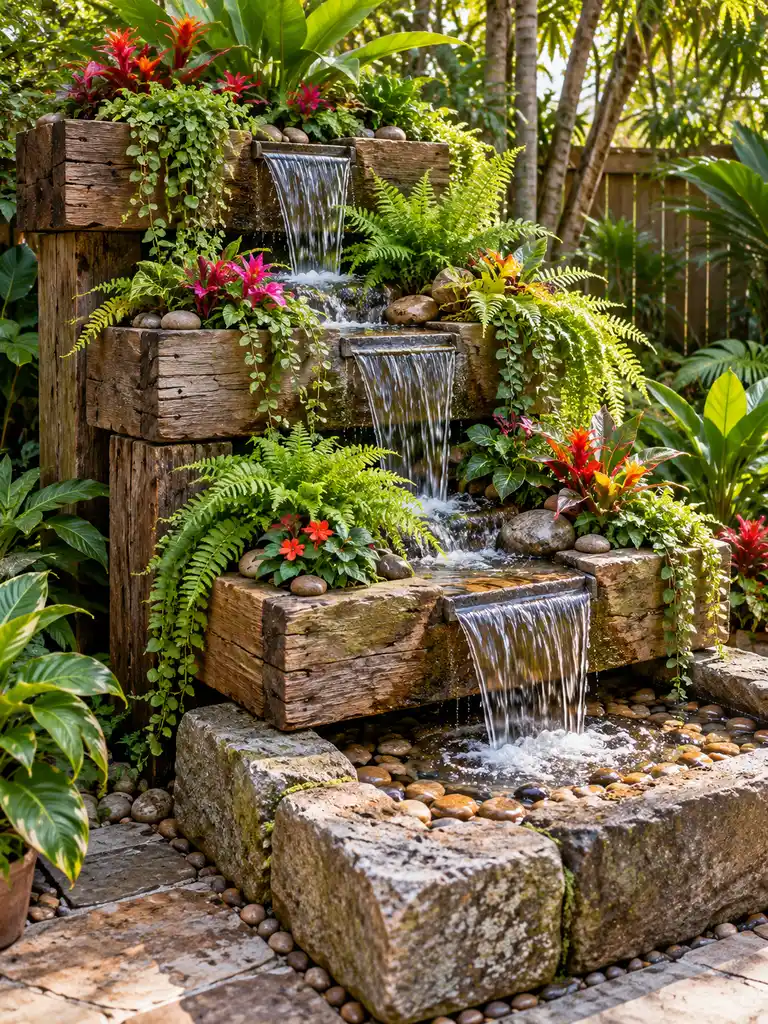
A planter waterfall combines abundant greenery with vertical water movement in one compact feature. Build several planting platforms at different heights and send water through a central sequence of cascades. Fill the surrounding planters with ferns, trailing vines, bromeliads, flowering foliage, and groundcovers. This approach is especially useful in smaller gardens because it introduces layers of planting without requiring a wide footprint at ground level.
12. Illuminated Acrylic Water Prism Tower
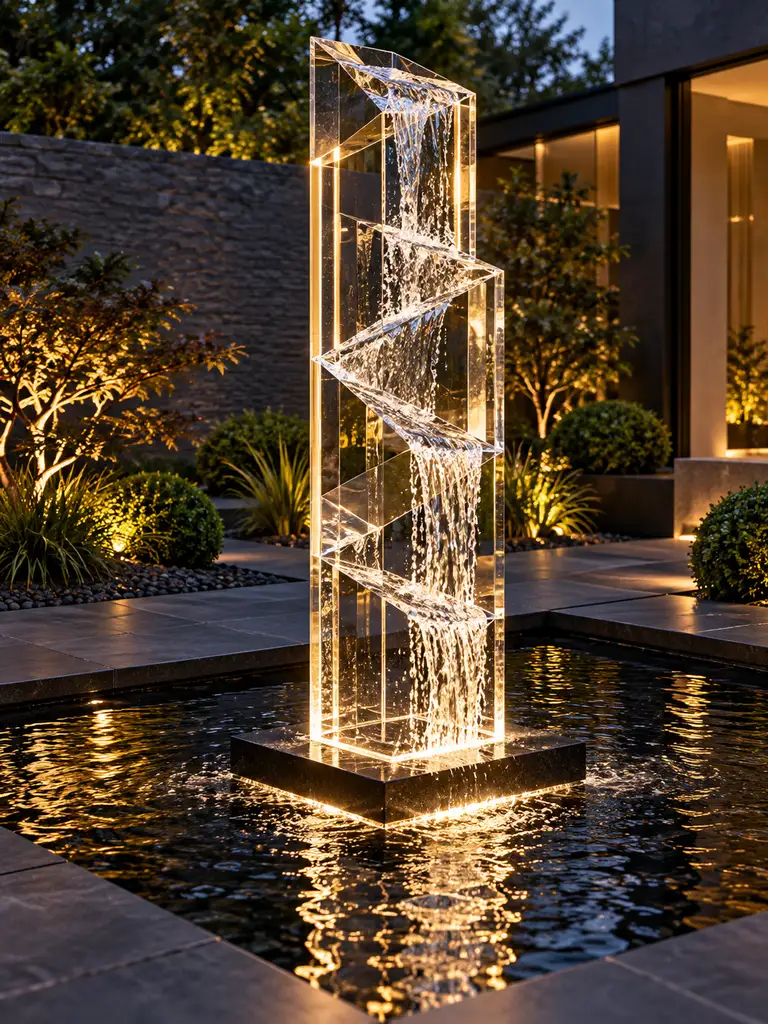
A transparent acrylic prism tower makes water appear almost suspended inside a piece of outdoor art. Hidden channels can direct water across several angled transparent surfaces before it drops into a dark basin. Warm linear lighting along the edges intensifies the effect after sunset and creates beautiful reflections. Keep the surrounding paving and planting restrained so the illuminated prism remains the clear centerpiece of the courtyard.
13. Black Granite Waterfall Wall
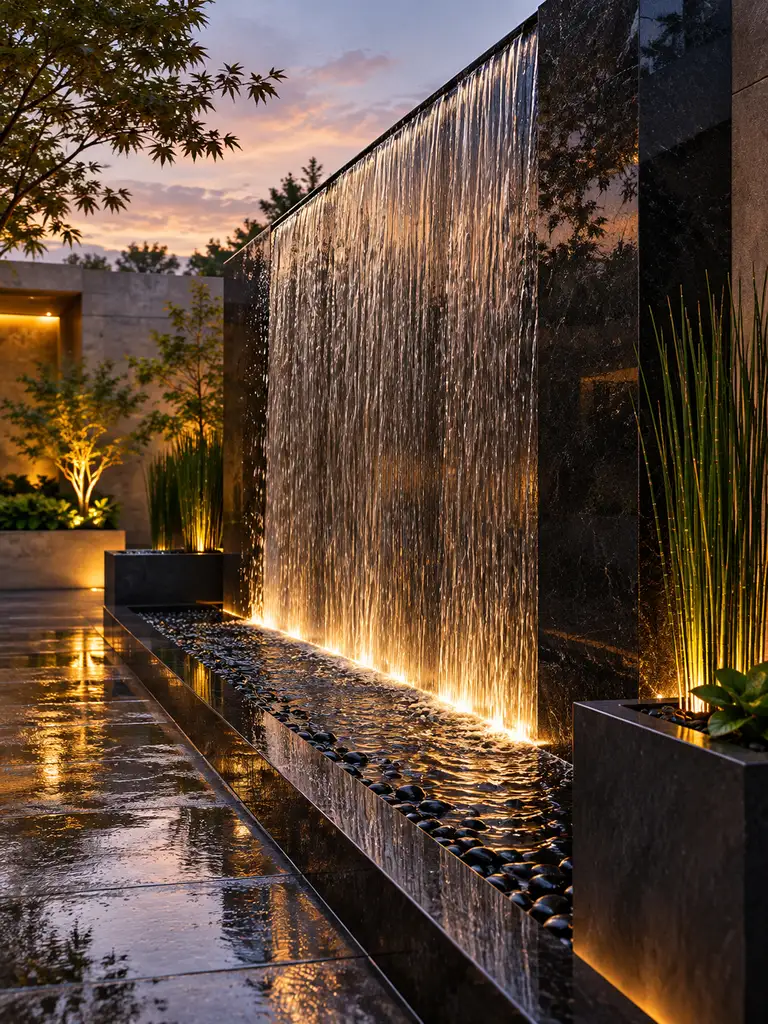
Polished black granite gives a waterfall wall an elegant, contemporary finish. A wide spillway near the top can send a thin sheet of water down the glossy dark surface into a narrow pebble-lined basin. Tall reeds or architectural grasses at the sides soften the wall without hiding it. Concealed lighting beneath the waterfall creates dramatic highlights after sunset and makes the moving water stand out against the nearly black stone.
14. Curved Terrazzo Wave Waterfall
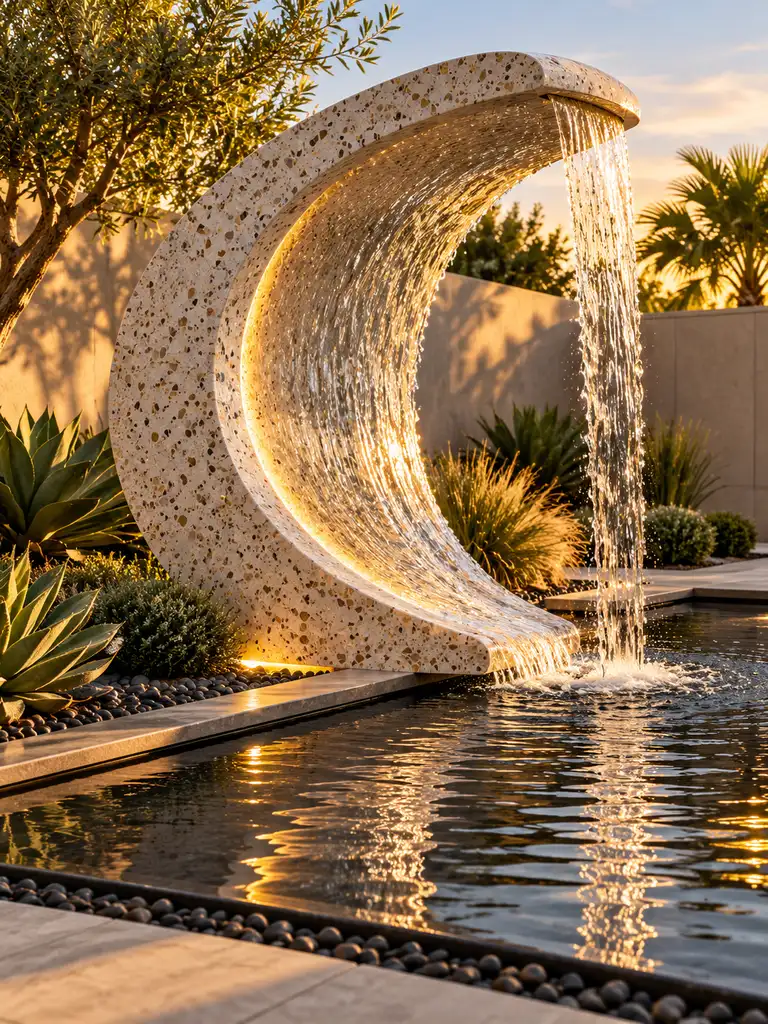
A wave-shaped terrazzo fountain turns flowing water into a sculptural design element. Form one large sweeping curve that rises upward and folds forward, allowing water to travel along the inner surface before dropping into a long reflecting pool. Pale terrazzo with subtle stone fragments keeps the structure light and modern. Low succulents, grasses, and clean paving complement the fountain while preserving its simple architectural silhouette.
15. Cantilevered Waterfall Bridge
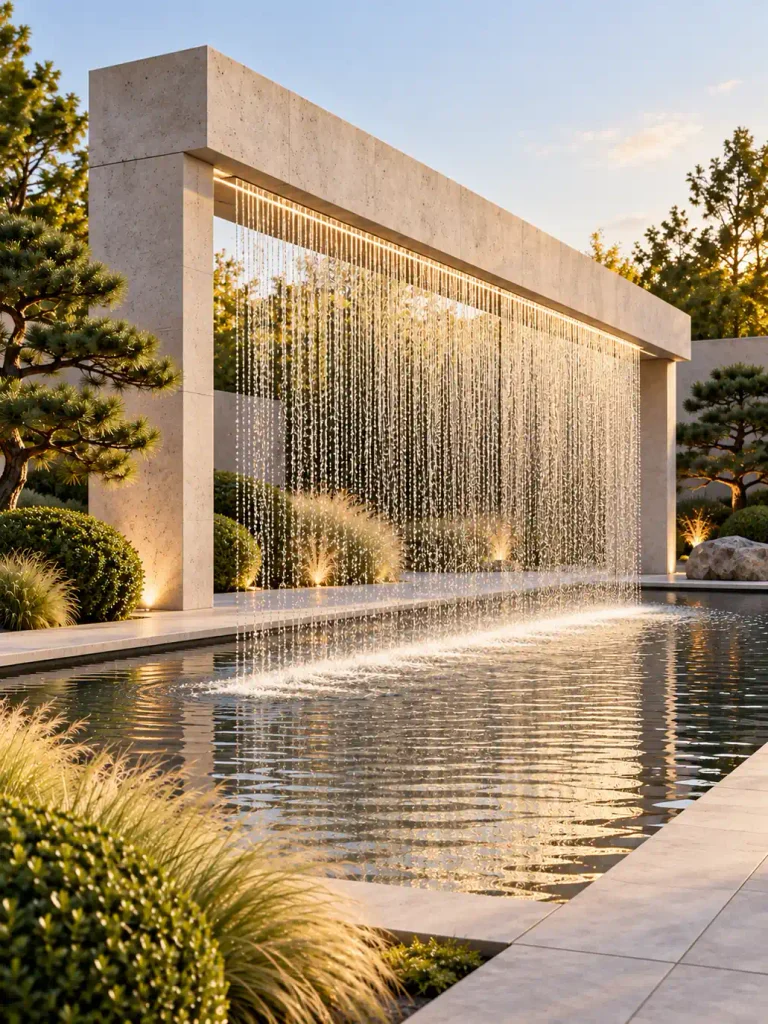
A cantilevered bridge fountain combines architecture and water in one striking feature. Extend a dark stone bridge across a rectangular reflecting pool and conceal the structural support so the outer portion appears to project cleanly above the water. Along one long edge, release a continuous sheet into the pool below. The design works particularly well in spacious contemporary courtyards where the bridge can also guide movement through the landscape.
16. Curved Stone Waterfall Wall
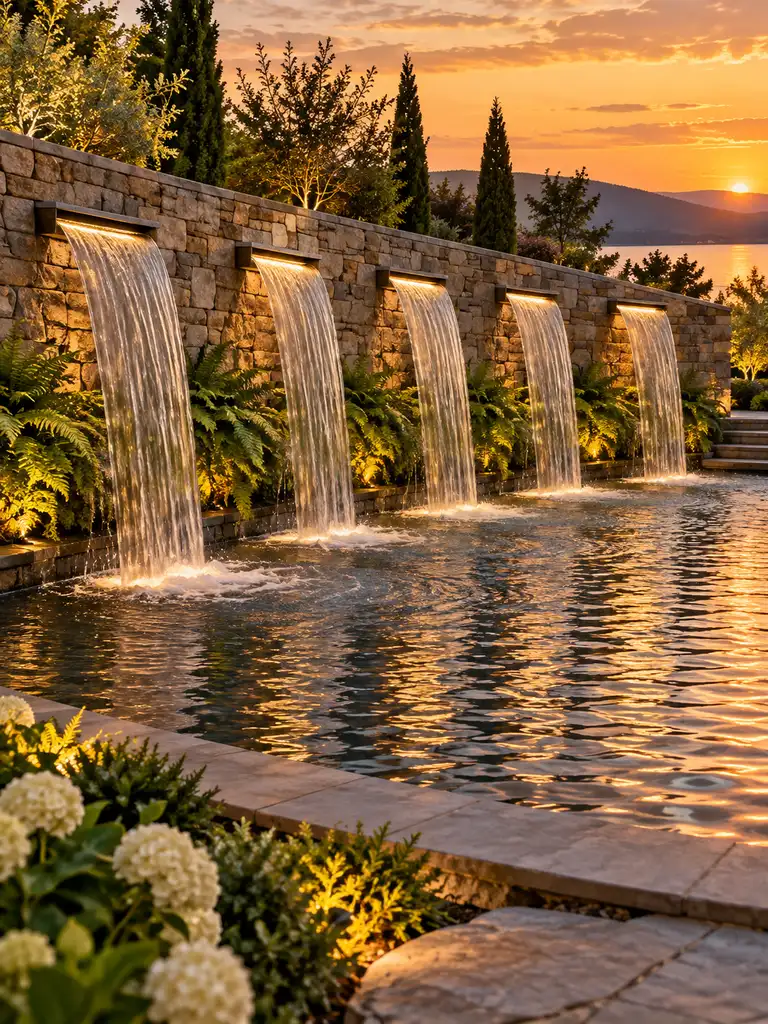
A curved stone wall creates a softer alternative to a straight architectural fountain. Space several spillways along the arc so individual sheets of water fall into a semicircular pond below. Ornamental grasses, ferns, and compact shrubs can follow the same curved line, helping the hardscape blend into the planting. Warm recessed lights beneath the spillways make the repeated waterfalls especially attractive during evening hours.
17. Cylindrical Rain-Veil Fountain
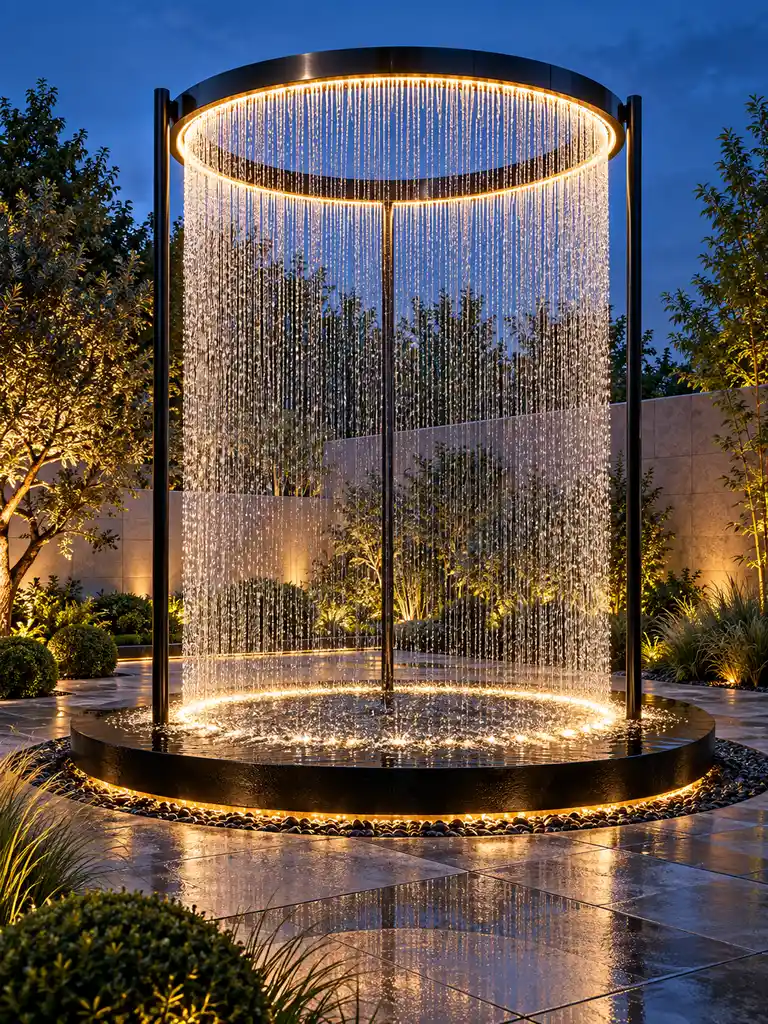
A cylindrical rain-veil fountain creates an immersive effect without using a solid wall. A large circular ring overhead releases hundreds of fine streams around its circumference, forming a transparent cylinder of falling water. Slim dark supports keep the ring secure while remaining visually understated. A circular basin below collects the water, and concealed warm lighting makes every strand sparkle, turning the fountain into a dramatic nighttime centerpiece.
18. Solar Petal Water Sculpture
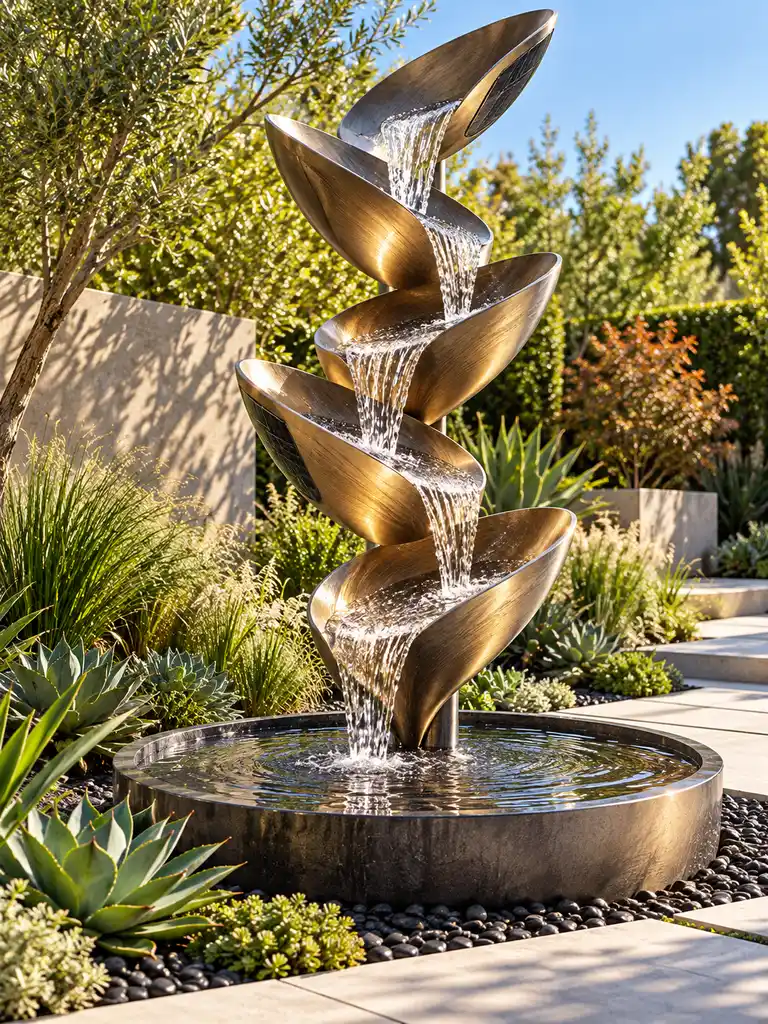
A flower-inspired fountain can feel highly modern when it uses oversized metal petals instead of traditional floral ornament. Arrange brushed-metal petals around a central core so water travels along their curved interiors before falling into a circular basin. Discreet solar panels can be incorporated on the upper rear surfaces to support recirculation. Succulents, grasses, gravel, and drought-tolerant planting reinforce the contemporary sustainable character of the design.
19. Copper Rain-Chain Waterfall
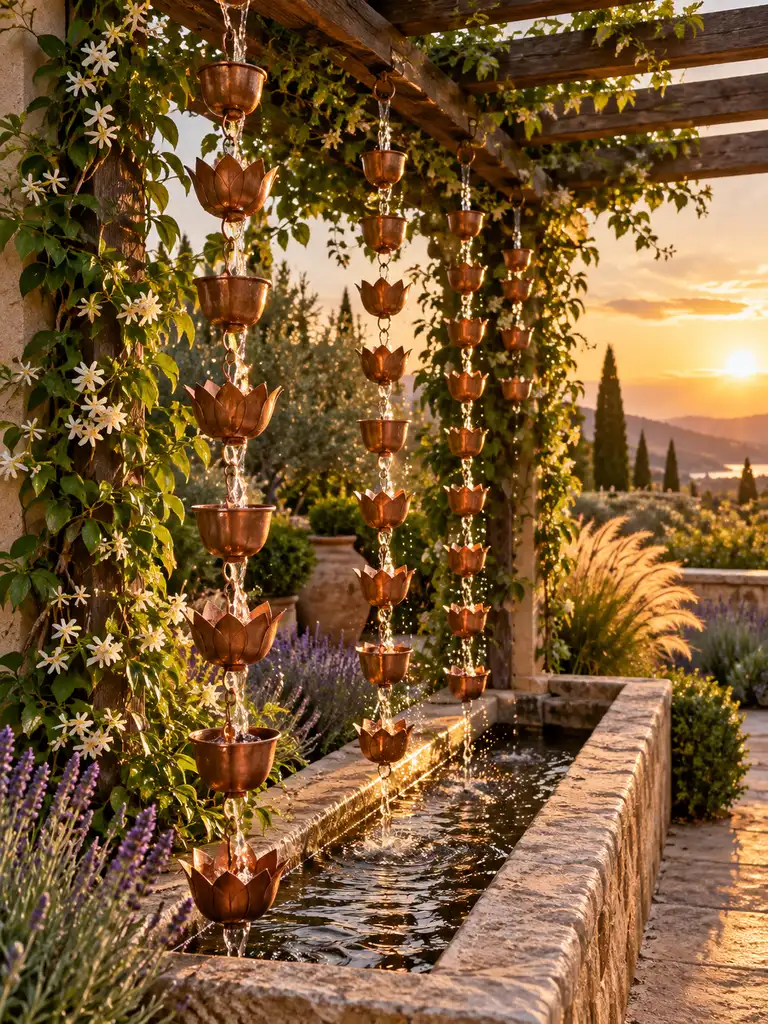
Copper rain chains create a delicate vertical fountain that fits easily beside a pergola or covered patio. Water travels through decorative cups or lotus-shaped elements before falling into a narrow stone trough below. Copper gradually develops a natural patina, giving the feature more character over time. Climbing jasmine, lavender, ornamental grasses, and warm evening light can make the entire installation feel soft, handcrafted, and inviting.
20. Basalt Column Waterfall Fountain
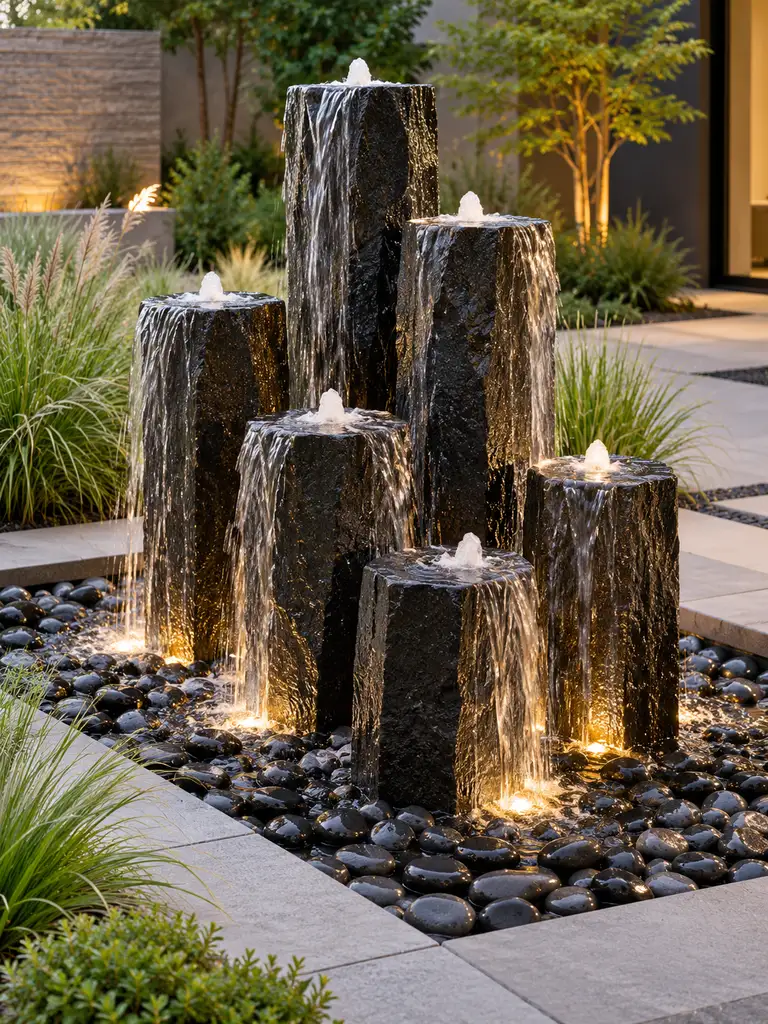
Basalt columns provide strong sculptural form while still feeling connected to natural stone. Arrange several dark volcanic pillars at different heights and allow water to bubble from openings at their tops before running down the textured surfaces. A reservoir hidden beneath polished black river stones keeps the base clean. Wispy grasses planted between the columns add movement and help soften the bold vertical shapes.
21. Rustic Millstone Waterfall
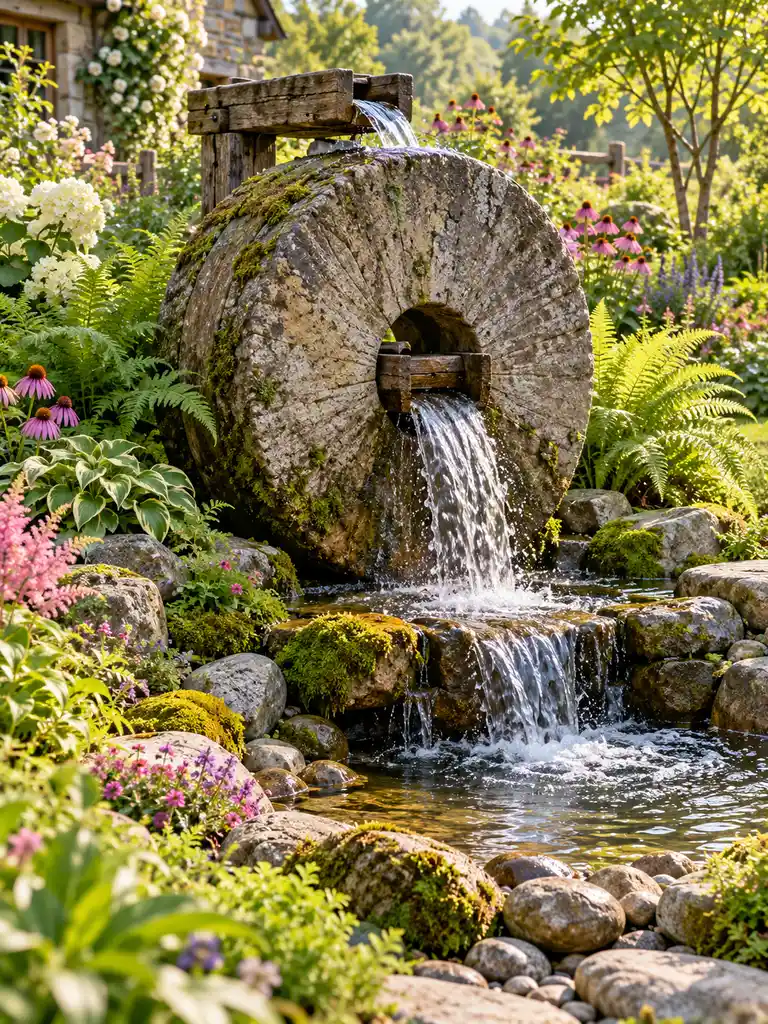
An old millstone can become a memorable fountain centerpiece in a cottage-style landscape. Water can emerge from a timber channel above the circular stone, travel through its center, and continue over lower rocks into a pond. Moss, ferns, hostas, coneflowers, and informal flowering plants help the feature feel naturally integrated. Weathered textures give the fountain charm without requiring an overly elaborate arrangement.
22. Linear Slot-Channel Rill Fountain
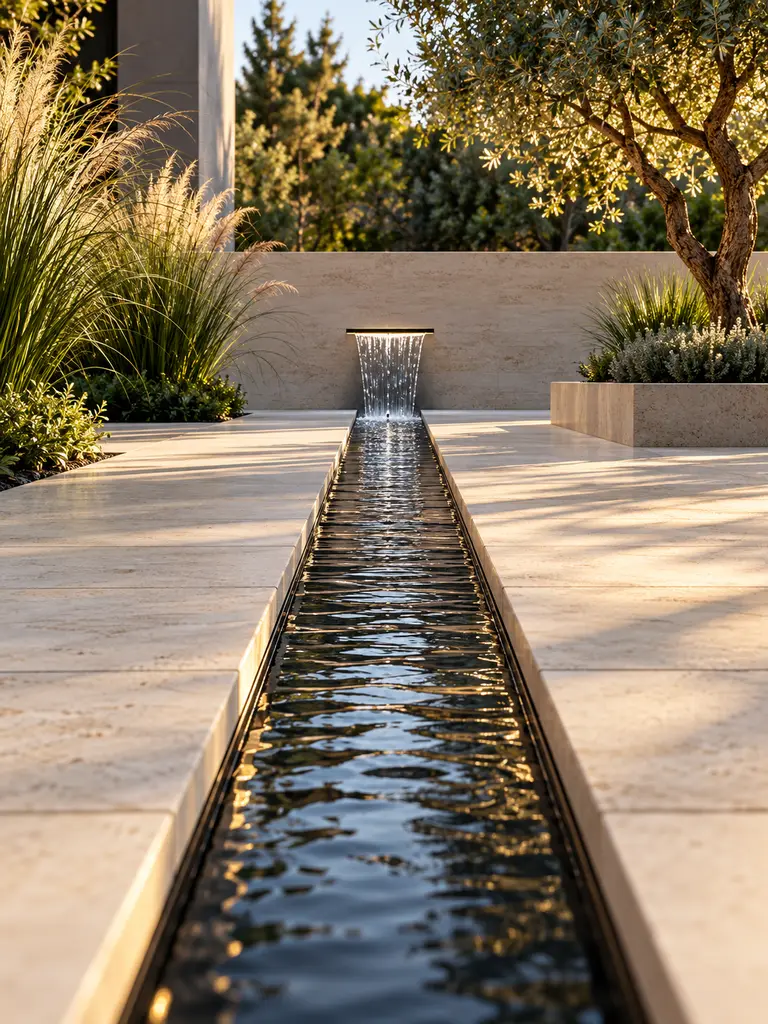
A long narrow rill is an elegant way to make a courtyard feel deeper and more spacious. Water emerges from a nearly invisible slot in a low wall and enters a dark channel cut directly through pale paving. The strong linear perspective naturally draws the eye through the garden. Architectural grasses and one sculptural tree are often enough to finish the design while preserving its clean, minimalist geometry.
23. Woodland Tree-Trunk Waterfall
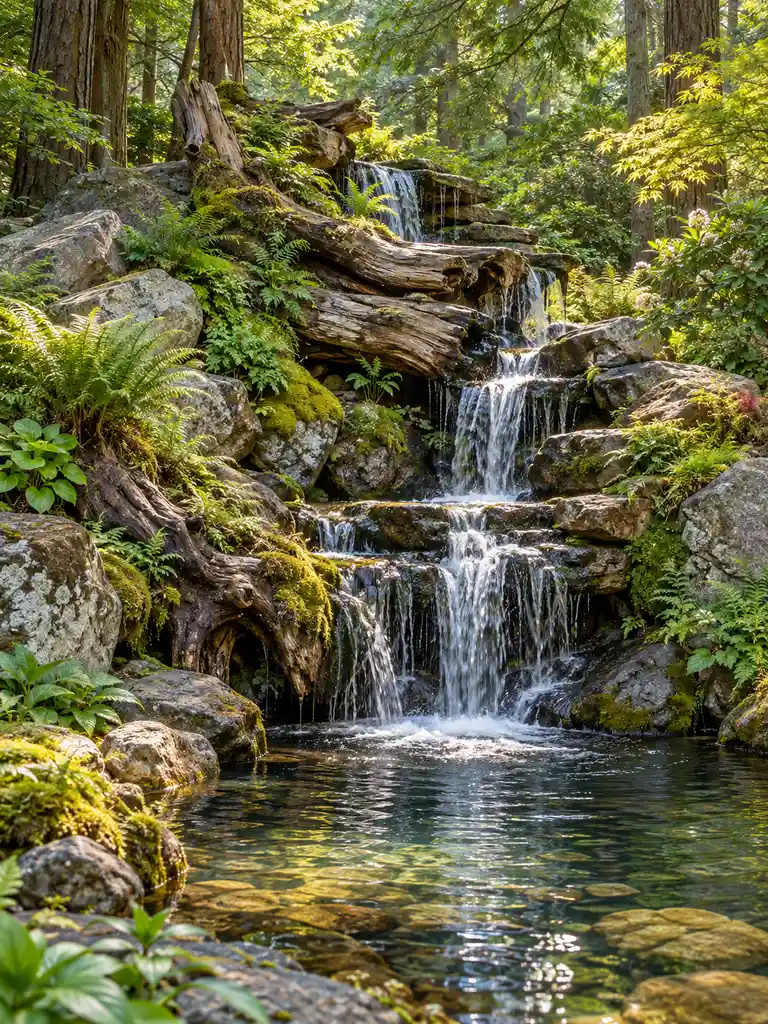
A waterfall built around weathered logs and tree trunks can look as though it developed naturally within a forest. Let water move between moss-covered rocks, beneath fallen timber, and over irregular ledges before reaching a shaded pond. Ferns, hostas, woodland groundcovers, and mature trees can hide construction edges. Avoid perfect symmetry so the feature feels discovered in the landscape rather than deliberately assembled.
24. Mediterranean Terracotta Pot Cascade
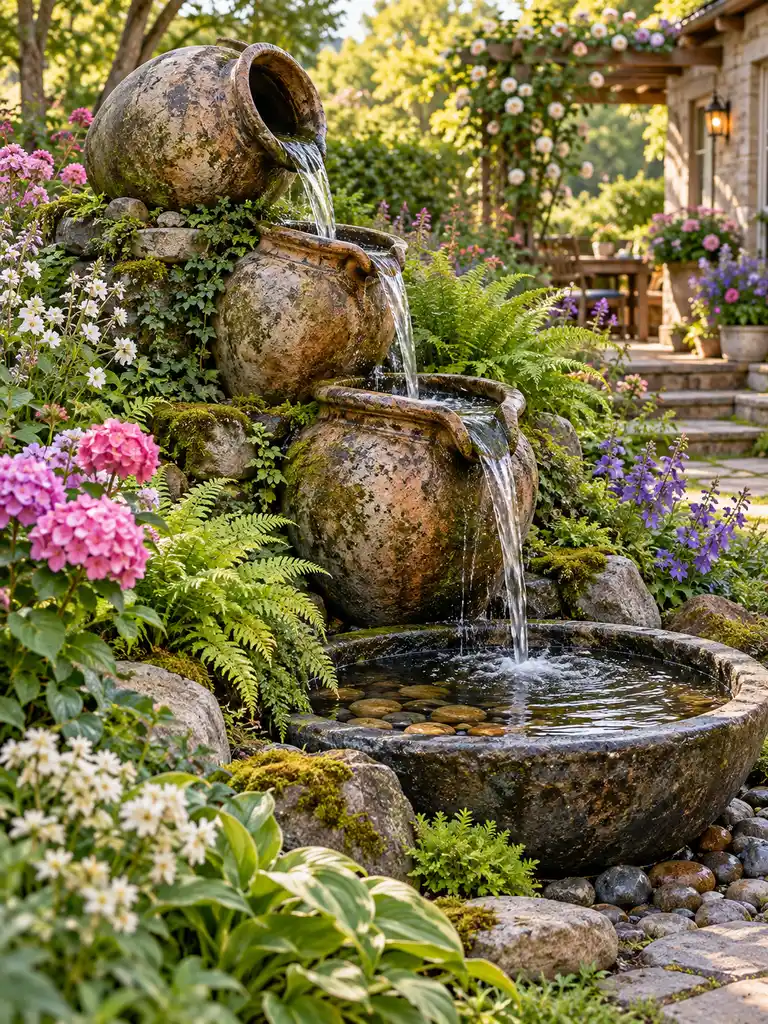
Large terracotta pots arranged at different heights can create a warm Mediterranean-style cascade. Water spills from one vessel into another before reaching a shallow stone basin at the bottom. Pair weathered pottery with limestone paving, lavender, rosemary, olive foliage, and flowering plants. Slight mineral staining and natural aging can make the pots feel established, adding character to sunny patios and courtyard gardens.
25. Porcelain Louver Water Screen
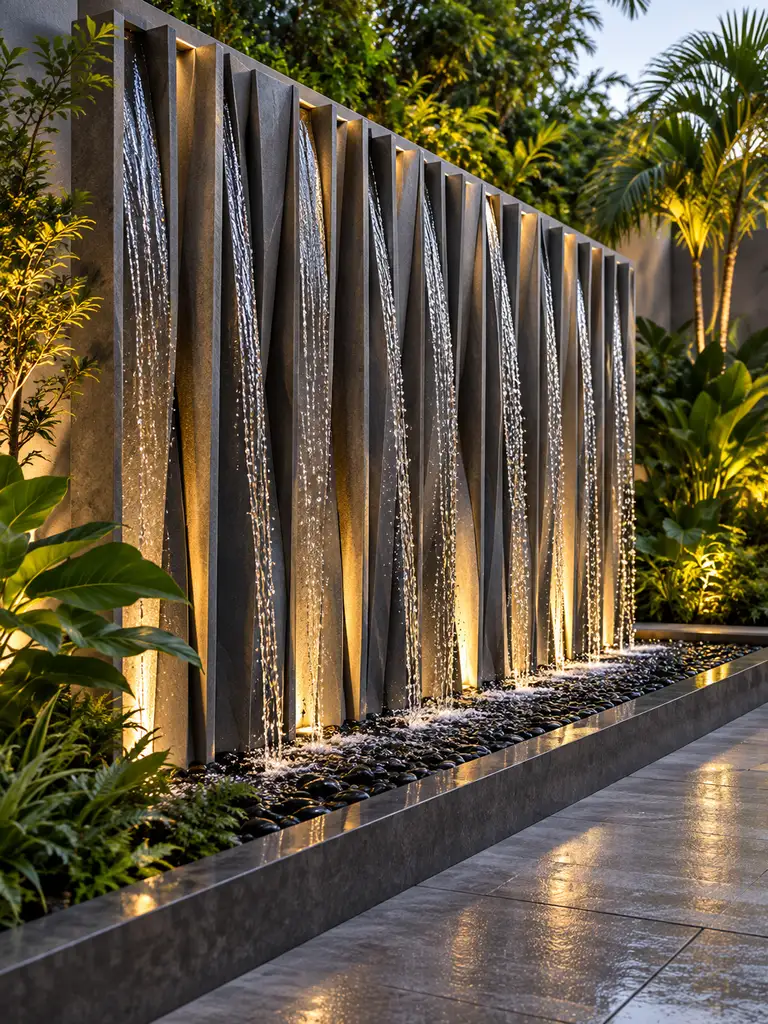
A wall of angled porcelain louvers offers a striking alternative to a conventional sheet waterfall. Water travels down multiple individual fins, creating dozens of narrow shimmering streams instead of one solid curtain. The alternating angles produce changing shadows and reflections throughout the day. A long black-pebble basin collects the water, while concealed lights between selected louvers reveal the depth of the structure after sunset.
26. Integrated Waterfall Seating Wall
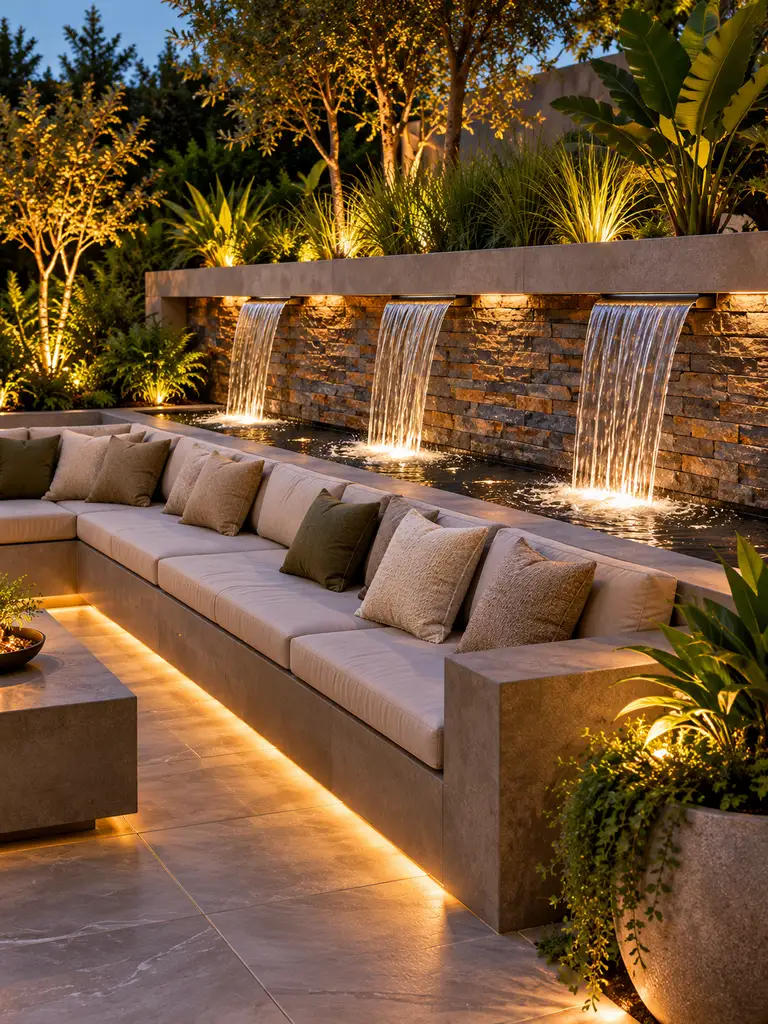
A waterfall can become part of the outdoor lounge instead of sitting separately in the garden. Build a long architectural bench in front of a raised feature wall and place a narrow water channel directly behind the seating. Several spillways can fall into the channel while remaining safely separated from the cushions. Neutral upholstery, large-format paving, planted beds, and under-bench lighting create a sophisticated, relaxing gathering area.
27. Three-Tier Stone Spillway Fountain
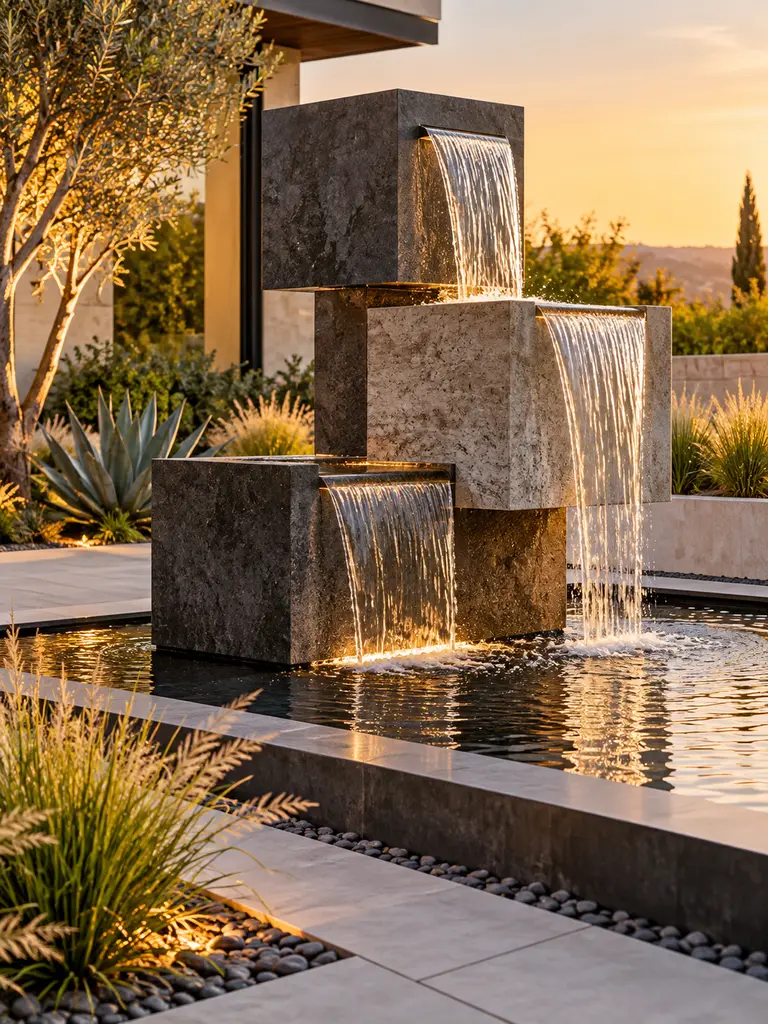
Three broad stone platforms set at different heights create a structured waterfall with strong horizontal lines. Water can pause briefly on each level before flowing evenly over the front edge and continuing downward. Natural gray stone keeps the design warm enough for a residential setting, while black pebbles and restrained planting help the geometry remain visible. This style works particularly well against a simple garden wall.
28. Floating Rock Waterfall Sculpture
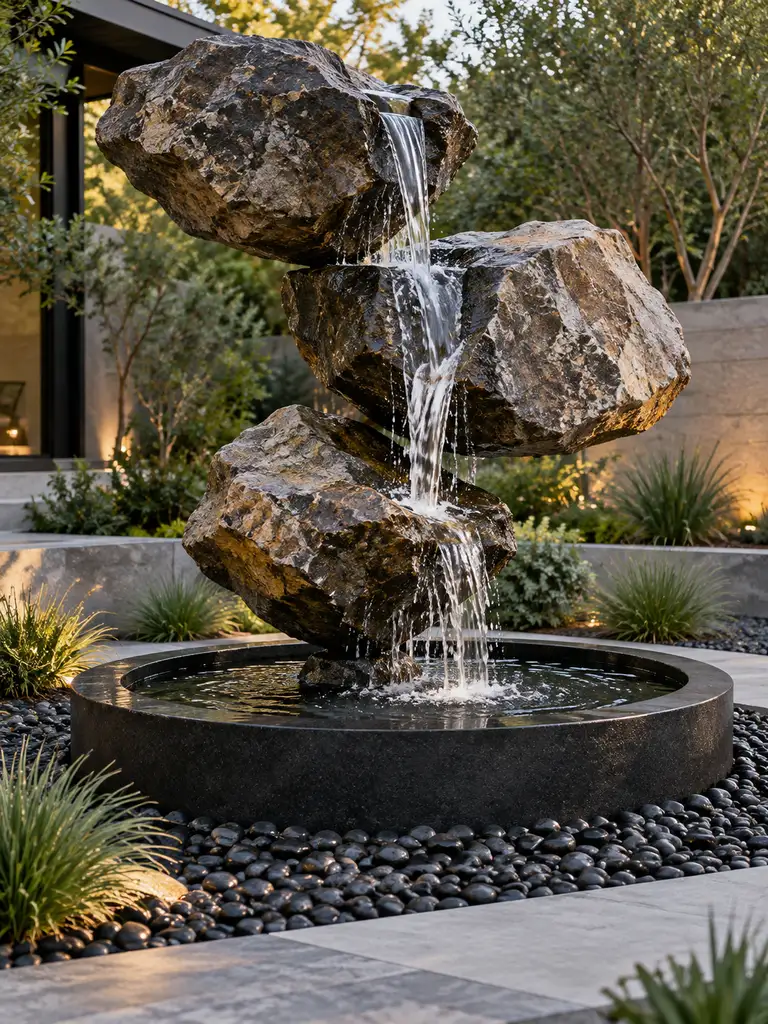
A floating-rock fountain uses carefully engineered supports to create the illusion of large boulders balancing with open gaps between them. Water can emerge from the upper rock and pass through the spaces before reaching a circular basin. The irregular stone surfaces keep the feature organic even though the structure is highly controlled. Low grasses and black pebbles around the base allow the unusual rock composition to remain the main attraction.
29. Modern Arch Water Curtain
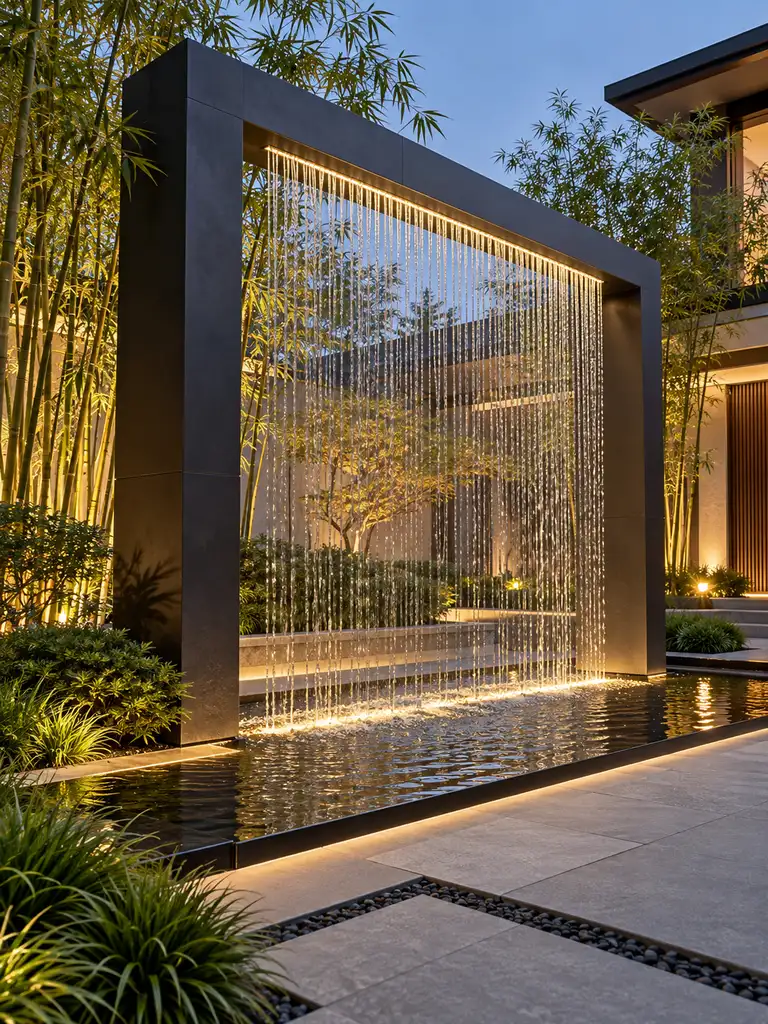
A tall modern arch can frame a fine curtain of water while leaving the landscape visible through the opening. Numerous small outlets along the upper beam release parallel streams into a shallow reflecting pool. Dark stone or metal gives the frame a crisp contemporary finish. Warm lighting along the basin floor highlights every strand after sunset, making the arch feel both architectural and surprisingly light.
30. Floating Monolith Spill Fountain
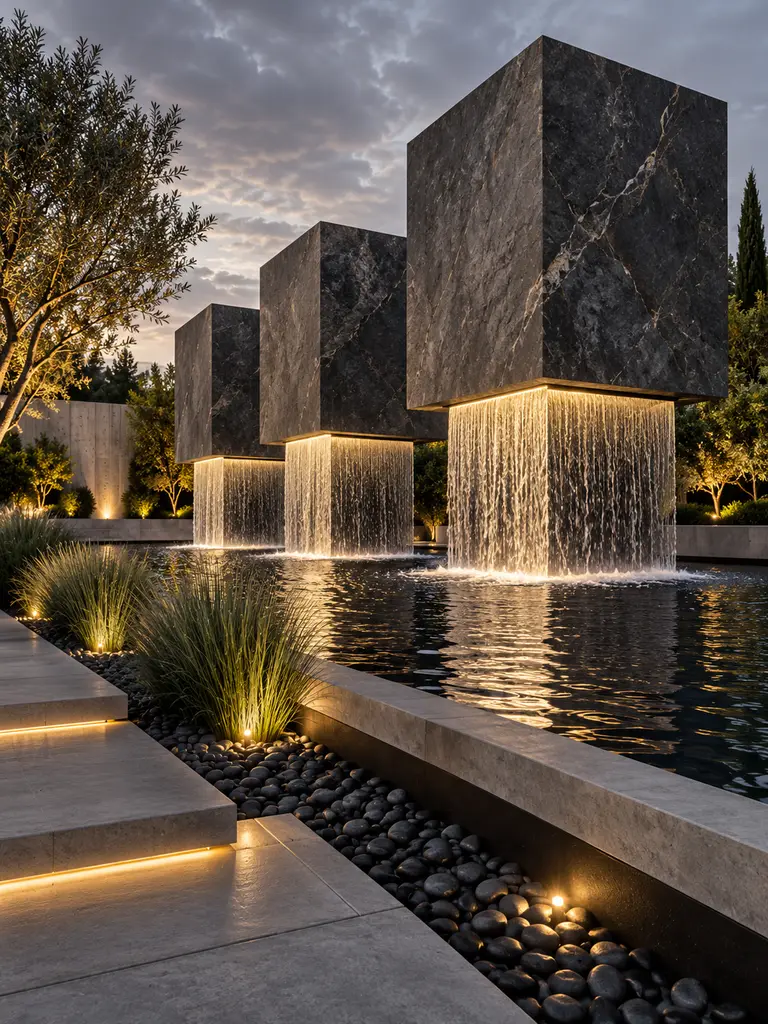
Massive stone monoliths can create a dramatic contemporary fountain when their structural supports are hidden from view. Position several rectangular blocks above a reflecting pool so they appear to hover slightly over the water. Broad waterfalls can drop from beneath each monolith, creating illuminated columns below the heavy stone forms. The contrast between visual weight and moving water gives the design a powerful sculptural presence.
31. Gabion Wall Waterfall Fountain
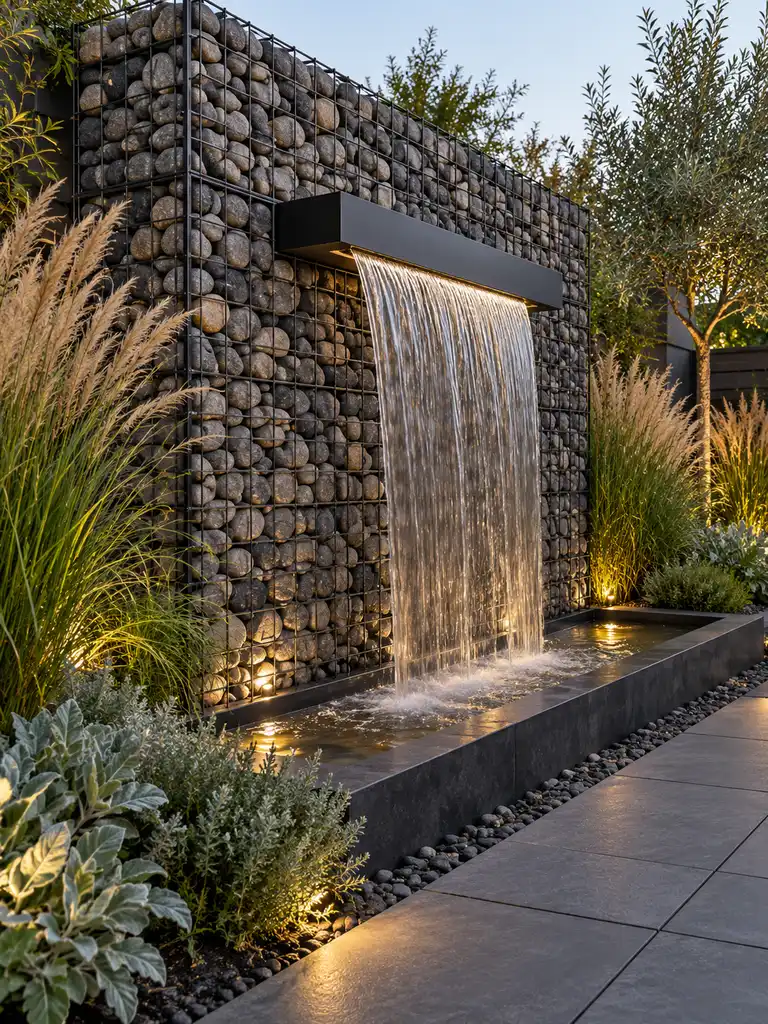
A gabion wall combines industrial structure with natural stone texture. Fill a black steel mesh cage with rounded or irregular rocks, then integrate a wide metal spillway into the upper section so water falls into a narrow basin below. Ornamental grasses and drought-tolerant foliage complement the rugged surface without hiding it. This fountain suits contemporary homes that already use steel, stone, or concrete in the landscape.
32. Oversized Urn Overflow Fountain
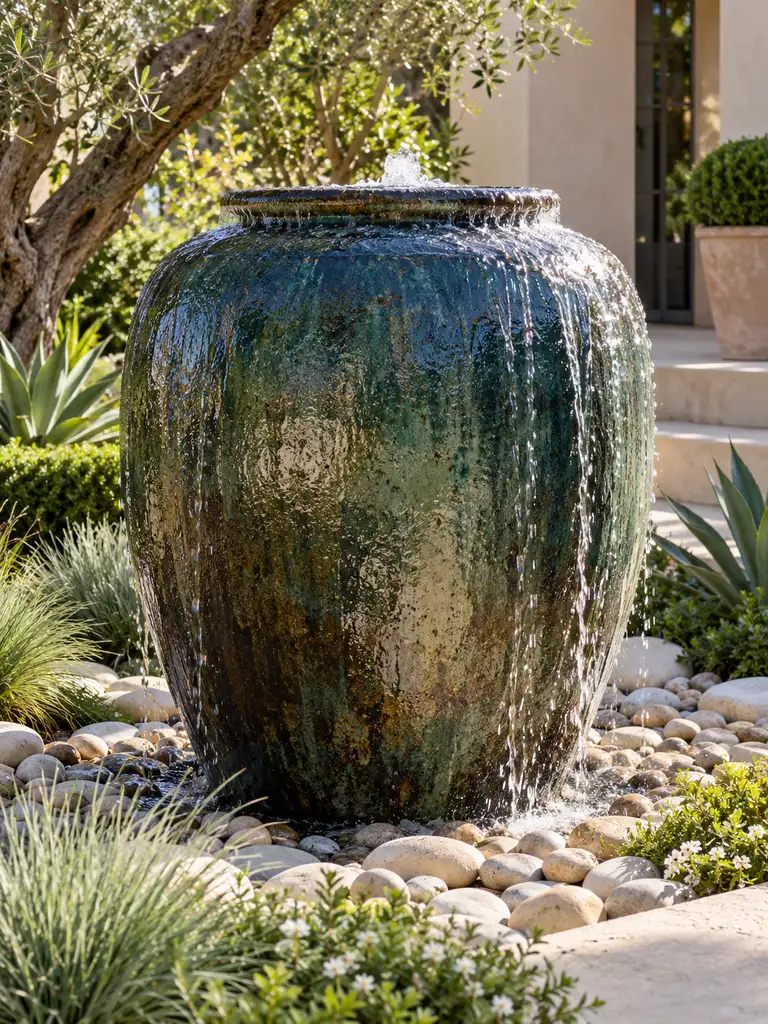
One oversized urn can create plenty of impact without a complex waterfall structure. Water bubbles from the top opening and spills evenly over the entire curved surface before disappearing into a pebble-covered hidden reservoir. A deep blue or green glazed vessel provides color, while neutral stone creates a quieter effect. Low grasses and flowering plants can surround the urn without competing with its strong sculptural shape.
33. Fire-and-Water Linear Cascade
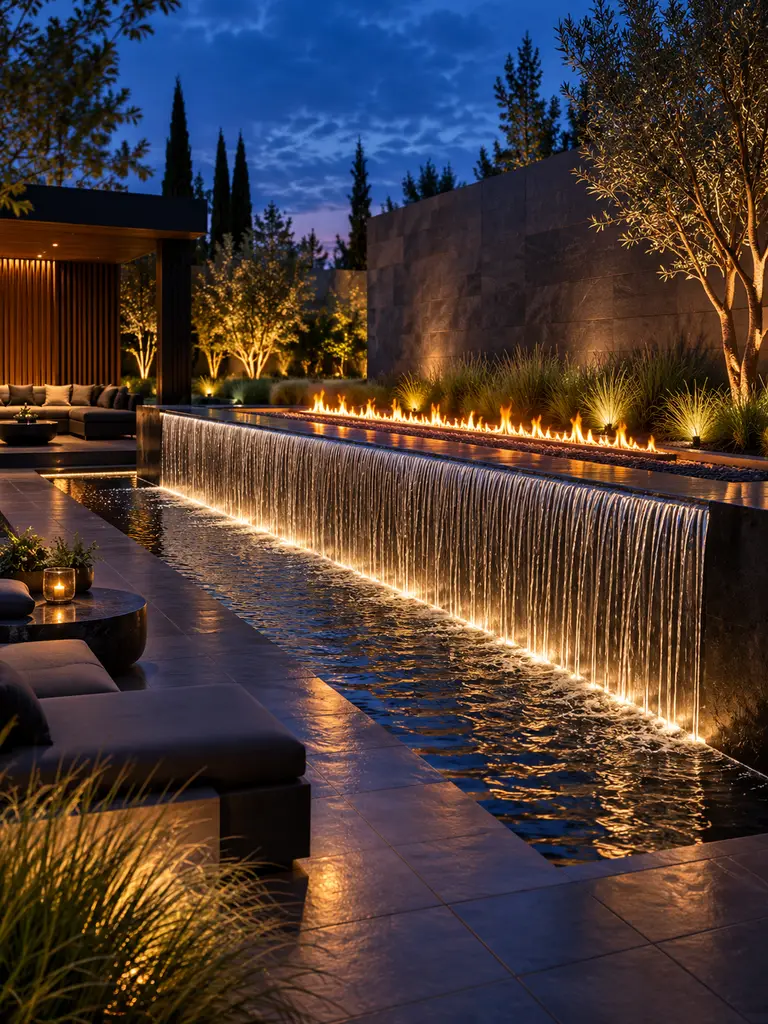
Fire and water can share one contemporary feature when the two systems are clearly separated and professionally engineered. A long black-stone ledge can release a continuous waterfall into a narrow pool, while a recessed linear flame channel runs safely behind it on the upper surface. At blue hour, the warm flames reflect beautifully in the falling water. Minimal surrounding planting keeps attention on the dramatic contrast.
34. Sculptural Canopy Edge Waterfall
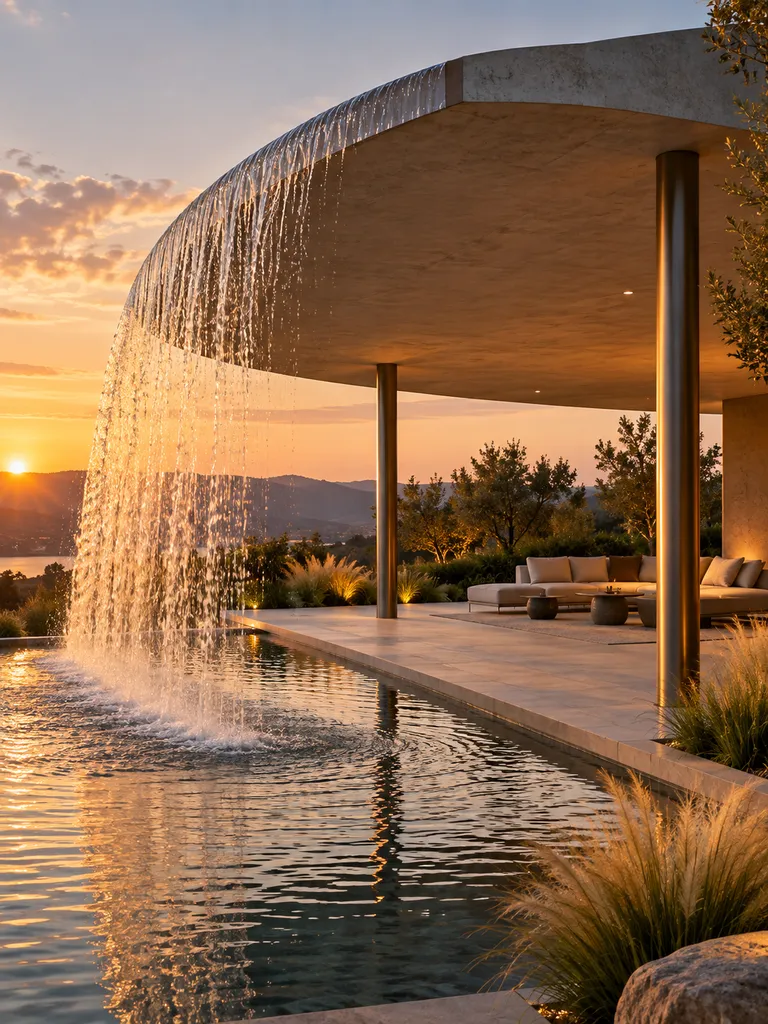
An architectural canopy can become a waterfall by turning its outer edge into one continuous spillway. A thin curved concrete roof may extend over a patio or pool while water travels along the front rim and falls in a sweeping curtain below. Slim columns keep the structure visually light. Seating placed beneath the canopy creates an impressive outdoor room where the water feature becomes part of the architecture itself.
35. Stepping-Stone Cascade Fountain
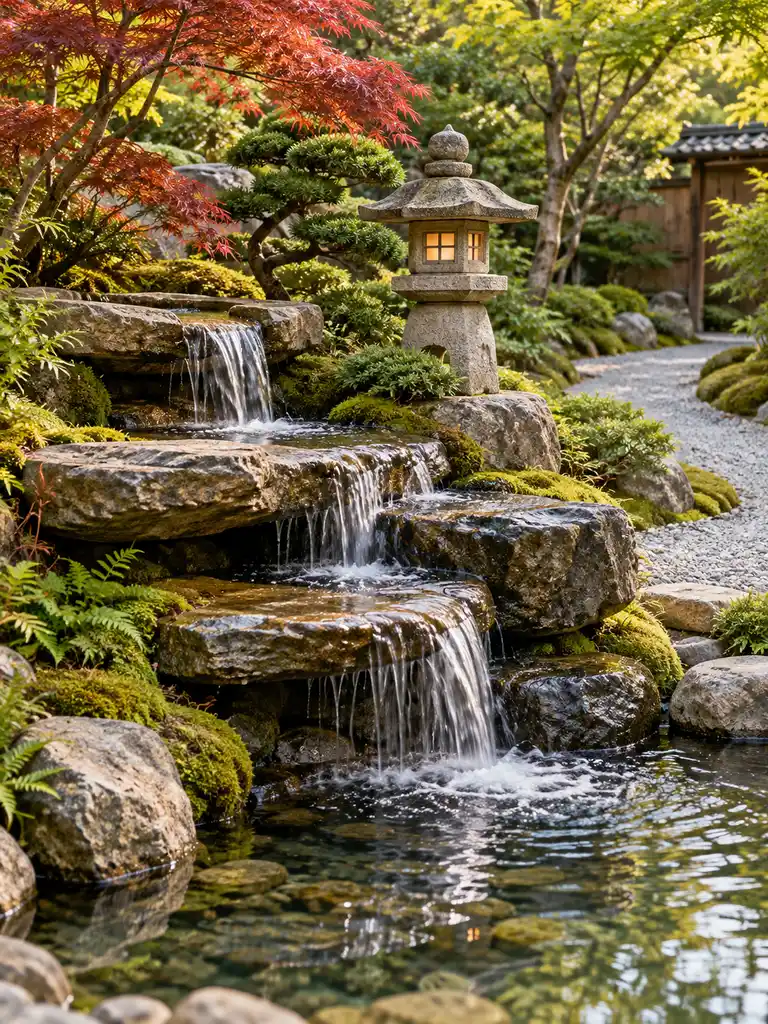
Large flat stones descending through the garden can form a relaxed cascade that follows the natural change in elevation. Water travels across each broad surface before spilling to the next level and eventually reaching a pond. Irregular boulders, moss, ferns, and ornamental grasses soften the edges and make the arrangement feel established. This design is particularly effective in sloping gardens where the terrain already suggests a natural water route.
36. Modular Hexagon Cascade Wall
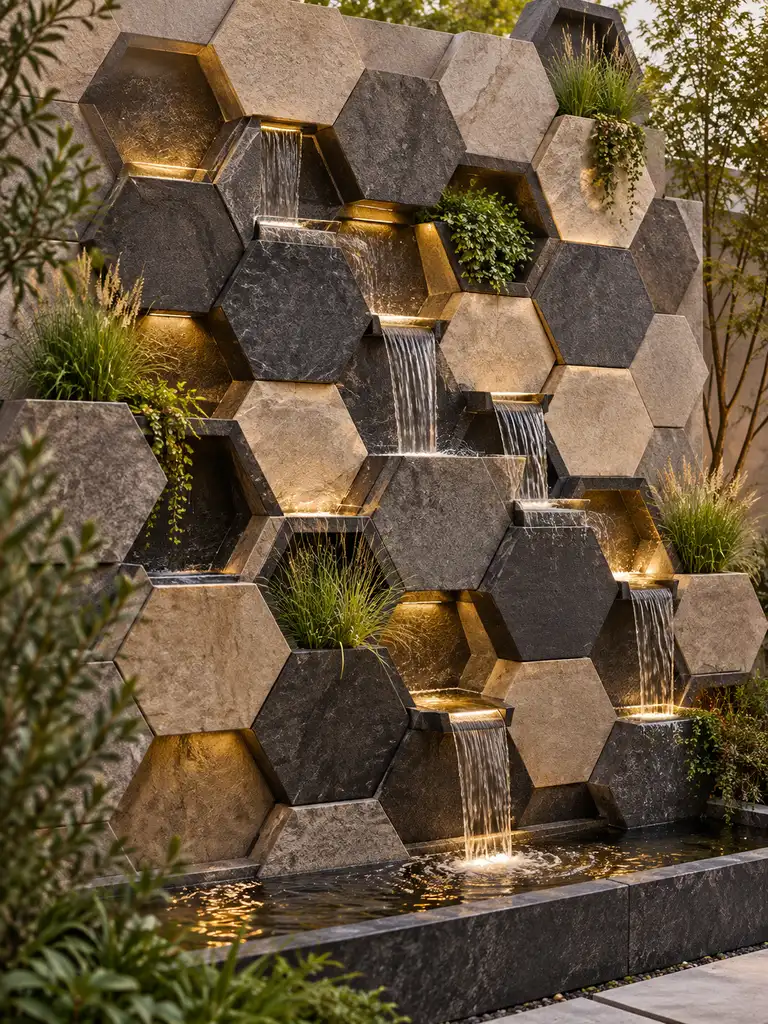
A honeycomb-inspired waterfall wall brings bold geometry to a modern garden. Build the feature from large three-dimensional hexagonal modules in charcoal, beige, and warm gray stone. Some cells can hold planting while others contain shallow pools and small spillways that move water diagonally from one module to another. Concealed lighting inside selected cells emphasizes the depth and makes the water pathways especially attractive after dark.
37. Sculptural Leaf Water Fountain
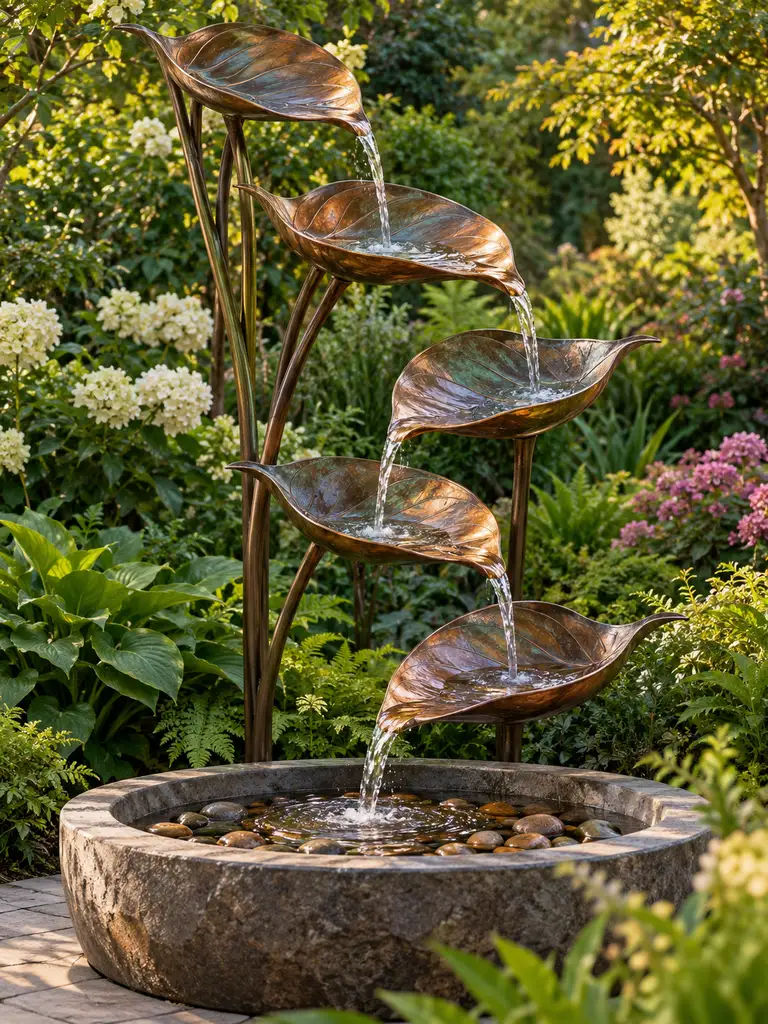
Oversized metal leaves can create a fountain that remains decorative even when the pump is off. Arrange bronze or copper leaves at staggered heights so each form collects water before releasing it from the pointed tip into the leaf below. A stone basin at the bottom completes the circulation system. Dense green planting provides a natural background that helps the warm metallic surfaces stand out beautifully.
38. Black Aluminum Origami Water Sculpture
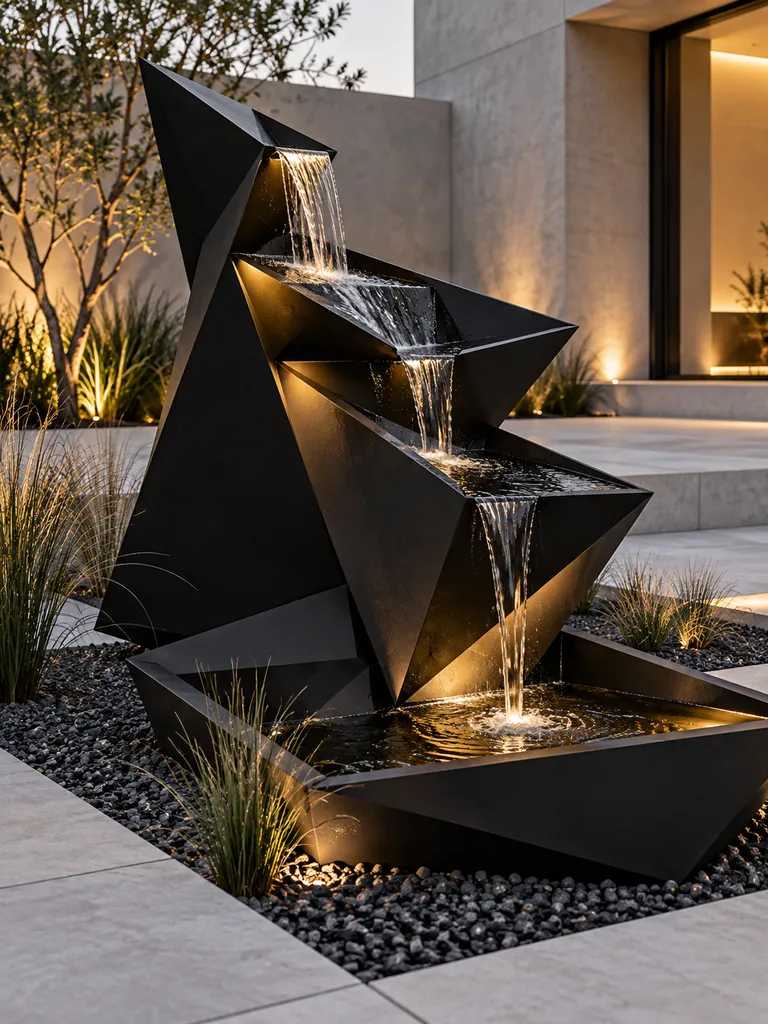
A folded black aluminum fountain brings sharp contemporary geometry into the landscape. One sculptural sheet can be bent into multiple angular planes, creating channels where water travels from upper folds toward a geometric basin. Some sections allow water to glide across the metal while others produce short vertical drops. Warm concealed lighting beneath selected planes reveals the complex silhouette and reflects beautifully across the wet black surfaces.
39. L-Shaped Corner Waterfall Wall
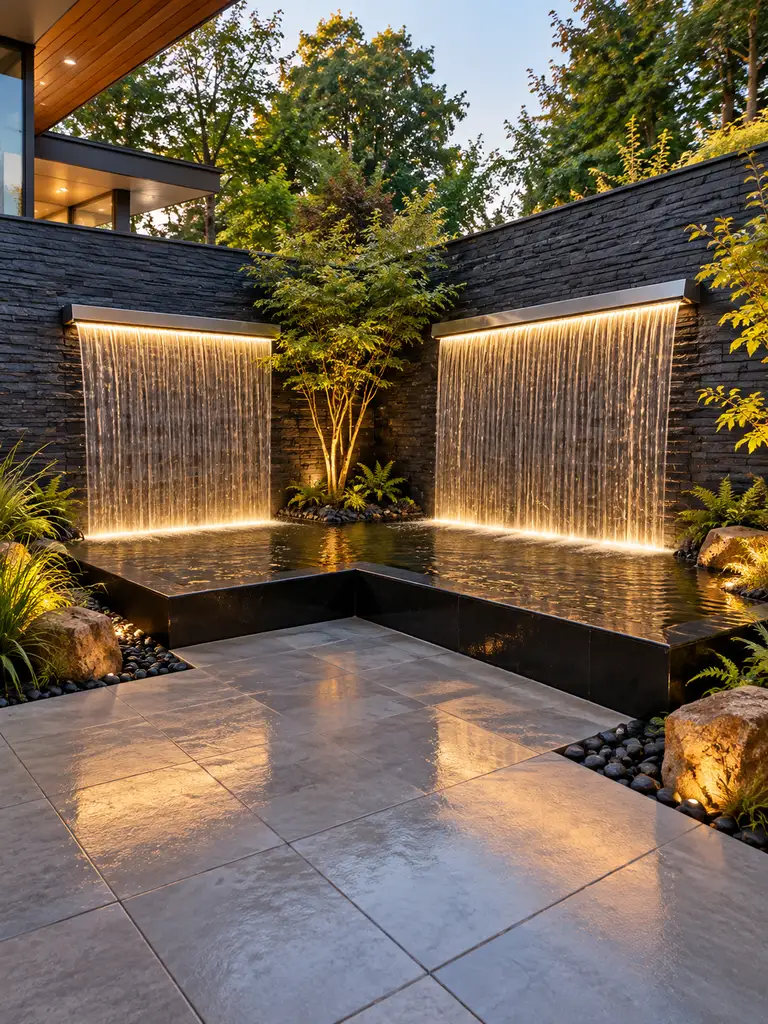
An unused patio corner can hold a substantial water feature without taking over the center of the space. Build two dark stacked-stone walls that meet at a right angle and install a coordinated spillway on each side. Both waterfalls can feed one continuous L-shaped reflecting basin. A small ornamental tree and architectural grasses soften the corner, while warm lighting adds depth to the textured stone after sunset.
40. Copper Bowl Tiered Waterfall
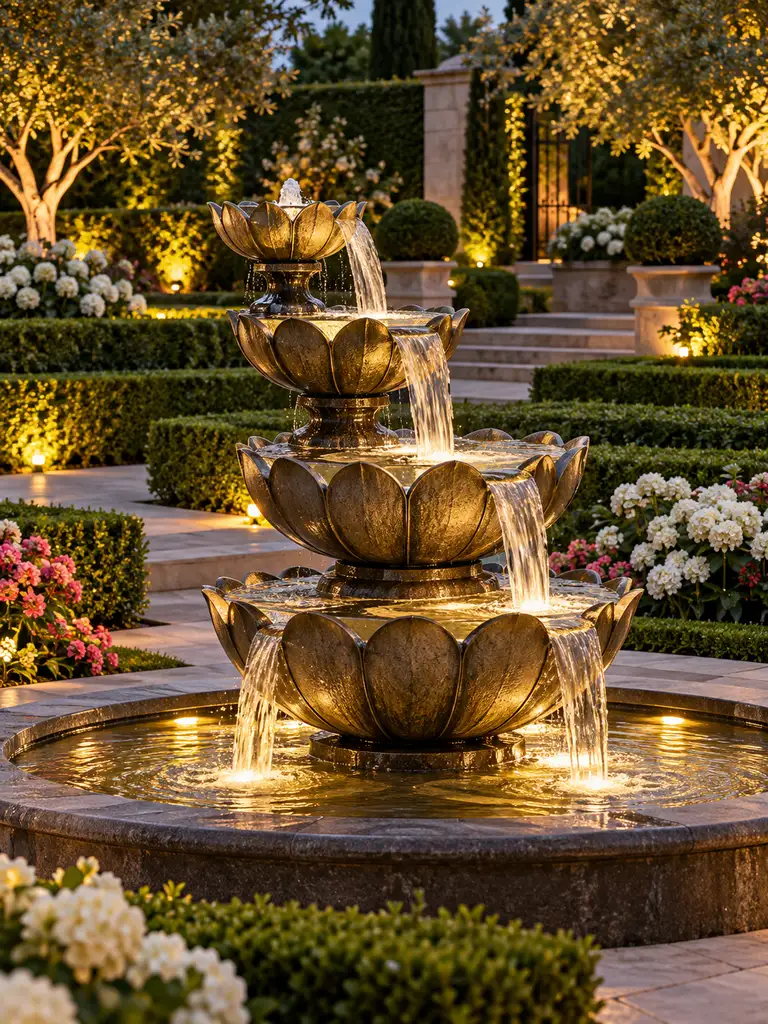
Hammered copper bowls create a warm handcrafted version of a tiered fountain. Mount several large bowls at staggered heights so water fills one before spilling generously into the next. The reflective copper catches sunlight during the day and gradually develops a natural patina outdoors. Dark pebbles, lavender, grasses, and low shrubs complement the metal and allow the bowl shapes to remain clearly visible.
41. Raised Garden Pond With Waterfall Wall
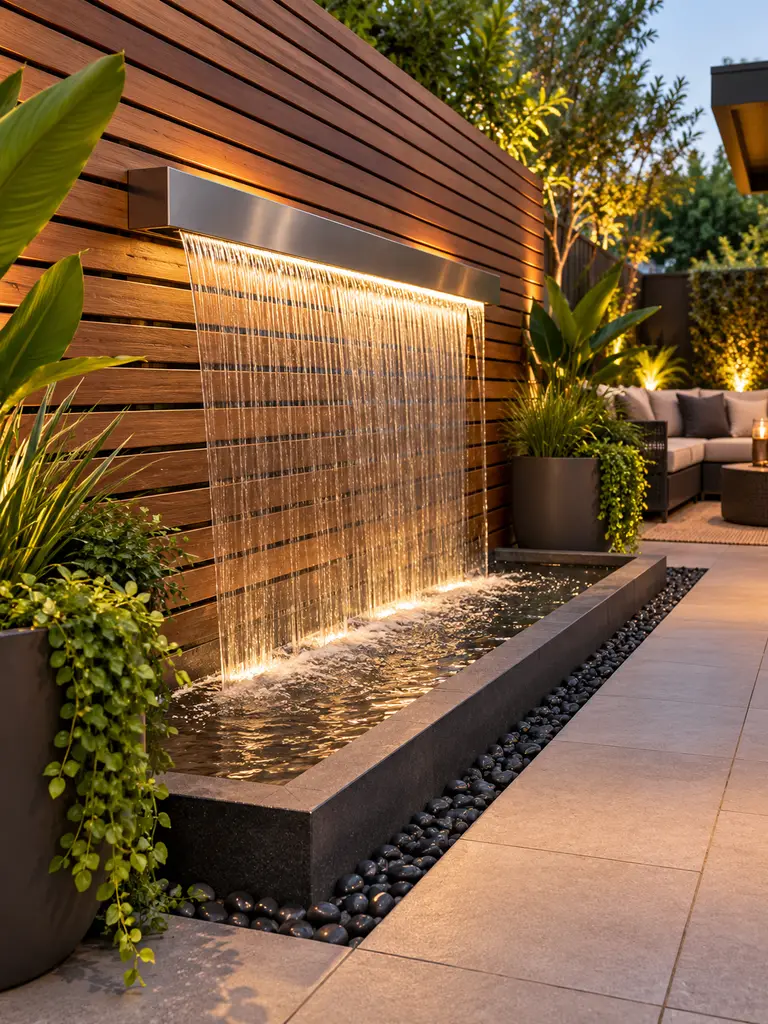
A raised rectangular pond can create a substantial fountain without requiring extensive excavation. Pair the pond with a vertical feature wall and a broad central spillway that sends water directly into the elevated basin. A few aquatic plants can add softness while leaving plenty of open reflective water. Matching the pond stone to nearby paving helps the entire feature feel integrated with the patio rather than added afterward.
42. Moon-Gate Waterfall Fountain
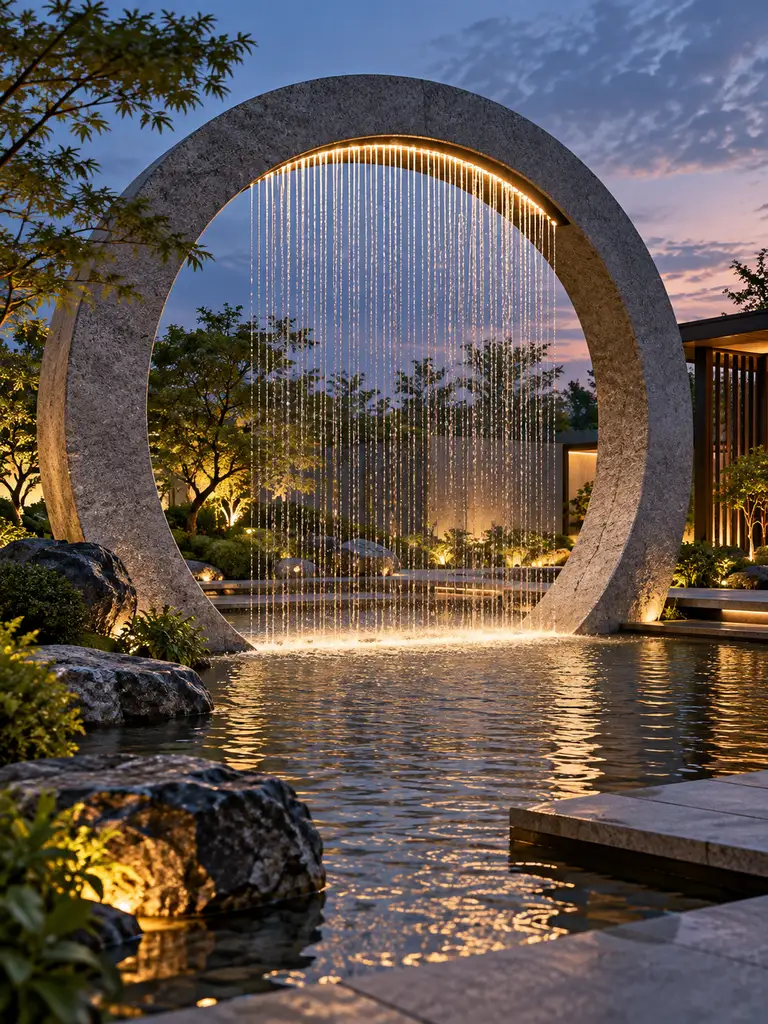
A circular moon-gate fountain frames both water and the garden beyond. Fine streams can descend from the upper inside curve of the ring into a shallow reflecting pool, creating a transparent veil within the opening. Warm lighting under the streams gives the circle a luminous appearance after sunset. Japanese maples, ferns, dark gravel, and carefully clipped shrubs reinforce the tranquil atmosphere without making the design feel overly themed.
43. Glass Panel Waterfall Feature
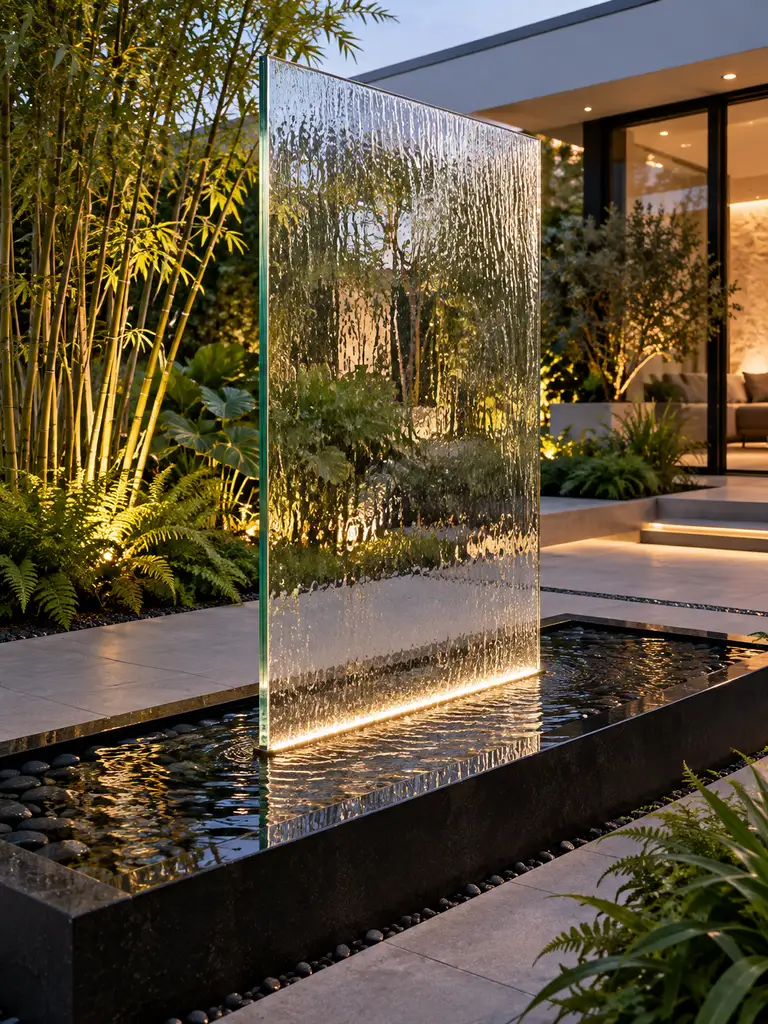
A vertical glass panel creates a waterfall that feels light and open even in a compact courtyard. Water flows continuously over the transparent surface and collects in a narrow black basin underneath, while the garden remains visible through the moving sheet. Linear lighting at the base can make the water shimmer after dark. This design is especially useful where preserving views and a sense of space is important.
44. Ribbon Sculpture Waterfall
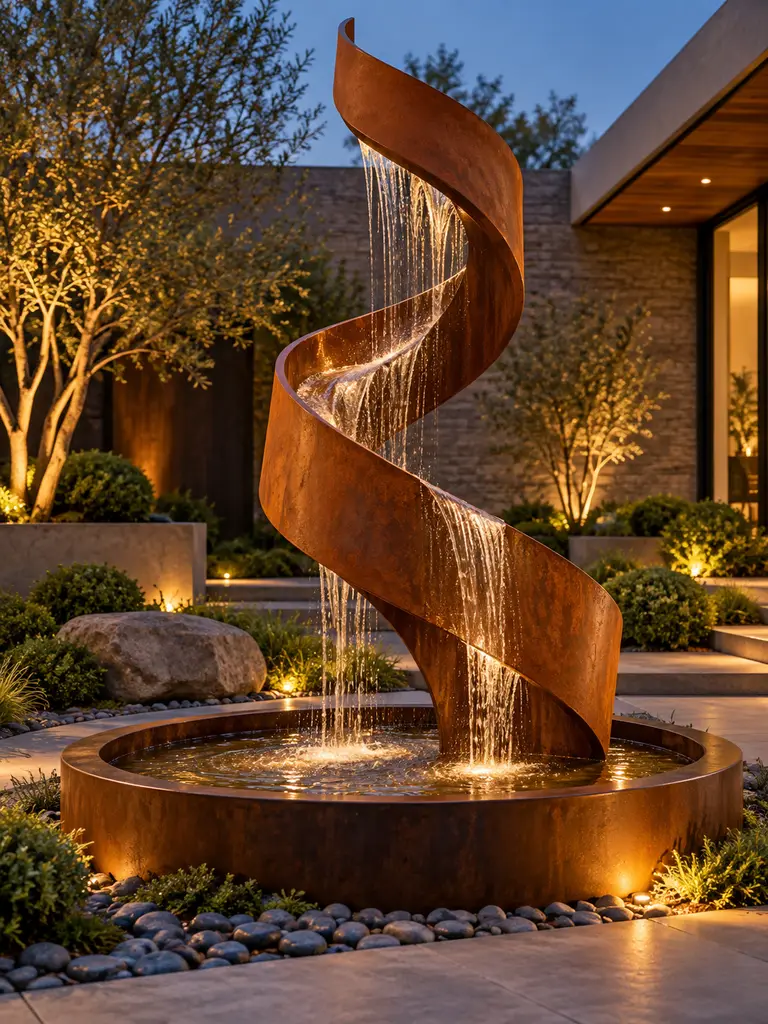
A twisting ribbon sculpture gives the impression of motion before the water even begins to flow. Bronze or weathered metal can form a broad vertical ribbon with several sweeping curves, while water follows selected channels and drops between the folds into a circular basin. Place the feature where it can be viewed from multiple angles, because its changing silhouette is one of the strongest parts of the design.
45. Monumental Split-Portal Waterfall
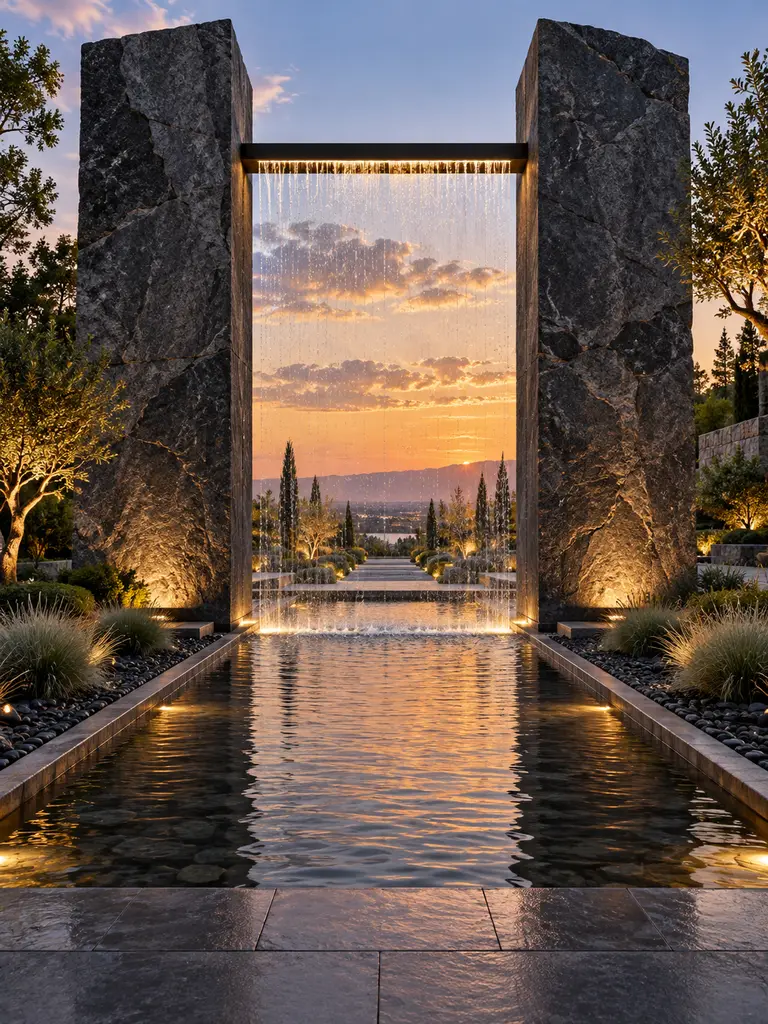
For a dramatic final statement, position two tall stone monoliths several feet apart and connect them near the top with a horizontal beam. A wide transparent sheet of water can fall through the open gap into a long reflecting pool below. The opening also frames the distant landscape, turning the fountain into both a water feature and an architectural portal. Low grasses, black pebbles, and subtle lighting complete the composition.
How to Choose the Right Outdoor Waterfall Fountain
Before choosing a fountain, think about how the outdoor space is actually used. A waterfall beside a dining patio needs different proportions and water flow than one placed at the far end of a large garden. Consider where people normally sit, which views matter most, and whether the fountain will mainly be enjoyed during the day or after sunset.
Scale matters just as much as style. Tall monoliths, rain curtains, and architectural water walls need enough surrounding space to feel balanced. In smaller patios, linear rills, louver walls, urn fountains, or integrated seating waterfalls can provide strong visual interest without overwhelming the area. Also plan for splash control, access to pumps and filters, and safe electrical connections.
Outdoor Waterfall Fountain Ideas for Small Patios
Small patios often benefit from vertical water features because they add sound and movement without consuming much floor space. A narrow porcelain-louver wall, glass panel, slim rill, overflowing urn, or compact sculptural fountain can sit close to a boundary while leaving room for seating and circulation.
Corner locations are especially useful because they are frequently underused. Keep the water flow relatively gentle when chairs are positioned nearby, and use restrained lighting so the fountain adds atmosphere without making the space feel visually crowded.
How to Make a Waterfall Fountain Look More Expensive
The surrounding materials often determine whether a fountain looks ordinary or professionally designed. Repeat stone, metal, timber, or paving finishes already used around the home instead of introducing too many unrelated materials. Hide pumps, tubing, wires, and reservoir edges wherever possible.
Lighting should also be subtle. A few concealed warm lights beneath falling water, along structural edges, or behind planting usually look more refined than numerous exposed fixtures. Large sculptural pieces also need breathing room, so avoid surrounding every fountain with dense planting or excessive decoration.
Outdoor Waterfall Fountain Lighting Ideas
Water becomes especially beautiful after sunset because it captures and reflects even small amounts of light. Underwater fixtures positioned beneath a waterfall can illuminate droplets from below, while linear lights work well beneath broad spillways. Warm-white lighting complements stone, timber, copper, and planting, while neutral light can suit glass, stainless steel, and acrylic.
Illuminate some of the surrounding plants separately to create depth rather than directing every light toward the water. On architectural fountains, concealed lighting inside fins, channels, hexagonal cells, transparent panels, and basin edges can reveal the construction of the fountain as well as the movement of the water.
Styling and Maintaining the Area Around Your Fountain
Planting should support the water feature instead of hiding it. Natural stone waterfalls pair well with ferns, hostas, moss, grasses, and groundcovers, while architectural fountains usually look strongest with simpler planting and clear forms. Black river pebbles are useful around modern designs because they conceal reservoir edges and provide clean contrast.
Regular maintenance keeps the fountain looking attractive. Remove leaves and plant debris before they reach pump intakes, monitor the water level during warm weather, and occasionally clean stone, glass, acrylic, or metal surfaces if mineral deposits or algae appear. Pumps and filters should remain accessible so routine servicing does not require dismantling the feature.
Final Thoughts
Modern garden fountains have moved far beyond simple rock waterfalls. Today, outdoor waterfall fountain ideas can include stainless-steel fins, transparent acrylic towers, cylindrical rain curtains, terrazzo waves, architectural bridges, geometric modules, fire-and-water installations, glass panels, and monumental stone portals.
Natural materials still have an important place too. Stacked stone, timber, basalt, terracotta, copper, and lush planting can create fountains that feel warm and connected to the landscape. The strongest design is one that suits the architecture of the home, the scale of the garden, and the way the outdoor area is actually used.

