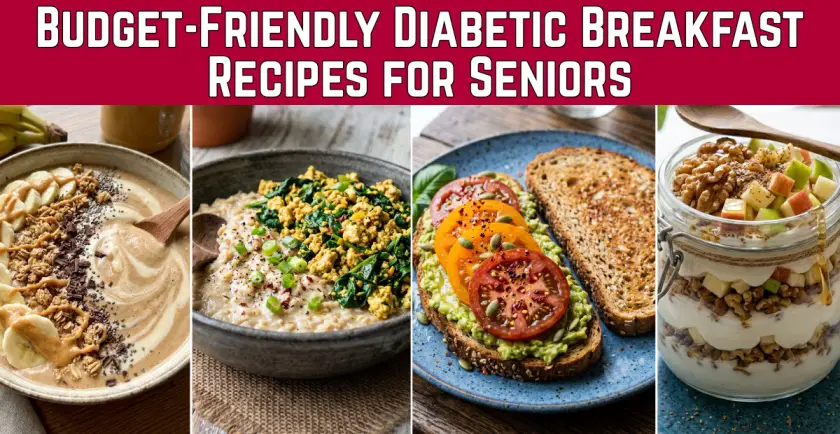
Managing diabetes after 60 doesn’t have to drain your wallet. These simple, meatless breakfast recipes cost as little as $0.50 per serving — and they actually keep your blood sugar steady.
Have you ever stood in the grocery store, picked up a box of “diabetic-friendly” cereal, checked the price tag, and quietly put it back on the shelf?
You are not alone.
Millions of American seniors with diabetes face the same frustrating moment every single week. The foods marketed as “safe” for blood sugar management are expensive. Specialty health food stores charge a premium for anything with the word “diabetic” on the label. And living on a fixed income — whether that’s Social Security, a pension, or retirement savings — makes every grocery dollar count.
Here is the truth that nobody in the health food industry wants you to know: the best foods for managing blood sugar are not the expensive ones. They are simple, whole, plant-based ingredients that have been keeping people healthy for generations. Oats. Lentils. Sweet potatoes. Chickpea flour. Chia seeds. Frozen berries. Most of these cost less than a dollar per serving.
This article gives you 10 meatless breakfast recipes specifically designed for American seniors with diabetes. Every single recipe costs between $0.50 and $1.50 per serving. Every one of them is easy to make, even on mornings when you don’t feel like cooking. And every one of them is built around ingredients proven to help keep blood sugar levels stable.
By the time you finish reading, you will have a full week of breakfast ideas, a smart grocery shopping strategy, and the confidence to know that eating well with diabetes does not have to be expensive.
Let’s get started.
Why Breakfast Is the Most Important Meal for Seniors With Diabetes
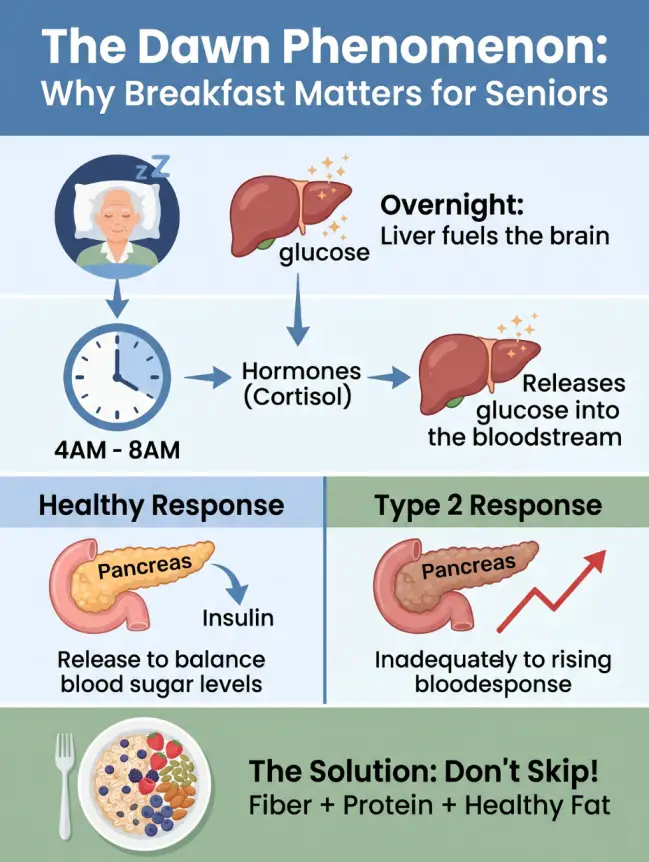
Most people know that breakfast matters. But for seniors managing diabetes, breakfast is not just important — it is the meal that sets the tone for your entire day.
Here is why.
While you sleep at night, your body does not simply rest. Your liver keeps working, releasing small amounts of glucose into your bloodstream to fuel your brain and organs overnight. Then, in the early morning hours — usually between 4 a.m. and 8 a.m. — your body releases a natural surge of hormones including cortisol and growth hormone. These hormones signal your liver to release even more glucose to prepare your body for the day ahead.
In people without diabetes, the pancreas responds to this glucose surge by releasing insulin, which brings blood sugar back down to a normal range. But in seniors with Type 2 diabetes, that insulin response is slower or weaker. The result is that blood sugar is often already elevated by the time you wake up — even before you’ve eaten a single thing.
This is called the dawn phenomenon, and it affects a large percentage of seniors with diabetes. It means that what you eat for breakfast — and whether you eat it at all — has a direct impact on how well your blood sugar is managed for the rest of the morning and even into the afternoon.
Skipping breakfast makes things worse, not better. When you skip your morning meal, your blood sugar often continues to rise through mid-morning, and then crashes later, which leads to intense hunger, cravings for sugary foods, and overeating at lunch. For seniors on diabetes medication, skipping breakfast can also interfere with how the medication works.
A good diabetic breakfast has three things:
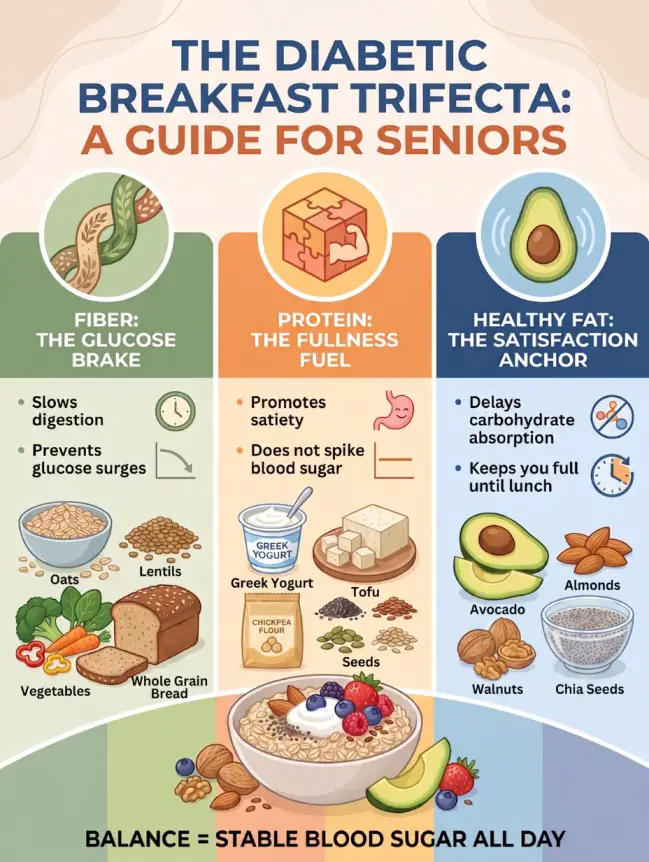
First, it has fiber. Fiber slows down the digestion of carbohydrates, which means glucose enters your bloodstream slowly and steadily instead of all at once. Good fiber sources include oats, lentils, vegetables, chia seeds, flaxseed, and whole grain bread.
Second, it has protein. Protein helps you feel full longer and does not raise blood sugar on its own. For a meatless breakfast, great protein sources include Greek yogurt, chickpea flour, lentils, tofu, nuts, and seeds.
Third, it has healthy fat. A small amount of healthy fat — from avocado, nuts, or seeds — further slows glucose absorption and keeps you satisfied until lunch.
When you combine fiber, protein, and healthy fat in your morning meal, you are giving your body exactly what it needs to manage blood sugar gently and naturally. And as you will see in the recipes below, building a breakfast like this does not have to cost much at all.
The Budget Problem Nobody Talks About
Walk through the “health food” aisle of any major American grocery store and you will see the same thing: products with the words “diabetic-friendly,” “sugar-free,” or “low glycemic” on the packaging, all priced significantly higher than regular versions of the same food.
A box of branded “diabetic granola” can cost $8 to $12. A pack of sugar-free cookies runs $5 to $7. Special low-carb bread is often $6 to $8 a loaf. For a senior on a fixed income, eating this way every single day simply is not realistic.
But here is what those labels are not telling you: you do not need any of those products.
The same blood sugar benefits — and often far better ones — come from plain, whole ingredients that cost a fraction of the price. A large container of old-fashioned rolled oats at Walmart costs around $4 and provides about 30 servings. A one-pound bag of red lentils at your local grocery store costs $1.50 to $2 and makes 8 to 10 servings. A bag of frozen mixed berries costs $2.50 and is enough for 6 or more breakfasts.
Compare that to the “diabetic-approved” granola bar at $3.50 each.
The math is not complicated. Real food wins every time — for your blood sugar and your budget.
Quick Cost Comparison:
| Branded “Diabetic” Product | Cost Per Serving | Homemade Whole Food Option | Cost Per Serving |
|---|---|---|---|
| Diabetic granola bar | $3.50 | Oat bowl with chia + frozen berries | $0.65 |
| Sugar-free flavored yogurt | $1.80 | Plain Greek yogurt + walnuts + apple | $1.20 |
| Low-carb specialty bread (2 slices) | $2.00 | Whole wheat toast + avocado + tomato | $1.40 |
| Diabetic protein shake | $4.00 | Lentil cheela (pancake) with veggies | $0.75 |
Grocery savings tips for American seniors:
- Buy dry goods in bulk. Oats, lentils, chickpea flour, flaxseed, and chia seeds are dramatically cheaper when bought in larger bags. Stores like Costco, Sam’s Club, and Walmart carry all of these at low prices.
- Choose frozen over fresh berries. Nutritionally identical to fresh, frozen mixed berries typically cost 60 to 70 percent less. Buy a 2-pound bag and it lasts weeks.
- Shop at ethnic grocery stores. Indian, Middle Eastern, and Latino grocery stores in most American cities carry lentils, chickpea flour, and spices for 50 to 70 percent less than mainstream supermarkets. A 4-pound bag of chickpea flour that costs $12 at Whole Foods may cost $4 at an Indian grocery store.
- Use store brands. Walmart Great Value, Kroger store brand, and Aldi’s house brand oats, yogurt, and canned goods are nutritionally identical to name brands.
- Check for senior discounts. Many grocery chains offer weekly senior discount days. Fred Meyer, Harris Teeter, and several regional chains offer 5 to 10 percent off for shoppers over 60 on specific days.
- Look into SNAP benefits. If you are on a fixed income, you may qualify for SNAP (Supplemental Nutrition Assistance Program), which helps cover grocery costs. Visit benefits.gov to check your eligibility.
10 Budget-Friendly Diabetic Breakfast Recipes for Seniors
Now for the good part. Each recipe below was chosen because it is easy to make, gentle on blood sugar, naturally meatless, and genuinely affordable. You will find a mix of classic American breakfasts alongside a few simple global-inspired dishes that are already popular with seniors across the country.
Each recipe includes the estimated cost per serving based on average US grocery prices, the preparation time, and a note on exactly why it is good for blood sugar management.
Recipe 1: Cinnamon Oatmeal with Chia Seeds and Frozen Berries
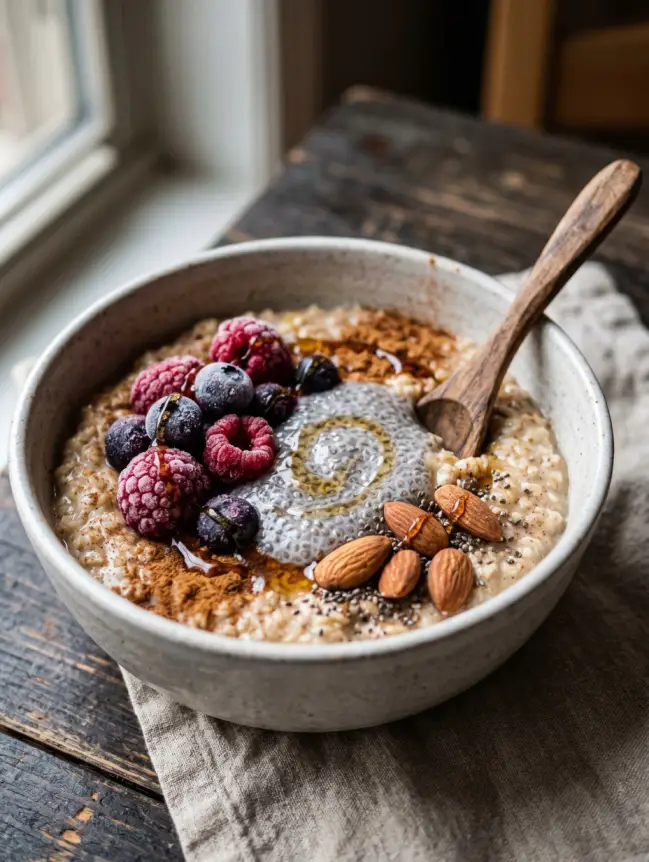
⏱ Prep & Cook Time: 10 minutes 💰 Cost per serving: About $0.65 Servings: 1
There is a reason oatmeal has been a breakfast staple for generations. It is warm, filling, easy to make, and incredibly good for blood sugar. This version adds chia seeds for extra fiber and protein, and frozen berries for natural sweetness and antioxidants. It tastes like a treat but works like medicine.
Ingredients:
- ½ cup old-fashioned rolled oats (not instant)
- 1 cup water or unsweetened almond milk
- 1 tablespoon chia seeds
- ¼ teaspoon ground cinnamon
- ½ cup frozen mixed berries
- 1 teaspoon honey or maple syrup (optional)
- Small pinch of salt
Instructions:
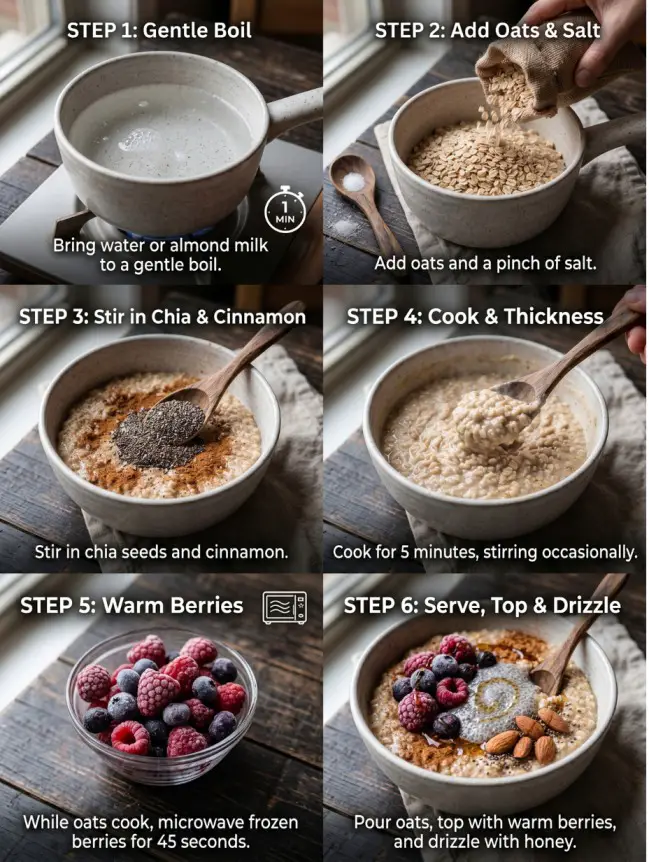
- Bring water or almond milk to a gentle boil in a small saucepan.
- Add oats and a pinch of salt. Reduce heat to medium-low.
- Stir in chia seeds and cinnamon.
- Cook for 5 minutes, stirring occasionally, until oats are creamy and thick.
- While oats cook, microwave frozen berries for 45 seconds until warm and slightly juicy.
- Pour oats into a bowl, top with warm berries, and drizzle with honey if desired.
Budget tip: Buy a 42-ounce container of Quaker Old Fashioned Oats at Walmart for about $4. It gives you roughly 30 servings — that’s breakfast for a full month for about $0.13 in oats alone.
Blood sugar bonus: Oats contain a special type of fiber called beta-glucan that forms a gel in your digestive system, slowing the absorption of glucose into your bloodstream. Cinnamon has been studied extensively and shown to help improve the body’s sensitivity to insulin. Together, they are one of the most powerful blood sugar-friendly breakfast combinations available.
Recipe 2: Chia Seed Pudding with Banana and Almond Butter
⏱ Prep Time: 5 minutes (make the night before) 💰 Cost per serving: About $0.80 Servings: 1
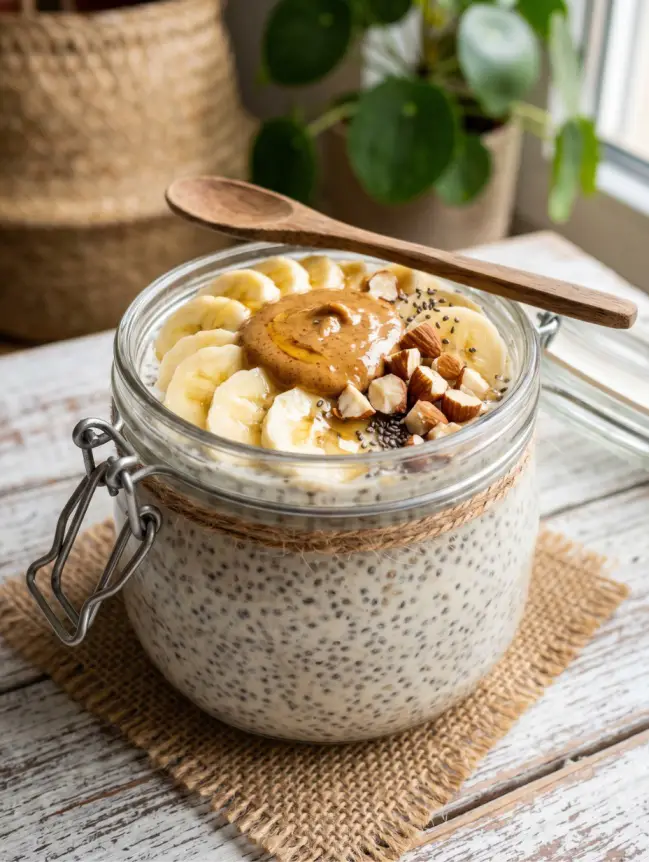
This one requires zero cooking. You mix it the night before and it is ready and waiting for you in the refrigerator every morning. It is thick, creamy, naturally sweet, and surprisingly filling. Many seniors who try this recipe say it quickly becomes their favorite breakfast.
Ingredients:
- 3 tablespoons chia seeds
- 1 cup unsweetened almond milk (or regular low-fat milk)
- ½ ripe banana, sliced
- 1 tablespoon natural almond butter or peanut butter
- ¼ teaspoon vanilla extract
- Pinch of cinnamon
Instructions:
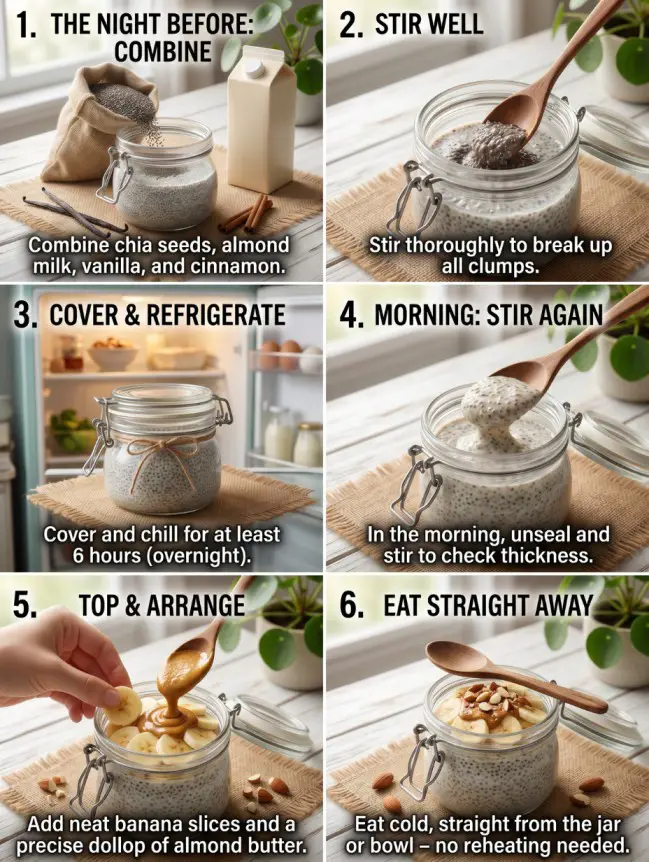
- The night before, combine chia seeds, almond milk, vanilla, and cinnamon in a jar or small bowl.
- Stir well, making sure no chia seeds are clumped together.
- Cover and refrigerate overnight (at least 6 hours).
- In the morning, give it a stir. It will have thickened into a pudding-like consistency.
- Top with sliced banana and a drizzle of almond butter.
- Eat straight from the jar or bowl — no reheating needed.
Budget tip: Buy chia seeds in a 1-pound bag from Walmart or Amazon for around $6 to $8. One pound makes roughly 20 to 25 servings of this pudding.
Blood sugar bonus: Chia seeds are extraordinary for blood sugar management. They are about 40 percent fiber by weight and form a thick gel when mixed with liquid, which dramatically slows digestion. Studies have shown that eating chia seeds at breakfast can reduce blood sugar spikes after meals by a significant margin. The healthy fat from almond butter also slows glucose absorption further.
Recipe 3: Moong Dal Cheela (Savory Lentil Pancakes)
⏱ Prep Time: 10 minutes (plus 2 hours soaking) | Cook Time: 15 minutes 💰 Cost per serving: About $0.70 Servings: 2 (makes 4 small pancakes)
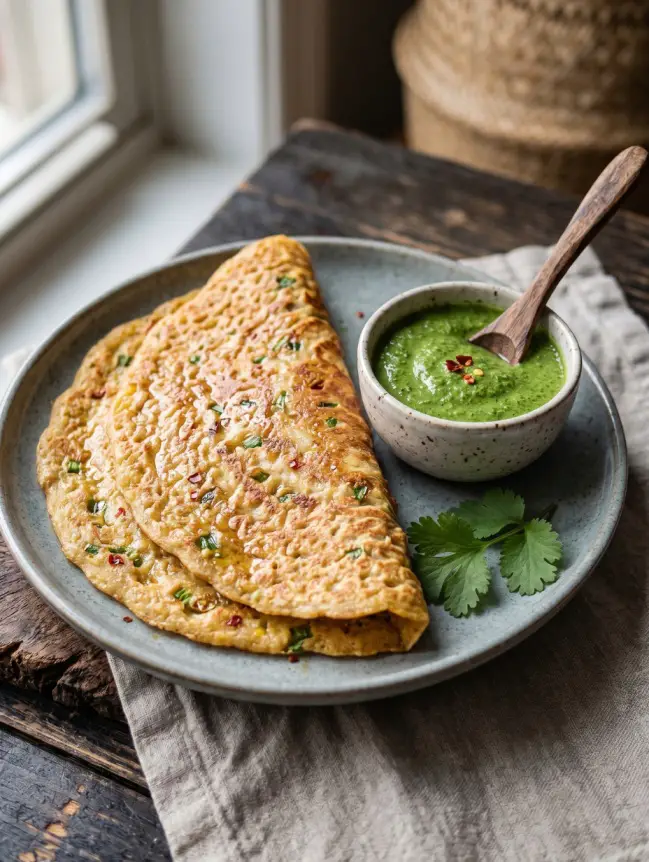
Do not let the name intimidate you. Moong dal cheela is simply a savory pancake made from soaked yellow lentils blended into a batter. It has been eaten across South Asia for centuries, and it is now becoming popular in American health food communities because of its extraordinary nutritional profile. It tastes something like a savory crepe — crispy on the outside, soft in the middle, with a mild, earthy flavor.
Ingredients:
- ½ cup yellow split moong dal (found at Indian grocery stores or Amazon)
- ¼ cup water (for blending)
- ¼ small onion, finely chopped
- 1 small green onion, chopped
- ¼ teaspoon cumin powder
- ¼ teaspoon turmeric
- Salt and black pepper to taste
- Cooking spray or ½ teaspoon olive oil
Instructions:
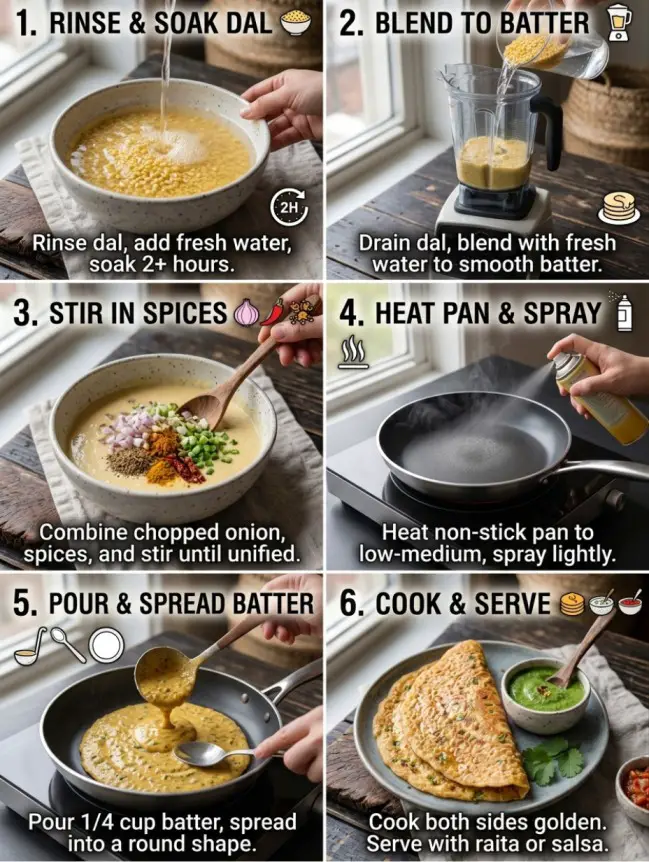
- Rinse moong dal thoroughly and soak in water for at least 2 hours (or overnight in the fridge).
- Drain soaked dal and blend with ¼ cup fresh water until you have a smooth, thick batter. It should be similar in consistency to pancake batter.
- Stir in chopped onion, green onion, cumin, turmeric, salt, and pepper.
- Heat a non-stick pan over medium heat and lightly spray with cooking spray.
- Pour about ¼ cup of batter onto the pan and spread gently into a round shape with the back of a spoon.
- Cook for 2 to 3 minutes until the edges look set and the bottom is golden. Flip and cook another 1 to 2 minutes.
- Serve with plain Greek yogurt or a small bowl of salsa on the side.
Budget tip: A 2-pound bag of yellow moong dal costs $2 to $3 at Indian grocery stores and makes well over 20 servings of cheela. It is one of the most economical high-protein breakfast ingredients available in the US.
Blood sugar bonus: Lentils have one of the lowest glycemic index scores of any carbohydrate-containing food. They digest slowly, release glucose gradually, and are packed with plant-based protein that further stabilizes blood sugar. Research published in the American Journal of Clinical Nutrition has shown that replacing even a portion of high-GI foods with lentils significantly reduces blood sugar response after meals.
Recipe 4: Sweet Potato and Spinach Breakfast Hash
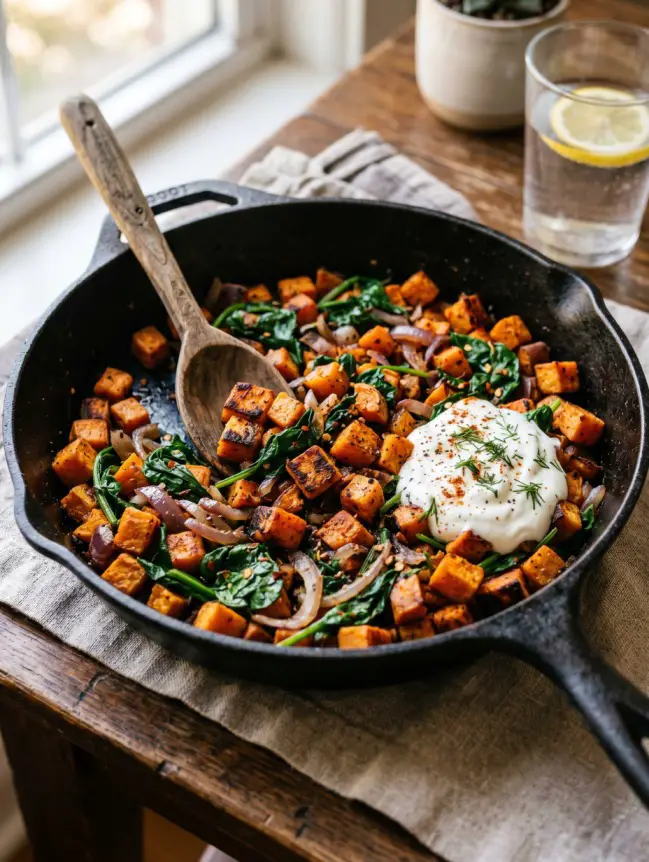
⏱ Prep & Cook Time: 20 minutes 💰 Cost per serving: About $1.10 Servings: 2
This is a hearty, warm, colorful breakfast that feels like a proper meal. Sweet potato gives it natural sweetness and satisfying bulk, while spinach adds iron, folate, and vitamins without adding cost. It is the kind of breakfast that keeps you full well past lunchtime.
Ingredients:
- 1 cup fresh or frozen spinach
- 1 medium sweet potato, peeled and cut into small cubes
- ½ small onion, diced
- 1 clove garlic, minced (or ¼ teaspoon garlic powder)
- ½ teaspoon smoked paprika
- ¼ teaspoon black pepper
- Salt to taste
- 1 teaspoon olive oil
- Optional: 2 tablespoons plain Greek yogurt on the side
Instructions:
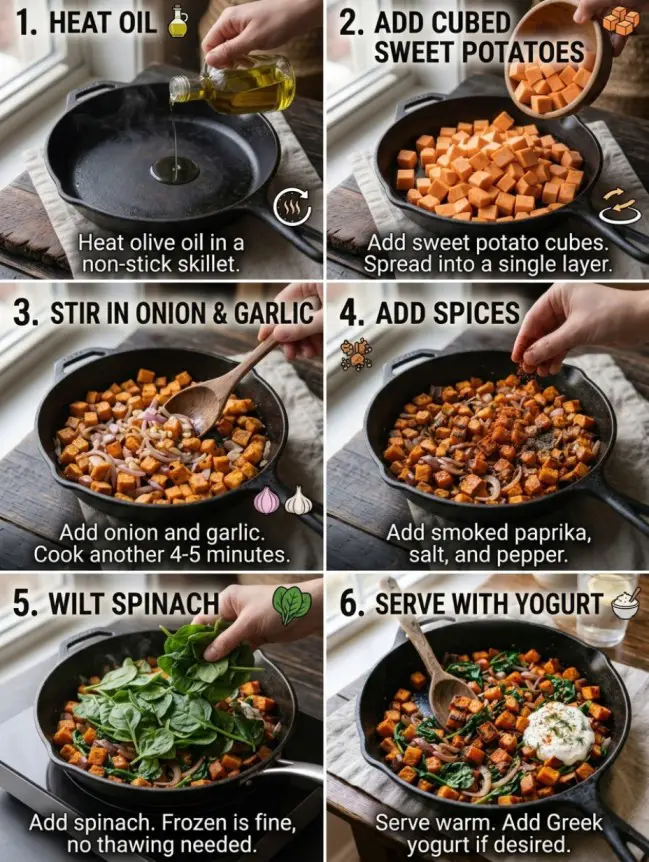
- Heat olive oil in a non-stick skillet over medium heat.
- Add diced sweet potato cubes. Spread them in a single layer and cook without stirring for 3 to 4 minutes until they start to brown on the bottom.
- Stir, then add onion and garlic. Cook another 4 to 5 minutes, stirring occasionally.
- Add smoked paprika, salt, and pepper. Stir to coat.
- Add spinach on top. If using frozen, no need to thaw — it will wilt into the hash within 2 minutes.
- Stir everything together and cook another 2 minutes until spinach is wilted and sweet potato is tender when pierced with a fork.
- Serve warm, with Greek yogurt on the side if desired.
Budget tip: Sweet potatoes are one of the cheapest nutrient-dense foods in America. At most grocery stores, they cost $0.99 to $1.29 per pound. One medium sweet potato is plenty for two servings of this hash. Use frozen spinach ($1.50 for a 10-ounce bag) to save even more.
Blood sugar bonus: Sweet potatoes have a medium glycemic index, but they are rich in resistant starch — a type of carbohydrate that acts more like fiber in the body. Resistant starch feeds beneficial gut bacteria, which are increasingly linked to better blood sugar regulation. The fiber in spinach adds another layer of glucose-slowing power.
Recipe 5: Chickpea Flour Vegetable Omelet (Vegan & Egg-Free)
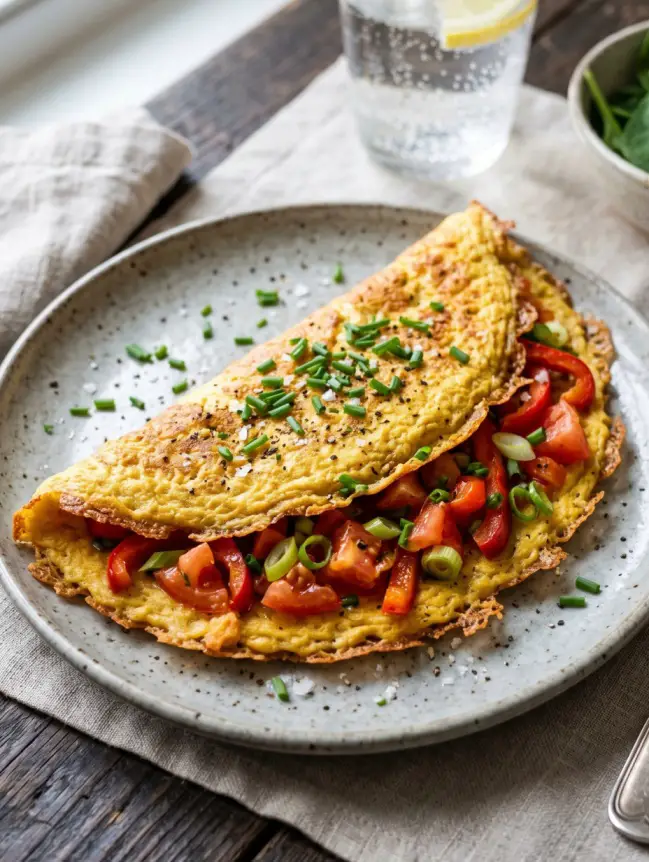
⏱ Prep & Cook Time: 15 minutes 💰 Cost per serving: About $0.85 Servings: 1
This is one of the most surprising recipes on this list. A chickpea flour omelet looks, feels, and even tastes remarkably similar to a regular egg omelet — but it is completely egg-free and plant-based. It is popular in French cuisine (where it is called socca) and in Indian cooking (where it is called besan chilla). American seniors who try it for the first time are almost always pleasantly surprised.
Ingredients:
- ¼ cup chickpea flour (also called besan or garbanzo bean flour)
- ¼ cup water
- Pinch of turmeric
- Pinch of garlic powder
- Salt and black pepper to taste
- 2 tablespoons finely chopped bell pepper
- 2 tablespoons finely chopped tomato
- 1 tablespoon chopped fresh or dried chives or green onion
- Cooking spray
Instructions:
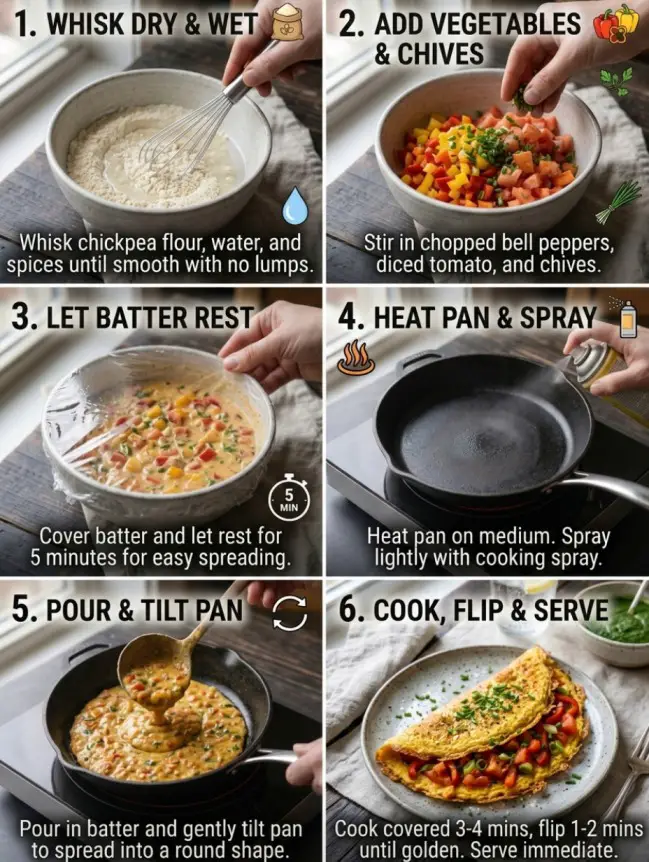
- In a small bowl, whisk together chickpea flour, water, turmeric, garlic powder, salt, and pepper until completely smooth with no lumps.
- Stir in chopped bell pepper, tomato, and chives.
- Let the batter rest for 5 minutes. This makes it easier to spread.
- Heat a small non-stick pan over medium heat and spray lightly with cooking spray.
- Pour in the batter and gently tilt the pan to spread it into a round, omelet-like shape.
- Cover the pan with a lid and cook for 3 to 4 minutes until the top looks set and the edges are firm.
- Carefully flip and cook another 1 to 2 minutes.
- Slide onto a plate and eat immediately.
Budget tip: Chickpea flour is available at most American grocery stores in the natural foods section, but it costs roughly half as much at Indian or Middle Eastern grocery stores. A 2-pound bag for $4 to $5 makes about 15 to 18 omelets.
Blood sugar bonus: Chickpea flour has a glycemic index of just 44 — significantly lower than regular wheat flour, which sits around 70. It is also high in protein (about 6 grams per quarter cup), which means this omelet provides a solid protein foundation for the morning without any meat or eggs.
Recipe 6: Overnight Oats with Flaxseed and Frozen Berries
⏱ Prep Time: 5 minutes (make the night before) 💰 Cost per serving: About $0.75 Servings: 1
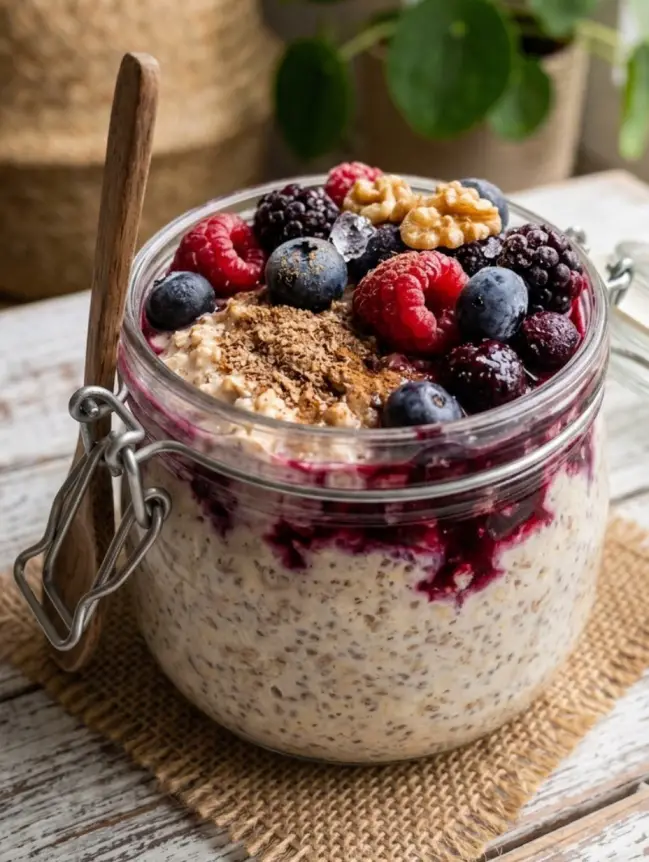
Another no-cook, make-ahead recipe — because some mornings, you just want to open the fridge and eat. Overnight oats have become wildly popular across the US in recent years, and for good reason. They are creamy, filling, endlessly customizable, and take only 5 minutes to prepare the evening before.
Ingredients:
- ½ cup old-fashioned rolled oats
- ¾ cup unsweetened almond milk or low-fat milk
- 1 tablespoon ground flaxseed
- ½ cup frozen mixed berries
- 1 teaspoon maple syrup or honey (optional)
- Pinch of cinnamon
- 1 tablespoon chopped walnuts (optional, for crunch)
Instructions:
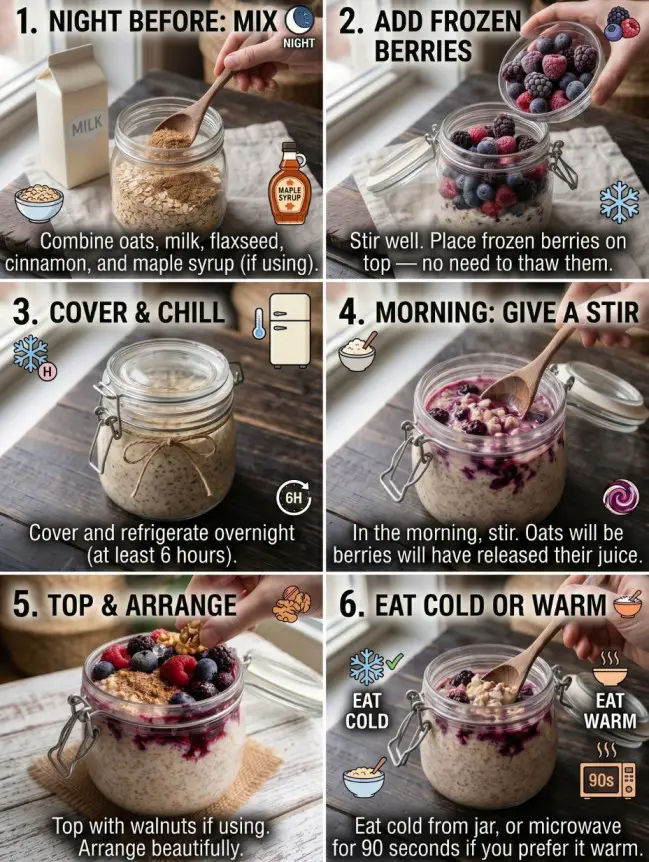
- The night before, add oats, milk, ground flaxseed, cinnamon, and maple syrup (if using) to a mason jar or covered container.
- Stir well. Place frozen berries on top — no need to thaw them. They will thaw overnight in the fridge and create a beautiful berry sauce.
- Cover and refrigerate overnight.
- In the morning, give everything a good stir. The oats will be soft and creamy, and the berries will have released their juice.
- Top with walnuts if using. Eat cold straight from the jar, or microwave for 90 seconds if you prefer it warm.
Budget tip: One pound of ground flaxseed costs about $4 to $5 at most grocery stores and provides roughly 50 tablespoon-size servings. That works out to about $0.10 per breakfast. It is one of the most cost-effective nutritional upgrades you can add to any meal.
Blood sugar bonus: Ground flaxseed is rich in alpha-linolenic acid (a plant-based omega-3 fatty acid) and lignans, both of which have been shown in studies to reduce insulin resistance. Importantly, you must use ground flaxseed rather than whole flaxseed — whole seeds pass through the body without being absorbed.
Recipe 7: Avocado and Tomato on Whole Wheat Toast
⏱ Prep & Cook Time: 7 minutes 💰 Cost per serving: About $1.40 Servings: 1
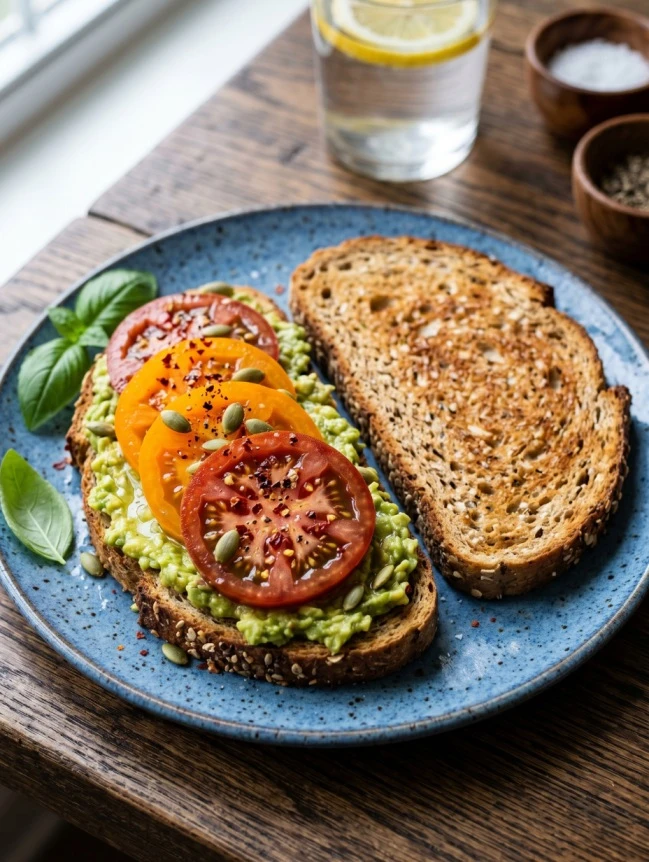
Simple does not mean boring. This classic combination became a cultural phenomenon for a reason — it is genuinely delicious, takes almost no effort, and delivers an impressive nutritional punch. The key for blood sugar management is using whole wheat or whole grain bread, not white bread or sourdough.
Ingredients:
- 2 slices whole wheat bread (look for bread where “whole wheat flour” is the first ingredient)
- ½ ripe avocado
- 1 medium tomato, sliced
- Squeeze of fresh lemon juice
- Salt, black pepper, and red pepper flakes to taste
- Optional: 1 tablespoon pumpkin seeds or hemp seeds on top
Instructions:
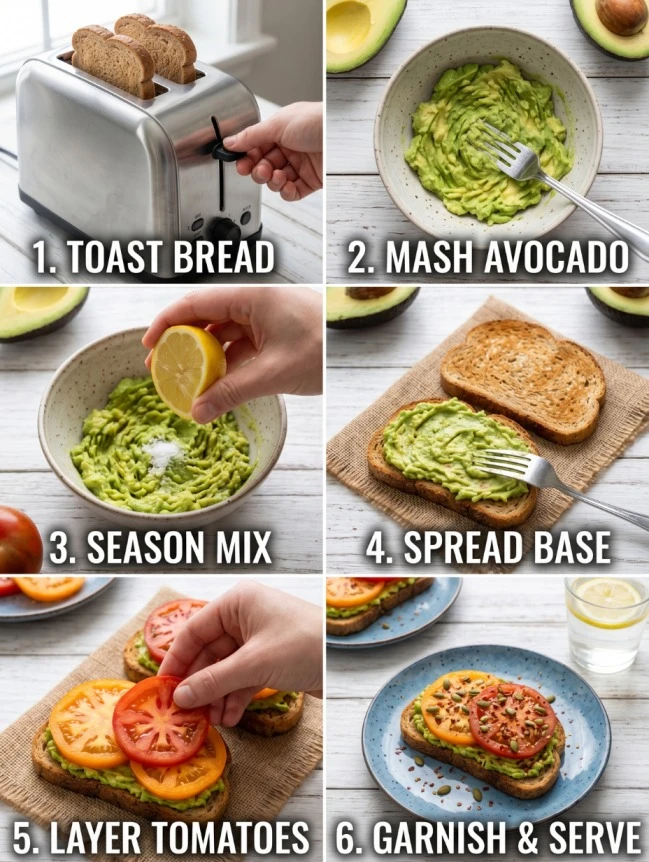
- Toast bread to your preferred level of doneness.
- While bread toasts, scoop avocado into a small bowl and mash with a fork.
- Add lemon juice, salt, and pepper to the avocado and mix well.
- Spread mashed avocado evenly on both slices of toast.
- Layer tomato slices on top.
- Sprinkle with red pepper flakes and seeds if using.
- Eat immediately while toast is still warm and crispy.
Budget tip: Avocados are most affordable when bought in bags of 4 to 6 at Costco, Walmart, or Trader Joe’s. If you buy avocados when they are on sale and they ripen before you can use them, slice and freeze them in a zip-lock bag. Frozen avocado thaws within 20 minutes and works perfectly for this recipe.
Blood sugar bonus: Avocado is one of the most diabetes-friendly foods available. It is rich in monounsaturated fat, which slows the absorption of carbohydrates from the bread into the bloodstream. A 2019 study found that people who ate avocado at breakfast had lower blood sugar and insulin levels compared to those who ate the same meal without it.
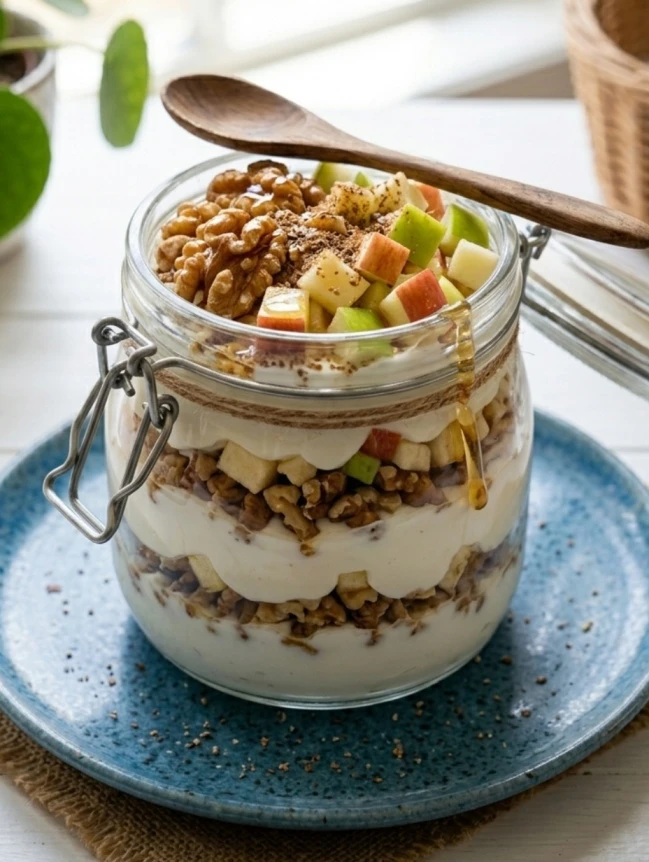
Recipe 8: Greek Yogurt Parfait with Walnuts and Apple
⏱ Prep Time: 5 minutes (no cooking required) 💰 Cost per serving: About $1.50 Servings: 1
This is the breakfast for mornings when you want something that feels indulgent but is actually doing your body a favor. Layered in a glass or bowl, it looks beautiful. And it genuinely tastes like dessert. Seniors who struggle to enjoy “healthy” breakfasts often fall in love with this one first.
Ingredients:
- ¾ cup plain Greek yogurt (full-fat or 2% — avoid flavored varieties, which contain added sugar)
- ½ medium apple, cored and diced (any variety — Gala, Fuji, or Granny Smith all work)
- 1 tablespoon chopped walnuts
- ¼ teaspoon cinnamon
- 1 teaspoon honey (optional)
- Optional: 1 tablespoon ground flaxseed stirred into yogurt
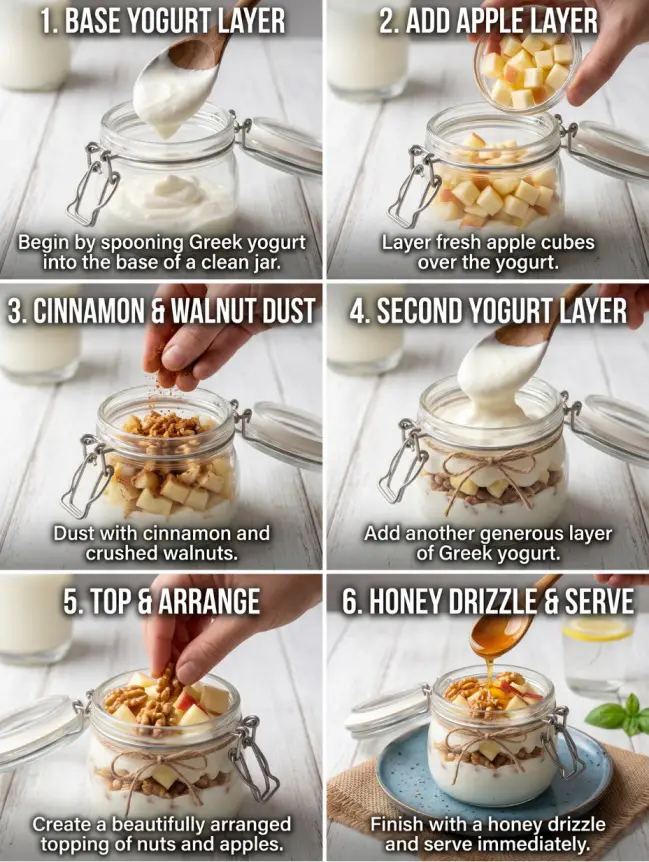
Instructions:
- Spoon half the Greek yogurt into the bottom of a glass or bowl.
- Add half the diced apple on top of the yogurt layer.
- Sprinkle with half the cinnamon and half the walnuts.
- Add the remaining yogurt as a second layer.
- Top with remaining apple, walnuts, and a pinch of cinnamon.
- Drizzle with honey if desired.
- Eat immediately, or refrigerate covered for up to 4 hours.
Budget tip: Buy a large 32-ounce container of plain Greek yogurt rather than individual cups — it costs roughly the same but provides 4 to 5 servings. Fage, Chobani, and Walmart’s Great Value store brand are all good options at different price points.
Blood sugar bonus: Plain Greek yogurt contains live probiotic cultures that support gut health. Research increasingly shows that a healthy gut microbiome plays a role in blood sugar regulation. Walnuts are one of the most studied nuts for diabetes management — multiple studies have shown that regular walnut consumption is associated with lower fasting blood sugar and reduced insulin resistance. Apples provide pectin, a soluble fiber that slows glucose digestion.
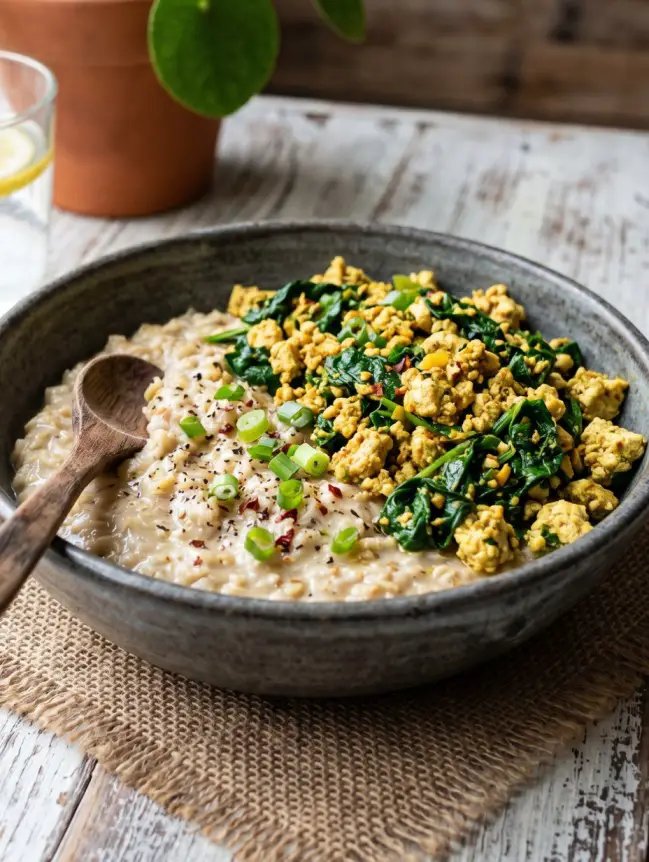
Recipe 9: Savory Oatmeal with Spinach and Tofu Scramble)
⏱ Prep & Cook Time: 12 minutes 💰 Cost per serving: About $0.90 Servings: 1
Most people think of oatmeal as a sweet breakfast. But savory oatmeal is a revelation — especially for seniors who find sweet breakfasts too heavy first thing in the morning. Think of it as a warm, comforting porridge in the style of grits or congee. Add a soft-boiled egg for protein, or for a fully plant-based version, a small handful of crumbled firm tofu works beautifully.
Ingredients:
- ½ cup old-fashioned rolled oats
- 1 cup low-sodium vegetable broth (instead of water — this is the flavor secret)
- ½ cup fresh or frozen spinach
- 1 clove garlic, minced, or ¼ teaspoon garlic powder
- ¼ teaspoon black pepper
- Salt to taste
- ¼ cup crumbled firm tofu sautéed with a pinch of turmeric
- Optional toppings: sliced green onion, everything bagel seasoning, hot sauce
Instructions:
- Bring vegetable broth to a boil in a small saucepan.
- Add oats and garlic. Reduce heat to medium-low and cook for 4 to 5 minutes, stirring occasionally.
- Add spinach directly to the oats. Stir until wilted, about 1 minute.
- Season with black pepper and salt to taste.
- Spoon into a bowl and top with your tofu scramble.
- Add green onion, seasoning, or hot sauce if desired.
Budget tip: Using vegetable broth instead of water costs only a few cents more per serving (especially when using store-brand broth or bouillon cubes) but makes a dramatic difference in flavor. Bouillon cubes are the most economical option — one cube dissolved in a cup of water costs under $0.10.
Blood sugar bonus: Cooking oats in broth instead of sweetened liquid eliminates hidden sugars entirely. The savory preparation makes it much easier to skip added sweeteners, which means the blood sugar response is even gentler than sweet oatmeal preparations.
Recipe 10: Peanut Butter and Banana Smoothie Bowl
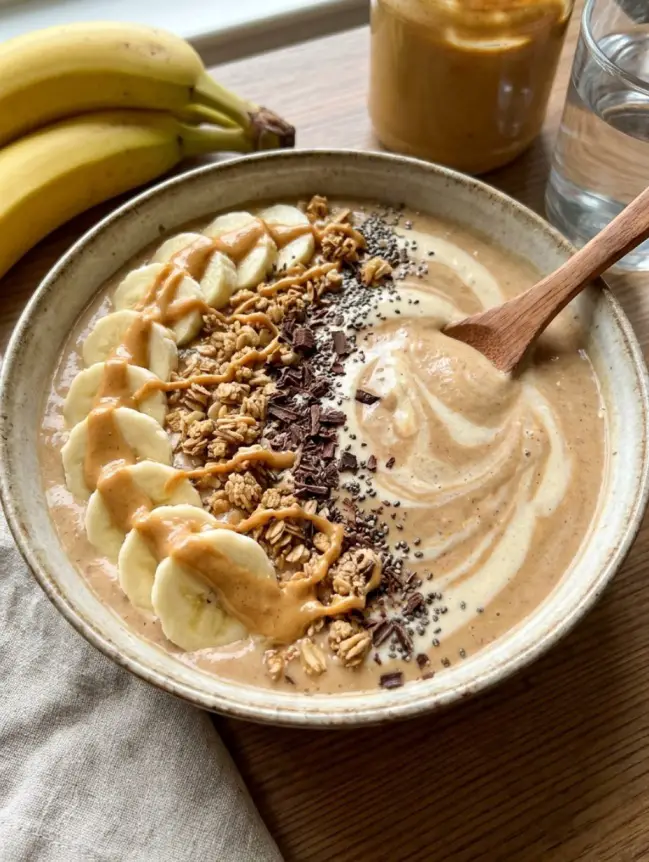
⏱ Prep Time: 5 minutes (no cooking) 💰 Cost per serving: About $1.20 Servings: 1
This last recipe is for the mornings when you want something that feels energizing and a little bit fun. A smoothie bowl is thicker than a regular smoothie — you eat it with a spoon, and you load it with simple toppings that add crunch, texture, and extra nutrition. This version uses ingredients almost everyone already has at home.
Ingredients:
For the base:
- 1 medium ripe banana, frozen (peel and freeze bananas overnight for a creamier texture)
- ½ cup plain Greek yogurt or unsweetened almond milk
- 1 tablespoon natural peanut butter
- ¼ teaspoon cinnamon
For the toppings:
- 1 tablespoon rolled oats (uncooked — adds crunch)
- 1 tablespoon chopped walnuts or almonds
- A few fresh or frozen blueberries
- Optional: drizzle of honey
Instructions:
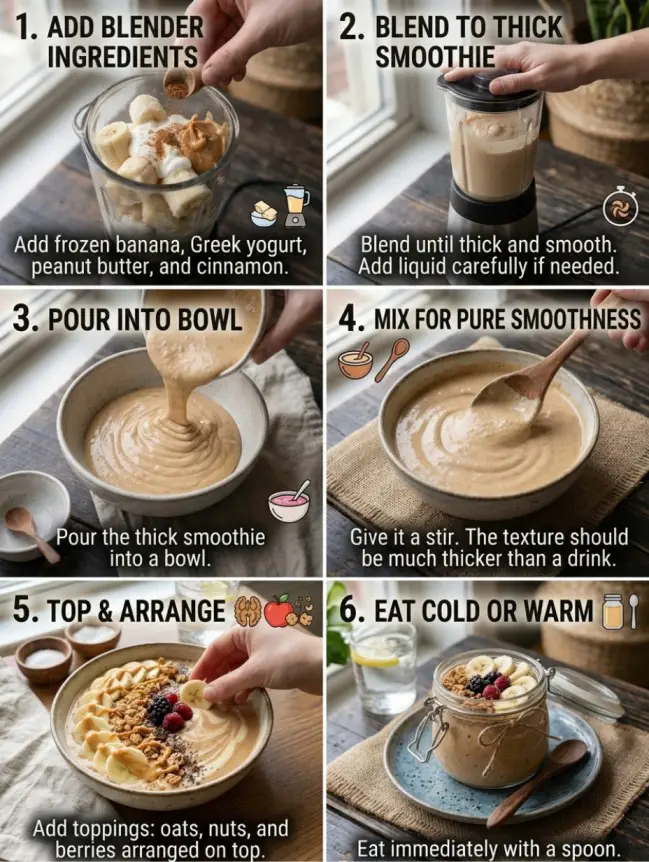
- Add frozen banana, Greek yogurt (or almond milk), peanut butter, and cinnamon to a blender.
- Blend until thick and smooth. The mixture should be much thicker than a drinkable smoothie — if it seems too thick to blend, add 1 tablespoon of liquid at a time.
- Pour into a bowl.
- Add toppings: oats, nuts, and berries arranged on top.
- Eat immediately with a spoon.
Budget tip: Ripe bananas that are getting too soft for eating are perfect for this recipe and are often sold at a discount in grocery stores. Buy them, peel them, and freeze them in a zip-lock bag. They last up to 3 months in the freezer and are ready to use anytime.
Blood sugar bonus: The combination of protein (from yogurt and peanut butter), healthy fat (from nuts and peanut butter), and fiber (from oats and banana) creates a well-balanced breakfast that releases energy gradually. The natural peanut butter — without added sugar or hydrogenated oils — provides magnesium, a mineral that plays a direct role in insulin function and is frequently found to be deficient in people with Type 2 diabetes.
Your 7-Day Breakfast Meal Plan
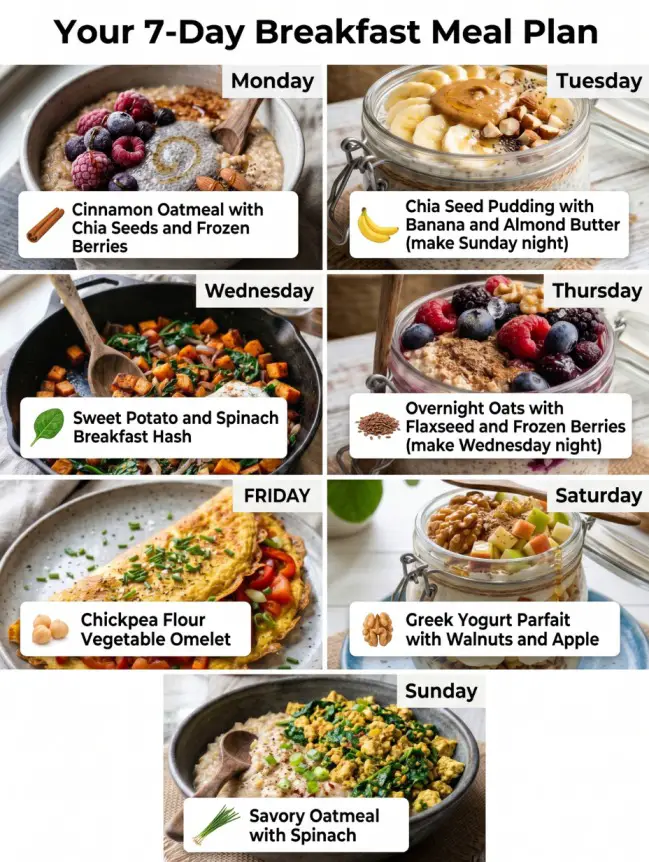
Knowing which recipes to make is one thing. Having a plan makes it easy to follow through every single morning. Here is a simple, stress-free week of breakfasts using the recipes above.
Monday: Cinnamon Oatmeal with Chia Seeds and Frozen Berries Tuesday: Chia Seed Pudding with Banana and Almond Butter (make Sunday night) Wednesday: Sweet Potato and Spinach Breakfast Hash Thursday: Overnight Oats with Flaxseed and Frozen Berries (make Wednesday night) Friday: Chickpea Flour Vegetable Omelet Saturday: Greek Yogurt Parfait with Walnuts and Apple Sunday: Savory Oatmeal with Spinach (or your favorite repeat from the week)
Sunday Batch Prep Tip: Spend 20 minutes on Sunday evening to prepare for the week ahead. Make your chia pudding and overnight oats for Tuesday and Thursday. Boil and peel two sweet potatoes to store in the fridge — they reheat in 3 minutes for Wednesday’s hash. Pre-mix your chickpea flour batter (without vegetables) and refrigerate it for Friday. That is four breakfasts completely ready to go with almost zero morning effort.
Your Diabetic-Friendly Budget Grocery Shopping Guide
Stock these pantry staples once, and you will have the ingredients for nearly every recipe in this article — often for weeks at a time.
Pantry Staples (buy in bulk, last for weeks or months):
- Old-fashioned rolled oats
- Chia seeds
- Ground flaxseed
- Yellow moong dal or red lentils
- Chickpea flour (besan)
- Natural peanut butter or almond butter
- Canned or dry chickpeas
- Low-sodium vegetable broth or bouillon cubes
- Whole wheat bread
Refrigerator Staples (buy weekly):
- Plain Greek yogurt
- Fresh spinach or frozen spinach
- Tomatoes
- Avocados
- Apples
- Bananas (buy extra and freeze when ripe)
- Green onions
Freezer Staples (buy in bulk, freeze):
- Frozen mixed berries
- Frozen spinach
- Frozen sweet potato cubes (available pre-cut at Walmart and Trader Joe’s)
- Extra ripe bananas
Where to shop for the lowest prices:
- Walmart and Aldi for oats, yogurt, frozen fruit, and store-brand staples
- Costco or Sam’s Club for bulk chia seeds, flaxseed, peanut butter, and Greek yogurt
- Indian or South Asian grocery stores for lentils, chickpea flour, and spices at dramatically lower prices than mainstream stores
- Farmers markets (late summer through fall) for cheap, fresh sweet potatoes, tomatoes, and apples — especially if you arrive near closing time when vendors reduce prices
Frequently Asked Questions
1. What is the best breakfast for a senior woman with Type 2 diabetes?
The best breakfast combines fiber, protein, and a small amount of healthy fat. Oatmeal with chia seeds and berries, lentil pancakes, or Greek yogurt with walnuts and apple are all excellent choices. The key is avoiding refined carbohydrates like white bread, sugary cereals, and pastries first thing in the morning.
2. Can people with diabetes eat oats every day?
Yes — in fact, daily oat consumption is encouraged for people with diabetes. The beta-glucan fiber in old-fashioned oats has been studied extensively and shown to reduce post-meal blood sugar spikes. The important thing is to use old-fashioned or steel-cut oats, not instant oats, which are more processed and have a higher glycemic index.
3. Are lentils good for blood sugar control?
Lentils are one of the best foods available for blood sugar control. They have a very low glycemic index (around 32), are high in both protein and fiber, and digest slowly. Studies have consistently shown that replacing higher-GI foods with lentils reduces blood sugar response after meals.
4. What breakfast foods should seniors with diabetes avoid?
Avoid white bread, bagels, muffins, sugary cereals (including many that market themselves as “healthy”), flavored yogurts with added sugar, fruit juices, pastries, and instant oatmeal packets with added sweeteners. These foods are high in refined carbohydrates and cause rapid blood sugar spikes.
5. How can I make diabetic breakfasts cheaper?
Buy your staples in bulk (oats, lentils, chia seeds, flaxseed), choose frozen fruit over fresh, shop at ethnic grocery stores for specialty ingredients like chickpea flour and lentils, and avoid any product with “diabetic-friendly” on the label — these are almost always overpriced versions of foods you can make yourself for a fraction of the cost.
6. Is chickpea flour safe for people with diabetes?
Yes — chickpea flour is an excellent option for people with diabetes. It has a glycemic index of about 44 (compared to wheat flour’s 70+), and it is significantly higher in protein and fiber than regular flour. It can be used to make pancakes, omelets, and flatbreads that are much gentler on blood sugar than their wheat-flour equivalents.
A Final Word
Managing diabetes after 60 is a real challenge. It asks a lot of you — monitoring your numbers, managing medications, making thoughtful choices every single day. Your breakfast should not be one more stressful thing on that list.
The recipes in this article are not about perfection. They are about making it a little easier to start your morning with food that works for you instead of against you. Every one of these breakfasts costs less than $1.50. Every one of them takes 20 minutes or less. And every one of them gives your blood sugar a better start to the day than any overpriced “diabetic” product on a grocery store shelf.
You do not need to try all ten recipes this week. Pick two or three that sound good to you and start there. Make the chia pudding tonight before you go to bed. Try the oatmeal tomorrow morning. See how you feel.
Small, consistent steps are what create real change — not expensive supplements or complicated meal plans.
Save this article to your Pinterest board so you always have these recipes within reach. And if you found it helpful, share it with a friend or family member who is also managing diabetes on a budget. They will thank you for it.
Disclaimer: This article is for informational purposes only and is not a substitute for professional medical advice. Always consult your doctor or a registered dietitian before making significant changes to your diet, especially if you are on diabetes medication.
