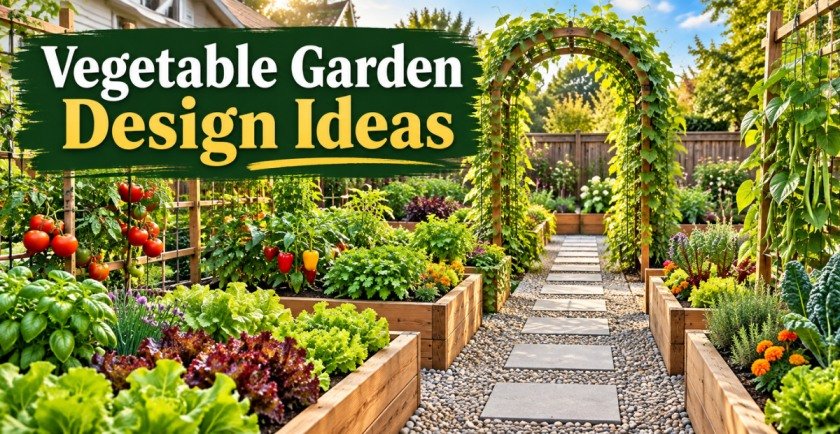
A well-designed vegetable garden can be one of the most beautiful and hardworking parts of a backyard. Instead of squeezing vegetables into whatever empty space is available, thoughtful planning allows you to create growing areas that are easy to walk through, simple to maintain, and attractive enough to become a feature of the landscape. The best vegetable garden design ideas combine productive planting space with comfortable pathways, vertical structures, efficient watering, and clearly defined beds.
Before choosing a layout, spend time observing your backyard. Most fruiting vegetables such as tomatoes, peppers, cucumbers, beans, and squash perform best where they receive plenty of direct sunlight, while many leafy greens can tolerate slightly less. Think about how you will carry compost, harvest baskets, hoses, and tools through the space. Beds that look beautiful but are difficult to reach quickly become frustrating during the busiest part of the growing season.
You do not need a huge yard to create an organized vegetable garden. Raised beds, narrow borders, trellises, containers, vertical planters, and intensive planting methods can transform modest spaces into productive edible landscapes. Whether your style is rustic, cottage-inspired, contemporary, or highly structured, the following 45 vegetable garden design ideas can help you plan a backyard that feels intentional, practical, and enjoyable to use.
1. Symmetrical Raised Bed Vegetable Garden
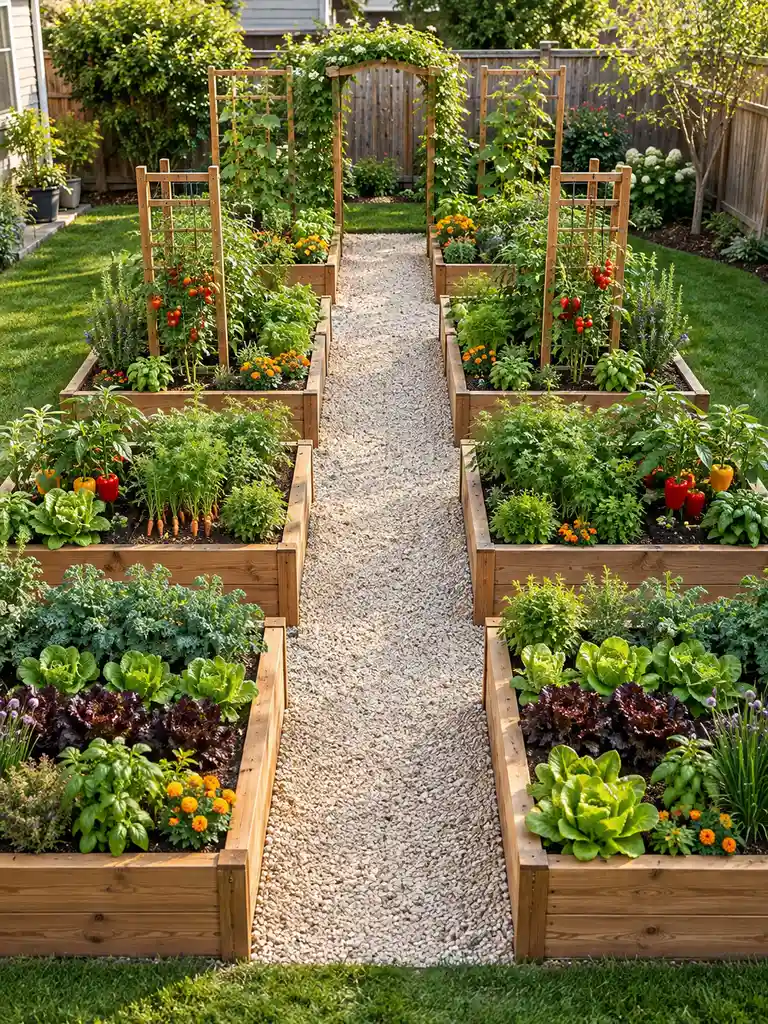
A symmetrical raised-bed layout is ideal if you like a backyard that feels calm, balanced, and easy to navigate. Place matching rectangular beds on both sides of a straight central path, keeping bed dimensions and spacing consistent. Grow taller crops such as tomatoes and beans toward the back and shorter vegetables near the edges. Repeating trellises, herbs, or small companion flowers in corresponding positions strengthens the organized appearance without making the garden feel overly formal.
2. Gravel Path Vegetable Garden
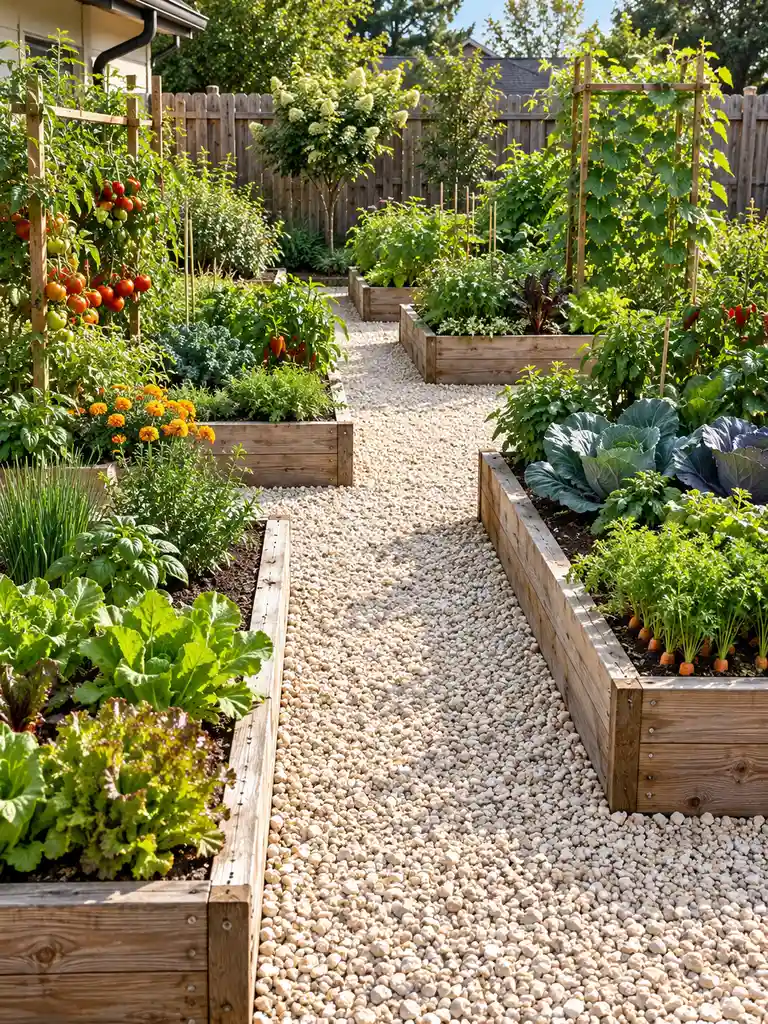
Gravel paths instantly give a vegetable garden a cleaner, more finished look while also solving practical problems. Use compacted gravel between raised or in-ground beds so you can walk after watering or rain without tracking mud. Keep paths wide enough for a wheelbarrow and maintain clear edges around each bed. Pale gravel works especially well with timber beds and green foliage, visually separating growing areas while improving drainage and making routine maintenance much easier.
3. Arched Trellis Garden Entrance
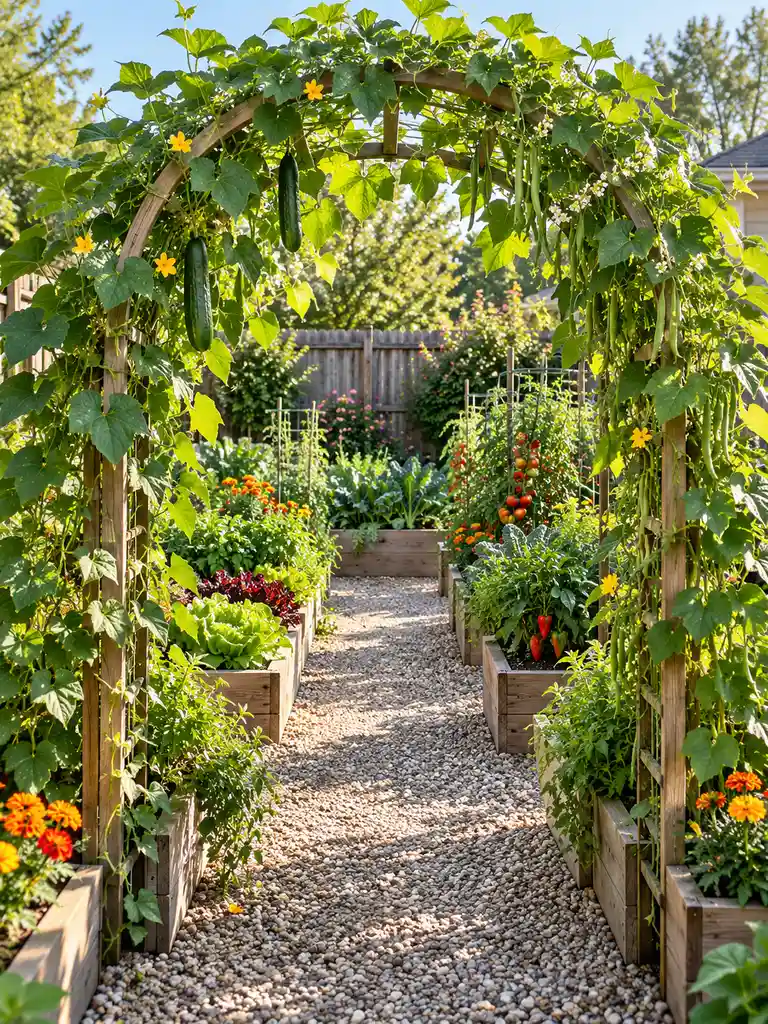
An arched trellis can turn the entrance to a vegetable garden into a productive focal point. Position the arch over the main path and train climbing beans, cucumbers, peas, or lightweight gourds upward so the vines eventually frame the walkway. Keep raised beds on both sides of the entrance so the structure feels connected to the garden. The vertical growth saves ground space, adds shade in moderation, and creates a memorable transition into the growing area.
4. Modern Black Raised Bed Garden
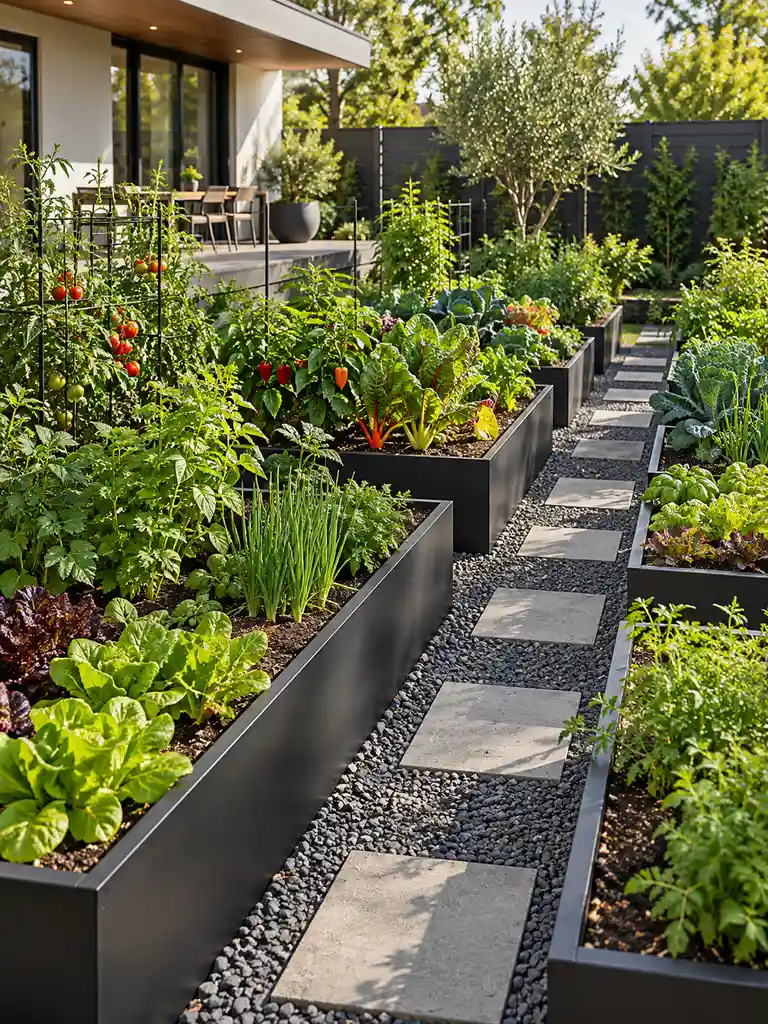
Matte-black raised beds are a strong choice for a contemporary backyard because their clean edges make vegetable planting look intentional and architectural. Arrange them in straight geometric rows with dark gravel, concrete pavers, or simple stepping stones between them. Deep green lettuce, colorful chard, peppers, tomatoes, and herbs stand out beautifully against the dark material. Keep accessories restrained and use matching supports so the garden remains modern rather than visually busy.
5. Classic Wooden Raised Bed Layout
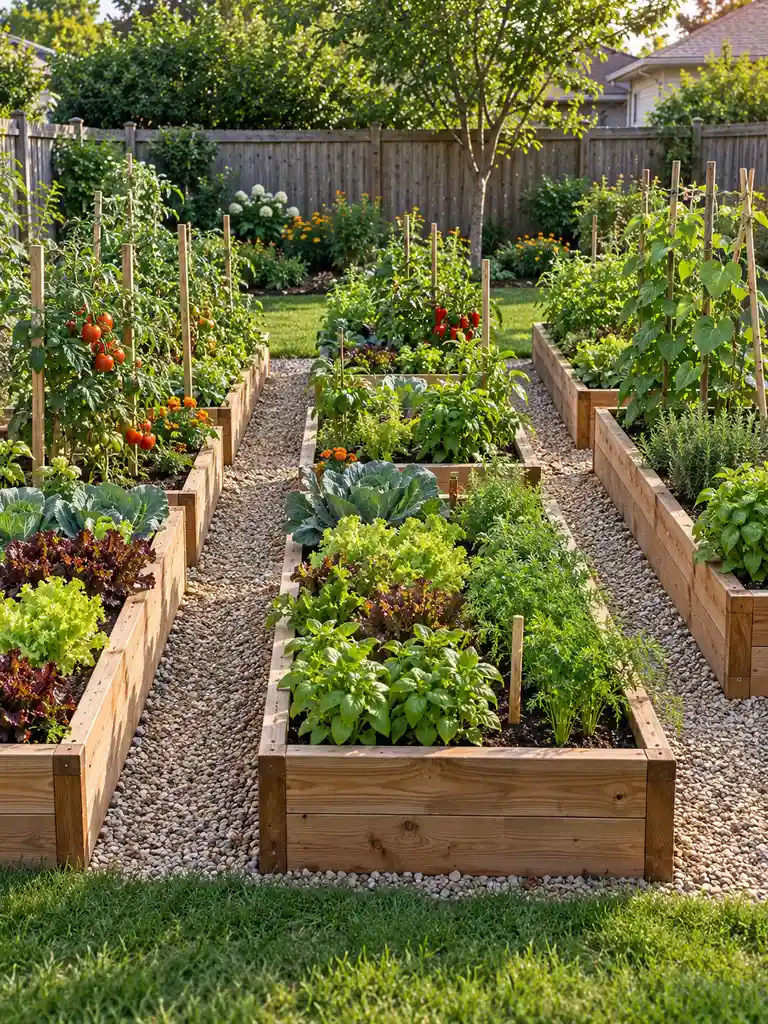
Natural wooden raised beds suit almost every backyard style and are easy to organize into practical rows. Choose consistent bed sizes, leave comfortable paths between them, and use gravel, bark, or lawn around the growing area. Divide beds by crop type or rotation group so seasonal planning stays simple. Weathered timber, wooden stakes, and basic trellises give the garden a timeless look while providing clear boundaries that help protect soil structure and make harvesting easier.
6. L-Shaped Vegetable Garden Beds
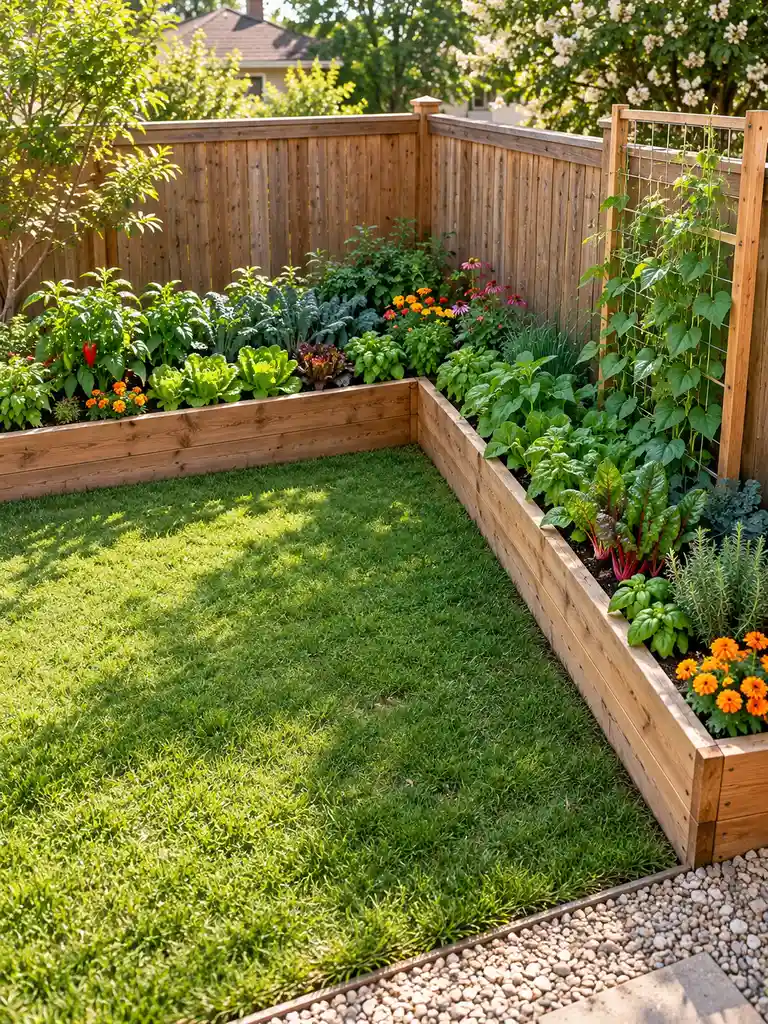
L-shaped beds are especially useful in corners where a standard rectangle might waste space or interfere with circulation. Run each arm of the bed along adjoining boundaries and keep the inside of the L open for easy access. The longer sections can hold peppers, greens, bush beans, and herbs, while a trellis at one end supports climbing crops. This arrangement preserves an open central lawn or patio while turning an awkward backyard corner into productive growing space.
7. U-Shaped Kitchen Garden
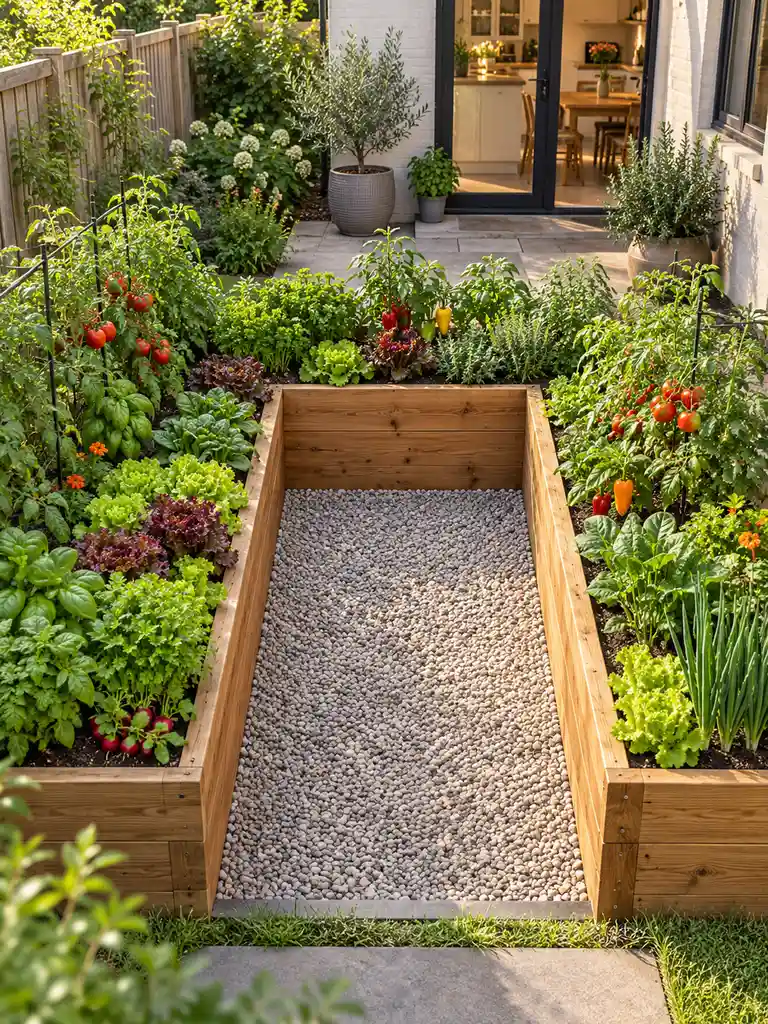
A U-shaped kitchen garden keeps a large amount of planting space within easy reach from one central working area. Build three connected or closely spaced raised beds around a gravel or paved center and make sure no section is too deep to reach comfortably. Grow frequently harvested crops such as lettuce, spinach, herbs, spring onions, tomatoes, and peppers. Placing this layout near the back door makes quick harvesting for meals especially convenient.
8. Central Feature Bed Garden
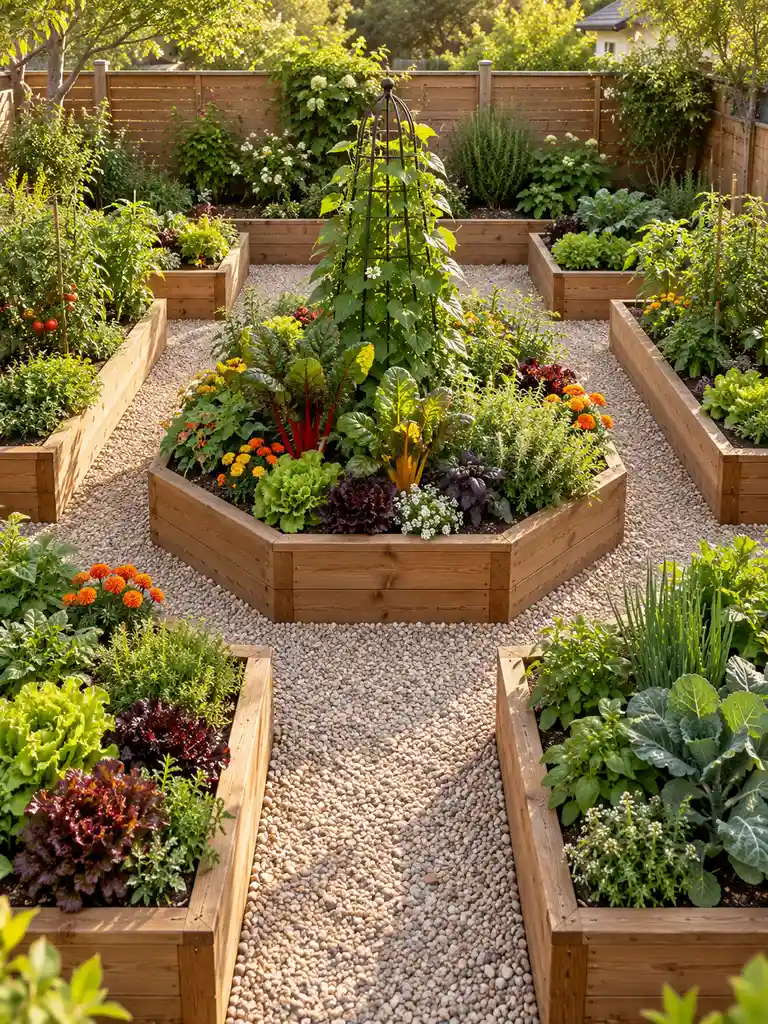
Give the vegetable garden a strong focal point by placing one distinctive square, circular, or octagonal raised bed in the center. Fill it with colorful chard, lettuces, herbs, edible flowers, or a compact climbing support, then arrange simpler rectangular beds around it. Paths radiating toward the center make the layout easy to understand and move through. This approach works particularly well when the garden can be seen from a patio, window, or several sides of the yard.
9. Four-Square Vegetable Garden
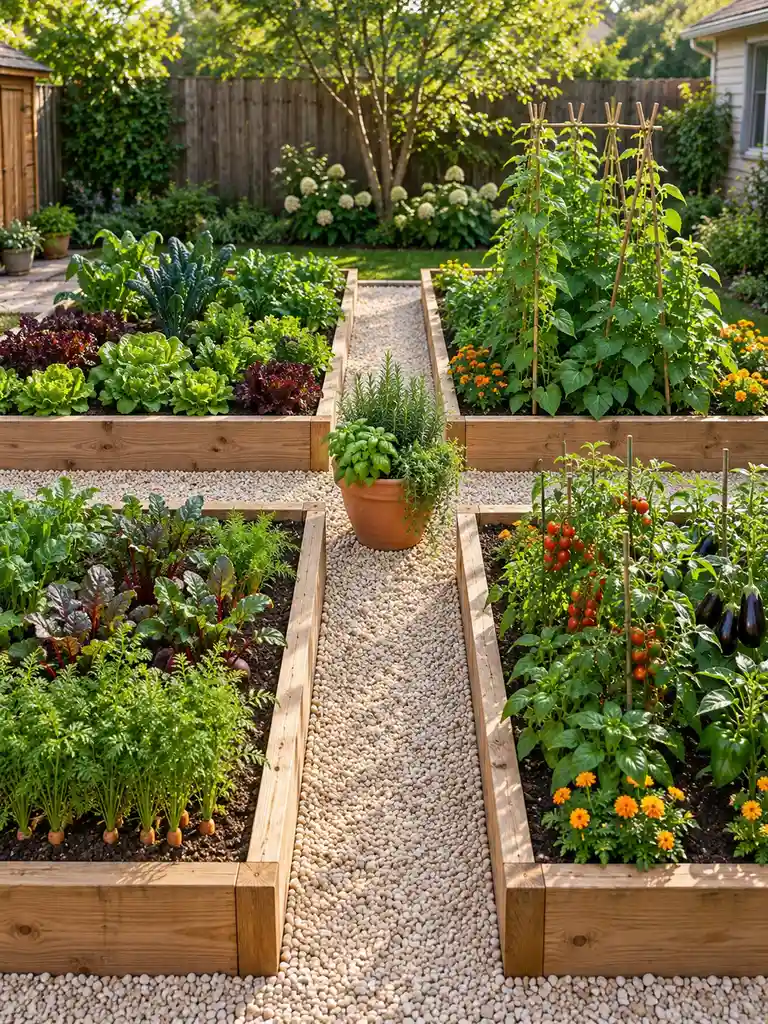
A four-square garden divides the growing area into four large beds separated by two crossing paths. The layout is simple, highly organized, and useful for crop rotation because each quadrant can hold a different vegetable family. Try legumes in one section, leafy greens in another, fruiting crops in a third, and roots in the fourth. A small herb pot or modest garden feature at the central intersection adds interest without reducing valuable planting space.
10. Potager-Style Vegetable Garden
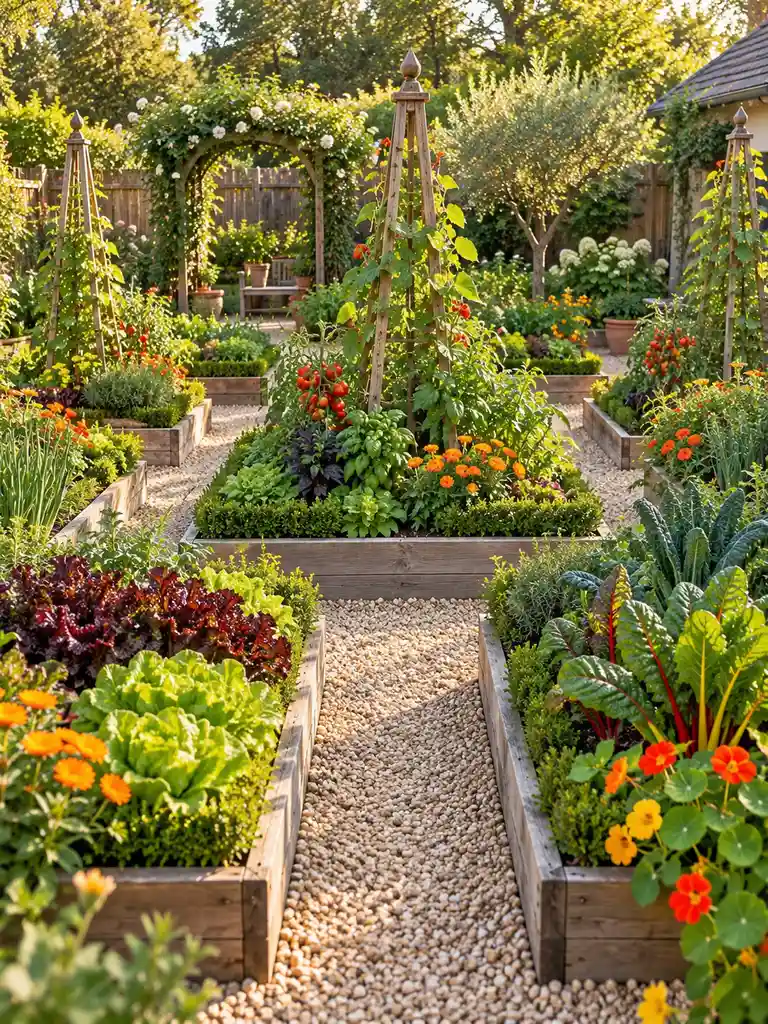
A potager combines food production with ornamental garden design, making it ideal when the vegetable garden is visible from the house or entertaining areas. Arrange geometric beds around neat paths and mix lettuce, chard, herbs, tomatoes, beans, and edible flowers in attractive patterns. Repeating certain colors or plant forms creates unity. Decorative obelisks and restrained edging add height and structure, while the vegetables remain the main purpose of the garden rather than becoming secondary decoration.
11. Vegetable and Flower Companion Garden
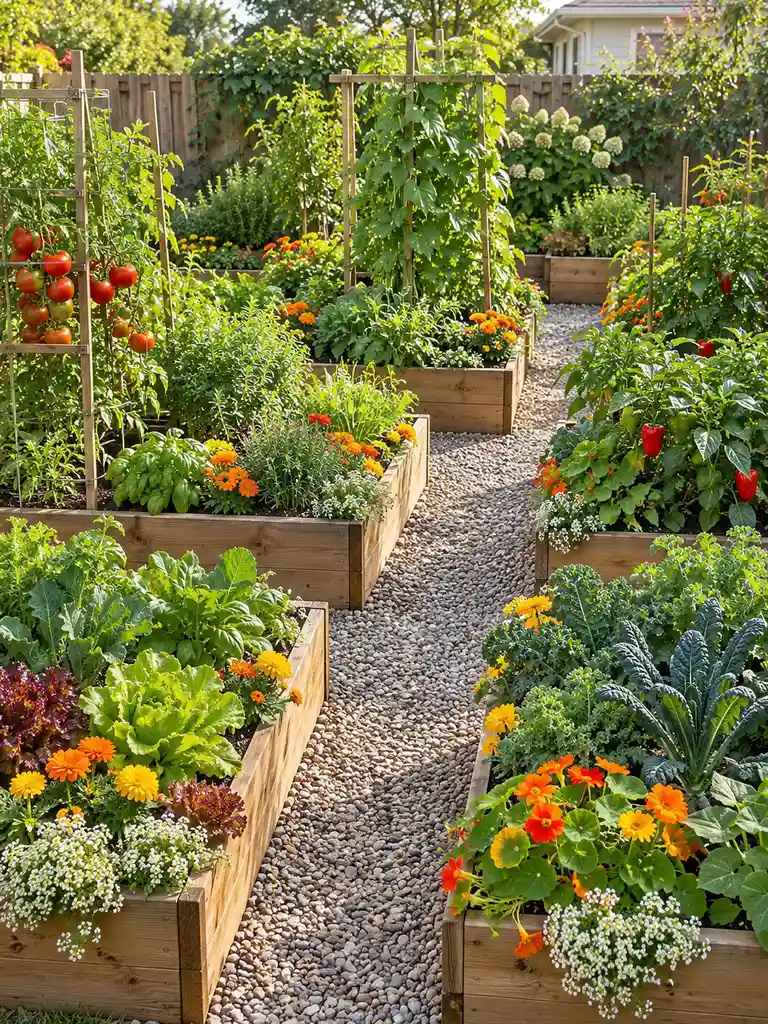
Companion flowers can make a vegetable garden more colorful while also attracting pollinators and other beneficial insects. Plant marigolds, calendula, nasturtiums, alyssum, or similar flowers along bed edges and between selected crops rather than letting them dominate. Mix them with tomatoes, peppers, lettuce, beans, kale, and herbs, leaving enough room for airflow. Repeating a few flower varieties throughout the garden creates a coordinated look and helps the productive beds feel integrated with the wider landscape.
12. Narrow Side-Yard Vegetable Garden
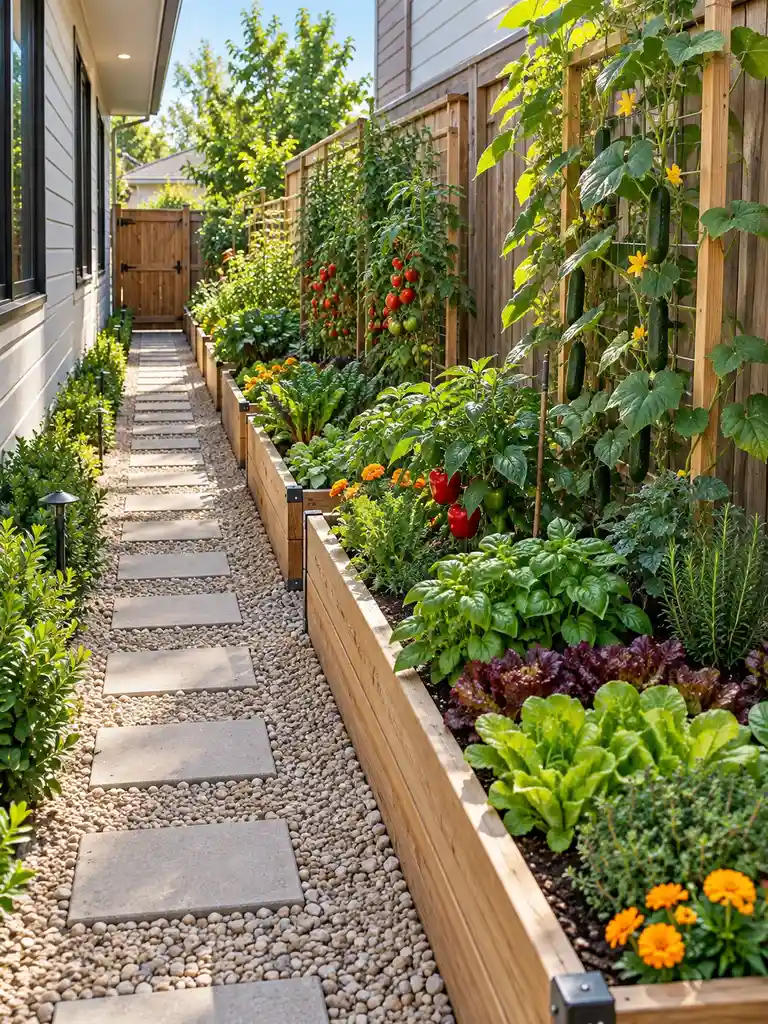
A sunny side yard can become a highly productive garden when the design follows its long, narrow proportions. Install slim raised beds along one boundary and run a continuous gravel or stepping-stone path beside them. Use vertical supports for cucumbers, beans, and tomatoes so foliage grows upward rather than blocking the walkway. Herbs, peppers, and leafy greens fit neatly below. Keeping tools and a water source near one end makes this compact layout easier to maintain.
13. Backyard Fence-Line Vegetable Garden
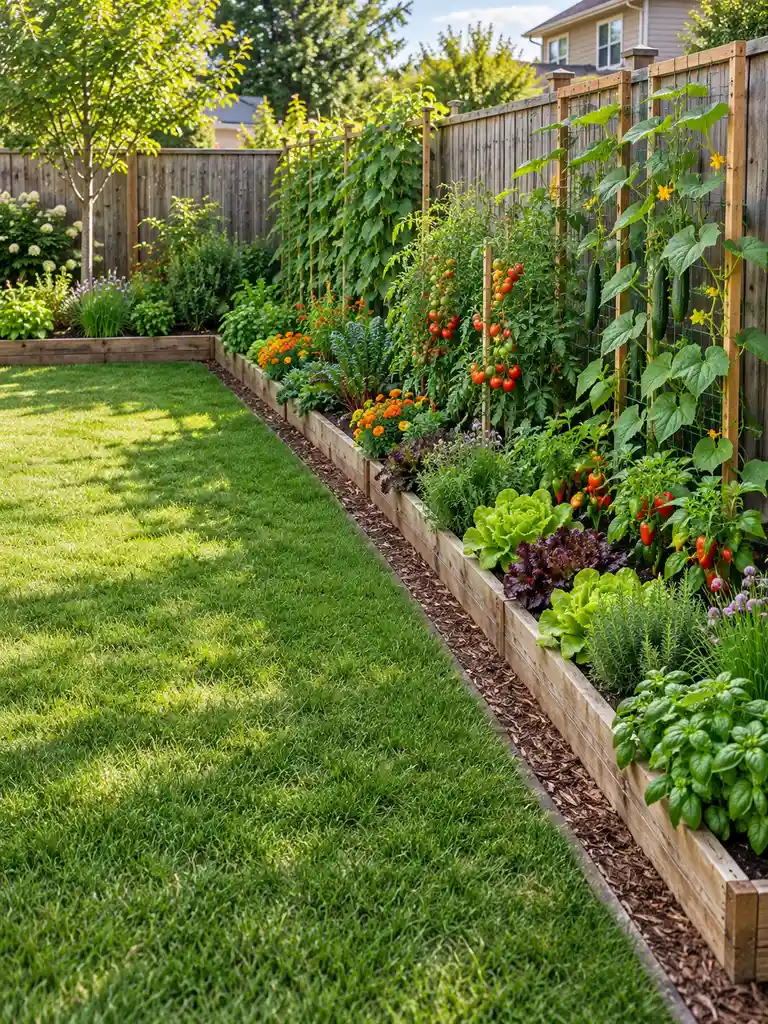
Growing vegetables along the fence line lets you keep the center of the backyard open for lawn, play, or entertaining. Build a continuous narrow bed against the boundary and use the fence or attached trellis panels for pole beans and cucumbers. Position tomatoes toward the back and lower herbs, lettuce, and peppers near the front. A clean mulch strip between the bed and lawn makes the arrangement look intentional while reducing weeds and simplifying mowing.
14. Vegetable Garden With Stepping-Stone Paths
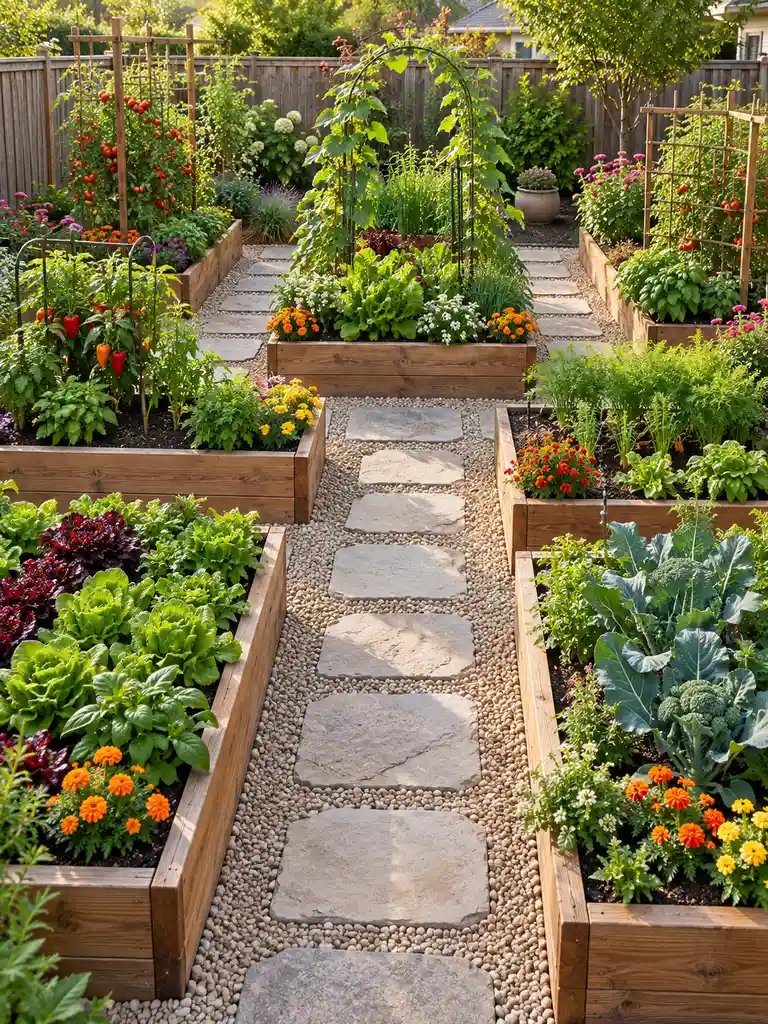
Large stepping stones can make the walking routes through a vegetable garden both practical and attractive. Set flat pavers into fine gravel, keeping the spacing comfortable and consistent, then position raised beds along the routes. Stone works beautifully with timber beds filled with lettuce, broccoli, peppers, carrots, tomatoes, herbs, and flowers. Because the walking surface remains permanent, you avoid compacting productive soil and can access the garden in damp weather without creating muddy paths.
15. Cedar Raised Bed Garden
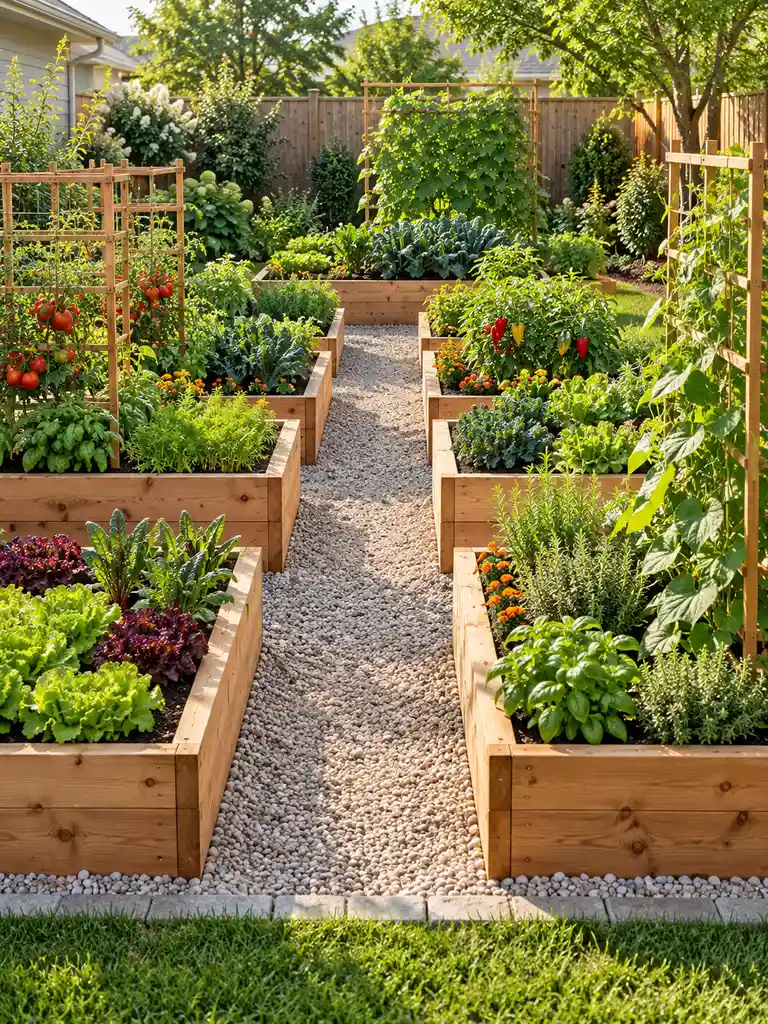
Cedar raised beds bring a warm, refined look to a productive garden while blending naturally with fences, decks, and landscaping. Use matching rectangular beds and keep their heights consistent so the space feels cohesive. Fill them with leafy greens, tomatoes, peppers, beans, carrots, and culinary herbs, adding simple cedar trellises where vertical support is needed. The visible wood grain gives the garden character, and a pale gravel path helps the timber stand out without looking overly decorative.
16. Galvanized Metal Vegetable Garden
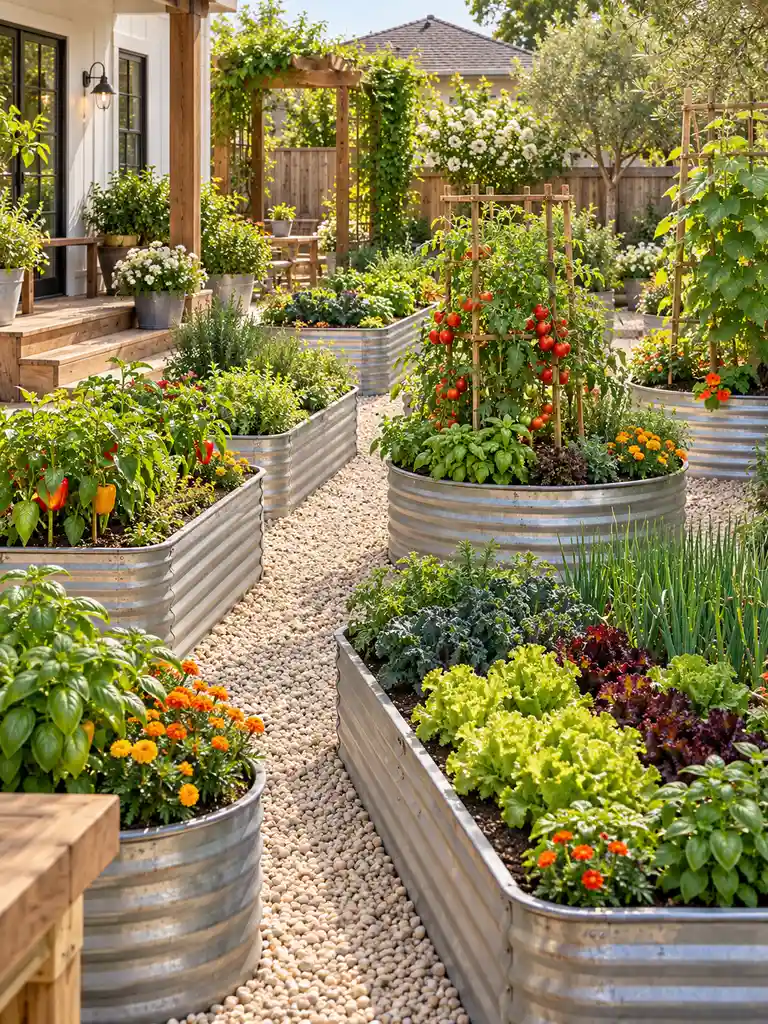
Galvanized planters create a durable farmhouse-inspired vegetable garden with clearly defined growing areas. Use a combination of rectangular and round corrugated beds arranged over gravel, leaving enough room to move comfortably between them. Tomatoes, peppers, kale, lettuce, onions, and herbs provide varied height and texture. Because metal beds can warm quickly in strong sun, use adequate soil depth and monitor moisture carefully. Wooden accents or trellises can soften the silver-gray finish.
17. Corten Steel Vegetable Garden
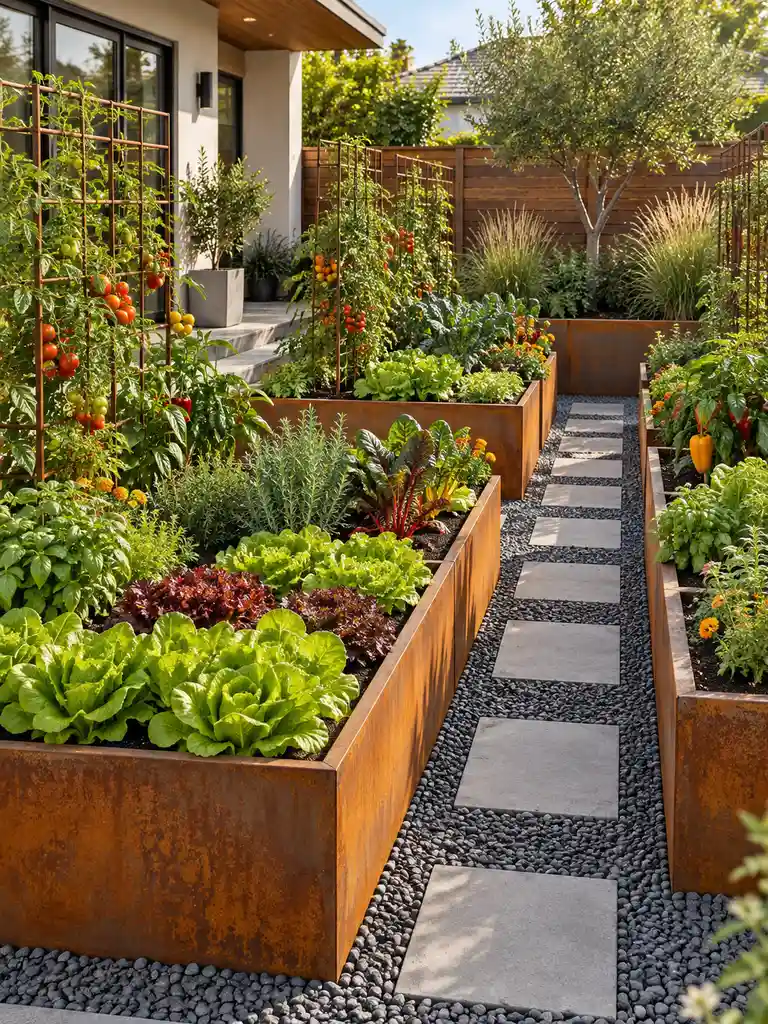
Weathering steel raised beds give a vegetable garden a contemporary architectural character. Their rust-toned surfaces provide a striking contrast to deep green lettuce, herbs, peppers, tomatoes, and colorful chard. Keep the beds rectangular and arrange them in clean lines with dark gravel or simple pavers between them. A modern fence or house facade helps tie the material into the surrounding landscape. The result feels polished while remaining a genuinely practical food-growing space.
18. Tiered Vegetable Garden for a Sloped Yard
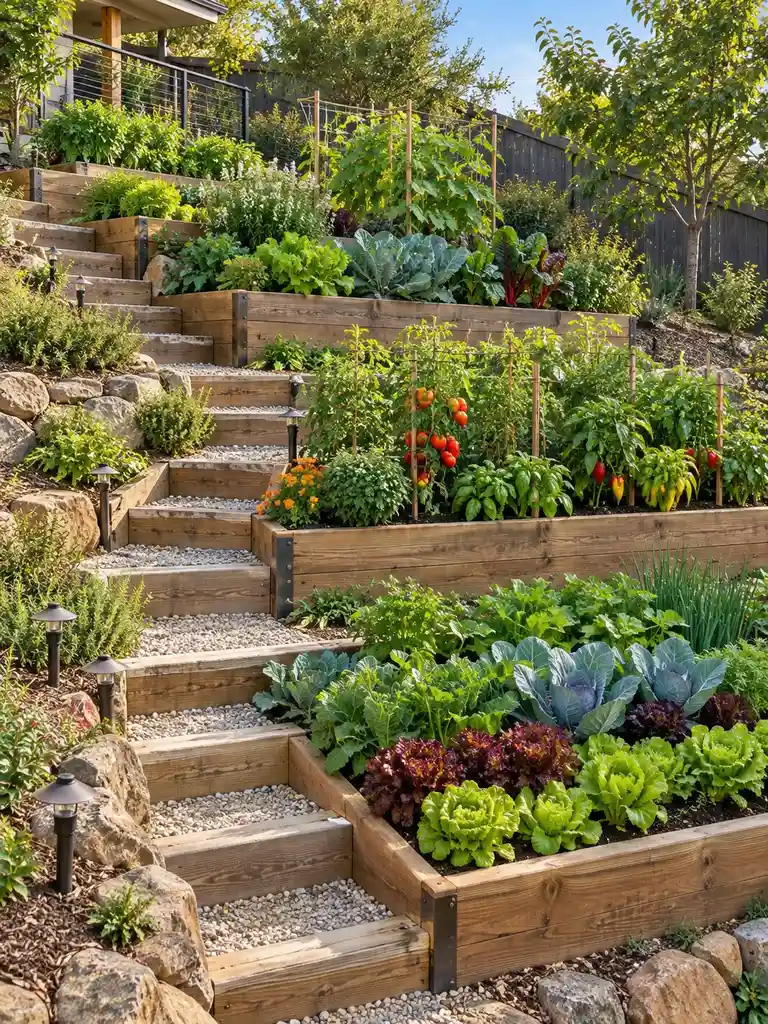
A sloped backyard can be made much easier to garden by creating several stepped growing levels rather than fighting the grade. Build sturdy timber beds that descend gradually down the slope and connect them with safe gravel steps or a narrow staircase. Use each tier for a different crop group such as leafy greens, cabbage, tomatoes, peppers, or herbs. Good retaining construction and drainage are essential so soil stays stable and water does not collect behind the beds.
19. Terraced Hillside Vegetable Garden
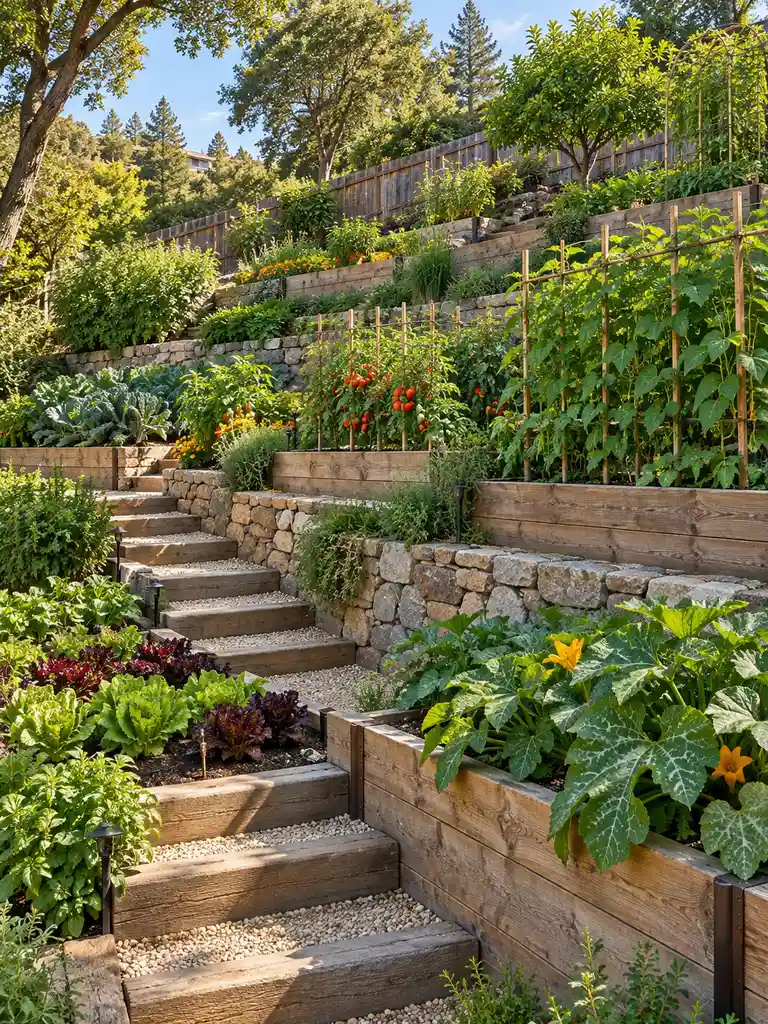
On a steeper hillside, broad terraces can create usable horizontal planting zones while reducing erosion. Support each level with properly built stone or heavy timber retaining edges and include a secure stair route between terraces. Grow beans, leafy greens, tomatoes, squash, and herbs in substantial rows that follow the contour of the slope. Repeating similar terrace widths makes the design feel organized, while visible stone, soil, and weathered materials keep the garden believable and integrated with the landscape.
20. Small Backyard Grid Garden
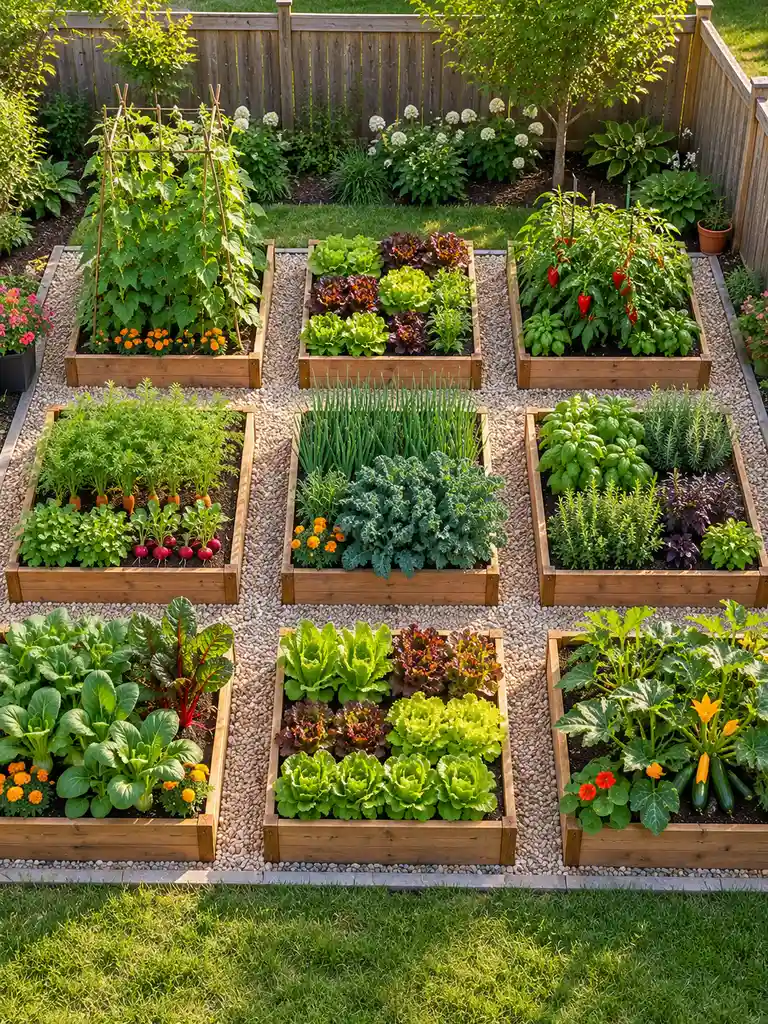
A precise grid of small beds is one of the most efficient ways to organize a compact backyard vegetable garden. Arrange six to nine square or rectangular beds with straight gravel paths between them and dedicate each bed to a crop group such as lettuce, carrots, radishes, peppers, herbs, kale, beans, or onions. Matching bed materials and consistent spacing make the limited area feel larger, while the separate sections simplify succession planting, crop rotation, and seasonal maintenance.
21. Square-Foot Vegetable Garden
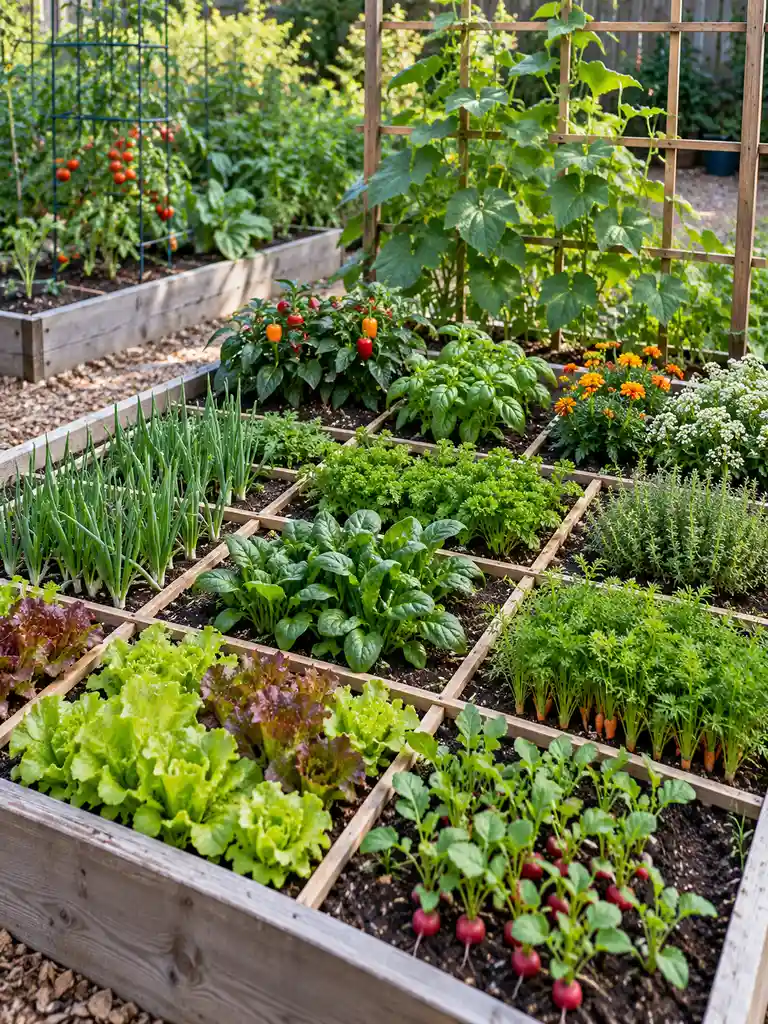
Square-foot gardening divides a raised bed into visible smaller sections so many crops can share one compact growing space without becoming confusing. Use thin wooden strips or string to create the grid and plant each square according to the mature size of its crop. Lettuce, radishes, carrots, herbs, onions, spinach, and compact peppers all work well. A trellis along one edge allows climbing plants to grow vertically without shading the entire bed.
22. Keyhole Vegetable Garden Design
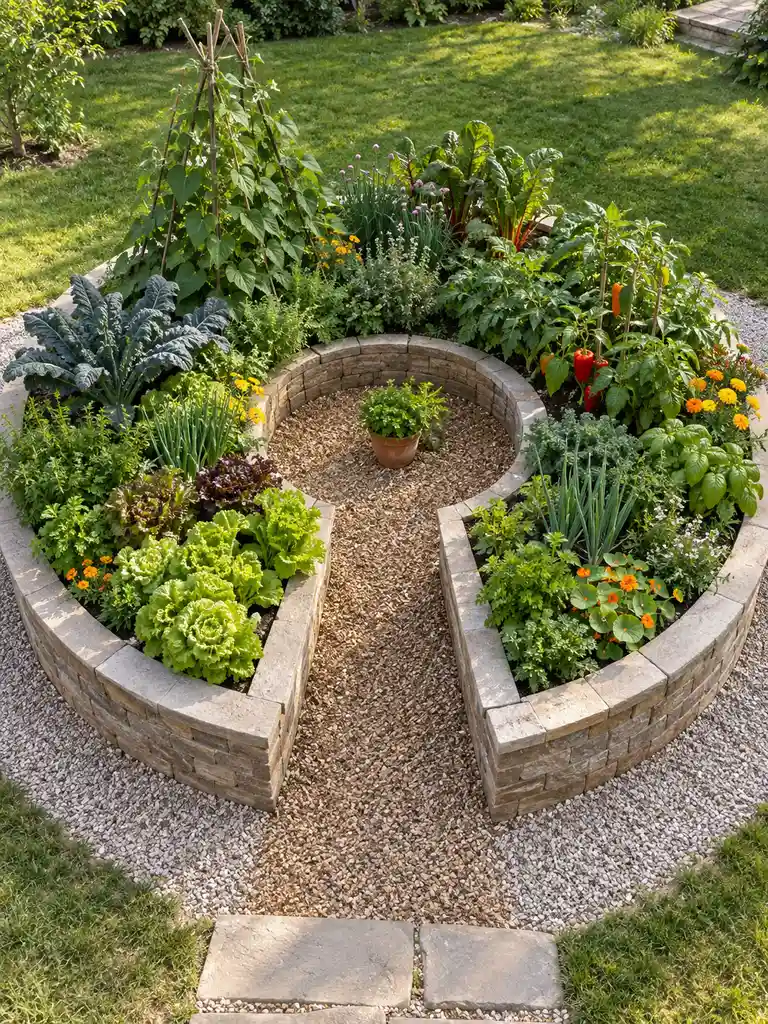
A keyhole garden uses a circular or horseshoe-shaped bed with a narrow access path leading into the center. This distinctive shape provides a large planting area while keeping much of the soil within reach from the path. Fill the curved bed with lettuce, kale, peppers, beans, onions, parsley, and other vegetables, using the outer curve for low crops. Surrounding the bed with gravel or lawn makes the unusual layout easy to see and keeps access tidy.
23. Mandala Vegetable Garden
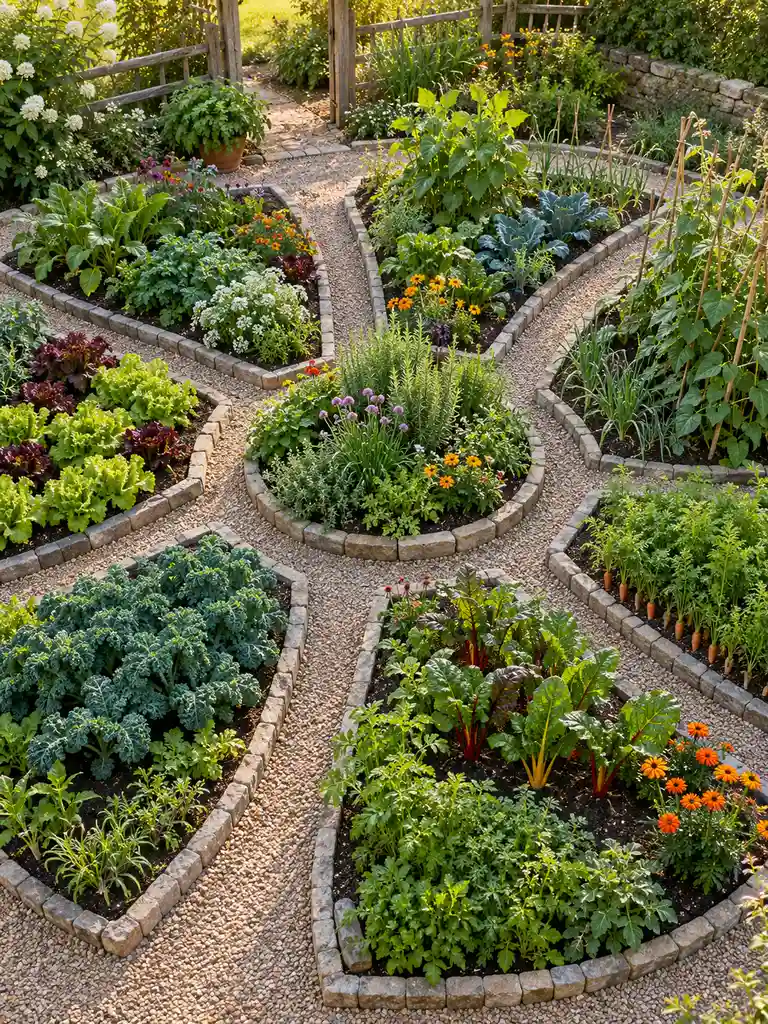
A mandala-inspired vegetable garden replaces straight rows with curved, petal-shaped beds radiating around a central point. The pattern can be beautiful, but practical access should guide the design so every crop can be reached without stepping into cultivated soil. Use narrow gravel paths between sections and repeat combinations of lettuce, kale, herbs, carrots, chard, beans, and restrained flowers. The curved geometry works especially well in a larger backyard where the full layout can be appreciated.
24. Circular Vegetable Garden With Center Trellis
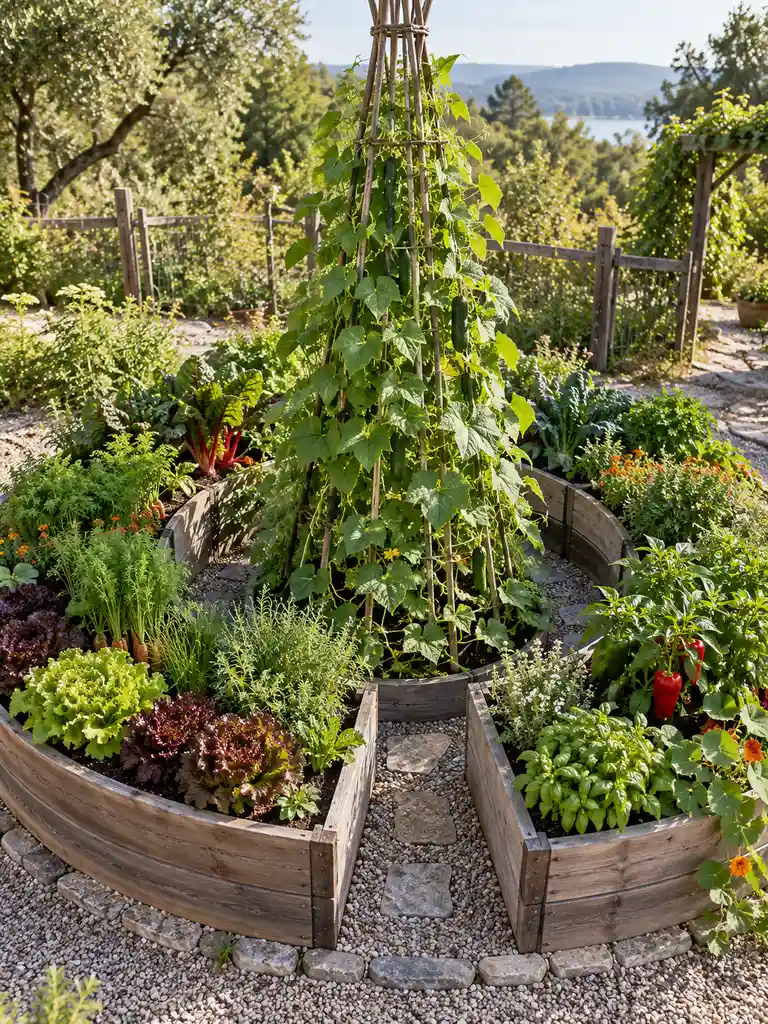
A circular garden becomes especially productive when a tall trellis anchors the center. Arrange curved beds in a ring around the support and leave one or more narrow access paths leading inward. Train pole beans and cucumbers up the central structure while planting lettuce, carrots, herbs, chard, and peppers around the outer sections. The vertical greenery draws the eye upward and saves space, while the circular bed shape creates a distinctive centerpiece for the backyard.
25. Vegetable Garden With Pergola
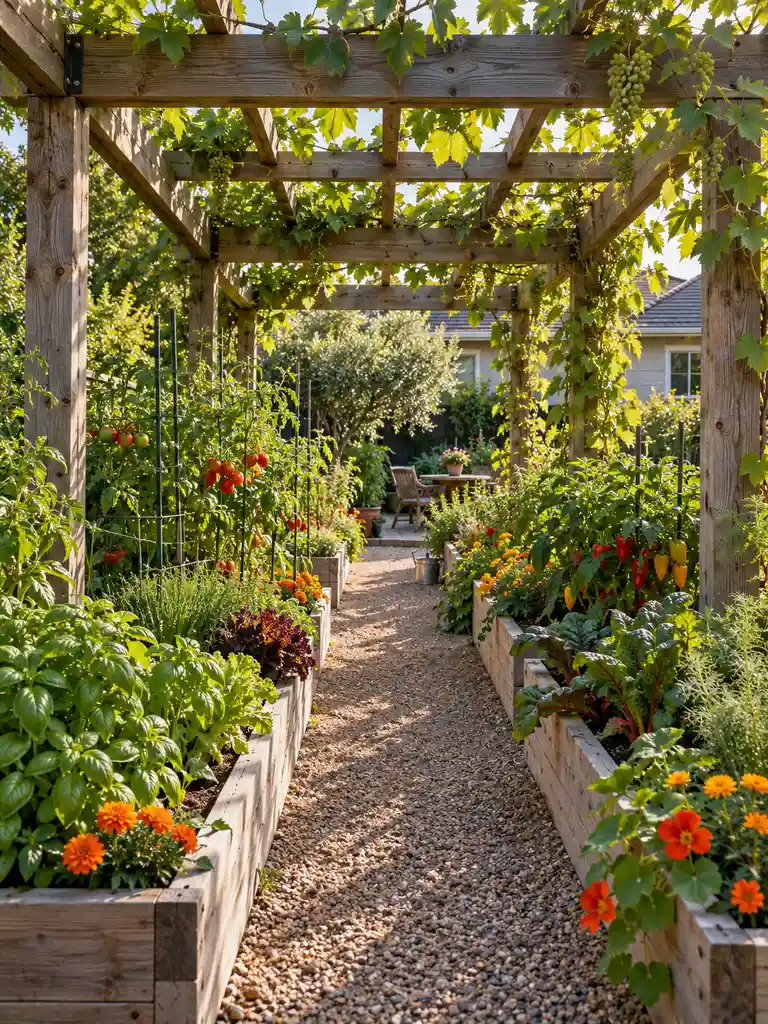
A pergola can define the vegetable garden as an outdoor room while providing support for selected climbing crops. Position the structure over a broad central path so it does not heavily shade sun-loving beds. Train beans, cucumbers, or grape vines across only part of the overhead beams and place tomatoes, peppers, leafy greens, herbs, and flowers in raised beds along both sides. Weathered timber and filtered sunlight give the space a welcoming, established character.
26. Tunnel Trellis Vegetable Garden
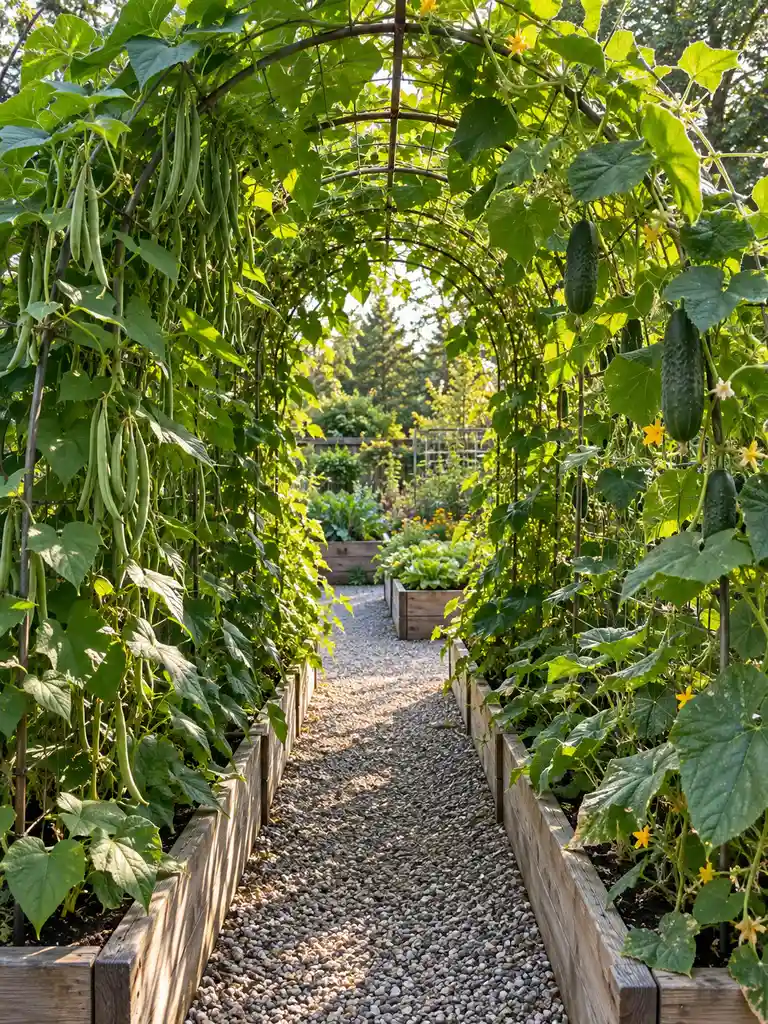
A long tunnel trellis creates a dramatic walkway while using vertical space for productive crops. Install strong arches between two parallel beds and train pole beans and cucumbers up both sides until the vines meet partially overhead. Keep a clean gravel path through the center for easy harvesting. Hanging beans or cucumbers remain visible and accessible, and the tunnel keeps vigorous vines off the ground. Additional beds beyond the arch help the structure feel integrated into a larger garden.
27. A-Frame Trellis Garden
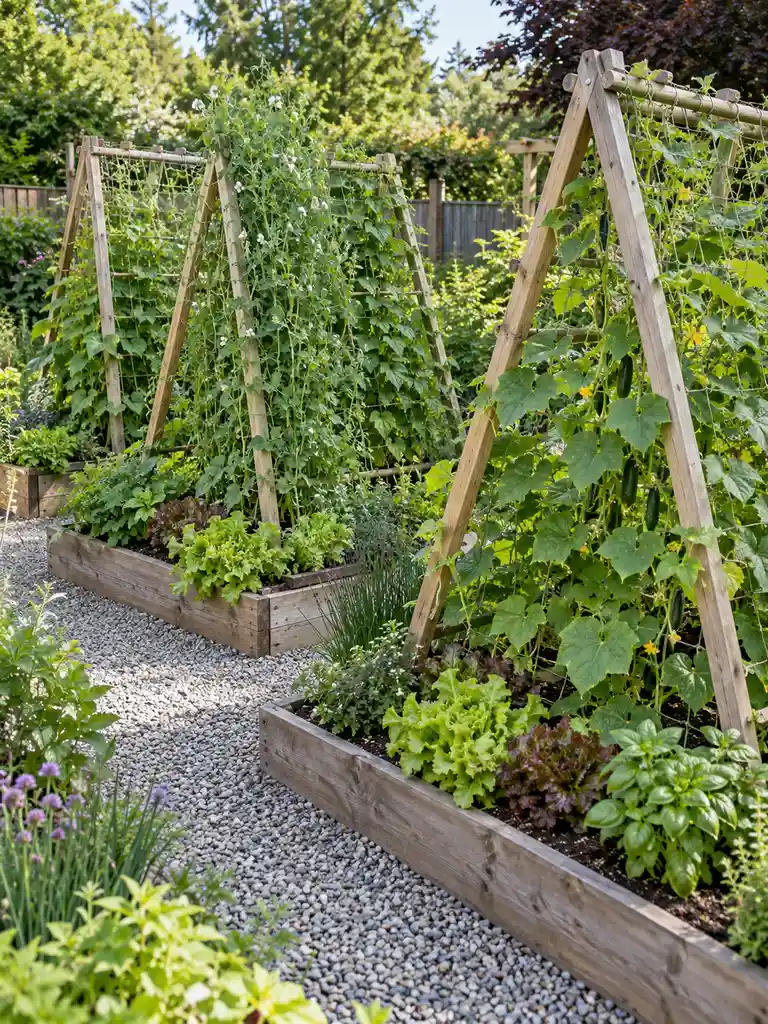
A-frame trellises offer reliable support for climbing vegetables and can be repeated across several beds for a tidy, coordinated look. Build the triangular frames from wood or bamboo and train peas, beans, or cucumbers along netting or crosspieces. Low lettuce and herbs can grow around the base without competing heavily for space. Position the frames so they do not cast unnecessary shade on nearby crops and leave enough gravel path width for comfortable access.
28. Wall Trellis Vegetable Garden
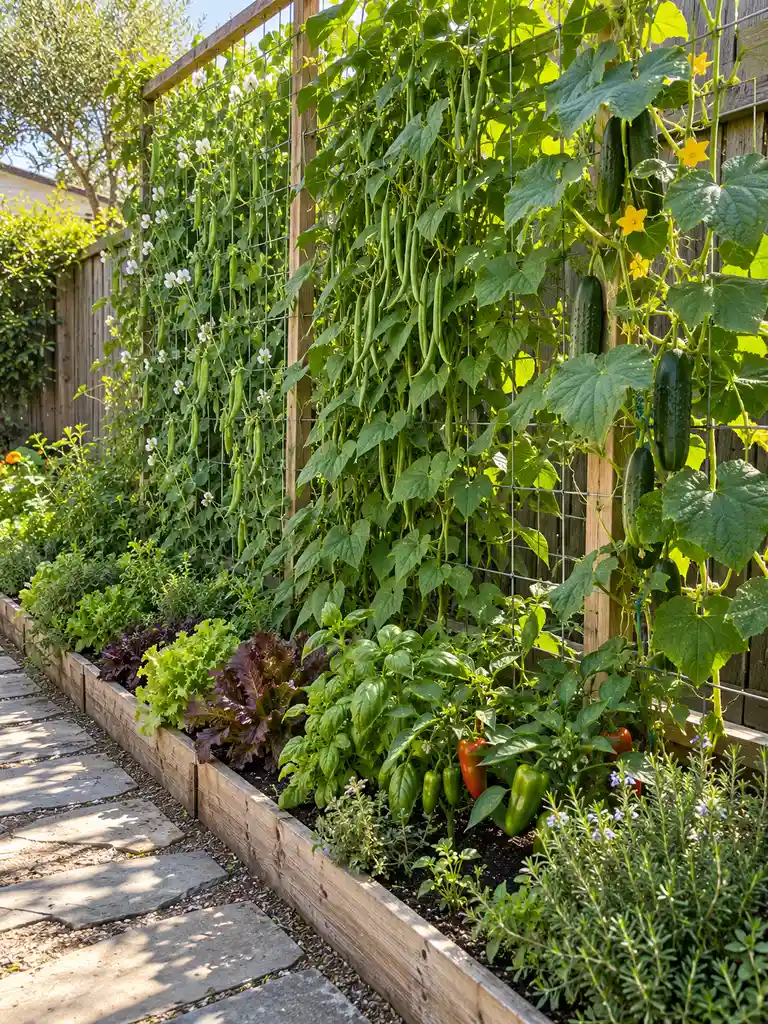
A sunny fence or wall can become valuable growing space when fitted with a sturdy vertical trellis. Train cucumbers, pole beans, and peas upward, then use the narrow bed below for lettuce, herbs, and compact peppers. Keep a clear path in front so harvesting and pruning remain easy. The vertical planting creates a green backdrop without taking up much ground area, making this design particularly useful in small or narrow backyards where every square foot matters.
29. Vertical Vegetable Garden With Planters
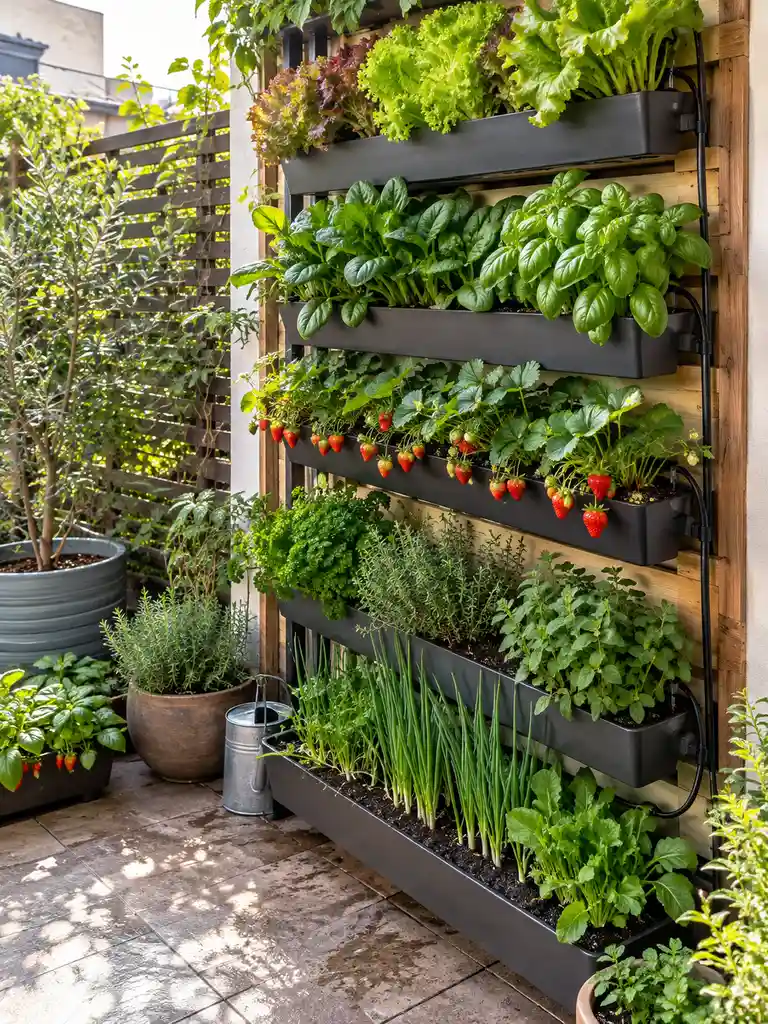
Stacked planters and wall-mounted growing systems can turn a patio or compact backyard into a productive vertical garden. Use the upper and middle levels for lettuce, spinach, basil, parsley, strawberries, and other crops with manageable root systems. Keep a few larger pots at floor level for additional herbs. Because elevated planters can dry out quickly, include convenient irrigation or easy watering access. Matching containers make the system look intentional rather than like a collection of unrelated pots.
30. Vegetable Garden With Fruit Trees
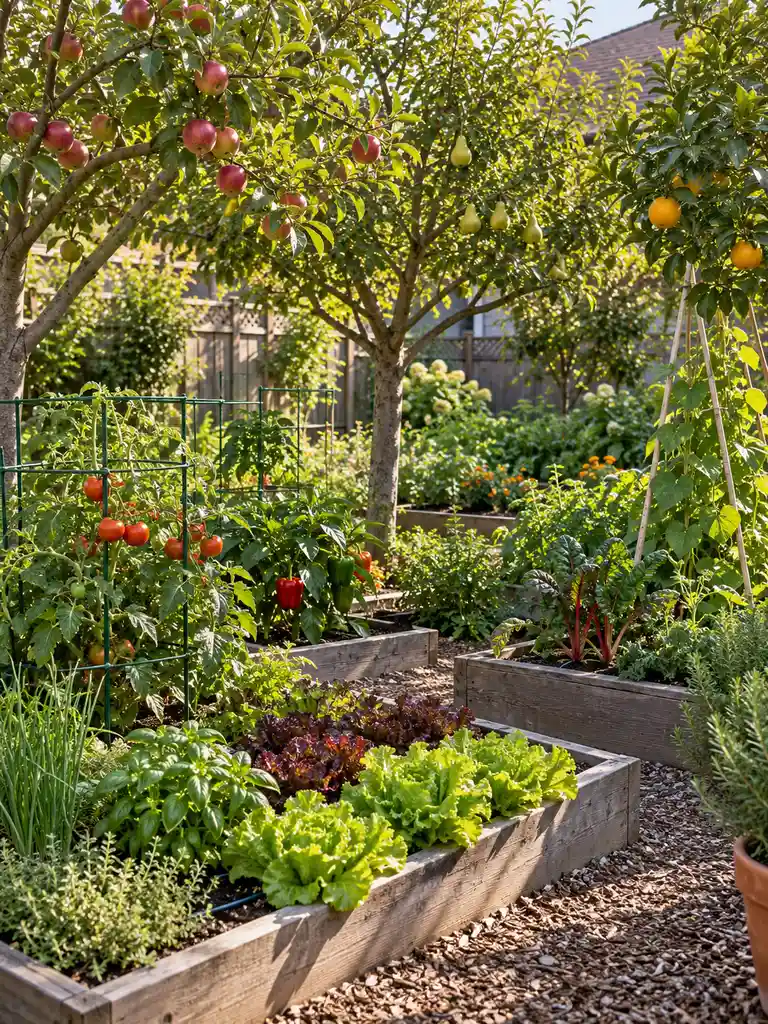
Combining vegetable beds with small fruit trees creates a layered edible landscape that produces food at several heights. Use dwarf apple, pear, or citrus trees where climate permits, positioning them so their mature canopy does not excessively shade sun-loving vegetables. Plant tomatoes, peppers, herbs, beans, lettuce, and chard in the open areas between trees. Leave breathing room around trunks and roots, and keep pathways clear so both tree care and vegetable harvesting remain straightforward.
31. Espalier Fruit and Vegetable Garden
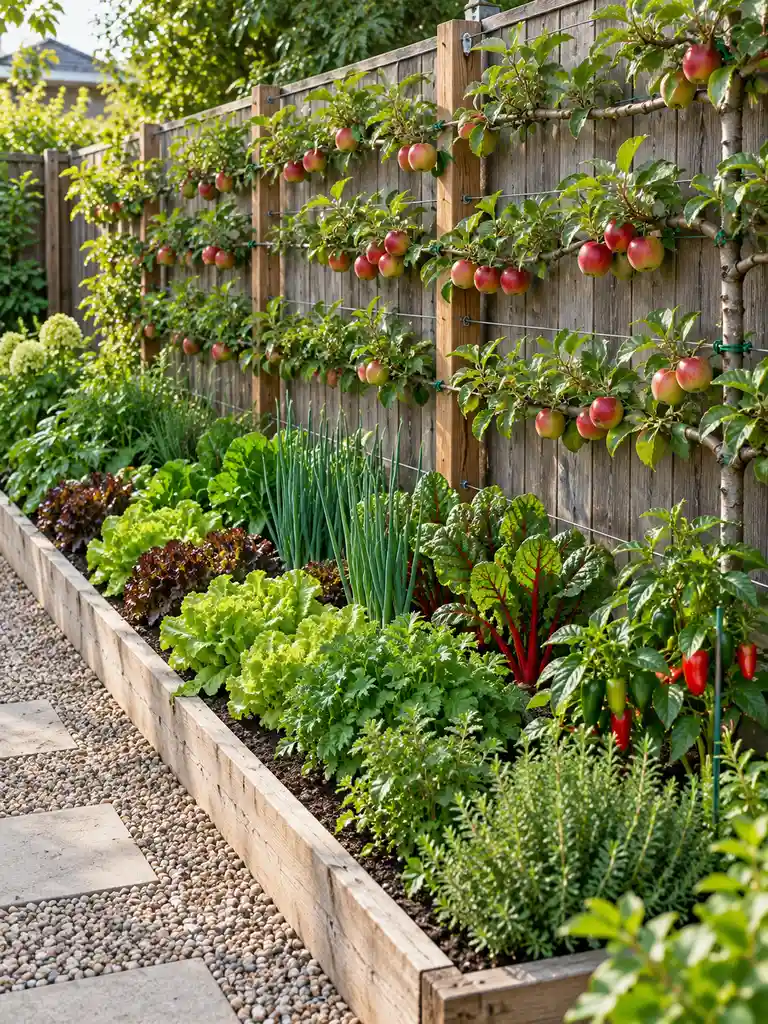
Espalier fruit trees are trained flat against a fence or support, making them ideal for narrow gardens. Use horizontal wires to guide apple or pear branches into clear tiers and maintain the shape with regular pruning and tying. Beneath the trees, plant a narrow bed of lettuce, onions, herbs, chard, and compact peppers. The trained branches provide a strong structured backdrop while using very little depth, allowing productive vegetables to occupy the sunny ground in front.
32. Herb Border Vegetable Garden
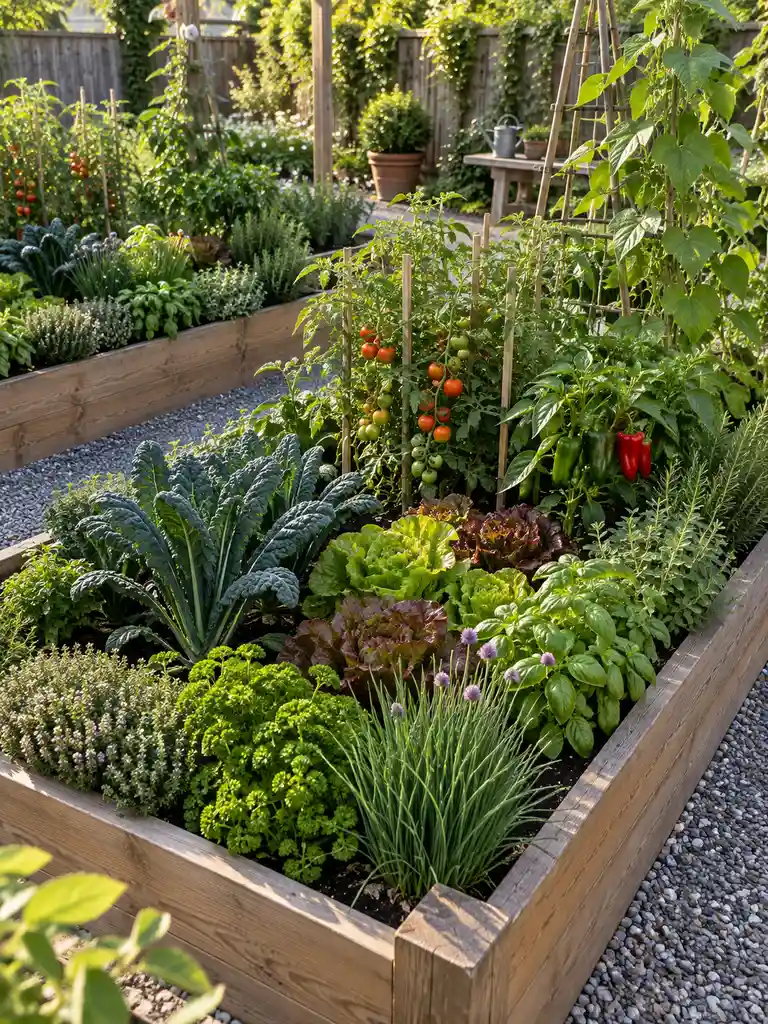
Culinary herbs can form an attractive living border around larger vegetable beds. Use low bands of thyme, parsley, chives, basil, oregano, and rosemary to define the edges, then grow taller crops such as tomatoes, peppers, kale, beans, and lettuce behind them. Keep vigorous herbs trimmed so they do not compete heavily with vegetables. Repeating the same herb combinations around multiple beds creates a cohesive look and places frequently harvested ingredients within easy reach of the pathways.
33. Salad Garden Design
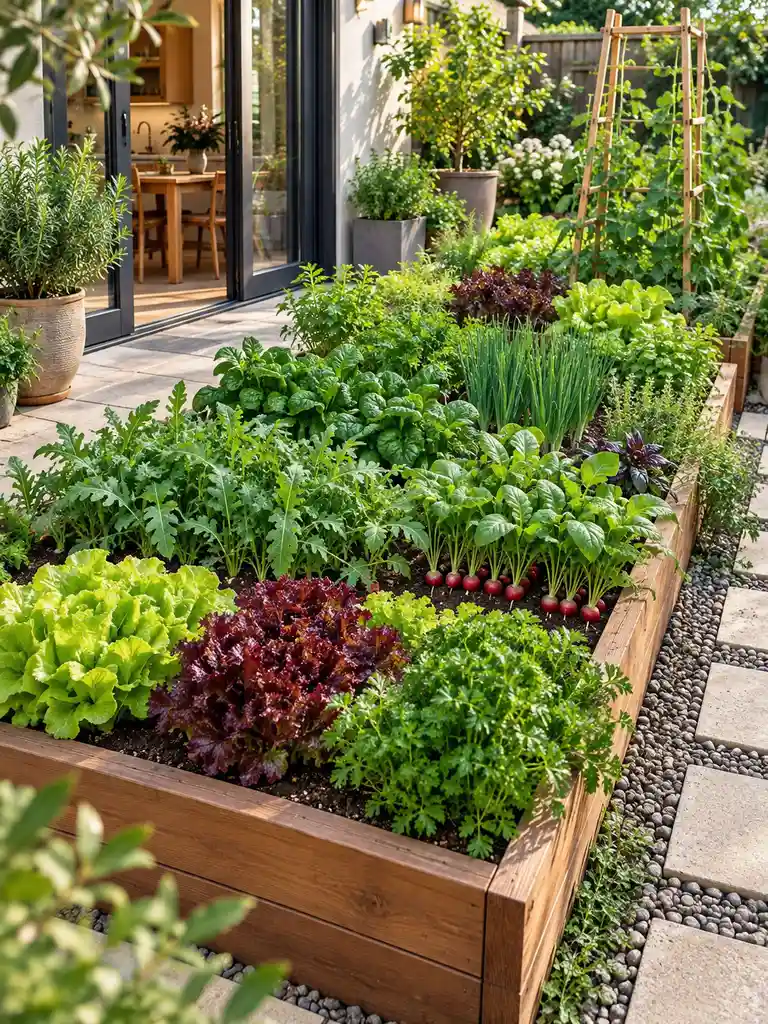
A dedicated salad garden keeps quick, frequently harvested crops close together and easy to reach. Organize green lettuce, red lettuce, spinach, arugula, radishes, spring onions, parsley, and other herbs in separate patches or short rows. Sow smaller amounts at intervals rather than planting the whole bed at once so harvests continue over a longer period. Position the bed near a kitchen door or patio, where cutting fresh greens for meals becomes simple and convenient.
34. Tomato-Focused Garden Layout
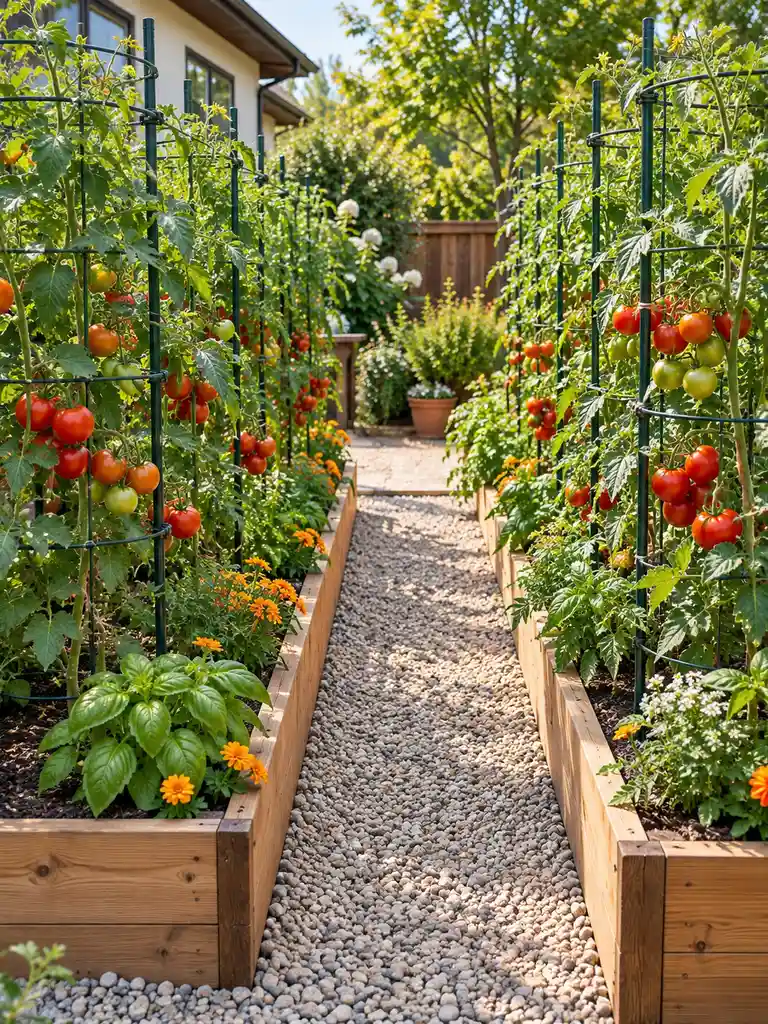
Tomatoes become easier to manage when they have their own organized section of the garden. Plant them in one or two long raised beds and install matching cages, stakes, or trellis panels before the plants become large. Leave enough room between plants for airflow and harvesting, and keep gravel paths wide and clear. Basil or small companion flowers can fill bed edges without crowding the stems. Consistent supports give the entire tomato area a much neater appearance.
35. Climbing Vegetable Garden
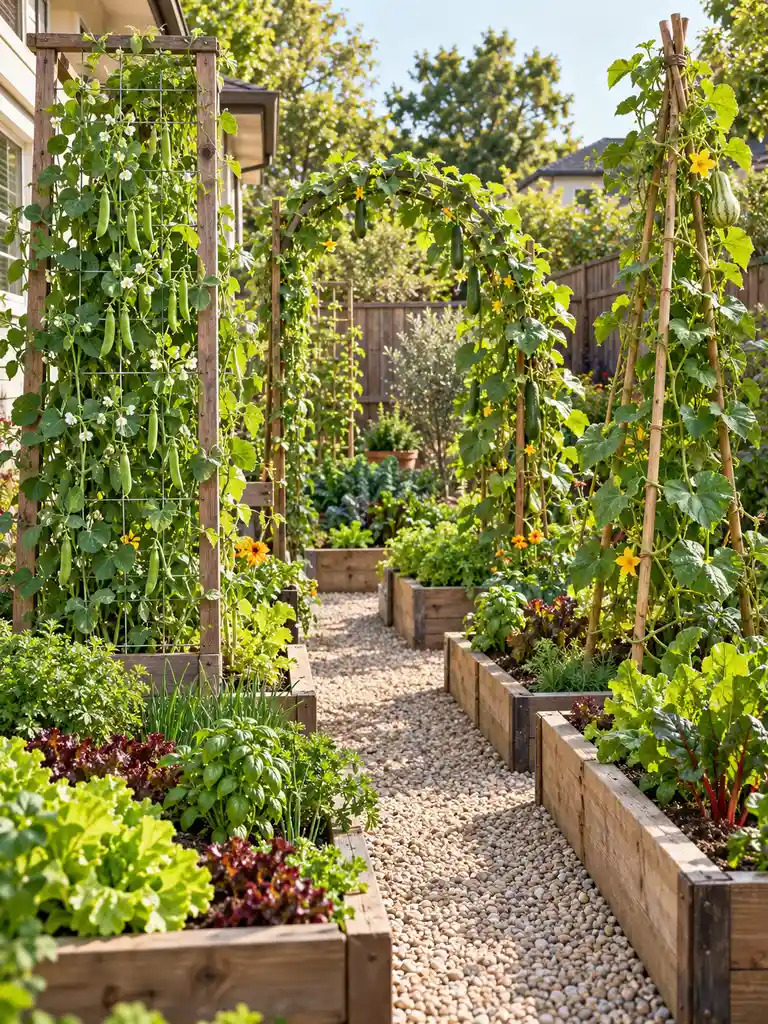
A garden designed around vertical crops can produce a surprising amount of food without taking over the ground. Combine an arch, upright trellis, and tall frame for pole beans, peas, cucumbers, and a restrained gourd vine, placing each support where it will not cast excessive shade. Use the lower beds for lettuce, herbs, and compact greens. Mixing several practical support styles adds height and variety while keeping sprawling vines controlled and pathways clear.
36. Intensive Vegetable Garden Rows
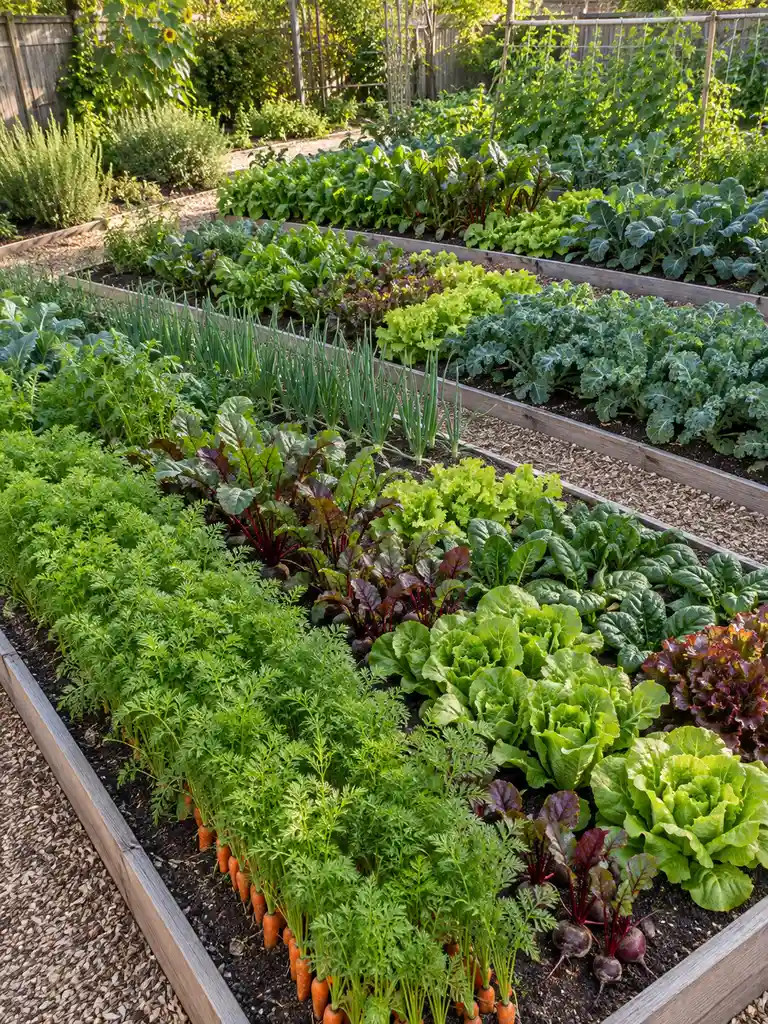
Intensive planting uses permanent beds more efficiently by arranging vegetables in closely spaced blocks rather than widely separated traditional rows. Plant carrots, lettuce, beets, onions, spinach, kale, and similar crops according to their mature size, leaving enough space for airflow and root development. Keep all walking routes outside the productive soil. Succession planting and careful harvesting allow the same bed to produce multiple crops through the season while maintaining a tidy, purposeful appearance.
37. Wide-Path Accessible Vegetable Garden
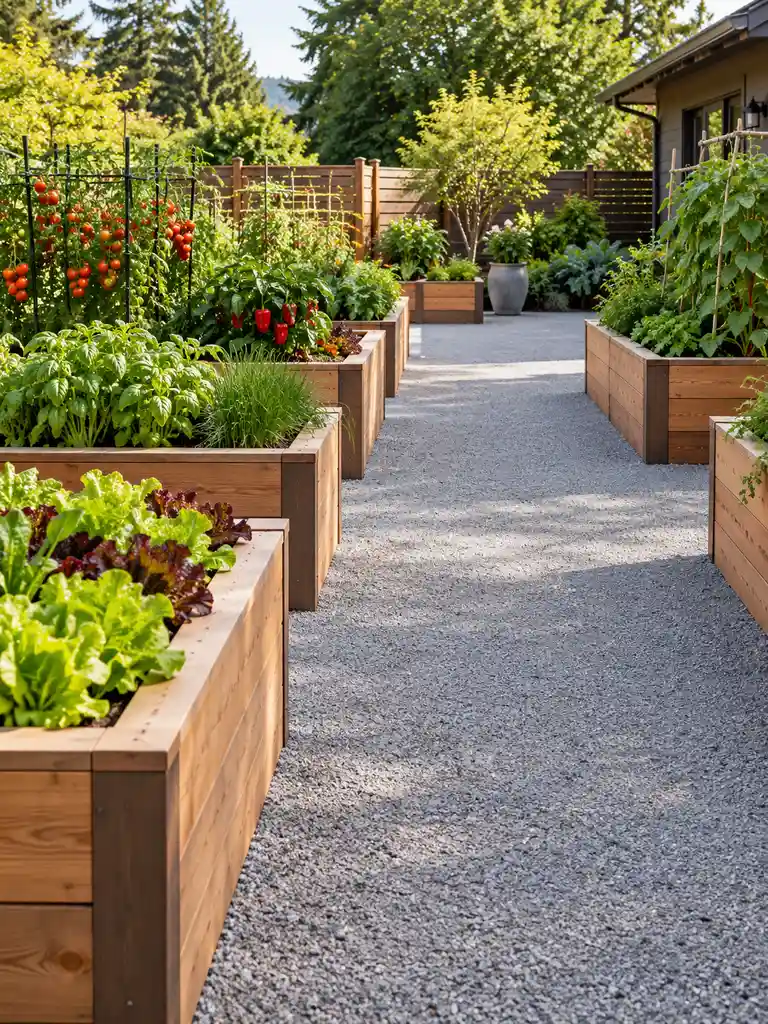
Wide, level paths make a vegetable garden easier and more comfortable for everyone to use. Arrange moderately elevated or waist-high beds with generous gravel or paved routes between them, leaving enough room for a garden cart and easy turning. Grow tomatoes, peppers, lettuce, herbs, beans, and leafy greens close enough to the edges to reach without stretching. Designing access from the beginning makes watering, pruning, soil improvement, and harvesting simpler throughout the entire growing season.
38. Raised Vegetable Garden With Seating
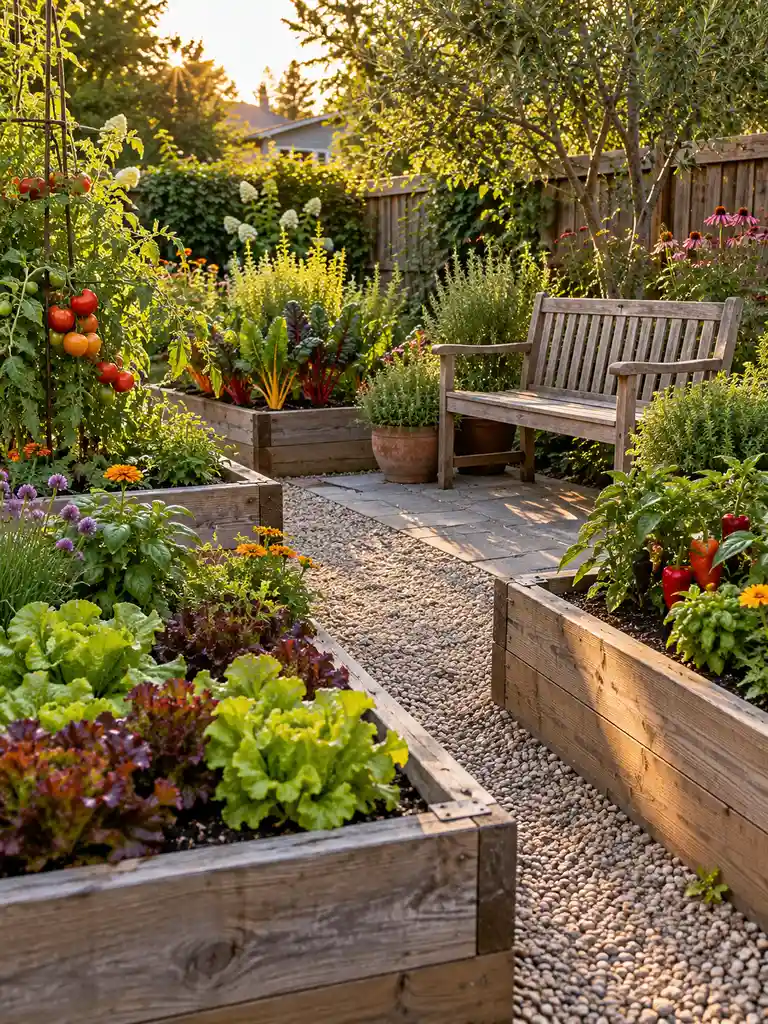
A simple bench can turn a productive garden into a place where you also want to spend time. Position seating on a small gravel or paved pad beside the beds, making sure it does not block circulation or shade vegetables. Surround the resting area with attractive crops such as colorful chard, tomatoes, peppers, herbs, lettuce, and a few flowers. The bench creates a natural viewing point and gives you a comfortable place to pause while working or harvesting.
39. Vegetable Garden Around a Patio
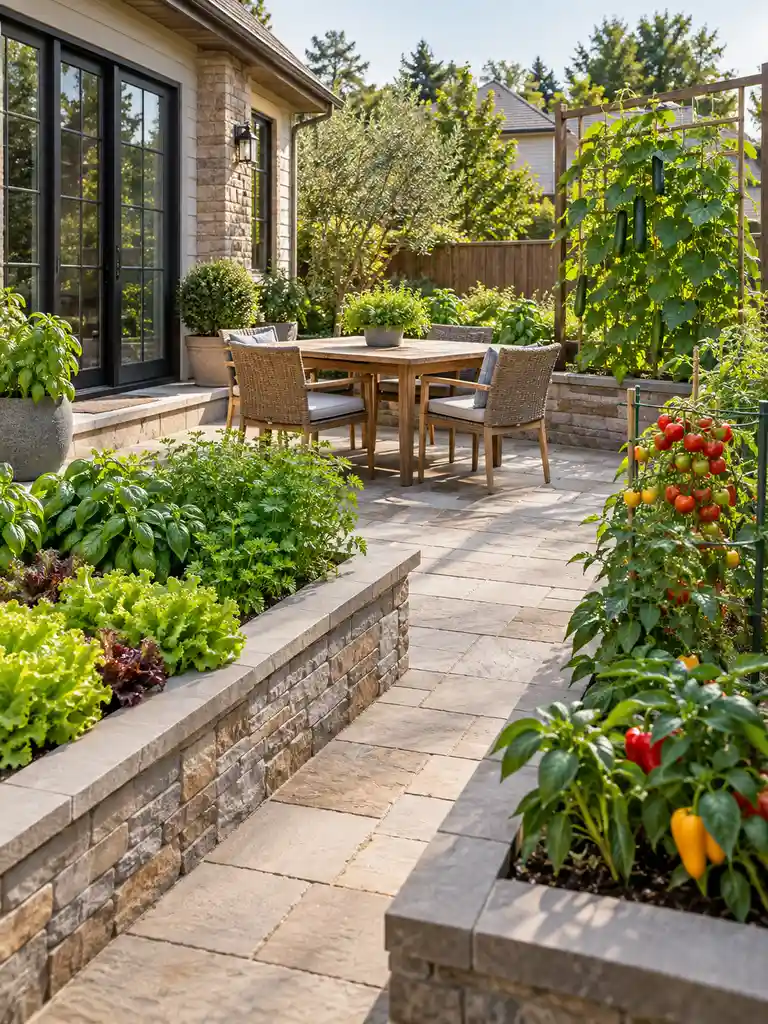
Vegetable beds can be integrated around a patio so fresh ingredients remain close to outdoor dining and the kitchen. Place raised beds along one or two edges rather than enclosing the entire patio, and grow tomatoes, peppers, lettuce, basil, parsley, and climbing cucumbers. Match the bed materials to the paving or home exterior so everything feels connected. Keep the central seating area open and move compost, tools, and bulk supplies to a less visible working zone.
40. Vegetable Garden With a Potting Station
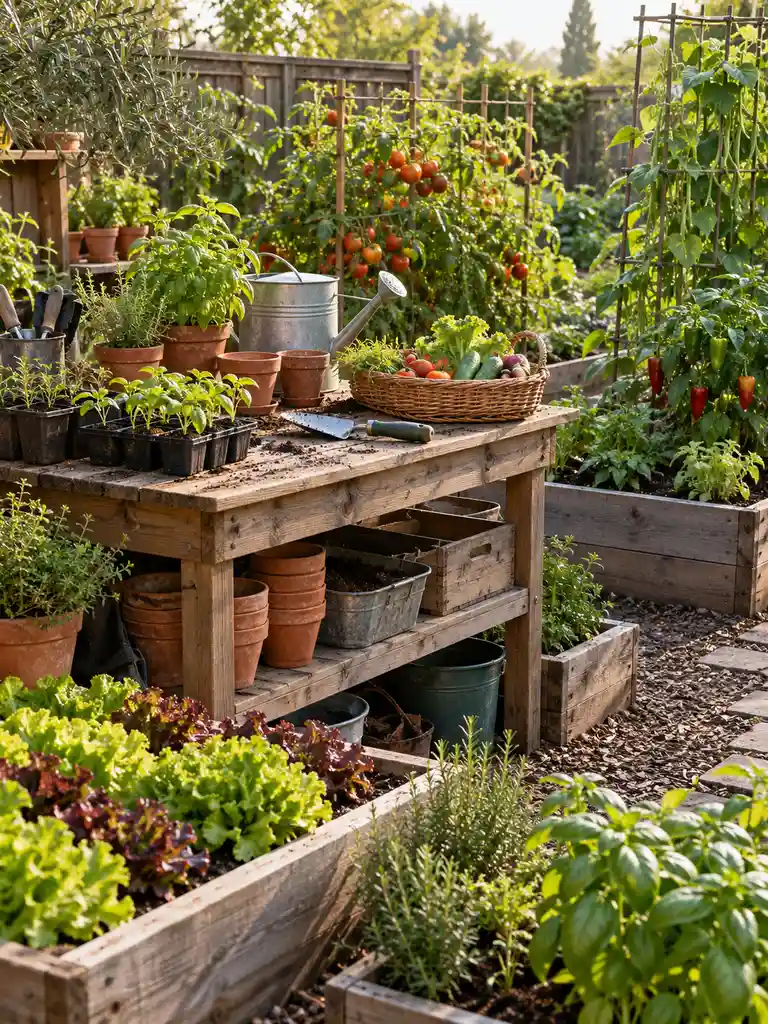
A dedicated potting station keeps the working side of vegetable gardening organized. Place a sturdy weather-resistant table close to the beds and use it for seedling trays, terracotta pots, hand tools, watering cans, and sorting freshly harvested produce. Shelves underneath can hold empty containers and soil supplies. Surround the station with lettuce, tomatoes, herbs, peppers, and beans so it remains convenient during daily garden tasks. A little visible soil and wear makes the area feel genuinely used.
41. Vegetable Garden With Rainwater Collection
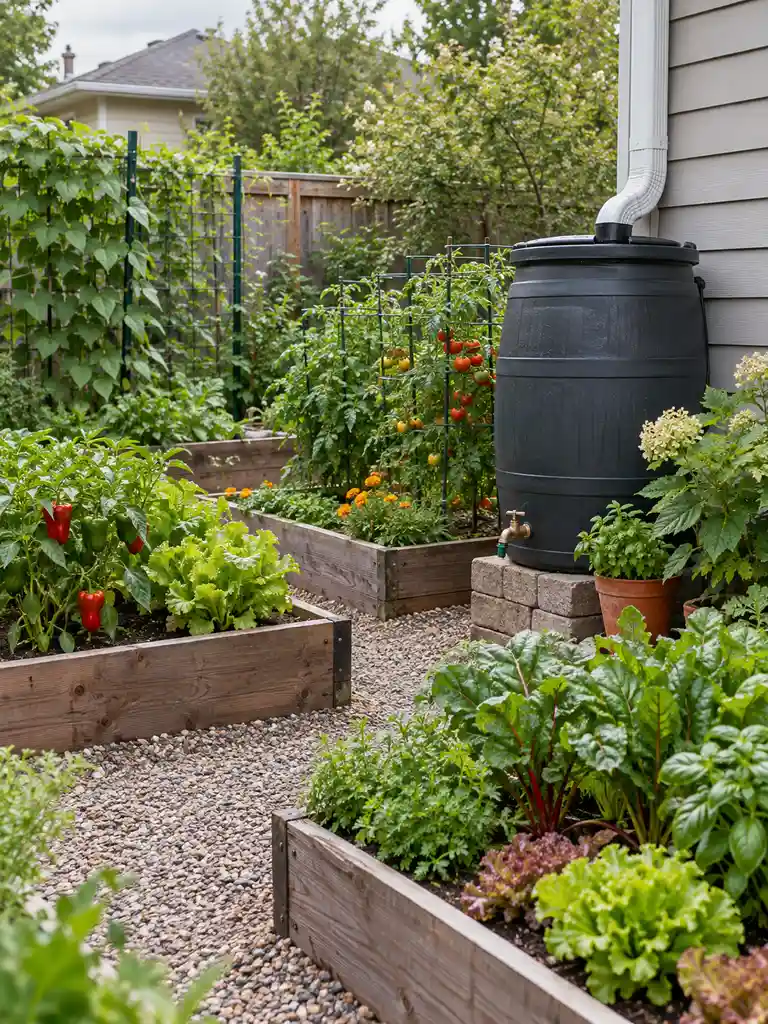
A rain barrel can become a practical part of the garden rather than an isolated utility item. Position a secure barrel on a stable base near a suitable downspout, include a usable spigot, and keep the route to nearby beds clear. Arrange raised beds of lettuce, peppers, tomatoes, herbs, beans, and leafy greens around gravel paths so watering is convenient. Screen or cover the barrel appropriately and follow local rules for rainwater collection and storage.
42. Drip-Irrigated Raised Bed Garden
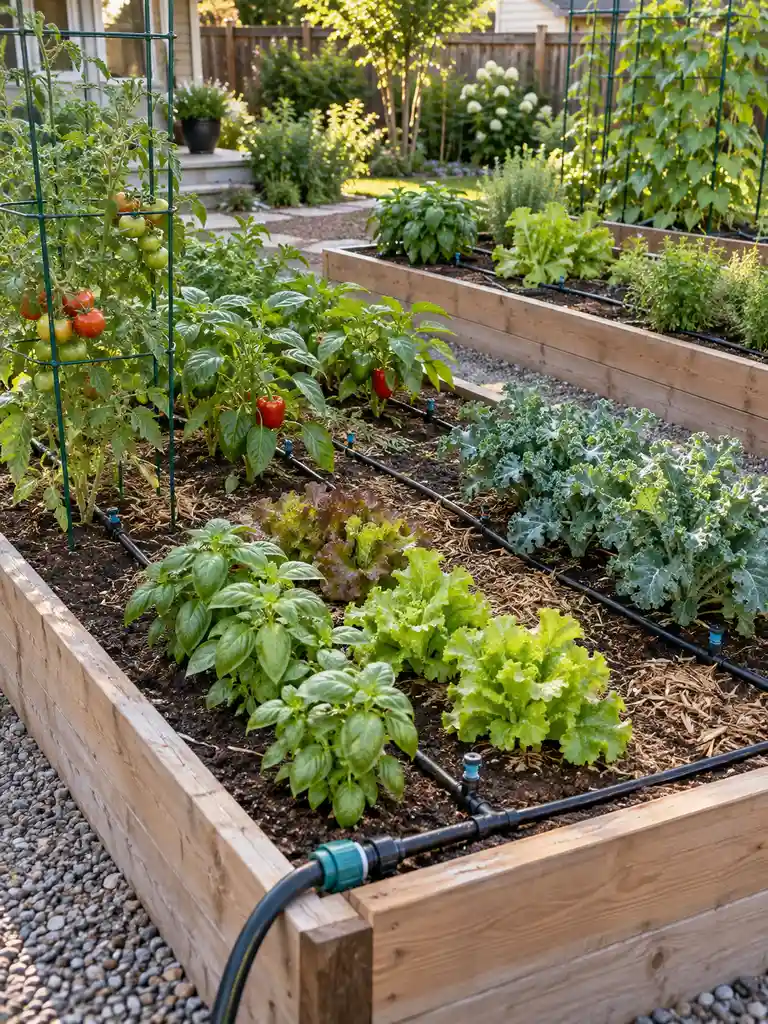
Drip irrigation can make an organized raised-bed garden easier to water efficiently. Run black tubing through the planting rows with emitters positioned near the root zones of tomatoes, peppers, lettuce, herbs, kale, and beans. Connect the lines neatly to a main hose at the bed edge and use mulch to reduce evaporation. Check the system regularly for leaks or blocked emitters. When laid out carefully, the tubing stays visible enough to maintain without dominating the garden.
43. Mulched Path Vegetable Garden
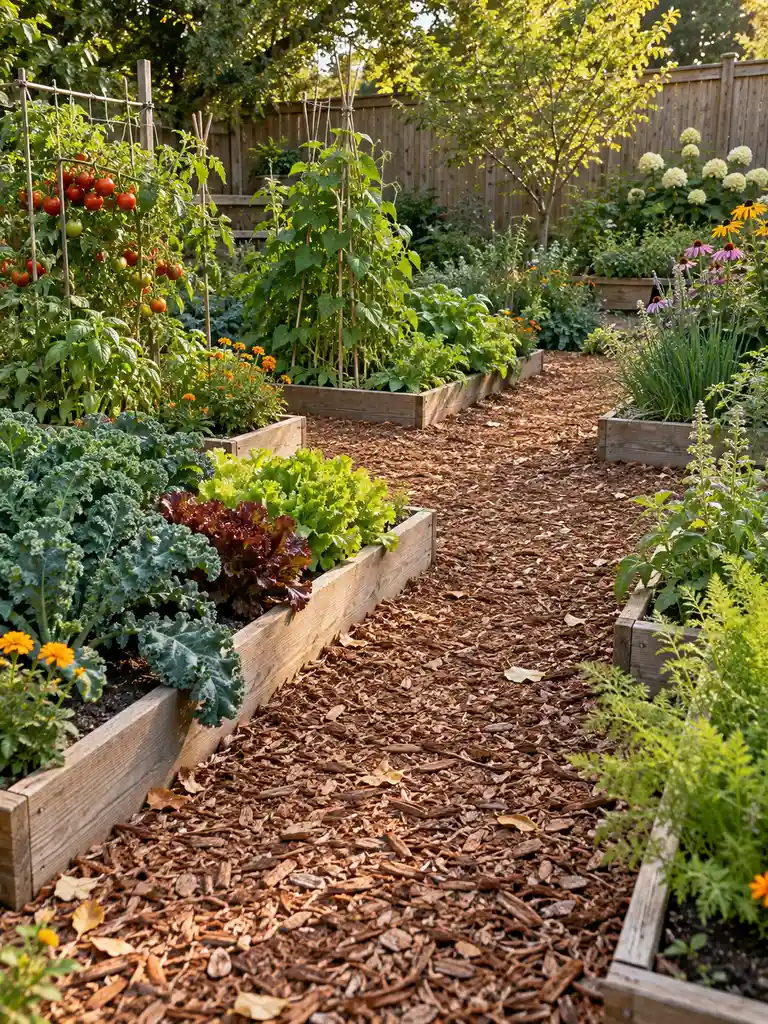
Wood-chip paths give a vegetable garden a softer, natural appearance while helping reduce mud and suppress weeds between beds. Create permanent walkways with a generous layer of brown chips or bark and define the growing areas with simple timber edging. Surround the paths with beds of kale, lettuce, tomatoes, beans, herbs, carrots, and flowers. Refresh the mulch as it breaks down and keep fresh woody material mostly in the pathways rather than mixing large amounts into vegetable soil.
44. Cottage-Style Vegetable Garden
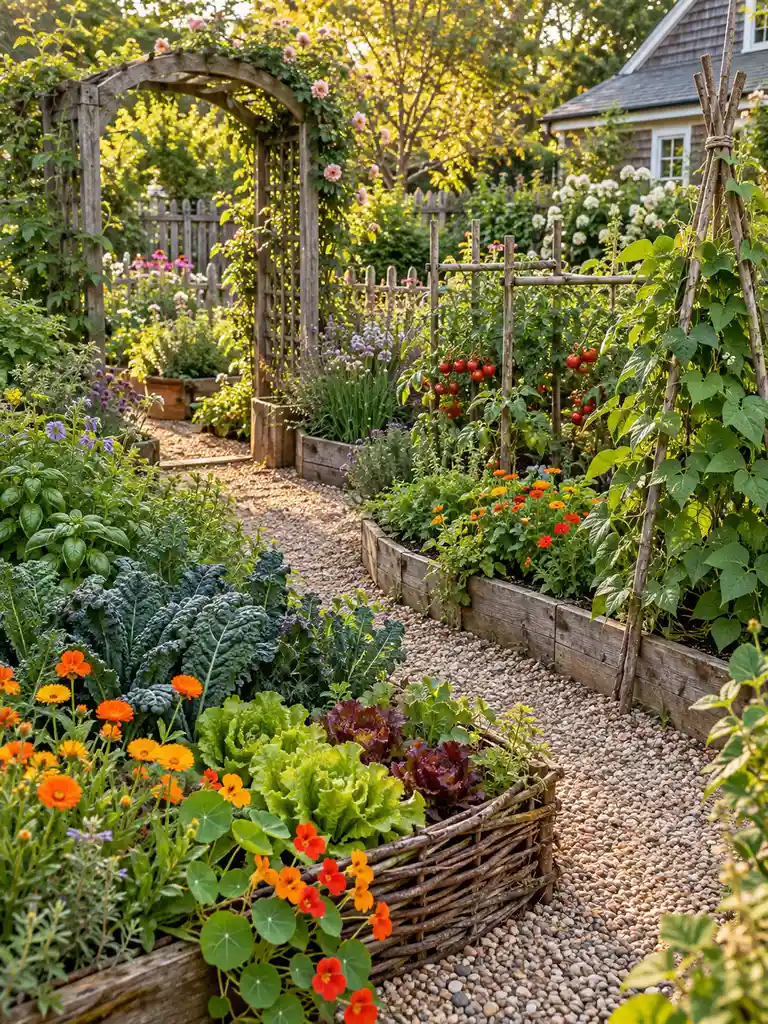
A cottage-style vegetable garden can feel abundant and romantic while still remaining organized. Combine clearly defined beds with tomatoes, lettuce, kale, beans, herbs, nasturtiums, calendula, and other restrained flowers. Add a weathered arch, rustic stakes, woven edging, and a gently curving gravel path to create character. Repeating a few materials and plants prevents the space from becoming chaotic, while natural imperfections and layered planting give it the relaxed look associated with established cottage gardens.
45. Luxury Backyard Vegetable Garden
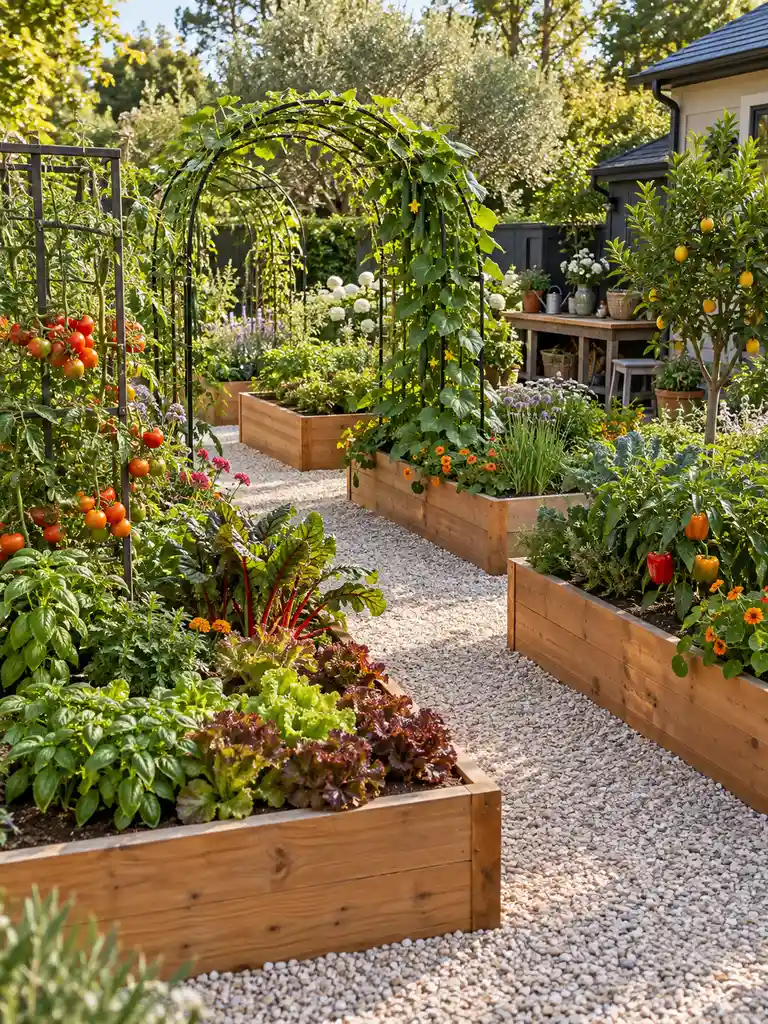
A high-end vegetable garden succeeds when premium materials support practical growing rather than simply adding decoration. Combine well-built cedar beds, broad pale gravel paths, elegant arch trellises, dwarf fruit trees, companion flowers, efficient irrigation, and a discreet potting or harvest area. Fill the beds with mature tomatoes, lettuce, peppers, herbs, beans, chard, and climbing cucumbers. Keeping the materials consistent and the circulation generous creates a polished garden that still feels genuinely usable.
Final Thoughts
The most successful vegetable garden design ideas are not necessarily the largest or most elaborate. A productive garden begins with suitable sunlight, healthy soil, convenient access, sensible crop placement, and a layout that makes regular maintenance manageable. Even a few raised beds can look beautifully organized when pathways, trellises, borders, and planting areas have clearly defined purposes.
Choose the features that best suit your backyard rather than trying to include every idea at once. A small space may benefit from vertical growing and compact beds, while a larger property can support wide paths, fruit trees, pergolas, and multiple growing zones. Plan for the mature size of vegetables and leave enough room to move comfortably between beds throughout the season.
Allow the garden to evolve as you learn what works in your space. You may decide a path should be wider, a trellis needs a sunnier position, or certain crops belong closer to the kitchen. Small adjustments from season to season can make an organized backyard vegetable garden easier to care for, more productive, and more attractive every year.