Skip to content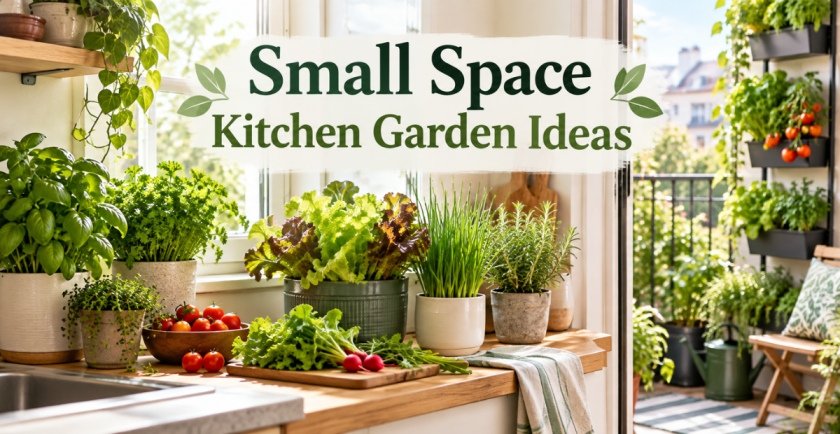
You do not need a large backyard to grow fresh herbs, vegetables, and leafy greens at home. Some of the most productive edible gardens are created on tiny balconies, narrow patios, sunny windowsills, and overlooked kitchen walls. These small space kitchen garden ideas show how containers, vertical supports, hanging planters, shelves, and compact raised beds can turn even a limited area into a useful mini edible garden.
The goal is not to squeeze as many plants as possible into one place. A better approach is to use every level wisely, choose crops suited to containers, and leave enough room for light, airflow, watering, and harvesting. Whether you live in an apartment, townhouse, or small home, the 48 ideas below offer practical ways to grow ingredients only a few steps away from your kitchen.
1. Wall-Mounted Herb Garden
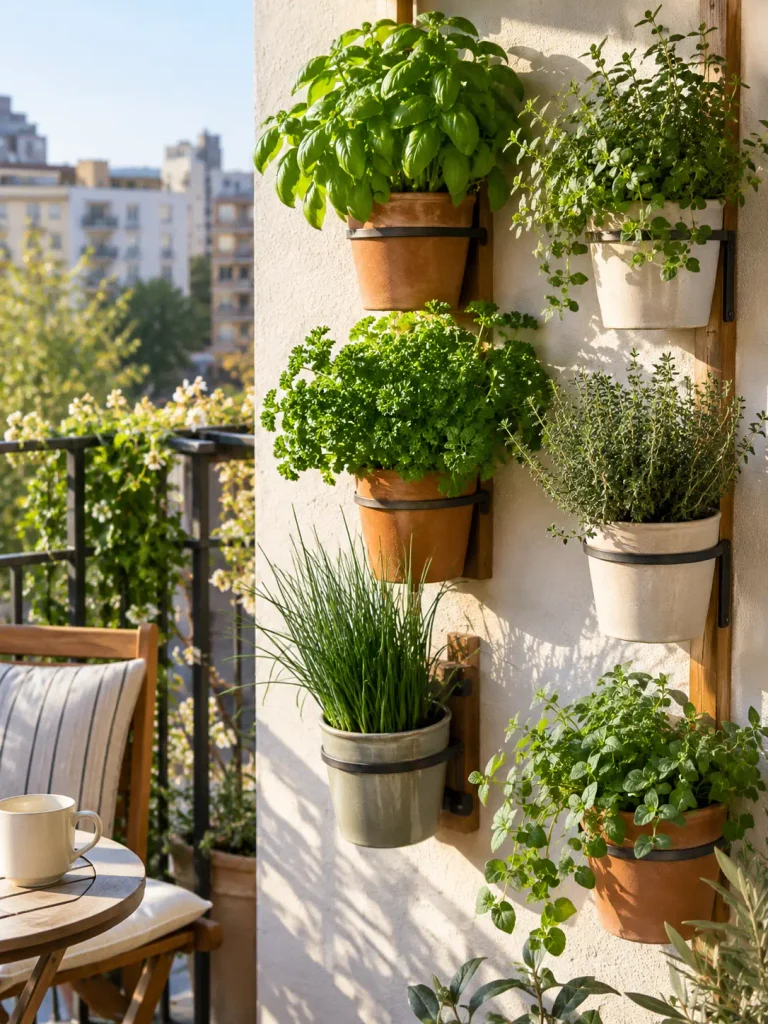
Turn an unused balcony or patio wall into a productive herb garden with wall-mounted pots. Basil, parsley, thyme, oregano, and chives work especially well because they stay relatively compact and are easy to harvest while cooking.
Choose lightweight containers with drainage holes and mount them securely. Position sun-loving herbs toward the brightest part of the wall, and keep mint in its own pot so its vigorous roots do not crowd the other herbs.
2. Wooden Pallet Vegetable Garden
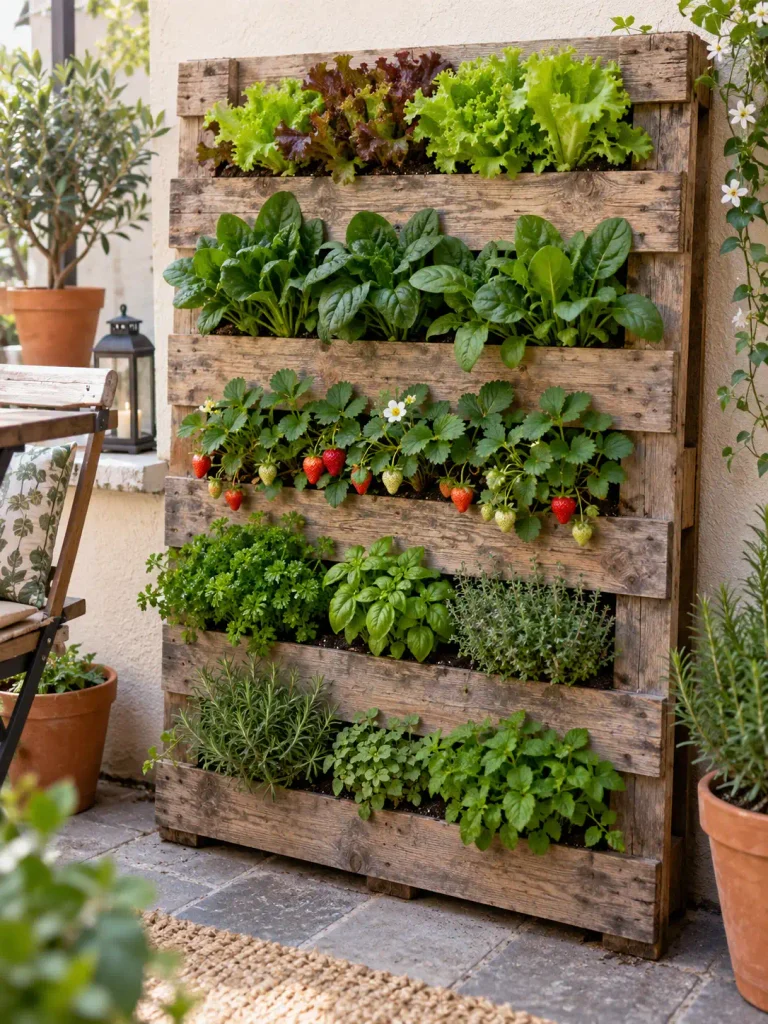
A wooden pallet can become a surprisingly productive vertical garden without taking up much floor space. Plant shallow-rooted crops such as lettuce, spinach, strawberries, parsley, and compact herbs between the pallet slats or inside lined planting pockets.
Use untreated wood whenever possible and add a strong liner so soil stays in place. Lean the pallet against a sunny wall or secure it firmly, then water slowly so every level receives enough moisture.
3. Tiered Ladder Planter
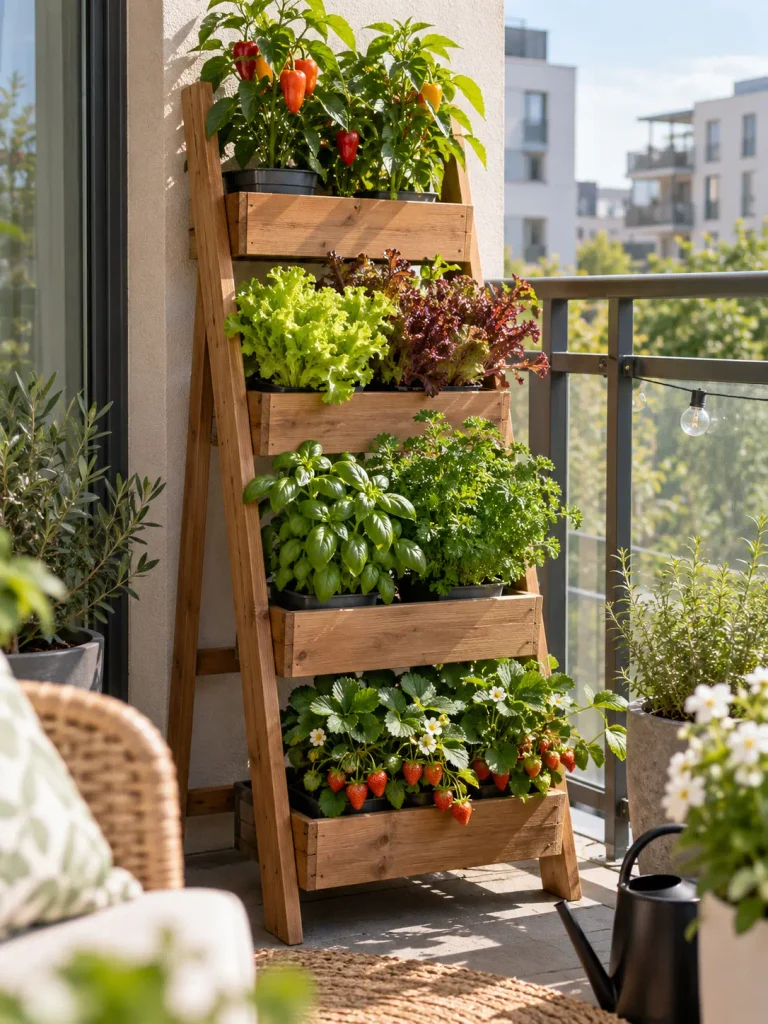
A ladder-style planter gives several growing levels while using only a narrow strip of balcony or patio floor. Place peppers or larger pots on the lower shelves and herbs, lettuce, and strawberries higher up.
The stepped arrangement helps plants receive light without blocking one another. It is also easy to reorganize through the season when a crop finishes or another plant needs more sun.
4. Vertical Pocket Garden
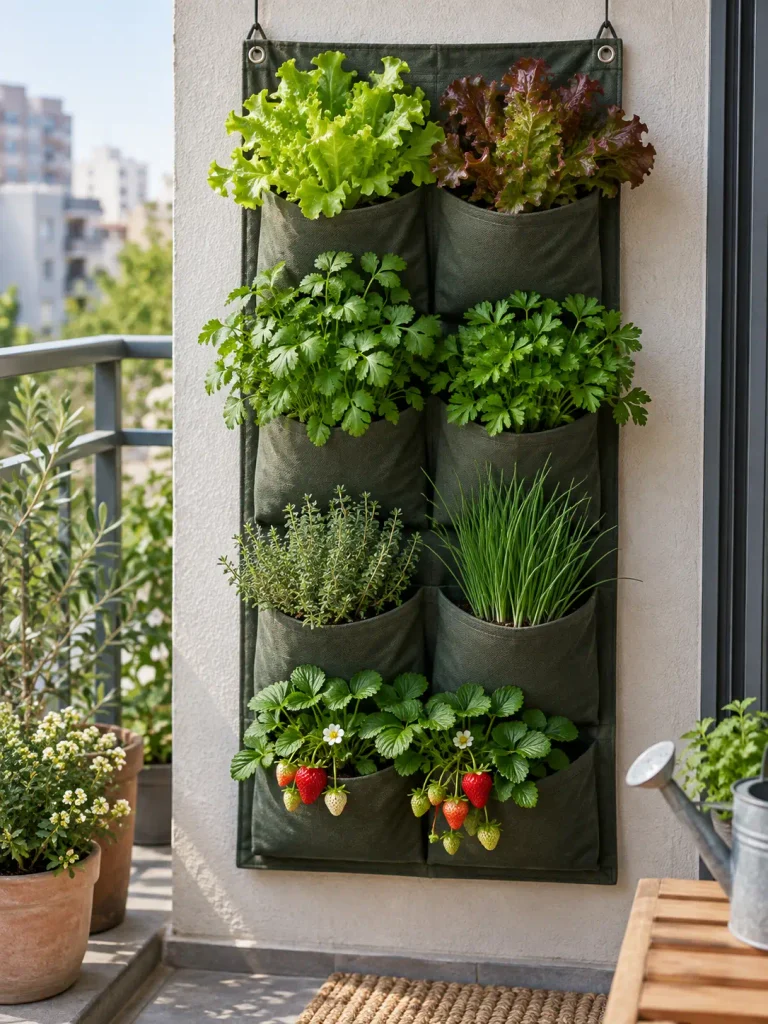
Fabric planting pockets are useful when your floor area is almost completely occupied. Fill the pockets with lightweight potting mix and grow lettuce, cilantro, parsley, chives, thyme, or strawberries in neat vertical rows.
Pocket planters can dry faster than normal pots, so check them frequently in warm weather. Water from the top and make sure the wall behind the planter is protected from excess moisture.
5. Stackable Planter Tower
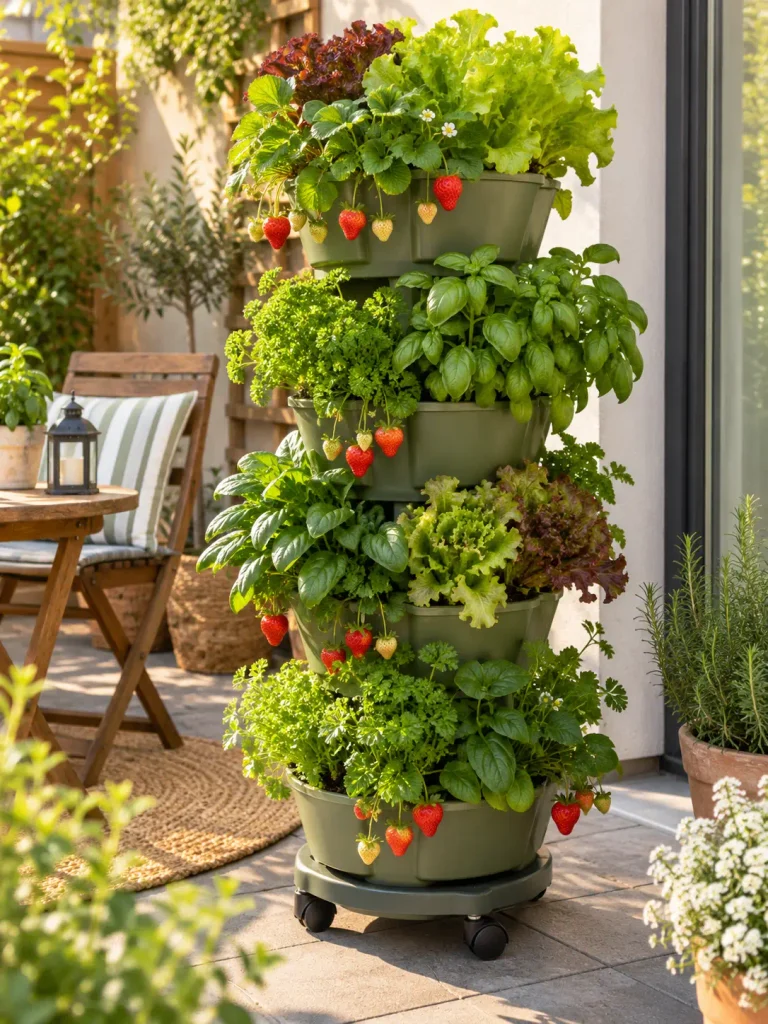
Stackable planter towers create many planting spaces from one small footprint. They are especially useful for strawberries, basil, parsley, spinach, lettuce, and other compact edibles.
Rotate the tower occasionally if one side receives more sunlight than the other. Because the upper levels may dry faster, check moisture at several depths instead of assuming every tier needs the same amount of water.
6. Vertical Trellis Vegetable Garden
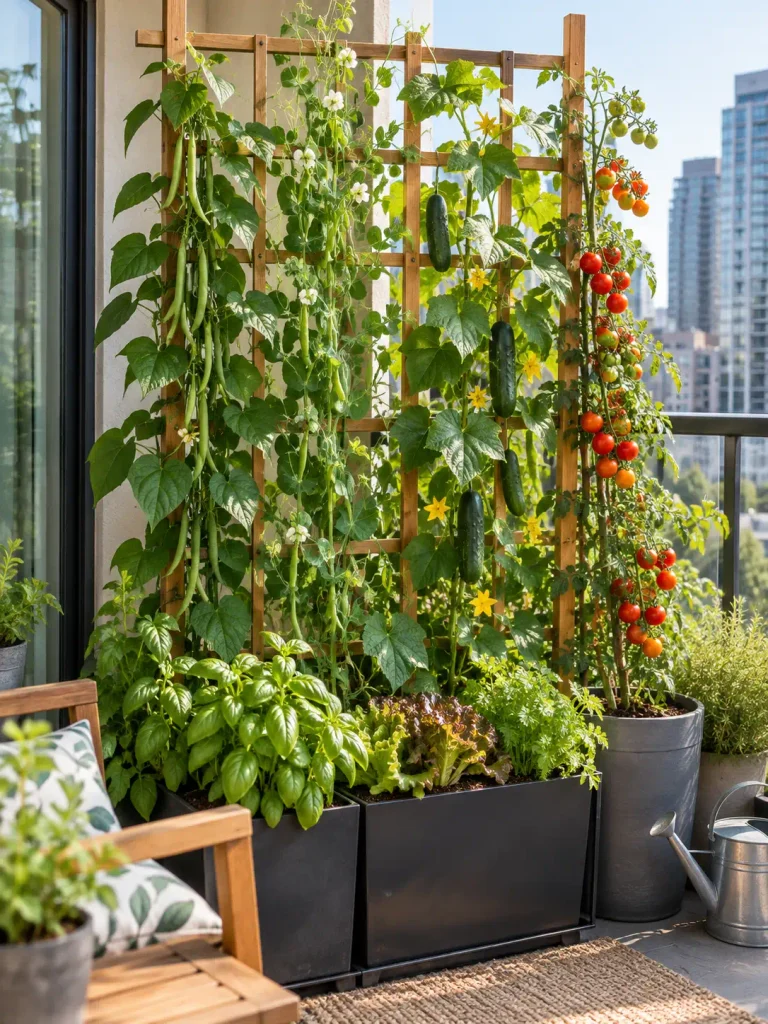
Climbing vegetables let you use height instead of sacrificing precious floor space. A narrow trellis can support pole beans, peas, compact cucumbers, and indeterminate cherry tomatoes in containers.
Guide new stems gently onto the support as they grow. Good vertical support keeps foliage off the floor, improves airflow, and makes harvesting easier in a tight balcony or patio.
7. Balcony Railing Herb Planters
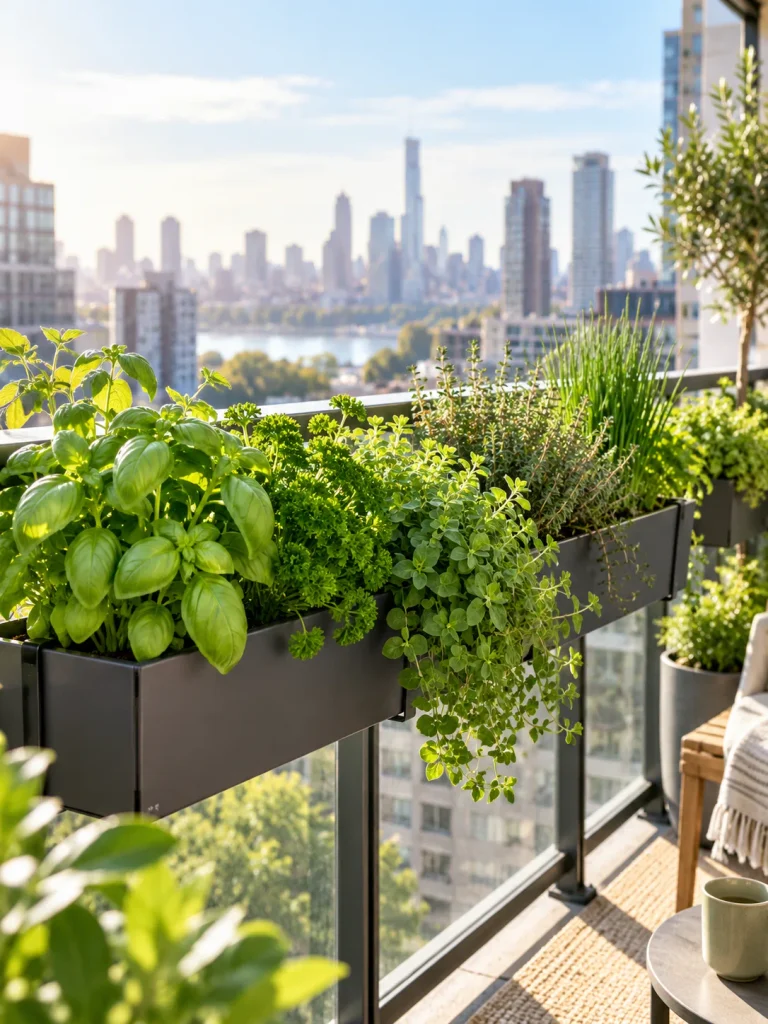
Balcony railings are valuable growing space when secure railing planters are used correctly. Fill slim boxes with basil, parsley, oregano, thyme, chives, or small salad greens.
Choose planters designed specifically for your railing type and fasten them securely. Avoid overloading the railing, and use drip trays if runoff could affect neighbors or the area below.
8. Balcony Tomato Corner
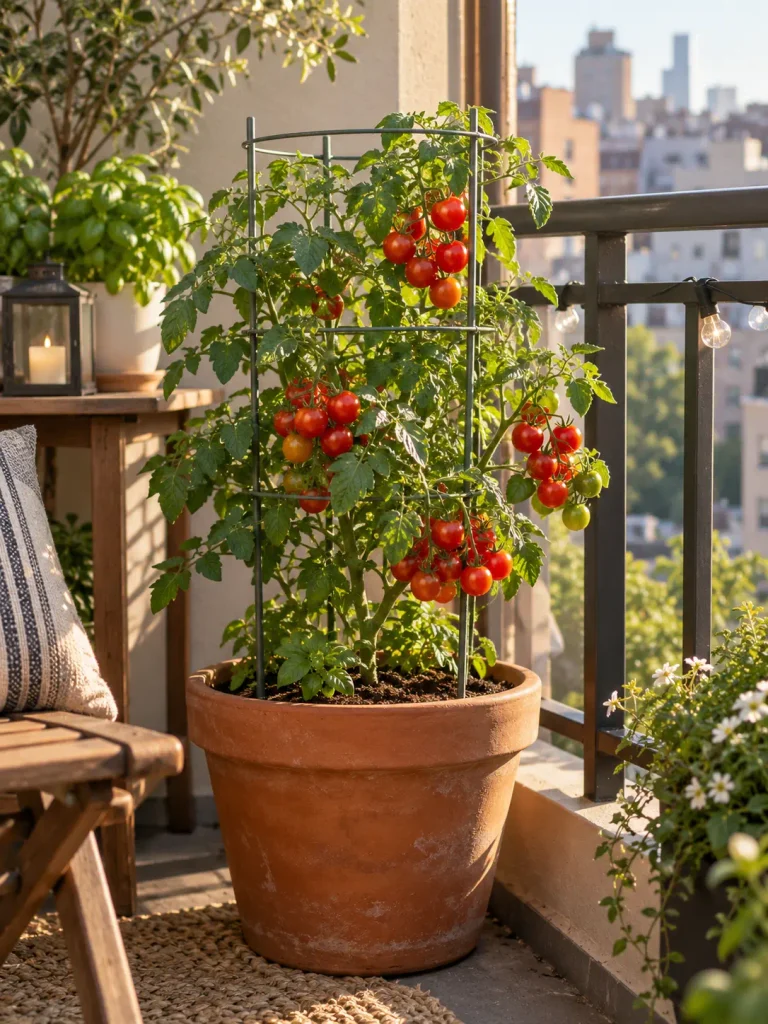
One sunny balcony corner can be enough for a productive cherry tomato plant. Choose a dwarf, patio, or compact variety and grow it in a deep container with a sturdy cage or stake.
Tomatoes need regular watering and strong light to fruit well. Keep the container where it receives the most direct sun, and feed the plant according to the fertilizer instructions once flowering begins.
9. Balcony Salad Garden
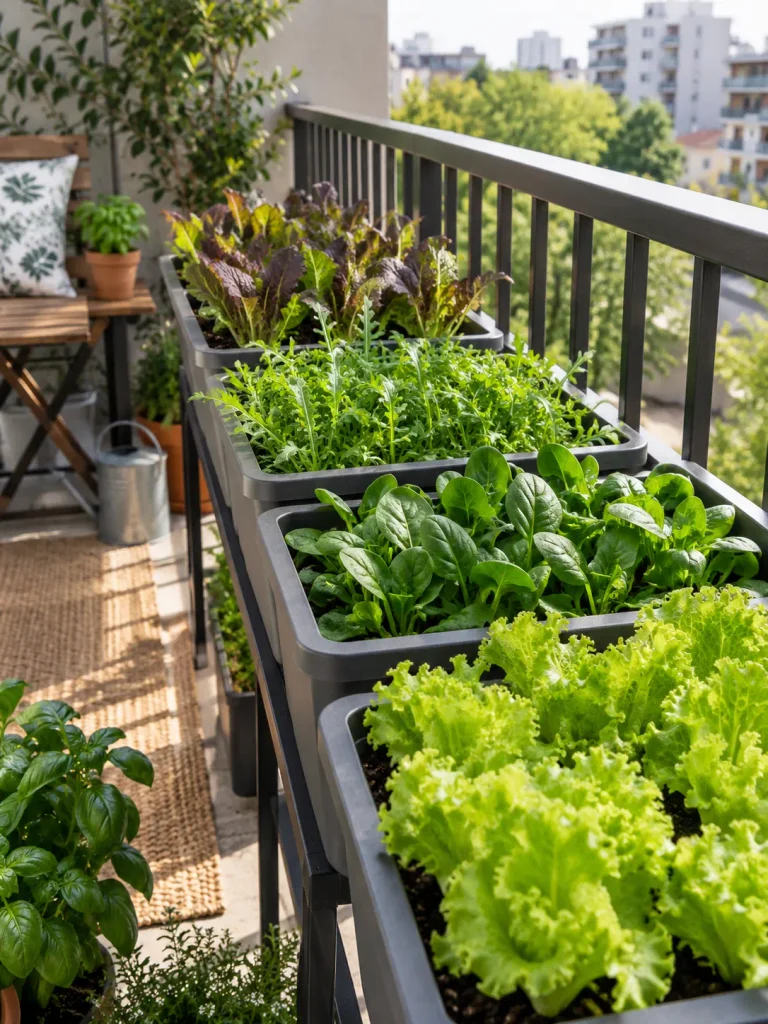
A few rectangular containers can supply fresh leaves for everyday salads. Grow loose-leaf lettuce, spinach, arugula, mustard greens, or baby kale in staggered batches.
Harvest the outer leaves instead of removing the entire plant whenever the variety allows it. Replant small sections every couple of weeks so one container is always approaching harvest.
10. Balcony Strawberry Planters
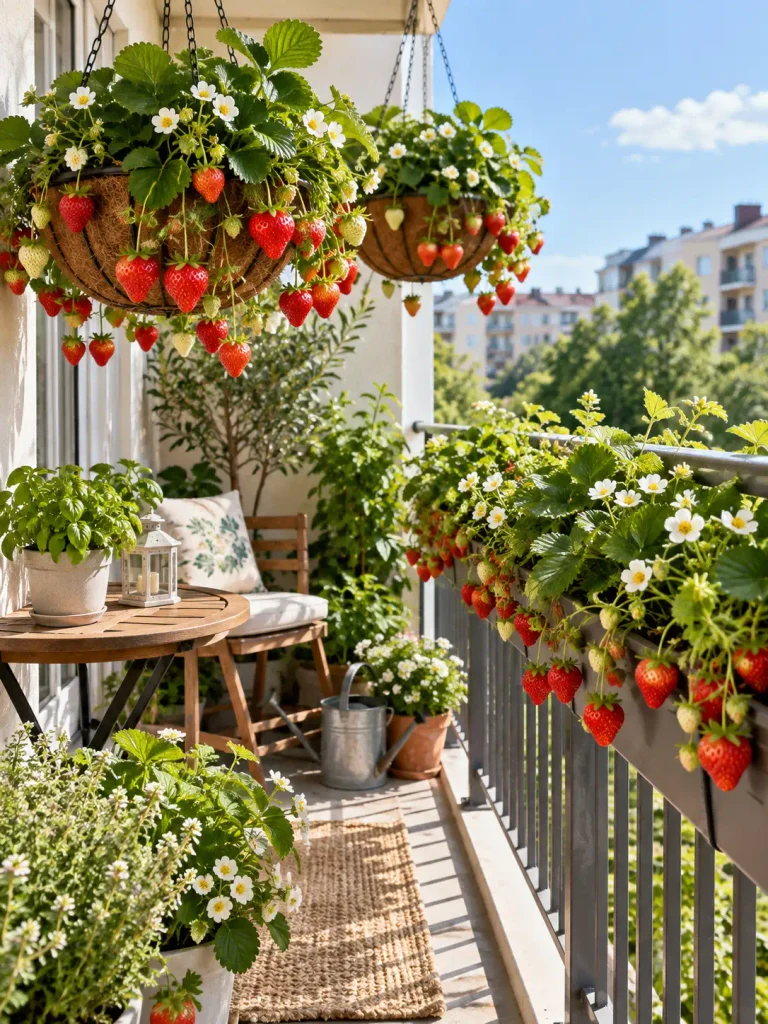
Strawberries fit beautifully into railing boxes, hanging baskets, towers, and ordinary pots. Their cascading foliage keeps the display decorative while the fruit remains easy to see and pick.
Give the plants good sunlight and consistent moisture without leaving the roots waterlogged. Keeping fruit elevated also helps reduce contact with wet soil.
11. Balcony Pepper Garden
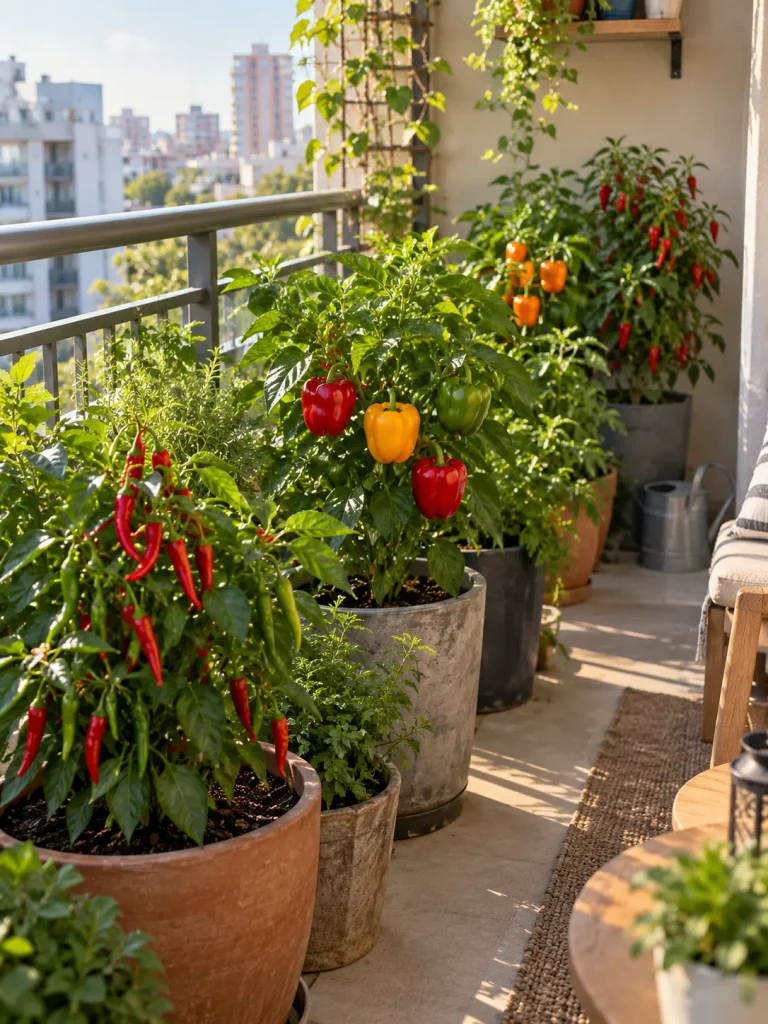
Chili peppers and compact sweet peppers adapt well to containers and make colorful balcony crops. Give each plant enough root space and place the pots in the warmest sunny area available.
Peppers appreciate steady warmth and regular feeding during the growing season. A small stake may help support branches once they begin carrying several fruits.
12. Mixed Edible Balcony Garden
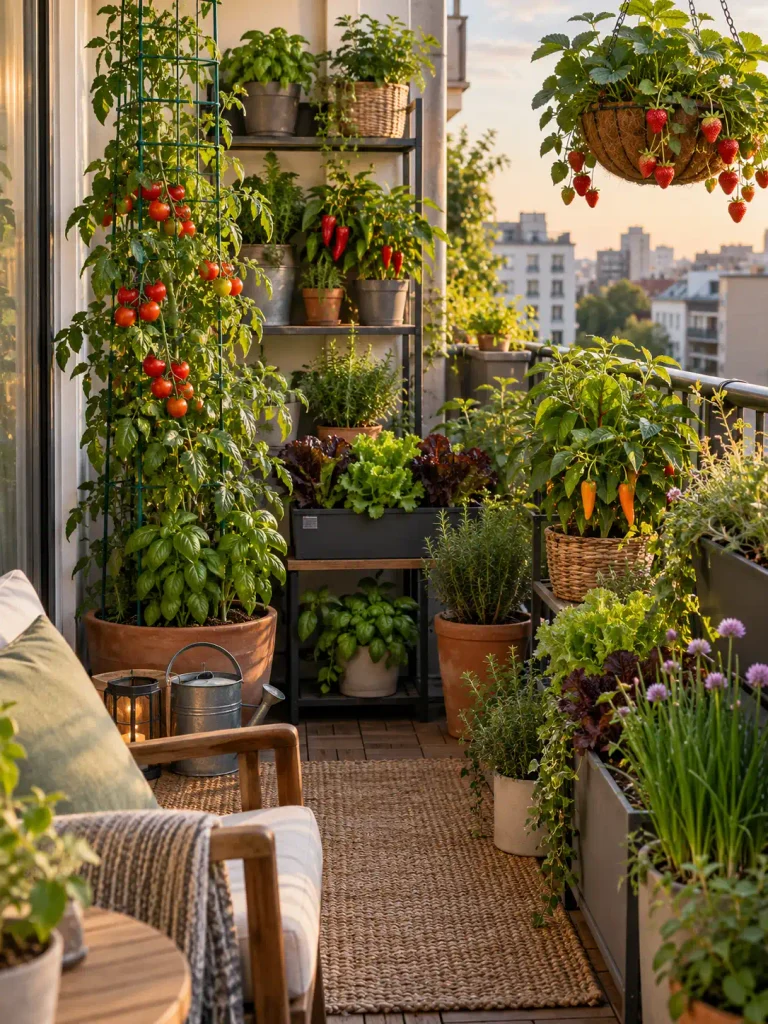
Create a fuller mini garden by mixing several edible crops in the same balcony area. Use tomatoes or peppers as taller anchors, lettuce and herbs lower down, and strawberries or trailing herbs in hanging planters.
The varied heights make the balcony feel lush without becoming crowded. Leave enough airflow between plants and group containers with similar watering needs whenever possible.
13. Grow-Bag Vegetable Garden
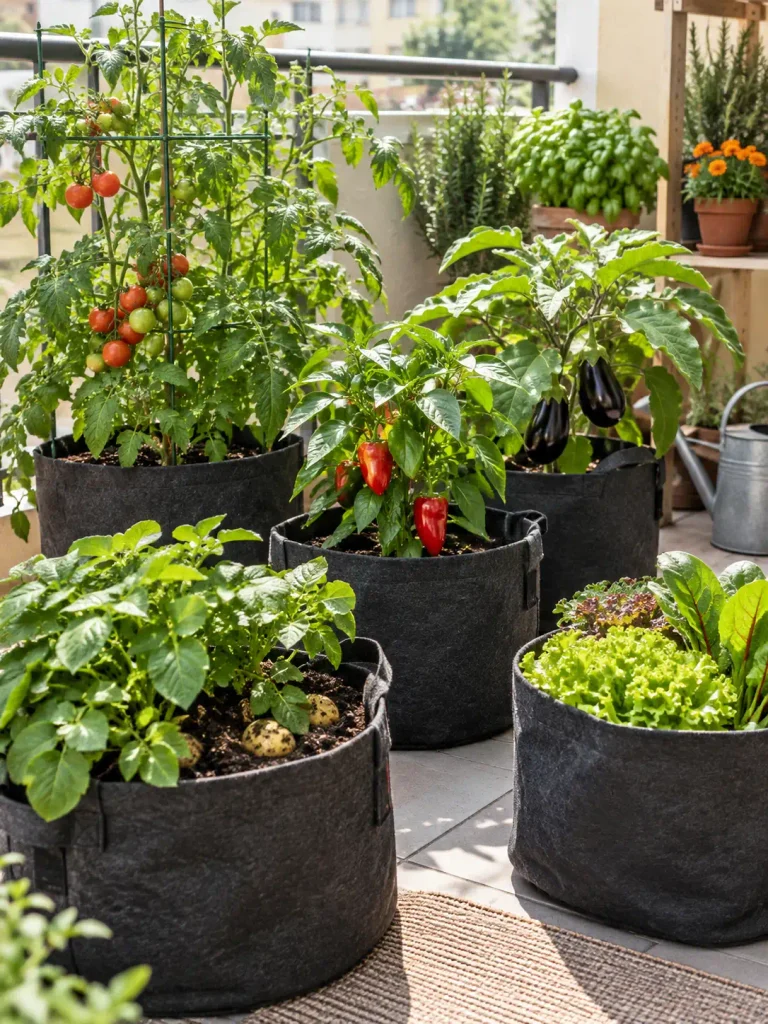
Fabric grow bags are lightweight, portable, and especially useful for renters. Larger bags can handle tomatoes, potatoes, peppers, eggplants, or cucumbers, while smaller bags work well for herbs and greens.
Place saucers or protective mats beneath bags on finished floors. Fabric sides increase airflow around roots, but they can also dry faster during hot or windy weather, so monitor moisture closely.
14. Galvanized Bucket Herb Garden
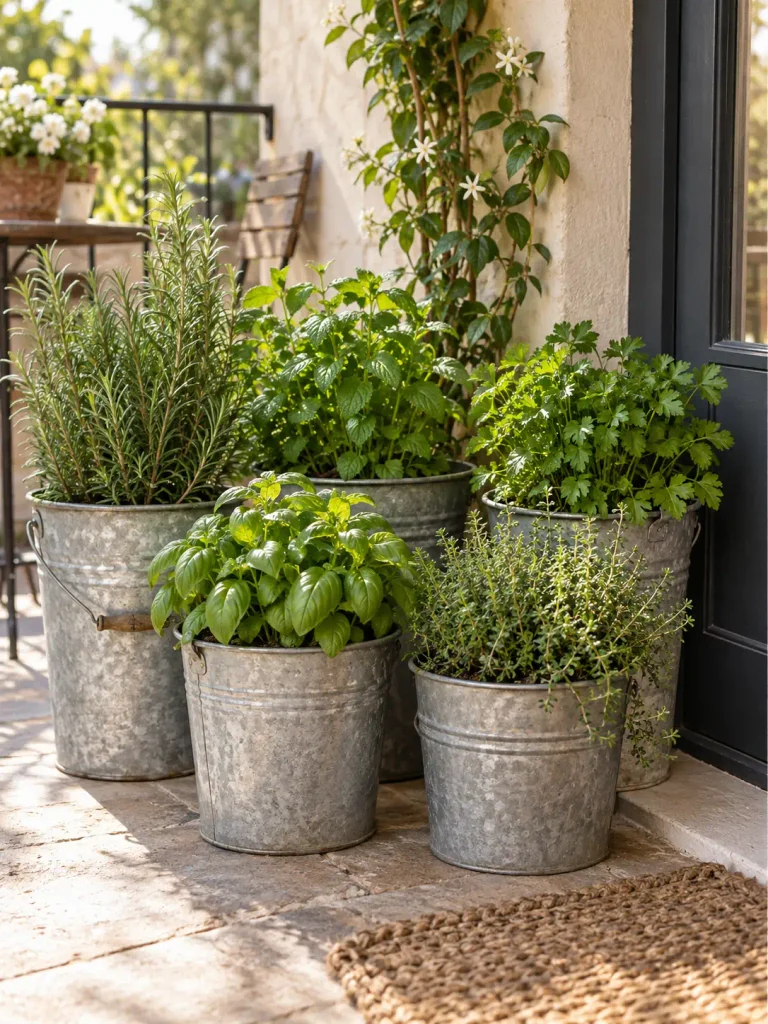
Galvanized buckets create a charming farmhouse-style herb garden for a doorstep, balcony, or patio. Use separate containers for rosemary, mint, basil, parsley, and thyme.
Add drainage holes before planting and avoid containers with unsafe coatings or residues. A tray beneath each bucket keeps water from staining the floor.
15. Terracotta Pot Kitchen Garden
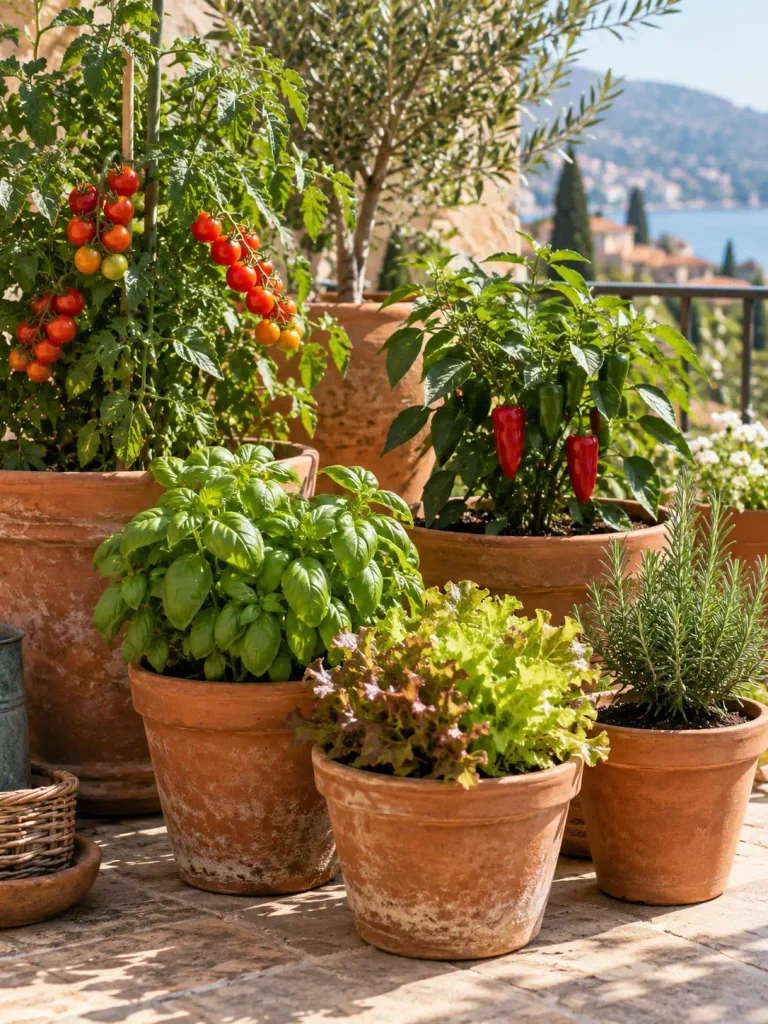
A cluster of terracotta pots gives a small edible garden a warm Mediterranean feel. Mix large pots for tomatoes and peppers with smaller containers for basil, rosemary, lettuce, and other herbs.
Terracotta is porous and may dry faster than glazed containers, especially in hot weather. Grouping pots together can make watering simpler and helps create a fuller visual effect.
16. Rectangular Planter Box Garden
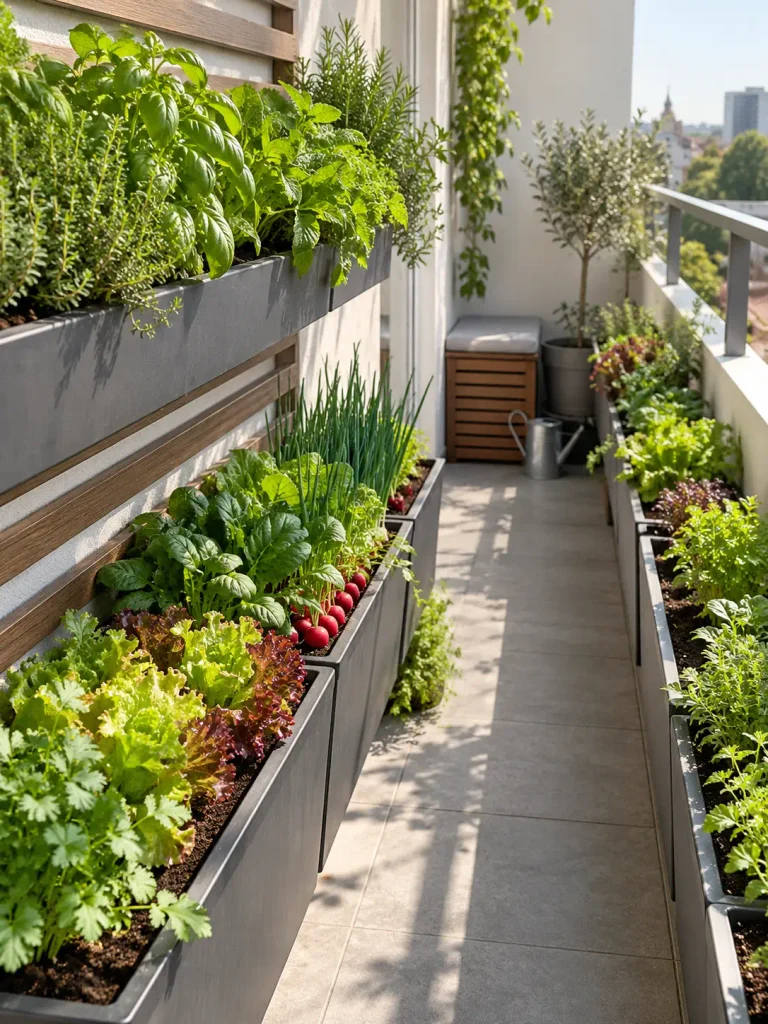
Long planter boxes fit naturally along narrow walls, balcony edges, windows, and fences. Plant lettuce, spinach, green onions, radishes, cilantro, or compact herbs in neat rows.
Choose the box depth according to the crop and leave drainage holes unobstructed. Long planters are particularly useful when you want to preserve walking space.
17. Self-Watering Container Garden
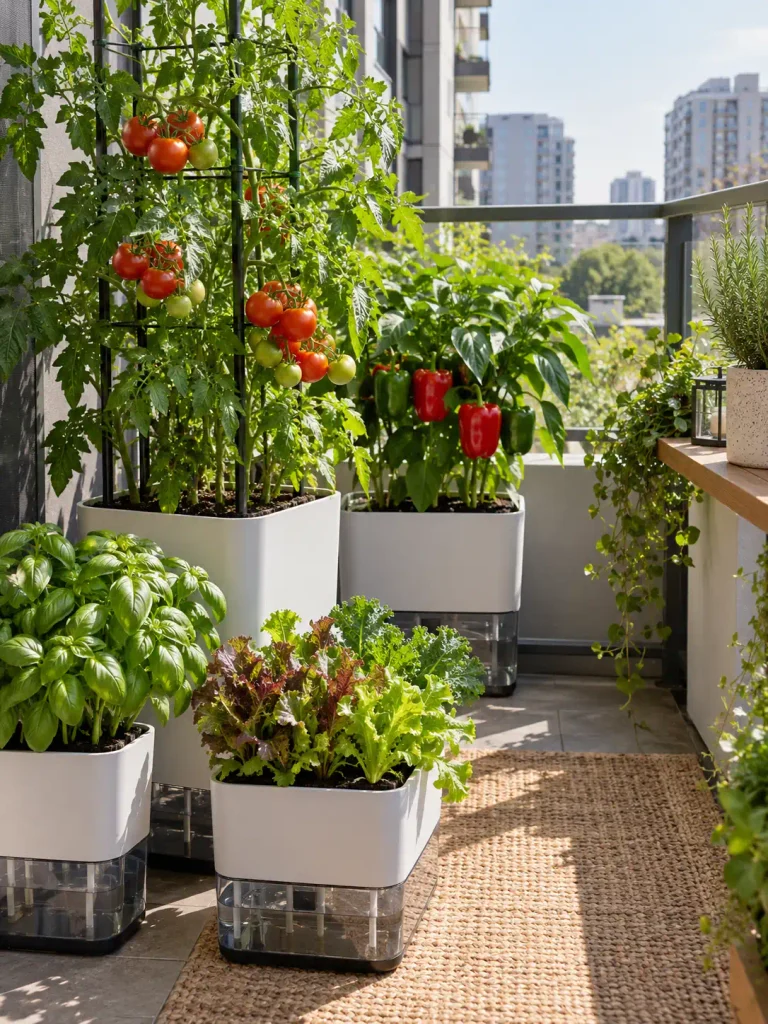
Self-watering containers can reduce how often small-space gardens need attention. Their lower reservoir gradually supplies moisture to tomatoes, peppers, leafy greens, and herbs.
They are especially helpful on hot balconies where ordinary pots dry quickly. Still check the reservoir and soil regularly because water demand changes with temperature and plant size.
18. Colorful Pot Vegetable Garden
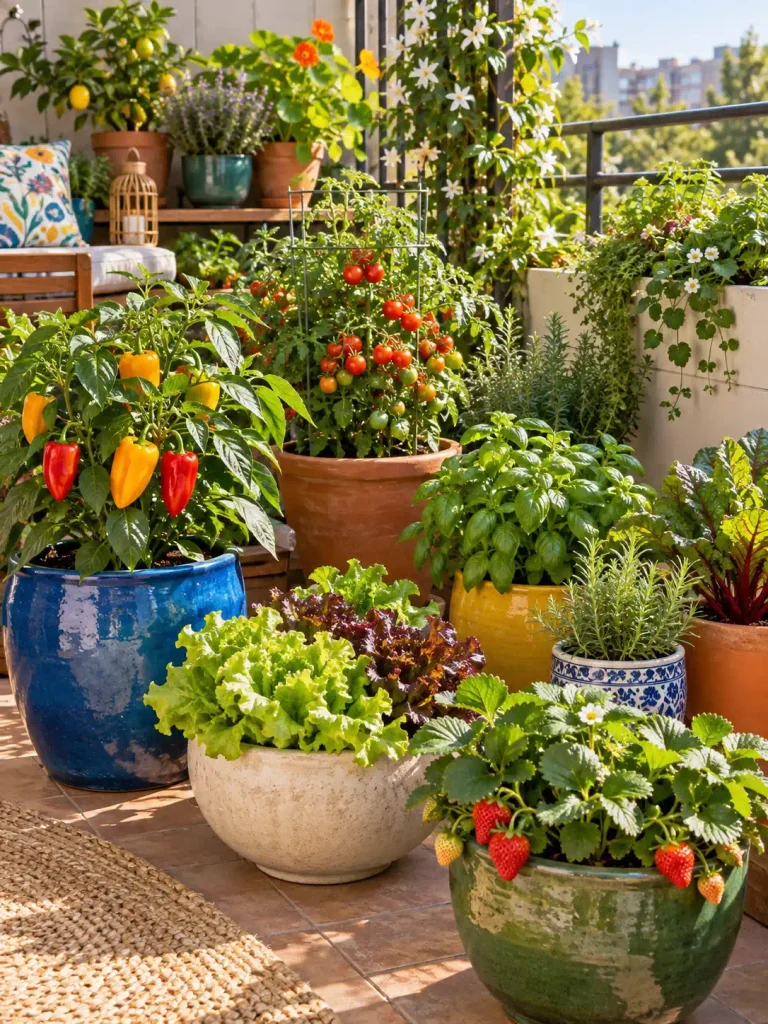
Edible gardening can be decorative as well as practical. Combine colorful ceramic or painted planters with peppers, tomatoes, lettuce, strawberries, and herbs for a cheerful patio display.
Vary pot heights and shapes so every crop remains visible. Keep the colors coordinated enough that the space feels intentional rather than cluttered.
19. Sunny Windowsill Herb Garden
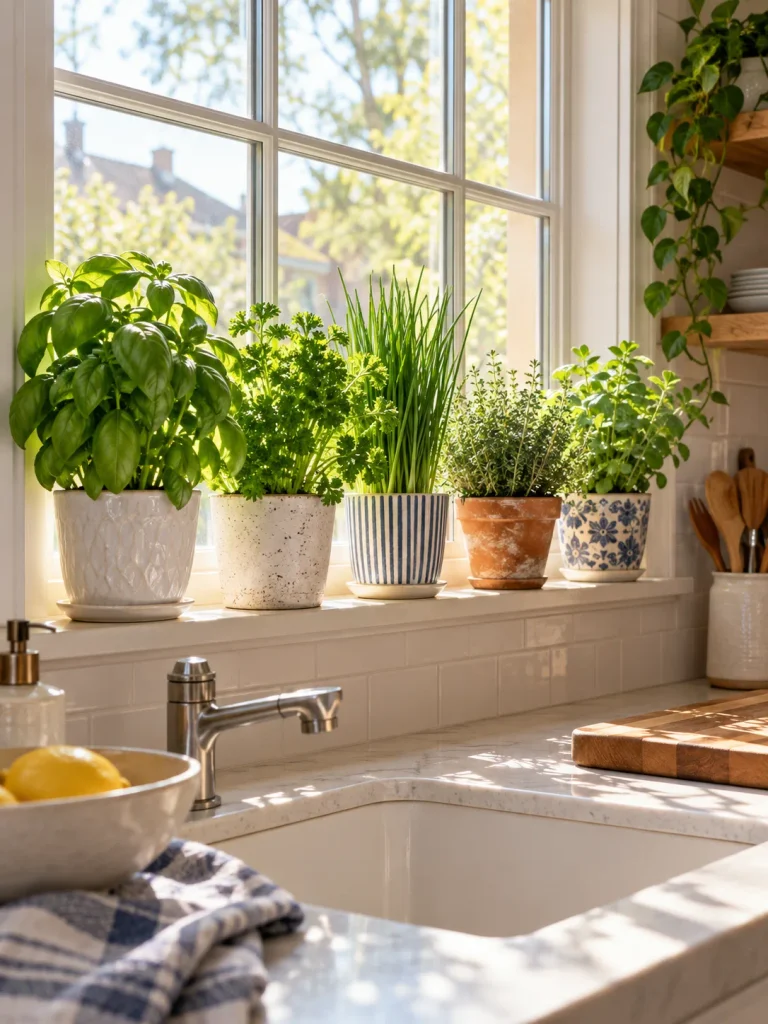
A bright kitchen windowsill is one of the simplest places to start growing food. Arrange compact pots of basil, parsley, chives, thyme, or oregano where they receive strong natural light.
Turn the pots every few days to encourage even growth. Keep them away from intense stove heat and use saucers to protect the sill from water.
20. Windowsill Microgreens Garden
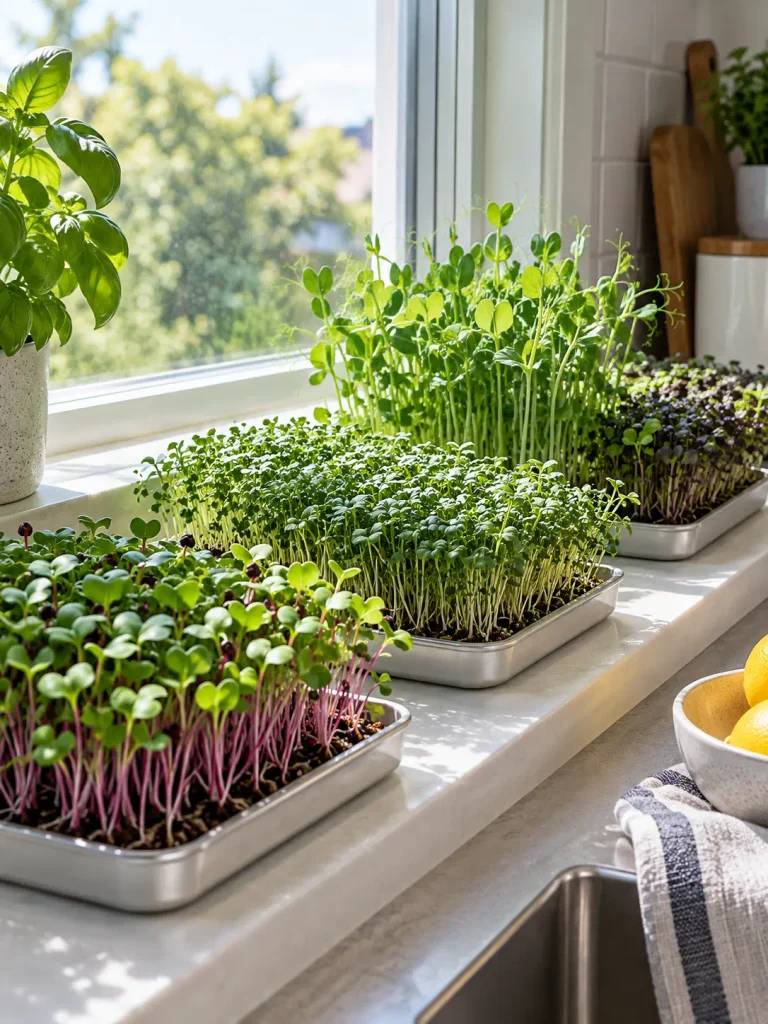
Microgreens are excellent when your available growing area is only a windowsill. Shallow trays of radish, broccoli, pea, or mustard microgreens can provide a quick harvest without large pots.
Use a clean growing medium and follow the seed variety instructions for sowing and harvest. Bright indirect or filtered light can help produce sturdy young growth.
21. Windowsill Lettuce Garden
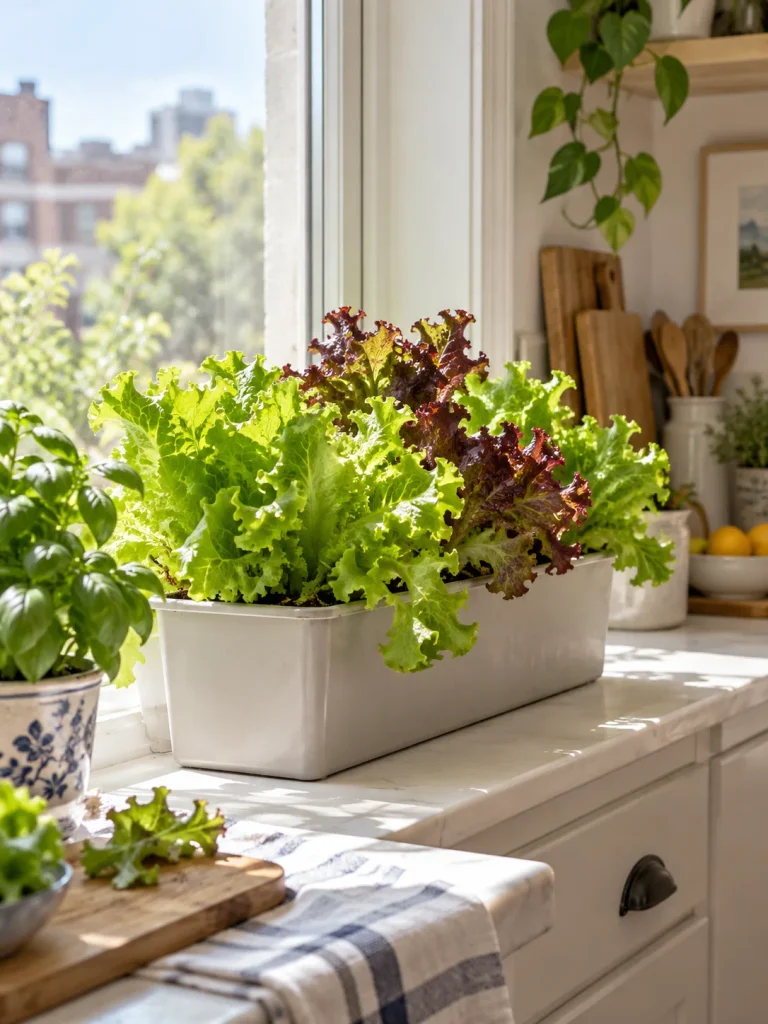
Loose-leaf lettuce can thrive in a rectangular planter beside a bright kitchen window. Choose compact varieties and plant several colors for an attractive edible display.
Harvest outer leaves as needed while leaving the center intact. If indoor light is weak, consider moving the planter to the brightest available window or supplementing with a grow light.
22. Windowsill Green Onion Garden
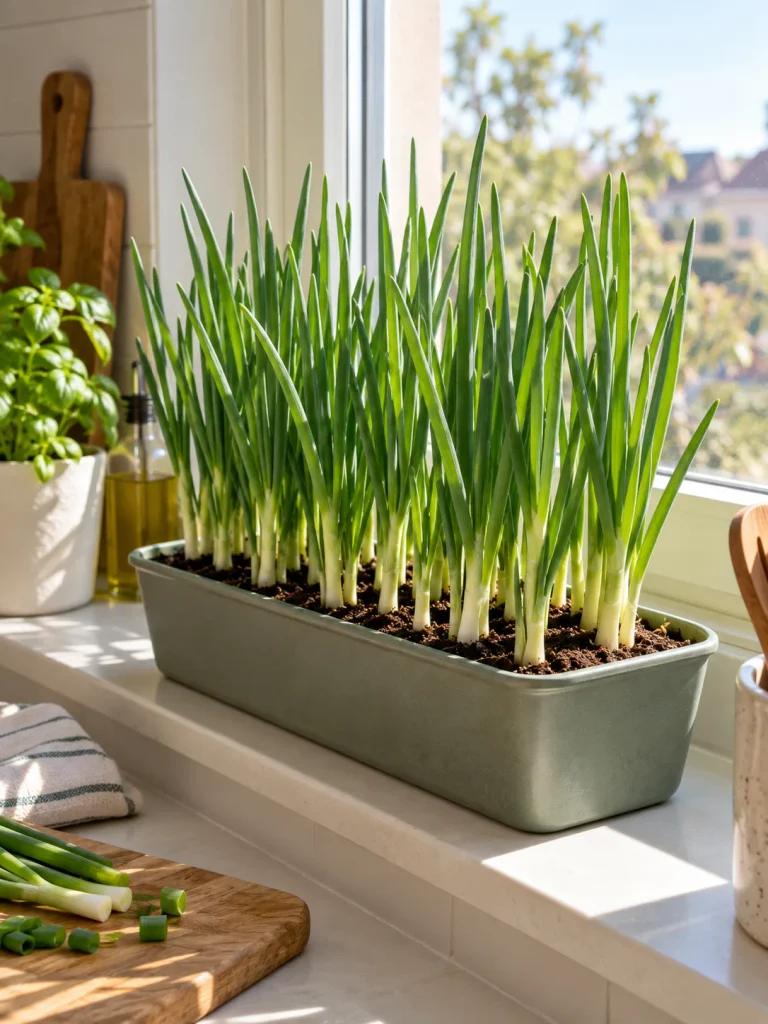
Green onions are one of the most space-efficient crops for a kitchen window. Plant them closely in a narrow container filled with quality potting mix and harvest the green tops when needed.
They work well for soups, noodles, salads, and garnishes. Keep the soil evenly moist but not saturated, and provide as much light as possible.
23. Kitchen Window Hanging Herb Pots
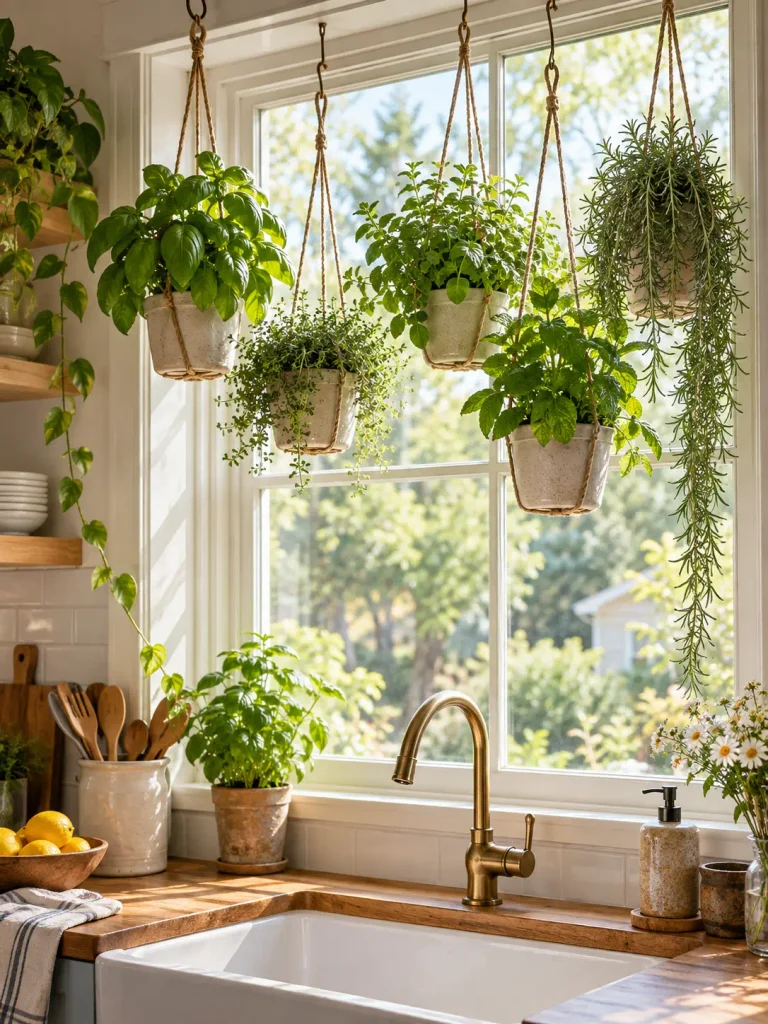
When the windowsill is too narrow, use the airspace around the window. Small hanging pots can hold basil, mint, thyme, oregano, or trailing rosemary while keeping the counter clear.
Use secure ceiling or wall anchors and lightweight pots. Hang them high enough to keep the work area open but low enough that watering and harvesting remain convenient.
24. Minimalist Indoor Herb Shelf
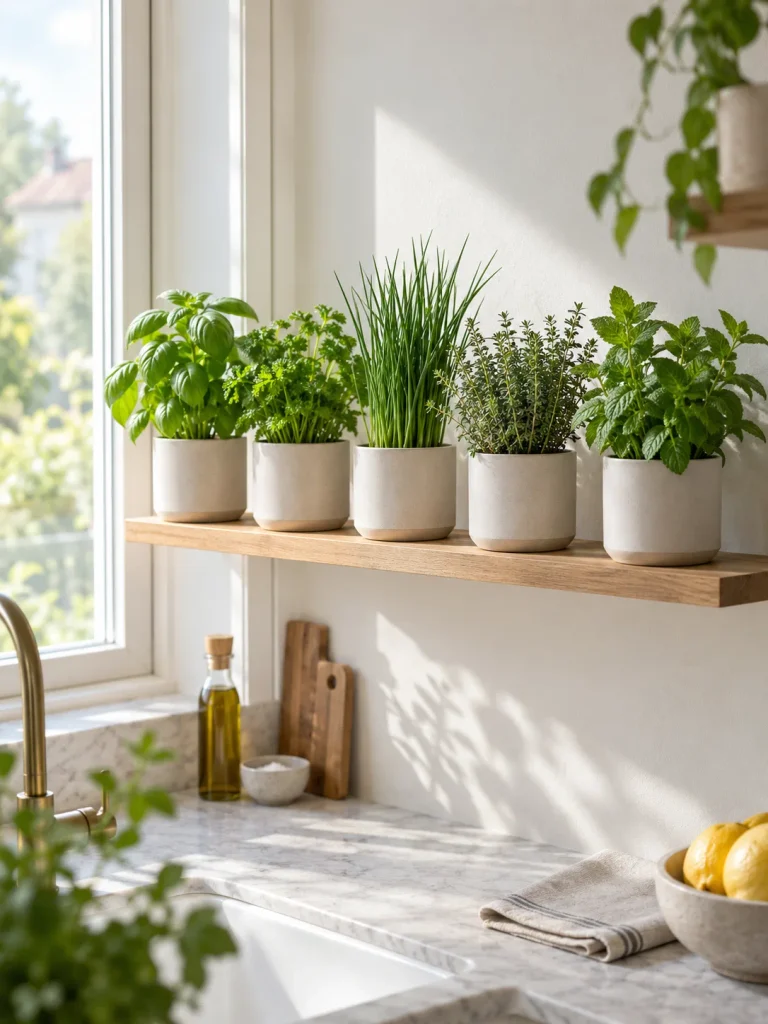
A slim floating shelf beside a bright window can become a clean, organized herb station. Matching pots filled with basil, parsley, chives, thyme, and mint suit modern or Scandinavian-style kitchens particularly well.
Keep the arrangement simple and uncluttered. If the shelf does not receive enough daylight, add a discreet grow light above the plants.
25. Hanging Herb Basket
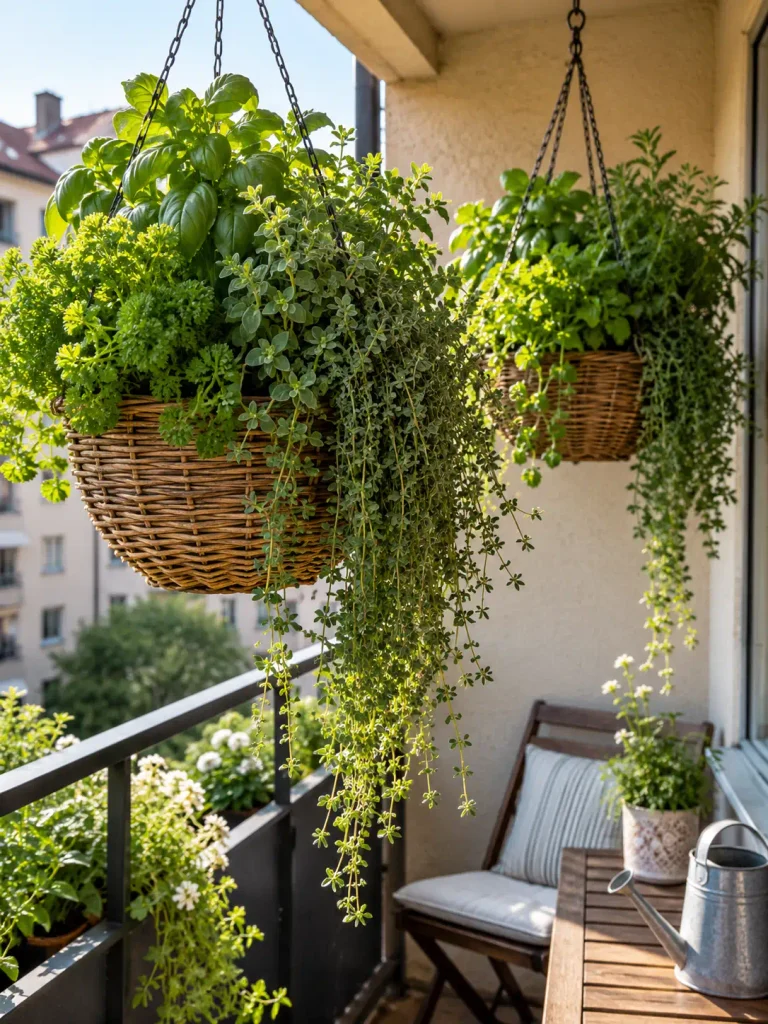
Traditional hanging baskets are not only for flowers. Fill one with parsley, thyme, oregano, or other compact herbs and suspend it from a secure balcony or patio hook.
Choose a basket with adequate drainage and a strong support because wet potting mix becomes heavy. Trailing herbs can soften the edges and make the basket look especially lush.
26. Hanging Strawberry Garden
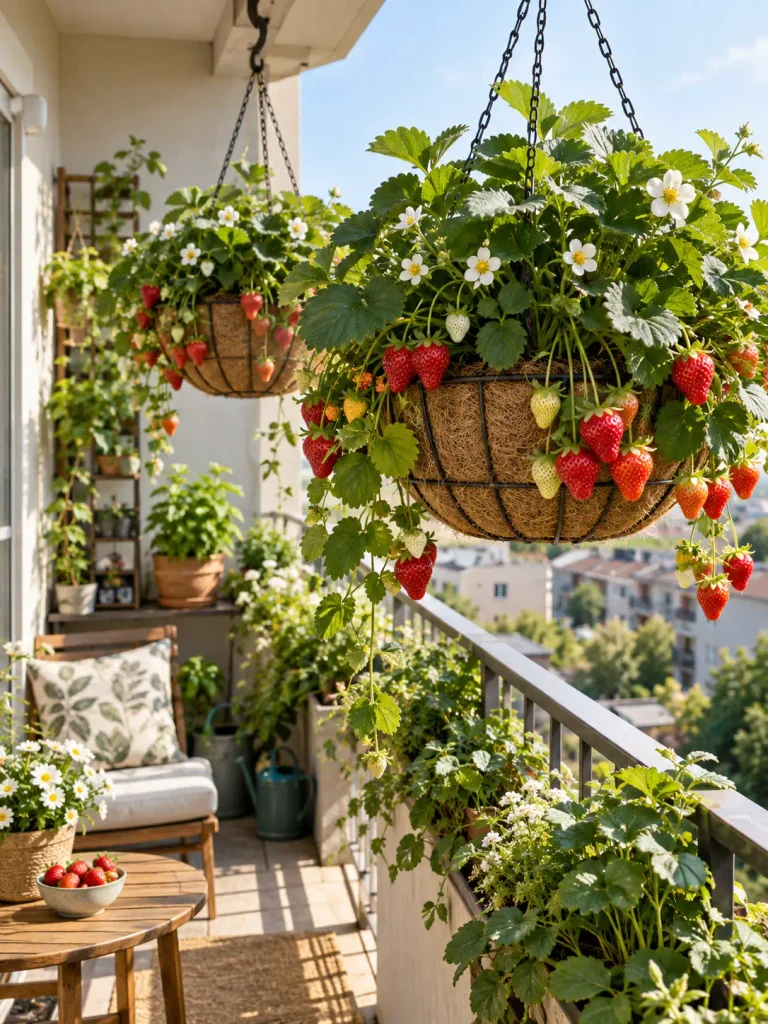
Strawberries naturally suit hanging baskets because leaves, runners, flowers, and fruit can spill gracefully over the sides. A few baskets can provide an eye-catching edible feature without occupying any floor area.
Place them in good sun and water consistently. Check baskets frequently in warm weather because hanging containers can dry faster than ground-level pots.
27. Hanging Tomato Planter
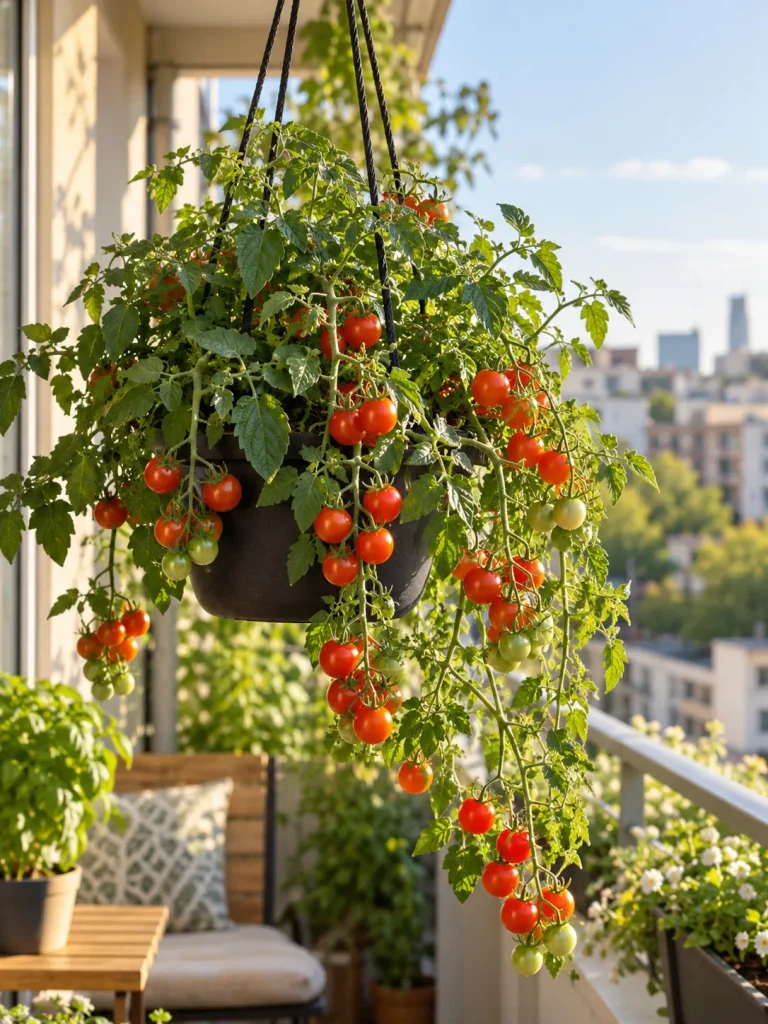
Compact trailing cherry tomato varieties can grow in sturdy hanging containers. The vines cascade down while clusters of fruit remain visible and easy to pick.
Make sure the mounting hardware can support the considerable weight of wet soil and a mature plant. Choose a location with strong sunlight and protection from extreme wind.
28. Macramé Herb Planters
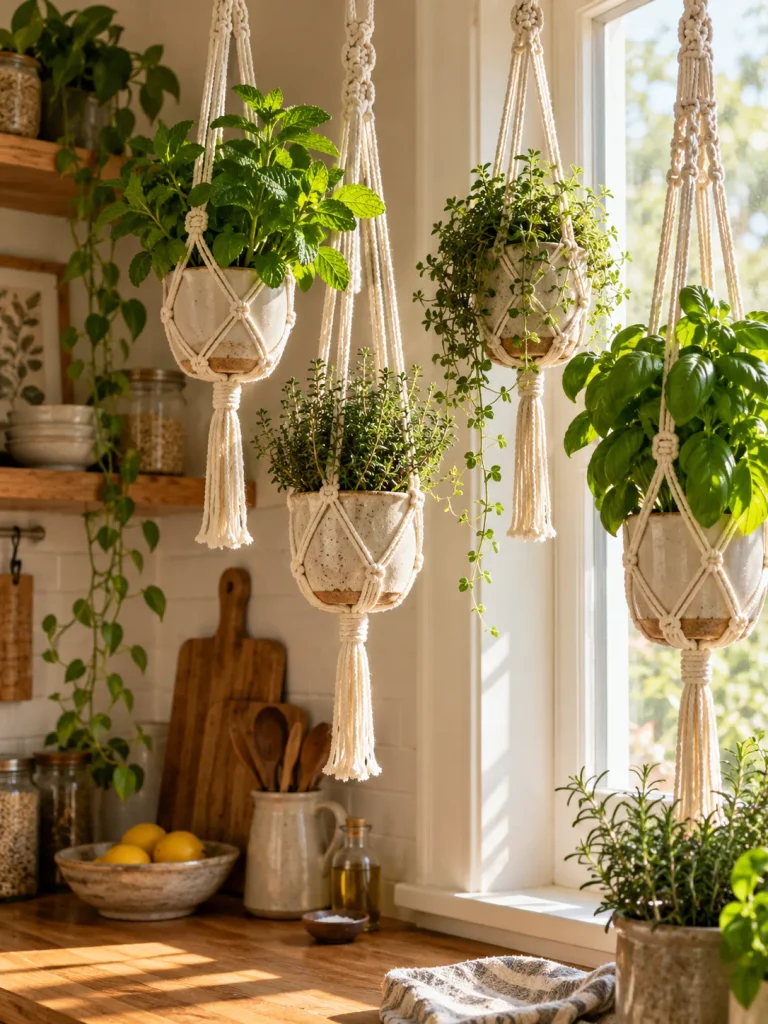
Macramé holders bring an attractive bohemian touch to an indoor kitchen garden. Use lightweight pots filled with mint, thyme, oregano, basil, or other small herbs near a bright window.
Keep enough space between hanging planters so foliage receives light and airflow. Neutral cords and simple ceramic pots create a calm, cohesive look.
29. Hanging Salad Garden
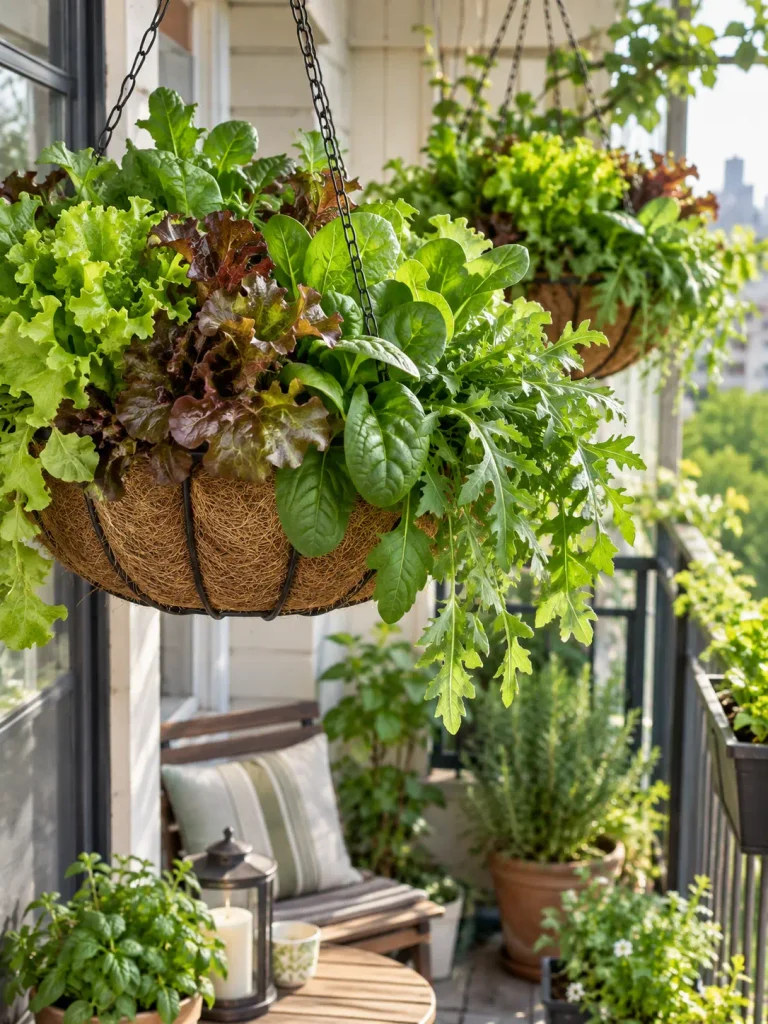
Broad hanging baskets can hold loose-leaf lettuce, baby spinach, or arugula. The greens remain close at hand while the balcony floor stays available for seating or larger containers.
Filtered light can be useful in very hot climates because leafy greens may struggle in intense afternoon heat. Harvest the outer leaves often to keep growth fresh.
30. Ceiling-Hung Kitchen Herb Garden
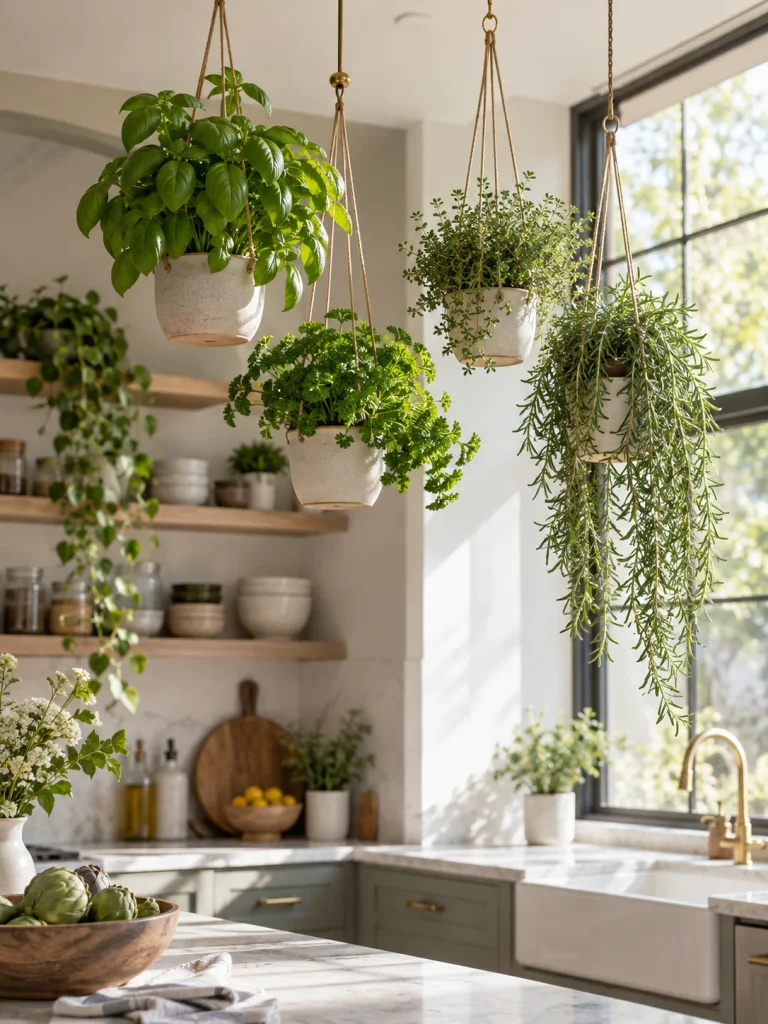
Several small planters suspended at different heights can create an impressive edible feature near a kitchen window. Basil, parsley, thyme, and trailing rosemary give the arrangement varied texture.
Position the planters away from hot cooking steam and make sure each one is easy to reach. Strong anchors are essential because watered pots are heavier than they appear.
31. Narrow Patio Vegetable Garden
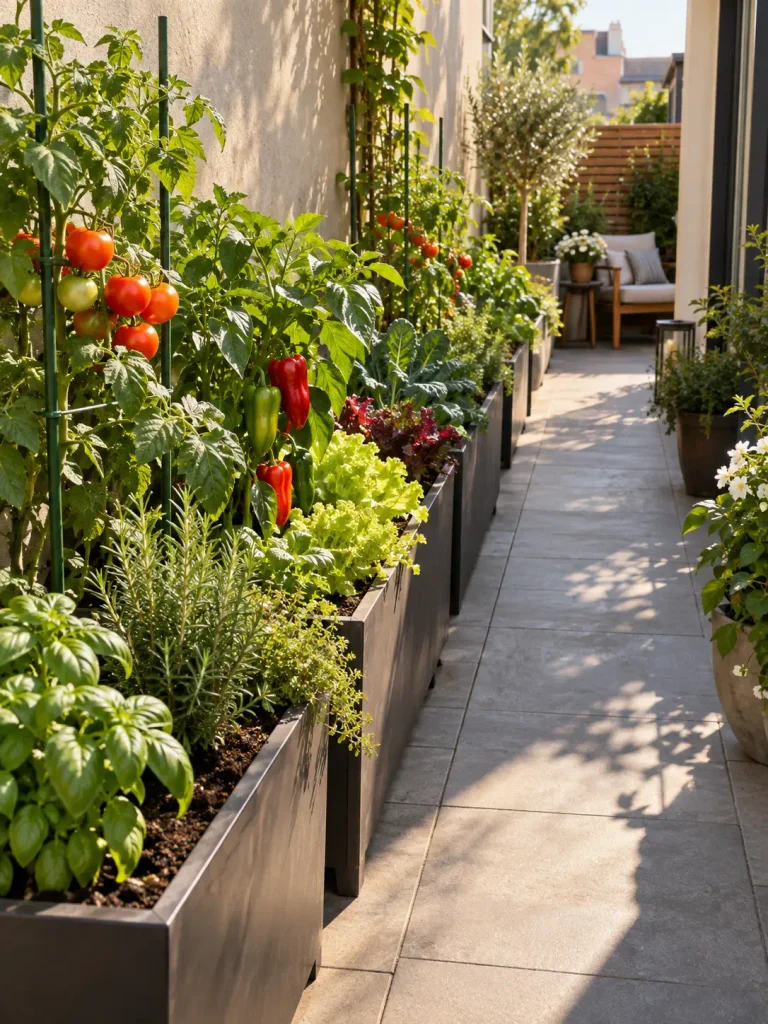
A long, narrow patio can become productive when all the planters are kept against one wall. Grow tomatoes, peppers, herbs, lettuce, and climbing vegetables in slim containers while leaving a clear path.
Vertical supports behind taller plants help use the wall as growing space. Keeping the walkway open makes watering, harvesting, and maintenance much easier.
32. Corner Tiered Herb Garden
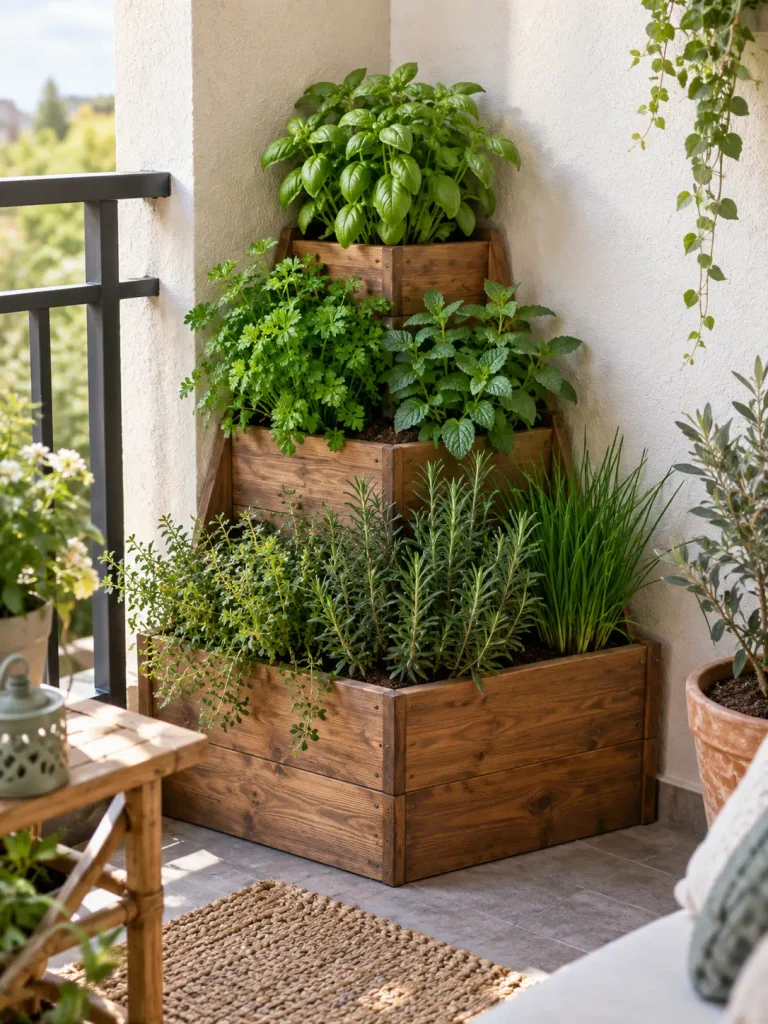
Unused corners are perfect for tiered herb planters. A triangular or stepped wooden unit can hold basil, parsley, mint, thyme, rosemary, and chives without taking over the patio.
Place taller plants where they will not shade the lower levels. A corner planter also turns an awkward dead zone into an attractive edible focal point.
33. Mini Raised Kitchen Garden Bed
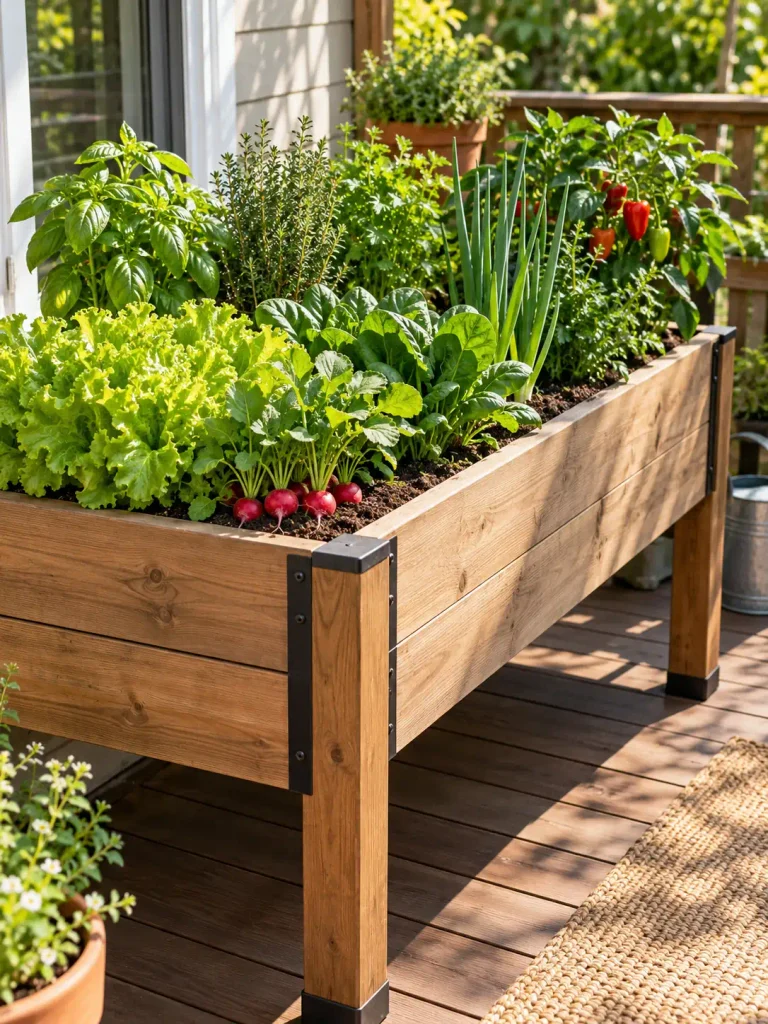
Compact elevated beds offer the feel of traditional gardening in a small patio footprint. Fill one with lettuce, radishes, spinach, green onions, herbs, and compact pepper plants.
A raised height makes planting and harvesting comfortable, while the larger soil volume can stay moist longer than tiny pots. Confirm that a balcony can safely support the filled bed before using one there.
34. Rolling Kitchen Garden Cart
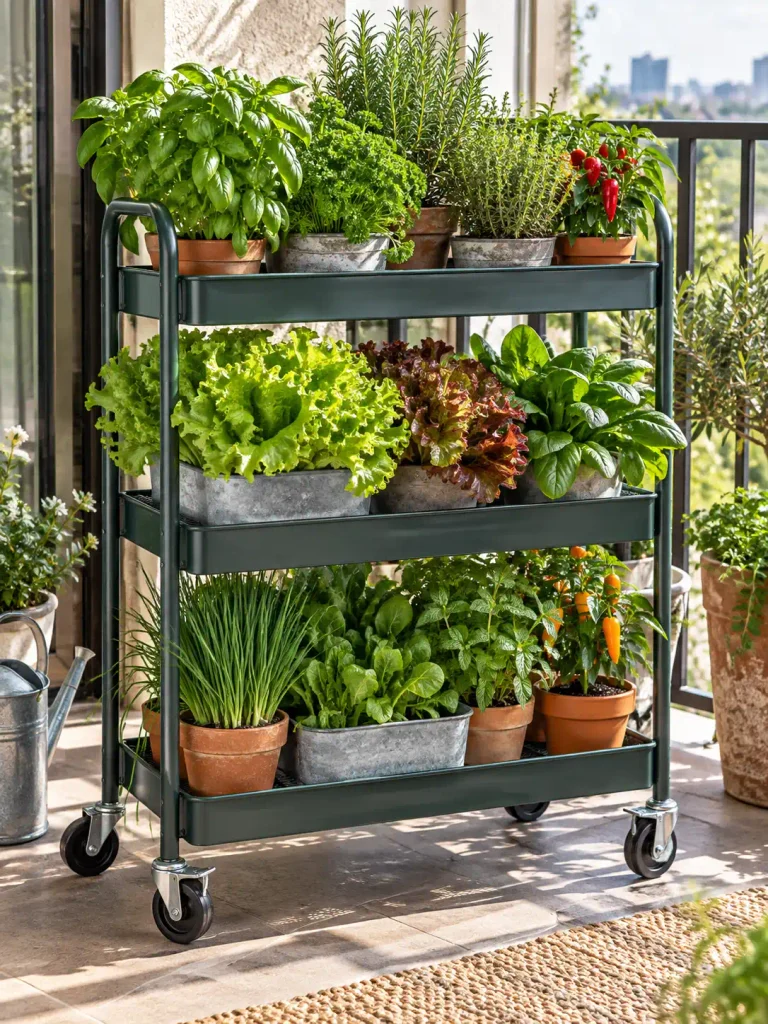
A wheeled utility cart can become a flexible three-tier kitchen garden. Arrange herbs on the top, lettuce and spinach in the middle, and green onions or compact peppers on the lower shelf.
Move the cart toward better light during the day or roll it aside when you need more floor space. Use trays beneath pots to prevent drips between shelves.
35. Bench Planter Kitchen Garden
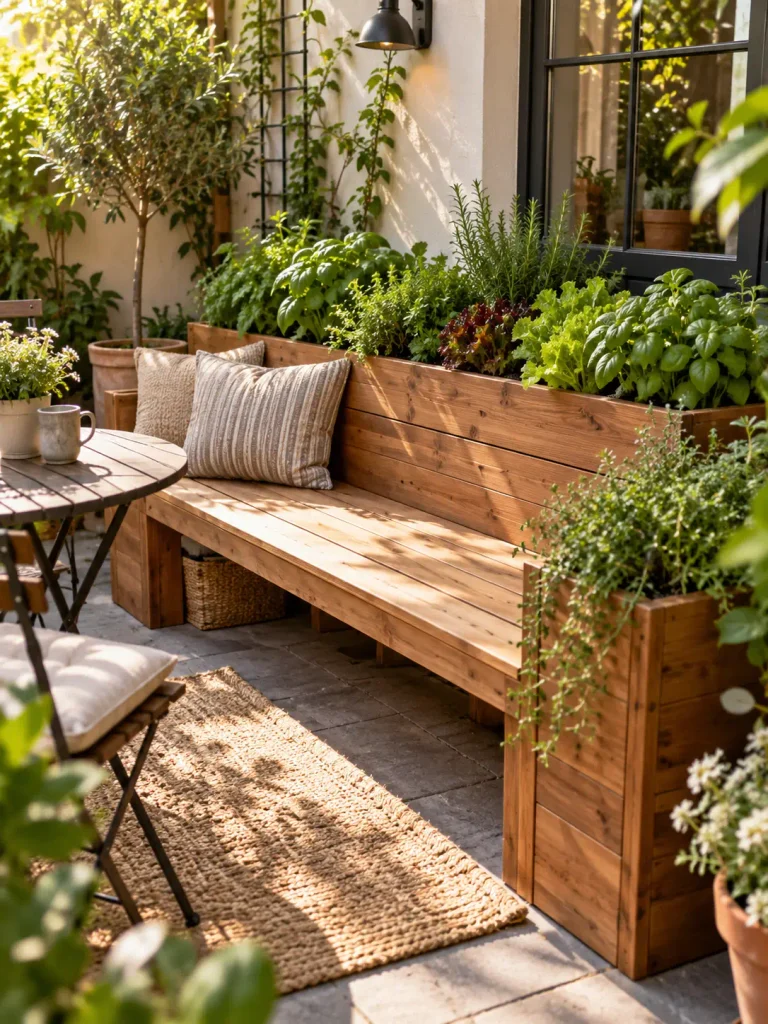
A bench with built-in planter boxes combines two functions in one compact footprint. Grow herbs and leafy greens along the back or sides while keeping the center available for comfortable seating.
This approach works particularly well on small patios where every piece needs to earn its space. Choose plants that will not become so tall that they interfere with the seating area.
36. Small Patio Trellis Garden
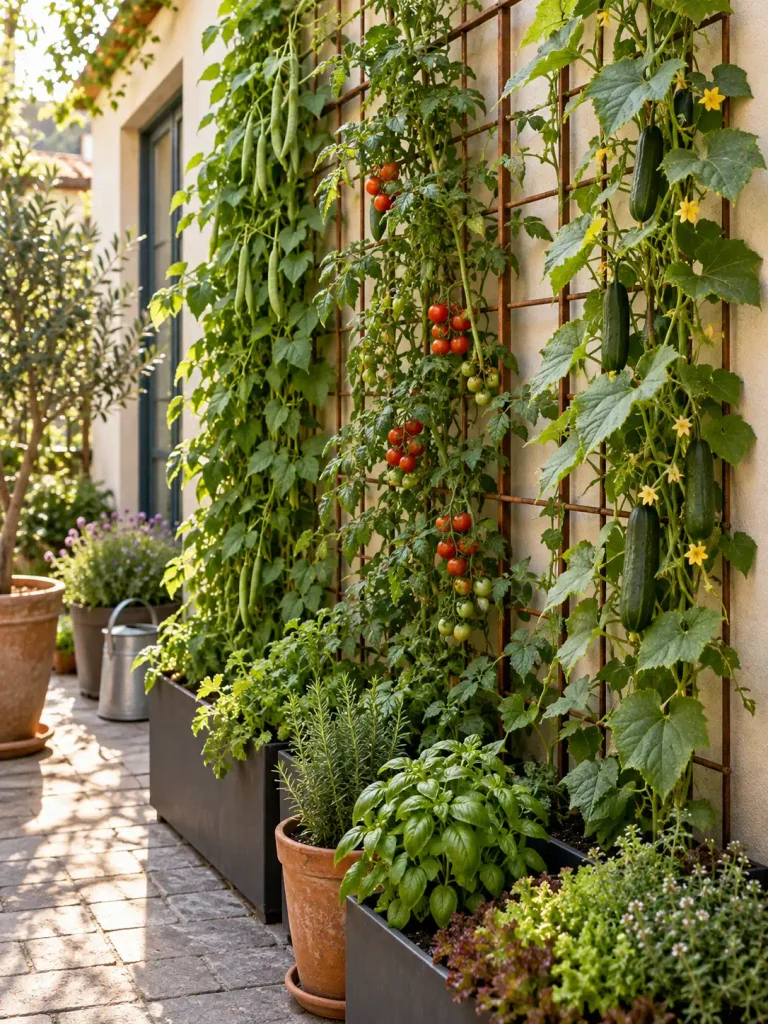
A wall trellis can create a vertical curtain of edible plants on even a narrow patio. Train peas, beans, cucumbers, or small tomatoes upward and place herb pots around the base.
Attach the trellis securely and guide young vines as they grow. The greenery can provide both food and a little extra privacy.
37. Repurposed Wooden Crate Garden
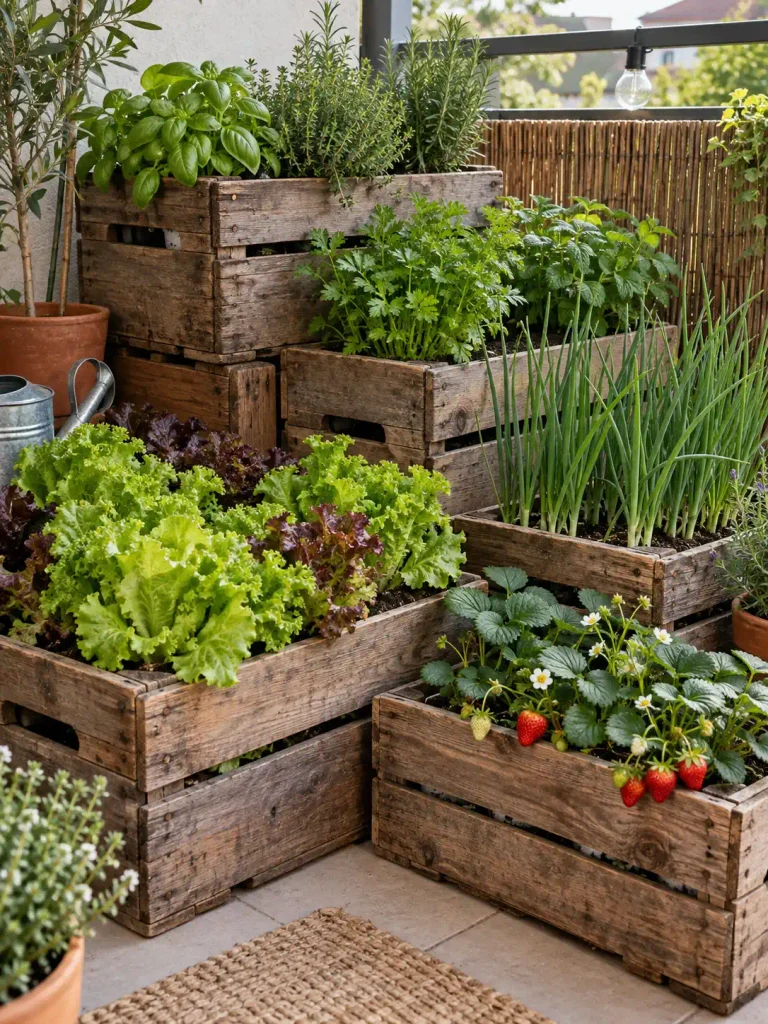
Rustic wooden crates can become inexpensive planters for lettuce, strawberries, herbs, and green onions. Stack them at different levels or arrange them side by side to build a flexible small-space garden.
Line the crates appropriately and provide drainage before adding potting mix. Use sturdy crates and avoid stacking them so high that they become unstable.
38. Hanging Gutter Herb Garden
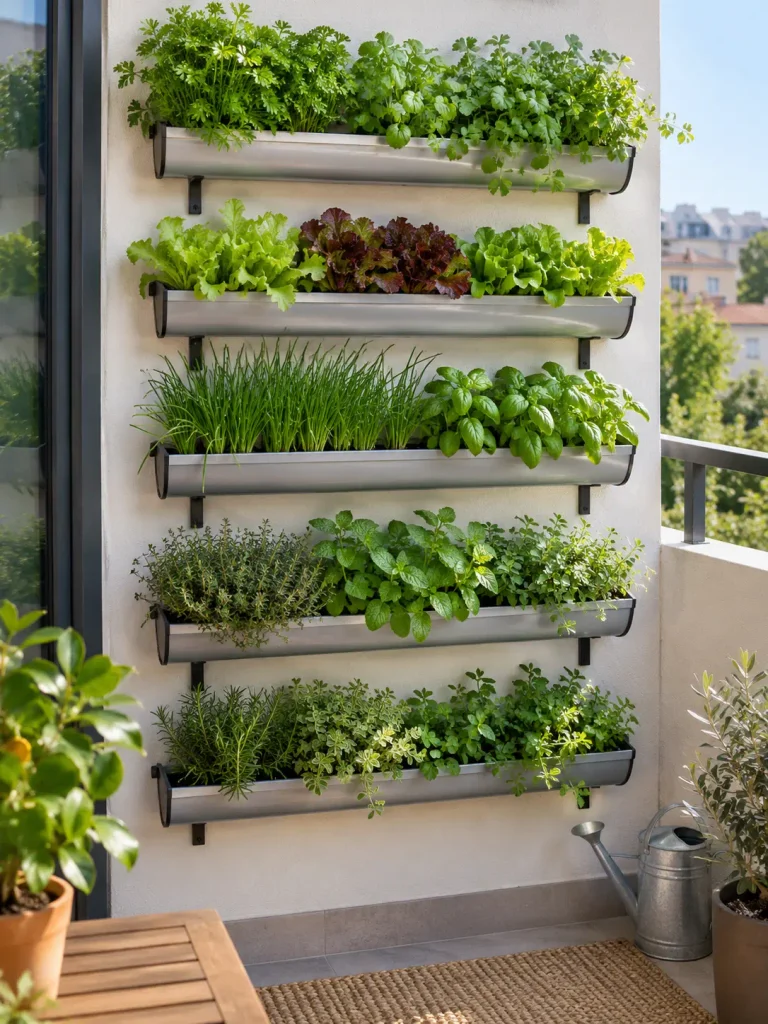
Clean gutter sections mounted horizontally can create a shallow vertical garden for herbs and leafy greens. Parsley, cilantro, lettuce, chives, thyme, and other small-rooted plants are good choices.
Drill enough drainage holes and mount every section securely. Because gutters hold limited soil, check moisture often and avoid crops that need deep root systems.
39. Pegboard Kitchen Garden
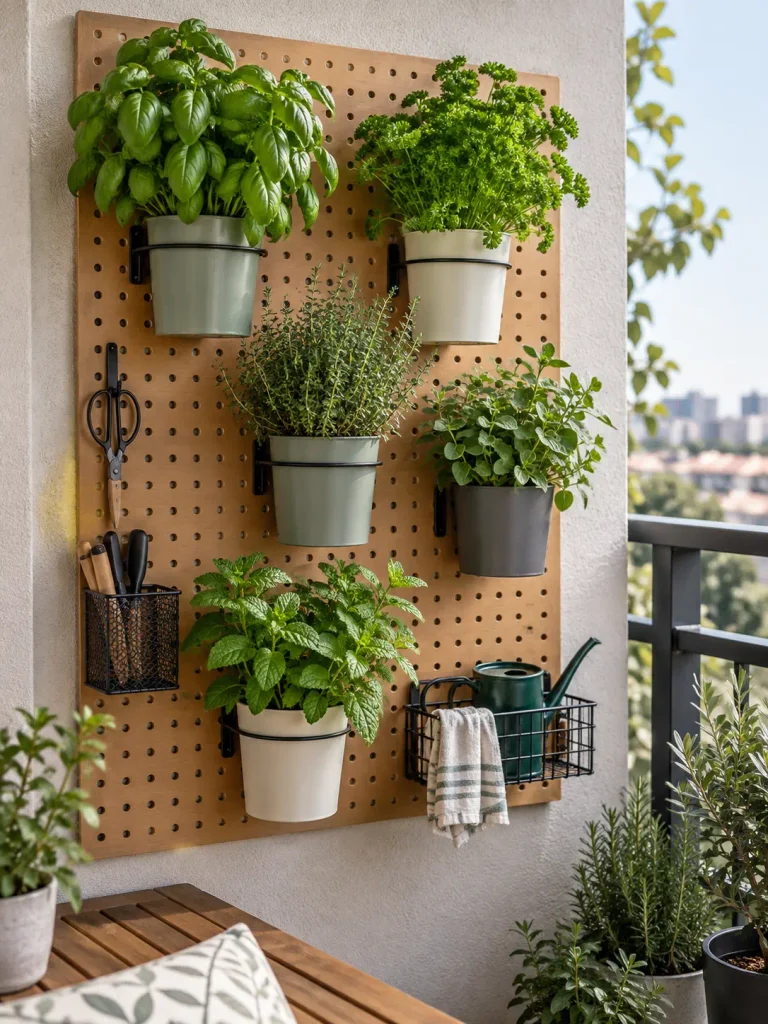
A sturdy outdoor pegboard lets you move herb pots around as the plants grow. Basil, parsley, thyme, oregano, and mint can be held in brackets or small containers without using much floor space.
The flexible layout is useful when some plants need more sunlight or airflow. Choose weather-resistant materials if the pegboard will remain outdoors.
40. Shoe Organizer Herb Garden
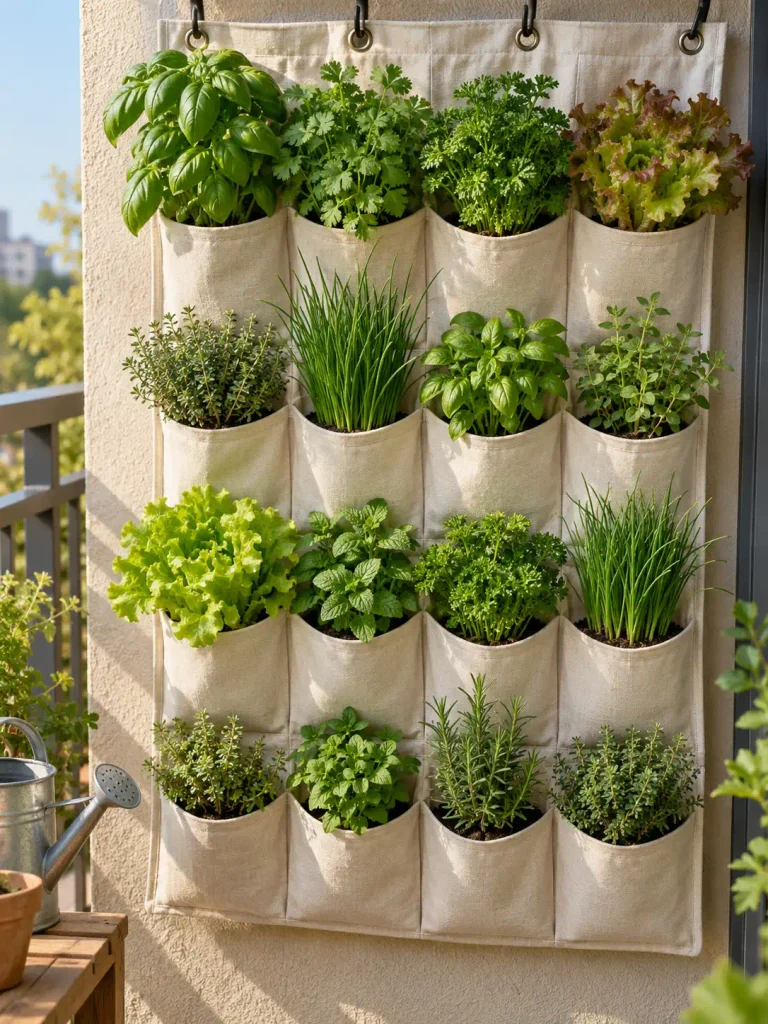
A hanging fabric shoe organizer can become a low-cost vertical edible garden. Fill individual pockets with basil, cilantro, parsley, lettuce, chives, mint, or other compact herbs.
Use a strong organizer that can handle damp soil and provide drainage in each pocket. Protect the wall behind it and check moisture often because the pockets are relatively small.
41. Window Box Vegetable Garden
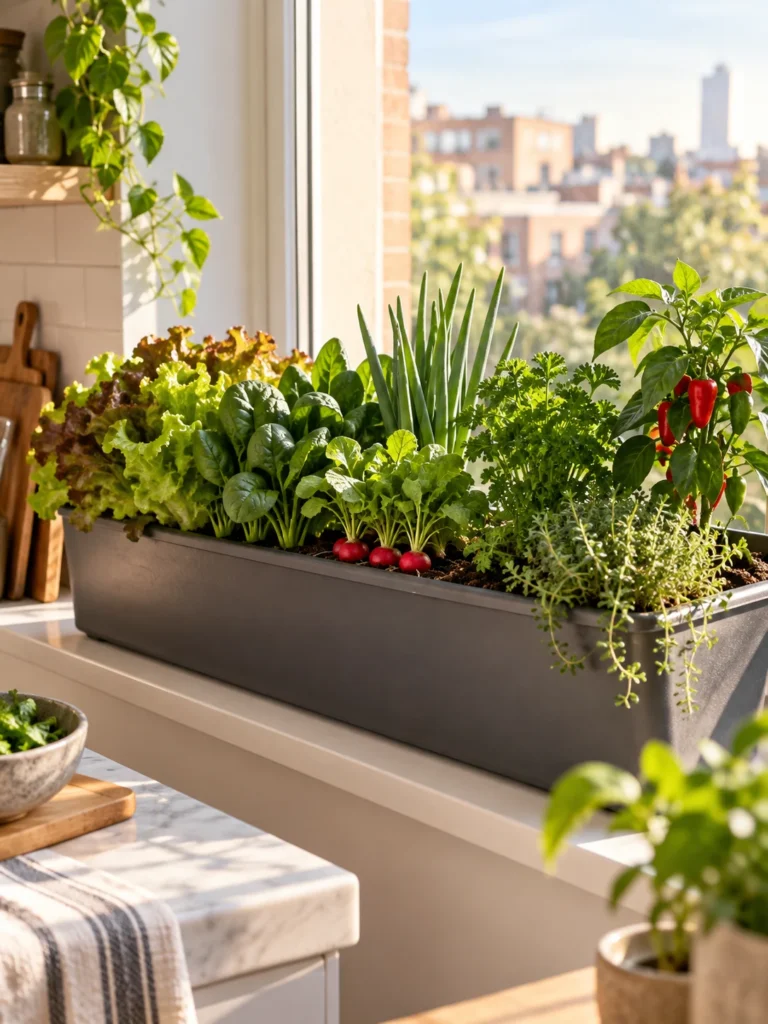
A deep window box can support much more than flowers. Fill it with lettuce, spinach, green onions, radishes, herbs, or compact peppers and turn an exterior window into productive growing space.
Secure the box carefully and choose crops that match its depth. A sunny window box can produce useful harvests without consuming any indoor or balcony floor area.
42. Shelf-Style Kitchen Garden
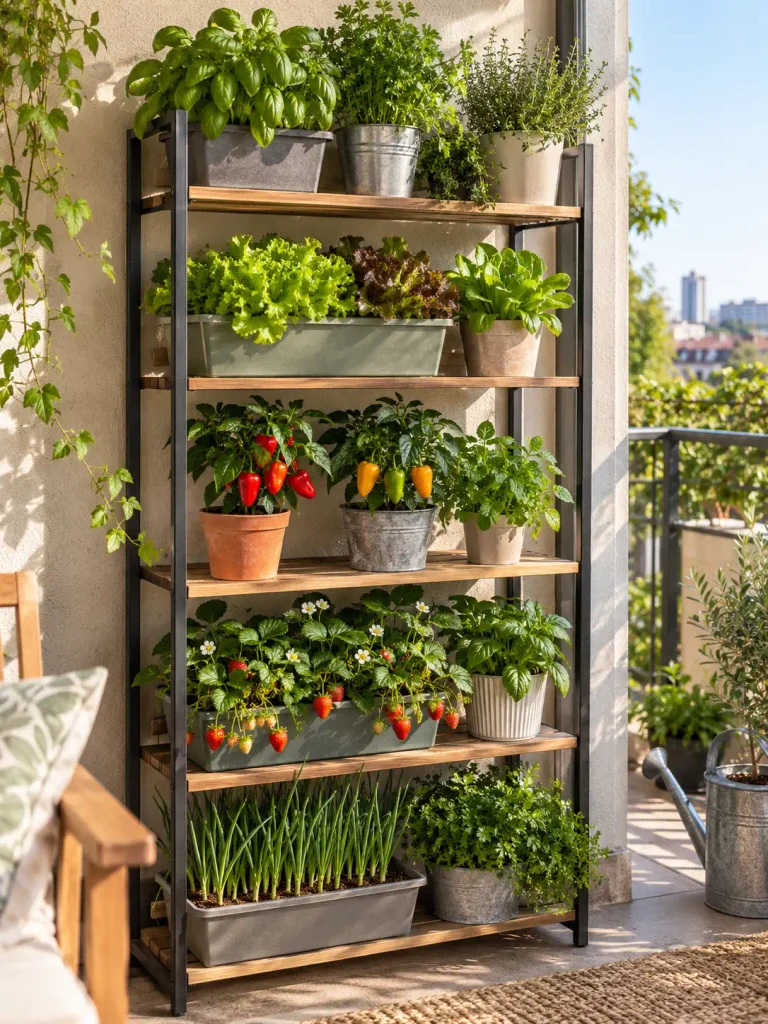
A narrow shelving unit creates several growing levels in one vertical footprint. Use the upper shelves for sun-loving herbs and peppers, middle levels for lettuce and strawberries, and lower levels for shade-tolerant greens.
Leave enough room between shelves for mature foliage. A stable metal-and-wood unit can make a balcony garden feel organized rather than crowded.
43. Countertop Herb Garden
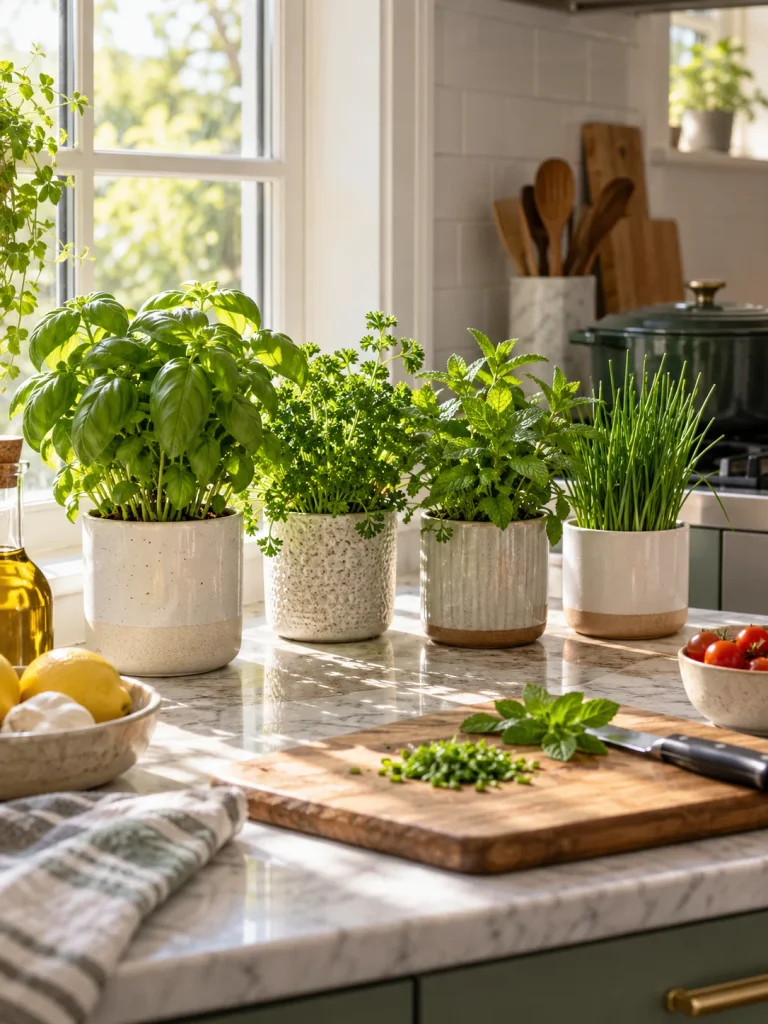
Keep your most-used herbs close to the cooking area in a few attractive countertop pots. Basil, parsley, mint, and chives are useful choices when the counter is near a bright window.
Use saucers or waterproof trays and keep the pots away from direct stove heat. Harvesting often helps many herbs stay compact and bushy.
44. Indoor Hydroponic Herb Garden
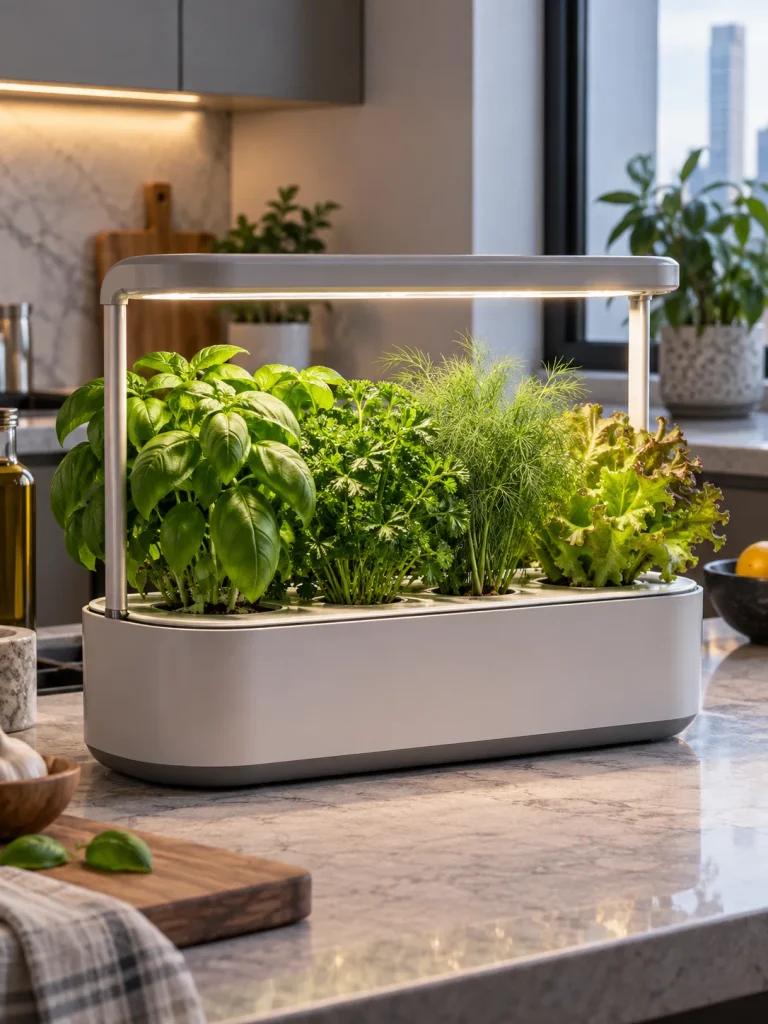
A compact countertop hydroponic system can grow herbs and salad greens even when outdoor space is unavailable. Built-in lighting and water circulation make basil, parsley, dill, and lettuce convenient indoor crops.
Follow the system instructions for nutrients, water changes, and light height. Regular trimming keeps herbs productive and prevents larger plants from shading smaller ones.
45. Kitchen Island Herb Planter
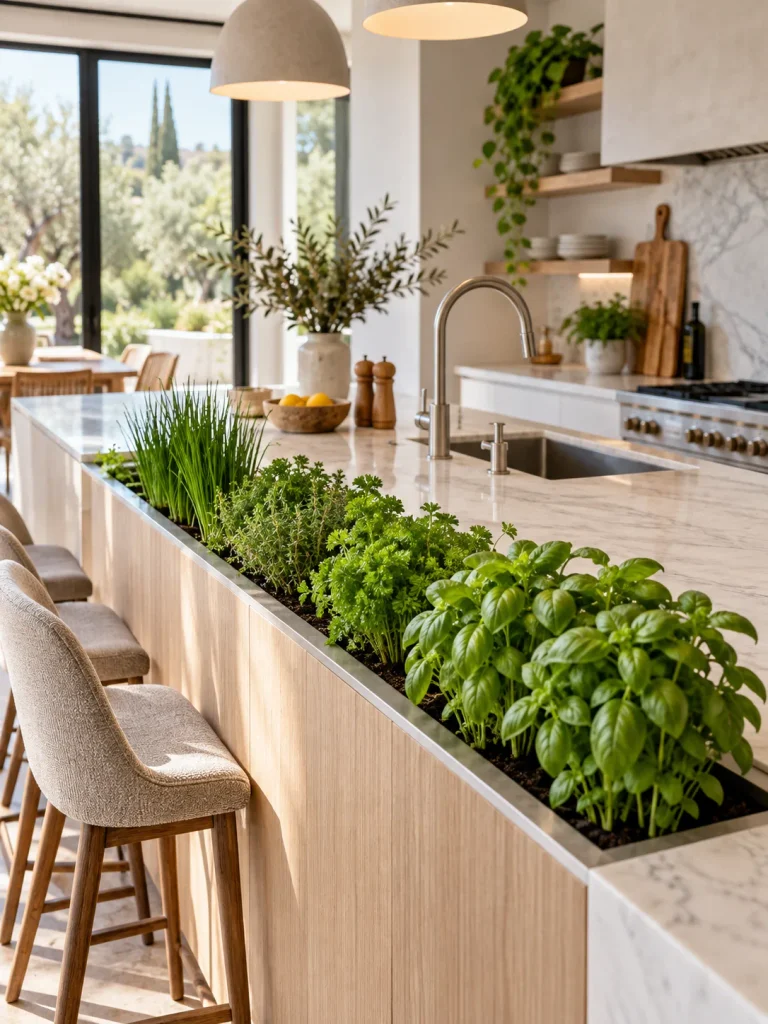
A long, slim planter integrated into or placed along a kitchen island can make herbs part of the room itself. Basil, parsley, thyme, and chives provide fresh greenery without occupying much preparation space.
Use a waterproof planter or protective tray to protect the countertop. This idea works best when the island receives good natural light or has supplemental lighting nearby.
46. Rustic Kitchen Herb Station
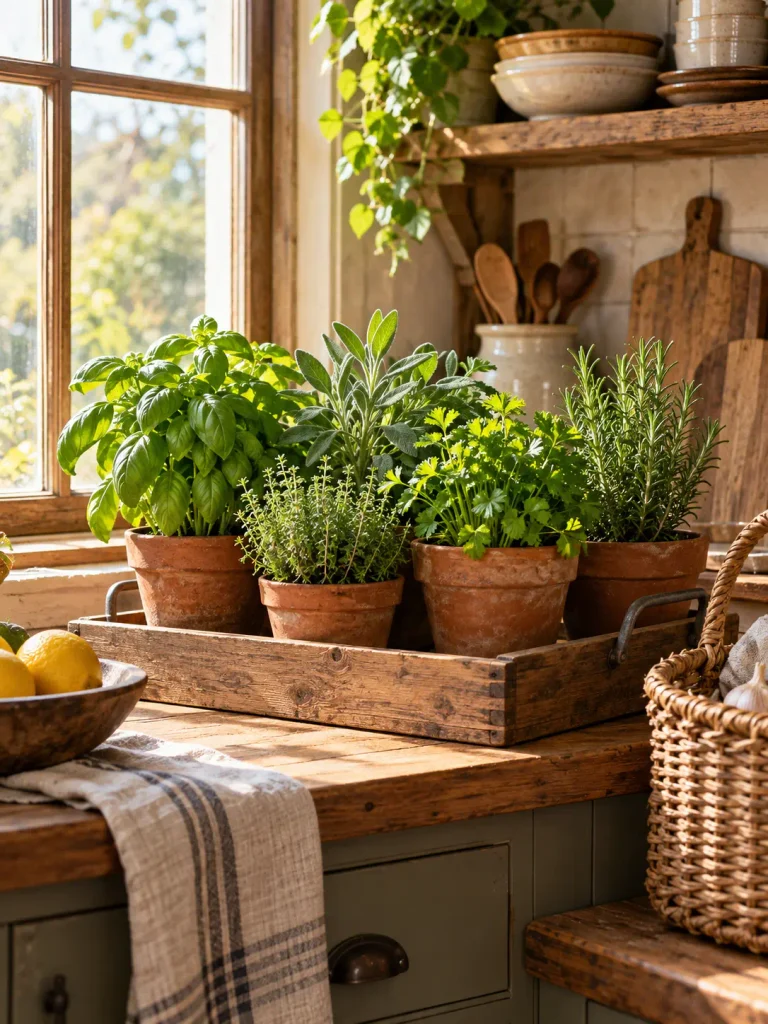
Create a warm herb station with terracotta pots, a wooden tray, vintage-style containers, and natural textures. Basil, sage, thyme, parsley, and rosemary suit a rustic kitchen particularly well.
Group the pots near the brightest window and use a tray to contain water and loose soil. The combination of wood, terracotta, and fresh green foliage makes the edible display feel intentional.
47. Modern Minimalist Kitchen Garden
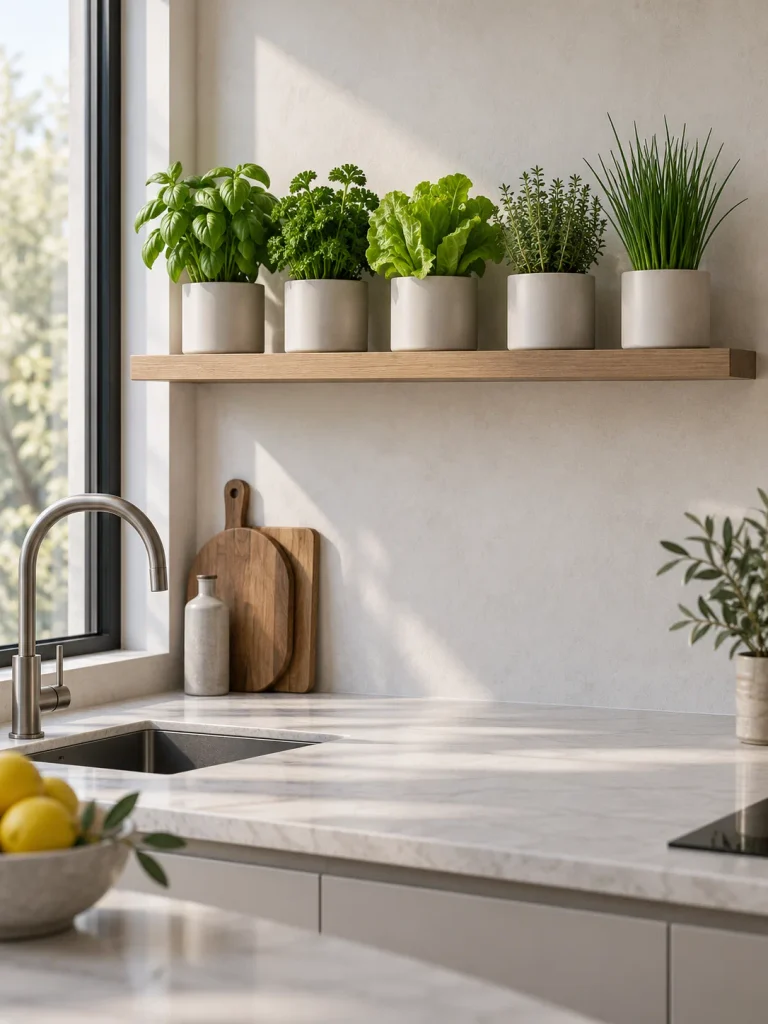
For a cleaner contemporary look, line up matching pots on a simple floating shelf. A small collection of basil, parsley, lettuce, thyme, and chives adds fresh greenery without making the kitchen look busy.
Limit the number of materials and colors around the plants. Good spacing and a bright window will keep the arrangement visually light and practical.
48. Indoor Kitchen Garden With Grow Lights
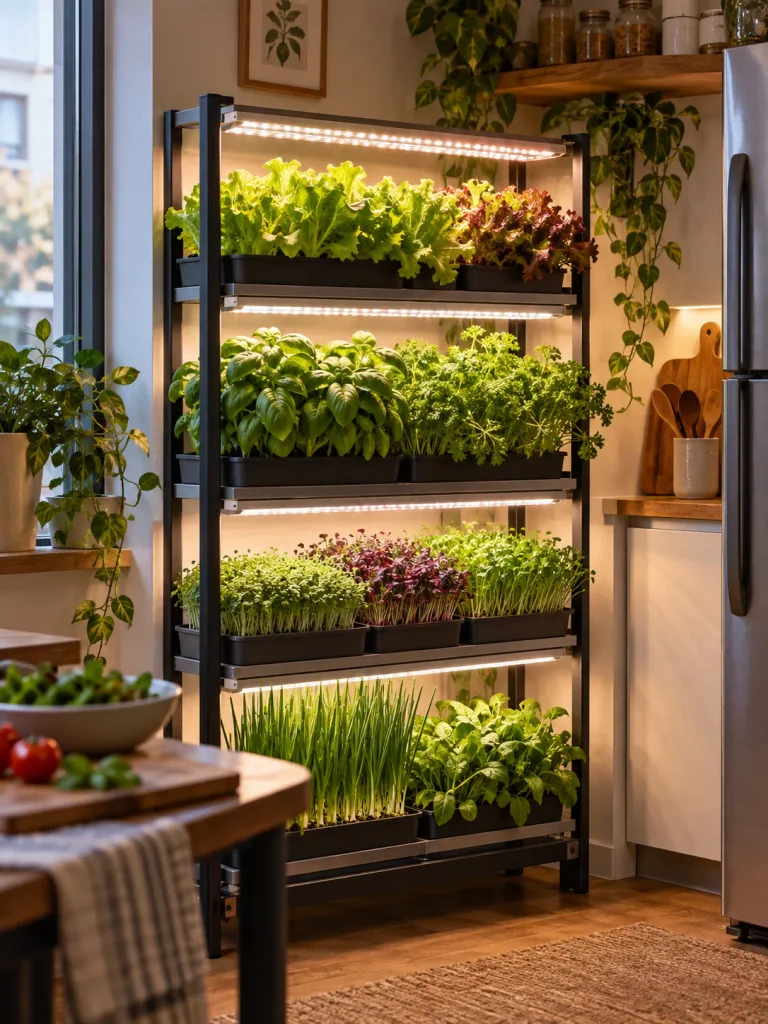
A compact shelving unit fitted with grow lights can keep an edible garden productive when natural light is limited. Lettuce, basil, parsley, microgreens, green onions, and other leafy crops are well suited to this setup.
Use lights designed for plant growth and adjust their height as plants develop. A timer makes the routine easier, while trays beneath the containers protect the floor and shelves from water.
How to Make a Small Kitchen Garden More Productive
Grow Vertically
Use trellises, railings, shelves, walls, and hanging planters to create additional growing levels without expanding the floor area.
Choose Compact Varieties
Look for seed and plant descriptions such as dwarf, patio, bush, mini, or container. These varieties are usually easier to manage in small spaces.
Use Fast-Growing Crops
Lettuce, radishes, green onions, microgreens, and many herbs can produce useful harvests relatively quickly, allowing you to replant the same container several times.
Harvest Regularly
Frequent harvesting keeps many herbs and leafy greens productive. Remove outer lettuce leaves and pinch basil above a pair of leaves to encourage branching.
Use Quality Potting Mix
Container roots need a light growing medium with good drainage and airflow. Heavy garden soil can become compacted inside pots.
Check Water Often
Small containers, fabric bags, hanging baskets, and terracotta pots can dry rapidly in warm weather. Check soil moisture rather than relying on a fixed schedule.
Rotate Containers
If light comes mainly from one direction, rotate movable pots so plants develop more evenly.
Best Plants for a Small Space Kitchen Garden
Herbs
Basil, parsley, cilantro, chives, thyme, oregano, mint, rosemary, and dill are easy to fit into pots and shelves.
Leafy Greens
Lettuce, spinach, arugula, mustard greens, baby kale, and Swiss chard give useful harvests without taking much horizontal room.
Compact Vegetables
Cherry tomatoes, peppers, radishes, green onions, dwarf eggplants, bush beans, and compact cucumbers can all work well when the container is large enough.
Climbing Crops
Pole beans, peas, cucumbers, and vining tomatoes are especially valuable when you can provide vertical support.
Small Fruits
Strawberries are among the easiest fruits for balconies, hanging baskets, railing boxes, towers, and window boxes.
Frequently Asked Questions
Can you grow a kitchen garden in a small apartment?
Yes. A bright window, balcony, shelf, railing, or indoor grow-light setup can support herbs, leafy greens, microgreens, and several compact vegetables.
What vegetables grow best in small spaces?
Lettuce, spinach, radishes, green onions, cherry tomatoes, peppers, bush beans, and compact cucumber varieties are all strong choices. Match the crop to the container depth and available light.
How much sunlight does a small kitchen garden need?
Fruiting vegetables such as tomatoes and peppers generally perform best with strong direct sunlight, while many leafy greens and herbs tolerate somewhat less. Observe your space through the day before deciding where to place containers.
Can I create a kitchen garden on a balcony?
Absolutely. Balconies are ideal for containers, railing boxes, trellises, hanging baskets, and shelves, provided the containers are secure and the balcony can safely support the weight.
Which herbs are easiest to grow in a small space?
Basil, parsley, chives, mint, thyme, oregano, and cilantro are popular beginner choices. Mint is best kept in its own pot because it can spread aggressively.
How can I grow more food without making the space crowded?
Use vertical supports, compact plant varieties, several growing levels, and succession planting. Leave enough room for airflow and access rather than filling every available gap.
What is the cheapest way to start?
Begin with a few safe containers you already own, add drainage holes, and grow inexpensive crops from seed such as lettuce, radishes, green onions, and herbs.
Final Thoughts
A mini edible garden can begin with something as simple as three herb pots on a sunny window or one cherry tomato plant in a balcony corner. Once you understand the light, watering, and temperature conditions in your space, you can gradually add shelves, hanging baskets, trellises, or more containers.
The most useful small space kitchen garden ideas are the ones that fit naturally into your daily routine. Keep frequently used herbs close to the kitchen, use vertical space for climbing crops, and choose containers that still leave room to move comfortably. With a thoughtful layout, a very small area can provide fresh ingredients and a satisfying patch of greenery throughout the growing season.