 Skip to content
The kitchen has always been the heart of our home—a place of warmth, tradition, and the comforting aroma of a simmering pot. But as we navigate our 60s, 70s, and beyond, that space takes on a vital new role. It becomes our primary tool for longevity. I saw this firsthand with my uncle; after years of enjoying rich, salty traditional meals, a diagnosis of hypertension felt like a door closing on the flavors he loved. Like many seniors, he worried that the DASH (Dietary Approaches to Stop Hypertension) diet meant a future of bland, uninspired plates.
Determined to help, I spent weeks in the kitchen with him, recreating his favorites into Low-Sodium Dinners to Lower Blood Pressure that actually tasted better than the originals. We quickly learned that “heart-healthy” is not synonymous with “tasteless.” We’ve been conditioned to believe the salt shaker is the only way to unlock the soul of a meal, but the reality is far more exciting. Reducing sodium isn’t about subtraction; it’s about rediscovering the vibrancy of whole, fresh ingredients.
When we prioritize cardiovascular health, we aren’t just managing a number on a blood pressure cuff. We are investing in our daily energy, our cognitive clarity, and our ability to remain active with our grandchildren or in our gardens. Think of the blood vessels in our bodies as a delicate irrigation system; as we age, they naturally become less flexible, and high sodium intake acts like high pressure in those pipes, causing wear and tear over time.
By shifting toward the plant-forward, nutrient-dense meals I prepared for my uncle, we provide our bodies with the “biological lubricants” they need. Ingredients rich in potassium, magnesium, and fiber work in harmony to relax arterial walls and facilitate smooth blood flow. This article is designed to show you that these life-saving shifts don’t require hours at a stove or a massive budget—just a few smart swaps and a passion for flavor.
[Disclosure: This post may contain affiliate links. If you purchase through these links, we may earn a small commission at no extra cost to you. This helps support our content. If you want to read the boring stuff my full disclosure can be found here.]
The “Flavor First” Philosophy
If you have spent a lifetime cooking with salt, your taste buds have likely become “numbed” to the subtle nuances of fresh herbs and bright acids. This phenomenon is reversible. Within just two to three weeks of reducing salt, your palate undergoes a remarkable “reset.” Suddenly, the natural sweetness of a roasted carrot or the earthy depth of a cumin seed becomes profound.
Our philosophy is simple: Flavor must come first. If a meal isn’t delicious, it isn’t sustainable. In the recipes that follow, we utilize the “Aromatic Trinity”—garlic, onions, and citrus—to create a savory foundation that satisfies the “umami” craving without a single grain of added salt.
The 20-Minute Promise
We understand that energy levels can fluctuate. Some days you feel like a gourmet chef; other days, you simply want a nourishing meal without the fuss. Every recipe in this guide is curated to be prepared in 20 minutes or less. We focus on “one-pan” and “skillet-style” cooking to minimize cleanup, ensuring that the process of nourishing your heart is a source of joy, not a cause of exhaustion.
By choosing ingredients that are naturally free of cholesterol and gentle on the digestive system, you are giving your heart a much-needed break. These meals are designed to be soft, easy to chew, and packed with the anti-inflammatory properties that help soothe aging joints alongside a hardworking heart.
2. The Science: Why These Specific Ingredients Work
Understanding the “why” behind your food choices is the most powerful tool in your health arsenal. When you understand how an ingredient interacts with your veins and arteries, a meal stops being just “fuel” and becomes a form of gentle, natural medicine. Here is the scientific breakdown of how these specific plant-based choices protect a senior heart.
The Potassium-Sodium Pump: Nature’s Pressure Valve
Most of us are told to “eat less salt,” but rarely are we told to “eat more potassium.” In the body, sodium and potassium exist in a delicate balance. Sodium holds onto water, which increases the volume of blood in your pipes (arteries) and raises pressure. Potassium acts as the counterbalance; it signals the kidneys to excrete excess sodium through urine and helps ease the tension in your blood vessel walls.
- The Senior Advantage: As kidney function naturally slows with age, prioritizing high-potassium foods like spinach, sweet potatoes, and beans is the most effective way to assist your body in flushing out the salt from yesterday’s meals.
Soluble Fiber: The Arterial “Broom”
Cholesterol management is a cornerstone of heart health. These recipes focus heavily on soluble fiber—the kind found in oats, lentils, and chickpeas. When you consume soluble fiber, it turns into a gel-like substance in your digestive tract. This gel binds to cholesterol particles and drags them out of the body before they can be absorbed into the bloodstream.
- The Senior Advantage: This process lowers LDL (the “bad” cholesterol) without the heavy digestive load that comes from processing animal fats, making it much easier on a sensitive or slower digestive system.
Nitrates and Vasodilation: Opening the Pathways
Certain vegetables, particularly leafy greens and beets, are rich in naturally occurring nitrates. Your body converts these into nitric oxide, a gas that tells your blood vessels to relax and widen (a process called vasodilation).
- The Senior Advantage: Widening the “pipes” even by a fraction of a millimeter can significantly reduce the workload on the heart muscle, leading to better circulation and warmer extremities—a common concern for many seniors.
Antioxidants and Endothelial Health
The “endothelium” is the thin inner lining of your blood vessels. Over time, oxidative stress (caused by processed foods or environmental factors) can make this lining “sticky,” allowing plaque to build up. The vibrant colors in these recipes—the deep oranges of sweet potatoes and the bright greens of herbs—are markers of antioxidants like beta-carotene and Vitamin C. These nutrients act as a shield, protecting that inner lining from damage and keeping it smooth.
3. The Modern Heart-Healthy Pantry: Tools and Tastes for Longevity
Setting up a “smart” kitchen is the secret to maintaining a heart-healthy lifestyle without feeling deprived. For seniors, the goal is twofold: maximizing flavor and minimizing physical strain. As our dexterity or energy levels shift, the right tools and seasonings do the heavy lifting for us.
Below are the essential staples and modern kitchen innovations that transform low-sodium cooking from a chore into a seamless part of your day.
Kitchen Tools for Ease and Safety
Efficiency in the kitchen prevents fatigue and reduces the risk of injury. These tools are specifically selected for their senior-friendly ergonomics and health benefits.
- The Ceramic Non-Stick Skillet Set: Traditional non-stick pans can degrade over time. High-quality ceramic pans allow you to “dry-saute” vegetables using only a splash of water or broth instead of heavy oils. This reduces caloric intake and protects your arteries from heated fats.
- Look for: Long, stay-cool handles and a lightweight build to prevent wrist strain.
- Ergonomic Herb Scissors & Multi-Blade Shears: Fresh herbs like parsley and cilantro are the ultimate low-sodium flavor boosters. However, chopping them with a heavy knife can be difficult for those with arthritis. Multi-blade scissors allow you to snip herbs directly into the pan with minimal effort.
- The Electric Precision Spice Grinder: Whole spices (like peppercorns, cumin seeds, and coriander) hold their essential oils better than pre-ground powders. An electric grinder allows you to release these heart-healthy oils with the touch of a button, providing a much stronger flavor profile than store-bought shakers.
The “Hydration Station”
Heart health is inextricably linked to hydration. Thicker blood (caused by dehydration) is harder for the heart to pump.

- Infusion Pitcher: Keep a pitcher in the fridge with cucumber, mint, or orange slices. It makes meeting your daily water goals effortless and provides a subtle hit of potassium-rich electrolytes.
Recipe 1: Zesty Lemon-Garlic Roasted Chickpeas with Asparagus
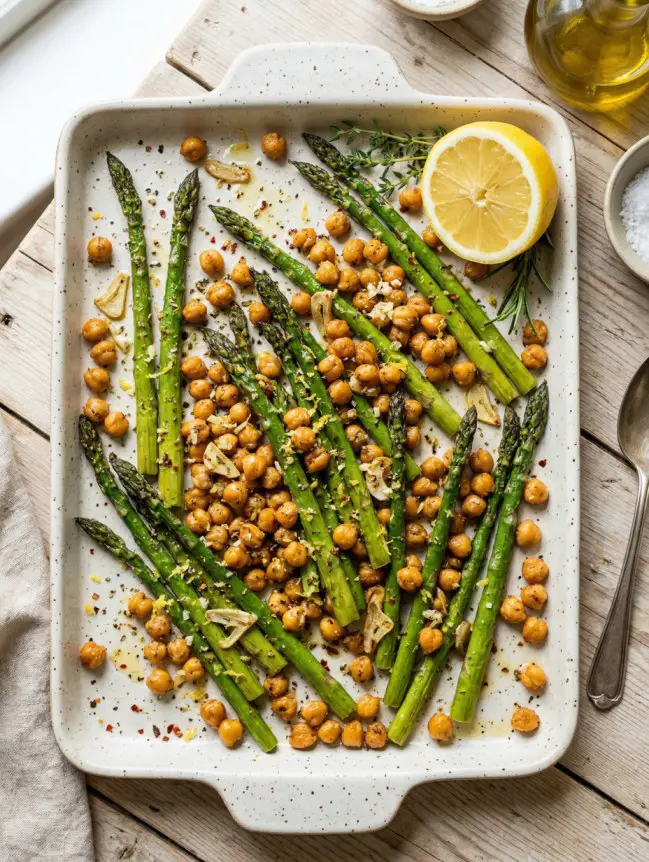
This dish is a masterclass in texture and brightness. Often, when we move away from traditional heavy proteins, we miss the “crunch” and the savory “bite.” By roasting chickpeas at a high temperature, they transform into golden, nutty morsels that satisfy that craving. Asparagus, a natural diuretic, helps the kidneys flush out excess fluid, making this a powerhouse for blood pressure management.
The Heart-Healthy Profile
- Fiber Focus: Chickpeas are loaded with soluble fiber, which actively works to sweep cholesterol out of the arteries.
- Natural Diuretic: Asparagus contains asparagine, an amino acid that helps reduce water retention—a common concern for those managing hypertension.
- Sodium-Free Flavor: We rely on the “Aromatic Duo” of garlic and lemon to provide a sharp, clean finish.
Detailed Preparation (Ready in 20 Minutes)
Ingredients:
- 1 can (15 oz) chickpeas (ensure they are labeled “No Salt Added”)
- 1 bunch thin asparagus (woody ends trimmed)
- 3 cloves fresh garlic, minced (avoid the jarred version, which often contains preservatives)
- 1 large organic lemon (we will use both the zest and the juice)
- 1 tablespoon extra virgin olive oil (rich in heart-healthy polyphenols)
- 1 teaspoon dried oregano
- ½ teaspoon freshly cracked black pepper
Step-By-Step Instructions:
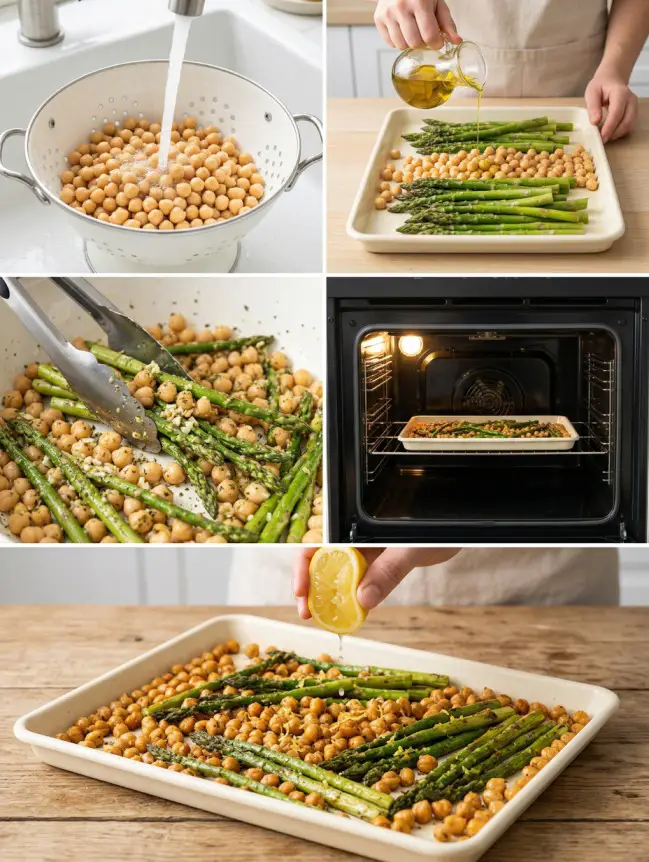
- The Preparation: Preheat your oven to 400°F (200°C). While the oven warms, drain your chickpeas into a colander and rinse them thoroughly under cold water. Crucial Tip: Use a clean kitchen towel to pat the chickpeas bone-dry. The drier they are, the crunchier they will get in the oven.
- The Seasoning: On a large, lightweight sheet pan (easier for senior wrists to handle), toss the dried chickpeas and the trimmed asparagus. Drizzle with the olive oil.
- Aromatic Infusion: Add the minced garlic, dried oregano, and cracked pepper. Use your hands or a pair of silicone tongs to coat everything evenly. Spread them out so nothing is overlapping; space equals crunch.
- The Roast: Place the pan in the center of the oven. Roast for 15 to 18 minutes. Halfway through, give the pan a gentle shake. You’ll know they are ready when the chickpeas look golden and the asparagus tips are slightly charred.
- The “Zing” Finish: Once out of the oven, immediately zest the entire lemon over the hot vegetables. The heat will release the lemon oils, filling your kitchen with a restorative aroma. Squeeze half the lemon juice over the top just before serving.
Senior Living Tip: Easy Cleanup
Line your sheet pan with unbleached parchment paper. Not only does this prevent sticking without needing extra oil, but it also means you can simply gather the paper and toss it when done—no heavy scrubbing required.
The Essential Senior Meal Success Kit: If you find yourself overwhelmed by “what to cook next,” this Digital Mediterranean Meal Planner from Etsy is a game-changer. It features large-print recipes, automated grocery lists, and a 30-day “Heart-Reset” calendar. It’s a beautiful, printable guide that takes the guesswork out of your kitchen.
Recipe 2: Creamy Sun-Dried Tomato and Spinach Penne (Dairy-Free)
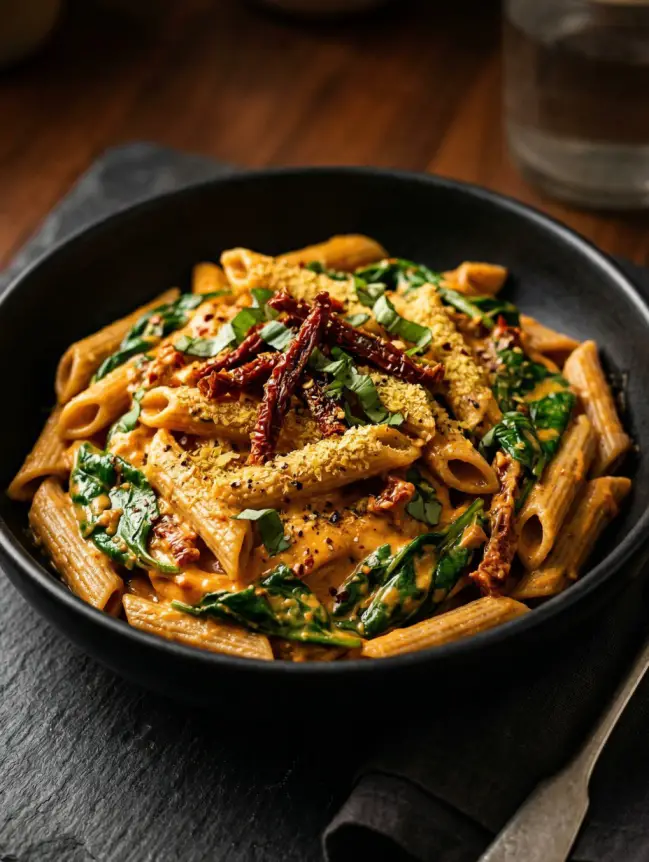
One of the greatest challenges for seniors transitioning to a heart-healthy lifestyle is giving up “comfort foods,” particularly creamy pasta dishes. Standard cream sauces are often high in saturated fats and sodium, both of which can lead to arterial plaque and fluid retention.
This recipe uses a “culinary magic trick”—blending plant-based proteins to create a velvety, rich sauce that is entirely heart-safe. It provides the psychological satisfaction of a “heavy” meal while actually helping to clear your cardiovascular pathways.
The Heart-Healthy Profile
- Lycopene Boost: Sun-dried tomatoes are a concentrated source of lycopene, a powerful antioxidant known to reduce the risk of heart attacks and strokes.
- Magnesium Power: Fresh spinach is one of the best sources of magnesium, a mineral that acts as a natural “calcium channel blocker,” helping your heart muscle relax between beats.
- Cholesterol-Free Creaminess: By using a plant-based base, we eliminate the dietary cholesterol found in heavy cream and butter.
Detailed Preparation (Ready in 20 Minutes)
Ingredients:
- 8 oz Whole Grain Penne or Chickpea Pasta (High fiber for blood sugar stability)
- 1 cup Fresh Baby Spinach (Packed tightly)
- ½ cup Sun-Dried Tomatoes (Choose the “Dry Packed” version, not the ones in oil/salt, and soak them in hot water for 5 minutes)
- 1 cup Unsweetened Almond Milk or Cashew Milk (Salt-free)
- 2 tablespoons Nutritional Yeast (For that savory, “parmesan” depth)
- ½ teaspoon Smoked Paprika (Adds a “charred” flavor without sodium)
- 1 teaspoon Fresh Lemon Juice
- Fresh Cracked Black Pepper to taste
Step-By-Step Instructions:
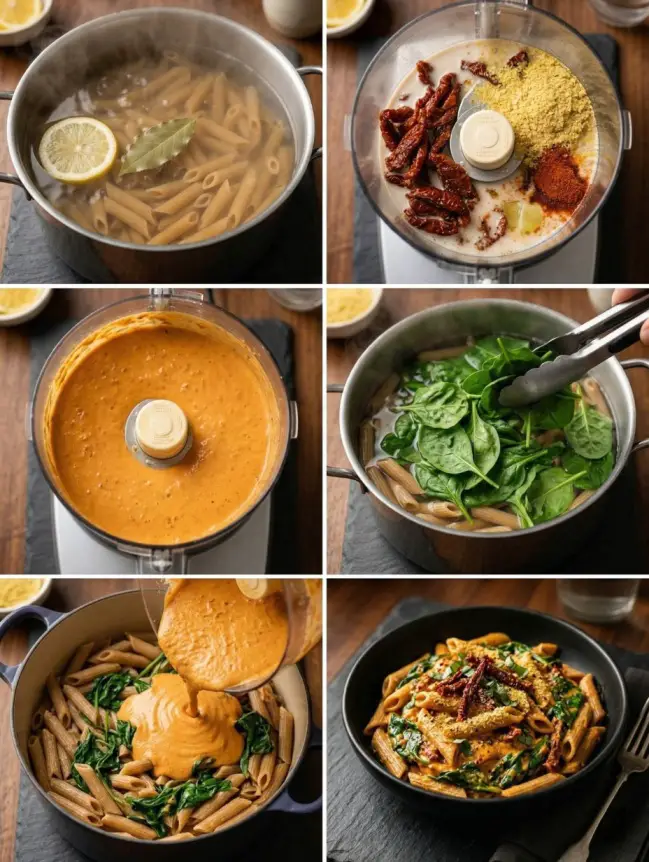
- The Pasta Boil: Fill a medium pot with water. Do not add salt. Instead, add a slice of lemon or a bay leaf to the boiling water to infuse the pasta with subtle flavor. Cook the penne according to the package instructions (usually 9–11 minutes).
- The “Velvet” Sauce: While the pasta cooks, place your soaked sun-dried tomatoes, nut milk, nutritional yeast, smoked paprika, and lemon juice into a high-speed blender or food processor.
- The Blend: Blend on high for 45 to 60 seconds until the sauce is completely smooth and turns a beautiful sunset-orange color. If it’s too thick, add one tablespoon of the pasta boiling water.
- The Wilt: One minute before the pasta is finished, toss the fresh spinach directly into the boiling pasta water. It will wilt almost instantly.
- The Marriage: Drain the pasta and spinach together. Return them to the warm pot (off the heat) and pour the blended sun-dried tomato sauce over the top.
- The Finish: Toss gently for 30 seconds. The residual heat from the pasta will thicken the sauce until it clings to every piece of penne. Season generously with black pepper.
Senior Living Tip: Easy Digestion
If you find whole grains a bit tough on the stomach, try a “Red Lentil” or “Chickpea” pasta. These are softer in texture once cooked and provide an extra boost of protein, which is essential for maintaining muscle mass (sarcopenia prevention) as we age.
Recipe 3: Smoky Sweet Potato and Black Bean “Power” Skillet
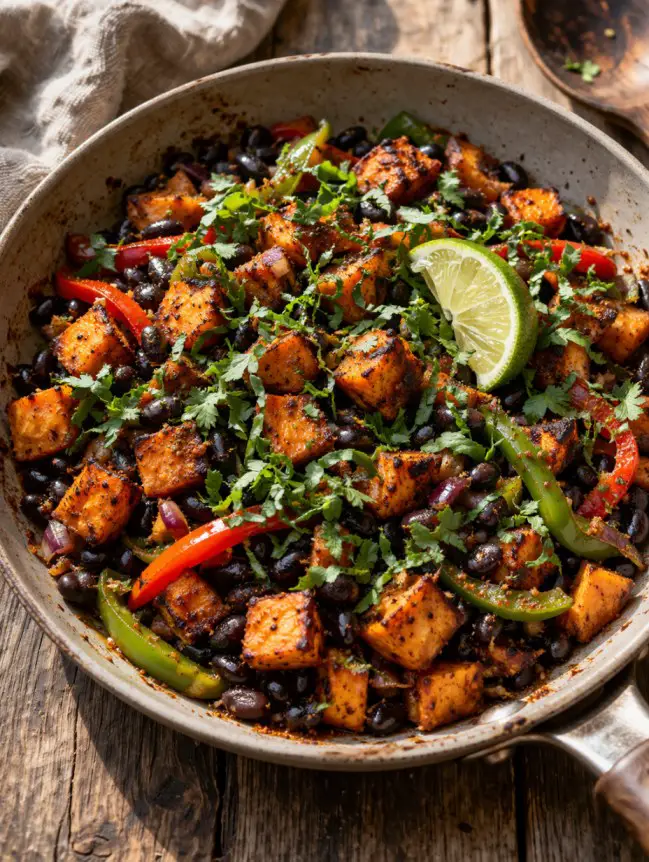
This skillet is a masterpiece of “Slow Carb” nutrition. As we age, managing blood sugar becomes just as important for heart health as managing salt. Rapid spikes in insulin can damage the delicate lining of our arteries. This recipe uses the natural sweetness of yams paired with the earthy, magnesium-rich profile of black beans to create a meal that digests slowly, providing steady energy for hours.
The Heart-Healthy Profile
- Magnesium Magic: Black beans are a premier source of magnesium, often called “the relaxation mineral.” It helps the heart maintain a steady rhythm and assists in the natural dilation of blood vessels.
- Beta-Carotene Shield: The deep orange hue of sweet potatoes signifies high levels of antioxidants that protect the heart’s “endothelium” (inner lining) from oxidative stress.
- Zero-Sodium Smoke: We use high-quality smoked paprika to mimic the savory, charred taste of bacon or sausage, providing a “meaty” satisfaction without the harmful nitrates or saturated fats.
Detailed Preparation (Ready in 20 Minutes)
Ingredients:
- 1 large Sweet Potato (peeled and cut into small ½-inch cubes—smaller cubes cook faster!)
- 1 can (15 oz) Black Beans (No Salt Added, rinsed and drained)
- 1 small Red Onion, finely diced (Onions contain quercetin, which supports healthy blood pressure)
- 1 Bell Pepper (Red or Green), diced
- 1 teaspoon Smoked Paprika
- ½ teaspoon Cumin
- 2 tablespoons Fresh Cilantro or Flat-leaf Parsley, chopped
- 1 tablespoon Extra Virgin Olive Oil
Step-By-Step Instructions:
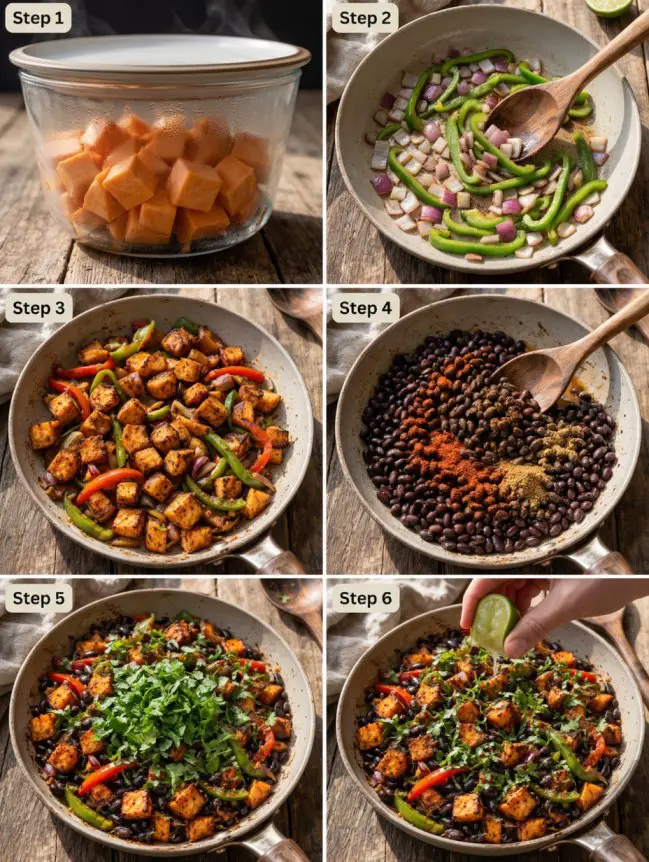
- The Quick-Steam: To ensure the sweet potatoes are tender in under 20 minutes, place the cubes in a microwave-safe bowl with two tablespoons of water. Cover with a plate and microwave for 4 minutes. This “pre-softens” them so they crisp up perfectly in the skillet without needing excess oil.
- The Sauté: Heat the olive oil in a large, lightweight non-stick skillet over medium heat. Add the diced red onion and bell pepper. Sauté for 3–4 minutes until the onions become translucent and sweet.
- The Char: Add the pre-softened sweet potato cubes to the skillet. Turn the heat up slightly to medium-high. Let them sit undisturbed for 2 minutes to develop a golden-brown “crust.”
- The Protein Boost: Stir in the rinsed black beans, smoked paprika, and cumin. The spices will “bloom” in the heat, releasing their aromatic oils. Toss frequently for another 5 minutes until the beans are heated through and the spices coat everything evenly.
- The Fresh Finish: Remove the skillet from the heat. Stir in the fresh cilantro or parsley. The residual heat will wilt the herbs just enough to release their brightness.
- The Texture Tip: If the skillet feels a bit dry, add a squeeze of fresh lime juice. The acidity acts as a natural “flavor enhancer” in place of salt.
Senior Living Tip: Prep once, Eat twice
This skillet is incredibly versatile. If you have leftovers, you can wrap them in a warm corn tortilla for a heart-healthy breakfast “taco” the next morning. Since corn tortillas are naturally low-sodium and whole-grain, they are a perfect partner for this fiber-rich filling.
Recipe 4: Mediterranean Quinoa Salad with Toasted Pine Nuts & Mint
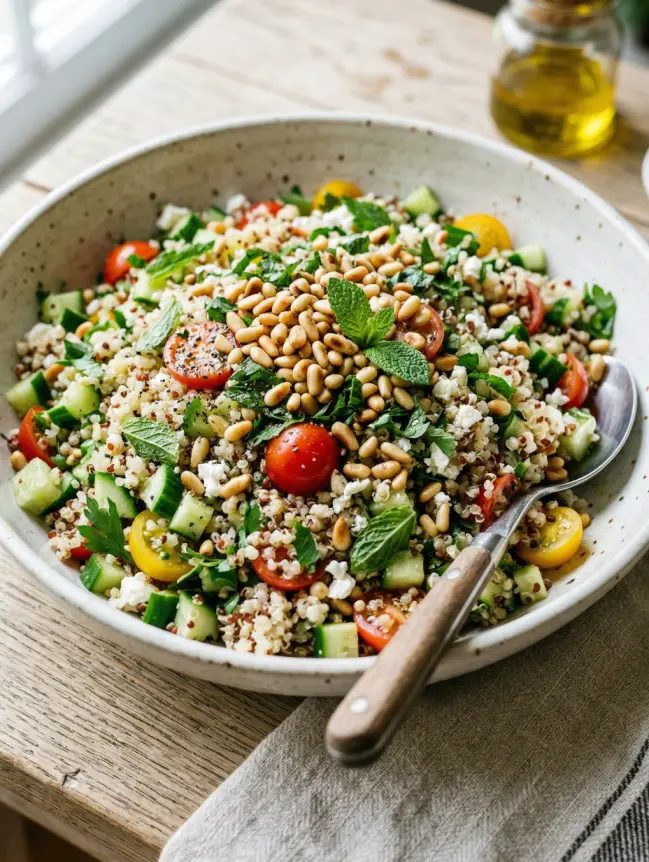
For many seniors, “energy conservation” is an important part of the day. This recipe is a “no-boil” or “low-heat” miracle, especially if you use pre-cooked quinoa. It focuses on the Mediterranean Diet principles—the gold standard for cardiovascular longevity. Instead of heavy sauces, we rely on the crunch of heart-healthy fats and the refreshing “cooling” sensation of fresh mint, which is excellent for aiding digestion after a meal.
The Heart-Healthy Profile
- Complete Protein: Quinoa is one of the few plant-based foods that contains all nine essential amino acids, helping to maintain muscle mass (vital for balance and mobility) without the cholesterol of animal proteins.
- Vascular Elasticity: Pine nuts are rich in pinolenic acid and monounsaturated fats, which help improve the flexibility of your arteries.
- Sodium-Free Brightness: Fresh mint and parsley act as “palate cleansers,” providing a sharp, clean taste that makes the absence of salt completely unnoticeable.
Detailed Preparation (Ready in 15–20 Minutes)
Ingredients:
- 2 cups Cooked Quinoa (White, Red, or Tri-color)
- ¼ cup Pine Nuts (or slivered almonds if preferred)
- 1 English Cucumber, finely diced (The thin skin is easier to digest and doesn’t require peeling)
- 1 cup Cherry Tomatoes, halved (Rich in potassium)
- ¼ cup Fresh Mint Leaves, finely chiffonaded (rolled and sliced into ribbons)
- ½ cup Fresh Flat-leaf Parsley, chopped
- 2 tablespoons Extra Virgin Olive Oil
- 1 tablespoon Apple Cider Vinegar (Helps stabilize blood sugar)
- Freshly ground Black Pepper to taste
Step-By-Step Instructions:
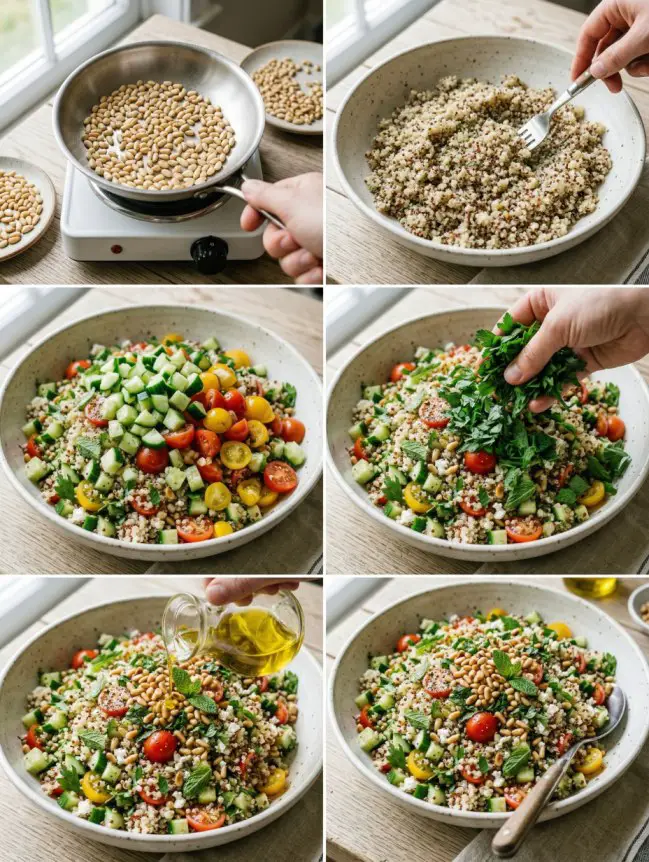
- The Toast: Place a small, lightweight dry skillet over medium-low heat. Add the pine nuts. Stay close! Pine nuts go from raw to burnt in seconds. Shake the pan constantly for 2–3 minutes until they turn a pale golden brown and smell nutty. Remove them immediately from the hot pan to a small plate.
- The Grain Base: Place your pre-cooked quinoa in a large, wide bowl. If the quinoa was refrigerated, use a fork to fluff the grains and break up any clumps.
- The Vegetable Harvest: Add the diced cucumber and halved cherry tomatoes to the bowl. These “water-rich” vegetables add volume and hydration to the meal without adding calories.
- The Herb Infusion: Fold in the fresh mint and parsley. Senior Tip: Don’t be shy with the herbs! Using a large volume of greens effectively turns the “grain salad” into a “nutrient salad,” providing a massive dose of Vitamin K for bone health.
- The Emulsion: Drizzle the olive oil and apple cider vinegar directly over the salad. The vinegar provides a “tang” that mimics the sharp bite of salt, while the olive oil coats the quinoa to provide a silky mouthfeel.
- The Final Toss: Add the toasted pine nuts and a generous amount of black pepper. Toss everything together until the quinoa is glistening and the herbs are evenly distributed.
Senior Living Tip: Texture Control
If you have sensitive teeth or find quinoa a bit “grainy,” let the salad sit in the refrigerator for 30 minutes before eating. The lemon juice and vinegar will slightly soften the outer shell of the quinoa and the vegetables, making it much easier to chew while allowing the flavors to meld.
The Ultimate Low-Sodium Herb & Spice Substitution Chart: Never stare at a bland meal again! This beautifully designed, Large-Print Printable Chart from Etsy is the perfect kitchen companion for seniors. It shows you exactly which fresh herbs or spices to use to replace salt for every type of dish. Hang it on your fridge for an instant “flavor cheat sheet.” [Insert Your Etsy Affiliate Link Here]
Recipe 5: Golden Ginger-Turmeric Lentil Soup (The “Anti-Inflammatory Bowl”)
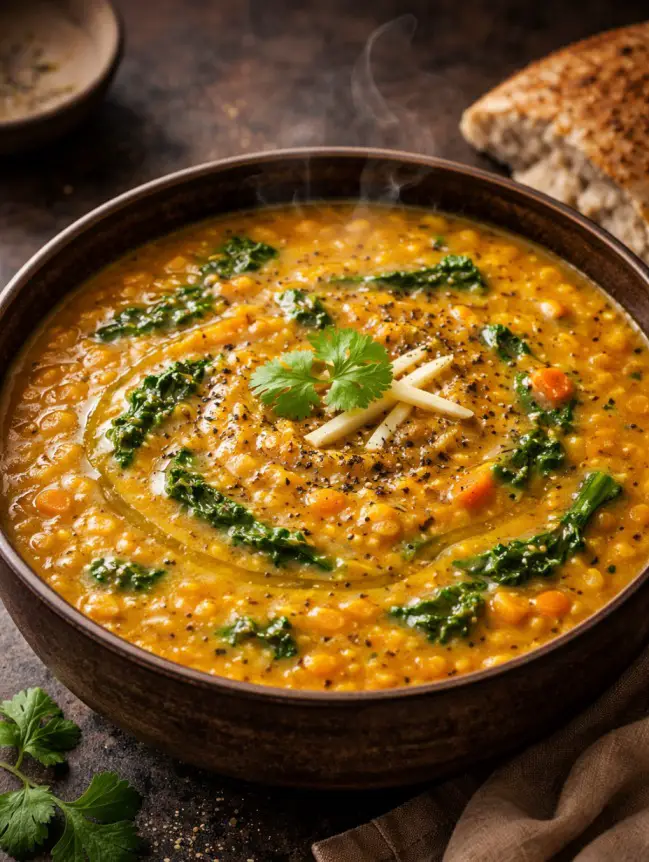
As we reach the final recipe in our heart-healthy journey, we turn to a dish that serves as both a meal and a restorative tonic. For many seniors, cardiovascular health is often accompanied by concerns over joint stiffness or systemic inflammation. This “Golden Soup” targets both. By utilizing red lentils—which break down into a soft, comforting puree—we create a meal that is exceptionally easy to digest and bursting with the vibrant hues of natural medicine.
The Heart-Healthy Profile
- The Curcumin Shield: Turmeric contains curcumin, a bioactive compound known to improve the function of the endothelium (the lining of your blood vessels) and reduce the systemic inflammation that leads to arterial hardening.
- Potassium-Rich Legumes: Red lentils are a powerhouse of potassium and folate, two nutrients that work in tandem to regulate heart rhythm and lower homocysteine levels in the blood.
- Ginger for Circulation: Fresh ginger acts as a natural vasodilator, gently warming the body and encouraging healthy blood flow to the extremities.
Detailed Preparation (Ready in 20 Minutes)
Ingredients:
- 1 cup Dry Red Lentils (Rinsed thoroughly until the water runs clear)
- 4 cups Low-Sodium Vegetable Broth (Look for “No Salt Added” on the label)
- 1 large Carrot, finely grated (Grating helps it melt into the soup quickly)
- 1 tablespoon Fresh Ginger, minced or grated
- 1 teaspoon Ground Turmeric
- ½ teaspoon Ground Cumin
- ¼ teaspoon Freshly Cracked Black Pepper (Essential for activating the turmeric!)
- 1 cup Fresh Kale or Spinach, chopped finely
- 1 tablespoon Extra Virgin Olive Oil
Step-By-Step Instructions:
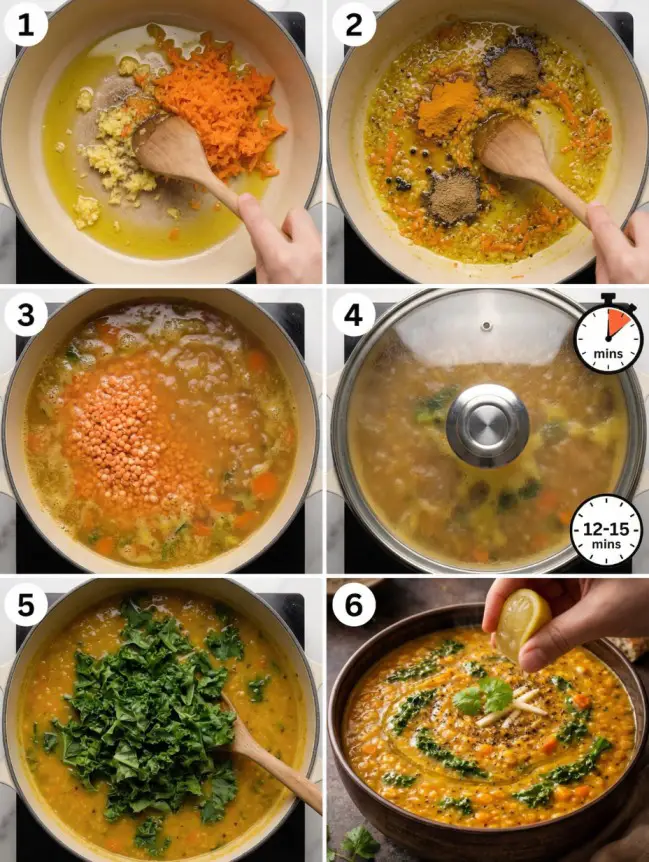
- The Aromatic Start: In a medium, lightweight pot, heat the olive oil over medium heat. Add the minced ginger and grated carrot. Sauté for 2–3 minutes. The carrot will begin to release its natural sugars, creating a sweet, savory base without the need for salt.
- Blooming the Spices: Add the turmeric, cumin, and black pepper to the pot. Stir constantly for 30 seconds. “Blooming” spices in oil unlocks their fat-soluble health benefits and intensifies their flavor profile.
- The Lentil Simmer: Add the rinsed red lentils and the vegetable broth. Turn the heat up to high until the liquid reaches a boil, then immediately reduce to low.
- The 15-Minute Soften: Cover the pot and simmer for 12–15 minutes. Red lentils are unique because they don’t require the long soaking or cooking times of green lentils. They will soften and begin to “burst,” naturally thickening the soup into a creamy consistency.
- The Green Wilt: Once the lentils are soft, stir in the finely chopped kale or spinach. The residual heat of the soup will wilt the greens in about 60 seconds, preserving their bright color and Vitamin C content.
- The Final Adjust: If the soup is too thick, add a splash of hot water. Finish with a squeeze of fresh lemon juice to provide a “brightness” that cuts through the earthy lentils.
Senior Living Tip: Texture & Digestion
If you prefer a completely smooth “bisque” texture, you can use a handheld immersion blender directly in the pot for 30 seconds. This makes the soup incredibly easy to swallow and digest, making it an ideal “liquid gold” meal for days when you feel a bit under the weather or have lower appetite.
11. Strategies for Longevity: Mindful Eating Habits
Transitioning to this way of eating is a journey of the mind as much as the body. To truly support your heart, consider these three “Golden Rules” for the senior kitchen:
- The 20-Minute Rule: It takes about 20 minutes for your stomach to signal to your brain that it is full. By eating slowly and savoring the complex flavors of herbs like mint and ginger, you naturally prevent overeating, which reduces the strain on your heart during digestion.
- Reading Labels Like a Detective: When shopping for staples like lentils or vegetable broth, don’t just look at the front of the box. Turn it over. Look for “Sodium” and ensure it stays below 5% of your Daily Value per serving.
- Hydration for Heart Health: Dehydration makes your blood “thicker” and harder to pump. Pair these fiber-rich meals with a tall glass of water infused with cucumber or lemon to keep your cardiovascular system running smoothly.
Conclusion: A New Chapter of Health
Age is not a barrier to vitality; it is an invitation to refine how we care for ourselves. By choosing these 20-minute, plant-forward, low-sodium meals, you are doing more than just cooking—you are practicing a form of self-respect. You are proving that your palate can evolve and that “heart-healthy” can be the most delicious chapter of your culinary life.
Start with one recipe this week. Notice how your energy shifts. Notice how the natural flavors of the earth begin to taste “louder” and more satisfying. Your heart has worked hard for you for decades—now is the time to give it the nourishment it deserves.