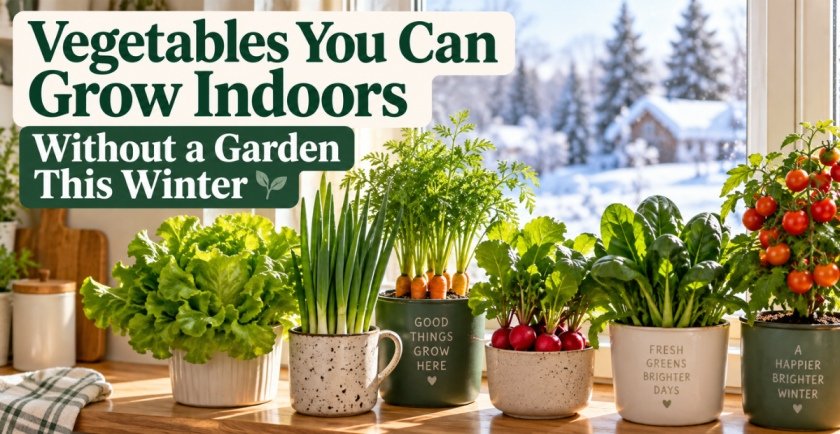
Winter may shut down the backyard garden, but it does not have to end your growing season. A bright windowsill, a few containers, and the right vegetables can turn a kitchen, sunroom, apartment shelf, or spare corner into a surprisingly productive indoor garden.
Growing vegetables indoors is especially useful during winter when outdoor soil is frozen, daylight is shorter, and fresh garden produce can feel months away. You do not need a greenhouse or a large home either. Many cool-season vegetables have shallow roots, compact growth habits, and relatively modest space requirements, making them suitable for indoor containers.
The easiest crops are leafy greens such as lettuce, spinach, kale, and bok choy. Green onions can grow in remarkably small spaces, while radishes and baby carrots work well when you provide enough soil depth. If you have stronger lighting, you can even experiment with peas and compact tomato plants.
The key is choosing vegetables suited to containers and giving them enough light. A sunny south-facing window may be sufficient for leafy vegetables, while fruiting crops usually perform better under LED grow lights. If you want to grow food through the coldest months of the year, these 10 vegetables you can grow indoors without a garden this winter are excellent places to start.
What You Need Before Starting an Indoor Winter Vegetable Garden
Indoor vegetable gardening becomes much easier when you prepare the growing area before sowing seeds. You do not need expensive equipment, but a few basics make a significant difference.
Choose the Brightest Location in Your Home
Most vegetables need considerably more light than ordinary houseplants. A south-facing window is usually the best natural-light location in the Northern Hemisphere. West-facing windows can also work well, particularly for leafy vegetables.
During winter, however, daylight hours are short and sunlight may be weak. If plants begin leaning toward the window or developing long, thin stems, they probably need additional light. A basic LED grow light positioned above the plants can solve this problem. Leafy vegetables generally need less intense light than tomatoes or peas.
Use Containers With Drainage
Almost any container can become a vegetable planter if it has drainage holes. Traditional plastic or ceramic pots, window boxes, fabric grow bags, recycled food-safe containers, and rectangular indoor planters can all work. Place a saucer or waterproof tray underneath each container to protect floors and windowsills.
Use Potting Mix Instead of Garden Soil
Outdoor garden soil is usually too dense for indoor containers. It can compact around the roots, drain poorly, and sometimes introduce insects indoors. Use a lightweight commercial potting mix designed for containers. For root vegetables such as carrots and radishes, choose an especially loose mix so roots can expand without becoming distorted.
Be Careful With Winter Watering
Indoor vegetables often use less water during winter because evaporation is slower. Instead of following a rigid schedule, touch the soil. If the upper inch feels dry, water thoroughly until a little moisture drains from the bottom. If the soil still feels damp, wait. Constantly wet soil can cause root problems, mold, fungus gnats, and yellowing leaves.
1. Lettuce
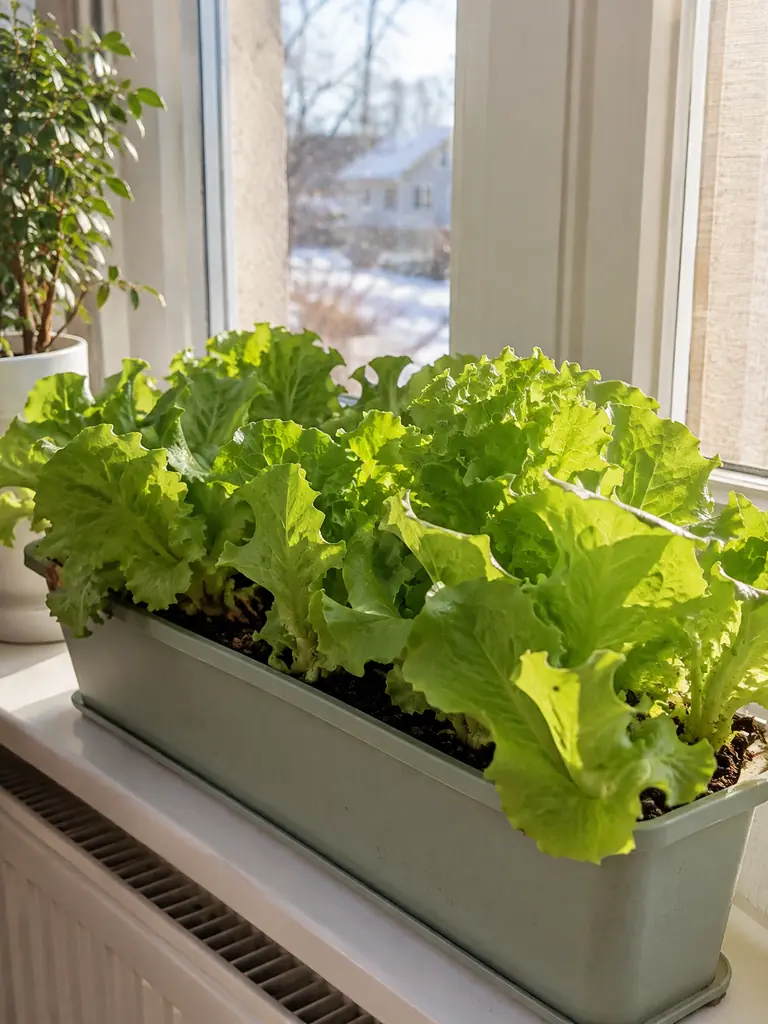
Lettuce is one of the best vegetables for beginning an indoor winter garden. It grows quickly, does not require deep soil, and performs well in cooler indoor conditions. Loose-leaf lettuce is particularly useful because you can harvest individual leaves while allowing the center of the plant to continue growing.
Best Types of Lettuce for Indoor Growing
Look for compact or loose-leaf varieties rather than large heading varieties. Butterhead, red leaf, green leaf, oakleaf, and baby lettuce mixes are all practical choices for containers.
How to Grow Lettuce Indoors Step by Step
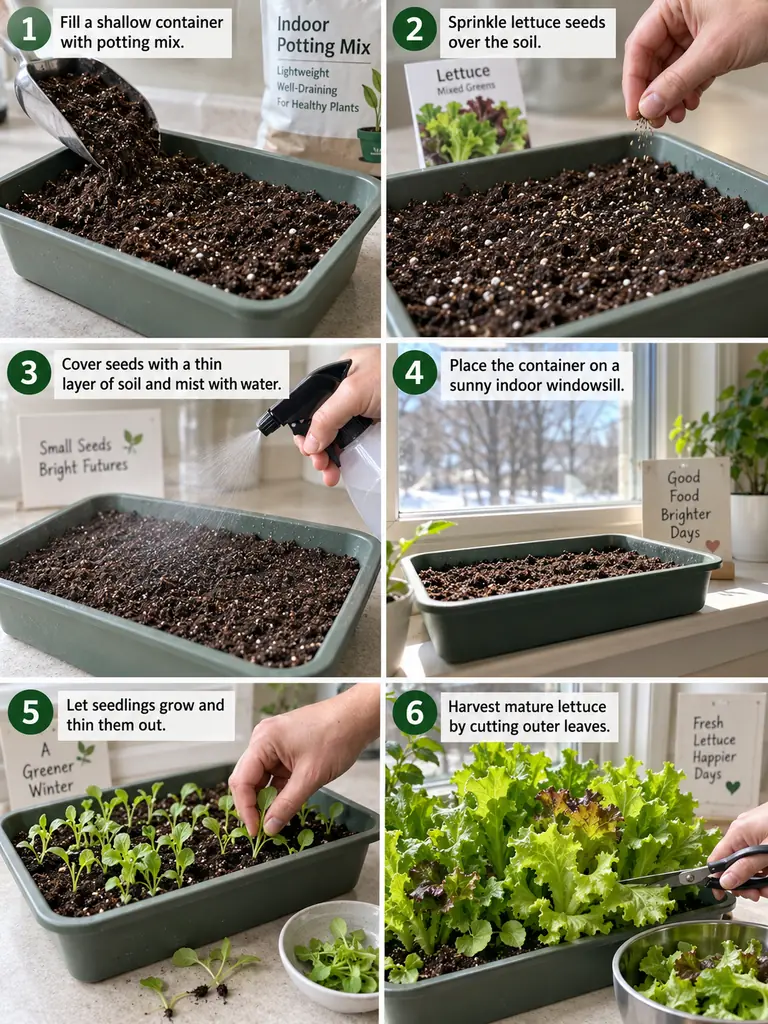
- Choose a container approximately 4 to 6 inches deep with drainage holes.
- Fill it almost to the top with damp potting mix.
- Scatter lettuce seeds lightly across the surface and cover them with a very thin layer of mix.
- Mist gently so the seeds are not washed into one corner.
- Place the container near a bright window or beneath a grow light.
- Keep the soil lightly moist while the seeds germinate.
- Thin overcrowded seedlings so the remaining plants have enough space and airflow.
- Harvest the outer leaves with clean scissors and leave the center growing point intact.
Indoor lettuce tip: Instead of planting all your lettuce seeds on the same day, sow a small container every two or three weeks. This succession-planting method can provide fresh leaves throughout much of winter.
2. Spinach
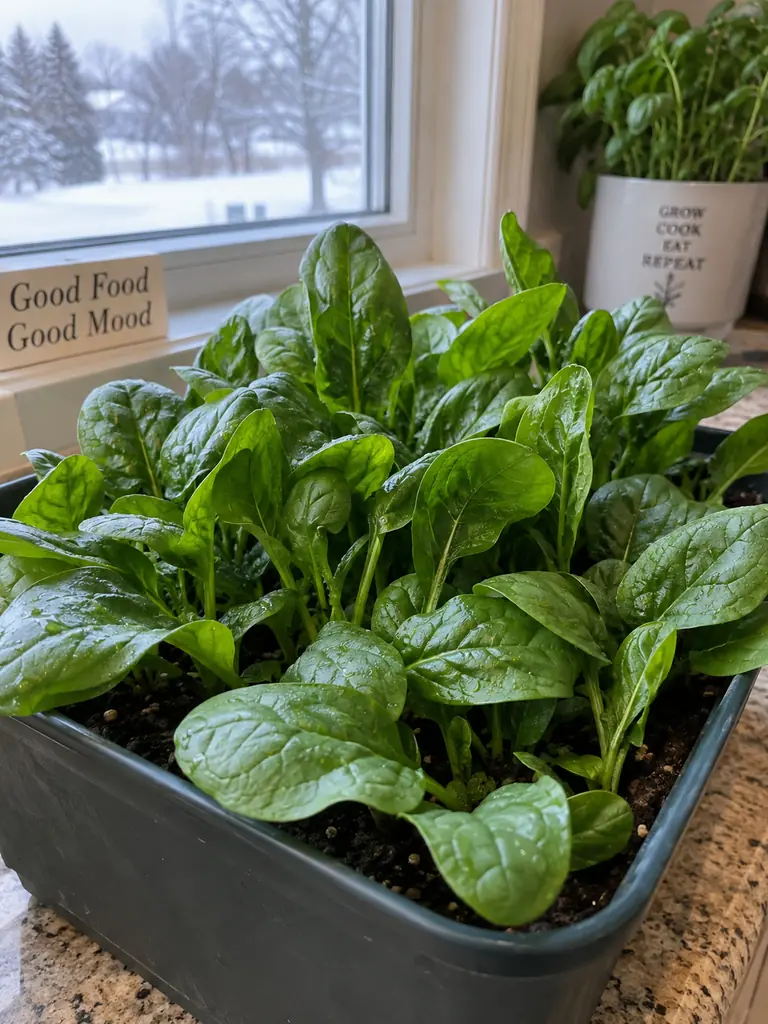
Spinach naturally prefers cool weather, making it very well suited to winter growing indoors. It can struggle in excessively warm rooms, so a bright but slightly cool windowsill is often ideal.
Best Spinach for Indoor Containers
Baby spinach and compact varieties are easiest indoors. You can also grow standard spinach and simply harvest the leaves while they are young.
How to Grow Spinach Indoors Step by Step
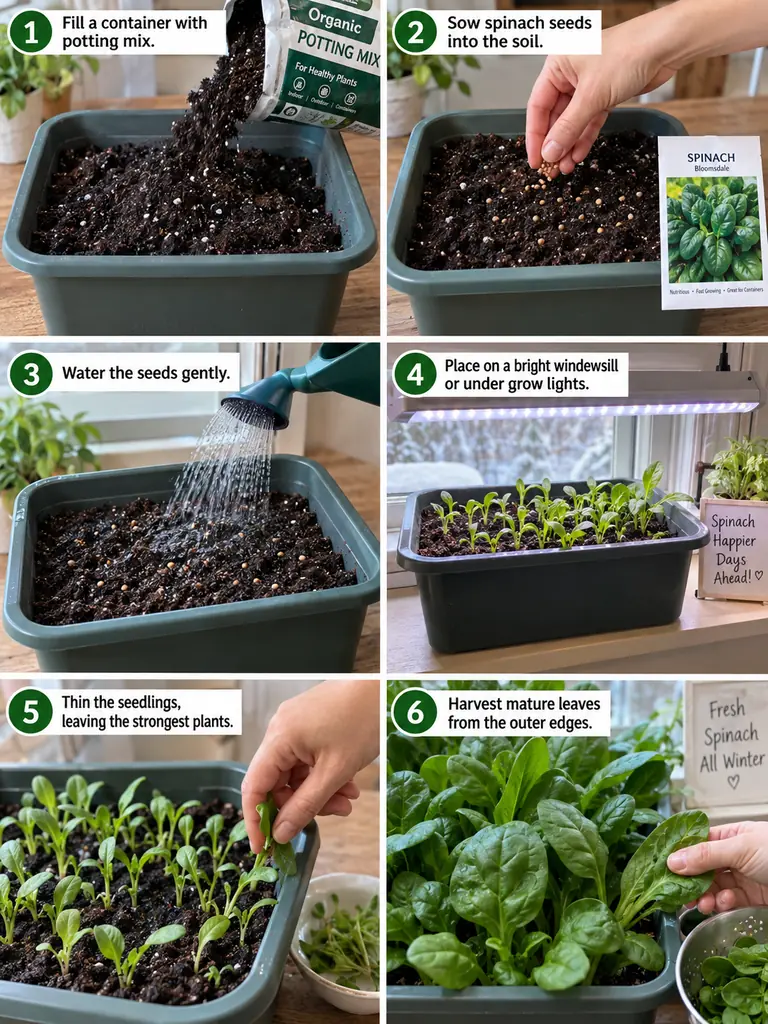
- Choose a container about 6 to 8 inches deep.
- Fill it with loose potting mix and water lightly before planting.
- Sow spinach seeds approximately 1/2 inch deep, initially spacing them about 2 inches apart.
- Keep the soil evenly moist until germination.
- Once seedlings develop several leaves, thin them if they are crowded.
- Place spinach where it receives several hours of bright light each day.
- Water when the upper soil begins to dry.
- Harvest the largest outer leaves first while leaving the center leaves untouched.
Common spinach mistake: Avoid placing spinach directly beside a very warm heater. Warm, dry conditions can weaken growth and encourage premature bolting. Spinach generally performs better when its roots remain cool and evenly moist.
3. Green Onions
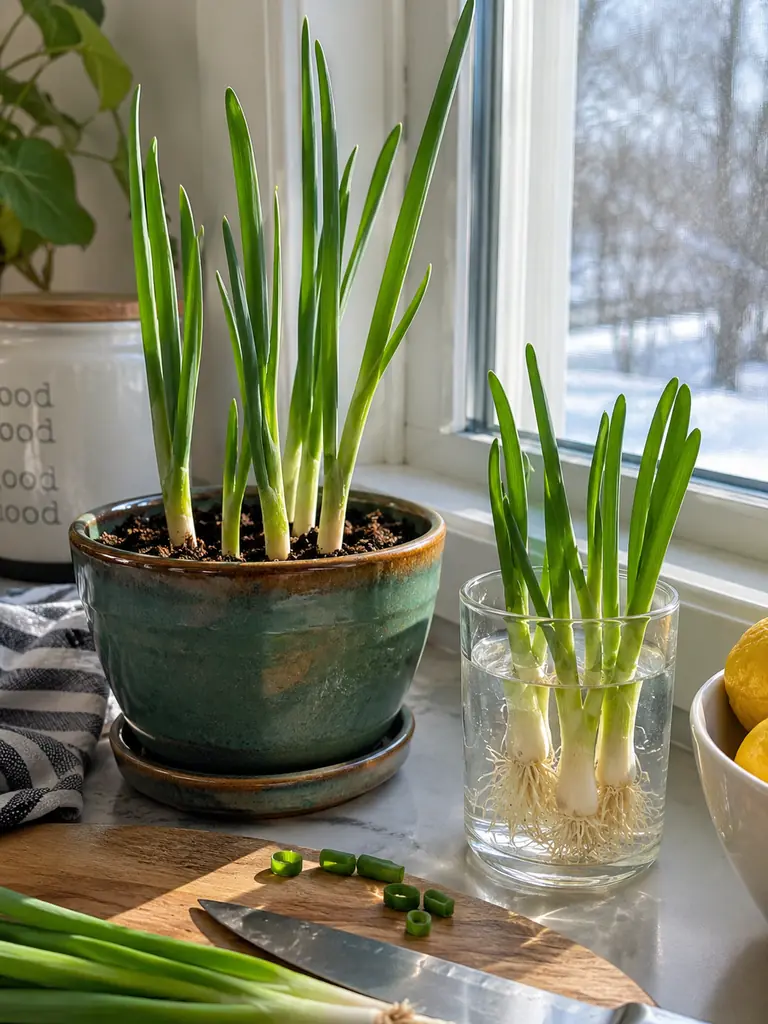
Green onions are among the easiest edible plants you can grow indoors. They require very little space, grow quickly, and can even be started from the root ends of onions you already used in the kitchen.
Method 1: Growing Green Onions From Kitchen Scraps
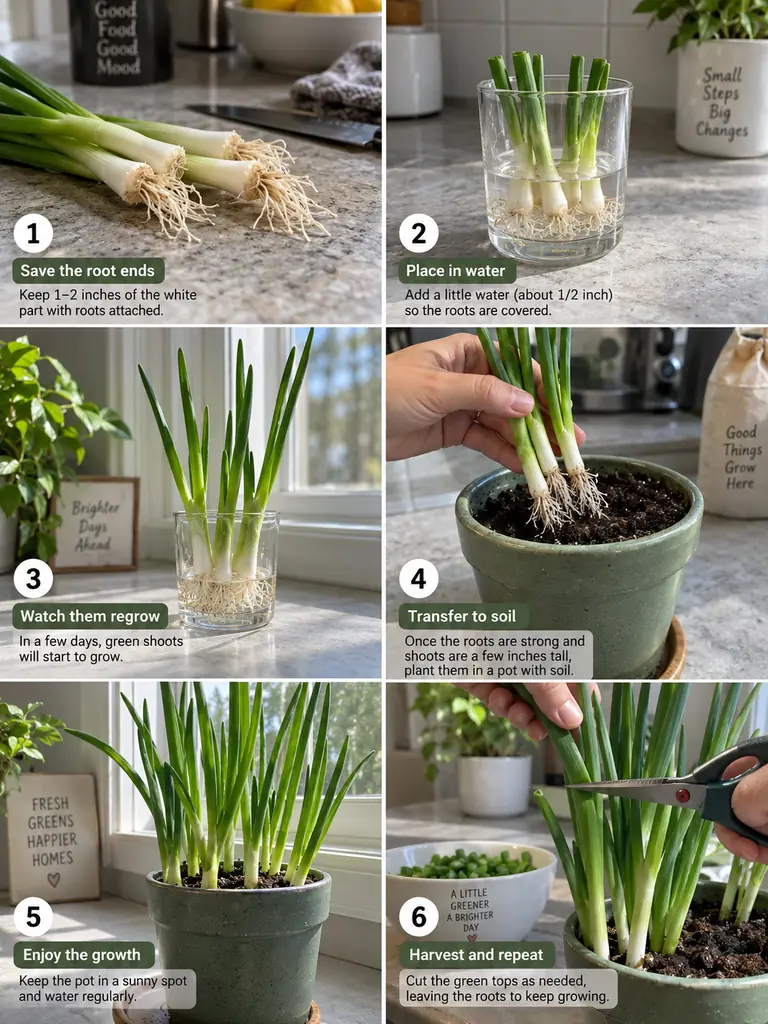
Save the white bottom portion of a green onion with approximately 1 to 2 inches of stem attached. Place the roots in a small glass containing enough water to cover only the root area. Put the glass near a bright window and replace the water every couple of days. Fresh green shoots should begin extending upward. For longer-term growth, transplant the rooted bases into a pot filled with soil.
Method 2: Growing Green Onions From Seed
Fill a container approximately 5 to 6 inches deep with potting mix. Sow seeds shallowly and keep the soil moist. Once seedlings emerge, provide strong light. Green onions can grow relatively close together because their bulbs remain narrow.
Green Onion Regrowing Steps at a Glance
How to Harvest
Cut green tops several inches above the soil whenever needed. If you leave the lower section and roots in place, the plant may continue producing new growth.
4. Radishes
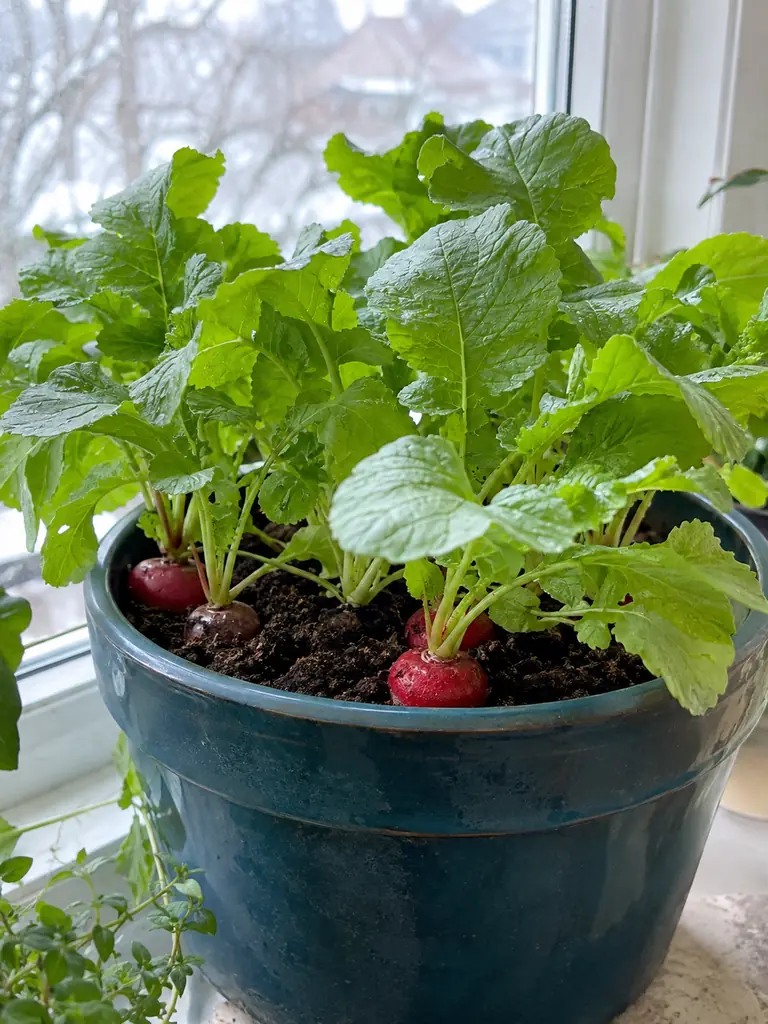
Radishes grow quickly and require much less vertical space than many vegetables. Small round varieties are the easiest choice for indoor containers.
Best Radishes for Indoor Growing
Choose varieties that form relatively small roots, such as Cherry Belle, French Breakfast, and other small globe radishes. Large winter radishes generally need deeper soil and more space.
How to Grow Radishes Indoors Step by Step
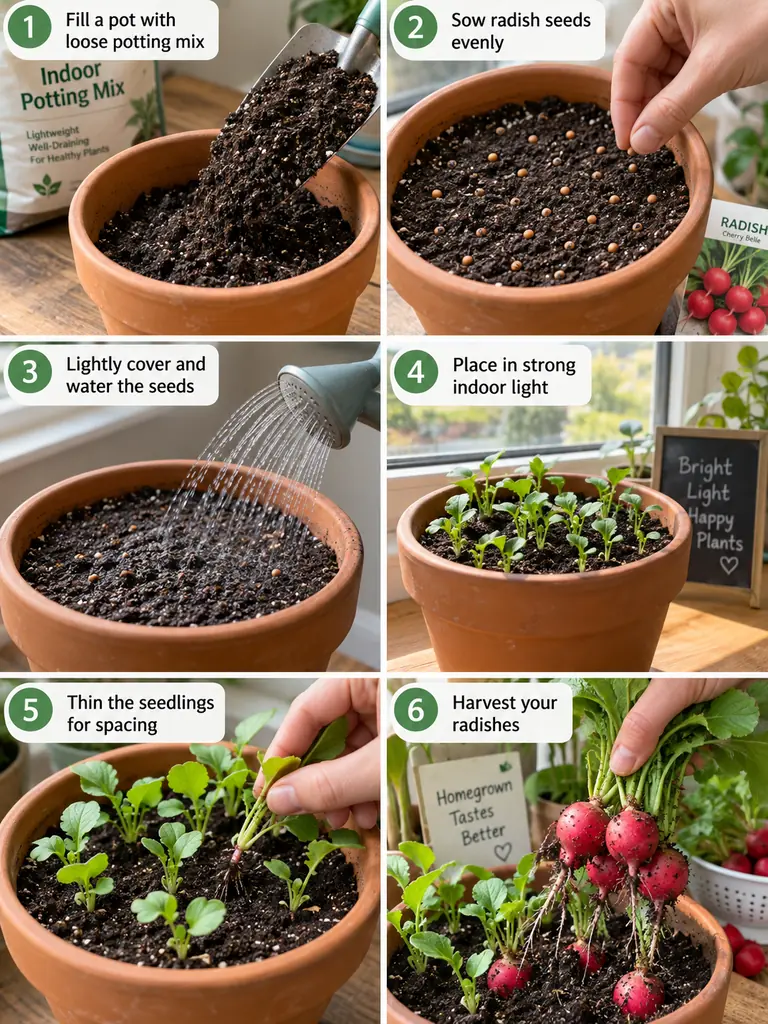
- Choose a pot at least 6 to 8 inches deep.
- Fill it with loose potting mix.
- Sow seeds around 1/2 inch deep and approximately 1 inch apart.
- Water gently and keep the mix consistently moist.
- Once seedlings emerge, thin them so mature roots have room to develop.
- Place the container in strong light.
- Check root size by gently brushing soil away from the upper portion of the root.
- Harvest promptly when roots reach the expected mature size.
Radish growing tip: Do not overcrowd radishes. The leaves may look perfectly healthy even when the roots underneath have no room to develop.
5. Baby Carrots
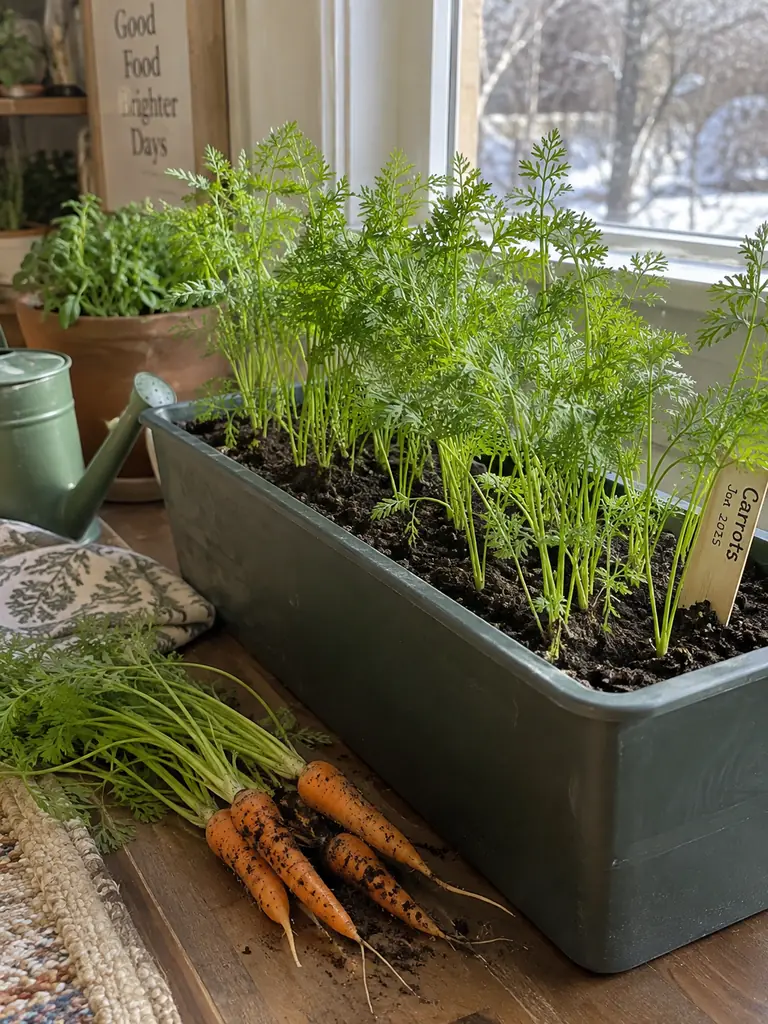
Carrots are completely possible indoors as long as you select the right variety and container. The best choices are short-rooted or round carrots rather than long storage carrots.
Best Carrots for Indoor Containers
Look for baby carrots, Parisian carrots, short-rooted varieties, and round carrot varieties. These are easier to accommodate in indoor pots.
How to Grow Carrots Indoors Step by Step
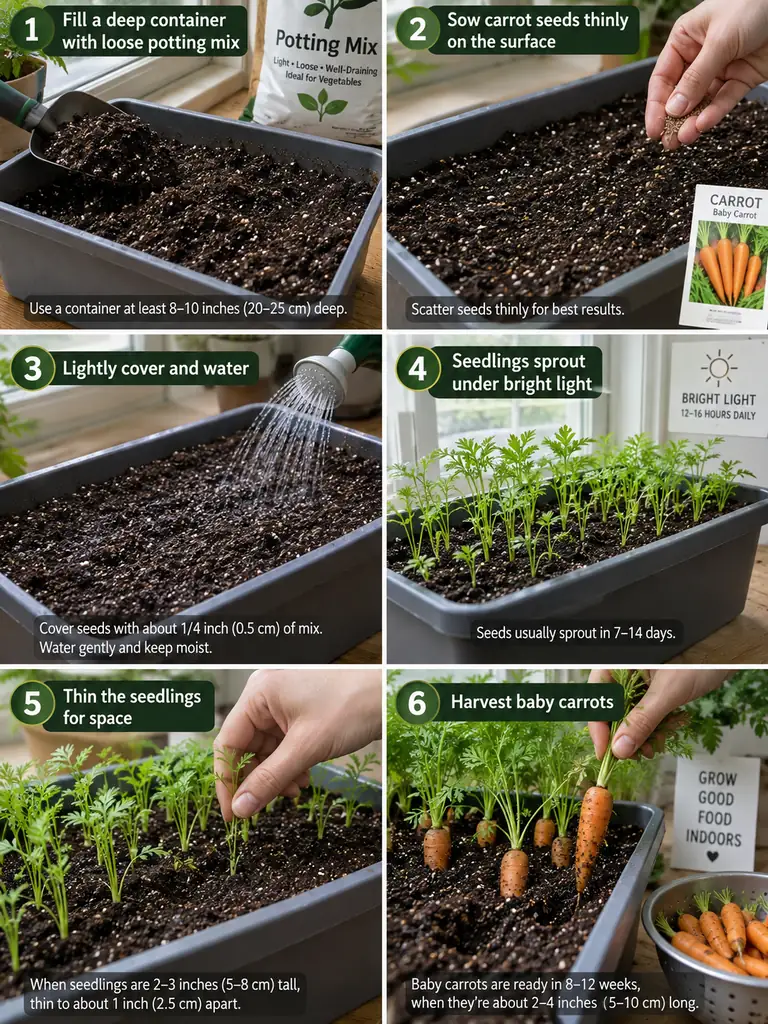
- Choose a container deeper than the expected mature carrot length. For many compact carrots, an 8- to 12-inch-deep pot works well.
- Fill the container with fine, loose potting mix.
- Remove large pieces of bark or compacted material that could cause forked roots.
- Sow carrot seeds thinly across the soil surface and cover them lightly.
- Keep the surface consistently moist during germination.
- Once seedlings emerge, thin them carefully. Scissors can be useful for removing unwanted seedlings at soil level without disturbing neighboring roots.
- Provide strong light and keep the soil evenly moist.
- Harvest when roots reach the desired size.
Biggest indoor carrot mistake: Using a container that is too shallow. The root can reach the bottom, bend sideways, and develop an unusual shape.
6. Bok Choy
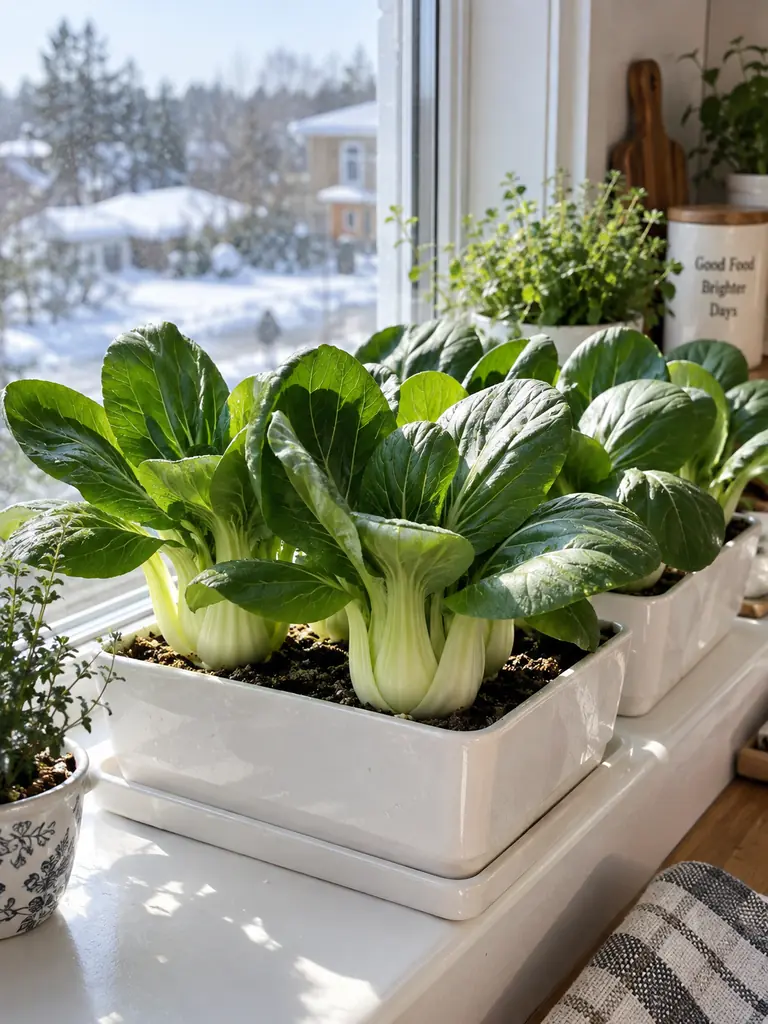
Bok choy is one of the most rewarding vegetables for indoor winter growing because it naturally prefers cooler temperatures and grows relatively quickly. Baby bok choy varieties are especially useful in small homes.
Best Bok Choy for Indoor Gardens
Choose baby bok choy, dwarf bok choy, or other compact Asian green varieties. Plants grown for baby leaves can remain closer together than plants grown for full heads.
How to Grow Bok Choy Indoors Step by Step
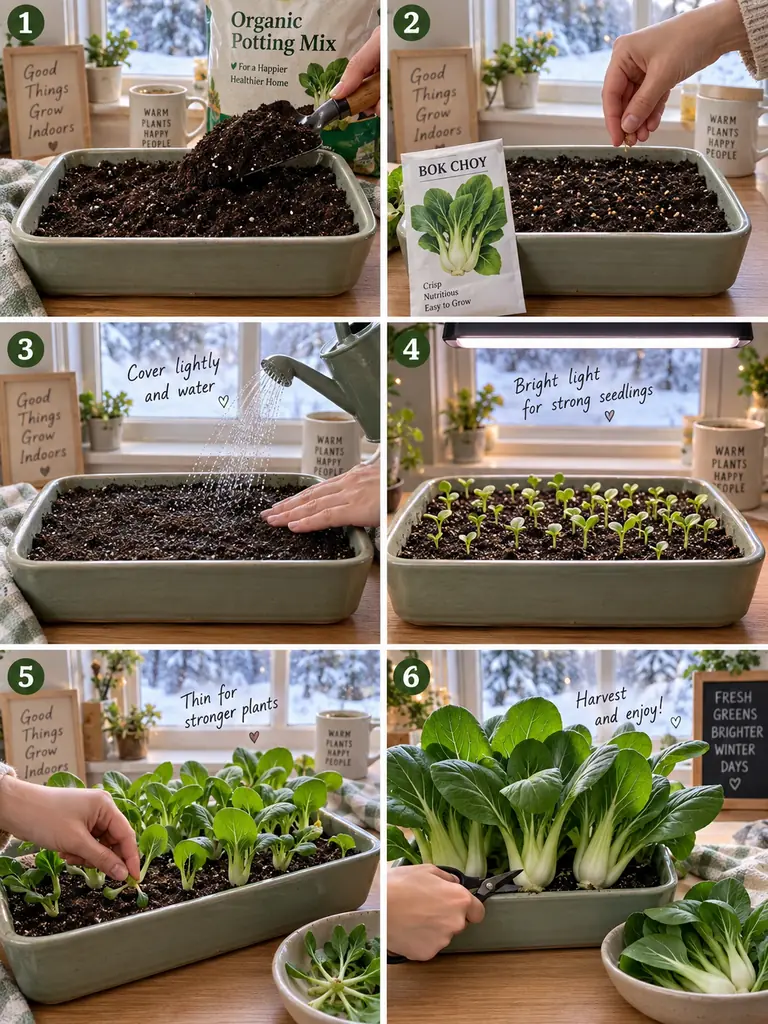
- Use a container approximately 6 to 8 inches deep.
- Fill it with quality potting mix.
- Plant seeds about 1/4 inch deep.
- Keep the soil moist during germination.
- When seedlings appear, place the container in bright light.
- Thin plants according to the size you want to harvest.
- Water regularly without leaving the soil waterlogged.
- Harvest outer leaves as needed or cut the entire head once it reaches usable size.
Space-saving strategy: Grow several plants relatively densely and harvest them young. Baby bok choy takes less space and reaches the kitchen sooner than full-sized heads.
7. Kale
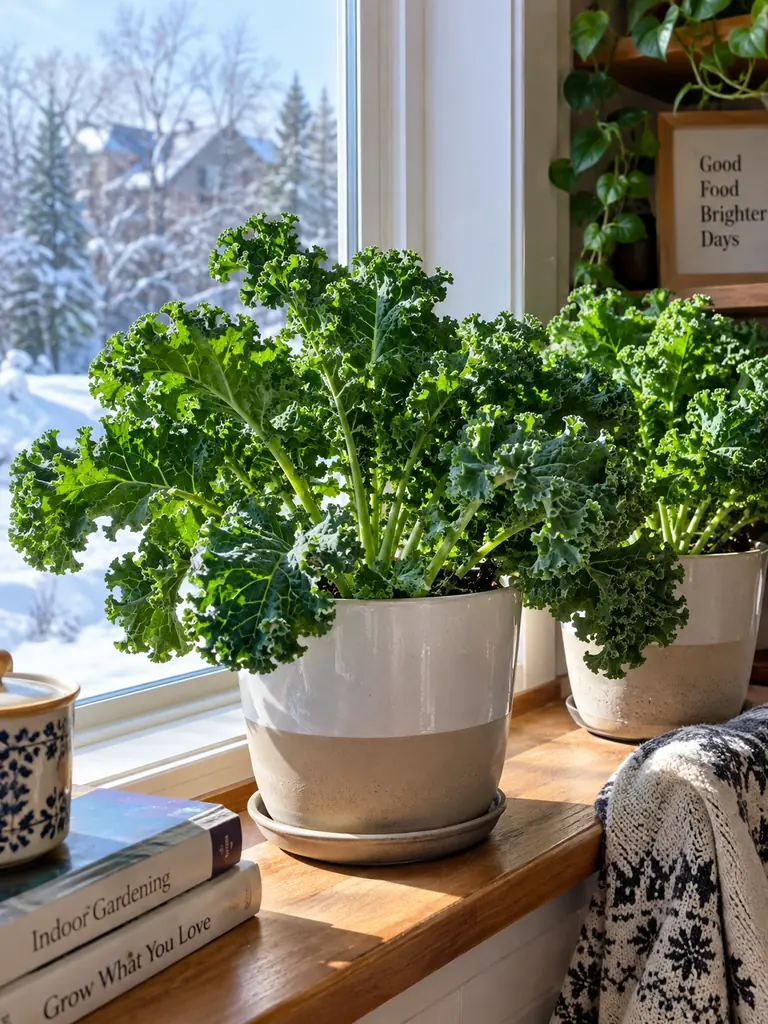
Kale is remarkably adaptable and one of the best vegetables for continuous winter harvesting. Large outdoor kale plants can become huge, but indoors you can grow dwarf varieties or harvest standard kale while the leaves are still young.
Best Kale for Indoor Growing
Dwarf curly kale, baby kale mixes, and compact lacinato-type kale are useful choices for containers.
How to Grow Kale Indoors Step by Step
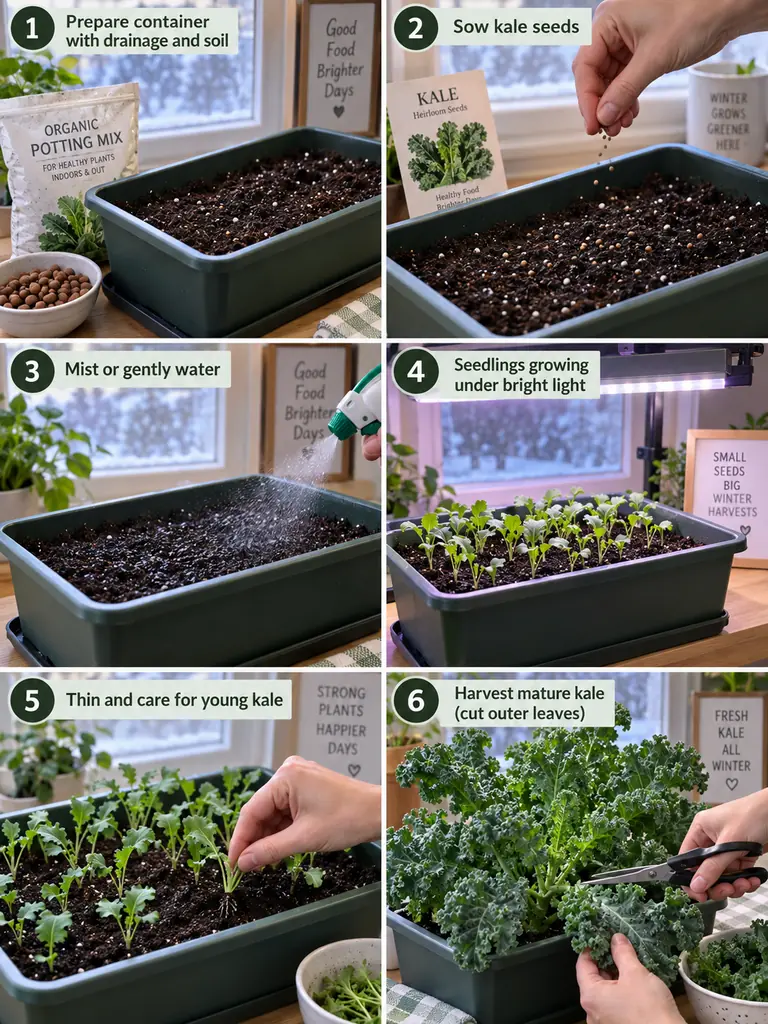
- Choose a container approximately 8 to 10 inches deep.
- Fill it with potting mix and sow seeds about 1/4 to 1/2 inch deep.
- Keep the mix lightly moist during germination.
- Once seedlings develop, thin them so each plant has sufficient air circulation.
- Place kale in your brightest available location.
- Water when the upper soil starts to dry.
- If you grow kale for several months, feed occasionally with a diluted balanced fertilizer.
- Harvest lower, larger leaves first and leave the central growing point intact.
How to keep kale producing: Do not harvest the entire plant unless you want to end production. Taking a few outer leaves at a time allows the plant to keep producing new leaves from the center.
8. Swiss Chard
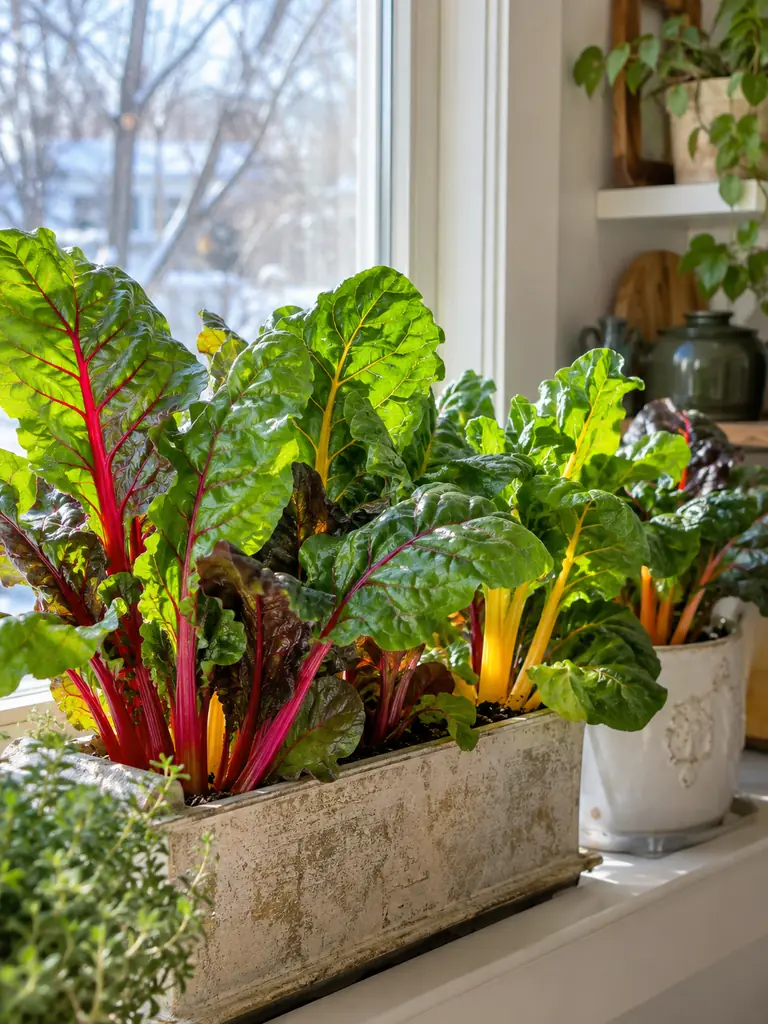
Swiss chard combines food production with ornamental value. Its bright stems can be red, yellow, pink, orange, or white, making it attractive enough to grow in visible areas of the home.
Best Swiss Chard Varieties Indoors
Compact varieties and colorful mixes such as Bright Lights work especially well. You can also grow normal Swiss chard as baby greens when space is limited.
How to Grow Swiss Chard Indoors Step by Step
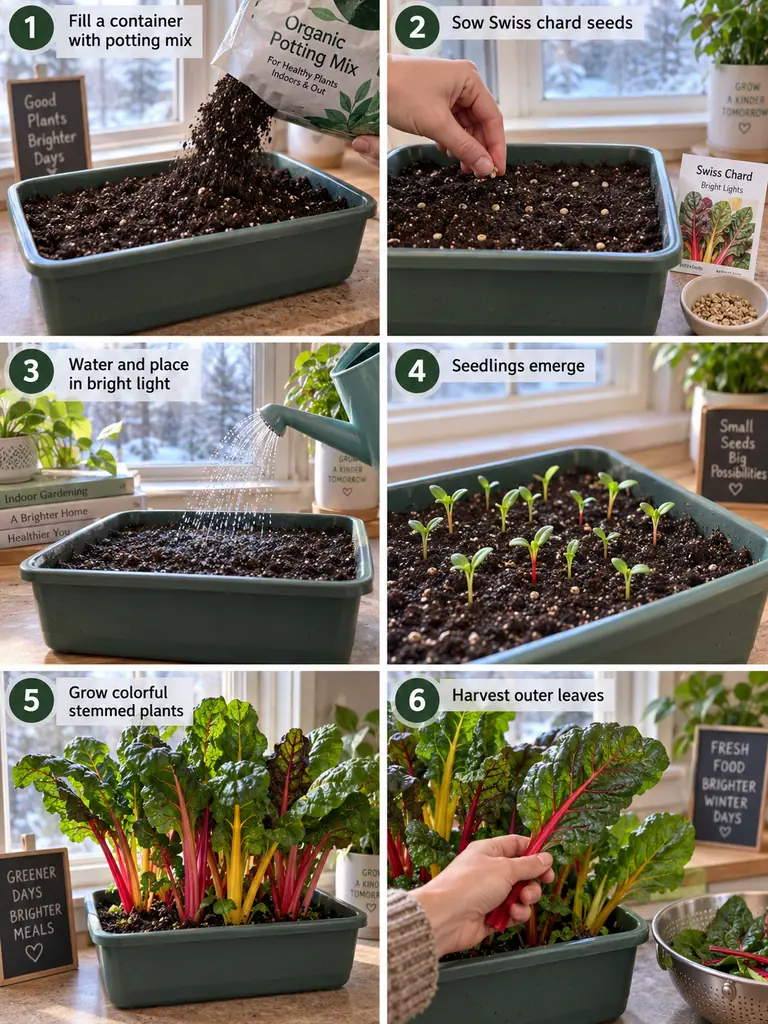
- Select a container at least 8 inches deep.
- Fill it with nutrient-rich potting mix.
- Sow seeds around 1/2 inch deep.
- Keep the soil moist while seedlings emerge.
- Thin plants after they develop their first true leaves.
- Provide several hours of bright light each day.
- Water whenever the upper portion of the potting mix begins to dry.
- Harvest the outer leaves and stalks first, cutting them close to the base.
Small-space option: If a full-size chard plant is too large for your windowsill, sow seeds more closely and harvest them as baby greens.
9. Peas
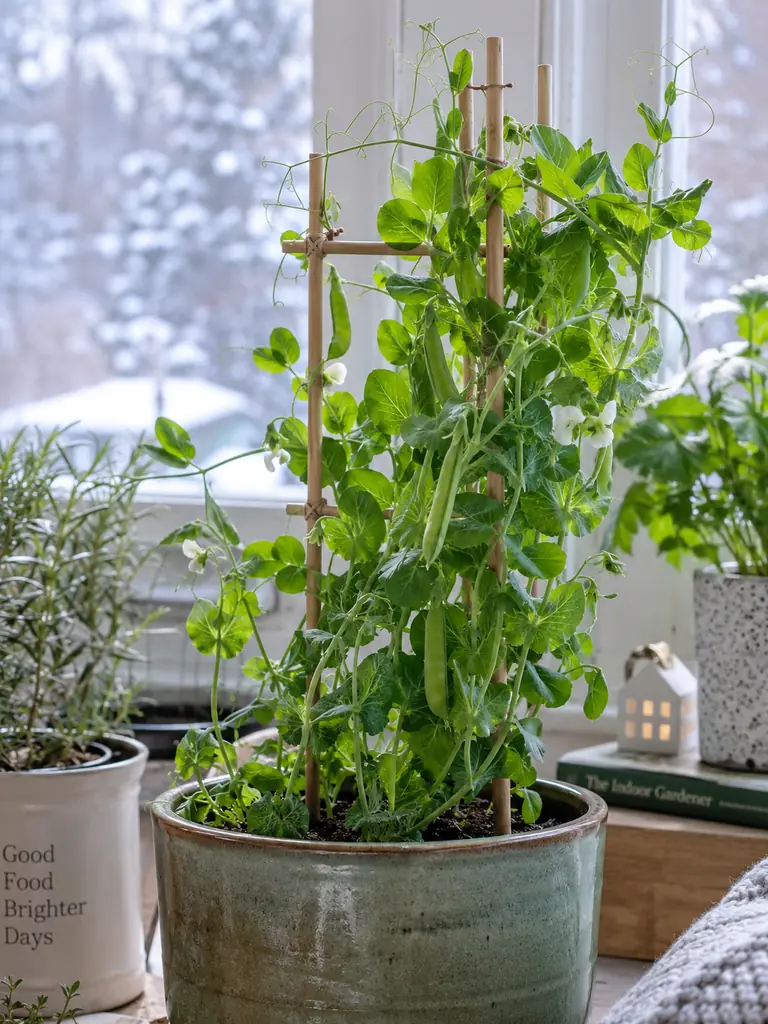
Peas are slightly more demanding indoors than leafy greens, but dwarf varieties can perform surprisingly well. They also add vertical interest to an indoor garden because vines can climb a small trellis.
Best Peas for Indoor Containers
Choose compact varieties whenever possible. Dwarf shelling peas, snow peas, and sugar snap peas can all be considered, but always check the expected mature height before buying seed.
How to Grow Peas Indoors Step by Step
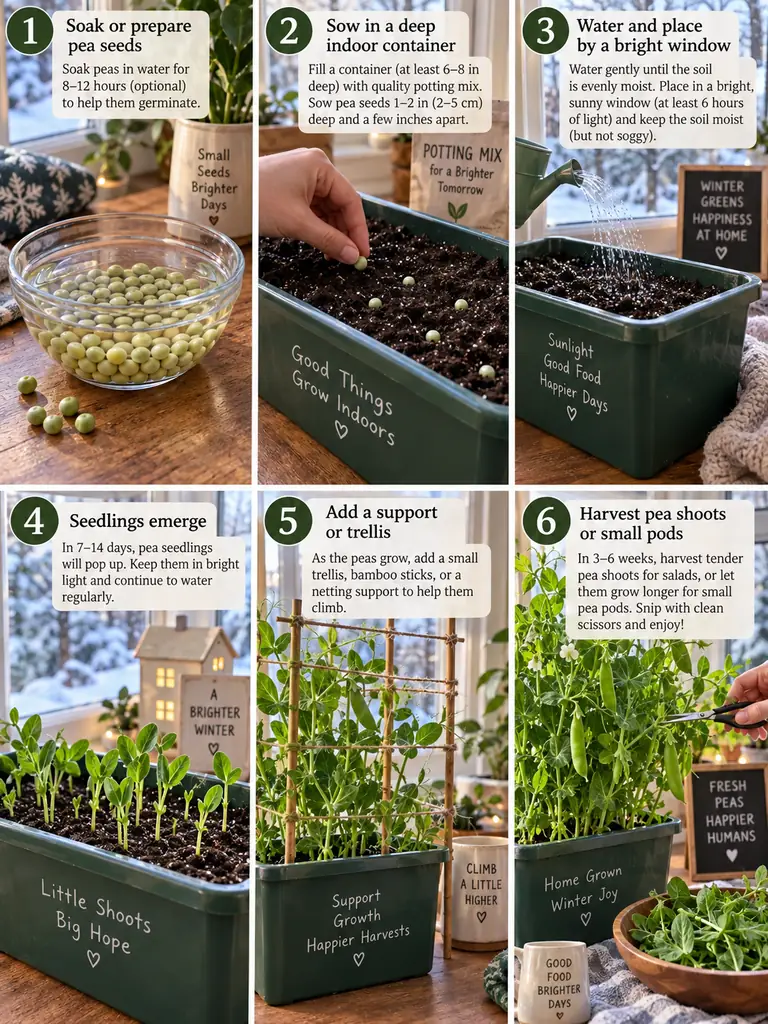
- Choose a container at least 8 to 10 inches deep.
- Place a small trellis, bamboo supports, or another climbing structure in the container.
- Sow peas directly into the pot rather than transplanting them later.
- Water thoroughly and place the container near a very bright window or under grow lights.
- As shoots lengthen, gently guide the tendrils toward the support.
- Keep the soil evenly moist, especially during flowering and pod production.
- When flowers appear, lightly shake the vines occasionally to assist pollination indoors.
- Harvest pea pods frequently once they reach usable size.
Important indoor pea tip: Peas dislike excessively hot rooms. A bright but relatively cool location often works better than a warm kitchen corner beside a radiator.
10. Dwarf Tomatoes
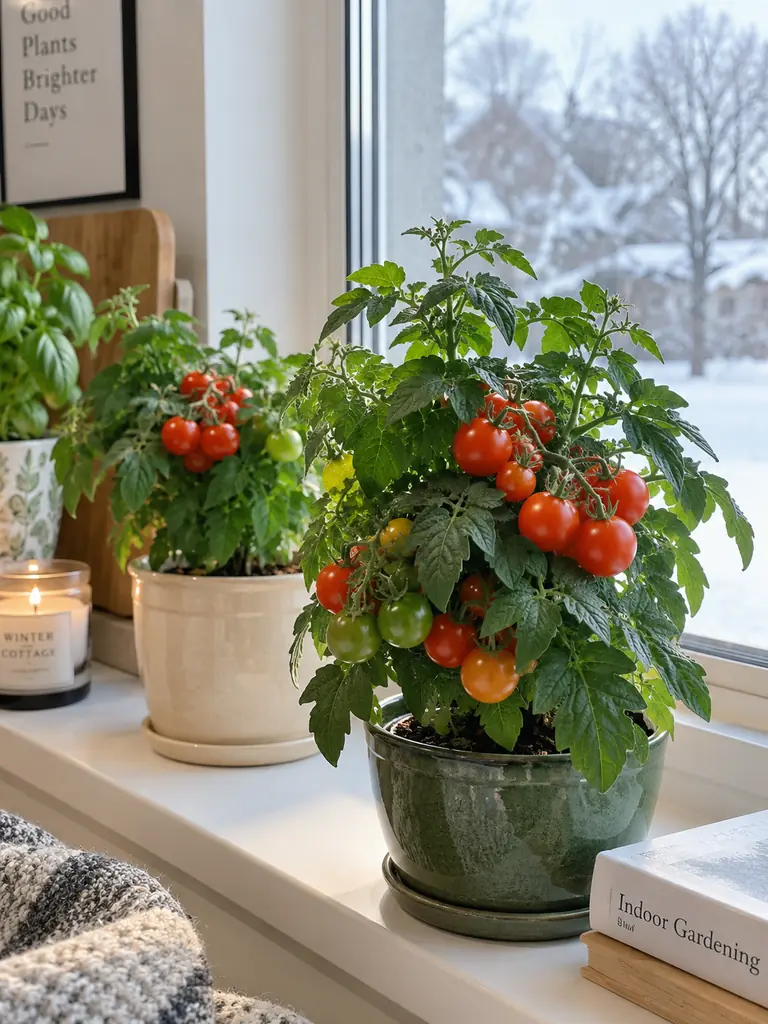
Tomatoes are the most challenging vegetable on this list, but they are also one of the most exciting. Unlike lettuce and spinach, tomatoes are fruiting plants and therefore demand substantially stronger light. A sunny window alone may not provide enough winter light in many climates.
Best Tomatoes for Indoor Winter Growing
Look for plants marketed as micro-dwarf tomatoes, patio tomatoes, tiny tomato varieties, or small determinate tomatoes. Avoid vigorous indeterminate varieties that can easily grow several feet tall indoors.
How to Grow Dwarf Tomatoes Indoors Step by Step
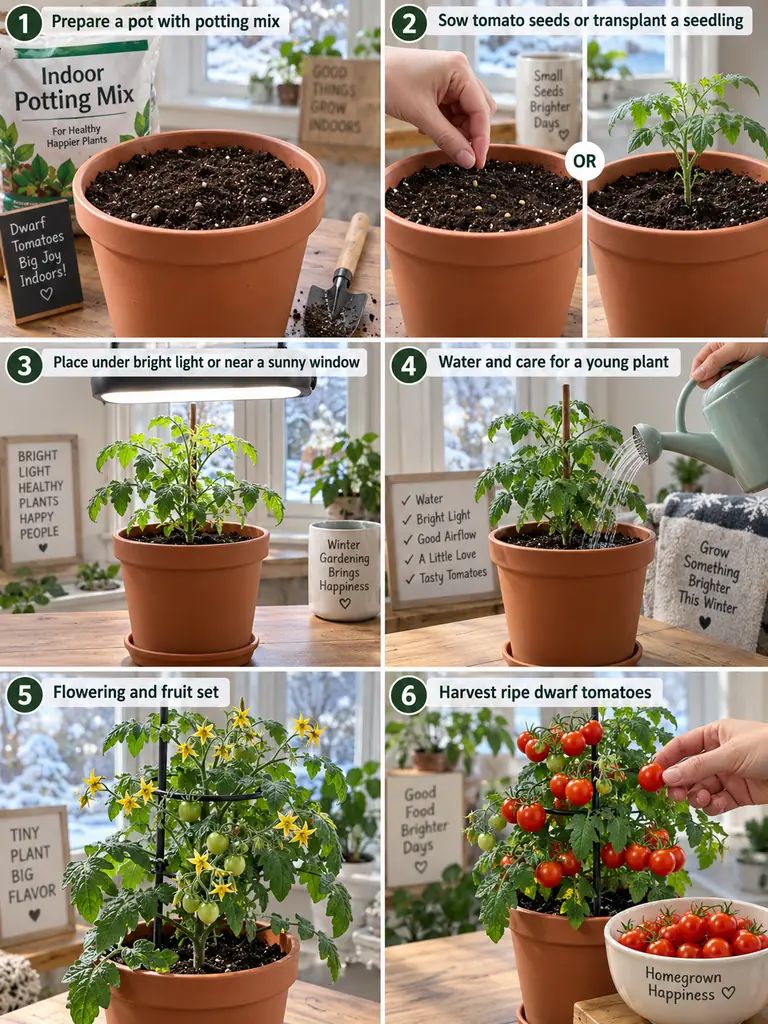
- Choose a container appropriate for the mature plant. Even small tomato plants generally need more soil volume than leafy greens.
- Fill the pot with quality, well-draining potting mix.
- Sow seeds directly or start with a healthy seedling.
- Place the plant under strong grow lights for consistent winter growth.
- Keep the plant warm and water thoroughly when the upper soil begins to dry.
- Once flower buds form, feed according to the directions on a fertilizer suitable for fruiting vegetables.
- Gently tap flowering stems or lightly shake the plant to assist indoor pollination.
- Support the plant with a small stake if stems begin leaning.
- Harvest tomatoes once they develop their mature color and soften slightly.
Indoor tomato reality check: If you have no grow light and only a dim winter window, start with lettuce, green onions, spinach, or bok choy instead. Tomatoes become much easier once strong supplemental lighting is available.
How to Create a Simple Indoor Vegetable Growing Station
You do not need to scatter vegetable pots throughout the entire house. A compact growing station keeps everything organized and makes watering, lighting, and harvesting easier.
Sunny Windowsill Setup
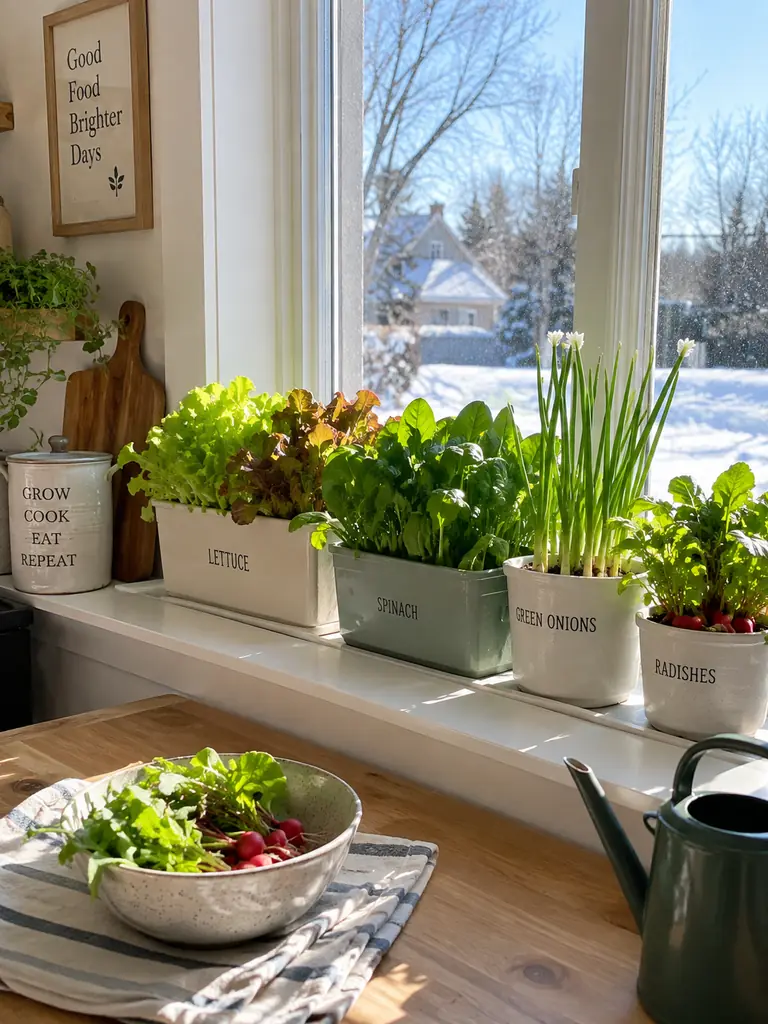
Place shallow containers of lettuce, spinach, radishes, and green onions along your brightest windowsill. Use saucers beneath every container and rotate pots occasionally so plants grow evenly rather than leaning heavily toward the glass.
Shelf With LED Grow Lights
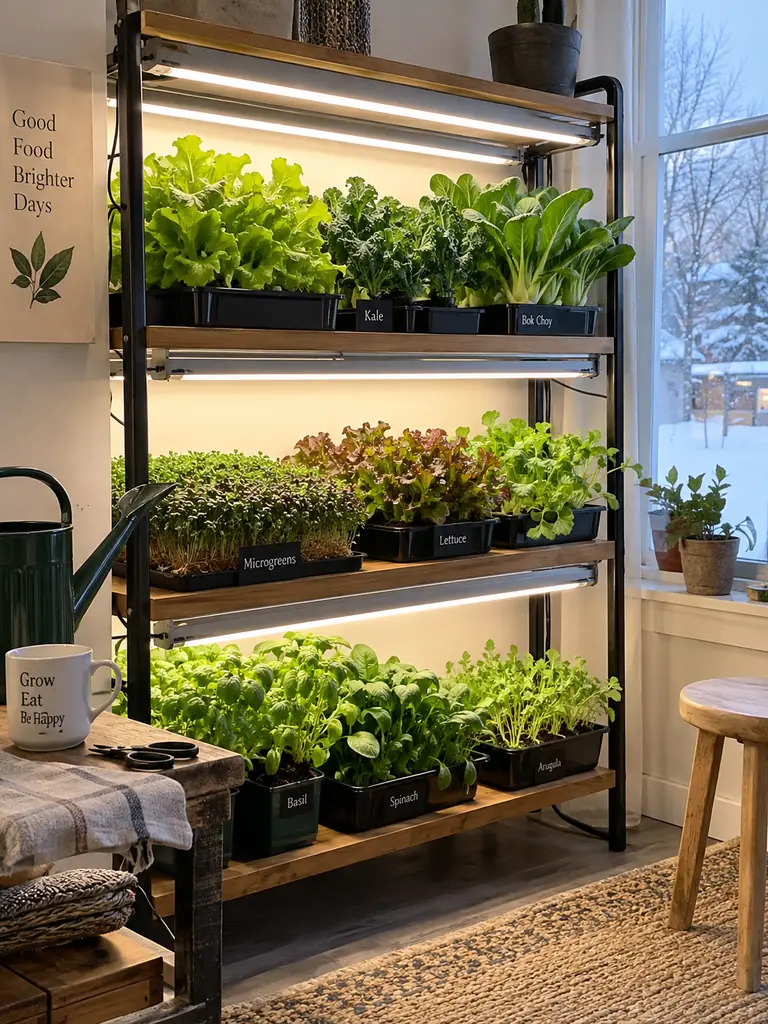
A shelving rack allows you to grow far more vegetables in a small footprint. Mount LED grow lights beneath each shelf and keep them close enough to plants to provide useful light without overheating leaves. A simple timer can turn the lights on and off automatically.
Kitchen Counter Garden
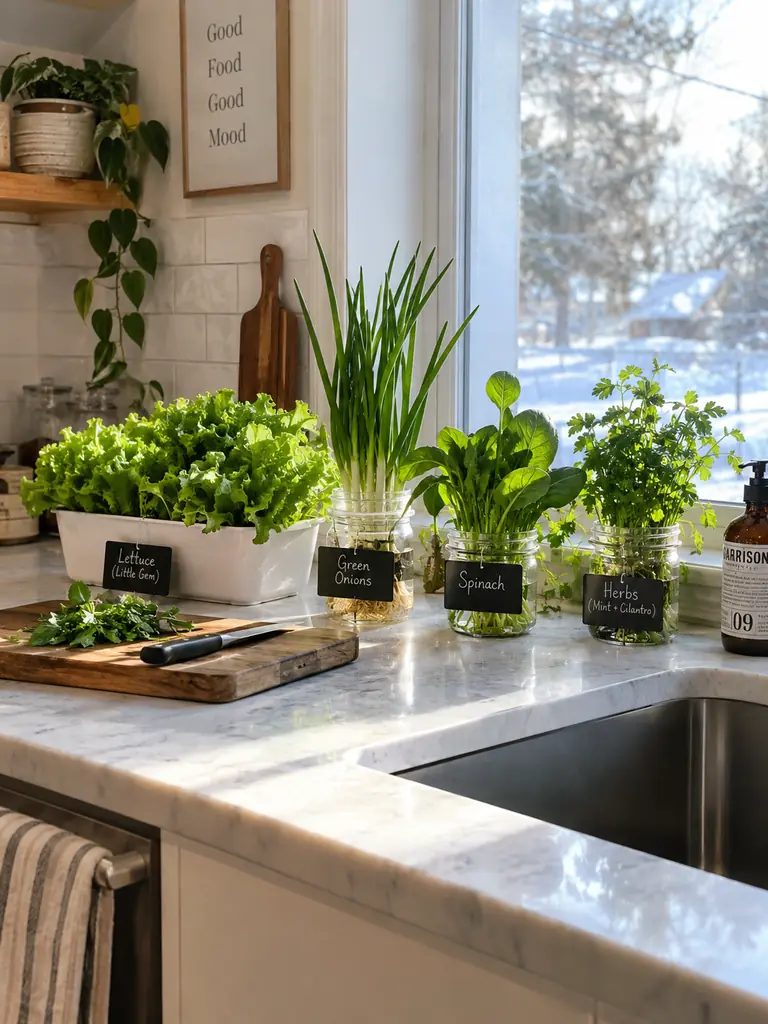
Green onions, baby lettuce, herbs, and small leafy greens work particularly well near the kitchen. Keeping edible plants close to where you prepare food also encourages frequent harvesting.
Small Fan for Airflow
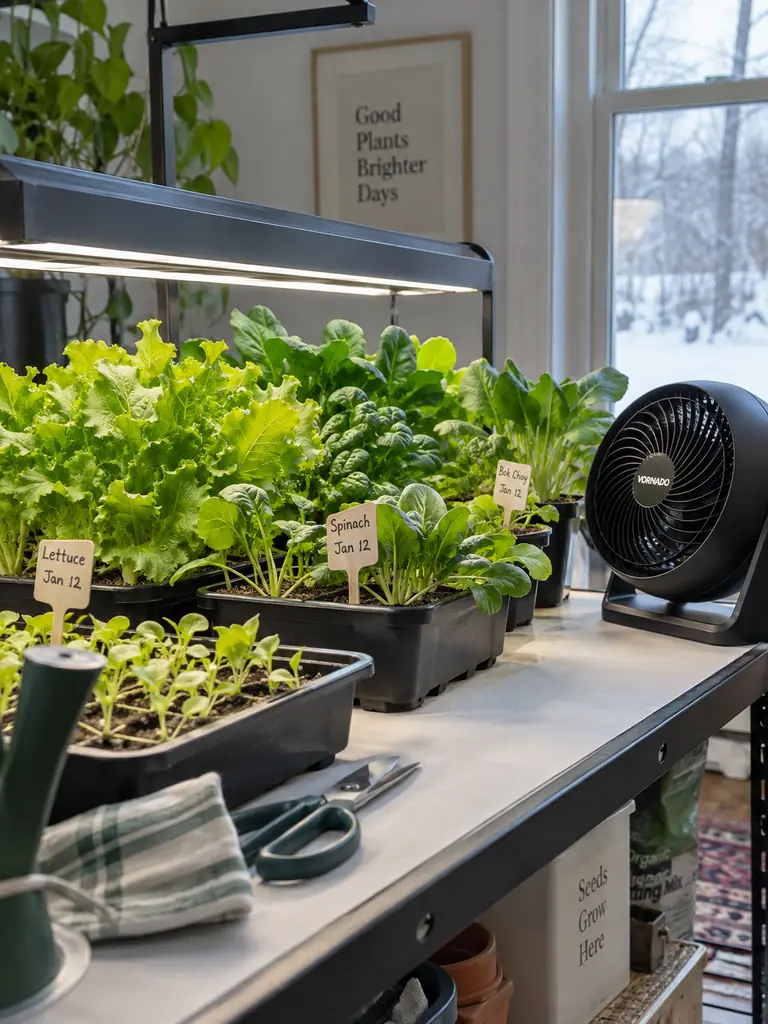
Indoor gardens usually have less airflow than outdoor gardens. A small fan set on low for part of the day can improve circulation around crowded plants. Do not point a powerful fan directly at delicate seedlings; the goal is gentle air movement rather than strong wind.
Common Indoor Winter Vegetable Problems
Leggy Seedlings
Seedlings that grow tall, pale, and thin are usually searching for stronger light. Move them closer to a bright window or improve your grow-light setup.
Yellow Leaves
Yellow leaves can result from several causes, but overwatering is one of the most common indoors. Check whether the soil remains wet for long periods before assuming the plant needs fertilizer.
Mold on the Soil Surface
White or gray fungal growth often indicates consistently damp soil and limited airflow. Allow the surface to dry slightly between waterings and improve air circulation.
Fungus Gnats
Tiny flying insects around indoor pots are often fungus gnats. Their larvae thrive in constantly damp organic potting mix. Allowing the upper soil layer to dry more between waterings often reduces the problem.
Slow Growth
Winter vegetables may grow slowly when temperatures are low or light levels are inadequate. If otherwise healthy plants seem to stop growing, lighting is usually the first factor worth examining.
How Often Should You Plant New Seeds?
One of the best strategies for indoor vegetable gardening is succession planting. Instead of planting a huge amount at once, sow smaller batches repeatedly. Lettuce and spinach can be started every two or three weeks, radishes every two or three weeks, bok choy every two to four weeks, and green onions whenever space becomes available. This creates a steadier stream of young plants rather than one enormous harvest followed by nothing.
Which Indoor Winter Vegetables Grow Fastest?
If you want results quickly, begin with leafy and root vegetables that naturally mature fast. Radishes can produce usable roots quickly under good conditions. Lettuce can be harvested as baby leaves long before plants reach full size. Green onions can produce usable tops quickly, particularly when regrown from rooted kitchen scraps. Baby bok choy and spinach are also excellent choices when harvested young. Carrots, peas, and tomatoes require more patience.
Best Indoor Vegetables for Complete Beginners
If this is your first indoor food garden, do not begin with all ten vegetables at once. Start with lettuce because it grows quickly and tolerates shallow containers, green onions because they require very little room, and bok choy or spinach because they naturally enjoy cooler winter conditions. Once you understand how quickly your indoor soil dries and how much light your home receives, add radishes, kale, carrots, peas, and eventually tomatoes.
Frequently Asked Questions
Can vegetables grow indoors without sunlight?
Vegetables cannot grow well without adequate light, but that light does not necessarily have to come from the sun. LED grow lights can replace or supplement natural daylight. Leafy vegetables usually tolerate lower light levels better than tomatoes and other fruiting crops.
Do I need grow lights for indoor vegetables?
Not always. A bright south-facing window may support lettuce, spinach, green onions, and several other leafy vegetables. Grow lights become much more useful during short winter days, in apartments with limited sunlight, and for crops such as tomatoes.
What vegetables grow fastest indoors?
Lettuce, radishes, green onions, baby bok choy, and spinach are among the fastest choices. Harvesting them as baby vegetables or baby greens reduces the waiting time further.
Can I grow vegetables indoors all winter?
Yes. Many vegetables can be grown throughout winter as long as their light, temperature, water, and container requirements are met. Indoor conditions are often easier to control than outdoor winter weather.
What size containers should I use?
The correct size depends on the vegetable. Shallow-rooted lettuce can grow in containers only several inches deep, while carrots, peas, kale, and tomatoes require deeper or larger pots. When in doubt, choose a slightly larger container rather than one that restricts roots.
Can I use regular garden soil indoors?
It is better to use potting mix. Garden soil can become compacted inside pots, drain poorly, and potentially bring outdoor pests into the home. Commercial potting mixes are lighter and better suited to containers.
How often should indoor vegetables be watered?
There is no universal schedule. Check the soil with your finger. Water when the upper layer begins to dry, then allow excess water to drain away. Indoor plants often require less frequent watering in winter than they do during summer.
Which vegetables are best for apartment gardening?
Lettuce, spinach, green onions, radishes, bok choy, baby kale, and Swiss chard are excellent apartment vegetables because they can grow in relatively compact containers. Micro-dwarf tomatoes can also work if strong grow lights are available.
Final Thoughts
You do not need a backyard, raised bed, greenhouse, or even a balcony to keep growing food during winter. With a few containers and a bright indoor location, you can harvest fresh lettuce, spinach, green onions, radishes, bok choy, kale, and other vegetables while outdoor gardens are dormant.
Start small. Choose two or three easy crops, observe how much light your home receives, and learn how quickly the potting mix dries. Once those plants are growing well, add more containers or install a simple grow-light shelf. Indoor winter gardening will not replace a large summer vegetable garden, but it can provide something equally satisfying during the coldest part of the year: fresh food growing just a few feet from your kitchen.
