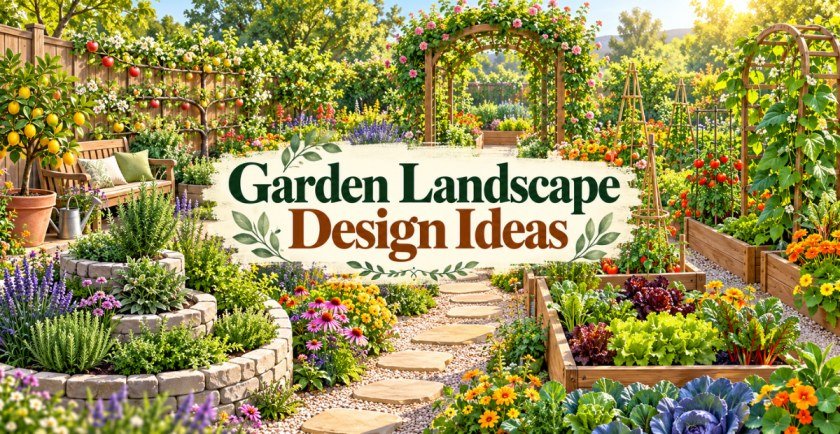
A beautiful garden can completely change how your outdoor space looks and feels. Whether you have a spacious backyard, a narrow side yard, or a small patch of greenery, the right landscape design can turn it into a welcoming place filled with colorful flowers, lush plants, winding pathways, and comfortable seating areas.
The best garden landscape design ideas combine beauty with functionality. You can create a productive vegetable garden with raised beds, design a romantic cottage garden overflowing with blooms, or transform an ordinary lawn into an elegant outdoor retreat with stone pathways and decorative planting arrangements.
From charming herb spirals and organized kitchen gardens to naturalistic woodland landscapes and modern minimalist designs, there are endless ways to personalize your space. These 45 beautiful garden landscape design ideas will help you discover creative layouts, practical planting combinations, and inspiring features to make your dream garden a reality.
45 Beautiful Garden Landscape Design Ideas
1. Classic Four-Quadrant Kitchen Garden Layout
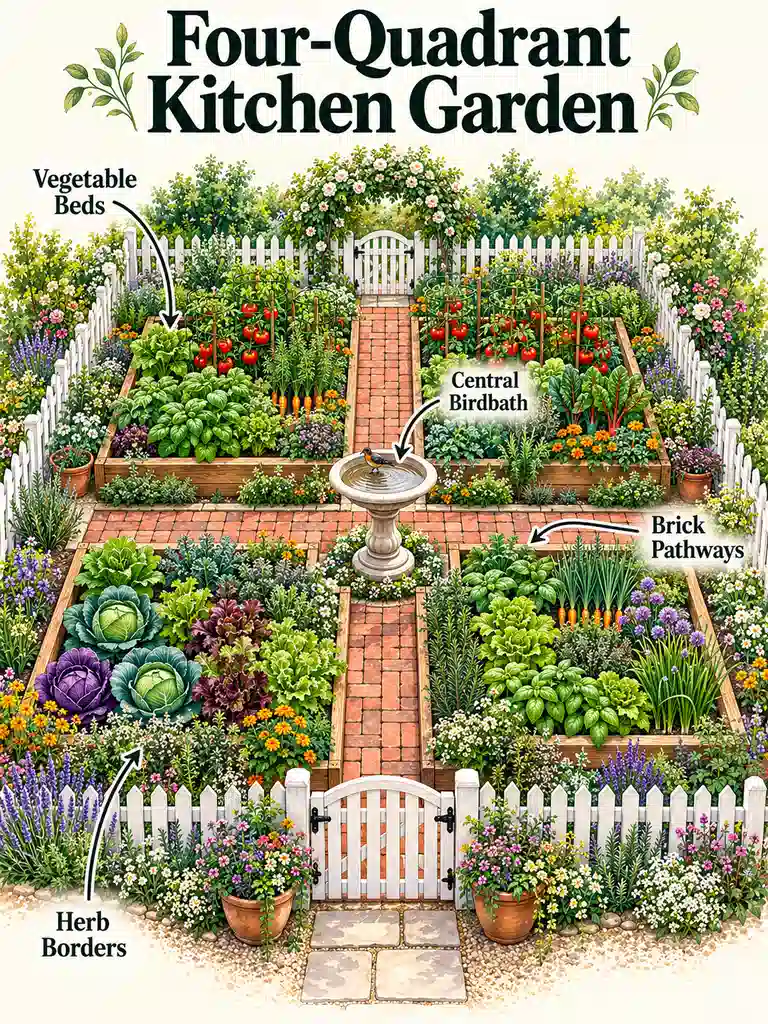
A classic four-quadrant kitchen garden creates a beautifully organized outdoor space by dividing a square or rectangular area into four equal planting sections. Straight gravel or brick pathways intersect at the center, providing convenient access to every bed. Grow lettuce, carrots, tomatoes, leafy greens, and seasonal vegetables in separate sections, using low wooden borders or natural stone edging to maintain a tidy appearance. Add a decorative birdbath, large terracotta planter, or small flowering shrub at the central intersection to create an attractive focal point. This timeless layout combines traditional garden charm with practical vegetable-growing convenience.
2. Curved Gravel Pathway Garden with Flower Borders
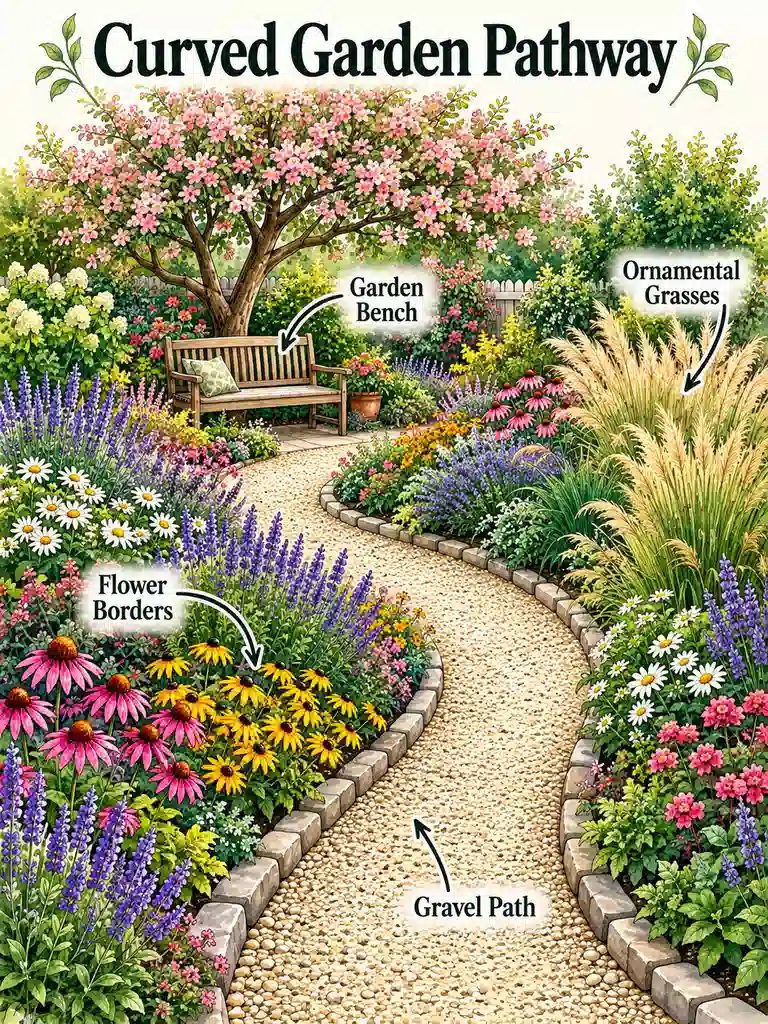
A gently winding gravel pathway can transform an ordinary backyard into a charming garden filled with movement, texture, and colorful flowers. Design a curving walkway that connects different areas of your outdoor space, then surround it with layered borders featuring lavender, coneflowers, black-eyed Susans, ornamental grasses, and seasonal perennials. Place taller plants toward the back and shorter flowers along the pathway edges to create a natural, flowing appearance. Use stone or metal edging to keep gravel neatly contained, and position a rustic wooden bench near the end of the path for a peaceful garden retreat.
3. Symmetrical Raised Vegetable Bed Garden
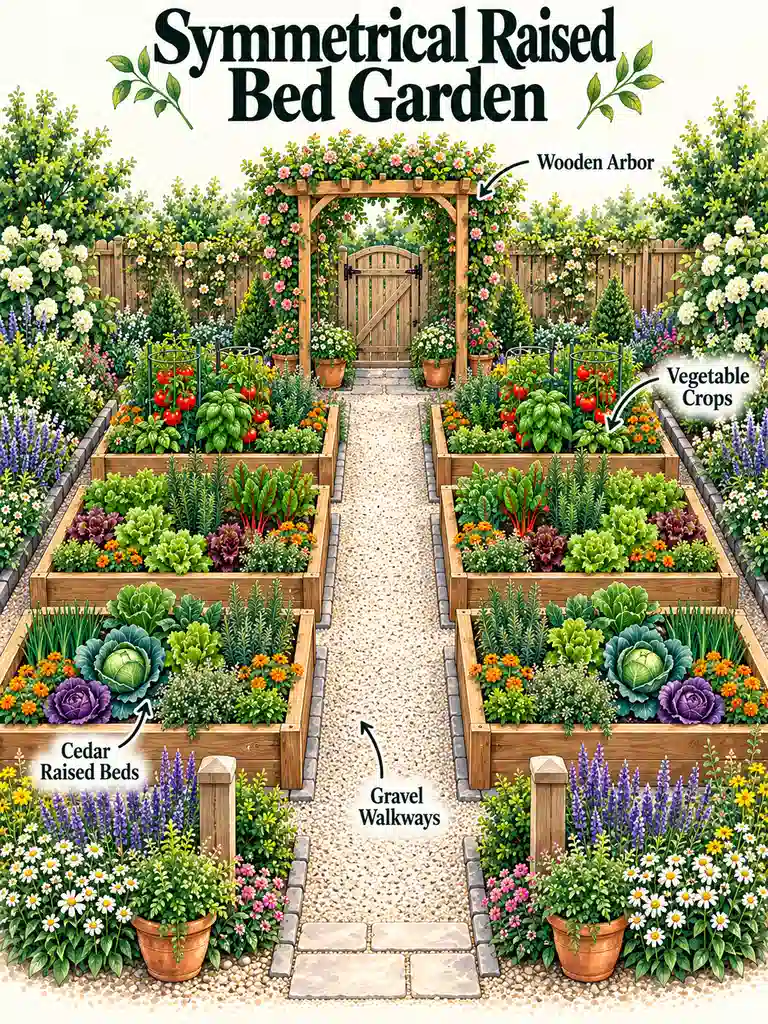
A symmetrical raised vegetable garden is perfect for homeowners who love clean lines, balanced layouts, and productive planting spaces. Arrange matching rectangular wooden beds in evenly spaced rows, leaving comfortable gravel or mulch pathways between them for watering and harvesting. Fill each planter with colorful lettuce, cabbage, carrots, herbs, and compact vegetable varieties, grouping plants according to their growing requirements. Install a wooden arbor or decorative garden gate at the main entrance to enhance the structured appearance. Using consistent planter heights, matching materials, and neatly maintained pathways creates a polished kitchen garden that looks attractive throughout the growing season.
4. Spiral Herb Garden with Natural Stone Edging
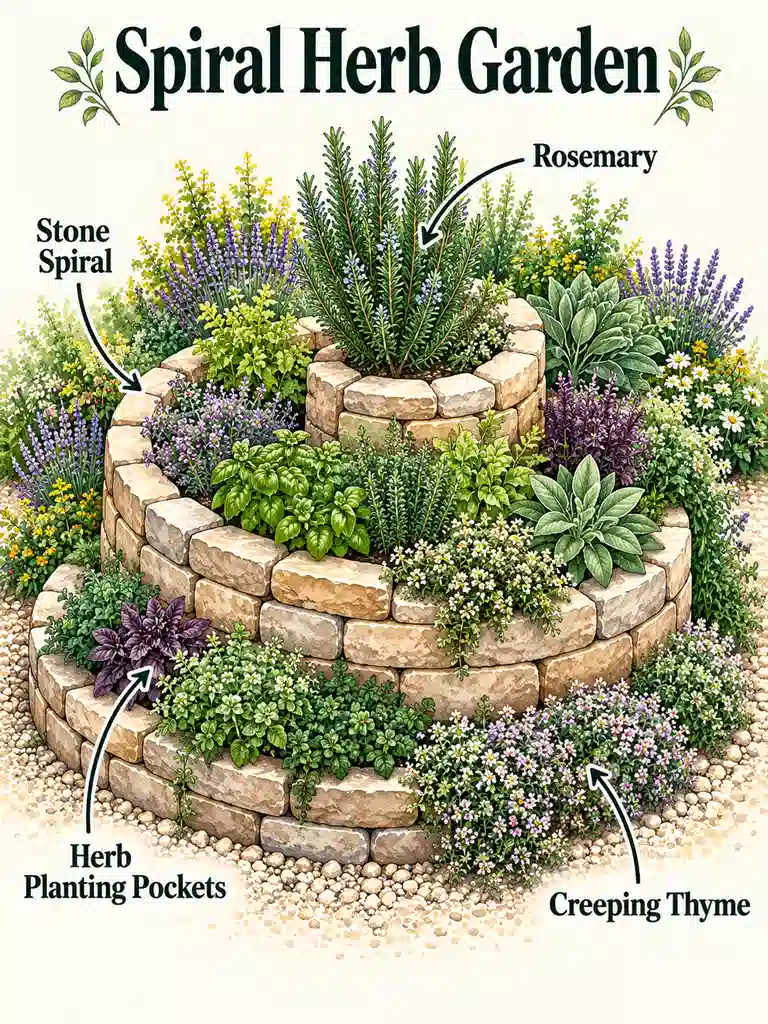
A spiral herb garden is a creative landscaping feature that combines decorative stonework with compact, productive planting. Build a gradually rising spiral using stacked natural stones, creating separate planting pockets at different heights. Grow rosemary, thyme, and oregano in the sunnier, well-drained upper sections, while positioning herbs that prefer more moisture toward the lower areas. Surround the structure with fine gravel, creeping groundcovers, or small flowering plants to complete the landscape. The varying elevations add visual interest while accommodating herbs with different growing preferences, making this design particularly useful for small backyard gardens.
5. English Cottage Garden with Winding Walkways
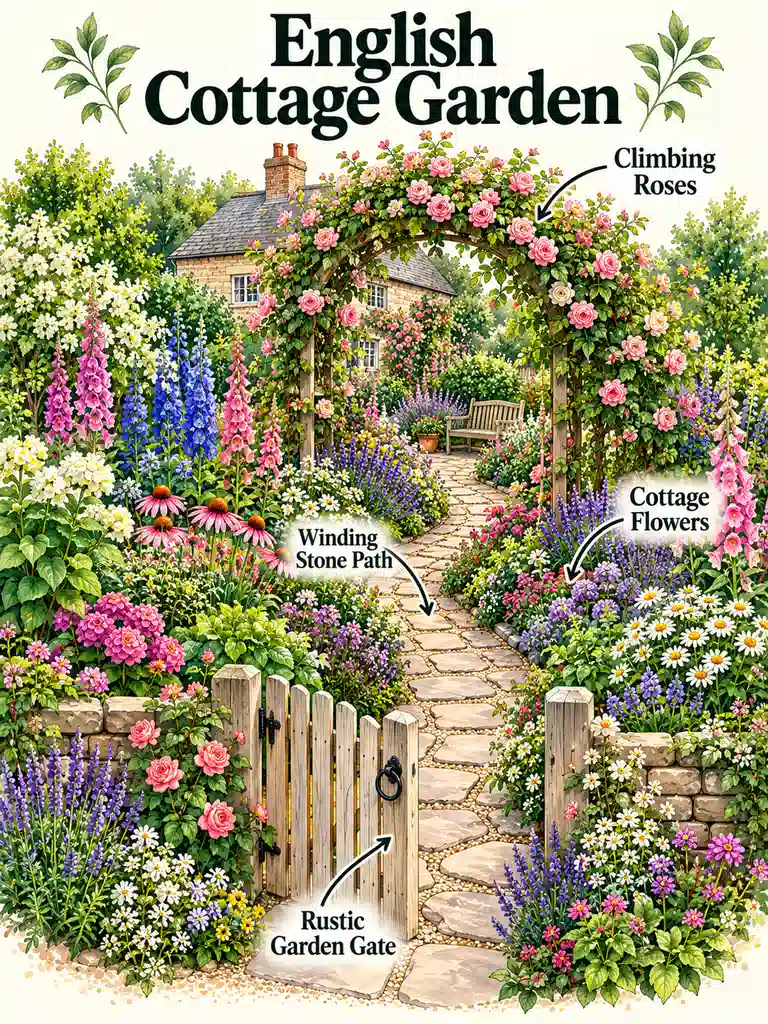
An English cottage garden brings romantic countryside charm into your outdoor space with overflowing flowers, winding pathways, and naturally layered planting arrangements. Combine fragrant roses, foxgloves, delphiniums, hardy geraniums, and colorful salvia in generous borders surrounding irregular stepping stones. Let flowers gently soften the walkway edges while maintaining enough space for comfortable movement. Introduce a weathered wooden gate, vintage-style bench, or climbing rose arch to enhance the traditional atmosphere. Mixing different flower heights, foliage textures, and blooming seasons creates the lush, abundant appearance that makes cottage gardens so enchanting.
6. Fruit Tree and Vegetable Garden Combination
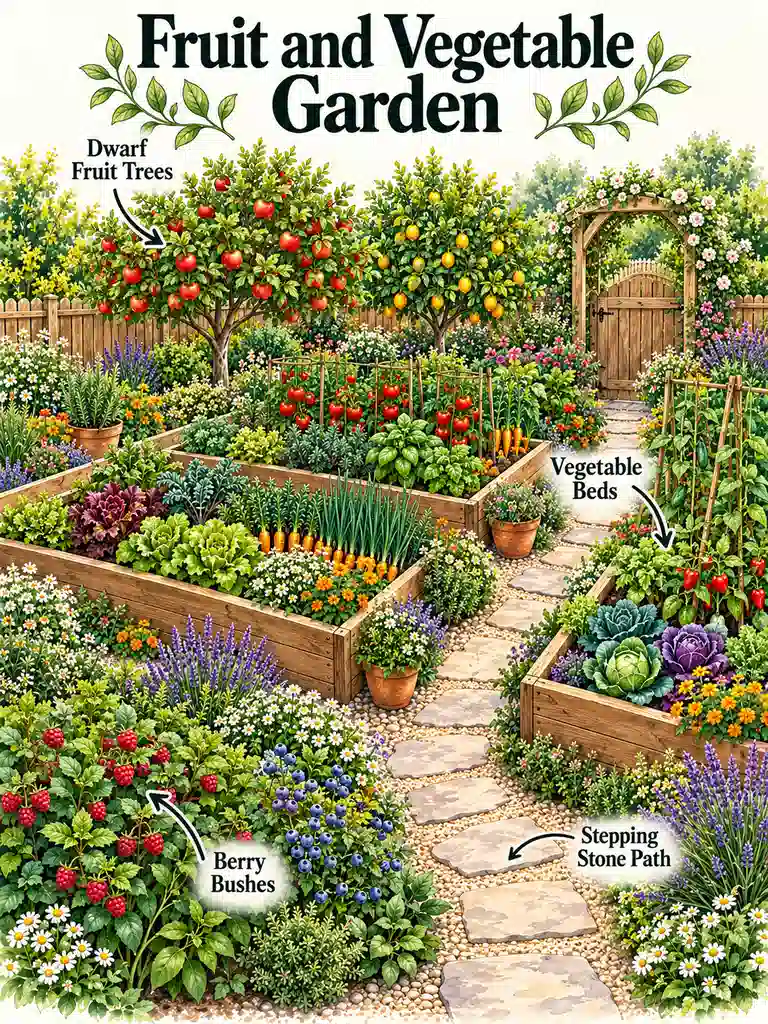
Combining fruit trees with vegetable beds creates a productive backyard landscape that offers seasonal beauty alongside homegrown harvests. Position dwarf apple, peach, or citrus trees where their mature canopies won’t block essential sunlight from nearby vegetables. Arrange raised beds around the open areas, filling them with leafy greens, tomatoes, carrots, and culinary herbs. Add berry bushes along the boundaries and flowering plants that attract beneficial pollinators. Natural stepping-stone pathways can connect the different growing zones, creating a garden that feels organized yet abundant. Select fruit varieties suited to your climate and available space.
7. U-Shaped Raised Bed Garden with Central Seating
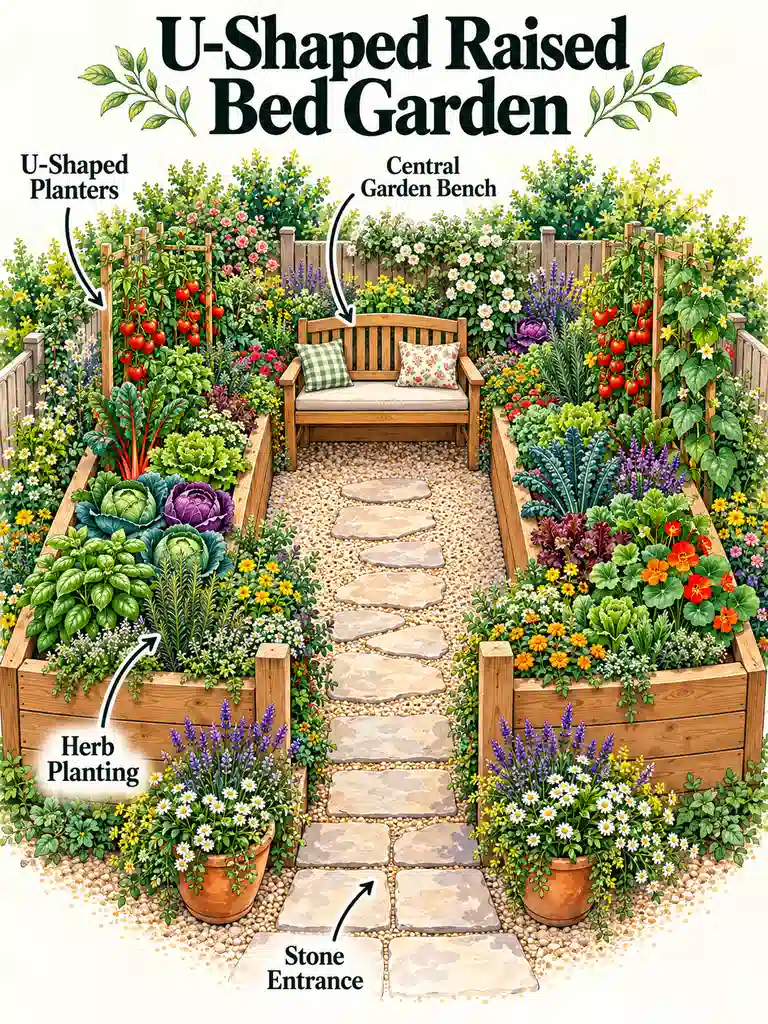
A U-shaped raised bed garden creates an inviting outdoor room by arranging three wooden planters around a comfortable central seating area. Fill the beds with leafy vegetables, fragrant herbs, flowering companion plants, and colorful seasonal crops to surround the seating space with greenery. Place a small wooden bench or weather-resistant chair in the center, then create a stepping-stone entrance leading into the arrangement. Keep the raised beds narrow enough for convenient planting and harvesting from accessible sides. This design offers a lovely combination of garden productivity and relaxation, especially in medium-sized backyards.
8. Formal French Potager Garden with Geometric Beds
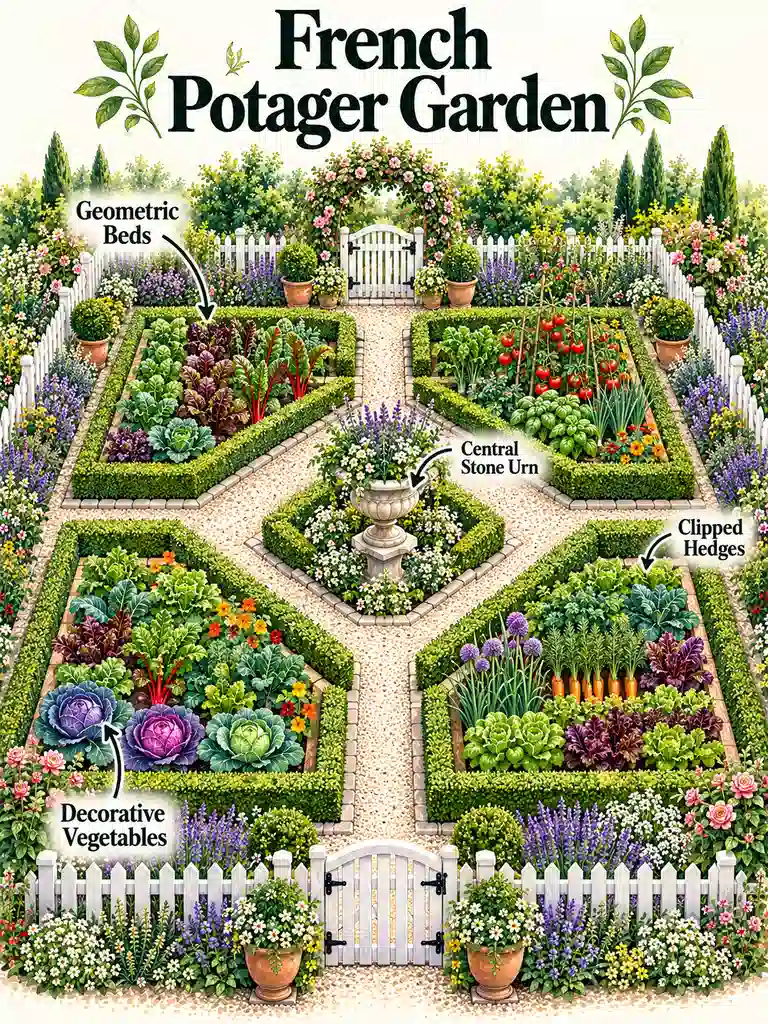
A French potager garden transforms vegetable growing into an elegant landscape design through symmetrical beds, decorative edging, and carefully arranged edible plants. Divide the garden into square, rectangular, or diamond-shaped sections with tidy gravel pathways separating the different growing areas. Use contrasting crops such as purple cabbage, rainbow chard, green lettuce, parsley, and flowering herbs to create colorful planting patterns. Frame selected beds with low clipped hedges or compact herb borders, and introduce a decorative stone urn at the center. The result is a sophisticated kitchen garden where beautiful landscaping and fresh produce work together.
9. Small Backyard Garden with Corner Planting Zones
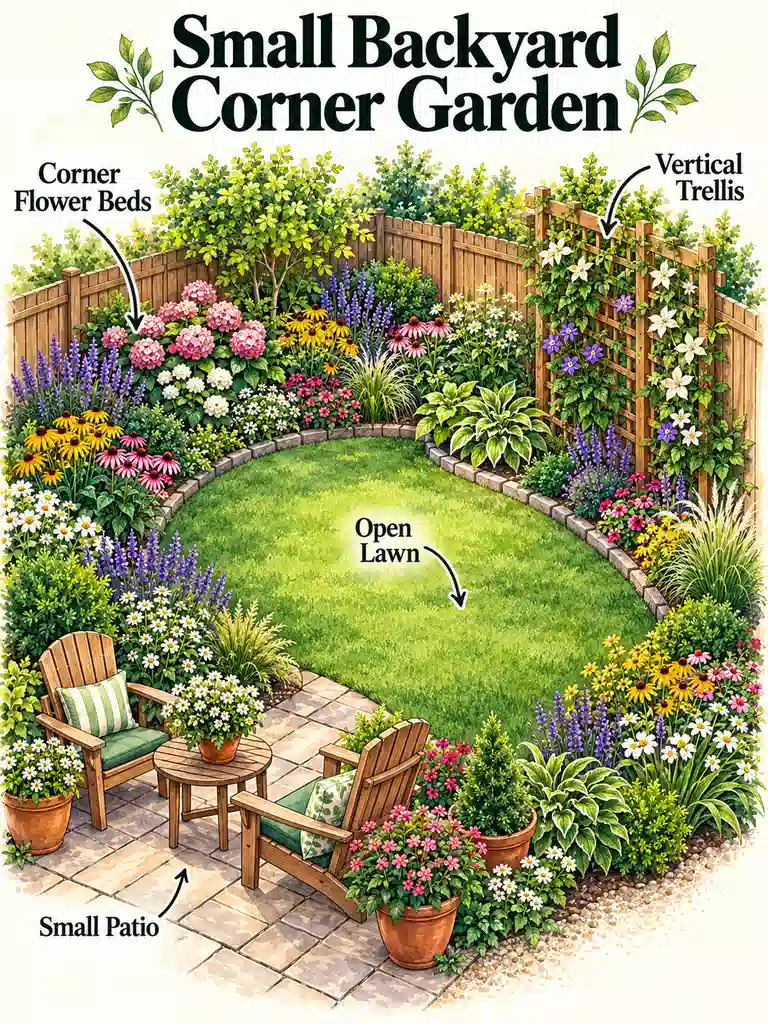
A corner-focused landscape design helps make a small backyard feel spacious while providing plenty of room for attractive planting arrangements. Create triangular or gently curved flower beds in the corners, filling them with compact flowering shrubs, ornamental grasses, and colorful perennials. Use vertical trellises along the surrounding fences for climbing flowers or vegetables without sacrificing valuable ground space. Keep the central area open for a small lawn, patio, or outdoor furniture, and connect selected planting zones with simple stepping stones. Repeating similar plants and materials throughout the corners creates a harmonious, thoughtfully planned appearance.
10. Garden with Wooden Archways and Climbing Vegetables
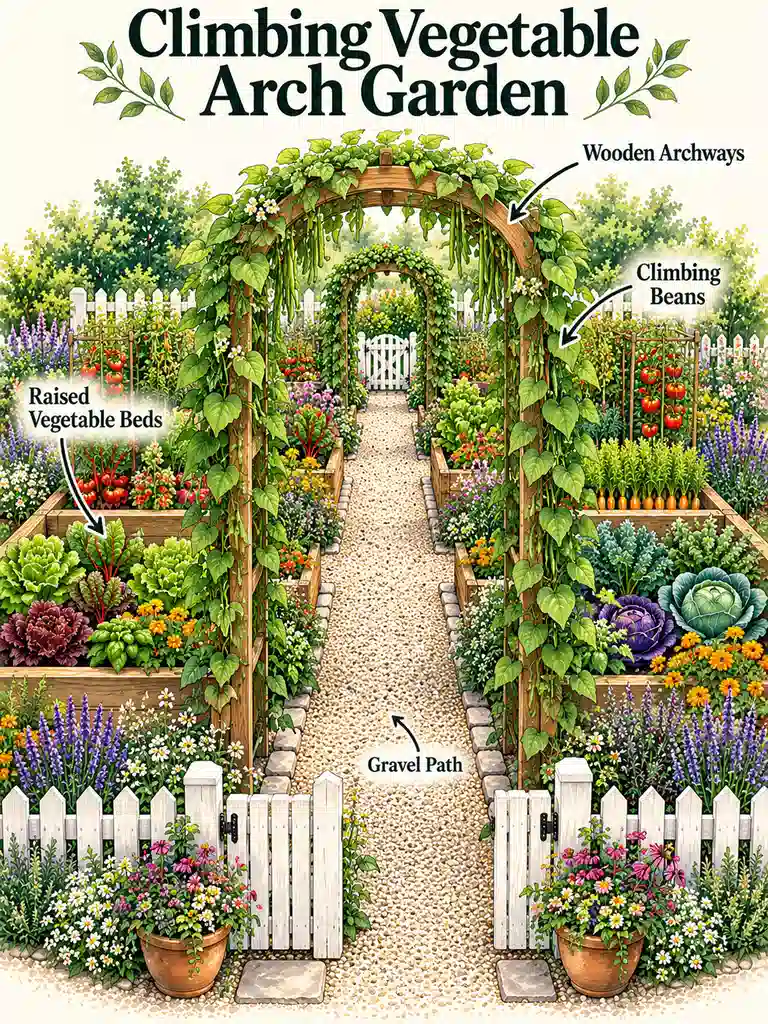
Wooden garden archways covered with climbing vegetables create an impressive landscape feature while making excellent use of vertical growing space. Install sturdy arches over a gravel or mulch pathway, then train pole beans, cucumbers, or suitable climbing plants along the supports. Position raised vegetable beds on both sides of the walkway, mixing productive crops with colorful marigolds and nasturtiums. As the vines mature, the arches develop a lush green canopy that makes walking through the garden especially enjoyable. Choose weather-resistant materials and securely anchor each structure to support mature plant growth.
11. Circular Mandala Garden with Radiating Planting Beds
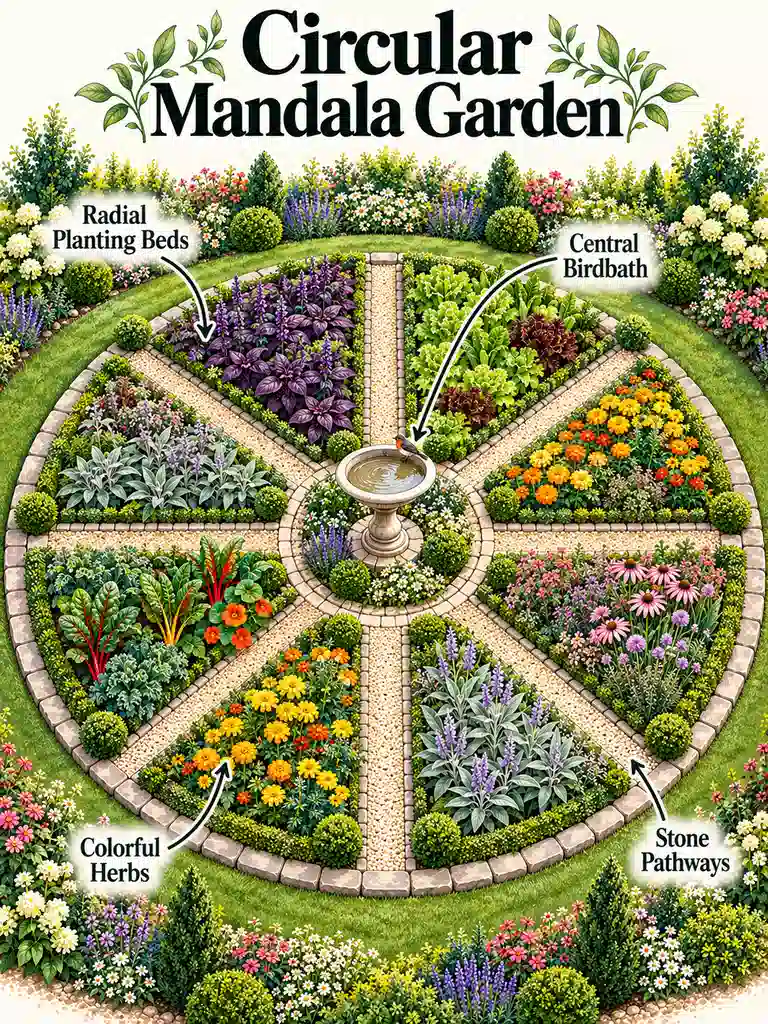
A circular mandala garden introduces an artistic geometric pattern that looks stunning from patios, decks, and elevated viewpoints. Start with a central decorative feature such as a birdbath, stone planter, or small fountain, then divide the surrounding circular space into wedge-shaped planting sections. Fill alternating beds with colorful flowers, culinary herbs, ornamental foliage, and compact vegetables to emphasize the radiating pattern. Separate the sections with narrow gravel or stone pathways, allowing convenient access for maintenance. Low edging around the outer circle reinforces the design and creates a distinctive garden centerpiece.
12. Long Narrow Backyard Garden with Layered Planting
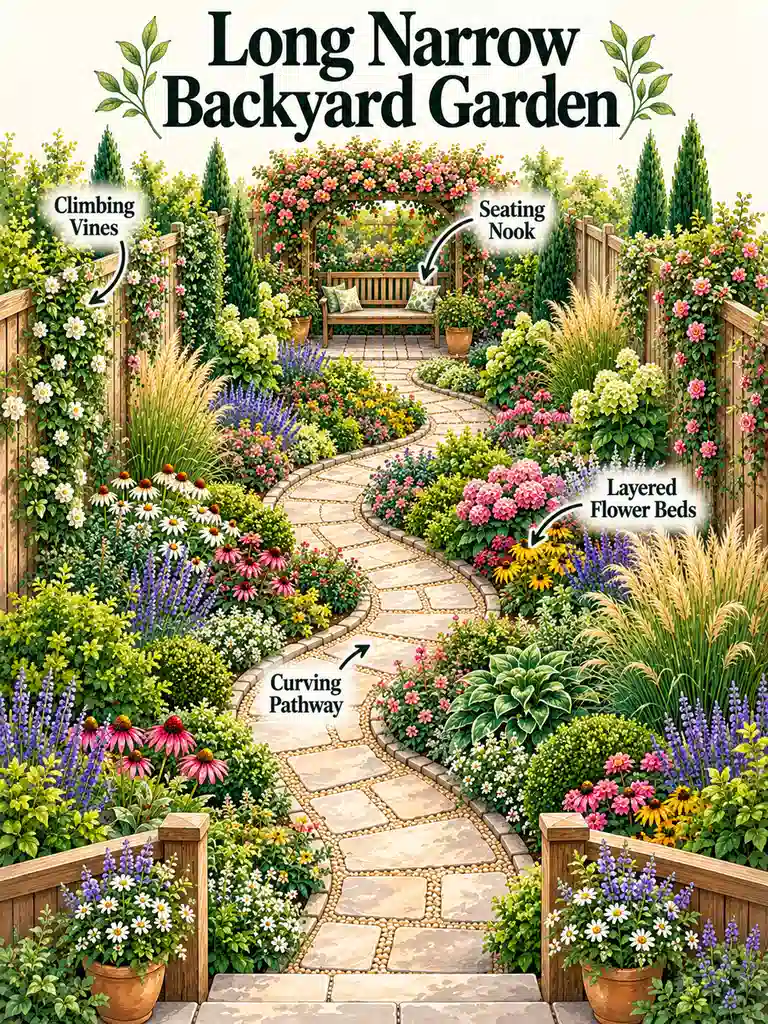
A long, narrow backyard can become an attractive landscape by dividing its length into smaller, visually connected garden sections. Create gently offset pathways rather than a single straight walkway, using alternating flower beds and compact shrubs to add depth. Position taller plants, ornamental grasses, and climbing vines along the boundaries, while keeping lower flowers near the walking areas. Add a small bench, decorative planter, or intimate seating space at the far end to create a destination. Repeating selected plant colors throughout the garden helps maintain visual continuity without making the layout feel repetitive.
13. Pollinator-Friendly Garden with Native Flower Borders
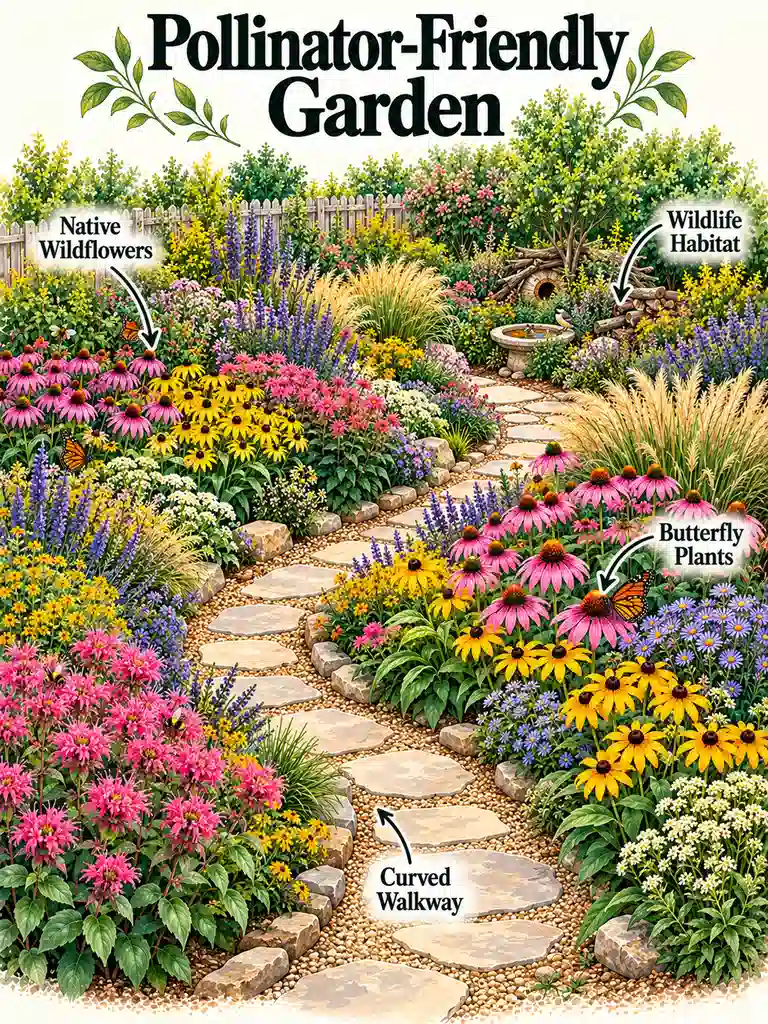
A pollinator-friendly landscape combines beautiful flowering borders with plants that provide valuable habitat for bees, butterflies, and other beneficial insects. Create sweeping garden beds filled with locally native wildflowers and perennials, arranging flowers in generous clusters rather than scattering individual plants. Select species that bloom during different seasons to provide a continuing source of nectar and pollen. Include flowering shrubs, ornamental grasses, and suitable sheltered habitat areas for additional biodiversity. Curved pathways through the borders allow you to enjoy the colorful display while observing the wildlife visiting your garden.
14. Mediterranean Herb Garden with Terracotta Planters
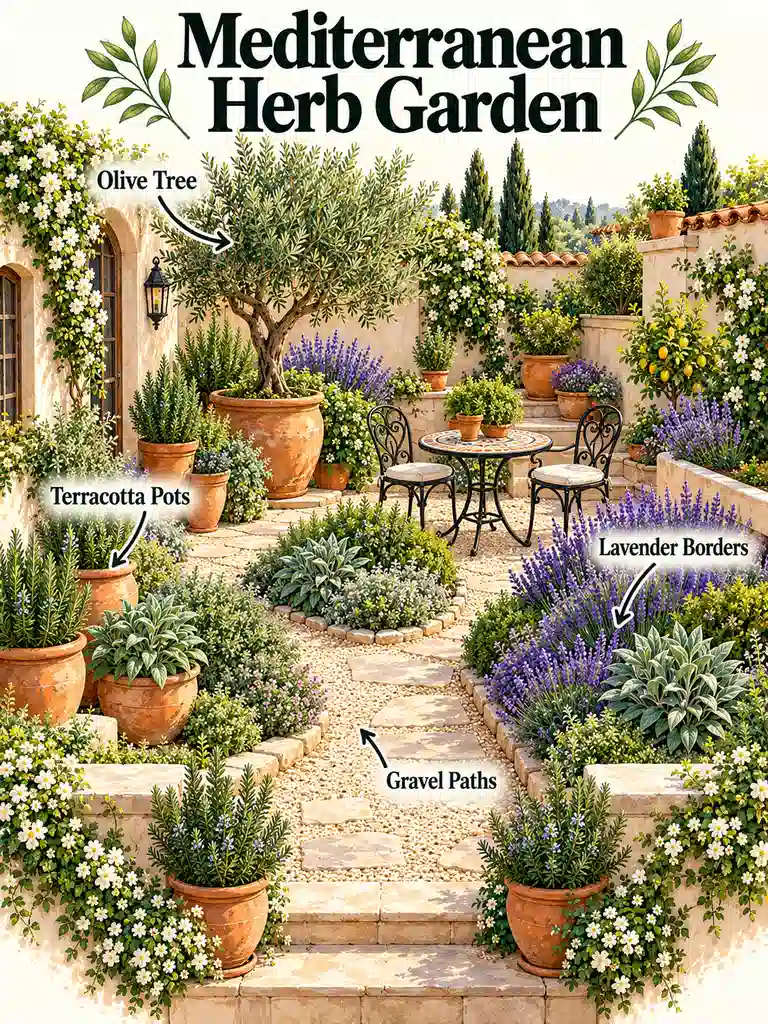
A Mediterranean-inspired herb garden creates a warm, inviting atmosphere with fragrant greenery, natural stone textures, and traditional terracotta pottery. Arrange rosemary, lavender, thyme, sage, and oregano in gravel-mulched beds or generously sized clay containers. Use pale stone pathways and rustic edging to complement the earthy colors, adding a small decorative olive tree where growing conditions permit. Position a wooden bench or café-style table nearby to enjoy the herbal fragrances. This garden style is particularly suitable for sunny locations with well-draining soil and plants adapted to relatively dry conditions.
15. L-Shaped Raised Bed Garden Along a Fence
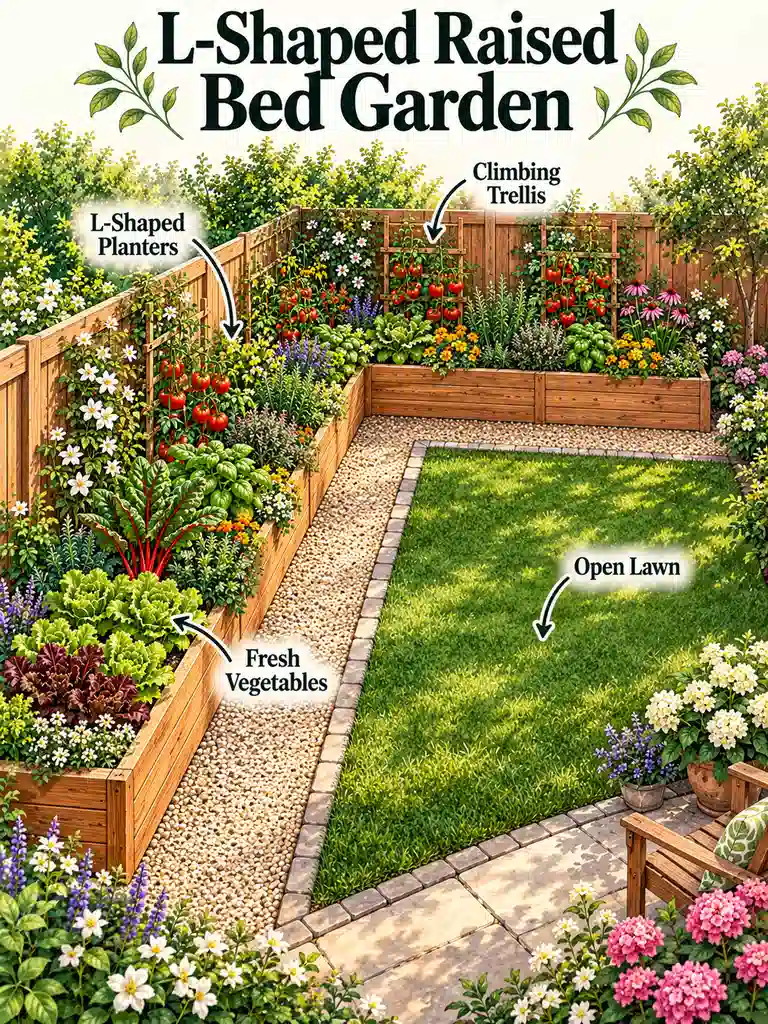
An L-shaped raised bed garden makes clever use of backyard boundaries while preserving valuable open space for other outdoor activities. Build connected wooden planters along two adjoining fence lines, keeping the growing areas accessible from the front. Plant taller vegetables and climbing crops toward the fence, then arrange compact lettuce, herbs, and seasonal flowers along the outer edges. Add a narrow gravel strip beside the beds to simplify watering, pruning, and harvesting. This practical configuration works beautifully in suburban yards where maximizing planting space without overwhelming the landscape is a priority.
16. Backyard Garden with a Central Pergola Walkway
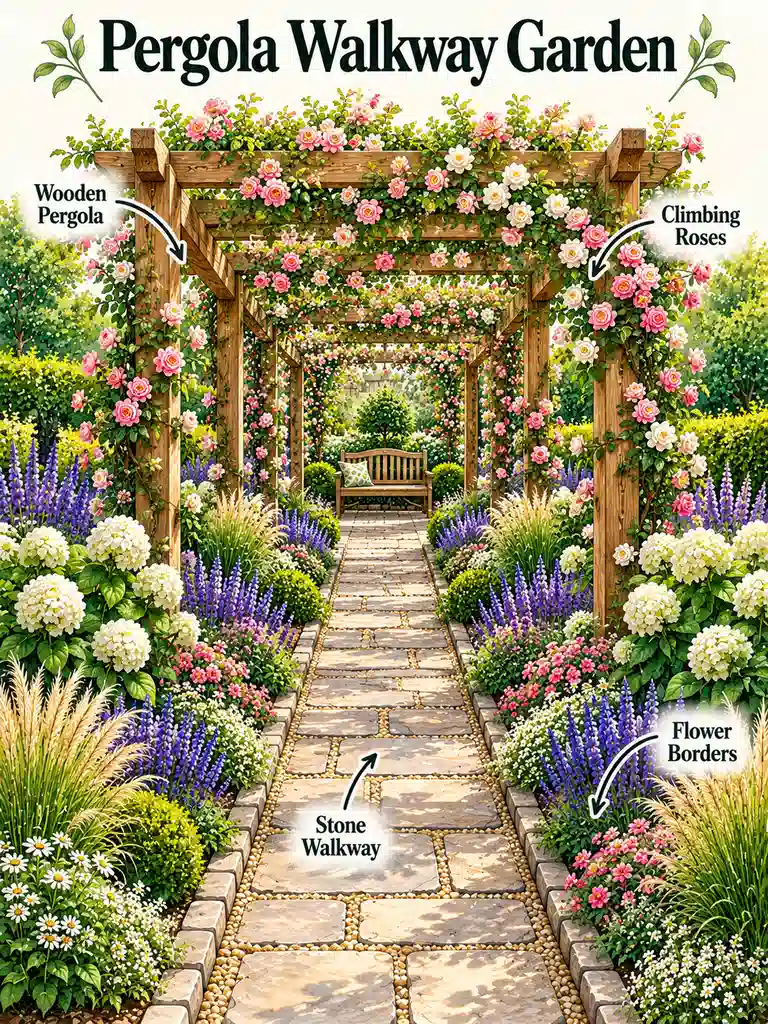
A central pergola walkway creates a striking architectural feature that adds height, structure, and elegance to your backyard landscape. Install a timber pergola over a straight or gently curved pathway, then train climbing roses, clematis, or suitable flowering vines along the supporting posts. Surround the walkway with layered borders of colorful perennials, ornamental grasses, and compact shrubs. Natural stone paving or decorative gravel enhances the design, while a bench at the far end creates an inviting destination. This arrangement turns a simple garden path into a beautiful outdoor passage.
17. Edible Flower and Vegetable Companion Garden
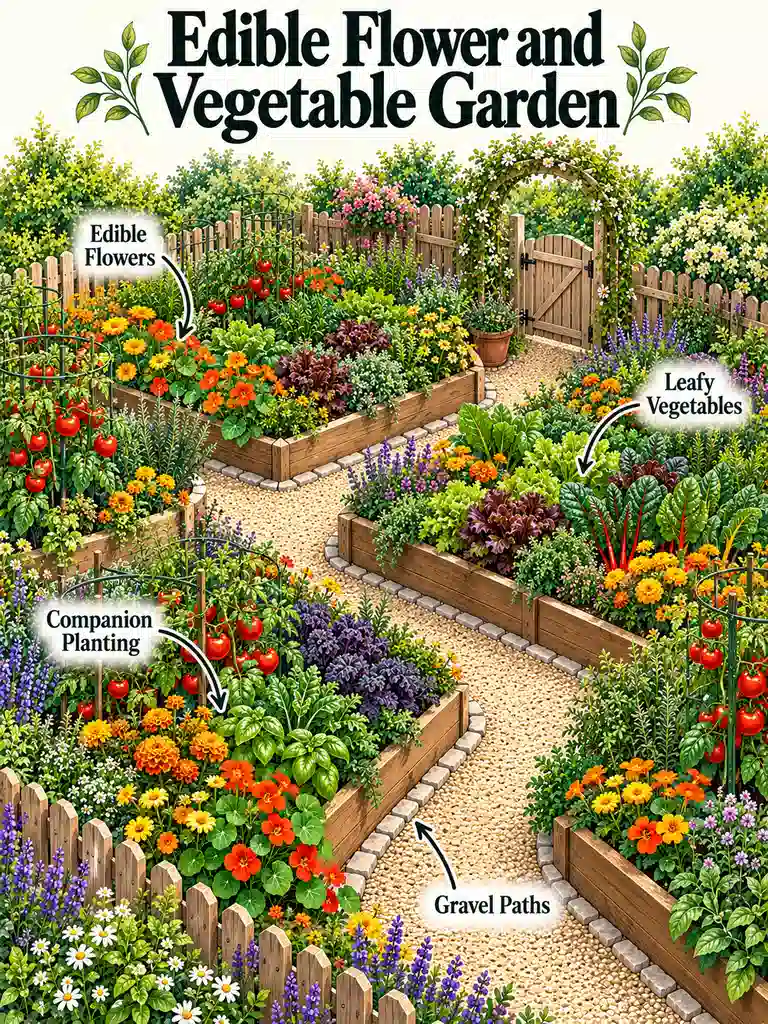
An edible flower and vegetable garden combines practical food production with the colorful appearance of an ornamental landscape. Arrange raised beds or curved planting areas containing lettuce, kale, tomatoes, herbs, and carefully selected edible flowers. Nasturtiums, calendula, and culinary varieties of marigolds can introduce cheerful colors among the vegetable foliage. Mix different heights, leaf shapes, and flowering textures to create abundant planting arrangements. Always verify flower varieties are edible before harvesting them for food. This garden style is ideal for homeowners who want attractive beds that provide useful seasonal harvests.
18. Modern Minimalist Garden with Rectangular Planters
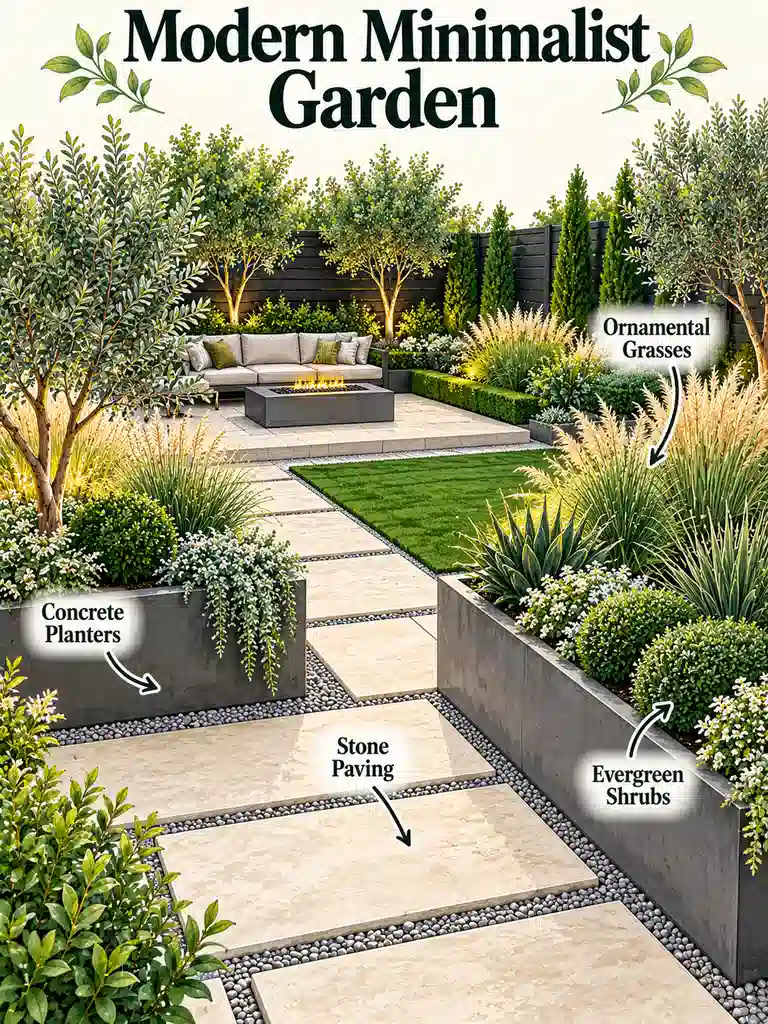
A modern minimalist garden creates a sophisticated outdoor atmosphere using clean architectural lines, simple planting combinations, and carefully selected materials. Install large rectangular planters made from concrete, metal, or weather-resistant composite materials, arranging them beside wide paving stones or neatly finished gravel pathways. Fill the containers with ornamental grasses, evergreen shrubs, or sculptural foliage plants for an uncluttered appearance. Choose a restrained color palette and repeat similar plant varieties throughout the landscape. Subtle outdoor lighting can highlight the planters and greenery, creating a stylish garden that feels organized and contemporary.
19. Rustic Cottage Garden with a Wooden Garden Bench
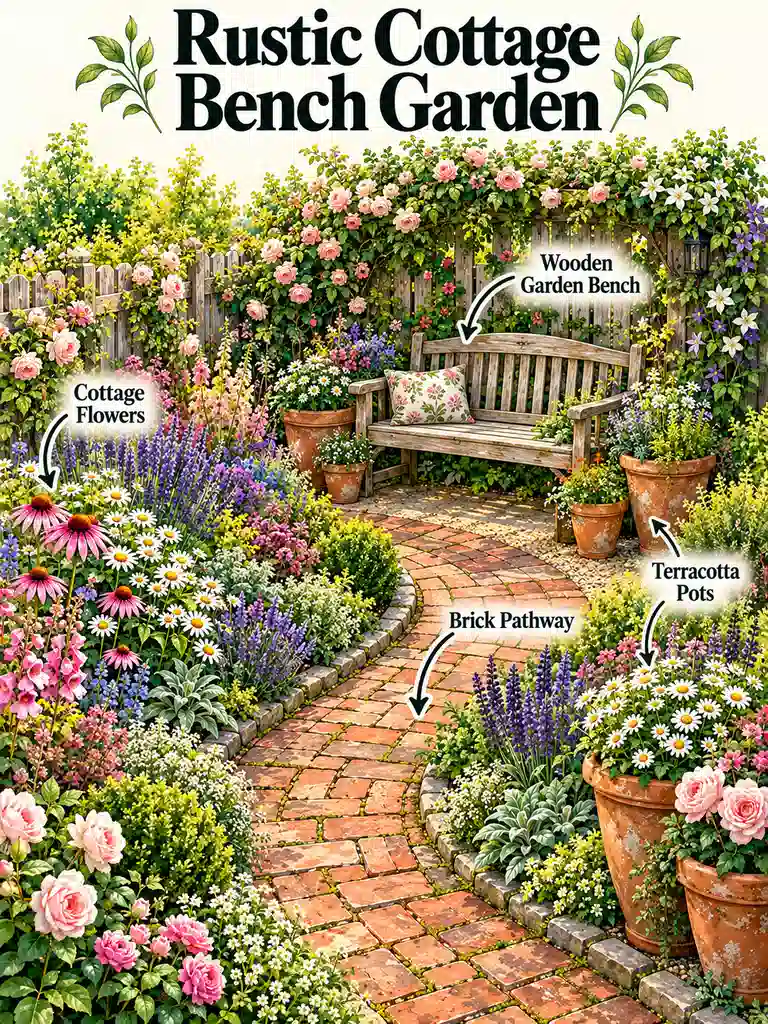
A rustic cottage garden creates a cozy outdoor retreat centered around a charming wooden bench surrounded by abundant flowers. Position the seating beneath a small ornamental tree, against a garden fence, or alongside a winding stone pathway. Plant roses, daisies, lavender, and colorful cottage perennials around the bench, combining taller varieties with lower-growing flowers for natural depth. Add weathered brick edging, terracotta pots, and rustic wooden accents to complete the countryside atmosphere. The finished space feels peaceful and welcoming, making it perfect for reading, relaxing, or enjoying morning coffee.
20. Multi-Level Terraced Garden with Stone Retaining Walls
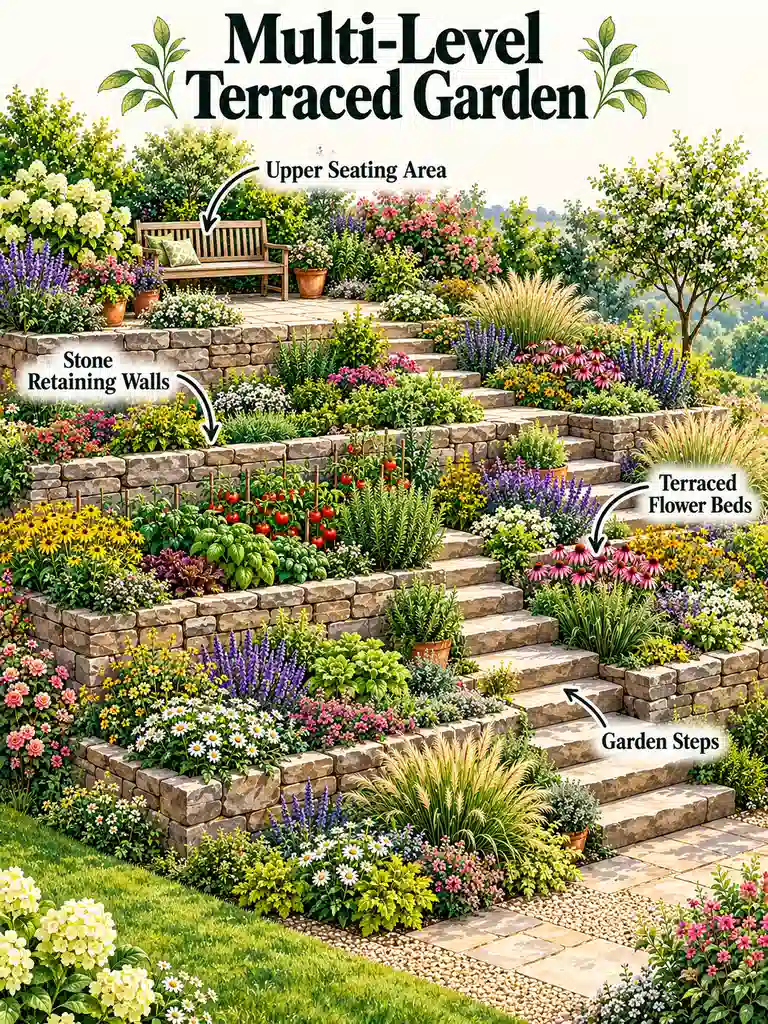
A terraced landscape transforms a sloping backyard into a series of beautiful, functional planting levels. Use properly constructed stone retaining walls to create distinct terraces for flowering shrubs, vegetable beds, herbs, or ornamental grasses. Connect the different elevations with sturdy stone steps and comfortable pathways, incorporating cascading plants along suitable wall edges to soften the appearance. Repeating natural materials throughout the terraces creates a unified landscape. Carefully planned drainage and structural support are essential, particularly on steep slopes, where professional guidance may be necessary.
21. Japanese-Inspired Garden with Stepping Stone Paths
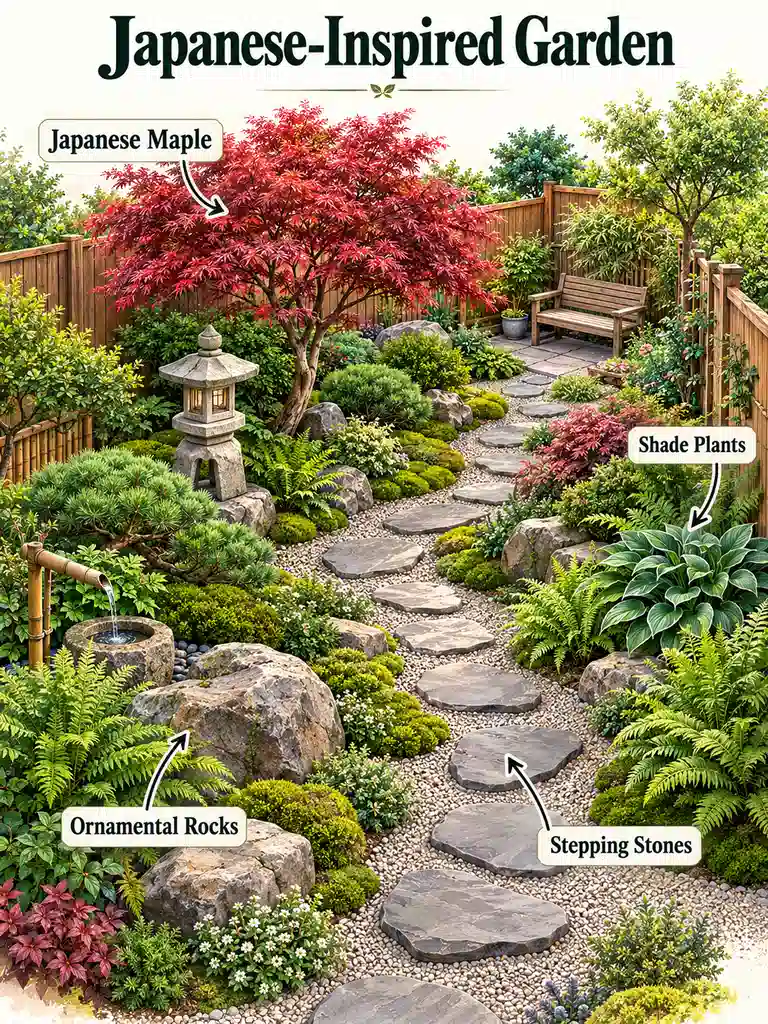
A Japanese-inspired garden emphasizes balance, simplicity, and natural beauty through carefully arranged plants and landscape materials. Create a gently winding pathway using irregular stepping stones surrounded by moss-like groundcovers, gravel, or shade-tolerant greenery. Include Japanese maples where suitable, sculptural evergreen shrubs, ferns, and strategically placed ornamental rocks. A modest wooden bench or stone lantern adds a peaceful focal point without overwhelming the design. Leave intentional open spaces between planting groups to create a calm atmosphere where individual trees, stones, and foliage textures can be appreciated.
22. Backyard Orchard with Espaliered Fruit Trees
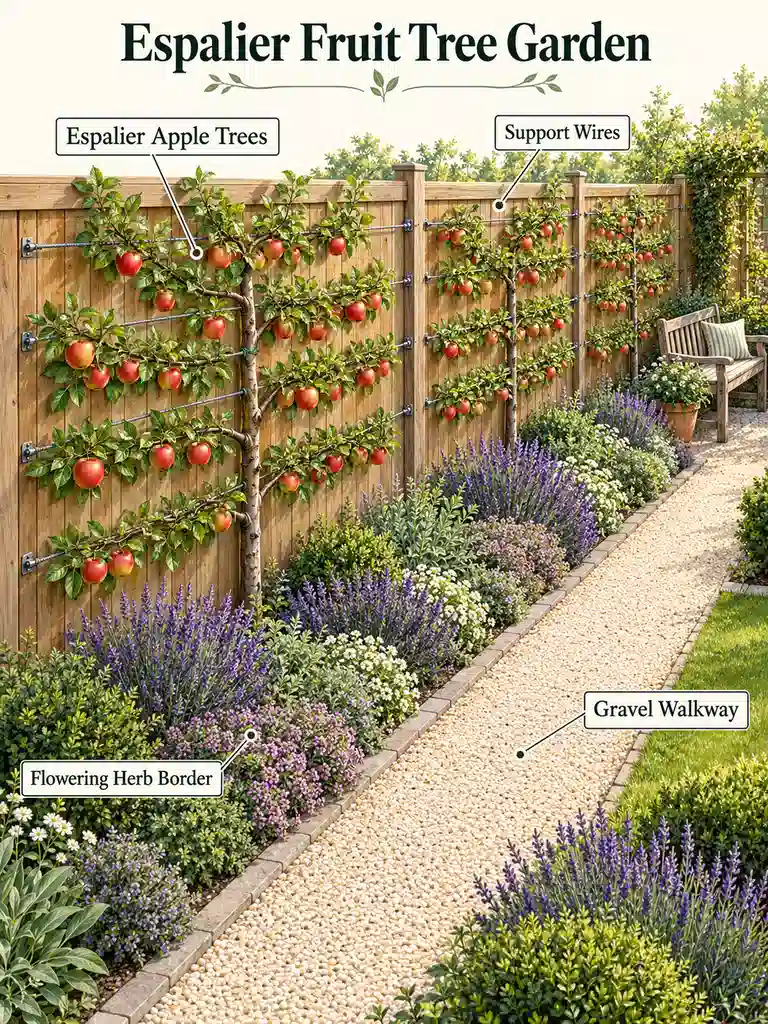
An espaliered fruit tree garden transforms ordinary fences and narrow boundaries into productive living displays. Train suitable apple or pear trees along horizontal support wires, guiding their branches into decorative patterns that remain relatively flat against the structure. Plant low-growing herbs, seasonal flowers, or attractive groundcovers beneath the trees while maintaining sufficient space for root growth and maintenance. Add a narrow gravel pathway for pruning and harvesting access. Espalier requires regular training, but the attractive branching patterns provide year-round architectural interest, even when the trees are not producing fruit.
23. Rainbow Vegetable Garden with Color-Coded Planting Beds
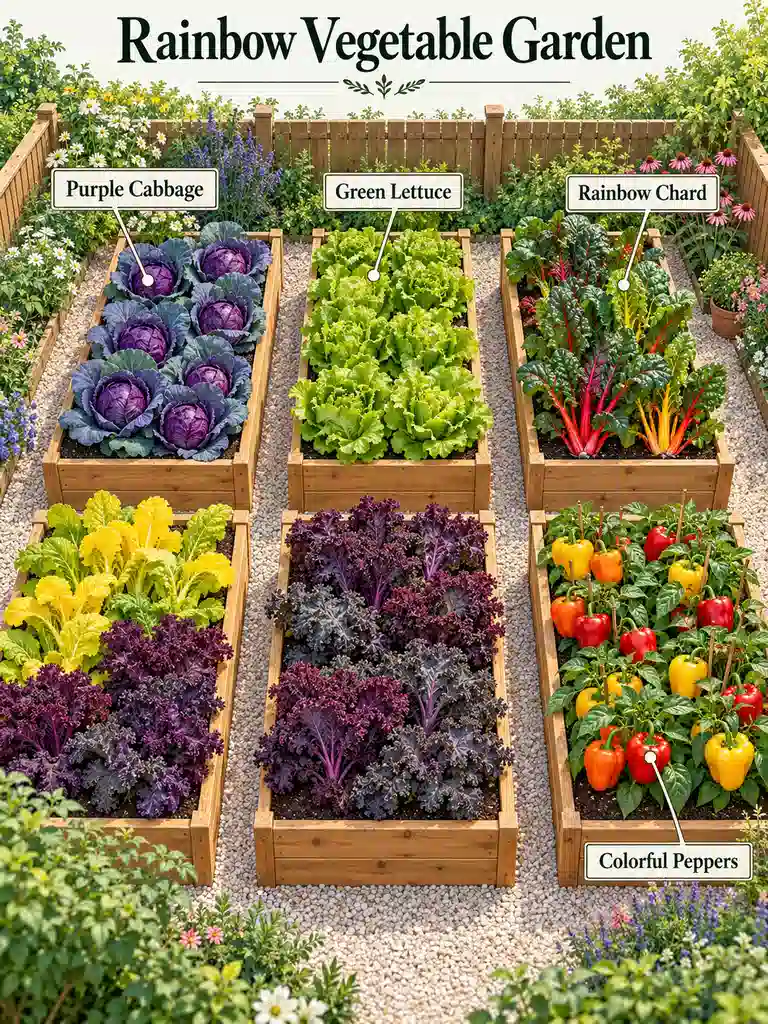
A rainbow vegetable garden turns everyday food crops into a vibrant landscape display by arranging plants according to their natural colors. Create neighboring raised beds featuring purple cabbage, golden beets, bright green lettuce, red-stemmed chard, and colorful peppers. Use identical wooden planters and neutral gravel pathways to emphasize the contrast between growing sections. Mix leafy vegetables with upright varieties to introduce different heights and textures. Carefully consider each crop’s growing season and spacing requirements so the colorful arrangement remains productive, healthy, and visually appealing throughout the year.
24. Vertical Trellis Garden for Compact Backyards
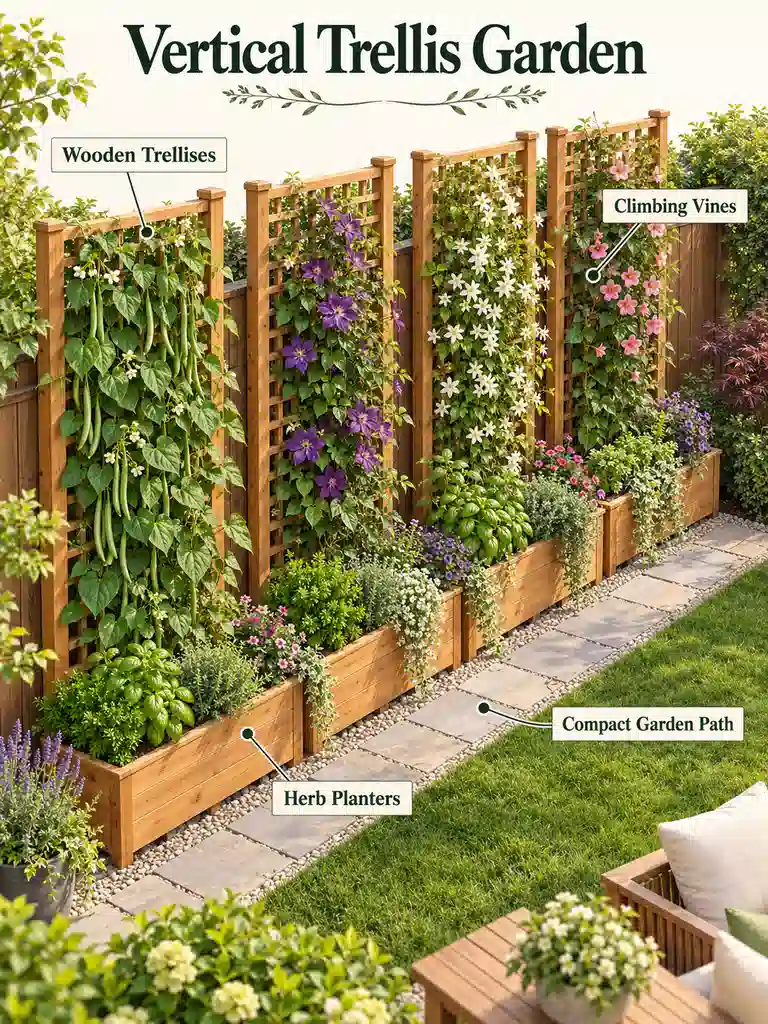
A vertical trellis garden is an excellent solution for small backyards where available ground space is limited. Install wooden lattice panels, freestanding supports, or sturdy climbing frames along suitable fences and garden boundaries. Grow pole beans, flowering vines, or climbing vegetables upward while arranging containers of herbs and compact flowers beneath the structures. Keep narrow access pathways clear for watering and harvesting. Repeating matching trellis designs creates visual harmony, while the vertical greenery softens plain boundaries and makes the garden feel lush without overcrowding the yard.
25. Secret Garden with a Curved Entrance Arch
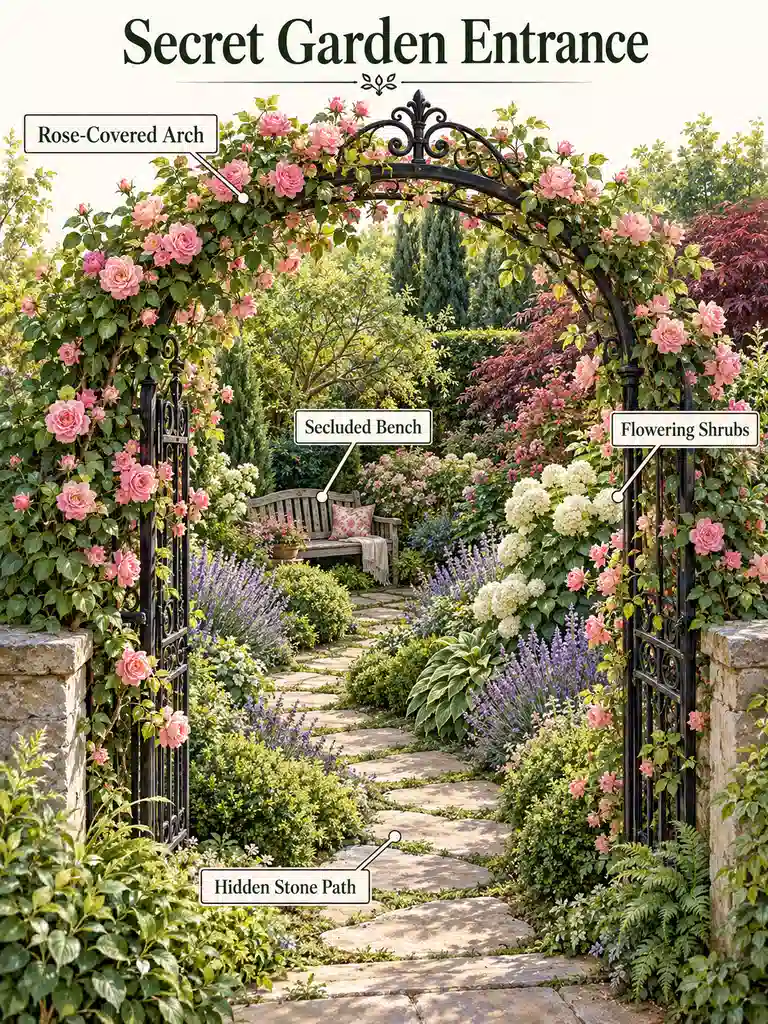
A secret garden creates a magical outdoor experience by hiding a peaceful retreat behind a beautifully planted entrance. Install a curved wooden or metal arch covered with climbing roses, clematis, or suitable vines, then create a winding stepping-stone pathway leading into a secluded seating area. Surround the space with layered shrubs, fragrant flowers, and tall ornamental plants that provide privacy. Add a vintage-style bench or small decorative fountain to complete the atmosphere. The partially concealed layout encourages exploration and makes even a modest backyard corner feel special.
26. Sunken Garden with Steps and Flowering Borders
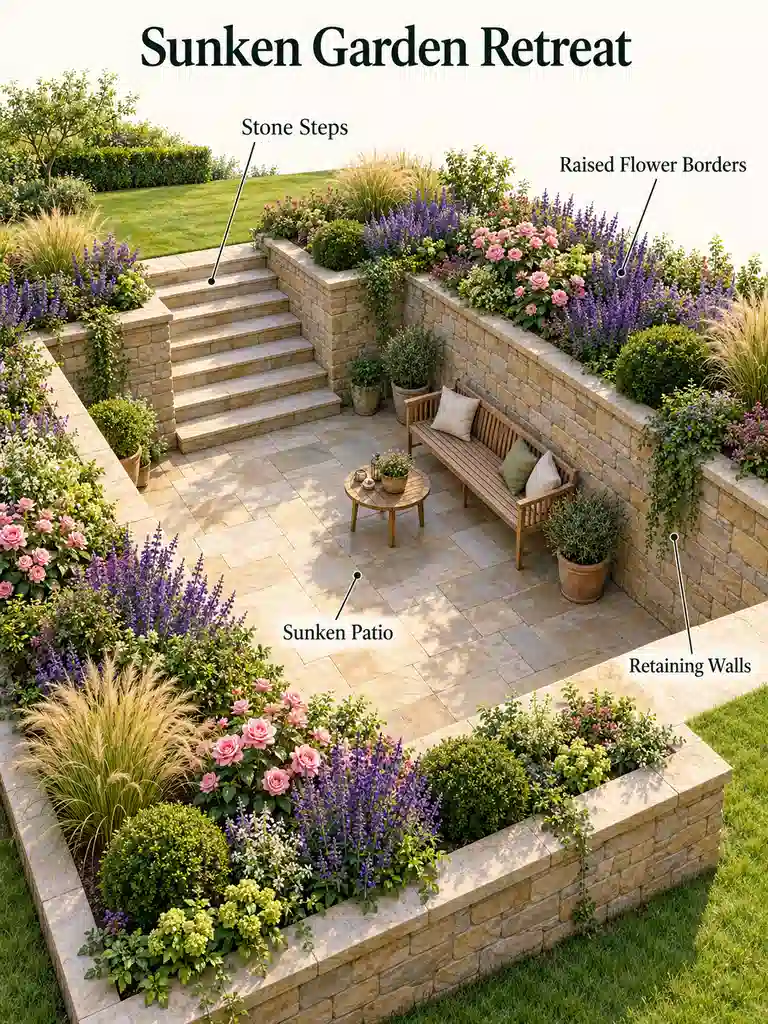
A sunken garden offers a distinctive landscape design by creating a seating or planting area slightly below the surrounding ground level. Build comfortable steps leading into the lowered space, then frame the edges with raised flowering borders, low shrubs, and ornamental grasses. Stone retaining walls and coordinated paving materials help establish an elegant outdoor room. Add a small bench or dining arrangement to make the area functional. Proper drainage, safe access, and structural planning are essential because lowered garden spaces can collect runoff during heavy rainfall.
27. Backyard Cutting Flower Garden with Organized Rows
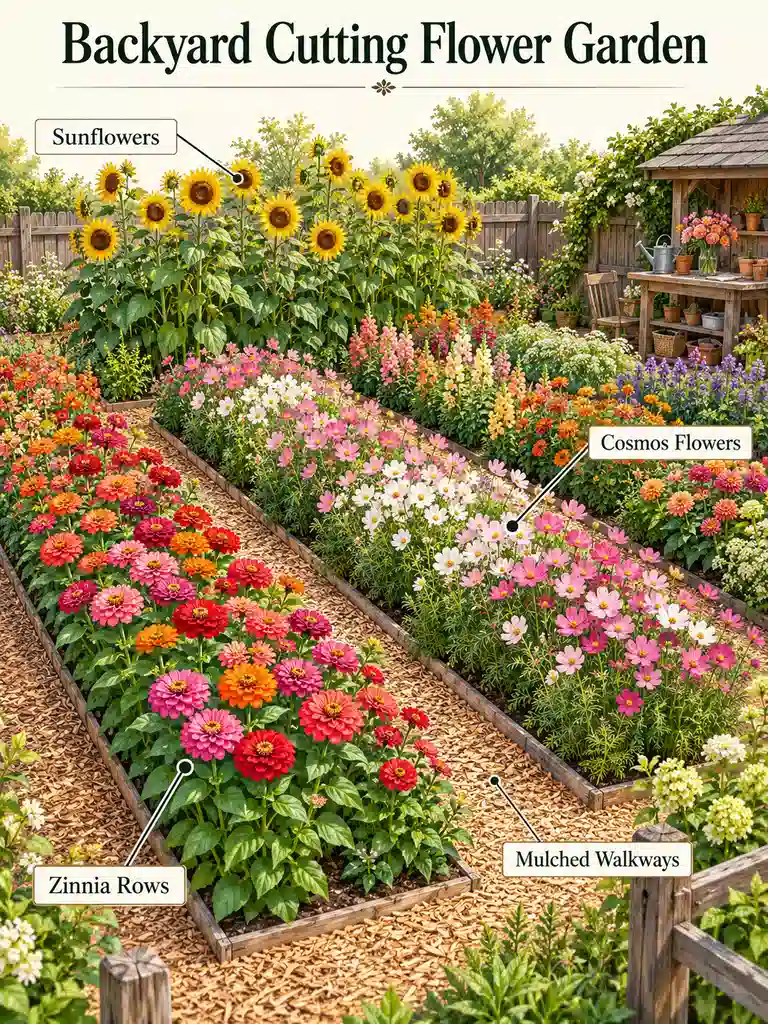
A dedicated cutting flower garden provides beautiful outdoor color while supplying fresh blooms for homemade bouquets. Arrange long rectangular planting beds in organized rows, filling them with zinnias, cosmos, snapdragons, sunflowers, and other cutting flowers suitable for your climate. Separate the rows with mulch or gravel pathways for comfortable harvesting access. Position taller varieties where they won’t excessively shade shorter plants, and repeat complementary flower colors throughout the landscape. Succession planting can help extend the harvest season and maintain an attractive display for longer.
28. Square-Foot Gardening Layout with Wooden Grid Beds
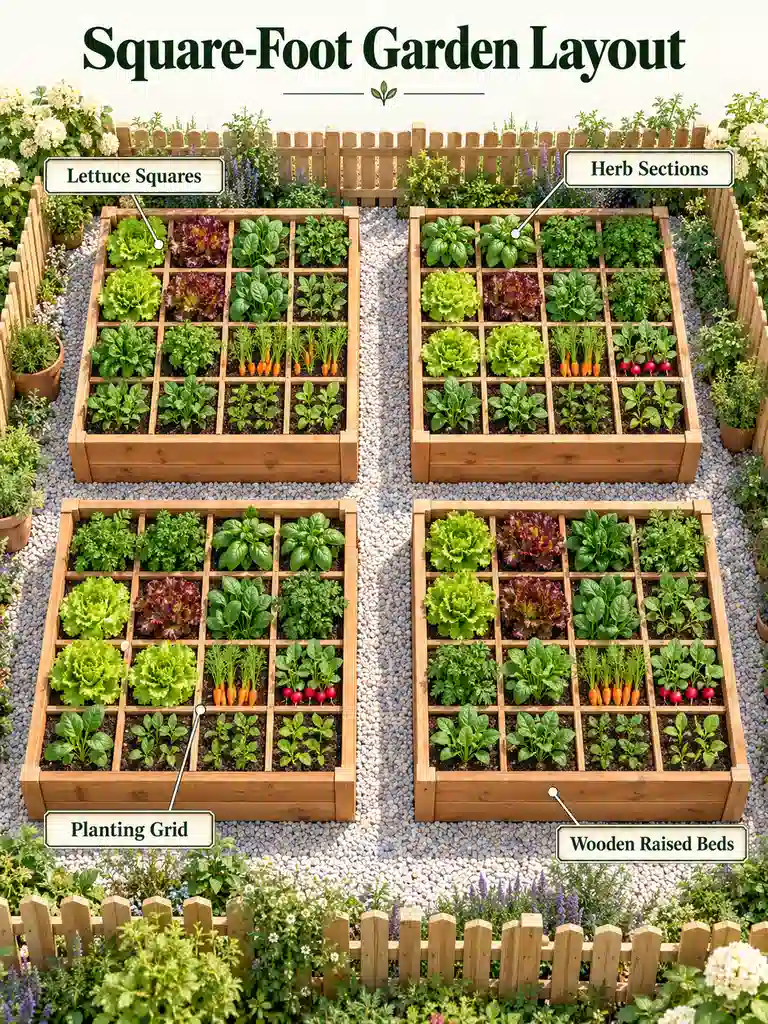
Square-foot gardening creates an organized vegetable-growing space by dividing raised beds into clearly marked square sections. Build rectangular wooden planters and use thin wooden strips or removable dividers to create a visible planting grid. Grow lettuce, spinach, radishes, herbs, and other suitable crops according to their individual spacing requirements, adjusting plant numbers for mature size. Surround the beds with neat pathways and position watering supplies nearby. The structured arrangement simplifies planting decisions, supports efficient use of growing space, and gives the backyard a tidy, productive appearance.
29. Butterfly Garden with Curving Flower Islands
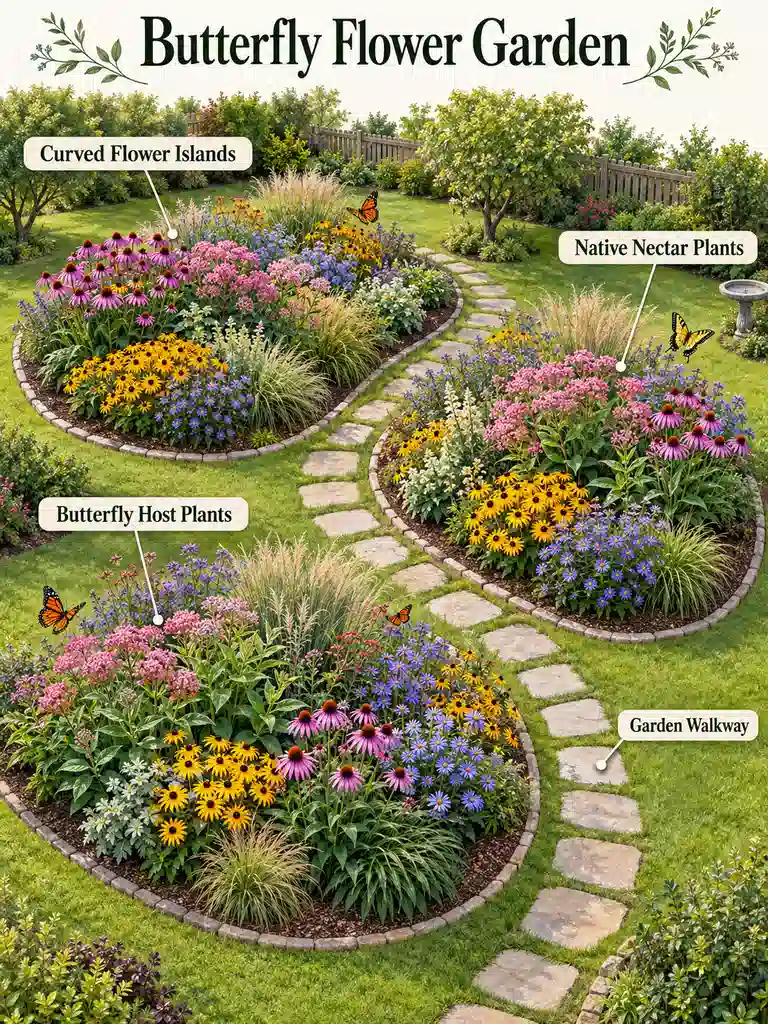
A butterfly garden creates a colorful natural landscape using flowing planting islands filled with nectar-rich flowers and suitable host plants. Design gently curved flower beds separated by lawn, mulch, or stepping-stone pathways. Fill them with native flowering species that attract butterflies found in your region, choosing varieties with different blooming periods. Include sheltered shrubs and sunny spaces where butterflies can rest. Planting flowers in visible clusters creates a more cohesive display and makes the garden appealing to both wildlife and visitors enjoying the outdoor space.
30. Garden with a Central Water Fountain and Circular Beds
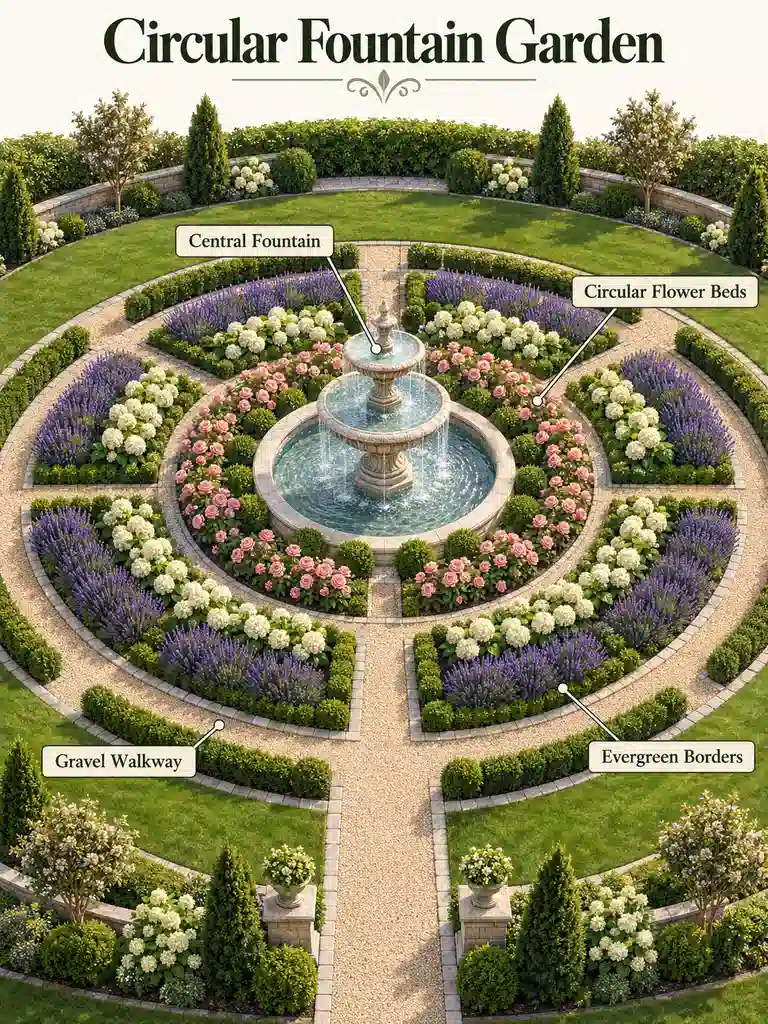
A central water fountain creates an elegant landscape focal point surrounded by beautifully arranged circular planting beds. Install a fountain in the middle of a level garden area, then create concentric borders featuring flowering perennials, compact shrubs, or fragrant herbs. Use gravel or natural stone pathways between the planting rings for comfortable movement and maintenance. Keep taller plants toward the outer edges to maintain clear views of the fountain. Choose a manageable recirculating water feature and maintain it regularly to keep the garden attractive and welcoming.
31. No-Dig Vegetable Garden with Mulched Walkways
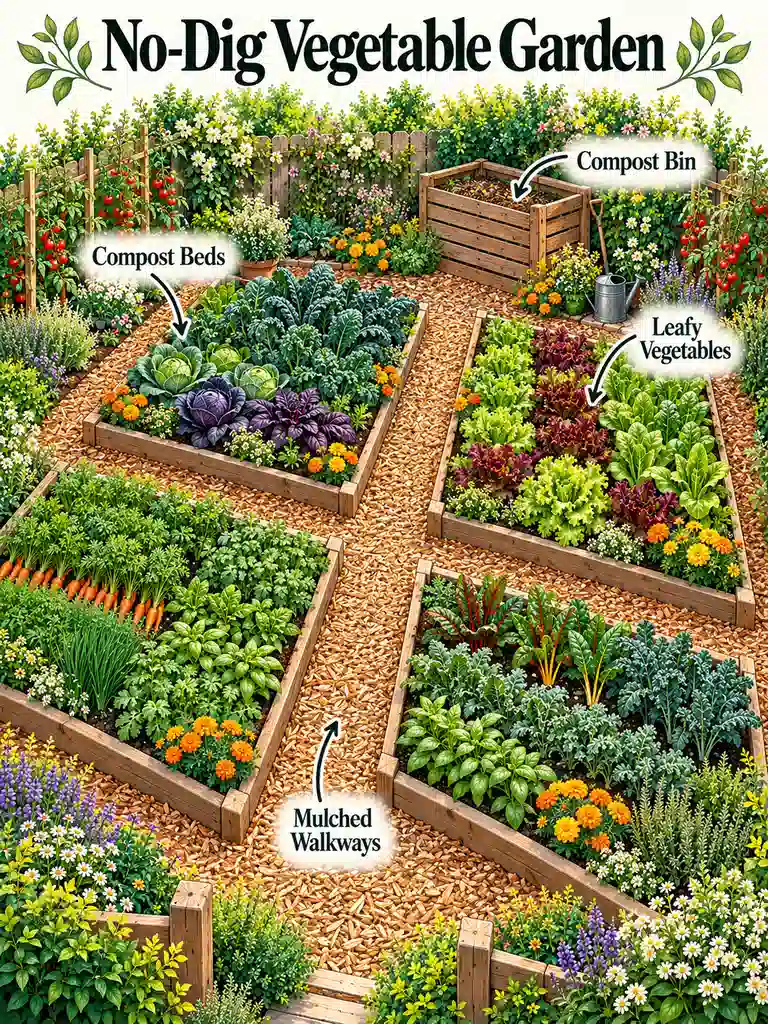
A no-dig vegetable garden combines productive planting areas with natural-looking pathways and minimal soil disturbance. Create rectangular growing beds enriched with compost, separating them with generous wood-chip or straw-mulched walkways. Plant seasonal vegetables, leafy greens, and herbs in organized sections, using wooden edging where needed to define the layout. Keeping the soil covered with organic materials helps protect its structure and retain moisture. This practical design creates a rustic, easy-to-navigate garden that can be expanded gradually as your growing space develops.
32. Backyard Greenhouse Garden with Surrounding Raised Beds
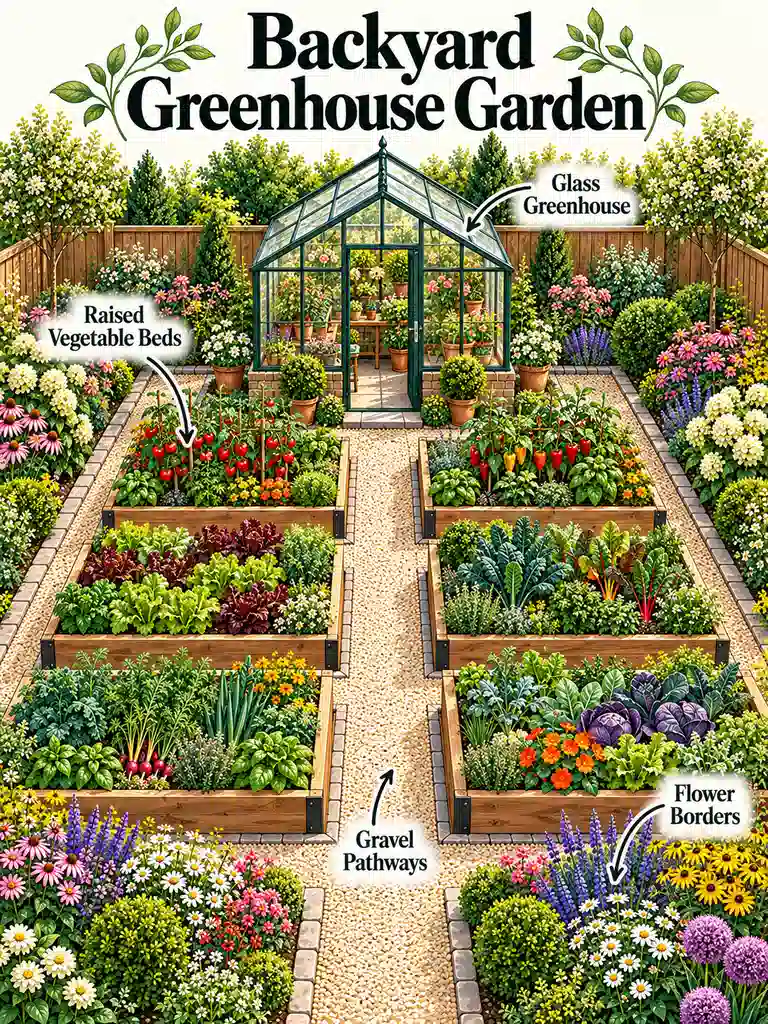
A backyard greenhouse can become an attractive centerpiece when surrounded by coordinated raised beds and carefully planned pathways. Position a compact greenhouse in a sunny, accessible location, then arrange matching wooden planters along its sides. Grow seasonal vegetables, flowers, and herbs outdoors while using the greenhouse for seed starting and suitable protected crops. Gravel walkways, decorative flower borders, and climbing plants on separate supports soften the structure’s appearance. Leave sufficient room for ventilation, door access, and regular maintenance.
33. Three-Zone Garden with Vegetables, Herbs, and Fruit Bushes
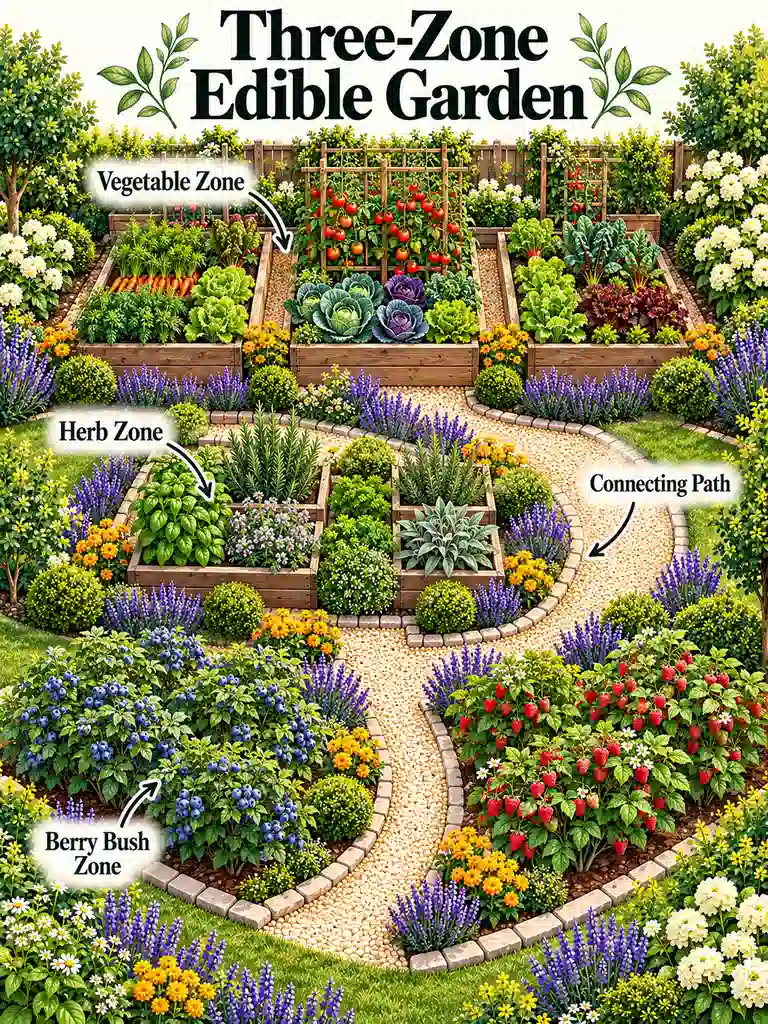
A three-zone garden divides your backyard into dedicated areas for growing vegetables, culinary herbs, and fruit bushes. Place sun-loving vegetable beds in the brightest section, position frequently harvested herbs near the kitchen, and arrange berry bushes along suitable garden boundaries. Connect the growing areas using winding gravel pathways bordered by seasonal flowers. This organized landscape makes everyday garden maintenance convenient while allowing each planting zone to have its own distinctive appearance. Repeated edging materials help visually connect the separate sections.
34. Woodland Shade Garden with Ferns and Natural Stone Paths
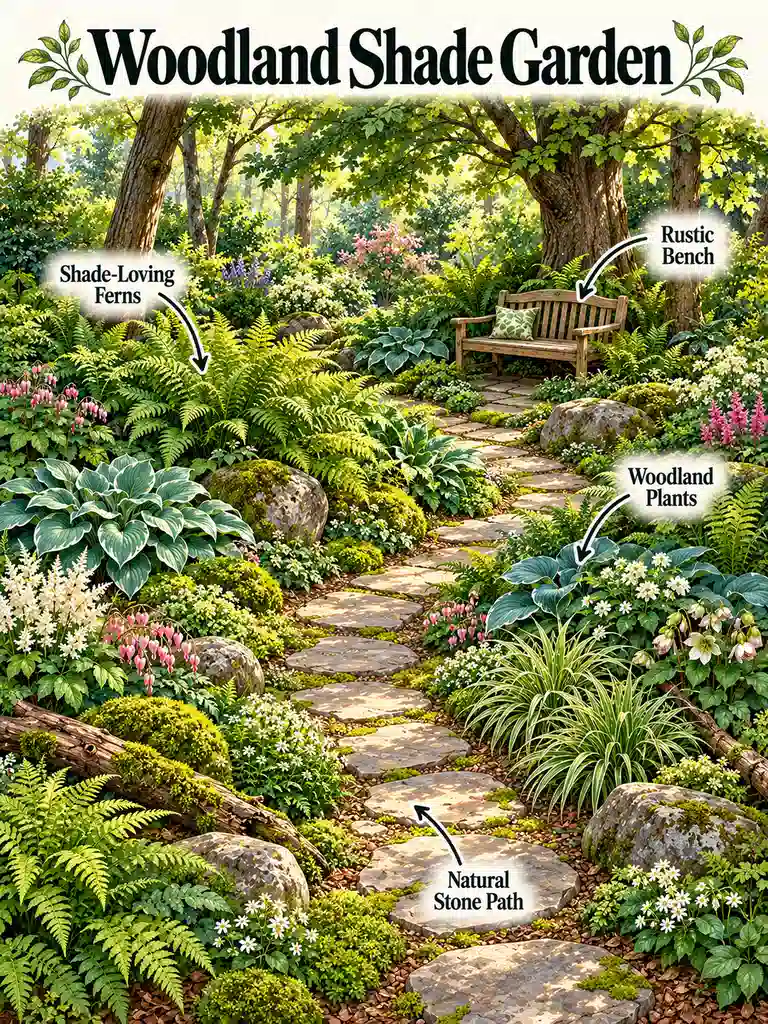
A woodland shade garden transforms a shady backyard into a peaceful retreat filled with rich foliage and natural textures. Combine ferns, suitable hostas, woodland perennials, and shade-tolerant groundcovers beneath established trees. Create winding paths using irregular stepping stones, allowing greenery to soften the edges. Decorative rocks, fallen logs, and a small wooden bench can enhance the forest-inspired atmosphere. Choose plants according to the available soil moisture and protect existing tree roots when preparing planting areas.
35. Keyhole Garden with Built-In Composting Center
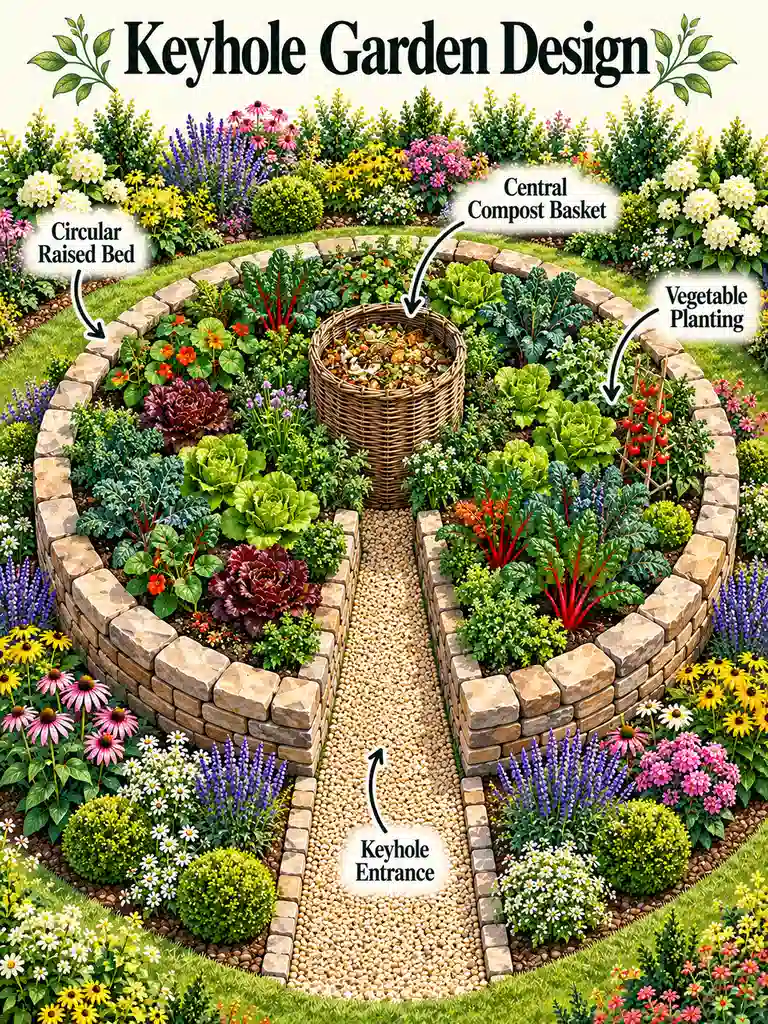
A keyhole garden features a circular raised planting bed with a narrow wedge-shaped access pathway leading toward its center. Build the outer structure using stone, brick, or suitable timber, then position a compost basket in the middle. Surround the basket with vegetables, herbs, and leafy greens arranged for convenient harvesting. The distinctive shape allows gardeners to reach the growing areas without stepping on the soil. This compact landscape works well where efficient planting arrangements and organic gardening practices are priorities.
36. Backyard Garden with a Dry Creek Bed Landscape
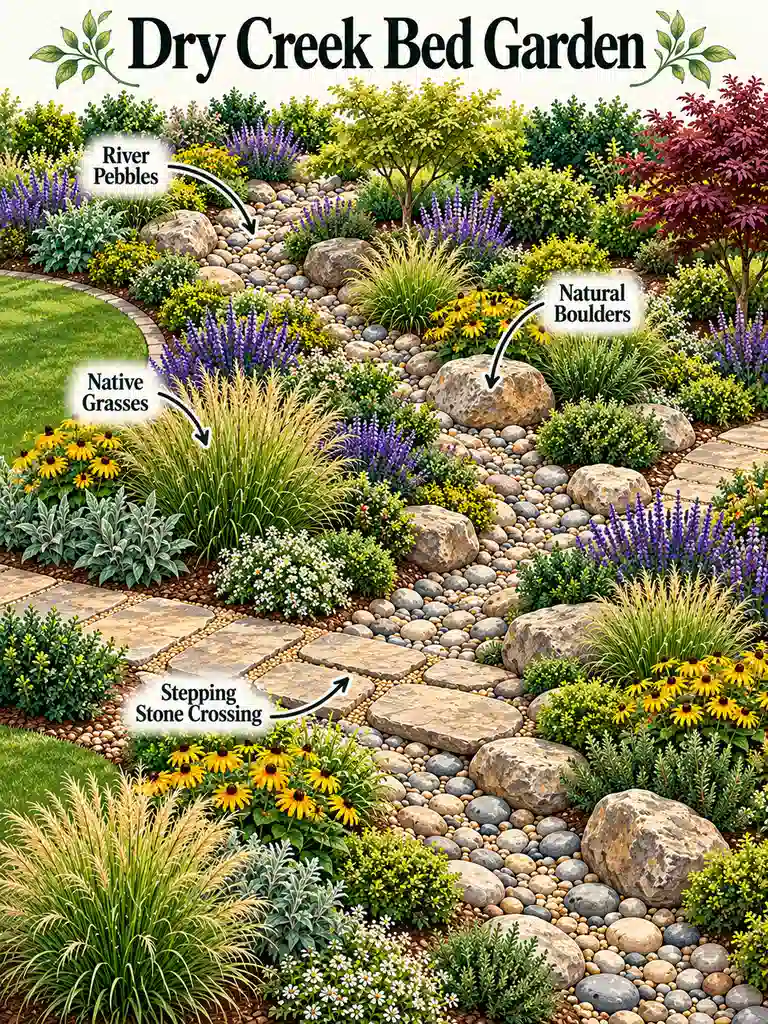
A dry creek bed introduces natural movement and texture into a backyard without requiring a permanent water feature. Create a gently winding channel filled with river pebbles, larger stones, and decorative boulders. Surround the edges with native grasses, flowering perennials, and compact shrubs to create the appearance of a natural stream. Add a stepping-stone crossing where pathways intersect the creek. If the feature is intended to manage rainwater, ensure its grading and drainage are professionally appropriate for your property.
37. Victorian-Inspired Garden with Decorative Iron Arches
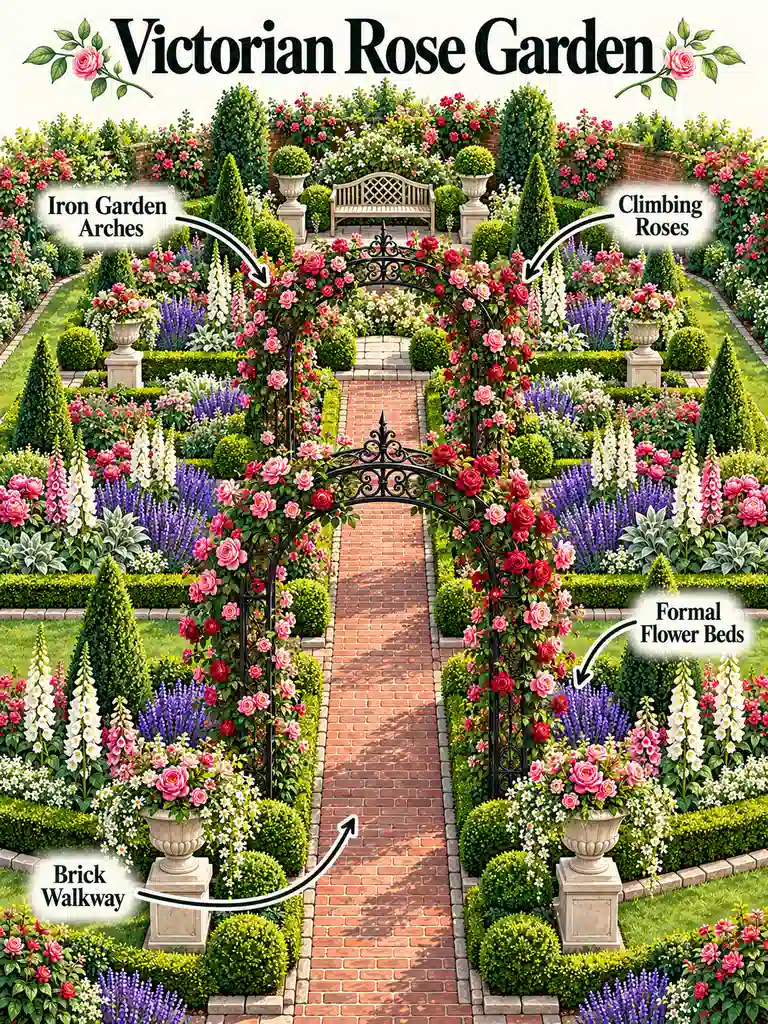
A Victorian-inspired garden brings traditional elegance outdoors with ornamental iron arches, structured flower borders, and classic decorative features. Install a metal archway above the main entrance and train climbing roses or flowering vines along its supports. Arrange lavender, peonies, and other traditional perennials beside brick or gravel pathways. Include symmetrical planting areas, decorative urns, and a vintage-style garden bench. The combination of architectural metalwork and abundant flowers creates a romantic landscape reminiscent of historic country estates.
38. Farmhouse Garden with a White Picket Fence
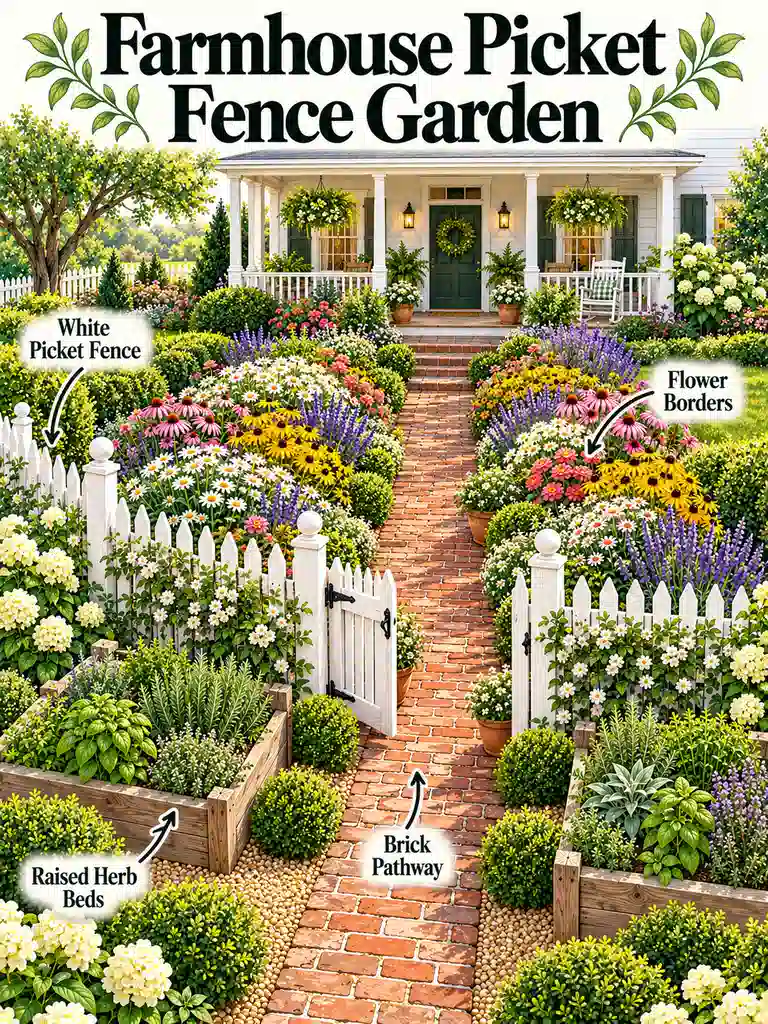
A farmhouse garden creates a welcoming country atmosphere using white picket fencing, cheerful flower borders, and rustic wooden accents. Add a simple gate opening onto a gravel or brick pathway, with daisies, coneflowers, and black-eyed Susans growing along the fence. Include wooden raised beds for vegetables and herbs, along with terracotta planters near the entrance. Keep planting arrangements informal but well maintained. This timeless design pairs beautifully with cottage-style homes and traditional backyard landscapes.
39. Sloped Backyard Garden with Zigzag Stone Pathways
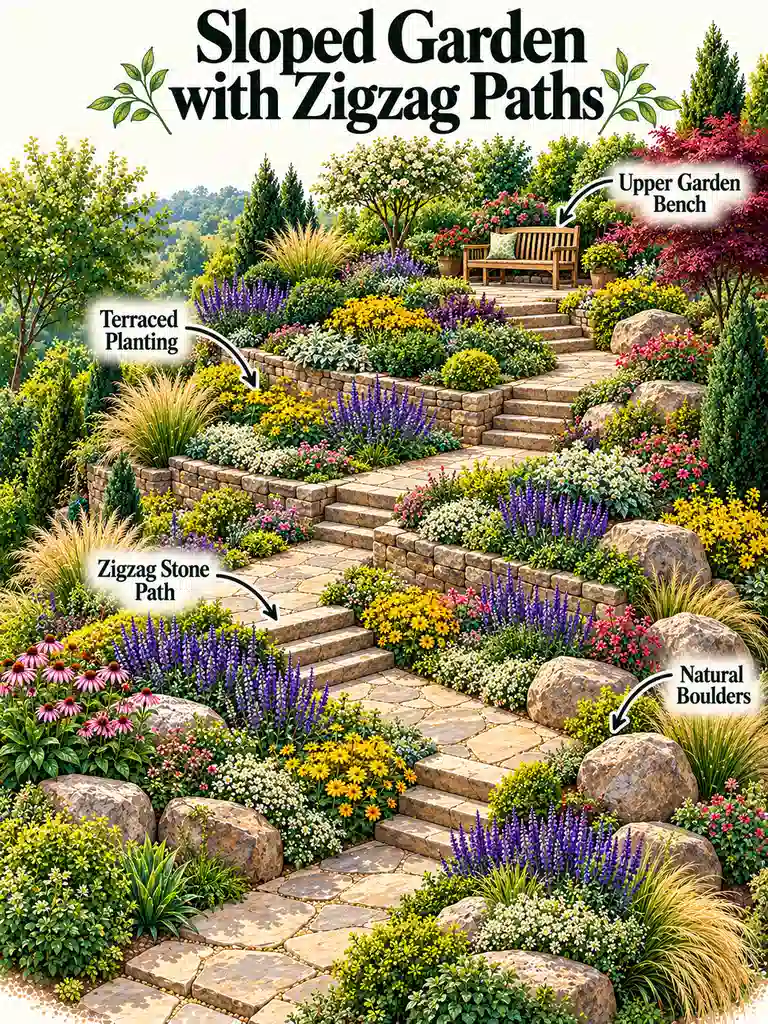
A sloping backyard becomes more attractive and accessible when landscaped with carefully planned zigzag pathways and layered planting areas. Create stone steps or gently graded walking routes that connect different levels, adding small landings where appropriate. Plant erosion-conscious shrubs, flowering groundcovers, and ornamental grasses along the slope. Natural boulders and stone edging help the garden blend with its surroundings. Drainage and slope stability must guide the design, especially where retaining structures or steep changes in elevation are involved.
40. Wildlife-Friendly Garden with a Small Natural Pond
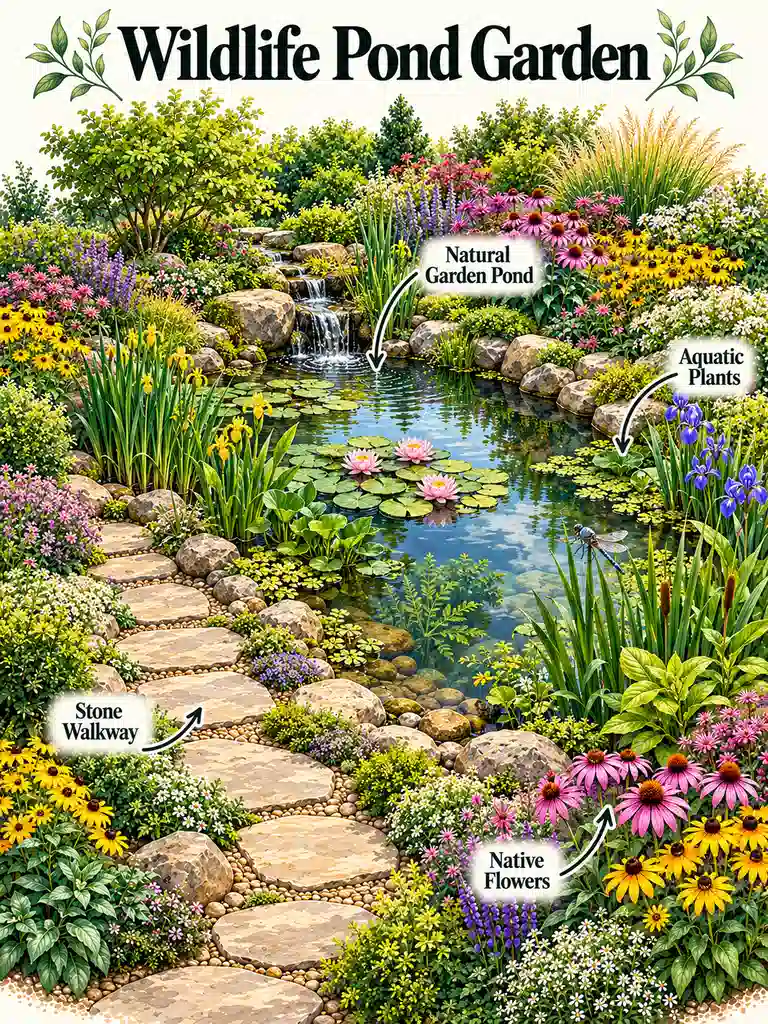
A wildlife-friendly pond garden introduces a beautiful water feature surrounded by naturalistic planting. Create a small pond with shallow edges, suitable aquatic plants, and decorative stones that provide varied habitat. Surround it with native flowers, grasses, and shrubs that attract beneficial wildlife. A curved stepping-stone pathway allows visitors to enjoy the water without disturbing surrounding plants. Choose regionally appropriate species, maintain water quality, and incorporate child and pet safety measures when planning the pond.
41. Tropical Garden Landscape with Dense Layered Foliage
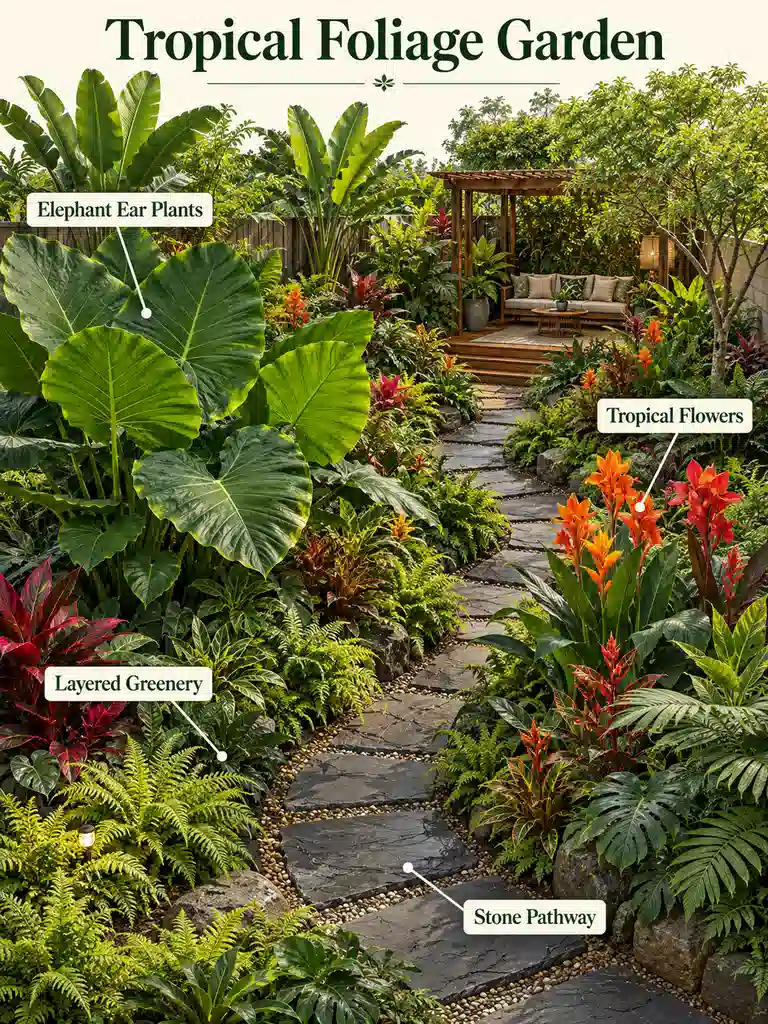
A tropical garden creates a lush outdoor atmosphere through oversized leaves, bold textures, and dense planting arrangements. Combine banana-like foliage, elephant ears, ferns, and colorful flowering plants suited to your climate. Position taller specimens along fences or rear borders, then layer smaller foliage plants beside winding stone pathways. Add timber accents, decorative boulders, or a shaded seating area. In cooler regions, hardy tropical-looking plants and movable containers can recreate the appearance without relying entirely on frost-sensitive varieties.
42. Raised Planter Garden with a Central Fire Pit Seating Area
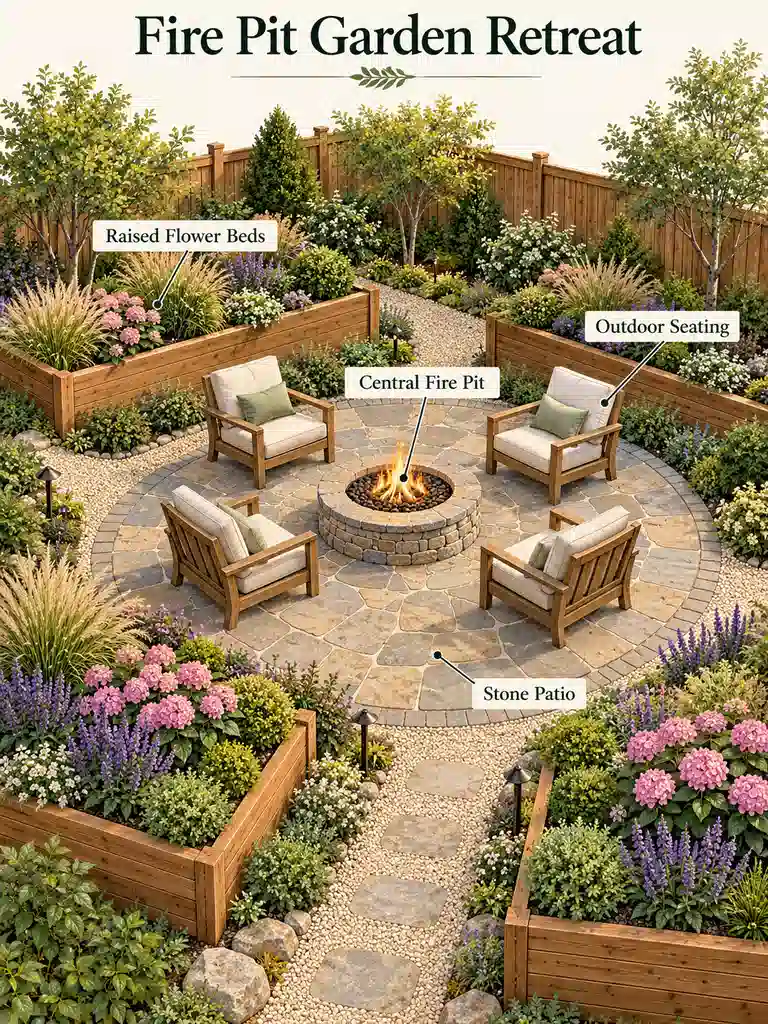
A central fire pit surrounded by decorative raised planters creates a comfortable backyard gathering space. Arrange seating around a properly installed fire feature, using stone or another suitable noncombustible surface beneath it. Position raised beds farther away, filling them with ornamental grasses, flowering perennials, and compact shrubs. Gravel pathways connect the seating area with the surrounding garden. Follow local fire regulations and manufacturer clearance requirements, ensuring mature plants remain safely separated from heat and flames.
43. Herb and Salad Garden with a Wheel-Shaped Layout
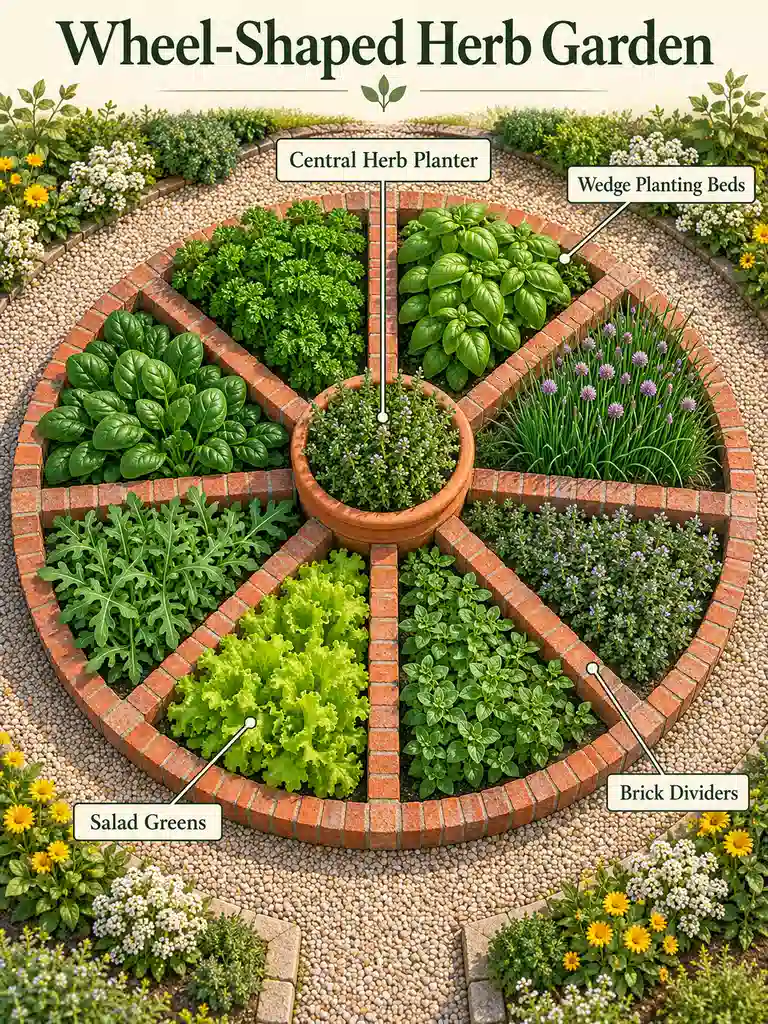
A wheel-shaped herb garden creates a decorative circular planting arrangement divided into wedge-shaped sections. Use bricks, natural stones, or narrow pathways to separate individual growing areas for basil, parsley, chives, thyme, oregano, lettuce, arugula, and spinach. Place a decorative planter or compact herb at the center to emphasize the geometric layout. Keep each section accessible for harvesting and watering. This design makes an attractive kitchen garden feature while organizing different herbs and vegetables in a relatively small space.
44. Formal Garden with Boxwood Hedges and Flower Parterres
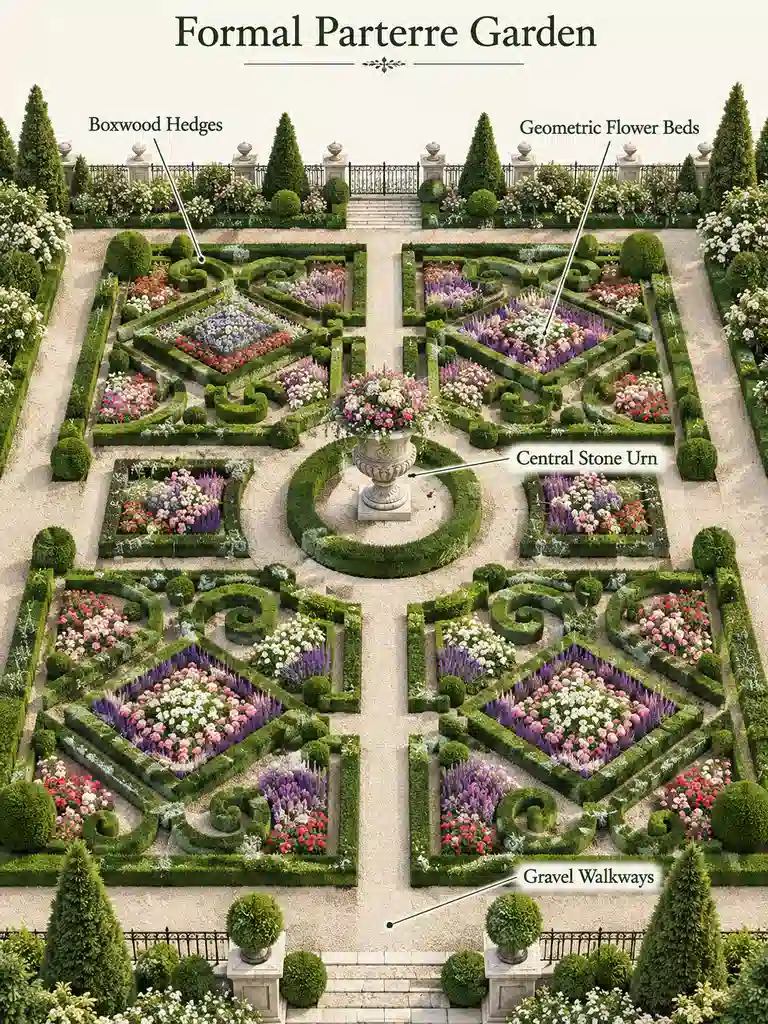
A formal parterre garden creates an elegant landscape using low hedges arranged into precise geometric planting patterns. Outline square, rectangular, or decorative curved beds with boxwood or regionally suitable evergreen alternatives. Fill the enclosed sections with seasonal flowers, colorful foliage, or compact perennials. Gravel pathways between the beds emphasize the structured layout, while a central urn or sculpture provides a classic focal point. Regular pruning and maintenance preserve the crisp shapes that define this traditional garden style.
45. Complete Backyard Food Forest with Layered Edible Plants
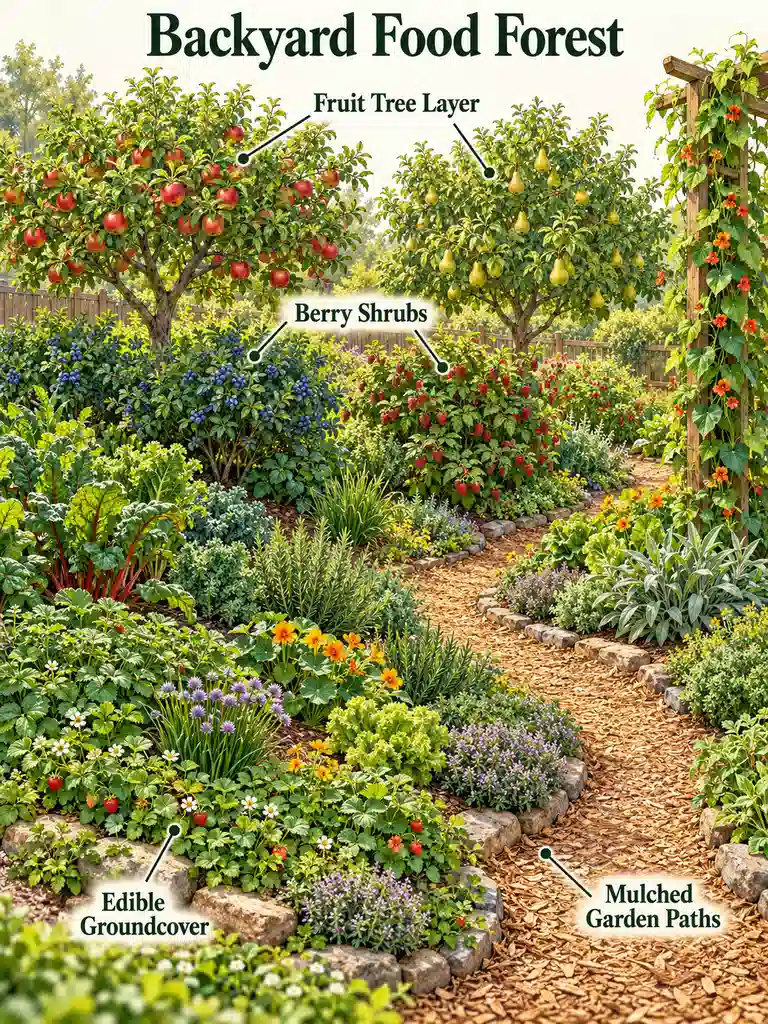
A backyard food forest transforms an outdoor area into a diverse edible landscape inspired by natural woodland ecosystems. Start with appropriately spaced fruit trees, then add berry bushes, perennial vegetables, culinary herbs, and suitable edible groundcovers beneath and around them. Incorporate climbing plants on independent supports and create winding mulch pathways for harvesting access. Select species based on sunlight, climate, and mature size to reduce competition. With thoughtful planning, the different planting layers can create a productive, attractive garden over time.
Practical Tips for Planning Your Garden Landscape
Before starting your garden transformation, consider these essential planning tips to create an outdoor space that is beautiful, functional, and manageable.
Understand sunlight and shade: Observe how sunlight moves across your backyard throughout the day. Position sun-loving vegetables and flowers in brighter areas, while reserving shaded sections for suitable foliage plants.
Choose practical pathways: Gravel, natural stone, brick, and mulch pathways help connect different garden zones. Provide enough width for comfortable walking, watering, and transporting gardening supplies.
Combine different plant heights: Arrange taller trees and shrubs behind medium-height flowering plants, with low-growing groundcovers near pathway edges. Allow adequate space for mature growth.
Plan watering and drainage: Consider soil conditions, irrigation access, and natural drainage before installing permanent garden features. Group plants with similar watering requirements together.
Keep maintenance manageable: Choose plants suitable for your climate and gardening experience. Begin with a few well-designed planting areas and expand gradually.
Frequently Asked Questions About Garden Landscape Design Ideas
What Is the Easiest Garden Landscape Design for Beginners?
A simple raised bed garden with gravel or mulch pathways is one of the easiest options for beginners. Start with a few manageable planters, easy-care flowers, and vegetables suited to your climate. This layout makes watering, weeding, and harvesting straightforward.
How Can I Make a Small Backyard Garden Look Beautiful?
Use vertical trellises, compact flower beds, curved pathways, and layered planting arrangements to maximize visual interest. Keep the central area relatively open and introduce one attractive focal point, such as a decorative planter, wooden bench, or climbing flower arch.
What Is the Most Affordable Way to Landscape a Garden?
Begin with existing plants, inexpensive seeds, divided perennials, and locally available mulch. Reuse suitable stones or bricks for garden edging and create simple planting beds before investing in expensive decorative features. Developing your landscape gradually can help spread costs.
How Do I Plan a Garden Landscape Layout?
Start by measuring your outdoor space and sketching existing trees, fences, structures, and pathways. Identify sunny and shaded areas, evaluate drainage, and decide where planting beds and seating areas should go. Select plants according to their mature sizes and growing requirements.
Conclusion
Creating a beautiful garden begins with choosing a layout that complements your outdoor space, lifestyle, and gardening goals. From colorful cottage gardens and elegant formal landscapes to practical vegetable beds and peaceful woodland retreats, there are countless ways to transform an ordinary yard into something extraordinary.
These 45 garden landscape design ideas offer inspiration for backyards of different sizes, styles, and budgets. Choose your favorite design, adapt it to your local growing conditions, and start creating a garden you’ll enjoy throughout the seasons.
Save these garden landscape design ideas on Pinterest to inspire your next backyard makeover!