 Skip to content
There’s a reason lanterns keep showing up in wedding décor year after year: they are easy to move, they photograph beautifully, and they can change completely depending on the flowers around them.
A plain black lantern can feel soft and romantic with white roses and trailing greenery. A wooden lantern immediately leans rustic when you add wildflowers. Brass and gold lanterns can look formal with hydrangeas, orchids, or garden roses. The same basic object can work at a barn wedding, a beach ceremony, a hotel ballroom, or a garden reception.
If you are collecting flowers on lanterns wedding ideas, do not look only at the flowers. Think about where the lantern will sit, how close guests will be, whether people need to walk past it, and what the venue already gives you. A ceremony aisle needs different styling from a dinner table. A welcome sign can handle a fuller arrangement because nobody is trying to see over it. A beach needs sturdy pieces. A ballroom can take more shine.
The ideas below are arranged the way I would actually think about them while planning a wedding: first the softer romantic looks, then rustic and aisle arrangements, followed by reception styling and outdoor ideas. Every example can be adapted to your own colors, budget, and venue.
Romantic Flowers on Lanterns Wedding Ideas
1. White Roses and Eucalyptus Around an Ivory Lantern
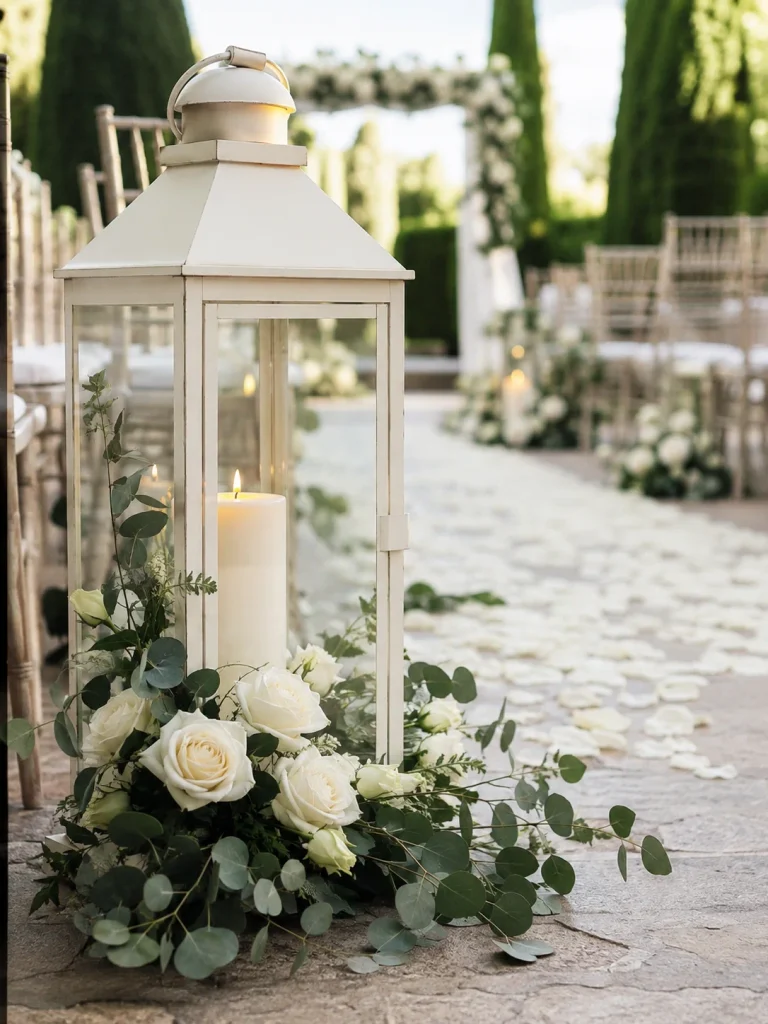
If you want a lantern arrangement that feels romantic without looking overworked, start with white roses and eucalyptus. An ivory lantern keeps the look light, while the soft green leaves stop the arrangement from becoming too formal. I like the flowers concentrated at one lower corner instead of wrapped evenly around the entire lantern. That little bit of imbalance makes the arrangement feel more natural.
This is an easy style to repeat along an aisle because you do not need a huge number of flowers for every lantern. Place one every second or third row and let the eucalyptus trail slightly onto the floor. If the wedding is outdoors, use a heavier lantern or secure it discreetly so a breeze cannot knock it over.
2. Blush Roses on an Antique Gold Lantern
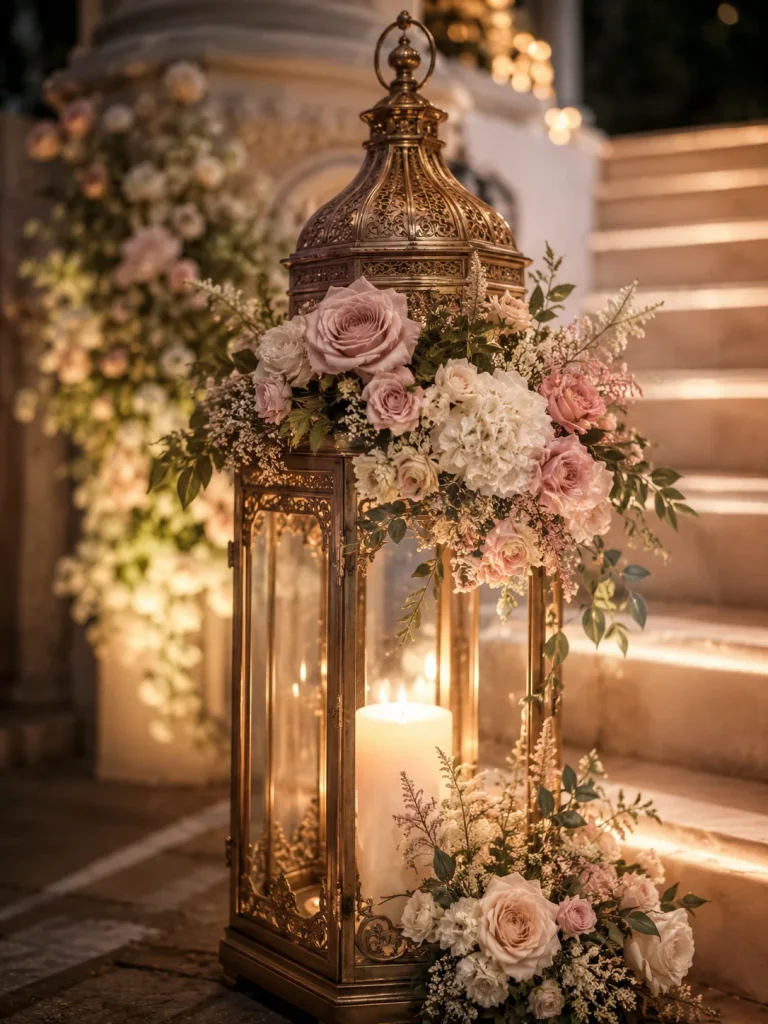
Blush roses and antique gold are a lovely match when you want warmth rather than bright, shiny glamour. Choose a lantern with a slightly aged finish and keep the flowers in soft pink, cream, and champagne tones. A few spray roses help fill small gaps without making the arrangement bulky.
This one looks especially good near a staircase, welcome area, or reception entrance, where guests will see it from fairly close range. Keep the greenery restrained. Too much dark foliage can overpower the delicate color palette. At an evening wedding, a warm LED pillar candle inside the lantern will bring out the gold finish and make the blush flowers look even softer in photographs.
3. A Baby’s Breath Cloud Around a White Lantern
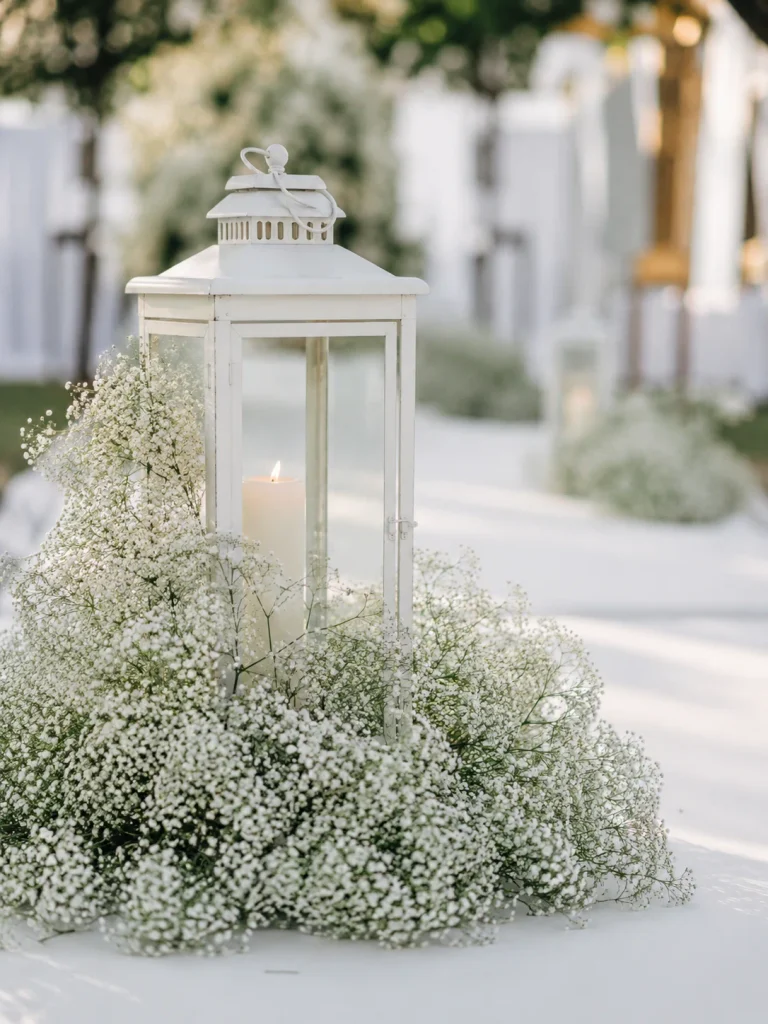
Baby’s breath works best when it is allowed to stay loose and airy. Instead of creating a tight round bouquet, build a soft cloud around the base of a white lantern and let a few stems rise up one side. The lantern should still be clearly visible through the flowers.
I would use this for a white ceremony, chapel wedding, garden aisle, or marquee where the overall palette is already light. It is also a practical choice if you need several arrangements and do not want to use premium blooms everywhere. The texture is delicate, the color photographs cleanly, and the repeated clouds can make a long aisle feel beautifully finished without looking heavy.
4. White Hydrangeas for a Fuller Lantern Arrangement
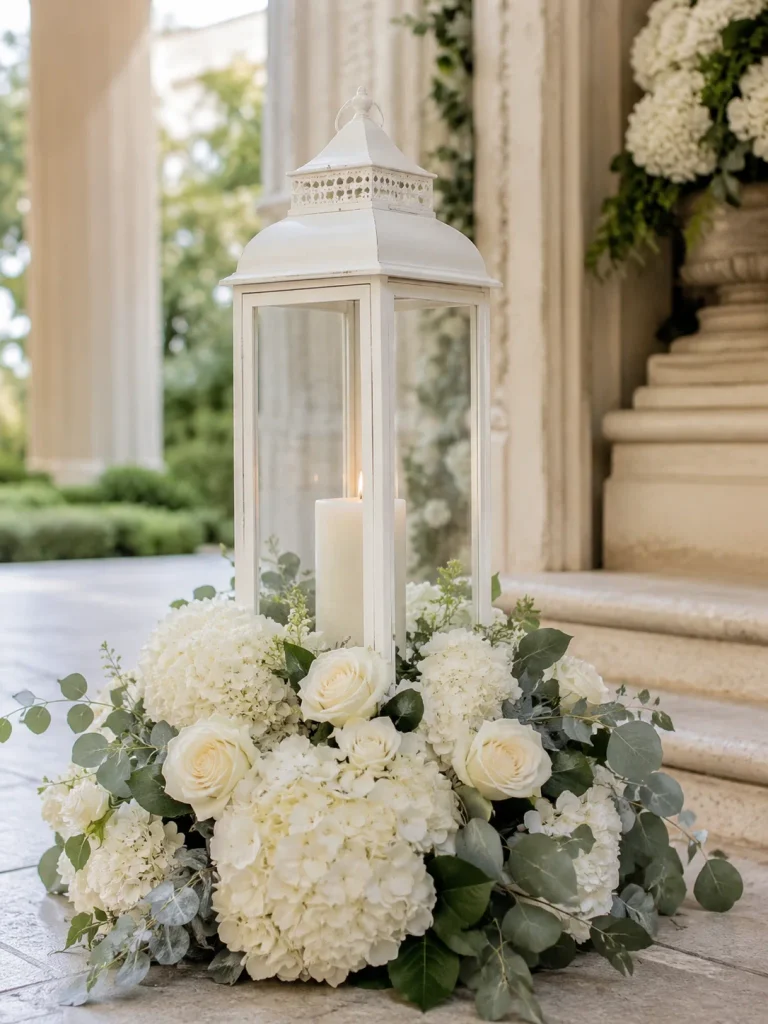
Hydrangeas are useful when you need visual impact quickly. Two or three large heads can fill the base of a tall lantern without requiring dozens of individual flowers. Add a few ivory roses and some eucalyptus to break up the rounded hydrangea texture, then let the greenery extend slightly beyond the flowers.
This is a strong option for the altar, venue entrance, fireplace, or the bottom of a staircase. Just remember that fresh hydrangeas can be thirsty flowers, especially in warm weather. If they are going to sit outside for several hours, proper hydration matters. For a hot-weather event, you may prefer high-quality faux hydrangeas mixed with fresh roses and greenery.
5. Blush Peonies With Cream Garden Roses
Peonies have so much natural shape that you really do not need to crowd them. A few large blush peonies with cream garden roses can turn a simple lantern into a statement piece. Keep the greenery loose and let one or two stems reach upward so the arrangement feels less like a compact bouquet.
Because peonies are beautiful up close, use this style where guests can actually appreciate the petal detail. A cake table, sweetheart table, guest-book area, or the front rows of the ceremony are all good choices. If fresh peonies are out of season, good silk versions can work surprisingly well, especially when mixed with real foliage.
6. White Orchids Cascading Down a Black Lantern
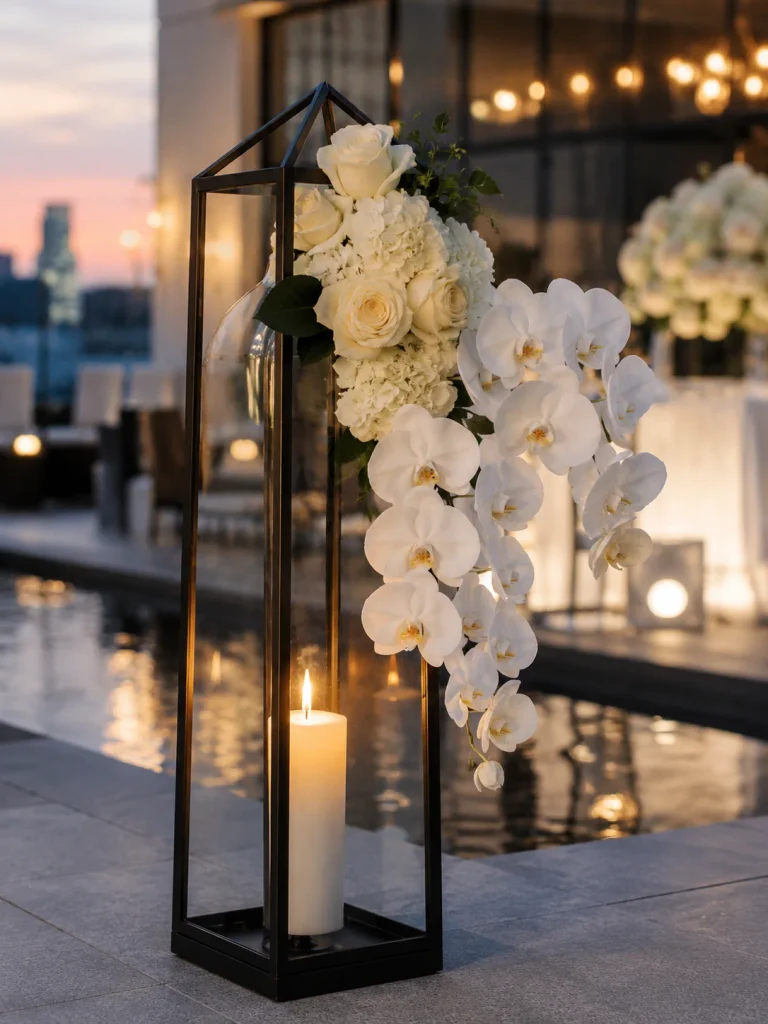
For a cleaner, more modern look, switch the usual white lantern for a tall black one and bring in cascading white orchids. The contrast is what makes this arrangement work, so resist the temptation to cover too much of the metal frame. One floral cluster near the upper corner, with orchid stems falling down one side, is often enough.
I would use this at a hotel wedding, rooftop reception, modern ballroom, or black-and-white celebration. Keep the supporting flowers simple—white roses or hydrangeas are enough—and use greenery sparingly. The lantern’s structure should remain part of the design instead of disappearing behind flowers.
7. Champagne Roses With a Rose-Gold Lantern
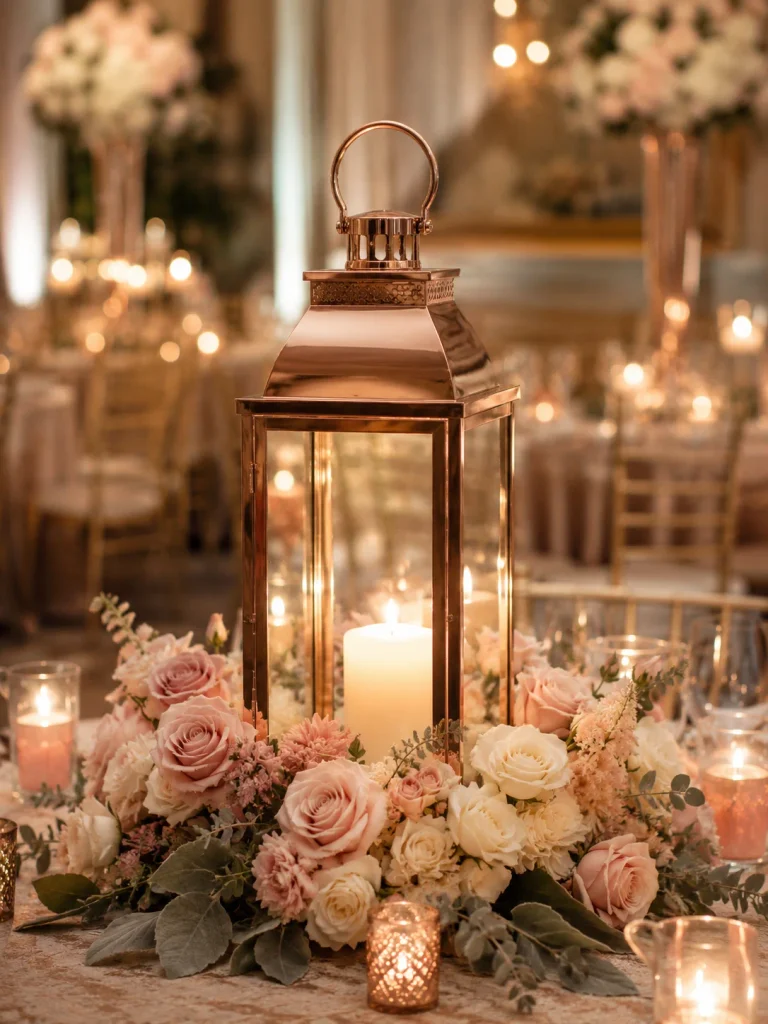
Rose gold can become overly sweet if it is paired with too much pink, so I would soften it with champagne roses, ivory blooms, and a touch of dusty greenery. The colors should sit close together rather than compete. A warm candle inside the lantern will pick up the metallic finish beautifully.
This style is particularly good for indoor evening receptions. On a dining table, keep the flowers low around the lantern so guests can still see one another comfortably. If the room already has a lot of metallic décor, do not add more shine around the base. Let the lantern itself provide the sparkle.
8. Ranunculus With Wispy Greenery
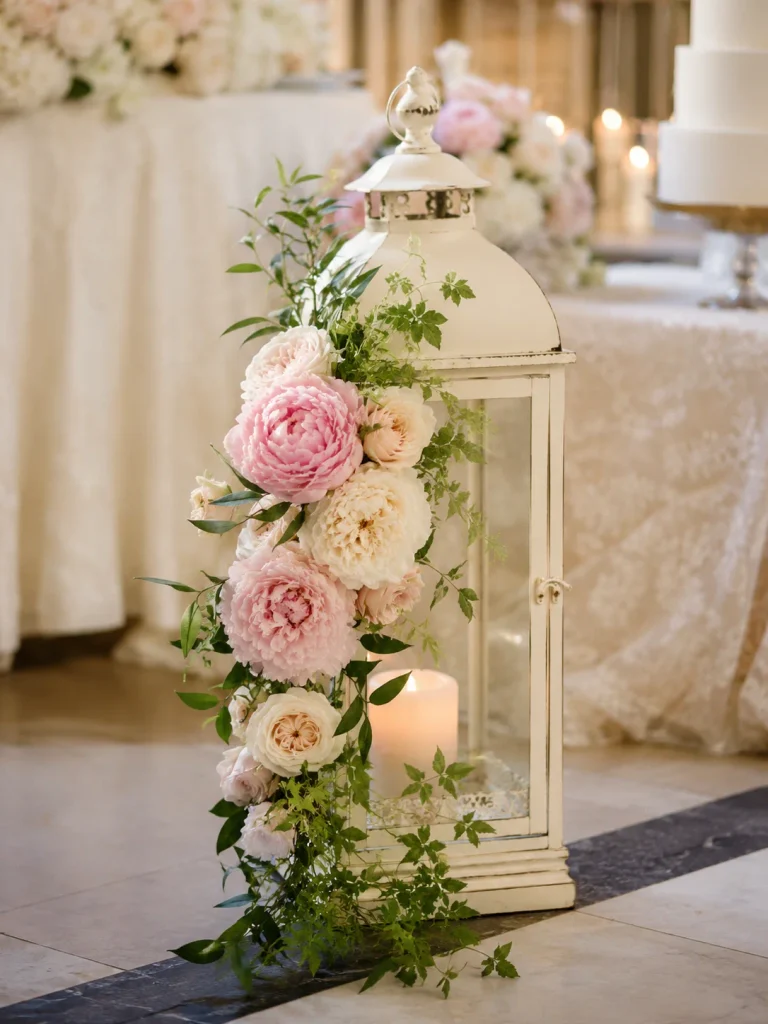
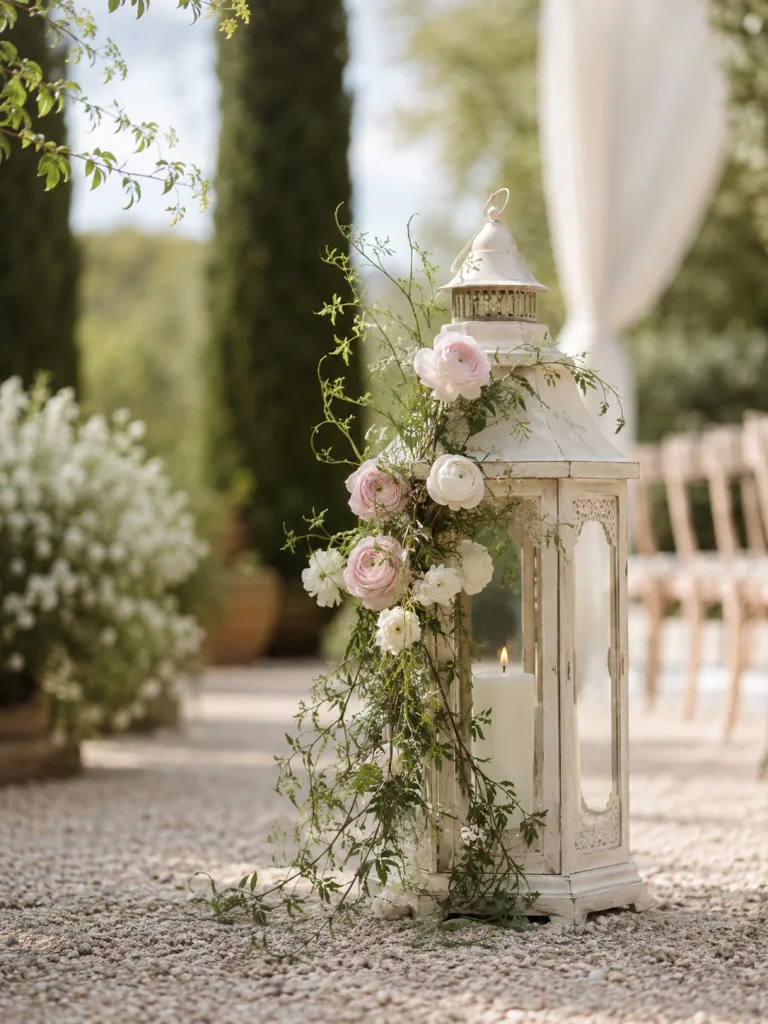
Ranunculus are ideal if you like that loose, slightly editorial floral style. Their layered petals are delicate, but the flowers are smaller than peonies, so you can create movement without making the lantern look too heavy. Mix pale pink and ivory blooms with slender greenery, and let some flowers sit lower or turn slightly away from the camera.
That variation is what makes the arrangement feel believable. It should not look as though every bloom was placed to face forward. Garden weddings, spring ceremonies, intimate receptions, and European-inspired venues all suit this look nicely.
Rustic Lantern Looks That Still Feel Elegant
9. Natural Wood Lantern With Loose Wildflowers
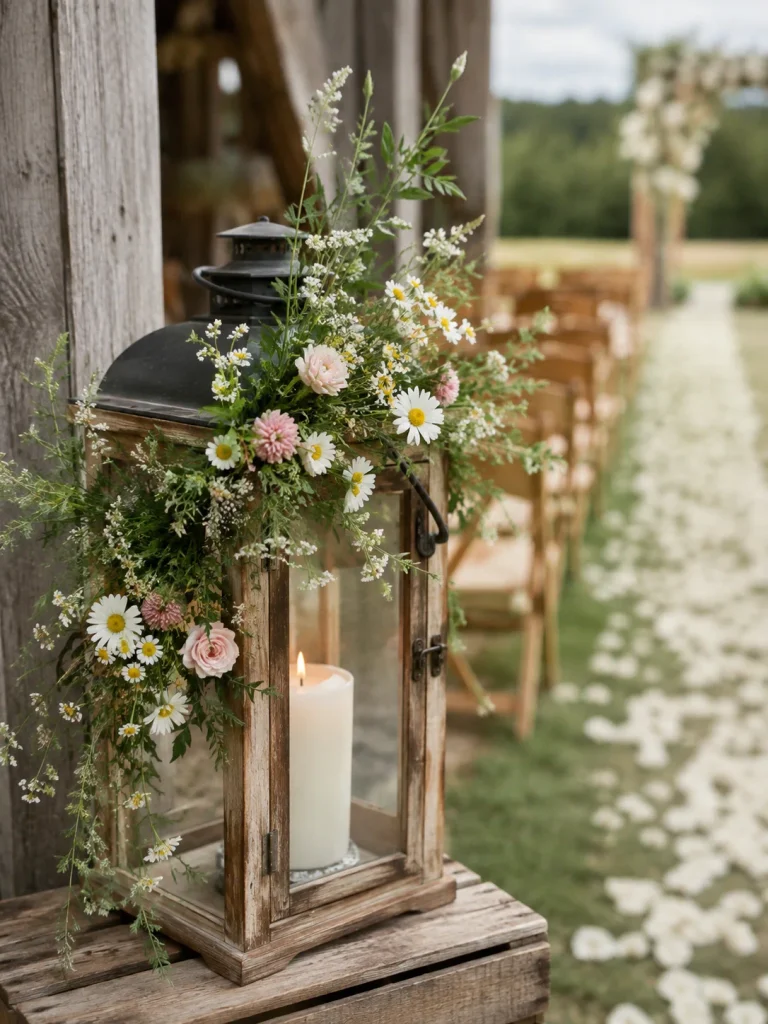
For a rustic wedding, I would skip the burlap and let the materials do the work. A natural wood lantern already brings warmth, so pair it with flowers that look freshly gathered: daisies, chamomile, Queen Anne’s lace, tiny roses, and a few taller meadow stems. Keep the edges uneven.
This arrangement belongs in a barn, vineyard, countryside garden, or outdoor venue where you already have wood, stone, or grass around you. Place it on the ground, a low crate, or a tree stump. The more natural the surroundings, the less styling you need to make the lantern feel at home.
10. Sunflowers, but Keep Them Under Control
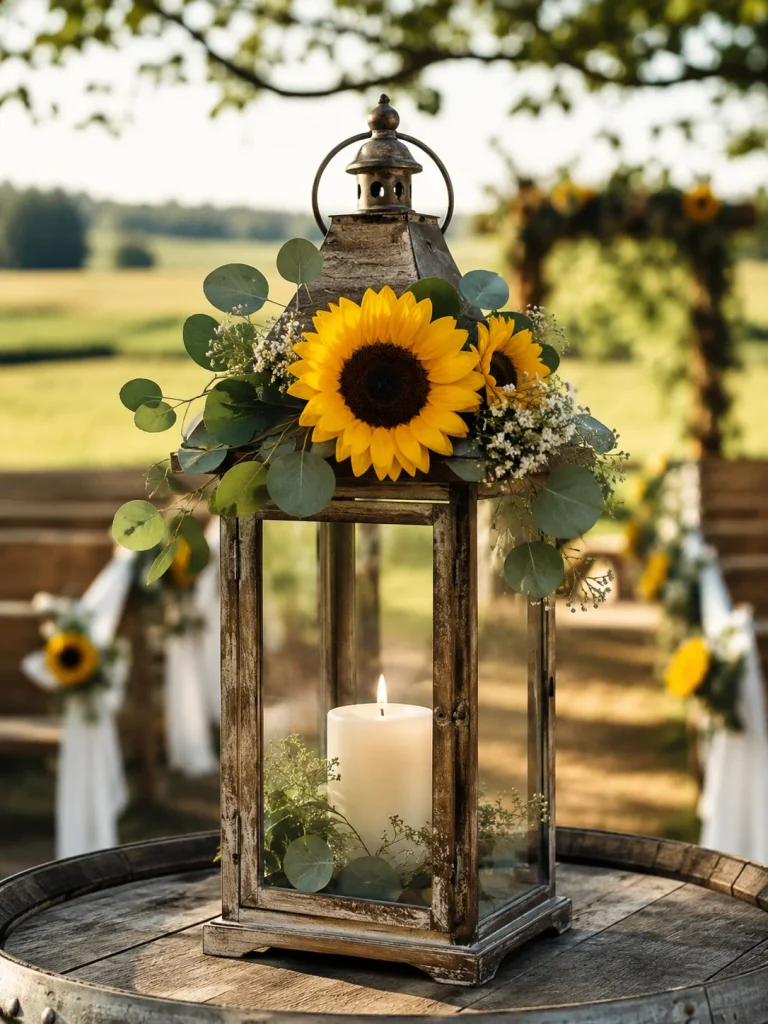
Sunflowers make a big statement, which is exactly why you should use them carefully. One or two large heads can anchor the base of a rustic lantern, then eucalyptus and small white flowers can soften the edges. If you surround the lantern with too many sunflowers, the lantern disappears.
This idea is lovely for late-summer and early-autumn weddings, especially at farms and barn venues. Repeat the sunflower color elsewhere in smaller doses—perhaps in the welcome arrangement or bridal bouquet—so the lantern does not feel like a random yellow moment in an otherwise neutral wedding.
11. Lavender Tied Near the Handle
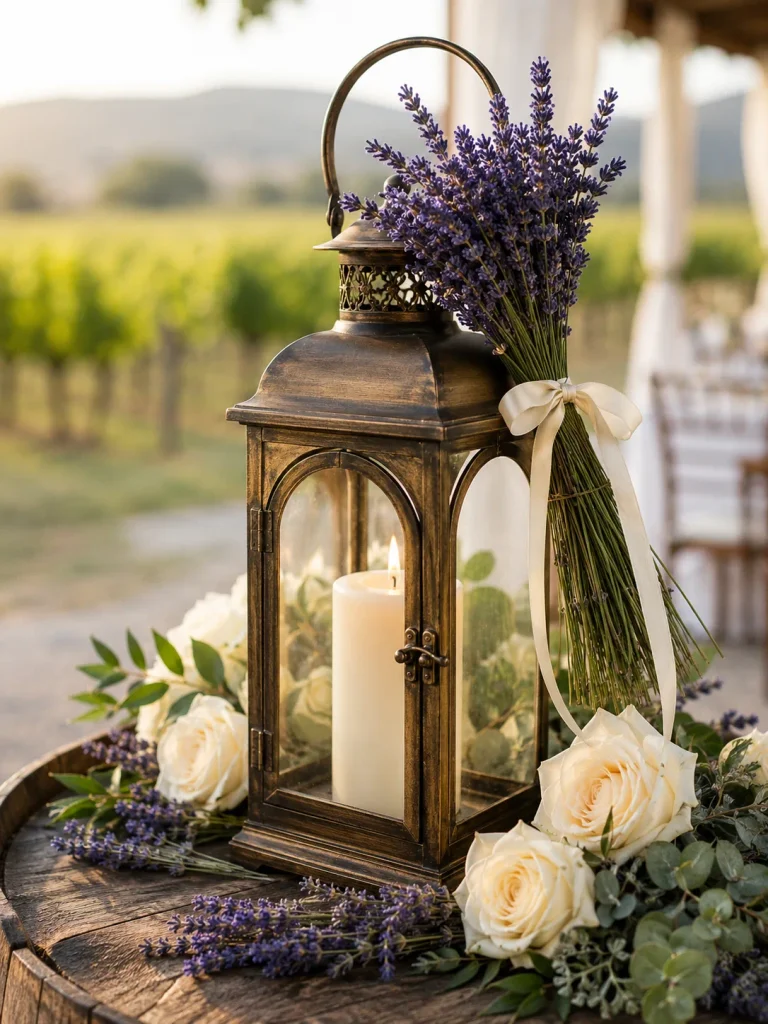
Lavender is one of those small details that can make a lantern feel personal. Tie a neat bundle near the handle with ivory silk ribbon, then repeat a little lavender around the base with cream roses and eucalyptus. The fragrance is a bonus, especially at a vineyard or countryside wedding.
Keep the ribbon soft rather than stiff, and let the lavender stems hang naturally. If you plan to use this arrangement on dining tables, check that the scent will not be too strong for guests seated nearby. Around entrances, ceremony aisles, and lounge areas, that is rarely a concern.
12. Daisies and Olive Branches
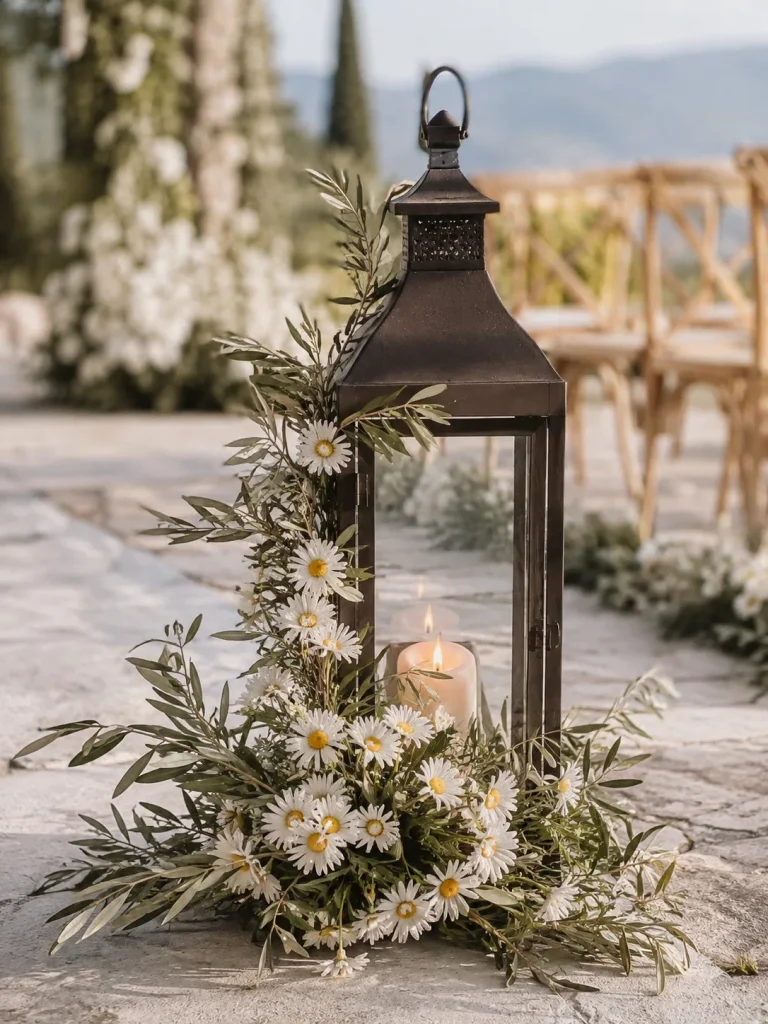
If roses feel too formal, daisies can completely change the mood. Pair a dark metal lantern with white daisies and long olive branches, keeping the flowers loose around one side. The yellow centers add just enough color without pushing the arrangement into a bright palette.
This is a good choice for a relaxed outdoor wedding, garden lunch, farmhouse celebration, or Mediterranean-inspired setting. I would not pack the base tightly. Let some stone, wood, or grass show through so the arrangement still feels casual.
13. Burgundy Roses for an Autumn Wedding
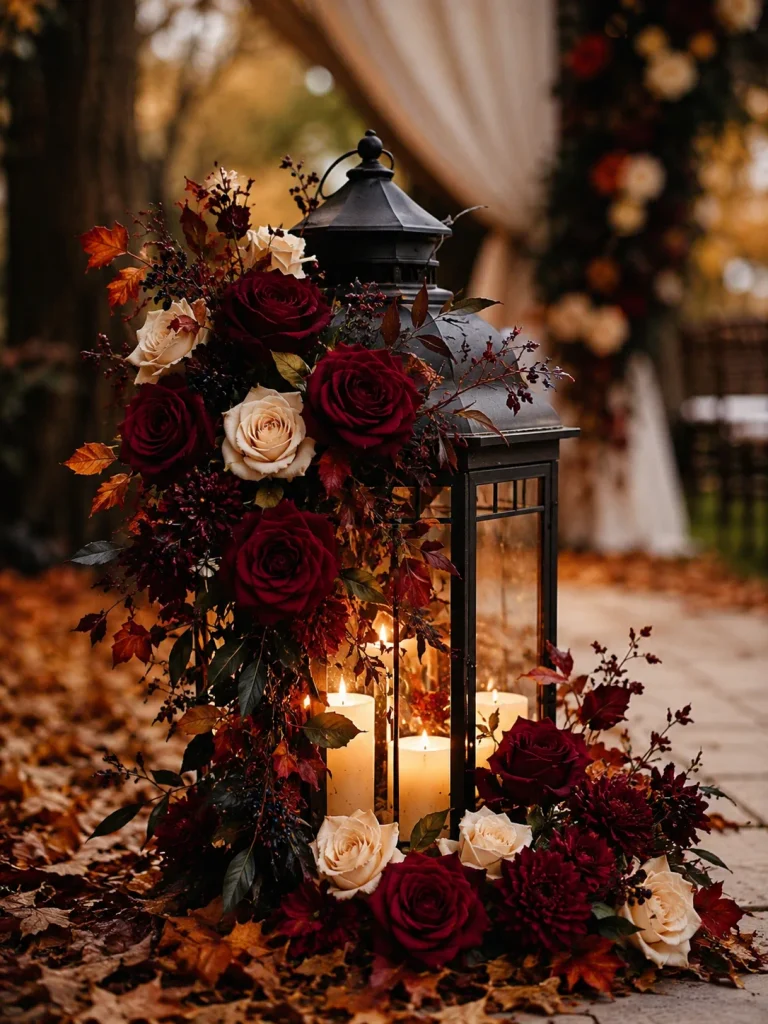
Deep burgundy roses can make a lantern arrangement feel dramatic without needing a huge amount of décor. Use a black or dark bronze lantern, then add burgundy roses, a few cream blooms, berries, and autumn-toned foliage. The lighter flowers are important—they keep the arrangement from turning into one dark mass.
This style works beautifully for fall weddings with wood tables, amber lighting, and richer textiles. I especially like it near the ceremony entrance or along a path where the candlelight can show through the darker flowers after sunset.
14. Pampas Grass With Dusty Rose Flowers
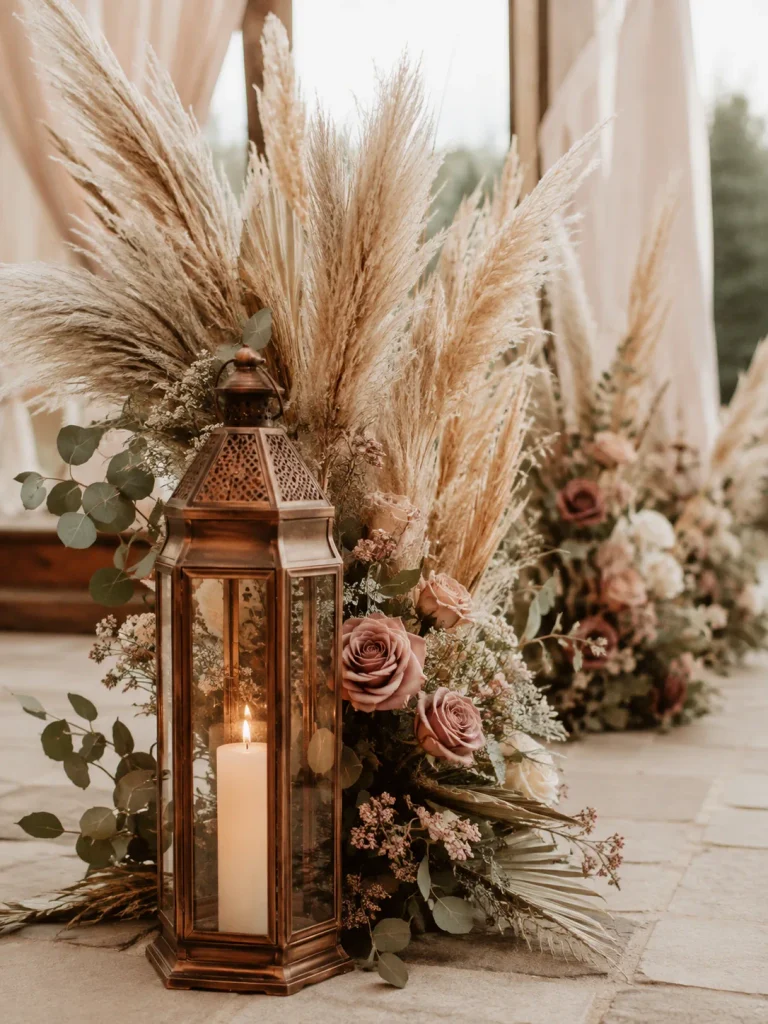
For a boho look, give the arrangement some width. Pampas grass looks best when it extends beyond the lantern rather than being cut into tiny tufts. Add dusty rose flowers, cream roses, and dried foliage around the base, then let the taller pampas create the background.
This style suits barns, open fields, desert venues, and neutral modern spaces. Because pampas and dried leaves are flammable, I would use an LED candle rather than a real flame. It is a small safety choice that lets you style the flowers much more freely.
15. White Garden Roses on Bare Wood
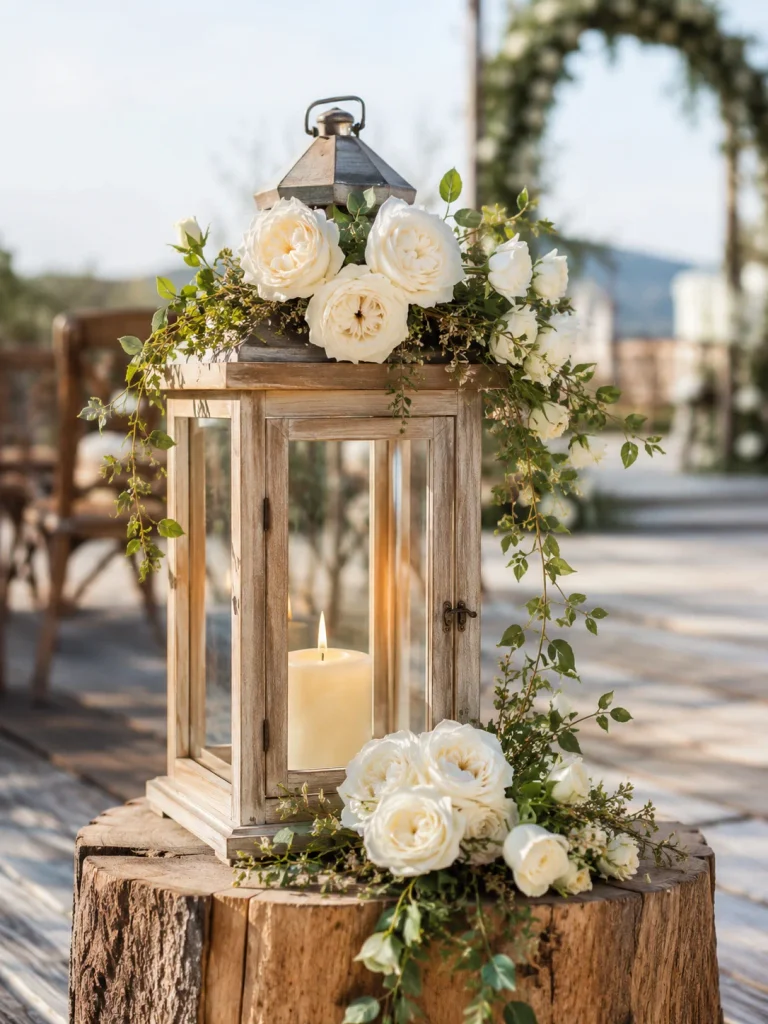
Natural wood and white garden roses are enough on their own. You do not need five flower types, several ribbons, and extra props. Use a simple wooden lantern, tuck white roses along one side, and finish with trailing greenery. The contrast between the soft petals and unfinished wood gives the arrangement its character.
I would place this beside a wooden ceremony deck, barn entrance, or simple garden arch. It is rustic, but it does not depend on distressed accessories or obvious country styling, which keeps it feeling fresh.
16. Vintage Brass Lantern With Meadow Flowers
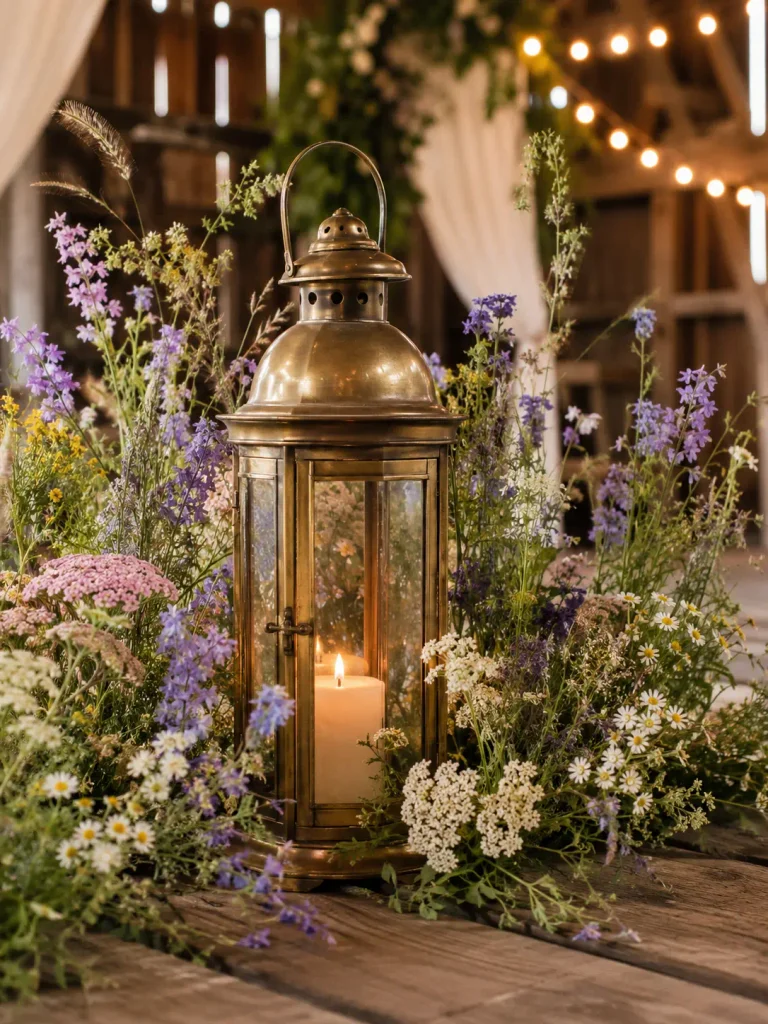
A vintage brass lantern becomes much more relaxed when you surround it with meadow flowers instead of formal roses. Think small daisies, lavender flowers, pale pink blooms, and soft yellow accents. Vary the height and let a few stems lean outward.
The goal is not to create a perfect circle. It should feel as though the flowers happened to grow around the lantern. This is particularly nice at a garden reception, old stone venue, or summer countryside wedding where a little imperfection suits the setting.
Wedding Aisle Lantern Ideas
17. White Rose Lanterns Every Few Rows
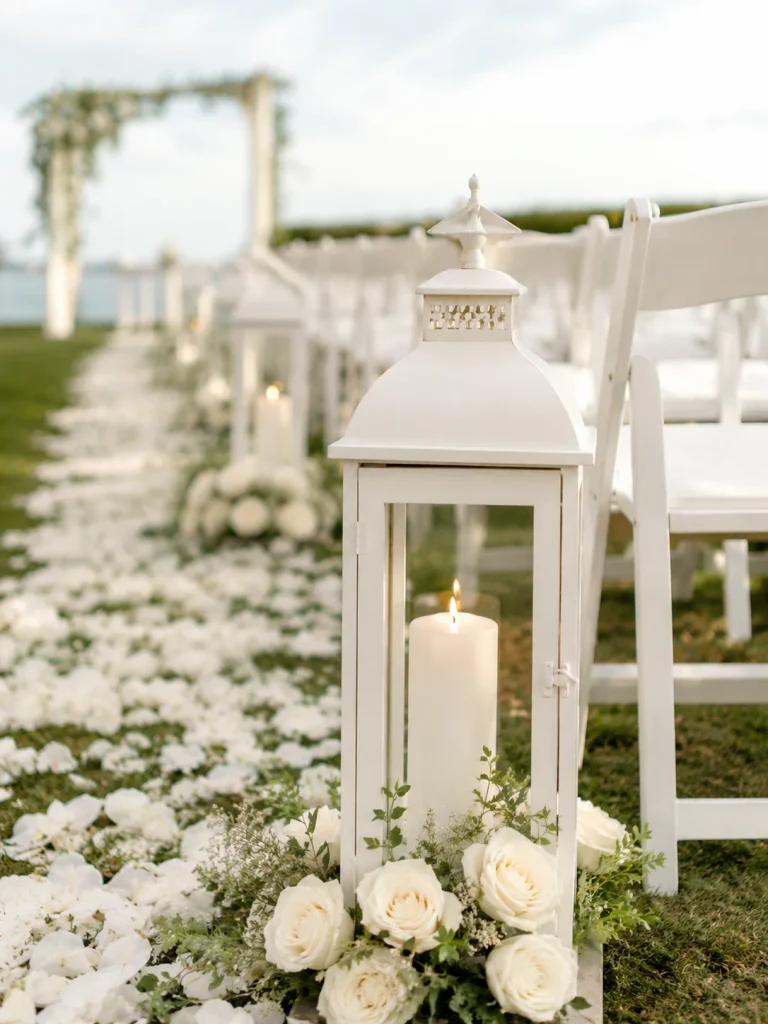
When decorating an aisle, spacing matters. You usually do not need a floral lantern beside every row. Place one every second or third row and keep the flowers consistent—white roses, eucalyptus, and perhaps a few small filler blooms. That repetition creates a clear path without crowding the ceremony space.
If the aisle is outdoors, make sure the lanterns are stable and far enough from the walking line that dresses and guests will not catch on the greenery. A little extra clearance is worth it.
18. Mostly Greenery, With Just a Few Flowers
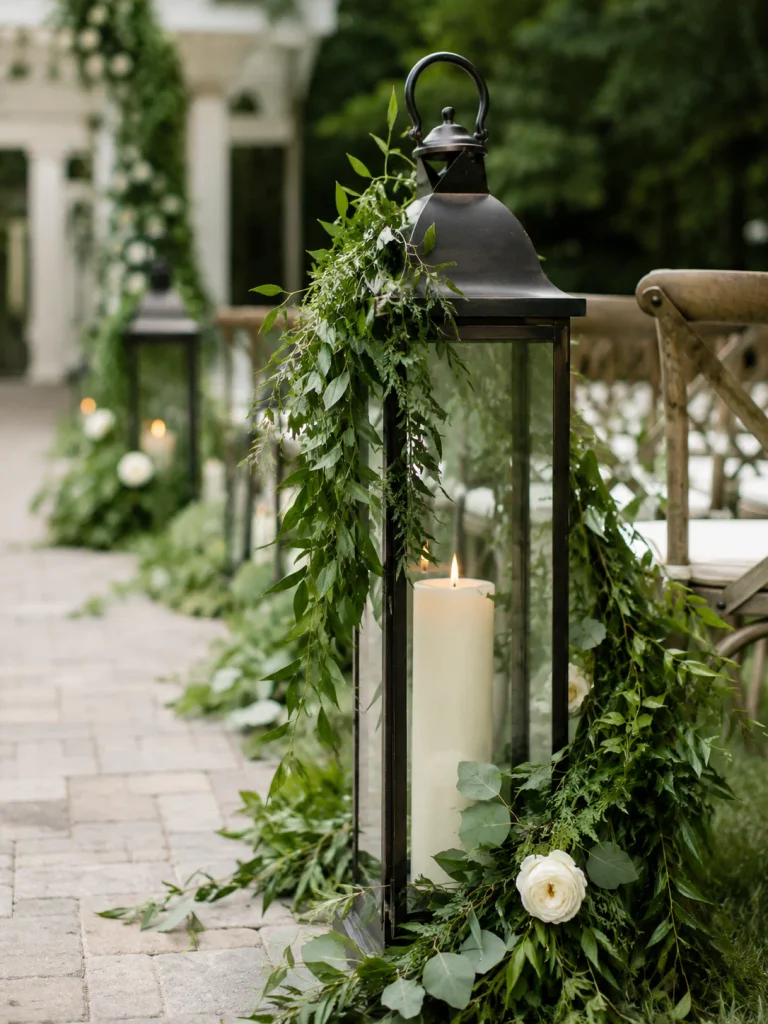
If your ceremony arch is already full of flowers, the aisle does not need to compete. Use tall lanterns with cascading greenery and only a few white roses. This keeps the walkway lush while letting the altar remain the main visual moment.
I like this for gardens, conservatories, woodland venues, and outdoor estates. The greenery can trail toward the ground, but keep it controlled enough that guests are not stepping over stems. It is one of the easiest ways to make the aisle feel connected to the rest of the ceremony without spending heavily on more blooms.
19. Blush Roses and Warm Candlelight
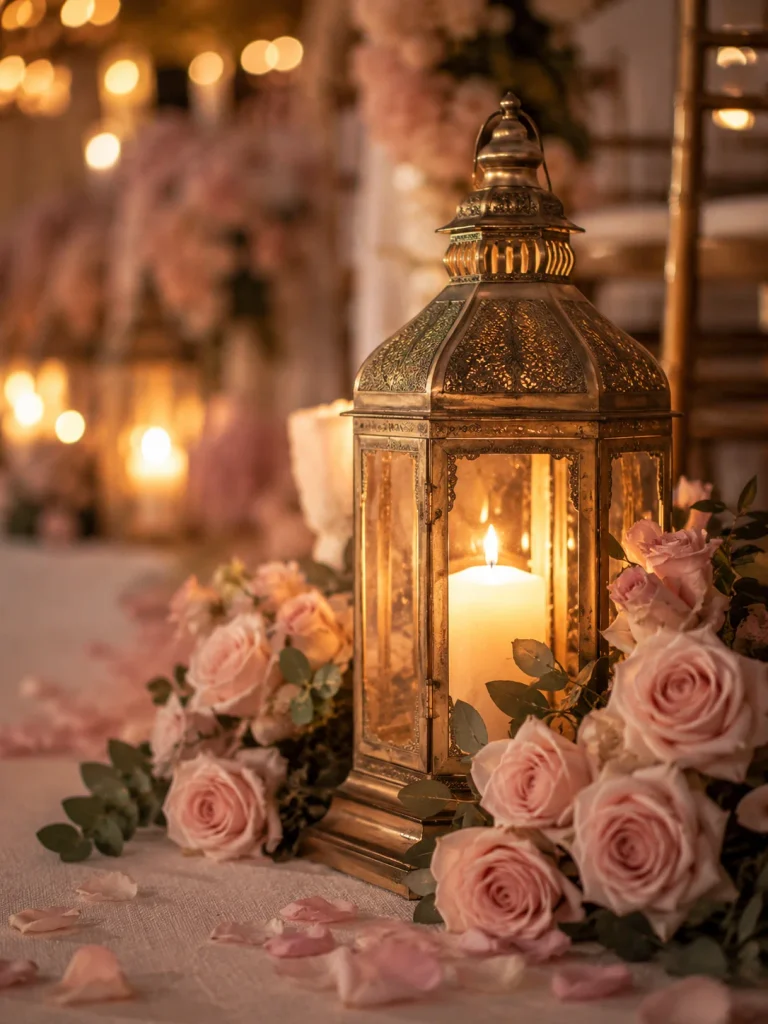
Blush roses become especially pretty once the light starts to soften in the late afternoon. Pair them with gold or antique-brass lanterns and warm candles, then scatter just a few matching petals nearby. You do not need a thick carpet of petals to create a romantic effect.
This idea works best for ceremonies that begin in daylight and move toward sunset. As the natural light fades, the lanterns slowly become more noticeable, so the aisle changes mood without you having to add anything else.
20. Baby’s Breath All the Way Down the Aisle
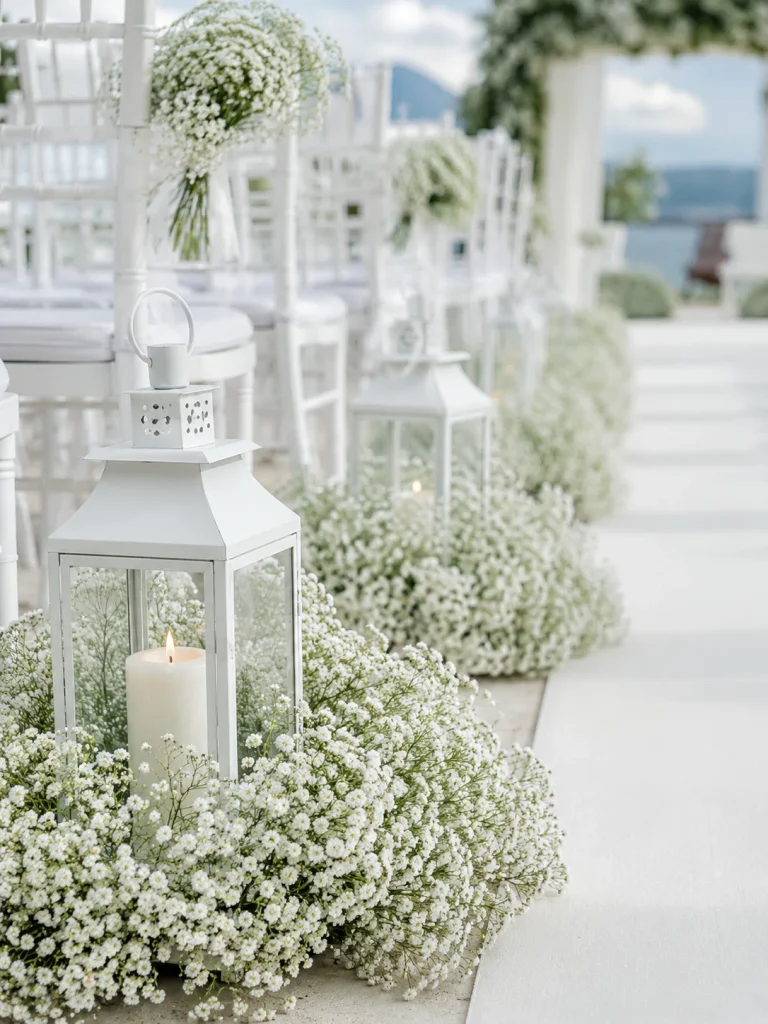
For an all-white ceremony, baby’s breath can create a soft rhythm all the way down the aisle. Use white lanterns and surround each one with airy flowers, keeping the stems loose rather than clipped into a tight ball. The repeated texture looks especially good against white chairs or pale stone.
This approach is effective in churches, marquees, garden venues, and clean modern spaces. If you want the aisle to feel fuller without increasing the flower budget too much, add small clusters of baby’s breath to the aisle chairs as well.
21. Lanterns With Rose Petals Instead of Big Arrangements
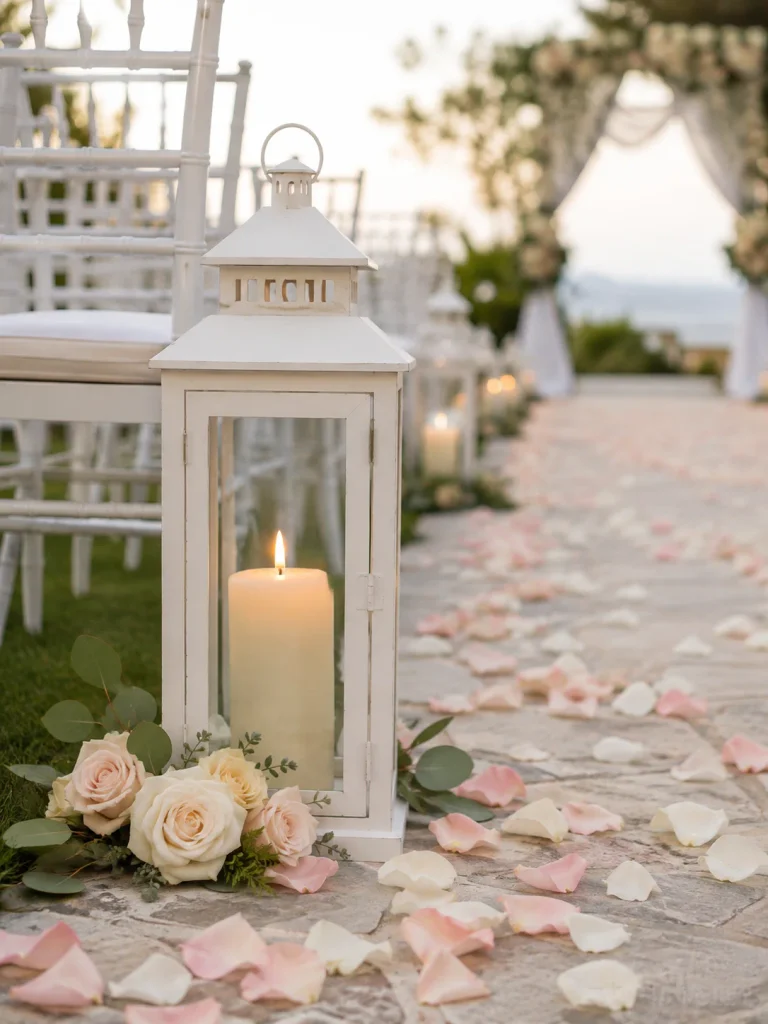
Sometimes the simplest aisle décor is the prettiest. Place a large white lantern beside the walkway, add a small floral cluster at the base, and scatter blush and ivory rose petals around it. You still get color and romance, but you do not need a large arrangement at every row.
This is a smart choice when the floral budget is being spent on the ceremony arch or reception. Keep the petals mostly along the edges of the aisle so they do not create a slippery walking surface. The lantern can do the visual work; the petals are there to soften it.
22. Small Lanterns Hung From Aisle Chairs
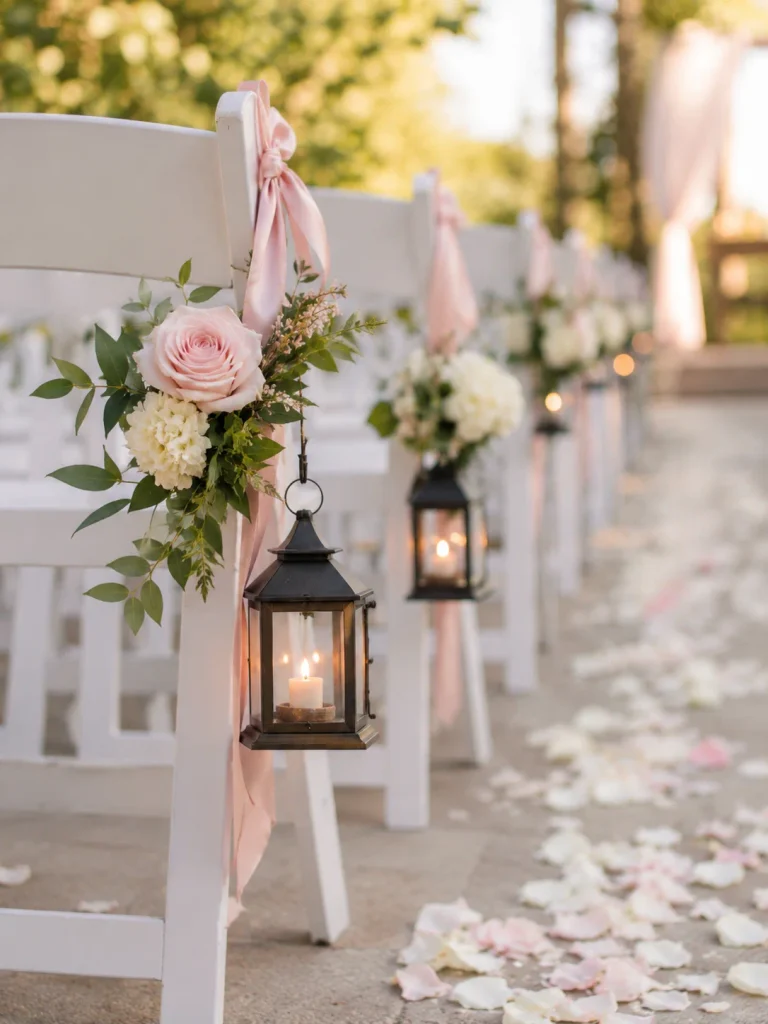
A narrow aisle can become awkward when large decorations sit on the floor. Hanging small lanterns from the aisle chairs keeps the walkway clear and adds detail at eye level. Use lightweight lanterns, soft ribbon, greenery, and a small flower cluster rather than anything heavy.
Make sure every lantern is attached securely and hangs where guests will not bump it as they sit down. This look is particularly pretty with white chairs, blush ribbon, and compact arrangements of roses or hydrangeas.
23. Two Oversized Lanterns at the Aisle Entrance
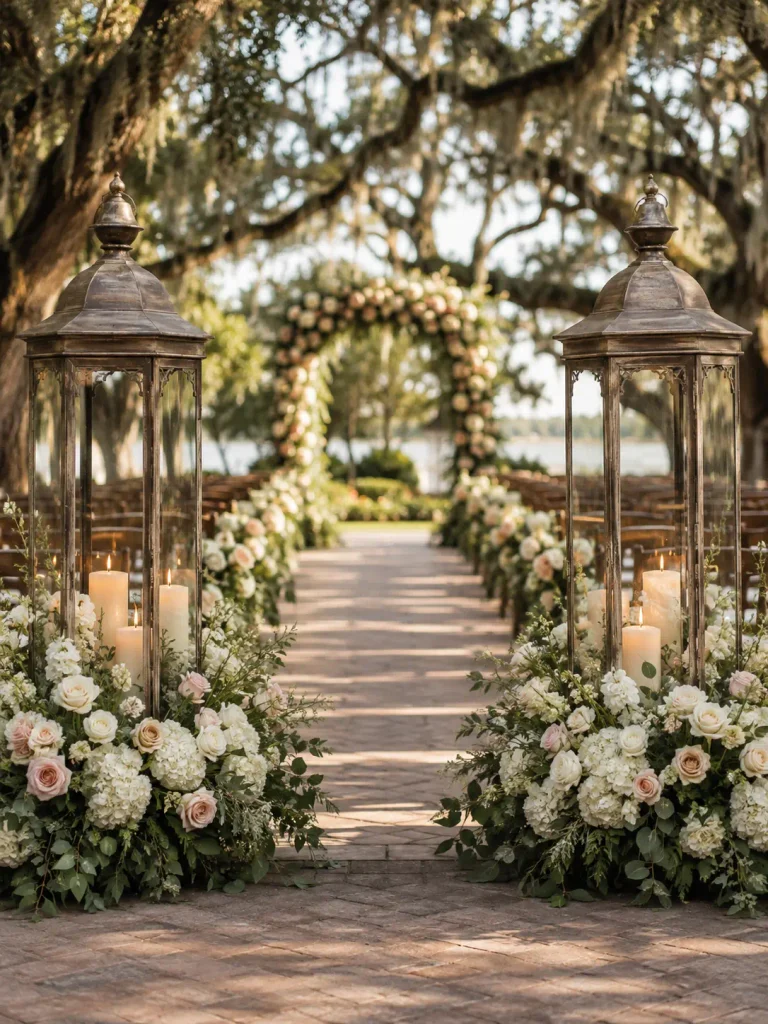
If you want to save money on repeated aisle décor, put the drama at the entrance instead. Two oversized lanterns, one on each side, can frame the beginning of the ceremony beautifully. Surround them with hydrangeas, roses, and greenery, then keep the rest of the aisle much simpler.
The scale matters here. Use lanterns tall enough to feel intentional, not just slightly larger versions of table décor. This first visual moment is what guests see as they take their seats, so it is worth giving it a little more attention.
24. Repeat the Flowers From the Ceremony Arch
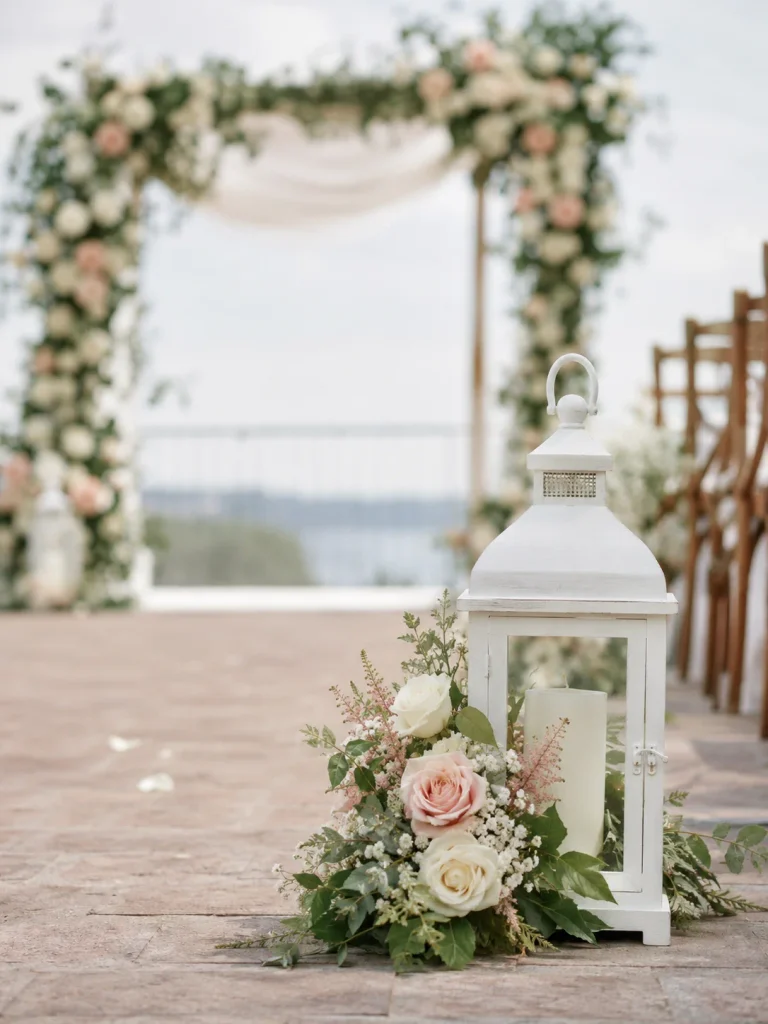
One of the easiest ways to make a ceremony look professionally styled is to repeat the same floral recipe in different sizes. If the arch uses blush roses, white roses, hydrangeas, and eucalyptus, use those same flowers around the lanterns—just in smaller quantities.
The arrangements do not need to match exactly. In fact, they look better when they do not. The point is to repeat the colors and flower types so the aisle, arch, and entrance all feel like parts of the same design rather than separate décor ideas.
Reception Lantern Ideas
25. A Lantern as the Main Table Centerpiece
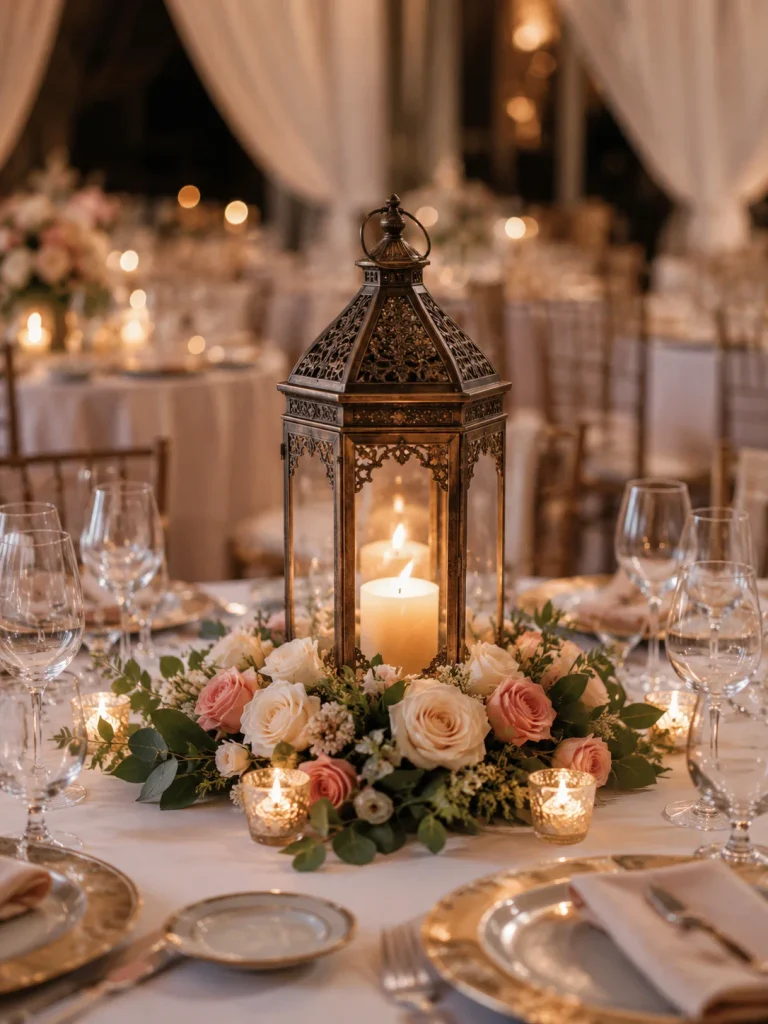
A lantern can easily become the main centerpiece on a round reception table. Place a medium-sized lantern in the middle and build a low floral ring around part of the base. Keep the flowers below eye level so guests can still talk comfortably across the table.
Roses, ranunculus, hydrangeas, and eucalyptus all work well. Add a few small votive candles if the table has space, but leave enough room for glasses, plates, and serving items. A centerpiece should look beautiful without making dinner inconvenient.
26. Lanterns Down a Long Banquet Table
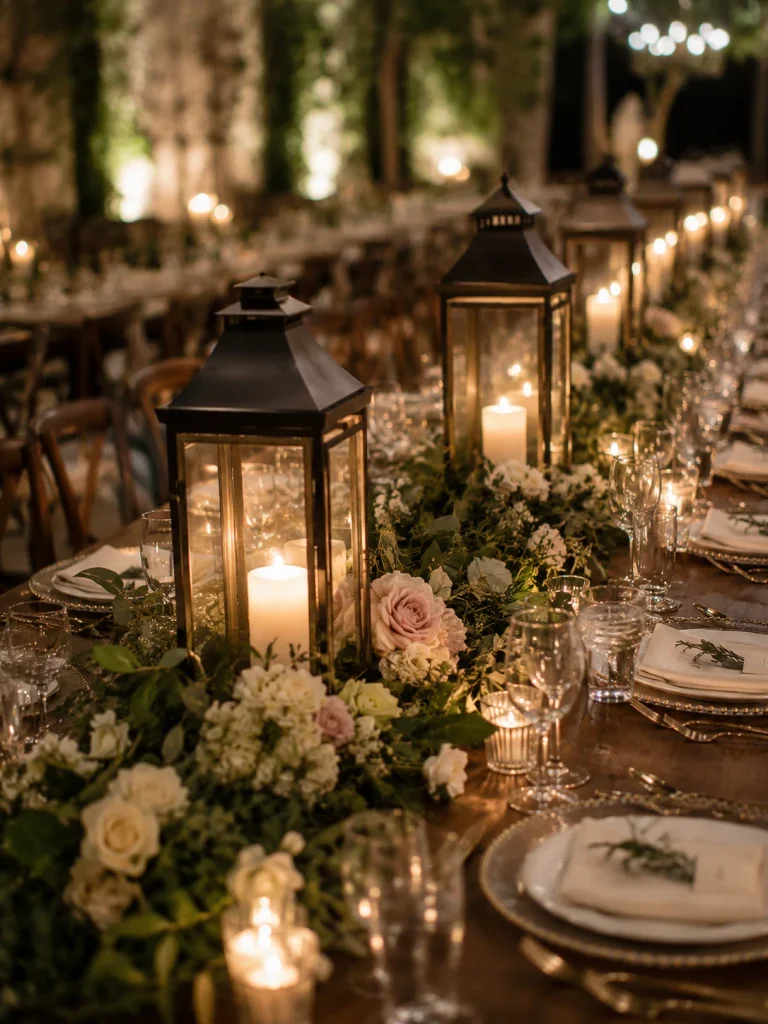
Long banquet tables look better with repetition than with one oversized centerpiece. Run greenery along the middle, then place lanterns at regular intervals with small flower clusters between them. Mix in a few low candles to connect the gaps.
Before the florist fills the whole table, check the practical spacing. Guests need room for plates, glassware, shared dishes, and elbows. Keep the lanterns tall enough to be visible, but not so wide that the table starts to feel cramped.
27. Gold Lantern With White Hydrangeas
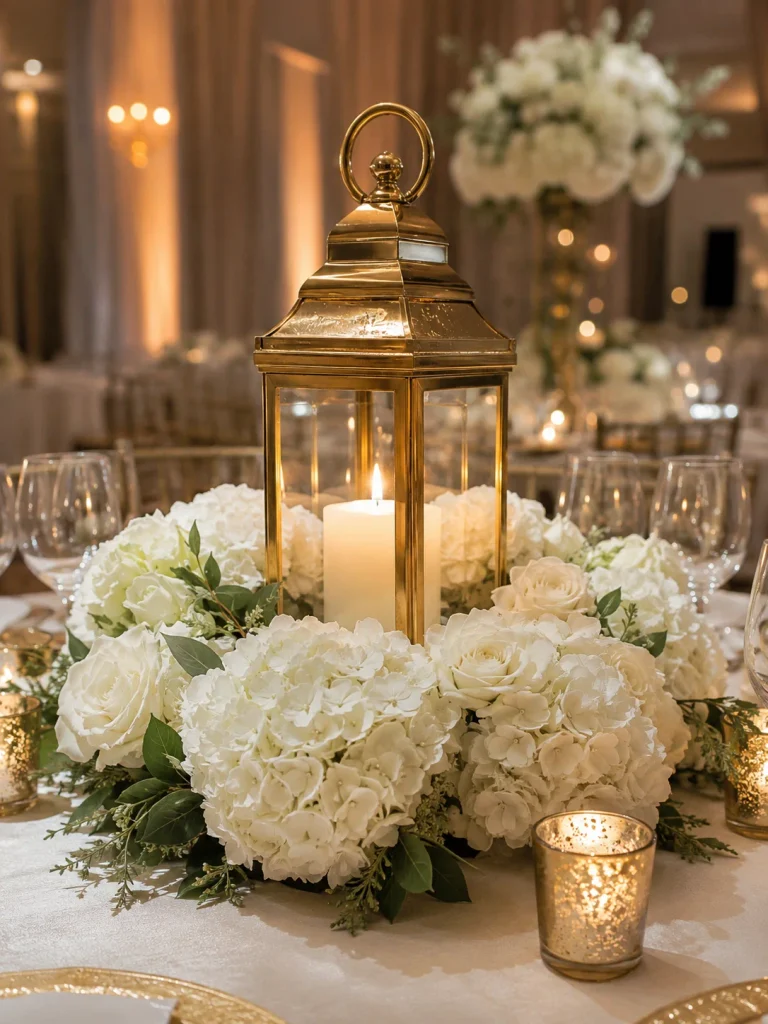
For a formal reception, a gold lantern surrounded by white hydrangeas is hard to beat. The hydrangeas create volume, while a few white roses keep the arrangement from looking too uniform. Add simple greenery and small gold votives to pick up the metallic finish.
If the ballroom already has chandeliers, mirrored surfaces, or lots of shine, keep everything else restrained. The lantern does not need rhinestones, extra metallic leaves, or glittering accessories. Let the clean white flowers balance the gold.
28. Mini Lanterns for Smaller Tables
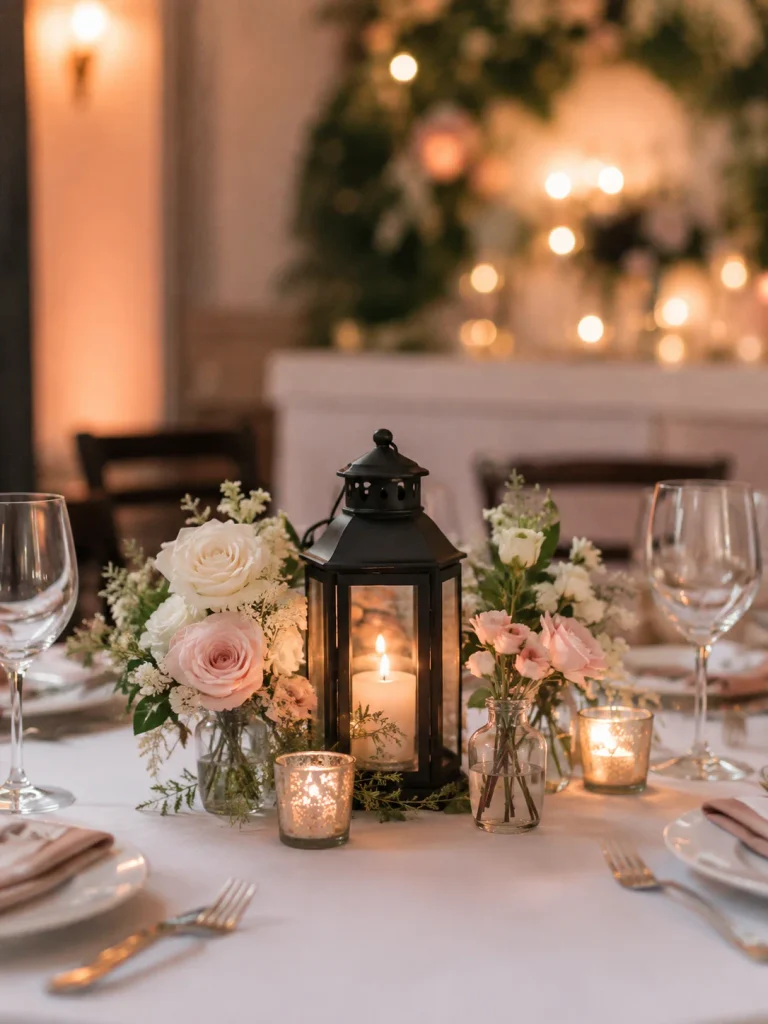
A small dinner table does not need a big centerpiece. A mini lantern, one or two bud vases, and a couple of votive candles can be enough. This works beautifully for restaurant receptions, micro weddings, and narrow tables where space matters more than scale.
Use just a few blooms—perhaps a blush rose, a white rose, and a little greenery. The arrangement should feel intentional, not crowded. When guests sit down, they should still have plenty of clear table surface around them.
29. Hanging Lanterns With Trailing Greenery
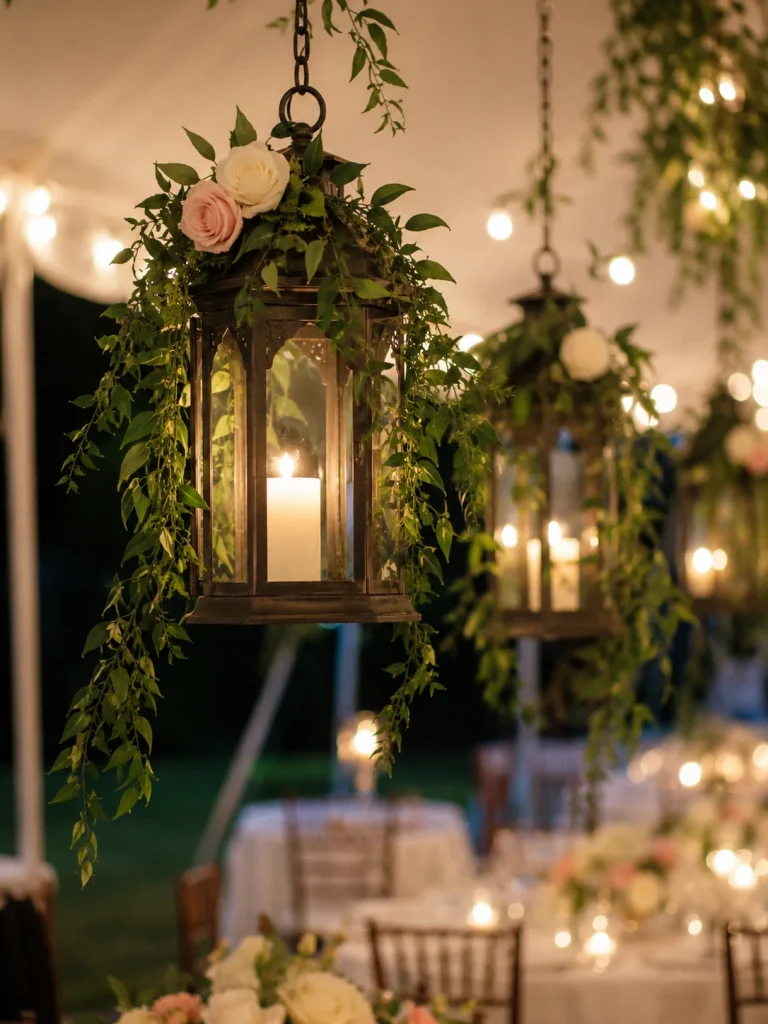
Hanging lanterns can make a reception feel completely different because they bring the décor above eye level. Use lightweight floral clusters, trailing greenery, and a few roses or orchids so the arrangement looks full without becoming heavy.
This is one job I would always leave to a professional installer. The lanterns need proper rigging, especially when they are hanging over guests or dining tables. Once the structure is secure, the look can be spectacular—almost like floating candlelight through the room.
30. Cluster Lanterns Around the Sweetheart Table
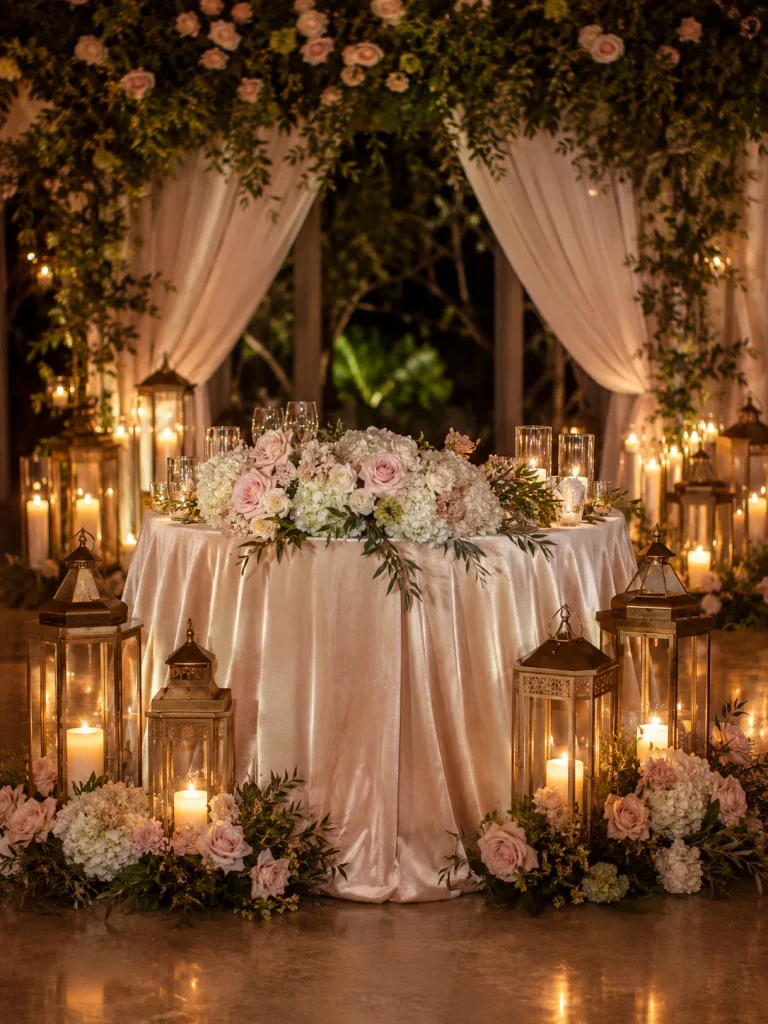
The sweetheart table can handle more layers than a guest table because no one needs to see across it from the opposite side. Use lanterns in several heights around the front and sides, then connect them with flowers and greenery. The varying heights keep the arrangement from looking like a row of identical boxes.
Match the flowers to the bridal bouquet or the main reception centerpieces. This is also a great place to reuse ceremony lanterns after the vows. Moving them from the aisle or altar to the reception can stretch the décor budget without making the setup feel recycled.
31. Add Lanterns Around the Wedding Cake Table
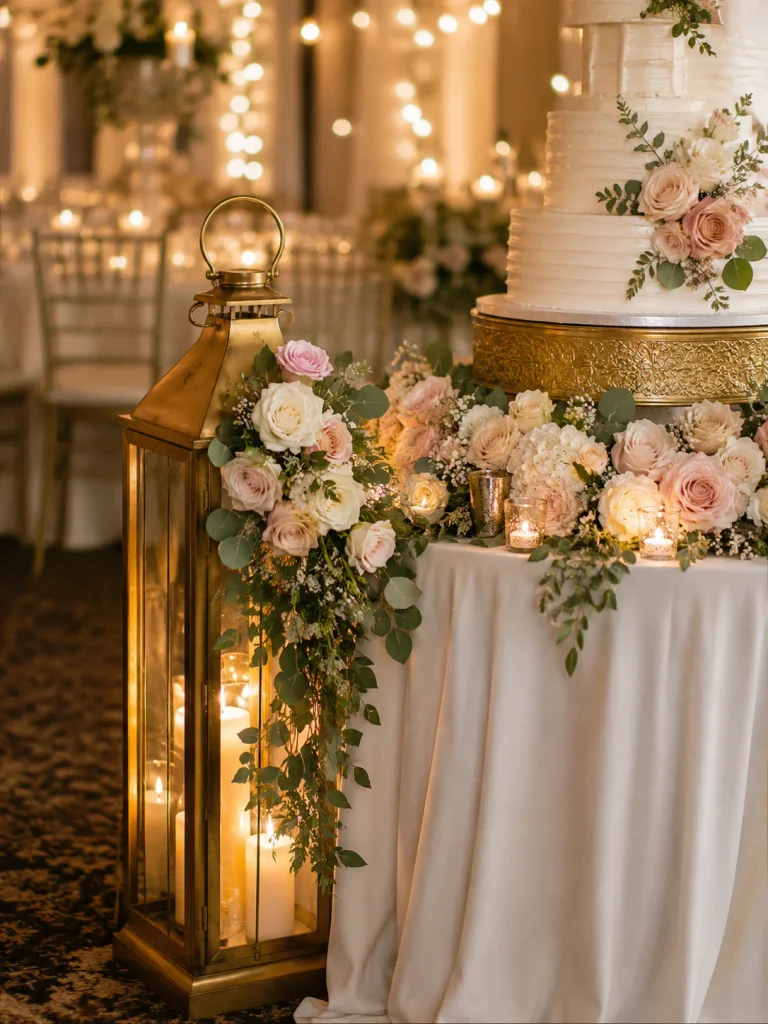
Wedding cake tables often have plenty happening at tabletop height and almost nothing near the floor. A tall lantern beside the table instantly fixes that. Add flowers that repeat the cake florals, then place a few smaller votives nearby to create a soft pool of light.
Do not let the lantern compete with the cake. The cake should still be the hero of the display. If the setup includes ribbon, dried flowers, or low trailing greenery, use LED candles. They give you the glow without putting an open flame near delicate décor or frosting.
32. Frame the Welcome Sign With Lanterns
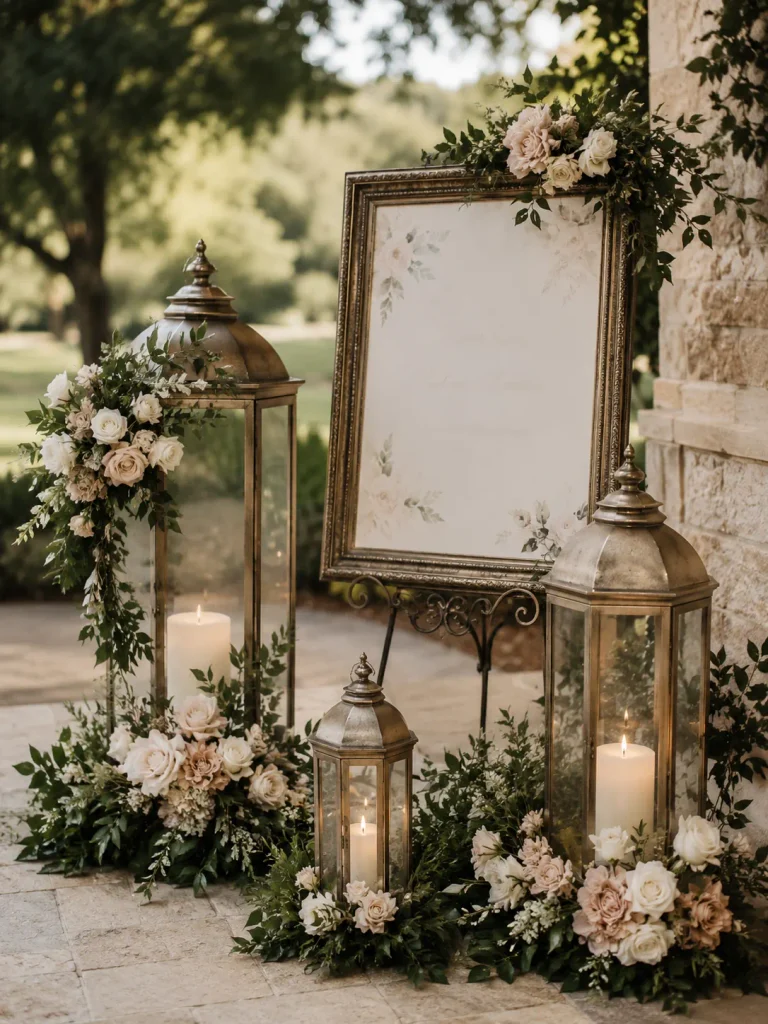
A welcome sign is one of the first things guests see, so it is a natural place to use a slightly fuller lantern arrangement. Group two or three lanterns in different heights beside the sign and let the flowers connect the pieces visually. White and blush roses are easy to coordinate with most wedding palettes.
Do not decorate both sides perfectly. A stronger cluster on one side and a smaller echo on the other usually looks more relaxed. If the sign sits outdoors, check the wind direction and secure both the frame and lanterns before guests arrive.
Outdoor and Garden Lantern Ideas
33. Make Roses Look Like They’re Climbing the Lantern
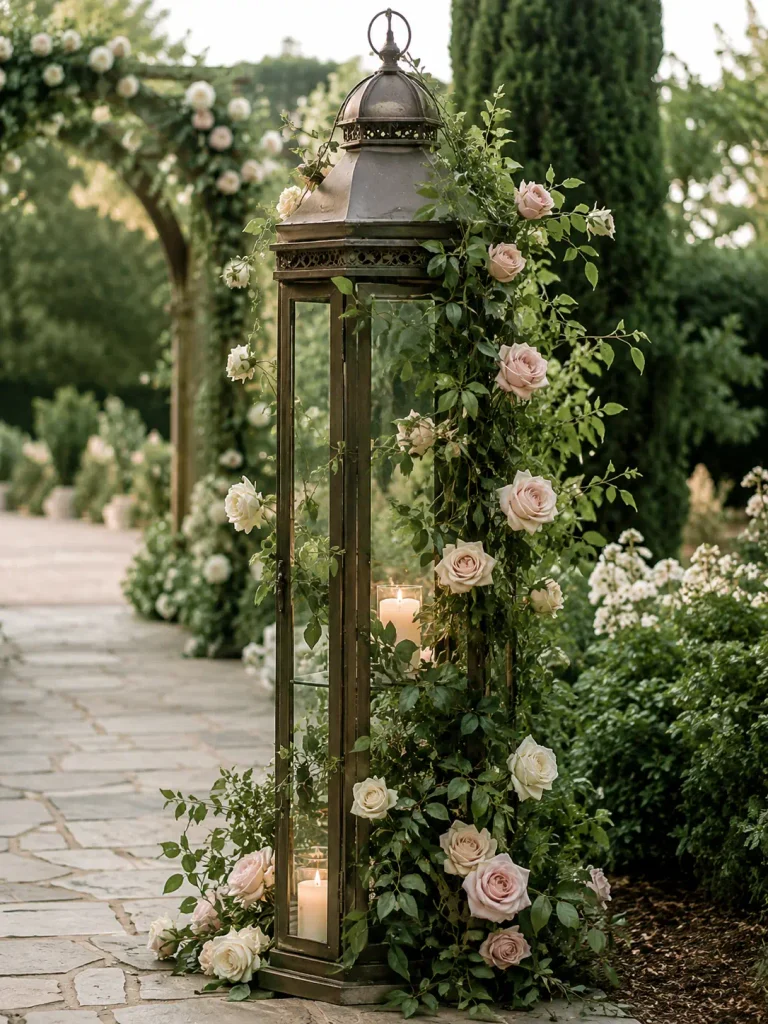
This idea works because it does not look like a bouquet stuck onto a lantern. Start with flexible greenery and train it up one side of a tall lantern. Then add roses at different heights so the flowers appear to be climbing naturally. Keep some stems longer and let others disappear behind the frame.
Place the lantern near a garden path, hedge, stone wall, or floral arch where the climbing effect makes sense. It should feel as though the garden has grown into the décor rather than the décor being dropped into the garden.
34. Hang Floral Lanterns From Tree Branches
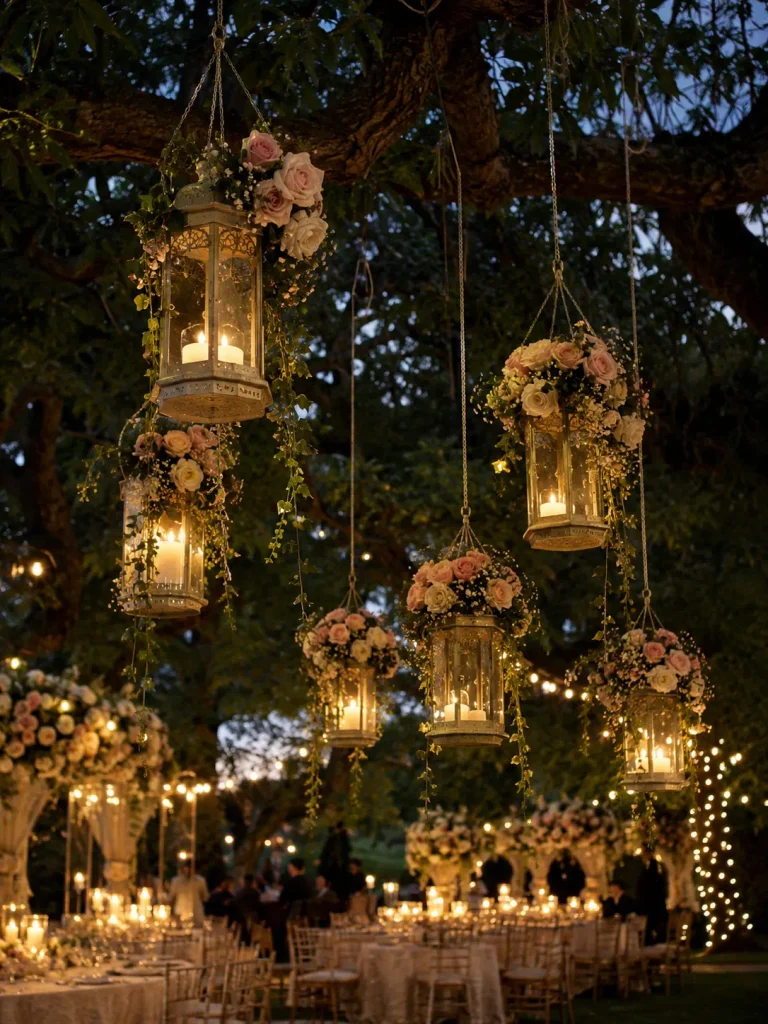
Mature trees can create one of the best overhead settings for wedding lanterns. Hang lightweight lanterns at varied heights and decorate each with small clusters of spray roses, baby’s breath, and trailing greenery. Once the sun goes down, battery candles inside the lanterns add a beautiful warm layer to the garden.
Use professional hanging methods and avoid damaging branches. The lanterns should also be high enough that guests can walk beneath them comfortably. This is especially effective over cocktail areas, outdoor dining spaces, and paths between ceremony and reception zones.
35. Ferns and White Flowers in a Woodland Setting
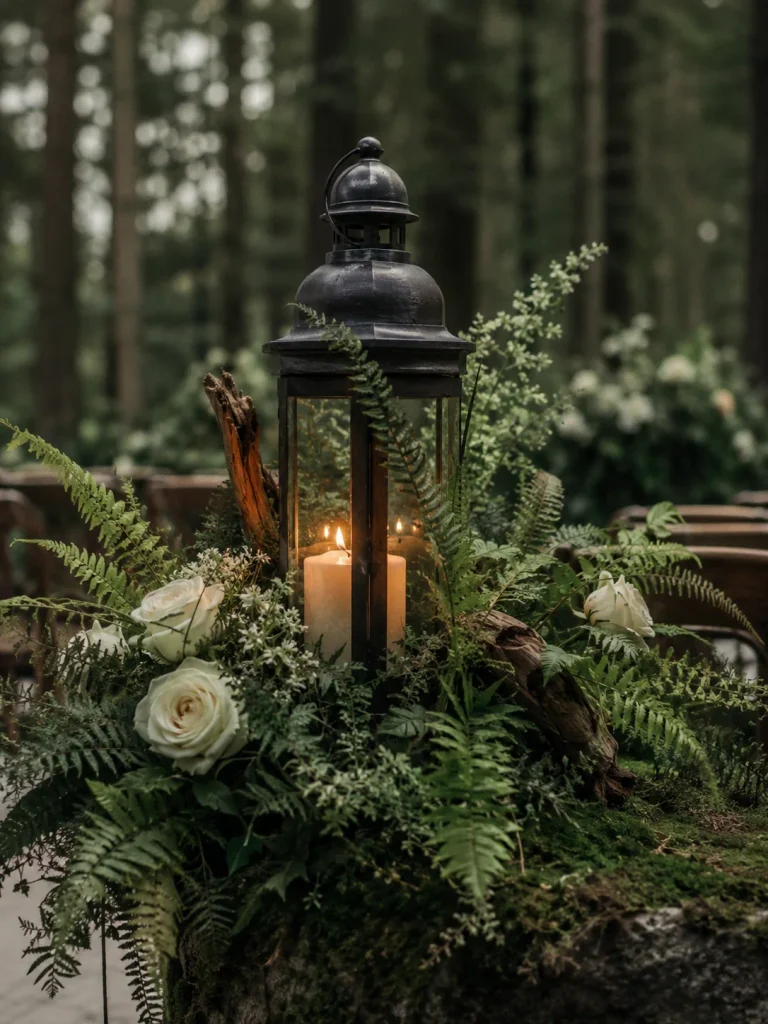
A woodland venue already has strong color and texture, so the flowers should feel like they belong there. Surround a dark lantern with ferns, moss, white roses, and a few branches. Let the arrangement stay low and slightly untamed. A perfect round floral ring would feel too formal in this setting.
This look works beautifully near tree roots, wooden benches, or stone paths. Warm candlelight against dark green foliage gives the lantern enough contrast to stand out without making it feel separate from the forest.
36. Soft Florals Beside a Lake
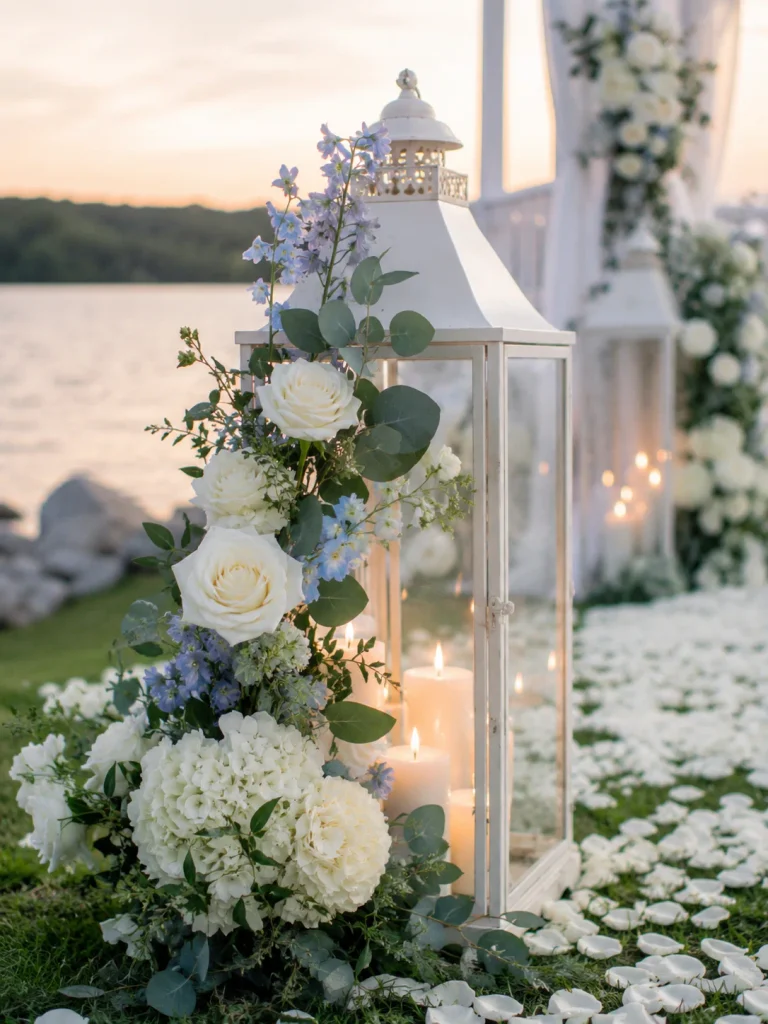
For a lakeside ceremony, keep the colors calm so they do not fight the view. White roses, hydrangeas, eucalyptus, and a touch of pale blue or lavender work beautifully. A white or glass lantern helps the arrangement feel light against the water.
Wind is the practical issue here. Use lanterns with enough weight, keep trailing stems controlled, and choose flowers that will not collapse quickly in sun or breeze. Around sunset, the reflection from the water can make the candlelight look especially soft in photographs.
37. White Flowers for a Beach Wedding
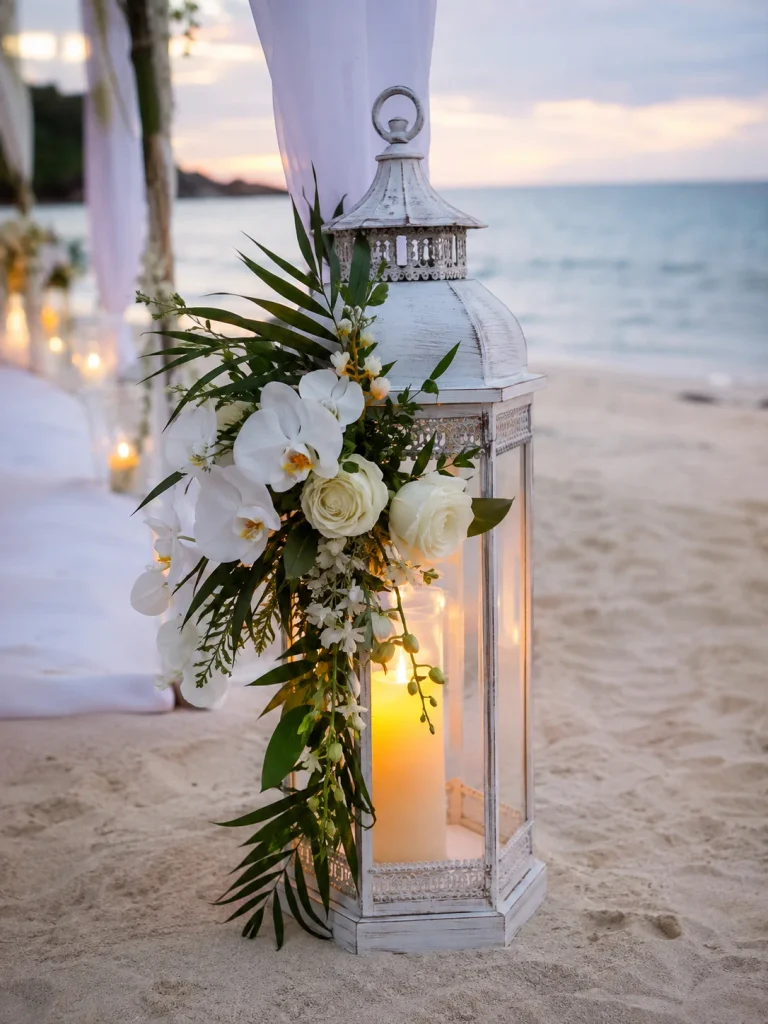
Beach wedding lanterns need to look delicate while actually being sturdy. Use a heavier white or weathered lantern, then add compact white orchids, roses, and tropical greenery. Avoid long, loose stems that will whip around in the wind.
LED candles are the obvious choice on a beach. They will not blow out, and you do not have to worry about an open flame near fabric or dried material. Place the lanterns at the aisle entrance or around the ceremony arch rather than scattering lots of small pieces across the sand.
38. Pampas Grass and Dusty Pink Flowers for a Boho Setup
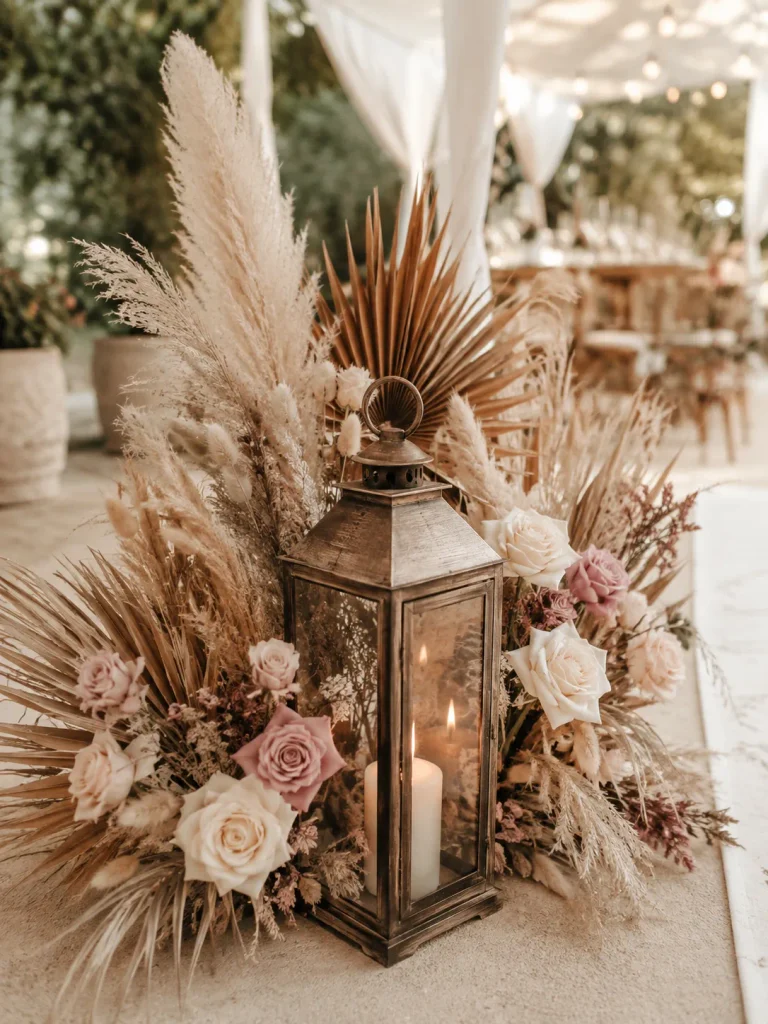
For a softer boho arrangement, build outward instead of upward. Use pampas grass, dried palm leaves, cream roses, dusty pink blooms, and a bronze lantern as the center. The dried materials give you texture, while the fresh roses stop the design from looking too beige.
This style works in open fields, barns, desert venues, and neutral modern spaces. Again, use LED candles when dried material is nearby. You can be much more generous with the pampas when you are not worrying about heat or flame.
39. Lanterns Along a Garden Path at Twilight
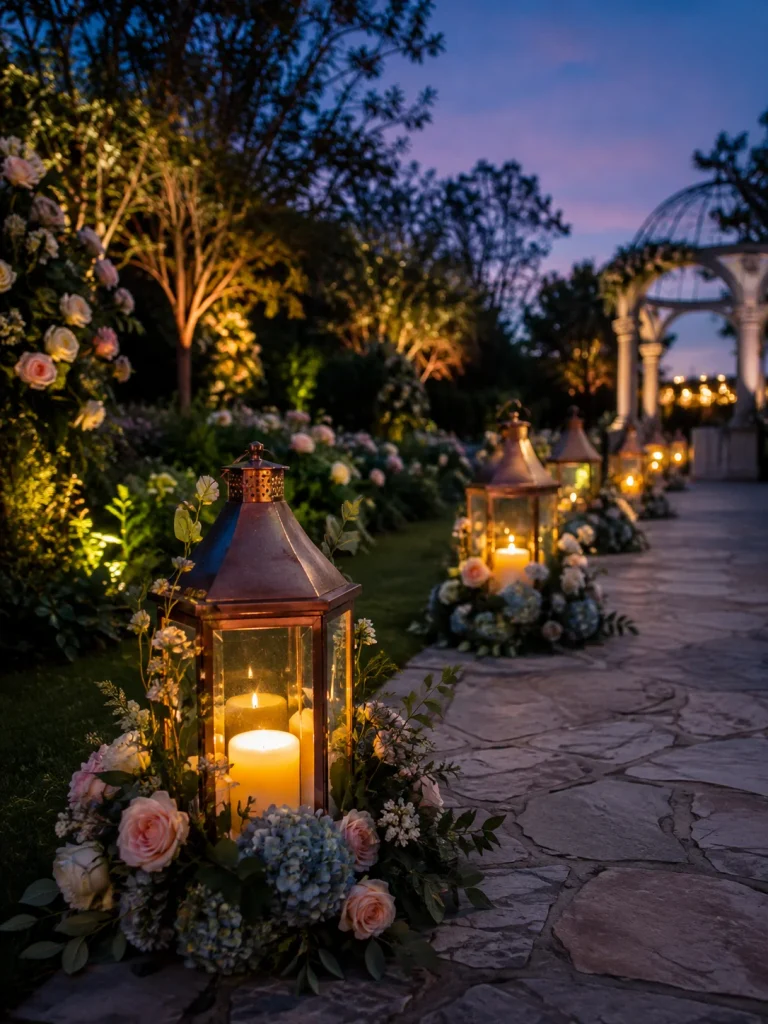
Twilight is when lanterns start doing more than simply decorating. Place them along a garden path, around flower beds, or between the ceremony and reception so they help guests find their way as the light fades. Add small floral clusters rather than large arrangements so the path stays clear.
Use the same flower palette seen elsewhere in the wedding. That makes the path feel connected to the ceremony instead of like a separate lighting project. Warm candles against a blue-hour sky are also wonderfully photogenic, especially when the lanterns repeat into the distance.
40. Create a Grand Lantern-and-Flower Entrance
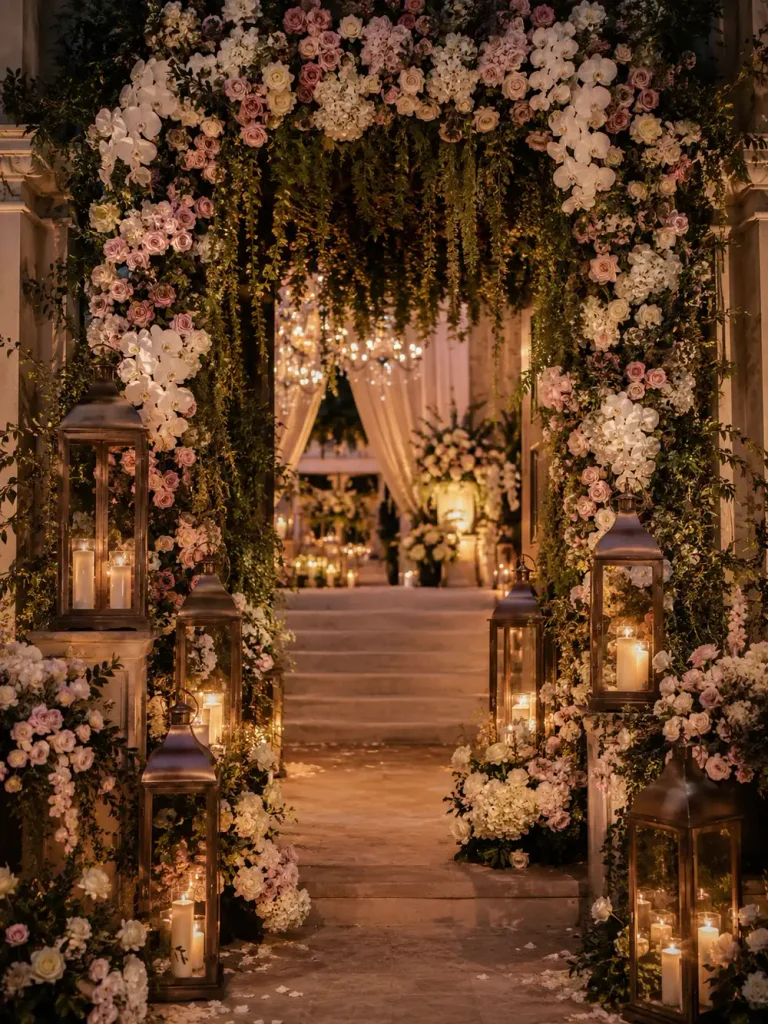
If you want one place to go big, make it the entrance. Use several lanterns in different heights on both sides of a doorway, staircase, or reception opening. Then build the flowers around them—roses, hydrangeas, orchids, greenery, and trailing stems that connect the lanterns to the larger floral installation.
This is where scale makes sense because every guest passes through it. It can also become a natural photo spot later in the evening. Keep the center walkway generous, light the lanterns before guests arrive, and let the arrangement frame the entrance rather than narrowing it.
How to Choose the Right Flowers for Your Wedding Lanterns
Before ordering flowers, decide what each lantern is supposed to do. Is it guiding guests down an aisle? Filling an empty corner? Acting as a centerpiece? Framing the couple? Adding candlelight after sunset? Once you know the job, the scale becomes much easier to judge.
Roses are the easiest all-rounder because they come in so many colors and sizes. Garden roses feel fuller and more romantic, while spray roses are useful for smaller arrangements. Hydrangeas are excellent when you need volume quickly. Baby’s breath gives you softness without a lot of visual weight. Orchids work well when the design needs a cleaner, more modern line. Ranunculus and peonies add beautiful petal detail where guests will see the flowers up close.
Greenery matters too. Eucalyptus is versatile, olive branches suit a relaxed Mediterranean look, ferns are wonderful in woodland settings, and trailing vines help soften tall lanterns. Use greenery to create movement rather than simply filling every empty space.
Fresh Flowers or Artificial Flowers?
There is no rule that every bloom around a lantern must be fresh. Fresh flowers are lovely where guests will see them up close, especially on dining tables, at the ceremony entrance, and around the sweetheart table. Artificial flowers can make sense for outdoor installations, hot-weather weddings, or areas that need to be decorated many hours before the event begins.
One approach that often works well is mixing high-quality faux flowers with fresh greenery. The fresh leaves make the arrangement feel alive, while the artificial blooms remove some of the stress around heat and timing. If you use faux flowers, avoid very shiny plastic leaves or blooms with obviously identical shapes.
Do Not Ignore the Lantern Finish
The same flowers can look very different on different lanterns. White and ivory lanterns feel soft. Black lanterns look modern or dramatic. Brass and gold bring warmth and suit evening receptions. Natural wood fits outdoor and rustic venues. Weathered bronze feels older and more relaxed.
Hold the flower palette next to the lantern before committing to the design. Blush roses beside antique gold usually feel warm and romantic. White orchids on black metal feel crisp and modern. Wildflowers around polished gold may look mismatched unless the rest of the wedding combines those same styles.
A Practical Note About Candles
Real candlelight is beautiful, but flowers, ribbon, pampas grass, and open flames need careful handling. If you use a real candle, keep it fully contained behind glass and make sure no greenery can fall into the flame. For most floral lantern arrangements, LED candles are the easier option. They will not blow out outdoors, and they are much safer around dried materials.
Modern LED pillar candles can look very convincing in photographs, especially once the room lights are low. Use warm-white versions rather than bright cool-white lights.
How Many Lanterns Do You Actually Need?
Usually fewer than you think. A short ceremony aisle may only need four to six larger lantern arrangements. A longer aisle can be styled every second or third row. At the reception, use lanterns where they improve the space rather than placing them everywhere simply because you have them.
A few strong arrangements almost always look better than lots of tiny ones spread too thin. If the budget is limited, concentrate the flowers at places guests naturally notice: the entrance, ceremony aisle opening, altar, sweetheart table, and cake or welcome display.
How to Make the Whole Wedding Look Connected
The easiest styling trick is repetition without exact copying. Use the same flowers and colors throughout the wedding, but change the scale. A full blush-and-ivory arrangement might sit at the entrance, a smaller version can decorate the aisle lanterns, and just a few matching blooms can appear on the reception tables.
This gives the wedding a consistent visual language without making every arrangement look identical. The lantern finish can repeat too. If you use antique brass at the ceremony, bring a little brass into the reception instead of changing suddenly to shiny silver.
Frequently Asked Questions About Flowers on Lanterns Wedding Ideas
Can you put fresh flowers directly on wedding lanterns?
Yes. Florists can attach fresh flowers using floral wire, cages, water tubes, or other professional mechanics. Delicate flowers may need a water source, especially for outdoor weddings or long events.
Should the flowers go on top of the lantern or around the bottom?
Both can work. Flowers at the base make the lantern feel grounded and are ideal for aisles and tables. A floral cluster near the top adds height. For a more dramatic design, combine a small upper cluster with a larger arrangement at the base, but leave enough of the lantern visible.
What flowers look best around lanterns?
Roses, hydrangeas, baby’s breath, orchids, ranunculus, peonies, daisies, lavender, and seasonal wildflowers are all strong options. The best choice is the one that already fits your wedding palette and venue.
Can you use lanterns without real candles?
Absolutely. LED candles are the easiest alternative and are often the safer choice. Lanterns can also hold fairy lights or simply remain decorative if the surrounding floral arrangement is strong enough.
Are lanterns suitable for outdoor weddings?
Yes. They work especially well at garden, woodland, vineyard, beach, barn, and backyard weddings. Choose heavier lanterns for windy locations, use battery candles, and secure any hanging pieces properly.
How many lanterns should I use down a wedding aisle?
There is no fixed number. For a smaller ceremony, four to eight may be enough. For a long aisle, spacing lanterns every few rows usually looks more balanced than placing one beside every chair.
A Final Styling Thought
The best floral lantern arrangements do not look like a separate decoration added at the last minute. They look as though they belong to the venue. A garden lantern can feel as if roses have grown around it. A beach lantern can echo the pale colors of sand and sea. A ballroom lantern can pick up the warm light already in the room.
When choosing from these flowers on lanterns wedding ideas, start with the venue, then the color palette, then the flowers. That order usually gives you a more natural result—and often saves money because you are working with the setting rather than trying to cover it up.

